



Abstract
Sexual violence with its enormous negative consequences has become an epidemic most especially among the young populations. An effective danger-proof reporting system is necessary for curbing this menace including use of the internal whistleblowing mechanism. The study employed a concurrent (parallel) mixed method descriptive design for explaining the sexual violence experiences of university students, the intention of staff and students to blow the whistle, and their preferred whistleblowing strategies. A total of 167 students and 42 members of staff (69% males and 31% females, respectively) were randomly selected from four academic departments (50%) of a university of technology in Southwest Nigeria. An adapted questionnaire containing three vignettes on sexual violence and a focus group discussion guide were used for data collection. We discovered that 16.1% of the students reported to have experienced sexual harassment, 12.3% had attempted rape, and 2.6% had experienced rape. Tribe (Likelihood-Ratio, LR = 11.16; p = .004) and sex (χ2 = 12.65; p = .001) were strongly associated with sexual violence experiences. Also, 50% staff and 47% students had high intention. Regression analysis showed that industrial and production engineering students will be 2.8 times more likely to have intention to internally blow the whistle more than other students (p = .03; 95% CI [1.1, 6.97]). Female staff had 5.73 odds of intention more than male staff (p = .05; [1.02, 32.1]). Also, we observed that senior staff will 31% less likely blow the whistle than the junior staff (Adjusted Odd Ratio, AOR = 0.04; [0.00, 0.98]; p = .05). In our qualitative findings, courage was mentioned as a factor necessary for blowing the whistle while anonymous reporting was emphasized for successful whistleblowing. However, the students preferred external whistleblowing. The study has implication for the establishment of sexual violence internal whistleblowing reporting system in higher education institutions.
Keywords
Sexual violence is regarded as a global public health problem which cuts across every class, ethnicity, and socio-economic status in every community (Shen et al., 2022; UNICEF, 2022). Different authors have given different definitions to sexual violence and these definitions differ from setting to setting. According to the World Health Organization (WHO, 2014), “sexual violence is any sexual act, attempt to obtain a sexual act, or other act directed against a person’s sexuality using coercion by any person regardless of their relationship to the victim, in any setting.” All over the world, different forms of sexual violence have been reported, and they include rape, sexual harassment, sexual exploitation, and incest among others (Egen et al., 2020). Sexual violence mostly occurs in the context of intimate partner relationship, acquaintance, within the larger family or community structure, or during times of conflict (Spangaro et al., 2021; Thomas et al., 2022). Whichever form of sexual violence being experienced, the act is usually harrowing on the part of the survivors. Studies have documented outcomes of sexual violence on the survivors to include physical, health, and psychological consequences (Ba & Bhopal, 2017).
In higher education institutions, sexual violence is a recurrent menace mostly among male and female students (Kefale et al., 2021; Steele et al., 2022). In Nigeria, sexual violence has been termed an epidemic as many cases have been reported in the past few years mostly among the young populations (Achunike & Kitause, 2014). A study conducted in tertiary institutions comprising universities, colleges of education, polytechnics, schools of nursing, and seminary schools in Imo State, Nigeria, indicated that the current and lifetime prevalence of sexual violence among the participants was 15.2% and 34%, respectively (Duru et al., 2018). Duru et al. further stated that the commonest form of sexual violence experienced by the survivors was fondling and grabbing of sensitive body parts (52.5%). Also, a sexual assault prevalence rate of 46.7% was reported among female undergraduates at the University of Port Harcourt (Mezie-Okoye & Alamina, 2014) while 16.5% of female undergraduates reported they were past survivors of rape in Nnewi, Southeast Nigeria (Adogu et al., 2014).
The Nigerian tertiary educational institutions have witnessed increased sexual violence cases especially among female students despite the many efforts put in place to checkmate its occurrences (Aina-Pelemo et al., 2021). Unfortunately, there is no national prevalence for sexual violence in the country, neither is there a national prevalence for sexual violence in tertiary educational institutions. However, the increased occurrence of sexual violence in tertiary educational institutions in Nigeria has led to the passing of the Prevention, Prohibition, and Redressal of Sexual Harassment in Tertiary Educational Institutions Bill, 2019 by the House of Senate (Adebayo, 2020). Aside from this bill, individual educational institutions in Nigeria were encouraged to develop anti-sexual harassment policy in their various institutions.
With the passing of the anti-sexual harassment bill and establishment of anti-sexual harassment policies, stakeholders have expressed concern that, effective reporting of sexual violence experiences is a precursor to effectiveness of anti-sexual harassment policy. Students and staff of educational institutions have therefore been encouraged to report any act of sexually violating behavior which is an evident way of deterring perpetrators (Pereira et al., 2020). Reports have shown that the number of reported cases of sexual violence in tertiary educational institutions in Nigeria is far below the actual cases that occur and are reported (Erunke, 2022). Therefore, the whistleblowing strategy has been canvassed and recommended for use in tackling sexual violence in higher educational institutions in Nigeria (Odu, 2021).
The whistleblowing mechanism has been documented to be an effective way of reporting misconduct in organizations. It has been found to be effective in reducing financial misappropriation (Ehioghiren & Oeaga, 2020), health sector malpractice (Mannion et al., 2018), and sexual violence prevention (Høedt-Rasmussen & Voorhoof, 2018). Whistleblowing reporting can take place within the organization (internal whistleblowing) or outside the organization (external whistleblowing) (Gagnon & Perron, 2020). In many Nigerian educational institutions, external whistleblowing strategies have been used by some survivors to express their grievances. Social media platforms such as twitter have been used by some survivors to blow the whistle, and this has caught the attention of stakeholders to address the violent acts without delay (Obiejesi, 2018; Olushoga, 2020). However, the affected institutions have expressed concern on the negative image such reporting has brought to the institution and they have canvassed for blowing the whistle internally within the institution. Setting up a whistleblowing mechanism in educational institutions is a good initiative but it is necessary to determine if students and staff will blow the whistle through the established mechanism. This study was designed to assess whistleblowing intention and factors that may influence it, as well as the preferred whistleblowing strategies that are essential for establishing an effective internal whistleblowing strategy for sexual violence.
This case study was therefore undertaken in a public university to answer the following research questions.
What are the reported sexual violence acts experienced by university students?
What is the intention of staff and students to report sexual violence using the internal whistleblowing mechanism?
What factors influence the intention of the staff and students?
What whistleblowing strategies will be preferred by the staff and students?
Methods
We employed a concurrent (parallel) mixed method descriptive design for this study using questionnaire administration and focus group discussion (FGD) methods of data collection. The Institutional Board Approval was obtained from the Health, Research, and Ethics Committee of the Institute of Public Health, Obafemi Awolowo University. We also obtained permission to collect data from the Vice Chancellor of the institution while written informed consent was obtained from the participants.
Setting and Study Population
The study was conducted among selected students and staff in a university of technology in Southwest Nigeria. The university has nine faculties referred to as schools: eight schools are for the training of undergraduate students. It is also a public-owned institution that admits students into series of technology-related programs, and such students are from the different parts of the country. Nigeria is a multi-ethnic and multi-tribal country, but the three main tribes recognized are the Yorubas in the Southwest, Igbos in the Southeast, and Hausas in the North. Although people are allowed to live in any part of the country irrespective of their tribes yet students’ admission and staff employment into public institutions in Nigeria must take into consideration the “Federal Character Policy.” The policy indicates certain quota of the citizen by their geopolitical zone be represented in every appointment and admission (Demarest et al., 2020).
Sample and Sampling
The study was preliminary to a larger analysis: Cochran’s survey sample size formula n = z2pq/e2 was used to determine the sample size of 167 students and 42 staff who participated in the questionnaire administration. Four schools were randomly selected from the eight undergraduate schools (50%), and an academic department was selected from each of the four schools by using the simple random sampling technique. This was followed by stratified random sampling of the students and staff, putting into consideration the gender of the staff and students by proportion (69% males and 31% females). By the random selection, we had 3% Hausas, 8% Igbos, 86% Yorubas, and 5% others. Therefore, students and staff from the following departments participated in the study: agricultural extension; industrial and production engineering; building technology; and metrology. Being a technology university, there were more male students and staff in the university, and the selection of this university is to support the notion that irrespective of gender or sex, anyone should be able to blow the whistle.
The students and staff were selected using simple random sampling techniques from the four academic departments. For FGD, a total of eight Executive Officers (four males and four females) were selected from the Student Union Government (SUG) and another two Executive Officers (a male and a female) were selected from each of the staff associations (Academic Staff Union of Universities—ASUU; Senior Staff Association of Nigerian Universities—SSANU; Non-Academic Staff Union of Universities—NASU; and National Association of Academic Technologists—NAAT) using purposive sampling techniques.
Tools
Two forms of questionnaires and a FGD guide were used for data collection
Questionnaire
The first form was the student questionnaire that assessed their demographics, sexual violence experiences, and intention to internally blow the whistle. The second form was the staff questionnaire that only assessed their demographics and intention to internally blow the whistle. Face and content validity of the questionnaire was ensured and the internal consistency of the questionnaire using Cronbach’s alpha was found to be .7 for both students and staff.
The sexual violence experiences component was adapted from the Sexual Experiences Survey–Short Form Victimization Scale developed by Koss et al. (2007). The Scale consists of three items that assessed sexual violence victimization in the past 12 months on a 4-point Likert scale. The sexual experiences scale has been documented to have good psychometric properties in the studies of Koss et al. (2007) and Anderson et al. (2018). The whistleblowing intention questions were constructed using three vignettes adapted from the work of Ahmad et al. (2014). The three vignettes were inserted in the questionnaire, representing cases of rape, attempted rape, and sexual harassment, and the questionnaire was scored on a Likert scale of 1 (Less likely/Not at all offensive) to 5 (Very likely/Very offensive). Therefore, the intention questions assessed perception of sexual acts as offensive behavior and the likelihood that the participants and their colleagues will blow the whistle.
FGD Guide
The FGD guide developed from review of literature had six probing questions which are: what are the various sexual violence cases that you are aware of in this school?; what system has been put in place to report sexual violence cases in the school?; what factors do you think will influence students’ or staff’s intentions to blow the whistle within the school when they are aware of any sexual violence case?; can you describe the methods that you think a whistleblower can use to blow the whistle for reporting sexual violence cases in your school?; how do you think your school management can protect a whistleblower from reprisal attack?; and how effective do you think internal whistleblowing reporting methods for sexual violence will be?
Data Collection
Data collection was carried out in the month of February 2020. Students were approached in their various lecture theaters during their free periods and were administered the questionnaires which were retrieved immediately. The staff were approached in their various offices to administer the questionnaires; some were filled and returned immediately while some were retrieved later. The FGD for staff was conducted at the SSANU secretariat with seven participants in attendance while that of the students was conducted at the SUG building with six participants in attendance. The FGD period for each of the sessions was for an approximate time of 55 min. The Principal Investigator (PI) was the facilitator and was assisted by two of the Co-Investigators. An Android phone was used for audio recording of the discussion while two research assistants assisted in taking field notes. Refreshments were served to the participants at the end of the sessions.
Data Analysis
Available and fully completed questionnaires for the participants showed that 155 students and 36 staff completely filled the questionnaires giving a response rate of 85.7% staff and 92.8% students. Statistical Package for Social Sciences version 25 (IBM Corp, 2017) was employed in the analysis of the quantitative data. Reported experiences of the sexual violence among the students were cross-tabulated with the students’ socio-demographic characteristics. Chi-square analysis was carried out to determine the association between the demographic variables and their experiences. The mean and standard deviation of behavior constituting intention for the sexual harassment, rape, and attempted rape for the staff and students in the intention scale were also determined. Intention was categorized into high and low by using median values of 37.5 for staff and 36.0 for students. Overall intention and its association with socio-demographic characteristics using binary linear logistic regression were also carried out.
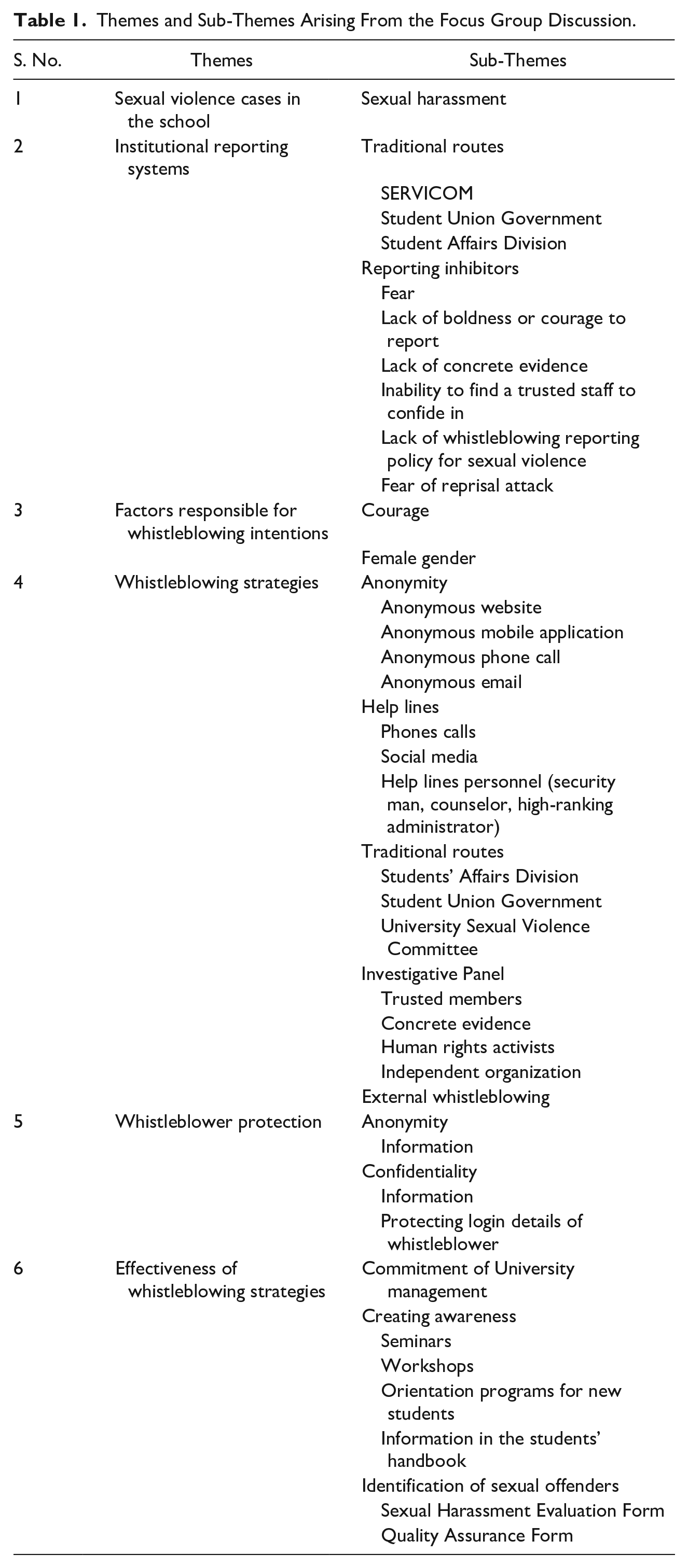
For qualitative analysis, Atlas.ti 8 software was employed in the analysis. The core six steps of thematic analysis (familiarization with data; generating initial codes; searching for themes; reviewing themes; defining and naming themes; and producing the reports) as explained by Kiger and Varpio (2020) was adopted. Thematic analysis was adopted with the intention to identify consistent pattern for whistleblowing strategies for reporting sexual violence, which may be recommended for schools to adopt. The FGD recordings were transcribed, cleaned, and coded. The transcripts as well as the audio recordings were read and listened to several times by the Investigators to ensure that the transcripts were true representation of the voice recordings. Two professional qualitative analysts who worked with the PI were employed for the thematic analysis of the transcripts. An a priori themes (Brooks et al., 2015) method was adopted as the variables in the FGD questions served as a guide in choosing the themes. Hence, six themes were generated and this was followed by exploration of the transcripts to generate important sub-themes (Table 1).
Themes and Sub-Themes Arising From the Focus Group Discussion.
Trustworthiness of Qualitative Data
The trustworthiness of qualitative data was ensured by following the recommendations of Stahl and King (2020): the four key components of credibility, transferability, dependability, and conformability of data. The FGD facilitator cross-checked from the participants their responses to questions in order to verify what they intended. This was done on a regular basis while the discussion was ongoing, and the process of data collection was also assessed for quality and appropriateness. The two qualitative analysts employed reviewed the process of data collection and ensured that findings were consistent and could be repeated. The results from the analysts were compared descriptively and uniform codes were adopted. The Investigators tried as much as possible to prevent personal biases from clouding the FGD results. Statements were transcribed verbatim, and results and meanings were double-checked by the Investigators. An audit trial of the result was conducted to ensure that the correct interpretation of the data was given during the data analysis.
Results
Quantitative
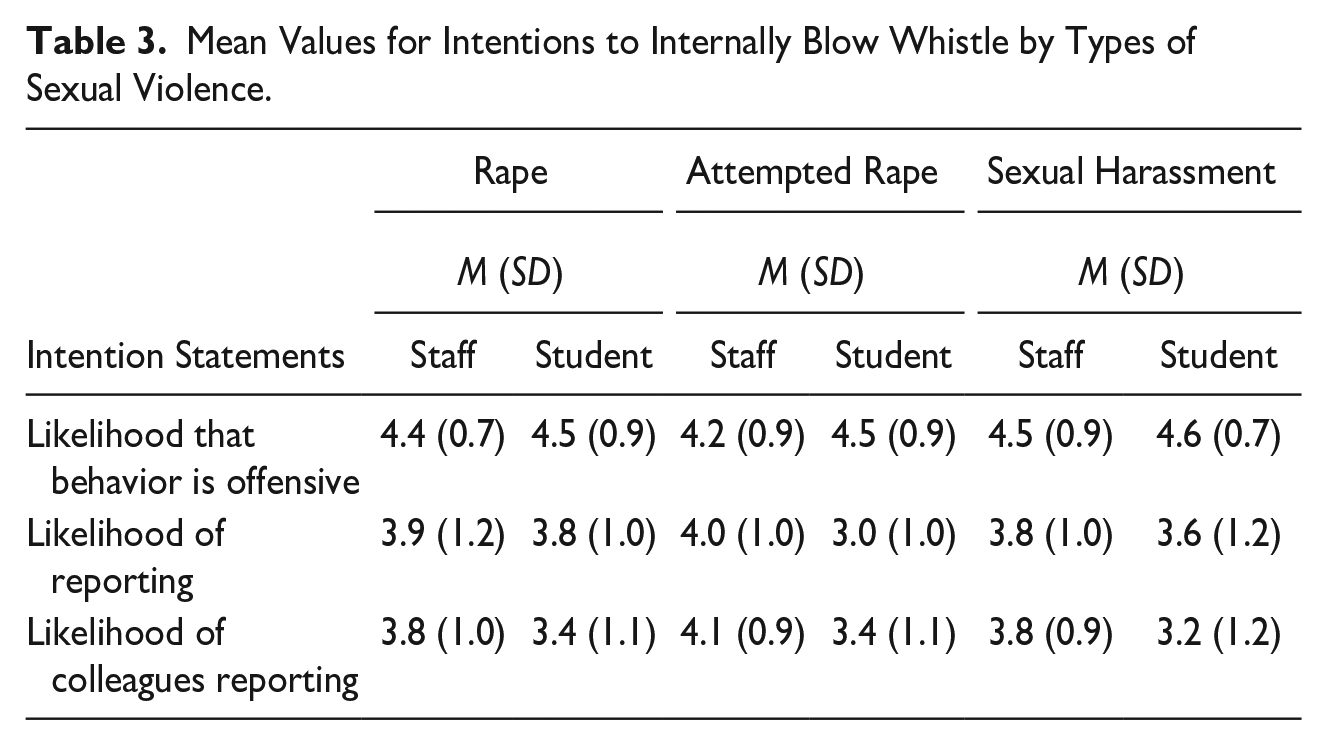
The results showed that 21.9% of the students reported to have experienced sexual violence (Figure 1): 12.3% reported attempted rape, 2.6% reported rape, and 16.1% reported sexual harassment. Findings from the demographic characteristics of the students showed that all the categories of the students experienced sexual violence including male students. Within the tribe category, the students from Igbo extraction, though few in number, 62% of them reported to have experienced sexual violence. Tribe (LR = 11.16; df = 2; p = .004) and sex (χ2 = 12.65; df = 1; p < .001) were significantly associated with their sexual violence experiences (Table 2). Findings further showed that both the students and staff perceived behaviors constituting rape, attempted rape, and sexual harassment as highly offensive (mean >4). The likelihood of them and their colleagues reporting offensive behaviors is minimal (mean <4) except for staff who had high mean values for attempted rape (mean >4) (Table 3). Overall, 50% staff and 47% students had high intention to internally blow the whistle for reporting sexual violence (Figure 2).
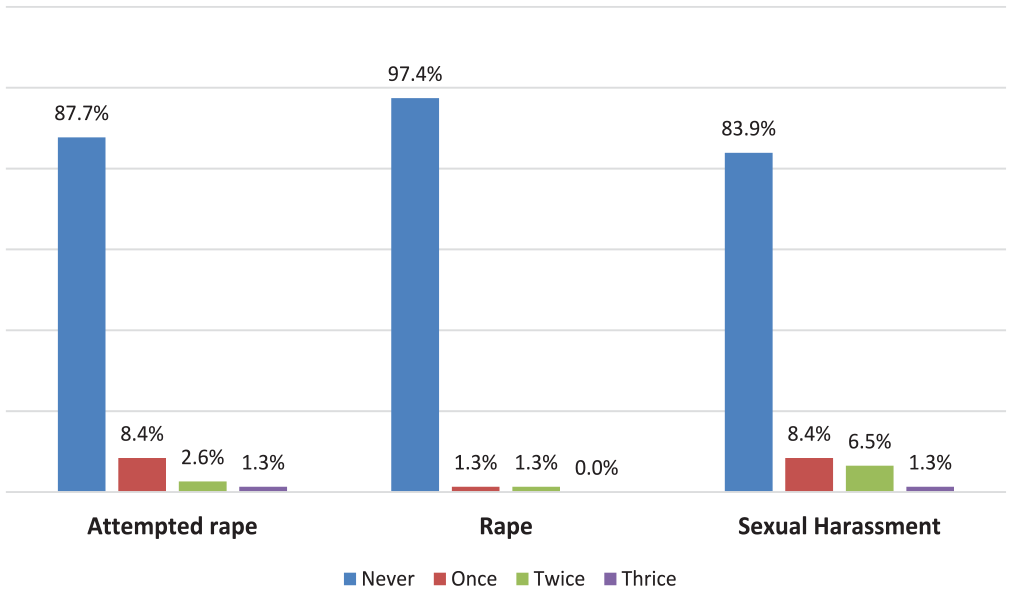
Reported sexual violence experiences of the students.
Socio-Demographic Characteristics of the Students According to Their Experiences of Sexual Violence.
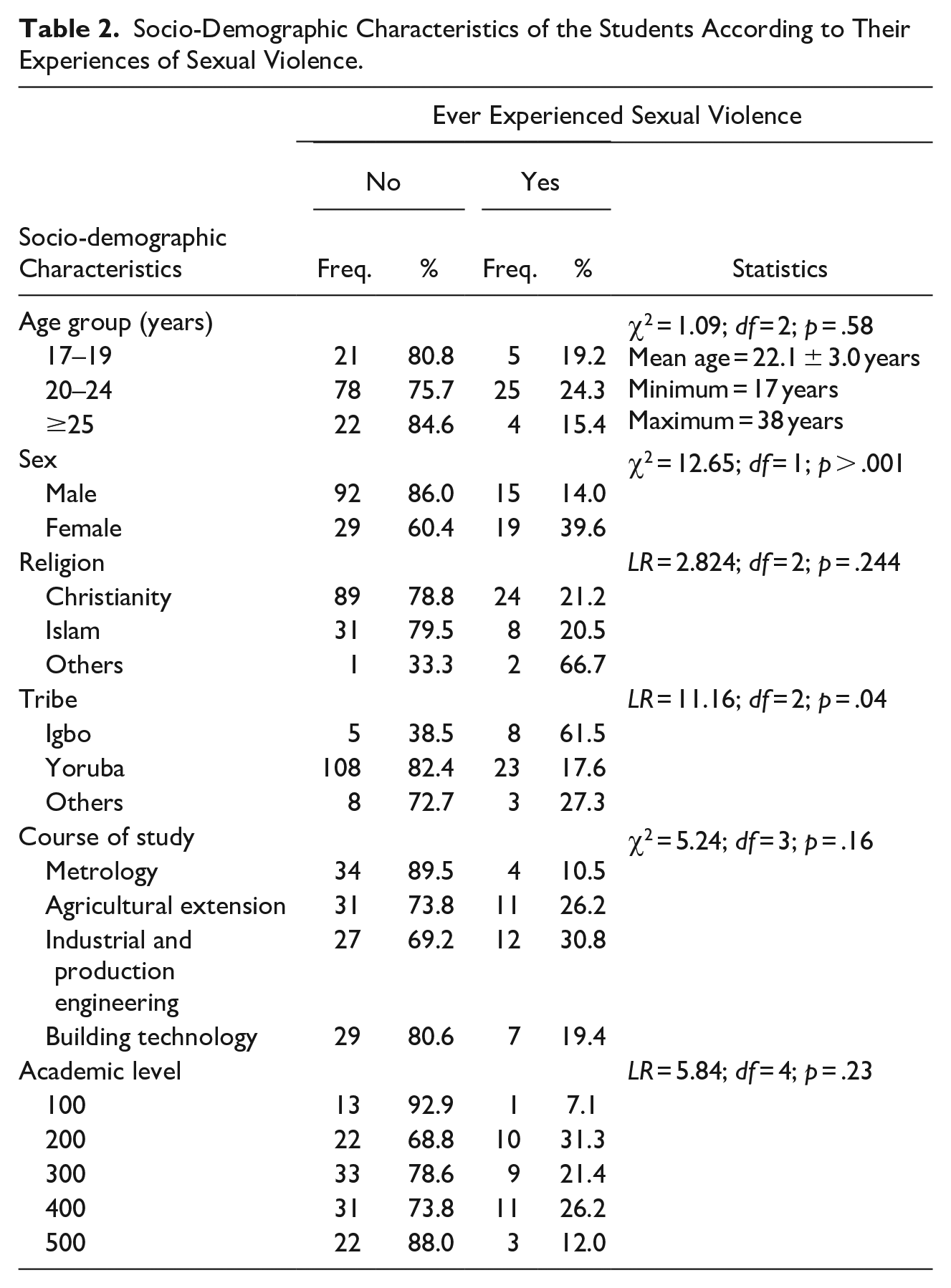
Mean Values for Intentions to Internally Blow Whistle by Types of Sexual Violence.
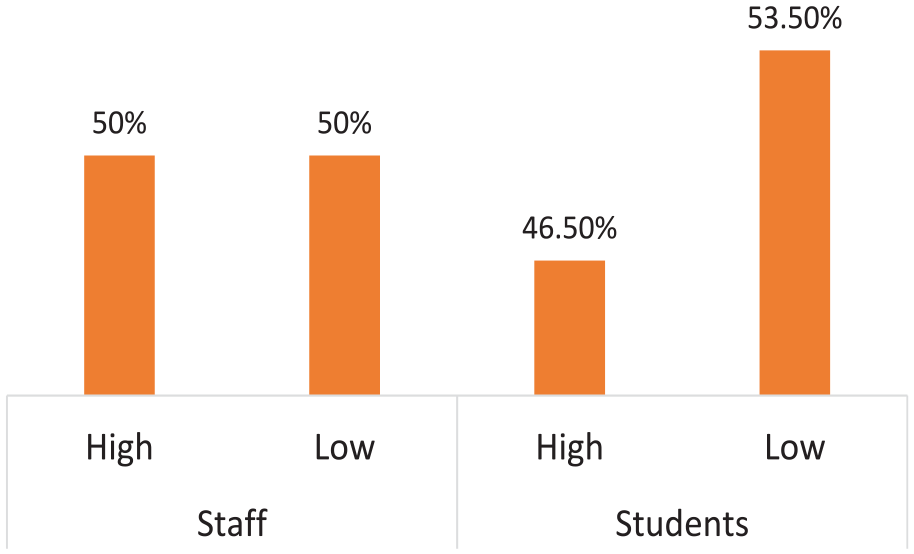
Staff and students’ intention to internally blow whistle.
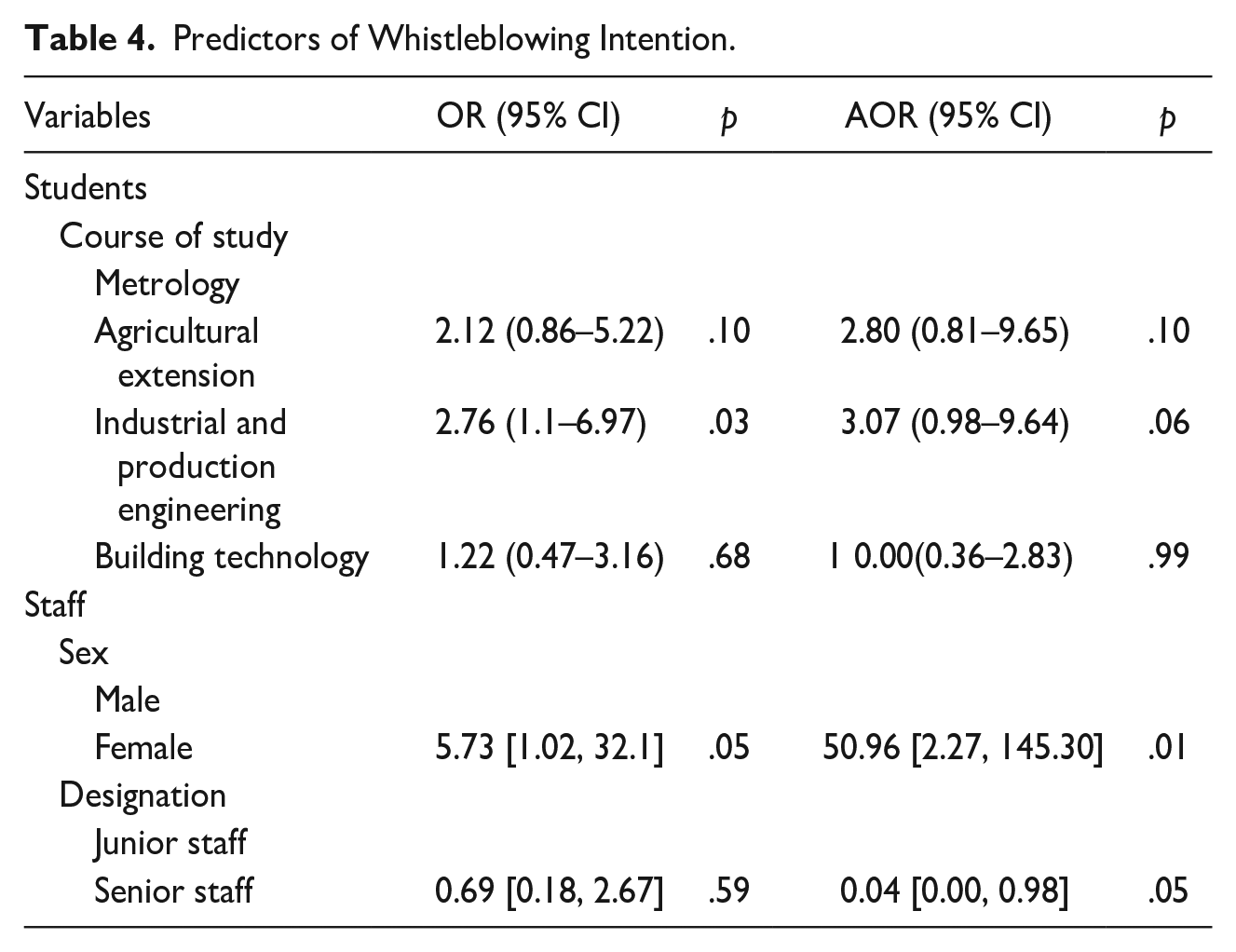
Binary logistic regression analysis showed that industrial and production engineering students will be 2.8 times more likely to have intention to blow the whistle more than other students (p = .03; 95% CI [1.1, 6.97]). Also, female staff have 5.73 odds (p = .05; [1.02, 32.1]) of intention more than male staff and 51 odds when other variables were controlled for (p = .01; [2.27, 1145.3]). However, senior staff will be 31% less likely to blow whistle than the junior staff (AOR = 0.04; [0.00, 0.98]; p = .05) (Table 4).
Predictors of Whistleblowing Intention.
Qualitative
Six priori themes and 14 sub-themes (Figure 3) were extracted from the FGD reports with 78.4% of the quotes linked to the themes. The participants in the student and staff groups agreed on many of the sub-themes extracted. At the commencement of the discussion in both groups, participants denied occurrence of sexual violence in the school “Ah, you know in this school, we have not had such record. . ..” (Student—Participant 5). Later on one of the staff participants boldly mentioned that a niece reported sexual harassment by a lecturer known to him: I had one, my niece, my niece, my niece, and emmh, why I didn’t report it is that, I asked her ‘did you record the conversation? she said no, I now told her, from this day on, anybody who is intimidating you or harassing you sexually, you have a smart phone, immediately, you will just pretend as if you are checking something, and you just switch on the recorder. (Staff—Participant 1)
However, he felt disappointed that the case could not be reported because the niece did not have concrete evidence but he confronted the lecturer who apologized for his unwelcome behavior. In the student group, they denied having any knowledge of sexual violence cases in the school but many of them later agreed in the course of the discussion that such cases exist.
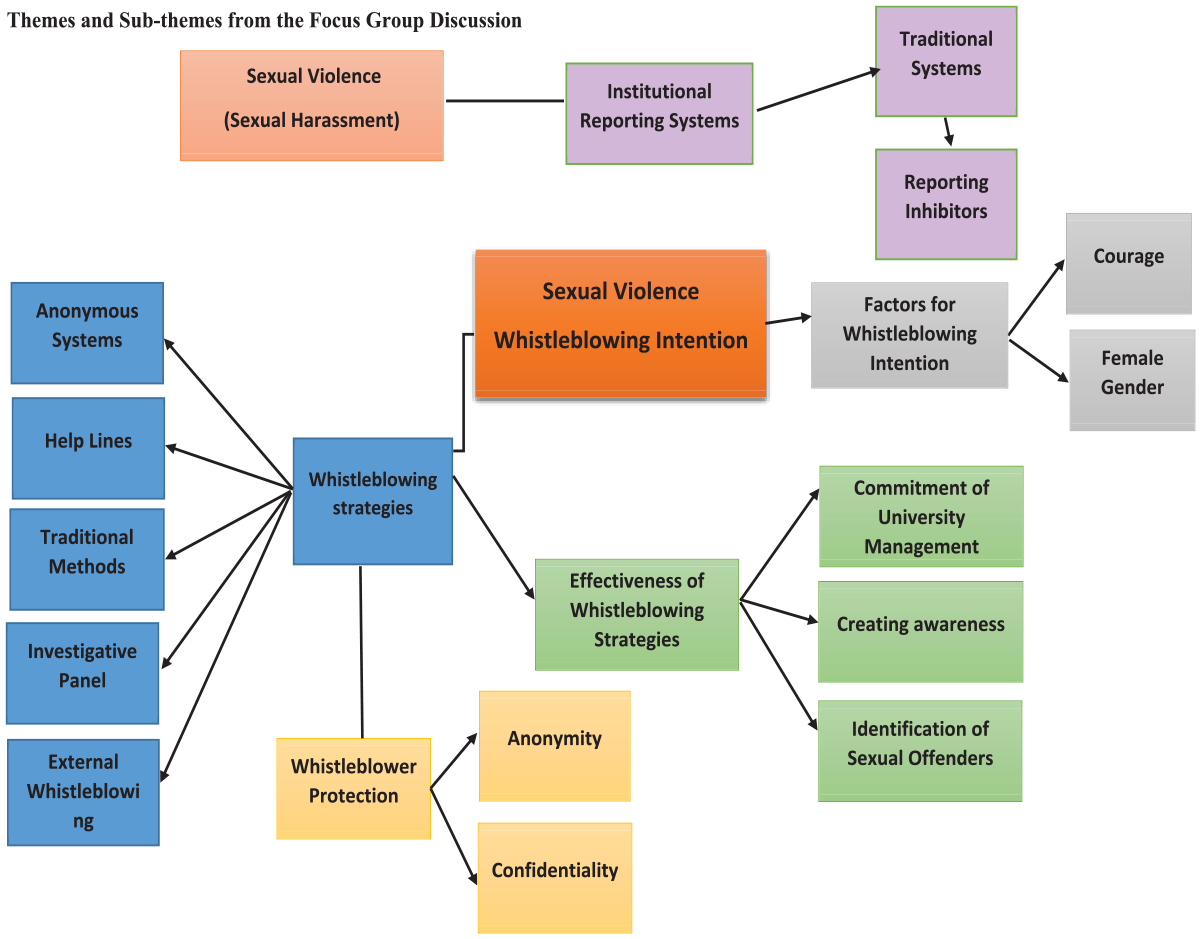
Themes and sub-themes from the focus group discussion.
With the confirmation of occurrence of sexual violence within the school, three recognized institutional reporting systems were mentioned by the participants. These traditional routes are SERVICOM (an acronym for Service Compact with All Nigerians—a Federal Government initiatives), SUG, and Students Affairs Division. In the discussion, it was gathered that these routes were not officially announced as routes for reporting sexual violence but for reporting any unethical behaviors within the school premises. However, the students unanimously agreed that they were not aware of SERVICOM as an office for reporting sexual violence and this was confirmed by one of the students and supported by others: I don’t think the SERVICOM is really functioning as it should, the publicity for SERVICOM is everywhere, but here in this school, it is only at the Students’ Affairs building that you will see the banner of SERVICOM. Most students don’t really know there is something called SERVICOM. (Student—Participant 2)
Whereas, the staff were of the opinion that SERVICOM office is generally meant to handle cases of misconduct including sexual violence, there were divisions among them whether SERVICOM should be saddled with the responsibilities of addressing sexual violence or not. In the student group, the participants stressed that in general the students strongly believed in the SUG ability to resolve and get justice for survivors of sexual violence especially when the victim does not have confidence to report to the school authority. One of the participants shared her experiences on the case that she handled for a colleague: From one case I was able to treat last semester, about eerrmm one particular lady like that, she did not have the courage to meet the Dean of Student Affairs, and she was actually under too much pressure. So, she came to meet me, because she knew I will definitely represent her well, so, she came to meet me and she pleaded that I should keep her identity secured, and I did that, and to God be the glory, the issue was resolved. (Student—Participant 4)
Taking sexual violence cases to the Students’ Affairs Unit was considered not a good option by the students because they were of the opinion that seeing a student at the Students’ Affairs building places a sort of stigma on the student as there is a wrong perception that such student has a particular problem. Hence, students usually avoid going to the Students’ Affairs office to report any case or even for counseling purposes.
At a point in time during the discussion, both students and staff agreed that there were many unreported cases of sexual violence and these were attributed to certain reporting inhibitors such as fear; lack of boldness or courage to report; lack of concrete evidence; inability to find a trusted staff to confide in; and lack of whistleblowing reporting policy for sexual violence. Fear of reprisal attack was the most commonly mentioned reason why victims may not report sexual violence. In the staff group, they unanimously agreed that students’ survivors who were mostly females faced retaliation from colleagues of accused perpetrators who were mostly lecturers thereby making victims not to have boldness to report: I’m talking from the perspective of a lecturer harassing a student now, the student has a lot to risk, and the lecturers have their own “play-like committee,” So they might just say that the girl is not serious, leave her alone, and the case will just die down, and the girl will even regret more and blame herself for reporting in the first place because, the lecturer might not for instance fail her, but he can tell his friends to fail her, and she will be far battling with the problem. So most students might just feel like keeping it to themselves rather than opening up. (Staff—Participant 6)
In exploring the factors responsible for whistleblowing intention, both the staff and the student’s groups affirm that boldness to speak out is a strong factor. There was a unanimous agreement that a whistleblower must have the courage to blow the whistle. Fear of fight-back on the victim was stressed in the staff group as a reason why a whistleblower might not have courage to do so. The staff who reported that her niece was sexually harassed also affirmed that her niece was given a poor grade in one of her courses “. . .they are in the same department and because of that she was marked down in one of the courses. . .” so, that is why I said it will take courage to blow the whistle. . . (Staff—Participant 1). In the student group, aside from being bold and courageous to report, they were of the opinion that female students fall victim more than males and that female gender may blow whistle more than males mostly those in the school of agriculture where there were more female than male students.
In the process of exploring the preferred whistleblowing strategies, the participants were of the strong opinion that using whistleblowing to report sexual violence within the institution is a laudable idea as long as the reporting system is made anonymous. Several strategies were identified: anonymous website; anonymous mobile applications; anonymous phone call; anonymous email; help lines (phone call and social media platforms); reporting to Students Affairs Division SUG; and establishing a University Sexual Violence Committee. Both staff and students’ groups strongly opined that for anyone to internally blow the whistle, the individual must be sure that his/her identity will be safe and secured. Developing an online link where staff and students can report and also upload evidence was suggested. The staff were of the opinion that a software application where a whistleblower can login using his/her recognized identity number is essential. One of the staff participants expressed this opinion on the need to use university recognized ID to login to the web application for reporting and this was supported by others: I think the best option is just to develop a link, that if I should click on, it will take me to a passage whereby I can lay all my reports. I mean even if there’s a form of attachment that I can give, probably voice attachment, or picture attachment, or video attachment, so that will solve all the problem. So, as a staff, I should be able to login with probably my employment number, and as a student, he or she can actually login with his or her matriculation number to submit any form of information. (Staff—Participant 6)
The staff mentioned that the anonymous software application should have similar attributes like the quality assurance application of the university which allows students to go online and assess the lecturer for quality of teaching and instruction. Such an application might also increase the courage of the student who might be fearful to report: There is what we call quality assurance, such that when you go to class, you lecture, if you lecture well, good, if you didn’t lecture well, good, it’s the students that will go online and do a kind of eehmm appraisal on your behalf. It is anonymous so, if you have such an app like that for students that don’t have courage, because we have a lot of them, like the case I talked about. So when we have an opportunity for that type of apps for students and staff, definitely, everybody will say whatever they want to say. That quality assurance is also working well in this school. (Staff—Participant 6)
Aside from the online applications suggested by the staff, the students mentioned that there was an online application that the student community was currently using which was owned by the SUG. The application gives the students the opportunity to report any form of misconduct including sexual violence. They were of the opinion that a similar apps could be used for reporting sexual violence. Aside from the anonymous reporting, the participants indicated the use of help lines either through social media or phone calls in which a trusted personality will be the one to receive the information. There were lots of discussion on the designated officer who should receive the sexual violence information before it is sent to the Investigative Panel. Personnel like the School Counsellor, the Chief Security Officer, and a High-Ranking Administrator were mentioned. However, they were also of the opinion that anyone can be in charge of receiving information but what matters most is the ability of the receiving personnel to keep information confidential. Below is the excerpt from the staff group: The truth is, in this case, if we want to be sincere, the law has to be put in place, whoever that is going to man getting that information, must be somebody who is to keep secret secret, if you cannot keep secret secret, the management should have a penalty for that. Giving him that responsibility, they will spell out the penalty to that person, otherwise, it will destroy the system, if he is not keeping a secret. (Staff—Participant 1)
Still probing on the whistleblowing strategies, the discussion on the establishment of the Investigative Panel for sexual violence showed that the staff did not have any preference on who or which committee or agency should handle cases of sexual violence but the students did. The students emphasized trust as an important attribute of members of the Investigative Panel. They stressed that students must have trust in such members before they can blow the whistle. The students also agreed that there were some perpetual sexual violators whom the management has found it difficult to prosecute and this has reduced the trust the students have in the established Investigative Panel: . . .excuse me, there are some people, some lecturers, that they will tell you, ‘I have been in this school before they gave birth to your father, and they are feeling like “Jagaban” (powerful person) and they keep doing it year in, year out. I attended a Polytechnic before and the management in the real sense will not do anything about it. The perpetrators will tell you “a ti lo, a ti de, ki lo se le, mo so fun yin pe Rector yin gan ko le se nkan kan” (meaning- we have gone to the Investigative Panel and we are back, nothing happened, even your Rector, he cannot do anything about it). (Student—Participant 2)
The students therefore recommended that the school should employ the services of human right activists or an independent organization to deal with cases of sexual violence within the school and that such independent organization should work with the SUG to unravel many cases of sexual violence. They cited the example of KINDSREN CHAMBERS that has been handling cases of misconduct against students within the school and this chamber is a unit under the SUG. While the discussion was ongoing in the student group, a strong controversy arose as to whether internal whistleblowing will be effective or not. After a lengthy deliberation, they unanimously agreed that external whistleblowing will be more effective than internal whistle blowing to ensure instant prosecution of offenders. The students strongly opined that blowing whistle internally will not solve the problem of sexual violence in the institution as many cases are covered up. Therefore, they unanimously agreed that external whistle blowing is the best and ultimate following the submission of a participant: They’ll cover it up ma. The last issue that happened that the President made mention of, they did external whistleblowing immediately. I got a call from a friend in Lagos, UNILAG precisely, telling me “something is happening in your school” and I was not even aware, I had to go online. Linda Ikeji blog has already posted it, eeehhmmm, lots of online media houses have already posted it. Even the management was forced to do something about it because several human rights activists wanted to take it up and they were just awaiting the decision of the management. So, most times, me, I kind of feel external will do, but internal, if the case is not really big, can still do. But for a case that you want justice and you want the management to make decision, and call for panel within 24 hours, me I feel external is better. (Student—Participant 7)
With the opinion of the students on external whistleblowing, this was then explored in the staff group but the staff did not believe in external whistleblowing unless the case was not resolved internally within a stipulated period of time. They were of the opinion that any case of sexual violence should be internally dealt with before it is externalized. They opined that if the case is not resolved within 3 to 6 months, then the case can be externalized: Before you externalize it, you must exhaust all the internal mechanisms to solve those issues, and within a specified period. If those issues are not resolved, and you didn’t see a clear cut policy or action taken by the management, you can now externalize it, you can say within the period of 6 months or period of 3 months. (Staff—Participant 5)
Moreover, the reports of the FGD further showed that protecting the whistleblower was linked to anonymity of information and confidentiality of information submitted by the whistleblower such as protecting the login details of the whistleblower. Both staff and students’ participants believed that if the receiving personnel is able to ensure confidentiality of information and the platform for receiving the information is also secured, then the whistleblower will be protected from reprisal attack. Most importantly, the staff stressed that having an online reporting system in which the login information of the whistleblower cannot be traced is important in protecting the whistleblower: Probably, I will suggest a link or apps that will be developed in such a way that I will have login details that will take me there as a staff, or as a student. Thereafter, any other information that I am going to put on it should protect my image. If I can have access to the web address of the institution, I will just go there, log in, after logging in as a staff or student, anything I put there, I should be protected and should not be linked to me. It’s more or less like I want to open this door now, I logged in, it accepted my login details then, the login details should just disappear, so any other information I’m filling, they shouldn’t know the person putting it there, so with that, we will be able to protect the person blowing the whistle. (Staff—Participant 6)
To wrap up the discussion, the participants concluded that effectiveness of the whistleblowing mechanism depends on the commitment of the university management to make the mechanism work. This was discussed in the staff group as similar to effective implementation of any policy: Let me tell you, when policies are made, the way that policy works depends on the people who implement that policy. We can make good policy, for example, we have good policy, but at the point of implementation, the policy looks useless. It’s the management that should decide that. (Staff—Participant 2)
In order to make the whistleblowing strategy effective, there was a suggestion that creating awareness through seminars or workshops on the sexual violence whistleblowing mechanism as well as its policy is essential for its effectiveness. They mentioned that whistleblowing strategies for the school should be incorporated into the orientation program of new students and the students’ handbooks as well. The staff participants were of the opinion that creating awareness on sexual violence whistleblowing strategies is a means of instilling boldness on the students to report. As part of the process of ensuring the effectiveness of the whistleblowing blowing mechanism, there was a suggestion on the regular identification of sexual offenders. The student group suggested that Sexual Harassment Evaluation Form should be filled by every student at the end of every academic session while the staff suggested a prototype of the University Quality Assurance Form. According to them, the forms will expose frequent cases of sexual violence by perpetrators most especially academic staff: Yes, the other thing, I can suggest is eerrhmm, there should be eerhm, an evaluation form on sexual harassment which they will share out to the students’ populace, okay, and even to members of staff. If a particular staff member is having a very high level of report on him, then it means that something is fishy about that person, and if a case is now reported against that person, then, it should be taken up immediately without thinking back. This form is basically for sexual harassment, okay. By the time you are getting almost everybody, may be 70% or 65% people saying this person harasses, it means he is known for that thing. So the person should be sent a warning letter or something, then if a case is now reported against him, action should be taken. (Student—Participant 7) . . .yes, let me give you an instance concerning X (name of school withheld) so to say, there is what we call quality assurance, in which students go online, to go, and do a kind of eehhnn appraisal on your behalf. So, if you have such an app like that for students that don’t have courage, because we have a lot of them, like the case I talked about. . . (Staff—Participant 3)
Discussion
The findings from this study are another confirmation of the occurrence of sexual violence in tertiary educational institutions. Both the qualitative and quantitative findings showed there were incidences of sexual harassment, rape, and attempted rape in the study setting. In a previous study of tertiary educational institutions in Imo Sate, the prevalence of sexual violence as at the time of the study was found to be 15.2% (Duru et al., 2018), which is less than the findings in this study (21.9%). Although, the culture of silence has shrouded sexual violence in secrecy in Nigeria thereby making the statistics to be far from reality, the fact remains that sexual violence is still a regular occurrence in tertiary institutions in Nigeria.
The demographic characteristics of the students show that every category of the students experienced sexual violence including the males with a significant association being observed between sex and tribe of the students. It is a general finding all over the world that females experience sexual violence more than males and this was also documented in the global report of WHO (2021) that one in three young females have been sexually violated. Adeleke et al. (2016) has also documented that males in tertiary institutions in Nigeria also experience sexual violence. Over the years, researchers have recommended the need to focus on diversity in sexual violence studies (Bent-Goodley, 2021; Tajima, 2021). Sexual violence is seen differently in many climes, cultures, and ethnicity and is experienced differently by different people. The issue of diversity is observed in this study with the higher percentage of Igbo students experiencing sexual violence compared to students from other tribes, even though the number of Igbo students is few in the study. The study of Wood et al. (2021) has found that ethnicity is associated with sexual harassment among students in institutions of higher education. As far back as two decades ago, the study by Okemgbo et al. (2002) in Nigeria explained that sexual violence is prevalent among Igbo women, but we were unable to lay our hands on studies that assessed this variable in relation to other tribes. It is high time program planners and researchers started focusing on how sexual violence is experienced by people of different tribes, race, and ethnicity especially among higher education students.
In the study setting, only three major routes of reporting were identified and these routes according to the participants were not officially announced nor documented as means of reporting acts of sexual violence. In many Nigerian institutions, there have been complaints of lack of identified routes of reporting sexual violence which has also contributed to the non-disclosure of sexual victimization. Nonetheless, with the identified routes, the students preferred to report sexual violence to the SUG. Over the years, it has been observed that the SUG supports the university administration in character building of students by playing advisory roles on possible disciplinary actions; fish out unruly behaviors; and gather useful information and forward same to the university management (Emesini, 2016). Anecdotal evidence has shown that the SUG in many institutions in Nigeria have been able to serve as advocates for their colleagues against violation of their fundamental human rights. The students in this study have strong confidence in the support of the SUG to get justice for their colleagues in sexual violence cases. We are of the opinion that SUG in every institution should be strengthened and supported to play this role. The university administration should involve them in either identifying perpetrators, being members of Investigative Panel, or serving as the liaison between survivors and the Investigative Panel. This might also increase the boldness of survivors to report internally instead of employing the external whistleblowing strategies.
Furthermore, it is not new that survivors of sexual violence especially the youths are not bold enough or have confidence to report their sexual violence experiences. This has been associated with stigma (Apatinga & Tenkorang, 2022), fear, and self-blame (Orchowski et al., 2022). However, in the school system, non-reporting of sexual violence has been associated with retaliation from the perpetrators (Binder et al., 2018) and power asymmetry (Aguilar & Baek, 2020). Generally, courage and boldness are essential attributes for reporting sexual violence as found in this study which were also reported in the studies of Blenkinsopp et al. (2019) and Ion et al. (2015). nurses were reported to need resilience, confidence, and moral courage to be able to blow the whistle for wrongdoing in health institutions. To overcome the problems of fear and courage in blowing the whistle, the staff participants were of the opinion that creating awareness of whistleblowing strategy will be an effective way of reporting sexual violence thereby reducing its incidence. Expanding knowledge and awareness of sexual violence have been documented to be associated with sexual violence prevention (Joy et al., 2021; Tredinnick, 2022) more so when such awareness is via formal programming (Quigg et al., 2021) and media advertisement (Frentzen et al., 2022). Awareness creation on sexual violence should be incorporated into school programs on a regular basis as this will not only promote whistleblowing activities but will also instill confidence in the students to blow the whistle. It should also be noted that awareness creation on sexual violence whistle blowing should be for all category of students and staff such that the metrology students and the senior staff will also see it as a point of duty to report any act of sexual violence against the fellow students or colleagues.
The issue of trust is essential for effective reporting. Getting a trusted staff to confide in and to also be a member of the Investigative Panel is paramount in fairness and justice when a sexual violence case is to be determined. The TRUTH mnemonic of Higgins and Reitz (2019) was explained as the capacity to trust in the value of one’s opinion and that of others and these values are essential in whistleblowing. These two attributes are the students’ desire for effective reporting. Therefore, educational institutions should start to build trust among their staff and students if they are committed to effective implementation of internal whistle blowing strategies for sexual violence prevention.
Moreover, it is worrisome that only 50% of staff and 47% of students were willing to blow the whistle despite the fact that majority of them considered rape, attempted rape, and sexual harassment behavior as offensive. The reason for this might be attributed to lack of courage, fear of retaliation as expressed by the participants hence, their suggestions for anonymous mode of whistleblowing. All over the world, anonymous whistleblowing has been very effective because, whistleblowing can be life- and career-defining for the blower (Higgins & Reitz, 2019). According to Gagnon and Perron (2020), the five major attributes of whistleblowing are act of disclosing; ethical dilemma; clash of loyalty; risk-taking; and polarizing identity. Four of these attributes also warrant that a whistleblower keep his/her identity safe and this speaks as to why a whistleblower will want to blow anonymously. Although there have been many controversies as to the effectiveness of whistleblowing when the report or the reporter is anonymous, Healy (2022) has argued that anonymous whistleblowing is superficially appealing but might generate more problems than solving it in the short term. His argument further states that it is important to identify the features of the systems that generate problems and correct them rather than relying on insiders to blow the whistle. Considering the nature of the school setting where authority power is mostly in display between the teacher and the students, it will be appropriate to make reporting anonymous and further investigation can then reveal the identity of the whistleblower that will be protected from the public.
The various whistleblowing strategies mentioned by the participants as important for internal whistleblowing should be considered, explored, and analyzed for suitability for implementation in higher educational institutions. The sexual violence evaluation form as suggested in the discussion is a good initiative if the institution can adopt this. This will serve as an opportunity for early identification of perpetrators and curb the occurrence of sexual violence within the institution. The sexual violence evaluation form can be an online form that will be filled by the students and staff at the end of each academic semester or session.
The effectiveness of internal whistleblowing for reporting sexual violence was hinged on the commitment of the university management. Whatever strategy that is put in place for blowing the whistle will only be effective with the support of the administrators. This can be compared to what Blenkinsopp et al. (2019) referred to as “safe organizational culture for reporting.” Literature has on a number of times documented the importance of supportive and ethical leadership in the success of whistleblowing policy and in promoting ethical behavior (Culiberg & Mihelič, 2017; Wen & Chenc, 2016). Organizational inefficiency also negatively impacts the benefit of speaking up on a misconduct (Rauwolf & Jones, 2019). Enabling whistleblowing reporting in the school environment is a significant responsibility of the administrators provided there is effective implementation of the whistleblowing mechanism.
Limitations
Many members of the academic staff were reluctant in participating in the study; hence, a resampling was done when the Investigators met with rejection from some members of staff. Also, the Executive Officers of ASUU refused to participate in the FGD and they were therefore replaced with two ASUU members who were not necessarily Executive Officers of the association. This is a case study and cannot be generalized to the entire universities in Nigeria.
Future Research
Future research should sample students and staff from the three categories of tertiary institutions in the country (polytechnic, college of education, and university). Such studies should be conducted in all the six geopolitical zones of the country.
Conclusion
This study concluded that sex and tribe are significant characteristics for sexual violence victimization among university students. Staff and students will only blow whistle internally if anonymity is ensured; awareness of whistleblowing strategies is created to increase the boldness and courage of the whistleblower. The commitment of university administrators is essential for effective internal whistleblowing strategies.
Footnotes
Acknowledgements
We acknowledge the following for their support for the study: (a) The Tertiary Education Trust Fund (TETFUND) for funding the research; (b) The university management of the study site for giving approval to conduct the study; (c) The students and staff who participated in the study; (d) Mr. Adeniyi Onafadeji who assisted in the questionnaire administration; and (e) Dr. A. A. Dada who assisted in getting approval to conduct the study in the university.
Declaration of Conflicting Interests
The author(s) declared no potential conflicts of interests with respect to the authorship and/or publication of this article.
Funding
The author(s) disclosed receipt of the following financial support for the research and/or authorship of this article: This study was funded by the Nigeria Tertiary Education Trust Fund (TETFUND) under the 2019 National Research Fund (NRF), Number HSS/24/Vol.1.
