



Abstract
This study provides critical evidence of the diversity of college students’ experiences with intimate partner violence (IPV) and their informal and formal help-seeking behaviors at a historically Black college and university (HBCU). The study collected data on college students (N = 266) in fall 2021 using a one-site cross-sectional survey data. Findings revealed that many students at the HBCU reported IPV victimization (68.4%), IPV perpetration (68.0%), and coexperience of IPV victimization and perpetration (61.3%) in the past 12 months, but a few student survivors of IPV sought help from formal or informal support systems. Further, we found that IPV victimization types (e.g., physical, psychological, sexual abuse, and injury) with different severity levels (e.g., less severe or more severe) were differently related to the student survivor’s help-seeking behaviors from formal and informal support systems. The findings of this study highlight the importance of supporting students attending HBCUs by addressing their perceptions of IPV help-seeking and coping with different types of IPV victimization via culturally tailored IPV prevention programs. HBCU campuses should promote physical health and mental health services for Black/African American survivors in HBCUs.
Keywords
In 2013, to prevent intimate partner violence (IPV) and sexual assault and support the rights of survivors, the passage of the Campus Sexual Violence Elimination (SaVe) Act (2013) mandated that institutions of higher education implement culturally relevant and responsive IPV prevention programs. As a foundational step toward meeting this critical mandate, researchers must identify and address knowledge gaps in our understanding of IPV among historically Black colleges and universities (HBCUs). Investigating the experiences of students at the HBCUs should be a priority, as much of the available knowledge on IPV among college students derives from studies implemented at predominantly white institutions (PWIs) focusing on prevalence, risk factors, and help-seeking and IPV prevention programming (Barrick et al., 2013). While research on the IPV experiences of students enrolled at PWIs is necessary for building our knowledge base regarding how to prevent and address IPV among college student populations, it does not capture the distinct experiences of IPV and IPV help-seeking of students enrolled at HBCUs ([An et al., revise and resubmit; Jones & Philips, 2020; Paat et al., 2021) and is thus inadequate for guiding the development of IPV prevention programming at this type of institutions.
IPV Among College Students in HBCUs
Scholarly understanding of college students’ experiences with IPV in HBCU settings is limited in that studies have not assessed various types of IPV, focusing instead on sexual assault victimization, and have not included college student men. The study conducted by Barrick et al. (2013) has been the only study for many years that investigated IPV victimization among Black college students attending an HBCU. Findings of the study revealed that 64.7% of the college women (N = 3,951) attending four HBCUs in North Carolina experienced at least one incidence of IPV victimization in the past 12 months (Barrick et al., 2013). More recently, with a smaller sample size (N = 128) of college women attending two HBCUs in the southeastern area, Hall and Jones (2022) also reported 40.6%–90.6% of the students experienced at least one to three incidences of different types of IPV victimization in the past 12 months. Neither study included men in their assessment of IPV experiences.
While a majority of student populations in HBCUs are Black/African Americans, studies have noted that college students in HBCUs (Barrick et al., 2013; Hall & Jones, 2022) and Black/African American students in PWI settings are more vulnerable to IPV victimization and perpetration than their white counterparts (Gill et al., 2020). Field et al. (2015) found that students attending two U.S. HBCUs (n = 364) were nearly twice as likely to perpetuate severe IPV toward a partner compared to those attending three U.S. and Canadian PWIs (n = 809). Additionally, Gill et al. (2020) found racial differences in different types of IPV victimization in the past 12 months among female college students (N = 982) using data from seven PWI and HBCU colleges in Georgia. Compared to their white, Asian, and “Other”-raced counterparts, Black/African American college women in the sample were most vulnerable to IPV victimization across all types of physical assault, injury, psychological aggression, and sexual aggression. The evidence from both HBCUs and PWIs tends to suggest that Black/African American college students face a greater risk of IPV than students of other races, yet more evidence of IPV risk among students in HBCUs or Black/African American students is needed to increase campus IPV prevention stakeholders’ awareness of disproportional experiences of IPV among these at risk populations and help design a prevention program that is tailored to HBCUs.
Finally, college students tend to be both a survivor and perpetrators of IPV in intimate relationships (that is, to exhibit co-experience of IPV victimization and perpetration) than a perpetrator only or a survivor only (Edwards & Sylaska, 2013; Kaukinen et al., 2015), but there is scarce evidence of diverse forms of IPV experience in HBCUs. This pattern of co-experience of IPV is consistent across gender and race/ethnicity (Meade et al., 2017; Varlioglu et al., 2022). Yet it also appears to disproportionately affect Black/African American college students and particularly Black/African American college women based on available evidence. In an examination of the risk of IPV victimization and perpetration by race and gender, Kaukinen et al. (2015) found that women and Black/African American college students were at greater risk for participation in IPV as both survivors and perpetrators. Similarly, Walley-Jean and Swan (2009) found that 87% of the Black/African American college women in their sample (N = 82) reported co-experience of IPV within the past 12 months, whereas just one reported IPV perpetration only and just one reported IPV victimization only. While these initial findings indicate that it is hard to completely distinguish IPV survivors from IPV perpetrators in some cases (or assume IPV is always necessarily gender-based violence), HBCU-based data that describe both IPV victimization and perpetration will be helpful to understand various IPV experiences among college women and men.
IPV Help-Seeking Behavior Among College Students in HBCUs
While not seeking assistance places college students at heightened and perpetual risk of IPV and its associated adverse mental and physical health and academic consequences (Paat et al., 2021; Pengpid & Peltzer, 2020; Seon et al., 2022; Voth Schrag & Edmond, 2018a), existing evidence leaves unanswered questions about how both college women and men in HBCUs seek help regarding IPV beyond sexual assault and what factors are associated with their help-seeking. Few studies have found that Black/African American college students are less likely to seek help from formal IPV services. According to Lipson et al. (2022), U.S. Black/African American college students were least likely to engage in formal mental health help-seeking behaviors compared to white, Latinx, and multiracial students. Similarly, specific to IPV, findings from a study (An & Choi, 2018) of eight colleges in the U.S. and Canada indicated that Black college students sought formal or informal help for IPV significantly less (21.5%) than students who comprised the sample (45.4%; Choi et al., 2021), and that Black college students, in particular, were less likely to use formal IPV services.
While these studies have examined Black/African American college students’ IPV help-seeking behaviors across colleges and universities broadly, evidence of help-seeking behavior research on students attending HBCUs has focused almost exclusively on sexual assault survivors’ help-seeking. Here, too, findings indicate that college women attending HBCUs were far more likely to report sexual assault victimization to informal support systems than to more formal systems. In earlier work, Krebs, Barrick et al. (2011), Krebs, Lindquist et al. (2011) revealed that 38.4% of forced sexual assault female survivors by an intimate partner in HBCUs reported the incidence to friends or family, victim support agencies or law enforcement. Lindquist et al. (2016) found that among physically forced sexual assault female survivors at four HBCUs, 13.9% reported this assault to victim support agencies, and 9.87% reported it to law enforcement, whereas 69.29% disclosed the assault to family and friends. Another study of female and male undergraduate students attending an HBCU (Collington et al., 2019) found that only a minority of students who experienced sexual assault received medical treatment (22.2%), counseling services (25.9%), and advocacy services (7.4%), whereas a majority of these students told a close friend and a plurality did not inform anyone.
While students in HBCUs or Black/African American college students seem to leave their sexual assault-related mental and physical health issues untreated, existing evidence has a substantial gap in explaining how survivors of various IPV types in HBCUs utilize help-seeking from formal or informal support systems and why they make such decisions. In non-college samples, a systematic review found racial differences in the utilization of specific types of formal IPV resources: namely, after experiencing IPV, ethnic minority women were more likely to engage in physical health and legal services, while white women were more likely to engage mental health and social services (Satyen et al., 2019). On the other hand, Black/African American women consider many factors in their help-seeking process following IPV victimization. For example, one factor was elevation of IPV (when “the nature, severity, and frequency of the abuse worsened throughout the duration of the relationship,” Waller et al., 2023, p. 7180) so that they finally sought help from police or other formal services (Bent-Goodley et al., 2023; Waller et al., 2023). In other cases, most survivors stopped navigating formal services after experiencing barriers to support from these help-seeking systems (e.g., not being believed by the provider and not receiving immediate service) (Bent-Goodley et al., 2023; Waller et al., 2023). Research findings have yet to provide clear evidence as to different types and severity levels of IPV among college women and men survivors attending HBCUs and why they underutilize help-seeking, especially regarding formal help-seeking.
Present Study
Given several persistent gaps in the literature, we seek to build on extant knowledge of help-seeking behavior among college students by examining the informal and formal help-seeking behavior of college students who have experienced IPV and are enrolled at an HBCU. While studies conducted with non-college populations have consistently shown that racial/ethnic minority women underutilize formal help-seeking (Holliday et al., 2020; Hulley et al., 2022; Lucea et al., 2013), comparatively limited evidence describes the IPV help-seeking behavior of students attending HBCUs. The present exploratory study addresses two research questions: In an HBCU, (a) What types of formal and informal support do survivors of IPV use, and (b) Do these support systems used by survivors of IPV differ by type and severity of IPV?
Methods
Research Design and Data Collection Procedures
The current study employed a cross-sectional survey design and non-probability sampling technique. Undergraduate students attending one HBCU participated in the study. Institutional Review Boards at the authors’ universities approved this study. Participants were recruited via undergraduate student listservs and university communications to the HBCU’s entire student population that included an anonymous online Qualtrics survey link. The Qualtrics homepage for the survey described the purpose of the study, benefits of participating in the study, ethical issues related to anonymity, and voluntariness. Prior to taking the survey, participants provided electronic consent via Qualtrics’ online survey software. The online survey took approximately 15 min to complete. At the end of the survey, participants could enter their names in a raffle to win one of twenty $25.00 gift cards. Questionnaire data were collected over a two-month period in the fall semester of 2021.
Sampling and Sample Characteristics
The sampling frame for this study was the undergraduate population of a large HBCU in the southeastern region of the U.S. in the fall semester of 2021; the sampling frame totaled 10,798 undergraduate students. An a prioi analysis was conducted to determine the needed sample size to achieve a 5% margin of error and 95% confidence interval, which was calculated to be n = 371. Among 537 respondents who began the survey, a total of 361 respondents completed the survey via Qualtrics between November and December 2021. Nine cases were excluded for missing values for IPV incidence, and eight cases were deleted as they were graduate students. To be included in the analysis, students needed to be 18 years of age, classified as an undergraduate student, and have been in an intimate partner relationship since college enrollment and in the past 12 months. Among 344 cases, a total of 78 cases (22.7%) were excluded from the analysis because 67 respondents did not report having an intimate relationship since their college enrollment and 11 respondents indicated that they did not have an intimate partner in the past 12 months. The final sample comprised 266 undergraduate students.
The sample characteristics, including IPV experiences, IPV types, and severity, are reported in Table 1. Of these 266 participants, participants’ mean age was 21.6 years. A majority of them were Black/African American (87.6%), and 5.6% identified as Biracial/Multiracial, 3.0% identified as white, 2.3% identified as Latinx/Hispanic, 0.4% identified as Native American, and 1.2% identified as other races/ethnicities. The majority of participants identified as female (83.8%), male (13.9%), or nonbinary (2.3%). Overall, IPV experiences in the past 12 months that were categorized into three forms were concerning: IPV victimization (68.4%), IPV perpetration (68.0%), and co-experience of IPV victimization and perpetration (61.3%).
Sociodemographic and Intimate Partner Violence Characteristics (N = 266).

Note. IPV = intimate partner violence.
Measures
IPV Type and Severity
Participants’ experiences of IPV were measured using the Conflict Tactic Scale 2 (CTS 2) Short Form (Straus & Douglas, 2004). The CTS 2 short form (18 items, reliability: 0.82) assesses IPV victimization and perpetration experiences in the past 12 months in the following types of abuse: physical abuse (four items), injury (four items), psychological abuse (six items), and sexual violence (four items). For each type of abuse, one or two of the items indicated more severe abuse or less severe abuse, respectively. Participants rated the frequency of both their own and their partner’s behavior, and their ratings were summed and recoded as binary variables (0 = never perpetrated or never been victimized; 1 = ever perpetrated or ever victimized). Co-experience of IPV victimization and IPV perpetration was also calculated as a binary variable (0 = did not co-experienced IPV victimization and perpetration; 1 = co-experienced both). We categorized victimization with (a) less severe IPV and (b) more severe IPV in each type of IPV (e.g., less severe physical abuse, more severe physical abuse) into binary variables (0 = never experienced, 1 = ever experienced).
Help-Seeking Behavior
IPV help-seeking refers to an IPV survivor’s behavior of seeking help from formal and/or informal support systems (Choi et al., 2021; Lelaurain et al., 2017). Formal IPV help-seeking indicates that an IPV survivor is reporting IPV to an established IPV service system (e.g., police, mental/physical health care service systems on or off campus). Informal IPV help-seeking refers to an IPV survivor’s disclosure of IPV to personal support systems such as friends, families, and persons whom the survivor trusts. Reporting or disclosing an experience of IPV is a common indicator of IPV help-seeking behavior (Schramm et al., 2023). In this study, formal help-seeking behavior was assessed by asking, “If you have ever experienced physical, psychological, or sexual abuse by a partner, how many times have you reported the experience or these experiences to the police?” and “how many times have you told a doctor, nurse, social worker, counselor, or other health professional about the experience or these experiences?” Responses to these questions included: never, once, 2 to 3 times, 4 to 5 times, and more than five times. The formal help-seeking was recoded into a binary variable: 0 = never, 1 = once or more.
Informal help-seeking behavior was assessed by asking, “If you have ever experienced physical, psychological, or sexual abuse by a partner since you have been an adult, how many times have you told a family member or friend about the experience or these experiences?” and “how many times have you told a mentor or someone you trust (other than a family member or friend) about the experience or these experiences?” Responses to these questions included: never, once, 2 to 3 times, 4 to 5 times, more than 5 times, and not applicable. The use of informal help-seeking was recoded into two response options: 0 = never, 1 = once or more.
Reasons for Not Seeking Help
Participants who indicated an IPV experience but did not seek help were asked why. The survey provided 10 reason statements for not seeking help from police, health professionals, friends/family, or someone else who they can trust (e.g., the reason for not telling the police about the experience or these experiences was fear of retaliation from the abusive partner, or I cannot trust them with to help me). Participants could indicate all that apply to them. The reason statements were adapted from measures of reasons for not seeking help in the previous literature (Cho et al., 2020; Langton et al., 2012).
Gender Identity and Race
Participants’ gender identity was identified via seven options, including non-binary, transgender, gender questioning identities/expressions, gender-nonconforming, not listed, and prefer not to say. Responses were then categorized as either male, female, or non-binary (1 = male, 2 = female, 3 = nonbinary). Participants identified their race/ethnicity (e.g., Biracial/Multiracial, white, Latinx/Hispanic, Native American, other races/ethnicities), and their response was categorized into two values (1 = Black/African American and 2 = other races).
Analysis
SPSS 28.0, IBM® was used to analyze data. Descriptive statistics were used to examine sociodemographic and IPV characteristics, IPV help-seeking behavior, and reasons for not seeking help among the sample. Chi-square/Fisher’s Exact test analyses were conducted to examine differences in help-seeking behaviors by gender, race, and IPV type with different severity levels.
Results
Types of IPV Help-Seeking Behavior
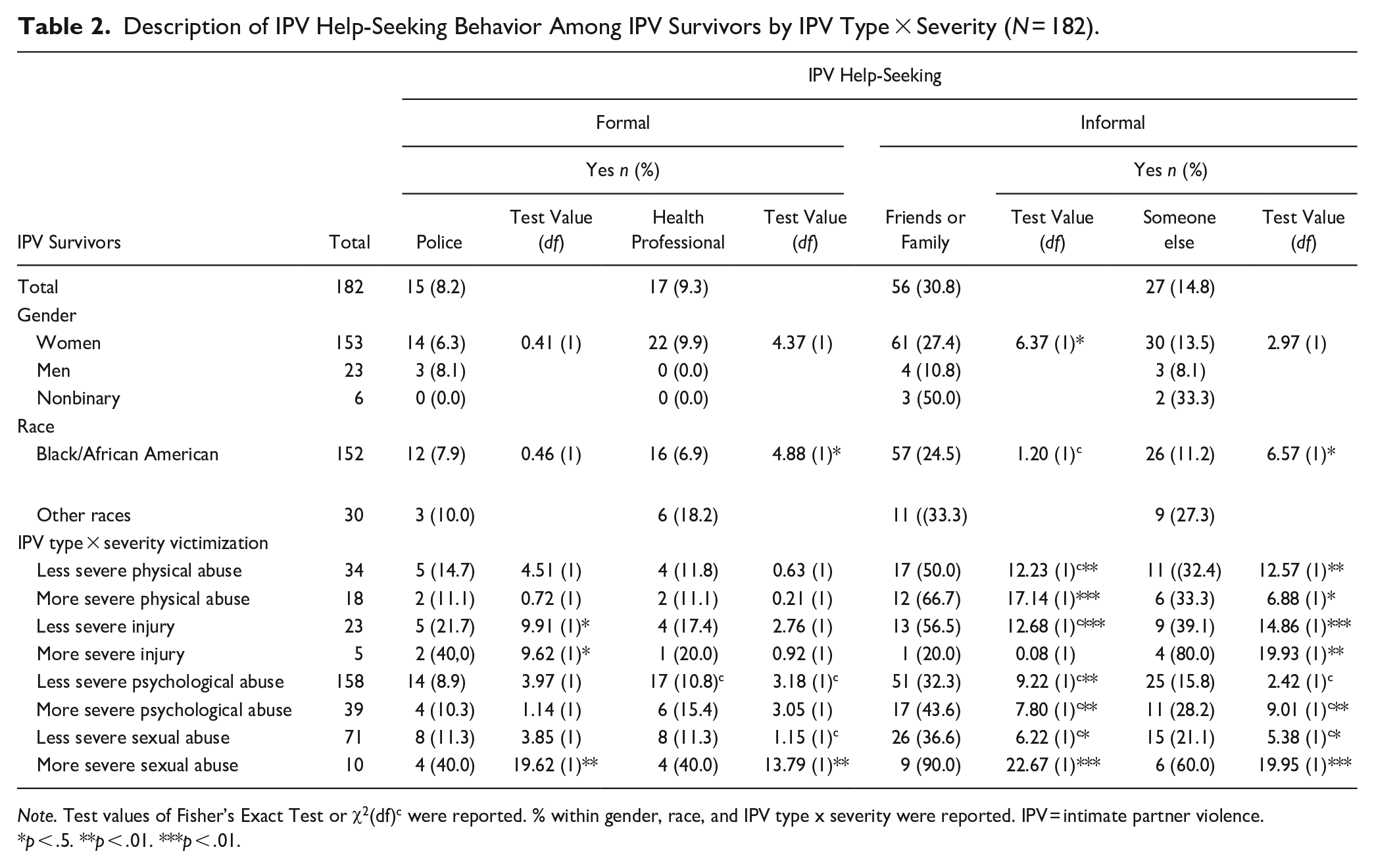
Table 2 shows what types of help student survivors of IPV in the past 12 months used formal and informal help-seeking systems. Compared to informal help-seeking, formal help-seeking was much less common among IPV survivors. Only 8.2% sought help at least one time from police, and 9.3% sought help at least one time from other health professionals (e.g., a doctor, nurse, social worker, counselor, or other health professional). In contrast, 30.8% of participants who experienced IPV sought help from their family or friends, and 14.8% of them sought help from someone else that they trusted. Student survivors of IPV who ever engaged in any type of help-seeking were 37.4% of the survivors (n = 64), while 62.6% (n = 114) never sought help from any of the help-seeking systems. Here, our analyses revealed racial differences in seeking help. Black/African American student survivors compared to other races (e.g., Biracial/Multiracial, White, Latinx/Hispanic) reported less help-seeking from health professionals (χ2[1] = 4.88; p < .05) and informal sources of help (someone else) other than friends or family (χ2[1] = 6.57; p < .05). In addition, gender-based difference was found in seeking help from friends or family (χ2[1] = 6.37; p < .05). Male survivors of IPV were less likely to report IPV to their friends or family compared to female survivors.
Description of IPV Help-Seeking Behavior Among IPV Survivors by IPV Type × Severity (N = 182).
Note. Test values of Fisher’s Exact Test or χ2(df)c were reported. % within gender, race, and IPV type x severity were reported. IPV = intimate partner violence.
p < .5. **p < .01. ***p < .01.
As shown in Table 3, about 30% of IPV survivors who did not seek help from each support system indicated their reasons for not seeking help from each support system. For all types of support systems, the primary reason for not seeking help was not thinking the violence was serious enough to report. It was cited by 70% as their reason for not seeking help from formal support systems and 40% as their reason for not seeking help from informal support systems. The survivors also wanted to handle the situation on their own. The concern that friends or family would judge them if they sought help from them was reported among 48% of the respondents. Embarrassment about having experienced IPV and/or about sharing such a personal matter were other reasons for not seeking help from both formal and informal support systems.
Reasons for Not Seeking Help Among Survivors.
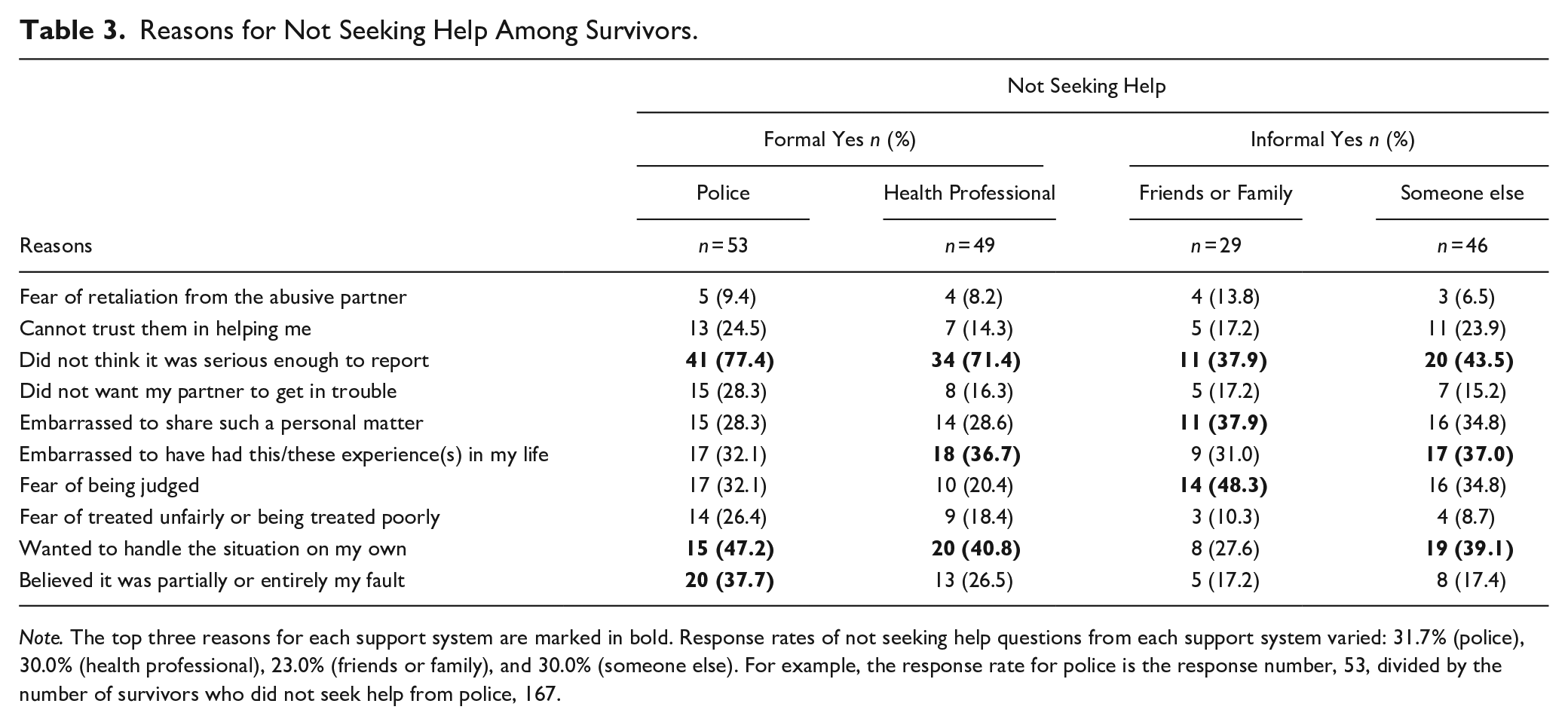
Note. The top three reasons for each support system are marked in bold. Response rates of not seeking help questions from each support system varied: 31.7% (police), 30.0% (health professional), 23.0% (friends or family), and 30.0% (someone else). For example, the response rate for police is the response number, 53, divided by the number of survivors who did not seek help from police, 167.
IPV Help-Seeking Behavior by IPV Type and Severity
The bottom part of Table 2 details how IPV help-seeking behavior was related to IPV types based on two different severity levels (less severe or more severe). Police reporting of IPV was higher when student IPV survivors had an injury (less severe injury: χ2[1] = 9.91; p < .05, more severe injury: χ2[1] = 9.62; p < .01) regardless of the severity of the abused and when they experienced more severe sexual abuse (χ2[1] = 19.62; p < .01). IPV experience with more severe sexual abuse was also related to increased likelihood of receiving service from a health professional (χ2[1] = 13.79; p < .01). Yet, formal help-seeking was not used based on their physical abuse or psychological abuse victimization.
Informal help-seeking were utilized by the student IPV survivors across most of the IPV types regardless of severity level, including physical abuse (both less severe level: friends/family: χ2[1] = 12.23; p < .01, someone else: χ2[1] = 12.57; p < .01 and more severe level: friends/family: χ2[1] = 17.14; p < .001, someone else: χ2[1] = 6.88; p < .05), injury (less severe level: friends/family: χ2[1] = 12.68; p < .001, someone else: χ2[1] = 14.86; p < .001 and more severe level: someone else: χ2[1] = 19.83; p < .01), psychological abuse (less severe level: friends/family: χ2[1] = 9.22; p < .01 and more severe level: friends/family: χ2[1] = 7.80; p < .01, someone else: χ2[1] = 9.01; p < .01), and sexual abuse (less severe level: friends/family: χ2[1] = 6.22; p < .05, someone else: χ2[1] = 5.38; p < .05 and more severe level: friends/family: χ2[1] = 22.67; p < .001, someone else: χ2[1] = 19.95; p < .001).
Discussion
To our knowledge, this study is the first HBCU-based research of help-seeking behavior of IPV-related issues that included college men in its sample. The findings of this study provide key evidence for IPV prevention and response efforts for college student women and men enrolled at an HBCU in the United States. IPV victimization (particularly psychological abuse) appeared to be a common experience among college students in HBCUs. Over 60% of the participants in this study reported at least one incidence of experiencing IPV victimization in the past year, corroborating previous findings (64.7%) studying HBCU students (Barrick et al., 2013). Our findings identified problematically low utilization of formal and/or informal help-seeking among the students in this HBCU in general and particularly among Black/African American students and college men. Our findings also revealed that students minimally utilized formal help-seeking with injury victimization while they consistently utilized all types of help-seeking for severe sexual victimization. The study’s findings urge more critical examinations of how to meet and address the needs of diverse student survivors of IPV in HBCUs in utilizing different types of help-seeking for their best interest and outcomes in health and beyond.
Research, Practice, and Policy Implications Addressing Diversity
The findings of the present study have fundamental implications for future research, practice, and policy development and the need for culturally tailored campus IPV prevention programming to address this underserved population’s high prevalence of IPV and lack of IPV help-seeking.
Research
Future research should address low utilization of help-seeking among HBCU student survivors of IPV and, specifically, low utilization of health services among survivors who are Black/African American students and college men. Investigating how to assist these students is crucial to prevent adverse health effects and revictimization of IPV (Voth Schrag et al., 2021). Although comparable data of college students are not available in the previous studies, low utilization of formal help-seeking (e.g., health and mental health services) is not only common among Black/African American women IPV survivors (Lacey et al., 2020); these women also face structural barriers in the service systems seeking based on their race, gender, and/or class (e.g., not being believed by the provider, not receiving immediate service; Waller et al., 2022, 2023). These structural barriers also explain a critical gender-based difference in this study, which is that no male participant reported ever seeking help from health professionals. The literature indicates that Black/African American men disproportionally underutilize mental health services due to cultural mistrust of health care systems and experiences of racism and discrimination both within services settings and society in general (Hankerson et al., 2015; Thomas, 2016; Wilson, 2020).
Another perspective of IPV help-seeking among Black/African Americans sees their help-seeking as a proactive coping with IPV rather than as a passive coping by facing barriers in the service systems. Black/African American women determine various coping strategies that best work for them (e.g., relying on religion/spirituality) instead of just relying on external help from formal and informal supports (St. Vil et al., 2017).
While participants of this study did not utilize health services for varied reasons, the lack of awareness of IPV and stigma on IPV seem to play a key role among Black/African American students in this HBCU. The primary reason for not seeking help from health service professionals was related to their awareness of IPV (e.g., survivors didn’t see IPV as a reportable issue or wanted to handle it on their own). The reason was also related to stigma regarding IPV (e.g., embarrassment about being an IPV survivor). Lack of mental health service utilization among Black/African American men was also related to their own perception of masculinity shaped by gender roles and related stigma (e.g., showing emotion and seeking help indicate weakness in men; Hankerson et al., 2015; Thomas, 2016; Wilson, 2020). Taken together, help-seeking behavior among students in HBCUs is shaped by multifaceted factors. To build the evidence from this present study, future investigations need to examine what factors (e.g., race, gender, structural/cultural barriers in service access) determine service utilization from health professionals or police using a more representative sample of HBCUs, and how health services can be promoted to diverse students attending HBCUs.
Practice
Various practice approaches that promote IPV awareness, cultural competence, and trauma-informed practice (see Bent-Goodley & McFadgion, 2023; It’s Your Business, HBCU-based Bystander Program, Johnson et al., 2018) seem to be viable to address IPV and IPV help-seeking among students at this HBCU. Campus responses to IPV can strengthen IPV awareness and change non-supportive campus norms through existing bystander prevention programs (e.g., McKendrick, 2020) and assess how such an approach increases students’ utilization of campus resources including the counseling center, health center, and/or Title IX office. To promote engagement with these campus resources, campus responses to IPV need to be culturally competent and involve asking students how they want to be served through campus resources and how existing resources do or do not meet their needs. Prior findings showed that in a non-HBCU setting, college student survivors of IPV perceived campus resources as more useful than community resources (Voth Schrag & Edmond, 2018b), but HBCU students preferred off-campus resources more than on-campus resources due to their higher satisfaction with off-campus mental health providers (Oji et al., 2014). Hence, students’ acceptance of campus resources matters.
HBCU campus response to IPV help-seeking also needs to address the study’s findings that physical abuse victimization did not lead to formal IPV help-seeking among students and injury victimization did not lead to health service receipt among student survivors at this HBCU. The finding that there was no relationship between physical abuse victimization and any type of formal IPV help-seeking was a surprise as past research has shown that physical abuse is more recognized than other types of IPV (e.g., emotional abuse) among Black/African American college women who attend HBCUs (Walley-Jean, 2020). We speculate that IPV survivors in this HBCU may not report physical violence or the related injury victimization incidence to police or a health professional because many of these types of IPV survivors also reported IPV perpetration and noted it as their reason for not reporting it to police or a health professional that the violence was partially or entirely their fault. It may be important to take into account students’ IPV experiences within various levels (e.g., engaging in mutual violence) in designing IPV prevention programs for HBCU students and to acknowledge the need for mental health and physical health services to respect and maintain their clients’ confidentiality.
Finally, a culturally competent, trauma-informed practice may be relevant to addressing the impact of cultural or structural trauma in delaying or not engaging in necessary physical and mental health services among Black/African American college students in HBCUs.
Policy
This study recommends that policies (e.g., the Campus Sexual Violence Elimination–SaVE Act) should address low IPV help-seeking among Black/African American college students and help allocate more substantial resources to HBCUs to develop and evaluate evidence-based IPV interventions that promote support to student survivors. We also strongly recommend that policies and the campus IPV prevention grants support a data reporting system to disseminate knowledge of racial disparities in IPV and IPV help-seeking via campus resources to American college students. Notably, the most recent report of the college sexual climate surveys (Cantor et al., 2020) does not report on racial disparities in IPV and IPV help-seeking. Reporting information on IPV and IPV help-seeking among college students across HBCU and non-HBCU institutions will help all campus administrators and policymakers better understand how to assist diverse students (e.g., diverse in terms of gender and race/ethnicity) through equitable IPV prevention and interventions.
Limitations
The findings of this study require careful interpretation. First, this study’s non-random sampling strategy limits the generalizability of our findings. To mitigate this limitation, we invited all undergraduate college students at the HBCU in the recruitment process. The size of the sample included in our final analyses (N = 266) was smaller than the sample size (N = 371) required to make a credible inference regarding IPV and IPV help-seeking among the HBCU’s full student body. To overcome challenges related to adequate sample recruitment, especially in IPV help-seeking studies, future studies should judiciously set target sample sizes and plan recruitment strategies. Second, although this is the first study in an HBCU context to include college men and examine IPV experiences and IPV help-seeking behavior, our small sample size of male participants prevented us from a more rigorous analysis of gender-based differences in the relationship between IPV experiences and IPV help-seeking. Skewed gender in samples of IPV research in and beyond college settings is a long-lasting issue (An et al., revise and resubmit; Barlow & Cromer, 2006; Choi et al., 2022; Coker et al., 2015; Paat et al., 2021). Third, our IPV help-seeking measure did not distinguish between help-seeking from friends and from family, though each source of help could have been perceived differently by our student participants. Indeed, evidence suggests that college students tend to seek help from friends more often than from family (Cantor et al., 2020). Fourth, we measured IPV for the past 12 months and help-seeking experience throughout adulthood (i.e., after 18 years old). This inconsistency inevitably produced systematic errors that might have resulted in capturing help-seeking behavior beyond the past year. The findings of this study regarding the relationship between IPV and IPV help-seeking should be interpreted with caution.
Conclusions
Findings of this study provide critical evidence of diversity regarding IPV and IPV help-seeking among college students attending an HBCU. This study revealed that Black/African American survivors of IPV underutilized health services even in a predominantly Black/African American institutional context. College men survivors of IPV in the HBCU also underutilized informal help-seeking from friends or family compared to college women survivors. We found that any injury and severe sexual abuse victimization led to formal IPV help-seeking. Students utilized informal help for more types of IPV than formal help, including for physical and psychological abuse victimization. Our findings urge future research and practice to address underutilization of IPV help-seeking, especially regarding health services by developing evidence-based, culturally sensitive practices and resources for diverse students attending HBCUs. Macro-level advocacy and support are also needed to obtain more representative data and needed resources from governments and campus leadership to address IPV and IPV help-seeking among HBCU student populations.
Footnotes
Declaration of Conflicting Interests
The author(s) declared no potential conflicts of interest with respect to the authorship and/or publication of this article.
Funding
The author(s) disclosed receipt of the following financial support for the research and/or authorship of this article: This study was supported by New York Community Trust’s Fahs-Beck Fund for Research and Experimentation [Grant number: 234430, 2021].
