



Abstract
Judicial sentencing decision research most often examines the legal, defendant, and judicial characteristics that predict incarceration and sentence length decisions. Often ignored are the social worlds of the courtroom and judge in how these relate to sentencing decision processes and outcomes. The general framework of symbolic interactionism, through the theories of expectation states and situated identity, provides a foundation to understand the social processes of sentencing. A self-report survey administered to Wisconsin Circuit Court judges (n = 74) gathered information about these social processes that might be used to predict sentencing patterns. The results strengthen the position that judges’ decisions are not outside of social pressures, and judges develop sentencing decisions that align with the viewpoints of others as well as interpretations of the legal code.
Levin (1977) declared that prior studies examined sentencing decision outcomes but lacked an appreciation of the creation of the decision. More than 20 years later, Mears (1998) had a similar argument; much is known about sentencing outcomes but not the process. Current literature demonstrates these concerns still are applicable; the gap of knowing how and why has not been closed (for instance see Spohn, 2009; Ulmer & Johnson, 2004). Analyses of case and offender characteristics connected to sentencing patterns identify statistically significant variables, but not specify how these factors actually influence judicial decision making or why those factors might be important to the decision.
Sociocultural influences help define how judges weigh particular defendant, case, and courtroom characteristics. Judges, as social creatures, are embedded into a community where communication and interaction define courtroom duties and roles to ensure the goals of moving defendants through the court processes are met (Flemming, Nardulli, & Eisenstein, 1992; Ulmer, 1997). Appreciation of judicial roles is strengthened by developing their connection to other courtroom participants such as the prosecutor, defense attorney, and defendant. Prior research about courtroom participants failed to scrutinize how specific social networks influence judges’ sentencing decisions (Myers & Talarico, 1987; Ulmer, 1997).
The framework of symbolic interactionism, including the theories of expectation states and situated identity, presumes that groups develop acceptable behaviors and decisions through creation of the social self. Through this process, purposive actions such as decisions are based upon the actor’s belief of who will respond with value judgments, what the perception will be in relation to the level of social desirability, and whether the actor wants to be socially desirable or undesirable (Alexander & Weil, 1969). Individuals, however, do not limit their focus to those directly involved in the situation but all who might place value judgments upon the actor (e.g., judge) in relation to the action (e.g., sentencing decisions), with those most similar to the actor holding the most valued and trusted opinions (Berger, Conner, & Fisek, 1974). Consequently, as argued by Mears (1998), judicial decisions cannot be limited to courtroom organization and community structures; they must be explained through sociologically based examinations that include all courtroom participants.
Judges hold definitive power in selecting appropriate sentences during their decisions of incarceration and sentence length. Much research about the outcomes does exist (Spohn, 2009), but it lacks the ability to fully conceptualize the social sentencing process as the constructs, correlates, and theoretical models that shape these decisions have not been identified completely through prior research. Past research often demonstrates that judges examine legal (e.g., current offense, criminal offense history) and extralegal (e.g., defendant’s race, age, and gender) case factors; however, these variables do not convey all the information judges use to process sentencing decisions, and thus, research should be expanded to empirically consider these factors (Fallon, 1994; Frankel, 1973, 1992; Gaylin, 1974; Morris, 1951; von Hirsch, 1985).
Some research has promoted a sociological examination of sentencing, but these studies do not answer the question of how social processes aid in developing appropriate sentencing decisions. For instance, Albonetti (1991) conceptualized judicial decisions and discretion to conclude that judges employed more than legal reasoning to develop decisions and constrain discretion. Judges created stereotypes about defendant and case characteristics to develop foundations for sentencing decisions. Other studies demonstrated that courtroom socialization constrains and develops sentencing decisions, and that courtroom participants (e.g., attorneys and defendants) provided vital information to judges when developing acceptable sentencing decisions (Eisenstein, Flemming, & Nardulli, 1988; Ulmer, 1997; Wice, 1991). Through the aid of the courtroom workgroups, judges acquired (or reaffirmed) stereotypes to reduce uncertainty and created an efficient customized decision-making process. Yet, beyond the general understanding of socialization in the courtroom context, these studies do not directly address how judges create stereotypes and which courtroom participants are viewed as more helpful. These studies are important in seeing that understanding the social world of judges is vital in knowing why and how sentencing outcomes are made.
Theoretical Creation of Judicial Social Worlds
Generally, symbolic interactionism is the belief that identities are constructed socially through interactions with environments, situations, and other individuals (Stryker, 1980). Interaction provides a self-definition as connected to distinct social roles and specific situations, which allows humans to learn proper behavior, including values, beliefs, and norms (Goffman, 1959; Stryker & Vryan, 2003). Intertwined with the creation of self are the social world and the perceptions of others. Judges are not immune to this characteristic of social life; judges learn what is appropriate for their role during socialization and how to define themselves favorably through sentencing decisions. Thus, symbolic interactionism appropriately conceptualizes how judges determine proper sentencing outcomes. The ideas of expectation states theory provided a general foundation for conceptualizing how and why courtroom participants influenced judicial sentencing decisions, whereas situated identity theory was tested as a framework for explaining judicial sentencing decision processes and reasons for particular sentencing outcomes.
Expectation states theory is concerned most with explaining how hierarchies in small, task-oriented groups determine the types of procedures and processes used to achieve goals (Berger et al., 1974). It presumes that each group member has a particular status role (e.g., gender, race, and ethnicity) and that these roles aid others in creating perceptions of the individual. Status meanings develop through culturally accepted stereotypes about particular types of people. These perceptions affect which individuals are most and least influential over the final task product (e.g., decision). Accordingly, those with the highest status for the specific situation will have the most influence over the end decision and behavior, especially when the group is static and organized around particular activities, such as judges with courtroom participants during the sentencing process (Berger, Conner, & Fisek, 1974).
Judges should be more likely to follow normed sentencing decisions (e.g., going rates, see Walker, 2010) to maintain social acceptance and avoid social ostracism. Sentencing decisions will be a function of court processes, but social status hierarchies should ensure judges have the most decisive power over final sentencing outcomes. More specifically to sentencing outcomes, sentencing decisions are created with uncertainties resolved through creation of stereotypes of defendant and case characteristics. Using expectation states theory, it would be presumed that in the American culture, young minority uneducated defendants would receive harsher sentencing outcomes because judges and society view this combination of status characteristics unfavorably (see Walker, Spohn, & DeLone, 2004).
Expectation states theory does not provide information specific to how the courtroom participants aid in making decisions through socialization and daily activities. It simply argues tasks are important group functions that are determined partially through status characteristics. Situated identity theory, however, provides a more effective framework in conceptualizing how courtroom participants aid in the decision-making process.
Situated identity theory suggests social behavior describes and defines individuals (Alexander & Wiley, 1981). Situated identities are social creations and viewpoints of the self in connection to group interaction and the perceptions of others; it is how we define ourselves and our choices in connection to other people. The theory proposes individuals purposively act to create self-definitions through personal perceptions of how others will define the action through preconceived norms (Alexander & Rudd, 1981). Within social situations, multiple situated identities might exist for each individual so that the actor purposively selects behaviors to be defined in the desired manner, either socially desirable or undesirable, by the desired person (Alexander & Knight, 1971; Alexander & Lauderdale, 1977; Alexander & Rudd, 1981; Alexander & Wiley, 1981). For instance, if a judge desires to be viewed positively by the prosecutor through sentencing decisions, the judge will adhere to the perceived desires of the prosecutor. If the prosecutor is considered conservative and punitive, the judge will sentence accordingly. A model of the theory is presented as Figure 1.
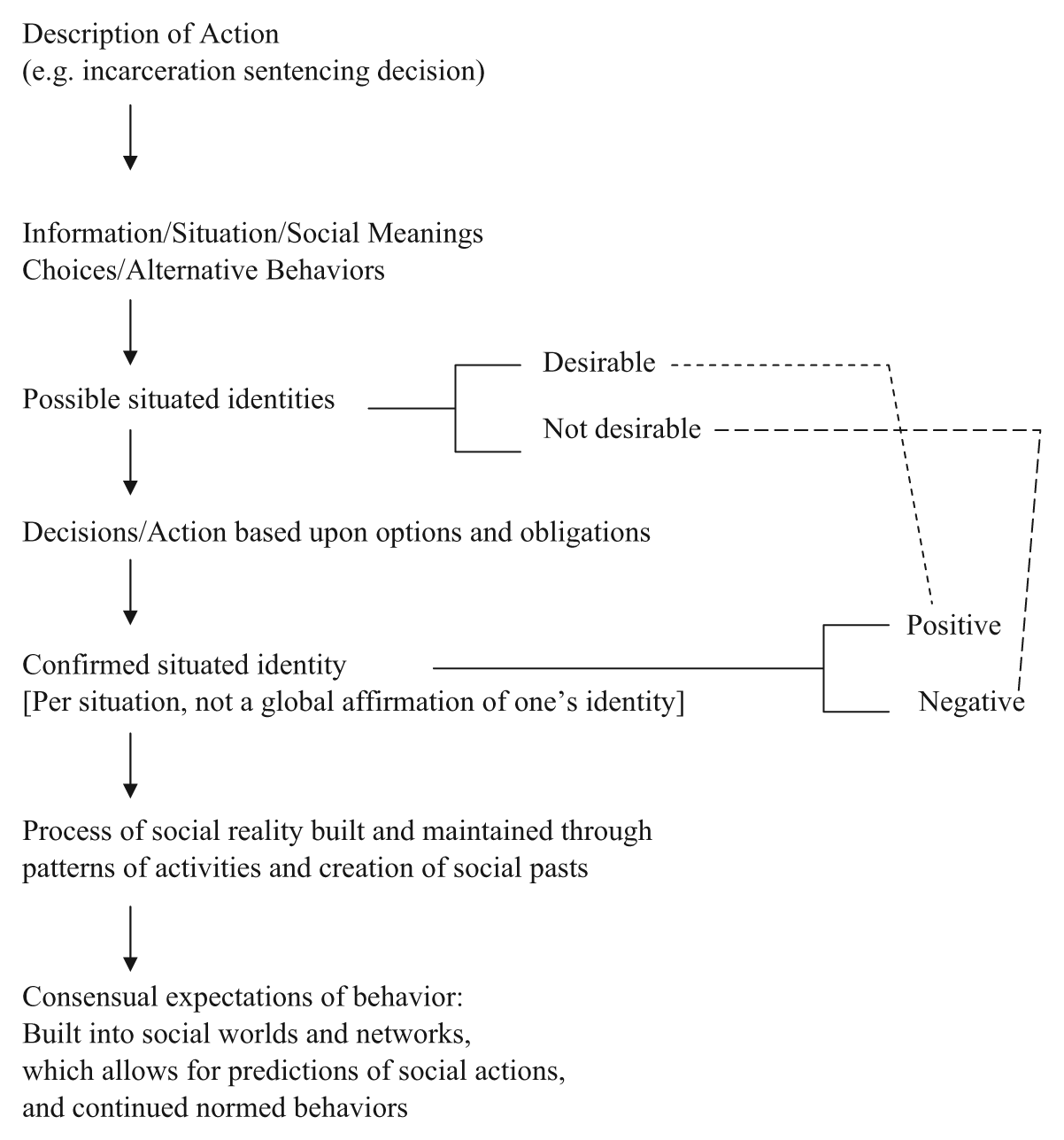
Model of Situated Identity Theory.
Under the premise and extensions of social identity theory, the following can be assumed: (1) Individuals are most likely to associate with those most similar to themselves; (2) individuals look to those they are most intimate with for shared beliefs, values, and assumptions of the social world; (3) individuals base their behavior upon schemata and preconceived social expectations; (4) when expectations are unknown in new situations, individuals are unlikely to know how to behave except by following others in the particular situation; and (5) individuals will act in highest accordance to those relationships that exert the most social influence (Alexander & Knight, 1971; Alexander & Lauderdale, 1977; Alexander & Rudd, 1984; Alexander & Wiley, 1981; Touhey,1974). These assumptions of situated identity theory connect appropriately to judges and courtroom participants.
Situated identity theory provides a theoretical framework to understanding the court community as a social network. The theory posits that social ties manage workplace norms along with the formal rules, procedures, and guidelines to produce predicable conduct in relation to judicial sentencing decisions (Myers, 1988; Myers & Talarico, 1987; Eisenstein et al., 1988; Eisenstein & Jacobs, 1977; Ulmer, 1997). Thus far, research has not examined exactly why behavioral norms exist in the courtroom outside of socialization. Situated identity theory allows for the development of behavioral norms to be examined in relation to the creation and operation of social networks in the courtroom with expectation states theory suggesting from whom judges gather information and what are trusted socialization sources. These theories add to the literature in the development of the social processes of judicial sentencing decisions.
Method
This study examined judicial decision-making process through situated identities and courtroom participants with self-administered surveys. Surveys for the present study collected information about the development of sentencing practices of Wisconsin circuit courts and the social processes of their decision making. These surveys provided data to answer how judges’ situated identities explain their sentencing decisions; The Appendix provides details about survey items.
The dependent variables measured two types of sentencing decisions through sentencing scenarios, the decision to incarcerate (i.e., probation or prison) and the sentence length decision. Sentencing decisions were gathered from realistic sentencing scenarios created from modal sentencing data obtained during 2002 to 2006 from the defunct Wisconsin sentencing commission. Per situated identity theory, judges with stronger situated identities should be making similar sentencing decisions and modal categories are a representation of this. Five scenarios were created with the five most common offenses (i.e., burglary, forgery, armed robbery, possession with intent to deliver—cocaine, and sexual assault—2nd degree) reported to the sentencing commission.
Many characteristics of the courtroom context are assumed to have developed the judges’ situated identity, including characteristics of courtroom participants, and these have been used as separate independent variables. Those measures that created the courtroom participant context are the variables that explain how judges use or make available the insights of courtroom participants. Judicial socialization was a measure of the formal and informal training mechanisms of respondents. Judges’ use of courtroom participants’ information and trusted opinions provided data about whom judges gain information from and whose opinions are trusted during sentencing. The stability of courtroom participants gathered data about whether the courtroom participants (e.g., attorneys, court clerk, and probation officers) were consistent from case to case. The presence of going rates measured if judges used a standardized sentencing structure when assigning sentences.
Situated identity variables are those measures the aid in developing the connections the judge perceives between himself and the courtroom participants. The judges’ unfavorable/favorable descriptions of courtroom participants addressed whether judges viewed participants more favorable or unfavorable. Judges’ cooperation/competition descriptions of courtroom participants accessed if judges perceived participants as more cooperative or competitive. Judges’ perceived favorable Attitudes towards sentencing decisions demonstrate whether judges believed courtroom participants would view assigned sentences favorably. Changed sentences measured if judges would change planned sentences if courtroom participants did not agree with the sentence.
With these constructs in mind, this study examined if judges sought opinions and information from those courtroom participants who had a more stable presence in the working environment. Judges who were socialized by the courtroom participants and less formally should have stronger ties to the participants and perhaps less to the legal codes of conduct. This should create cooperative environments where judges believe their decisions to be perceived favorably by others; the premise of situated identity theories supports these claims. This ultimately developed two hypotheses for examination in the present study:
Judges create situated identities with trusted and valued courtroom participants as measured by participants who are cooperative, favorable, and stable.
Judges with stronger situated identities will develop sentencing decisions that gather around modal sentencing categories.
For this study, 246 surveys were sent to the circuit court judges of Wisconsin via traditional postal mail using the Dillman tailored design method (Dillman, 2007); judges were given the option to complete the survey online or on paper. In total, 74 surveys were returned; 48 electronic surveys were returned through Qualtrics, and online, electronic survey administration tool, and 26 paper surveys were returned through postal mail, for a response rate of 30.1%. The surveys were not all completed fully; with consideration of missing cases, there are 50 to 65 respondents included in each statistical operation. Although this rate is not ideal, it has enough merit to determine if the theory of situated identity can be connected appropriately to sentencing decisions especially when considering the sample and the population share similar demographics as males (85%), Caucasian (93%), and with 75% of the sample aged 50 or higher with a range of 38 to 68 years.
Results
Preliminary analyses used univariate and bivariate statistical operations to assess if judges’ situated identities contribute to developing sentencing decisions across Wisconsin circuit courts. The descriptive statistics identify primary patterns in situated identities. Bivariate analyses of independent t tests and chi-square tests of independence illustrate potential connections between situated identities and sentencing practices. These types of analyses are acceptable for studies that are more exploratory in nature and testing a new direction of research such as connecting new theories to sentencing research; although it would be advantageous to use multivariate regression the sample size did not yield enough statistical power for this to be done appropriately.
Univariate Statistics
The dependent variables were created by using the respondents’ reported sentencing actions to hypothetical sentencing scenarios. Respondents read a scenario that included legal and extralegal information about a defendant’s case and were asked to assign a probation or prison sentence for each of the five separate offenses. Figure 2 provides an example of the scenario and possible responses.
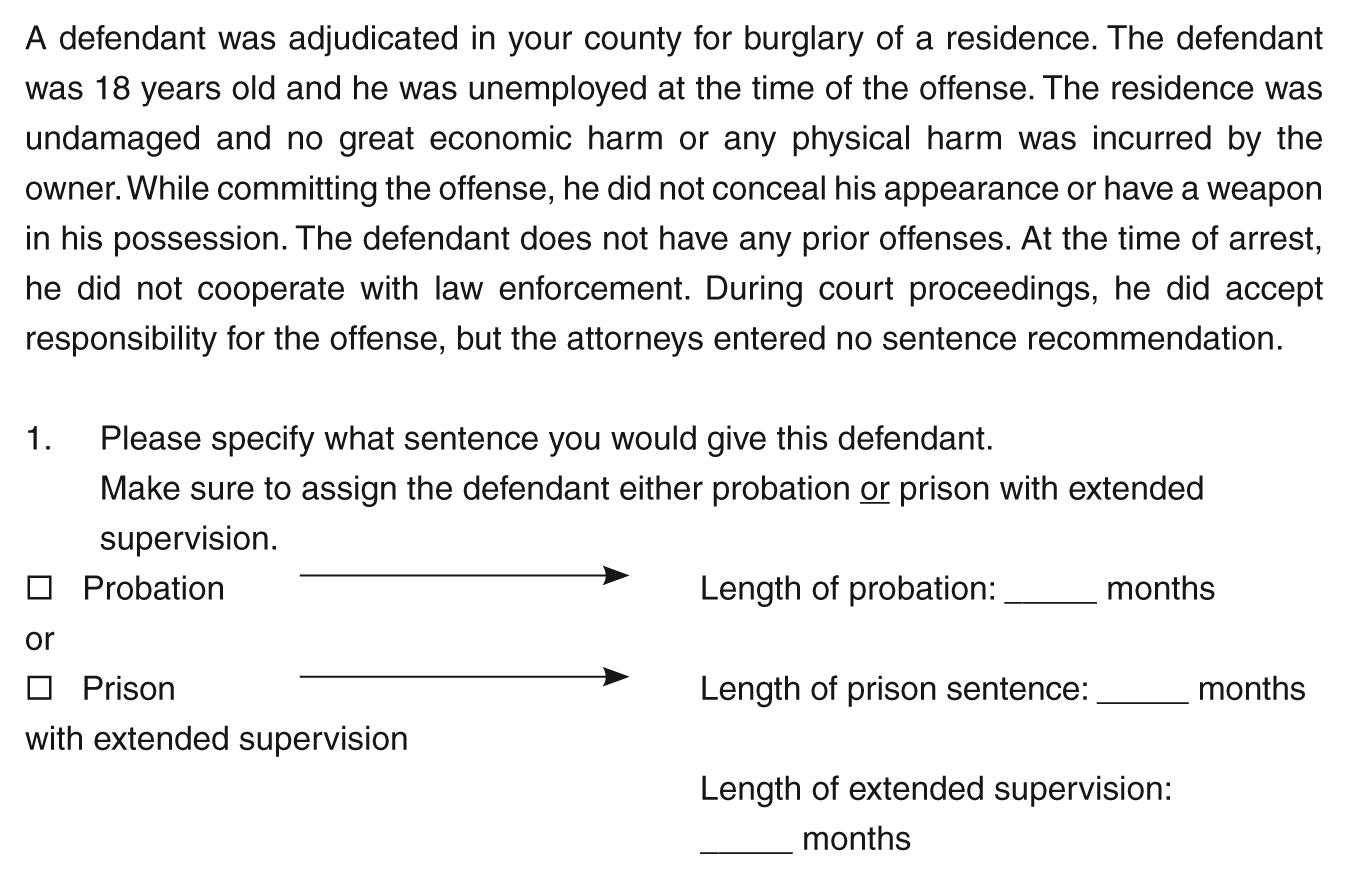
Example scenario and response options used in the survey.
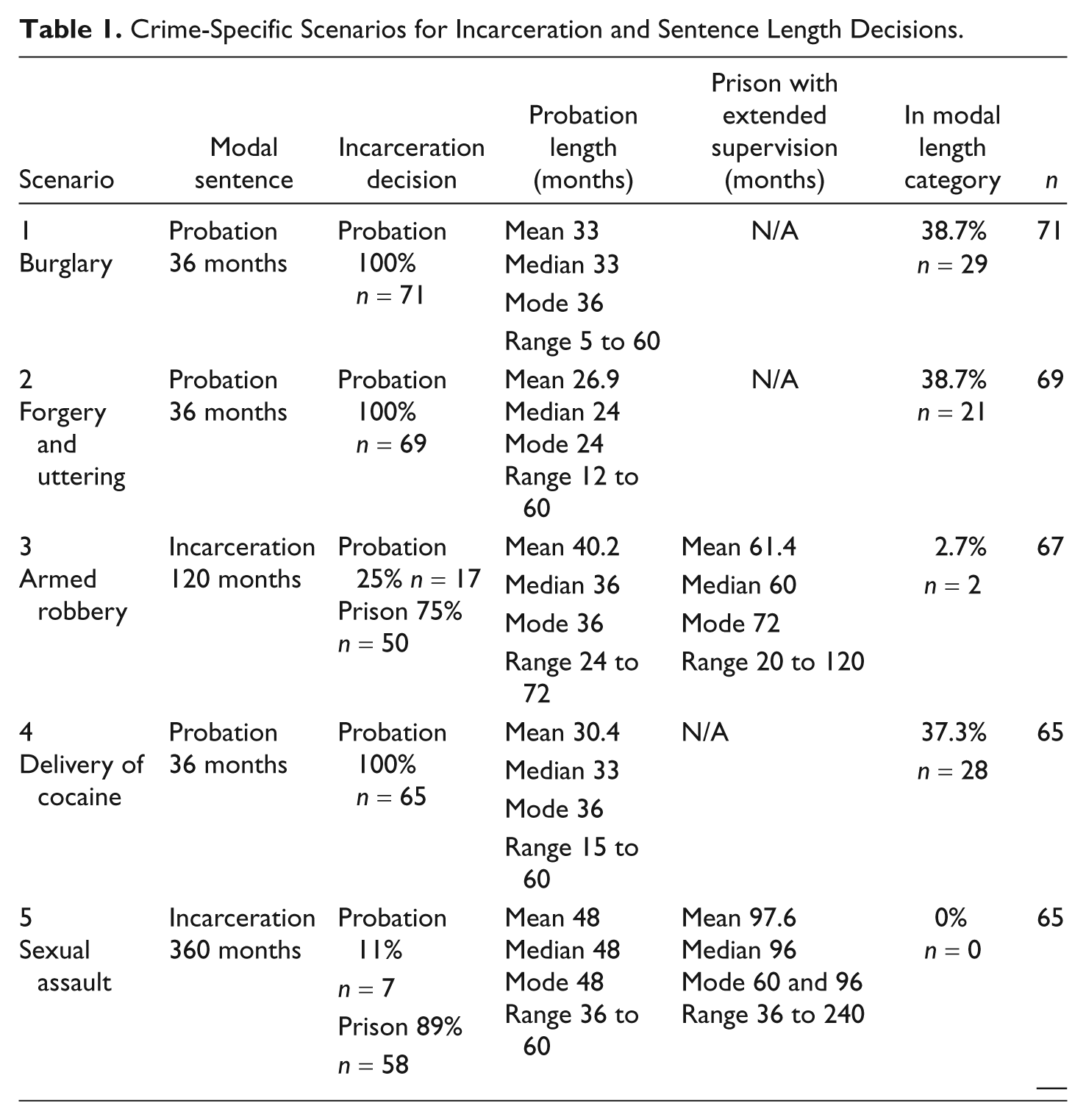
Most judges reported similar sentencing types and lengths in connection to these scenarios, and as such, not all scenarios were assessed similarly or included enough variance to be used as dependent variables in the analyses. Summary data about these hypothetical incarceration and sentencing length decisions are presented in Table 1. For instance, Scenarios 1, 2, and 4 all judges sentenced offenders to probation resulting in an inability to use the incarceration decision, but the sentence length decisions were distinct enough to employ analyses with these variables. In Scenario 1 and 2, 38.7% of judges sentenced inside the modal category and 37.3% sentenced inside the modal sentence length category for Scenario 4. For Scenario 3, the incarceration decision had enough variance with 25% of judges assigning probation and 75% sentencing to prison; however, the sentence length decision did not carry enough variance as only 2.7% sentenced in the modal category and 93.3% out of the modal category. Scenario 5 was not usable for either dependent variable as 89% sentenced offenders to prison and no judges sentenced inside the modal category.
Crime-Specific Scenarios for Incarceration and Sentence Length Decisions.
Respondents were asked to report where and how their judicial socialization occurred when they first became a circuit court to represent a truer socialization process, respondents could select multiple sources of socialization, while ensuring that the percentages of socialization types added to 100%. Table 2 provides detailed information about judicial socialization in Wisconsin. All respondents acknowledged the state of Wisconsin provided formal training, or 100% of judges stated Wisconsin provided some level of formal training that contributed to their socialization. When examining the ranges of the percentages reported by the judges, the highest rated sources of socialization were formal state training, formal education, other life and work experiences, and interaction with other trial judges; the frequency tables and the means corroborate this. Overall, formal training from Wisconsin and formal education were identified by this sample as the most influential in the judicial socialization process, but general life and work experience as well as traditional members of the courtroom workgroup developed judicial attitudes and behaviors.
Judicial Socialization.

Responses are not mutually exclusive, n = 54.
Judges reported sources of information and trusted opinions that contribute to sentencing processes. Table 3 depicts the descriptive statistics of these variables. Judges were asked from whom information about sentencing decisions was obtained on a 0 to 100 scale, with higher values reflecting that information was obtained more often from those individuals. Examination of the mean values of responses demonstrated that respondents obtained information more often from prosecutors, defense attorneys, defendants, victims, and probation officers. However, the range of these responses suggested that judges varied upon whom and how often information was obtained from these courtroom participants. That is, the ranges were wide, and the variables have high standard deviations. Responses related to the contribution of prosecutors and defense attorneys have the smallest ranges and standard deviations, illustrating that judges obtain information more often from attorneys than from other courtroom participants when making sentencing decisions. In addition, consideration of the defendants, victims, and probation officers appears to be important to judges when making sentencing decisions.
Judges’ Use of Courtroom Participants Information and Trusted Opinions.
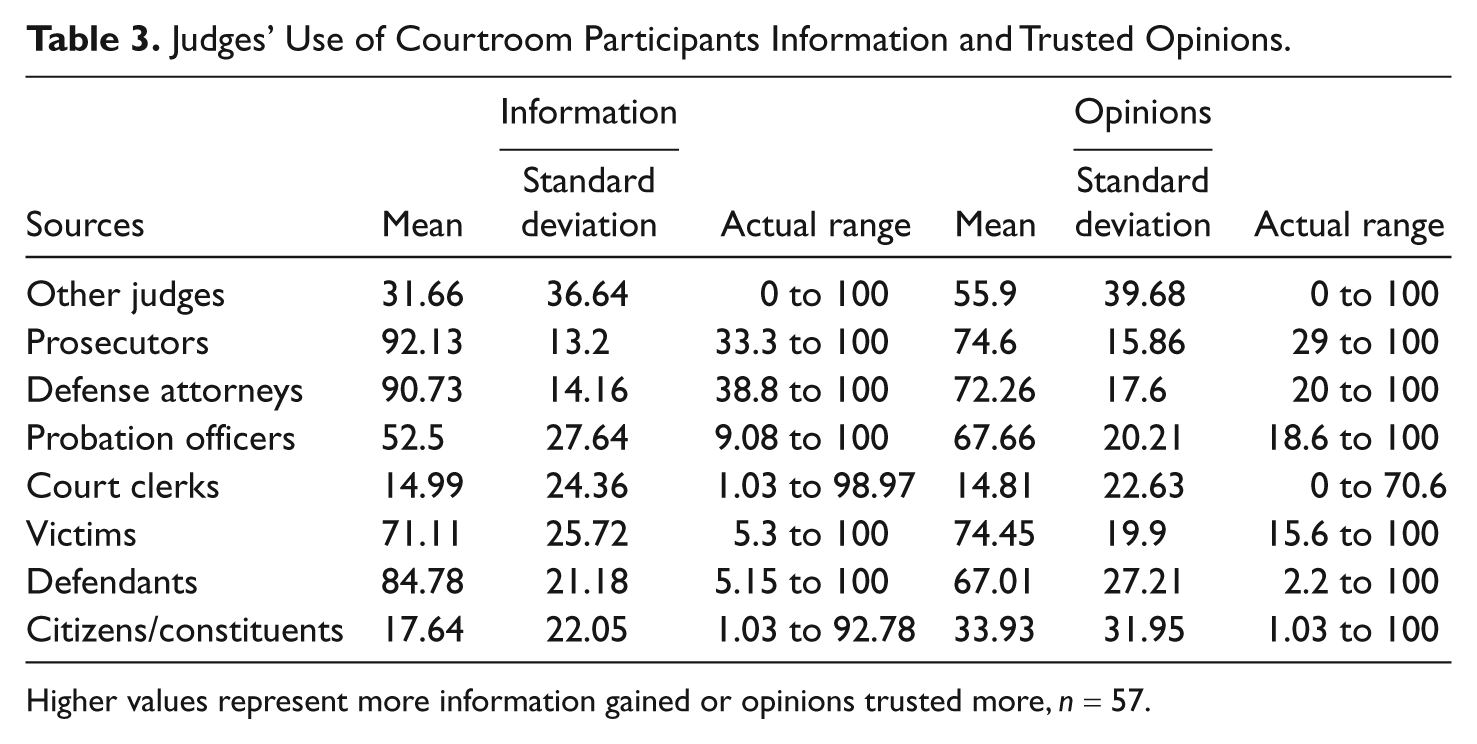
Higher values represent more information gained or opinions trusted more, n = 57.
Judges assigned the degree they valued the opinions of courtroom workgroup participants in connection to sentencing decisions on a scale of 0 to 100 with higher values representing more highly valued opinions. Through examination of the means, the most valued courtroom actors were prosecutors, victims, defense attorneys, probation officers, defendants, and other judges. These items have wider ranges with higher standard deviations, which suggest that different respondents attach varying values to the opinions of others. Taking into consideration the means, standard deviation, and ranges of this scale, judges attribute the highest valued opinions to prosecutors, defense attorneys, and victims.
The stability of courtroom participants measured if the same individuals worked in the court on a consistent basis. These items were measured on a five-point scale with higher values representing greater stability. The descriptive statistics related to these responses are found in Table 4. These data demonstrated that prosecutors and court clerks have a great degree of stability (i.e., median and mode were 3), whereas defense attorneys and probations officer positions are more likely to rotate through different individuals (i.e., median and mode were 2). These values for these four items were summed to create a scaled construct of courtroom stability. An alpha coefficient of .385 is suggestive of a moderate level of continuity between the items. These items were included and scaled because situated identity theory as well as prior courtroom literature suggests that the more stability there is in a group, the more likely individuals will know and adhere to normed behaviors such as going rates.
Stability Among Courtroom Participants.
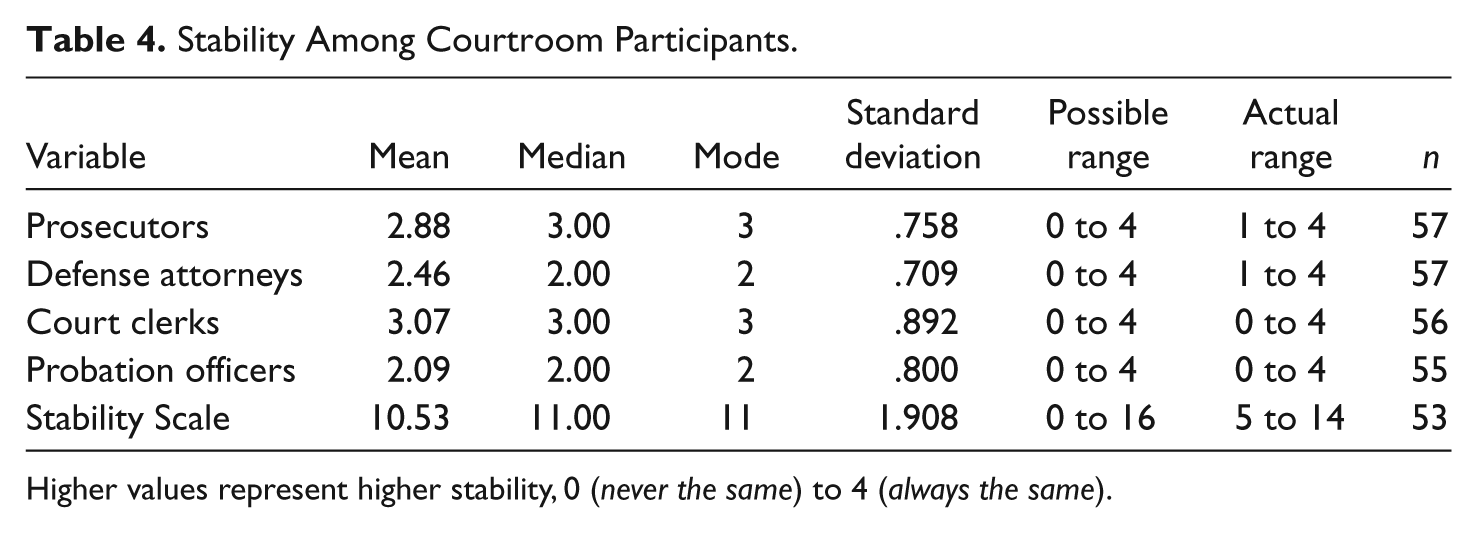
Higher values represent higher stability, 0 (never the same) to 4 (always the same).
Judges responded whether a going rate or a standardized sentence was present in their courtrooms, and was represented by a dichotomous variable of yes and no (coded as yes = 1). The descriptive statistics demonstrated that in this sample a going rate might not exist in most of the respondents’ courtrooms. This may be dependent upon type of cases as two respondents provided written comments that going rates do not exist in all types of offenses, but sentences for drug offenses have strong predictability.
Situated identity variables were perceived level of cooperation of courtroom workgroup members, perceived favorability of courtroom workgroup members, perceived favorable viewpoint of assigned sentences by courtroom workgroup members, and willingness to change planned sentences. Respondents developed an image of courtroom participants through a semantic scale measuring level of cooperation and favorability. Past research suggested judges were more likely to engage with cooperative and favorable courtroom participants in reaching sentencing goals. Through a seven-point semantic scale, judges selected the cooperative/competitive and favorable/unfavorable nature of each participant. Overall, judges viewed courtroom members as cooperative and as favorable.
Cooperation/competition descriptions of courtroom participants were coded as measurements of cooperation with higher values representing judges’ views that courtroom participants work together during sentencing decisions. Detailed information is displayed in Table 5. On average, judges viewed the most cooperative to least cooperative (i.e., most competitive) participants as court clerks, probation officers, judges, defense attorneys, and prosecutors. All courtroom participants except for the defense attorneys and prosecutors, on average, were thought of as cooperative; with the mean being lower than the midpoint, these two attorneys were seen as being slightly competitive. These items were used to create a scale to represent the overall cooperative nature of the courtroom workgroup, and on average, judges perceived courtroom participants as slightly more cooperative than competitive, as the mean of 19.71 was above the midpoint.
Judges’ Cooperation/Competition Descriptions of Courtroom Participants.
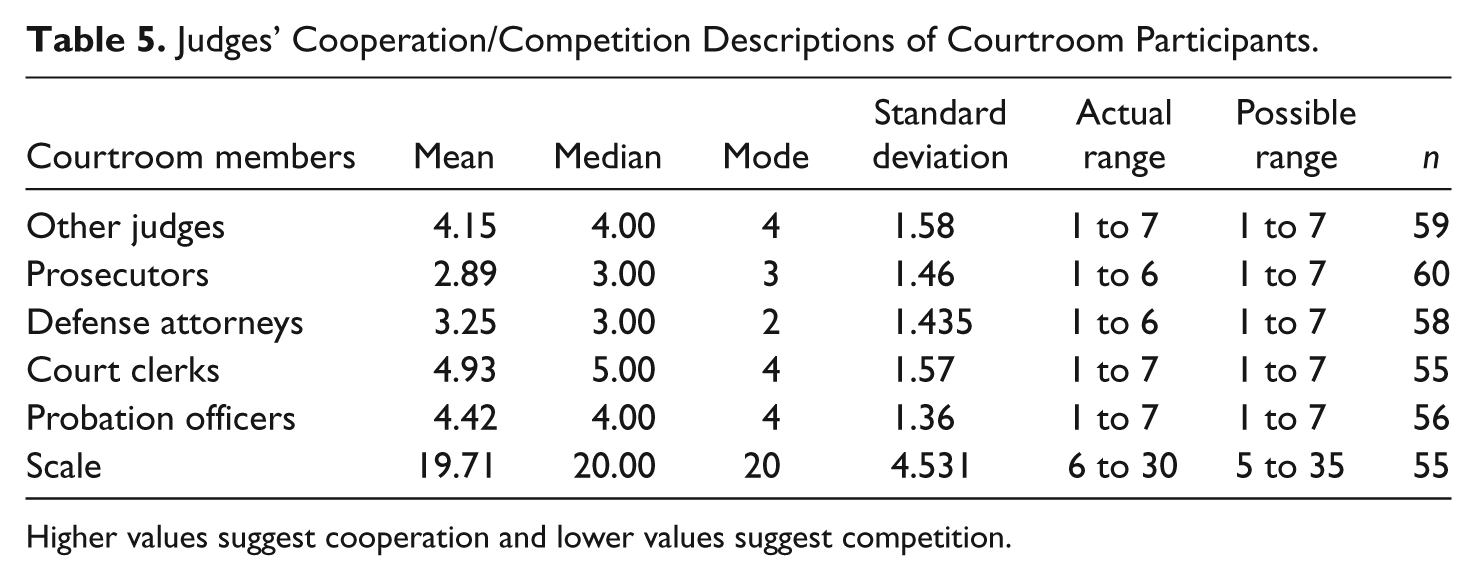
Higher values suggest cooperation and lower values suggest competition.
Favorable/unfavorable descriptions of courtroom participants were coded such that higher numbers represent judges as viewing those members being more unfavorable than favorable during sentencing decisions; Table 6 presents these descriptive statistics. On average, the ranking of most favorable members of the courtroom workgroup has judges as most favorable followed by the court clerk, probation officer, defense attorney, and prosecutor. Judges perceived all participants on average as being favorable, because all reported means are below the midpoint. A summary scale of these responses was created to represent the overall favorability of the courtroom workgroup members. The mean of 12.19, which is below the midpoint of the possible range, suggests that on average, respondents depicted the courtroom participants as being slightly more favorable than unfavorable.
Judges’ Unfavorable/Favorable Descriptions of Courtroom Participants.
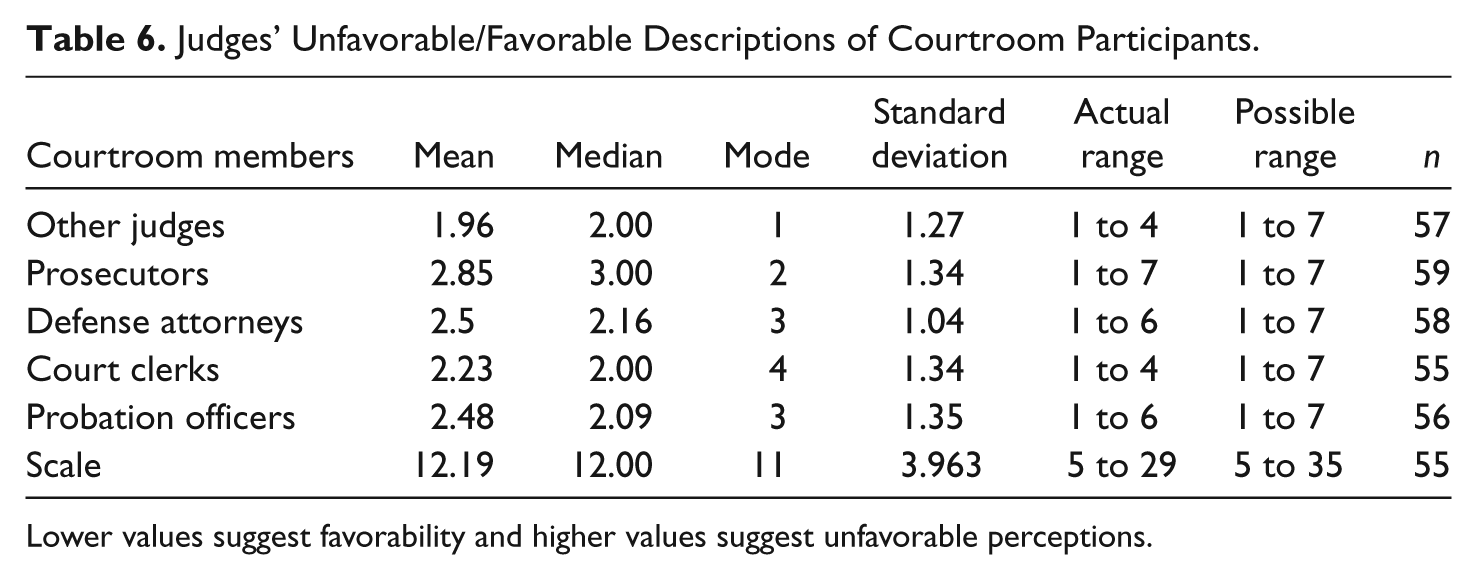
Lower values suggest favorability and higher values suggest unfavorable perceptions.
Perceived favorability of judicial (i.e., respondent) sentencing decisions was determined along with each of the five scenarios by asking respondents to determine if the courtroom participants would perceive the assigned sentence as favorable or unfavorable; coded as a dichotomous variable with 1 representing favorable perceptions. These items, overall, were supportive of the propositions of situated identity theory; judges overwhelmingly believed others would view their sentencing decisions favorably. Table 7 supplies detailed information about perceived favorable views.
Judges’ Perceived Favorable Attitudes Toward Sentencing Decisions.
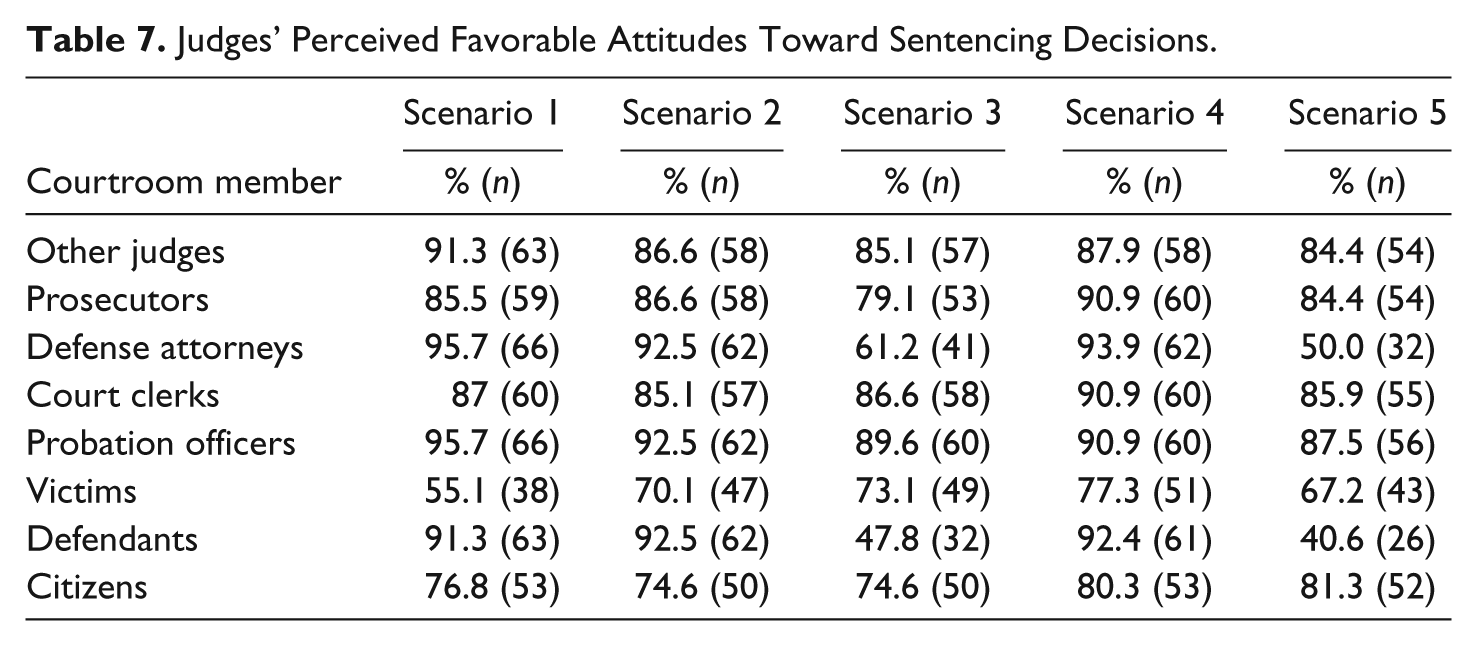
The lowest levels of support were found in Scenarios 3 and 5, which have modal incarceration decisions of prison with extended supervision. With these two scenarios, judges perceived the defendant and defense attorney as not being in favor of the respondents’ sentencing decisions. Outside of these two scenarios, judges believed all participants would be in favor of their sentencing decisions, but victims had the lowest percentages of perceived favorability with citizens and court clerks holding the highest perceived favorable views.
Judges were asked whether they would change a planned sentence if they knew that others in the courtroom workgroup would not view the decision favorably. Overwhelmingly, respondents stated that unfavorable views of others would not change their opinion about a sentence once it was decided. When respondents indicated that a planned sentence would be altered, the change usually was due to the perception of another judge (n = 6) or victim (n = 5). Two respondents stated that a sentence might be changed due to a prosecutor or defense attorney. This variable did not have enough variance to be included in bivariate analyses.
Bivariate Statistical Analysis of Situated Identity Factors
Bivariate analyses of independent t tests and chi-square tests of independence were used to determine whether courtroom participant characteristics and situated identity factors were connected to sentencing decisions. The dependent variables include the incarceration decision from Scenario 3 and the sentence length decisions from Scenarios 1, 2, and 4, as these scenarios’ decision included enough variance for analysis. The independent variables used for the independent t tests were the continuous variables of participant information, opinions, and stability as well as socialization types. Included in the chi-square analyses were situated identity variables of cooperation and favorability scales and perceived participant favorability.
The first hypothesis stated modal decisions would be made when judges have connections to the courtroom participants as measured by information gained, opinions trusted, stability of participants in the courtroom, and socialization efforts. With this hypothesis, the independent t-tests demonstrated that most variables across the scenarios were not significant; Table 8 displays the significant variable results for the independent t tests. No statistically significant variables were in the analyses of the sentencing length variables in Scenarios 1 and 2; hence, for Scenario 1 and 2 the differences of the mean within the sample were more than likely due to sampling error and a difference would not be found in the population. Scenario 3 and 4 did have some variables of statistical significance; citizen and probation officer information in Scenario 3 and victim, defense attorney, and defendant information in Scenario 4 were statistically significant.
Significant Results From Independent T-Tests of Courtroom Participant Measures.
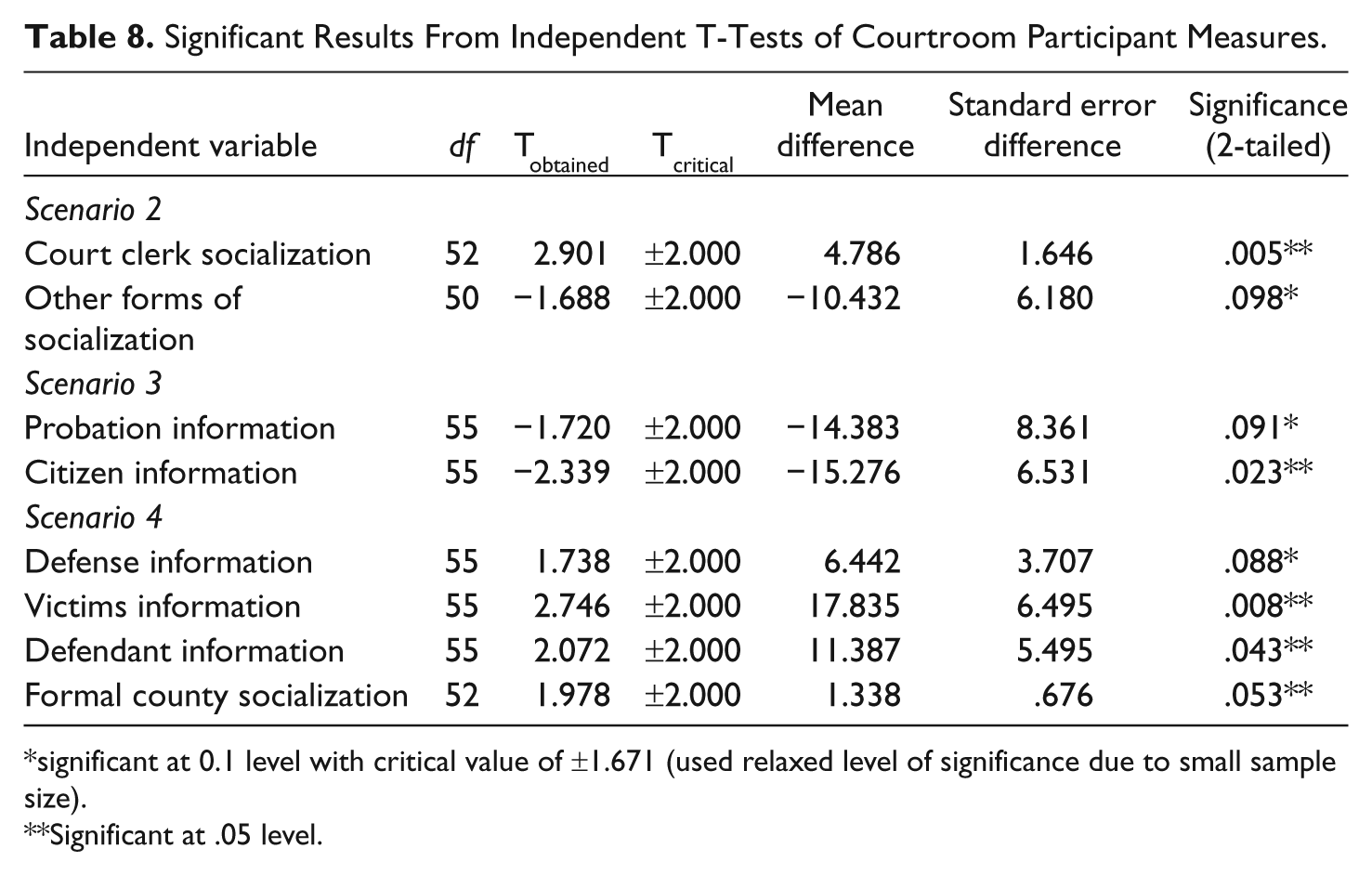
significant at 0.1 level with critical value of ±1.671 (used relaxed level of significance due to small sample size).
Significant at .05 level.
The different types of socialization also were analyzed through independent t tests to determine if the difference in the means was statistically different. No significance was found with any socialization measure in Scenarios 1 and 3, but two socialization types were significant in the sentence length of Scenario 2. These include the relationships with court clerk and other types of socialization. Socialization through formal county training was significant only in Scenario 4.
The second hypothesis predicted judges with stronger situated identities, as measured by the favorability and cooperation scales, perceived favorability of sentencing decisions, and willingness to change a sentence per courtroom participants desires, would have modal sentencing outcomes. Chi-square tests of independence were conducted and results are in Table 9; willingness to change a sentence due to low variance. The relationship with Scenario 2 and the cooperation scale displayed the only significant relationship related to this hypothesis, but this was only at the relaxed significance standard of 0.1, which might be appropriate for this type of exploratory research with such a small sample.
Independent T-Tests of Situated Identity Measures.
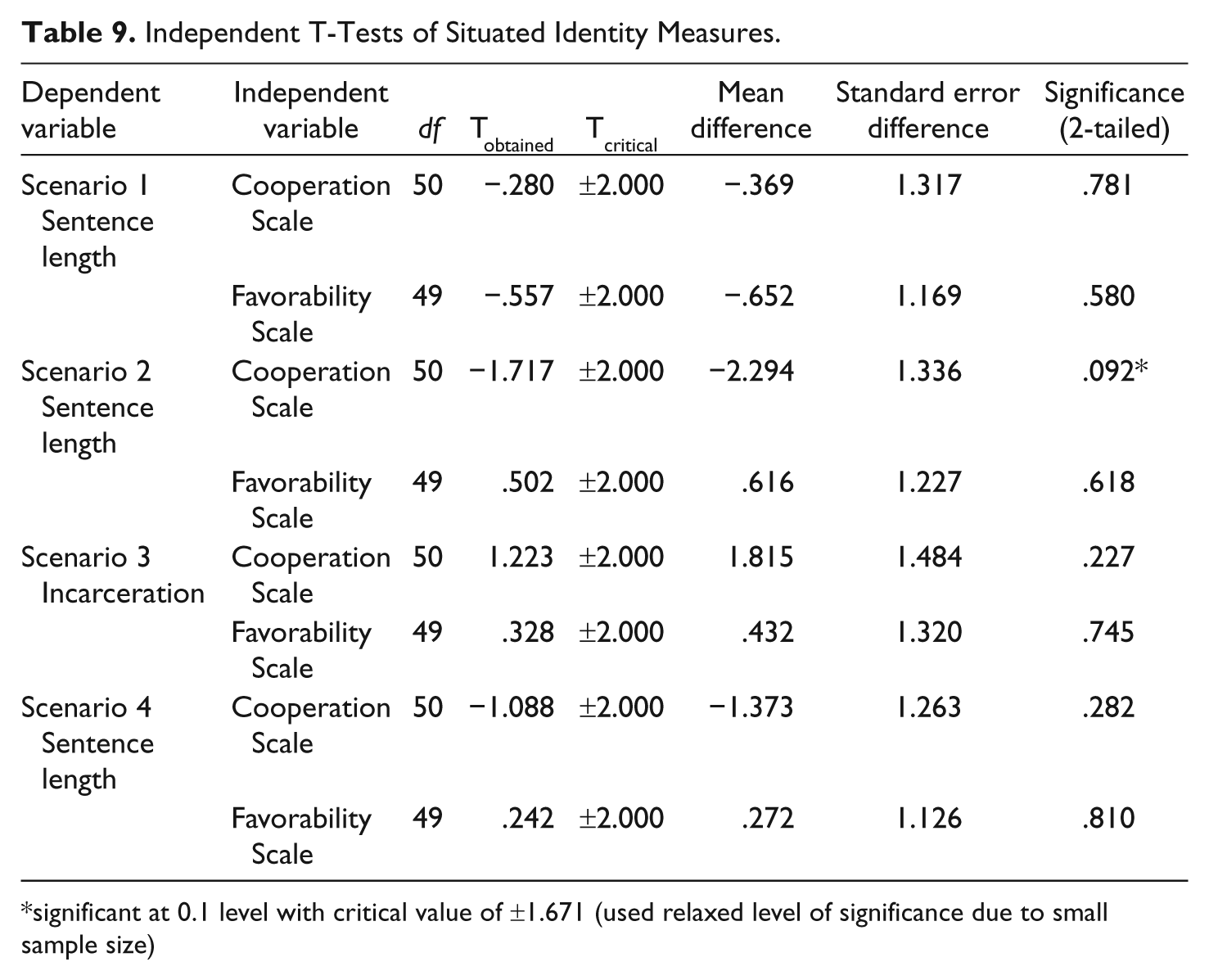
significant at 0.1 level with critical value of ±1.671 (used relaxed level of significance due to small sample size)
Chi-square analyses were completed with the dichotomous variables of perceived favorability for each of the scenarios and courtroom participants. The decision to change a sentence could not be analyzed due to low variance, and the findings presented from perceived favorability must be taken with caution, as some of the cells did not include more than five respondents. As this is an exploratory study, the significant findings are presented to develop a foundation for understanding the possible connections of larger samples. Table 10 displays the statistically significant chi-square tests.
Significant Chi-Square Results With Perceived Favorability of Assigned Sentences.

Statistically significant findings were associated with the sentence length decision of Scenario 1 and the incarceration decision of Scenario 3. In Scenario 1, citizen perceived favorability of sentences was significant with a weak phi-coefficient of .213. In Scenario 3, the perceived favorability of prosecutors, defense attorneys, victims, defendants, and citizens all had moderate phi-coefficients. For these six variables, the difference found between the modal and nonmodal sentencing outcomes had a statistically significant relationship to the independent variables, yet causality or degree of correlation cannot be assumed.
Conclusion and Discussion
This study examined if the situated identities of judges aid in the development of sentencing patterns in Wisconsin circuit courts. Univariate statistics demonstrated substantive support for the connection of situated identity theory and expectation states theory to judicial decision making; some statistically significant relationships were found with bivariate analyses, but additional research is necessary to determine the extent of these relationships.
At its core, situated identity theory argues that situated identities only can exist in social situations that involve normative actions (Alexander & Rudd, 1981; Alexander & Wiley, 1981). The vast number of reported decisions within modal categories demonstrates that the judges’ decisions were normative actions even though there was a lack of support for the existence of a going rate. This might speak more toward the power and desired autonomous nature of judicial decisions more than a lack of support for the theories; judges, due to their political and social prestige, want to demonstrate sentencing as an individualized experience as opposed to resembling more akin to assembly line justice. As the theory and past social world sentencing literature suggested, cohesion (i.e., situated identities) forms when judges hold favorable opinions of others and when courtroom participants are viewed as cooperative. Both of these contentions were supported in this research. Also, judges sought information and opinions from courtroom workgroup participants. Although judges were reluctant to change planned sentences, the strength of this theory is in created the original decision. Hence, the data supported that judges build situated identities with courtroom participants and use modal sentencing practices.
This study presented that judges hold certain opinions and information sources as more important than others and view particular people as more favorable and cooperative; this demonstrates the need to utilize expectation states theory to understand how situated identities are formed and processed. As an example, defense attorneys often were depicted by judges are less favorable and less cooperative, and judges did not value their opinions or information as highly as other courtroom participants. In addition, defense attorneys were perceived as being against sentencing outcomes in two of the scenarios. As expectation states theory presumes, group dynamics connect to the status accounts of those in the group, with certain individuals being more on the outside of the group (Berger et al., 1974; Fisek, Berger, & Norman, 1991). Therefore, defense attorneys have lower status in the group and are considered the outsiders of the courtroom workgroup; hence, judges are not going to require defense attorney’s perceived favorability of sentencing outcomes as much as prosecutors. This supports the contentions of situated identity theory as well; judges made decisions to be viewed favorably by those individuals the judge cares about pleasing.
This research does not provide information about whether the courtroom workgroup members actually perceived decisions favorably, this, however, is of little concern to situated identity theory. Situated identity theory proposes that when individuals are engaged in group dynamics, individuals will make decisions they believe will be perceived by others as favorable. Individuals gather knowledge about favorability in decisions from socialization and work experiences, especially when the group is of a static nature. Judges stated that key factors in their socialization were courtroom participants such as other judges, prosecutors, and the court clerk, and work/life experiences. It is arguable that respondents learned what would be perceived as a “good” or “bad” sentence and, at least partially, make their decisions from this division. This is in support of the contentions of situated identity theory and provides a proper foundation for continuing the use of this theory to explore judicial decision making and sentencing decisions across larger and more diverse samples of judges.
The two hypotheses of this research suggested that judges created situated identities with trusted and valued courtroom participants and those connections would affect sentencing decisions to gather around modal sentencing categories. Both of these hypotheses have limited statistical significance, but the substantive significance found in this exploratory analysis is convincing. It appears as though judges built situated identities with courtroom participants, especially the prosecutor, court clerk, victims, and citizens. The role of the defense attorney and defendant is contingent upon other factors that situated identity theory and expectation states theory can allude to, but perhaps strong declarations are beyond the scope of this research. Overall, it seems judges in this sample do care about being perceived in a favorable light when making sentencing decisions, and the social world of courtrooms aid the understanding of sentencing decision processes.
Subsequently, in an era where sentencing commissions and legislative sentencing are becoming less popular in light of budget constraints as in Wisconsin or supreme court decisions, such as United States v. Booker and Blakely v. Washington, which limit the use of highly restrictive sentencing guidelines this study suggests that judges are able to use the courtroom workgroup and participants to their advantage. The social world of judges enable decision makers to enter a best-fit decisions for offenders that appears to adhere to some level of individualized justice while ensuring the positive work connections stay intact. Wisconsin circuit court judges make similar sentencing decisions without the need for sentencing commissions, matrices, and strict guidelines. This truth-in-sentencing state is able to use its history and structure to ensure fair sentencing practices are being employed. Overall, this means that restrictive policies reducing judicial discretion might not be necessary. Instead, courts and states might use money more wisely to create formal training sessions of all court personal including judges and attorneys that focus upon proper socialization and understanding of legal codes. From the findings herein, the theories of situated identity and expectation states suggest that it is the connections that judges make within their workgroup that provide the power, autonomy, and rationales for the gray areas of justice. By ensuring all courtroom participants receive similar training the informal social control would be a stronger match to formal regulations.
Overall, the study has a limited ability to make strong conclusions about how situated identity affects sentencing patterns between modal and nonmodal sentences. Part of this limitation is due to the sample size, the corresponding sampling error, and the inability to analyze the data beyond bivariate statistical analyses. This study was a preliminary step in examining situated identity as a component of sentencing decisions. As such, some of the lack of statistical significance might be due to an incorrect conceptualization of situated identity variables or due to an actual lack of connection between the situated identity of judges and their sentencing decisions. These are valid concerns with new lines of research, especially when a lack of empirical evidence is found. With respect to the first concern of improper conceptualization of the situated identity variables, great concern and care were employed when creating survey items that appropriately measured theoretical constructs. Various measures were in the survey to develop a complete picture of situated identity, but there was little ability to test for concurrent validity without the availability of additional measures of situated identity. Consequently, at this time, the face validity and construct validity built into the survey measures will have to satisfy these concerns until future research is completed.
The second issue of the lack of connection between situated identity and sentencing decisions can be related to the lower response rate and number of useable cases as well as self-selection and/or response bias. It is possible that the judges who did not respond to the survey were those who did not have strong situated identities based upon others in the courtroom or were different in terms of other unmeasured characteristics; this cannot be known, as nonresponders cannot be differentiated from respondents across the population of all judges. Although the significant findings are limited, the positive nature of the descriptive statistics along with the few significant connections between variables is supportive of a need for future research.
An additional concern is that no sample of judges will be more responsive to this type of measurement and analysis. Some judges responded very favorably to the survey and indicated that greater effort should be made to ensure a more representative sample of respondents; other judges responded that the entire survey and proposed study implied that judges were arbitrary and unethical in how they make their decisions. While most survey research is limited to the nature of encouraging accurate responses, judges might represent a more challenging population to accurately sample.
Future research might examine the intricate manners in which judges use courtroom participants to make sentencing decisions. Interviews and observations could gather data about the interworking of sentencing processes to understand how and why judges trust certain participants more than others. Other important information would be to determine the extent that legislative directives and proscribed sentences impact sentencing decisions. Also, through observations of court processes, researchers could speak with judges and other courtroom participants about specific, real court cases in how the sentencing decision was formed. The current study provides enough support to continue to analyze the how constructs of situated identity and expectation states promote specific sentencing decisions.
Footnotes
Appendix
Declaration of Conflicting Interests
The author(s) declared no potential conflicts of interest with respect to the research, authorship, and/or publication of this article.
Funding
The author(s) disclosed receipt of the following financial support for the research, authorship, and/or publication of this article: The authors received a student grant for US$1,000 to complete their dissertation from their PhD institution. It provided the money for copying and mailing the surveys. This article is a subsection of their dissertation.