




Abstract
Following the 1918 annexation of Bessarabia to Romania, the Gagauz minority remained disconnected from centers of knowledge because of linguistic and institutional barriers. In this context, Mihail Çakir, an Orthodox priest of Gagauz origin, manifested a rare capacity of introducing the Gagauz people to Romanian- and Gagauz-speaking audiences through his multilingual work on the history and the culture of the Gagauz. This article embarks from Anthony Smith’s work on ethnicity and nation-building and Benedict Anderson’s work on imagined communities to explore Çakir’s two main works and their contribution to the crystallization of Gagauz ethnic identity and its eventual transformation to a national one.
Introduction
In the context of the transition of Bessarabia from Russian sovereignty and temporary independence to the rule of the Romanian Kingdom, it has been argued that the region lacked linguistic cohesion, not only with the old territories of Romania but also between the rural and urban areas of Bessarabia. 1 Within the latter, urban populations mostly spoke Russian and Yiddish, while in rural areas the Romanian, Bulgarian, and Gagauz languages were mostly spoken. 2 Gagauz communities, in particular, lacked the means of knowledge exchange with the Romanian Kingdom, as well as with Western scientific communities, not only due to linguistic differences but also due to the lack of a centralized education system that would connect different regions.
Under these circumstances, an Orthodox priest of Gagauz origin, Mihail Çakir (Figure 1) (also known as Ceachir or Ciachir, according to the spelling of the surname in Romanian) manifested an extraordinary capacity for connecting the Gagauz community with Romanian, Russian, Turkish, and Western knowledge centers, thanks to his linguistic skills, education, and revered clerical position. His command of the Gagauz, Russian, and Romanian languages enabled his access to pre-1918 and post-1918 authorities and the successful dissemination of knowledge about the Gagauz in those respective public spheres. He was also the first to author a work on the origins of the Gagauz community written in the Gagauz language for a Gagauz audience living in the Budjak region (mostly within present-day Moldova), including both foreign historical accounts and domestic fieldwork conducted in Gagauz villages.
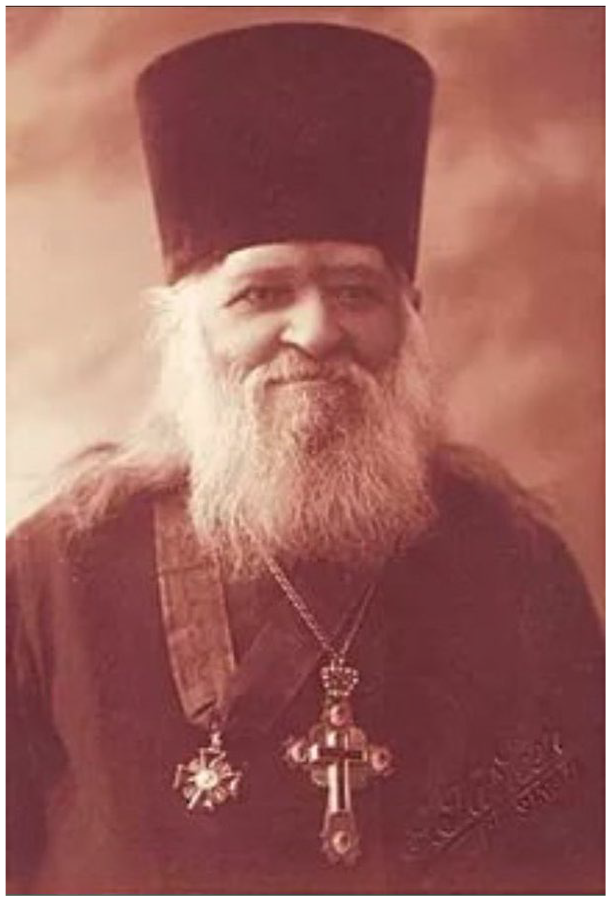
Holy Father (Ay-Boba) Mihail Çakir (1861-1938)
This study engages with the literature on nation-building and argues that by writing about the origins of the Gagauz community in the Romanian and Gagauz languages, Çakir played a crucial role in the emergence of a Gagauz national identity. Although he did not envision the Gagauz as a national but an ethnic community and avoided putting forward self-determination claims against Russian and Romanian rule, his work paved the ground for the emergence of a Gagauz national identity in the late twentieth century and the emergence of the Autonomous Territorial Unit of Gagauzia (Gagauz Eri) within the Republic of Moldova. His emphasis on Orthodox Christianity and the Gagauz language have raised him to the status of the “Holy Father” (Ay-Boba) of the Gagauz nation. He is also hailed as a model of respect for linguistic and cultural diversity.
From Ethnies to Nations
To better understand the formation of Gagauz national identity and Mihail Çakir’s role in it, one can revisit Anthony D. Smith’s and Benedict Anderson’s seminal texts on nation-building. Smith defined a nation as a named human population sharing an historic territory, common myths and historical memories, a mass, public culture, a common economy and common legal rights and duties for all members.
3
In Benedict Anderson’s classical definition, a nation is “an imagined political community—and imagined as both inherently limited and sovereign.”
4
Smith defined in turn an ethnie (ethnic community) as human populations distinguished by both members and outsiders as of possessing the attributes of a. an identifying name or emblem; b. a myth of common ancestry; c. shared historical memories and traditions; d. one or more elements of common culture; e. a link with an historic territory or “homeland” f. a measure of solidarity, at least among the elites.
5
Both Anderson and Smith highlighted the political element as the key element signaling the transition from an ethnic to a national community. In contrast to ethnies, nations (even stateless ones) require a certain degree of political, economic, and legal coherence and independence, as well as an emphasis on the importance of history. Moreover, while some ethnic groups tend to acquire or at least strive for the political, economic, and legal characteristics of nations, other ethnies do not aim for nationhood, persisting as minority ethnic groups within other nations, or even dissolve or get assimilated over time. Smith argued that transition from an ethnie to a nation requires “processes of mobilization, territorialization and politicization” 6 while a nation-to-be needs to possess such qualities as “uniqueness,” “purification,” “vernacular culture,” and “chosenness” (referring to some sort of superiority of a community over other communities) and its memories should be territorialized. 7 Such territorialization often relates to the notion of identifying a “homeland,” because only in such a place “can ethnic members come to feel their political fraternity and social cohesion” and such is a “precondition of the nation.” 8 Smith argued that nation-building may also require a new “imagination” about time and space and “homeland,” even if many individuals never see other areas of such a homeland. 9
In a nutshell, ethnic nationalists appeal “to historic territories and political memories of former independence” supported “by the rediscovery and revitalization of ethnic ties and sentiments” by means of “kinship, chronicles and philology,” “popular mobilization,” “elevation of vernacular culture” and by a rewriting of history from a “nativist” standpoint (emphasizing the unique collective past and destiny, and the autonomous collective will),” 10 while “mass vernaculars” can be a source of “national uniqueness” and “delineation” of the “nation-to-be.” 11 Considering that language is often an important marker of ethnic/national identity, newly forming ethnic and national groups may attempt to “revitalize language and increase usage” of it, in order to reconstruct their identities 12 and to construct “community solidarity and shared meanings out of real or putative common history and ancestry.” 13 Anderson highlighted very eloquently the significance of vernacular language mobilization through the proliferation of print media for the success of ethnic and nation-building movements. 14
Given that most Gagauz live within the Autonomous Territorial Unit of Gagauzia, Republic of Moldova, one could argue that they represent a case of an ethnic nation, having won political and territorial autonomy and showing political mobilization since the end of the Cold War. The success of Gagauz political mobilization in the late twentieth century depended, however, on the prior existence of a Gagauz ethnic community. The activity and writings of the Gagauz priest Mihail Çakir in the early twentieth century are often declared as the first steps made to consolidate a Gagauz ethnic identity. These permitted the emergence of a Gagauz nationalist movement in the late twentieth century.
Smith argued that in the modern era, while ethnies tried to acquire some elements of nationhood in order to survive, emerging intelligentsias took the place of the priesthood which had previously been responsible for “transmitting and disseminating the communal memory” and “celebrating the sense of common identity,” especially in communities without “formal systems of education.” 15 This metaphor showing the importance of priests in societal life before centralization of education and the subsequent rising importance of intelligentsia underlines the unique capacity of Mihail Çakir to influence communal identity on the brink of societal transformations.
Before 1918, when Bessarabia was a province of the Russian Empire, Çakir in his capacity as priest could communicate with peasants and reach them through his translations of biblical texts and parish work. Similarly, when after 1918 the region became a part of the Kingdom of Romania, his position as not only a priest but also a teacher, an official at the ministry of education and a writer allowed him to communicate with larger audiences through the medium of modern education and publications. Thus, he became a part of modern intelligentsia able to use the means of print media (publishing in books and journals) to spread his ideas and knowledge about Gagauz identity and history. While with social transformations “the center of ethnic memory and experience” shifted “from the temple and its priesthood to the university and its scholarly community,” 16 Çakir’s becoming a teacher and civil servant demonstrates how within this changing context he preserved his distinctive capacity to reproduce ethnic memories and sense of identity in the community.
In the following study, it will be shown that Çakir presented an externally validated history of the Gagauz with reference to past independence, thus aiming to create a shared historical memory among Gagauz readers. Moreover, he provided “territorialization of memories,” presenting a narrative about an independent Gagauz state in Dobruja and presenting in detail Gagauz settlements in Budjak in a manner that could foster “imagination” of a Gagauz territory. His emphasis on religion laid the basis for shared culture, as did his claims of difference from Bulgarians, the nearest neighbors of the Gagauz both in Dobruja and Budjak. Finally, through a comparison of the substantial differences in the Gagauz and the Romanian-language versions of his work on the history of Bessarabian Gagauz, it will be demonstrated how Çakir navigated through the turbulent political waters of the early twentieth century to promote his cause of defining and legitimizing a Gagauz ethnic identity under Russian and Romanian rule.
The Gagauz: Origins and Distribution
The Gagauz are a Turkic-speaking community mostly affiliated with Orthodox Christianity and spread across a number of countries along the western Black Sea coast. Nowadays, their largest community is located in the Budjak 17 region of southern Moldova, while sizeable Gagauz communities also live in Ukraine, Bulgaria, Greece, and Turkey. 18 In Moldova, the Gagauz population amounts for 126,010 people, 4.6 percent of the total population. 19 While they are distinct from most Turkic groups on account of their religious affiliation, they are distinct from other Balkan Orthodox communities because of their Turkic language and culture. There exist multiple theories about their origins. While some see the Gagauz as a “Turkish community”—though even proponents of Gagauz Turkishness are divided between those linking the community with the Oghuz-Seljuk or with Kipchak-Pecheneg-Kuman groups—others argue that this community is of Greek or Bulgarian origin that happens to speak a Turkic language. 20 Regarding the Moldovan Gagauz, there is consensus on their settlement in the Budjak region from Dobruja between the late eighteenth and the early nineteenth century, as a result of the Ottoman–Russian wars and concomitant population movements. 21
There is considerable debate on the origins of the ethnonym Gagauz. Explanations range from Manof’s theory that “Ga” or “Gaga” referred to a prefix meaning Christianized Oghuz 22 or Wittek’s support for arguments linking the ethnonym to the Seljuk Sultan İzeddin Kaikaus II’s name 23 to Radlov and Moshkov’s theories that the name “Gagauz” originated from the name of Oghuz Khan or a specific subdivision of the Oghuz tribe, or Bulgarian and Greek arguments that this name was given to Turkified Bulgarians or Greeks, respectively, so that they would not rebel but talk nicely in Turkish (explaining “gaga” as Turkish for “mouth,” and “uz” for nice) in order not to be punished. 24 Çakir noted that sometimes Gagauz would identify themselves as Greek or Bulgarian, or Turkish. 25 While referring to Radlov and Moshkov’s works, Menz has argued that based on her observations this trend is today reflected in the Bulgarian Gagauz self-perception as Bulgarians and Moldova’s Gagauz self-perception as Turks. 26 The Gagauz community in Greece is also reported to perceive themselves as Greeks, with their Turkic language being forgotten in recent years and perceived as imposed upon them by Ottomans. 27 In contrast, Menz cited Moshkov’s and Zajączkowski’s works showing that in earlier time periods Gagauz folklore included memories of cooperation with Ottoman authorities against the Russian Empire. 28 While an ethnographic study by Kvilinkova found some similarities between folklore songs of different Gagauz groups across the Balkans, 29 she also highlighted that some songs in Greek regions were apparently borrowed directly from neighboring Turkish communities. The use of other songs differed between Moldovan, Bulgarian, and Greek Gagauz communities, something she related to differences in the relations of different Gagauz communities with Greeks and Turks. 30 The latter finding suggests that across time and due to isolation, not only self-perceptions of different Gagauz communities dispersed across different states could vary, but their folklore could also evolve differently.
Outsider Views of the Gagauz
Gagauz communities living within the Ottoman borders were perceived as a part of the “millet-i Rum” (Orthodox millet). 31 The Gagauz identification with the Greek Orthodox community within the Ottoman territory proved resilient. It was not affected by the Bulgarian schism and the emergence of the Bulgarian Exarchate which attracted sizeable parts of the Greek Orthodox populations in Ottoman Macedonia and Thrace. Following the 1919-1922 Greek-Turkish war and the mandatory population exchange, the Gagauz living in Eastern Thrace joined the other Greek Orthodox of the region in being displaced to Greece. 32 In the 1930s, when the Turkish ambassador to Romania Hamdullah Suphi Tanrıöver was organizing the voluntary emigration of Romania’s Muslims to Turkey and wished to add the Bessarabian Gagauz to his project, his attempts were countered by the Turkish government due to the Gagauz Orthodox affiliation, as was stressed by Turkish ambassador to Spain Tevfik Kamil, as well as the press of the time. 33 When in 1936 Turkey signed a migration agreement with Romania, only Muslims living there and their properties were included in the agreement, without references to Gagauz. 34 Thus, while during the Ottoman period the Gagauz communities were identified by contemporary authorities as “Rum,” during the early republican period some endorsed, 35 while others doubted, their Turkishness. Because of the lack of official support for Gagauz emigration, the outbreak of the Second World War, and Soviet rule over the territory, no program for Gagauz emigration to Turkey ever materialized. 36 Meanwhile, Greek diplomats “monitored and tried to prevent” such an emigration, thus considering the Gagauz resettlement to Turkey as influencing their own interests. 37
In his continuous efforts to support the Gagauz in Romania, the Turkish Ambassador, Hamdullah Suphi Tanrıöver, managed to establish an education exchange program for Gagauz students, several dozens of whom traveled in the late 1930s to acquire higher education in Turkey. 38 Meanwhile, Turkish teachers were sent to Gagauz villages to establish Turkish language schools. 39 However, the students could not return because of the annexation of Bessarabia by the Soviet Union in 1940. 40 Following the demise of the USSR, however, Turkey became increasingly active in the Autonomous Territorial Unit of Gagauzia of the Republic of Moldova, although such relations reportedly became cooler following the early 1990s. 41
In Greece, whose Gagauz population was boosted following the population exchange with Turkey, the Gagauz were mostly seen as Greeks, though the latter identity “was not unquestionable.” The interest of Greece in the Gagauz in other countries originated in the 1990s, however, when Moldova’s Gagauz were defined as “Turkish-speaking Orthodox Greeks,” a number of exchange programs between the Autonomous Territorial Unit of Gagauzia and Greece were initiated and Greek language courses at several education institutions were established. 42 Such activities were supplemented by visits of missionaries, mostly members of Greece’s own Gagauz community, funding for the building of Orthodox churches and distribution of religious literature, fellowships, or different medical or university equipment provided by associations or private initiatives. While in the 2000s there were proposals to expand this engagement, the economic crisis in Greece “possibly upset further ambitious plans.” 43 While such increasing interest in Moldova’s Gagauz could also boost the social status of the Gagauz community in Greece, 44 in general, the renewed interest of Greece in the Gagauz and other communities were linked to a revival of a view of Greek national identity, allowing self-definition as Greek to anyone having at least some of the essential elements of “Greekness,” such as “ancient Greek origin” and “affiliation with the Ecumenical Patriarchate,” that is, belonging to the millet-i Rum. 45
Similarly, externally motivated accounts of Gagauz origins were voiced in the Soviet Union, as some scholars argued that their language was linked to the Kipchak language group “probably to emphasize a distance between Gagauz and Turkish,” 46 as the latter belongs to the Oghuz language group. Even among recent scholars and politicians, such disagreements have persisted both within external and internal narratives. While some support the Seljuk-Oghuz origins of Gagauz, 47 others link them to the non-Seljuk Oghuz, while yet others attempt to link Gagauz origins to Greeks or Bulgarians, Scythians, or ancient Thracians. 48 As a result, it is argued that the Gagauz in different regions present a rare example of people “selecting their ethnic or . . . even national identity” in accordance with international and domestic contexts. 49
The Emergence of Gagauz Literature
As the Gagauz did not have their own alphabet during the Ottoman era, the Greek and Cyrillic alphabets were used for the rare printed works in the Gagauz language before 1918. Prime examples are Mihail Çakir’s translation of the Old and the New Testament and other clerical literature in 1907–1909 from Russian to the Gagauz language in the Cyrillic alphabet, 50 or a reported attempt to translate a tragedy of Euripides, probably “Iphigenia in Tauris,” into the Gagauz language using the Greek alphabet. 51 Dmitrii Çakir stated that one of the ancestors of the Çakir family, İanchu Chorbadzhioglo, knew only the Greek alphabet, because of the proliferation of Greek language, education, and religious services by the Phanariot hospodars of the Danubian principalities. 52 Greek was also spoken by some of the Orthodox populations that settled in Bessarabia together with the Gagauz in the early nineteenth century. 53 While publications in the Gagauz language using the Greek alphabet were limited, the Gagauz did use Karamanlidika literature, that is, books in Ottoman Turkish language but printed with the Greek alphabet for the Turkish-speaking Greek Orthodox of the Ottoman Empire, particularly religious and canonical texts. 54 The spread of this literature was, however, limited, given the scarce financial abilities of the Gagauz, the low levels of literacy, and the differences between the Ottoman Turkish used in the Karamanlidika literature and the Gagauz vernacular. 55 Thanks to the efforts of Mihail Çakir, publications in the Gagauz language preceded the official introduction of a Gagauz alphabet. 56 These included the first Gagauz-language biblical texts translated by Mihail Çakir and published in Bessarabia 57 at the beginning of the twentieth century under Russian rule, journal and book publications in the 1930s under Romanian rule. In the interwar era and under apparent Romanian influence, the Latin alphabet was also used for publications in the Gagauz language. Featured among Çakir’s later works in the Gagauz language were a book on the history of the Bessarabian Gagauz published in 1934 and a dictionary of the Gagauz language printed in 1938, both in the Latin alphabet. 58
Mihail Çakir and His Turbulent Era
Mihail Çakir was born in 1861 at Çadir-Lunga, Budjak, to a prominent Gagauz family. His father Dmitrii was a priest and author. 59 Following his father’s example, Mihail Çakir received clerical education at a local school and later in Chișinău, and then worked as teacher at the Chișinău seminary. 60 Thanks to his education in Chișinău, he commanded both the Romanian and Russian languages. Besides his clerical and teaching work, he authored numerous books in Russian, Romanian, and Gagauz, acquiring for that special permissions from Russian Imperial local governments before the First World War. 61 Mihail Çakir published a newspaper entitled “Hakikatın Sesi” (Voice of Truth) in the Gagauz language. 62 The newspaper was founded in 1907 with the permission of the Moscow Patriarchate and was published in the Cyrillic alphabet before 1918 and in the Latin alphabet under Romanian rule. 63 Among the incentives for publishing religious literature in the Gagauz language was resistance by the local clergy against the missionary activities of new religious “sects”. 64 The two main aims of Çakir’s books written in the 1930s were defending the view that “in Budjak a Gagauz ethnic community has been formed” and introducing the concept of a Gagauz language instead of Turkish. 65 Çakir was successful in communicating with different administrations and acquiring permissions to publish religious, linguistic, historical/ethnographical, and other works in the Gagauz, Romanian, and Russian languages.
Before 1918, Çakir served as a parish priest holding services in both Romanian and Gagauz languages under the Russian Empire, and his Gagauz translation work was approved by the supervisory religious bodies in Chișinău. 66 As following the annexation of Bessarabia to the Kingdom of Romania, all priests had to hold religious services in Romanian (switching from previously used Slavonic), Çakir, fluent in both languages, was able to continue his clerical work in Romanian. This stood in sharp contrast with the lack of Romanian linguistic skills among the Gagauz clergy and peasantry in Budjak. 67 Çakir proved adept in reconciling the main characteristics of Gagauz identity, Turkic ethnic origins and Orthodox Christianity, with the changing political landscape of Budjak in the early twentieth century.
The end of the First World War, the October Revolution, and concomitant border changes inevitably had a heavy imprint on Çakir’s career and the formation of a Gagauz identity. Bessarabia, including the largest part of Budjak, was annexed to Romania. In the context of political turmoil, economic calamity, and displeasure among sections of the local population with Romanian rule, there were underground Soviet–supported communist activities in the region. 68 These peaked with an uprising by Ukrainians, Russians, Bulgarians, and Moldovans and the declaration of a short-lived “Bessarabian Soviet Socialist Republic” in September 1924. 69 Romanian nation-building in Bessarabia and anti-Romanian grassroots mobilization had a profound influence on the formation of Gagauz identity. 70
Çakir highlighted Orthodox Christianity as the foundation stone of the moral qualities of the Gagauz and as one of the main pillars of Gagauz identity. 71 By claiming an ethnic and not a national identity for the Gagauz, 72 he avoided clashing with Romanian nation-building initiatives. 73 In fact, his emphasis on Orthodox identity even “mirrored” Romanian national discourse. 74 Similarly, as Çakir traced the origins of Gagauz to the Oghuz Turks, referring to pre-Islamic Turkish history, and called the Gagauz language “Old Turkish” (Eski Türkçä), he managed to distance his narrative on the origins of the Gagauz from the more contested Ottoman past. 75
Mihail Çakir’s emphasis in his Gagauz history book on Orthodox Christianity as an antithesis to communism not only underlined the significance of religion as a constituent element of Gagauz identity, but also his pro-Romanian and anti-Soviet sentiments. 76 He had to disprove Romanian suspicions about Gagauz affinities with Russia and consequently with the Soviet Union. Çakir’s criticism of “godless” communism 77 fitted official Romanian views and alleviated Romanian fears that the Soviets could use the Gagauz and their perceived affinity with Russian culture to challenge Romanian territorial integrity.
The alignment of Mihail Çakir’s Gagauz narrative with Romanian foreign policy went beyond his anti-Soviet stance, which could be understood as expected from a priest. While early historical accounts of the Gagauz in the works of Dmitrii Çakir related them to the Bulgarians, Mihail Çakir’s book on the history of the Bessarabian Gagauz pointed at the existence of a medieval Gagauz state in Dobruja, stressed their Turkic Oghuz ancestry, and emphasized Bessarabia as the contemporary center of the Gagauz. 78 By claiming Dobruja as a Gagauz, and not a Bulgarian, region and Bessarabia as the Gagauz homeland, Çakir reinforced the Romanian position in its sovereignty disputes with Bulgaria over Dobruja and with the Soviet Union over Bessarabia. 79 Çakir’s rapprochement with republican Turkey was even more remarkable. By signaling his preference to republican Turkey, Romanian authorities could be further reassured about the lack of any pro-Soviet Gagauz sympathies. In the 1930s, he became acquainted with Turkish diplomatic authorities and reportedly met the Turkish ambassador to Romania Hamdullah Suphi Tanrıöver. 80 Çakir handed a copy of his “History of the Bessarabian Gagauz” as a present to Mustafa Kemal Atatürk and received an invitation to Turkey to meet the president, though the visit never took place. 81 These initiatives remained in alignment with Romanian foreign policy wishing to balance the Soviet Union through closer relations with republican Turkey.
Meanwhile, good interwar-era relations between Romania and Turkey emerged as an opportunity: The interest of the Turkish ambassador Hamdullah Suphi Tanrıöver in the Gagauz community, his close relations with Çakir, as well as the secularist orientation of republican Turkey were perceived as facilitating a closer relationship. 82 In this light, the Gagauz would not identify themselves with Europe or Russia, preferring an ethnocentric (Turkic-related) identity, but distancing themselves from Turkey through Orthodox Christianity. 83 This facilitated the projection of the Gagauz image “between West and East, between Europe and Russia” and influenced their conceptions of the past and the Gagauz “cultural project.” 84
Mihail Çakir’s Histories of the Gagauz
Because of his education, knowledge of several languages, revered position of a priest and an intellectual, and his interest in Gagauz origins and identity Çakir possessed a rare capacity not only to disseminate his own views, but also to act as a norm entrepreneur and agent of knowledge exchange between different communities. Moreover, his ability to address different communities in different languages in separate books and not direct translations allowed him to fine-tune messages targeting different audiences while keeping the same general conception of Gagauz identity. While Mihail Çakir authored numerous works, including dictionaries, and translations of biblical texts into the Gagauz and Romanian languages, his most important work for Gagauz identity formation is the one on the history and characteristics of the Gagauz, published in both the Gagauz and Romanian languages. The Gagauz-language version was published as Basarabyalı Gagauzların Tarihi (History of Bessarabian Gagauz) in 1934, while a homonymous version in Romanian language, “Besarabieala Gagauzlaran İstorieasa,” appeared in several issues of the journal Viața Basarabiei between 1933 and 1934 in Chișinău. 85 There are important differences in the two versions, which shed light both on the objectives of the author and the political circumstances of interwar Romania. A comparison of the two versions shows a stronger normative approach in the Gagauz version and a more descriptive approach in the Romanian one. Positive references to Russia and Gagauz–Russian relations are also watered down or removed in the Romanian version of the work for obvious political reasons. In the preface of his Gagauz-language work, Çakir stated that he authored the book in Gagauz in response to Gagauz “requests,” so that they could “know their own history well.” 86
In both versions, Çakir reviewed foreign literature on the origins of Gagauz, aiming to provide external validation for his own work. Çakir presented works by the Czech historian Konstantin Jireček rejecting the idea that the Gagauz were related to the Seljuk Turks and tracing their links to the Uz/Oghuz tribes. 87 He also rejected the views of the Romanian scholar Nistor and the Russian Grigorovich that the Gagauz were of Kuman origins. He then refuted the arguments by Ivanov, Brokhauz, and Efron and Todorov about the Pecheneg origins of the Gagauz and the claim that the Gagauz were Turkified Bulgarians. 88 In contrast, he presented Moshkov’s rejection of such hypotheses and endorsed Georgescu’s and Moshkov’s theories about the Uz/Oghuz origins of the Gagauz. 89 Çakir also shared statistical information about the location and demographics of Gagauz communities in Budjak, thus contributing to the establishment of a Gagauz community perception beyond narrow village borders.
Homeland
In neither version of Çakir’s work, was Bessarabia or Budjak defined as a Gagauz “homeland”; The Gagauz settlements in Budjak were described as colonies/communes or villages/towns. While describing the legal system under Russian imperial administration, Çakir argued, however, that the most severe punishment was exile. This raised the fear of leaving “home villages” and life among relatives, while those exiled strove to return to Bessarabia. 90 Such an observation may suggest that ties to Budjak were getting stronger, following the Gagauz settlement in the early nineteenth century. Moreover, Çakir presented in both books a detailed narrative about a medieval Gagauz state in Dobruja, helping construct a shared historical memory of statehood.
Shared Culture: Religion
Çakir presented in both versions of his work descriptions of the moral and religious characteristics and practices of the Gagauz. However, while in the Romanian version he presented longer pieces on traditional practices, in the Gagauz version he shortened such parts and expanded normative texts on proper behavior by narrating such views both personally and via the words of a Gagauz elder, Nikolai Kasım. Çakir aimed to capitalize on the reverence towards local elders among the Gagauz to support his normative arguments. In such manner, Çakir presented the positive traditional norms of old Gagauz communities and negative traits threatening Gagauz life, such as alcoholism. In general, he portrayed Gagauz as helpful, pious, respectful to elders, patient, and generous 91 and assumed these to be shared traits. Quoting Kasım, he raised an alarm against the trend of abandoning Orthodoxy in favor of Protestant sects or atheism, due to the influence of newly-arrived “Baptists, Adventists, religionless and godless communists” and the lack of religiosity of some Gagauz. 92 He stated that not simply being a Christian but being an Orthodox Christian was an indispensable feature of Gagauz identity and underlined any deviation from Orthodoxy as an existential threat. As religion is a rich repository of cultural practices and symbolic resources, Çakir’s emphasis on preserving Orthodox Christianity could reflect not only his personal views, as an Orthodox priest, but also his support for preservation of a shared Gagauz culture based on Orthodox Christianity. 93
Uniqueness and Chosenness
In the Gagauz version of the work, Çakir claimed that not only language and religion comprise constitutive elements of a people’s identity, but also behavioral features. Through a speech by Elder Nikolai Kasım, Çakir devoted several pages to demonstrating differences between the Gagauz and the Bulgarians, which rendered the Gagauz superior. This allowed Çakir to draw the boundaries of the Gagauz community and define “chosenness” and differences from their closest neighbor, as the literature on nation-building suggests. 94 Given the history of Gagauz being reported as Bulgarians, the coexistence of Bulgarians and Gagauz both in Dobruja and Budjak and the respective size of the Bulgarian population, differentiating the Gagauz from them and building a sense of a relative superiority could be seen as instrumental for building a distinct ethnic identity.
Fluid Identities
In discussing the fact that Gagauz respondents rejected being Bulgarian or Greek and traced their origins to Turkic origins (though not to the Ottomans), the two books presented an interesting difference. In both versions (albeit with a much longer description in the Romanian version), Çakir discussed why the Gagauz were motivated to label themselves Bulgarian or Greek under different political contexts: this identification would accrue support or privileges from the Phanariot or Russian authorities. Thus he aimed to explain and rationalize the different self-identifications of the Gagauz, while highlighting their differences from Bulgarians and Greeks, as well as their distinct identity. Hence, rather than supporting the idea of fluid identities, Çakir showed such identifications instead as layered identities, where politically motivated identifications could coexist with a Gagauz identity. 95 Through this emphasis in the Romanian version of the work, Çakir implied that the Gagauz had no ambition to become a national minority claiming self-determination but could instead adopt a layered Romanian identity, if Romanian authorities embraced the Gagauz community and its culture.
Presentation of Russia
The biggest difference between the Gagauz and the Romanian versions of Çakir’s work was political. Discrepancies in the description of religious practices and history of engagement with the Russian administration are indeed remarkable. While the Romanian version rather neutrally presented the role of the Russian administration in the life of Gagauz communities before the First World War, in the Gagauz version, the parts describing that period were put within the chapter named “Who Are the Administrators Who Did Good and Helped the Gagauz in Bessarabia?” Çakir named Russian governors as people who did good for the Gagauz community, thus expressing a positive attitude towards them and the Russian administration. 96 Such contextual or stylistic differences in providing more space to that or another part of the narrative suggest that Çakir was not just writing the same work in two different languages. He aimed to present his history to different (external and internal) audiences, fine-tuning his writings toward possible sensitive contexts, the characteristics of his audiences and his own intentions in forming internal awareness and external familiarity with or even recognition of Gagauz identity.
The Impact of Çakir’s Work
While Mihail Çakir aimed through his work to present the Gagauz community, their history, and their shared culture, he also aspired not only to avert a conflict with Romanian authorities but also to establish a basis for a distinct Gagauz identity under Romanian administration. While some discrepancies discussed above indeed could be interpreted as attempts to reconcile the divergent interests of the Gagauz and the Romanian audiences, the very use of the Latin alphabet for the Gagauz language in Çakir’s works could be seen as a tool of such integration. Çakir’s publications were in line with Romanian policies to remove the Cyrillic alphabet previously used in Bessarabia under the rule of the Russian Empire. 97 While the Latin alphabet Çakir used “mirrored the Romanian orthographical system,” 98 thus demonstrating the wish of the Gagauz community to integrate into Romanian society, such attempts also aimed to “to enlighten the intelligentsia and ruling classes of Romania” about the Gagauz community living within the enlarged borders of the kingdom. 99 Considering these aims and Çakir’s attempts to consolidate a Gagauz ethnic community, it is worth exploring how his works influenced his Gagauz and Romanian-speaking audiences.
The Gagauz-Speaking Audience
There is little evidence on how contemporary Gagauz leaders received Mihail Çakir’s history book, following its publication in 1934. While Çakir himself republished some of his earlier periodical publications in Romanian and later in the Gagauz language, new publications of his works took place mostly after the end of the Cold War. 100 Following Çakir’s death in 1938, his translation of New Testament continued to be used in church and read in private. 101 Nevertheless, Bessarabia’s June 1940 annexation by the Soviet Union, and the region’s embroilment in the Second World War dramatically shifted the political agenda, rendering any interest in Gagauz identity formation redundant. In the post–Second World War era, considering the clear anti-communist tones of Çakir’s arguments, as well as the restoration of the Cyrillic alphabet for the Gagauz language, there is little surprise that Çakir’s works fell into relative obscurity.
Interest in Çakir and his work rose only in the late Soviet era. This trend became stronger following the demise of the Soviet Union and the independence of the Republic of Moldova. Çakir’s works were rediscovered by Gagauz activists aiming to achieve recognition for their community. Multiple attempts were made to republish Çakir’s works on the history of Gagauz, and increasing references to his personality and work by politicians and scholars pointed at the lasting impact of Çakir’s work on the Gagauz people.
102
Çakir’s status among the Gagauz rose precipitously: He was portrayed as a role model,
103
an “apostle” and “educator” of the Gagauz people
104
and was given the honorific title “Ay-Boba” (Holy Father).
105
His clerical position only added to his universal appreciation and raised him to quasi-sainthood. His works “formed the basis upon which later national ideals were built” and contributed to Gagauz religious life to the extent that his works are preceived to “be revered and honored rather than questioned.”
106
Moreover, his multilingual teaching, preaching, and publication record raised him to a model of respect for cultural diversity and mutual respect for Gagauz, Moldovans, and Russians. The revival of interest in Çakir’s works and influence is similarly evident from the commemoration events held in 2016 for his 155th birthday, such as a meeting in a regional library at which his works were said to have paved the way for the emergence of Gagauz literature,
107
or the discovery of his tomb in the old cemetery of Chișinău in 2000, the erection of his bust in 2011 and its restoration in 2016.
108
Moreover, one of the branches of the Chișinău B.P. Hasdeu Municipal Library aiming to support cultural diversity has been named after Mihail Ciachir (Çakir).
109
In the words of Irina Vlah, Governor (Başkan) of the Autonomous Territorial Unit of Gagauzia: Mihail Çakir is an outstanding personality in the history of the Gagauz and Moldovan peoples, a man of great talent and will. He is the founder of the written Gagauz language, the creator of textbooks and dictionaries. He was the first to translate the Bible into the Gagauz language in the name of the spiritual enrichment of his people. Of course, the creative energy, incredible determination, and spiritual resiliency of this person deserve the greatest respect and admiration of his descendants. The time has come for an impartial reflection on the significance of Mihail Çakir’s personality. His talent and significance require a deeper analysis in order to explain the significance of his mission. In the history of relations between the Moldovan and Gagauz peoples, Mihail Çakir is a teacher of tolerant attitude to their languages. He cultivated a spirit of mutual respect for Moldovan, Gagauz, Russian languages. . . . The activities of Mihail Çakir to create the conditions for the study of the Moldovan, Gagauz, Russian languages by the inhabitants of Bessarabia in the late nineteenth-early twentieth centuries can serve as an example for the current generation. Father Mihail Çakir saw and solved tasks that were urgent for the spiritual development of the Gagauz people. For him, there was no political and ideological narrowness. Being a Gagauz, he equally cared for the enlightenment of the Moldovan and Gagauz peoples. . . . The active pedagogical activity of Mihail Çakir was combined with scientific research. In 1934, he published a book in the Gagauz language, “The History of Bessarabian Gagauz.” This can be regarded as a pedagogical action—the history of the Gagauz, written primarily for the Gagauz themselves. Father Mihail Çakir reflected on what the Gagauz should be and what their ultimate mission is. . . . Mihail Çakir believed in his people, he knew that the Gagauz people were peaceful, full of strength and energy, and did everything in his power to ensure that their culture developed. Everything that Father Mihail Çakir did is a milestone in the history of the Gagauz people and will remain forever. The spiritual heritage of the enlightener Mihail Çakir is a monument of love for the language, culture, history of his people, as well as an example of the Gagauz tolerance towards surrounding peoples, their languages and cultures.
110
Mihail Çakir’s appeal was not limited to the current governor. Irina Vlah’s predecessor, former governor of the Autonomous Territorial Unit of Gagauzia Mihail Formuzal, also stated: We should learn from Mihail Çakir to love our people, to keep in our minds the origins of our soul, the traditions of our people; let’s take him as an example of what should be done, so that the Gagauz community is united.
111
While most contemporary scholars argue that Gagauz nationalist mobilization emerged in the late twentieth century, and was reflected in “mobilized linguicism,” 112 a careful reading of Çakir’s work can trace the seeds of this project fifty years earlier. The emphasis on the word “people” (halk) instead of nation, ethnic group, or any other concept referring to a distinct community is particularly interesting, because such a definition is predominantly used in the context of Gagauz politics since the demise of the Soviet Union. The government of the Autonomous Territorial Unit of Gagauzia has defined Gagauz as “people” and not “ethnic minority,” the Budjak as their “homeland” 113 and other Gagauz communities living in other countries, including Bulgaria and Greece, as “Gagauz diaspora.” 114 In light of this, it is no surprise that World Gagauz Congresses act to represent Komrat, the capital of the Autonomous Territorial Unit of Gagauzia, as the “center of the Gagauz world.” 115
The Romanian-Speaking Audience
Çakir’s work on Gagauz history and culture was published in parts in the monthly journal Viața Basarabiei (Bessarabian Life) in Chișinău with the aim “to forge spiritual bonds” between those living in Bessarabia. 116 Çakir’s publications apparently attracted the attention of the Romanian intelligentsia of the time, as they were often cited by other Romanian periodicals providing reviews of Viața Basarabiei. Examples were the 1934 and 1936 reviews in Revista istorică published in Bucharest, as well as by the Romanian journals Arhivele Olteniei and Ţara Bârsei published in Craiova and Brasov respectively. 117 In 1935, Çakir’s article on Gagauz morality was included in a Romanian yearly bibliographical collection. 118 In view of these, one could argue that Çakir’s attempt to introduce the Gagauz people to the Romanian audience was ultimately successful, and the fact of other journals’ citing his work might signal both interest in the topics he explored, as well as his success in reaching out to at least some parts of Romanian intelligentsia.
Conclusion
Mihail Çakir’s work on the history of the Gagauz could also be seen as the first written attempt to construct a Gagauz ethnic identity within the modern framework of ethnic nations, according to Smith’s term. The pedagogical properties and the aim of Çakir’s books to teach the Gagauz about their origins as discussed above resemble one of the steps of nation-building aiming to “teach” the general population about its shared history. By presenting a shared and territorialized history for the Gagauz of Budjak, their presumably unique characteristics and shared traits, as well as rejecting some external perceptions about their identities, capitalizing on the power of print media, but also his role as a priest, Çakir constructed a national identity framework that would closely coincide within Smith’s conceptual framework of ethnic nation-building. Although in neither versions of the work did Çakir refer to political claims for the Gagauz such as self-determination, autonomy, or independence, his repeated reference to the concept of nation (halk) and his attempts to define the history and characteristics of the Gagauz further support the idea of identity formation. Falling short of sovereignty claims, Çakir confirmed that his aim was to define and protect the Gagauz ethnic identity through his extensive publication activities in Gagauz and Romanian. Çakir himself argued that his work was a response to Gagauz demands to know who they are and what their origins were. 119 By writing on the history of the Gagauz in both the Romanian and Gagauz languages and presenting not only foreign historical accounts and theories about the Gagauz, but also his own original fieldwork results, observations, normative critiques, and recommendations, Çakir established a basis for Gagauz nation building; his work sowed the seeds of Gagauz national identity. 120
While Mihail Çakir was a pioneer of Gagauz national identity formation, nationalist mobilization occurred much later, still using the common tools of nationalism. Nation-building efforts continued with the development of Gagauz literature, formal language and other initiatives, such as the attempt of the Gagauz poet Dmitrii Karaçoban to collect Gagauz ethnographic materials and found the first ethnological museum of the Gagauz in the late 1970s. 121 More than eighty years after the publication of Çakir’s seminal works, debates about Gagauz origins, history, and national identity have continued to attract considerable academic and political interest. The relations of the Autonomous Territorial Unit of Gagauzia with Moldova, Russia, and Turkey manifest the intricacies of the Gagauz nation-building project, as well as the continuing relevance of the work of Mihail Çakir.
Footnotes
Funding
This study was financially supported by the European Commission, Education, Audiovisual and Culture Executive Agency (Grant Code: EAC-A03-2016-586489) and by H2020 Marie Skłodowska-Curie Actions (Grant Code: H2020-MSCA-RISE-2016-734645).
