



Abstract
Culturally responsive teaching (CRT) is a set of practices designed to build on students’ cultural and linguistic backgrounds as teaching and learning occur. Although CRT can have positive effects on student outcomes, little research has examined teachers’ self-efficacy to implement CRT practices. Using the Culturally Responsive Teaching Self-Efficacy (CRTSE) scale, the authors explore specific areas in which teachers feel self-efficacious in regard to implementing CRT practices and the factors that affect both preservice and practicing teachers’ self-efficacy in delivering CRT. Participants (n = 245) reported feeling more confident in building personal relationships with students and building trust, but less confident in areas that involved specific cultural knowledge, such as being able to validate students in their native language and teaching students about their culture’s contributions to curricular topics. Results also showed that years of experience positively correlated with increased self-efficacy.
Despite the federal emphasis on academic achievement for all students, racial inequities in academic performance persist in U.S. schools. National studies have consistently shown that culturally and linguistically diverse (CLD) students score below non-Hispanic White students in math and reading (Reardon, Robinson-Cimpian, & Weathers, 2015), experience lower graduation rates (Murnane, 2013), are underrepresented in advanced placement and honors classes (Whiting & Ford, 2009), and are often overrepresented in exclusionary school discipline practices (Losen, Hodson, Keith, Morrison, & Belway, 2015; Sullivan, Klingbeil, & Van Norman, 2013). Federal education initiatives (e.g., Race to the Top [U.S. Department of Education, 2009]) have aimed to address the achievement gap; however, the United States’ education system has continued to struggle with academic inequities (Carter & Welner, 2013; Darling-Hammond, 2015).
In addition to disparate academic outcomes, research suggests that CLD students are also at risk of being disproportionately under- and overidentified as having disabilities. Disproportionality in special education has garnered particular attention in research and policy due to the consequences that arise when students are misidentified as having disabilities, when in fact, presumed deficits in learning and/or behavior might be rooted in cultural or linguistic differences that are subject to structural and/or professional bias (Harry & Fenton, 2016; Ong-Dean, 2006). Studies indicate that race/ethnicity and linguistic differences can differentially affect the probability of being labeled as having a disability and placed in special education (Kincaid & Sullivan, 2016; Zhang, Katsiyannis, Ju, & Roberts, 2014). Underrepresentation may signal unequal access to educational services that may help students with disabilities (Morgan & Farkas, 2016), whereas overrepresentation may signal differential access to general education and potential for stigmatizing labels (Shifrer, 2013; Sullivan & Artiles, 2011).
Although the reasons for these inequitable outcomes are complex and multidimensional, some have argued that educators are not effectively building on CLD students’ cultural capital in ways that allow them to utilize prior knowledge to build their academic abilities (Yosso, 2005). One solution for remedying this missed opportunity is by delivering culturally relevant pedagogy, commonly referred to as culturally responsive teaching (CRT), which is a set of practices that are responsive to students’ cultural/linguistic backgrounds and abilities (Gay, 2002, 2010; Ladson-Billings, 1992, 1995). It should be noted that CRT and culturally relevant pedagogy reflect two distinct strands in educational research on cultural consciousness in the classroom (Aronson & Laughter, 2016). The first strand, CRT, refers to teacher practice, as embodied in the work of Geneva Gay (2002, 2010). The second strand focuses on teachers’ positionality, posturing, and paradigm in delivering content as expressed in the work of Gloria Ladson-Billings (1992, 1995). Both strands emphasize social justice through a critical interrogation of systems of oppression in the learning process (Aronson & Laughter, 2016). In this article, we synthesize the work of Geneva Gay and Gloria Ladson-Billings under the term CRT.
In a culturally responsive classroom, effective teaching happens in a “ . . . culturally supported, learner-centered context, whereby the strengths students bring to school are identified, nurtured, and utilized to promote student achievement” (Richards, Brown, & Forde, 2006, p. 4). The three major tenets of CRT include (a) holding all students to high academic standards while providing appropriate scaffolds and supports, (b) building on students’ background knowledge and competence by implementing curriculum that incorporates their cultural knowledge and a home–school connection, and (c) cultivating critical consciousness within students regarding power relations (Ladson-Billings, 1995).
An increasing body of research indicates that teachers who successfully implement CRT can act as change agents within their schools, thus encouraging more equitable educational experiences for CLD students (Banks, 2010; Cochran-Smith, 2004; Delpit, 2006; Gay, 2010; Kraft, 2007; Ladson-Billings, 2009; Moll, Amanti, Neff, & Gonzalez, 2005). Studies indicate that students make academic progress when their teachers are prepared to incorporate CRT into classroom pedagogy (e.g., Cabrera, Milem, & Marx, 2012; Cammarota & Romero, 2011), and that when teachers recognize and acknowledge students’ linguistic and cultural backgrounds and incorporate them into learning, students experience greater academic success (Bui & Fagan, 2013; Dee & Penner, 2017; Diamond & Moore, 1995). Thus, CRT has the potential to improve learning outcomes for CLD students.
To use CRT effectively, teachers must be able to access training and gain meaningful experience implementing this type of pedagogy. In addition to developing knowledge and skills in technical aspects of utilizing CRT, teachers must also develop their own critical consciousness through participation in preparation programs that use guided practice, authentic examples, and realistic situations in efforts to help cultivate this form of reflection (Gay & Kirkland, 2003). Failure to develop critical consciousness can lead to the perpetuation of deficit beliefs about students and their families (Nelson & Guerra, 2014). Barriers exist in building this capacity among teachers, including inadequate teacher preparation (i.e., content knowledge and supported implementation; Au & Blake, 2003; Gay, 2002; Tintiangco-Cubales et al., 2015), teachers’ resistance to interrogating race and privilege (Gay & Kirkland, 2003), and, relatedly, lack of confidence among teachers in their ability to implement CRT practices (Gallego, 2001; Oyerinde, 2008; Siwatu, 2007). Although many teacher preparation and professional development programs are increasingly offering CRT training (Sleeter, 2012; Villegas & Lucas, 2002; Voltz, Brazil, & Scott, 2003), inconsistent access to learning in this area has left teachers feeling unprepared to implement this type of instruction (Fiedler et al., 2008; Griner & Stewart, 2012; Phuntsog, 2001).
Identifying and evaluating teachers’ self-efficacy with regard to implementing CRT practices is critical, in that it may help illuminate factors that influence teacher ability and motivation to incorporate central CRT components into their classroom practices. Deepening understanding of these factors can provide better understanding of teacher areas of need in providing meaningful and effective learning experiences to an increasingly diverse student population and, thus, potentially improve one component of the achievement gap.
Developing CRT Self-Efficacy
Self-efficacy, theoretically grounded in Bandura’s social cognitive theory, refers to a belief in one’s ability to organize and carry out the actions needed to produce desired results, and it provides a theoretical lens through which to evaluate teachers’ ability and willingness to implement CRT (Bandura, 1977, 1991). In teaching, self-efficacy refers to a teacher’s belief that he or she is able to promote and affect student learning in a particular realm (Bandura, 2007; Dembo & Gibson, 1985), and it has been shown to wield power over teachers’ performance and motivation (Bouffard-Bouchard, Parent, & Larivee, 1991; Pajares, 1996). Crucially, teacher self-efficacy varies based on context, meaning a teacher well versed in teaching content-area skills may still lack a sufficient sense of self-efficacy in meeting the needs of CLD students (Pajares, 1996; Tschannen-Moran, Hoy, & Hoy, 1998).
Heightened teacher self-efficacy has been associated with positive outcomes for both teachers and students. In terms of teacher outcomes, it is a significant predictor of a teacher’s understanding of students (Caprara, Barbaranelli, Steca, & Malone, 2006), is associated with a teacher’s ability to more effectively respond to students’ needs (Hoy & Spero, 2005) and is associated with the development of meaningful curriculum and learning opportunities in the classroom (Reyes, Brackett, Rivers, White, & Salovey, 2012; Rimm-Kaufman & Chui, 2007). Furthermore, higher levels of self-efficacy have been linked to greater effort, persistence, and resilience among teachers (Pajares, 1996). Building self-efficacy in targeted areas, then, may act as a potential intervention for teachers struggling to engage students in specific domains related to CRT, such as establishing connections with students whose backgrounds are different from their own. Furthermore, pinpointing areas in which teachers tend to feel low self-efficacy has direct implications for professional development, enabling the specific targeting of areas that have the potential to increase teacher persistence and performance and, thus, positively impact student outcomes (Caprara et al., 2006; Frye, Button, Kelly, & Button, 2010; Pajares, 1996; see Zee & Koomen, 2016, for a full review of teacher self-efficacy research).
Despite the positive effects of teacher self-efficacy in general, little research has examined the extent to which teachers feel competent specifically in their ability to implement CRT. Some research has emerged using the Culturally Responsive Teaching Self-Efficacy (CRTSE) scale (Siwatu, 2007), which measures CRT knowledge, skills, and self-efficacy. The scale consists of 40 items that encompass the following four CRT competency areas: (a) curriculum and instruction, (b) classroom management, (c) student assessment, and (d) cultural enrichment. A high CRTSE score indicates beliefs in one’s own ability to execute particular teaching tasks and practices associated with CRT. Using the CRTSE scale, Siwatu sampled preservice teachers in the Midwest and included an individual analysis of specific items for which respondents demonstrated high self-efficacy scores. Results showed that respondents felt able to make students feel like valued members of the classroom, and that they held a belief that building a sense of trust in students can lead to positive teacher–student relationships. Respondents felt less able to engage in relationship development that related to specific cultural elements; for example, teachers expressed low self-efficacy in greeting English language learners using a phrase in a student’s native language. Siwatu’s study did not include data on participants’ background characteristics, and the author stressed the need to conduct additional research examining the relationship between teacher background variables (e.g., teaching experiences) and scores on individual CRTSE items to better tailor teacher education and professional development opportunities to support CRT capacity building.
Fitchett, Starker, and Salyers (2012) conducted a study using the CRTSE to examine 20 preservice social studies teachers’ self-efficacy in delivering CRT, as social studies is a curriculum that is often used to assert civic and democratic virtues. The authors found that requiring participants to review (i.e., ask critical questions about curriculum), reflect (i.e., interview learners and discuss cultural contexts about curriculum), and react (i.e., devise and implement quality CRT lessons based on past reflection and reaction) to instructional materials related to CRT domains (Gay, 2010) during preservice teacher training made them more confident in their abilities to implement CRT practices and more willing to work in diverse communities with CLD students. Fitchett et al. determined that [i]ntegrating a culturally responsive framework within a social studies methods class has the potential to not only inform students of multicultural dispositions but also increase their efficaciousness to interact with diverse learners, work in diverse environments, and instructionally engage learners in culturally diverse content. (p. 603)
Chu and Garcia (2014) conducted a survey of special education teachers’ (n = 344) self-efficacy using the CRT, focusing on sociodemographic characteristics such as dominant language, perceived quality of professional preparation programs, and racial/ethnic background of the students served. Teachers’ language characteristics and perceived quality of professional preparation were both found to be significant positive predictors of CRTSE. Teachers who spoke more than one language and teachers who were certified in bilingual education both reported higher CRTSE scores, suggesting a need for further study on teachers who work directly with English language learners who have disabilities. Chu and Garcia’s study was limited to special education teachers, which prevents an understanding of how special education teachers’ self-efficacy might differ from general education teachers.
Although not specific to CRT self-efficacy, some studies have shown a relationship between teacher and school demographic characteristics and self-efficacy in other teaching domains. Rubie-Davies, Flint, and McDonald (2012), for example, conducted a survey study with 68 participants, examining the relationships among gender, years of teaching experience, and school contextual variables (e.g., school socioeconomic status [SES]) as they relate to self-efficacy in teaching reading and in student engagement. Results showed that female teachers had higher self-efficacy scores for teaching reading than males, and that teachers working in lower SES schools had higher levels of self-efficacy in student engagement. Further investigation of sociodemographic, school context, and preparation program variables is warranted, as these differences may contribute differentially to teacher self-efficacy in delivering CRT.
Purpose of the Study
Using social cognitive theory as a theoretical framework, in this study, we examined teachers’ self-efficacy beliefs related to implementing CRT. Research has indicated that teachers’ self-efficacy in specific domains results in positive teacher and student outcomes (e.g., Malinen et al., 2013; Reyes et al., 2012; Tschannen-Moran & Johnson, 2011), though we have limited information on the extent to which practicing teachers feel self-efficacious in their ability to deliver culturally relevant instruction. Our study first sought to determine the competency areas of CRT in which teachers feel self-efficacious. Prior studies using the CRTSE scale have not examined scores on individual competency sections (e.g., Fitchett et al., 2012), but teachers may have varying levels of self-efficacy beliefs depending on the specific feature of CRT (e.g., some teachers may feel more confident in CRT curriculum and instruction and feel less confident in culturally responsive classroom management techniques). Furthermore, studies that have examined CRTSE scores by individual item (e.g., Siwatu, 2007) have only included preservice teachers; therefore, in this study, we examined both preservice and practicing teachers’ self-efficacy across various components of CRT.
We also sought to examine a variety of teacher and school characteristics as potential predictors of higher CRT self-efficacy beliefs. As previously stated, prior studies using the CRTSE have only included preservice teachers (Fitchett et al., 2012; Siwatu, 2007) or special education teachers (Chu & Garcia, 2014), and studies have not compared general and special education teachers’ CRTSE scores. Comparing CRTSE scores between general and special education teachers is particularly important, as students identified as having disabilities are often susceptible to lowered expectations, and special education teachers’ perceptions of students are “influenced by their ability to identify and accept their own preconceived notions of the diverse groups, and how these ideas affect their expectations of the students” (Chu, 2013, p. 393). Thus, we sought to explore how special education teachers’ self-efficacy related to CRT compared with the self-efficacy of general education teachers.
Some studies have examined sociodemographic characteristics of teachers and their students (e.g., Chu & Garcia, 2014) as potential predictors of CRT, but few studies using this scale have considered a wider range of individual and school characteristics. Studies examining teacher and school characteristics (Rubie-Davies et al., 2012) have demonstrated a relationship between some background variables and self-efficacy in teaching reading and increasing student engagement but have not examined CRT self-efficacy. To more thoroughly examine the impact of a broader range of potential predictors, we examined sociodemographic characteristics (i.e., gender, ethnicity, linguistic background), teacher background characteristics (i.e., years of teaching experience, teacher training program, credential type), and school type (e.g., public, rural). This work builds on prior research on CRT self-efficacy, offering a greater understanding of factors that contribute to higher self-efficacy in specific CRT competencies. In this study, we addressed the following research questions:
Method
Participants
A total of 245 preservice and in-service teachers participated in the study. Individuals were eligible to participate if they were practicing teachers or currently enrolled in a teacher credential program. To obtain as diverse a sample as possible, we used a convenience sampling strategy (Etikan, Musa, & Alkassim, 2016) to recruit participants from our professional networks. An electronic survey was disseminated to a total of 3,164 potential respondents from the following groups: preservice teachers enrolled in teacher preparation programs in California and Idaho; in-service teachers in school districts in California, Idaho, and Oregon; one large network of private school teachers in California; and a sample of teachers in an alternative certification program from across the country. In addition, the survey link was included on several mailing lists for professional teaching groups, charter networks, and teaching credential programs. Due to the convenience sampling of the survey distribution, it is not possible to determine a specific response rate; however, we estimate our response rate to be roughly 7.7%, and the 245 participants in our sample reflected a range of teacher background characteristics and school types.
Participant demographic information can be found in Table 1. The majority of our sample was female (80.9%) and identified as White (59.8%). The sample also included those who identified as Asian (15.4%), Latino (9.8%), and African American (6.1%), and 14.3% of the total respondents reported a language other than English as their first language. Respondents varied in their preparation backgrounds, including traditional licensure (53.1%), intern credential licensure (13.1%), Teach for America (TFA; 21.6%), and other teacher credential programs (12.2%). The majority of our sample reported teaching in public schools (68.5%), 14.5% of the sample reported working in charter networks, and 7.9% of the sample reported working for a private school network. The participants held the following credentials: special education (20.6%), multiple subject (17.8%), single-subject English (8.7%), and single-subject math (4.6%). Precredential candidates comprised 25.1% of the sample. The teachers’ years of experience ranged from 0 years (n = 61) to 51 years (n = 1), with a mean of 4.74 years (SD = 7.92 years).
Demographic and Descriptive Characteristics of the Analytic Sample.
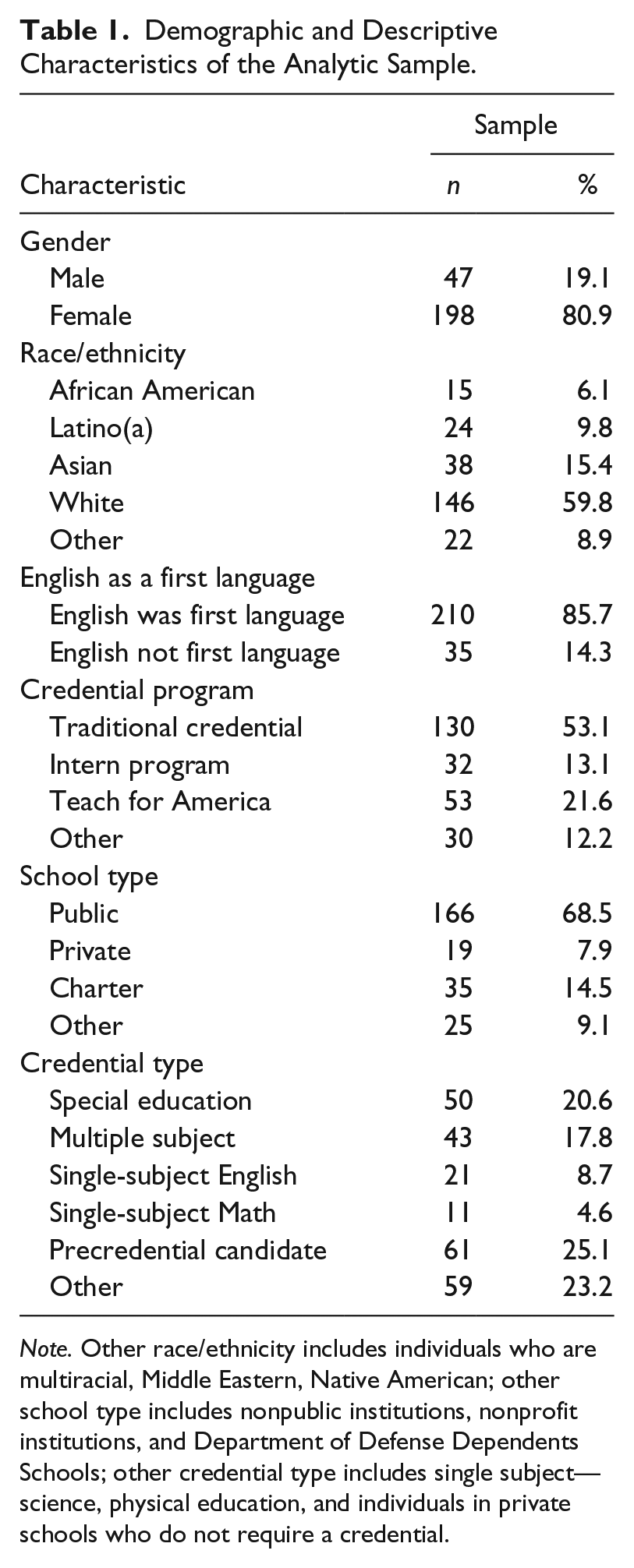
Note. Other race/ethnicity includes individuals who are multiracial, Middle Eastern, Native American; other school type includes nonpublic institutions, nonprofit institutions, and Department of Defense Dependents Schools; other credential type includes single subject—science, physical education, and individuals in private schools who do not require a credential.
Survey Instrument
Demographic questions
The first section of the survey consisted of demographic questions regarding the participants’ background and teaching characteristics. Participants were asked to report their gender, race/ethnicity, and whether English was their first language. They were also asked to indicate the type of credential program in which they were currently enrolled or from which they received their teaching credential (i.e., traditional program, intern program, TFA, or other), their credential type (e.g., multiple subject, single subject), and their years of teaching experience. Finally, participants were asked to indicate the type of school in which they currently taught (i.e., public, private, charter, or other) and the school’s geographic setting (e.g., rural, urban).
CRTSE
Participants completed items from the CRTSE survey to provide data on both practicing and preservice teachers’ CRT self-efficacy—defined as teachers’ perceptions of their ability to execute specific teaching practices associated with CRT. The CRTSE scale was created based on existing literature and validated through a pilot study to determine factor structure and both internal and external reliability (Siwatu, 2007). The scale was designed to elicit information from teachers regarding their self-efficacy in executing specific CRT tasks, divided into the following areas: (a) use students’ cultural knowledge and learning preferences to facilitate learning (e.g., “I can use a learning preference inventory to gather data about how my students like to learn”), (b) design culturally compatible classroom environments that promote respect (e.g., “I can implement strategies to minimize the effects of the mismatch between my students’ home culture and the school culture”), (c) provide students with multiple opportunities to demonstrate learning using a wide assortment of nonbiased assessments (e.g., “I can identify ways that standardized tests may be biased toward culturally diverse students”), and (d) provide students with the skills needed to thrive in traditional academic culture while maintaining a connection to their home culture (e.g., “I can teach students about their cultures’ contributions to science”; Siwatu, 2007, p. 1093). The full survey protocol is included in Table 2, and more information about the survey’s development and validation can be found in Siwatu (2007). Other research studies using the scale have indicated strong reliability (e.g., Fitchett et al., 2012); the current study found the survey items to be highly reliable (α = .96).
Descriptive Statistics for Items on the CRTSE Scale.
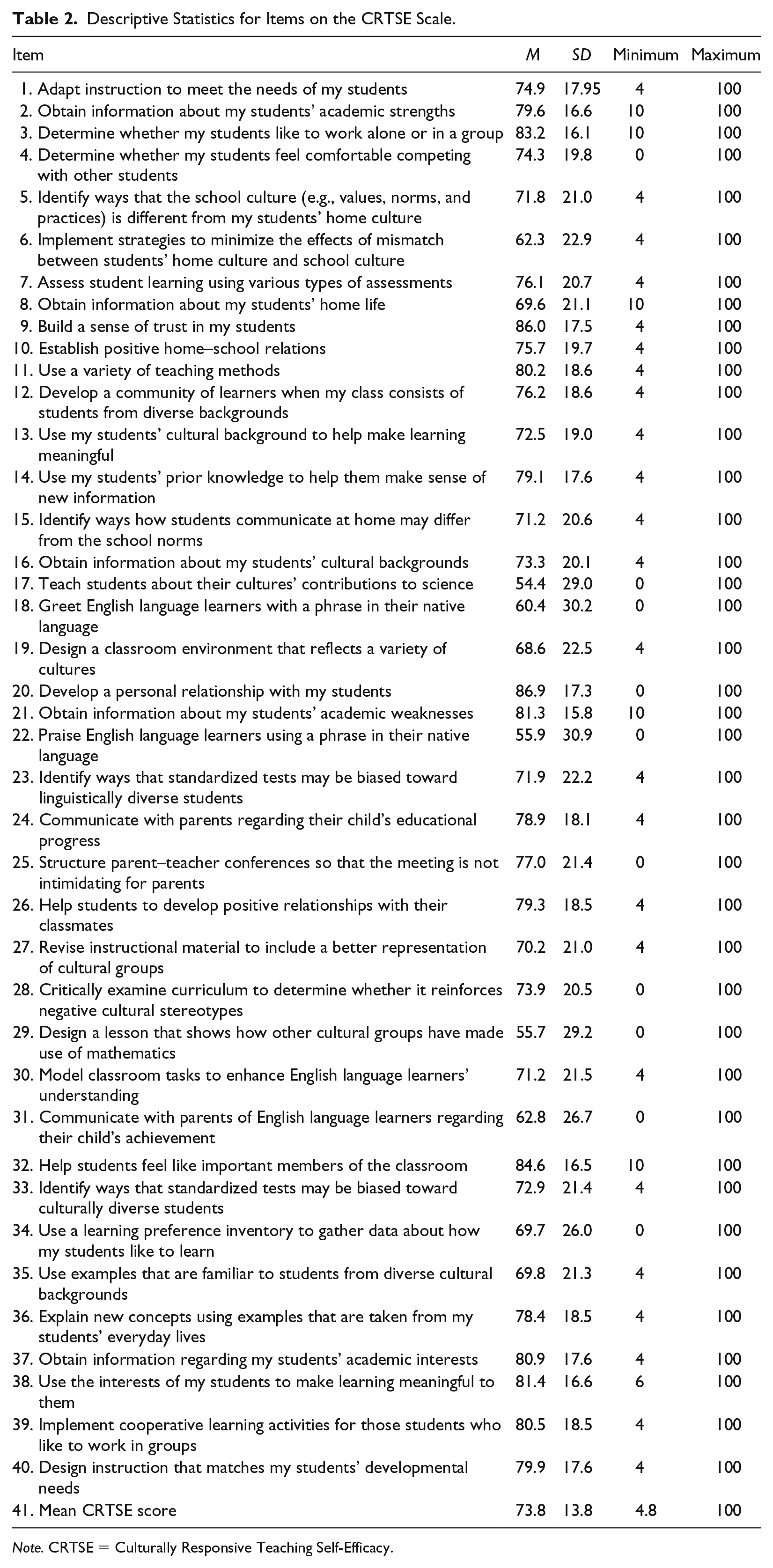
Note. CRTSE = Culturally Responsive Teaching Self-Efficacy.
The Likert-type scale consists of 40 items in which participants were asked to rate how confident they were in their ability to engage in specific CRT practices by indicating a degree of confidence ranging from 0 (i.e., no confidence at all) to 100 (i.e., completely confident). Participants’ responses to each of the 40 items are then summed and divided by 40 to generate a total mean score, which could range from 0 to 100. Participants with higher scores on the CRTSE scale are more confident in their ability compared with those with lower scores.
Procedure
After obtaining approval from a university-based institutional review board, we recruited teacher participants by making direct contact, via email, with teachers who met the inclusion criteria. Potential participants were identified through teacher networks or were individuals with whom the investigators had a previous professional relationship. Participating school districts and private school networks provided an email list of in-service teachers in prekindergarten through 12th grades. Participating teacher credential programs provided an email list of preservice teachers.
Potential respondents were emailed an anonymous link to complete the survey via Qualtrics, and the open link was included on several email newsletters addressed to our targeted demographic. The email and newsletter notices included information about the study and advised participants that upon completion of the survey, they had the option to be entered into a raffle to win a US$50 Amazon gift card. Upon clicking the link included in the email, respondents were directed to the implied consent page that informed them of the study’s purpose, provided the principal investigator’s contact information should they require additional information, and asked participants to indicate that they were above 18 years of age and a current educator or teaching-credential candidate. At the end of the survey, respondents were directed to a separate URL page that asked for their email address, should they wish to be entered into the gift card raffle. The email address was not attached to the survey data; no personally identifying information was collected from respondents. The survey was distributed once to potential respondents and the link remained open during a 4-week period from March 2017 to April 2017.
Analysis
To answer our first research question regarding which items were related to higher or lower self-efficacy scores, we descriptively analyzed specific items on the CRTSE for which participants scored the highest and lowest strength indices. We obtained item-specific means on a scale of 0 to 100 across participant responses to each item (i.e., item responses were summed and divided by the total number of items to generate an item-specific CRTSE strength index), and we grouped each item by mean score into quartiles to examine patterns in universal strengths and weaknesses in CRT self-efficacy within our sample.
To examine our second research question regarding how sociodemographic and teaching characteristics relate to self-efficacy in CRT, we conducted ordinary least squares linear regression. Using the CRTSE total strength index as our dependent measure, we ran a series of linear models, beginning with an unconditional model with no predictors (Model 1). Model 2 included a continuous predictor for years taught. Model 3 included sociodemographic variables as predictors: gender (dummy coded, with male serving as the referent), ethnicity (dummy coded as five variables—African American, Latino, Asian, and other, with White serving as a referent), and linguistic background (dummy coded binary indicator with English only as the referent). Model 4 included teacher credential characteristics, dummy coded as four variables: intern credential, TFA credential, and other nontraditional credentials (e.g., Center for Inspired Teachers), with traditional credential program serving as the referent. Model 4 also included teacher credential type, dummy coded as five variables: special education, single-subject English, single-subject math, multiple subject for elementary, and other (e.g., science, physical education), with precredential candidate serving as the referent. Model 5 included teacher experiences, such as school type (public, private, charter, and other) and geographic setting (urban, rural, suburban, and other).
Results
Our first question examined the item-specific areas in which teachers felt stronger and weaker in delivering CRT. Strength indices for each individual item are displayed in Table 2. Of the four competency areas outlined by Siwatu (2007), we found strength indices to be highest on items related to curriculum and instruction. Higher means in this domain included items such as “I can design instruction that matches my students’ developmental needs” (M = 79.9, SD = 17.6) and “I can use a variety of teaching methods” (M = 80.2, SD = 18.6). Means were the lowest in the building cultural connections and cultural enrichment domains. These included items such as “I can design a lesson that shows how other cultural groups have made use of mathematics” (M = 55.7, SD = 29.2) and “I can teach students about their cultures’ contributions to science” (M = 54.4, SD = 29.0).
Upper and lower quartile items are displayed in Table 3. The items with the highest mean scores were in areas that involved nuanced understandings of student preferences, building personal relationships with students, and building trust. For example, when asked about the extent to which participants were able to develop a personal relationship with students, the mean score was 86.9 (SD = 17.3), and when asked about the ability to use the interests of students to make learning meaningful to them, participants averaged 81.4 (SD = 16.6). Other items with scores above 80 included those related to determining whether or not students enjoy working together in groups and obtaining information about students’ academic weaknesses. The upper quartile included items with means that ranged from 86.9 (“I can build a sense of trust in my students”) to 79.3 (“I can help students build positive relationships with classmates”).
Upper and Lower Quartile Responses.
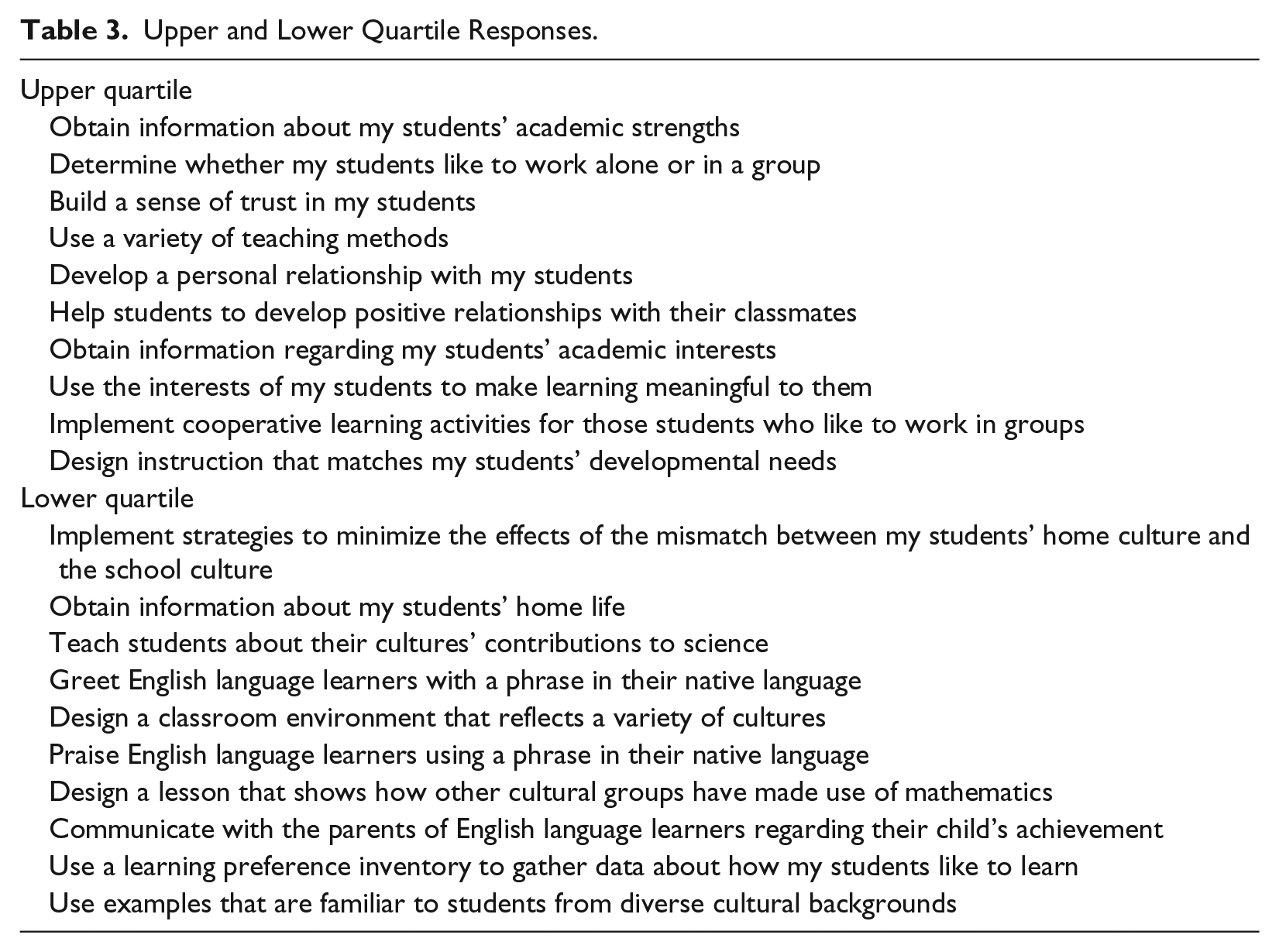
The lowest mean scores were in areas that involved specific cultural knowledge and building home-to-school connections. For example, lower mean scores included being able to greet English language learners in their native language (M = 60.4, SD = 30.2) and implement strategies to minimize the effects of mismatch between students’ home culture and school culture (M = 62.3, SD = 22.9). The lower quartile included items with means that ranged from 69.9 (“I can use examples that are familiar to students from diverse cultural backgrounds”) to 54.4 (“I can teach students about their cultures’ contributions to science”).
To answer our second research question, we conducted a series of ordinary least squares linear regression models to examine sociodemographic and teacher characteristics related to feelings of CRT self-efficacy. Model 1 was an unconditional model and provided an intercept depicting the overall mean CRT score (β = 73.38, p < .000). When adding years of teaching experience (Model 2), we found an estimated mean difference of 0.33, with a 95% confidence interval from 0.11 to 0.55, indicating that as years of teaching experience increased by 1, estimated mean CRTSE scores increased by approximately 0.33 points (p < .001).
Model 3 included sociodemographic characteristics of gender, ethnicity, and whether or not English was the participant’s first language. Although females had a higher estimated mean CRTSE score, we found that gender was not a significant predictor in the model (β = 2.87, p = .19). Respondents who identified as Latino were associated with higher estimated mean CRTSE scores (β = 6.43, p = .04), but other ethnicity categories did not significantly differ from participants identifying as White. Contrary to Chu and Garcia’s (2014) study, we found that having a first language other than English was associated with an estimated 7.9-point reduction in CRTSE scores (p = .01).
Model 4 examined whether or not credential program (i.e., intern, traditional, TFA, or other) would be a significant predictor of CRTSE scores, as these programs differ in their approaches to CRT training. Compared with traditional credential program training, we found that all the other training types were associated with lower estimated mean CRT scores, although these were not statistically significant predictors. When including credential subject (i.e., math, English, multiple subject, special education), we found that compared with precredential candidates, all subject areas except for single-subject English encompassed higher estimated mean CRTSE scores, with the highest scores for multiple subject teachers (β = 4.72, p = .11), although, again, these were not statistically significant factors. Special education teachers did not significantly differ in mean CRTSE scores than teachers with general education credentials.
Model 5 included school program type (i.e., private, charter, public, or other) and geographic setting (i.e., rural, suburban, urban, or other). All net controls considered, compared with teachers working in traditional public schools, all other school types were associated with lower estimated CRTSE scores. Teachers working in private schools were estimated to have mean CRT scores 5.33 points lower than that of public school teachers, although this was not statistically significant (p = .13). Compared with teachers working in urban geographic settings, we found higher estimated mean CRTSE scores for teachers working in rural and suburban areas, but these factors did not contribute to a large portion of the variance in our final model. Years of experience remained the most significant predictor of CRTSE scores in our analysis, suggesting that as teachers grow in the profession, they become more self-efficacious in working with CLD students. Table 4 displays the results of the linear regression models predicting CRTSE scores.
Regression Models.
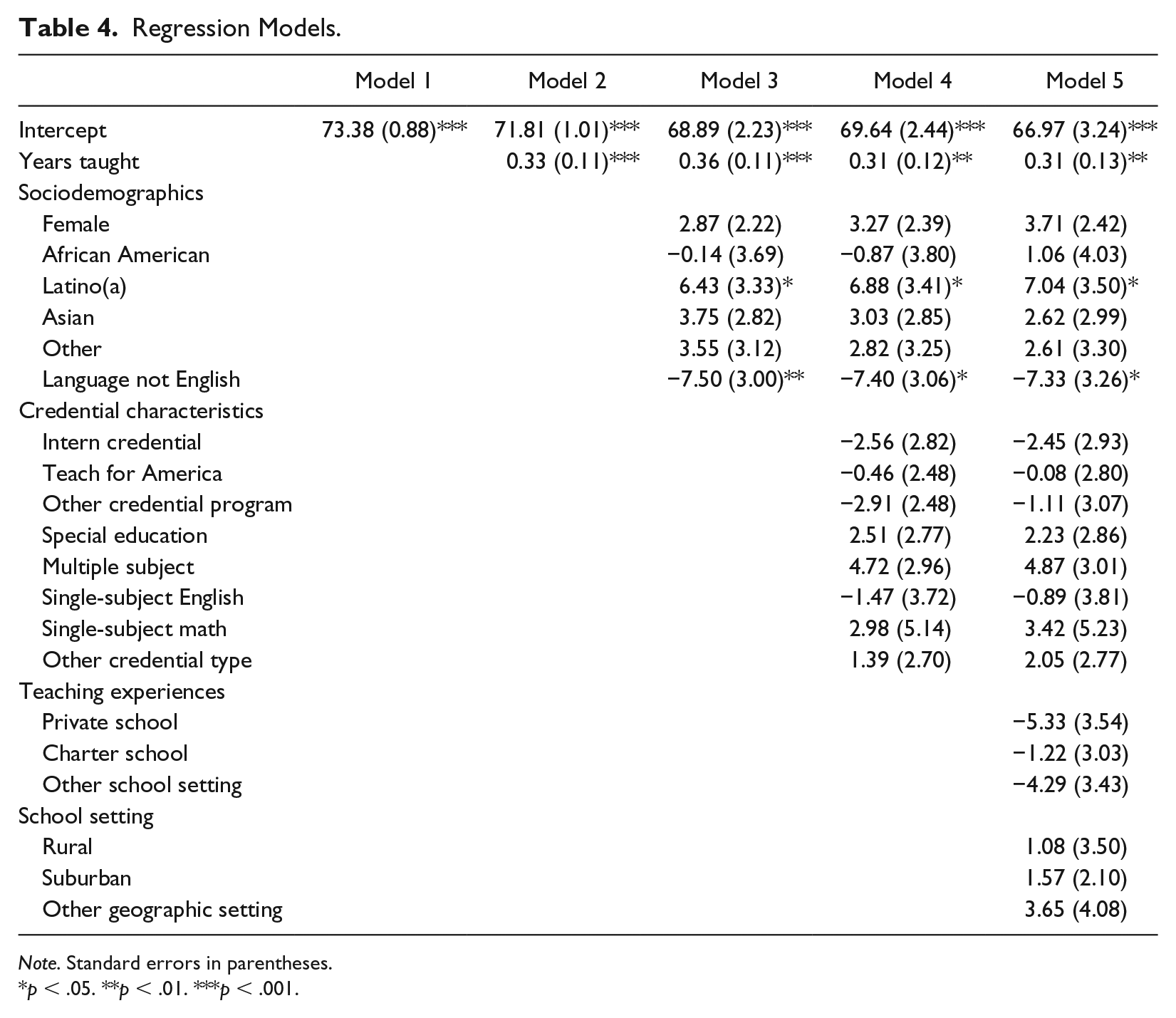
Note. Standard errors in parentheses.
p < .05. **p < .01. ***p < .001.
Discussion
In this study, we examined areas in which practicing and preservice teachers felt high and low self-efficacy in their CRT practices and considered the various factors that might affect educators’ self-efficacy in delivering CRT. Results of our descriptive analysis revealed that the highest mean scores were in areas that involved building trust and personal relationships with students. This is encouraging, as student-centered instruction and positive relationships are important features of CRT. The lowest mean scores were in areas that involved more specific cultural knowledge, such as being able to validate students in their native language and teaching students about their culture’s contributions to science and math. Participants also reported lower levels of self-efficacy in using culturally responsive techniques and including specific cultural elements in the curriculum. These findings are concerning, as building on background knowledge by implementing curriculum that incorporates students’ cultural experiences and effectively leveraging students’ cultural capital in ways that build their academic abilities are key tenets of CRT. If teachers feel unable to build on students’ specific cultural backgrounds, they may be missing opportunities to provide classroom experiences that may help to reduce the achievement gap. Similar to past research (e.g., Rubie-Davies et al., 2012), we found that years of teaching experience had a statistically significant effect with regard to teachers’ CRT self-efficacy.
Professional development in CRT holds the potential to increase preservice and in-service teachers’ feelings of familiarity and understanding of the importance of CRT; yet, gaps still exist in teachers’ comfort with implementing principles of CRT in their practice (Fitchett et al., 2012; McKoy, MacLeod, Walter, & Nolker, 2017). Findings from our study illuminate specific areas of cultural competence (i.e., cultural knowledge, such as being able to validate students in their native language and teaching students about their culture’s contributions to scholarship) and periods in a teacher’s career (i.e., within the first 3-5 years of practice), in which targeted professional development is needed to develop CRTSE. In addition, our results indicate that teachers just entering the field may benefit from extra support as they begin working with students, as preservice teachers reported less confidence in supporting CLD students than those with more experience. Providing preservice teachers with practical application, community service learning, and mentoring opportunities may be beneficial for CRTSE development. Findings from our study contribute to a growing body of literature on ways to support the development of teachers and scholars seeking to serve diverse populations.
We found that identifying as Latino was positively related to CRT self-efficacy, but that teachers who reported a first language other than English were significantly less confident in working with CLD students—a notable contrast from Chu and Garcia’s (2014) findings. It should be noted, however, that Chu and Garcia’s study only included special education teachers, rather than participants with all credential types. Our finding may reflect an enhanced clarity about inter- and intragroup differences, causing participants to underreport confidence as a reflection of their awareness of CRT’s complexity. Nevertheless, social cognitive theory posits that self-efficacy is, in itself, a powerful predictor of behavior, which suggests that targeting teachers’ low self-efficacy may be a worthwhile pursuit, regardless of actual ability (Bouffard-Bouchard et al., 1991; Pajares, 1996).
In the context of social cognitive theory, this finding highlights important considerations for administrators designing professional trainings for teachers who identify as CLD themselves and are working with CLD students. Four sources of information affect the formation of self-efficacy: mastery experiences, vicarious experiences, verbal persuasion, and psychological and emotional states (Bandura, 1977). Given this, professional development opportunities can promote confidence and competence among teachers with low self-efficacy by harnessing positive models of effective CRT practices in real classrooms (e.g., teaching videos) to enhance vicarious experiences (Bandura, 1977; Schunk, 1998), and they should also connect learning to actual teaching experiences (Tschannen-Moran et al., 1998) in which participants apply new knowledge successfully to their instruction, facilitating mastery experiences among teachers. Because previous studies have suggested a positive correlation between linguistically diverse teachers and CRT self-efficacy, additional research on the intersections of ethnicity and language related to CRT is warranted.
We found that credential preparation type, subject type, school type, and geographic location did not have statistically significant impacts on CRTSE scores. Although prior research suggests that quality of teacher training can affect one’s feelings of self-efficacy, our results suggest that both traditional and alternative credential programs are equally able to train teachers to feel confident in working with CLD students. Teachers with experiences across subject areas and geographic locations also felt equally able to work with CLD students. It should be noted, however, that we had several findings approaching statistical significance. For example, compared with traditionally credentialed teachers, intern credential teachers reported slightly lower CRTSE scores. Teachers with an intern credential may feel less efficacious due to a potentially truncated credential program and the demands of teaching full-time while completing coursework. We also found that teachers working in private school networks reported lower than average scores compared with teachers working in traditional school settings. These factors may warrant further exploration with larger sample sizes, and administrators, especially those in secondary settings, should consider training for in-service teachers that emphasizes individualized support based on teachers’ needs, attitudes, and beliefs about CLD students.
In addition, we found that teachers with special education credentials did not differ in CRTSE scores compared with other credential types. This finding is encouraging, as special education teachers are distinctly suited to supporting diversity, and often already advocate for students with unique learning styles (Moore, 2018). Special education teachers must be prepared to address issues of disproportionality (Artiles, 2011) and to conduct culturally responsive case management (Tran, Patton, & Brohammer, 2018). It should be noted that, though we were interested in exploring any differences in scores between general and special education teachers, all teachers potentially teach CLD students with disabilities in inclusive environments. Furthermore, general education teachers are sources of referral for special education and may refer students for support because of cultural and linguistic mismatch rather than potential disability (Ahram, Fergus, & Noguera, 2011). Thus, it is imperative that general education teachers have the skills to implement CRT in ways that especially serve to prevent unnecessary referrals for special education.
Improving outcomes for CLD students requires that all teachers feel efficacious in their ability to implement CRT. Crucial areas in achieving this goal are in bolstering the quality of teacher preparation around CRT practices and developing cultural sensitivity and pedagogical tools as they relate to teaching diverse learners. Teacher educators and administrators, however, often struggle with determining what types of learning experiences may prompt teachers to make the important connections among their own cultural background and experiences, that of their students, and the curriculum they teach. In this study, through evaluating the self-efficacy beliefs of teacher candidates and practicing teachers, we aimed to provide clarity as to which factors increase teachers’ self-efficacy. Through broadening our understanding of these factors, we can improve teachers’ implementation of CRT and increase learning opportunities for all students.
Limitations
Although this study included a large sample of preservice and practicing teachers, the sample is limited in several ways. First, we did not ask participants to report their state or region, which limits our understanding of how their place of training or employment may affect the results. Second, our study results may not generalize to preservice and practicing teachers more broadly. Although the majority of U.S. teachers are both White and female, which aligns with our sample, our study included an inflated number of participants identifying as Asian and an inflated number of participants reporting a first language other than English. Finally, we are unable to report response rates due to our sampling strategy; future studies would benefit from a more targeted sampling approach.
This study is also limited, in that some of the regression results may lack statistical power due to small sample sizes within subgroups. For example, in our final model, results for individuals with single-subject math credentials included a large standard error and a wide confidence interval, and this is most likely due to smaller numbers in this subgroup. Future studies should include larger and more balanced numbers within predictor subgroups to better explore variables of interest.
Although the CRTSE scale identifies elements of teacher self-efficacy in building home–school connections, and using cultural background and knowledge to deliver curriculum, there are some features of the scale that could be expanded upon to fully capture the evolving theories and practices encompassed in CRT. The scale does not include items that measure teachers’ self-efficacy beliefs in cultivating students’ critical consciousness of structural barriers that perpetuate disparities, which is an area that should be explored in the future with an updated survey scale.
Future Directions
Given the increasing evidence that teachers who successfully implement CRT practices can create more equitable schooling experiences for CLD students and evidence that CRT can positively impact learning outcomes, future studies should continue to explore opportunities to prepare teachers specifically for developing skills in culturally responsive practices. Studies should critically examine the various types of teacher preparation programs, including the specific methods employed to prepare educators to work with students from CLD backgrounds. Additional studies relating to the most effective strategies in developing CRT self-efficacy could improve teacher preparation programs and help to effectively guide teacher educators. Research that explores professional development opportunities and training, especially for secondary teachers and teachers early in their careers with less experience, will be paramount to improving school experiences for CLD students. Studies relating to efficacy of training opportunities that can offer teachers concrete tools and strategies for implementing CRT practices, especially in areas where they feel lower levels of self-efficacy (e.g., cultural connections, contributions to curricular topics, and home-to-school connections), will serve to support teachers in their confidence to implement CRT practices.
Footnotes
Declaration of Conflicting Interests
The author(s) declared no potential conflicts of interest with respect to the research, authorship, and/or publication of this article.
Funding
The author(s) received no financial support for the research, authorship, and/or publication of this article.