



Abstract
Students with extensive support needs (ESN) benefit from inclusion in general education settings with their same-age peers. Many teachers, however, report feeling overwhelmed and underprepared to effectively educate students with ESN within general education settings. To mitigate this, we must ensure that content related to the instruction and inclusion of students with ESN in general education settings is included in the introductory special education courses taken by preservice general education teachers, which we refer to as “SPED 101.” Our research team surveyed 302 instructors of SPED 101 courses in general education baccalaureate teacher preparation programs at institutions of higher education across the United States. Data suggest that most instructors cover content related to the instruction and the inclusion of students with ESN, although the extent to which content is addressed varies among instructors, indicating inconsistencies in course content, delivery, and instruction. Limitations, implications, and future research are discussed.
Keywords
All students receiving special education services have a right to an education in the least restrictive environment (LRE), regardless of ability level or support needs. The Individuals with Disabilities Education Act (IDEA, 2004) requires that teams consider placement in the general education setting with any necessary supports and supplementary aids before placement in a more restrictive setting is considered. Researchers have continued to demonstrate that students in general education settings are more likely to be academically engaged in grade-level content than their peers in self-contained settings (Gee et al., 2020; Kurth & Mastergeorge, 2012; Quirk et al., 2017; Zagona et al., 2017). Factors such as the presence of a highly qualified content expert (i.e., the general education teacher) and opportunities for students to learn alongside their peers likely contribute to meaningful access and engagement within the general education setting (Kleinert et al., 2015). Other benefits of inclusion in general education settings include improved communication skills, social-behavioral skills and peer relationships, self-determination, and academic achievement, specifically in literacy and mathematics (Gee et al., 2020; Quirk et al., 2017; Robertson et al., 2017). Inclusive education also benefits peers without disabilities, instilling in them a respect for human diversity, improvements in social skills and self-concept, and development of meaningful friendships (Kennedy & Horn, 2004; Quirk et al., 2017).
An increasing number of students with disabilities receive their education in general education placements. Unfortunately, this is not always the case for students with extensive support needs (ESN). Students with ESN represent 1% or fewer of all students who typically receive special education services under the eligibility categories of autism, intellectual disability, or multiple disabilities, though not every student in these categories has ESN (Kleinert et al., 2015). Students with ESN are typically eligible for alternate assessment based on alternate achievement standards (AA-AAS) and may have pervasive support needs across learning, communication, independent living, self-care, and employment domains (Thompson et al., 2018). In 2018, only 39.7% of students with autism, 17.4% of students with intellectual disability, and 14.3% of students with multiple disabilities were included in the general education environment for 80% or more of their instructional day (i.e., fully included), compared with 64.0% of all students with disabilities (U.S. Department of Education, 2021); however, because not all students with autism, intellectual disability, or multiple disabilities have ESN, these data may overestimate the actual percentage of students with ESN who are fully included. For example, Kleinert et al. (2015) conducted a survey across 15 states and found fewer than 3% of students with ESN were fully included in a general education classroom.
For inclusion in general education settings to be successful, the general education teacher needs to feel a sense of efficacy and preparedness to include students with ESN (Robertson et al., 2017). Unfortunately, most general education teachers report a lack of knowledge and preparation to include students with ESN in their classroom (Agran et al., 2020; Zagona et al., 2017). Including students with ESN requires expertise in meeting students’ instructional needs (Ruppar et al., 2015; Zagona et al., 2017); supporting social-communication skills (Able et al., 2015; Zagona et al., 2017); promoting positive behavior (Butler & Monda-Amaya, 2016; Hart Barnett et al., 2020); collaborating with special education teachers, paraprofessionals, and related services providers (Ruppar et al., 2015; Zagona et al., 2017); and understanding students’ unique physical or health needs (Zagona et al., 2017).
Teacher preparation programs provide an ideal environment for preservice teachers to acquire the skills necessary to include students with ESN in their classrooms (Zagona et al., 2017). Allday et al. (2013) reviewed websites of 109 colleges and universities and found only 7% to 10% of coursework required for preservice elementary education teachers addressed inclusive education. Able et al. (2015) interviewed in-service teachers who shared they needed more meaningful experiences with students with disabilities in inclusive settings in their teacher preparation programs. Similarly, Stites et al. (2018) interviewed preservice early childhood and elementary education teachers who shared a desire for more experiences working with students with disabilities.
In most, if not all, teacher preparation programs, preservice teachers are required to take an introductory special education course. For many preservice general education teachers, this will be the only course they take devoted to special education and the instruction of students with disabilities (Thompson et al., 2012). Our research team defined these introductory special education courses, termed “SPED 101” here forward, as courses in which general education majors, oftentimes alongside special education majors, are provided introductory information on the provision of special education and/or the instruction/inclusion of students with disabilities. Some common course titles for introductory special education courses include “The Exceptional Child,” “Inclusive Education for Diverse Learners,” “Survey of Special Education,” “Teaching Diverse Learners,” or “Survey of Exceptional Learners.” Although some universities offer dual-certification, or inclusive preparation, programs in which preservice teachers pursue licensure in both general and special education (e.g., Ashby, 2012, Naraian & Schlessinger, 2018), the purpose of the current study was to investigate the content delivered within SPED 101 courses taken by preservice teachers in traditional general education preparation programs.
The research conducted related to SPED 101 courses has primarily focused on organization or delivery of the course, and not specifically investigating how preservice teachers are prepared to include students with specific support needs, such as those with ESN. For example, Dove Jones and Messenhimer-Young (1989) surveyed 200 universities and found that special education coursework requirements for general education teachers varied by institution. Requirements ranged from one to six credit hours and field experiences were required in 59% of the institutions. Approximately half of respondents organized their courses in a categorical model, in which preservice general education teachers learn about a disability each week, which Dove Jones and Messenhimer-Young caution can lead to stereotypic views of students with disabilities. Similarly, Fender and Fiedler (1990) surveyed 286 universities, and also found the majority of SPED 101 courses were organized in a categorical manner, placing an emphasis on characteristics of disabilities. More recently, Thompson et al. (2012) conducted a survey in which they found the modality of instruction in these SPED 101 courses (either face-to-face or online) had limited impact on students’ acquisition of content. In addition, there have been some publications describing SPED 101 courses through a disability studies framework, rather than through the traditional, medical categorical model (e.g., Kofke & Morrison, 2021; Rice, 2006). None of these articles, however, specifically addressed students with ESN.
To date, we could not locate any published research investigating the extent to which the instruction and inclusion of students with ESN are covered in SPED 101 courses taken by preservice general education teachers. Therefore, we conducted a survey of baccalaureate teacher preparation programs in the United States to answer the following research questions:
Method
Instrumentation
Given limited prior survey research conducted in this area, we developed a survey to explore the extent to which SPED 101 taken by general education majors covered content related to preparing preservice teachers to work with students with ESN. The survey had three main sections: (a) instructor demographics, (b) information related to general SPED 101 course requirements, and (c) information specific to type and depth of content related to the instruction and inclusion of students with ESN. Ruppar et al. (2016) reviewed three textbooks related to the instruction of students with ESN and noted the commonalities addressed in each text. They posited that these areas reflect the core competencies needed by teachers of students with ESN. These areas included (a) collaboration with families and other prof-essionals; (b) planning instructional programs in inclusive environments; (c) positive behavior support; (d) supporting students’ health, physical, and medical needs; (e) teaching communication skills; (f) transition to adulthood; (g) assessment, including alternate assessment; (h) promoting social competence and friendships; and (i) teaching academic and life skills (p. 274).
We used this list to develop our survey, particularly the final section in which specific content areas were presented to the survey participants.
As part of the survey development process, we conducted two levels of review to gather feedback on the content and overall design of the survey and ensure content validity. First, two experts in the field of special education with specialties in the area of serving and supporting students with ESN reviewed the draft survey instrument to provide feedback on the adequacy of the content and clarity of survey items. Based on this feedback, we made adjustments to ensure content understanding, establish consistent vocabulary verbiage, and improve overall readability. We then conducted cognitive interviews with five experts in the field of special education representing different regions of the United States using a “think aloud” approach (Willis, 2015) whereby interviewers prompted interviewees to explain their thinking process as they completed the survey. The cognitive interview process resulted in a few minor adjustments to the survey, including reordering of the questions and creating a Likert-type scale question prompting instructors to rate the amount of time that they spent covering topics related to ESN throughout their course.
The final survey instrument comprised 28 items that were grouped across the following categories: (a) demographic information, (b) information related to general course requirements, and (c) information specific to type and depth of content covered related to the instruction and inclusion of students with ESN in SPED 101 courses. Of the 28 items, six were descriptive in nature, requiring instructors to provide background information about their experience teaching at the university/college level and personal demographic information. The remaining 22 items were specific to instructors’ experience teaching students with ESN, instructors’ experience conducting research with students with ESN, and content covered in SPED 101 courses related to students with ESN. In the last survey item, we asked instructors to indicate the amount of time that they cover content specific to teaching and working with students with ESN using a Likert-type scale of 1 (we do not cover this topic at all) to 3 (we cover this topic in depth). The complete survey is available for review upon request to the first author.
Survey Distribution
We reviewed the Department of Education websites for each of the 50 states and District of Columbia (DC) to identify institutions of higher education (IHEs) that were listed as offering teacher preparation programs. In total, we located 1,246 IHEs. We then reviewed each IHE’s website to identify the department chair for the special education department, if one existed, or the dean of the college of education if not, and contacted them via email for participation after receiving approval from our Institutional Review Board. We included a cover letter outlining the title of the study, inclusion criteria, and key definitions of the vocabulary within the study (e.g., “SPED 101,” “general education,” “extensive support needs”). We asked these individuals to respond to the email to provide the specific course instructor for the SPED 101 course for participation in the study. If no response was provided, we sent a follow-up email at the 1-week mark to the identified dean/department chair. In addition, if no response was provided after 1 month, we sent a second follow-up email. Following this, if no response was received, we worked collaboratively to identify a new point of contact from the institution for participation. Upon receiving the name of the SPED 101 instructor for each institution, we emailed a survey invitation letter to each possible instructor. This letter included the title of the study, inclusion criteria, and key definitions, as well as the URL link to the survey. We used a similar follow-up protocol for instructors at the 1-week and 1-month timeline to encourage participation from course instructors. We contacted all 1,246 IHEs for involvement in the study over a 6-month period from Fall 2020 to Spring 2021.
We used Qualtrics for survey development, dissemination, and data management. We carefully combed the survey responses as they were completed to ensure that only one instructor from each IHE completed the survey, as we only used one survey response per IHE for data analysis. If multiple instructors from an institution completed the survey, only the first response was included in our analyses. This helped to ensure that there was an accurate and fair representation of all institutions around the United States within the sample.
Participants
Of the 1,246 IHEs invited to participate in the survey, 302 (24.2%) instructors responded. When given a population of this size, a sample of 294 is needed for an adequate response at the 95% confidence level with a 5% margin of error (Qualtrics, 2020) In addition, we compared response rates and IHE characteristics (e.g., geographic region, size of institution, type of institution) between our sample and the population and the sample appeared adequately representative. Based on these findings, we feel the response rate was adequate to generalize the results of the survey to IHEs across the United States.
Survey participants were 302 instructors of SPED 101 courses in general education baccalaureate teacher preparation programs at IHEs across the United States. Of note, IHEs from the state of California included those that offered initial certification at the graduate level due to differences in licensure requirements resulting in baccalaureate programs not offering initial licensure programs in the state. A majority of instructors identified as female (n = 237, 78.5%), White (n = 249, 82.5%), and having a doctoral degree (n = 285, 94.4%; see Table 1). Instructors primarily held the rank of assistant professor (n = 96, 31.8%) or associate professor (n = 82, 27.2%). Almost all instructors had previous experience working with students with ESN in K-12 school settings (n = 274, 90.5%). The average age of instructors was 50.6 years, with a range of 29 to 77 years (see Table 1). Instructors had an average of 25.1 years in education (range = 4–51 years) and 11.8 years in higher education (range = 1–46 years). On average, instructors had taught a SPED 101 course for 14 total semesters (range = 1–285 semesters).
Instructor Demographic Information.
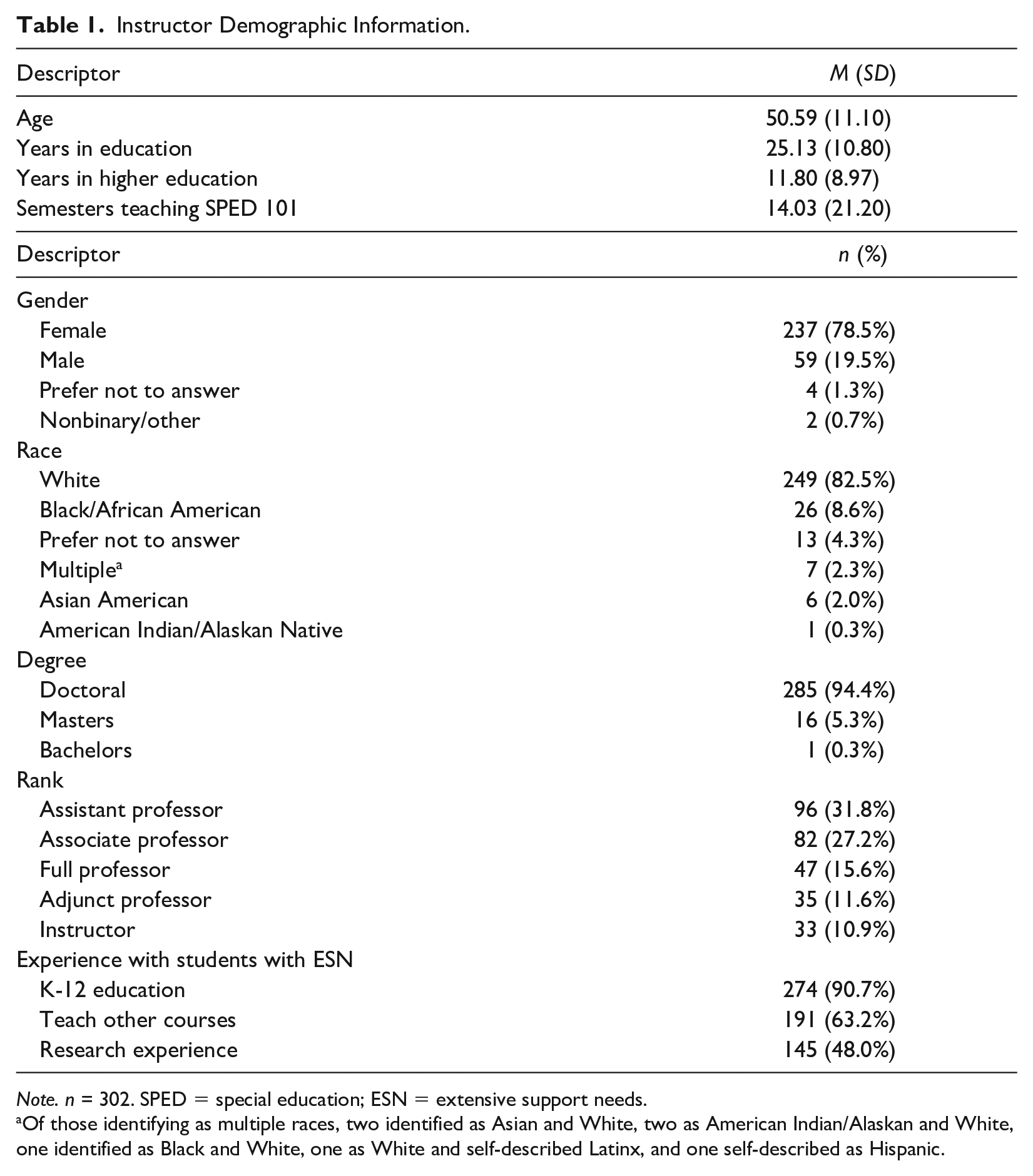
Note. n = 302. SPED = special education; ESN = extensive support needs.
Of those identifying as multiple races, two identified as Asian and White, two as American Indian/Alaskan and White, one identified as Black and White, one as White and self-described Latinx, and one self-described as Hispanic.
Instructors represented IHEs from 45 states and the DC. The majority of IHEs were private institutions (n = 185, 61.3%) and offered baccalaureate programs in special education (n = 207, 68.5%; see Table 2). IHEs ranged in size from very small (fewer than 1,000 degree-seeking students) to large (at least 10,000 degree-seeking students; Carnegie Classification of Institutions of Higher Education, 2017). Nine instructors taught at Historically Black Colleges and Universities and seven taught at women’s colleges. No instructors from Tribal Colleges and Universities responded to the survey.
Institute of Higher Education Descriptor Data.
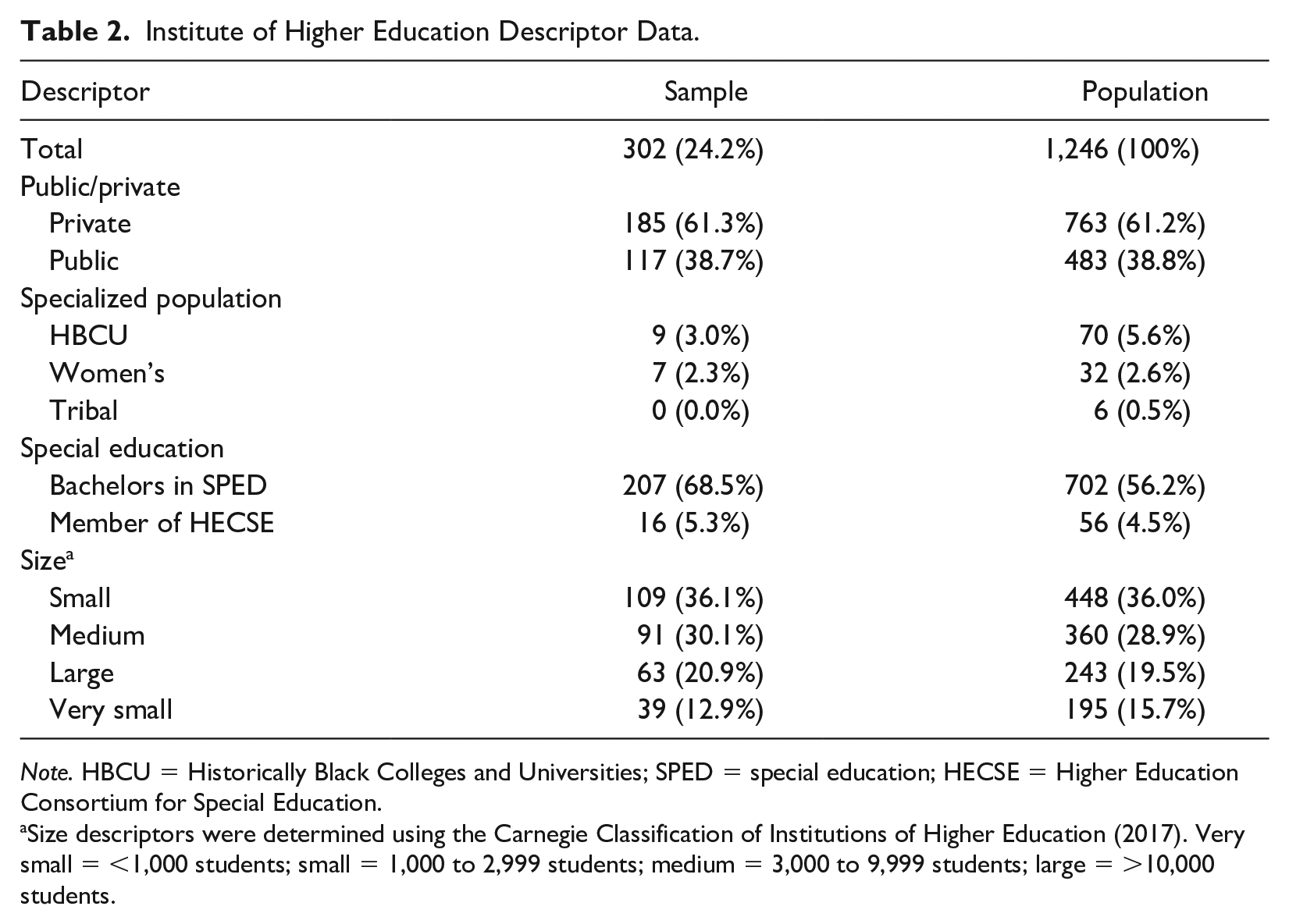
Note. HBCU = Historically Black Colleges and Universities; SPED = special education; HECSE = Higher Education Consortium for Special Education.
Size descriptors were determined using the Carnegie Classification of Institutions of Higher Education (2017). Very small = <1,000 students; small = 1,000 to 2,999 students; medium = 3,000 to 9,999 students; large = >10,000 students.
Data Analysis
After collecting data over a 4-month period, we exported survey responses to IBM SPSS (Version 27). After assigning numerical dummy codes for survey items that required text entry to make statistical analyses possible, we calculated basic descriptive statistics (e.g., frequencies, percentages, mean) to analyze the survey data. In addition, we performed the Wilcoxon Rank Sum test (Mann–Whitney U) to determine whether any factors related to the instructor’s prior experience working with students with ESN were related to an increased emphasis on content related to the instruction and inclusion of students with ESN in SPED 101 courses. Our null hypothesis was that the groups of instructors with previous experience with individuals with ESN would have the same distribution of responses and same median depth of content coverage as the groups of instructors without those experiences. Specifically, we looked at those instructors who did or did not have experience teaching students with ESN in K–12 settings, those who did and did not have experience conducting research with or about individuals with ESN, and those who did and did not have experience teaching other courses related to the instruction and inclusion of students with ESN. Medians were used for this test due to the nonparametric nature of Likert-type scale data.
Results
Extent to Which Content Is Covered
The majority of the instructors (n = 281; 93.0%) reported that they do include content related to the instruction and inclusion of students with ESN in their SPED 101 courses (see Table 3). The amount of time devoted to this content varied between instructors; however, only 23 (7.6%) instructors reported that they covered content related to the instruction and inclusion of students with ESN in every class session. The majority (n = 195, 64.6%) indicated they addressed content multiple times across the semester, but not in every session. Thirty-three instructors (10.9%) reported that they cover content in two full class sessions (e.g., one session on students with intellectual disability and one on students with autism). Sixteen instructors (5.3%) reported addressing content in only one class (e.g., one session on students with ESN), and five reported they addressed content related to students with ESN in less than one full class session.
Course Information.
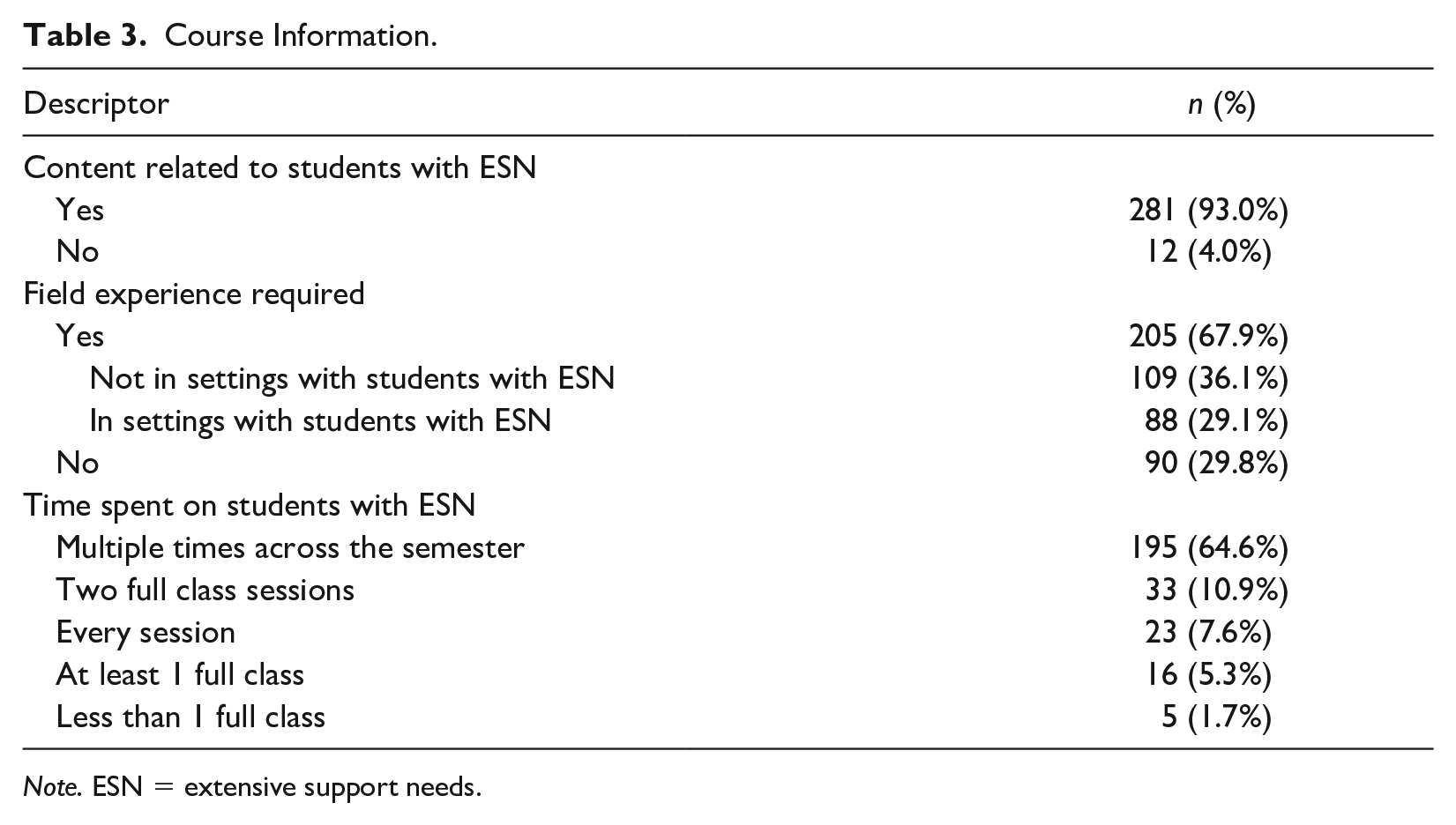
Note. ESN = extensive support needs.
More than half of the instructors (205; 67.9%) indicated that preservice teachers were required to participate in field experiences or clinical placements as part of their SPED 101 course (see Table 3). In 88 cases (44.7% of those in which field experience is required, 29.1% total), preservice teachers were required to observe in settings in which students with ESN were present. Of those, 69 (22.9% total) required preservice teachers to observe students with ESN in inclusive, general education settings, whereas 19 (6.3%) required observations in segregated, self-contained settings.
We asked instructors to rank on a Likert-type scale the degree to which they covered specific content related to the instruction and inclusion of students with ESN (see Table 4). Instructors rated each content area as 0 (we do not cover this topic at all), 1 (we may talk briefly in passing), 2 (we provide an overview or short summary), or 3 (we cover this topic in depth). The area most frequently reported as covered in depth was the characteristics of students with ESN (n = 140; 49.5%). This was the only content area in which none of the instructors responded do not cover. Other content areas which were rated with a mean of 2.00 or above included collaboration with families and other professionals and areas related to academic instruction (e.g., teaching strategies, accessing general curriculum, planning instructional programs). The content area in which instructors most frequently ranked do not cover was the area of assessment, which includes alternate assessment and progress monitoring. Thirty-two instructors (11.3%) said they did not cover this area at all, and only 26 (9.2%) said they covered this in depth. Supporting students with complex health needs had the lowest average rating with a mean of 1.53.
Content Related to Students With ESN.
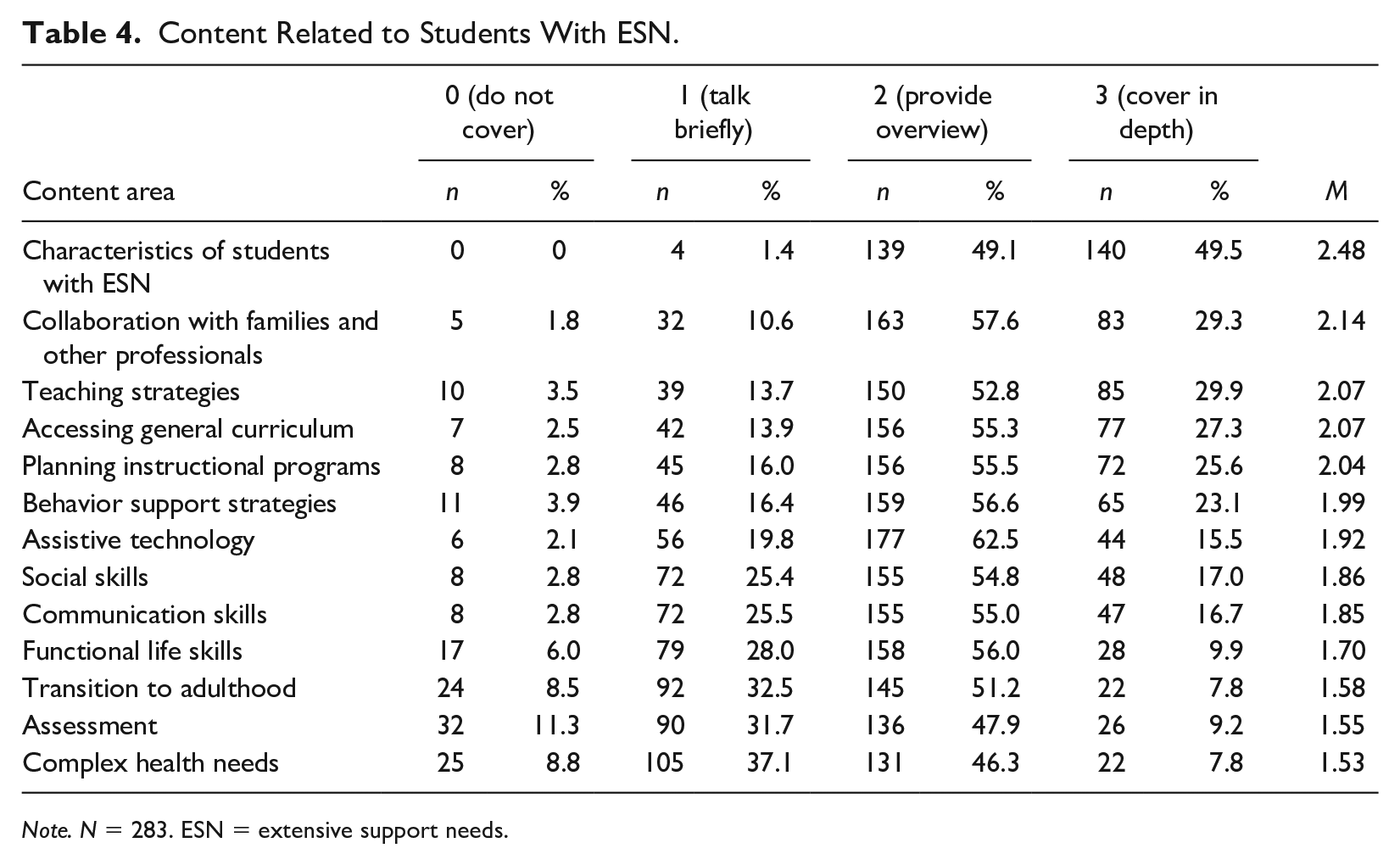
Note. N = 283. ESN = extensive support needs.
Difference Between Experience Level and Depth of Coverage
Results from the Wilcoxon Rank Sum test indicated that there was a statistically significant difference in medians for the two populations of respondents compared (i.e., those with prior experience working with students with ESN and those without). Practically, this means that instructors with previous experience working with students with ESN in K–12 school settings covered content in their SPED 101 courses to a significantly different degree than instructors without this previous experience. Specifically, the instructors who had prior experience with students with ESN in K-12 settings covered the following topics more in depth: characteristics of students with ESN, collaboration with families and other professionals, teaching strategies, access to the general curriculum, planning instructional programs, behavior support strategies, assistive technology, social skills, communication skills, functional life skills, and transition to adulthood (see Table 5 for in-depth statistical results).
Experience by Content Area.
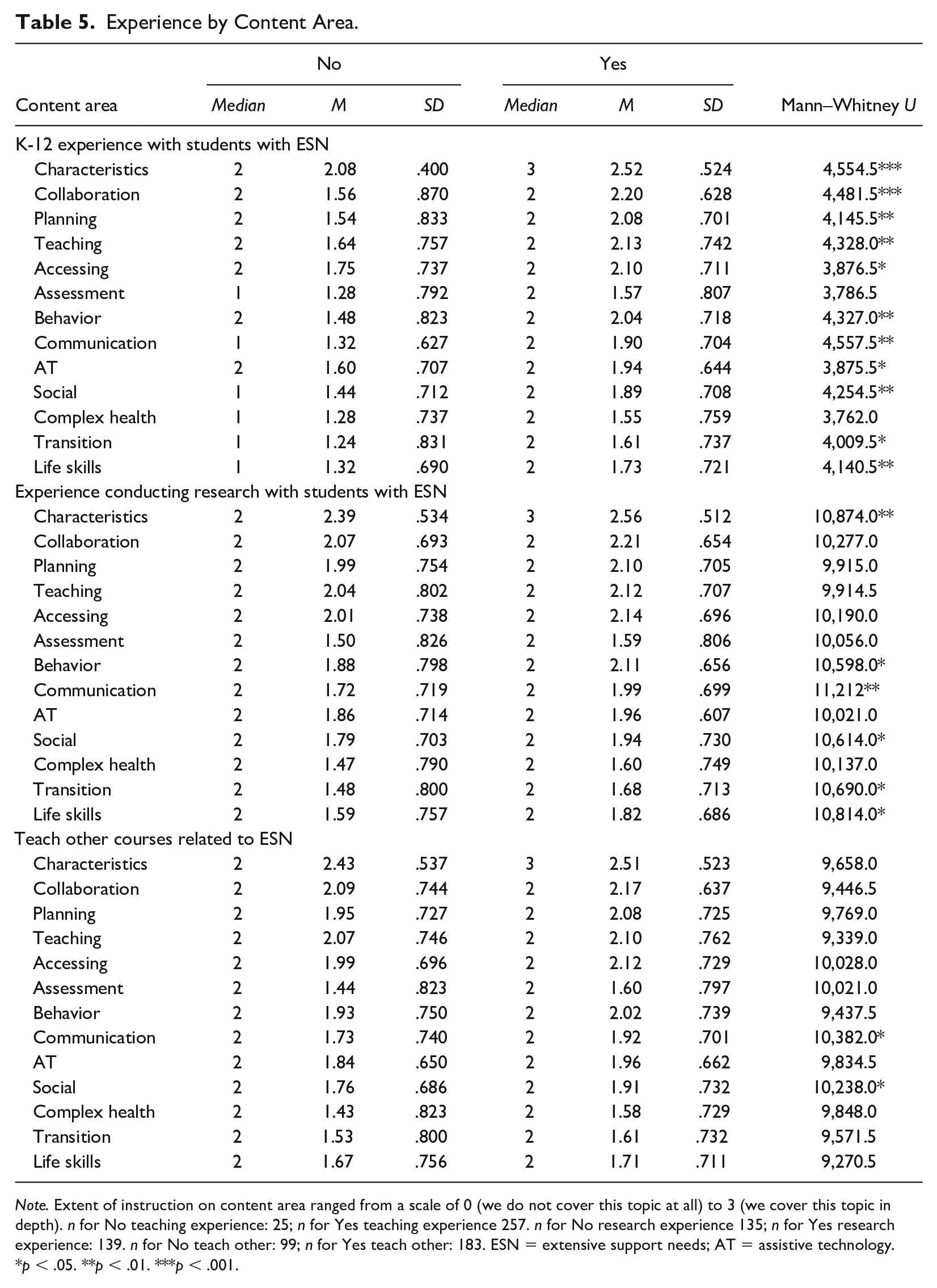
Note. Extent of instruction on content area ranged from a scale of 0 (we do not cover this topic at all) to 3 (we cover this topic in depth). n for No teaching experience: 25; n for Yes teaching experience 257. n for No research experience 135; n for Yes research experience: 139. n for No teach other: 99; n for Yes teach other: 183. ESN = extensive support needs; AT = assistive technology.
p < .05. **p < .01. ***p < .001.
We also ran the Wilcoxon Rank Sum test for the factors related to instructors’ prior experience conducting research related to students with ESN and teaching other courses related to the instruction of students with ESN. There was a statistically significant difference in medians for those with and those without prior experience in research for the following content areas: characteristics of students with ESN, behavior support strategies, communication skills, social skills, transition to adulthood, and functional life skills. There also was a statistically significant difference in medians for those with and those without prior experience teaching courses related to the instruction of students with ESN in the content areas of communication skills and social skills. In all areas, instructors with prior experience working with students with ESN, either in K-12 settings, research contexts, or in coursework, reported that they covered the content area more in depth than their counterparts without prior experience.
Discussion
We were interested in SPED 101 courses taken by preservice general education teachers and the degree to which there was a focus on instruction and inclusion of students with ESN covered in that content. More specifically, the purpose of this survey study was twofold: (a) to ascertain the degree to which content related to the instruction and inclusion of students with ESN was covered and (b) to examine if there were differences between instructors’ prior experience with students with ESN and depth of coverage on instruction and inclusion.
We surveyed 302 instructors of SPED 101 courses in general education baccalaureate teacher preparation programs at IHEs across the United States and found that 93% of instructors indicated that they covered content related to the instruction and inclusion of students with ESN, that 29.1% of those instructors required a field experience for the course in settings for students with ESN, and 64.6% indicated that content on ESN was covered multiple times across the semester. Although 93% is quite large, 100% of teachers should be prepared to teach students with ESN in their classrooms, as the provisions within IDEA require that students are educated in their LRE (2004). In addition, we examined the coverage of content (e.g., characteristics, collaboration with families, teaching strategies, assessment, complex health needs), with most instructors indicating that they provided an overview of the components. The most frequently covered area was characteristics of students with ESN (49.5% provided in-depth coverage), and the least covered area was assessment (11.3% indicating that this content was not covered). This is consistent with Fender and Fiedler’s (1990) findings that instructors place an emphasis on characteristics of disabilities. As noted by Thompson and colleagues (2018), instructors are faced with difficulty when needing to present so much content in a short period of time, and consequently, components may not be covered in depth throughout the course. Nonetheless, it is expected that topics related to supporting students with ESN would be covered throughout the course, yet we found that much of the content related to supporting this population of students was not covered “in depth.”
Instructors with previous experience with students with ESN covered content (e.g., characteristics, collaboration with families, teaching strategies, social skills, transition to adulthood) to a significant degree more than those instructors who did not have prior experience. Instructors who had experience with conducting research with the population also significantly differed from those who did not, and those instructors who taught additional courses related to ESN content significantly differed in coverage of communication skills and social skills compared with those instructors who did not teach multiple courses in the area.
Another interesting finding was that 90.7% of instructors indicated that they had experience teaching or supporting students with ESN in K–12 settings. By definition, students with ESN comprise an estimate not greater than 1% of all students (Kearns et al., 2011; Kleinert et al., 2015). Based on our data, the fact that a large proportion of instructors had prior experience with the population could account for the significant differences in content covered (e.g., characteristics, collaboration with families, teaching strategies).
More specifically, content that was emphasized in introductory courses was wide-ranging in its coverage and not detailed (i.e., cover a little bit about many topics). In examining Table 4, content areas that had mean scores larger than approximately 2.0, suggesting an overview is provided or the topic is covered in depth, are content areas that have received extensive coverage in the literature (general curriculum access [Browder et al., 2020; Spooner & Browder, 2015]; behavior support [Durand, 2021; Kurth & Enyart, 2016; Walker et al., 2018]; teaching strategies [Clausen et al., 2021; Toews et al., 2021]), whereas other content, although important (e.g., functional life skills, complex health needs), has received less attention. One interpretation of introductory/survey courses is that they familiarize students with the breadth and scope of the field and additional courses in the sequence (e.g., systematic instruction, general curriculum access) provide more in-depth coverage.
In continuing to examine the content and the degree to which it is covered as represented in Table 4, logically and conceptually, some of these items go hand in hand. For example, it would be difficult to talk about behavior support without also addressing communication, hard to examine instructional programs without delving into assessment, and challenging to discuss general curriculum access without the supports of assistive technology. Based on the findings from our instructors as illustrated in Table 4, instructors appeared to prioritize certain content areas (e.g., behavior, in which 23.1% covered in depth) over others (e.g., communication, in which 16.7% covered in depth). These disparities may lead preservice teachers to mistakenly believe that these areas are unrelated. One possible explanation could be the perceived importance of content/topics that have received recent emphasis/coverage in the literature and instructors’ exposure to this literature base. Regardless of the degree to which content on communication is fundamental to an overall improved quality of life for students with ESN, instructors viewed it as not receiving as much coverage in an introductory class, and perhaps receiving more emphasis in more advanced courses in the undergraduate training sequence.
Limitations
Several limitations of the study should be considered when interpreting our findings. Although the generalization of this survey would be improved by an increased response rate, our relatively low rate (24.2%) was greater than a similar study conducted by Sobeck et al. (2021), and we believe the demographic characteristics of respondents were representative of those teaching in personnel preparation programs. For example, most instructors identified as female (n = 237, 78.5%) and White (n = 249, 82.5%), which indicates a lack of diversity among respondents; however, this is representative of the larger population in the field of education (National Center for Education Statistics, 2021). In addition, we neglected to ask about instructors’ disability status, which may have led to further analysis. It also is possible that the instructors could have little to no power to decide what is taught/how in-depth content is covered in these courses (e.g., at a large university, everybody could be following the same syllabus/course outline, regardless of prior experience with ESN). Outside factors, such as control over course content and how content is presented, may play a role in how SPED 101 courses are implemented across the nation.
Several limitations also appeared while examining the content of SPED 101 courses. First, several questions were left up to the interpretation of the responding instructor. For example, when asked about prior experience in working with students with ESN, instructors may have answered based on their personal interpretation of the questions. Some individuals may have reported “yes” because of one interaction or a limited experience in working with students with ESN in school settings, while others could have reported “yes” because of an extensive amount of time in the classroom teaching or conducting research in this area. No follow-up questions were asked to capture these data, thus, although we were able to capture nominal data for this question, we were unable to speak to the true extent to which instructors had experience in working with students with ESN. In addition, several questions asked about the dosage of course content by referring to “class sessions”; however, these “class sessions” were not functionally defined with a time limit or other restrictions, again leaving the questions open to a degree of interpretation by the instructor.
Future Research
We can make several suggestions for future research based on the results of this survey. Overall, the purpose of this study was to examine a very specific part of SPED 101, the degree to which instruction and inclusion of students with ESN was incorporated. Future studies could focus on the analysis of SPED 101 courses more broadly, and potentially from a more philosophical approach to enhance what is known about the content, curriculum, delivery of instruction, and opportunities presented to preservice teachers taking this course. For example, it would be interesting to determine if instructors organize their SPED 101 courses in a categorical model, as noted by previous researchers (e.g., Dove Jones & Messenhimer-Young, 1989; Fender & Fiedler, 1990), or if they approach the course via the lens of disability studies, in which disability is viewed to be an interdisciplinary enterprise with the social sciences and the humanities that examines personal, social, and cultural aspects (e.g., Ashby, 2012; Rice, 2006). Future researchers might survey in-service general education teachers who took SPED 101 courses that were organized categorically versus those who took SPED 101 delivered from a disability studies lens to determine if there is a difference in perceptions of preparedness to include students with ESN.
In addition, although not examined in this study, we did ask instructors to provide the name of the textbook used in their SPED 101 course as well as a copy of their course syllabus. Future research should involve conducting further and more in-depth content analysis of these textbooks to single out a uniform text that could be used across introductory courses, leading to an increased level of consistency across content. Future research should include more detailed analysis of content taught throughout the courses and specific ways in which this content is taught (e.g., different in-class strategies; field-based experiences), as results from this survey indicated varying requirements for preservice teachers across courses.
As a part of this survey, we also sought to understand the depth of content covered in these courses. Findings suggest that most SPED 101 courses are designed to provide an overview of special education to ensure that preservice teachers have exposure and knowledge that would prepare them to work with a wide range of students in schools. Future research could include an analysis of the time spent on each of these characteristics to better prepare course content for more in-depth learning about these topics. In addition to this, we suggest future researchers explore how instructors decide what to cover and how in-depth content is covered using qualitative methodology to address not only what is happening (course content coverage) but also why it is happening (why content coverage occurs more in depth for certain topics as compared with coverage related to students with ESN).
Implications
Several implications for policy and practice are present. First, there is a need for consistent preparation across IHEs. These programs also should promote inclusivity among departments, students, and opportunities presented to preservice teachers (Naraian & Schlessinger, 2018). Research suggests that teaching methodologies are shifting. Early research found that the majority of SPED 101 courses were organized in a categorical model, in which students learn about a disability each week (e.g., Dove Jones & Messenhimer-Young, 1989; Fender & Fiedler, 1990). Survey results indicated that instructors are now covering content related to more than one category of disability, such as those included under the category of ESN, across multiple sessions as 195 universities (64.6%) reported coverage across multiple sessions. This shift toward infusing content related to students with ESN across the semester may promote a more inclusive mindset, which could affect the beliefs and attitudes of preservice teachers.
We also can draw several conclusions from our results related specifically to supporting students with ESN. It is minimal, but some IHEs reported no coverage of content related to ESN. We need to ensure that all IHEs cover this content, as inclusive classrooms offer benefits such as presence of content experts and opportunities to learn alongside peers (Kleinert et al., 2015). In addition, we found that instructors with prior experiences with students with ESN were significantly more likely than their counterparts to provide in-depth coverage of content related to these students. When selecting instructors to teach SPED 101 courses, IHE administrators should ensure the instructor has prior experience with students with ESN. If this is not possible, perhaps a guest lecturer with knowledge and expertise may be appropriate.
In addition, the importance of promoting field experiences early in the program (i.e., during intro courses) could lead to increased positive outcomes for the preparedness of preservice teachers in general education. We know that applying skills learned in coursework is an essential part of teacher preparation programs (American Association of Colleges for Teacher Education, 2018). Few preservice teachers likely had exposure to peers with ESN in their own K–12 schooling, so it is important to provide experiences now. The results from the survey indicated that some IHEs required field experiences in which students with ESN were present during SPED 101 courses. Of those instructors requiring that students be involved in field work for their SPED 101 course, only 69 (22.9% total) required preservice teachers to observe students with ESN in inclusive settings. This creates a disconnect between what teachers are exposed to in fieldwork settings versus what they encounter in actual teaching placements (Ruppar et al., 2022). Field placements and teaching opportunities should be carefully monitored and considered to provide preservice teachers with the meaningful and practical experiences related to all aspects of special education, including supporting students with ESN and inclusion. In addition, instructors should consider the benefits of experiential learning versus didactic, in-class learning in future course planning. As exposure to and experience with students with ESN increases, instructors were more likely to cover topics in greater depth related to supporting students with ESN. It is practical for teacher preparation programs to continue to expand the number of opportunities presented to preservice teachers to receive direct experiences working with students with ESN.
Finally, we asked about the specific content areas covered in class related to students with ESN based on previous research conducted in the area of supporting students with ESN (Able et al., 2015; Butler & Monda-Amaya, 2016; Hart Barnett et al., 2020; Ruppar et al., 2015; Zagona et al., 2017). Results indicated that some of these areas were statistically significant, indicating that there was a variation in the amount of content covered related to that topic across SPED 101 courses. Again, this could be explained by the designation of particular courses and content to instructors at the university level, in which instructors with more expertise in the area of supporting students with ESN are often not assigned to teach the introductory courses, thus limiting the pool of instructors with extensive knowledge or experience in this area. Instructors with more expertise in the area of supporting students with ESN and experience should be considered as instructors for these courses to provide high-quality learning opportunities for all students.
Conclusion
In summary, we conducted survey research to determine the degree to which there was a focus on the instruction and inclusion of students with ESN covered within the content of introductory special education class, known as SPED 101, at IHEs across the nation for preservice teachers in general education. This introductory course is often the only course that many general education teachers will be exposed to prior to entering the classroom setting; thus, it is important to understand the content that is presented and how it is taught to ensure that we are adequately preparing teachers to work with all students.
If the delivery of effective instruction and inclusion of students with ESN is going to gain momentum and provide substantial educational outcomes for these students, those entering the profession will continue to need exposure and instruction as to how to make this happen. The introductory special education course is an excellent starting point. Coverage of this population, their educational needs, and the success that is possible to achieve meaningful outcomes in adult life is important. These parameters can be outlined and addressed in these courses.
Footnotes
Declaration of Conflicting Interests
The author(s) declared no potential conflicts of interest with respect to the research, authorship, and/or publication of this article.
Funding
The author(s) received no financial support for the research, authorship, and/or publication of this article.
