



Abstract
Special education teachers play an integral role in preparing students with intellectual and developmental disabilities (IDD) for a successful transition to their desired postsecondary pathways. As more opportunities arise for students with IDD to attend inclusive postsecondary education (IPSE) programs, there is a growing need for special educators to be well-prepared to equip their students for college. We conducted a survey of 1,086 secondary special education teachers in three states to better understand their knowledge, expectations, and perspectives regarding postsecondary options for students with IDD. We also examined the educator- and school-level factors associated with students with IDD having postsecondary goals for college in their Individualized Education Program (IEP). We describe special educator preferences for learning about college options for their students with IDD and practical implications for special educators, teacher preparation programs, and IPSE programs.
Keywords
Higher education prepares students with the academic, vocational, and social competencies they need to lead full lives in the community and become contributing members of society. While more than 3,900 higher education institutions operate across the United States (National Center for Education Statistics [NCES], 2021a), less than 10% of these institutions include opportunities for young adults with IDD. To address this opportunity gap, policy and practice have become increasingly focused on expanding higher education programming to support improved community and employment outcomes of youth with IDD (Grigal, Dukes, et al., 2021). After the authorization of the Higher Education Opportunity Act (HEOA, 2008), many institutions of higher education opened their doors to students with IDD by offering IPSE programs. Since 2008, the growth and development of IPSE programs has accelerated exponentially. According to recent estimates from Think College (2023), 316 IPSE programs exist across the United States, with at least one program in every state except Wyoming.
IPSE programs vary widely based on their structure, goals, the support needs of the students admitted, and funding sources (Whirley et al., 2020). There are three primary models of IPSE programs—mixed/hybrid (i.e., students participate in academic courses from the general course catalog and separate courses), substantially separate (i.e., students are not enrolled in any courses from the general course catalog), and inclusive individual support (i.e., students participate in general courses for audit or credit and receive individualized services to promote success; Becht et al., 2020). While some programs result in a traditional 2- or 4-year degree, most programs are certificate-based, and focus broadly on academics, career development, social skills, and community living (Whirley et al., 2020). Across program models, IPSE graduates report significantly higher rates of competitive, integrated employment, community living, and community participation than their counterparts with IDD who did not attend a college program (Grigal, Dukes, et al., 2021; Grigal, Hart, et al., 2021). In a nationwide sample of young adults with IDD who received vocational rehabilitation (VR) services, those who attended higher education as part of their VR plans had higher employer rates overall and up to 51% higher wages than those who did not attend higher education (Smith et al., 2018).
Despite the established success of IPSE programs, only a fraction of eligible students with IDD participate. Approximately 6,000 students—less than 1% of the students with IDD served in public schools across the United States (NCES, 2021b)—are enrolled in IPSE programs annually (Grigal, Papay, et al., 2022). According to data from the National Longitudinal Transition Study-2 (NLTS2), only 11% of students with intellectual disability (ID) had postsecondary goals included in their IEP transition plan related to attending a 2- or 4-year college (Grigal et al., 2011). More recently, researchers analyzing the types of transition goals students with ID set more than a 3-year self-determination intervention, found that “postsecondary education” was the least common transition goal category, with only 0.2% of 1,546 goals in the sample pertaining to exploring postsecondary education options or completing college applications (Burke et al., 2021). This gap in transition planning aligned with higher education may suggest that special educators are largely unaware of the college options available for their students with IDD. Limited awareness can likely be attributed to a lack of teacher preparation in this domain, thus impacting teacher expectations.
Special educators play an important role in delivering the instruction, experiences, and guidance needed to prepare students and their families for life after graduation. However, many special educators are unaware of the range of postsecondary options for students with IDD, including college (e.g., Morningstar & Benitez, 2013). While many teacher preparation programs devote limited time to transition content (Morningstar et al., 2018; Plotner et al., 2022), there is some research to suggest that attending professional development improves teachers’ knowledge and use of evidence-based transition practices. For example, Morningstar and Benitez (2013) conducted a study exploring the transition-related competencies of 557 special educators. Special educators who participated in professional development (vs. those who did not participate) were more likely to feel prepared to plan and deliver transition services, and they implemented transition practices with more frequency. In another study evaluating the impact of a job coaching training for secondary special education teachers and paraprofessionals, educators reported the benefits of a targeted transition training, including increased self-efficacy in their responsibilities as well as an increase in the independence and social skills of their students (Gilson et al., 2021).
As these prior studies demonstrate the positive impact teacher training can have on teachers’ knowledge and implementation of transition practices, it is possible that professional development focused on postsecondary options for students with IDD—including college—might enhance teacher expectations, influence conversations happening during the transition planning process, and increase the extent to which their students have postsecondary goals for college in their IEPs. Yet, limited research on IPSE has addressed special educator perspectives and experiences. In a scoping review conducted by Whirley and colleagues (2020) exploring research studies related to IPSE programs between 2008 and 2018, only one study involved a K–12 educator (Berg et al., 2017). Indeed, across this body of literature, the primary focus has centered on the voices of those directly involved in IPSE programs (Whirley et al., 2020; e.g., students, parents, program staff, and college faculty). Although these perspectives are vitally important to understanding the viewpoints of those already supporting students with IDD on college campuses, there is a need to gather insights from secondary special educators charged with preparing the next generation of college students.
The purpose of this study is to examine the knowledge, expectations, and perspectives of secondary special educators regarding postsecondary options, including college, for students with IDD. We sought to determine the educator- and school-level factors associated with students with IDD having postsecondary goals for college in their IEP. We used an online survey to address the following research questions (RQs): (1) To what extent are special educators knowledgeable about postsecondary options for students with IDD in their state? (2) To what extent do special educators view college as a likely option for their students with IDD? (3) To what extent do students with IDD have postsecondary goals for college in their IEP and what factors are associated with teachers who report a larger number of students with college goals? (4) How do special educators prefer to access information about college options for students with IDD? For RQs 1, 2, and 4, we anticipated differences based on state, students served, grade level, or previous training addressing college options for students with IDD. For RQ 3, we predicted that educators who lived in urban areas, had previous training addressing college options for students with IDD, and served students who spent more time in inclusive settings would report a larger number of students with IDD with postsecondary college goals in their IEP.
Method
Participants
This study is part of a larger project examining secondary special educator perspectives of postsecondary options for students with IDD in states with current federal funding from the U.S. Department of Education Transition Programs for Students with Intellectual Disabilities (TPSID). These federal grants provide a funding stream for institutions to create, expand, or replicate high-quality, inclusive programs for students with IDD. TPSID grants were initially awarded to institutions in 2010 for a 5-year cycle. The current round of TPSID grantees includes 22 institutions of higher education across 16 states (Grigal, Hart, et al., 2022).
To better understand how these states might leverage their TPSID funding to increase educator awareness, we included states that (a) had at least one currently funded TPSID grant project in Cohort 3 (2020–2025; Grigal, Hart, et al., 2022) and (b) provided special educator contact information (i.e., name and email address) through a Freedom of Information Act (FOIA) request sent to the state Department of Education. Although we placed FOIA requests with each of the 16 states with current TPSID funding, only three states responded to our request—Illinois, Missouri, and Texas. Our findings focus on a survey of special educators in these three states.
Survey respondents were 1,086 special educators who (a) worked at a public middle or high school (including community-based transition classrooms) and (b) supported at least one transition-aged student (aged 14–22) with IDD on their special education caseload (see Table 1 for demographics). We defined IDD as “students who have a diagnosis of intellectual disability (ID) or ID combined with another developmental disability (e.g., Down syndrome, autism, epilepsy, vision impairment, cerebral palsy).” In total, 1,828 educators responded to the survey. We excluded 479 responses that did not meet inclusion criteria (e.g., responses from general education teachers or administrators, and educators who did not have current transition-age students with IDD on their caseload). In addition, we excluded 286 surveys that were less than 51% complete. These incomplete surveys only included educator and student demographic data and did not include responses to items analyzed as part of this study (i.e., knowledge, expectations, and preparation related to college options for students with IDD).
Survey Participant Information by State and Student Support Needs.
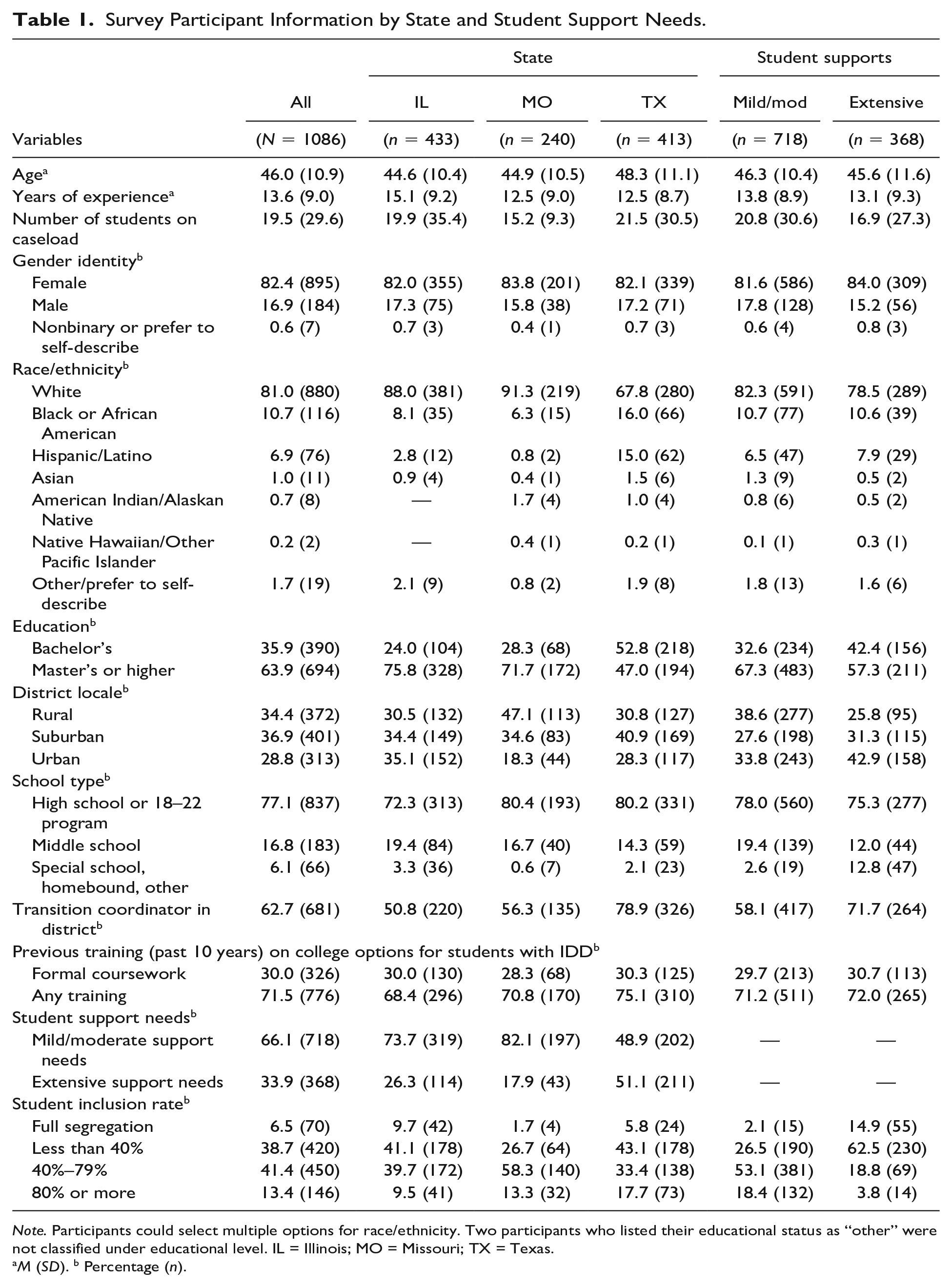
Note. Participants could select multiple options for race/ethnicity. Two participants who listed their educational status as “other” were not classified under educational level. IL = Illinois; MO = Missouri; TX = Texas.
M (SD). b Percentage (n).
Survey respondents came from Illinois (39.8%), Texas (38%), and Missouri (22%). Table 2 highlights the differences among states related to population demographics, geographic locale, employment rates, and the number of current IPSE programs. At the time of writing, Texas and Illinois each had 15 IPSE programs, and Missouri had three IPSE programs (Think College, 2023). Texas was the only state with specific legislation supporting higher education for students with IDD including (a) the Advisory Council on Postsecondary Education Act (2019), which directed the Texas Higher Education Coordinating Board to create an advisory council on postsecondary education for persons with IDD and (b) the Inventory of Postsecondary Educational Services and Programs Bill (2015), which required the Texas Higher Education Coordinating Board to maintain an inventory of postsecondary educational programs and services for people with IDD.
State Demographics and IPSE Data.
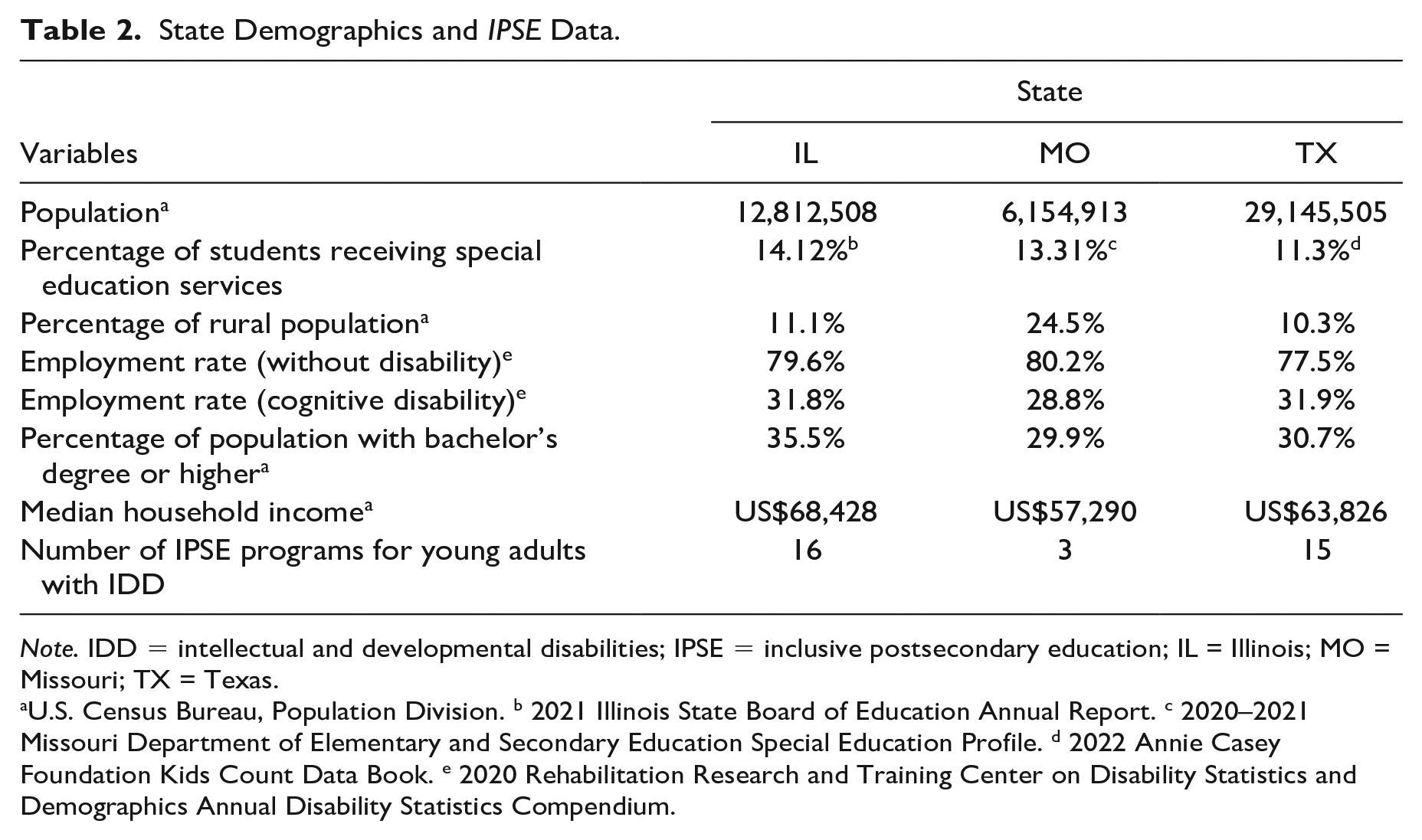
Note. IDD = intellectual and developmental disabilities; IPSE = inclusive postsecondary education; IL = Illinois; MO = Missouri; TX = Texas.
U.S. Census Bureau, Population Division. b 2021 Illinois State Board of Education Annual Report. c 2020–2021 Missouri Department of Elementary and Secondary Education Special Education Profile. d 2022 Annie Casey Foundation Kids Count Data Book. e 2020 Rehabilitation Research and Training Center on Disability Statistics and Demographics Annual Disability Statistics Compendium.
Recruitment
Recruitment and data collection took placeover 10 weeks in the spring of 2021. Together, the three states provided 25,805 valid email addresses for middle and high school special educators (Illinois, 13,997; Missouri, 2,430; Texas, 9,378). We sent a recruitment flyer, survey link, and an email explaining the purpose of the study to each email address using the online survey platform Qualtrics. Respondents who completed the survey were eligible for a random drawing for one of five US$100 Amazon gift cards. All respondents who chose to provide their name and email address were sent a comprehensive “Be Ready for College” guide, a digital document created by the authors (available upon request) that included information about college options for students with IDD, preparing students with IDD for college, and resources they could share with families who might be interested in college for their child with IDD. To increase participation, each educator received up to four follow-up emails spaced 2 weeks apart. The survey had a 4.2% overall response rate (3.1% Illinois, 9.9% Missouri, and 4.4% Texas).
Survey Design and Measures
We developed an online questionnaire through an iterative process based on feedback from IPSE experts and secondary special educators. The survey was approved by the Institutional Review Board of the University of Missouri St.Louis. First, we piloted the survey with six IPSE faculty/researchers and conducted cognitive interviews (i.e., participants verbalized their thoughts as they completed the survey to inform how questions were interpreted) with three special education doctoral students who previously worked as secondary special educators. Based on feedback, we made minor revisions to survey instructions and reworded some items to improve clarity. For example, some educators were not familiar with the term “inclusive postsecondary education (IPSE),” so this was updated to “college options for students with IDD.” Following an initial round of revisions, we piloted the final survey with four secondary special educators of students with IDD who did not teach in Illinois, Missouri, or Texas. After incorporating minor feedback on the order of items, the final survey included 54 items and took approximately 20 min to complete. The survey included four sections: (a) educator knowledge, perceptions, and expectations of postsecondary options for students with IDD; (b) educator, school, and student characteristics; (c) mastery, frequency of instruction, and instructional activities across transition domains; and (d) past and preferred ways of learning about college options for students with IDD. Only Sections 1, 2, and 4 are within the scope of the present study.
Educator Knowledge, Perceptions, and Expectations
We measured educator knowledge, perceptions, and expectations of postsecondary options for students with IDD on their caseload using a series of Likert-type items. First, participants rated their knowledge of eight postsecondary education and employment options from 1 = not at all knowledgeable to 5 = extremely knowledgeable. Then, they responded to the same options based on the likelihood of each postsecondary option for students with IDD on their caseload (1 = not at all likely to 5 = extremely likely). To better understand how their knowledge and expectations might be associated with postsecondary goals, participants reported how many students with IDD on their caseload had a postsecondary goal of attending college on their IEP transition plan (1 = no students, 2 = a few students or less than 25%, 3 = some students or 25%–49%, 4 = most students or 50%–75%, and 5 = all or almost all students or more than 75%).
Educator, School, and Student Characteristics
In addition to demographic and school data reported in Table 1, participants reported their zip code, school district, and if their district had a transition coordinator (i.e., “A transition coordinator typically assists teachers, students and families in connecting to postsecondary services and supports. Do you have a transition coordinator in your district?”; 1 = yes, 0 = no, and 9 = I’m not sure). To determine whether the majority of students on their caseload were students with more extensive support needs, we asked which of the following best described the majority (more than 50%) of their students (a) “Most of the students on my caseload complete the state’s alternate assessment or a portfolio assessment. They require substantial modifications, adaptations, or supports to meaningfully access the grade-level content.” or (b) “Most of the students on my caseload take the state’s standard assessment. They require accommodations to meaningfully access the grade-level content.” Participants then reported the educational context of the majority of their students based on the following scale: 0 = special school or homebound (segregated school); 1 = primarily special education settings in an integrated school (in general education less than 40% of the school day); 2 = combined special and general education settings (in general education 40%–79% of the school day); or 3 = primarily included in general education (80% or more of the school day).
Past and Preferred Ways of Learning About College Options for Students With IDD
To better understand how participants might have gained knowledge about college options for students with IDD, we asked teachers about their previous training and professional development experiences. Specifically, we asked, “have you taken formal university coursework that addressed college options for students with IDD?” and “Have you had professional development or training from your employer that addressed college options for students with IDD?” (0 = no, never; 1 = yes, prior to the past 10 years; 2 = yes, in the past 10 years; and 3 = yes, in the past 3 years). We also asked if participants had “engaged in any other form of professional development that addressed college options for students with IDD?” (i.e., attended a conference or presentation on the topic, participated in a professional learning community [PLC], or viewed a webinar or web-based module).
To understand preferences for learning about college options for students with IDD, we asked participants to rate the likelihood to which they would access free information in a variety of formats (e.g., webinar and social media; 1 = not likely to 5 = extremely likely). In addition, we provided space for participants to list other learning formats outside of the options listed.
Data Analysis
To determine the extent to which respondents were knowledgeable about each postsecondary option, we calculated the mean and standard deviation for each of the 5-point scales. Then, we used descriptive analyses to determine the percentage of respondents reporting each level of knowledge for each postsecondary option. Next, we examined which characteristics of the respondent (i.e., the state they worked in, if they had ever attended a course or professional development addressing college options for students with IDD), the students on their caseload (i.e., if the majority of students they supported on their caseload had mild vs. moderate/extensive support needs), or their school (i.e., if they worked at a high school or community-based program vs. middle school) related to their extent of knowledge about each postsecondary option. We first conducted univariate analyses (i.e., t-tests and ANOVAs) to examine these potential connections. Due to the large number of univariate analyses conducted, however, we made an a priori decision to only consider findings of p ≤ .01 as significant. We conducted similar analyses to examine how likely respondents reported each postsecondary option was for students with IDD on their caseload (i.e., educator expectations). The following responses were modified to aid in analysis. If respondents reported working in both middle and high schools or reported working in a “transition program” or “18-22 program,” they were classified as a high school educator (n = 53). If respondents reported a range of students on their caseload (e.g., 8–14 students), we classified the caseload size as the largest number listed (n = 7). If respondents answered “I’m not sure” to the question about a transition coordinator (n = 107), we classified the response as “no.”
To determine the variables associated with an increased percentage of students with IDD having postsecondary goals for college in their IEP, we used SPSS PLUM and GENLIN procedures to run ordinal logistic regression models. Because of significant differences between groups, we conducted separate regression models for (a) respondents primarily serving students with mild/moderate support needs (50% or more of their caseload) and (b) respondents primarily serving students with more extensive support needs (50% or more of their caseload). We used a question related to how most students on the educator’s caseload accessed grade-level academic content and the state academic assessment (i.e., alternate, portfolio, or standard assessment) as a proxy for support needs (see Survey Design and Measures for item language). A primary assumption of ordinal regression is proportional odds—that a given predictor has an identical effect at each cumulative level of the ordinal dependent variable. For both models, there were proportional odds as assessed by the full likelihood ratio test comparing the fitted model to a model with varying location parameters (χ2 p values were .90 for the extensive support model and .05 for the mild/moderate support model).
Each regression model included the same seven predictor variables with strong empirical or conceptual support: (a) respondent age, (b) if the respondent reported having a transition coordinator (1 = yes; 0 = no), (c) if the respondent worked in a rural area versus urban or suburban area (1 = yes; 0 = no), (d) if the respondent worked in a high school or transition program versus middle school (1 = yes; 0 = no), (e) if the respondent reported any professional development (e.g., conferences, presentations, and webinars) or college coursework in the previous 10 years addressing college options for students with IDD (1 = yes; 0 = no), (f) if the respondent described the majority of students with IDD on their caseload as being included in general education courses at least 40% of their school day (1 = yes; 0 = no), and (g) the state in which the respondent worked (1 = Illinois, 2 = Missouri, and 3 = Texas). We used these variables to determine the extent to which students with IDD on the respondent caseloads had postsecondary goals for college in their IEP transition plan.
Results
To What Extent are Special Educators Knowledgeable About Postsecondary Options for Students With IDD in Their State?
On average, most respondents were somewhat or moderately knowledgeable about all postsecondary options. Postsecondary options special educators were most knowledgeable about were 2-year college programs and paid employment. Postsecondary options special educators were least knowledgeable about were college programs for students with IDD and craft apprenticeships (e.g., carpentry and plumbing). Special educators who had training addressing college options for students with IDD in the past 10 years (i.e., at least one course, presentation, professional development workshop, web-based module, or participation in a professional learning community) were significantly more knowledgeable about all postsecondary options (see Table 3). High school special educators were significantly more knowledgeable than middle school special educators about sheltered workshop/day programs, t(1084) = 2.81, p = .005, and volunteer positions, t(1084) = 2.96, p = .003. There were no significant differences in knowledge level across states or student support needs.
Knowledge of Postsecondary Options for Special Educators With and Without Previous Training Addressing College for Students With IDD.
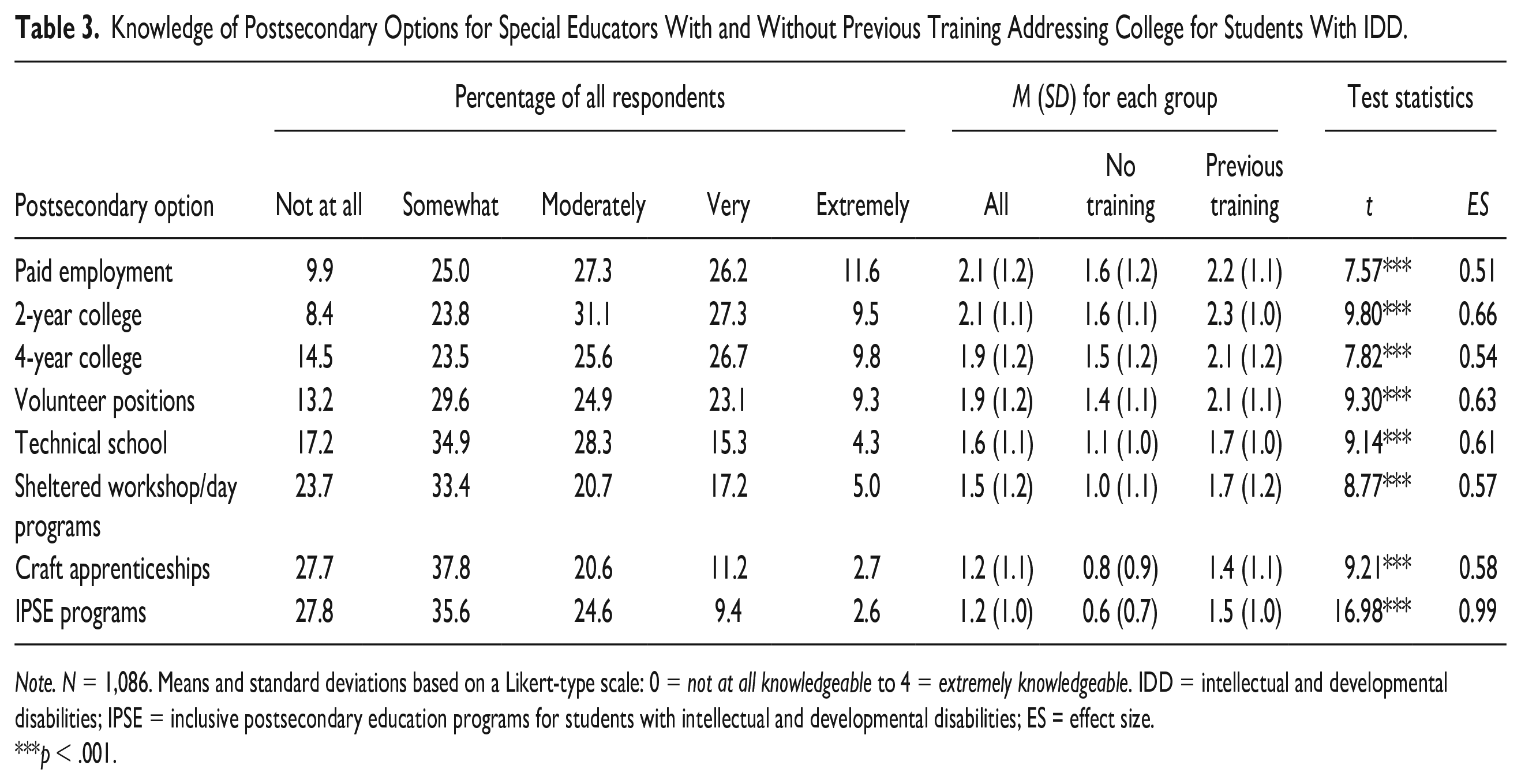
Note. N = 1,086. Means and standard deviations based on a Likert-type scale: 0 = not at all knowledgeable to 4 = extremely knowledgeable. IDD = intellectual and developmental disabilities; IPSE = inclusive postsecondary education programs for students with intellectual and developmental disabilities; ES = effect size.
p < .001.
To What Extent Do Special Educators View College as A Likely Option for Their Students With IDD?
On average, respondents reported that all postsecondary options were somewhat or moderately likely for students with IDD on their caseload. Special educators reported that the most likely postsecondary options for students with IDD were paid employment, sheltered workshop/day programs, and volunteer positions. Special educators believed that the least likely options were 2- and 4-year college programs. Special educators who had at least one training addressing college options for students with IDD in the past 10 years had significantly higher expectations for students to obtain all postsecondary options except sheltered workshop/day programs (see Table 4). There were no significant differences in expectations across states, student support needs, or grade level (high school vs. middle school).
Expectations of Postsecondary Options for Special Educators With and Without Previous Training Addressing College for Students With IDD.
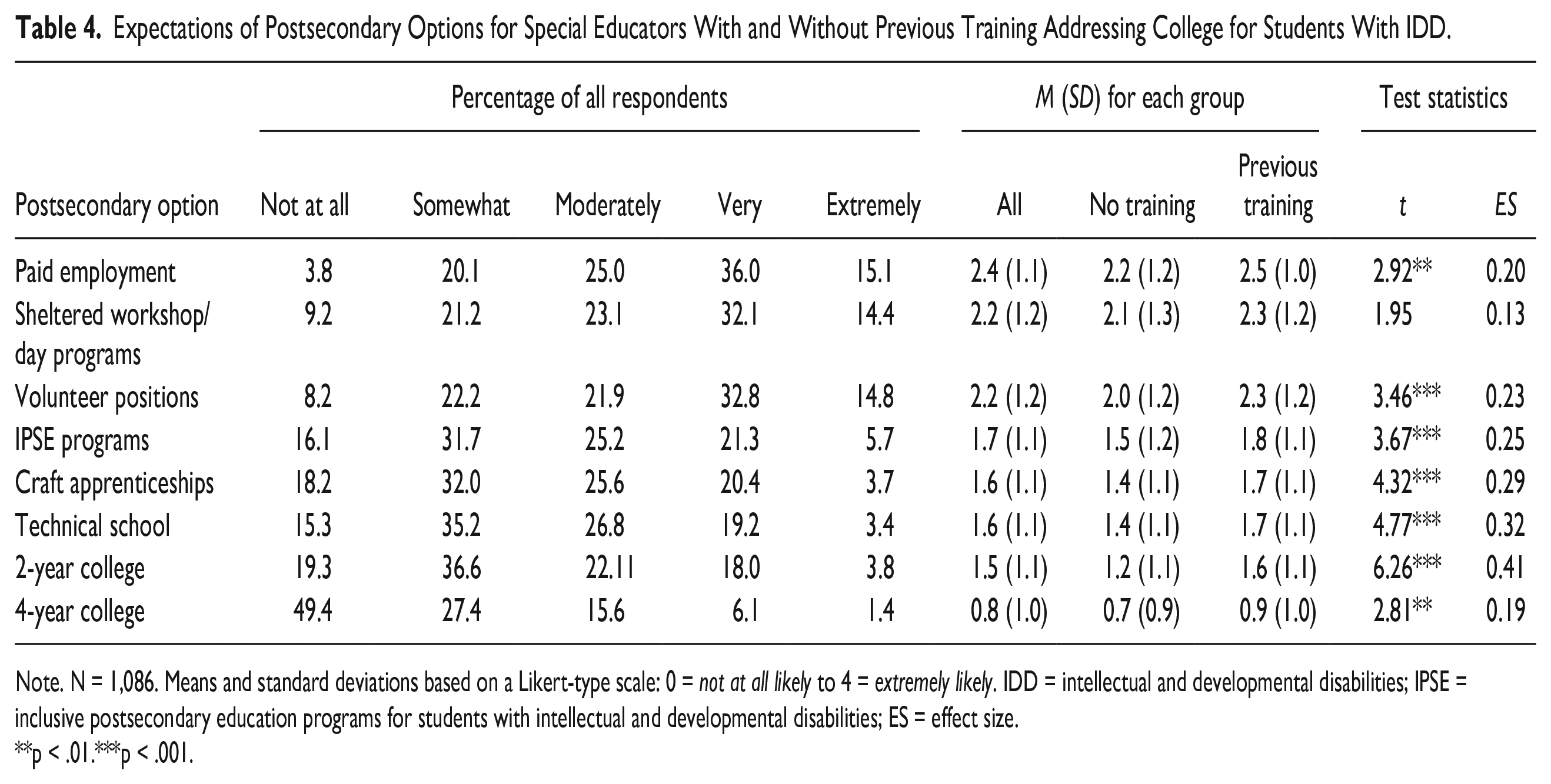
Note. N = 1,086. Means and standard deviations based on a Likert-type scale: 0 = not at all likely to 4 = extremely likely. IDD = intellectual and developmental disabilities; IPSE = inclusive postsecondary education programs for students with intellectual and developmental disabilities; ES = effect size.
p < .01.***p < .001.
To What Extent Do Students With IDD Have Postsecondary Goals for College in Their IEP and What Factors Are Associated With Teachers Who Reported a Larger Number of Students with College Goals?
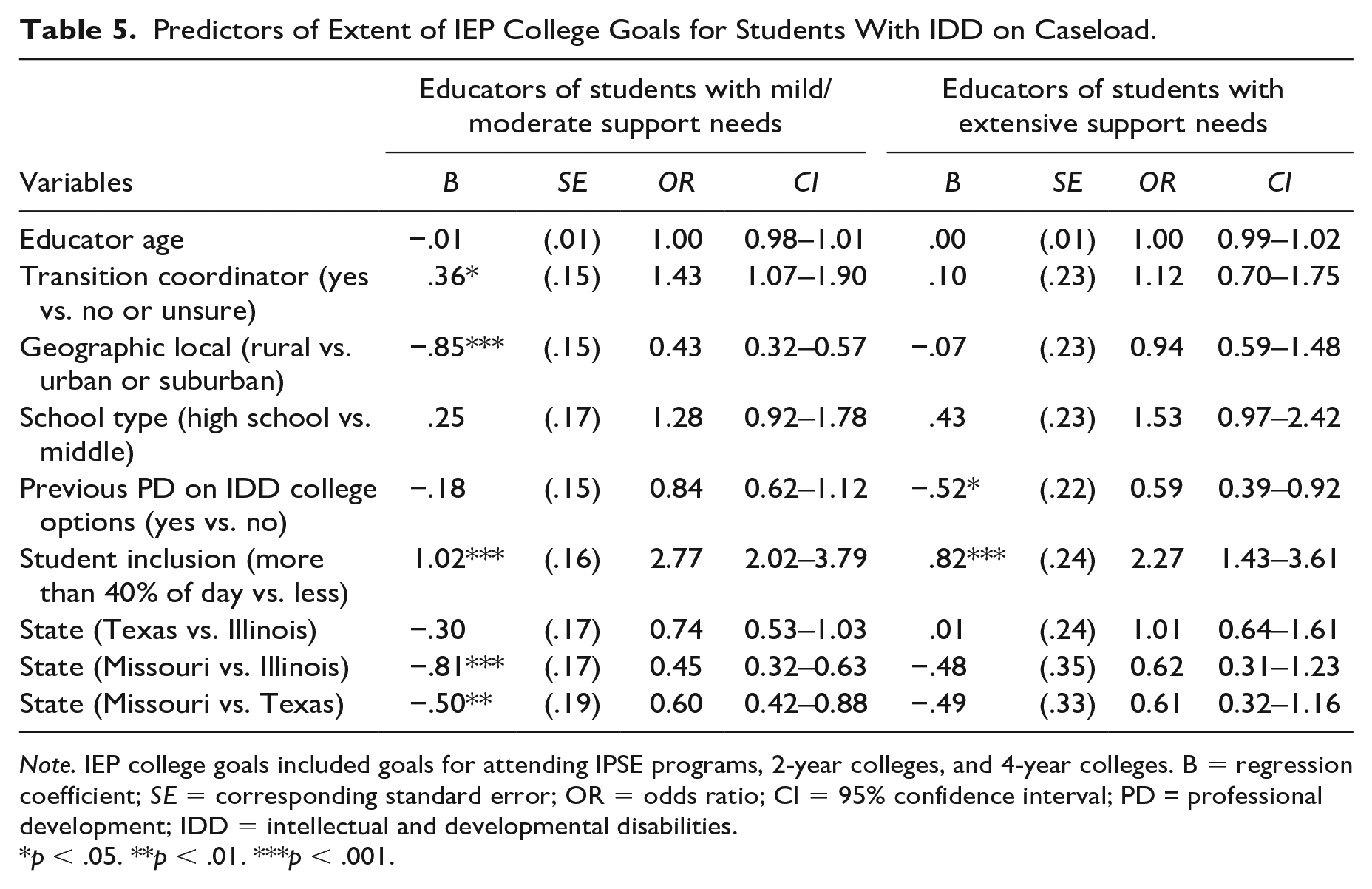
Most respondents reported that either (a) no students with IDD on their caseload had a postsecondary goal of college in their IEP transition plan (27.6%) or (b) less than 25% of their students with IDD had a postsecondary goal of college in their IEP (39.8%). Remaining respondents reported the percentage of students with IDD who had a postsecondary goal of college in their IEP as 25% to 49% (13.1%), 50% to 75% (8.4%), or more than 75% (11.1%). Ordinal logistic regression models examined the predictors of a teacher reporting an increased number of students with IDD who had a postsecondary goal of college in their IEP. Special educators who primarily served students with extensive support needs (see definition in Survey Design and Measures) reported significantly fewer students with IDD on their caseload who had a postsecondary goal of college in their IEP, t(1084) = 7.38, p < .001. Due to these differences, we conducted two regression models to compare predictors for each group (see Table 5).
Predictors of Extent of IEP College Goals for Students With IDD on Caseload.
Note. IEP college goals included goals for attending IPSE programs, 2-year colleges, and 4-year colleges. B = regression coefficient; SE = corresponding standard error; OR = odds ratio; CI = 95% confidence interval; PD = professional development; IDD = intellectual and developmental disabilities.
p < .05. **p < .01. ***p < .001.
Educators Primarily Serving Students With Mild/Moderate Support Needs
The deviance goodness-of-fit test indicated that the model was a good fit to the observed data, χ2(2,320) = 1721.01, p = .742, although 77.5% of cells had zero frequencies. The final model significantly predicted the dependent variable over and above the intercept-only model, χ2(8) = 108.96, p < .001. The odds of having college goals in the IEP for students with IDD on their caseload were almost three times higher when students with IDD attended general education classes at least 40% of the school day versus less than 40% of the school day (odds ratio = 2.68). The odds of special educators—who had a transition coordinator—of having college goals in the IEP for students with IDD were 1.45 times that for special educators who did not report having a transition coordinator. Conversely, respondents who lived in a rural area (vs. urban or suburban) had significantly lower odds of having students with IDD with college goals in their IEP (odds ratio of 0.45). Special educators in Missouri (vs. Illinois and Texas) had significantly lower odds of having students with IDD with postsecondary college goals in their IEP (odds ratios of 0.45 and 0.65, respectively). Special educators in Texas had significantly lower odds than those in Illinois of having students with IDD with postsecondary college goals (odds ratio = 0.69).
Educators Primarily Serving Students With Extensive Support Needs
The deviance goodness-of-fit test indicated that the model was a good fit to the observed data, χ2(1220) = 776.36, p = .636, although 78.2% of cells had zero frequencies. The final model significantly predicted the dependent variable over and above the intercept-only model, χ2(8) = 21.86, p = .005. For special educators who reported students with IDD attending general education classes at least 40% of the school day, the odds of having students with IDD with postsecondary college goals in the IEP were 2.23 times higher than educators who reported students with IDD in general education classes less than 40% of the school day. Special educators who had training addressing college options for students with IDD in the past 10 years had significantly lower odds (vs. special educators who did not have training) of having students with IDD with postsecondary college goals in the IEP (odds ratio = 0.59).
How Do Special Educators Prefer to Access Information About College Options for Students With IDD?
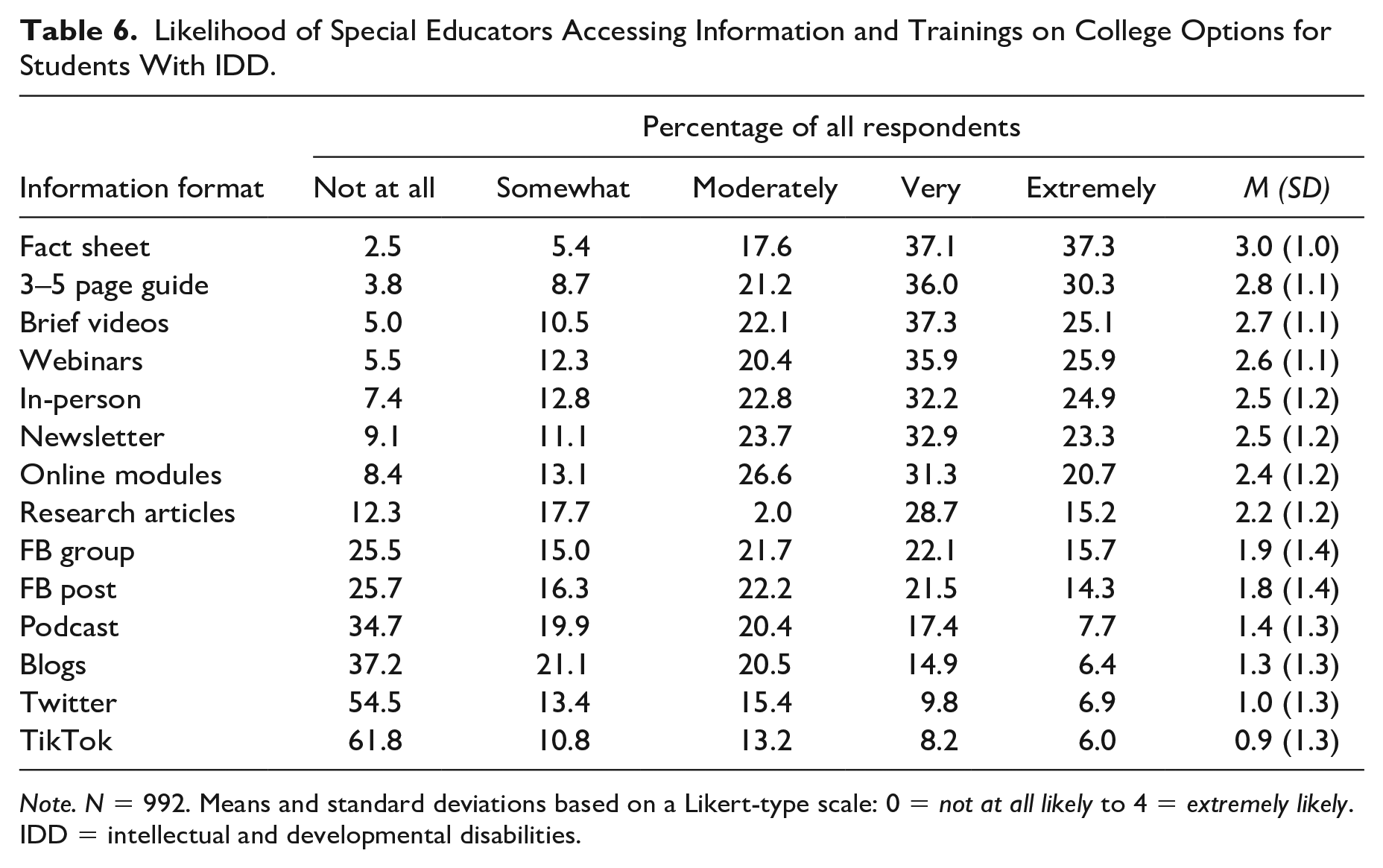
To better understand participant preferences for learning more about college options for students with IDD, we asked teachers to rate the likelihood to which they would access free information and trainings in a variety of formats (0 = not at all likely to 5 = extremely likely). Preferences varied widely across formats (see Table 6). Special educators were most likely to access information through traditional modes including fact sheets, three to five page guides, and brief videos. Least preferred formats were online blogs, Twitter, and TikTok. There were no significant differences in format preferences across states, grade level served, or student support needs.
Likelihood of Special Educators Accessing Information and Trainings on College Options for Students With IDD.
Note. N = 992. Means and standard deviations based on a Likert-type scale: 0 = not at all likely to 4 = extremely likely. IDD = intellectual and developmental disabilities.
Discussion
Special educators are central to connecting students with IDD and their families to postsecondary services, supports, and opportunities. Since the authorization of HEOA in 2008, there have been increased opportunities for students with IDD to attend college through traditional channels or IPSE programs (Grigal, Papay, et al., 2022). Yet, it is unclear how knowledgeable secondary special educators are about these options, if college is something they expect for their students with IDD, and how many of their students with IDD have goals for college in their IEP. The purpose of this study was to examine the knowledge and expectations secondary special educators hold related to employment and postsecondary education; how they might differ based on state, students served, grade level taught, or their previous training; and the educator- and school-level factors associated with a greater number of students with IDD having postsecondary goals for college in their IEP. Findings from this study extend the literature and provide important implications for future research and practice.
First, this study illustrates educator knowledge and expectations across a range of postsecondary options. While we expected that knowledge of 2- and 4-year degree options would be comparatively higher, over a quarter of special educators (27.8%) reported they were not at all knowledgeable about IPSE programs, a primary pathway to college for students with IDD. With the number of IPSE programs ranging from 3 to 16 across states (see Table 2), it is essential that educators are well-versed in the availability of these programs, the eligibility and application processes, and how they might best prepare students to attend these programs. This limited knowledge likely carries over into other areas of adult life including independent living and community inclusion, and might influence an educator’s expectations for the future.
We were surprised about special educator expectations related to paid employment and postsecondary education for their students. In fact, almost half (46.5%) of respondents reported sheltered workshops and day programs as very or extremely likely for their students with IDD. Prior research demonstrates the importance of teacher expectations as a predictor of postsecondary outcomes for students with and without disabilities. Carter and colleagues (2010) examined the summer work experiences of 136 youths with severe disabilities and found that youth were 15.25 times more likely to get a paid job when their teachers expected them to work over the summer. There is also a long history of general education research linking high educator expectations with improved academic, socio-psychological, and academic outcomes of students (e.g., Byun et al., 2017; Wang et al., 2018). For example, a nationwide study of 2,112 rural youth revealed that teacher expectations were a significant predictor of enrolling in both 2-year and 4-year degree programs (Byun et al., 2017). While it is unclear to what extent these expectations might be shaped by sociocultural factors that impact family choices or the availability of services and supports in the local community, previous research indicates that educator expectations are positively associated with parent expectations for the future (Blustein et al., 2016). These expectations likely determine the instruction teachers provide, the goals they recommend for their students, and the types of conversations they lead during IEP transition planning meetings.
Second, our results suggest that professional development may be one way to improve teachers’ knowledge of postsecondary options and expectations for students with IDD (e.g., employer trainings, webinars, and attending conferences). Educators who reported formal coursework or training addressing college options for students with IDD were more knowledgeable about the full range of postsecondary options and expressed higher postsecondary expectations of their students with IDD. This affirms findings from prior research that links transition-focused professional development and educator knowledge, self-efficacy, capacity, and instructional practices (e.g., Erickson et al., 2012; Gilson et al., 2021).
Third, although our hypotheses were mixed, one particularly compelling finding was that special educators whose students spent at least 40% of their school day in inclusive settings had significantly higher odds of having students with IDD on their caseload who had a postsecondary goal of college in their IEP. This aligns with current research establishing inclusion in general education as a predictor of postsecondary education, independent living, and employment (Mazzotti et al., 2021); however, the factors that determine whether students spend time in inclusive settings are complex. One explanation is that students with IDD who spend more time in inclusive settings already possess strengths that are well-aligned with college requirements, but it is also possible that being present in inclusive settings and participating in college preparation activities helps to develop these skills. Furthermore, being in spaces where conversations about college and continuing education are happening regularly likely influences the vision all students have for their future and the pathways they pursue.
Fourth, our findings point to a complex portrait of the factors that may impact the inclusion of postsecondary college goals in student IEPs. We were surprised that previous training (in the past 10 years) addressing college options for students with IDD was not associated with increased odds of college goals in students’ IEPs. For educators who served students with less intensive support needs, odds of college goals for students with IDD were higher for those working in urban areas and working in states with an increased number of IPSE programs available. It is likely that even when educators are more aware of college options for students with IDD, they may not be well-prepared to leverage this information to determine for whom college is a good fit, and what supports a student might need or expect when they get to college. In addition, a lack of postsecondary college goals may stem from a lack of planning, poor IEP quality, or limited involvement of students and families in the IEP development process (Grigal et al., 2011; Ruble et al., 2019). Interventions that target IEP quality and support students and families in designing and implementing postsecondary goals are critical. It also may be challenging for IEP teams to envision a student with IDD on a college campus due to a constellation of concerns related to geographic location, finances, transportation, academic success, and inclusion. Better understanding the depth of these concerns and how they influence college goals and decisions will be an important area for future research.
The postsecondary expectations of secondary special educators are an understudied area, and our findings point to a number of important questions. Beyond training, what factors and interventions might positively shape the postsecondary expectations of secondary special educators? Which types of training (e.g., one-time PD, webinars, and college coursework) are most effective for increasing educator knowledge of and expectations for college options for students with IDD? This question seems particularly important as participants in this study preferred self-directed learning through fact sheets, three to five page guides, and brief videos versus traditional in-person learning and social media engagement. Finally, while special educator expectations are associated with students attaining paid employment (e.g., Carter et al., 2010), how are they associated with students enrolling in IPSE programs or obtaining a 2- or 4-year degree?
Limitations and Implications for Research
Findings should be interpreted alongside several limitations. First, respondents were primarily white (78.5%). Although this racial/ethnic composition reflects the widespread lack of diversity in national representation of teachers of color (20.7%; NCES, 2020), the views and experiences of this sample may not accurately reflect the perceptions or experiences of educators from culturally and linguistically diverse backgrounds. Second, almost a third (27.8%) of participants reported being “not at all” knowledgeable about IPSE programs, a primary college pathway for students with IDD. With no self-reported knowledge of these programs, we would not expect to see high percentages of students with IDD on their caseloads with college goals in their IEP. Furthermore, we did not differentiate the college goals present in the IEP (e.g., to attend one class, enroll in an IPSE program, and enroll in a 4-year degree program). Future research should examine educator knowledge more thoroughly beyond a single self-report item. In addition, it is important to understand the types of college goals students with IDD have in their IEP and how IEP teams determine the best college “fit” for a student with IDD. Third, participants reported the percentage of students with IDD on their caseload who had goals of college as opposed to the exact number (to decrease cognitive load and aid in comparisons across caseloads of varied sizes). It is possible that the percentages for educators with extremely large or small numbers of students with IDD on their caseloads might be misleading.
Fourth, educator perspectives on the likely outcomes of their students and the postsecondary goals of their students are not solely within their purview. Instead, these decisions are determined by IEP teams and influenced by myriad student-, school-, and community-based factors. Future research should explore the factors contributing to IEP team decisions related to college for students with IDD, the primary concerns they consider, and how special educators are preparing students with IDD for college. For example, what instructional areas are transition programs focused on (e.g., literacy skills, technology skills, and social skills)? What college preparation activities are students with IDD engaging in during high school (e.g., college visits, completing FAFSA forms)? By answering these questions, the field will gain a better understanding of how students with IDD are being prepared for college.
Implications for Practice
The findings highlight implications for special educators, teacher preparation programs, and IPSE personnel.
Special Educators
Considering the responsibilities of secondary special educators to connect with outside partners and the emphasis of interagency collaboration in federal legislation, there is a wide gap between educator preparation and expectations. Special educators unfamiliar with the postsecondary options in their area could meet with colleagues, families, and community members to learn more about available programming and build strong partnerships with local higher education institutions. In one study of 509 secondary special educators, less than 50% of educators reported knowing at least one person representing a 2-year, 4-year, or IPSE program (Bumble et al., 2022). The primary factor associated with having a larger network of partners was knowing how to establish collaborative partnerships. Engaging in activities like community resource mapping to begin documenting postsecondary education options and the services and supports that might bring college goals to fruition can be an effective first step in developing a plan for collaborative efforts (Flanagan & Bumble, 2022). Fostering partnerships with a wide range of individual across schools, service systems, and communities provides educators with access to information, resources, and assistance that might streamline the transition process for students and their families.
Teacher Preparation Programs
Within teacher preparation programs, conversations about transition and postsecondary outcomes for students with IDD should begin early and occur often. In a recent survey of 140 educator preparation programs from 43 states, less than half (46.2%) reported that students were required to take at least one course specifically related to transition planning and services (Morningstar et al., 2018). Anderson and colleagues (2003) found similar percentages (44.0%) in a survey from 2003, indicating that despite legislative initiatives and increased postsecondary options for students with disabilities—particularly related to higher education—little has changed within educator preparation. While programs may elect to embed transition curriculum across courses as opposed to a stand-alone class, the low expectations and low knowledge of postsecondary options in this study indicate that there is a disconnect between what future special educators are learning and how that knowledge is sustained and leveraged in practice.
One explanation is that transition competencies are more practical in nature and require opportunities for sustained practice in authentic settings (Morgan et al., 2014; Plotner et al., 2022). Transition-focused field-based experiences are the least common (Morningstar et al., 2018); however, Plotner and colleagues (2022) recently examined the benefits of field placements within an IPSE program for 34 preservice teachers with promising results. Following their field experience, participant beliefs about the ability of students with IDD to participate in college courses increased and misconceptions about the need for constant supervision in work and community settings decreased. The activities that were most impactful for students indicated that dedicated transition field placements and working alongside IPSE programs—while highly beneficial—may not be necessary to spur similar results. Participants reported that observing adults with IDD thriving in postsecondary environments and building rapport with students in the IPSE program as having the greatest impact on their professional lives. By engaging with students with IDD in postsecondary settings, preservice educators were better able to connect K–12 instruction and the skills that were needed after graduation.
Educator preparation programs without access to IPSE programs on campus should consider ways they might embed similar activities into existing coursework such as (a) interviewing families and young adults with IDD after graduation to learn about the activities and instruction in K–12 that “made the difference” for them, (b) researching and creating success stories highlighting positive outcomes for local youth with IDD, and (c) connecting virtually with IPSE programs in their state to build connections with program staff and students. Opportunities to see students with IDD in valued roles and learn from adults with IDD (vs. serving in typical supporting roles) are important components of high expectations. Furthermore, building partnerships with programs, providers, and supports in a wide range of roles before entering the classroom is critical to educators developing the networks they need to support students and their families well (Bumble et al., 2022).
IPSE Personnel
To promote coordination between school systems and IPSE programs, IPSE personnel should increase awareness efforts by attending transition fairs, hosting summer institutes, and connecting with school systems through professional development addressing common myths about higher education and disseminating transparent eligibility criteria and revealing the strengths that are needed to thrive within their campus culture. IPSE programs might also work to develop some of the preferred resource formats special educators reported in this study, including brief videos, fact sheets, and three to five page guides. Gaps between expectations and reality are where new IPSE programs often surface, and more programs are desperately needed to meet the growing demand of students with IDD and their families. Within this study, Missouri special educators reported the fewest number of students with IDD with college goals in their IEP. This is likely linked to the small number of programs in the state, and the limited access students with IDD have to higher education.
Conclusion
As leaders of the transition planning process, it is essential for secondary special educators to be highly knowledgeable about postsecondary options for students with IDD and hold high expectations for life after graduation. The results of this study provide new insights into teachers’ knowledge, expectations, and history of professional development opportunities targeted specifically at inclusive higher education for students with IDD. Although the factors that determine postsecondary goals are complex, inclusion in general education settings increased the odds of students having college goals in their IEP for all participants. By better understanding factors contributing to educator perspectives and IEP goal selection, this area of research may promote improved postsecondary outcomes for youth with IDD and their families.
Footnotes
Declaration of Conflicting Interests
The author(s) declared no potential conflicts of interest with respect to the research, authorship, and/or publication of this article.
Funding
The author(s) disclosed receipt of the following financial support for the research, authorship, and/or publication of this article: This work was funded in part by U.S. Department of Education Grant #P407A200051.
