




Abstract
Although science and technology are the linchpins of innovation and industrial policies, market success also depends on product design—the bridge between technology and style, culture, and commerce. Design optimizes function, value, and appearance. Although the value and impacts of product design resist quantification, there is evidence that increased attention to and support for design-oriented manufacturing will stimulate growth and generate wealth. This evidence, drawn from patent, industry, and occupational data, surveys, case studies, and anecdotal information from across the United States and other countries, demonstrates that aesthetics, values, and experiences embodied in the designs of products create sustainable market advantages. While many manufacturers recognize the value of design, the dearth of educational programs in industrial design, insufficient support for design-based innovation, and lack of recognition of design in industrial policies and strategies impede many companies, in particular, small and midsized manufacturers from taking greater advantage of design.
Rediscovering Design as Competitive Advantage
Both innovation policy and industrial strategy in the United States are primarily driven by science and technology. Markets, however, respond not just to the quality and purpose of a product but also to its appearance and the emotions it evokes (MacDonald, 2004). Design is the bridge between technology and style, between culture and commerce. As Roberto Verganti (2009) wrote, “people do not buy products but meanings.” The design of a product can generate visceral appeal, trigger behavioral effects, and satisfy reflective desires for self-image and personal satisfaction (Norman, 2004).
Given the intangible nature of product design, it is difficult to codify forms, classify manufacturers according to value acquired from design, or even identify sources of design. “One explanation for why Design-Driven Innovation has largely remained unexplored is that its processes are hard to detect when one applies the typical methods of scientific investigation in product development” (Liem & Sanders, 2011, p. 112). Consequently, research on design-driven innovation has been limited (Miles & Green, 2008; Zampollo, 2008) and public-sector support for design, meager.
There is, however, a sufficiently large body of knowledge to examine the hypothesis that increased emphasis on and investment in product design generates growth in both employment and wealth in domestic manufacturing.
Corroboration is based on (a) surveys that rely on ordinal measures for design applications or intensity; (b) measures of proxies for design capabilities, such as designers employed in manufacturing; (c) more than a dozen research studies conducted and conferences organized related to creative industries; and (d) illustrations of the uses and impacts of design in manufacturing. My research on design in manufacturing includes site visits, case studies, focus groups, and surveys of manufacturers, designers, and industrial design faculty across the United States and in other countries, and a literature review.
To address the hypothesis and gauge the potential of design to spark a new manufacturing renaissance, this study includes (a) historical and contemporary contexts for design-dependent manufacturing in America; (b) characteristics of design-dependent manufacturing; (c) magnitudes of design-driven manufacturing; (d) estimates of impacts on growth and competitiveness; and (e) actions and policies likely to further develop design-based manufacturing.
Moving From Art and Novelty to Experience and Identity
From the final third of the 19th century through the first quarter of the 20th century, industrial development was based on novelty; that is, specialty design-oriented production (Scranton, 1997). Clusters of small and midsized manufacturers (SMMs) producing similar but distinctive goods formed in U.S. cities up and down the Atlantic seaboard—gloves in Gloversville, New York; jewelry in Providence, Rhode Island; plastic combs in Leominster, Massachusetts; machine tools in Cincinnati, Ohio and Springfield, Vermont; and furniture in Grand Rapids, Michigan. That changed with the emergence of mass production, often expressed by Henry Ford’s oft-quoted statement “give them any color so long as it’s black.”
Despite the advent of Fordist methods, design remained a significant factor in competitiveness. From 1919 to 1933, the German Bauhaus, founded by Walter Gropius, had a major influence on design. Great Britain established the British Council on Art and Industry in 1937 and the Council of Industrial Design in 1944 (Read, 1953). A guide to New York’s 1939 World’s Fair declared that “the true poets of the twentieth century are the designers, the architects, the engineers, who glimpse some inner vision, create some beautiful figment of the imagination and then translate it into valid actuality for the world to enjoy” (Gelernter, 1995, p. 169). Technology and art at that time went hand in hand. Artists created images that glamorized technology, and industry displays at the Fair were acclaimed works of art. Art Deco cars produced in the 1930s and 1940s, for example, celebrated the blending of modern decorative arts with industrial design. Examples from that period were featured in an auto show at the North Carolina Museum of Art in 2017 titled “Rolling Sculpture.”
The mass production of armaments needed for World War II turned America’s attention from design to function and scale. Following the war, production continued to focus on quantity to meet the pent-up demand for consumer goods. Simply acquiring something new was more important than distinctiveness after years of rationing. Customers sought the lowest prices so they could own more new peacetime gadgets and devices, often based on new technologies. Manufacturers looking for ways to cut costs developed generic products to compete at lower prices with known brands.
By the 1980s, Western Europe and Japan, forced to rebuild their industrial economies after the war, were able to start anew. Each invested heavily in the development of new production technologies and in technology- and fashion-based consumer products to jump-start its manufacturing base. Scandinavian countries, in particular, ramped up their distinctive design-based production (Järvinen & Koskinen, 2001). American manufacturing soon found itself having to catch up (Rosenfeld, Malizia, & Dugan, 1988). To regain its competitive advantage, the United States shifted to “making things better” (Office of Technology Assessment, 1990). Industrial modernization, supported by new programs at the National Institute of Standards and Technology, particularly targeting SMMs, became the mantra for American manufacturing (Dertouzos, Lester, & Solow, 1989).
In this new competitive environment, innovation was defined and measured predominantly by advances in technology, both in products and processes. Most metrics for innovation were either technology based, such as high-tech manufacturing growth and exports, science, technology, engineering, and mathematics (STEM) workers, patents filed, public research and development (R&D) funding, and broadband coverage (Nager, Hart, Ezell, & Atkinson, 2016), or generic, such as changes in regional or national economies. One commonly cited definition of innovation comes from the Organisation for Economic Co-operation and Development’s (OECD) Oslo Manual (OECD, 2005), which describes product innovation by technical specifications only. Innovation in product design that differentiates or gives meaning to a product recently was added later but only in terms of marketing, not product, innovation. Consequently, public policies aimed at stimulating and supporting innovation overwhelmingly target sources of technology-based innovation.
While much of the value of many design-based products is derived from technology, however, its markets may rely as much on the soft innovation associated with design as with technology. A European Union communication declared that innovation is increasingly driven by non-technological factors such as creativity, design, and new organizational processes or business models . . . the most obvious example is the wider use of design in manufacturing industries, adding value to products. . . . (European Commission, 2012)
The innovations and skills that led to industrial modernization and increased productivity, however, now are available in emerging economies around the world with much lower operating costs than the United States. Thus, many of the competitive advantages of U.S. mass production have slipped away and a large share of America’s manufacturing base moved offshore.
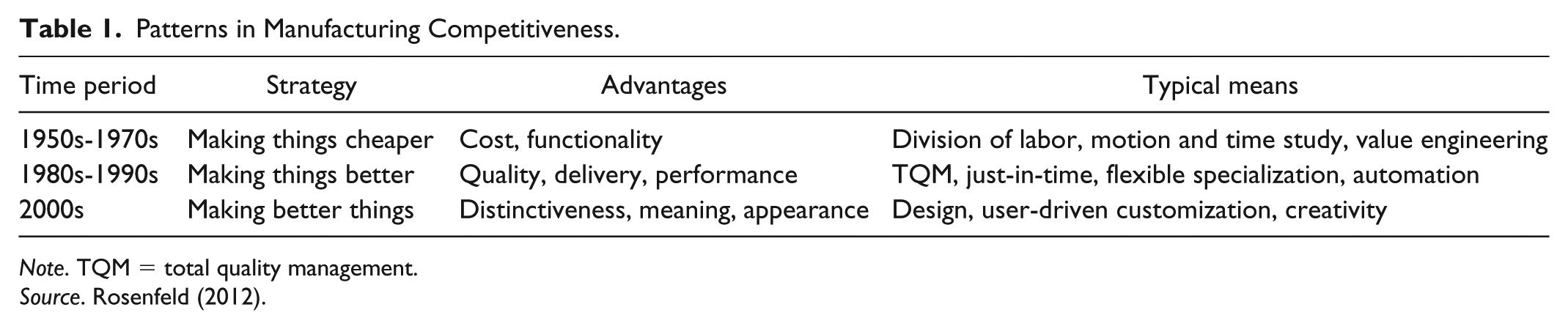
“Making things better” is still necessary to compete but no longer provides a sufficient market advantage. Many innovators turned to increasingly discriminating consumers in expanding middle- and upper-class markets. Customers have come to expect technological performance but also seek something more distinctive in their consumption patterns. America’s best opportunity for competing in manufacturing now may come not just by “making things better” but by “making better things.” This requires designing and producing goods that are distinctive, novel, authentic, and/or generate experiences for which consumers will pay a premium—even for standard products. Dyson’s bagless vacuum cleaner, which allows users to see the dirt, was both a technological and design innovation in an ordinary electronic home appliance (Table 1).
Patterns in Manufacturing Competitiveness.
Note. TQM = total quality management.
Source. Rosenfeld (2012).
Making better things suggests strategies for a more customized and design-driven manufacturing industry, strategies that understand and differentiate among niche consumer groups and focus as much on users as on inventors, and as much on what to produce as how to produce.
Recognizing Design
Assessing the economic value of product design to manufacturing depends on how one defines it. There are a multitude of definitions for product design that include characteristics such as aesthetics, ergonomics, conservation, authenticity, comfort, and personal identity. Agreement on a definition of product design as an innovation, or even as a distinctive attribute of a product, is constrained by the ambiguity of its source.
Unlike technology, design-based innovations rarely are traceable to an R&D program, engineering project, patent, or even design department, if one exists. Product design—incorporated in the industry and occupational classification, industrial design—is most often the result of a hybrid and iterative process that involves a mix of designers, engineers, materials scientists, psychologists, marketing staff, and customers (Mikle, 2005). The Industrial Design Society of America’s (IDSA) website defines industrial design as “creating products that optimize function, value, and appearance for the mutual benefit of user and manufacturer” but also adds that “the role of design is expanding beyond traditional boundaries with multifaceted challenges and exposure to complex wicked problems.”
Industrial design was not recognized as a profession in the United States until the 1930s, when only a handful of U.S. companies employed individuals as designers, and it was not recognized as a U.S. job classification until 1995. Industrial design still is not a particularly prestigious profession; designers are not licensed or certified (Molotch, 2003). In 2000, there were only about 12,000 industrial designers in the United States, with the IDSA representing about a quarter of them.
Most definitions of design fall along a continuum from strong emphasis on utility and function, often based on science or technology such as the electronics and chemical sectors, to emphasis on aesthetics and experience, often as a form of art such as the fashion, toy, or kitchenware industries.
The common element of nearly all definitions of “design-driven” products is that they favor the experiential side of the continuum. Once products reach a satisfactory level of quality and performance, companies also look to design for market advantage, as expressed through the design of the product itself, its packaging, its marketing, and/or its branding.
Winzeler Gear, a 100-year-old gear manufacturer in Chicago, for example, uses art to set itself apart from its competitors. According to its president, “Treating gears as art is a unique approach. It’s what differentiates Winzeler, our gears, and our customers.” A gallery of artistic representations of gears on its company website and in its marketing materials, plus its unique partnership with the Chicago School of Art, impresses customers and inspires innovation among employees.
Kohler Corporation in Wisconsin offers an art gallery plus an “Arts/Industry Residents” program that, since 1974, has awarded stipends and living costs to artists to work alongside employees to create limited-design editions of products to compete in high-end markets and stimulate creativity among employees.
Outside of the United States, Allessi best typifies the “Italian design factory.” The company contracts with hundreds of freelance designers who create hundreds of new products each year. Alessi’s aim according to its President, Alberto Alessi, is to put “art and poetry” into common household products (Järvinen & Koskinen, 2001).
Treating Design as Innovation
Part of the growing interest in design has been an increasing recognition of product design as “soft innovation” (Stoneman, 2005, 2009; von Hippel, 2006). As the term “soft” implies, it does not lend itself to quantification. Efforts to measure innovations attributable to industrial design are generally inferred from anecdotal evidence and experiences, surveys, and/or patent data. The OECD recently reviewed efforts to measure design as innovation and found that, because of the ambiguity in even defining design, the result was only a general framework (Galindo-Rueda & Millot, 2015).
Patents provide one standardized data source for design-based innovation. The U.S. Patent and Trademark Office distinguishes between design patents, which protect the way an article looks, and utility patents, which protect the way an article is used and works. The National Endowment for the Arts (NEA) analyzed the U.S. Patent and Trademark Office database of design patents from 1998 to 2012 and found 165,108 design patents. More than half of all design patents were concentrated in eight classes of products: household furnishings had the most; recording, communications, or informational retrieval was second; tools and hardware, third; packaging, fourth; and equipment for preparing food was fifth (Nichols, 2013). Western and Midwestern states, home to several corporate headquarters of design-driven sectors such as autos, dominate design patents.
There is considerable evidence, however, that the vast majority of designs are never registered with the U.S. Patent Office, particularly designs developed by SMMs. A survey of more than 10,000 metro and nonmetro manufacturers conducted by the U.S. Economic Research Service (ERS) that included questions about design-based innovation found that only 8.1% of respondents treated design as intellectual property. Among those, 97% registered a trademark and 33% registered an industrial design (ERS, 2014).
Surveys provide more sensitive features of the largely intangible value of design-based innovation, but most are from Europe. For example:
Among customers of Austrian design firms, 44% reported impacts of design on innovation—25% on idea generation, 13% on R&D, 24% on product design, and 26% on marketing (Müller, Rammer, & Trüby, 2009).
In the United Kingdom, 80% of manufacturing firms use design in product development, 40% in advertising and communications, 46% in packaging, and 34% in marketing (Department of Trade and Industry, 2005).
Among Spanish manufacturers, 26% attached major importance to design, while only 5% found it was of no importance; among those that attached the most importance, turnover grew “a lot” for 48% of the companies and “considerably” for 28% (ddi, 2008).
In the 2014 U.S. Department of Agriculture/ERS survey of innovation in manufacturing, more than 10,000 firms were classified as (a) having no systematic design (i.e., no design services that lead to intellectual property); (b) using internal or external design services, but few, if any, intellectual property protections; or (c) design integrated, using several types of intellectual property protection. The survey found that 60.5% of manufacturers have no systemic design, 31.4% use design services, and 8.1% have protected design. Among those firms that use design services, about half outsource them (ERS, 2014).
Interweaving Technology and Design
While soft forms of design-based innovation can be distinguished from hard, technology-based innovation, the two are frequently inextricably connected and complement one another. Companies that have depended on standardized products now are looking more to design for differentiated markets. Peter Marsh (2012, p. 17) wrote that The idea of “bespoke” manufacturing—creating different products to satisfy individual tastes—was regarded as being outside the province of most companies. Now, driven by the demands of consumers, plus shifts in technology that makes it easier to accommodate their requirements, the idea of tailoring products to suit different needs is becoming more central.
Conversely, technology is important to design. Designers depend on technological advances to develop designs and produce prototypes. Creative products rely on social media to identify, test, and reach niche markets. Designers collaborate with engineers to transfer their models to technology-based, scalable, production processes. Even fashion design, once believed to be immune from automation, is being enhanced by artificial intelligence aimed at forecasting changes in fashion based on market trends (“Can Data Predict Fashion,” 2017).
One study of the use of new technologies by creative enterprises found that 91% of the respondents rely on new technologies, half of those through direct contacts with technology producers (Müller et al., 2009). Using the appropriate technologies, design-based goods are suitable for many forms of production, whether artisanal, mass customization, or even scaled-up production, to meet global market demands.
Gauging the Scale of Design in Manufacturing
The number of designers and the scale of design-driven manufacturing in the United States can only be estimated since neither occupational nor industry classifications describe the full scope of an individual’s or company’s competencies. Therefore, efforts to use the current Standard Occupational Classification system or North American Industry Classification System require drawing inferences from available data.
Three methods typically are used to approximate the scale of industrial designers in the labor force and design-driven manufacturing in the economy. One is the employment of industrial designers in companies by sector or state and, since industrial design is often outsourced, in industrial design services or as freelancers.
Another is based on criteria developed for state and regional analyses of creative industries over the past 15 years to designate design-intensive manufacturing sectors and, in some places, individual enterprises within sectors as part of a place’s creative economy.
A final method is the use of survey data collected from employers that position companies on rungs of a “design ladder” that represents a progression from a bottom rung of firms using no design of any significance to a top rung of companies that have fully integrated design into their products and company.
Employing Industrial Designers
Industrial designers, as defined by the Occupational Outlook Handbook (U.S. Bureau of Labor Statistics [BLS], 2016b), combine skills in art, business, and engineering and require at least a bachelor’s degree. Employment in industrial design is growing but more slowly than the national average growth rate. In 2016, there were about 31,860 commercial and industrial designers and 16,560 fashion designers employed in the United States.
An estimated 25.8% of industrial and fashion designers also are self-employed (nearly three times the national self-employment rate), and another 7.3% of designers are classified as managers of companies (Los Angeles County Economic Development Corporation, 2010). Thus, the number of commercial and industrial designers is more likely approximately 47,600 designers and the number of fashion designers, 24,700. Commercial and industrial designers are most heavily concentrated in California and the Rust Belt states (Nichols, 2013), and about three fourths of all fashion designers work in Los Angeles or New York.
The ERS (2014) survey of more than 10,000 manufacturers with at least five employees found that about one quarter purchased design services. In-house design, especially in smaller firms, may come from anywhere—from the owner or founder to employees on the production floor. Only those classified as designers or employed in design services, however, can be quantified.
Some 11,880 industrial and commercial designers and 2,850 fashion designers were employed directly in manufacturing in 2017, representing only about 0.12% of the U.S. manufacturing workforce. The concentration was two to three times higher, however, in consumer products sectors such as furniture, textiles, and appliances.
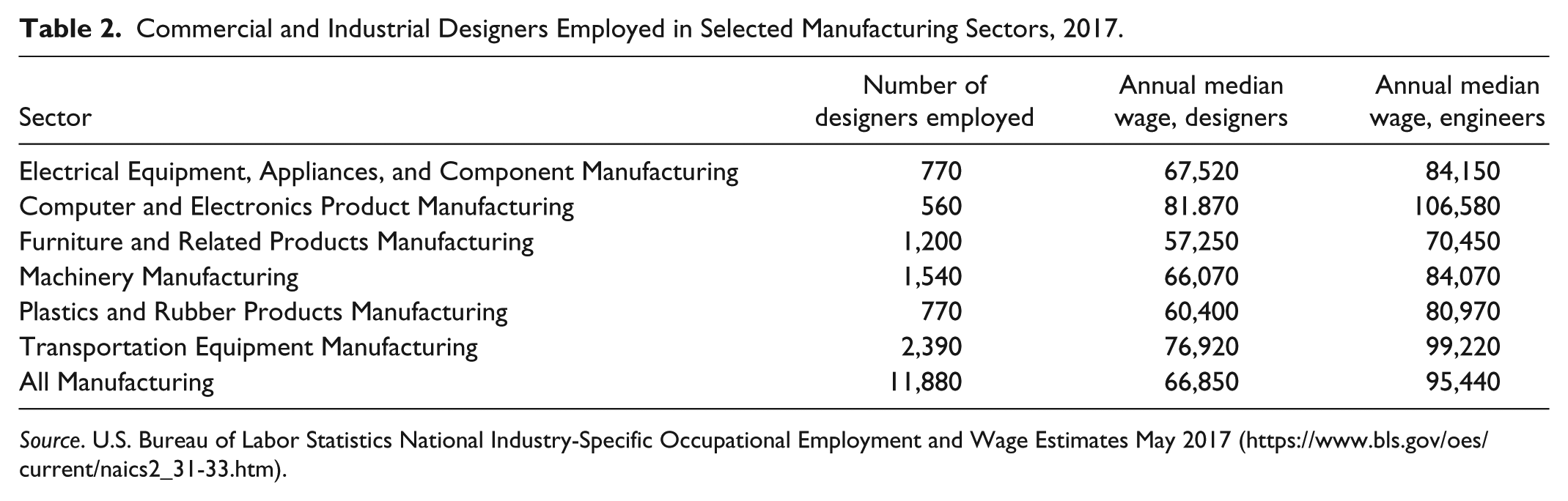
The average median annual wages for commercial and industrial designers in 2017 was $66,850. Salaries varied significantly by industry, with furniture designers averaging $57,250 and computer and electronics designers, $81,870. This was only 70% of the average salary for an engineer (Table 2). Employment data were not released by the BLS for Motor Vehicle Manufacturing, a major employer of designers, but the salary of commercial and industrial designers in that sector was reported to be $96,020, substantially higher than other sectors.
Commercial and Industrial Designers Employed in Selected Manufacturing Sectors, 2017.
Source. U.S. Bureau of Labor Statistics National Industry-Specific Occupational Employment and Wage Estimates May 2017 (https://www.bls.gov/oes/current/naics2_31-33.htm).
Some 41,470 graphic designers also are employed in manufacturing, many applying their craft to advertising and branding aimed at differentiating products. Thus, all designers, including fashion, represent 0.53% of the manufacturing workforce.
The 11,880 commercial and industrial designers working in manufacturing exclude unincorporated freelancers and designers in small businesses who have multiple competencies and therefore most likely are not classified as designers. For example, an estimated 7.3% of all designers are managers. Owners or skilled employees of small and midsized furniture, apparel, processed foods, and fashion accessories may also design their firms’ products.
Furthermore, many small manufacturers are overlooked in the BLS data. A study of a leather goods cluster in Sheridan County, Wyoming, based on interviews with leather retailers and phone directories, revealed more than 20 companies and freelancers designing and producing leather goods ranging from saddles to messenger bags and designing or inventing the specialized tools they use (Rosenfeld, Kane, & Goodman, 2008). The BLS for that year reported only six leather establishments and currently it reports no employment for commercial and industrial designers.
The underreporting of sources of design may partially explain the heavy concentration of industrial designers in Rust Belt states, home to headquarters and design centers for large durable goods multinationals with far-flung production sites.
Purchasing Design Services
Some manufacturers choose to purchase design services rather than rely on in-house design competencies, although for product design these services appear to be quite limited. The U.S. Bureau of Economic Analysis (BEA) provided an estimate of the scale of industrial design services as part of its recent Arts and Cultural Production Satellite Account. Its analysis shows that nationally 24,500 were employed in industrial design services in 2012, which represented only about 1.6% of total employment in all arts and cultural design services (Kern, Wasshausen, & Zemanek, 2015).
In 2007, the last year the Economic Census reported industrial design services, there were 1,637 firms with $1.4 billion in sales (Nichols, 2013). Since then, industrial design services have been included in the census within, “specialized design services.” In 2016, commercial and industrial designers represented only 4.9% of the employment in that sector. A much larger number of designers in specialized design services were graphic designers (29.5%), suggesting that manufacturers are more likely to outsource design for labeling, marketing, or branding than for product development.
Employment in Design-Based Businesses
Assessing the total number of people employed in design-driven manufacturing requires designating those sectors that are heavily dependent on design and, where feasible, individual enterprises within other sectors that compete through product design. The lack of agreement among researchers on how to designate manufacturing sectors as “design-driven” testifies to the difficulty in determining the scale of design-driven manufacturing and precludes any meaningful comparisons among regions.
One existing source of estimates of employment is the substantial number of studies of creative economies (industries) that have been conducted over the past 17 years (Chapain, Cooke, De Propis, MacNeill, & Mateos-Garcia, 2010; Markusen, Wassall, & DeNatalie, 2008). Most of these studies segregate creative industries into subgroups that nearly always include design, and many further distinguish among firms engaged in environmental, product, or communications design.
The two earliest U.S. creative economy studies to broaden the definition beyond cultural industries and include design were undertaken for the New England Council and the Governor of Montana’s Office of Economic Opportunity. The former, conducted in cooperation with the New England state arts councils, attributed less than 3% of the creative economy employment to manufacturing and industrial design services combined. Manufacturing, however, was limited to only the production of arts- or culture-related supplies and excluded design-driven manufacturers (Mt. Auburn Associates, 2000).
In contrast, the Montana study was an unintended and unexpected consequence of an analysis of the state’s most promising industry clusters. A scan of the state’s economy revealed, however, a strong “creative enterprise cluster.” Using a more meticulous definition of the cluster based on the enterprise, not the sector, as the unit of analysis, the research revealed that 12.1% of all employment attributable to creative enterprises was in manufacturing or industrial design services. The study uncovered an impact that extends beyond the direct and indirect jobs created and revenue generated by the companies within the cluster . . . [including] products, services, and marketing campaigns of companies in other sectors (e.g., apparel, furniture, lamps, kitchen appliances, advertisements) to make them more appealing and distinctive and therefore more competitive. (Rosenfeld, 2004, p. 892)
While each creative economy study included industry sectors that depend on design as “creative,” few U.S. studies have included many, if any, sectors within manufacturing. Americans for the Arts, which regularly releases reports on creative industries for cities and states, includes design services but no manufacturing sectors within its design segment.
In large part due to the upswing in attention given “creative economies” or “creative industries,” some government agencies now are increasing their efforts to identify and include “creative” manufacturing sectors. The BEA’s Arts and Cultural Production Satellite Account includes industrial design services along with very few manufacturing sectors. The latter includes only jewelry, silverware, and ornamental architecture, plus those that produce goods for cultural sectors, such as musical instruments, printing, camera, and motion picture equipment. The total employment in design-based manufacturing, according to BEA estimates, was 183,600. This represented only 3.9% of all employment in the arts and cultural industries in 2012 (Kern et al., 2015).
In a NEA-funded comparison of definitions of creative industries drawn from 25 different studies (Harris, Collins, & Cheek, 2014), the only manufacturing sectors found to be common to almost all studies were custom architectural woodwork and millwork, ornamental and architectural metal work manufacturing, and jewelry, except costume. About one third of the studies included vitreous china and blown glass products. The fashion industries were largely ignored in creative industry studies due to the conflation of mass-produced goods with consumer-targeted, fashion-driven businesses. Two analyses include several textile, woven goods, and apparel sectors; one includes leather products and one, cosmetics.
Measuring Design-Based Manufacturing
In most creative economy research, the design subcluster combines product design with architecture, landscape architecture, interior design, advertising, and graphic and web design. Yet the scale and composition of that subcluster is indicative of the strength of design in the economy and of its potential. The relative levels of employment in the design subclusters for various studies of creative economies are shown in Table 3. The design concentrations range from lows in North Carolina and Montana, which were two of the earliest efforts to introduce design into creative economies that previously had been treated as cultural economies, to the higher numbers in, for example, Wisconsin and Kentucky, after design became more prominent in the creative economy and clients became more interested in identifying and including creative manufacturers.
Employment in Design Subclusters as Percentage of Employment in All Creative Industries.
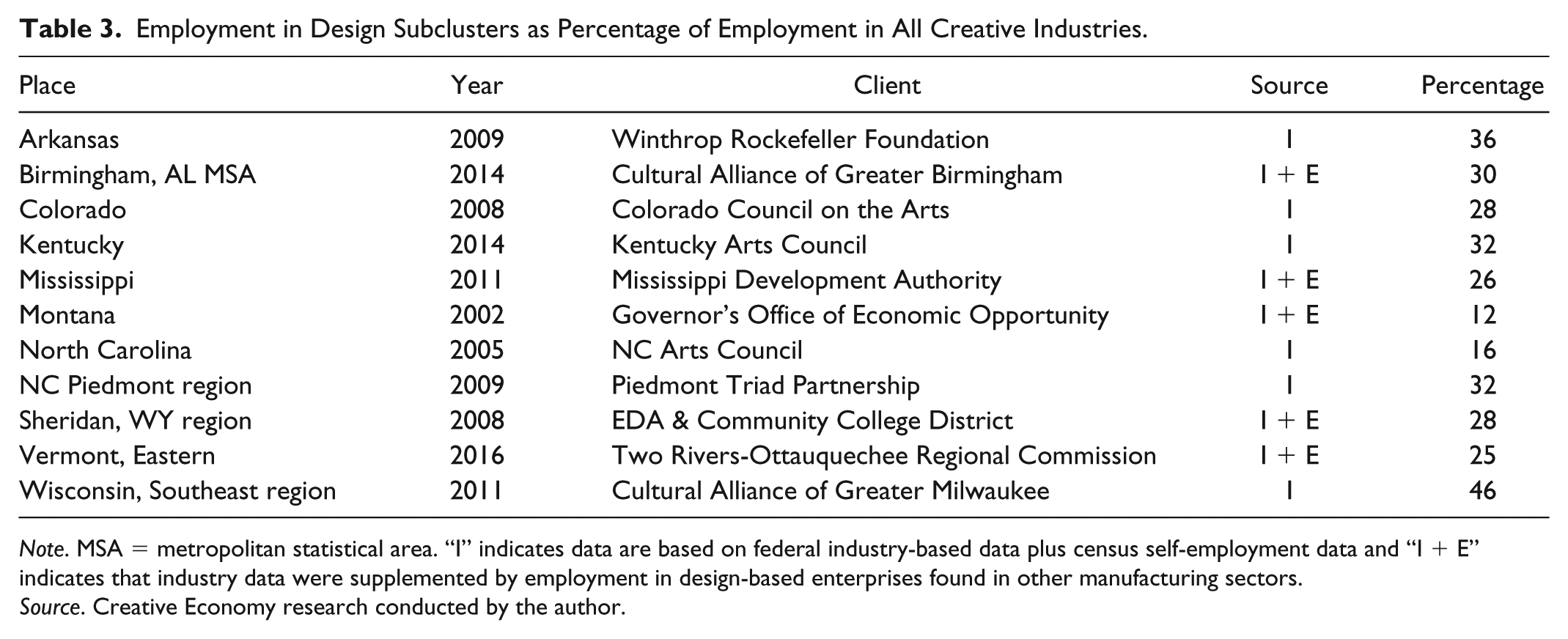
Note. MSA = metropolitan statistical area. “I” indicates data are based on federal industry-based data plus census self-employment data and “I + E” indicates that industry data were supplemented by employment in design-based enterprises found in other manufacturing sectors.
Source. Creative Economy research conducted by the author.
In most places, the design subcluster was found to comprise the largest shares of creative economies. The industry sectors included, however, were modified over time based on (a) what had been learned about design-based manufacturing from previous studies, (b) access to improved industry and occupational data that draw on multiple sources, and (c) the regional industrial structure and culture (i.e., relative dominance of manufacturing sectors by mass production, niche markets, or artisanal firms). For example, the entire furniture industry was included in Vermont but not in North Carolina or Mississippi.
Nearly all revisions increased the emphasis on design-based manufacturing as distinctions became better informed and more sophisticated. Five of the studies, for example, based largely on advice from focus groups, manufacturers associations, extension services, design schools, and regional experts such as staff of the Manufacturing Extension Partnership (MEP), were able to include manufacturing enterprises within sectors not designated as “creative industries” to add employment in design-driven companies. This information both improves estimates of scale and provides examples of employment in creative manufacturers in sectors not typically classified as design-dependent.
Many of the creative economy studies have been able to shed additional light on product design within the design subcluster. The following examples of design-driven manufacturing were gleaned from visits, interviews, and focus groups conducted from 2002 to 2016.
In Greenwood, Mississippi, Viking Range has turned cooking into an art form, producing intricately crafted designer ranges. Combined with a company cooking school and gourmet restaurant, according to Viking President Fred Carl, “We’re selling the Greenwood experience.” Among the state’s smaller firms, NunoErin is a microenterprise started in Jackson by a designer from Mississippi and a sculptor from Portugal. The firm produces designer home and business furnishings that encapsulate liquid crystals in fabrics and embed light-emitting diodes in plastics that respond to body temperature to produce a unique experience. A few of the most innovative companies in Northeast Mississippi’s renowned motion furniture cluster, which were able to compete on cost in the past, now are looking for creative ways to differentiate themselves. Tupelo Manufacturing is touting environmental impact and using sophisticated laser cutting to produce design-oriented furniture.
The Piedmont region of North Carolina, which lost most of its employment in nondurable goods manufacturing (tobacco, furniture, and textile/apparel) over the past two decades, is working to transform itself into a design region. Already one of the largest furniture markets in the nation, the region is searching for a way to use design to compete with high-end European competition, particularly from Italy and Scandinavia. The Center for Design Innovation, an outgrowth of the author’s study of the creative economy, connects designers to local businesses, hosts an annual Design, Art, & Technology Symposium, and offers workshops by internationally known designers.
Rural Eastern Vermont proved an easier region for identifying design-oriented manufacturing since the region has so little standardized production. Its fashion, food, furniture, and printing sectors are all customized, limited run, or artisanal. Some 124 companies plus 188 extended proprietorships employ 949 in this rural region manufacturing design-oriented goods. Creative employers include Simon Pearce Glass, Ibex Outdoor Clothing, Fat Toad Caramel Products, and Raven’s Nest Furniture, each of which reaches international markets.
The economy of Southeast Wisconsin, a flourishing industrial center for decades known as the “machine shop of the world,” became part of the Midwest’s Rust Belt in the 1980s and 1990s. Losing 32% of its manufacturing jobs between 1980 and 2005, only 15% of Milwaukee’s workforce is now employed in manufacturing. Milwaukee’s leadership considered a new approach, relying as much on creativity as on technology to “redesign” the manufacturing sector, to be more selective and discriminating in what it makes to avoid outsourcing (Rosenfeld, 2014). At Harley Davidson, for example, executives believe that “making a motorcycle is like sculpting a masterpiece.” A downstream cluster of detailers further tailors the bikes to match individual tastes. In 2011, the Greater Milwaukee Committee formed a regional Design Council, Innovation in Milwaukee, which holds regular events highlighting design.
In Kentucky, with a strong industrial base anchored by Toyota, interest in design- and user-oriented production has been building. GE’s Appliance Park (now Electrolux) established an Innovation Center where line workers, engineers, designers, and customers jointly develop and test new concepts and designs. In 2008, Big Ass Fans in Lexington began designing customized high volume, low speed, energy efficient fans. Big Ass Fans has grown 30% in employment annually and from $34 million in sales in 2009 to $165 million 5 years later. Other examples of design-oriented Kentucky companies include Brown Jordan outdoor furniture, the Lexington Fashion Collaborative, several niche printing companies, and 16 craft distilleries along its Bourbon Trail.
Sheridan, Wyoming, drawing on its Western history and culture, has manufacturing strengths in leather and riding products and tools, ornamental metal, custom cabinet makers, and personal care products. Kings Saddlery, Tom Balding Bits and Spurs, Iron Mountain Anvil, and Arrowhead Fire are a few manufacturing employers in the micropolitan area.
Europe offers an abundance of examples of design-oriented manufacturing, with some of the most striking examples found in Northern Italy‘s industrial districts. These districts were visited by many of the early architects and planners of MEP programs and often cited as a model of industrial competitiveness, a success that has largely been due to the way they embed their art, history, and culture into their products (Rosenfeld, 1992). Today, despite increased outsourcing of much standardized production, districts continue to rely on design to retain their competitive advantages and local jobs (Bettiol & Micelli, 2005).
The Talent Pipeline for Industrial Design
Most requirements for employment as an industrial designer specify at least a 4-year degree. A survey of 13,000 designers by the Industrial Designers Society of America (ISDA) revealed that 72.9% have a college degree, 15.5% have an advanced degree, and only 9.6% have no college degree (IDSA, 2017). Degree programs in industrial design, however, are more difficult to find than one would expect, given the nation’s industrial past.
The IDSA lists only 45 universities in the United States offering a bachelor’s degree in industrial design and 39 with master’s degree programs. Only two universities have PhD programs. The low salary scale of industrial designers compared to salaries of engineers (Table 2) may constrain engineering schools and students from considering design as a career possibility or industrial design students from seeking advanced degrees.
But industrial design salaries are high enough to attract strong interest in industrial design at art and design colleges, where competing career options are considerably lower (average annual salary for all art and design workers in 2017 was $53,910). Some 24 art and design institutes, which are major sources of design talent in the United States, offer a bachelor’s degree in industrial design and 22 offer a master’s degree.
Many states with large manufacturing sectors offer no degree programs in industrial design (e.g., Arkansas, Kentucky, and Mississippi). Just five schools combined—Clemson University, Savannah Institute of Art and Design, Rhode Island School of Design, Pratt Institute, and the Academy of Art University—graduate more than one fifth of the nation’s industrial designers.
In 2015, U.S. colleges awarded 33 associate degrees, 1,572 bachelor’s degrees, and 204 master’s degrees in design; 40% of them were awarded to women. Among the industrial design student population that reported race or ethnicity, 68.0% were White, 13.8% Asian, 11.1% Hispanic, and 4.0% African American (DataUSA, 2017).
Postgraduate industrial design programs in the United States often attract large numbers of students from abroad that are likely to take their talents back to their home countries. The majority of industrial design graduate students at North Carolina State University in 2017, for example, are non-U.S. students. At Auburn University, one the nation’s oldest and largest industrial design programs (ranked third in the United States in 2017), nearly 90% of master’s students are from China. Moreover, industrial design graduate programs depend heavily on attracting students from liberal arts programs such as sociology, political science, biology, or psychology and from the basic sciences, which serves to strengthen programs since design is an interdisciplinary discipline.
In Southeastern Wisconsin’s industrialized economy, the Milwaukee Institute of Art and Design has the third highest concentration of students in industrial design among all the nation’s art and design institutes. The school’s approximately 70 students intern and later are employed at some of the city’s most creative companies and design services: Harley Davidson, General Motors Design Center, Nike, Alter-Ego, Master Lock, Fiskars, Flux Design (founded by Milwaukee Institute of Art and Design graduates), and Trek Bicycle.
In addition to the dearth of college programs for industrial design, it remains an underdeveloped competency within engineering and technical education curricula. Even with the burgeoning interest in design thinking and rapidly growing partnerships between engineering and the arts, product design is rarely incorporated into technical curricula unless taken as an elective, where available. These options are expanding, however, as interest in creativity grows. At Auburn University, some engineering students choose introductory industrial design as an elective, and Virginia Tech offers an 18-credit minor in industrial design that attracts engineering and computer science students.
Generally, however, STEM dominates educational investments and curriculum reforms. Even states or regions that have revised their educational goals to include Art (“STEAM”) typically focus on the arts as either a cultural enhancement or a way to improve STEM skills, not as a source of innovation and growth. Design is often left to engineers with little formal preparation. But, as IDEO Executive David Kelley notes, engineers typically have a mind-set that could be expanded through design.
Engineers are problem solvers . . . given a particular set of tools . . . they try to assume away the messiness in formulating problems. Design is messy . . . the designer has a dream that goes beyond what exists rather than fixing what exists. (Kelley & Hartfield, 2005, p. 8)
Estimating Impacts
Measuring the impacts of design in the absence of adequate measures that distinguish the hard value of function and technology from the soft value of meaning and experience remains a challenge. Even in the United Kingdom, which has been seeking ways to measure the effects of design for decades, evaluation studies of government-supported design programs have “failed to obtain quantitative data or relied on estimates of expected commercial outcomes” (Roy, 1994, p. 14). Most assessments of impacts of design rely on generalizations about products, companies, and industries. Although government patent and copyright data are useful for estimating interest, only small fractions of patents reach markets.
The primary sources for judging the value of design to economies have been surveys carried out by government agencies, researchers, and advocates. For example, a design value index developed by the Design Management Institute concluded that design-driven manufacturers outperformed the S&P Index by 219% between 2004 and 2014 (Sheppard, Spearman, & Carter, 2017).
More often, however, surveys are used to estimate impacts of design on competitiveness. Although it is difficult to aggregate studies based on different definitions and methodologies and that target a wide range of places, sectors, and time frames, they still provide useful insights on what is predominantly an intangible factor of production (Galindo-Rueda & Millot, 2015).
Between 2008 and 2012, this author, with help from the MEP and state manufacturers associations, surveyed manufacturers in the states of Arkansas, Mississippi, North Carolina, and Wisconsin concerning the importance of aesthetics-based design and design skills to competitiveness. The more than 300 responses found that 33% claim that design is integral to their ability to compete, that 31% indicated it plays a significant role, and that 11% stated it plays no role in competitiveness. About 39% of manufacturers responded that design was responsible for more than half of their sales. Almost two thirds consider aesthetics in the design of their products, 31% use it in packaging, 52% in branding, and 10% in the design of their work environments (Figure 1)
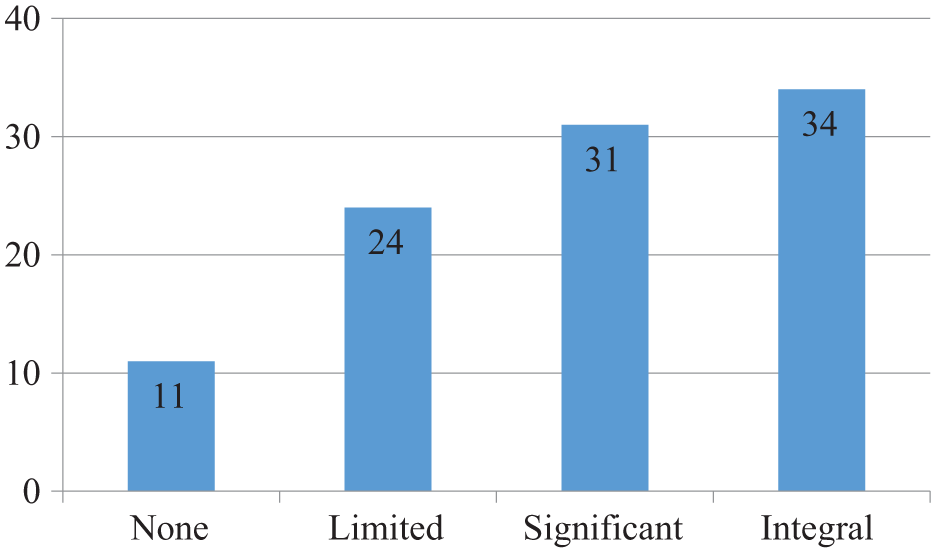
Estimated importance of aesthetics in design to competitiveness, percentage of responses.
Other measures of the economic impacts of design can be found elsewhere in the world:
A survey conducted in upper Austria found that 28% of manufacturers attributed competitive advantage to design, although much higher in-home products, fashion products, toys, and mechatronics/automation technologies (Prammer, 2006).
In Spain, among companies with the highest incidence of design, 25% reported that their revenues grew “a lot,” 49% that they grew “considerably,” and only about 1% that revenues diminished. In comparison, revenues grew “a lot” at only about 3% and “considerably” at about 10% among those companies without design capabilities (ddi, 2008).
From 1994 to 2003, all European Union furniture industries grew 11% in revenues, while Italy’s highly stylized furniture industries grew by 28% and the Lombardy Region’s design cluster of furniture companies grew 75% (Verganti, 2006).
A recent Canadian survey of the office furniture sector across North America and Europe found that 80% of American firms and 83% of European firms rated quality of design as highly important to their success (Hatch, 2013).
A Danish survey conducted annually over a 5-year period found that employment grew in companies using design as styling by 35% and in companies fully integrating design by 58% when compared with companies with no design (Danish Design Centre, 2003).
Exports are yet another measure of competiveness. A United Nations study of the value of the exports of creative industries found that “design goods,” as distinguished by form and appearance of products, accounted for about $242 billion in 2008 and was the largest proportion of all creative industries exports. Among design goods, Europe exported the largest share, 41% ($98 billion), and China second with 24% ($58 billion). The United States exported only 5% ($12 billion). Italy, alone, exported double the U.S. output of design goods (United Nations Conference on Trade and Development, 2010).
Together, this sample of studies describes the general value of design to businesses and implicitly to economies. It would take a large-scale and standardized random survey to draw verifiable conclusions about the economic impacts of design. Thus, decisions concerning and investments in design policies and practices must rely on what can be gleaned from a variety of sources.
Conclusions
Much of America’s industrial economy has always depended on design and design-based innovation, even if not always recognized or appreciated for its contributions to competitiveness. Despite the paucity of standardized indicators of the explicit impact of design on the competitiveness of products and manufacturers, the NEA’s exhaustive profile of design-based patents and industrial design employment (Nichols, 2013); BLS data on designers and the industrial design sector; industry-specific studies; surveys of businesses regarding roles of design in innovation and estimated value to the business; case studies of design-intensive companies; anecdotal evidence and testimony from CEOs; and analyses by experts and industry associations when combined, make a compelling case for the value of design to manufacturing.
Numerous examples can be found of America’s most successful manufacturers turning to design to differentiate, customize, and/or brand their products to justify price premiums and capture or retain markets. The fashion and household product sectors are the most obvious examples, but manufacturers of sporting equipment, games and toys, appliances, electronics, home furnishings, vehicles, architectural elements, surgical instruments, and food products depend on product design as well as technology and content to compete. Global corporations such as Nike, L.L. Bean, Cross Pens, Apple, Williams-Sonoma, and Patagonia all have high quality products but ultimately depend on design for added value associated with their distinctive brands.
When aggregated, the evidence argues for rebalancing innovation and competitiveness strategies to encourage and enable manufacturers to invest more in design as well as in technology. Increasing the connections between technology and design can result not only in new opportunities for manufacturing but also in employment associated with increased demands for innovation, customization, user interface, and distribution.
Actions and Policies
Other advanced economies invest more per capita and plan more extensively for design. Great Britain’s, Norway’s, and Denmark’s design councils and Italy’s design agency regularly conduct research for and interact with business, education, and government. Ireland designated 2015 the Year of Irish Design. Finland 2005! was a national effort to fully integrate design into the nation’s innovation system. The goal of the Singapore Ministry of Trade and Industry’s Design Singapore was to transform Singapore into a global design hub. The Korean Design Policy 2008 was intended to make Korea one of the world’s design leaders in the 21st century.
While design has not yet received national recognition or resources as an innovation policy or industrial competitiveness strategy in America, the United States has the talent and potential to take greater advantage of design. Examples of policy-driven actions that could help achieve its potential are to (a) recognize, legitimate, and support design as a source of innovation and develop measures of impact; (b) expand emphasis on industrial design in career and technical education and higher education; and (c) assist manufacturers—particularly SMMs—with assessing and developing the potential of design.
Policy Recommendations
Recognize, Legitimate, and Support Design as a Source of Innovation and Develop Measures of Impact
The first step is to give industrial design “a seat at the table” when industrial and innovation policies are discussed, debated, and recommended. Over the past three decades, many national councils, panels, and task forces composed of experts and practitioners have been assembled and charged with devising industrial and innovation strategies to respond to growing global competition (e.g., industrial modernization forums, Congressional hearings on competitiveness [Congressional Subcommittee on Technology and Competitiveness, 1992], the National Research Council [Committee on Analysis of Research Directions and Needs in U.S. Manufacturing, 1991], and Presidential task forces [National Science and Technology Council, 2012]). These assemblies and the presenters that informed them rarely included anyone engaged in or representing industrial design. Including representatives of design along with research, technology, business, and skills might lead to more creative policies and potentially include recognition of and support for product design within research, education, and extension services.
In addition, state or national programs to support interdisciplinary design, innovation, and creativity centers in which industrial designers, technicians, engineers, graphic designers, artists, psychologists, and so on, collaborate to identify and develop new or modified products, would raise the level of awareness and legitimacy of design. Finally, building on the early efforts of BEA to develop and quantify an arts and culture “account” would help expand its definition by including other design-based industry sectors, and make those BEA data available for economic development.
Expand Emphasis on Industrial Design in Career and Technical Education and Higher Education
Efforts to use design to generate economic growth begin with the educational system. America pays very little attention to the teaching of product design in career and technical education in the public schools, in community colleges, or in higher education. Although graphic design and web design are gaining acceptance largely due to increased student demand, industrial design is rarely acknowledged as a useful skill or promising career path by those who influence choices: career and technical education advisors, parents, and teachers.
Notable exceptions include Fresno High School, which is part of California’s Linked Learning (created as an Innovative Design and Engineering Academy); Design and Architecture Senior High School in Miami; Henry Ford Academy for Creative Studies in Detroit; many art and design institutes (e.g., the Rhode Island School of Design, Savannah College of Art and Design, and Cranbrook Academy of Art in Detroit); and selected universities (e.g., Auburn, Carnegie Mellon, North Carolina State, and Stanford).
But perhaps more important than dedicated design programs are the integration of design competencies into technical and engineering programs, teaching and rewarding product design skills beyond the computer-based design for manufacturability currently taught, and rewarding creative design.
Help Manufacturers Understand and Take Advantage of Design
Some of the most creative firms are SMMs whose success is based on the creative ideas of their founders and/or a small number of employees. Many of the smaller of these firms—those generally excluded from innovation surveys because of their size—may have growth potential that could be developed with advice and assistance. But SMMs may not appreciate or embrace design because they do not understand it, how it works, or when to use it. A survey of 23 manufacturing centers that provide support to SMMs found that only 13% were familiar with industrial design (Sheppard et al., 2017). Many more could develop new products if they better understood its potential and had access to design resources.
The most obvious form of assistance is to take advantage of the existing system of extension centers that has so successfully modernized manufacturing—the MEP. These centers are well positioned to inform and educate SMMs about the potential and application of design, including organizing events where design firms and manufacturers are brought together. A survey of 23 manufacturing centers that provide support to SMMs, however, found that only 13% were familiar with industrial design (Sheppard et al., 2017). Barriers that would have to be overcome are a predisposal to technological or organizational problems and solutions, a lack of knowledge concerning industrial design, and existing measures of success that favor larger SMMs. A few programs, such as the Vermont Manufacturing Extension Center, already work with design-oriented manufacturers.
A second action is to link designers and design services to manufacturers. Forming networks of SMMs to share costs and stimulate learning and innovation was a successful modernization strategy utilized around the world in the 1990s (Rosenfeld & Bosworth, 1993). By helping to match companies and/or entrepreneurs with designers and then offering incentives for three or more firms willing to share the costs of a dedicated design professional or firm, design services would become more accessible.
A third action is to provide incentives for internships and co-ops for art and design students from higher education with manufacturers. This would provide both workplace learning for the student and allow companies to learn from students and explore the potential for design.
Footnotes
Declaration of Conflicting Interests
The author declared no potential conflicts of interest with respect to the research, authorship, and/or publication of this article.
Funding
The author received no financial support for the research, authorship, and/or publication of this article.