



Abstract
This study investigates the mediation impact of grade point average (GPA) and general health positive on Facebook addiction via self-esteem (SE) under the provision of active daily use of Facebook. We reached 120 participants who are college students. Our sample comprised 63 (52.5%) females and 57 (47.5%) males. We collected data through an online questionnaire. Structural equation modeling using IBM SPSS AMOS and mediation analysis were performed. The findings of the study suggested that SE is a critical and shaping construct when the decreasing impact of both GPA and general health positive on Facebook addiction is a concern. College students with low GPA and general health–positive feelings have low SE, which in turn increases the possibility of becoming a Facebook addict. Moreover, active daily use of Facebook is another factor triggering addiction. Recommendations and further research studies are presented.
Social networking sites (SNSs) are claimed to be the fastest-growing sector in the online business market (Y. Lee, 2008), and Facebook ranks as the most popular SNS with 968 million daily active users (Facebook, 2015), the majority of whom are university students (Lenhart, Purcell, Smith, & Zickuhr, 2010). Similar to an addiction, Facebook makes individuals become dependent on it (Crandell, Crandell, & Zanden, 2011). A study with 36,950 students from 126 U.S. universities in late 2010 indicated that 97% used Facebook (Junco, 2012). It is most commonly used to start and maintain relationships; learn about other people; communication, recognizing, and influencing others; and for social experience (Di Capua, 2012). Recent years have witnessed a drastic increase in time spent using Facebook, which has brought along the problem of addiction similar to Internet and digital game addiction.
Griffiths (2000) described a typical “addict” as a teenager, generally male, with little or no social life and self-confidence, and he defined SNS use as a new form of soft addiction. Facebook has approximately 950 million users, which exceeds the number of users of other SNSs (Zephoria, 2015). Psychologists have introduced the term Facebook addiction disorder (FAD) as a new mental health disorder to refer to individuals addicted to Facebook and the people who are unable to control their activities on the site (Fenichel, 2009; Young, 2009). The term has been coined as a result of the rising concerns on the issue, particularly for the unwelcome suffering stemming from problematic Facebook use and the typical incapability of controlling and limiting the amount of time allocated to Facebook activities (Z. W. Lee, Cheung, & Thadani, 2012). Zaremohzzabieh, Samah, Omar, Bolong, and Kamarudin (2014) observed the following behaviors in Facebook-addicted individuals (FAD): (a) checking their Facebook account every morning; (b) spending entire nights on the site, ending up with fatigue the next day; (c) spending hours a day on Facebook; and (d) daydreaming about status updates and comments. According to Kuss and Griffiths (2011), individuals suffering from FAD have negligence about their personal lives, extreme enthusiasm in using Facebook, tendency for social isolation and for hiding addiction signs, a lack of control, and a deterioration in pleasure over time. Correa, Hinsley, and De Zuniga (2010), however, observed a gender difference among regular users of SNSs such as Facebook in favor of men with greater degrees of emotional instability.
On the other hand, Griffiths (2010, 2012) in his recent studies pointed out that similar to Internet addiction, the term Facebook addiction may be misleading due to the diversity in activities offered by the Facebook medium, such as messaging with friends and playing games like Farmville and gambling. He added that there is a need for a valid and reliable scale that measures SNS addiction rather than Facebook, so that researchers can measure individuals’ actual addictions.
Review of Literature
Measures Associated With Facebook Addiction
Facebook is a prominent communication medium among university students and it enables them to augment their cognitive and social competencies and develop a positive attitude toward learning (Kirschner & Karpinski, 2010; Pasek & Hargittai, 2009). In this regard, Yu, Tian, Vogel and Chi-Wai Kwok (2010) explained that Facebook is useful for students to gain knowledge and social acceptance, encourages them to develop self-esteem (SE), and increases performance and satisfaction with college life. However, overuse of Facebook may cause addiction which is related to different measures such as number of hours spent using it, SE, school performance, and the general health of individuals.
SE and Facebook Addiction
Coopersmith (1981) defines SE as the subjective evaluation that an individual performs and sustains about himself or herself and the degree of their belief in their capability, worth, and significance that is taken through their attitudes and verbal behavior (Wilson, Fornasier, & White, 2010). The relationship between SE and technology-related addictions are frequently investigated. SE is declared as a negative predictor of Internet addiction (Kurtaran, 2008). Individuals with low SE are more likely to become addicted to the Internet, as they consider it a means of compensation and avoidance (Armstrong, Phillips, & Saling, 2000). Supporting this, Ehrenberg, Juckes, White, and Walsh (2008) reported that low-level SE youngsters display a high level of instant messaging. Similarly, Shaw and Gant (2002) found that there is an increase in perceived social support and SE after participating in an online chat session. As can be seen, the Internet may relieve the social anxiety that low-self-esteemed individuals experience to some extent, often in more traditional social circumstances (Harman, Hansen, Cochran, & Lindsey, 2005).
Similar to Internet addiction, Facebook use is also associated with an individual’s SE level. SNSs are reported to facilitate the engagement of particularly lower SE students with others, mostly the ones who are not in their personal networks, and thus help them to bridge social capital (Ellison, Steinfield, & Lampe, 2007; Steinfield, Ellison, & Lampe, 2008). Indeed, Facebook features may diminish obstacles that students with lower SE may experience in building up large and diverse networks (Bargh, McKenna, & Fitzsimons, 2002; Helliwell & Putnam, 2004). This might explain why timid individuals were willing to spend excessive time on Facebook and with a promising attitude toward Facebook compared to nontimid individuals reported by Orr et al. (2009). Mehdizadeh (2010) supports that low self-esteemed individuals spend more than an hour daily on Facebook, which may cause Facebook addiction. On the other hand, comparing lower self-esteemed people with those with higher levels, MacIntyre, Babin and Clement (1999) stated that the former tend to communicate with others less than the latter do in their daily lives, thinking themselves insufficient in contribution and due to the probability of getting negative feedback. In a digital SNS environment like Facebook, individuals who are introverted, not popular in daily life and have low levels of SE, are reported to try to look popular by misrepresenting themselves (Zywica & Danowski, 2008). Acar (2008) explained that high-SE individuals are reluctant to add new people to their personal network until they actually know them. On the other hand, there are studies which indicated that frequent Facebook use is associated with higher SE (Nadkarni & Hoffman, 2012).
Gonzales and Hancock (2011) argued that Facebook use would either increase or decrease the level of SE. They reported in their study that Facebook use, especially the positive items that users post on their profiles, augment SE. Similarly, Valkenburg, Peter, and Schouten (2006) investigated the consequences of using SNSs (e.g., Friendster, MySpace) on adolescents and found that desirable feedback on their profiles increased the social SE and well-being of adolescents, whereas undesirable feedback diminished them. They added that the frequency of site use had an indirect effect on adolescents’ social SE and well-being. Regarding this, Harter (1999) stated that public evaluations probably had an effect on the improvement of the social SE of adolescents, and that peer acceptance and social feedback on the self on SNSs were vital factors affecting adolescents’ social SE and happiness. This, indeed, explains two primary needs for Facebook use stated by Nadkarni and Hofmann (2012): (1) the need to belong (demographic and cultural factors contribute to this need) and (2) the need for self-presentation (neuroticism, narcissism, shyness, SE, and self-worth contribute to this need).
However, there are some other studies reporting no significant association between Facebook variables and SE (Kalpidou, Costin, & Morris, 2011). Skues, Williams, and Wise (2012) reported that SE, besides some other measures, did not have a significant relationship with Facebook use. Similarly, the study of Wilson, Fornasier, and White (2010) revealed that the personality and SE constructs significantly anticipated SNS use and tendency for addiction, although not a large amount of variance were accounted in either measures. However, they added that there was a significant prediction but with a small amount of variance explained. This indicates that there should be more studies investigating the association between Facebook and Facebook addiction and SE.
Approaching the association between SE and SNSs from a different perspective, Gonzales and Hancock (2011) claimed that SNSs had the potential to affect changing states of SE (which they called ideal self); however, there was a need to explore the effect of Facebook experience on general SE (which they called actual self). They claimed that consistency between these two selves needed to be investigated and participant perceptions between them needed to be measured. They also noted that Facebook probably activates only the ideal self, a supposition which should be tested in future studies. However, they did not suggest any measurable technique for undertaking such investigations; thus, although this may be a relevant point, further research on this aspect should be more elaborately designed.
Active Hours Spent on Facebook Daily and Facebook Addiction
Zaremohzzabieh et al. (2014) stated that Facebook is estimated to have more than 500 million users. More recently, it is reported that there are overall 950 million users, 500 million of which log on daily (Zephoria, 2015). It is reported by the same organization that approximately 20 min is spent on each connection to Facebook. Although Stern and Taylor in 2007 reported that only 49% of college students use Facebook, and 3% of them spent more than 2 hr, in a more recent report, Tang, Chen, Yang, Chung, and Lee (2016) found that up to 8 hr a day was spent on Facebook by members and 80% of daily users are students. This increase over the years indicates that Facebook is used by a great number of people today and that this is continuing. However, increase in time of Facebook use raises the problem of being an addict in terms of Facebook use. Koç and Gülyağcı (2013) found that weekly time usage positively predicted Facebook addiction. The harmful consequences of Facebook use whether actively or passively were differed depending on gender (Frison & Eggermont, 2016); the depressed mood of boys increased when they use Facebook actively in public settings. In contrast, girls were in a similar situation like boys when they use it passively.
GPA, SE, and Facebook Addiction
It is a common belief among parents and students that school achievement is vital for an individual to become successful in life. Low achievement negatively affects individuals’ psychology leading them to demotivation, a complete withdrawal from daily or school life, and addictions in more severe cases at the end. In some studies, an individual’s grade point average (GPA; a measure of academic performance and achievement) is an indication of her or his level of SE. For instance, general SE was found to be a significant predictor of higher scholar performance (Pullmann & Allik, 2008). Similarly, Hansford and Hattie (1982) reported in their meta-analysis that the self was as strongly linked with performance/achievement as any other personal variable, but the association between them was very limited. Gordon (1977) indicated that, there was a positive relationship between SE and academic success as measured by grades and achievement exam scores. On the other hand, some studies indicated that SE has no linkage to academic performance (Baumeister, Campbell, Krueger, & Vohs, 2003; Marsh & O’Mara, 2008; Zare, Daneshpajooh, Amini, Razeghi, & Fallahzadeh, 2007).
There are some studies indicating a significant linkage between extreme technology use and academic problems (Kubey, Lavin, & Barrows, 2001; Malaney, 2004), Facebook use and lower academic achievement (Karpinski & Duberstein, 2009; Kirschner & Karpinski, 2010), and problematic Facebook use and low school performance (Boogart, 2006; Pempek, Yermolayeva, & Calvert, 2009). Regarding Facebook use, Ul Haq & Chand (2012) reported that besides its negative affect on the academic performance of students in general, gender can be a predictor of problematic use in 68% of males as opposed to 53% of females.
Other studies have measured the impacts of time committed on Facebook and educational achievement. E. B. Lee (2014) observed that teenagers spent more time on Facebook activities than studying, and they also found that there was an adverse association between Facebook activity and the math grades of respondents. In his study of 1,839 college students, Junco (2012) reported that time spent on Facebook was intensely and negatively related to overall GPA. Supporting this, Paul, Baker, and Cochran (2012) indicated that there was a significant association between time committed by undergraduate students on SNSs and their scholar performance because the time spent on SNSs was reported seriously influencing the attention span of the students adversely. Another study supporting the previous ones by Karpinski, Kirschner, Ozer, Mellott, and Ochwo (2013) pointed out that Facebook users had lower GPAs and spent less time studying. They also found that there was a significant negative association between minutes spent using SNSs daily and GPA among 451 university students. Besides, in another study, higher Facebook addiction scores were associated with late bedtimes and more times spent on Facebook for college students (Andreassen et al., 2012).
Moreover, it is important to note at this point that especially, Internet use for fun had a significant strong relationship with decreased academic performance (Kubey, Lavin, & Barrows, 2001). They pointed out that students who had academic problems had more tendency to use the Internet for simultaneous social activities such as chat rooms and instant messaging which held students captive and mostly late at night. R. J. Lee-Won, Herzog, and Park (2015) indicated that the mixture of social anxiety and the need for social assurance by feeling a member of a group increased the risk of extreme and unrestrained use of Facebook, which could affect scholar performance, work, and one’s health and happiness undesirably.
Regardless of the extensive belief that excessive technology use causes decrease in scholar achievement, there are some studies indicating the opposite. Ahn (2012) supports this claim among teenagers in two urban high schools, where 3% of African American and 34% of Hispanic students who used Facebook were reported to obtain higher GPA and English scores. Similarly, Alloway, Horton, Alloway, and Dawson (2013) observed 104 high school students and found that young students who used Facebook for more than a year got higher scores for verbal ability, working memory, and spelling tests compared to their peers using it for a shorter interval. Specific to Facebook, Zaremohzzabieh et al. (2014) stated that it was a valuable tool for its potential for academic purposes; furthermore, using Facebook offers an environment to increase knowledge through the activities such as reading friends’ shared posts about a news feature or local event. Shah, Subramanian, Rouis, & Limayem, (2012) measured the impact of Facebook use on academic performance of students and found that enriched and varied uses of Facebook improved academic performance.
All of the above indicates Facebook use and addiction as an antecedent of low GPAs or scholar achievement, whereas there are also studies reporting it as a consequence of low scholar work. To exemplify, Vanden Boogart (2006) reported that extensive Facebook use among students with lower GPAs without confounding variables in their research analysis. On the other hand, there were additional studies indicating no difference with respect to Facebook use and GPA scores (Pasek, More, & Hargittai, 2009; Kolek & Saunders, 2008). Kirschner and Karpinski (2010) emphasized that further studies are required since the relationship between SNS and academic performance is still questioned.
General Health, SE, and Facebook Addiction
Health values and SE are usually investigated for their impact on each other in various studies. Self-rated health reporting of elder people predicted a significant amount of difference in the ratings for SE and life satisfaction (Benyamini, Leventhal, & Leventhal, 2004). MacInnes (2006) indicated that lower SE had a relationship with higher levels of anxiety, depression, and psychological ill health. Macintyre, Ellaway, Der, Ford, and Hunt (1998) found a negative significant medium-level relationship between SE and general health. Abood and Conway (1992) reported that there was a modest correlation between health values and SE. Zare, Daneshpajooh, Amini, Razeghi, and Fallahzadeh (2007) indicated that the linkage between SE and general health was negative and strong. In young adolescents, SE had a positive association with personal health, mental health, and social aspects of healthy behavior, while in old ones, it was linked significantly to mental health (Torres, Fernandez, & Maceira, 1995). Another study reported that problematic Internet use had a negative impact on SE but not on general health perceptions (Niemz, Griffiths, & Banyard, 2005). However, the study did not look for a mediation association between SE, general health, and problematic Internet use, which may produce more insightful results.
The literature also contains reports of a negative relationships between various types of Internet use and well-being (Kraut et al., 1998). Vallerand et al. (2003) claimed that excessive website use could become troublesome to daily life or ends up with negative outcomes such as loneliness, depression, anxiety, and phobias. Tang et al. (2016) state that Internet addiction has become a severe problem and was listed in new versions of the Diagnostic and Statistical Manual of Mental Disorders, Fifth Edition. Being one of the most popular SNSs, Facebook has received considerable attention recently and addiction to it is now defined as a subtype of Internet addiction. There are studies indicating a positive, apparently robust correlation between Facebook use and narcissism (Mehdizadeh, 2010) and weak correlations with feelings of loneliness (Ryan & Xenos, 2011); neuroticism; extroversion; delayed bedtimes (Andreassen, Torsheim, Brunborg, & Pallesen, 2012); and SE, emotional, and academic adjustment (Kalpidou et al., 2011).
Several researchers have identified illnesses associated with Facebook use defined as Facebook depression that triggers classic symptoms of depression due to the extensive use of social network sites by preteens and teens (Davila et al., 2009; Irvine, 2009; Melville, 2010; O’Keeffe, & Clarke-Pearson, 2011; Sturm, 2010). Moreno et al. (2011) found in their study that college students often show symptoms consistent with depression and claimed that SNSs may be an “innovative avenue for combating stigma surrounding mental health conditions” (p. 447). Uysal, Satıcı, and Akın (2013) reported that Facebook addiction was related negatively with subjective vitality and happiness. On the other hand, Veretilo and Billick (2012) pointed out that a PUBMED search indicated no articles regarding the use of Facebook or other SNSs in various age-group psychiatric patient populations, among older populations, or in older adults with mental illness.
A very recent study by R. J. Lee-Won et al. (2015) indicated that the mutual social connection opportunities and messaging features of Facebook may provide a pleasing social media platform for individuals suffering from social anxiety (R. J. Lee-Won, Herzog, & Park, 2015). Moreover, Koç and Gülyağcı (2013) found that severe depression, anxiety, and insomnia positively predicted Facebook addiction.
Based on the review above, the current study postulates that measures for GPA, general health (positive), SE, and active hours spent on Facebook can be the indicator of Facebook addiction; furthermore, SE may have another critical role as a mediator between GPA, general health, and Facebook addiction. Caers et al. (2013) reported that even though there were many articles on various facets of the SNSs, there were still many questions in minds to be examined. They stated that further studies are necessary as most previous studies were limited in sample sizes, scope, the number of countries included, and there have been changes in the Facebook’s design and features which should be investigated. By investigating Facebook addiction and related factors, we aimed to address one of the many questions in this field.
Method
Procedures
We designed this study as a correlational study allowing the researchers to evaluate the relationships and impacts among independent and dependent variables (Creswell, 2012).
Purpose of the Study
According to Zephoria (May, 2015), Facebook is too big to ignore. The statistics and the statement of Facebook demonstrated the importance of it and its place in our lives. As with other novel technologies, the adoption and use of Facebook have pros and cons. Our main purpose was to reveal the dynamics of the impacts of psychological variables on Facebook addiction. Initially, we concentrated on the combined impacts of GPA, general health (positive), and Facebook active use hours on Facebook addiction. While running analyses, we realized that GPA and general health (positive) variables had a nonsignificant impact on Facebook addiction when SE was present. Yet, without SE, both variables had a significant impact. Hence, this situation urged us to consider the potential mediation impact of SE. Therefore, we also performed mediation or moderation analysis, which may provide better insights as to the impacts and relationships. Eventually, the following hypotheses were investigated in the present study, and the model is illustrated in Figure 1:
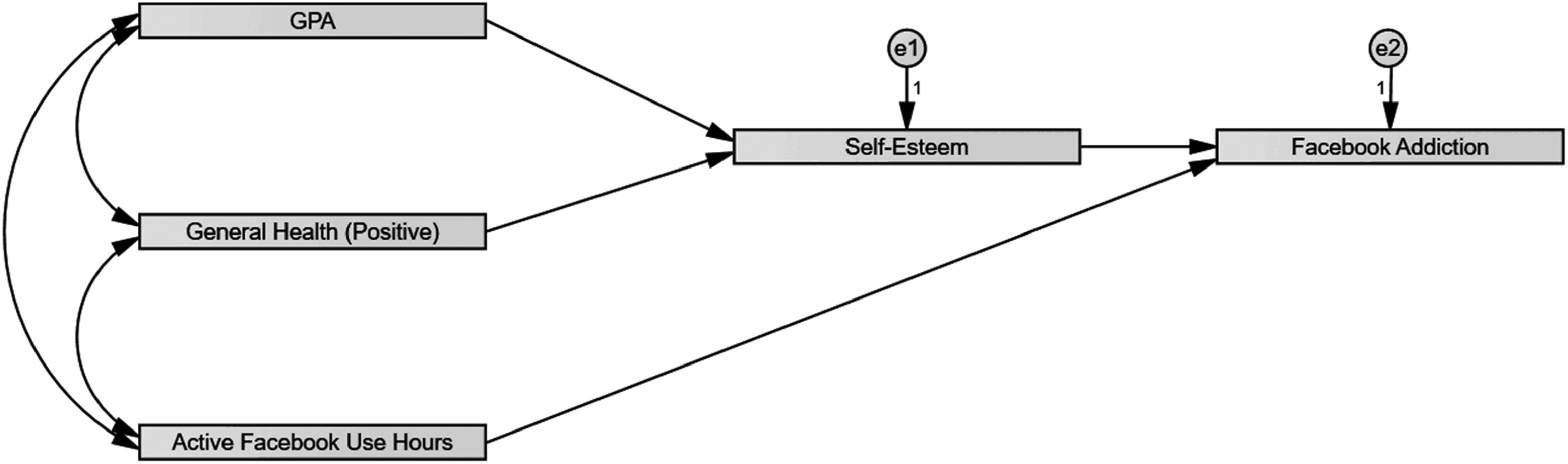
The hypothesized model.
The Participants
We collected data from individuals easily accessible, so we applied convenience sampling. Wallen and Fraenkel (2001) indicated that the majority of social science researchers are unable to use random sampling due to money, time, and resource limitations. Due to these reasons stated, we had to choose this feasible technique, and we reached 120 participants. We had stopped data collection since the power analysis for structural equation modeling (SEM) suggested by MacCallum, Browne and Sugawara (1996) yielded 118 participants for .80 power, df = 3, root mean square error of approximation (RMSEA)-H0 = .20 (high misfit), and RMSEA-H1 = .05 (close to good fit), p = .05. Moreover, Boomsma (1985) and Kline (1998) suggested that minimum or moderate sample size for SEM can be ranged from 100 to 200. Five to 10 observations per estimated parameters (Bentler & Chou, 1987; Bollen, 1989) and 10 cases per variables (Nunnally, 1967) were other recommendations. Wolf, Harrington, Clark, and Miller (2013) and Sideridis, Simos, Papanicolaou, and Fletcher (2014) empirically supported minimum sample size ranging from 30 to 80. Furthermore, Wolf et al. (2013) also added that estimating sample size may differentiate depending on the complexity of the model, and that more sample size did not always mean better results. Since our model is not very complex (only five observed variables), the results can be interpretable. However, the generalizability of this study should be still considered cautiously.
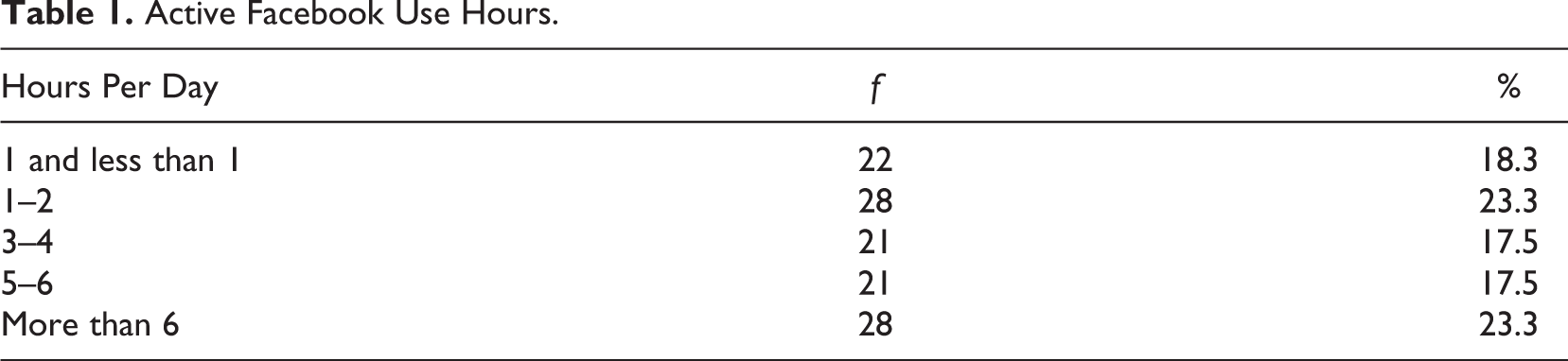
Our sample comprised 63 (52.5%) females and 57 (47.5%) males. More than 90% of the participants stated that they use the Internet several times a day. There were 59 (49.2%) participants with 250 or less friends on Facebook, while there were 61 (50.8%) participants with more than 250 friends. Table 1 illustrates the average daily number of hours they spent actively using Facebook. Table 2 illustrates descriptive statistics for the demographic characteristics of participants.
Active Facebook Use Hours.
Descriptive Statistics.

Note. GPA = grade point average.
The Instruments
GPA, General Health Questionnaire (GHQ), Facebook active use hours, SE, and Facebook addiction were the measures gauged in the present study. Each of the measures are explained in detail below.
GPA
We collected data about participants’ GPA for the current education course they were attending at college. We used short answer questions and a text box to obtain the exact score. We assumed that GPA was one of the significant measures associated with college students’ academic performance and achievement.
GHQ
Goldberg and Hillier (1979) developed the first version of this scale to measure psychological health. This scale has two different versions: GHQ-28 and GHQ-12. GHQ-28 contains four factors (somatic symptoms, anxiety and insomnia, social dysfunction, and severe depression), while GHQ-12 has only one factor. We used GHQ-12 in the present study since GL Assessment, United Kingdom-based company selling this assessment tool, suggests that this version of questionnaire is feasible, reliable, sensitive, and more suitable for research studies (GL Assessment, n.d.). Moreover, we applied an online survey including several questionnaires, so it was wise to keep the total number of items in a reasonable amount for a better response rate. Otherwise, participants have never started the survey, or they give it up after a while they have started. Therefore, we decided to use GHQ-12. The scale includes 12 self-report items and asks the participants how often they have recently experienced relevant symptoms on a 4-point Likert-type scale ranging from 0 = not at all to 3 = much more than usual. The total score of the scale can vary from 0 to 12 with higher scores indicating more severe psychological problems. However, in the present study, we reverse coded the participants’ responses, and we called the variables general health (positive). The GHQ-12 scale was adapted to a Turkish version by Kılıç (1996). The internal consistency—Cronbach’s α—of GHQ-12 was .78, test–retest correlation was .84, p < .001, and split-half reliability—Spearman-Brown—was .81. The correlation between GHQ-12 and GHQ-28 was .71, p < .001. The concurrent validity of GHQ-12 was analyzed by estimating correlation with the Present State Examination Scale developed by Wing, Cooper, and Sartorius (2012), and it was calculated as .51. The factor analysis results revealed that sensitivity was .74 and specificity was .82.
Facebook active use hours
This question was a multiple-choice item with five options. It measures how many hours you have spent actively (posting, uploading pictures, messaging, etc.) on Facebook as an ordinal scale. The options ranged from less than 1 hr to more than 6 hr. We used this variable as a control variable to ensure impact of other variables on Facebook Addiction.
SE
We utilized the Turkish version of Rosenberg’s SE Scale to obtain this measure. The scale has 10 items to measure SE for different varieties of groups. It is a Guttman scale with a coefficient of reproducibility .92, and test–retest reliability correlations indicated .85 and .88 meaning excellent stability (Rosenberg, 1979, 1999). The construct validity of the scale was proven by comparing the scale scores between a psychiatrically diagnosed ill group and an undiagnosed group. The results indicated that the nondiagnosed group had significantly higher SE than the diagnosed group. Cuhadaroglu (1986) adapted the scale to Turkish. Initially, three experts reviewed the Turkish version of the scale, and then 10 undergraduate students confirmed the comprehensibility of the scale. Cronbach’s α was .86, and the validity coefficient, a correlation between interview and scale scores, was .71 for the Turkish scale.
Facebook addiction
This scale was adapted from Young’s (1996, 1998) Internet Addiction Scale by Çam (2012). The term Internet was replaced with Facebook. Later, the scale was checked for construct validity via explanatory and confirmatory factor analysis (EFA and CFA). EFA results demonstrated that the scale had one factor that accounted for 43.86% of the total variance. The factor loading ranged from .300 to .670. CFA revealed a good fit indices, and the factor weights ranged from .550 to .700. These results demonstrated that the scale was valid. Cronbach’s α and test–retest coefficients were used for reliability, and they were calculated as .93 and about .90, respectively. This indicated that the scale was reliable.
Data Collection
Data were collected using a questionnaire package prepared by the researchers and uploaded to Google Docs. Potential study participants were sent a Facebook message that included a link to the questionnaire form, which remained active on Google Docs for 7 weeks. We recruited participants based on their voluntary participation. If they would like to contribute to the study, they declared it by accepting the survey and had completed all questionnaires. Incompleted surveys were eliminated from the study data. To increase response rate, we sent several reminders to the potential participants.
Data Analysis
SEM was utilized in this study. SEM helps researchers to analyze complex associations among variables and build models. Moreover, we performed mediation analysis to observe mediation between the variables GPA, general heath, SE, and Facebook addiction. We used Baron and Kenny’s (1986) four-step approach to provide evidence for mediation. We applied all of these steps within the estimated SEM model, and calculations were performed using the IBM SPSS AMOS 22.0 program.
Results
Before preceding to the analysis, we checked univariate and multivariate normality, a critical assumption of SEM (Arbuckle, 2013). For variance and covariance-based analysis, kurtosis values are more critical to examine than skewness values (DeCarlo, 1997); hence, while skewness affects tests based on means, kurtosis seriously impacts variance and covariance-based tests. Since SEM is based on covariance matrices, we focused on the kurtosis value. The univariate and multivariate normality assessments (both) are presented in Table 3.
Assessment of Normality.

Note. Multivariate normal distribution values are italicized.
The analysis revealed that there was no issue regarding normality since critical ratio values of kurtosis were higher than 7 (West, Finch, & Curran, 1995) and critical ratio value for multivariate distribution was higher than 5 (Byrne, 2013), which indicated normal distribution of the data.
Bivariate correlations of five variables are presented in Table 4. It demonstrates that Facebook addiction had negative and moderate correlations with GPA, general health (positive), and SE. In contrast, it had a positive and moderate association with active use hours of Facebook.
Bivariate Correlations of All Variables.
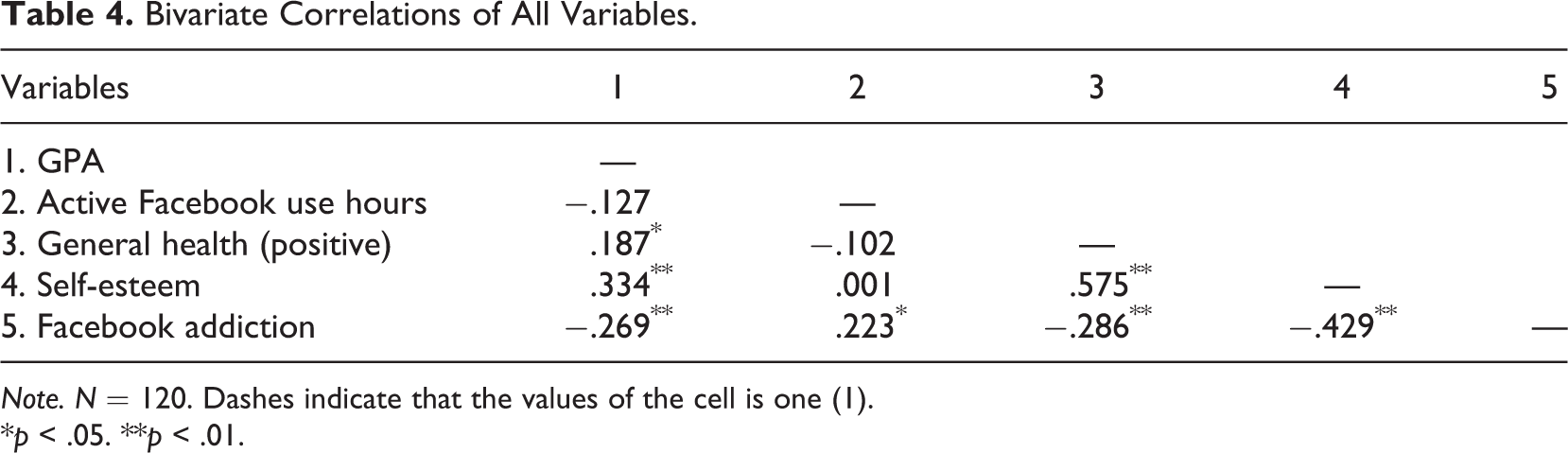
Note. N = 120. Dashes indicate that the values of the cell is one (1).
*p < .05. **p < .01.
The estimated model of four hypotheses is illustrated in Figure 2.
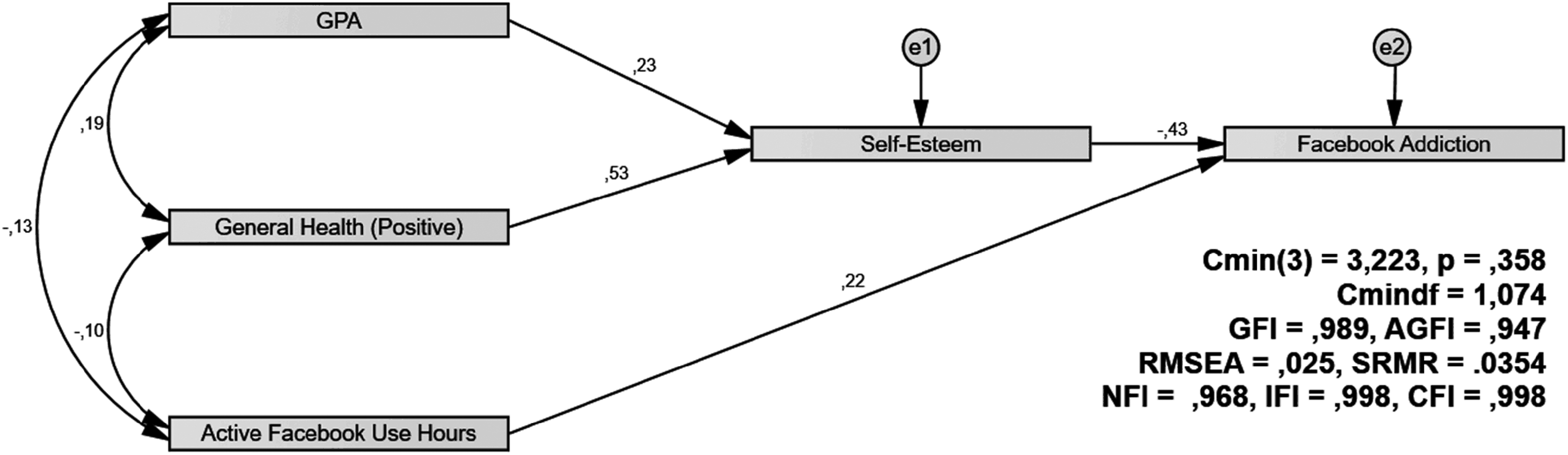
The estimated model.
The model fit values revealed that we had a good fit for the model under investigation as illustrated in Table 5.
Evaluation of the Model Fit Indices.

Note. The estimates were also bootstrapped (N = 1,000) to check the consistency of the model fit values, and there was no difference between them. NNFI = nonnormed fit index; IFI = incremental fit index; GFI = goodness of fit index; AGFI = adjusted goodness of fit index; RMSEA = root mean square error of approximation; SRMR = standardized root mean square residual; CFI = comparative fit index.
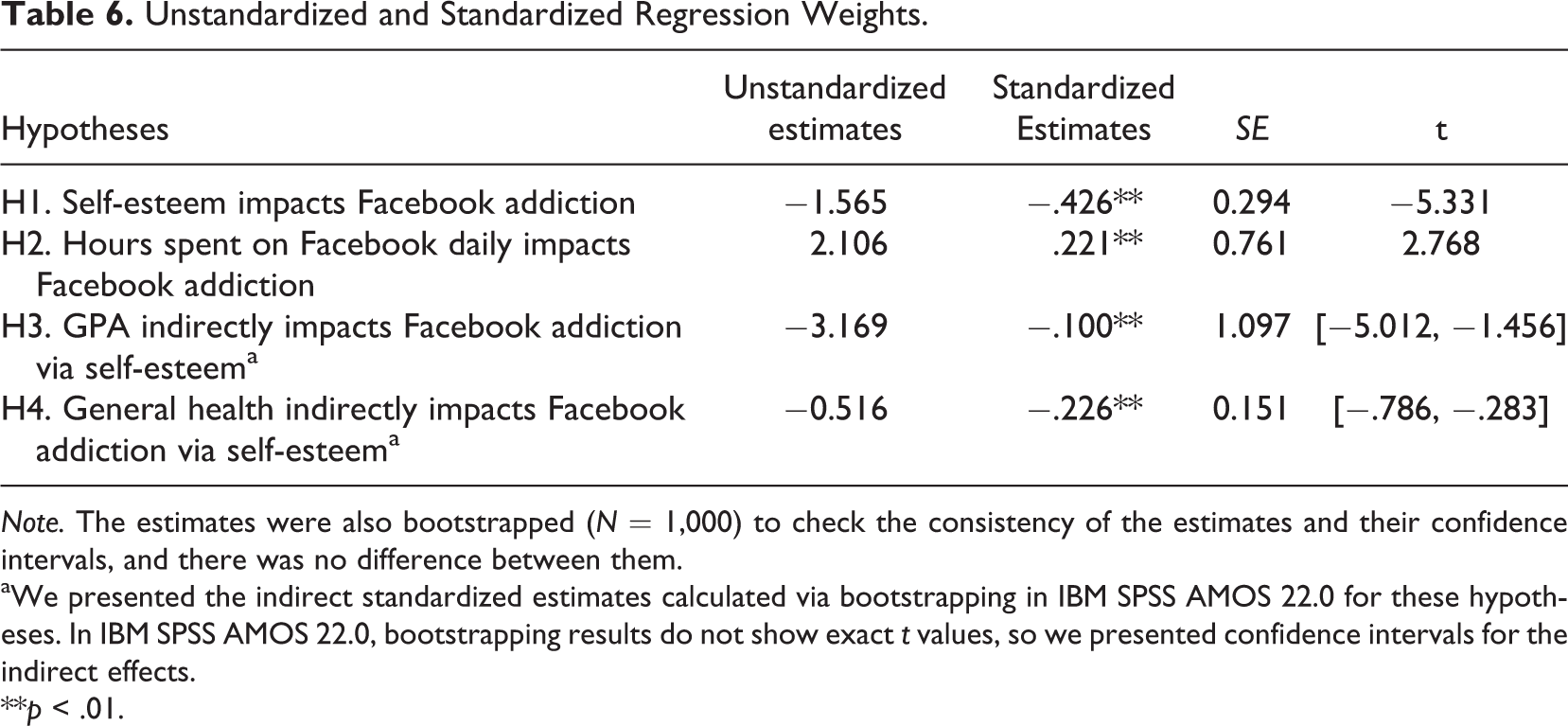
Table 6 presents the unstandardized, standardized, and critical values for significance testing.
Unstandardized and Standardized Regression Weights.
Note. The estimates were also bootstrapped (N = 1,000) to check the consistency of the estimates and their confidence intervals, and there was no difference between them.
aWe presented the indirect standardized estimates calculated via bootstrapping in IBM SPSS AMOS 22.0 for these hypotheses. In IBM SPSS AMOS 22.0, bootstrapping results do not show exact t values, so we presented confidence intervals for the indirect effects.
**p < .01.
The first hypothesis confirmed that SE impacts Facebook addiction negatively. When the SE of users are low, they are more likely to become a Facebook addict. The second hypothesis was also confirmed since Facebook active hours significantly predicted Facebook addiction, especially, positively. When people use Facebook more actively, they are more prone to become a Facebook addict.
For the third hypothesis, we applied Baron and Kenny’s (1986) mediation steps within the hypothesized model explained below: The causal variable should be significantly correlated with the outcome variable. In our case, the causal variable was GPA, and the outcome variable was Facebook addiction. The impact of GPA on Facebook addiction was significant and negative, regression weight was −6.432, β = −.204, p < .01; Step 1 was approved. The causal variable (GPA) should be significantly correlated with the mediator variable which was SE. As shown in Figure 2, GPA had a positive impact on SE, regression weight was 2.025, β = .235, p < .05. Step 2 was approved. The mediator (SE) should significantly affect the outcome variable (Facebook addiction). As found in Hypothesis 1, the higher SE there was, the less Facebook addiction was encountered, thus indicating a significant affect. Step 3 was approved. When the mediator (SE) is present, the impact of the causal variable (GPA) on the outcome variable (Facebook addiction) should be nonsignificant. To check this step, we ran the model illustrated in Figure 3. We found that the direct impact of GPA on Facebook addiction was not significant when SE was present, regression weight was −.064, β = −.112, p = 770.
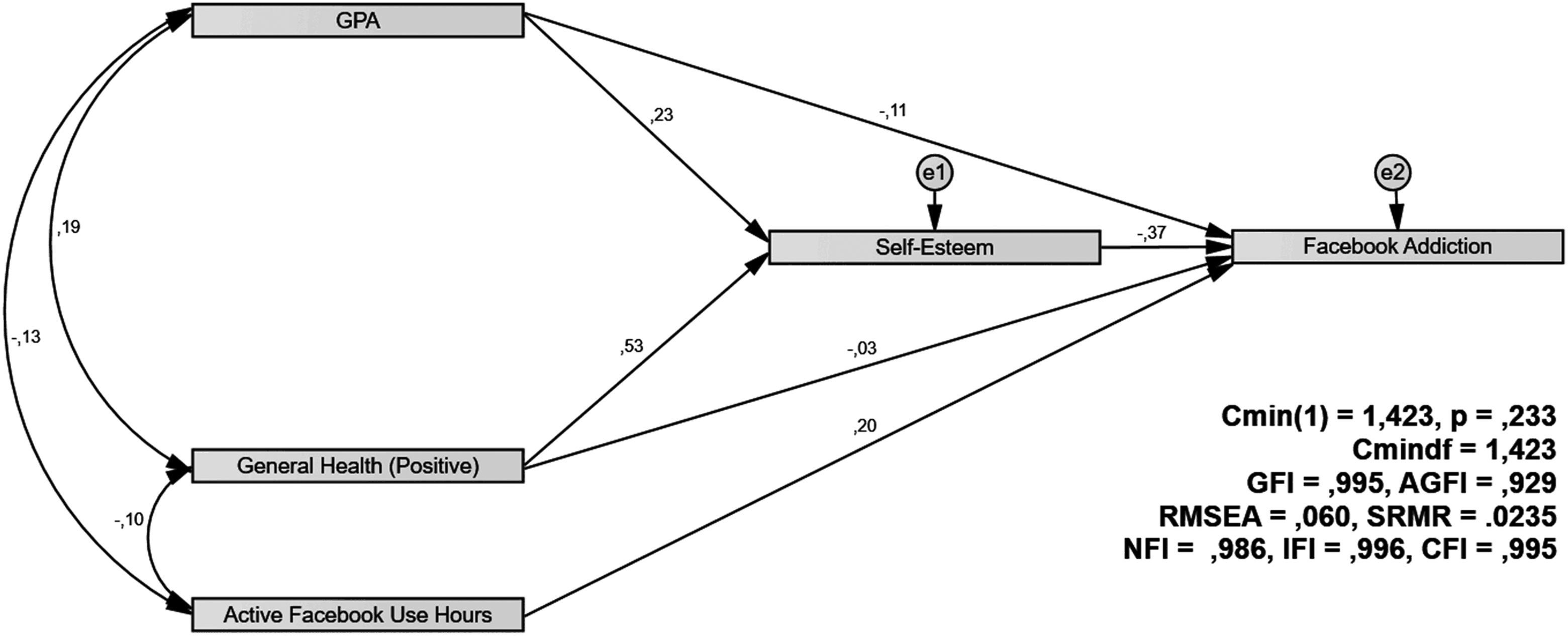
The estimated model with the direct impact of causal variables under control of the mediator.
The Baron and Kenny’s (1986) four-step approach revealed that there was a full mediation of SE on the relationship between GPA and Facebook addiction. The indirect effect of GPA on Facebook via SE was −3.169, β = −.100, p < .01. In other words, due to the indirect (mediated) effect of GPA on Facebook addiction, when GPA goes up by 1 point, Facebook addiction goes down by 3.169 points.
For the fourth hypothesis, we again applied Baron and Kenny’s (1986) mediation steps within the hypothesized model explained below: The causal variable should be significantly correlated with the outcome variable. In our case, the causal variable was general health positive and the outcome variable was Facebook addiction. The impact of GPA on Facebook addiction was significant and the negative, regression weight was −.522, β = −.230, p < .01; Step 1 was approved. The causal variable (general health positive) should be significantly correlated with the mediator variable which was SE. As shown in Figure 2, GPA had a positive impact on SE, regression weight was .330, β = .531, p < .01. Step 2 was approved. The mediator (SE) should significantly affect the outcome variable (Facebook addiction). As found in Hypothesis 1, with higher SE, there was significantly lower Facebook addiction. Step 3 was approved. When the mediator (SE) is present, the impact of the causal variable (general health positive) on the outcome variable (Facebook addiction) should be nonsignificant. To check this step, we ran the model illustrated in Figure 3. We found that the direct impact of general health positive on Facebook addiction was not significant when SE was present, regression weight was −3.548, β = −.028, p = .185.
The Baron and Kenny’s (1986) four-step approach revealed that there was a full mediation of SE on the relationship between general health positive and Facebook addiction. The indirect effect of general health positive on Facebook via SE was −.516, β = −.226, p < .01. In other words, due to the indirect (mediated) effect of general health positive on Facebook addiction, when general health positive goes up by 1 point, Facebook addiction goes down by .516 points.
Discussion and Conclusion
SE is a subjective evaluation of one’s belief in their capabilities, worth, and significance (Coopersmith, 1981). There are controversial results regarding SE and technology-related addictions; however, our study found a negative impact of SE on Facebook addiction. Our results indicate that people with low SE tend to be more addicted to Facebook. This may be the case since people with low SE may not express themselves in face-to-face communications, and they spend more time using Facebook relative to people with higher SE. On Facebook, people with low SE may have an opportunity to disguise their level of esteem by starting conversations and making friends, especially, through instant messaging as discussed before by Ehlenberg et al. (2008). This may be due to the fact that they do not feel they can cope with alternative ways of communicating and socializing with other people in their real lives, thus, for these individuals, Facebook becomes their main communication channel for initiating and continuing to socialize; however, this may lead to addiction. On the other hand, our results contradicted with the view that online environments can reduce barriers to socialization, particularly for people with low SE (Bargh et al., 2002; Ellison et al., 2007; Helliwell & Putnam, 2004). Supporting previous results regarding low SE and Facebook use association, this study did not find that frequent use of Facebook is associated with high SE claimed by Nadkarni and Hoffman (2012).
As for GPA and SE, there are different studies with results ranging from negative to positive and no effect findings about their relationship (Baumeister et al., 2003; Gordon, 1977; Hansford & Hattie, 1982; Marsh & O’Mara, 2008; Pullmann & Allik, 2008; Zare et al., 2007). Our study confirmed a positive relationship between GPA and SE, correspondingly. Since academic success is important in college, those who obtain a high GPA are appreciated by their peers and instructors, which may result in an increase in their SE. Students with high GPA may also be able to regulate their times more effectively and efficiently compared to their peers. Hence, they appear capable of readily limiting their use of social network sites when they have to complete an assignment. Their ability to self-control and regulate their use of SNSs may prevent them from becoming addicted to Facebook or other similar SNSs. Some studies suggest that extensive use of Facebook diminished students’ GPA due to the fact that they spent extensive time using it, did not sleep sufficiently, and did not manage their time effectively for studying and completing assignments (Andreassen et al., 2012; Junco, 2012; Paul, Baker, & Cochran, 2012). Therefore, such neglecting behaviors may cause lower GPAs. On the other hand, our study found a contradiction to some previous studies indicating no relationship between Facebook use and academic performance (Pasek et al., 2009; Kolek & Saunders, 2008). Given the results of our study, we take the same position suggested by Kirschner and Karspinski (2010) that there remain numerous unanswered questions related to Facebook use, addiction, and academic performance, and this issue is inconclusive and requires further research.
We found that participants’ positive perception related to their recent general health had a decreasing impact on Facebook addiction. Some of the studies regarding general health and Facebook addiction generally focused on more specific perceptions such as depression (Koç & Gülyağcı, 2013; O’Keeffe & Clarke-Pearson, 2011; Moreno et al., 2011), vitality, happiness (Uysal, Satıcı, & Akın, 2013), anxiety and insomnia (Koç & Gülyağcı, 2013), and so on. We employed a broader evaluation of one’s general health compared to constructs about health in the aforementioned studies. We found that participants who felt that they had some form of health issue, preferred to use Facebook extensively, attended by the risk of addiction. However, where excessive Facebook use is prompted by a health condition, this may trigger further health issues as well. Thus, there may be a reciprocal effect whereby health issues cause Facebook addiction, and in turn, the addiction prompts more and severe health issues.
One of the major findings of this study is emphasis on the mediation impact of SE on Facebook addiction. Hence, the study suggests that GPA and general health indirectly impacts Facebook addiction; this indirect relationship would not be worthy of being interpreted without considering SE. This relationship might occur due to the direct effect of GPA, general health, and SE on Facebook addiction indicated in previous studies. Moreover, these constructs are also positively associated with SE as indicated in some studies in the literature. Besides, the impact of general health and GPA on Facebook addiction interestingly diminishes when the SE construct is employed as examined in our model. All these interpretations are proven by the data and mediation analysis steps we employed as devised by Baron and Kenny (1986).
Facebook active use hours, seen to have a significant impact on Facebook addiction and excessive use of Facebook, was a controlling variable in the model. This study confirmed that active Facebook use hours have a relationship to Facebook addiction. While we had also collected data on weekly use and years of use, only the “daily hours of active use” variable was seen to have a significant impact. The current results remained significant, yet it was present in the model as similarly found in Mehdizadeh (2010) that people with low SE tended to spend more time on Facebook. Thus, the mediated and stand-alone impact of SE became more crucial due to the presence of Facebook active use hours. Facebook active use hours, on the other hand, has a negative association with GPA.
In our study, we preferred to examine the negative consequences of excessive use of Facebook. We found that individuals with low GPA and feeling unhealthy are expected to have low SE that may lead them to become a Facebook addict. As we dealt with the use of Facebook in general, it is recommended that in follow-up studies, the specific attributes of Facebook (instant messaging, profile, number of friends, sharing, games, etc.) could be examined by using the same model or by adding some other constructs. Some studies showed that there are positive (Gonzales & Hancock, 2011; Harter, 1999; Valkenburg, Peter, & Schouten, 2006) and negative (Mehdizadeh, 2010; Orr et al., 2009) consequences of these features. As our approach was limited to general Facebook use, future studies focusing on specific features may broaden our views, given that Facebook provides a suite of tools to aid socialization on the Internet. We demonstrated that in general terms, Facebook use had some adverse effects that should be investigated for the underlying features causing this effect.
It is clear that the mediation impact of SE on Facebook addiction should also be considered in further studies. Thus, other psychological variables like personality, self-confidence, self-efficacy, and so on may be investigated in further studies. Besides, as with GPA and general health perception variables, other variables should be investigated for their indirect impact on Facebook addiction via SE. Finally, as critical control variables, future studies should focus on more effective ways to identify Facebook experience (e.g., years of membership, using Facebook since …, etc.) and use frequency (weekly hours spent, the numbers of checking account or posting daily, active daily use hours, etc.), which may show significant relationships and explain some amount of variance related to Facebook addiction or other related constructs. For instance, Toker and Baturay (2016) have recently opened a similar discussion about the operationalization and utilization of hours of game play on game addiction. The future studies may use our “Facebook active use hours” variable to observe the associations and report the consistency of the findings. If there are promising results, it may become a steady and reliable controlling variable for the future studies in the field.
One of the limitations of this study was sampling strategy especially for generalizability. Convenience sampling cannot be supposed to be representative of the population since it is not a random sampling technique. Some other limitations were stemmed from the usage of an online survey, such as sampling issues (Wright, 2005) and self-selection due to the voluntary participation (Thompson, Surface, Martin, & Sanders, 2003). Characteristics of respondents and the rate of those who do not respond to a survey cannot be clearly identified via online surveys. Moreover, it is not possible to distinguish the respondent and nonrespondent participants because the majority of critical information about nonrespondents are not known (Guerra, 2003). These limitations may make the study sample inherently biased. However, these issues can be remedied in future studies in which random sampling techniques are performed. The current study introduced a valuable model which could be applied in future studies.
Footnotes
Authors’ Note
Both authors equally contributed to this work.
Declaration of Conflicting Interests
The authors declared no potential conflicts of interest with respect to the research, authorship, and/or publication of this article.
Funding
The authors received no financial support for the research, authorship, and/or publication of this article.