



Abstract
The present study explored the work experiences, job satisfaction, and work behaviors of Latina/o restaurant workers. A total of 10 semistructured focus group (N = 75) interviews were conducted in the Midwest and Southwest. Data were analyzed using a combination of Consensual Qualitative Research (CQR; Hill et al., 2005; Hill, Thompson, & Williams, 1997) and phenomenology approaches. Five themes emerged across the data: work-related barriers (i.e., time, language, negative perceptions of training, and managers and coworkers), work facilitators (i.e., formal training and informal training), motivation for performing tasks (i.e., recognition, concern for others, concern for job security, personal values, and tangible rewards), cultural context (i.e., perceptions of Latina/o workers), and training preferences (i.e., practice, audiovisual, comfort/discomfort with computers, and language preferences). Some of these themes have traditionally been considered industrial/organizational concerns, but they are becoming increasingly relevant for career counseling practice. Findings suggest that Latina/o workers face considerable barriers in implementing requisite work behaviors, which may impact the maintenance of employment. Recommendations for career counseling practice and research with Latina/o workers are provided.
In recent years, there has been a call for career counselors to expand their roles to include social justice advocacy and to create more inclusive research agendas that explore the career development of diverse individuals (Fouad, Gerstein, & Toporek, 2006; Hansen, 2003; Lee, 1998; Myers, Sweeney, & White, 2002). Researchers have noted the absence of theory and research regarding the career experiences of people who have limited choice or volition over their work life (Blustein, 2006; Richardson, 1996). Career counselors have been urged to move beyond intrapsychic concerns and address external factors (e.g., workplace climate) that affect individuals’ subjective experiences with work, particularly among persons of color and from low socioeconomic backgrounds (Kiselica & Robinson, 2001). Ironically, although vocational psychology has a rich history of exploring immigrants’ work lives, beginning with Frank Parsons’ pioneering work in the early 1900s (O’Brien, 2001), relatively little vocational psychology research attends to the work lives of immigrants today. Consequently, researching the experiences of immigrants participating in workplaces characterized by low pay, high physical demand, and limited chance for occupational mobility (Blustein, 2008) is well within the boundaries of the field and extends career knowledge of a group of marginalized workers that has largely been ignored in the career literature (e.g., Flores et al., 2006; Flores, Hseih, & Chiao, in press). Given significant deficits in human capital (e.g., language, education, training) among immigrants, many of whom are overrepresented among the working poor and in lower skilled jobs, career counselors may be uniquely qualified to assist in reducing barriers and increasing occupational and social mobility for immigrants through research and intervention (Fassinger, 2008; Mundra, Moellmer, & Lopez-Aqueres, 2003). However, prior to creating interventions, culture-centered research is needed to bolster the limited knowledge base regarding the experiences of immigrant workers using a variety of research approaches, particularly qualitative approaches (Fassinger, 2001). Therefore, the present study used qualitative methodology to examine the work experiences and behaviors of Latina/o immigrant restaurant workers. The study was the first component of a programmatic line of research aimed at creating a culturally relevant and sensitive work training program for Latina/o immigrants employed in restaurants. Given limited research on the work experiences of restaurant workers, particularly Latina/o employees, we first sought to understand the factors that influence their work behaviors prior to creating the training program.
A unique expectation among all food industry employees involves safe food-handling practices. Although this is an important job requirement, studies show that food service employees do not necessarily have adequate food safety knowledge or follow proper food safety practices (Green & Selman, 2005; Manning & Snider, 1993). Adequate training and adherence to food safety regulations could result in stable employment, job tenure, and improved job performance and satisfaction. In addition to obtaining knowledge of work-related factors that promote job stability, career counselors who move into work environments to provide career interventions and other forms of skill development to immigrant workers must be aware of legal requirements in the workplace. For career counselors to advocate for Latina/o workers and adequately assist them in planning and preparing for work, it is necessary to gain a better understanding of the subjective work experiences of this specific group of workers.
Latina/o Workforce Characteristics
Latina/os have the highest participation rate and are the fastest-growing segment in the US labor force. They currently account for 14.2% of the US workforce and are expected to comprise nearly 18% of the labor force in 2018 (U.S. Department of Labor, 2008b). The Latina/o workforce is comprised of both US-born (46%) and foreign-born (54%) workers (Singley, 2009); of the foreign-born, 72.6% are not citizens, and may or may not possess work documents for employment in the United States. Mexicans are the largest subgroup of Latina/o workers and account for nearly 64% of the Latina/os workforce (U.S. Department of Labor Statistics, 2008a).
Latina/o immigrants in the workforce
Latina/o immigrants have less formal education and more likely to work in unskilled jobs for lower pay than their native-born counterparts in the United States (U.S. Census Bureau, 2008). Latina/o workers, citizens and noncitizens, are younger, more likely to have lower English proficiency, and have less formal education than their Black and White counterparts. Moreover, Latina/os are more likely to work in low-paying jobs, small businesses, and contingent or nontraditional jobs (Singley, 2009; U.S. Department of Labor, 2008a). Finally, Latina/os have the lowest tenure in all industries, with only 16% reporting 10+ years with their current employer compared to Asians (21%), Blacks (23%), and Whites (26%; U.S. Census Bureau, 2008). It is important to note that these statistics represent Latina/os as a group. Although statistics were not available that further examined Latina/os workplace characteristics by generation status and socioeconomic status, these and other factors are likely to contribute to some variance in workplace characteristics among Latina/os.
Latina/os’ origins can be traced to a number of different Central and South American countries, but they generally share a common language, values, and beliefs. In the workplace, Latina/os are likely to place a high emphasis on their relationship with employers and coworkers (Falicov, 2000) and may place higher value on being treated with respect and dignity rather than on status or recognition (Falicov, 2001). A study exploring Mexican American work attitudes found that, in general, they were cooperative, productive, and had a higher sense of work ethic than Euro-Americans (Weaver, 2000). Latina/o collectivistic values, such as the emphasis on family interdependence, may also play a role in attitudes about work. For example, one study found that Latina/o hospitality industry workers who perceived that work interfered with their family life reported lower job satisfaction and lower levels of loyalty toward their employer (Namasivayam & Mount, 2004). Ignoring cultural factors associated with job satisfaction can be detrimental to both employees and employers, as job satisfaction is positively related to work performance and customer satisfaction (Schneider, White, & Paul, 1998).
Latina/os in the restaurant industry
The restaurant industry employs a significant number of immigrants in the United States, a large percentage of which are Latina/o immigrants (National Restaurant Association, 2008). Recent immigrants often settle for low-level entry jobs because of language barriers (Yakushko, Backhaus, Watson, Ngaruiya, & Gonzalez, 2008). Latina/os are more likely to be employed as cooks, wait staff assistants, and miscellaneous food workers than the national average (National Restaurant Association, 2008), and they comprise nearly 22% of food and accommodation industry jobs, and 14% of first-line supervisor positions in food preparation and service (National Restaurant Association, 2010). Within the food services, Latina/os experience long work hours, strenuous physical tasks, few opportunities for advancement, and low wages (U.S. Department of Labor, 2010a). High levels of poverty, low levels of education, and fear of job loss, particularly for undocumented workers, make Latina/os vulnerable to workplace injury, exploitation, and discrimination (Fox & Stallworth, 2005; Krieger et al., 2006; Loh & Richardson, 2004). Despite their high concentration in the service sector, we are not aware of any studies in the career development literature that have examined Latina/o workers in the restaurant industry. Thus, the current study addresses this gap by providing preliminary data from a group of Latina/o restaurant workers pertaining to their work environment and work tasks.
Motivators to Work
A common reason that Latina/o immigrants migrate to the United States is for economic opportunities (Rumbaut, 1994; Zarrugh, 2007). Weaver (2000) found that Mexican American workers were less likely than Whites to prefer jobs that gave them an important feeling of accomplishment. Additionally, this study found that Latina/os were more likely than Whites to prefer jobs that were characterized by high income, high security, and opportunities for advancement. Given limited financial resources, newly immigrated Latina/os are often motivated to acquire jobs quickly to support family in the United States or in their home country (Zarrugh, 2007). In this way, Latina/o newcomers may be more likely to view work as a means of survival as opposed to an avenue for gaining personal fulfillment (Blustein, 2008). During their transition to the United States, immigrants may be quick to take jobs without much knowledge regarding the quality of the work and without social support structures in the workplace (Fouad & Bynner, 2008). With regard to career mobility, Shinnar (2007) found that Latina/o workers were motivated to move upward in the workplace to reduce physical demands, to participate in more interesting work activities, and to receive increased pay.
Work Barriers
While many immigrants come to the United States to seek employment, they face considerable barriers in their career development and advancement that often limit the types of jobs they pursue (Yakushko et al., 2008). Latina/o immigrants may experience a demotion of occupational prestige in comparison to work in their home countries due to language difficulties and credential disqualification. Additionally, difficulties with adjustment, acculturation, unemployment, and underemployment cause immigrants significant stress and can be detrimental to their mental health (Yakushko et al., 2008). Furthermore, these workers are more likely to earn lower wages and experience higher rates of poverty and unemployment than their Black and White counterparts (Thomas-Breitfeld, 2003). By identifying individual factors, group factors and contextual factors influencing the career development of immigrants, Shinnar (2007) highlights the multilayered conceptualization that career counselors must utilize to understand their experiences in the workforce.
Latina/o workers continue to face discrimination in the workplace, with semi- and low-skilled Latina/os being especially susceptible to workplace discrimination (Hsieh & Kleiner, 2001). A qualitative study found that Latina/o immigrant workers reported inadequate compensation for scheduled work or overtime, unfair termination, being forced to work long hours, and exposure to unsafe environments (de Castro, Fujishiro, Sweitzer, & Oliva, 2006). These workers also reported pervasive discrimination and instances of verbal and sexual assault in the workplace. Another study with Latina/o immigrants in the hotel industry revealed that participants experienced limited work mobility due to limited English proficiency and limited access to information and support from managers (Shinnar, 2007). Lack of insurance coverage, limited access to retirement savings, and work-related injuries are additional barriers experienced at disproportionate rates among Latina/o workers, with Latino males experiencing the highest work-related deaths among all workers (Center for Disease Control, 2008; National Council of La Raza, 2007); these rates continue to increase for foreign-born Latina/os. Workplace deaths are attributed to language barriers, lack of training, and involvement in high-risk work (Center for Disease Control, 2008). As a result, CDC has issued calls for increased employer responsibility, translated materials from health and safety agencies, and an increased focus by researchers and health professionals on developing culturally relevant training materials for workers.
In summary, the present study builds on the recent qualitative inquiries on Latina/o immigrant workers in other sectors of the workforce (e.g., de Castro et al., 2006; Shinnar, 2007) by examining the workplace experiences of Latina/o restaurant workers in the Midwest and Southwest. Research in this area could help in the development of culturally relevant training materials for these workers and can guide career interventions aimed at improving workplace climate, work satisfaction, and performance of Latina/o food service workers.
Method
An interdisciplinary team (i.e., restaurant management, psychology, and hospitality) of researchers from two institutions collaborated in the design of this study. A qualitative research design was employed for data collection using semistructured focus group interviews. Qualitative data provides rich and detailed accounts of people’s lived experiences and has been recommended for investigating new or understudied phenomenon (Morrow, 2005; Ponterotto, 2005). The focus group interviews served as the first step of a project aimed at creating a culturally relevant food safety training intervention for Latina/os working in the restaurant industry. Semistructured focus group interviews were selected as the research technique given the specific areas of interest (i.e., behavior and experiences on the job), desire to have dialogue over best practices for intervention creation (i.e., workers discussing ideas to maximize interest in the training program), and issues of practicality (i.e., limited windows of availability of workers). Several themes emerged as the focus group transcripts were analyzed using an approach that combined phenomenological (Moustakas, 1994) and CQR (Hill et al., 1997, 2005) techniques.
Participants and Procedure
The university Institutional Research Board approved all study procedures prior to sample recruitment and data collection. A sample of convenience was recruited from two cities surrounding the two universities partnered in the project. Participants were primarily immigrants to the United States and were recruited for the study through Latina/o and immigrant-serving community organizations and by contacting restaurants directly. Participants were eligible for the study if they self-identified as “Latina/o” or “Hispanic,” currently worked in the food service industry, and were at least 18 years of age. In all 75 individuals (42 female, 33 male) who met the inclusion criteria volunteered to participate. Ages ranged from 18 to 67 with a mean of 35.02 years (SD = 13.26). Years of employment in the restaurant industry ranged from 1 to 30 with an average of 5.04 (SD = 6.65). A majority (85%) of participants reported having received food safety training. The sample was largely composed of immigrants (80%); months in the United States ranged from 3 to 738 among participants with an average of 166.45 months, or 13.85 years (SD = 141.27). Most participants were born in Mexico (72%), with the remaining participants born in the United States (20%) and other Latin American countries (8%) including Argentina, Guatemala, Venezuela, El Salvador, and South American Guiana. The sample was consistent in several ways with national statistics regarding Latina/o workers in the food preparation and serving occupations. For example, proportionally there are more foreign-born workers (9.5%) than native workers (6.7%; Pew Hispanic Center, 2010a) and foreign-born workers of Mexican descent have the largest representation in the food industry (Pew Hispanic Center, 2010b).
Focus groups
A total of 10 focus groups were conducted to explore participants’ experiences at work and with food safety. Groups were conducted in two separate geographical locations, with five taking place in a midsized city in the Midwest and five taking place in a large city in the Southwestern United States. All focus groups took place in private areas, lasted between 45 and 90 min, and were audiotaped. Informed consent was administered in English and Spanish and explained at the onset of each focus group, and participants were given $30 gift certificates as compensation for their time.
Instrument
A list of 13 focus group questions were generated by the research team based on extant literature related to health-behavior models (Janz, Champion, & Strecher, 2002) and cultural health beliefs of Latina/os (Murguía, Zea, Reisen, & Peterson, 2000). Because safe food-handling practice is a critical job component among restaurant workers, the interview questions focused on attitudes, behaviors, and aspects of the work environment that supported these job behaviors. Specific content areas addressed by interview questions included general and culture-specific health beliefs, learning styles, self-efficacy for performing food safety behaviors, and work environment characteristics. Sample questions include, “What does food have to do with illness?’ and “How are food safety practices perceived in the context of your home country or in your culture?” Interview protocols also included probes to stimulate deeper reflection by focus group participants (e.g., “Can you give a personal example?”). All questions were written in English and translated by a bilingual research team member into Spanish. The research team then solicited feedback on accuracy and clarity of translated material from a native Spanish-speaking individual unfamiliar with the study’s aims. Slight modifications to translated questions were made based on this reviewer’s feedback. Interview questions were then pilot tested with a small group of Latina/o restaurant employees, who provided additional feedback on the wording of questions. Suggestions from employees were incorporated and a final list of interview questions was produced.
Interviewers
One male, Latino, bilingual doctoral student and one female, Mexican American, bilingual doctoral student conducted focus group interviews. Each focus group leader received training and had prior experience in qualitative interviewing. Both interviewers would rate their Spanish language skills as S-5 on the Interagency Language Roundtable Scale (ILR) meaning that they possess Spanish-speaking abilities equivalent to that of an educated native speaker including a broad range of vocabulary and knowledge of relevant cultural references, idioms, and colloquialisms. In addition to administering formal informed consent, interviewers assured participants that their responses to questions were confidential, would not be relayed to employers or result in punitive action. Participants stated their preferred language during introductions; only 2 of 10 interviews were conducted in English. One Spanish-speaking individual was provided a Spanish translator as she preferred to listen to the English dialogue but contribute to the discussion in Spanish. Spanish audiotapes were submitted to a professional transcribing/translation service for translation into English. Prior to submitting all the transcripts to the service, a preliminary transcript, translated by the service, was checked for accuracy with regard to language and meaning by the bilingual Mexican American female focus group leader. The initial translation was found to be adequate and the remaining transcripts were submitted to the professional service for transcription/translation.
Data Analysis
Two analytical strategies were integrated to code and categorize the data. Specifically, perceived methodological strengths of phenomenology (Moustakas, 1994) and CQR (Hill et al., 1997, 2005) were used. While phenomenology focuses explicitly on participants’ experiences, leaving a priori hypotheses regarding coding structure to emerge more openly in initial stages of data analysis, CQR provides a more systematized method to organizing data into thematic structures. Therefore, the coding team attended to interviewees’ experiences with food safety in early data analysis and later engaged in more rigorous procedures associated with CQR to develop and organize themes. Given that focus groups were the unit of analysis, themes were generated across groups and not for each interviewee as is typical in both CQR and phenomenology. Therefore, frequency counts (Hill et al., 1997) were not generated from the final coding structure and themes reflected commonalities within and across focus groups. Using groups as the unit of analysis also altered generation of core ideas. Instead of representing themes of individual participants, core ideas generated in this study served as summaries for themes derived from each focus group. Several other characteristics of CQR, such as consensus building and validity checking remained unchanged in the current study.
Coding and themes
Two members of the research team (the bilingual Mexican American female focus group leader and an English-speaking, monolingual, White male) were responsible for developing initial codes and themes from translated transcripts. Both coders received training and had prior experience with qualitative research. The two coders discussed their biases and assumptions prior to reading focus group transcripts to increase validity of their interpretation of the data. Potential biases that emerged were bracketed before coding occurred including expectations that participants would report negative experiences with work, not feel motivated to perform food safety behaviors, not consider food safety an important issue, and experience various challenges to engaging in food safety behaviors (e.g., language fluency, lack of training, unsupportive work environments). The coders also made efforts to document emotional reactions to transcript content and temper the potential effects of personal biases as analysis progressed.
In the initial coding stages, the coders each developed a preliminary set of themes for one transcript based on patterns derived from the data. Initial themes were compared and discussed which resulted in a final list of primary themes, or domains, determined by consensus to broadly represent the data. Consistent with CQR, core ideas representing abstracts of each domain were produced to help define initial themes and guide future analyses. Categories were then developed to provide a more rich, detailed description of participants’ experiences within each domain and further organize the data. The two coders then discussed and revised domains and categories until consensus was reached on a final representation of the data. A cross-analysis consisting of each domain, core idea, and category with corresponding raw data was then developed.
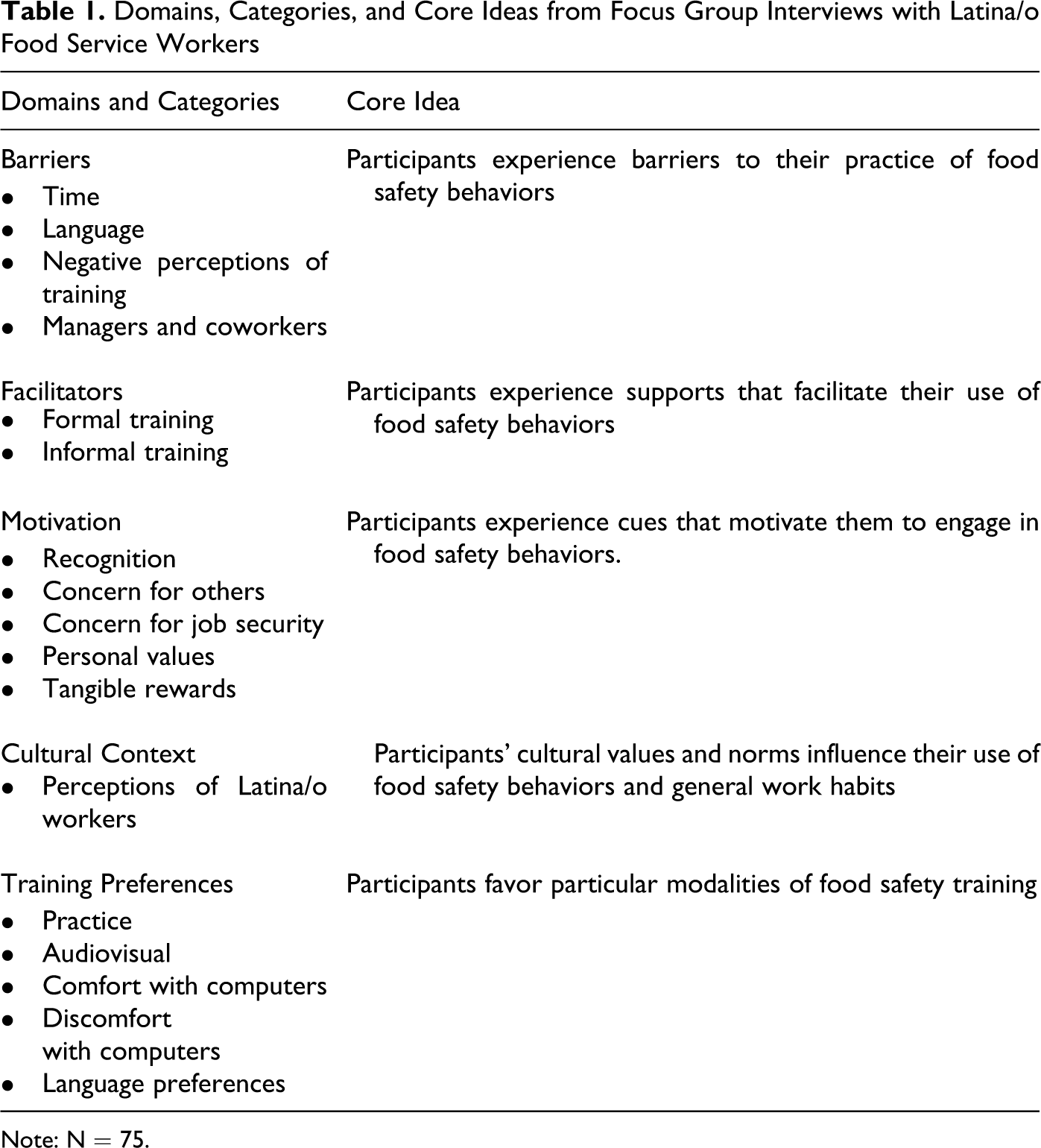
To further ensure validity and reliability of the thematic structure, an internal auditor was consulted. Specifically, a Mexican American, female faculty member with extensive knowledge regarding the Latina/o population and experience in qualitative analysis reviewed all transcripts as well as the cross-analysis and provided feedback to the primary coding team. In some instances, participants’ statements were recoded or double-coded to better reflect the content of the raw data. Additionally, the categories within one domain were restructured to provide a better representation of the data. To ensure stability of the data, the final coding structure was compared to raw data from one additional transcript that was not included in prior analyses. Because no additional themes were identified that previous coding did not capture, the coding structure was deemed to be stable. A final summary of domains, categories, and core ideas is available in Table 1 .
Domains, Categories, and Core Ideas from Focus Group Interviews with Latina/o Food Service Workers
Note: N = 75.
Results
Five domains emerged across focus group interviews. These included: barriers, facilitators, motivation, cultural context, and training preferences. A description of each domain followed by categories and examples from the raw data is provided below.
Barriers
The barriers domain encompassed participants’ experiences with obstacles to performing food safety behaviors within the workplace. Four categories representing various forms of barriers also emerged from the data. Time was indicative of participants feeling they did not have the time at work to engage in food safety practices. Specifically, several participants reported being rushed by work demands or employers to cook and prepare food. Consequently, many focus group members described inability to adhere to food safety guidelines. As one participant explained, There are times when an order comes in, like fish for example, and we want to cook it properly. But then they come and rush us and want it faster. When they come and pressure you, you end up sending it raw in the middle.
All of us speak Spanish, so if you’re working in a restaurant where there are just Mexicans, everybody is going to be speaking Spanish. If you are working in an American restaurant and you don’t know how to speak English, then it becomes more difficult. It’s hard to be able to understand what someone says to you, “Do this like this.” Then you wonder what the person just told you. What did they tell you?
Focus group participants also described negative perceptions of training as decreasing their likelihood of engaging in food safety practices. Many described existing training videos and lectures as failing to keep their attention and ineffective in enhancing their motivation to engage in food safety behaviors. Others characterized the training they received as somewhat convoluted. One participant shared, “When you get the health card [food safety training card], you have to watch a movie. But it’s long and you want to fall asleep.” Similarly, another participant explained, “Sometimes I’ll go in and out of a training session without having understood a thing.” Within the final barriers category, participants described managers and coworkers as potential barriers to their use of food safety behaviors. Several focus group members explained the importance of developing friendly, personal relationships (i.e., personalismo) with their managers, stating they believed this would lead to enhanced work performance. Additionally, coworkers were identified as potential sources of modeling with regard to food safety behaviors. One participant shared her perception of the importance of managers stating, “I think that the managers need to be friendlier with us. When you build rapport with them, you feel more at ease and there are fewer problems. It’s all on the managers.” Another participant described the effect of coworkers on their use of food safety behaviors, explaining, “And sometimes if someone doesn’t comply, then the others won’t comply either. It is something contagious.”
Facilitators
In addition to perceived barriers, participants shared their experiences with factors they considered helpful or facilitative of their use of food safety behaviors in the workplace. The first category in this domain, formal training, encompassed what participants described as positive experiences with training provided by their employer or other agencies. Contrary to some participants, other focus group members described formal trainings as helpful and specifically cited training manuals and other informational resources as facilitators of their personal food safety practices. As one participant shared, “Well, it’s [the training] four hours long. So you learn something whether you want to or not. But truth be told, it’s very well designed.” Another participant described how formal training had been helpful, stating that, “Almost all restaurants have regulations and manuals. The manuals have also helped; you can always look up any information: when to wear gloves, or that vegetables and meat and bread have to be stored separately.”
Participants also described informal training as promoting their use of food safety behaviors. Experiences included in this category reflected learning gained through informal means such as observation of coworkers or learning through experience. One participant demonstrated this theme, sharing, “It was informal. I learned more by observing than by the training we received that was not short.” Another participant stated, “Most of my training has been through experience.”
Motivation
Participants described several different forms of motivation that promoted their use of food safety behaviors. The first type of motivation, recognition, was indicative of participants’ assertion that they were more likely to engage in food safety behaviors when receiving praise, or being noticed in a positive way for their work. One participant stated, If you notice people when they do something good, instead of just marking them since you see them, why not when you see that they do right be like, “Oh you did good.” Let them know that you appreciate their help.
The second form of motivation participants described was concern for others. Specifically, focus group members expressed concern that their neglect of food safety behaviors might lead to customers becoming ill. One participant demonstrated their concern, saying, “So this is what I think, ‘If I am doing this, I have to do it right.’ I don’t want people to get sick. It might be me tomorrow getting sick if I am responsible.” Participants also described concern for job security as a source of motivation for them to follow food safety procedures at work. One focus group member stated they were motivated to practice food safety at work because, “It’s also the safety of your job and your family.” Another participant explained, “The biggest difference is that as a Hispanic you don’t want to lose your job, you don’t want to be looking for some other work and an American doesn’t seem to care.”
Another category, personal values, included participants’ descriptions of values such as following rules and treating others how one would want to be treated as motivating them to practice food safety. One participant shared that, “And of course you follow these rules, because I want to be treated the same when I’m eating out.” The final category in the motivation domain, tangible rewards, encompassed participants’ assertion that providing better wages and implementing point systems at work might increase employees’ use of food safety behaviors. One participant stated: For real, if they paid fast food [workers] better it would probably—you get what you pay for. If you have lousy wages, then people are not going to tend to pay attention to their stuff, but if you work at somewhere that pays you what you’re worth, then you’re going to provide a quality, good product cause you want to be proud of that cause you get paid for that. Like for the waitress it’s like $2.70 an hour, $2.75. That’s horrible.”
Cultural Context
The cultural context domain encompassed participants’ reflections and perceptions of how cultural values and norms contributed to their work behaviors. Within this domain, one category, perceptions of Latina/o workers, emerged. This category referred to participants’ perception that culture-specific values influenced their work habits. As one participant explained, “I think that is why Latinos are a majority in this industry is because it requires for people to work long hours, and to be attentive to the detail.” Another participant shared, “I think the Hispanic community has big potential. I know most of them work hard; they show up at work on time, they don’t miss days of work.” Several other participants made comparisons between Latina/o and “American” workers, such as, “Hispanic workers are sticklers for the rules. Not like their American co-workers and Hispanics are very good at following those rules even if the home country didn’t have them.” In general, participants’ connected strong work ethic to Latina/o cultural values and believed that Latina/o employees are hard workers who abide by work rules and regulations.
Training Preferences
The training preferences domain included participants’ descriptions of their preferred food safety training modalities. A number of participants stated that practice had been or would be a helpful technique in their food safety training. Specifically, hands-on learning and practical methods of presenting information were described as effective means of promoting food safety behavior. One participant stated, “I think hands on. You’re going to take in more and you’re going to pay attention more to what you are doing if you’re doing hands on than by watching a video.” Other participants suggested, “Doing it and receiving feedback: you’re doing it and there’s someone behind you telling you, hey, you’re doing OK but … ” and “That’s what helps the most. Practice.”
Focus group participants also stated that audiovisual modalities such as signs and videos had been or would be helpful for food safety training. Several focus group members suggested that visual learning might aid in training comprehension given language barriers while others stated that having an individual serving as a model of appropriate food safety behavior would be helpful. As one participant shared:
The best way to learn for us Latinos in this industry is visually. That would be first, because not all of us can speak English. So the best way would be visually. You can play a video and say, “See, you have to do this and this.” Especially when it’s about the hygiene and the rules—I think it’s better to play a video about that.
Additional categories in the training preferences addressed the use of technology in food safety training and whether this would be compatible with employee learning preferences and familiarity with technology. One category included comfort with computers for participants who expressed that they and others would be able to use computer technology in their training, while another category was labeled discomfort with computers for participants who shared that they or others would not be able to use computers in training. One participant who expressed comfort with computers stated, “I think that the idea of the computer would actually work. That way they would get the visual insight, and people would also learn a little bit more about computers.” In contrast, other participants explained, “But the people that come here from small towns or from a small ranch—I mean, they are not really prepared for a computer. I don’t think so” and, “I was just going to say how like older people are not as comfortable [with computers].”
The final training preferences category was language preferences, or the favored language in which participants stated they would like to receive their training. Many participants described the need to have access to training materials in English and Spanish as well as bilingual staff to conduct food safety trainings. One participant said:
I think that it should be in both languages. That way we can grasp things better. For example, if someone gets there and there is no one there who speaks English and that person wants to order food and you don’t know how to speak any English, then you won’t know what they are ordering.
Discussion
Despite the strong presence of Latina/o employees in the restaurant industry and their projected increase in the labor force at large, their work experiences have not been extensively studied in the career development literature. This study investigated Latina/o workers’ experiences related to an important job requirement among restaurant employees—safe food-handling practices. Using an analytic strategy that integrated phenomenology (Moustakas, 1994) and CQR (Hill et al., 1997, 2005), findings revealed 5 domains and 17 categories to typify the data. Themes observed across focus group interview data indicated that multiple factors influenced the food safety practices of workers in this study.
Whereas prior studies have documented the relations between work environments and mental health among Latina/o workers (Grzywacz et al., 2007), results from this study further contextualize environmental factors that influence work behaviors. A number of participants identified work pressures as interfering in their use of food safety behaviors. Specifically, feeling rushed for time at work and quality of relationships with coworkers were mentioned in several of the focus groups as playing a role in the occurrence of food safety practices. These findings support prior theoretical literature suggesting that interpersonal relationships may play an important role in Latina/os’ work satisfaction and performance (Falicov, 2000, 2001). Career counselors working with Latina/o clients may note the impact of personal relationships in their work performance and career satisfaction.
Factors at the individual-level also appeared to impact participants’ reports of engaging in food safety behaviors. Various forms of motivation, such as receiving recognition, concern for others (i.e., customers), job security, and personal values all seemed to promote awareness and use of food safety procedures at work. These findings lend support to theoretical assertions that motivation is a powerful predictor of behavior change (Miller & Rollnick, 2002). If not already in place, the implementation of employee reward programs that recognize Latina/o workers’ job performance could be suggested by career practitioners who advocate for workers in the workplace. Furthermore, because participants identified job security as a salient motivator, career counselors need to link work behaviors specific to the restaurant industry with job tenure with those Latina/o clients with whom they work. Educating Latina/o workers about the industry responsibilities and practices (and consequences when employees do not follow regulated standards) that may be specific to the United States is another way that career counselors can prepare these workers for job success.
While some participants voiced displeasure with food safety training provided by their employers, others indicated satisfaction. Some participants suggested that a great deal of their training was informal, or received vicariously through observation and via personal experience. A majority of participants indicated having received some form of training in food safety, yet, approximately 15% reported not receiving training. Although it has been suggested that undocumented status may relate to insufficient training and supervision within the workplace (Center for Disease Control, 2008), given the aim and scope of the present study, we were unable to determine how food safety practices may have varied between these groups of respondents. However, a possible remedy is to ensure that job training materials are tailored within the cultural context of employees. In addition to discussing various sources of previous training, participants verbalized their preferred modalities for future training in food safety. Supporting previous research on the learning styles of Latina/os (Park, 2002), hands-on and visual learning appeared to be popular among participants. Attention to language (i.e., English and Spanish) was also strongly encouraged by participants, supporting recommendations that training for the Latina/o workforce include attention to language ability and preferences (Center for Disease Control, 2008). We believe that employers should also bear some responsibility in ensuring that supervisors and managers receive cultural training and are encouraged to develop basic language skills in the languages represented among the lower-level employees that they supervise. Several participants also voiced their perception that Latina/o workers may differ from their “American” counterparts in their willingness to work hard and follow rules of food safety. A previous study found that Latina/o participants voiced frustration with perceived discriminatory treatment from employers (Shinnar, 2007); this, coupled with our participants’ perceptions of different work habits exhibited across groups of coworkers point to disparities in the work setting that can be addressed by career counselors with these workers. These findings add unique information to the literature concerning workplace relations and climate between Latina/o and White employees.
Practical Implications for Career Counseling
As evidenced by the high number of employed Latina/os in the restaurant industry, it is clear that this group of workers warrants specific focus and attention on their career development and work experiences. Career counselors’ knowledge of the on-the-job experiences of Latina/os is critical to helping these clients thrive and succeed in the workplace by developing the skills necessary for specific work environments, to deal effectively with perceived disparities at work, and to help maintain employment in areas that they seek work. The following recommendations are suggested based on the results of this study with the understanding that collaboration and consultation with restaurant managers is critical to their success.
First, career counselors should consider the work environment in relation the client’s cultural values and familiarity with the United States. Brown (2002) posits that “job tenure will partially result of the match between the cultural and work values of the worker, supervisors, and colleagues” (p. 53). Thus, educating Latina/o newcomers about the culture of the US workplace can help employees better adjust to their workplace expectations. Informing clients of formal expectations (i.e., trainings and certification) and informal expectations (i.e., maintaining a quick pace during peak hours) can help decrease the initial learning curve and promote job maintenance. Further, informing clients of their employee rights such as mandatory breaks and limits of overtime work will allow workers to identify and protect themselves from work exploitation.
Second, career counselors should consider work environments and interpersonal relationships at work as related to work performance, satisfaction, and maintenance. Workers in the present study noted that motivation for adherence to work expectations could be reinforced by positive relationships between employees and managers. Career counselors should explore previous work experiences of Latina/o newcomers as well as their experiences with adjusting to the interpersonal interactions in the US workplace. Further, findings from this study showed that workers overwhelmingly prefer interactive audio/visual learning. Given the lower English proficiency and educational attainment of Latina/o restaurant workers, it is imperative that they are able to access training that meets their needs. Career counselors can work with clients to discuss strategies for overcoming language barriers during training (i.e., requesting written materials to review) and in the workplace (i.e., asking for another coworker to model desired behaviors).
Finally, career counselors can act as agents of change for Latina/o workers by advocating for structural changes in the workplace. For those career counselors who seek to incorporate advocacy into their work, several approaches are suggested based on the findings of this study. For instance, career counselors can partner with local restaurant associations, immigrant serving organizations, or cultural centers to provide job placement guidance for recent Latina/o immigrants. Career counselors could also facilitate workshops with restaurant companies who draw immigrant labor to discuss the motivators and barriers that affect their employee’s behavior on the job and provide materials that outline general characteristics of the Latina/o population including cultural values, immigration histories, and demographic information (Zanner & Stevens, 2001)
Counselors can also promote the benefits of language programs for all employees—English classes for employees whose first language was not English and Spanish classes for native employees—to improve communication in the workplace. Career counselors can further advocate for culturally sensitive training approaches that go beyond having materials accessible in Spanish but also incorporate knowledge about cultural values and dynamics that influence the learning process.
Limitations
Some limitations should be noted for this study. As previously discussed, the Latina/o population is not a heterogeneous population and therefore within group variances are important to consider. The sample in this study was primarily composed of immigrant workers of Mexican descent; therefore, caution should be used when generalizing findings to Latina/os who are not immigrants and to other Latina/o ethnicities. Future research might explore the workplace experiences of Latin/o immigrants in different regions of the United States. Next, it should be noted that although researchers employed various strategies to protect participant anonymity, some participants may still have felt apprehensive about sharing their experiences with others in a focus group format and thus their responses may not adequately portray their true difficulties. Lastly, in a few instances managers assisted with recruitment by informing their employees of the study and allowing some workers to participate during lunch hours, it is possible that the sample represents workplaces that are more flexible and open to receiving feedback.
Future Research
It is through research and advocacy that “[career] counselors can help people become empowered so they can challenge systemic barriers and seize new educational, career, or personal-social opportunities” (Lee, 1998, p. 9). Given the findings from the present study, future research is warranted to capture the experiences of Latina/o workers in other food industry sectors outside of restaurants. For instance, the food packaging and processing industry employs about 34% of the total Latina/o workforce (U.S. Department of Labor, 2010b). Future studies should focus on incorporating findings from this qualitative study and other exploratory studies (de Castro et al., 2006; Namasivayam & Mount, 2004; Shinnar, 2007) into existing theories or in the creation of new theoretical models. Furthermore, given the current study’s largely Mexican immigrant sample, exploration of the work experiences of workers in other regions (e.g., Northeast region with more Dominican, Cuban, and Columbian representation), Latina/o groups (e.g., Puerto Ricans with higher English proficiency), and statuses (i.e., undocumented workers) may yield different results and additional needs for these populations. Additionally, given the studies’ findings regarding coworkers and managers acting as barriers for Latina/o employees’ work performance, future research may investigate how perceptions of workplace climate are related to general workplace productivity, job maintenance, and advancement. Finally, there is an increased need to engage in and support interdisciplinary research. The interdisciplinary nature of the research team was critical to addressing the research questions in the present study adequately. Researchers are encouraged to invite colleagues from nonpsychology fields to enhance the scope of their research.
Footnotes
The author(s) declared no potential conflicts of interest with respect to the authorship and/or publication of this article.
The author(s) disclosed receipt of the following financial support for the research and/or authorship of this article: Grant #2007-01913 from the U.S. Department of Agriculture.