



Abstract
This study explores the relationships between vocational interests and career maturity in the context of China. We tentatively hypothesize that realistic, conventional, and artistic interests have negative linear relationships with career maturity, whereas investigative, social, and enterprising interests have positive but curvilinear relationships with career maturity. Analyses of the data collected from 5,474 participants provide support for most of the hypotheses. Specifically, the results demonstrate negative relationships of realistic and conventional interests with career maturity, a U-shaped relationship of artistic interest with career maturity, and concave upward curve relationships of investigative, social, and enterprising interests with career maturity. These findings add to the literature on vocational interests and provide practical suggestions for individuals and career counseling practitioners.
Introduction
Career maturity reflects an individual’s readiness to make sound career decisions and perform appropriate career tasks (Savickas, 1999). In Asian context, researchers have shown that the career maturity construct consists of five dimensions (Lee, 2001). Specifically, it assesses decisiveness—the extent of firmness about one’s preferred orientation toward career, preparation—the degree of understanding and planning of one’s career choice, independence—the degree of one’s independent career decision-making, goal orientation—the degree to which one prefers self-improvement through one’s career, and confidence—the degree of one’s faith and sureness in the chosen career. Prior studies suggest that individuals with high career maturity, compared to those of low career maturity, are likely to have high levels of career certainty and decision-making self-efficacy (e.g., Sadeghi, Baghban, Bahrami, Ahmadi, & Creed, 2011), succeed in further education, and report subjective career success (e.g., Hirschi, 2010; Patton, Creed, & Muller, 2002). Given this positive side of career maturity, much attention has been paid to factors accounting for career maturity. As indicated in the literature, individuals’ personality traits, self-efficacy, and demographic characteristics (e.g., age and gender) are related to career maturity (e.g., Creed & Patton, 2003; Rogers, Creed, & Glendon, 2008; Tokar, Fischer, & Subich, 1998; Yon, Choi, & Goh, 2013).
However, relatively less effort has been given to the associations between individuals’ vocational interests and career maturity. As a crucial construct in career development (Betsworth & Fouad, 1997; Hirschi, 2010), vocational interests might stimulate various aspects of individuals’ career maturity as “interests pull individuals toward certain activities and influence which behavioral tendencies and skills they develop” (Almeida, Ahmetoglu, & Chamorro-Premuzic, 2014, p. 104). Although interests and career maturity seem logically connected to each other, Hartung’s (1997) study showed that not all types of vocational interests were significantly correlated with career maturity and call for more investigations to further explore this relationship.
According to self-determination theory (Ryan & Deci, 2000), interest in a task or activity motivates individuals to do the task or activity actively and the motivation process is contingent on some environmental factors. This theory suggests that individuals who are interested in a certain type of vocational activities want to engage in the activities related to their interested vocations, but whether they can do as they want varies with contextual factors. This may be a particular case in China. China has experienced great societal changes since its Open Door policy in the late 1970s. Before the policy, factory workers and farmers were of high social status (Bian, 1996). However, after that policy, entrepreneurial and managerial occupations gained more respect and being preferred by the society (Gao, 2005). With such changes, individuals’ action tendencies arising from their vocational interests may not equally explain career maturity. Therefore, in the current study, we attempt to explore the associations between vocational interests and career maturity in Chinese context.
Our research could make the following contributions. First, focusing on the Chinese context, we tentatively explore the relationships between vocational interests and career maturity. This exploration adds to the literature of career maturity by validating vocational interests as a possible explanation of why some individuals possess high career maturity while others have low career maturity. Second, by examining vocational interest across its six types, our research is able to explore whether the six types of interests have equal or differential associations with career maturity. This exploration may provide some guidelines for career counselors when they face clients with different types and levels of career interests.
Vocational Interests
Holland’s model of vocational interests (1985) has long been recognized as one of the most prevalent models used to describe individuals’ vocational orientations in the field of vocational psychology (Tracey, Wille, Durr, & De Fruyt, 2014). In this study, we adopt this model for its classification of vocational interests. The Holland model categorizes vocational interests into six different types. They are realistic interest (tendency for practical and mechanical tasks), investigative interest (tendency for abstract thinking and logical deductions to find out solutions), artistic interest (tendency for activities that can express individuals’ inner emotions and feelings through various ways), social interest (tendency for activities that provide many opportunities to interact with others), enterprising interest (tendency for business and managerial activities including planning, organizing, leading, and controlling), and conventional interest (tendency for work activities such as following instructions and guidelines to prepare outputs). Holland’s six-factor model of vocational interests has received substantial empirical support in countries both in the west (e.g., Rounds & Tracey, 1996; Savickas, 1999) and in the east (e.g., Khan & Alvi, 1990; Law, Wong, & Leong, 2001; Wong & Wong, 2006).
Holland’s model of vocational interests suggests that individuals with a particular career interest tend to find and feel comfortable in the work environment that matches their interest (Kantamneni, 2014; Law et al., 2001). For example, individuals with strong realistic interest tend to seek environments characterized with physical involvement, whereas individuals with strong investigative interest tend to seek environments involving activities like research-oriented tasks and problem-solving. No matter what vocational interest individuals possess, if they are strongly interested in an occupation, they are more likely to engage in related activities (Almeida et al., 2014) so as to get themselves ready for their ultimate entry into vocations matching their interests. In line with Holland’s model, empirical studies have shown positive relationships between the six types of vocational interests and occupation consideration (Lent, Brown, Nota, & Soresic, 2003). Hartung’s (1997) research indicated that while investigative, social, and enterprising interests are positively correlated with most of the dimensions of career maturity, realistic interest has no significant relationship with any dimension and artistic and conventional interests have significant associations with only one or two dimensions of career maturity. In his discussion of the results, Hartung speculated that realistic interest may inhibit career maturity because realistic individuals may focus too much on realistic matters to learn necessary principles of career decision-making. We think that the relationships between vocational interests and career maturity may not be that simple since self-determination theory (Ryan & Deci, 2000) suggests that the pulling power of interests can be altered by environmental factors.
Hypotheses Development
Self-determination theory (Ryan & Deci, 2000) posits that individuals are motivated to perform the task or activity they are interested in. This theory further states that individuals’ motivation and actions resulting from their interest may be facilitated or undermined under some circumstances. One possibility is a situation wherein the individuals feel or do not feel recognized by others. For example, the motivation of children working on an interesting task would diminish when an adult was present but did not provide any response to their initiated task (Anderson, Manoogian, & Reznick, 1976). The major tenets of this theory have received empirical support (Ryan & Deci, 2006). This theory provides a theoretical lens for us to explore the associations of vocational interests with career maturity in the context of China.
Following the self-determination theory, individuals with high interest in a particular type of vocational activities are more likely to pay attention to and engage in activities related to those vocations. This tendency of actions, however, may be attenuated or accentuated by contingencies. In China, parents expect their children to choose investigative, social, and enterprising jobs more than realistic, conventional, and artistic ones (Hon & Leung, 2011) because the former is more prestigious than the latter (Gao, 2005). In addition, individuals’ career consideration should fulfill family expectations and bring honor to their families (Tang, 2002, 2009) rather than consider their own needs and interests only. These constraints imposed by Chinese families and society may serve as environmental factors that hinder or facilitate individuals’ actions triggered by their vocational interests to engage in career maturity development.
For those who are interested in realistic, conventional, and artistic jobs, they may face a dilemma. On the one hand, they are pulled to develop their career maturity by acting on their interests. On the other hand, they wrestle with a commitment to meeting their parents’ expectations, and if they violate the expectations, they would be condemned unfilial children. Research has suggested that, when individuals are in a dilemma, their actions may decline (e.g., Shih & Chen, 2010). Thus, the dilemma that is probably encountered by realistic, conventional, and artistic individuals would impede the development of their career maturity such as putting in more efforts for preparation, developing career goals based on the information of the chosen vocation, and being confident and determined that the right choice could be made. Given these considerations, it seems possible to propose that conventional, realistic, and artistic interests are negatively associated with career maturity. Therefore, we hypothesize that:
In contrast, those who are interested in investigative, social, and enterprising jobs may not encounter the problem discussed above. These jobs enjoy high levels of prestige in the society (Gao, 2005) and meet parental expectations (Hon & Leung, 2011). When individuals pursue these vocations, they can be easily recognized and endorsed such that their actions stimulated by vocational interests are more likely to be continuous rather than interrupted. Therefore, these individuals’ career maturity is likely to be positively associated with their career interests. In addition to this simple positive relationship, there is a possibility that such relationship becomes curvilinear. As said earlier, investigative, social, and enterprising jobs are in the range of parental expectations. Given this congruence between individuals’ interested jobs and parental expectations, individuals are more likely to receive financial and emotional support from their parents when engaging in activities related to these jobs. Having a variety of support from their parents, these individuals may feel more energized to move toward their interested vocational activities. Indeed, empirical evidence has suggested that parental support is a very important facilitator of individual motivation and performance (Song, Bong, Lee, & Kim, 2015). That being said, the motivations and actions of investigative, social, and enterprising individuals tend to be reinforced and accelerated as their job interests go up. All these seem to suggest the associations of investigative, social, and enterprising interests with career maturity are likely to be curvilinear. Therefore, we hypothesize that:
Method
Participants
The participants consisted of 5,474 young people who sought career-related services at a government agency in Hong Kong within a 6-month period. This government agency provides free career counseling services to young citizens aged from 15 to 29. Young people can choose to complete various self-assessment instruments, make appointment to talk to career counselors, enroll in various training courses, and have access to job openings posted by employers in this counseling center. These participants chose to complete the assessment instruments containing variables that are relevant to this study. Average age of the participants is 19.35 (standard deviation = 3.56). Fifty-six percent of the participants are male.
Measures
Variables are measured with established scales as described below.
Career maturity
We adopted a Chinese version modified from Lee’s (2001) 50 items to measure career maturity (Liu, Chen, Wong & Peng, 2014). The reliability of this scale in prior studies using Chinese samples was above .70 (Liu, Chen, et al., 2014; Liu, Peng, & Wong, 2014). These studies also demonstrated that this scale was positively correlated with emotional intelligence and negatively correlated with neuroticism, partly demonstrating criterion validity. It contains five dimensions including decisiveness, preparation, independence, goal orientation, and confidence. Sample items include “In order to obtain the occupation I want, I need to plan ahead” and “I have definitely decided on an occupation.” Participants were asked to indicate the degree to which they agreed with each item (1 = strongly disagree to 5 = strongly agree). The coefficient α value is .88.
Vocational interests
We used Wong and Wong’s (2006) career interest assessment items to measure the participants’ levels of vocational interests. This measure was originally developed for the Hong Kong government agency and has been consistently adopted by this agency to assess vocational interests and provide career counseling services for young people. This scale contained 72 items describing six types of vocational activities (realistic, investigative, artistic, social, enterprising, and conventional). Wong, Wong, and Peng (2011) demonstrated the reliability and validity of this scale in Chinese samples. The reliabilities for the six types of vocational interests were very close to or larger than .70. Regarding the validity, realistic, conventional, and investigative interests were found to be negatively correlated with extroversion whereas social, enterprising, and artistic interests were positively correlated with extroversion. The sample item for realistic interest included “learning to install and fix computers.” The sample item for investigative interest included “conducting scientific experiments.” The sample item for artistic interest included “playing music instruments like piano or guitar.” The sample item for social interest included “making new friends.” The sample item for enterprising interest included “running a toys manufacturing factory.” The sample item for conventional interest included “being a clerk in a public institution.” Participants were asked to rate each item by indicating how much they like the activity described (1 = strongly dislike to 4 = strongly like). The coefficient α values for the six types of vocational interest are .80, .90, .81, .84, .84, and .69, respectively.
Personality
The adjective scale developed by McCrae and Costa (1987) was used to measure the Big Five personality dimensions, namely, conscientiousness, extroversion, openness to new experiences, agreeableness, and emotional stability. Personality was included as a control variable partly because it related to career maturity (Lundberg, Osbome, & Miner, 1997) and partly because controlling for it can help to demonstrate the unique explanations of vocational interests in accounting for career maturity. We did back translation (Brislin, 1970) to ensure that there were no semantic differences between the original English measurement and the translated Chinese version. This scale has been used in Chinese samples (e.g., Liu, Chen, et al., 2014; Wong & Wong, 2006), with reliability being close to or higher than .70. This scale was also found to have acceptable validity in those prior studies. Liu, Chen, et al. (2014) found that the five dimensions were positively or negatively correlated with career maturity. Wong and Wong (2006) reported that openness to new experiences was positively correlated with artistic vocational interest, and agreeableness was positively correlated with social vocational interest. In our current research, the coefficient α values for the five personality dimensions are .72, .79, .70, .76, and .73, respectively.
Control variables
We controlled for participant age and gender because previous research suggests that they are related to career maturity (e.g., Creed & Patton, 2003; Rogers et al., 2008; Yon et al., 2013). Age was measured by the reported number of years. Gender was coded as dummy variable, with 0 = male and 1 = female.
Data Analyses
According to Aiken and West (1991), there are five forms of curvilinear relationships. When a curvilinear relationship is tested, both squared and nonsquared terms of the focused independent variable should be included in the regression model (illustrated below). The focused independent variable should be centered in order to “facilitate interpretation of the regression coefficients” (Aiken & West, 1991, p. 63).

Given that vocational interest was centered, a predominantly positive, concave upward curve relationship between vocational interest and career maturity is present if both β2 and β3 are positive (see Aiken & West, 1991, p. 66). A predominantly positive, concave downward curve is present if β2 is positive and β3 is negative. A predominantly negative, concave downward curve is present if both β2 and β3 are negative. A U-shaped relationship is present if β2 is nonsignificant and β3 is positive. An inverted U-shaped relationship is present if β2 is nonsignificant and β3 is negative. Based on these principles, we examine our hypothesized curvilinear relationships. We also use the above equation to test our hypothesized linear relationships and whether or not curvilinear relationships are there. Furthermore, we tested our hypotheses in one single regression with all six types of vocational interests, so that the relationship of each interest domain controlling for other interest domains can be examined.
Results
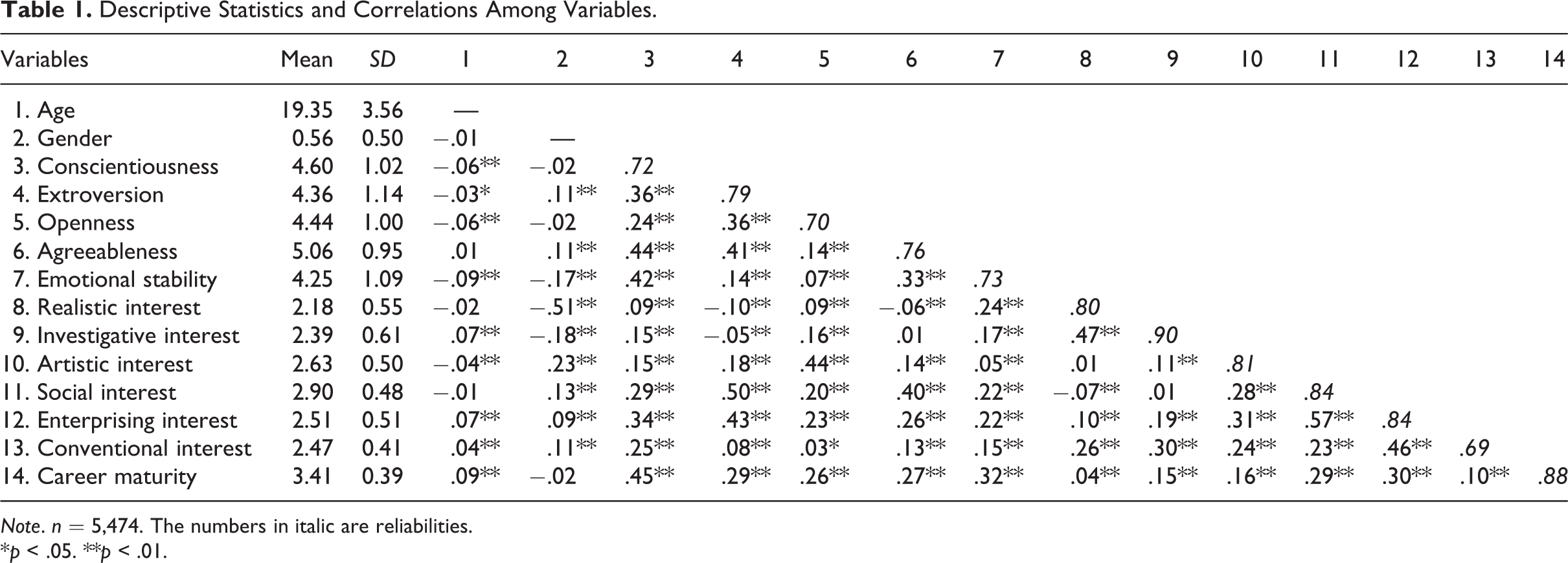
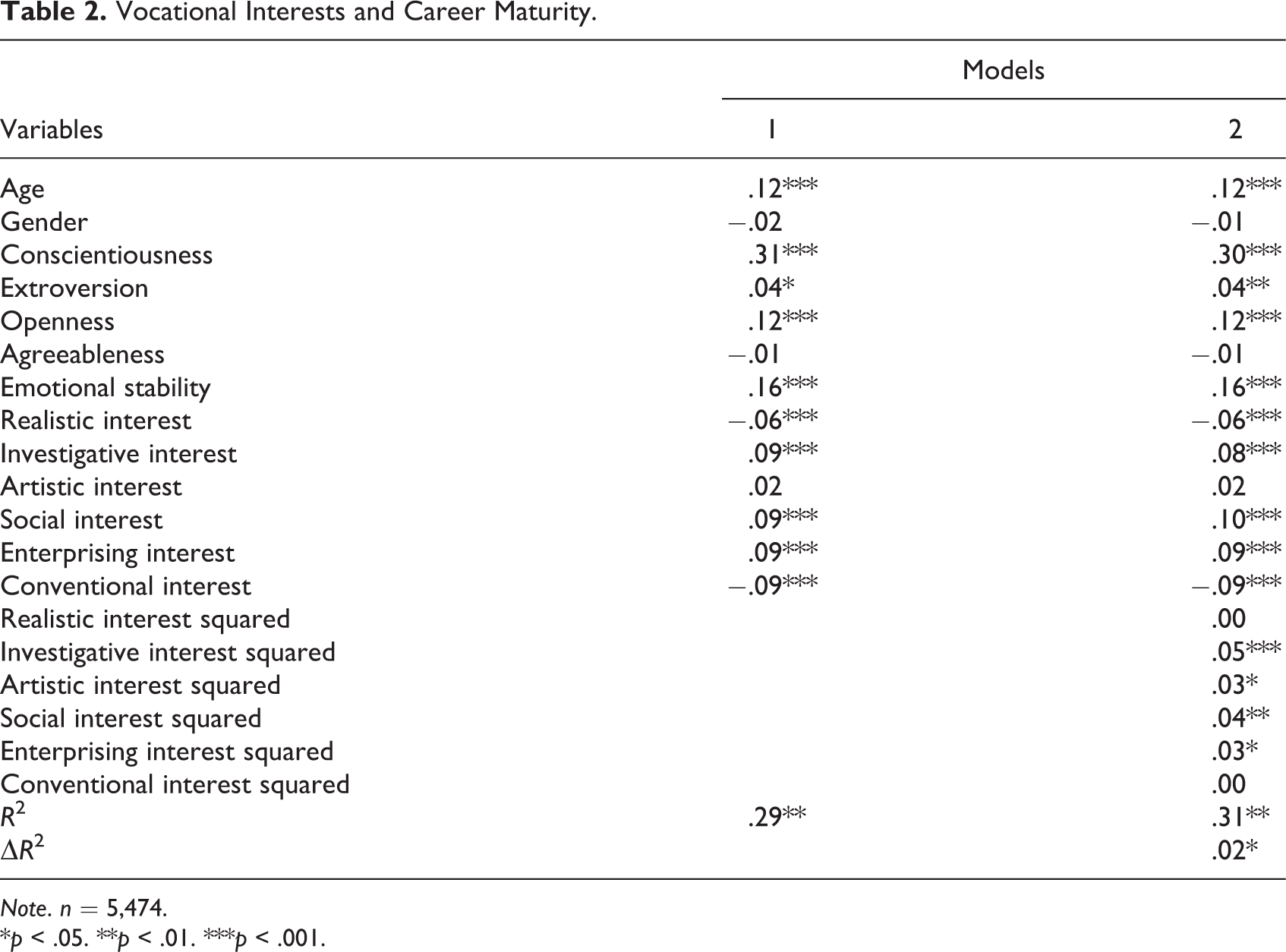
Table 1 shows the descriptive statistics and correlation coefficients of the study variables. Table 2 presents the results of testing the six hypotheses. Hypotheses 1–3 state that individuals’ realistic interest, conventional interest, and artistic interest are negatively related to career maturity. As shown in Model 2 of Table 2, after controlling for age, gender, and personality, realistic interest (β2 = −.06, p < .001; β3 = .00) and conventional interest (β2 = −.09, p < .001; β3 = .00) have negative relationships with career maturity. However, artistic interest is not negatively related to but has a curvilinear relationship with career maturity (β2 = .02, ns; β3 = .03, p < .05). We further plotted this curvilinear relationship (Figure 1). As shown in the figure, moderate artistic interest is related to lower career maturity than weak and strong artistic interest. Thus, Hypotheses 1 and 2 received support, whereas Hypothesis 3 did not receive support.
Descriptive Statistics and Correlations Among Variables.
Note. n = 5,474. The numbers in italic are reliabilities.
*p < .05. **p < .01.
Vocational Interests and Career Maturity.
Note. n = 5,474.
*p < .05. **p < .01. ***p < .001.
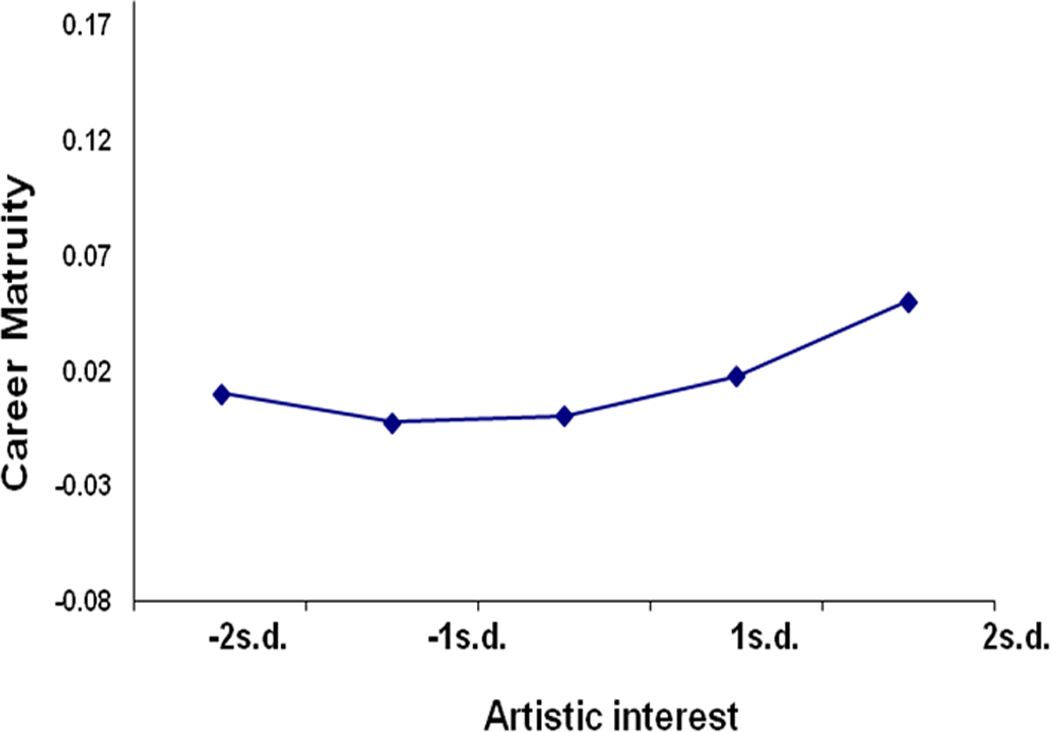
The U-shaped relationship between artistic interest and career maturity.
Hypotheses 4–6 posit nonlinear associations of individuals’ investigative interest, social interest, and enterprising interest with career maturity. These hypotheses are supported in general. As shown in Model 2 of Table 2, investigative interest (β2 = .08, p < .001; β3 = .05, p < .001), social interest (β2 = .10, p < .001; β3 = .04, p < .01), and enterprising interest (β2 = .09, p < .001; β3 = .03, p < .05) have curvilinear relationships with career maturity after controlling for age, gender, and personality. We further plotted these curvilinear relationships. Figures 2 –4 show a general pattern of the concave upward curve relationships of investigative, social, and enterprising interests with career maturity. In addition to the nonlinear relationship models, we plotted the linear relationships of realistic and conventional interests (Figures 5 and 6) with career maturity.
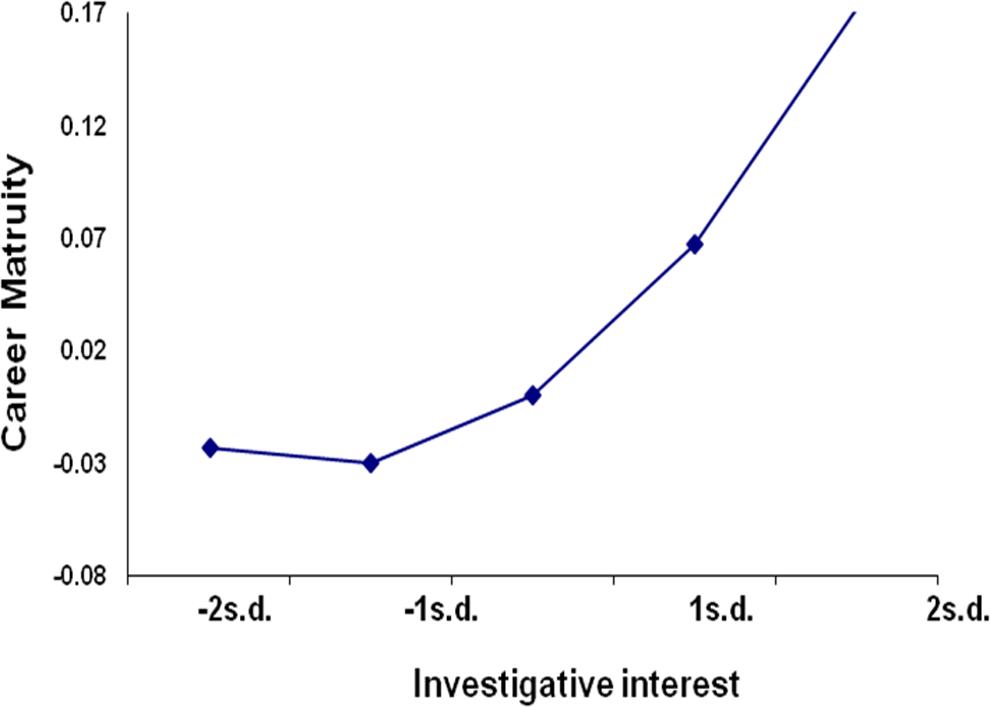
The concave upward curve relationship between investigative interest and career maturity.
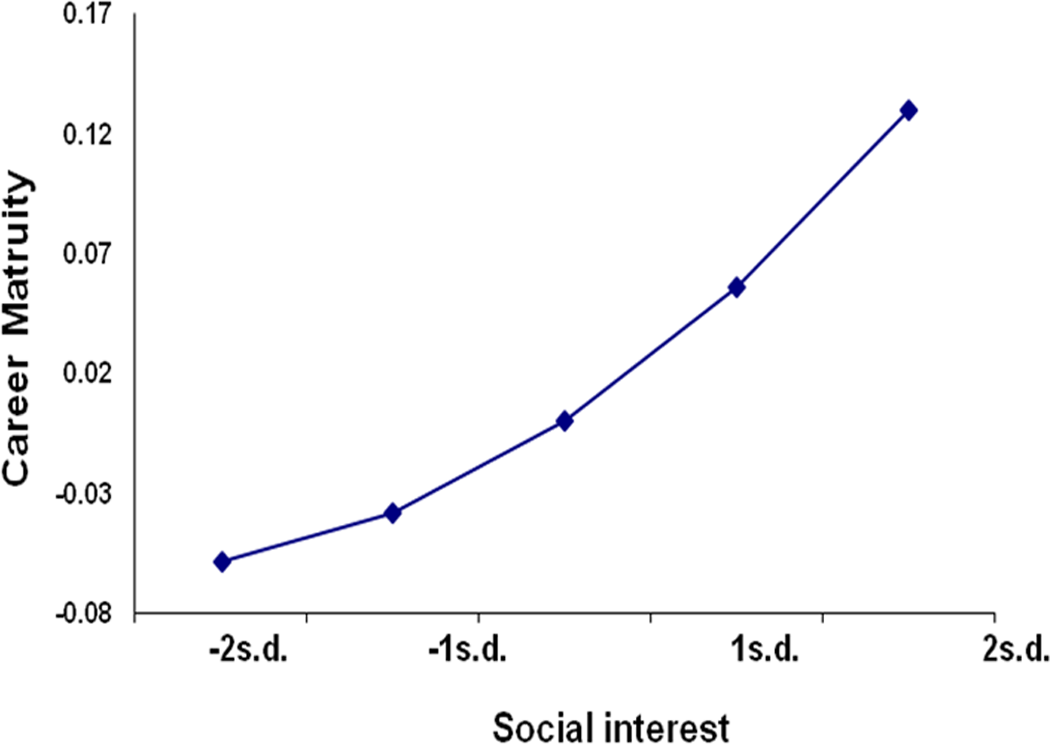
The concave upward curve relationship between social interest and career maturity.
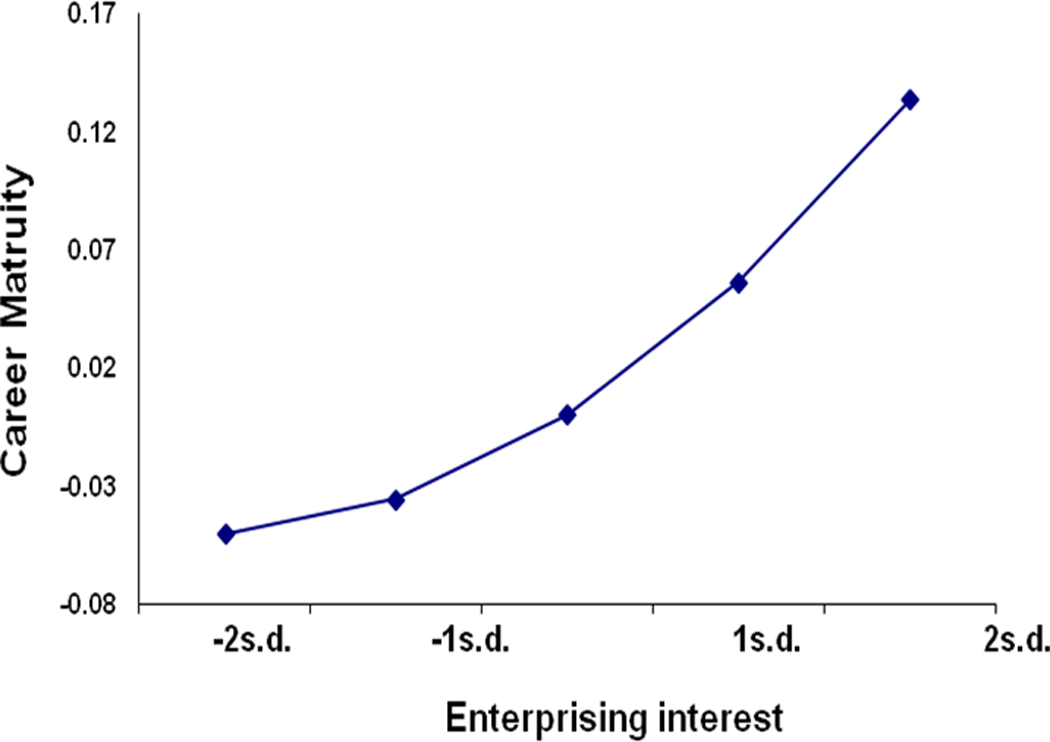
The concave upward curve relationship between enterprising interest and career maturity.
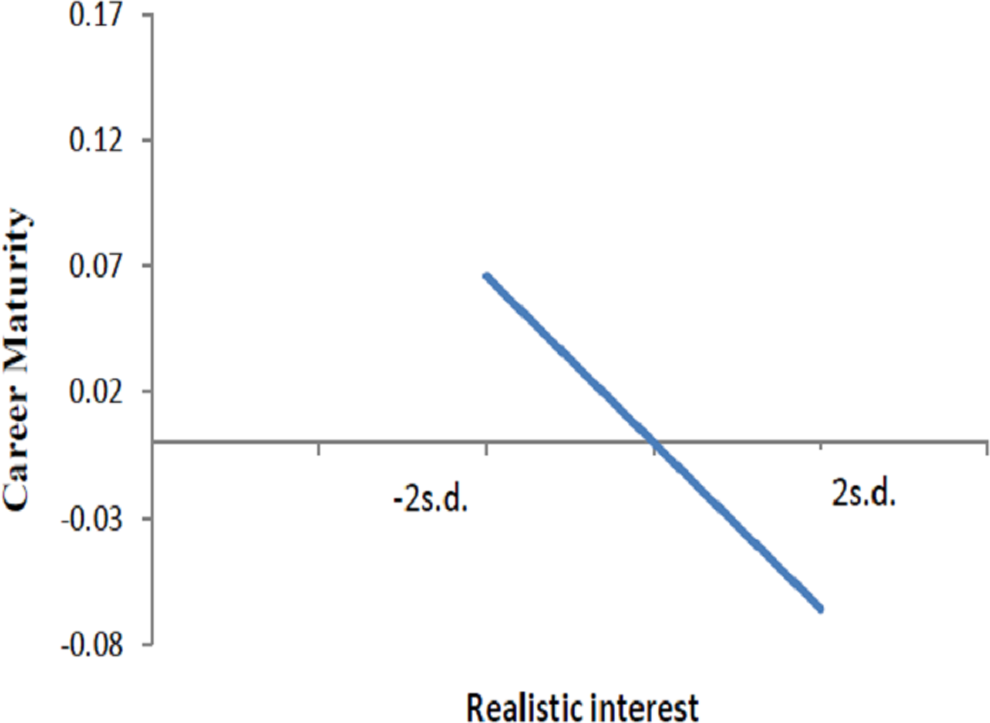
The negative relationship between realistic interest and career maturity.
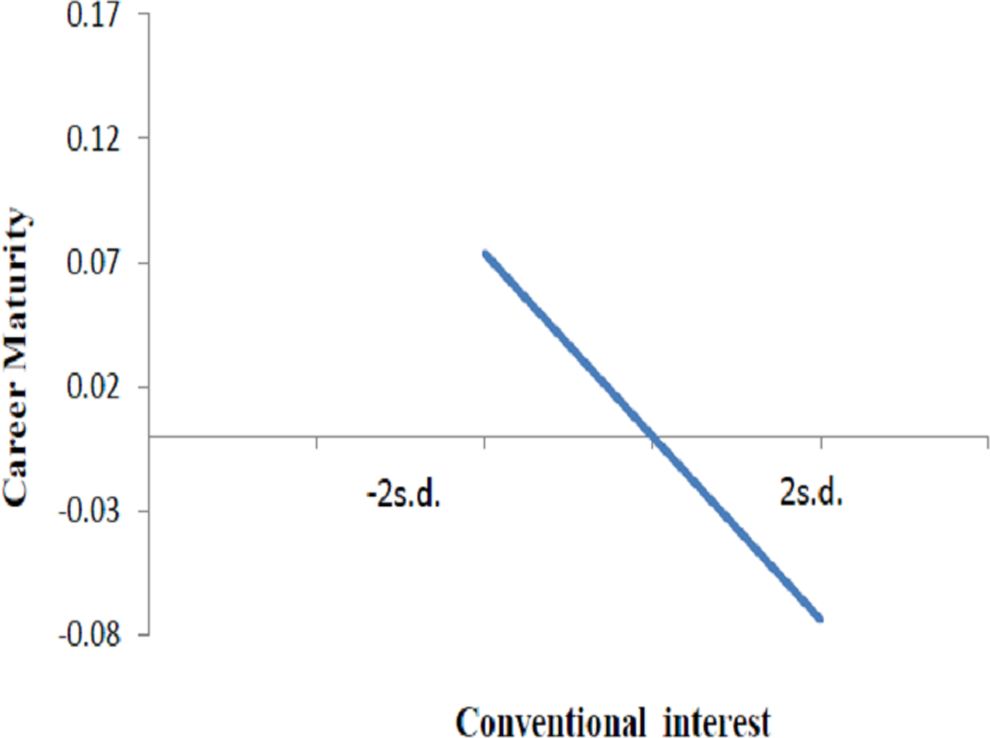
The negative relationship between conventional interest and career maturity.
Discussion
Our study explored the relationships between vocational interests and career maturity in the context of China. We found negative associations of realistic and conventional interests with career maturity after controlling for participants’ age, gender, and personality dimensions. We also found curvilinear relationships of investigative, social, and enterprising interests with career maturity. Unexpectedly, we did not find a negative relationship between artistic interest and career maturity as we hypothesized.
The findings of our study enrich the understandings of vocational interests and career maturity. While theory and research has indicated that vocational interests are related to career maturity (Holland, 1985; Lent et al., 2003), there is evidence that not all vocational interests are related to career maturity (Hartung, 1997). Focusing on Chinese context, our study provides tentative explanations about the relationships between vocational interests and career maturity. Chinese parents expect their children to engage in the vocations that enjoy high prestige in the society (e.g., Hon & Leung, 2011). Those children who follow/violate this expectation are said to be filial/unfilial to their parents (Tang, 2002, 2009). Under this circumstance, Chinese individuals’ vocational interests are likely to have different forms of relationships with career maturity since not all vocations are equally prestigious in the society. As hypothesized in our study, realistic and conventional interests are negatively associated with career maturity, whereas investigative, social, and enterprising interests have curvilinear associations with career maturity. These findings, to some extent, suggest that the relationship between vocational interests and career maturity may depend on the environment where individuals live. Such findings are in line with self-determination theory (Ryan & Deci, 2000), which indicates that individuals who are interested in a certain type of vocational activities want to engage in the activities related to their interested vocations, but whether they can do as they want varies with their surroundings.
Although we hypothesized a negative relationship between artistic interest and career maturity, this hypothesis was not supported. Instead, artistic interest had a U-shaped relationship with career maturity. This unexpected finding seems interesting, as artistic vocation, like realistic and conventional ones, is not supposed to be in the range of parental expectation but has a different form of relationship with career maturity from those two vocations. We speculate that such difference might be due to the response mechanism that artistic people adopt. Individuals high on artistic interest are more self-directed and resistant to conform than those low on artistic interest (Sagiv, 2002). Bearing these characteristics, individuals with high artistic interest would feel more motivated to persist in their interest and focus on developing themselves in the vocation-related areas that match their interest. However, individuals with moderate artistic interest may not be able to develop themselves in their interested vocation due to their relatively less motivation for challenging the status quo. Furthermore, individuals with weak artistic interest may find themselves in an easy situation wherein they can develop career maturity either along their own interest or their parents’ expectation. We encourage researchers to further explore this possibility in the future.
The results of our study have several practical implications for young people and career counseling practitioners. First, our study shows that realistic and conventional interests are negatively related to career maturity. These results suggest that individuals with these two types of vocational interests are likely to face opponent expectations of their family. They should try to find appropriate ways to cope with the disagreement between family expectations and their occupational interest. We also suggest career counseling practitioners to design training programs that can help realistic and conventional individuals to develop along with their interested occupations. For example, the training programs may, on the one hand, advocate that realistic and conventional occupations are valuable to society and, on the other hand, teach these individuals how to better handle opposing views, such as positive psychological construction and better communication skills. Furthermore, we suggest that both individuals and counseling practitioners seek whether there are other reasons accounting for realistic and conventional individuals’ career maturity. Second, our study shows concave upward curve relationships of investigative, social, and enterprising interests with career maturity. These results suggest that when career counseling practitioners find some young people to be interested in investigative, social, and enterprising jobs, they may try to encourage strong levels of interests among these individuals, whose career maturity will then be likely to be higher. As shown in Figures 2 and 3, the concave upward curve shows a positive relationship that may be approximated by a linear positive relationship. This is especially true for Figures 3 and 4. Thus, although mathematically the function is an upward concave curve, career counselors can simply conceptualize it as a positive relationship in helping young people with their career maturity.
The results of our study also have some limitations to consider. First, the participants were chosen from Hong Kong, where the average educational level of the young generation aged from 15 to 29 may be higher than other Chinese cities. The Statistics Department of Hong Kong government released that the unemployment rate for the last quarter of 2015 is 3.3%, which is very low, even compared worldwide. Given high educational level and low employment rate, people may raise their job expectations in terms of both monetary income and social endorsement, leading them to engage in more prestigious occupations. We suggest future research to replicate our study to examine whether our results can be generalized to other Chinese regions or societies. When replicating our study, we encourage researchers to adopt Goh and Yu’s (2001) Chinese version of Strong Interest Inventory as a measure of vocational interest to demonstrate the validity of our research. Meanwhile, we suggest more efforts into longitudinal research on the relationship between vocational interests and career maturity so as to validate our cross-sectional study.
Second, our study did not measure family and social pressure. Although Chinese families and society place different weights on occupations (Hon & Leung, 2011; Lin & Xie, 1988), it may need to explicitly measure this cultural condition in order to make our results more convincing. Future research may directly measure individuals’ perceptions about family and social expectations and values on various occupations. This can help verify the role of these expectations and values on the relationships between vocational interests and career maturity.
Third, the relationship between investigative interest and career maturity does not seem to be a perfect concave upward form. As shown in Figure 2, there is a slight tendency toward a U-shaped relationship form. This may be an interesting point worthy of future investigations. Investigative individuals are curious and creative (Sagiv, 2002), and their curiosity and creativity may encourage them to try occupations that do not match their interest. When they find it uneasy to develop themselves smoothly in the occupations they are not interested in, investigative individuals would probably turn back to their interested occupation. We encourage future research to test such speculations and see which form of relationship is a better way to describe the relationship between investigative interest and career maturity.
Finally, our findings indicated that the associations of vocational interests with career maturity were relatively small. While we encourage future studies to replicate our research, our findings should not be interpreted as vocational interests being unimportant correlates of career maturity. Instead, these findings may indicate that some unexplored factors are worthy of more attention. One possible factor is individuals’ social class. According to Gottfredson’s (1981) theory of occupational aspirations, an individual’s occupational preference is tied to his or her developing awareness of self-concept such as social class. We recommend future research to explore social class and other factors based on Gottfredson’s (1981) theory.
In addition to future research dimensions mentioned above, we would like to draw attention to the relationship between personality and career maturity. Our results show that conscientiousness, extroversion, openness to new experiences, and neuroticism are all significantly related to career maturity. These results are generally consistent with prior studies that regard personality as a crucial determinant of career maturity (Lundberg et al., 1997; Rogers et al., 2008; Super, 1974). However, our study showed that agreeableness is not significantly associated with career maturity. This may be an interesting question for future research to answer.
In conclusion, our study has explored the relationships between vocational interests and career maturity with a large Chinese sample. We found that realistic and conventional interests were negatively related to career maturity. Investigative, social, and enterprising interests had concave upward curve relationships with career maturity. Artistic interest had a U-shaped relationship with career maturity. These findings add to the literature on vocational interest and meanwhile provide practical suggestions for individuals and career counseling practitioners in Chinese societies.
Footnotes
Acknowledgments
This study is part of the education science project (project code number BIA120061) entitled “The influence of college students’ career maturity on their job attainment in China: An investigation of individual and group level factors” and supported by China’s National Social Science Funds for Education/National Office for Education Science Planning. We appreciate the constructive comments provided by the action editor and the two anonymous reviewers.
Declaration of Conflicting Interests
The author(s) declared no potential conflicts of interest with respect to the research, authorship, and/or publication of this article.
Funding
The author(s) received no financial support for the research, authorship, and/or publication of this article.