



Abstract
Young women with disabilities often experience limited career options and opportunities. This study provides an overview and preliminary results from the “Paths 2 the Future” (P2F) curriculum designed to meet the unique career development needs of young women with disabilities. P2F includes 75 lessons covering topics of self-awareness, disability knowledge, gender identity, and career and college readiness. Survey data were collected from young women with learning, health, intellectual, and emotional disabilities who participated in the curriculum in four high schools (N = 49). Paired sample t tests documented significant improvements from pretest to posttest scores for disability and gender awareness, vocational skills self-efficacy, self-realization, and an overall career development construct. Focus groups were conducted to gather feedback on participant experiences. Young women in the focus groups noted the unique benefits of a “girls only” class and described increases in self-awareness and personal empowerment.
Adolescence is a critical period of development, as young people are imagining future opportunities and developing early career trajectories (Novakovic & Fouad, 2012; Rogers & Creed, 2011). The process of exploring career options and developing a vocational identity is uniquely challenging for young women with disabilities since aspirations may be limited by the intersection of socially prescribed gender roles and disability barriers including stereotypes, discrimination, and prejudice (Hogansen, Powers, Geenen, Gil-Kashiwabara, & Powers, 2008; Rousso, 2003).
Throughout this study, we utilize a definition of disability consistent with the Individuals with Disabilities Education Act (IDEA, 2004). IDEA recognizes that “disability is a natural part of the human experience” (§1400 c1) and defines children with disabilities as those with intellectual disabilities, hearing impairments, speech or language impairments, visual impairments, serious emotional disturbance, orthopedic impairments, autism, traumatic brain injury, other health impairments, or specific learning disabilities who require special education or related services to fully participate in public education (U.S. Department of Education). Unless otherwise specified, studies included in this literature review include youth with a range of special education disabilities as defined by IDEA.
Why Focus on Young Women With Disabilities?
Longitudinal studies tracking postschool employment outcomes for youth enrolled in special education have consistently documented that regardless of disability type, young women earn lower wages, are less likely to work in high-skill/high-wage jobs and are more likely to live in poverty than their male peers (Doren, Gau, & Lindstrom, 2011). Previous studies have also documented gender differences in parental expectations for postschool employment and independence for youth with disabilities, with parents being more likely to expect male children to get a job and live on their own as young adults (Newman, Wagner, Cameto, & Knokey, 2009; Powers, Hogansen, Geenen, Powers, & Gil-Kashiwabara, 2008).
This complex process of career development and transition to adulthood for young women with disabilities is impacted by a number of individual and structural barriers. Individual attributes, such as low self-esteem, limited self-efficacy, and a lack of self-advocacy skills, can constrain the ability to fully explore a wide range of career options (Lindstrom, Harwick, Poppen, & Doren, 2012; Trainor, 2007). In addition, adolescent girls with disabilities often have restricted opportunities for career exploration (Ferri & Conner, 2010) and are less likely than their male peers to enroll in vocational courses or participate in community work experiences during high school (Hogansen et al., 2008). This restricted set of opportunities and experiences translates to a narrow range of career interests and aspirations ultimately resulting in poor long-term educational and employment outcomes (Doren et al., 2011).
Paths 2 the Future (P2F) Curriculum
In order to address pervasive gender and disability barriers and improve career development opportunities for young women with disabilities, we developed a curriculum called P2F (Lindstrom & Post, 2015). P2F is a gender-specific curriculum that was designed and pilot tested through an iterative development process. First, we analyzed existing state and national data sets, reviewed career development literature relevant for this population, and conducted focus groups and individual interviews to identify gender differences and critical career development needs for females with disabilities (Lindstrom et al., 2012). Using a design experiment process, we then developed and tested the P2F curriculum with special education teachers in four high school classrooms. After revising lessons and activities based on teacher and student feedback as well as classroom observations, we conducted a pilot study with 110 participants in six high schools. Although underpowered, the pilot study showed promising results including improvements in vocational skill self-efficacy, self-advocacy, autonomy, and career outcome expectations (Doren, Lombardi, Clark, & Lindstrom, 2013).
P2F is currently being tested through a randomized controlled trial in 26 high schools in a Northwestern state. One of the major goals of P2F is to promote self-efficacy and break down socially constructed barriers associated with gender and disability. The P2F curriculum includes 75 lessons divided into four modules: (a) self-awareness, (b) disability knowledge, (c) gender identity, and (d) career and college readiness. (See Table 1 for complete list of modules, lesson topics, and learning outcomes.) The modules are designed to be taught in sequence within a group/classroom setting in the course of the school day and participants receive high school credit for completing the class. The P2F curriculum is also interactive: Teachers are responsible for presenting information, leading activities, and engaging young women in small group discussions. The P2F curriculum modules are grounded in special education and career development literature and include:
Paths 2 the Future Curriculum Modules, Lessons, and Outcomes.

Module 1: Self-awareness
Many adolescent girls display low self-esteem and overall are less confident than boys in their skills and abilities (Ferri & Connor, 2010). Faced with systemic gender and disability barriers, young women with disabilities are particularly vulnerable to low self-esteem and self-confidence which in turn restricts career aspirations (Lindstrom, Benz, & Doren, 2004; Hogansen et al., 2008). This module is used to introduce students to the curriculum and to present concepts for building self-efficacy and self-confidence. It includes team building and self-awareness activities as well as lessons that focus on practicing critical skills for postschool success such as communication, decision-making, goal setting, time management, and relaxation. This module sets the foundation for the curriculum by providing specific instruction and support to increase self-awareness and develop autonomy, self-determination, and self-advocacy skills.
Module 2: Disability knowledge
Previous literature has documented that adolescents with disabilities have lower occupational aspirations than their peers without disabilities (Rojewski, Lee, Gregg, & Gemici, 2012). In addition, many high school girls with disabilities do not have a clear understanding of the nature of their own disabilities and the supports and strategies they may need to succeed in employment or postsecondary education (Lindstrom et al., 2012; Trainor, 2007). Once they enter the labor market, young women with disabilities may also face prejudice, discrimination, and stereotyping (Smith, 2005). The disability module helps young women expand disability knowledge, recognize their needs for accommodation, and use this information to make informed career choices. The module also addresses information on legal rights and responsibilities in education and employment settings and includes a set of lessons focused on communication and disability disclosure. Through this module, young women learn to advocate for themselves and identify disability accommodations they will need in work and education settings.
Module 3: Gender identity
Gender role socialization and gender stereotypes also play a role in shaping career preferences for young women with disabilities (Lindstrom, & Benz, 2002, Lindstrom et al., 2012). Girls tend to choose a more restricted range of occupations than boys, and occupational aspirations are often highly stereotyped at an early age (Betz, 2005). These limited career aspirations are exacerbated by a lack of female role models (Rousso, 2003). Without the opportunity to interact with or observe women working in a wide variety of fields potential career options are constrained. The purpose of this module is to introduce topics related to being a woman in the workforce, including gender roles and expectations, occupational segregation, and the gender wage gap. This module provides young women with opportunities to understand the influence of gender on career choices and future earnings and gain exposure to a range of traditional and nontraditional career options.
Module 4: Career and college readiness
Previous studies have found severely limited or nonexistent career exploration and transition preparation experiences for adolescent girls with disabilities in high school (Hogansen et al., 2008; Trainor, 2007). Many young women do not participate in community-based work experiences, a predictor of postschool employment (Mazzotti, Rowe, Sinclair, & Poppen, 2015) or are funneled into traditional female-dominated employment options such as childcare and food services. They may never be introduced to nontraditional or other potentially high-wage career options. However, young women with learning disabilities who have a solid foundation of employment information coupled with opportunities to explore and refine career goals are more likely to be engaged in meaningful postschool employment or postsecondary training (Lindstrom et al., 2004). The final module is focused on planning and preparation for employment and/or postsecondary education. In this module, young women are able to integrate the skills and knowledge learned in the first three modules about self-awareness, disability, and gender identity. The final module provides opportunities to explore education and employment options and is intended to increase career and college readiness, vocational self-efficacy, and career outcome expectations.
Despite the complex combination of barriers faced by young women with disabilities, very few studies have been conducted to evaluate the effectiveness of gender-specific career interventions. This study adds to the sparse body of literature examining facilitators of career development for young women with disabilities and provides preliminary data on the impact of a gender-specific career development curriculum (P2F). In this article, we present within-intervention group mixed-method findings for the first cohort of young women with disabilities who participated in the P2F curriculum. Subsequent manuscripts will include data from the full sample as well as comparison of outcomes from participants enrolled in intervention and control conditions.
Method
The current study was designed to obtain an in-depth perspective on the impact of the P2F curriculum by examining outcomes from 49 young women with disabilities enrolled in the first cohort of an ongoing larger school-randomized trial. In addition to completing an online survey at two time points to compare changes in career knowledge and skills, students in the P2F class were invited to participate in focus groups to describe their experiences of participating in a gender-specific career class.
Procedures
Special education teachers and school counselors at each school were asked to identify a sample of young women to participate in the study based on the following inclusion criteria: (a) identify as female; (b) currently enrolled in grades 9, 10, 11, or 12 in a participating high school; and (c) eligible for special education services with a high incidence disability including: learning disability, other health impairment (including Attention Deficit Hyperactivity Disorder/Attention Deficit Disorder), autism spectrum disorder, speech/language disability, and emotional disability. The P2F lessons require fifth- to sixth-grade reading, writing, and language skills, and thus students with more significant cognitive disabilities were not included.
Prior to implementing the P2F curriculum, all participating teachers attended a 1-day workshop to learn about curriculum components, classroom materials, and data collection procedures. Once parent consent and student assent were obtained, teachers began implementing the lessons and activities as outlined in the P2F curriculum guide (Lindstrom & Post, 2015). Young women attended the class daily and received high school credit upon completing the 75 lessons. All students completed an online survey at two time points (preintervention and postintervention). Students took between 15 and 60 min to complete the survey, and P2F research team members were available to answer any questions the students had about the survey. There were 49 participants who completed the pretest and 41 who participated in the posttest for a retention rate of 83.6%. Further, there were no differential rates of attrition by group condition in the study to date.
Teachers provided information about the student’s diagnosis qualifying them to receive special education services and indicated if each participant experienced any barriers to academic success and future employment. Barriers were assessed in five main areas: academic, family, health, work, and other risk behaviors. Academic barriers included whether the student was credit deficient or on track for a modified diploma as well as if the student demonstrated a pattern of absenteeism, suspensions/expulsions, detention, or a history of dropping out of school. Family/living issues included difficult family circumstances, homelessness, living in foster care, a history of moving a lot, and a lack of transportation. Barriers to employment included no prior volunteer or work experiences, or work responsibilities exceeding 20 hr/week. Risk behaviors included prior arrest, substance abuse, and pregnancy or parenting responsibilities. Health challenges were assessed by the presence of mental health issues (e.g., anxiety, depression) or chronic health conditions (e.g., diabetes, asthma).
To assess the social validity of the intervention, after completing the postsurvey, all students were invited to participate in a focus group at their high school. Members of the research team conducted the focus groups, which lasted approximately 1 hr. All focus groups were recorded and transcribed verbatim. Of the 49 young women who participated in the P2F curriculum, 33 were present for the year-end focus groups.
Participants
A total of N = 136 participants were recruited in year 1 of the study and n = 49 were randomized to the intervention group. Young women ranged in age from 14 to 20 years old and the majority (81.6%) identified as White. Primary disability categories included specific learning disability (63.3%), intellectual disability (8.2%), other health impairment (8.2%), and emotional disturbance (6.1%). There were six participants (12.2%) who did not specify a disability. Participants were most likely to experience the following teacher-reported barriers: (a) difficult family circumstances (55%), (b) mental health issues (55%), (c) no prior work or volunteer experience (46.9%), (d) chronic absences (36.7%), or (e) behind in completing credits toward graduation (32.7%). Teachers reported four participants (8.2%) did not experience any barriers while the majority of participants (75.5%) experienced more than one barrier.
Measures
Survey of career knowledge and skills
We developed a web-based survey designed to assess key constructs addressed in the P2F curriculum (e.g., self-determination, career readiness, and student engagement). This survey, which combined a number of existing measures and was validated through an earlier pilot study (Doren et al., 2013), included between 107 and 128 questions depending on responses to items with branching. In addition to demographic questions (14 items), the survey contained questions on future goals (4 items), career and technical education course enrollment (1–3 items), work experience (1–20 items), and 87 scale items. All scale scores were required to have internal consistency coefficient α of at least .70. Scale αs from the previous validation pilot study ranged from .78 to .94. Scale scores also demonstrated validity with response to intervention, with significantly greater gains in autonomy, disability, and gender identity for the intervention relative to the controls evincing medium effect sizes (Doren et al., 2013). Measures are described briefly below.
Self-determination and self-awareness
Two subscales were selected from the Arc’s Self-Determination Scale (Wehmeyer & Kelchner, 1995) that provide information on self-awareness, self-acceptance, self-confidence, self-esteem, and self-actualization. The Autonomy subscale measures the frequency with which adolescents perform independent tasks related to adult life. Fourteen items rated on a scale of 1 (not even if I have the chance) to 4 (every time I have the chance) comprised the Autonomy subscale. Sample items included I keep my appointments and meetings and I plan weekend activities that I like to do. Wehmeyer and Kelchner (1995) reported a α coefficient of .90 in a national sample of students with disabilities ages 14–22, while an α coefficient of .81 was obtained in the pilot sample of high school girls with disabilities.
The Self-Realization subscale measures self-awareness and self-acceptance. Fifteen items rated on a scale of 1 (never agree) to 4 (always agree) comprised the Self-Realization subscale. Sample items included It is better to be yourself than to be popular and I am confident in my abilities. Wehmeyer and Kelchner (1995) reported an α coefficient of .62 in a national sample of students with disabilities ages 14–22, while an α coefficient of .78 was obtained in the pilot sample.
In addition, the Self-Advocacy subscale, selected from the College Students with Disabilities Campus Climate Survey (Lombardi, Gerdes, & Murray, 2011), measures individual actions related to disability advocacy in educational environments. Because this subscale was intended for college students, we made two minor adjustments: In all items, we replaced the word “professor” with “teacher” and the word “university” with “school.” Six items rated on a scale from 1 (strongly disagree) to 5 (strongly agree) comprised the Self-advocacy subscale. Example items included I perform as well as other students in my course(s) and I feel comfortable advocating for myself and my needs at this school. Lombardi, Gerdes, and Murray (2011) reported a Cronbach’s α of .80 with a sample of undergraduate university students with disabilities. An α coefficient of .88 was obtained in the pilot sample.
Disability knowledge and gender awareness
During the pilot study (Doren et al., 2013), we developed and tested a curriculum-based measure with items that were mapped to the curriculum content in disability knowledge and gender awareness. This measure is designed to assess students’ level of confidence with knowledge related to disability issues and gender awareness. Six items rated on a scale ranging from 1 (no confidence at all) to 5 (complete confidence) comprised this scale. Example items include Describe what an Individualized Education Program is and Describe differences between traditional and nontraditional careers. An α coefficient of .91 was obtained in the pilot sample.
Career and college readiness
The Vocational Skills Self-Efficacy Scale (VSSE; McWhirter, Rasheed, Crothers, & Hansen, 2000) measures confidence in completing tasks related to job preparation skills, time management, and goal setting. An adapted version of the VSSE used in the pilot study was used in the current study. Twenty-nine items rated on a scale ranging from 1 (no confidence at all) to 5 (complete confidence) comprised this scale. Example items include State my general career interests (areas of interest) and Find out the education requirements for a job. McWhirter, Rasheed, Crothers, and Hansen (2000) reported a Cronbach’s α of 0.97 with a sample of high school sophomores. An α coefficient of .94 was obtained in the pilot sample.
The Career Outcome Expectancy Scale (McWhirter et al., 2000) measures adolescents’ level of agreement with questions about career expectations, satisfaction, and feelings about the future. Six items rated on a scale ranging from 1 (strongly disagree) to 4 (strongly agree) comprised this scale. Example items include My career planning will lead to a satisfying career for me and I have control over my career decisions. McWhirter et al. (2000) reported a Cronbach’s α of .83 with a sample of high school sophomores. An α coefficient of .88 was obtained in the pilot sample.
Student engagement
The Peer Support for Learning subscale of the Student Engagement Instrument (Appleton, Christenson, Kim, & Reschly, 2006) was selected to measure one aspect of psychological school engagement. Six items rated on a scale ranging from 1 (strongly disagree) to 4 (strongly agree) comprised this scale. Example items include Other students here like me the way I am and Students here respect what I have to say. Appleton, Christenson, Kim, and Reschly (2006) reported an α coefficient of .82 with a sample of high school freshman. An α coefficient of .90 was obtained in the pilot sample.
The Future Aspirations and Goals subscale was selected to measure one aspect of cognitive school engagement. Five items rated on a scale ranging from 1 (strongly disagree) to 4 (strongly agree). Example items include Going to school after high school is important and My education will create many opportunities for me. Appleton et al. (2006) reported an α coefficient of .78 with a sample of high school freshman. An α coefficient of .90 was obtained in the pilot sample. Items from both subscales produce a one-factor principal components factor solution.
Career development construct
An overall career development construct was computed as a mean total score of the seven subscales described above. Each component score was rescaled 1–5 and averaged. Principal components analyses with Varimax rotation obtained one primary factor solution with eigenvalues of 4.23 and 4.53 at Times 1 and 2, respectively, explaining 60% and 65% of the total variance.
Focus group protocol
We developed a brief focus group protocol based on previous career development literature and key outcomes of the P2F curriculum. The protocol included nine open-ended questions designed to gather information on participant’s experiences in P2F class such as “What was the best part of being in the P2F class?” “What is the most important thing you learned about yourself by being in this class?” and “How was being in P2F different than other classes you are in?”
Data Analysis
The mixed-method analyses involved two primary approaches. First, we conducted within-intervention group, paired sample t tests to determine whether there were statistically significant mean differences between pre- and posttest scores on career development outcome scales and the overall construct. Because the data for this report are within-intervention group for the first of three cohorts, we employed directional one-tailed hypotheses with expectations that intervention students would exhibit gains. Our procedures to handle missing data were as follows: When computing scale scores, at the item level, each scale was required to have 70% of the items present. In cases retained with missing data, scale scores were computed by taking the average of the present items.
Second, we analyzed the focus group transcripts following a multiple-stage process for qualitative analysis recommended by Miles, Huberman, and Saldana (2013). First, we reviewed all the transcripts and developed a list of broad codes based on the interview protocol and major themes that emerged from the transcripts. We used these descriptive codes, such as “career planning” or “self-awareness” to assign concrete labels to individual passages of text. To ensure that analysis and interpretations were not idiosyncratic or biased, all interview transcripts were coded by two members of the research team following a common coding scheme using a web-based qualitative software program (http://dedoose.com). We did not attempt to resolve coding differences. Instead coders reached initial agreement on the definition of each code and multiple codes were assigned to each text passage to allow for flexible yet consistent data interpretation (Anfara, Brown, & Mangione, 2002). Next, we summarized and confirmed the key findings within each group and conducted a cross-case analysis to document themes that emerged from all focus groups. Only themes that were confirmed across all four groups are presented here.
Findings
In this article, we present preliminary findings for the first cohort of young women with disabilities (N = 49) who participated in the large-scale randomized trial of the P2F curriculum. We briefly summarize results of the web-based survey administered pre- and postintervention and a present an analysis of the focus group interviews, exploring the experiences and insights of young women with disabilities who participated in the P2F curriculum.
P2F Survey Findings
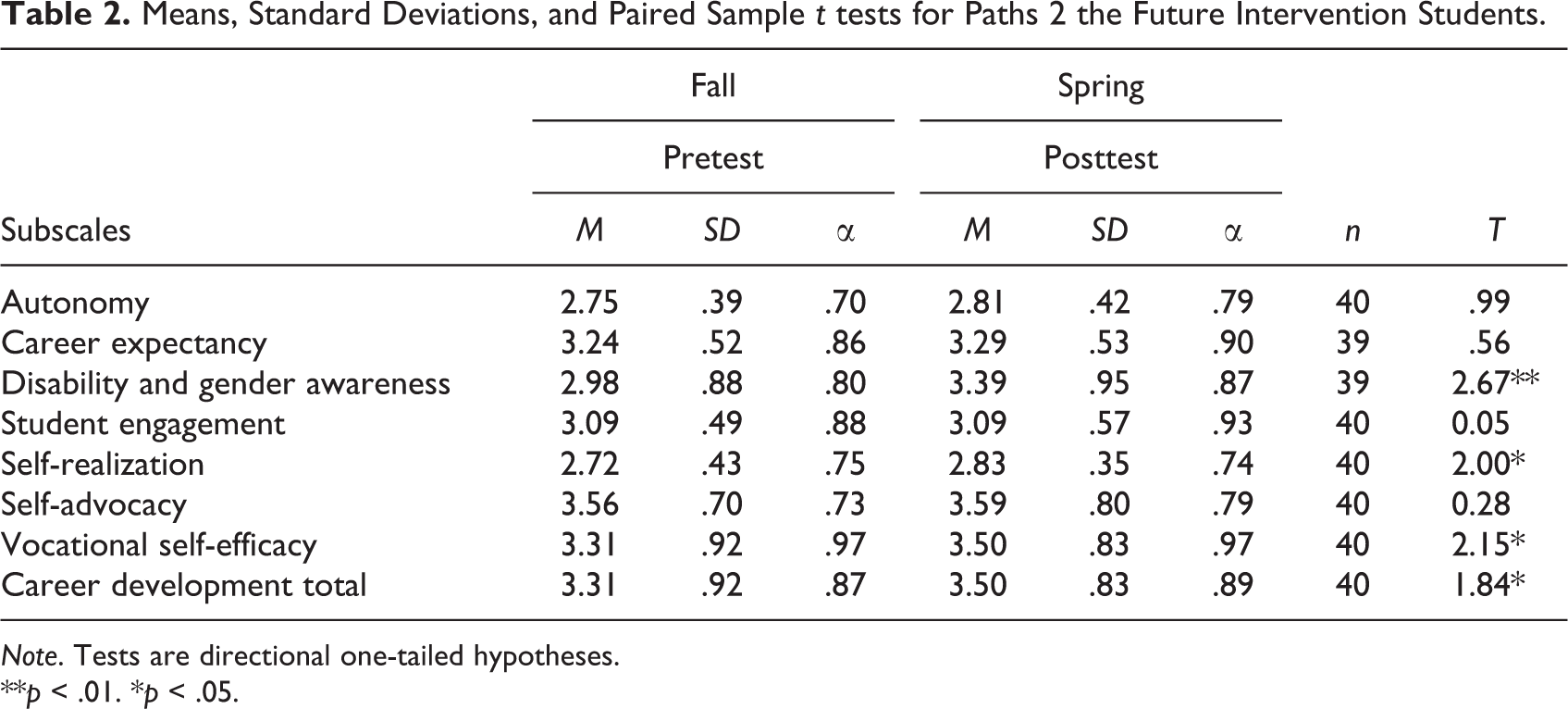
Table 2 includes means, standard deviations, and results of the paired sample t tests for each construct. The primary hypothesis was supported for three of the seven disability and career development subscales as well as for the total mean composite score. Thus, students who enrolled in the P2F curriculum demonstrated significant improvement in roughly half of the individual outcome domains.
Means, Standard Deviations, and Paired Sample t tests for Paths 2 the Future Intervention Students.
Note. Tests are directional one-tailed hypotheses.
**p < .01. *p < .05.
Among the individual focal scale outcomes, students enrolled in the P2F curriculum improved in their reported disability and gender awareness (M = 2.98 and 3.39, p < .01), self-realization (M = 2.72 and 2.83, p < .05), and vocational self-efficacy (M = 3.31 and 3.50, p < .05). Similarly, there was a one-tailed improvement for the overall career development composite mean score (M = 3.31 and 3.50, p < .05).
Four of the individual subscales showed no within-intervention group change: autonomy, career outcome expectancies, student engagement, and self-advocacy.
Focus Group Findings
Through our focus groups with young women with disabilities who participated in the P2F curriculum, we gained a more in-depth and richer understanding of the impact of the intervention on vocational identity and career aspirations. Three major themes emerged that helped provide preliminary confirmation of the uptake of intended curriculum content. These themes focused on gender identity, self-awareness, and a sense of self-advocacy and empowerment. Themes reported here were consistently expressed by students from all four participating high schools.
Girls only
The gender-specific nature of the P2F class seemed to be a very important feature that enhanced learning and built greater confidence. Across all high schools, young women consistently reported the power of participating in a female only class. One student noted, “What I liked about it was when we walked into the class, it was just a group of girls sharing what had happened to them or what was going on in their life.” With a female teacher and all female classmates, P2F class offered a comfortable environment that was conducive to discussion of sensitive topics (e.g., gender, disability, sexual harassment) and provided a unique opportunity to explore personal strengths and experiences. Another student shared, What I will remember when I think back on the class is that it was an only girls class and we could talk about how we feel and emotions.
P2F class also stood in marked contrast to the young women’s experiences in their mixed gender high school courses. Many spoke of the P2F class offering a safe space to speak up and not be “judged” or silenced by their male peers. In the following quotes, three different students offered their perceptions of how being in a gender-specific course changed their learning experiences and opportunities for class participation: There is no guys in it and like you are not scared to raise your hand and speak up and say something, In other classes women are afraid to raise their hands because if you get the question wrong then guys will laugh at you”,
I feel like if there were boys in this class then there would be no discussion. Like absolutely none because the boys would make every lesson a joke and the girls would be too scared to speak out.
This class allowed for new levels of open discussion and sharing not available in traditional mixed gender classroom environments.
Self-awareness
In addition to the overall benefits of learning in a gender-specific environment, young women in the class believed that the lessons and activities helped increase their self-awareness. When asked what they had learned by completing the class, P2F students primarily focused on the importance of understanding their personal strengths and being able to articulate these positive attributes to others. One young woman remarked, “This class has taught me what my strengths are and how to be positive about myself,” while another felt “like I can be myself more and not care about what they think and I can point out the things that I am better at.”
Many students also thought that P2F class helped bolster their self-concepts and be more self-assured. Lessons and activities on topics such as communication and self-advocacy skills seemed to have an impact on overall confidence and self-efficacy. One focus group participant expressed, I would say that this is the best way to get yourself out of your shell if you can speak…if you can’t make friends very early and you have a hard time speaking to people this is the class to take. This is your best chance to be yourself.
Although the subject of disability knowledge was not raised by most focus group participants, a few students articulated that part of their increasing self-awareness was having a clearer understanding of the impact of their disability on learning and future career goals. After describing the specific academic barriers associated with her learning disability, one student commented, after this class, I think it’s changed where I’m more positive about being able to do it and not being a failure, while another observed, during this class I learned that just because I do have a disability it doesn’t limit me.
Empowerment and voice
The third major theme to emerge from the focus group data was a burgeoning sense of empowerment and voice. As young women with disabilities, many had previously felt timid or unable to communicate well with either peers or adults. After their experiences in the P2F class, they articulated a newfound ability to “speak up” and “stand up” for themselves and their classmates. One student shared the progress she had observed in a younger classmate, Can I say something? Um, I think that (Name) has been like the biggest improved in this class because she was so quiet and so shy and didn’t really talk out. Well yeah timid is a good word for it. She never really talked out in the class or anything. This year during this class she was in our English class…it must of taken a lot for her because she stood up and spoke so clearly in front of the class and she’s never done that.
Another student described speaking up on behalf of her peers: I’ve learned to stand up for myself and others. My 11th grade English class went to [local college] for a tour and [Name] dropped her drink and everybody laughed a little but there was these two boys that just kept laughing and laughing and laughing and I finally went over there and said “Knock it off. It’s not nice” It scared them really bad.
Empowerment and personal agency also allowed young women to create a new framework for articulating career development options and opportunities. The P2F curriculum intentionally introduced students to possible barriers young women with disabilities may face as they enter the workforce or postsecondary education. Class discussions, field trips, and activities provided opportunities to discuss pros and cons of various careers and proactive strategies for overcoming potential gender or disability discrimination. With new confidence in their abilities, many students were able to visualize new future opportunities: There was a lot of us at the beginning of the year who were like “it doesn’t matter I’m not going anywhere in life, whatever. I’m not going to do anything after high school.” And now there a lot of us who are like “ok I can do this.”
I found my voice even more and being able to understand how many doors are actually open to me. Not just the few doors that I had seen, but now more doors have opened.
Discussion
This study provides preliminary data regarding the impact of participating in the P2F career development curriculum for young women with disabilities. Based on outcomes from cohort one intervention participants, we found that targeted learning experiences in a gender-specific environment seem to have an important influence on vocational identity and awareness. Analysis of the survey data demonstrated within group gains for an overall career development construct and for roughly half of the individual subscale components including disability and gender awareness, self-realization, and VSSE. No significant changes were found in scores for autonomy, career outcome expectancy, student engagement, and self-advocacy. Focus groups provided additional qualitative data illuminating the career development gains facilitated by participating in the P2F class. Young women who participated in the focus groups highlighted the unique experience and benefits of enrolling in a “girls only” class and described increases in self-awareness, personal empowerment, and confidence in understanding a range of future career options.
Gender Issues and Learning Experiences
Over the last several decades, researchers have consistently documented gender differences in school experiences and postschool outcomes for adolescents with disabilities identified for special education services (e.g., Doren & Benz, 1998; Doren et al., 2011). Findings from this study provide preliminary evidence that these differential experiences influence both self-perception and learning opportunities for young women with disabilities. Consistent with previous literature describing the many faceted challenges adolescent females with disabilities face in high school (Ferri & Connor, 2010; Hogansen et al., 2008), we found that young women with disabilities often felt invisible or were overshadowed by the demands of outspoken male peers. While Hogansen, Powers, Geenen, Gil-Kashiwabara, and Powers (2008) noted that male students in special education may receive more attention and services, our study documented constraints for females with disabilities enrolled in general education classes, including fear of being ridiculed for speaking up in class and anxiety over the perceptions of male classmates.
Participants in P2F also strongly endorsed the benefits of a “girls only” curriculum and survey findings documented significant increases in both gender and disability awareness. Providing young women with a safe space to explore their strengths and develop their skills was a very powerful and affirming experience. Although the literature on the benefits of single sex classes is mixed (Novotony, 2011), our study provides initial evidence of the importance of offering lessons and activities designed specifically to support career development for young women with disabilities. The P2F intervention also responds to calls from previous studies (e.g., Novakovic & Fouad, 2012; Trainor, 2007) to design interventions that specifically address the unique career development needs of adolescent girls with and without disabilities.
Self-Efficacy and Self-Awareness
Most adolescent girls start out with lower hopes for their careers and tend to be less confident than male peers in their skills and abilities. As a result, they often avoid entering high-prestige or nontraditional occupations. For young women with disabilities, the lack of self-esteem and self-confidence results in lower expectations that influence career planning and postschool trajectories (Hogansen et al., 2008). In contrast, women with learning disabilities who display high levels of self-determination, motivation, and self-efficacy are more likely to achieve their career goals and express overall satisfaction within their chosen occupations (Author, 2002).
Results from this study suggest that targeted learning experiences designed to focus on strengths and build skills can influence self-efficacy beliefs for young women with disabilities. Although we did not find significant changes in self-advocacy or career outcome expectancy scores, young women who completed the course demonstrated significant increases in both self-realization and vocational skill self-efficacy. These findings reflect changes in self-acceptance and also increased confidence in specific career development knowledge and skills such as identifying career interests and understanding how to set short- and long-term goals. While the standardized measure of self-advocacy did not reveal significant changes, the open-ended focus group discussions provided an opportunity for participants to describe the learning process in their own words and demonstrate the capacity for self-reflection. Participants in the focus group expanded on these core concepts, describing changes in their self-awareness, self-confidence, and ability to articulate personal strengths. In a unique contribution to the literature, focus group data provided initial evidence that self-awareness seemed to bolster a sense of personal empowerment and voice for young women with disabilities who completed the class. With newfound self-confidence and a stronger sense of voice, participants were able to more clearly articulate and envision future career opportunities.
Limitations
This study has a number of limitations that should be taken into consideration when interpreting the findings. First, the study drew from a small homogenous sample in one state and was not representative of the population of youth receiving special education services nationally. Due to the community demographics of the schools participating in cohort one of the study, P2F participants were primarily White (81.6%). In contrast, 13% of students receiving special education services identify as White (Kena et al., 2016). Also, the majority were identified as students with learning disabilities (63%), while 35% of youth receiving special education services are served under the category of learning disability (Kena et al., 2016). We anticipate that race/ethnicity and disability data from the full sample will be more representative. In addition, all data collected relied on self-report (which may have been shaped by social desirability bias), and we did not collect long-term follow-up data to document changes over time.
Second, although statistically significant improvements were observed, data presented here were within-intervention group only. Efficacy of the intervention will need to be established in future studies including control group comparison schools. Finally, only 33 of the 49 young women who completed the surveys were available to participate in the focus groups. Despite these limitations, the findings contribute to the sparse literature base describing career development experiences for young women with disabilities and extend our knowledge in the field by reporting on the initial impact of a gender-specific curriculum on key social and career constructs.
Implications for Research and Practice
Findings from this study also have important implications for research and practice. Although these results are preliminary, it seems that participation in a gender-specific career development curriculum has important and unique benefits for young women with disabilities who are in a crucial stage of developing their vocational identities. We recommend that educators create “girls only” classes or programs to encourage personal development and build awareness of career opportunities. If gender-specific offerings are not logistically possible, we believe that teachers should still find ways to reflect the unique needs of young women with disabilities in coeducational career services and coursework and that counselors need to be aware of potential gender limitations and stereotypes during the career planning process.
In terms of future research, it is critical to continue to identify and explore gender differences in school experiences, career planning, and postschool outcomes for young women with disabilities receiving special education services. More specifically, single sex career development interventions should be examined with larger and more diverse samples, taking into account race/ethnicity, language, and disability status to understand potential differential impact with a variety of participants. It would also be useful to compare P2F results with young women enrolled in traditional coeducational career and transition programs. In addition, we believe that it is critical to collect longitudinal data from young women with disabilities in order to document longer term changes in career development outcomes as well as enrollment in postsecondary education and engagement in employment.
Conclusion
This study examined the initial impact of a gender-specific career development curriculum on social and career outcomes for young women with disabilities. These preliminary results highlight the importance of gender-specific learning experiences for the development of VSSE and self-realization and the power of a “girls only” classroom in bolstering self-awareness and empowerment. Findings presented here offer new insights for scholars, counselors, and educators to consider in addressing gender and disability barriers and promoting career development for young women with disabilities.
Footnotes
Declaration of Conflicting Interests
The author(s) declared no potential conflicts of interest with respect to the research, authorship, and/or publication of this article.
Funding
The author(s) disclosed receipt of the following financial support for the research, authorship, and/or publication of this article: This research was supported in part by Grant #R324A150046 from the Institute of Education Sciences (IES), National Center for Special Education Research, U.S. Department of Education.