




Abstract
This study investigates the reciprocal relationship between boundaryless career orientations and perceived employability, aiming to expand beyond prevailing unidirectional models in the literature. Utilizing a time-lag structural model with longitudinal data collected three months apart from a cohort of white-collar Spanish workers, the initial sample at Time 1 comprised 261 individuals, primarily females (57%) with an average age of 41.8 years. At Time 2, 134 responses were collected, with 80 from women and an average age of 41.5 years. Findings support a reciprocal link between organizational mobility preference and perceived external employability. A boundaryless mindset appears to precede external employability, though reverse causation is not substantiated in the short term. Both sub-dimensions of a boundaryless orientation are associated with heightened perceptions of external employability but not internal employability. This suggests that managing boundaryless workers should vary based on their career orientation sub-dimensions, providing valuable insights for practitioners and career counselors.
Keywords
Introduction
Workplaces today are characterized by frequent and intense changes, varying conditions and pressures of globalization (Hoff et al., 2022) and, therefore, employees are encouraged to build sustainable careers through sequences of work experiences, crossing several social spaces, and looking for personal meaning (Gorgievsky et al., 2018; Van der Heijden & De Vos, 2015). In this context of contemporary careers, the boundaryless career concept has already been widely recognized (Arthur & Rousseau, 1996; Rodrigues et al., 2019).
Following Arthur and Rousseau (1996), a boundaryless career is the one that crosses different types of boundaries, acknowledging that individuals have substantial agency in their careers. Boundaryless workers use agency and extensive personal and professional networks to follow a path of subsequent job opportunities not linked to a single employer, searching cumulative employment-flexible career capital and to support and sustain their careers (Guan et al., 2019). Sullivan and Arthur (2006) developed this concept further by differentiating two forms of observable mobility: physical, which entails actually moving across boundaries and changing jobs, companies, levels, occupations, and geographical locations; and psychological, which concerns a general attitude of transcending boundaries resulting in the capacity to move and make transitions. In this context, a boundaryless career orientation describes a person´s attitude towards and inclination for pursuing a boundaryless career and distinguishes two sub-dimensions (Briscoe et al., 2006): an organizational mobility preference that is linked to having a predilection for changing employer versus organizational embeddedness and an inclination towards job stability and long-term employment (Zhao et al., 2020); and a boundaryless mindset, linked to being enthusiastic about engaging in work-related interactions and relationships in varied organizational settings, invigorated by novelty in experiences and situations and to pursuing the acquisition of competence and expertise and the expansion of their network of contacts (Briscoe et al., 2006; Lazarova & Taylor, 2009).
Mobility and ongoing personal growth have been often recognized as key elements of both contemporary careers and employability (Cortellazzo, et al., 2020). At the individual level, employability can be considered a set of competences that favor the consecution of employment opportunities (competence-based approach, Heijde &Van der Heijden, 2006); “a constellation of individual differences that predispose individuals to (pro)actively adapt to their work and career environments” (dispositional approach, Fugate & Kinicki, 2008: p. 503); and the perception of individual views of chances for achieving and maintaining employment (“perceived” approach, Berntson & Marklund, 2007; De Cuyper et al., 2012; Vanhercke et al., 2014). Thus, employability is seen as a substitute for long-term job security and emerges as a crucial objective for those seeking continuous and meaningful employment (De Cuyper et al., 2012; Van Harten et al., 2017).
It is therefore widely acknowledged that there is a relationship between boundaryless careers and employability, although the analysis of said relationship from a research perspective is relatively new and some of its issues have not yet been (fully) addressed. Specifically, we believe that the directionality in the relationship between boundaryless careers and employability needs further exploration and we will argue that this relationship could be reciprocal. Additionally, it requires separately considering the two underlying sub-dimensions of the former and the internal/external nature of the latter.
We base these requirements of further research on two main reasons: Firstly, from an empirical point of view, only a handful of studies have examined the empirical relationship between boundaryless career orientations and employability (Bozionelos & Bozionelos, 2015; Chan & Dar, 2014; Lo Presti et al., 2018; Rodrigues et al., 2019; Verbruggen et al., 2015). Moreover, to the best of our knowledge, no empirical studies have used longitudinal data for all the measurements in the literature. The few empirical studies on this topic have been based either on cross-sectional data (Chan & Dar, 2014; Lo Presti et al., 2018) or longitudinal data, but with only one measurement per construct (e.g., perceived employability was measured at time 1 and career orientations were measured at Time 2) (Rodrigues et al., 2019). These methodological choices limit the conclusions on directionality in the relationship, as studies based on cross-sectional designs make it impossible to investigate the direction of the relationships. Furthermore, studies using longitudinal data, but with only one measurement per construct, do not permit the validation of potential reverse causation (Redondo et al., 2022). Additionally, most of these works have not considered the different sub-dimensions of a boundaryless career. However, recent meta-analysis by Wiernik and Kostal (2019) and recent work on boundaryless career orientations by Redondo et al. (2023) suggest that the previously mentioned sub-dimensions of a boundaryless career orientation present sound differences. Thus, we argue this relationship may be different depending on the boundaryless subdimension and the internal/external nature of employability.
Secondly, and more importantly, from a theoretical standpoint, the bulk of the literature posits that boundaryless career orientations are antecedents of employability, thus, employability is deemed an outcome of careers (e.g., Blokker et al., 2019; Chan & Dar, 2014; De Vos et al., 2020; Van der Heijden & De Vos, 2015; Verbruggen et al., 2015; Wille et al., 2013). However, we defend that this general statement has to be nuanced and that the corresponding reverse relationship must be considered.
Indeed, boundaryless mindset workers are energized by new experiences and situations. They have the psychological mobility that provides them with flexibility and willingness to look for opportunities to get involved in enriching duties, different roles, and professional situations; and to meet career tasks and transitions that stimulate individual and professional growth, the acquisition of new skills, and personal development. Boundaryless mindset workers emphasize the importance of building a wide network of professional relationships to be aware of job opportunities and have access to valuable resources and information. All this likely enhance their employability, both within and outside their organization (Arthur & Rousseau, 1996; DeFillippi & Arthur, 1994; Lo Presti et al., 2018; Schaufeli & Bakker, 2004). Thus, we posit:
Having BM is a positive antecedent of PIE
Having BM is a positive antecedent of PEE However, individuals high in organizational mobility preference likely devote less time and effort to their current employer (Verbruggen, 2012), displaying a stronger inclination to explore work opportunities elsewhere rather than investing resources looking for them in their current company (Briscoe et al., 2006). These workers actively pursue, prioritize, and capitalize on opportunities to enhance their knowledge and develop new skills that are valued in the external market more than within their own company, and, likely monitor the job market to increase their chances of finding job in other companies to match their expectations (Bozionelos & Bozionelos, 2015; Direnzo & Greenhaus, 2011). As a result, they will likely exhibit higher perceived external employability and lower internal employability. Accordingly, we hypothesize:
Having OMP is a negative antecedent of PIE
Having OMP is a positive antecedent of PEE Further, we argue that boundaryless career theory also encourages the reverse relationship, as it states that in career construction, individuals prioritize self-driven motivation for determining fulfillment, goals, and values. In this sense, a boundaryless career is guided by personal goals that encompass the whole life space and driven by psychological success (Arthur et al., 2005; Arthur & Rousseau, 1996), which is a judgment to be made by the career actor, according to the perception of his/her achievements and prospects for the future (Dries et al., 2008). Thus, employability is considered a career resource and a critical vehicle for designing and shaping career trajectories, and to fulfill goals and, thus, may facilitate the construction of a boundaryless career (Guan et al., 2017; Rodrigues et al., 2019; Savickas, 2002, 2013). Employability may help individuals construct their careers, re-creating images of future careers, motivations, and orientations for their desired futures in line with their self-concept, goals, career, and life (Guan et al., 2017; Strauss et al., 2011; Wong et al., 2020). This helps them to redefine their career orientations as a process to get a good career-life fit which is an expression of subjective career success (Rodrigues et al., 2013; Shockley et al., 2016). In this sense, the perception of employability may act as a catalyst for individuals to embrace a boundaryless career, driven by a desire to continuously enhance their skills, expand their networks, strategically position themselves in the dynamic and competitive job market and, in turn, fulfill their goals. On the one hand, workers who perceive high internal employability will likely feel confident to take on new tasks in their company that may require to learn something new and to work with different people, particularly beyond their own department. Thus, they would have better opportunities to successfully make connections and develop networks and be better prepared to cope with and navigate transitions within the current company. Similarly, workers perceiving high external employability have the confidence to venture into different industries, roles, or geographic locations, and may perceive their own capacity to adapt, learn, and excel in various professional settings, having the possibility of developing external networks (Rodrigues et al., 2019). To maintain and enhance this marketability, individuals may nurture their boundaryless mindset to continually acquire new skills, experiences, and connections, ensuring they stay competitive in the ever-evolving job market proactively choosing a career path to strategically position themselves for diverse opportunities and challenges, aligning with their long-term career goals (Arthur & Rousseau, 1996; Forrier et al., 2009; Savickas, 2013). Consequently, we hypothesize:
PIE is a positive antecedent of having BM.
PEE is a positive antecedent of having BM. On the other hand, internal employability connects the possibility of maintaining employment or finding another (similar or better) one with the current employer providing the workers with career prospects (De Cuyper & De Witte, 2011). Receiving opportunities for maintaining, moving, or up-warding employment in the current organization demonstrates management support in providing the necessary knowledge and skills for employees to maintain employability within the organization, which may be interpreted as an expression of appreciation, recognition, and opportunities for future advancement given by the organization, reducing their inclination for organizational mobility.
PIE is a negative antecedent of having OMP. Additionally, external employability may stimulate workers to be in charge of their careers across organizational boundaries (Direnzo & Greenhaus, 2011) in order not to constrain their chances in the external labor market. Workers who perceive high external employability may prefer a lower engagement with their current job to direct their energy towards advancing and searching for new career opportunities. The literature on this subject affirms the close connections between employability and mobility, as it is considered that the former facilitates the latter (e.g., Forrier et al., 2015; Rodrigues et al., 2019). Thus, workers perceiving high external employability likely tend to have a higher organizational mobility preference (De Cuyper et al., 2012; Vanhercke et al., 2014). Consequently, it may be hypothesized that:
PEE is a positive antecedent of having OMP. Based on the preceding arguments, we defend that having boundaryless mindset will likely crystalize in a higher level of perceived (internal and external) employability. At the same time, employability (internal and external) is a career resource that will likely facilitate enriching experiences and the opportunity to work with different people, increasing boundaryless mindset. However, having organizational mobility preference will likely diminish internal and stimulate external employability, that, in turn will likely contribute to a higher organizational mobility preference. Thus, we posit that:
BM motivates PIE which in turn may contribute to a salient BM.
BM motivates PEE which in turn may contribute to a salient BM.
OMP motivates decreasing PIE which in turn may contribute to a salient OMP
OMP motivates PEE which in turn may contribute to a salient OMP Thus, this work theoretically and empirically explores the existence of a reciprocal relationship between boundaryless career orientations (with its two sub-dimensions of boundaryless mindset and organizational mobility preference) and perceived employability (both internal and external). We used a research design that is capable of demonstrating the direction of causality between our focal constructs, as we used a cross-lagged panel design for our study with data collected at two time points three months apart, from 134 Spanish workers. These kinds of designs have been widely and successfully used to assess the direction of causality in the literature (e.g., Nauta et al., 2002; Philippaers et al., 2016; Redondo et al., 2020) as they can help establish the temporal precedence or direction of influence necessary to conclude that causality exists. We chose a three-month time lag to be able to assess variations in career orientation and perceived employability. This is consistent with other longitudinal studies studying work-related phenomena which have found a change in study variables over this length of time (Allan et al., 2022). Further reasons for choosing a three-month interval were to preserve constant seasonal effects on business activities and to keep the attrition rate as low as possible (Vollmer et al., 2011). In addition, the collection of data from Spanish workers is an asset of this study, since most literature on perceived employability is based on research with U.S.-based samples. Accordingly, our work makes three contributions to both career and employability theories. First, we examine the reciprocal relationship between boundaryless career orientations and perceived employability, extending the one-way models that are pre-dominant in the existing literature (Blokker et al., 2019; Chan & Dar, 2014; De Vos et al., 2020; Lo Presti et al., 2018; Rodrigues et al., 2019; Van der Heijden & De Vos, 2015; Verbruggen et al., 2015; Wille et al., 2013). This is a key issue if we are to better understand the relationship between the two concepts. Ignoring this may be problematic as it may lead to inaccuracy in corresponding models not accounting for this relationship. Second, we contribute to boundaryless career theory by separately considering the different sub-dimensions of a boundaryless career orientation, and showing their different dynamics. This way, we respond to the call made by Wiernik and Kostal (2019) and Redondo et al. (2023) for further research on the distinction between “boundaryless mindset” and “organizational mobility preference.” Third, by distinguishing internal and external employability, we contribute to a better comprehension on whether boundaryless career orientations exhibit different relations to perceived employability inside or outside an organization. Clarifying this fact will provide additional insights into turnover issues. For practitioners and counselors, it is worth having a clear view of the relationship between boundaryless career orientations and employability in order to nurture both boundaryless orientations and employability, thus achieving a double reward. Figure 1 offers a graphical description of the conceptual model and hypotheses.
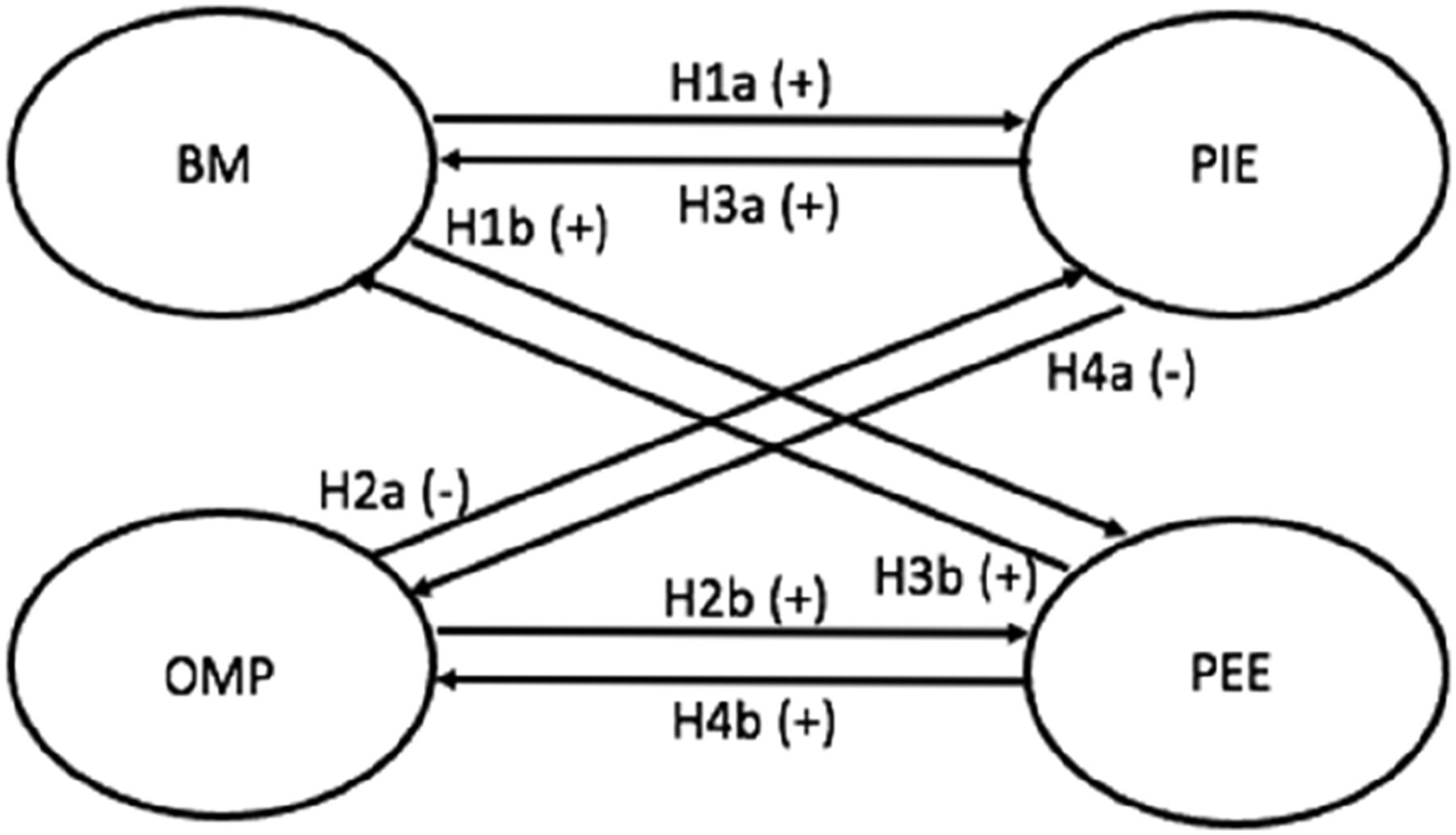
Conceptual model.
Method
Participants
This study is part of a broader research project on employability and career orientations in the Spanish market. 16 interns working in companies from different sectors participated in this project. They disseminated the request for participation through their professional network respecting the participation requirements. As these interns belong to different companies and sectors, we do not expect any bias regarding this fact.
Data collection occurred between 2019 and 2020 (Time 1: October and November 2019; Time 2: January and February 2020). The study participants were white-collar workers active at that time. The literature signals that this category of workers is very appropriate and interesting for this kind of study as it is very relevant in the labor market since it comprises superior/managerial positions, professional, or semi-professional roles or business owners. Additionally, these workers are traditionally linked to a path of ascending career development, greater prospects for upward mobility, larger opportunities to develop skills, and greater self-determination (Hennequin, 2007). Thus, this population has been the focus of most academic works in the area of careers (Rombaut & Guerry, 2021).
The questionnaire was administered following the Ethical Guidelines of the authors’ University Ethical Committee regarding informed consent and anonymization. Accordingly, in the request for participation, in addition to the hyperlink to the survey, a cover letter explaining the goals of the study was attached. It emphasized that collaboration was optional and that all data was confidential and only accessible to the researchers who would use it in an aggregate manner. Finally, participants were requested to supply an e-mail address to be contacted at Time 2 and to connect their answers in the two time points. As compensation for participating, respondents to both questionnaires at T1 and T2 took part in a raffle of two gift vouchers worth €300 each. Additionally, to minimize attrition, we sent a one-week reminder after our initial invitations.
Given that the scales used were originally in English and our questionnaire was administered in Spanish, we followed the procedure proposed by Beaton et al. (2000) to translate the corresponding scales since we consider that this procedure ensures the validity and reliability of the translated version. To achieve this, we conducted two direct translations from English to Spanish of the original scale, each performed by a bilingual translator whose native language is Spanish. Once completed, we convened the two translators, along with an individual unrelated to the research, to synthesize the results and address any discrepancies.
This consolidated version was then translated back into English and verified for any errors or inconsistencies. Using this version, we conducted a field test by distributing the questionnaire to 15 colleagues who met our criteria, asking them to assess the comprehension of the items. Based on their feedback, we developed the final version, which was subsequently disseminated through social networks of the interns.
Once the records with invalid e-mail addresses and missing data were excluded, the final T1 sample consisted of 261 individuals. Since we do not know the accurate number of workers who received the questionnaire, we cannot give the information about the response rate. They were contacted three months later to take part in the follow-up. Once again, the confidentiality of their responses and optional collaboration was assured. Some workers refused to answer the follow-up questionnaire while other responses were removed owing to the number of items where data was missing. After these exclusions, 134 valid responses at Time 2 (T2) were eventually obtained (48.6% of drop-outs).
To determine the sample size, we used a priori power analysis for multiple linear regression with a small to medium effect size (0.10), power of 0.95, and alpha of 0.05 with four predictors, that suggested a sample size of 127. Accordingly, we oversampled at T1 to ensure that we will reach that sample size at T2.
To examine attrition bias, we tested if there were significant differences in variables like gender, age, tenure, perceived employability, and career orientations between drop-outs at T2 (n = 127) and non-drop-outs (n = 134). ANOVAs conducted revealed no significant differences on the demographic variables or constructs. In the final sample of 134 individuals, 41% of the subjects were male, with average age of 41.5 years, mean tenure of 12 years, and 27% held a managerial position.
Measures
The metrics for all constructs used in this study had been previously validated. A seven-point Likert scale ranging from “1= strongly disagree” to “7 = strongly agree” was used to measure all items.
Boundaryless mindset was measured with the eight-item scale from Briscoe et al. (2006). Sample items include “I enjoy working with people outside of my organization” and “I enjoy jobs that require me to interact with people in many different organizations.” Reliability for the scale was good both at T1 (alpha = .87) and T2 (alpha = .86).
This scale has been extensively used in different research works obtaining similar reliability and validity results. Specifically, we found Crobach’s alpha values between 0.78 and 0.92 in the majority of reviewed works (Briscoe et al., 2006; Chan et al., 2015; Kumar et al., 2023; Porter et al., 2015; Redondo et al., 2023; Volmer & Spurk, 2011; Çakmak-Otluoğlu & Acar Bolat, 2021).
Organizational mobility preference was measured with the five-item scale from Briscoe et al. (2006). Sample items include “If my organization provided lifetime employment, I would never desire to seek work in other organizations” (R) and “In my ideal career, I would work for only one organization” (R). Reliability for the scale was good both at T1 (alpha = .87) and T2 (alpha = .88).
Similarly, this scale has also been widely used in several studies and its reliability and validity results are also in line with ours, in particular the Crobach's alpha shows values between 0.65 and 0.85 in the majority of reviewed works (Briscoe et al., 2006; Kumar et al., 2023; Porter et al., 2015; Redondo et al., 2023; Volmer & Spurk, 2011; Çakmak-Otluoğlu & Acar Bolat, 2021).
Perceived internal employability was measured using the four-item internal quantitative and qualitative self-reported employability scales from De Cuyper and De Witte’s (2011). Samples of those items are “I am optimistic that I would find another job with this employer, if I looked for one” and “I could easily switch to a better job with this employer, if I wanted to.” Reliability for the scale was good both at T1 (alpha = .89) and T2 (alpha = .88).
Perceived external employability was measured with the four-item De Cuyper and De Witte’s (2011) external quantitative and qualitative self-reported employability scales. Samples of those items are “I am optimistic that I would find another job elsewhere, if I looked for one” and “I could easily switch to a better job elsewhere, if I wanted to.” Reliability for this scale was very good at T1 (Cronbach’s alpha = .95) and T2 (alpha = .91).
Other studies that use the perceived employability scales from De Cuyper and De White show similar results in terms of reliability and validity, with Crobach’s alpha values between 0.84 and 0.91 (Arnold & Staffelbach, 2012; De Cuyper et al., 2012; De Cyper et al., 2014; Ricardo et al., 2020).
Control Variables: we used as controls the variables of gender (1 = male, 0 = female), age, tenure in the current company (in years), and position (managerial = 1, operative = 0) because of their influence on perceived employability and career orientations (Rodrigues et al., 2015).
Procedures
The use of longitudinal data as a methodology in empirical work is strongly demanded in the literature (Bolander et al., 2017) since it is the way to give greater confidence to the attributions of causality and directionality (Ployhart & Vandenberg, 2010) and reduces the possibility of method bias (Podsakoff et al., 2003). Nonetheless, we performed a Harman’s one factor test (an un-rotated factor analysis on all items used in the model) to ensure that this was the case. This test showed that less than half of total variance (30.26% at T1 and 28.39% at T2) was explained by the first factor, allowing us to discard common method bias as a potential risk.
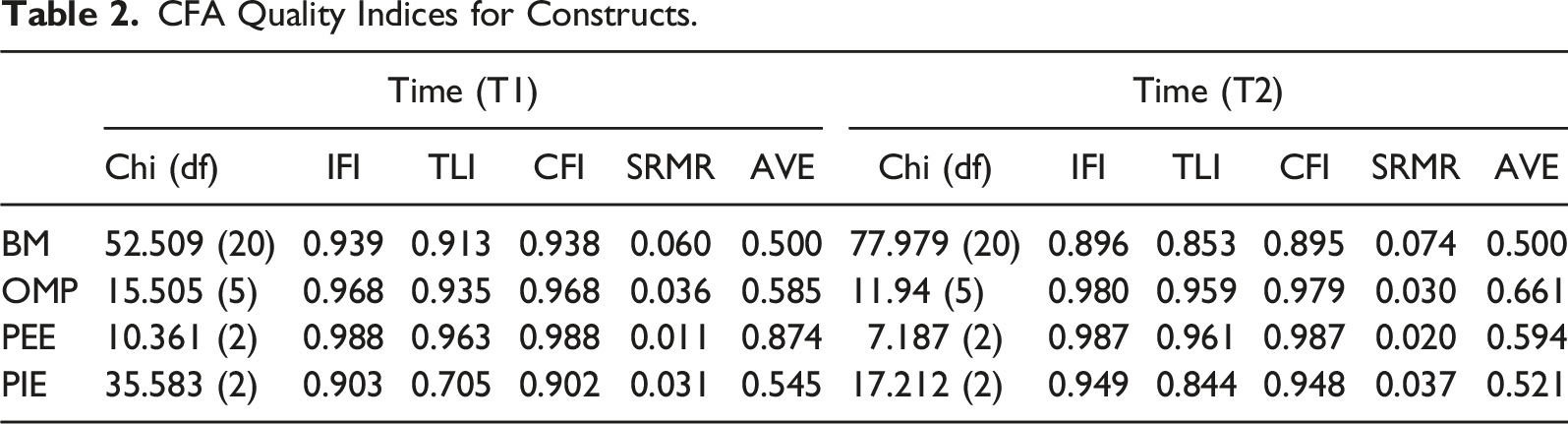
We carried out several Confirmatory Factor Analyses (CFA) to evaluate the suitability of the scales both at T1 and T2 and to ensure measurement invariance. Then, we analyzed data by means of structural equation modeling (SEM) using AMOS version 20 in order to test and estimate the conceptual model, and cross-lagged longitudinal analyses were conducted, where boundaryless career orientations and perceived employability at T2 were controlled by their equivalent constructs at T1. Consequently, the model finally included: covariance among the constructs at the same time point; covariance between error terms of each indicator at T1 and their equivalent indicator at T2; constructs at T1 to control for baseline levels for each variable at T2; and cross-lagged relationships to test the hypotheses (Guan et al., 2017; Redondo et al., 2022).
Results
Descriptive Statistics. Cronbach’s Alpha in Brackets.

*, ** Statistically significant at the 5 and 1% levels, correspondingly.
CFA Quality Indices for Constructs.
Nested model Comparison. Discriminant Validity.

We assessed measurement invariance by conducting multigroup analysis in the measurement model. In the unconstrained model, the standardized regression weights were freely estimated for each time point (
Standardized estimates. P-values in brackets.

These results confirm H1b and H2b and show that BM is a significant antecedent of PEE but not of PIE, nuancing the general statement in the literature regarding the fact that a boundaryless mindset orientation is an antecedent of employability. Regarding the links between PE and BCO, the only significant (and positive, as expected) relationship was PEE(T1) → OMP(T2), suggesting that PEE is a significant antecedent of one of the sub-dimensions of BCO, thus confirming H4b
Accordingly, our results suggest the existence of a reciprocal relationship between having OMP and PEE and a unidirectional relationship between having a BM as antecedent of PEE.
Discussion
Drawing from boundaryless career theory, this paper defended the existence of a reciprocal relationship between boundaryless career orientations and perceived employability. Boundaryless career orientations reflect a willingness to meet career tasks and transitions that may lead to higher employability. At the same time, perceived employability allows individuals to shape their careers in order to achieve goals and subjective success, therefore, it may serve as a driving force for individuals to embrace a boundaryless career, motivated by a desire to continuously improve their skills, broaden their networks, strategically position themselves in the changing and competitive job market, to ultimately fulfill their goals.
Thus, this paper presents a novel and significant contribution to the study of careers and employability by theoretically and empirically addressing a gap in the literature on the directionality of the relationship between boundaryless career orientation and employability. Through the use of longitudinal data, which is a milestone in this type of work since most of them use cross-sectional data, it has been possible to delve deeper into the nature of this relationship by discovering previously unexplored patterns. The findings challenge the conventional notion that boundaryless career orientation is simply a precursor to employability, proposing instead a more nuanced perspective that recognizes the reciprocal influence between some dimensions of these variables, depending on the two underlying dimensions of a boundaryless career orientation (boundaryless mindset and organizational mobility preference) and the internal/external nature of employability, spotting the complexity of the relationship between boundaryless careers and employability.
This work expands the existing literature on both employability and career development and provides significant information for managers, professionals, and career counselors since it offers the following contributions: First, it suggests the existence of different directionalities in the relationships between the concepts of boundaryless career orientations and perceived employability and its sub-dimensions: having organizational mobility preference is reciprocally related to perceived external employability, therefore, in career-building, external employability and mobility preference help shape and reshape each other. However, having a boundaryless mindset is also an antecedent of external employability but our “short-term” data does not support the corresponding reverse causation. Second, it evidences the need to differentiate between internal and external perceived employability since none of the relationships between boundaryless career orientation (and its underlying sub-dimensions) and internal employability, regardless of the direction, were significant. Therefore, although the literature notes that the boundaryless career concept affects internal movements and the crossing of inner boundaries within the current company, it looks like the differential effect of this orientation is located in the perception of a better capacity for transitions across external boundaries. Third, in light of our results, it seems that a boundaryless mindset is more stable than having organizational mobility preference, which is more flexible. Thus, it looks like a boundaryless mindset has a stronger link to long-standing factors, whereas the mobility preference seems to be more related to short-term factors. These findings are in line with Wiernik and Kostal (2019) and Redondo et al. (2023) who suggest that there are important differences between the two underlying sub-dimensions of a BCO.
Hence, the role of both sub-dimensions of a boundaryless career an antecedent of perceived employability is confirmed for external but not for internal employability. Different plausible explanations may be offered from this finding. First, following Arthur (1994, p. 296), boundaryless orientations are highly “sustained by extra-organizational networks or information.” Thus, boundaryless workers may emphasize the working environment beyond the current organization and not only within the current one, and they may be more involved in search behaviors (McArdle et al., 2007; Verbruggen, 2012), and consequently affect perceived external employability to a greater extent. Second, by conceiving their career as a path that also drives outside organizational boundaries, boundaryless workers would engage on versatile competences and skills that may be used in different contexts rather than on competences and skills preferred by the current organization (Cortellazzo et al., 2020). Third, although career self-management training programs may seem beneficial for companies, their effective implementation is difficult and therefore companies may develop compulsory training and development programs (Kossek et al., 1998), devoted to increasing the organization-specific capabilities and skills of their workers. If this is the case, then it would seem reasonable that having a boundaryless orientation does not make a differential impact on the perceived internal employability.
Regarding the reverse relationships between the aforesaid concepts of boundaryless career orientation and perceived employability, that is, the role of employability as an antecedent of boundaryless career, our findings differ depending on the sub-dimension considered. Particularly, this reciprocal role is only confirmed for external employability and the sub-dimension of organizational mobility preference, as mentioned previously. In line with Rodrigues et al. (2019), it appears that external employability is a prerequisite or needed resource for organizational mobility preference, since choosing a career across organizations as the best option to achieve goals requires a certain degree of confidence regarding one’s chances of getting a meaningful job outside the current company. Conversely, individuals with lower perceptions of external employability will place greater focus on security, predictability, and safety within the current organization and will be less inclined towards external mobility. As long as individuals feel they have a chance of obtaining new employment in the labor market, their preference for mobility is likely to increase.
However, external employability does not seem to impact having a boundaryless mindset, at least in the short term. It seems that traits like enjoying working with people outside the organization, thriving in roles that involve interacting with diverse individuals across various institutions, and feeling energized from novel experiences and situations are not nurtured in the short term by external employability.
Perceived employability is intricately tied to a combination of personal factors (age, psychological traits, skills…), structural factors (networks, labor market conditions, organizational support, unemployment…), and their interactions, some being more stable than others (De Cuyper et al., 2012; Vanherke et al., 2014). According to Berntson and Marklund (2007), an increase in perceived employability is more likely caused by less stable factors like organizational support for skill development, improvements in market conditions, or economic prosperity, rather than by changes in stable factors like an individual’s inherent dispositions. As for career orientations, the literature suggests that they are influenced by individual factors (e.g., family relationships, education, attitudes, or work experience) and contextual factors (e.g., social background or labor market conditions) (Rodrigues et al., 2013, 2019).
As shown in this work, an increase in perceived external employability is unlikely to impact the level of a worker´s boundaryless mindset in the short-time, but it is likely to enhance their mobility preference. Consequently, our results allow to spot that having organizational mobility preference is more flexible and we can speculate that it may be due to having a stronger association with short-term factors such as working conditions and/or labor market circumstances, rendering it more context-dependent. However, a boundaryless mindset is more stable, thus, likely more closely related to long-term or steady factors such as family circumstances, fulfilling career aspirations, diverse work experiences, or personal dispositions (Wiernik & Kostal, 2019). The fact that Wiernik and Kostal (2019) found that correlations between mobility preference and traits and dispositions were non-significant in many cases may support this explanation.
This work also presents important practical consequences for managers and career professionals. The main implication for managers is that both boundaryless career sub-dimensions are related to increased perceptions of external employability, but not to internal employability. This may pose a challenge for organizations to retain their employees, which becomes particularly intense in the case of those with mobility preference, as this orientation is also nurtured in the short-term by higher perceptions of external employability.
In this situation, a good strategy for organizations might be to develop activities and policies aimed at making boundaryless workers perceive themselves as more internally employable. According to this, organizational career management may favor employability, growth, and development associated with boundaryless careers within the organization. Investing in training programs, mentorship initiatives, and accessibility to resources that enhance both technical and soft skills will be important. Moreover, organizations can encourage boundaryless workers to engage in cross-functional projects and collaborate with diverse teams, allowing them to broaden their expertise and build a robust professional network. By doing so, workers are more likely to experience a diverse range of positive job attitudes and experiences in line with their goals and internal prospects for personal growth. This, in turn, contributes to increased employee retention. Additionally, our study points to the need for a diversified management of the different profiles underlying a boundaryless career. If career construction is a process by which individuals build a career and design their life, and where shaping career orientation is a way of adapting to work and life circumstances, managers must aid workers in this process to make them healthy, productive, happy, and employable (De Vos et al., 2020). Helping workers to achieve career-life integration within the current organization may be the best retention strategy.
As for career counselors, our results point to the support of boundaryless orientations for developing and maintaining employability as a means to navigate the contextual dynamism of current business scenarios and to support careers (Rodrigues et al., 2019). In this sense, it is crucial to adopt a holistic and personalized approach to enhance the perceived employability of workers, understanding each individual’s orientations and aspirations. In this sense, career professionals and counselors must recognize the unique skill set and areas for development of the corresponding worker by conducting comprehensive skills assessments and career audits for the identification of strengths and areas that require enhancement. Subsequently, career counselors can collaboratively develop tailored learning plans according to the workers’ orientations and aspirations, suggesting relevant courses for upskilling and reskilling that ensure that workers stay competitive in the evolving job market. Moreover, career counselors can guide boundaryless mindset and organizational mobility preference workers in building and maintaining a robust professional network. Encouraging them to attend industry events, join relevant online communities, and actively participate in networking activities can broaden their connections across organizational boundaries. Furthermore, providing insights into effective self-marketing strategies, such as maintaining an updated and compelling online professional presence, can further contribute to their perceived employability. Additionally, career counselors can offer guidance on crafting adaptable career narratives that highlight the value of diverse experiences, emphasizing how these experiences contribute to the flexibility of boundaryless workers. Ultimately, by empowering boundaryless workers with personalized career development strategies and networking skills, career counselors play a pivotal role in enhancing their overall perceived employability in today’s dynamic professional landscape.
No study goes without limitations. Firstly, the time lag in our data was three months, and, accordingly, we have only been able to discern short-term effects between our focal constructs. However, we have advocated that certain processes with regard to the impact of employability on career orientations may be long-term and, thus may take longer than three months to be visible. In this case, further study on the mid and long-term effects of employability on career orientations is required. Secondly, although the sample size is larger than the ones used in other longitudinal studies in this field (e.g., Cortellazzo et al., 2020) and we have checked that attrition is unlikely to have biased our results, similar studies that use larger samples with smaller attrition would help to generalize our results. Finally, we have tested our hypotheses on Spanish workers, thus, a Latin population. Despite we believe this is an asset of our work, given that some authors have suggested that cultural differences may influence career attitudes, further studies in other cultures and/or countries would be a welcome addition to the literature on this topic.
Conclusion
Our study on reciprocal relationships between boundaryless career orientations and perceived employability has shown different links between these constructs depending of the sub-dimension of the orientation and on the internal/external nature of employability. A reciprocal relationship between having organizational mobility preference and perceived external employability is supported. However, having a boundaryless mindset seems to be an antecedent of external employability but the corresponding reverse causation is not (short-time) supported. Indeed, individuals with organizational mobility preference demonstrate a reciprocal short-term relationship to perceived external employability. Thus, having a higher preference for mobility is associated with higher perceptions of external employability and vice-versa, since it appears that perceptions of external employability serve as a prerequisite for the development of a boundaryless career. Therefore, in career-building, employability and mobility preference help shape and reshape each other. However, having a boundaryless mindset is an antecedent of external employability but it does not seem that external employability is a short-term cause of having a boundaryless mindset orientation. It looks like this orientation may be more stable and linked to long-term or steady factors such as changing family circumstances, fulfilling career drives, and acquiring different working experiences or personal dispositions, that take longer to be achieved.
Additionally, although the literature notes that the boundaryless career concept is also related to internal movements and to the crossing of boundaries within the current company, our work suggests that the differential effect of this orientation has to do with the higher perception of the capacity and possibilities for transitions across external boundaries. In fact, both sub-dimensions of a boundaryless orientation are associated with increasing perceived external employability, but not with internal, which may pose a challenge to organizations to retain those workers.
Finally, our work suggests the need to differently manage and counsel the two sub-dimensions of a boundaryless career orientation as they are likely nurtured and affected by different factors.
Footnotes
Declaration of conflicting interests
The author(s) declared no potential conflicts of interest with respect to the research, authorship, and/or publication of this article.
Funding
The author(s) disclosed receipt of the following financial support for the research, authorship, and/or publication of this article: funded by Universidad Pontificia Comillas, reference number 632201808P., 632201808P.
