



Abstract
Objective
We examined the formal and informal advance care planning (ACP) patterns of older couples and determined how these patterns are associated with individual and spousal characteristics.
Methods
Using data from the 2014 and 2016 Health and Retirement Study, we performed latent class analysis to identify ACP patterns and multinomial regression models to describe characteristics of older couples (N = 2195 couples).
Results
We identified four ACP patterns: high engaging couple (47%); high engaging husband—low engaging wife (11%); high engaging wife—low engaging husband (11%); and low engaging couple (31%). High engaging couples were more likely to be older, educated, and financially better off, whereas high ACP engagement in discordant ACP patterns was associated with health and wives’ constraints.
Discussion
A couple-based approach was recommended to promote the merits of ACP where spouses were older, had limited resources, or where one or both partners were suffering from poor health.
Introduction
In the final days of life, one may be incapable of making decisions about medical treatments such as accepting or rejecting certain types of care. To better understand an individual’s preferences for end-of-life treatment and ensure their wishes are followed, advance care planning (ACP) is highly encouraged. ACP is often defined as a continuing process of assessing and discussing one’s wishes and preferences about future medical care, and completing legal documentation that indicates these wishes and preferences together with nominating health care proxies (Sudore et al., 2008). Engagement in ACP has garnered much attention for its beneficial effects on quality of life and quality of care at the end of life. For instance, dying patients with ACP are less likely to receive life-sustaining interventions at the end of life and are more likely to die at home rather than in other settings (Bischoff et al., 2013; Teno et al., 2007). They are more likely to receive palliative and hospice care during the process of dying which are often linked to high quality of care and quality of life (Brinkman-Stoppelenburg et al., 2014). One of the critical and ultimate questions here is how we can improve the quality of life and care at the end of life for older Americans by encouraging them to participate in ACP.
Understanding ACP engagement among older adults is important, as the majority of the current population in the US reach old age and die at an advanced age (Yang & Land, 2006). Recent studies, including the one that used a nationally representative sample of Medicare beneficiaries show that more than half of older Americans have completed an advanced directive (Boerner et al., 2021; Carr & Luth, 2017). There has been a growing body of empirical research seeking to understand who engages in ACP and what factors contribute to this engagement in late life (see Boerner et al., 2021; Freytag & Rauscher, 2017; Pearlman et al., 1995). Yet, existing literature has three shortcomings. First, the majority of these studies focus more on formal ACP, such as completing a legal document called an advance directive that includes a living will and appoints a durable power of attorney for health care, or end-of-life discussions between health care providers and patients, leaving out informal conversations which have taken place between patients and their loved ones. Some exceptions include work by Boerner and colleagues (2021) that examines both formal and informal ACP. This study points out that older Medicare beneficiaries who have only formal ACP were the more vulnerable. They were more likely to be at risk of experiencing social isolation and probable dementia, and more likely to be associated with socioeconomic disadvantage (Boerner et al., 2021). Another study that investigated older adults who died of cancer found that informal end-of-life discussion was associated with reducing the intensity of end-of-life care, whereas completing the formal documentation to appoint a power-of-attorney was not (Narang et al., 2015). Therefore, it is critical to consider both formal and informal care planning in examining ACP engagement patterns among older adults. Further, patterns of engagement across formal and informal ACP are worth exploring as these two are closely but independently associated with end-of-life care quality (Bischoff et al., 2013).
Second, most research has studied ACP engagement in late life by treating it as an individual choice or decision, which fails to account for the role that family members play. For married couples, the influence of spouses over each other may play an important role in shaping individual behavior and decisions to engage in formal and informal ACP. Only a small number of studies have examined ACP engagement using information obtained from both spouses (see Koss, 2017; Koss & Jensen, 2020). Given the extensive evidence of concordance in lifestyle and health behaviors and outcomes in married couples through the lens of “linked lives” that shape an individual’s life as indicated by life course scholars (Drewelies et al., 2018; Elder, 1994), it is critical to understand patterns of ACP engagement among older couples, using Latent Class Analysis (LCA) based on the reports from both spouses.
Third, the dyad-level model suggests that couples’ behaviors or outcomes are associated with intra- and interpersonal factors (Lewis et al., 2006). There is an urgent need to examine individual characteristics as well as spousal characteristics to further understand the level of engagement that occurs in ACP. This will help to understand what factors can be modified for couples and help to identify which specific groups should be targeted for intervention. Appropriate support programs and public campaigns could also be developed to increase the level of awareness of the need for ACP in late life.
To overcome these shortcomings, we consider ACP as a part of a preventive health care arrangement, by looking at concordance or discordance in the relationship between partners who are older, using LCA. This study aims to classify the patterns of engagement in ACP and to identify what individual and spousal factors are associated with specific patterns. We employ data from the 2014 and 2016 Health and Retirement Study (HRS), a nationally representative sample of older adults in the United States. In particular, we focus on married couples and their ACP engagement patterns, and what role individual or spousal socioeconomic, health-related, and psychological factors play in establishing these patterns.
This study will help broaden our understanding of formal and informal ACP engagement behaviors in late life and help us to see that the decisions may not be made solely by individuals, but rather, by older couples as a unit, based on the theoretical perspective of our lives being “linked.” Our findings could identify factors that are associated with the concordant and/or discordant health-related engagement or behaviors among older couples. This might promote smoother transitions before, during, and after individual or spousal deaths by encouraging engagement in ACP.
Background
Linked Lives and Their Influence on Health Behaviors
Our lives are linked and this linkage provides social support and directs social regulations that are closely associated with each individual’s health and well-being (Berkman et al., 2000; Cohen, 2004; Elder, 1994). In particular, spousal relationships have been considered as the most important and strongest factor influencing the course of one’s life with a substantial impact on the health and well-being of both partners (Lewis et al., 2006; Utz et al., 2016). Literature on married couples provides extensive evidence of concordance in lifestyle and health behaviors, including but not limited to smoking, drinking, diet and exercise, and preventive health care service use (Han et al., 2018; Pai et al., 2010). Spouses influence each other’s health, often make decisions together, and prepare or react to foreseen and unforeseen difficulties together. This ultimately affects the quality of life and survival, even in late life. In one recent qualitative study which interviews 31 older veterans and their surrogates, the majority of participants’ surrogates were their spouses (Fried et al., 2019). Regarding issues which arise at the end of life, the ongoing process of joint-decision making over time could help reduce the level of distress or conflict within the family when it has to make end-of-life care decisions (Koss & Jensen, 2020).
Using LCA to identify ACP engagement patterns of older couples can advance our understanding in this field because this allows us to consider not just the completion of the formal ACP documentation but also the likelihood of engaging in informal conversation that concurrently characterizes both spouses’ level of ACP engagement. Another strength of this couple-centered approach based on the reports from matched spouses in a nationally representative survey of older Americans worth underscoring is that this helps identify heterogeneity in the level of both formal and informal ACP engagement between couples. Previous studies using information from both spouses (Koss, 2017; Koss & Jensen, 2020) helped us predict ACP patterns in older couples. First, we expect to observe concordant patters of ACP engagement among older couples, with either a high or low level of engagement from both spouses. Second, we expect also to observe discordant patterns of ACP engagement among spouses possibly, with one spouse highly engaged in ACP whereas the other is not.
Individual and Spousal Factors: His or Hers
Although there have been no studies to date examining ACP patterns of older couples using LCA, key demographic, socioeconomic, health, and psychological characteristics are known to be associated with an individual’s and spouse’s engagement with ACP in late life (Boerner et al., 2013; Carr & Luth, 2017; Koss & Jensen, 2020). Gender was reported to affect ACP engagement with women tending to have informal conversations only and being less likely to complete formal documentation about their wishes than men (Boerner et al., 2013). Advanced age has been known to be positively associated with a higher level of ACP engagement (Boerner et al., 2013; Koss, 2017). Ethnic minorities including Black older adults, compared to non-Hispanic Whites, are less likely to engage in informal ACP discussions and formal ACP documentation on an individual level (Boerner et al., 2013; Gerst & Burr, 2008; Koss & Baker, 2018; Kwak & Haley, 2005). A high level of educational attainment is associated with a greater level of ACP engagement (Boerner et al., 2013). Spousal health status including cognitive function of each partner and couple have been significantly associated with ACP behaviors (Koss & Jensen, 2020; Lu et al., in press).
One’s perception of the level of sense of control they have over their lives which is a measure of their belief in the extent they can control their own life conditions and experiences (Skinner, 1996), is often linked to engaging in protective or desired behaviors such as physical activity and exercise, and preventive health care service use (Infurna & Mayer, 2015; Penedo & Dahn, 2005). This eventually leads to better physical, psychological, and cognitive health and well-being in mid- and late life (Penedo & Dahn, 2005; Ranby & Aiken, 2016). Specifically, the literature introduces two domains of sense of control: mastery and constraints. Mastery is viewed as one’s perceived ability to carry out specific behaviors or actions to achieve ideal outcomes, and constraints are understood as one’s perceived barriers or obstacles to attaining desired actions or outcomes (Infurna & Mayer, 2015; Lachman et al., 2011). These two domains show distinct connections between one’s actions (behaviors) and outcomes (Infurna & Mayer, 2015). In the context of engaging in ACP, sense of control may arise from the knowledge that people have and the resources that are available. If one has sufficient knowledge about ACP or access to resources, this may affect his or her perceived ability to engage in ACP as well as his or her own evaluations about barriers or obstacles to achieving desired end-of-life experience through the completion of formal ACP or taking part in informal conversations. A higher level of sense of control is found to be associated with the completion of ACP, yet this relationship is still understudied (Inoue, 2016; Rosnick & Reynolds, 2003), especially in the context of married couples.
This study stems from the literature dealing with how the behavior and beliefs of older couples, with their individual and interdependent characteristics, affect health and health behaviors. Here we explore how these factors of older couples are associated with the identified patterns of ACP engagement using LCA.
Methods
Study Sample
Data for this study came from the 2014 and 2016 waves of the Health and Retirement Study (HRS), which is a nationally representative survey of Americans aged 51 years and older. The HRS is conducted biennially, and additional information is collected from respondents about their life circumstances, subjective well-being, and lifestyle every other wave, via the study’s Leave Behind Questionnaires. This study pooled two waves from the Leave Behind Questionnaires (n = 19,787), and restricted the sample to married couples aged 65 and older where both spouses responded. First, out of 19,787 respondents, we selected 5305 respondents who were both married and aged 65 years and older. Second, 911 respondents whose spouse did not complete the survey were excluded, leaving 4390 respondents in our sample (N = 2195 couples).
Measures
Advance care planning
We examined responses to advance care planning with three questions (Orlovic et al., 2019). First, participation in informal ACP was assessed with the question asking whether the respondent had ever discussed his or her preferred care or medical treatment options with anyone if they became seriously ill in the future. Second, formal ACP was assessed with two questions: if respondents were unable to make those decisions, had they: (a) made any legal arrangements for a specific person or persons to make decisions about their care or medical treatment, and (b) provided any written instructions about their preferences for the type of care or medical treatment they wanted to receive. All three indicators were coded into dichotomous variables (1 = yes, 0 = no).
Sociodemographic characteristics
Age and education were coded as continuous variables. Race was coded as a dichotomous variable (1 = Both husband and wife are non-Hispanic Whites, 0 = At least one spouse is not non-Hispanic White). Wealth was logged and winsorized at level 99% to reduce skewness.
Health characteristics
Questions about self-rated poor health and depression were included to measure the physical and psychological aspects of health. Self-rated poor health was coded into a dichotomous variable (1 = fair or poor health; 0 = excellent, very good, good health). Depression was measured by the sum of number of depressive symptoms based on the Center for Epidemiologic Studies Depression scale (e.g., depression, everything is an effort, sleep is restless, felt alone, felt sad, and could not get going). The response ranged from 0 to 8. Cognitive functioning was measured using sums of the total recall and mental status indices (i.e., self-reported memory, change in memory over the last 2 years, immediate word recall, delayed word recall, subtractions in the serial 7s test, backwards counting, date naming, object naming, president/vice-president naming, and vocabulary) ranging from 0 to 35 (McCammon et al., 2019).
Sense of control
Mastery and constraints were used to measure the sense of control a participant felt they had over their lives (Lachman & Weaver, 1998). Five questions examined mastery (e.g., “I can do just about anything I really set my mind to” and “When I really want to do something, I usually find a way to succeed at it”). Similarly, five questions were used to examine constraints (e.g., “I often feel helpless in dealing with the problems of life”). Respondents were asked to answer each question using a Likert scale ranging from 1 “strongly disagree” to 6 “strongly agree.” Mastery and constraints were each examined using the mean score of ratings for the five questions. Lower scores indicated lower levels of mastery or constraints. Mastery or constraints were coded as missing, if respondents had missing values for three or more items. These measures showed high reliability (α = .90 for mastery; α = .87 for constraints) and they were negatively correlated (r = −.44, p < .001).
Statistical Analyses
We conducted a series of Latent Class Analyses using Mplus 6 with three ACP items, one for informal ACP and two items for formal ACP, to identify patterns of ACP among older couples. The model fit statistics, Akaike Information Criteria (AIC), Bayesian Information Criteria (BIC), Adjusted BIC, entropy, and Vuong–Lo–Mendell–Rubin p value were all considered when selecting the best-fitting model. Lower values of AIC, BIC, adjusted BIC, and entropy value close to 1 indicate the superior fit of a model. Also, a significant Vuong–Lo–Mendell–Rubin p value suggests that (k) class has a better fit than (k-1) class. Second, each identified class was named based on the characteristics of the best fit model selected. We also compared characteristics of the identified classes. Third, we performed multinomial logistic regression analyses using Stata 16 to examine how these identified ACP profiles of older couples were associated with individual and spousal information including: sociodemographic, health-related, and psychological characteristics. Note that 650 couples of the analytic sample had missing values in covariates, namely, depression, cognitive functioning, mastery, and constraints. To address this issue, we employed full information maximum likelihood method. Key findings remained similar in additional analyses excluding these 650 couples from the analytic sample.
Results
Key characteristics of the study sample
Descriptive Summary of the Study Sample.
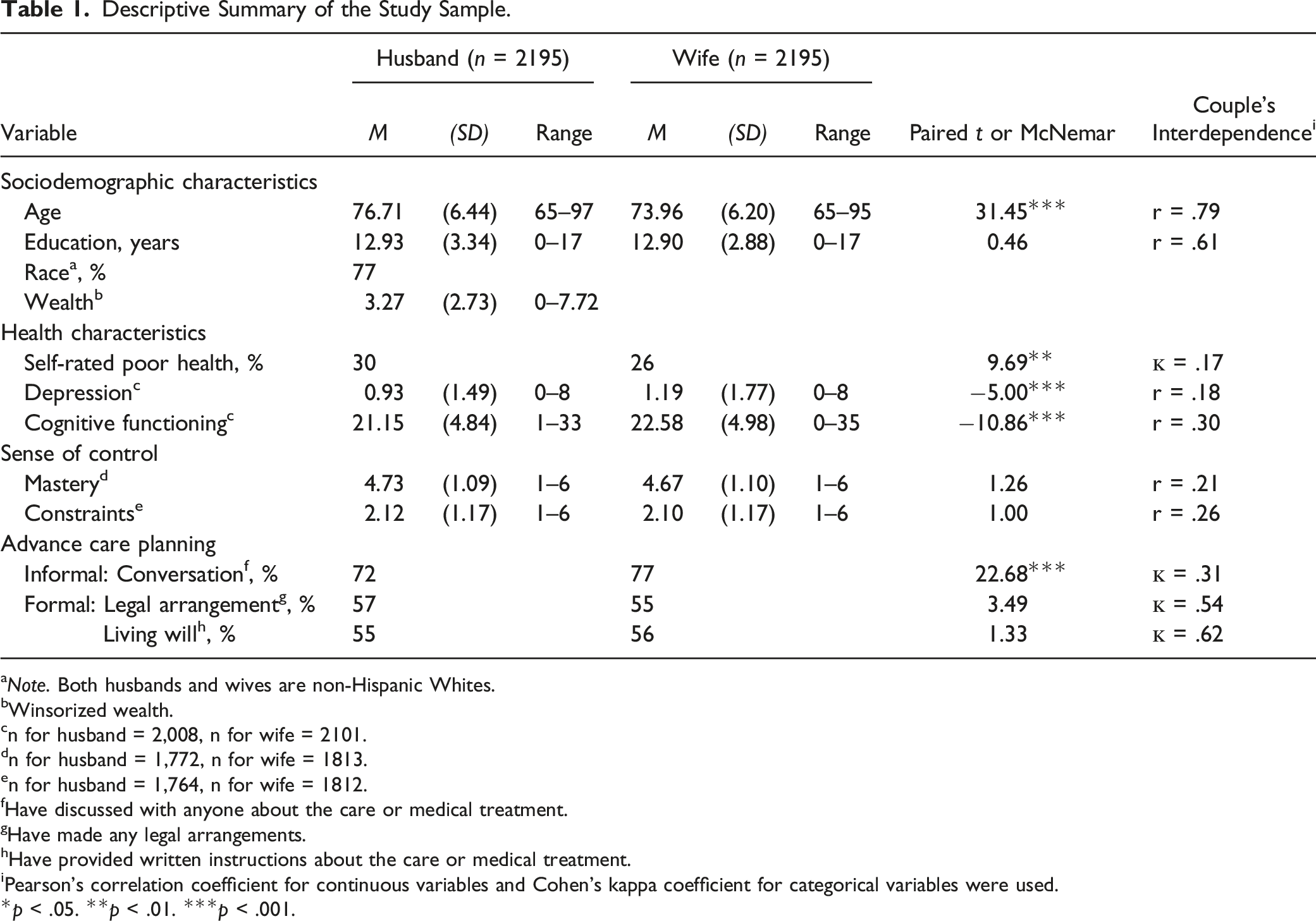
aNote. Both husbands and wives are non-Hispanic Whites.
bWinsorized wealth.
cn for husband = 2,008, n for wife = 2101.
dn for husband = 1,772, n for wife = 1813.
en for husband = 1,764, n for wife = 1812.
fHave discussed with anyone about the care or medical treatment.
gHave made any legal arrangements.
hHave provided written instructions about the care or medical treatment.
iPearson’s correlation coefficient for continuous variables and Cohen’s kappa coefficient for categorical variables were used.
*p < .05. **p < .01. ***p < .001.
Latent Class Analysis
Model fit statistics
Latent Class Analysis and Model Fit Statistics.
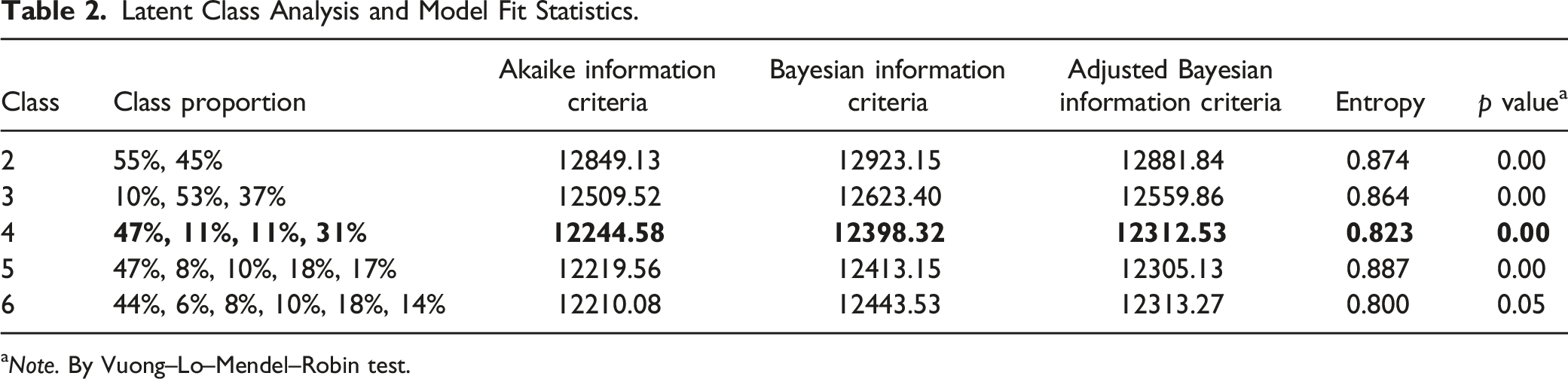
aNote. By Vuong–Lo–Mendel–Robin test.
Advance care planning profiles
Figure 1 illustrates the derived Classes of engagement in ACP. First, Class A (high ACP engaging couple) is the largest profile with about 47% of the respondents belonging to this profile. This profile was characterized by a high concordance within couples, as well as a high level of engagement in both formal and informal ACP. The probability of engaging in informal conversations, legal arrangements, and living wills was close to 1, which indicates that the probability of couples engaging in ACP were close to 100%. Next, Class B (high engaging husband-low engaging wife) includes 11% of the sample. Husbands were more likely to engage in ACP than wives. On the other hand, Class C (high engaging wife-low engaging husband), which accounts for 11% of the sample, showed that wives were more likely to engage in ACP than their husbands both formally and informally. The last profile, Class D (low ACP engaging couple) accounts for about one third (31%) of the sample, and this Class was characterized by both husbands and wives showing a lower level of engagement in ACP. Both spouses were less likely to engage in any types of ACP compared to other Classes. Advance care planning profiles.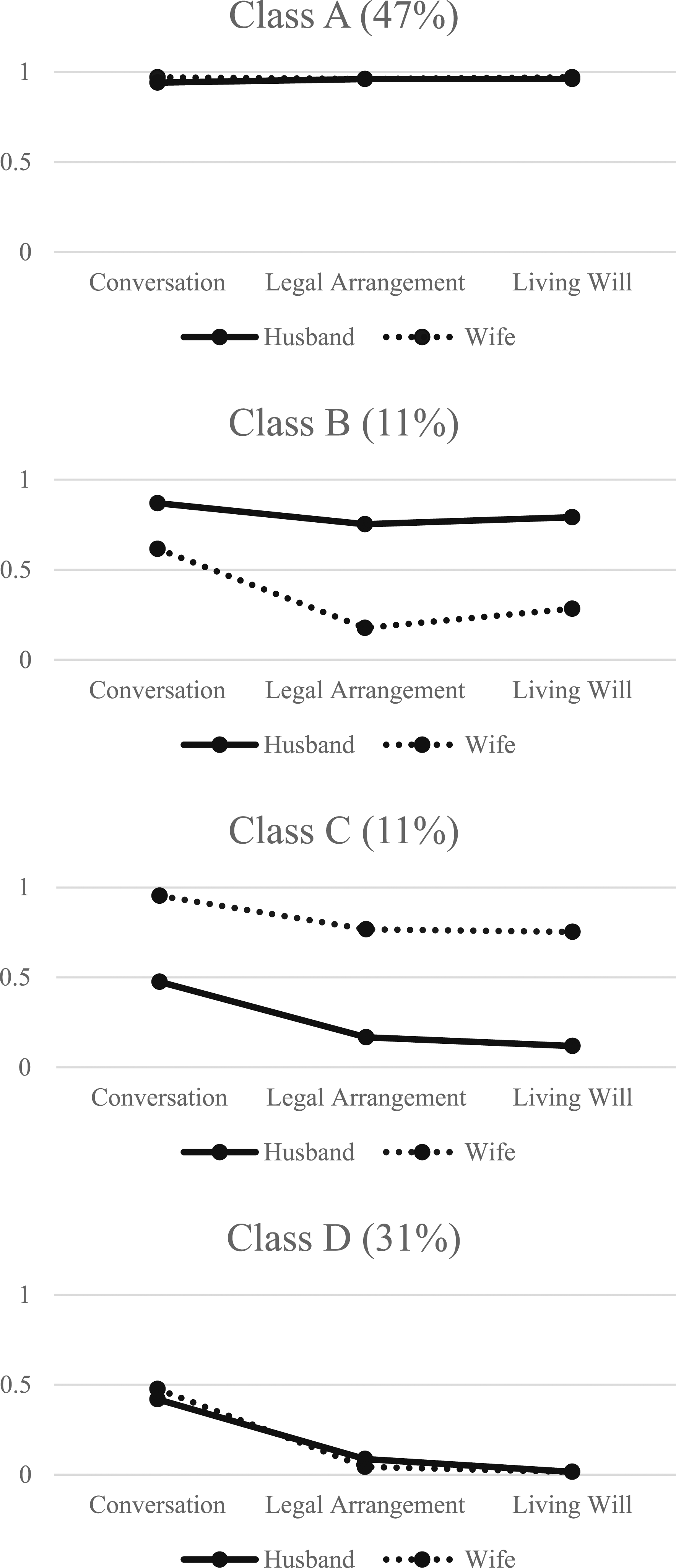
Participant Characteristics by Advance Care Planning Profiles.
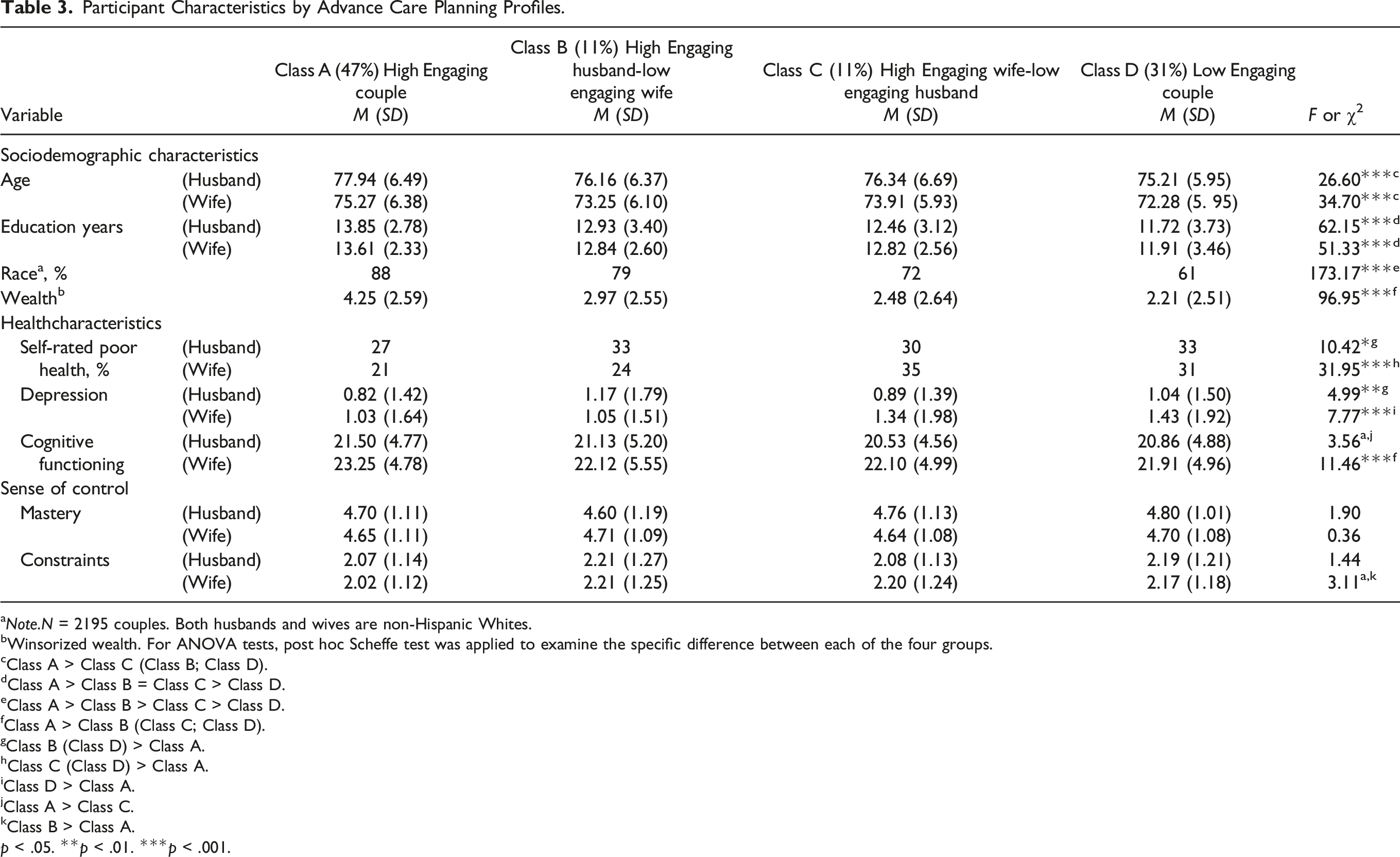
aNote.N = 2195 couples. Both husbands and wives are non-Hispanic Whites.
bWinsorized wealth. For ANOVA tests, post hoc Scheffe test was applied to examine the specific difference between each of the four groups.
cClass A > Class C (Class B; Class D).
dClass A > Class B = Class C > Class D.
eClass A > Class B > Class C > Class D.
fClass A > Class B (Class C; Class D).
gClass B (Class D) > Class A.
hClass C (Class D) > Class A.
iClass D > Class A.
jClass A > Class C.
kClass B > Class A.
p < .05. **p < .01. ***p < .001.
Multinomial Logistic Regression
Relative Risk Ratios of Multinomial Logistic Regression Model for Advance Care Planning Profiles.

aNote. N = 2195 couples. Both husbands and wives are non-Hispanic Whites.
bWinsorized wealth.
p < .05. **p < .01. ***p < .001.
Next, health characteristics showed Class differences as well. Poorer self-rated health among wives was associated with increased risk of belonging to Class C (RRR = 1.50, p <0.01). A better cognitive functioning score among husbands was associated with decreased risk of both spouses highly engaging in ACP (Class A: RRR = 0.87, p < 0.05). On the other hand, if a wife shows a greater level of depression, the couple is more likely to show a concordant ACP engagement pattern (either high or low; see Supplementary Table 2). Husband’s depression was associated with a higher likelihood of belonging to Class B than Class A (see Supplementary Table 1). Last, a higher level of constraints in wives was associated with a greater likelihood of belonging to Class B than Class A (see Supplementary Table 1): if a wife reports a higher constraint score, her husband will have a higher likelihood of engaging in ACP, but she will not.
Discussion
In this study, we examined: (1) the patterns of older couples towards ACP, both formally, making formal arrangements, and informally in conversations, using LCA, and (2) how these identified patterns were associated with individual and spousal characteristics. This was achieved by using data from a nationally representative study that surveys spouses in a marriage in late life. We classified these couples into four groups based on their levels of engagement in ACP. Seventy eight percent of the couples in our sample showed a concordance in their level of engagement in ACP for both spouses (47% showed a high ACP engagement; 31% showed a low ACP engagement), whereas 22% of the sample showed a discordance between spouses in their ACP engagement, characterized as: high engaging husband and low engaging wife (11%) and, low engaging husband and high engaging wife (11%), respectively. As previous studies that examined the association between individual and/or spousal characteristics and ACP behaviors indicated (Carr & Luth, 2017; Drewelies et al., 2018; Koss & Jensen, 2020), each spouse’s age, education, race/ethnicity, health and sense of control over their lives were partially associated with the couples’ ACP engagement patterns. The findings may offer important insights into the dyadic nature of ACP engagement in older couples and provide practical implications for methods by which the public can be persuaded to consider discussing end-of-life issues using a collective approach as a couple or a family. In addition, practitioners who work with clients may approach not just the client but also his or her spouse or partner when initiating the ACP discussion.
Four groups of engagement emerged based on older couples’ formal and informal ACP behaviors. The first group, Class A—high ACP engaging couple (47%), showed a high concordance between husbands and wives, meaning that both spouses had made formal and informal arrangements for ACP. This finding was similar to those of previous studies which examined the association between either individual or dyadic ACP behaviors and relevant factors (Boerner et al., 2013; Koss, 2017; Koss & Jensen, 2020). These factors considered older couples in this group, compared to those in other groups, who were the oldest and non-Hispanic White, had the longest average years of education, and were financially well-off. They were the healthiest, physically and psychologically, compared to those in the other three groups.
The second largest group, Class D—low engaging couples (31%), also showed a high concordance between spouses in terms of ACP behaviors; however, both husbands and wives were less likely to engage with the ACP process. The couples in this group did not seem to have any formal ACP arrangements, although half of them reported that they had taken part in informal ACP conversations. Class D were characterized as being younger and more likely to be from racial/ethnic minorities, with a lower level of education and wealth, and reporting poorer self-rated health, a greater number of depressive symptoms, and a lower cognitive functioning score than couples in Class A. Cumulative advantage/disadvantage theory explains that the gaps in opportunities and difficulties throughout one’s life course may generate growing inequalities in many aspects of his or her late life (O'Rand, 1996), making the differences in the profiles of these two groups, with high and low ACP engaging couples, well-understood. For instance, possible explanations for low ACP engagement patterns in both spouses in this group include lower health literacy due to a lower level of education, economic inequities, historical mistrust of the healthcare system among Black citizens, or a high level of religious involvement in racial minority groups which leads to discomfort in discussing death and dying (Koss & Baker, 2018; Kwak & Haley, 2005; Ladd, 2014; Sanders et al., 2016). In addition, empirical evidence showed that the completion of ACP documentation was disproportionally highly associated with those who were financially well-off because they were more likely to engage in financial planning which often includes health care planning as well (Carr, 2012; Kelly et al., 2013; Koss & Baker, 2018). Therefore, it would be recommended to reach out to those couples with limited resources through educational programs or community events that highlight the benefits of ACP engagement (Inoue et al., 2019).
Couples with discordant levels of ACP engagement were classified into two distinctive groups: Class B—high engaging husband and low engaging wife (11%) and Class C—high engaging wife and low engaging husband (11%). Interestingly, in both groups, we observed a high level of ACP engagement in individuals with poor health, compared to their husbands or wives. For instance, in Class B, husbands showed the highest prevalence of reporting poor self-rated health and the highest number of depressive symptoms overall. Compared to other groups, wives in Class C reported poorer health status. This finding is consistent with available evidence in the literature. Poorer health may increase readiness to think about ACP and actual engagement in ACP, whereas individuals with no critical health issues may not even think about death and dying, end-of-life care and decision making (Boerner et al., 2021). However, contrary to some prior research (Koss & Jensen, 2020), our findings do not suggest any significant association between ACP engagement pattern and spousal health in these two groups.
The findings from the multinomial logistic regression models confirmed the differences across the four groups mentioned above. When there is a concordance in ACP engagement within couples, those who are relatively younger, of racial and ethnic minorities, with a lower education level and lower level of household wealth are less likely to have informal conversations and complete formal documentation. Those in Class D need to be carefully evaluated and encouraged to understand the benefits of ACP. Targeting this group could provide the most benefit in preparing people for an end-of-life situation. In addition, wife’s advanced age and both spouses’ higher levels of education tend to be associated with one’s own high ACP engagement, but not necessarily his or her spouse’s.
In terms of individual and spousal health among older couples, a wife’s self-rated health was associated with Class C membership. This shows that the poor self-rated health of the wife may increase the possibility that she engages in developing her own ACP but not necessarily facilitating her husband’s likelihood of engagement in ACP, especially in the completion of legal documentation. Likewise, a husband’s greater level of depression increases the chance of his own ACP engagement, but not of his wife’s. These findings can be partially explained by one of the most common reasons why individuals do not consider completing ACP, that is because they are in good health (Carr, 2012; Inoue et al., 2019). For instance, when people are still healthy or have no critical condition, they may see no point in discussing or completing any end-of-life care plans. These findings also reveal that an older individual’s health does not necessarily lead to his or her spouse being more engaged in ACP. This could be seen as an intervention point that requires further study to understand the underlying mechanisms governing engagement. For instance, if too much focus is given in providing care or support, there seems no room for these spouses to review their own ACP for the future.
Another finding we would like to highlight is the significance of the level of sense of control wives feel and how this affects ACP engagement patterns. Couples in Class B were more likely to have wives reporting a greater level of constraint, compared to those in Class A. This may be understood as a barrier to ACP engagement in wives in Class B when there is a discordance in ACP engagement patterns within couples who could be helped with some kind of support to lessen their perceived obstacles to participating in ACP. For instance, it would be beneficial if educational sessions about the benefits of ACP were provided or resources developed to help wives to adjust their own goals and understand the need to make formal arrangements around ACP. Future research needs to further examine the benefits of providing those wives who showed a relatively high prevalence of having informal conversations, but a low level of formal ACP engagement with more practical support.
This study has limitations. First, we have no information about when and how informal conversations and formal engagement with ACP took place (Koss & Jensen, 2020). As the previous studies pointed out, engagement with ACP is not a one-time event, instead, it is an ongoing process that tailors one’s wishes and preferences to suit the circumstances (Fried et al., 2019). Therefore, the current dichotomized self-reported answers about engagement in ACP both formally and informally may not be sufficient to examine the actual readiness or preparedness of those individuals. Future studies that collect more detailed information on ACP are warranted. Second, other significant relationships such as those with adult children, friends, or relatives were not considered. Although spousal relationships in late life are considered to be critical, older individuals may discuss their end-of-life issues with others, for instance, one of their close adult children, siblings, or friends, but not with their spouse for various reasons. Previous studies pointed out that older adults who exchanged sufficient emotional support with children were more likely to appoint an adult child as their durable power of attorney for health care (Carr et al., 2013), whereas those with a higher level of marital strain or difficulty were less likely to nominate their spouse as a health care proxy (Boerner et al., 2013). Third, this study focuses on married couples in late life, who may be in a better position than unmarried individuals regarding preparing for end-of-life care. Having a broader approach to this issue and including family involvement in ACP could be worth exploring in future research because, often, ACP is not just a within-couple decision but also involves multiple family members from different generations or significant others who are not necessarily family members. Fourth, the quality of spousal relationships (e.g., marital support and strain) was not included in this study. However, we found the quality of relationship insignificant in supplementary analyses (not shown). Lastly, we observed that a wife’s constraints were associated with her own ACP behaviors, but only for those showing a discordance in ACP engagement patterns within couples. This was somewhat puzzling, but it could have been driven from a complexity of shared or unshared health behaviors and relationships within these couples or differences across the four groups identified in this study. Therefore, this would require investigation in future studies.
Conclusion
Despite all efforts to encourage Americans to engage in ACP, more than a half of the older couples in the sample showed that at least one spouse was not fully engaged in either formal or informal ACP. Three quarters of the sample of older couples showed a concordance in terms of ACP behaviors, whereas the rest showed a discordance regarding their ACP behaviors. It was interesting to see that older couples with higher socioeconomic status or who were relatively healthier than their peers tended to take part in both formal and informal ACP, whereas those who were less educated, poorer, or less healthy needed to reach out for help to complete their ACP. Efforts to promote formal ACP engagement and informal conversations should be based on a deep understanding of individual preferences and goals for end-of-life care which should be contextualized within the shared beliefs, attitudes, and behaviors between spouses or among family members (Freytag & Rauscher, 2017; Koss & Jensen, 2020). Our findings from the Latent Class Analyses indicate that, in ACP, a couple-centered approach might be useful to help encourage the client and his or her spouse or partner to engage in ACP (Koss & Jensen, 2020). In particular, healthier spouses may be less likely to participate in both formal and informal ACP; however, they could still benefit from taking part in informal ACP conversations that may lead them to complete formal ACP.
Supplemental Material
sj-pdf-1-jah-10.1177_08982643211068555 – Supplemental Material for “Till Death Do Us Part”, Dying Matters, Beyond the Individual: Advance Care Planning Patterns Among Older Couples
Supplemental Material, sj-pdf-1-jah-10.1177_08982643211068555 for “Till Death Do Us Part”, Dying Matters, Beyond the Individual: Advance Care Planning Patterns Among Older Couples by Hyo Jung Lee and Bon Kim in Journal of Aging and Health
Footnotes
Declaration of Conflicting Interests
The author(s) declared no potential conflicts of interest with respect to the research, authorship, and/or publication of this article.
Funding
The author(s) disclosed receipt of the following financial support for the research, authorship, and/or publication of this article: Nanyang Technological University (Start-Up Grant/No. 04INS000566C430)

Supplemental Material
Supplemental material for this article is available online.
References
Supplementary Material
Please find the following supplemental material available below.
For Open Access articles published under a Creative Commons License, all supplemental material carries the same license as the article it is associated with.
For non-Open Access articles published, all supplemental material carries a non-exclusive license, and permission requests for re-use of supplemental material or any part of supplemental material shall be sent directly to the copyright owner as specified in the copyright notice associated with the article.
