



Abstract
Trust is assumed to be important for charitable giving. However, disparate associations have been found, and recent theoretical approaches emphasize motives for giving that do not rely on trust. To resolve this tension, we conducted a systematic review of evidence generated between 1988 and 2020. A meta-analysis of 69 effect sizes from 42 studies sampling 81,604 people in 31 countries confirmed a positive association between trust and giving across diverse measures, r = .22. Meta-regressions showed that organizational (r = .35) and sectoral trust (r = .27) were more strongly associated with giving than were generalized (r = .11) or institutional trust (r = .14). The relationship was also stronger in non-western (vs Western) countries and in nonrepresentative (vs nationally representative) samples. All evidence was correlational, and few studies measured actual behavior. We discuss implications for theories of trust and for fundraising practice, and highlight critical gaps in evidence.
Charitable giving—donating money to nonkin others (Bekkers & Wiepking, 2011)—is prolific. For example, between 56% and 81% of people in the United States, the United Kingdom, and Australia donate to charity in any given year (Charities Aid Foundation, 2017; Giving Australia, 2016; Lindsay, 2017). Furthermore, the nonprofit sector represents a significant proportion of the economy and workforce: around 5% to 8% of gross domestic product (GDP) in countries like the United States, Canada, Israel, Australia, and Japan (Casey, 2016). Understanding when and why people donate money to charity is therefore of concern not only to marketers working within nonprofits but also to wider society.
Trust is theorized to be a prerequisite for charitable giving (e.g., Becker, 2018; Gaskin, 1999): if donors are effective altruists, they must trust in an organization’s ability to deliver real benefits to beneficiaries. Recent studies, however, have shown that donors pay little attention to effectiveness ratings when selecting charities to support (e.g., Berman et al., 2018). If donors do not care about charity outcomes, they do not need to trust organizations to deliver effective aid. More broadly, diverse motives for giving have been discovered, many of which do not rely on a relationship of trust. These considerations cast doubt on the commonly held belief that trust is a prerequisite for giving.
Although a large number of studies have examined the relationship between trust and giving, results have varied substantially, with bivariate correlations ranging from positive (e.g., Ranganathan & Sen, 2012) to negative (e.g., Treiblmaier & Pollach, 2008), and sometimes no significant association being found (e.g., Lin, 2019). These inconsistencies further challenge the assumption that trust is a prerequisite for giving and hint that there may be important moderators of the trust-giving relationship.
To test the assumed wisdom, we conducted a systematic review and meta-analysis of research conducted between 1988 and 2020. This meta-analytic approach contributes to the literature in four ways. First, the meta-analysis combines diverse methods and samples into a single robust test to ascertain whether trust is as important for giving as has traditionally been assumed. Second, we use meta-regressions to ascertain which forms of trust are most relevant for giving. Third, through meta-regression, we identify key methodological choices that influence the size of the observed relationships. Fourth, the systematic quantitative literature review allows us to identify the current strengths and weaknesses of the overall body of evidence on trust and giving, which will be generative for future research. Informed by these findings, we also elaborate the implications for a number of theoretical approaches to understanding trust and giving.
The structure of this article is as follows. We first review theory on the role of trust in giving, and systematically review all evidence of a relationship between trust and giving generated over the last three decades. We then present a meta-analysis that compiles evidence from 81,604 people in 31 countries to (a) determine the overall size of the relationship between trust and charitable giving and (b) identify factors that influence the size of that relationship. Finally, we discuss the current state of knowledge on the role of trust in giving, discuss implications for theory and practice, and present a future research agenda.
Theorizing the Role of Trust in Giving
Charitable giving refers to voluntary donations of money to entities outside the donor’s family (Bekkers & Wiepking, 2011). This is a form of prosocial behavior that typically involves three actors—a person who offers financial help (the donor), a person, animal, object, or group that receives help (the beneficiary), and a broker who solicits help from donors on behalf of beneficiaries (the fundraiser; Chapman, 2019; Chapman et al., 2021). The fundraiser may be an individual but is more commonly a nonprofit organization.
Trust refers to a willingness to be vulnerable to the actions of others based on positive expectations of the intentions or behavior of the other party (Mayer et al., 1995; Rousseau et al., 1998). Trust has been theorized to be relevant in charitable giving for two reasons. First, people who have a general disposition to trust others are theorized to be more likely to give (Bekkers, 2003; Evers & Gesthuizen, 2011; Glanville et al., 2016; Uslaner, 2002). Second, it has been argued that nonprofit organizations—who serve as fundraisers for particular causes or beneficiary groups—must be trusted to receive donations (Bekkers, 2006; Beldad et al., 2015; Hou et al., 2017).
The literature on charitable giving has operationalized trust in four broad ways. First, some researchers have operationalized trust as a dispositional trait (see Weinschenk & Dawes, 2019). Generalized social trust—a general propensity to trust unknown others—is argued to promote charitable giving when the donor cannot observe the direct distribution of funds or services to beneficiaries. In other words, when the donor must trust the fundraising organization to follow through on their promises, giving is more likely among people who report high levels of social trust (Bekkers, 2003). We refer to this type of dispositional trust as generalized trust. A related form of general trust is the degree to which an individual trusts the institutions in their society, such as government, the police, churches, or the media. It has been proposed that institutional trust should also influence people’s general willingness to trust nonprofits to work effectively (see overview in Hager & Hedberg, 2016). For nonprofit marketers, then, trust may be an important determinant of who gives to their campaigns: people high in dispositional trust may be more willing to donate to charitable appeals.
Trust in the fundraising organization is also argued to be essential in giving relationships. Trust of nonprofits can be assessed in either a broad or narrow way. At the broader level, it is proposed that trust in the nonprofit sector—in charities, nongovernmental organizations, or other nonprofits—should affect charitable giving to any organization that falls within that category (Bekkers, 2006; Hager & Hedberg, 2016). We call this sectoral trust. Yet, within the sector, people are exposed to diverse causes and beneficiary groups in need of aid; and multiple organizations request support. In this saturated environment, individuals must navigate their choices and elect which (if any) causes to support. At this narrower level, it is theorized that trust in the specific charity is the critical determinant of whether or not a donation will be made and, if so, how much will be given (Sargeant & Lee, 2004a, 2004b; Sargeant & Woodliffe, 2007). We refer to this as organizational trust. Thus, nonprofit marketers and managers must not just identify donors who have higher levels of generalized trust, they must also work hard to develop a relationship of trust with donors.
Questioning the Role of Trust in Prosocial Giving
As we have seen, trust is theorized to be important for charitable giving. Indeed, some have argued that trust is essential for nonprofits (Gaskin, 1999). The strong role of trust has become part of the assumed wisdom for many scholars of charitable giving and fundraising practitioners (e.g., Bourassa & Stang, 2016), suggesting there is a common-sense understanding that trust impacts giving. Yet there are also reasons to doubt the importance of trust for giving.
For example, there is emerging evidence that effectiveness—which is argued to be a key antecedent of trust in organizations (Mayer et al., 1995)—may not be a strong determinant of giving. In a series of experiments, Berman and colleagues (2018) showed that people determine which charities to donate to by way of their personal preferences and do not heed effectiveness ratings, even when such information is provided. Echoing this finding, another experiment found that only 22% of people chose to access charity effectiveness information when it was available; and when such information was provided upfront, it did not change the value of donations they made (Metzger & Günther, 2019). Furthermore, two surveys found that the actions peer-to-peer fundraisers took to signal the effectiveness of the charity they were raising money for explained just 1% of the variance in actual funds raised (Chapman et al., 2019). Finally, two longitudinal studies showed that changes in charity watchdog effectiveness ratings do not affect donor support over time (Silvergleid, 2003; Szper & Prakash, 2011). Combined, these studies show that charity effectiveness is relatively unimportant for most donors’ charitable decisions. The lack of a strong link between charity effectiveness and giving suggest that people are not necessarily weighing up the effects of their giving for beneficiaries. If donors’ giving decisions are not closely tied to perceived outcomes, trust may be less important than presumed.
The above evidence undermines the assumption that trust will matter for giving in two ways. First, if effectiveness is an important antecedent of trust (Mayer et al., 1995), and effectiveness is not strongly associated with giving, this may mean that trust is not as important for giving as has been assumed. Second, if scholars and practitioners have overestimated the importance of effectiveness, it is possible that they have also overestimated the importance of trust.
Another reason to question the assumption that trust drives charitable giving is based on the diversity of motives for prosocial behavior that have been documented. Many of the known motives for giving do not rely on trust because the act of giving serves a purpose for the donor other than the ostensible intention to benefit the beneficiary. For example, charitable giving can be used as a way for an individual to process or assuage their own emotions (e.g., Ma et al., 2017), to embody important identities (e.g., Aaker & Akutsu, 2009), or to enhance their reputations (e.g., Bénabou & Tirole, 2006). Therefore, to the extent that people give to charity for reasons other than altruism, the belief that donations can be trusted to help beneficiaries may not be a critical prerequisite for giving.
The Current Study
This study is designed to test the common wisdom that trust is an important prerequisite for charitable giving. To do so, we first conduct a systematic quantitative literature review (see Pickering & Byrne, 2014) to identify and outline the current state of knowledge on trust and charitable giving. In doing so, we highlight strengths and weaknesses in evidence and identify important gaps in theoretical and practical knowledge. We next conduct a meta-analysis to quantitatively estimate the overall size of the relationship between trust and giving, and to examine potential moderators of this relationship.
The current research contributes to nonprofit scholarship in several important ways. First, it provides a bird’s-eye view of the evidence base for the trust-giving relationship, integrating and synthesizing effects that are currently scattered across multiple disciplines. In doing so, it provides an authoritative answer to a question that has been of considerable interest to both academics and practitioners: to what extent is trust a prerequisite for charitable giving? Second, our systematic review highlights gaps in evidence and important avenues for future research. Third, this research advances trust theory in relation to nonprofits and giving by identifying which types of trust most strongly influence giving decisions, which we elaborate in the discussion.
Method
Literature Search and Screening
The process of literature search and screening is summarized in Figure 1 based on the Preferred Reporting Items for Systematic Reviews and Meta-analyses (PRISMA) checklist (Moher et al., 2015).

Flow diagram of the literature search and exclusion process, adapted from the PRISMA (Moher et al., 2015).
Search strategy
Literature searches were run in June 2018 across four databases: the two largest multidisciplinary academic databases (Scopus and Web of Science) plus content-relevant databases in business (ABI/Inform) and psychology (PsycINFO). We used search terms nested around three required concepts: charitable giving (donation* OR donate OR donor* OR philanthrop* OR charitable), nonprofits (“not for profit*” OR “non profit*” OR nonprofit* OR NGO* OR “non governmental” OR “third sector” OR “charit*”), and trust (trust OR confidence OR integrity OR efficac* OR competen*). The search was limited to articles published in peer-reviewed journals between 1988 and 2018. The initial batch of citations were later supplemented through snowballing from reference lists, citation alerts of new publications meeting the search criteria, and open calls for unpublished data distributed through Twitter and the Association for Research on Nonprofit Organizations and Voluntary Action, Society for Personality and Social Psychology, and European Association of Social Psychology mailing lists. These searches were further supplemented by an additional search run on the ProQuest Theses & Dissertation Global database in April 2020, as well as articles identified from alerts based on the original searches up to April 2, 2020. All search efforts yielded 1,482 unique articles.
Eligibility and screening
Initial screening was done in three rounds: first on title, second on abstract, and third on the full text. To be included, articles needed to be written in English and to have quantitatively measured both trust and charitable giving, specifically donations of money to organizations. A total of 1,419 articles and theses were excluded: 1,127 based on title, 204 based on abstract, 36 for being an inappropriate type of publication (e.g., book review, legal decision summary, and correction), 36 for not measuring both trust and charitable giving, 9 for not being published in English, and 7 for not having a full text available.
A final sample of 63 articles met the inclusion criteria, and these articles were incorporated into the quantitative literature review. Of these, however, 59% (n = 37) did not report the bivariate associations necessary for meta-analysis. To capture these missing data, the first author emailed authors of affected articles to request the necessary information. In all cases, at least three emails were sent to solicit this information. Any article whose authors either responded advising that data were no longer available or could not be provided (n = 7) or failed to respond to any of three or more email contacts (n = 11) were excluded from analyses. In instances where two or more articles reported identical effects drawn from the same data and analyses (e.g., Alhidari, 2014; Alhidari et al., 2018; Sargeant & Lee, 2004a, 2004b), we retained both articles for the quantitative literature review but only included the effects reported in the first peer-reviewed publication in the meta-analysis. This left 41 articles reporting 69 effect sizes to be included in the meta-analysis.
Coding Procedure
At the study level, the first author coded whether or not the study was published, the discipline of the journal it was published in, year of data collection 1 , year of publication, country, sample size, features of the study design, details about how the two focal variables (trust and charitable giving) were operationalized, and the bivariate association (Pearson’s r) and bivariate sample size. 2 All relevant combinations of trust and charitable giving were coded, resulting in a range of 1 to 4 effects coded per study (M = 1.64, SD = 0.91). At the participant level, the first author coded the gender make-up, age (mean and standard deviation), and type (i.e., student, community, or nationally representative) of the sample. The coding information was directly analyzed for the quantitative literature review, and also transferred into a format appropriate for meta-analysis in R. The coding results spreadsheet and citation library are available on the Open Science Framework (https://osf.io/wfe7q/).
Results
Results of the systematic review are reported below in three phases. First, we discuss quantitative literature review results, synthesizing qualitative findings and quantifying the evidence base in terms of study characteristics (see Pickering & Byrne, 2014 for an overview of the method). Second, we discuss the meta-analysis, summarizing the overall effect size for the relationship between trust and charitable giving. Third, we report results of meta-regressions examining the moderating effects of type of giving, type of trust measure, type of sample, region, publication status, and year of data collection.
Quantitative Literature Review
A key objective of this article is to understand the current state of knowledge in relation to trust and charitable giving. To do so, we first evaluated the 63 articles generated by the systematic review (summarized in Table 1). Eligible articles were all published since 2002, indicating that research on trust and giving only began in earnest in the last 20 years.
Overview of All Studies Included in the Quantitative Literature Review.

Notes. # = information was not disclosed; TH = study was published in a doctoral or masters thesis; UP = study was unpublished at the time of data collection; citations have been updated where articles have been published subsequently;* in MA column indicates the article is included in the meta-analysis; articles that share a postscript letter report the same data. Articles with the same superscript (i.e., a, b, c) report identical data and analyses; only the first published version of each of these analyses are included in the meta-analysis.
Sample characteristics
Sample sizes ranged from 36 to 33,062 participants (M = 1,942, SD = 5,162), with an average gender representation of 53% female and 47% male. Participants’ average age ranged from 20 to 64 years (Mage = 40.61, SD = 11.91). As illustrated in Figure 2, much of the research that has investigated the relationship between trust and giving has used community or nationally representative samples. Indeed, only 10 studies (16%) conducted their research in student populations. This is important to note as younger people traditionally give less (e.g., Wiepking & James, 2013) and are therefore unlikely to be representative of donor psychology. Twenty-two studies (35%) used methods to ensure their samples were close to nationally representative. Thus, we can have some confidence that results discussed in this article are generalizable to typical community and donor samples.
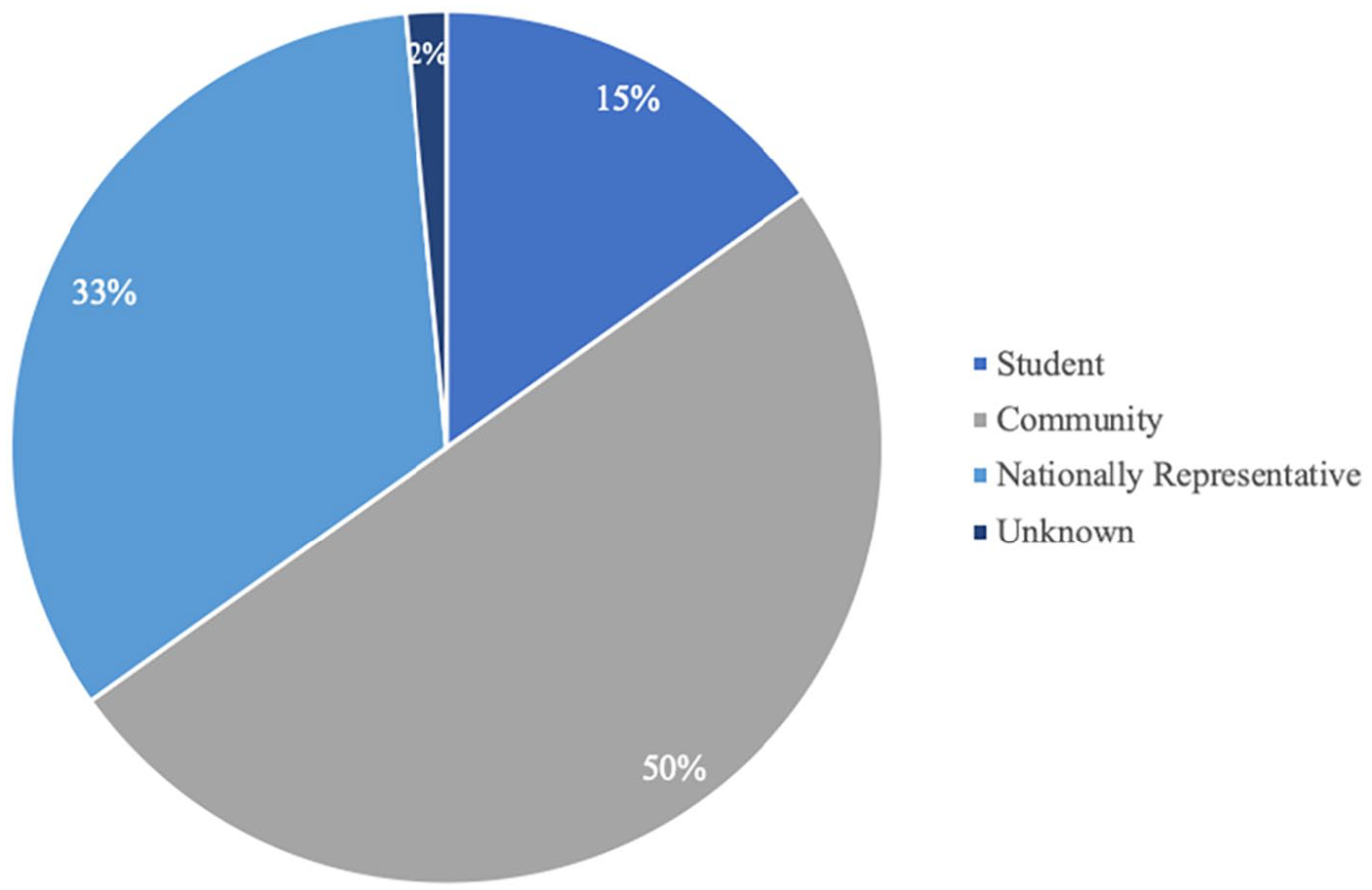
Summary of types of samples used for studies investigating the relationship between trust and charitable giving.
Almost half (44%) of the studies were conducted in either the United States (k = 16) or the Netherlands (k = 12), both hubs for research on charitable giving. Considering the region in which research was conducted (see Figure 3), our evidence of the relationships between trust and charitable giving primarily comes from Europe (k = 27) and North America (k = 18), although it is heartening to see a handful of studies being reported from each of Asia (k = 9), the Middle East (k = 3), Latin America (k = 3), and Africa (k = 1). No results were returned for studies looking at trust and charitable giving in Oceania (i.e., Australia, New Zealand, and the Pacific).
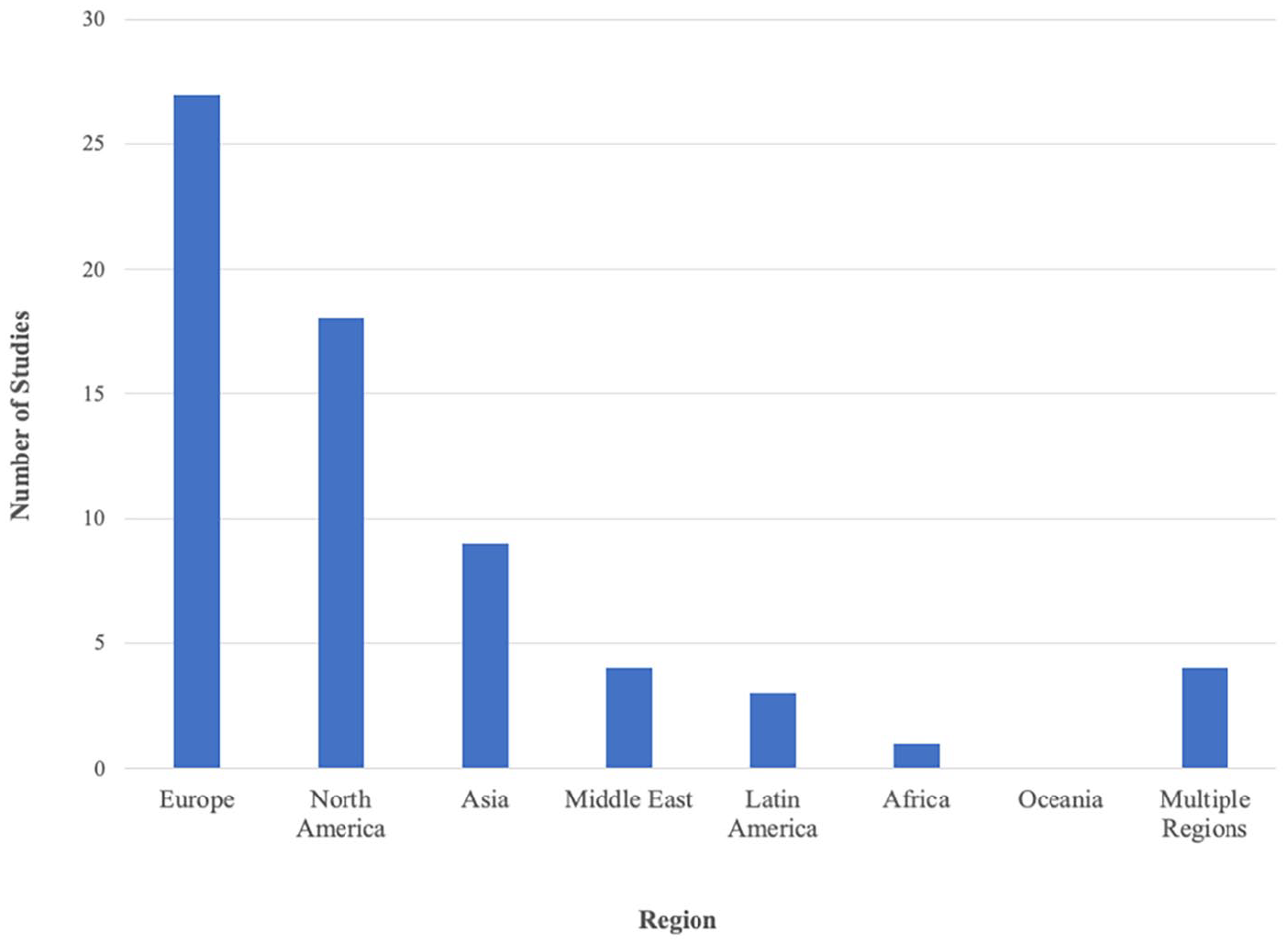
Frequency counts of number of studies per geographic region.
Study design
Of the 63 articles identified by the systematic review, 58 (92%) used survey methods, four (6%) used experimental methods, and one (2%) used archival methods. Mode of delivery was not always noted but included online (k = 17), face-to-face (k = 9), telephone (k = 5) and paper-based (k = 5) survey methods. Although several studies used experimental approaches, none manipulated trust experimentally. Instead, other factors were manipulated, and trust was captured as a measured control variable. Therefore, all evidence for the relationship between trust and giving is correlational.
Measurement of trust
Various referents of trust were assessed in relation to charitable giving, and in some cases more than one type of trust was measured within the same study. Figure 4 depicts the number of times each type of trust—generalized, institutional, sectoral, and organizational—was assessed in relation to giving outcomes.

Number of studies measuring generalized, institutional, sectoral, or organizational trust.
Nearly half of the studies (k = 27) measured generalized trust. This was usually measured by a variant of the generalized trust scale (e.g., “Most people can be trusted”) or an aggregated scale of general social trust items, where participants reported their degree of trust in various targets. Only five studies measured institutional trust. This was generally measured by asking participants how much trust they had in a range of social institutions (e.g., parliament, hospitals, religious organizations, police, and politicians). Twenty studies measured sectoral trust—confidence or trust in charities, nonprofits, or nongovernment organizations. Measures included single items (e.g., “How much confidence do you have in charities?”), multi-item scales measuring trust in charities (e.g., “Most charitable organizations are honest and ethical in their use of donated funds”), and scales relating to Mayer et al. (1995) multidimensional conceptualization of trustworthiness (i.e., ability, benevolence, integrity). Organizational trust—in which participants rated trust in a specific organization—was assessed in 23 studies. Diverse measures assessed this construct, including Sargeant et al.’s (2006) trust in organizations scale (5 items, e.g., “I would trust this nonprofit to conduct their operations ethically”), novel or substantially adapted multi-item scales (e.g., “In my opinion the management of this charitable organization is trustworthy”), and measures based on Mayer and colleagues’ (1995) conceptualization of organizational trustworthiness.
Measurement of charitable giving
Across the 63 articles, 41 measured the likelihood of being a donor and 33 measured the value of donations. Some studies measured both likelihood and value. Likelihood was assessed in various ways. Some studies asked whether or not participants had donated any amount to charity in the previous 12 months and coded responses as 1 = donor, 0 = nondonor. In contrast, some studies used post hoc database matching to assess whether or not the participant donated to the organization’s last fundraising campaign (Waters, 2008). These measures captured the likelihood that they had donated in the past. Other studies assessed willingness to make donations or donation intentions, capturing the likelihood that they would donate in the future. Combining future and past likelihood is not a problem in this instance because the meta-analysis considers the bivariate association and makes no comment on causality.
Value was typically assessed by asking participants to recall how much they had donated to all charities in the previous year, often log-transformed to address skewness. Alternatively, value was assessed by (a) asking how much of a hypothetical $100 they would donate to a particular charity, (b) providing payment or a bonus for participation and assessing how much, if any, the individual donated to charity, or (c) database matching to assess the value of the participant’s last gift to a particular organization. In all but six cases, charitable giving was measured with self-reports, with participants either recalling their past behavior or advising their current willingness or future giving intentions.
Meta-Analysis
We coded 69 effect sizes (correlation coefficients) from 42 studies reported in 41 articles. On average, each study yielded 1.64 effect size estimates (SD = 0.91). Data came from a total of 81,604 participants (N range 36 to 33,062). Using the metafor package for R (Viechtbauer, 2010), we calculated the aggregate effect size of raw correlations with a random-effects model weighted using the inverse-variance method (see Figure 5). Overall, there was a positive relationship between trust and charitable giving, r = .22, SE = .02, 95% CI [.17, .26], p < .001. In other words, across diverse samples and measurements, people who reported higher levels of trust also reported higher levels of charitable giving. However, this effect was relatively small: trust explained just 5% of the variance in charitable giving (or vice versa).

Forest plot of effect sizes for all articles included in the meta-analysis.
Publication bias
Traditionally, it has been easier for researchers to publish studies reporting statistically significant effects. This creates the possibility that meta-analyses based on published findings will over-estimate the true effects. To address the potential for publication bias, we created Funnel Plots of the observed correlations and standard errors for all the studies. Any asymmetry around the aggregate effect would suggest publication bias is present in the sample. In this case, visual inspection of the funnel plot of just the published articles in the corpus (Figure 6A) suggested that studies with smaller sample sizes (based on standard errors) reported larger effect sizes than studies with larger samples. The funnel plot indicated large degrees of heterogeneity in observed effects (perhaps attributable to moderating factors) but no systematic bias toward larger-than-expected effects in the published literature. Follow-up tests of asymmetry provided contradictory conclusions: Egger’s regression test was not significant (z = 0.61, p = .544) but the Rank correlation test was (Kendall’s τ = 0.29, p = .017), suggesting asymmetry in the funnel plot. Given this ambiguity, and the potential for publication bias impacting conclusions, we actively sought to include unpublished data in the meta-analysis. The aggregate effect reported above includes 17 effect sizes from 9 unpublished studies and doctoral theses. Tests indicate no evidence of publication bias when these unpublished works are incorporated: neither Egger’s regression test (z = −0.42, p = .677) nor the Rank correlation test (Kendall’s τ = 0.18, p = .104) were significant. We also report publication status as a potential moderator below.

Funnel plot of observed effect sizes (correlation coefficients) against standard errors for (A) published studies only and (B) all studies included in the meta-analysis. Asymmetry around the funnel suggests publication bias in the sample.
Heterogeneity
Significant levels of heterogeneity between studies was observed, Q(68) = 3,968.78, p < .001, τ2 = .03, I2 = 98.76%, leading us to conclude that the true effects significantly vary across studies. The meta-regressions reported below attempt to identify likely causes of this observed heterogeneity.
Meta-Regressions
Meta-regressions were run to examine potential moderators of the relationships between trust and giving (i.e., factors that affect the nature of the relationship). These models are summarized in Table 2. Six moderators were examined: (a) the way in which trust was operationalized (i.e., generalized vs institutional vs sectoral vs organizational trust); (b) the way the dependent measure was operationalized (likelihood of being a donor vs value of donations); (c) type of sample (i.e., student vs community vs nationally representative); (d) geographic location of study (western vs non-western); (e) publication status (published vs unpublished); and (f) year of data collection. Each moderator was assessed separately because, with only 69 effect sizes, we had insufficient power to model them simultaneously.
Summary of Meta-Regressions.

Notes. Estimates are unstandardized (with standard errors in brackets). Categories in square brackets are the reference categories; other categories are dummy coded against these with estimates comparing against the reference category. r column reports aggregate effect sizes (correlation coefficients) by subgroup. All moderators are entered simultaneously in the model reported in the final column (labeled “All”); caution is advised when interpreting null results in this final column because the sample size provides insufficient statistical power to detect smaller effects when all moderators are entered simultaneously.
p < .05. **p < .01. ***p < .001.
Type of trust
A meta-regression revealed significant differences in the relationship between trust and giving dependent on the type of trust, QM(3) = 26.06, p < .001. Comparing aggregate effect sizes by subgroup, the weakest relationship was observed between charitable giving and generalized trust, r = .11, CI [.09, .14], and this was statistically equivalent to the relationship with institutional trust, r = .14, CI [.11, .18], p = .613. Compared to generalized trust, a stronger relationship with giving was observed for sectoral trust, r = .27, CI [.19, .34], p = .001; and especially for trust in the particular organization, r = .35, CI [.22, .48], p < .001.
Giving type
Comparing aggregate effect sizes by subgroup, there was a trend such that a stronger relationship with trust was found for studies measuring likelihood of giving, r = .26, CI [.19, .32], than giving value, r = .17, CI [.12, .22]. However, this difference was not statistically significant, QM(1) = 3.48, p = .062.
Sample
A meta-regression revealed sample type to be a significant moderator of the trust-giving relationship, QM(2) = 7.30, p = .026. Compared to studies using nationally representative samples, r = .16, CI [.10, 21], larger effects were found in studies using nonrepresentative community samples, r = .29, CI [.20, .37], p = .009. No statistical differences were found, however, between nationally representative samples and student samples, r = .25, CI [.15, .34], p = .120, perhaps because of the small number of student samples available for comparison.
Region
Western countries were operationalized as countries in Europe or North America, and compared to non-western countries (i.e., in South America, Asia, Middle East, and Africa). Compared to studies conducted in western countries, r = .19, CI [.14, 23], studies conducted in non-western countries, r = .30, CI [.19, .41], reported significantly larger relationships between trust and giving, QM(1) = 4.73, p = .030.
Publication status
Comparing the aggregate effect sizes by subgroup confirmed that published studies reported stronger relationships, r = .24, CI [.19, .30], than unpublished studies, r = .15, CI [.11, .19], but the difference did not reach statistical significance, QM(1) = 3.34, p = .068. 3
Year
The year of data collection did not significantly moderate the effect, QM(1) = 0.74, B = .00, SE = .00, CI [.00, .01], p = .389, indicating that the relationship between trust and giving has not changed over time.
Discussion
This paper provides a comprehensive overview of the state of theorizing and evidence in relation to trust and charitable giving. Several important contributions are evidenced by our review and meta-analysis. First, trust is positively associated with giving; but organizational and sectoral trust are more important than generalized and institutional trust. Second, because of a lack of experimental and longitudinal research, it remains unclear whether trust is a prerequisite for or consequence of charitable giving. Third, research efforts have been concentrated in particular countries and have relied on self-report measures, potentially at the expense of comprehensive knowledge. Each of these takeaways is discussed in depth below.
Results show that trust is associated with charitable giving. However, the overall relationship is relatively modest in size: trust accounts for just 5% of the variance in charitable giving decisions. However, a key finding of this study is that the observed effect size varies dramatically depending on the type of trust that is measured, with generalized and institutional trust having relatively weak relationships (i.e., small effect sizes, following Funder & Ozer, 2019), but organizational and sectoral trust having stronger relationships (i.e., large effect sizes). This finding has a number of theoretical implications, discussed in the next section.
Results of our systematic review also show that the evidence base has relied overwhelmingly on self-report measures. This is especially concerning in light of evidence of social desirability biases: people may over-report or exaggerate their giving to make a positive impression on others (Lee & Sargeant, 2011). This social desirability bias has been shown to influence self-reports of giving. For example, in one British study that asked people to report their past giving and then matched it to database information from the charity in question, 65% over-reported their giving (Lee & Sargeant, 2011). Furthermore, even when people are observed rather than reporting their behavior, the social desirability bias can influence results: studies in Costa Rica, for example, have shown that people are more generous when others are present (Alpízar & Martinsson, 2013). While our results show an association between trust and giving, there were not enough studies employing behavioral measures (k = 2) to compare the strength of the association across self-report and behavior. Future research capturing actual giving behavior is an important next step in advancing a rigorous understanding of the trust-giving relationship. There are significant difficulties associated with capturing behavior in laboratory and survey contexts, namely the prohibitive costs of giving people money to donate and evidence that people respond differently with windfall than earned money (Carlsson et al., 2013). Given these difficulties, we call for observational field studies, archival, database, and longitudinal projects that address these challenges.
Although research has been conducted in diverse countries and continents, almost half explored relationships of trust and giving in just two national contexts: the United States and the Netherlands. These nations can both be classified as western, and our results suggest that relationships of trust and giving are weaker in western (vs non-western) countries. It is possible that trust is more important in countries with higher rates of corruption. Indeed, trust in nonprofits has been shown to vary substantially in different parts of the world (Chapman, Hornsey, & Gillespie, 2020), and the regions of Asia, Middle East, Africa, and Latin America contain many emerging economies, some of which are ripe for potential growth in fundraising and charitable giving (Michon & Tandon, 2012). It will be important to study charitable giving outside the traditional North American and European contexts to advance the effectiveness of fundraising practice in these emerging non-western fundraising markets.
Finally, given how often trust is assumed to affect giving (e.g., Gaskin, 1999), the body of evidence available for evaluation was relatively small. Only 63 articles and theses over a period of 30 years reported studies containing measures of both trust and charitable giving. A majority of these studies so strongly presumed trust would matter as to include trust only as a control variable. Of the evidence surveyed, only 18 articles (29%) explicitly investigated trust as a predictor of giving. This suggests that there has been a degree of complacency about systematically examining the relationship between trust and giving.
Theoretical Implications
Our results speak to a number of theoretical perspectives on trust and giving. In this section, we extrapolate some key theoretical implications of the current research. Specifically, we consider the implications in terms of theories of causality, altruism, relationship commitment, and the triadic nature of giving.
Trust theories and the question of causality
We set out to test whether or not trust was a prerequisite for giving. Theories of trust have differed in their perspectives on this issue. For example, the trust-commitment-giving model (elaborated below) assumes a causal process whereby trust promotes giving (Sargeant & Lee, 2004a). However, other theorists have posited that giving—and other forms of community contribution—can promote trust (Putnam, 2000; Uslaner, 2002).
Although we found a significant relationship between trust and giving, it is important to highlight that the available evidence does not address the question of causality: it remains unclear whether trust is a prerequisite for or consequence of charitable giving. None of the studies in our systematic review experimentally manipulated trust or analyzed trust longitudinally to assess its causal relationship with giving. Thus, despite a strong presumption that trust is important for promoting giving, evidence only supports a positive association, not a causal relationship. For now, it remains equally possible that the observed relationship goes the other way, such that charitable giving leads to increased trust (see also Putnam, 2000; Uslaner, 2002). Some donors may give to charity for reasons other than trust—to alleviate guilt, for example, or because they wanted to be seen to be generous (e.g., Basil et al., 2006; Bénabou & Tirole, 2006). In such cases, trust in the organization may not be a key factor in their giving. However, the experience of giving may lead them to trust the organization or nonprofit sector more if, for example, they receive detailed reports about how donations are distributed. To address this critical gap in the evidence base, we call for future research designs that address the issue of causality, such as large-scale experimental and longitudinal studies.
Altruism vs warm glow giving
In the economics literature, giving is broadly conceptualized as being motivated by altruism versus “warm glow,” or the emotional utility donors derive from the act of giving (see Andreoni, 1990). Although our results do not speak directly to this division, they invite speculation. First, the finding that trust and giving are fairly consistently associated suggests trust is a factor in donor decisions. Because the relationship is stronger as the target becomes more precise, this aligns with the altruistic explanation for the relationship between trust and giving: if donors care about outcomes for beneficiaries, they must trust that the fundraising organizations that they deliver their aid through will actually deliver it to the targets of their concern (see also Bekkers, 2003). However, the relatively modest size of the relationship—and the fact that it varies substantially across contexts and samples—suggests the importance of other motives, such as being asked to donate, or the desire to experience the “warm glow” of giving, act in accordance with a particular identity, or enhance one’s reputation (see Bekkers & Wiepking, 2011 for other drivers of charitable giving).
Relationship commitment model
Sargeant and Lee (2004a, 2004b) propose that the importance of trust is mediated (or explained) by relationship commitment (see also Shang et al., 2019). In other words, it is argued that trust in a particular nonprofit cultivates a sense of commitment—a desire to maintain the relationship with that organization—which in turn promotes giving. It would have been ideal to test this relationship meta-analytically. However, commitment (and other potential mediators) were not included in sufficient studies and therefore could not be analyzed. Nevertheless, we speculate that the focal finding here—that organizational trust is more important for giving than other types—lends weight to the trust-commitment-giving model’s approach. Those authors explicitly say that the model applies best to the question of trust in a particular organization (vs trust in the wider sector; Sargeant & Lee, 2004a).
Relatedly, prior research has often focused on generalized trust as a driver of giving (Bekkers, 2003; Evers & Gesthuizen, 2011; Glanville et al., 2016; Uslaner, 2002). Indeed, generalized trust was measured in almost half of the articles reviewed here. Yet our results demonstrate that generalized and institutional trust are only weakly associated with giving. This highlights a gap between researcher assumptions and the evidence base.
Rather than discounting the role that generalized trust plays, we suggest future studies actively compare and contrast different forms of trust within the same study to understand how they inter-relate. Seminal theories of trust (e.g., Mayer et al., 1995) highlight that dispositional and referent-specific forms of trust combine to influence outcomes, and this has been supported by multiple empirical studies on trust (see Fulmer & Gelfand, 2012, for a review). Management research has also shown that dispositional forms of trust are more influential at the start of a relationship, before trust in the specific organization has been established (Mayer et al., 1995; van der Werff & Buckley, 2017). Given that our study shows that dispositional, organizational, and sectoral trust are all associated with giving, it will be important to consider how they may combine and interact to impact giving over the tenure of a donor’s relationship with a particular nonprofit. Longitudinal studies can be employed to examine the importance of trust dynamically over time: for example, does trust matter more at the point of acquisition or later in the supporter journey when relationship commitment has been established?
The charitable triad model
Our results indicate that dispositional forms of trust (i.e., generalized and institutional) are less strongly associated with giving than trust in charity-specific targets (i.e., sectoral and organizational trust). The triadic approach to understanding giving that was mentioned in the introduction can shed light on these findings. Chapman (2019) argues that it is not enough to understand the dispositions and characteristics of donors—such as their general propensity to trust—but instead one must consider the relationships that exist between donors, beneficiaries, and fundraising organizations and how these influence donor decisions (see also Chapman et al., 2021). This study shows that the unique relationship of trust between a donor and a fundraising organization is a much stronger predictor of giving than the donor’s general disposition to trust others.
Extrapolating from this triadic theory of giving, it is also possible that the type of beneficiary may further influence the importance of a relationship of trust existing between the donor and the fundraising organization. For example, when the beneficiary is highly valued (e.g., children), the importance of this relationship of trust may be accentuated because donors are more invested in positive outcomes for beneficiaries. Or when beneficiaries are distant (i.e., overseas), the relationship of trust may be more important as donors cannot see the work of the organization directly. Indeed, previous research supports the notion that trust is more important for giving to international charities (e.g., Wiepking, 2010). The current data do not allow us to test these ideas, but future research should consider how the beneficiary in question may also influence the role that trust plays in donor decisions (see also Chapman et al., 2018; Chapman, Masser, & Louis, 2020).
Strengths and Limitations
The advantage of a systematic review is its ability to capture and evaluate all studies that meet specified requirements. Our systematic review collates evidence from 63 studies conducted in 31 countries with a total of 81,604 participants. As such, we can confidently evaluate the body of work on trust and giving conducted in the last 30 years. Nonetheless, conclusions of meta-analyses depend entirely on the evidence that is available, which presents inherent challenges.
A traditional bias toward only publishing studies with significant results can introduce bias into meta-analyses that rely only on published data. Although we sourced unpublished data, the majority of articles had been published in peer-reviewed journals. Nonetheless, despite the funnel plot and associated tests suggesting a potential publication bias among the published articles in the corpus, the strength of the association between trust and giving was no different for published and unpublished studies.
Moderators that would also have been interesting to assess, but which were not included in sufficient quantities in the corpus, include self-report versus behavioral measures of giving, the channel of solicitation (e.g., direct mail, face-to-face, telemarketing), type of beneficiary (e.g., ingroup vs outgroup member), and donors’ psychological characteristics (e.g., empathy, personal experiences). Future research could consider these potential moderators of the associations reported here.
Finally, the corpus only included 69 effects and therefore provided insufficient power to run conclusive analyses involving multiple moderators, which would allow us to home in on the unique influence of each. For readers information, we have reported results of a multiple meta-regression in Table 2, where we considered the influence of all moderators concurrently. However, we urge caution in interpreting any null effects in this final model because the small sample size coupled with an increased number of variables entered simultaneously results in low statistical power (~20%) to detect small effects.
We hope that by drawing attention to these gaps and weaknesses in the evidence base, and opportunities for further development, our review will prove generative for future research. In particular, we highlight the need for robust experimental and longitudinal methods, behavioral data, and evidence from diverse geographies to refine our understanding of the relationship between trust and giving.
Implications for Fundraising
Combined, results indicate that trust may be an important consideration for donors deciding whether or not to contribute to a charitable cause. However, trust is clearly not the whole picture and some types of trust matter more than others. Overall, trust explains about 5% of the variation in giving. This means that a range of other factors substantially influence giving decisions. Other research has identified that motives for giving include empathy, donor identities, perceived costs and benefits, reputational concerns, and emotions (e.g., Aaker & Akutsu, 2009; Bekkers & Wiepking, 2011; Bénabou & Tirole, 2006; Konrath & Handy, 2017; Ma et al., 2017). Furthermore, this study cannot conclude whether trust leads to giving or giving builds trust. Nonprofit managers must be aware that trust is an important consideration for donors, but it may not be as important as has been traditionally assumed.
This study also shows that giving is more strongly related to trust in an organization (or the nonprofit sector overall) than it is to a donor’s general propensity to trust. This finding will be heartening to nonprofit managers. Although dispositional trust may be grounded in genetics or life experiences—and therefore outside of the control of nonprofit managers (see Weinschenk & Dawes, 2019)—organizational trust can be influenced by organizational behavior, branding, and marketing strategy. Nonetheless, the relative importance of sectoral trust could be alarming for nonprofit practitioners who fear contagion of mistrust after charity scandals within the sector. Although there is evidence that trust can be damaged for nonprofits embroiled in scandal (Hornsey et al., 2020), there is thankfully no evidence that the effects of charity scandals have spilled over to affect trust in other nonprofits yet (Chapman, Hornsey, & Gillespie, 2020).
Finally, it should be noted that all the studies identified by the systematic review considered either dispositional trust or trust in the fundraising organization (or the charity sector to which it belongs). We expect that trust in an individual fundraiser will also affect giving decisions and may be comparable in importance to trust in the organization. As such, nonprofit marketers may wish to consider the individuals who fundraise for causes. Trust in individual fundraisers is likely to be especially important for organizations that use face-to-face, door-to-door, and peer-to-peer channels for fundraising.
Footnotes
Declaration of Conflicting Interests
The author(s) declared no potential conflicts of interest with respect to the research, authorship, and/or publication of this article.
Funding
The author(s) disclosed receipt of the following financial support for the research, authorship, and/or publication of this article: The current research was funded by a Discovery grant awarded by the Australian Research Council to the second and third authors.
