




Abstract
Worker protests in China are increasing in frequency, and workers are making more ambitious demands. However, it is unclear whether this activism is, on the whole, drawing a reformist or conservative response from officials. Using a 2014 survey of city-level leaders from China’s official trade union federation, we find that an acknowledgement of the seriousness of today’s labour disputes and of how the country’s industrial relations are changing is positively correlated with respondents’ optimism regarding the likelihood of changes to China’s political system. To determine exactly what this means ideologically, we further compare reform optimists and pessimists with regard to their support for a range of more specific policies, finding that those who believe systemic changes are close at hand have different views from their peers regarding the importance of engagement with global civil society and a tripartite (government, union, employer) approach to managing workplaces. This provides tentative support for the idea that reform optimists are reform supporters and that interest in change among Chinese officials, at least at the level studied here, is growing alongside workplace conflict.
Keywords
Worker unrest in China is rising dramatically and is changing in character. Meanwhile, Beijing and local governments alike have passed new employment legislation in the past decade, and the Chinese Communist Party (CCP)-controlled All China Federation of Trade Unions (ACFTU) has been urged to adopt a more pro-active role in the workplace. However, there have also been moves in the opposite direction, from crackdowns on labour non-governmental organizations (NGOs) by local police to criticisms of key labour protections by top ministers. If reformism means bringing workplaces under more effective regulation and increasing workers’ voice or, more ambitiously, initiating fundamental changes to the country’s political system that empower workers along with others, while conservatism means continuing to rely on ossified institutions for resolving workplace conflicts or even rolling back existing pro-worker measures, while adamantly opposing political change, it is unclear whether reformists or conservatives are prevailing. These dynamics raise a number of questions. What sort of pressure is China’s new worker activism placing on governance, exactly? Is this pressure mediated by dynamics internal to the Chinese party-state, such as the agendas of different bureaucracies, or by local economic structures? Under which circumstances are officials likely to believe that deep institutional change is possible? And what specific changes do reform-optimistic officials support? Answering these questions can provide us with tentative clues regarding the future of the workshop of the world – and, relatedly, the future of one of the world’s largest and most enduring authoritarian states.
Our article employs an original survey of 225 municipal-level ACFTU leaders from across the country to explore the relationship between these individuals’ personal backgrounds, their work environments, their assessment of the most salient characteristics of Chinese labour, and their confidence regarding the likelihood of reform in the near future. We find that a surprising number of respondents support important alterations to how China is governed, from the separation of powers to greater popular participation in state decisions. Moreover, those leaders who believe that ‘strong capital, weak labour’ is coming to an end and who identify a high level of disputes as a key aspect of today’s industrial relations are more likely than their counterparts to believe that political system reform is on the horizon. Party membership and a large number of union members in manufacturing are also important predictors of such optimism, but no other personal or environmental factors are significantly correlated with either belief in or scepticism regarding the possibility of change. What, exactly, does it mean to anticipate political system reform? Respondents who think change is on the horizon differ significantly from those who do not in their interest in engaging global civil society and commitment to a tripartite approach to labour regulation. This suggests that reform optimism and reformism overlap and, thus, that grass-roots activism can spur reformist impulses among those leaders most directly affected – or, at least, that contention and reform-minded officials tend to cluster together. In the next section, we first provide additional background on Chinese labour activism, various legislative and union reforms to date, and signs of growing policy conservatism. Next, we review existing literature on the relationship between social movements (or proto-movements), regimes, and change; on trade unions under state socialist and post-socialist governments; and on the ACFTU, in particular. Then, we explain our survey design and implementation, and we review our findings. The conclusion offers suggestions for further research.
Background
The Chinese political system has faced intensified popular pressure over the past two decades. Although these protests have involved a range of issues, from rural land rights to pollution to religious liberty, statistics make clear that workers have been at the centre of recent turmoil. In 2014, the Chinese Academy of Social Sciences reported that, over the past 14 years, the largest single category of ‘mass incidents’ involving 1000 or more individuals consisted of employment-related conflicts. 1 Teachers have struck over pay below their civil service grade; taxi drivers have refused to drive because of rising fuel costs; and steel plant employees have been involved in violent clashes surrounding privatization plans. The biggest strike in the history of the People’s Republic of China, a walkout by upwards of 40,000 workers at the Taiwanese-owned Yue Yuen shoe factory in Dongguan, Guangdong Province, occurred in 2014. Annual formally mediated, arbitrated, and litigated labour disputes, meanwhile, have risen from 48,121 in 1996 to 665,760 in 2013. 2 Arbitrators and judges in many cities report excessive caseloads.
There has also been a subtle qualitative shift in the character of labour activism, especially during the past 10 years. Scholars once described the world’s largest working class as deeply divided, a phenomenon variously attributed to the country’s reliance on foreign direct investment, 3 generational gaps and market hegemony, 4 different managerial regimes, 5 competition for state benefits, 6 and migrant workers’ and state-owned enterprise (SOE) workers’ contrasting modes of social reproduction. 7 Recent research, though, has identified a general move from individual to collective labour relations 8 and a convergence around a set of novel, more aggressive demands: for higher pay, regardless of statutory minimums; for attention to what were once considered workplace details (overtime, insurance, and so on); and for basic respect from employers. 9 Particularly from 2010 onwards, workers have begun claiming a say in company decisions. 10 For example, protesters involved in the Yue Yuen strike mentioned earlier demanded an increase in social insurance payments and reform of the enterprise trade union. China’s deepening economic downturn may signal a return to more defensive claims by workers, but their willingness to protest is unlikely to change.
Researchers have credited Chinese workers’ increased activism and evolving demands with the passage of several pieces of important labour legislation. 11 At a national level, China enacted its first Labour Law in 1994 and amended its Trade Union Law in 2001. Then, after an unusually wide-ranging public debate, 12 the Labour Contract Law, as well as Employment Promotion Law and Labour Dispute Mediation and Arbitration Law, all went into effect in 2008. These regulations were followed by a series of implementation guidelines, clarifying employers’ responsibilities. In 2011, responding to frequent wage arrears in sectors such as construction, a law was passed concerning maliciously failing to pay wages. Individual municipalities have gone further, coming close to recognizing strikes as routine economic disputes (e.g. Shenzhen, Guangdong Province) and providing public housing and simplified processes for acquiring urban residence permits to migrant workers (e.g. Chongqing). 13 In 2014, Guangdong passed new regulations on collective consultation in enterprises, albeit in a form much watered down from previous drafts (and widely criticized by labour advocates). 14 Since 2010, there have been recurrent discussions of re-legislating a right to strike nationally (the right was removed from the Constitution in 1982), with activists divided on the wisdom of such a move. 15
At the urging of the central government, the ACFTU has tentatively ventured beyond its traditional role of ‘sending warmth’ (送温, making charitable contributions) to workers with family difficulties, arranging cultural activities, and celebrating model workers. In 2005, the ACFTU clandestinely organized employees at several Wal-Mart stores (rather than asking permission of store managers, as had been the union’s normal practice). 16 Collective bargaining (or collective consultation) in China, to the extent it exists, tends to be enterprise-based. However, starting from 2005, Wenling City in Zhejiang Province has been the site of an innovative series of agreements setting wages for its entire wool sector, which was once rocked by labour protests and (from the perspective of employers) hurtful competition for employees. 17 Praising the Wenling Model, the ACFTU has put sectoral collective bargaining on its key work agenda for the period 2012 to 2017. 18 Moreover, experiments first in Zhejiang and then in Guangdong have allowed workers to democratically elect enterprise trade union committees; 19 in 2014, direct trade union elections were introduced in 5000 enterprises in Guangdong, albeit with different levels of success. 20 The Guangdong Provincial Federation of Trade Unions hopes to expand the experiment to all the enterprise trade union committees by 2019. 21
For every worker-friendly move forward by the government and union, however, there appears to have been a move backward. In early 2009, only a year after the Labour Contract Law went into effect, the Guangdong Province Politics and Law Committee put out a report warning that labour NGOs and citizen surrogate lawyers (公民代理) were inflaming workplace conflicts with their advocacy. 22 Since 2012, labour NGOs have been under intense pressure, forced to frequently move their offices; in December 2015, police detained seven NGO leaders around Guangzhou in one night, while interrogating a dozen others; three of the activists were subsequently formally arrested on charges of ‘gathering a crowd to disturb social order’, and another was charged with embezzlement. 23 Premier Li Keqiang’s work report to the annual National People’s Congress meeting in March 2015 downplayed collective bargaining. Furthermore, in a widely cited recent interview, the Vice Chairman of ACFTU, Li Yufu, made only one mention of bargaining, focusing instead on individual legal advocacy, and again raising the alarm of threats to the solidarity of migrant workers from enemy forces backing NGOs. 24 In February 2016, the Ministry of Human Resources and Social Security backed critics who asserted that the Labour Contract Law decreased labour flexibility and increased business costs, and in March of the same year Finance Minister Lou Jiwei attacked the law as unbalanced on television. 25 At a local level, the pioneering head of the Guangzhou Federation of Trade Unions, Chen Weiguang, a figure in frequent contact with foreign labour activists, was replaced upon retirement in 2012 by a leader who, by most accounts, is much more conservative. And following the Yue Yuen strike in 2014, which centred on social security issues, Dongguan moved to make it more difficult for migrant workers to withdraw their social benefit contributions in 2015. Thus, there is ample evidence for worker pressure prompting both pro-labour policy daring and anti-labour policy caution.
Movements and proto-movements, regimes, and change
The relationship among movements and proto-movements, regimes, institutions, and political change lies at the heart of comparative politics. There is, first of all, a rich scholarly tradition of examining how social conflicts shape regime type. The idea that class struggle – itself the product of change in a society’s dominant mode of production – is the basis for change in the political superstructure is essential to Marxism. 26 In this vein, historical institutionalists argue that different alliances among workers, peasants, landlords, and the bourgeoisie, along with their associated parties and organizations, have been associated with different long-term governance trajectories: toward liberal democracy, social democracy, communism, and fascism. 27 Meanwhile, rational choice theorists explain stasis and change with a more stylized tug of war or set of bargains between elites or dictators, on the one hand, and the poor (and perhaps the middle class), on the other. 28 Such dynamics feature implicitly in the many studies conducted on the positive correlation between average income and political liberalization. 29 However, to the extent that the individuals in positions of authority who are impacted by unrest and who make these systems work or stop working are dealt with, the focus has typically been on the very top leaders and groupings of hardliners and reformists around them. This is seen, for example, in studies of pacted (brokered, not revolutionary) transitions from authoritarianism. 30 The levels of authority below the top – the people who must actually implement reforms or decide how to go about suppressing a particular demonstration – are neglected. Moreover, government-directed mass organizations are rarely engaged.
Trade unions and state socialism
State-controlled unions have been both lightning rods for change and pillars of continuity in state socialist and post-socialist countries. Labour movements played an essential role in the revolutions that brought leftist governments to power in the 20th century. In China, the Soviet Union, Eastern Europe, Cuba, Vietnam, Egypt, and other essentially single-party-controlled places, unitary trade unionism was adopted shortly after the founding of new regimes. The mission of unions in these countries was transformed from mobilizing workers for political change to incorporating workers into the ruling apparatus. 31 Unions functioned (ideally) as a transmission belt, passing on workers’ concerns to leaders, while building support on the shop floor for production goals and centrally mandated campaigns (Yugoslavia’s experiments with workplace democracy being a notable exception). 32 With virtually guaranteed lifetime employment but frequent tests of political loyalty, patron–client ties were complex. 33 Nonetheless, labour resistance did not die away with the curtailment of market relations. Both the Soviet Union and its satellite states in East Europe experienced large-scale wildcat strikes in the 1960s and 1970s. 34 Yet, no reforms in the fields of labour relations and trade unionism were initiated. 35 Then, in the early 1980s, during a period of severe economic hardship, workers in Poland’s Gdansk Shipyard launched a strike wave and demanded legal recognition of Solidarity, their independently organized trade union. 36 Solidarity would ultimately bring about the collapse of state socialism in Poland and contribute to a second round of revolutions in Eastern Europe and the Soviet Union. Although the resulting economic and political order was not welcomed by all of the activists involved, many of whom sought a more democratic form of socialism, 37 in most places, unitary trade unionism at least gave way to freedom of association. 38 Some of the old transmission belt unions survived all the same. Egypt’s National Democratic Party-controlled unions were strained by market reforms under former leaders Anwar Sadat and Hosni Mubarak but limped along until the Arab Spring of 2011. 39 Alongside a weak group of independent trade unions, Russia’s Soviet-era unions have also persisted, deploying workers to the frontlines of struggles between local and central politicians over resources, but otherwise supporting management–worker cooperation. 40 China, of course, is one of the places where unitary trade unionism – along with CCP rule – has been sustained, despite the gradual unravelling of the country’s planned economy.
The All China Federation of Trade Unions
The ACFTU has its roots in the turbulent 1920s and 1930s, when Chinese students and CCP activists entered factories and mines and, building on pre-existing guilds, native place associations, and organized crime networks, established the country’s first formal trade unions. 41 The union was a highly political institution, as committed to mobilizing workers in support of the CCP’s armed campaign against Chiang Kai-shek and to freeing the country from the yoke of foreign domination as it was to winning immediate economic gains for workers. 42 Following the 1949 revolution, the ACFTU was incorporated into the new order as a mass organization alongside others such as the All China Women’s Federation and the Communist Youth League. In the 1950s, the degree of autonomy to be enjoyed by the union was the subject of heated debate by Chinese political elites, especially amidst the nationalization of private enterprises 43 and following a massive strike wave during the Hundred Flowers Movement. 44 In the end, the independent-minded ACFTU leadership was purged; during the Cultural Revolution, when radical workers briefly took control of factories, the union was shuttered entirely. 45 Although the right to strike enshrined in the 1975 Constitution was removed in 1982, 46 the ACFTU revived alongside a workplace governance mechanism called Staff and Workers’ Representative Congresses. 47 In the political-reform atmosphere of the 1980s, the ACFTU leadership again argued for greater union independence 48 and for mechanisms such as democratic union elections. Some scholars in the 1990s envisioned the union coming to play a powerful corporatist role. 49 Instead, the CCP tightened its control over the union system, making even corporatism (which requires some degree of bottom–up interest aggregation) untenable. 50 The new ACFTU leadership after 1989 emphasized that the effectiveness of union work depended on the organization’s ability to safeguard labour rights within the current, party-dominated framework. 51 Meanwhile, the localization of the ACFTU system deepened, as the CCP began to strengthen the relationship between local trade union federations and local party committees, which controlled both union purse strings and union cadre promotion and dismissal. 52 In recent years, as noted, a variety of trade union reforms has once more been explored, with the encouragement of provincial and city-level authorities. 53 Some experiments, such as the Hangzhou, Yuyao, and Shenzhen Federation of Trade Unions democratization campaigns, bear more than a passing resemblance to the halted reforms of the 1980s. 54 Unlike previous ACFTU initiatives, the elections currently being carried out by the Shenzhen Federation of Trade Unions enjoy a consensus from both the upper-level trade union leadership in Guangdong and the CCP. 55 But conservatism at various strata of the union and party-state – as expressed in speeches like Li Yufu’s cited earlier – are also pronounced. Over the past three-quarters of a century, the ACFTU’s changing role has reflected changes in the nature of Chinese worker–state relations. As such, the union provides an excellent window on how the recent upsurge in labour unrest is (or is not) affecting official thinking.
Survey design and implementation
To gauge how officials in the ACFTU view China’s labour relations at present and what they anticipate and support in the way of reforms, the first author administered a survey to municipal (specifically prefecture-level city) union leaders – both union chairs and executive vice chairs – in November 2014. Officials of this echelon are useful targets for a number of reasons. Although the union’s central governing body sets the organization’s overall priorities, it often draws on experiments conducted at lower levels for inspiration. One can imagine that there might be great resistance to reform from city ACFTU leaders, too. After all, these people are the most directly responsible for maintaining industrial peace. National and provincial leaders can pass the buck downwards in terms of responsibility for unrest, while district, township, and enterprise-level ACFTU cadres are generally powerless and/or too tied into factory management systems to have a distinctive voice (although in some instances reforms have nonetheless been initiated at these levels). Municipal officials, lacking such excuses, may err on the side of taking a hard, unsympathetic line toward protesters. Regardless, these officials are often promoted further up the union hierarchy or out of the union and into government and party postings. Some were previously directly employed by CCP organs and have only recently been assigned to the trade union; they retain their ranks within the party personnel system and may return to party work later. They therefore have the potential to carry any new ideas gained through their municipal-level ACFTU experience to other, more influential positions.
The survey was carried out through a propitious arrangement. At the time of the survey, union chairmen and chairwomen and executive vice chairmen and chairwomen from cities across China were in Beijing to attend two annual trainings organized by the ACFTU. Every prefecture-level city was required to send at least one trade union chairperson to attend the training. The trainings lasted for 10 days each. In the last class of the trainings, the officials were asked to spend 20 minutes filling in our survey during class time. A total of 347 questionnaires were distributed; 61 leaders declined to complete the survey, making for a response rate of 80.98 per cent. An additional five respondents only completed the initial questions about their backgrounds; we also dropped their surveys from our analysis. This left a sample of 281. In our regression models below (but not our descriptive statistics), we eliminated by case-wise deletion a further 56 surveys with missing data in places, yielding a pool of 225 respondents with complete data. We acknowledge that this was not a truly random sample. However, the survey takers were not entirely self-selected either, as all municipal union leaders must undergo trainings like the one in 2014.
Who were the non-respondents? We suspect that they were individuals who felt uncomfortable answering questions about their work for a number of reasons. Bureaucracy and CCP democratic centralism can discourage independent thinking. Many officials are used to following orders from above, rather than initiating projects or giving their individual perspectives on the issues of the day. Being asked to fill in a survey can thus be intimidating. Given that local ACFTU leaders are essentially civil servants, who are appointed to their positions by the CCP (often from departments completely unrelated to industrial relations), many can also be surprisingly disinterested in – or, if newly appointed, not particularly knowledgeable about – labour issues. Meanwhile, friction between the central and local authorities is common: the central government frequently criticizes local governments for their failure to properly implement central policies, while the latter complain that Beijing has lost touch with day-to-day developments on the ground. 56 Officials may be cynical about the motives behind surveys like ours or have strong feelings they would rather not express – even anonymously.
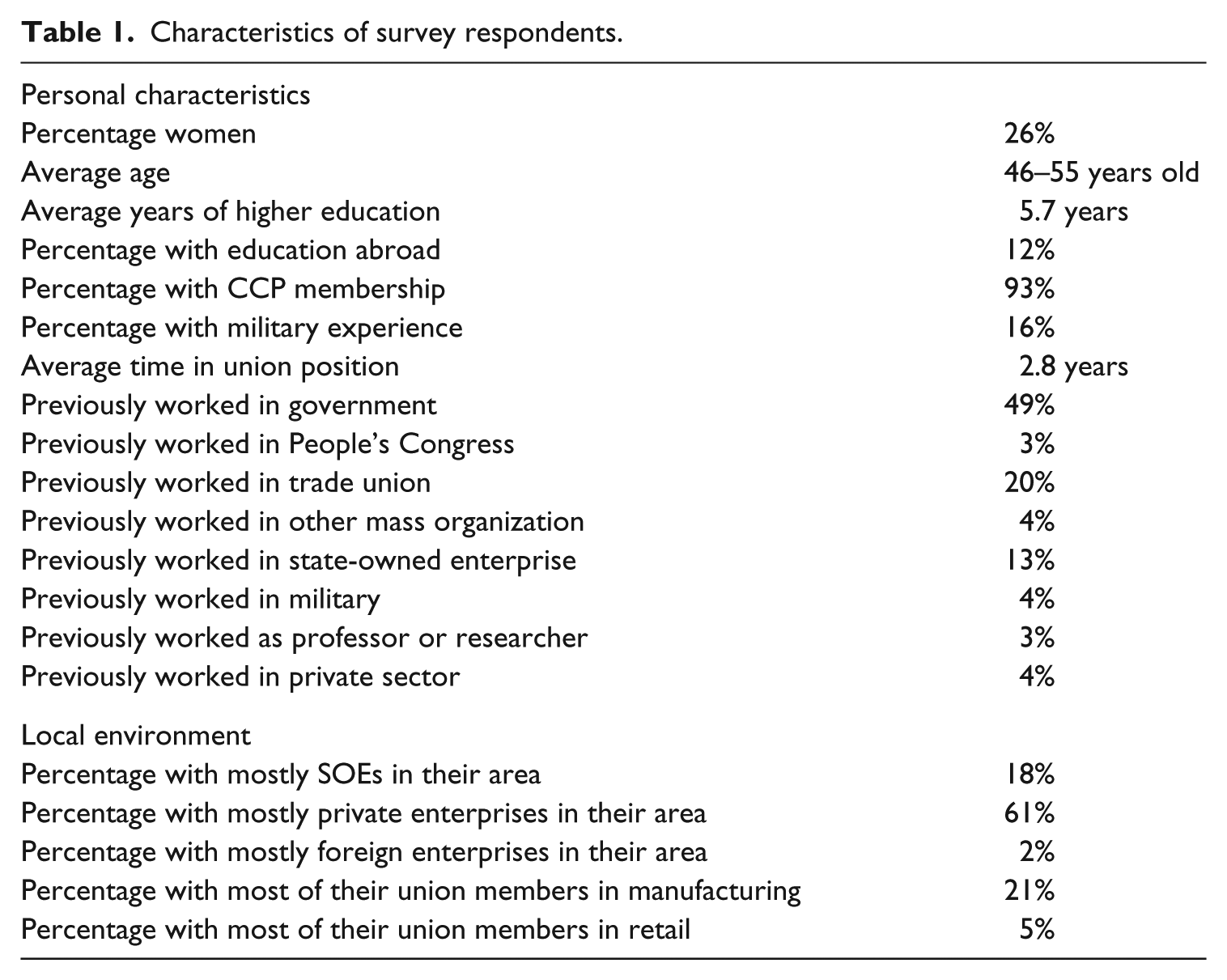
The survey questions first addressed respondents’ institutional backgrounds and their current work environments, focusing on factors such as local economic growth, dominant forms of enterprise ownership in their locality, and size of local enterprises. In order to safeguard the individuals’ anonymity, we did not ask the respondents to give the specific names of their cities or even their regions. Table 1 provides summary statistics of their characteristics. The questionnaire continued by inquiring into the leaders’ assessments of the current political economy of labour and their expectations about China’s future. 57 Because of political sensitivities, our most daring option for reform – political system reform – was left intentionally vague, though we believe respondents understood this option to mean anything from national elections to freedom of press to independent unions, that is, changes of a more thoroughgoing nature than is usually contemplated in CCP discussions. None of the reform questions were phrased in a way that could help us distinguish between hopes for versus resignation about reform, that is, what respondents thought about the changes they did/did not anticipate. However, we posed a further set of queries regarding the union leaders’ support for a range of more union-specific changes, and we used these to distinguish the general leanings of those who predicted reform from those who did not. Another limitation of our survey was that it used a multiple-choice format throughout, as the union leadership preferred this format. While a Likert scale would have offered valuable insights into the degree to which respondents agree or disagree with ideas, as it was we had to treat each response as binary (whether or not someone checked a box). We review our findings in the following section.
Characteristics of survey respondents.
Findings
The union cadres surveyed were surprisingly optimistic about the prospects for political reform and, at a more immediate level, supportive of efforts to increase popular participation in union management. As seen in Figure 1, the answer ‘political system reform’ accounted for 9 per cent of the responses (71 out of 791) to the nine-option multiple-choice question, ‘What do you believe, from a macro perspective, is the most likely [area] for achieving a breakthrough [in the near future] (please choose three items)?’ This put it precisely in the middle of the pack. The answer with the most responses (23.6 per cent) was ‘compensation system reform’. Meanwhile, as seen in Figure 2, responding to a question about which areas of administrative reform were most important for the same Five-Year Plan, 11.6 per cent chose ‘encourage citizen participation’. This was one of the lower percentages. The highest percentage (18.8 per cent) went to a quite controversial concept in China, namely the separation of powers between the executive, legislative, and judicial branches, and 11.9 per cent of the respondents emphasized the need to further develop civil society. Cadres also seemed quite cognizant of social challenges at the grass-roots level. In response to a question about the ‘most important characteristics of our country’s current labour relations’ (see Figure 3), 20.6 per cent chose a lack of communication channels; 13.6 per cent chose a persistently high level of mass incidents and labour disputes; and 10.1 per cent chose increased flexibilization and use of labour dispatch agencies. Interestingly, relatively few (5.2 per cent) viewed the intervention of other social organizations, including international forces, as an important characteristic. More than twice as many respondents believed the situation of strong capital, weak labour was being maintained compared to those who believed it was in the process of changing (18.5 per cent versus 7.8 per cent). These last responses might reflect factors such as the relatively low density of labour NGOs outside of a few centres (the Pearl River Delta, Beijing, and, to a much lesser degree, the Yangtze River Delta) and a clear-eyed view of business people’s continued privileges. Overall, the survey gave the impression that municipal union leaders are not on the whole a stolid, conservative group, whatever their institutional constraints and whatever the opinions expressed by some of their more prominent colleagues.
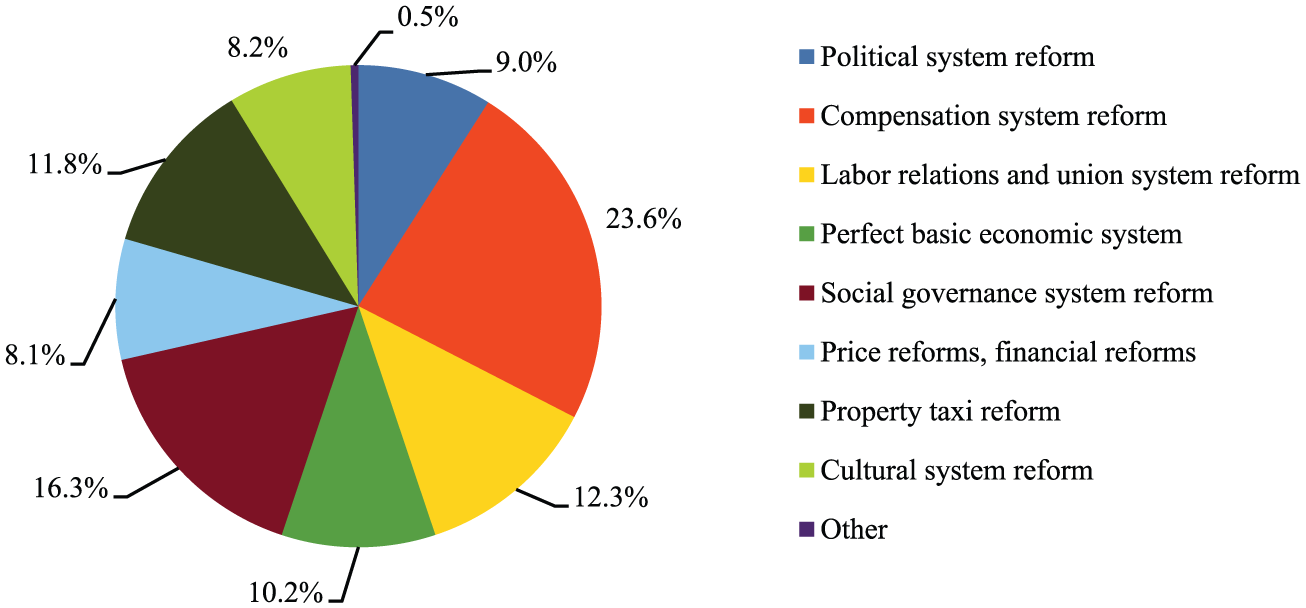
Union leaders’ attitudes regarding the most likely areas for policy breakthroughs.
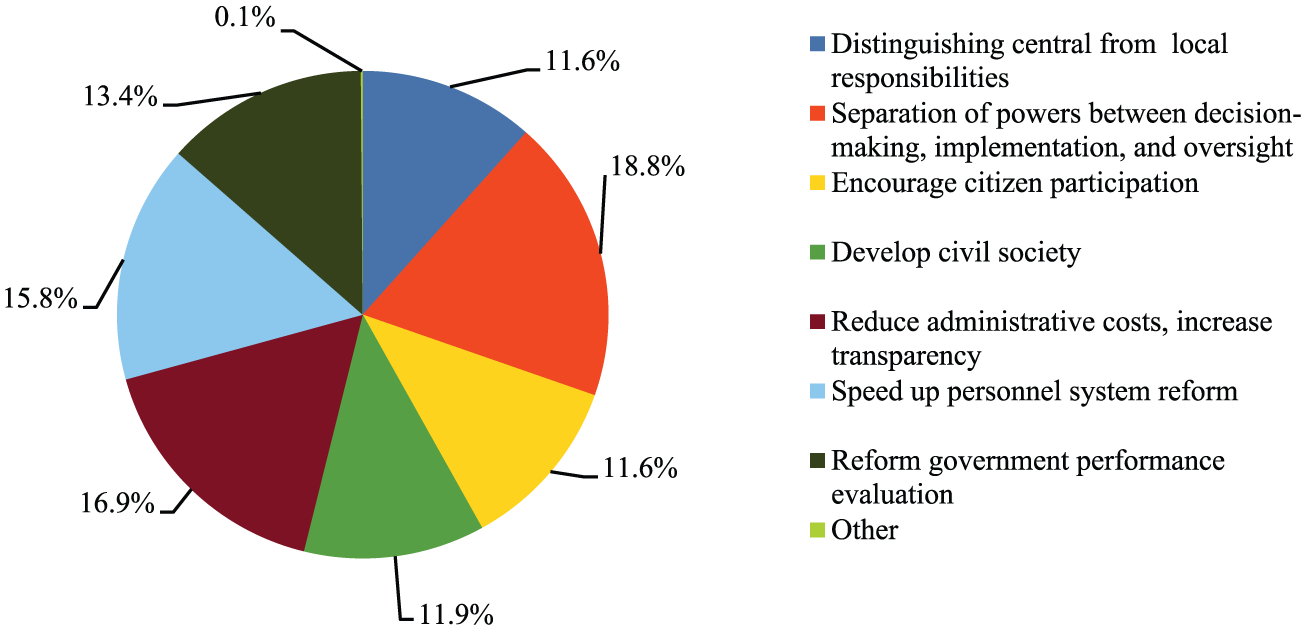
Union leaders’ attitudes regarding the most important areas for administrative reform.

Union leaders’ attitudes regarding the most important characteristics of China’s current labour relations.
Correlates of optimism concerning political reform
What personal characteristics, environmental factors, and perspectives on the current state of Chinese industrial relations might drive mid-level leaders to be more open to the possibility of reform in the near future? Table 2 examines possible determinants of choosing political system reform with regard to the question about likely areas for breakthroughs in the near future. Again, we believe this answer represents the most daring (if vaguely articulated) change possible. By necessity, we employed a binary logistic regression, with whether or not political reform is chosen at all as the dependent variable. As personal variables, in addition to general demographic ones (age, gender, and education), we included party membership, education abroad, years in current union position, and previous work units of employment. These variables are intended to reveal the influence of career connections, exposure to new ideas, and different bureaucratic settings. In terms of environmental factors, we focused on local ownership structures (SOE, foreign, and domestic private) and the manufacturing/service sector bias of leaders’ cities. With regard to respondents’ general perspectives on industrial relations, we tried to cover a number of current hot topics: the increased flexibilization of workplaces, rising mass incidents, channels for communication, and so on. However, we did not include all of the survey’s possibly relevant questions here, as some are near-opposites of each other (e.g. ‘mass incidents remain high’ contrasts sharply with ‘Chinese labour relations are essentially stable but with a weak base’), risking multicollinearity.
Correlates of high expectations of political reform.
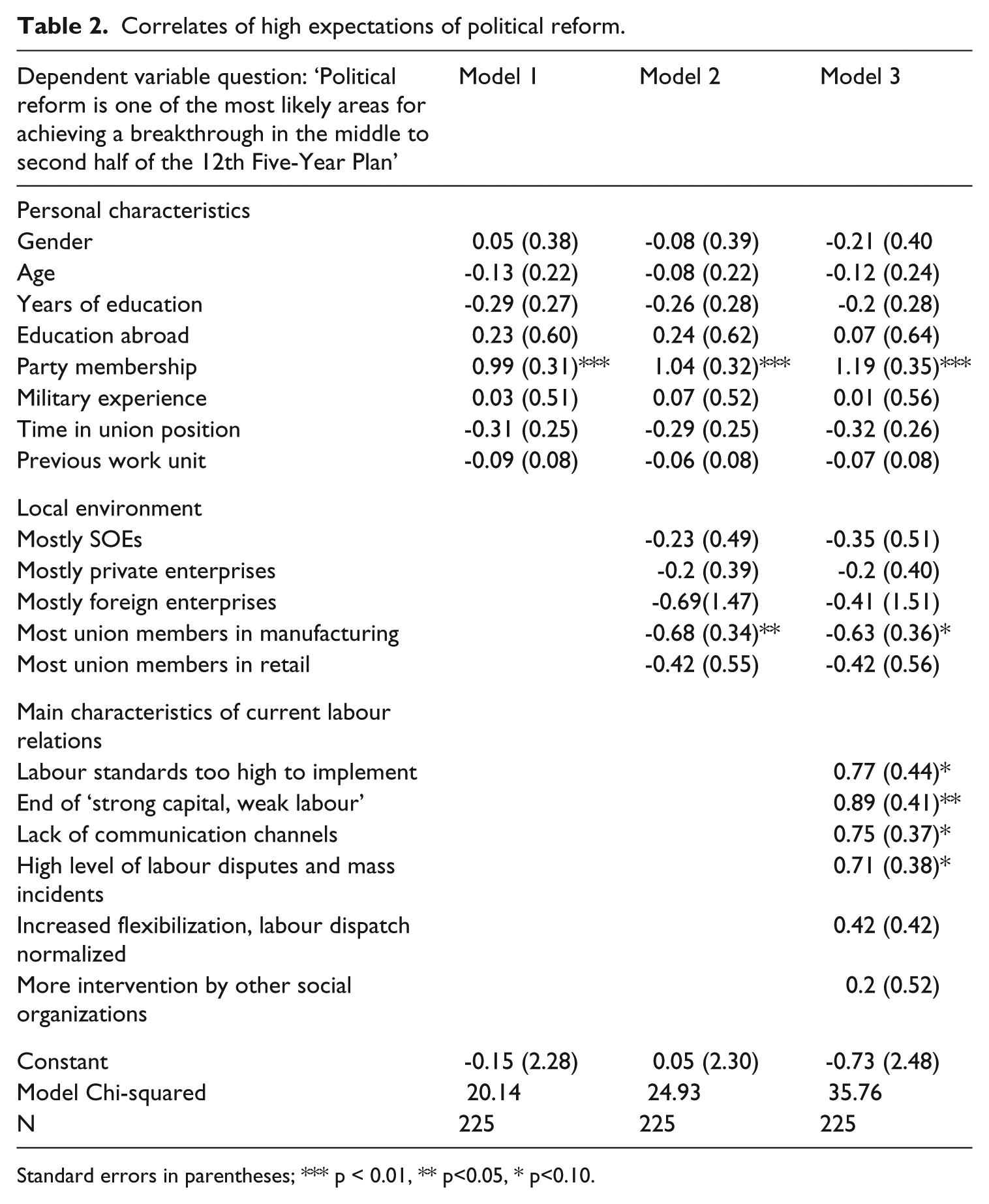
Standard errors in parentheses; *** p < 0.01, ** p<0.05, * p<0.10.
Of all the respondents’ personal characteristics (see Model 1 in Table 2), only party membership is a significant predictor of union cadre expectations regarding political reform. This is a nominal variable, with three choices: membership in the CCP, in one of China’s democratic parties, and no party membership whatsoever. It is perhaps unsurprising that age is negatively, albeit not significantly, correlated with expectations of reform. More interestingly, education also shows a negative (but again insignificant) correlation, perhaps as a result of the link between education and social status, though education abroad is positively correlated. Future research might drop these variables altogether. Model 2 captures several environmental factors. Here, we once again find only one significant correlate: a negative correlation between most of the respondents’ union members being in manufacturing 58 and belief in the possibility of a political breakthrough. This could be the result of more politically liberal union leaders being located in big cities, where service industries dominate.
Finally, in Model 3 we examine the relationship between belief in the possibility of political reform and perspectives regarding which characteristics of current Chinese labour relations are the most important, controlling for the personal characteristics and environmental factors from the first two models. Interestingly, an attitude that today’s labour regulations are too stringent and therefore unenforceable is positively and significantly correlated with belief in the likelihood of political reform. Why might this be the case? One reason could be that the same liberalism (in the traditional sense) that turns a sceptical eye toward market regulation (including that of the labour market) supports political opening; another might be that respondents are simply being realistic about laws – they do not see non-implementation as a good thing but are frank about it being a challenge under the current system. This may also illustrate the growing conflict between the central and local governments, with officials belonging to the latter group dismissing the laws and regulations issued by the central government as unrealistic and irrelevant to the circumstances at the local level. Or it may be the case that non-implementation of laws is seen as a barrier to the rule of law more generally. Most importantly, in line with the hypothesis that feeling popular pressure spurs openness, beliefs that disputes are rampant (mass incidents remain high), that communications channels are lacking, and that the era of strong capital, weak labour is ending are all positively and significantly correlated with expectations of political reform. Furthermore, when the response ‘Chinese labour relations are essentially stable’ is provided instead of ‘mass incidents remain high’, it has a significantly negative coefficient. In other words, people who acknowledge conflict have greater optimism about change; those who do not are pessimistic.
World views and optimism concerning political reform
What other views about the world are held by leaders who are optimistic about political reform? After all, reform can take many forms – and leaders may believe that reform is likely but nonetheless not welcome it! Table 3 shows crosstabs between whether or not respondents chose political system reform as a likely area for breakthrough and their priorities across three areas of reform: first, general administrative reforms, from clarifying the division of labour between central and local governments to encouraging greater citizen participation; second, labour relations reforms, from strengthening collective bargaining to new legislation on industrial action, an official euphemism for strikes; and third, international engagement, from greater participation in the International Labour Organization to collaboration with foreign NGOs. In other words, the percentages in the first and second column refer, respectively, to what proportion of those who did not choose political reform (n = 210) also chose a given other area as a reform priority and what proportion of those who did choose political reform (n = 70) also chose another area. Because the sample sizes for both choosing political system reform and not choosing it are relatively small, few of the differences in percentages are statistically significant. Only two are so lopsided that they differ at the 5 per cent level of significance: 19.7 per cent of respondents who believed a political reform breakthrough was likely thought it was important that the union reach out more to international NGOs, whereas only 10.5 per cent of those who thought a breakthrough was unlikely believed this was important, and 62 per cent of political reform optimists think labour relations reform should focus on advancing and perfecting the tripartite consultation system (in which the union is explicitly separate from the government), compared to only 46.7 per cent of pessimists. Although insignificantly so, optimists are at least five percentage points more likely to believe it important that unions participate in corporate social responsibility programmes, communicate with international unions, increase worker participation in union work, and, with regard to national administrative reforms, implement separation of powers. Interestingly, pessimists are more likely – also by five percentage points – to think the union should advance collective consultation, especially sectoral consultation; learn from foreign worker organizing and collective bargaining experiences; strengthen systems for mediating labour disputes and preventing them from occurring in the first place; and, in terms of administrative reforms, reduce administrative costs. The focus on improving collective bargaining/consultation among pessimists could reflect either a politically cautious bent (such work has been emphasized by the ACFTU leadership in recent years, with quotas set for collective contracts) or could show an attention to nuts and bolts that matches a more realistic outlook on the future (as opposed to the political reform optimists’ high-flying – if perhaps contradictory – notions of corporate social responsibility, international solidarity, and worker participation). Interestingly, the exact same proportion (33.8 per cent) of both groups believes it important to be vigilant against the infiltration of foreign enemy forces into the ranks of China’s workers. On the whole, we can very tentatively identify reform optimists as people who are more likely to be reformists themselves.
Optimistic versus pessimistic respondents with regard to reform.
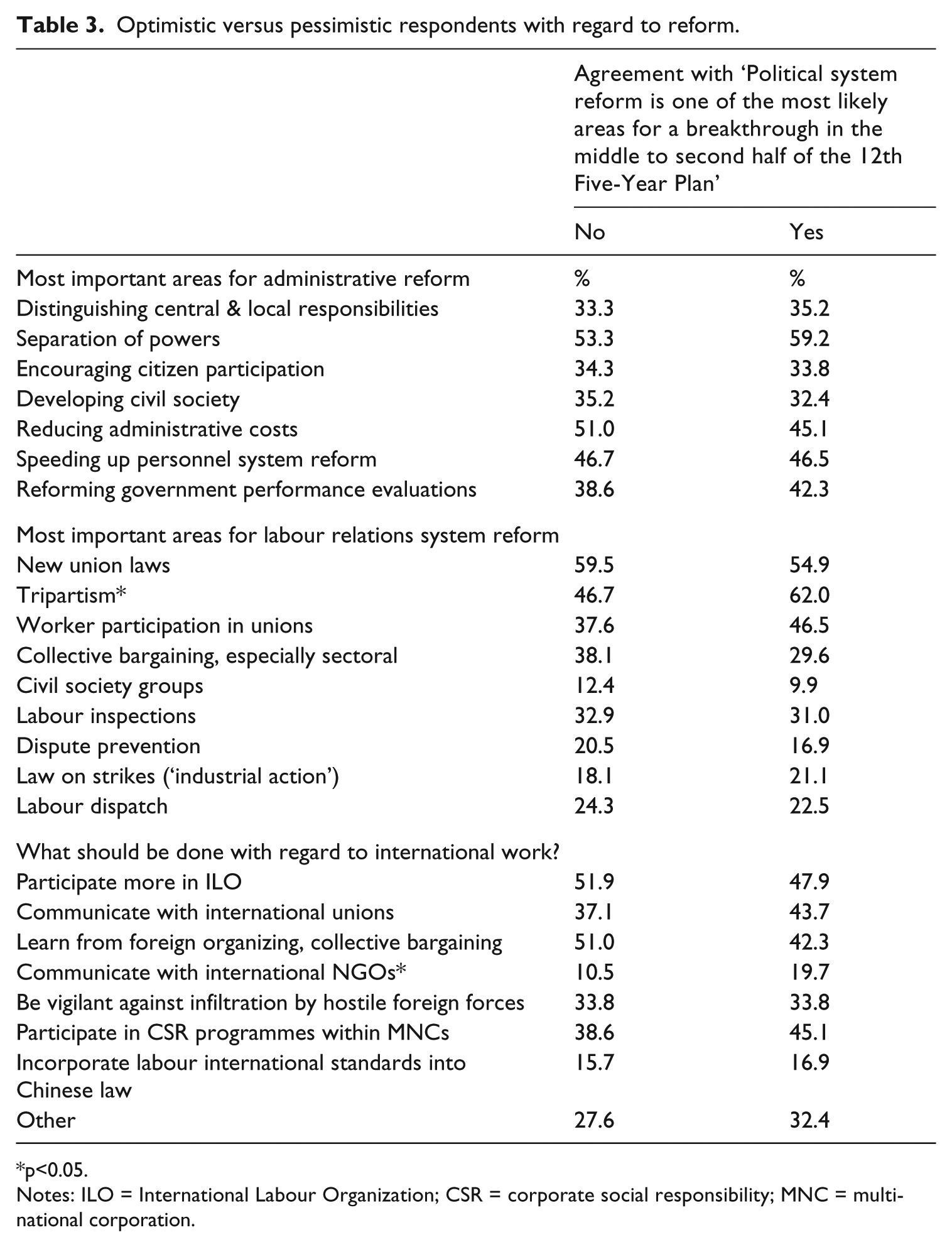
*p<0.05.
Notes: ILO = International Labour Organization; CSR = corporate social responsibility; MNC = multi-national corporation.
Conclusion
In recent years, the number, scale, and intensity of the Chinese workers’ strikes, protests, and riots have shocked the leadership of the CCP. Worker activism can place incredible pressure on authoritarian states. In the most dramatic situations, pressure can first accumulate at a local level and then escalate into a nationwide movement, leading to regime change. Academic analysis of these dynamics, however, has too often remained at the level of broad, stylized social forces or elite politics. The roles of mass organizations and their mid-ranking officials, in particular, have been neglected. In contrast, we use a survey of 225 municipal trade union leaders to dig down to the middle stratum of Chinese labour officialdom, observing how contention interacts with personal characteristics and factors internal to the state in the thinking of those leaders most immediately affected by unrest and most likely to drive decision-making in the future.
Our findings suggest that city union officials are open to a range of reforms. Moreover, those who observe increased worker activism, a lack of communication channels, and a changing balance of power between capital and labour to be salient characteristics of China’s industrial relations are more likely to believe that political reform, in particular, is on the way. The limits of our survey prevent us from identifying precisely what this belief implies. For example, does it mean support for change? Fear of change? What sort of change? But we are able to gain a rough sense of reform optimists’ beliefs by comparing the policy prescriptions advocated by optimists versus pessimists. We find that those who believe that change is likely are significantly more open to outreach to international NGOs and committed to the idea of tripartite labour relations. Although not significantly so, they are also more positive about worker participation in decision-making and, nationally, about the idea of separation of powers, whereas pessimists focus on the nuts and bolts of collective consultation and lightening administrative burdens.
In other words, there appears to be a nexus between workplace conflict and both anticipation of and support for daring changes to how work and politics are managed among leaders. This nexus holds even when we account for respondents’ different backgrounds. In fact, of the individual characteristics documented, only party membership and whether a respondent is in a manufacturing-heavy area are significant predictors of opinions. Of course, we cannot make causal claims based on our survey. Places with high levels of conflict may foster reformism or, conversely, reformists may be especially likely to be assigned to areas of conflict. Regardless, an acknowledgement of the increasingly chaotic state of Chinese industrial relations does not seem to correlate with policy caution, despite isolated conservative statements by top leaders of the union, party, and state.
Our study also reveals interesting ancillary findings. Most survey respondents identified a spectrum of domestic political and economic dynamics as more important to the development of Chinese labour relations than the intervention of social organizations or the infiltration of international forces. This contrasts with a growing tendency on the part of some in the CCP and ACFTU to blame today’s difficulties on troublemaking by external actors intent on challenging party rule 59 (though, as we note, reform pessimists and optimists alike call for vigilance against ‘enemies’). The surveyed leaders also criticized national laws and regulations for being rigid and out of touch with the variety of dynamics existing at a local level. Many municipal-level ACFTU leaders appeared to regard public participation and civil society engagement as important. All of this, combined with respondents’ support for strengthening the union’s role in managing labour relations and belief in the separation of powers, reveals profound scepticism about central state overreach.
Further research is clearly necessary. Our survey has a relatively small sample size and the limited number of statistically significant variables suggests that further development of our models is advisable. Future studies might build on our work by digging deeper into particular cases of unrest and union reform. Qualitative interviews with key union leaders could, moreover, be illuminating. As the leaders we surveyed rise in the ranks and are promoted within or outside of the ACFTU – whether within the realm of industrial relations, for example the Ministry of Human Resources and Social Security, or outside, in various government or party offices (mayors and so on) – they will undoubtedly encounter new pressures and incentives. A longitudinal survey could capture how these influence their opinions over time. Even if respondents’ beliefs remain the same, there is also inevitably a gap between a leader’s ideals and the kinds of policies he or she is ultimately able to enact. Chinese institutions, not the least the labour bureaucracy, can be doggedly resistant to change. Measuring this gap in the context of labour policy could also be a fruitful area of further inquiry. What this article has provided is preliminary evidence that worker activism and official thinking tend to move together. Much then depends on how strikes, protests, and riots by Chinese labour evolve in the coming years. Contention in tomorrow’s workplace will likely shape the policy space available for further reforms.