




Abstract
Background
Effective leadership is crucial for delivering high-quality healthcare, optimizing employee performance, and improving patient outcomes.
Objective
This study conducts a bibliometric analysis to examine leadership styles in the healthcare sector, identifying key research trends, influential works, and their impact on work outcomes.
Methods
Using Scopus-indexed publications (2010–2024), this study analyzes eighty-three relevant documents with VOSviewer.
Results
The findings reveal that various leadership styles, such as transformational, transactional, authentic, collaborative, inclusive, servant, and paternalistic leadership, have a significant impact on both individual and organizational outcomes. Furthermore, transformational leadership is the most studied and influential style, promoting employee engagement, innovation, and better patient care. Transactional leadership ensures structure and efficiency but offers limited long-term benefits. Servant leadership fosters trust, collaboration, and ethical decision-making, while authentic leadership enhances transparency and psychological safety. Additionally, the study highlights a growing focus on healthcare leadership, with Medicine and Business, Management & Accounting as the dominant disciplines.
Conclusion
This bibliometric study highlights the critical role of leadership styles in shaping work outcomes in the healthcare sector. Transformational leadership emerges as the most influential, fostering innovation, engagement, and improved patient care.
Introduction
Healthcare institutions are fundamental to maintaining public health, preventing diseases, and ensuring that individuals receive the necessary medical care. Unlike many other industries, the healthcare sector directly affects human lives, making its efficiency and effectiveness crucial for societal stability and development. 1 Well-managed healthcare systems contribute to longer life expectancy, lower mortality rates, and overall improved quality of life. 2
The healthcare sector is highly complex, shaped by factors such as strict regulations, ethical considerations, financial constraints, and the need for multidisciplinary teamwork. Effective leadership is crucial for helping healthcare organizations adapt to changes, implement policies, and optimize resource allocation to achieve common goals.3,4 Leaders must understand regulatory requirements, including patient privacy laws such as the Health Insurance Portability and Accountability Act (HIPAA), quality and safety standards, insurance billing codes, and clinical governance protocols, to ensure compliance and uphold legal and ethical standards in healthcare delivery. 5
Healthcare leaders are also key to ethical decision-making, often facing complex situations with no clear right or wrong answers. Their decisions affect not only patient care but also staff dynamics, resource allocation, and organizational culture. Leadership ethics thus influence how healthcare professionals interact, how resources are distributed, and how the organization's values are upheld. 6 Beyond ethics, leaders must manage financial responsibilities to ensure the organization's financial health. 7 This includes managing resources, maintaining operational viability, overseeing payroll, and investing strategically in infrastructure and technology. Financial decisions directly impact the organization's ability to provide high-quality care while keeping services affordable and accessible.
Strong leadership not only enhances operational efficiency but also fosters collaboration among medical professionals, 8 improving patient care quality and healthcare services. Given the sector's role in public well-being, visionary leadership is essential to navigate its complexities, improve organizational performance, and benefit patients. Various leadership styles significantly affect healthcare institutions, influencing employee motivation, job satisfaction, and service quality.9,10 In the face of a high-pressure work environment, rapid medical advancements, and growing patient demand, understanding how leadership styles impact healthcare outcomes has become a critical research focus for developing more effective strategies. 11
Existing research has explored various leadership styles in healthcare settings, including transformational, transactional, servant, and authentic leadership.12–14 Transformational leadership is often linked to higher levels of employee engagement and innovation, as it encourages employees to align with a shared vision and embrace change. On the other hand, transactional leadership is associated with providing clear structure and guidelines, which ensures operational efficiency by focusing on rewards and penalties to manage performance. 15
Servant leadership, with its emphasis on a patient-centered approach, prioritizes ethical decision-making, empathy, and the well-being of both employees and patients. 16 This leadership style is particularly effective in fostering a supportive and caring environment within healthcare organizations. Additionally, authentic leadership build legitimacy by fostering honest, transparent relationships with followers and valuing their input. They prioritize ethical decision-making, which strengthens credibility and cultivates trust. By promoting trust and maintaining open relationships, authentic leaders enhance employee engagement and job satisfaction. 17
Despite the valuable insights provided by these studies, there remain gaps in understanding how these different leadership styles, when used in combination, influence work outcomes in healthcare. More research is needed to explore how these leadership approaches interact and collectively contribute to organizational success, employee satisfaction, and patient outcomes. Thus, this study leverages bibliometric analysis to synthesize existing knowledge, identify research trends, and highlight influential works and authors in the field. Unlike traditional literature reviews, bibliometric methods offer a quantitative perspective, revealing evolving themes and knowledge clusters in leadership research.18,19
This study aims to provide a systematic bibliometric analysis of leadership styles and work outcomes in the healthcare sector, addressing the following key research questions: (1) What are the dominant leadership styles studied in healthcare? (2) How do different leadership styles influence work outcomes? (3) What are the emerging trends in leadership research within healthcare? By answering these questions, this research contributes to both academic literature and practical leadership development in healthcare organizations.
Literature review
The importance of leadership in healthcare
Leadership in the healthcare sector is a fundamental element that determines organizational success, employee well-being, and patient care outcomes. 20 Effective leaders not only keep healthcare professionals motivated and engaged but also ensure their commitment to delivering high-quality, patient-centered services. Given the complexities of healthcare institutions, leaders are required to adopt leadership styles that enhance adaptability, facilitate interprofessional collaboration, and strengthen organizational resilience. 21 Furthermore, effective leadership plays a crucial role in determining patient outcomes by reinforcing safety standards, improving service efficiency, and enhancing the overall healthcare experience. Leaders who adopt transformational 22 and servant 23 leadership styles tend to foster a work environment that supports continuous improvement, empowers healthcare professionals, and prioritizes patient well-being. Thus, leadership not only serves as a driving force in achieving operational excellence but also plays a key role in realizing humane and sustainable healthcare services.
Numerous studies highlight the connection between leadership styles and employee performance. Transformational and servant leadership, in particular, have been linked to higher levels of job satisfaction and organizational commitment.24,25 For example, transformational leaders at Cleveland Clinic, a globally renowned healthcare organization, inspire staff through a shared vision of patient centered care, a commitment to excellence, and continuous improvement. By motivating employees at all levels and encouraging innovation beyond traditional practices, these leaders have been instrumental in the clinic's reputation for exceptional patient outcomes and healthcare innovation. Similarly, Virginia Mason Medical Center exemplifies servant leadership, emphasizing the growth and well-being of individuals and the broader community. Its leaders prioritize the needs of both patients and staff, cultivating a culture of empathy, collaboration, and personal development. By empowering employees, addressing their concerns, and supporting their professional growth, servant leaders at Virginia Mason enhance patient care while fostering a motivated and engaged workforce aligned with the organization's mission. In contrast, autocratic or passive leadership styles can lead to workplace stress and dissatisfaction, ultimately affecting healthcare service quality.26,27 For example, some National Health Service trusts in the United Kingdom have implemented top down initiatives that set strict performance targets, such as reducing patient wait times or increasing surgical volumes, without sufficient input from frontline staff. These mandates often place added pressure on healthcare workers and contribute to increased stress and job dissatisfaction.
Dominant leadership styles in healthcare
Transformational leadership
Transformational leadership is a widely studied style in healthcare, focusing on vision, motivation, and employee empowerment. 15 Research shows it enhances job satisfaction, organizational commitment, and patient safety. 28 This leadership style also fosters innovation and change, which are crucial in the rapidly evolving healthcare sector. 29 Transformational leaders inspire and motivate by creating a compelling vision, encouraging creativity, and promoting collaboration and continuous improvement. 30 They act as catalysts for change, empowering teams to challenge existing practices, adopt innovative solutions, and enhance patient care and operational efficiency. By developing their teams’ potential, transformational leaders enable individuals to take initiative, make decisions, and lead projects aligned with the organization's mission. This approach also ensures that healthcare organizations remain agile and forward-thinking. For example, transformational leaders may drive the adoption of advanced medical technologies or digital health tools, overcoming resistance to change and ensuring smooth transitions.
Transactional leadership
Transactional leadership emphasizes clear roles, structure, and reward systems, 31 enhancing task efficiency and ensuring compliance with healthcare protocols. 32 It is particularly effective in high-pressure environments, such as healthcare, where discipline, adherence to protocols, and optimal resource use are crucial for patient care. 33 This leadership style relies on a system of rewards and penalties to maintain order, accountability, and focus on task completion. In healthcare settings, where mistakes can have serious consequences, transactional leaders prioritize adherence to established procedures to uphold high care standards. They set clear expectations, provide regular feedback, and hold team members accountable, ensuring consistent compliance. By maintaining a structured environment with defined guidelines and consequences for non-compliance, transactional leaders reduce errors and improve patient outcomes.
Servant leadership
Servant leadership prioritizes the well-being of employees and patients, emphasizing ethical decision-making and a culture of care. 16 In healthcare, it fosters trust, teamwork, and a patient-centered approach. 34 Leaders who adopt this style create a supportive work environment that reduces burnout and boosts employee satisfaction. 35 By focusing on employees’ needs, servant leaders empower them to perform at their best. This leadership style focuses on serving others, offering guidance, and ensuring that employees feel valued and supported in their roles. By fostering a culture of care and empathy, servant leaders can reduce workplace burnout, as employees are more likely to feel supported, respected, and appreciated. This, in turn, enhances overall employee satisfaction and contributes to higher levels of well-being and engagement within the organization.
Authentic leadership
Authentic leadership is rooted in self-awareness, transparency, and ethical behavior. 36 It has gained prominence in healthcare for its focus on moral integrity and trust-building between leaders and employees. Research shows that authentic leadership enhances psychological well-being, reduces stress, and promotes ethical decision-making in healthcare organizations. 37 Authentic leaders are genuine, self-aware, and align their values with actions, fostering openness and honesty with healthcare teams, patients, and stakeholders. By demonstrating consistency between words and actions, they build trust and ensure decisions prioritize ethical principles and patient well-being. 17 Authentic leaders also guide ethical decision-making by modeling ethical behavior and making patient-centered choices. Their transparent decision-making approach reduces the likelihood of unethical practices and encourages reflection and ethical discussions within teams, strengthening responsibility and improving decision-making.
Materials and methods
This study uses bibliometric analysis to examine the intellectual structure, developmental trends, and impact of research on leadership styles in healthcare. Bibliometric analysis systematically maps the evolution of the field, identifying influential authors, articles, and journals, and revealing trends in leadership theories, methods, and focus areas. By analyzing citation networks and co-authorship patterns, it highlights collaborative efforts and emerging research themes. This approach provides valuable insights into the evolution of leadership practices, identifies gaps in the literature, and uncovers key factors that influence leadership effectiveness in improving healthcare outcomes. The study evaluates Scopus-indexed publications to trace the development of leadership theories and assess how different leadership styles affect healthcare organization performance.
Through a keyword search for “Leadership styles in the healthcare sector” in the Scopus database, an initial 95 documents were identified. After filtering based on English-language publications and the 2010–2024 timeframe, the number of analyzed documents was reduced to 83, ensuring the relevance and quality of the sources used in this study. The distribution of 83 documents by source type shows that the majority come from journal articles, totaling 68 documents (81.93%), followed by books with 6 documents (7.23%), conference proceedings with 5 documents (6.02%), and book series with 4 documents (4.82%). The dominance of peer-reviewed journal articles (81.93%) indicates that research on leadership styles in the healthcare sector is largely composed of empirical studies that have undergone rigorous validation processes. These findings also reflect that this field has evolved into an established topic in academic discourse, with research contributions grounded in robust methodologies and reliable findings. Moreover, based on the type of Open Access, the document distribution includes All open access (35 documents, 42.17%), Gold (25 documents, 30.12%), Green (19 documents, 22.89%), Hybrid Gold (5 documents, 6.02%), and Bronze access (3 documents, 3.61%). All open access, the largest category, typically refers to content available through institutional subscriptions or behind a paywall. This suggests that most research on leadership styles in the healthcare sector is published in subscription-based journals with high scientific reputation and impact, emphasizing the importance of institutional access in obtaining high-quality literature in this field.
Results and discussion
This study employs a bibliometric analysis using VOSviewer to explore research trends, key contributors, and thematic structures in leadership styles within the healthcare sector. By analyzing 83 Scopus-indexed documents, the study provides insights into collaboration patterns, influential publications, and emerging research themes.
The distribution of disciplines across the 83 documents shows that research on leadership in the healthcare sector is predominantly covered by Medicine (35 documents, 42.17%) and Business, Management & Accounting (34 documents, 40.96%). Other fields include Social Sciences (13 documents, 15.66%), Economics, Econometrics & Finance (11 documents, 13.25%), Nursing (9 documents, 10.84%), Decision Sciences (7 documents, 8.43%), Health Professions (6 documents, 7.23%), Environmental Science (6 documents, 7.23%), Computer Science (4 documents, 4.82%), Psychology (3 documents, 3.61%), Engineering (3 documents, 3.61%), as well as several other disciplines such as Multidisciplinary Studies, Energy, and Arts & Humanities with smaller proportions. The dominance of Medicine and Business, Management & Accounting in healthcare leadership research indicates that the field is primarily explored from both medical and managerial perspectives. This reflects a dual focus on clinical leadership, which emphasizes the effectiveness of healthcare professionals, and organizational leadership, which focuses on strategies to improve institutional performance and efficiency. The interdisciplinary nature of this research is crucial for developing leadership practices that balance clinical excellence with organizational efficiency, enabling healthcare organizations to provide high-quality care while ensuring financial sustainability. This approach is essential for addressing the complex challenges of modern healthcare systems and fostering leadership capable of navigating both clinical and organizational demands.
The distribution of publications over the years in Figure 1 shows an increasing trend in recent years, particularly from 2021 to 2024, with a peak in 2023 (14 documents) and 2024 (13 documents). This suggests growing scholarly interest in leadership styles within the healthcare sector. The lower numbers before 2020 indicate that research on this topic was relatively limited but has gained traction in the past few years.

Distribution of publications by years.
Table 1 presents an overview of the top five most published authors based on their contributions to the dataset. Leading the list is Samad, S., with 42 publications, reflecting a strong and consistent research presence. Samad is affiliated with Princess Nourah Bint Abdulrahman University, Saudi Arabia, highlighting the institution's active engagement in relevant academic research. Following closely is Tuan, L.T., from Swinburne University of Technology, Australia, with 38 publications. This significant research output, coupled with an H-index of 38, demonstrates substantial academic influence. Although Tuan has slightly fewer publications than Samad, their work is well-cited, contributing meaningfully to the field. Ranked third is Franco, M., affiliated with Universidade da Beira Interior, Portugal, with 34 publications and an H-index of 34, indicating considerable impact. In fourth place is Ng, B.K., from Universiti Malaya, Malaysia, with two publications and an H-index of 10. Unlike the top three, Ng's lower H-index suggests their research has yet to achieve widespread recognition, though their presence in the ranking indicates growing contributions and potential for increased impact. The fifth-ranked author, West, MA, presents an interesting case. Despite having only one document in the dataset, West holds the highest H-index (55), signifying significant academic influence. Affiliated with Lancaster University Management School, UK, West's high citation count suggests either broad interdisciplinary impact or particularly high-quality research.
Top 5 most published authors.

Table 2 presents the top five journals based on the number of papers published in this dataset, along with their SCImago Journal Rank (SJR) for 2023 and respective publishers. Leading the list is Leadership in Health Services, with the highest publication count. 4 However, its SJR score of 0.453 is relatively modest, suggesting limited citation impact compared to others on the list. Ranked second, the Leadership and Organization Development Journal has published three papers and holds a significantly higher SJR score of 1.155, indicating strong academic influence and citation reach. It is published by Emerald Publishing, a well-known academic publisher specializing in business, management, and healthcare research. Also ranked third is the International Journal of Environmental Research and Public Health, with three publications and an SJR score of 0.808, placing it in a mid-range impact category. In fourth place, BMC Health Services Research has published two papers but boasts a higher SJR score of 1.029, reflecting greater academic influence despite its lower publication count. Finally, the Asia Pacific Journal of Health Management ranks fifth, with two papers and the lowest SJR score of 0.231. Published by the Australasian College of Health Service Management, it likely has a more regional focus on health management practices in the Asia-Pacific.
Top 5 journals in terms of papers and SJR.
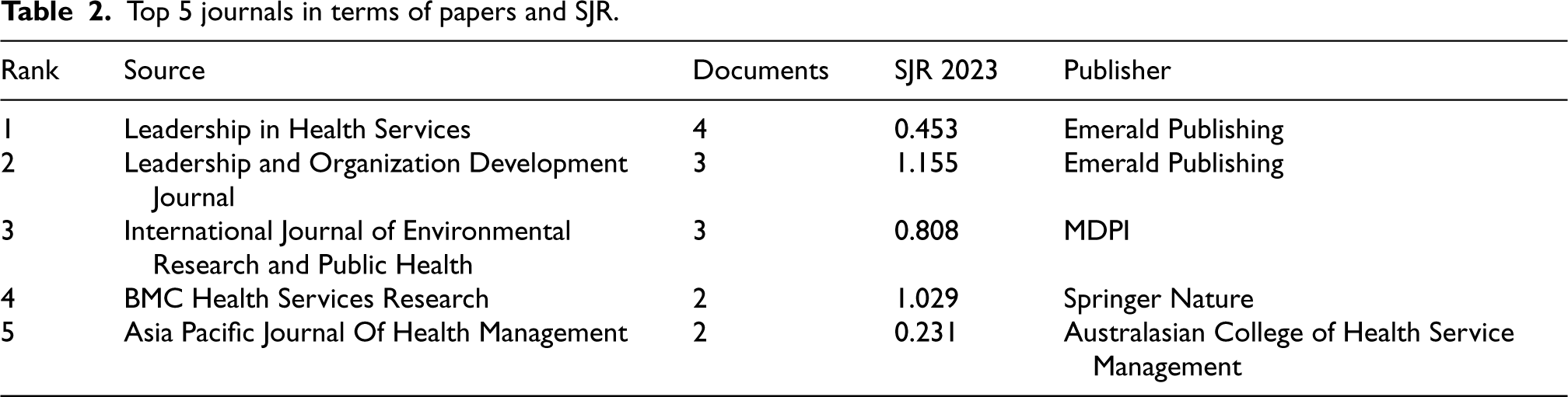
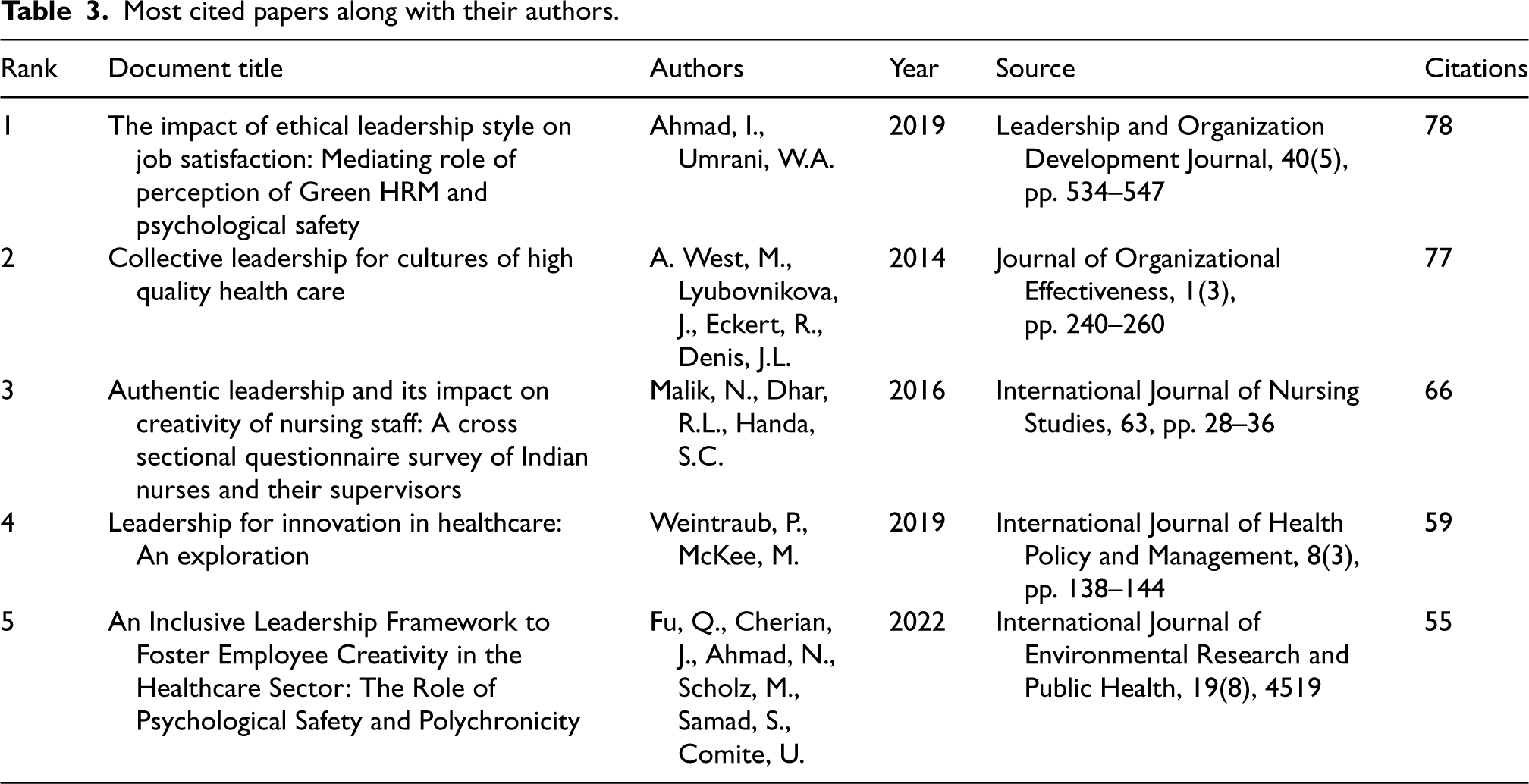
Table 3 presents the most cited papers in the dataset, ranked by the number of citations. This ranking provides insight into the most influential works in the field of leadership, particularly in the healthcare and organizational contexts. The most cited paper, “The impact of ethical leadership style on job satisfaction: Mediating role of perception of Green HRM and psychological safety” by Ahmad and Umrani, 38 has received 78 citations. Published in the Leadership and Organization Development Journal, this study highlights the importance of ethical leadership in fostering job satisfaction, with Green Human Resource Management (Green HRM) and psychological safety serving as mediating factors. Closely following is “Collective leadership for cultures of high quality health care” by West, Lyubovnikova, 20 with 77 citations. The third most cited paper, “Authentic leadership and its impact on creativity of nursing staff: A cross-sectional questionnaire survey of Indian nurses and their supervisors” by Malik, Dhar, 39 has been cited 66 times. Published in the International Journal of Nursing Studies, this research underscores the importance of authentic leadership in stimulating creativity among nursing staff. In fourth place is “Leadership for innovation in healthcare: An exploration” by Weintraub and McKee, 40 which has 59 citations. Finally, the fifth-ranked paper, “An Inclusive Leadership Framework to Foster Employee Creativity in the Healthcare Sector: The Role of Psychological Safety and Polychronicity” by Fu, Cherian, 41 has 55 citations. Published in the International Journal of Environmental Research and Public Health, this study emphasizes inclusive leadership and its effect on creativity, particularly through psychological safety and polychronicity (the ability to multitask). Despite being the most recently published paper on the list (2022), its high citation count demonstrates its rapid influence within the field.
Most cited papers along with their authors.
In Figure 2, the central co-authorship of Buonocore, G. (Europe Against Infant Brain Injury – Italy), Lui, K. (University of New South Wales – Australia), Ethawi, Y. (Saudi German Hospital Ajman – United Arab Emirates), and Mynak, M. (Jigme Dorji Wangchuck National Referral Hospital – Bhutan) indicates a strong, interconnected research cluster in leadership and work outcomes within the healthcare sector. These authors represent four different regions (Europe, Australia, the Middle East, and South Asia), highlighting a global perspective in healthcare leadership research. Their frequent co-authorship implies consistent teamwork on leadership styles, possibly across multiple studies or institutions. Moreover, their work may emphasize specific leadership styles, such as transformational leadership for improving teamwork, or servant leadership in patient-centered care.
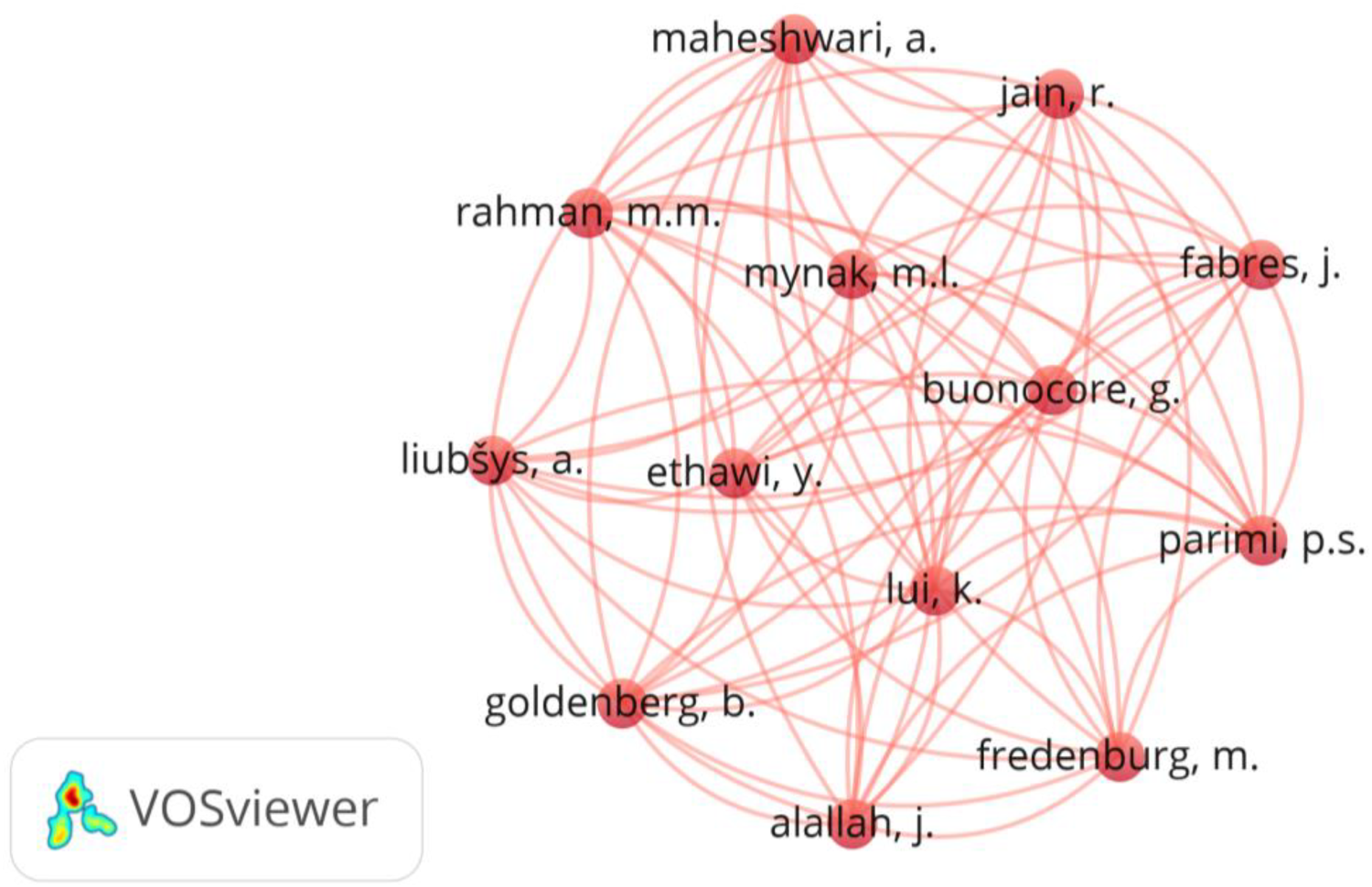
Co-authorship networks.
Figure 3 illustrates that various leadership styles, such as transformational, transactional, authentic, collaborative, inclusive, servant, and paternalistic leadership, have a significant impact on both individual and organizational outcomes. At the individual level, which focuses on employee-related aspects, leadership styles influence various factors such as job satisfaction, employee retention, work environment and workload, responsibility, job engagement, knowledge sharing, creativity, psychological safety, employee happiness, and job performance. Meanwhile, at the organizational level, which encompasses structural factors, the impact is evident in interprofessional relationships, community interactions, community care, workforce empowerment, total quality management, change management, knowledge management, organizational culture, and innovation. This highlights that leadership styles not only shape individual experiences in the workplace but also guide the dynamics and sustainability of the organization as a whole.
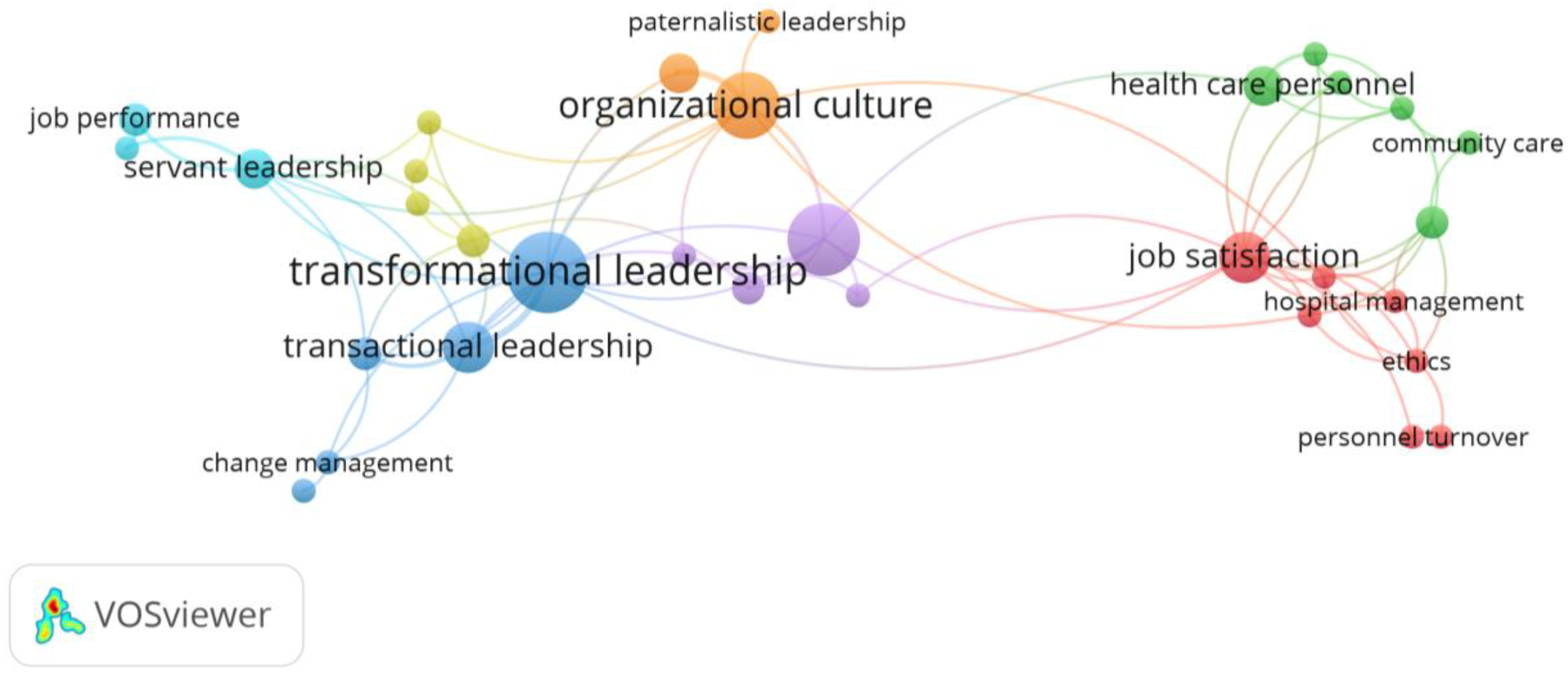
Co-occurrence keywords.
The findings show that transformational leadership holds a dominant position compared to other leadership styles in influencing work outcomes in the healthcare sector. This style not only drives innovation and improves service quality but also enhances the motivation, engagement, and job satisfaction of healthcare professionals. By emphasizing an inspiring vision, effective communication, and individual empowerment, transformational leadership contributes to performance improvement at both the individual and organizational levels. This makes it a highly relevant approach in addressing challenges and dynamics in the healthcare sector.
Transformational leadership has consistently been proven to have a significant positive impact on employee performance, job satisfaction, and organizational commitment. By instilling a strong vision, fostering a culture of innovation, and promoting employee engagement and empowerment, this leadership style plays a crucial role in enhancing both individual and organizational effectiveness. The creativity and innovation generated by transformational leadership not only boost productivity but also strengthen organizational competitiveness in a dynamic work environment.42,43 Conversely, transactional leadership, which is oriented toward a system of rewards and punishments, yields more varied outcomes. While effective in ensuring compliance, stability, and the achievement of short-term goals, this style tends to be less flexible in stimulating innovation and long-term development. In some cases, a transactional approach may limit employee initiative and hinder job satisfaction as well as their emotional attachment to the organization.42,44
The research findings also indicate that authentic leadership has a positive impact on employee satisfaction and organizational commitment by fostering a work environment built on trust and transparency. This leadership style strengthens the relationship between leaders and employees, enhances engagement, and reinforces loyalty to the organization. However, the effectiveness of authentic leadership can vary depending on followers’ personality traits and the nature of their tasks, with a more significant impact on individuals with specific personality tendencies. 45 Additionally, servant leadership, which emphasizes serving and empowering others, has been shown to significantly enhance employee satisfaction and organizational commitment, ultimately contributing to improved performance. 46 This leadership style also plays a crucial role in fostering a sustainable, inclusive, and well-being-oriented organizational culture. 47 Furthermore, paternalistic leadership, which combines authority with benevolence and care for employees, is positively correlated with job satisfaction and organizational commitment. Its effectiveness is particularly notable in work environments that value hierarchical structures, where leaders are perceived not only as decision-makers but also as protectors and supporters of their employees. 46
This study provides a comprehensive bibliometric analysis of leadership styles and their influence on work outcomes in the healthcare sector. The study identifies key leadership styles, including transformational, transactional, servant, and authentic leadership, and examines their varying impacts on employee performance, job satisfaction, and healthcare service quality. The findings highlight the critical role of leadership in shaping both individual and organizational outcomes, reinforcing the need for effective leadership practices in healthcare institutions.
Transformational leadership stands out as the most influential style in enhancing employee motivation, engagement, and organizational innovation. By instilling an inspiring vision, this leadership style fosters a work culture that empowers healthcare professionals to deliver their best performance while also contributing to improved service quality and patient care outcomes. On the other hand, transactional leadership, while effective in maintaining order and operational efficiency, has a more limited impact on long-term job satisfaction and innovation. This reward-and-punishment-based approach ensures target achievement but lacks flexibility in fostering creativity and employee development. Meanwhile, servant leadership prioritizes employee well-being and patient care. By emphasizing empathy, support, and empowerment, this leadership style builds trust and strengthens collaboration among healthcare teams, creating a harmonious and productive work environment. Similarly, authentic leadership plays a crucial role in fostering transparency and integrity in decision-making. By emphasizing honesty and ethical values, this leadership style contributes to the development of a psychologically safe workplace where employees feel valued, heard, and motivated to perform at their best.
The bibliometric analysis also reveals increasing academic interest in leadership research within healthcare, with publication trends peaking in recent years. Medicine and Business, Management & Accounting dominate the field, reflecting a dual emphasis on clinical and administrative leadership. Notably, collaboration among international researchers continues to grow, fostering a global exchange of knowledge and best practices in healthcare leadership. Despite its valuable insights, this study has some limitations. Bibliometric analysis primarily relies on quantitative measures such as citation counts and co-occurrence mapping, which may not capture the depth of leadership dynamics in real-world healthcare settings. Future research should integrate qualitative and empirical approaches to examine the nuanced impact of leadership on healthcare professionals and patient outcomes. Given the rapid transformation of healthcare systems, studies should also explore emerging leadership styles, such as digital leadership and adaptive leadership, in the context of technological change and crisis management. Investigating leadership dynamics within specific healthcare sectors can yield more contextualized and actionable insights. For example, leadership priorities and challenges in hospitals may differ significantly from those in primary care clinics, academic medical centers, or pharmaceutical settings. Sector-specific research can help identify the most effective leadership strategies to enhance staff performance, patient satisfaction, and organizational outcomes. By focusing on distinct operational environments, future studies can inform more practical and tailored leadership development initiatives in healthcare.
Footnotes
Ethical considerations
No human participants were involved in this study; therefore, ethical approval was not required. The datasets analyzed during this study are available in the Scopus scientific database.
Funding
The author received no financial support for the research, authorship, and/or publication of this article.
Declaration of conflicting interests
The author declared no potential conflicts of interest with respect to the research, authorship, and/or publication of this article.
Data availability statement
The datasets used in this study are available from the corresponding author upon reasonable request.