




Abstract
A hallmark of the gig economy is the near-complete offloading of risk onto workers. Recent research has begun examining how gig workers conceptualise and self-manage these risks. This article contributes to this literature by questioning whether it is ever possible for workers to agentically manage risk in the gig economy. Drawing on interviews with Australian ‘home task’ gig workers, the article explores the creative and agentic capabilities that workers developed to self-manage risk. However, it also demonstrates how these capabilities were routinely sabotaged by the platform and social conditions of gig work. Drawing on a Foucauldian theoretical framework, the article argues that this sabotage is an effect of biopolitical disinvestment into the gig economy, wherein gig workers are slowly ‘let to die’ by the neoliberal context of their work.
Introduction
The gig economy has a reputation for being an extremely and uniquely ‘risky’ place to work. Depending on the kind of gig, this work can expose individuals to low pay, income insecurity and wage theft (e.g. Berg et al., 2018; Wood et al., 2019); verbal, physical and sexual assault (e.g. Johnston et al., 2023; Ladegaard et al., 2022); injury and even death (e.g. Christie and Ward, 2019; Orr et al., 2023). For many scholars, the overarching cause of this ‘riskiness’ is the distinctly neoliberal philosophy by which the gig economy operates (e.g. Bajwa et al., 2018; Ladegaard et al., 2022; Tirapani and Willmott, 2023), whereby the ‘costs/risks/responsibilities associated with regular employment’ are pushed onto the individual worker (Fleming et al., 2019: 503). Neoliberal discourses communicate that gig workers are responsible for protecting themselves via prudent risk-management activities (Orr et al., 2023: 201). Research has begun to explore how gig workers conceptualise risk (e.g. Schor et al., 2023), and detail the strategies – or forms of ‘defensive labour’ (Ladegaard et al., 2022: 773) – that workers employ to ‘privatise, normalise, and minimise’ these risks (Gregory, 2021: 317). This burgeoning body of literature also underlines the significant challenge gig workers face in effectively minimising the risks of this work. The current article contributes to this research by questioning whether it is ever possible for workers to fully manage risk in the gig economy. Drawing on interviews conducted with ‘home task’ gig workers (who use platforms like Airtasker and Gumtree to engage in local, physical work) from across Australia, I find that workers were largely willing and able to identify and prepare against the risks of gig work. However, a combination of platform and social conditions effectively sabotaged workers’ risk-management attempts – meaning that they often failed in practice. As such, I argue that gig platforms simultaneously demand and disqualify workers’ attempts to agentically manage risk.
To explain this apparent paradox, I draw upon the Foucauldian literature on neoliberal biopolitics, ‘risk’ and self-government. Through this lens, I argue that participants largely upheld their end of the bargain of neoliberalism by prudently engaging in risk management as a form of self-government. Had these individuals been employed in higher status, more economically ‘significant’ roles, their independent attempts at risk management would have been bolstered by a biopolitical apparatus invested in their wellbeing. However, because their labour is ‘low skill’ and easily replaceable, there is little economic incentive for platforms or governments to invest in these agentic attempts at risk management. Consequently, I argue that the gig economy can be understood as a site of biopolitical disinvestment (or thanatopolitics). Following Foucault (1990, 2020) and Agamben (1998), I understand ‘biopolitics’ as a double-faced, massifying power of life and death, which divides populations into groups ‘worthy’ and ‘unworthy’ of care and investment; per Foucault (2020: 241), the essential right of the biopolitical state is ‘the right to make live and to let die’. Because gig workers are destined to fail in their projects of entrepreneurial self-government (here demonstrated through sabotaged attempts at risk management), I argue that they are slowly ‘let to die’ by biopolitics.
In presenting this analysis, this article attends to recent calls for more theoretically driven gig economy research (e.g. Joyce, 2020; Purcell and Brooks, 2022). By drawing on Foucauldian literature, it presents an alternative theoretical perspective to extant explorations of risk management in gig work. This perspective highlights not just the extent of the risks gig workers are exposed to – or the significant labour they are asked to perform in managing these risks – but also how and why this labour is routinely unravelled by the hostile social and technological context in which they work. Further, the article expands upon extant biopolitical conceptualisations of the gig economy by arguing that biopolitics functions here not just by harnessing the power of workers’ biological lives (e.g. Gregory and Sadowski, 2021; Moisander et al., 2018; Walker et al., 2021) and deaths (e.g. Orr et al., 2023), but also by tacitly endorsing the slow deaths of workers via disinvestment. In this way, the article theorises the ‘riskiness’ of the gig economy by positioning this work within broader relations of neoliberal biopolitics.
Living and dying under neoliberal biopolitics
‘Biopolitics’ is used by Foucault (1990, 2020) to describe the expansive, two-pronged form of government that began to emerge in the West in the 17th century, which is concerned with managing and expanding the forces of human life. The first of these prongs (which is not of major concern to this article) is disciplinary power, which operates at the micro level by increasing the forces of the individual human body through training and surveillance (see Foucault, 1979). The second is regulatory power (or simply biopolitics/biopower), which operates at the macro level by increasing the forces of the body of the population; this is power ‘directed not at man-as-body but at man-as-species’ (Foucault, 1990, 2020: 243). Biopolitics increases life at the level of the population; for instance, through the regulation of birth and death rates, the management of public health and hygiene, and the organisation of public space (Patton, 2016). As such, biopower is a positive power, aimed towards ‘the expansion and efficiency of life’ (Cisney and Morar, 2016: 4). Foucault characterises biopolitics as an inversion of the ancient, negative form of sovereign power; whereas sovereignty is the power ‘to take life or let live’, biopolitics is ‘the power to “make” live and “let” die’ (Foucault, 2020: 241).
Though Foucault focused largely on the productive functions of regulatory biopolitics (henceforth simply ‘biopolitics’), subsequent scholars have more thoroughly explored ‘the negative power of exclusion and annihilation’ that constitutes biopolitics’ necessary shadow side (Prozorov, 2013: 191). Notably, Agamben (1998) argues that all biopolitical societies are built upon the exclusion of individuals who are denied political existence and reduced to mere physical bodies (or ‘bare life’). Like their counterpart in archaic Roman law, homo sacer (‘sacred man’), these individuals can be killed with impunity because they have been excluded from the political order (Lemke, 2011). Thus, the other face of biopolitics is thanatopolitics, or the politics of death (see also Foucault, 1988). Agamben (1998: 139) writes: It is as if every valorization and every ‘politicization’ of life [. . .] necessarily implies a new decision concerning the threshold beyond which life ceases to be politically relevant, becomes only ‘sacred life,’ and can as such be eliminated without punishment. Every society sets this limit; every society – even the most modern – decides who its ‘sacred men’ will be.
As Agamben (1998: 143) explores with reference to the concentration camps and eugenic policies of Nazi Germany (‘the first radically biopolitical state’), the thanatopolitical face of biopolitics is relatively easy to discern in totalitarian states. In liberal democracies, however, the deaths caused by biopolitics can be more difficult to trace: ‘Nobody is killed, at least not directly, and nobody’s hands are bloodied, at least not that we can see’ (Murray, 2008: 204). Drawing on the work of Sharma (2011, 2014, 2016), I argue that it can be useful to think about the thanatopolitical impulse of neoliberal biopolitics in terms of disinvestment.
Because neoliberalism is characterised by the omnipresence of the market within society (more on this below), the economy arguably plays a major role in determining who should be reduced to ‘bare life’. The transition to neoliberalism in the late 20th century involved the retreat of state regulation of, and investment into, public services, assets and institutions – leading to their privatisation and commodification via the market. However, as noted by Sharma (2016: 139): ‘[o]ne of the central paradoxes of neoliberalism is that while the state has disinvested in most bodies, some are reinvested in by more exclusive means through the market’. This exclusive, private investment (which is targeted towards those subjects who have succeeded in making themselves valuable to the economy) is how neoliberal biopolitics cares for the bodies (and by extension, the productive capacities) of economically ‘worthy’ members of the population (Sharma, 2011, 2014, 2016). That is, the privileged subjects of capitalism are ‘made to live’ through investment. Think, for example, of the high-earning business traveller, whose employer buys them a first-class airline ticket and access to an airport lounge so that their productive life force can be ‘protected, massaged, and beautified while it labors’ (Sharma, 2011: 441, 2016). The opposite (thanatopolitical) side of this investment is (uncompensated) disinvestment. Workers who have not proven themselves sufficiently ‘worthy’ to the market live (and die) in the vacuum of care created by state disinvestment. These individuals’ bodies and productive capacities are slowly ‘let to die’ through sustained disregard, evidenced by unsafe working conditions, overly long hours, inadequate breaks, etc. (Sharma, 2011, 2014, 2016). A contrasting example to the luxuries experienced by the high-flying business traveller is the ‘[p]olice and tow-truck drivers [who] chase taxi drivers out of parking spots when they break to use restrooms’ (Sharma, 2014: 56). Thus, the ‘unworthy’ subjects of neoliberalism are passively allowed to die social, political and physical ‘deaths’ (see Foucault, 1988) because it would take too much effort – and too many ‘wasted’ resources – to assist them in living full, long, healthy and productive lives.
Recent research has begun to explore how the neoliberal biopolitics of life and death play out in the gig economy (as I expand upon below), which is often identified as consequent to the decades-long neoliberalisation of the global economy (Fleming et al., 2019; van Doorn, 2017; Zwick, 2018). Fleming et al. (2019: 497–498, original emphasis) identify this economy as the pure (or ‘too pure’) manifestation of ideal neoliberal economic theory; this is ‘the logical conclusion of the liberalization and deregulation of employment that has characterized advanced capitalism to date’. Briefly, the gig economy can be defined as the use of digital platforms or applications (apps) – such as Uber, Airtasker and Fiverr – to arrange short-term or irregular task-based work. The forms of work arranged via gig apps are diverse, but can be broadly categorised into online/cloud-based work (such as digital freelancing and online piecework) and local/physical work (such as ride-sharing, food delivery and home task work) (e.g. Churchill and Craig, 2019; Lehdonvirta, 2018). Home task gig work – which forms the empirical focus of this study – relates to the performance of physical, in-person tasks such as cleaning, care work, handiwork, local deliveries and other odd jobs. In Australia, such work is typically organised over platforms like Airtasker, Gumtree and Mable (a similar platform in the American market is TaskRabbit). Unlike forms of digital gig work, home task gig work is carried out in person, often in the direct physical proximity of the customer. Home task gig work can also be understood as categorically distinct from ride-share and food delivery work: while all three forms of gig work occur in person, home task gig work typically does not need to be completed in rapid response to real-time customer demand (see Veen et al., 2020). Rather, home task gig work might be considered a digitisation of ‘the old newspaper classifieds or community boards in supermarkets’ (Veen et al., 2020: 30).
Gig workers are typically legally classified as self-employed independent contractors, rather than as employees of the apps they work through (Duggan et al., 2021). In Australia, this means that gig workers cannot access many basic labour rights afforded to other workers, such as minimum wages, sick and annual leave and workers’ compensation (Minter, 2017). Additionally, gig workers typically contend with temporal irregularity, piecework compensation and requests for worker investment (Stewart and Stanford, 2017). Increasingly, researchers are drawing attention to how this extremely neoliberal form of work can be conceptualised in biopolitical terms. For instance, multiple recent studies have documented how the gig economy ‘harvests value from the full “life” of workers’ – sometimes simultaneously nullifying possibilities for resistance (e.g. Gregory and Sadowski, 2021; Moisander et al., 2018; Walker et al., 2021: 27). Much of this literature conceptualises biopolitics in a slightly different way to the present article, often reading this as something of a synonym for neoliberal governmentality (a concept I will discuss below), rather than as a massifying power of life and death that characterises all modern states. Thus, Walker et al. (2021: 27) argue that the gig economy is biopolitical because ‘it encourages low-wage or unemployed individuals to fill up their evenings and weekends with income-supplementing activities’, while Moisander et al. (2018: 377, original emphasis) explore ‘the mechanisms of biopower and managerial control through which precarious workers are managed as the active, productive and self-directed economic subjects of neoliberalism’. In closer theoretical alignment to my present analysis, Orr et al. (2023: 201, original emphasis) argue that food delivery gig platforms constitute a form of ‘necrocapitalism’ in that ‘the value of [. . .] workers’ labour becomes inextricably linked to their capacity to be injured, neglected, and dispossessed – that is, in a biopolitical sense, to let die’ (Orr et al., 2023: 201). They argue that (1) ‘corporeal harms are inherent’ to food delivery work; (2) ‘these harms are heightened by platform infrastructure’; and (3) ‘strategic regulatory inaction maintains these necrocapitalistic orders’ (Orr et al., 2023: 202–203). The present article expands upon this developing body of literature by arguing that the Australian home task gig economy can be thought of as a site of biopolitical disinvestment in which workers are slowly ‘let to die’ through sustained disregard for their economic, physical, social (etc.) wellbeing. As I explore, one of the ways that this occurs is through the disqualification of workers’ agentic attempts at risk management.
Government, governmentality and ‘risk’ as personal responsibility
To understand how the Australian home task gig economy ‘lets die’ through the disqualification of risk-management techniques, it is necessary to first briefly review the Foucauldian literature on government, neoliberal governmentality and ‘risk’. Foucault uses the term ‘government’ to describe power’s general operation. To ‘govern’ is to ‘structure the possible field of action of others’ or conduct their conduct (conduire des conduits) (Foucault, 1982: 790). ‘Governmentality’, then, refers to the rationality of government – that is, the techniques and knowledges used to direct the conduct of individuals (see Gordon, 1991). In a critique of his earlier conceptualisations of power (e.g. Foucault, 1979), Foucault (2007, 2021) argues that government cannot be understood simplistically in terms of strict domination – whereby the subject fully internalises the commands of an exterior relation of power – but must be understood as a complex interplay between the self and society. In articulating this idea, Foucault (2021: 4) develops the concept of ‘technologies of the self’, which he defines as those: techniques which permit individuals to effect by their own means [. . .] a certain number of operations on their own bodies, on their own souls, on their own thoughts, on their own conduct; and this, in a manner so as to transform themselves, to modify themselves and to attain a certain state of perfection, of happiness, of purity, of enlightenment [. . .].
Technologies of the self exist alongside technologies of domination (‘which permit us to determine the conduct of individuals, to impose certain wills on them and to submit them to certain ends or objectives’) (Foucault, 2021: 4). Foucault (2021: 6) argues that the interplay between technologies of the self and technologies of domination create government: ‘This contact point where the way individuals are driven and the way they conduct themselves are tied together is what one can call, I think, “governmentality”’. Essentially then, Foucault argues that we are governed to govern ourselves; in conversation with the knowledges produced by our society, we agentically work on our minds, bodies and souls in ways that produce in us certain skills, capabilities or capacities (see Foucault, 2007: 97–120). Depending on the context in which we live and develop techniques of self-government, these capacities might allow us to become better workers, better consumers, better soldiers, better parents, and so on. Under neoliberalism, these capacities notably allow us to become better ‘entrepreneurs of the self’.
Foucault (2008) argues that neoliberalism is not just an economic philosophy, but a form of governmentality ‘that produces new kinds of political subjects and a new organization of the social realm’ (Oksala, 2013: 34). Neoliberalism is characterised by the radical extension of the economic form throughout the entire social body – including ‘the whole of the social system not usually conducted through or sanctioned by monetary exchanges’ (Foucault, 2008: 243) – which has the effect of reframing all human behaviour in terms of rational and autonomous economic calculations (see Hamann, 2009). Neoliberalism thus urges individuals to engage with various self-technologies that increase their latent economic potential. This economic capacity building is wide-ranging and comprehensive, such that every action a person makes (relating not just to their work or investments, but also to their emotional, reproductive and interpersonal life) can and should be made with reference to their financial future (Foucault, 2008). Foucault (2008: 226) argues that the ideal subject of neoliberalism is therefore ‘an entrepreneur of himself, being for himself his own capital, being for himself his own producer, being for himself the source of [his] earnings’. Arguably, one of the activities that the entrepreneur of the self is most preoccupied with is the self-management of ‘risk’.
For Foucauldian scholars, ‘risk’ is not any ‘real thing’ (see Dean, 1998). Rather, risk is conceptualised as a social construct that is legible only within the context of specific historical, economic and intellectual traditions (see Reith, 2004). This does not mean that people do not really experience dangerous or hazardous events/conditions, simply that their categorisation as a form of risk, specifically, is a construction: ‘there is no risk in reality. But on the other hand, anything can be a risk; it all depends on how one analyzes the danger, considers the event’ (Ewald, 1991: 199, original emphasis). The concept of risk takes on an important function under neoliberal governmentality, where it becomes ‘a way of representing events so that they might be made governable in particular ways, with particular techniques, and for particular goals’ (Dean, 1998: 25). Centrally, the privatisation of risk under neoliberalism is thought to drive individuals ‘to greater exertion and enterprise by the need to insure against adverse circumstances – and the more enterprising they are, the better the safety net they can construct’ (O’Malley, 1996: 197). For the ideal, entrepreneurial subject of neoliberalism then, risk comes to represent not just a potential adverse event, but ‘a source or condition of opportunity, an avenue for enterprise and the creation of wealth’ (O’Malley, 1996: 204). O’Malley (1996: 199) argues that neoliberal government therefore creates ‘prudent subjects’, who are expected to be both ‘responsible (moral)’ and ‘rational (calculating)’ by managing their own risks without depending on help from others. Risk management, therefore, becomes ‘an everyday practice of the self’ (i.e. self-government) under neoliberalism (O’Malley, 1996: 200).
Though risk management is largely treated as an individual issue by neoliberal government, it is important to remember that neoliberalism is a form of biopolitics, 1 and therefore simultaneously manages risk at the level of the population. According to Castel (1991), late-20th century technologies of risk management replaced the ‘risky’ or ‘dangerous’ subject with ‘factors, statistical correlations of heterogeneous elements’ (Castel, 1991: 288). Consequently, ‘exterior hazards and temptations from which the subject has not learnt to defend himself or herself’ – encompassing any number of physical, environmental and lifestyle factors – became the target of government intervention (Castel, 1991: 289). This identification of risk at the population level then leads to the promotion and facilitation of autonomous risk management at the individual level: smokers are thanked for not smoking, office dwellers are asked to consider using the stairs over the elevator, and so on (see also Petersen, 1997). Significantly, however, this regime of biopolitical risk management does not affect all members of the population equally. Rather, under this form of biopolitics, an individual’s ability to benefit from government-level risk interventions relies largely on their capacity (and willingness) to fall in line with the dictates of neoliberalism – leading to the following warning from Castel (1991: 294): ‘the emerging tendency is to assign different social destinies to individuals in line with their varying capacity to live up to the requirements of competitiveness and profitability’.
In other words, risk management can be understood in terms of investment and disinvestment under neoliberal biopolitics. Those who are able to ‘live up to the requirements of competitiveness and profitability’ are aided in their individual techniques of risk management by a government that is thoroughly invested in their health and productivity. However, those who are not able to meet these requirements slip into zones of disinvestment, and are ultimately let to die through exposure to various ‘risks’ that they may or may not have the capacity to independently protect themselves from. In this article, I argue that the Australian home task gig economy can be understood as one such zone of disinvestment. As I discuss below, this disinvestment does not present as one constant, overt barrier to effective risk management, but comprises a web of platform and social conditions that make managing risk in the gig economy that much harder.
Methods
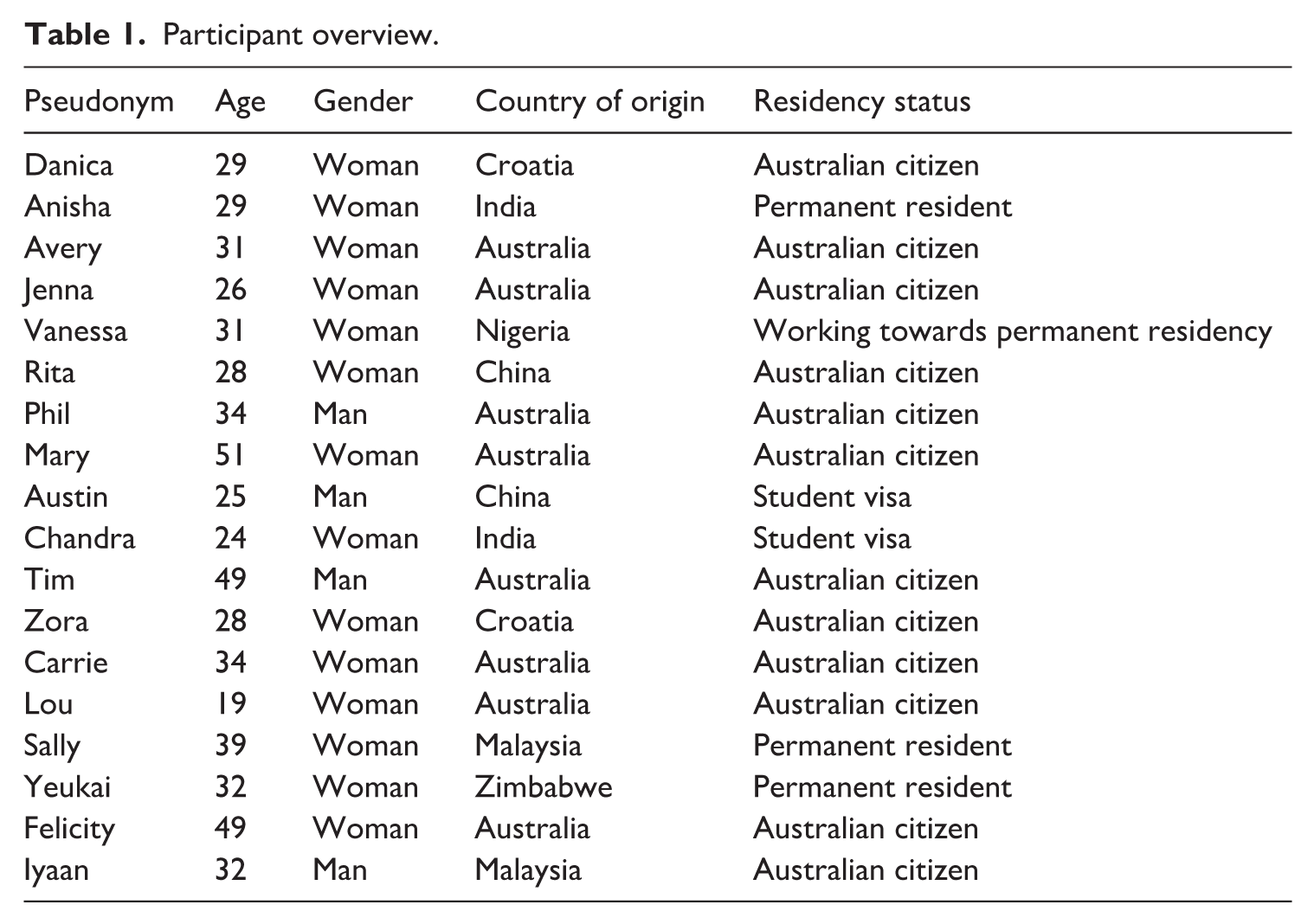
The content of this article is drawn from a larger project studying time’s operation as a gendered relation of power in the Australian home task gig economy (the generation of the apparently unrelated data on ‘risk’ was an effect of my reflexive, participant-centred approach to interviewing – as I detail below). The research consisted of 60–90-minute semi-structured interviews (conducted via Zoom, during successive Covid-19 lockdowns in 2021) with 18 home task gig workers from across Australia. To ensure that participants had relevant experience of home task gig work, purposive sampling was utilised. This involved advertising an expression of interest (EOI) form for participation on gig apps (Airtasker, Gumtree) and social networking sites (Facebook). Respondents to the EOI who met the selection criteria (Australian adults who regularly engaged in home task gig work and had done so for at least six months) were then invited to participate in an interview. Of 103 (complete, non-duplicate) responses to the EOI, only 22 respondents met all recruitment criteria – and several of these did not proceed to interview. Two participants were recruited through snowball sampling. Participants were given an explanatory statement upon recruitment and provided verbal consent at the time of interview. In line with my use of reflexive thematic analysis (discussed below), I took a reflexive approach to determining sample size, based on recursive appraisals of the quality and suitability of my data during the concurrent sampling and analysis processes (see Braun and Clarke, 2021a; Braun et al., 2019; Malterud et al., 2016). The final sample consisted of 14 women and four men, aged between 19 and 51 years. Though I endeavoured to generate a more gender-balanced sample, the comparatively feminised nature of this work made this difficult (see Churchill and Craig, 2019). The sample was more diverse in terms of country of origin (Table 1); however, most participants were either Australian citizens or permanent residents. Most participants relied on gig work as a significant source of supplemental income, combining this with income from ongoing work, casual work, welfare payments and/or scholarships to address basic costs of living. For two participants (Rita and Phil), gig work was their main source of income, while for three (Austin, Sally and Iyaan), gig work provided a kind of nonessential bonus income.
Participant overview.
The entire research project was conducted reflexively and non-linearly, as guided by my feminist poststructuralist understanding of epistemology, methodology and axiology. Briefly, I believe that it is the role of researchers to continually and reflexively question and deconstruct relations of knowledge/power (see Gannon and Davies, 2007), which can be achieved methodologically by centring participant experiences/knowledges in the research context and analytically by deconstructing the hegemonic discourses that have created and subjugated these experiences/knowledges. This meant that the processes of data collection, analysis and theoretical development overlapped with and informed one another, resulting in research findings that were simultaneously empirically and theoretically driven. The interviews consisted of a series of ‘grand tour’ questions (see Leech, 2002) designed to be broad enough to allow participants to speak at length with little input from myself. These questions focused on participants’ typical rhythms of labour; their experiences of and relationship towards (gig) work; their temporal orientation and planning; and their time outside of labour. However, my central interest in participants’ own experiences and understandings of events meant that interviews often moved away from the interview guide, as I allowed participants to speak freely about whatever was most interesting and important to them. This is how I generated the data on ‘risk’ presented in the current article: questions on ‘risk’ were not included in my original interview guide but were generated spontaneously from participants’ discussions of their own concerns/interests. Thus, reflexively allowing the data to guide the direction of my research shaped the present analysis.
Interview data was analysed with Braun and Clarke’s (2006, 2021a: 39) ‘reflexive thematic analysis’ (RTA), which they situate on the ‘critical qualitative’ end of the spectrum of thematic analysis approaches. Braun, Clarke and colleagues identify six key phases of RTA: (1) familiarisation; (2) generating codes; (3) constructing themes; (4) reviewing/revising themes; (5) defining themes; and (6) producing the report (Braun and Clarke, 2006; Braun et al., 2019: 852). However, they note that these phases are ‘reflexive and recursive, rather than strictly linear’ (Braun et al., 2019: 852), and that ‘as one’s analytic (craft) skill develops, these six phases can blend together somewhat’ (Braun and Clarke, 2021b: 331). For instance – as briefly noted above – I began the phases of familiarisation and code generation while sampling, as this helped me to determine when I had gathered enough good-quality data to answer my research questions. Further, I consider step six – producing the report – to be part of the analysis process, rather than a translation of this: the recursive, critical and subjective analysis process continues during writing up as data (re)enters into discussion with theory and extant research, lending a ‘narrative’ character to the written-up results (see Braun and Clarke, 2006: 93). This means that (in my ‘craft’) the phases of theme construction, review and definition occur (in part) in and through the writing up process. In essence, analysis involved (in a non-linear and recursive manner) conducting interviews; reflecting on participants’ stories; coding interview transcripts (in NVivo); reflecting on theory and extant research; editing, ordering and re-ordering codes; reflecting on my own taken-for-granted assumptions; constructing, reviewing and defining themes; reflecting on the data collection process; and writing up. In the following two sections, I present the results of this analysis as pertains to participants’ discussions of ‘risk’ in gig work. Note that discussion of the gendered and temporal aspects of this analysis have been (almost completely) removed due to space constraints (for a full account of this analysis, see Foeken, 2024).
Developing risk-management capabilities in the gig economy
In my interviews with home task gig workers, ‘risk’ was constructed in terms of any potentially adverse consequence of engaging in gig work. Most interviewees had experienced some form of adverse event (i.e. ‘past risk’) and developed various risk-management capabilities to prudently manage these risks. The kinds of risk identified by participants can be organised into three broad categories: (1) physical risks (such as sexual assault, contracting Covid-19 or suffering a physical injury); (2) legal risks (e.g. accidentally completing an illegal task, such as delivering alcohol to an underage customer); and (3) economic risks (i.e. where the cost of performing a gig equals or outweighs benefits received). Though all three categories of risk are clearly worthy of investigation, here I focus mainly on the latter as this was the most common form of adverse event discussed by participants. The category of economic risk can be further sub-divided into (1) insufficient economic return and (2) jeopardised future earnings. The clearest example of insufficient economic return is the straightforward denial of payment to the gig worker by the customer. However, this was relatively rare, and only one of my participants, Mary, reported experiencing this regularly: ‘I’ve had lots of experiences of not being paid. It happens all the time.’ Less egregious, but more common, was the risk of partial or insufficient payment, where workers felt that the time, labour and other resources they invested in a task equalled or outweighed the payment they received. For example, a task may seem to pay ‘well’ on the task listing but take significantly longer than anticipated – effectively reducing the rate of pay (e.g. A$50 per hour turns into A$25 per hour when the length of the gig doubles). A task like letterbox distribution, for instance, can take more time than the job is worth because ‘you have to roll all the papers up and it takes hours [. . .] You don’t get paid for rolling them up’ (Mary). Rita described how easy it is to waste time (and money) on even a seemingly straightforward task like delivering an item from a supermarket: A lot of the time is wasted waiting because say, for example, you go to the click-and-collect and then like, you waited in the queue for like 25 minutes because of so many people outside [the supermarket] at that particular time [. . .] And then I go to one [supermarket], no battery that [the customer] wants [. . .] So, like, I have to go to a few different stores to even secure that thing because it’s out of stock. But before I get there, I didn’t know. I was trying to call the store, but calling the store takes time. (Rita)
A gig may also threaten insufficient return on investment if it seems to jeopardise future earning capacity. This was realised primarily through negative reviews, and particularly unfair reviews. As multiple participants noted, finding work in the home task gig economy is significantly easier when one has a robust reputation, bolstered by positive reviews from previous customers: having a good reputation and having good rapport [with] customers helps cause you obviously get like better reviews and then sometimes if I have a good rapport with customers, I don’t even have to use any of the, like the web services to get jobs because I’ll just get recommended through clients [. . .] (Zora)
Consequently, a negative review can ‘[make] it really hard to get work afterwards’ (Mary).
In response to – and in anticipation of – these kinds of adverse events, participants developed numerous prudent risk-management capabilities. The most common of these was the routine practice of calculating the expected return of a gig against the expected investment (see also Schor et al., 2023). These calculations could be largely qualitative, ‘with no actual numbers or figures [. . .] I don’t unfortunately have a little calculator that I can input all these things into’ (Lou). Factors that were considered when calculating the return of a task commonly included time (including travel); the nature and difficulty of a task; associated costs (such as petrol or the cost of buying an item to be delivered); personal considerations (such as health and ability); and, if applicable, the platform’s fee. As noted by Austin: ‘We have just to take like all the travel cost and time and all type of related factors into account’. According to some, the ability to adeptly calculate risk can be thought of as a skill reflexively developed over the course of engaging in gig work: ‘If you do it long enough, you kind of get the hang of it’ (Rita); ‘after a time of being on the app you’ve got a sort of sixth sense’ (Tim).
Where task descriptions did not yield adequate information, several gig workers reported that they would judge risk from in-app communication with potential customers. ‘Reading’ a customer in this way is useful when the risk of a gig lies with the customer themself, rather than with the specifics of the task (see also Schor et al., 2023). For example, might this customer attempt to avoid payment, make a gig seem easier/cheaper than it really is, or leave an unfairly negative review? As with the practice of calculating investment/return, this capability was largely qualitative, where assessments of risk were made according to subjective factors. For instance, several participants considered ‘professionalism’ – such as ‘spelling and grammar, the way that they form out their sentences’ (Lou) – to be an indicator that a customer probably does not pose a risk. The relative risk of a customer may also be judged by examining their profile and reviews: it’s mostly based on your personal perception or like personal experience from the past [. . .]And he or she is – like the [customer] – like tending to put like more positive than like negative reviews. And from her words or sentences or comments, you can feel that like the [customer] is a good person [. . .] (Austin)
Though they may be performed reflexively, these kinds of risk calculations obviously take time, especially when the worker needs to seek further information about the nature of the task and/or the ‘riskiness’ of the customer. Austin estimated that investigating a potential customer’s profile might take ‘around 10 to 15 minutes’, which he considered to be a relatively small amount of time sacrificed to help him ‘feel safe and feel secure just before proceeding to anything further’. However, when combined with all the other background work that goes into securing a gig, this time clearly adds up. The average time spent searching and applying for gigs reported by participants varied; though one participant (Yeukai) told me that she spent 90 minutes a week in total looking for jobs, several others reported spending between 60 and 120 minutes on gig apps per day. For instance, Chandra explained that job searching took ‘some effort’ and might take up to two hours a day across multiple 30-minute sessions. As with the extraneous temporal costs of travel and waiting time, the cost of searching for and applying for jobs (which, ironically, includes time spent on risk calculations) must be absorbed by the worker. It is perhaps for this reason that many gig workers slot this background work into their ‘free time’ (see also Moisander et al., 2018; Walker et al., 2021). For instance, both Anisha and Iyaan recounted regularly searching for gigs during their lunch breaks at their ongoing jobs: ‘let’s say we take 30 minutes out for lunch. I still have half an hour left in [the] hour. I try to search jobs in Gumtree and apply [for] them [. . .]’ (Anisha). Others reported searching for jobs in the evening, night and early morning – ‘when the kids are resting, I’m having “me time”’ (Yeukai), or ‘when I’m watching TV and just scrolling through, scrolling through, scrolling through’ (Tim). Here every minute of the day is made available – or, must be made available – for the pursuit of economic opportunity, and the calculation of investment, risk and return (see also Binkley, 2009). In this way, I argue that interviewees demonstrated a serious commitment to the development and maintenance of prudent risk-management capabilities. Despite this capability-building, however, many participants discussed factors that magnified the risks they were exposed to and/or reduced their ability to manage these risks – as I discuss below.
Disinvestment in practice: Sabotaged risk-management capabilities
I argue that biopolitical disinvestment (thanatopolitics) in the Australian home task gig economy can be observed through the sabotage of workers’ risk-management capabilities. By this, I mean that gig platforms are designed and managed in ways that de-prioritise the management of risks faced by workers (and that this de-prioritisation goes unchecked by local governments; see also Orr et al., 2023). In interviews, this was discussed primarily in terms of the interrelated factors of (1) customer anonymity; (2) inadequate responses to worker complaints; and (3) manipulable platform architecture.
With regards to customer anonymity, a vague or incomplete customer profile directly impacts on workers’ ability to ‘read’ the riskiness of a potential customer and task. That is, it sabotages the risk-management capability of calculating customer risk. Notably, an incomplete profile can foster a lack of accountability on behalf of the customer in the event of a dispute or other adverse event. For instance, Rita argued that if an anonymous person decides not to pay a worker, there is not much the worker can do about this: you don’t know the real identity of the person on Gumtree. Say, for example, they say, Rita is a person on Gumtree, but like, Rita what? Like what [is] the last name? Well, you don’t even know the full name of the person. Even if you do, what are you gonna do if [they] stop paying you? And, it’s difficult because if you sue them for money, they need to know at least their name [. . .] So, it’s just difficult to chase down if they don’t pay you. (Rita)
Further, Mary mentioned that even the police may not be able to do much in response to lack of payment from an anonymous customer: I had tried to get the police to help me, get involved [. . .] And [the police] said, there was no one ever living in that – that name at that address. And they won’t tell you because of confidentiality, what the names of the people were. So, yeah, I just didn’t get paid for that one. (Mary)
As evidenced by these quotes, customer anonymity was a particularly significant issue for participants who sourced work through Gumtree, which is not specifically designed to function as a labour hire site (rather, it primarily functions as an online marketplace, like eBay or Craigslist) (Podkalicka, 2022). Additionally, Gumtree does not directly facilitate economic transactions (unlike Airtasker and Mable); while users can connect their PayPal accounts to Gumtree, the platform also allows for cash-in-hand transactions, increasing the risk of partial or non-payment.
Compounding the issue of anonymity was the apparent inability, or unwillingness, of gig platforms to adequately respond to worker complaints about tasks or customers. Again, this was a particularly significant issue for Gumtree users: ‘Gumtree is the worst. They don’t care about anything’ (Anisha). One participant argued that this seems to partly result from the disconnect between the site’s stated purpose and its common use as a gig work platform: What doesn’t work about Gumtree is that because it’s not built for doing contract work,
2
there’s very little – and to an extent in some of Gumtree’s like description of laws and things like that, you’re not really meant to be advertising yourself for work. It’s not, that’s not what it’s built for, and they sort of don’t like you doing it. So, when you then turn around and go, ‘Well, I experienced harassment’, or things like that, they go, ‘Well, you shouldn’t have been doing that in the first place’. Um, yes. Which I can sort of understand, but also you gotta be kidding. (Lou)
Airtasker, which is designed to operate as a labour hire platform, was considered to be much more effective in this sense: ‘Airtasker though is much better. There’s, you know, rigorous processes involved [. . .]’ (Lou). Centrally, this seemed to be because Airtasker facilitates direct economic transactions between customers and workers through the platform, holding customer money until a task is completed: ‘I like Airtasker because it secures the payment first in advance’ (Rita). However, a few participants reported that the design of the Airtasker app made it possible for customers to delete or edit the details of a task after it had been completed, complicating the release of payment even within this apparently secure system. In some cases, this could be accidental, where the customer does not understand how the platform works: And once I say that the task is completed and if you’re happy with it, you release the money. So, like once, sometimes some people just, after I complete the job, they think everything is done because like they say, ‘Oh, there’s a pending payment in my card, so I already paid for it and I already got it sorted’. And that’s why they no longer go on Airtasker, but for me – and [there’s] no way that I can contact them [. . .] And I have to contact Airtasker to release the money on their behalf. But it takes extra time. (Rita)
However, some argued that it is also possible for a task to be edited maliciously to purposefully deny payment to a worker. As reported by Mary, the Airtasker support team are of little help in these kinds of situations: Airtasker is very difficult to police because, you know, what people will do is they’ll [say] like, ‘Oh, she didn’t do the job properly. So, I’m not paying.’ And Airtasker will say, ‘Oh, that’s fair enough’. You know, when you’ve done exactly what they wanted. So they say, ‘Oh, I want a parcel picked up from [suburb] and taken to [suburb]’ or something like that. And you pick it up and they said, ‘Well, it wasn’t done in the [timeframe] that I wanted’, and they’ve added the timeframe after you’ve picked it up. So, they’ve changed the conditions [. . .] But I dunno how you police that unless Airtasker made the commitment to, you know, the job has to be fully signed over before and agreed to before it can be accepted, if they change that then it might be a little bit easier to police, but otherwise it’s sort of open to exploitation. (Mary)
Here, inadequate platform design and lack of sufficient user support directly impacts on the worker’s ability to accurately calculate the return of a task. That is, a worker may pre-calculate the cost of a task (including travel time, labour and costs of related purchases), but still be undermined at the last second by a mistake or exploited loophole. Further, by attempting to win back lost income, workers may sink even more time into a task through attempts to navigate the platform’s slow and inaccessible complaints systems (see also Walker et al., 2021): in terms of the customer care or customer service, I think they were, they’re just doing it really bad because there’s no, like, a customer service call, even during, I mean, the working hours [. . .] the only way to contact them, I mean, if there’s a conflict or like anything between the user and tasker, there’s only just the one email and it usually just takes up to two to five business days to get a reply. So, you know, sometimes the, the matter that the issue is urgent, but you can’t just get, get the timely reply. So that’s – that really sucks (laughs). (Austin)
Further, some participants suggested that gig platforms did not take these kinds of complaints seriously. For instance, Sally said that she had reported ‘so many’ people to Airtasker for breaching the app’s terms of service, ‘but they still seem to be there. So, I don’t think they take it very seriously.’ Similarly, Mary complained that, not only is there no easy way to report payment disputes, but these reports do not seem to involve any real consequences for the accused party: there doesn’t [seem] to be really a place to where you can follow up and say, ‘Well, look, I didn’t get paid’. So, I think that’s a limitation of the service. They do have a help centre. But it’s more like just giving information about, you know, listings, what customers will like or whatever. It’s not, what do you do when (laughs) you know, it doesn’t work or something [. . .] you can just put in a report, but I think all that happens is that they get one less star, which some people, you know, don’t mind because they’ll just close down that account and open up another one. And someone did that to me recently. So, or they’ll just refuse to pay you, which kind of gives you bad feedback, not so much the person. (Mary)
Discussion and conclusion
In this article, I have argued that Australian home task gig workers respond to the ‘riskiness’ of their work through the development of a number of prudent ‘risk-management capabilities’. These capabilities (which involve activities such as calculating the ‘riskiness’ of a task listing or customer) are creative, qualitative and agentic – developed through reflexive engagement with the work itself (and, notably, are not overtly encouraged by or invested in by gig platforms). The development of these risk-management capabilities also demonstrates gig workers’ (tacit) acceptance of neoliberal discourses of self-government, whereby individuals are admonished to care for and protect themselves, without ‘burdening’ their community and the state. Arguably, this is a discourse most of us abide by to some extent, simply because the retreat of state services and supports under neoliberalism leaves very little room (either practically or ‘morally’; see O’Malley, 1996) to conceive of or engage with risk otherwise. What is striking about the Australian home task gig economy, I argue, is that the development of prudent risk-management capabilities is simultaneously demanded of workers and disqualified by the social and technological context of this work. That is, indifferent, uncaring and difficult-to-manoeuvre gig platforms cancel out workers’ risk-management strategies – effectively bringing about the adverse events workers endeavour to mitigate. Here, gig platforms do not only decline to care for workers, but actively disallow workers’ attempts to ‘prudently’ care for themselves.
I argue that this paradox – whereby workers are at once demanded to self-manage risk and disqualified from effectively doing this – reveals the gig economy as a site of neoliberal biopolitical disinvestment, or thanatopolitics. Further, I suggest that this biopolitical disinvestment is what makes the gig economy so distinctly ‘risky’. Indeed, the disqualification of risk-management capabilities that I have documented in this article seems to set the Australian home task gig economy apart from many other neoliberal work contexts. As other Foucauldian scholars have explored, white collar neoliberal workers are often encouraged to develop disciplined, healthy bodies that self-consciously avoid the development of workplace injuries (see Luciano, 2021; MacEachen, 2000). In other words, many neoliberal workplaces encourage workers to care for themselves (via various arms of occupational health and safety) because sick and/or disabled workers place significant costs on the workplace itself. Here, prudent agentic risk management is encouraged because the worker’s body, productive capabilities and life in general is worth something to the employer. These workers are ‘made to live’ in a biopolitical sense, even if they do the bulk of this ‘making live’ themselves. Home task gig workers, by contrast, evidently do not warrant this investment. Presumably because this work is low-skill and has a low barrier to entry, the labour force may be conceived of as easily replaceable and therefore not ‘worth’ investing in. It is for this reason I argue that Australian home task gig platforms do not bother to address any of the issues that make economic risk so difficult to manage for their workers – such as customer anonymity or manipulable platform architecture. Consequently – and unlike workers who have succeeded in finding jobs in more profitable sections of the economy – home task gig workers are not even allowed to make themselves live.
This analysis complements and expands upon existing conceptualisations of the gig economy in biopolitical terms (see e.g. Gregory and Sadowski, 2021; Moisander et al., 2018; Orr et al., 2023; Walker et al., 2021). It extends extant considerations of biopolitics in this literature to focus not just on how workers are governed to produce (i.e. by saturating each and every moment of their waking lives with productive activities) but also on how workers are valued, cared for and allowed (or disallowed) to care for themselves. This expanded conceptualisation of biopolitics, I argue, allows for a more complete understanding of the diversity of experiences of work in the gig economy, and in neoliberal forms of work in general. That is, while all workers (including gig workers) are encouraged by neoliberal discourses to fill their days and nights with profit-generating activities (or, become entrepreneurs of the self), not all workers are equally valued and cared for in this pursuit. In this article, I have argued that Australian home task gig workers experience a form of passive disregard for their work, which translates into an inability to effectively care for the self through risk management. Other research (particularly by Orr et al., 2023) demonstrates that ride-share and food delivery workers experience even more pointed disregard, which translates into corporeal harm and death. Consequently, I would argue that future gig economy research would benefit from greater attention to biopolitics (and, indeed, greater attention to theory in general; see also Joyce, 2020; Purcell and Brooks, 2022), in order to better understand how different workers experience the politics of life and death that govern contemporary neoliberal states.
Footnotes
Acknowledgements
I would like to thank Professor Steven Roberts and the three anonymous reviewers for their very helpful comments on previous versions of this article.
Funding
The author disclosed receipt of the following financial support for the research, authorship, and/or publication of this article: This research was supported by an Australian Government Research Training Program (RTP) Scholarship. It was also supported by an Alex Raydon PhD Scholarship.
Ethics statement
This study was approved by the Monash University Human Research Ethics Committee (project ID: 28803) on 14 May 2021.
