




Abstract
In a world of globalization and transparency, many academic institutions are prioritizing the accreditation of their teaching and learning environments in order to achieve a strategic advantage over their competitors. This research examines the perceived benefits of accreditation from students’ perspectives and, in particular, assesses the extent to which accreditation adds value to students’ performance, academic motivation, and future career prospects. For comparison, the research also evaluates whether students’ knowledge of the strategic objectives of the program or college can have a similar impact on their performance, motivation, and career prospects. The research data were gathered from senior students at the College of Business at Alfaisal University, and the analysis was performed using structural equation modeling through the SmartPLS statistical package. The χ 2 statistic was used to determine whether or not gender affected the perceived value of accreditation on overall performance. The results suggest that students’ knowledge of the value of accreditation has a 60% higher impact on their overall performance than their awareness of the program’s or college’s strategic objectives. The gender of the student seems to have no bearing on these findings. The results highlight the value of accreditation and will help academic organizations develop awareness programs focused on this value. Such awareness programs have the potential to enhance the efforts of organizations trying to achieve accreditation by providing them with the direct support of their students.
Keywords
With an increase in both the number and the awareness of available options, the selection of an appropriate university and educational program by parents and students is of paramount importance, particularly with the variety of programs on offer. To help with the selection process, parents and students can apply unified standards when comparing universities and educational programs, such as international accreditation systems that benchmark learning and teaching to known international standards adopted by leading universities. This exerts pressure on universities and educational institutions to seek accreditation as a means of demonstrating the high quality of their academic programs and management approach (Blouin and Tekian, 2018). As a result, independent organizations have taken the innovative approach of developing academic accreditation frameworks to provide assurance on the quality of teaching, learning, and management in academic institutions. For business schools, the best-known accreditation program is that of the American Assembly of Collegiate Schools of Business (AACSB). AACSB was established in 1916 to accredit business schools that demonstrated high-quality programs and management (see Carraher, 2009). Another well-regarded framework for business schools, proposed and implemented by the European Union, is the European Quality Improvement System (EQUIS), which has also been widely adopted. Although there are several differences between AACSB and EQUIS, such as their policies on the internationalization, strategy, and curriculum design of a business school or program, they are considered the largest and most influential of business school accreditation systems (Kaplan, 2014). Business schools always wish to be accredited, their main drive for this being to assure students of their quality as they adopt the best practices associated with accreditation (Spangehl, 2012). Most of the accreditation systems are based on the organizations developing self-study reports that are subsequently assessed by the accrediting institution. This assessment typically takes the form of a series of site visits and the implementation of iterative two-way communication channels to enhance areas of strength and improve areas of weakness. In this respect, accreditation can provide the practical means of aligning the educational programs offered with the needs of business and the wider market, allowing the accredited schools to differentiate themselves as providers of quality education (Urgel, 2007, Zammuto, 2008). Furthermore, accreditation can enhance and support key management and bring other benefits—for example, it has been shown to have a positive impact on the academic research performed by business schools (Ke et al., 2016), and to improve the person–organization alignment (Change et al., 2016). In terms of the meaning of educational quality, multiple views are presented in the literature concerning this topic. This research adopts the simplest understanding of educational quality in the context of accreditation, which focuses on the development and assessment of learning outcomes (Liu, 2011).
Although a plethora of research has been published on the value added and impact of accreditation on educational and business institutions ( see, e.g. Balotsky et al., 2016; Hedrick et al., 2010; Ke et al., 2016; Lagrosen, 2017; Miles et al., 2015; Nigsch and Schenker-Wicki, 2013; Trifts, 2012; Urgel, 2007), little has been published focusing on the value of accreditation on academic performance from the student’s perspective. A small amount of published research on medical students taking postgraduation exams shows that those who graduated from accredited schools generally do better than those who graduated from non-accredited schools (Burris, 2008; Zanten, 2012). In this research, the author attempts to bridge this gap in research by analyzing the degree to which the accreditation of a business school impacts its students’ academic performance and perceived future career prospects. In particular, the article analyzes the accreditation of business schools from the student’s perspective to answer the following specific research questions: What is the impact of accreditation and awareness programs on students’ academic performance? What is the impact of accreditation and awareness programs on students’ academic motivation? What is the impact of accreditation and awareness programs on students’ career prospects? How does knowledge of the value added by accreditation compare to awareness of the college’s strategic objectives in terms of the perceived impact on the students’ performance, motivation, and career prospects?
From an organizational perspective, academic institutions that have made a strategic commitment to attaining accreditation are well aware of the high claims on resources needed to manage and complete the rigorous accreditation process. However, they are also aware that their compliance with an internationally recognized, criterion-based assessment approach can help improve the quality of their learning, teaching, and management (Blouin and Tekian, 2018), which can be observed in an improvement in student performance (Burris, 2008). The relationship between the program’s perspectives and students’ perspectives is presented in this research through a driver-enabler model that is described in the next section.
Conceptual model
The first step in this study was the development of a conceptual model that would capture the key notions of the research problems and visually identify the possible relationships between selected constructs. Thus, from the research problems listed above, the conceptual model must focus on the relationship of two perspectives: the program perspective and the student perspective. The program perspective is used to capture the strategic organizational views of the educational institution, with the focus on the academic program (i.e. the degree awarded or the relevant educational recognition gained, once the program is completed). The inclusion of the program’s strategic objectives is consistent with most business schools’ accreditation programs (Perryer and Egan, 2015). In contrast, the student perspective focuses on the degree to which students view the impact of both accreditation and their awareness of the program’s strategic objectives on their overall academic performance. An overview of this model is shown in Figure 1. Large numbers of research papers have been published on students’ performance ( see, e.g. Chamorro-Premuzic and Furnham, 2008; DeBerard et al., 2004; Engel, 2018; Karmena et al., 2015; Kim and Seo, 2015). However, only a limited amount of research has been conducted on the impact of the accreditation on students’ performance and behavior (Change et al., 2016).
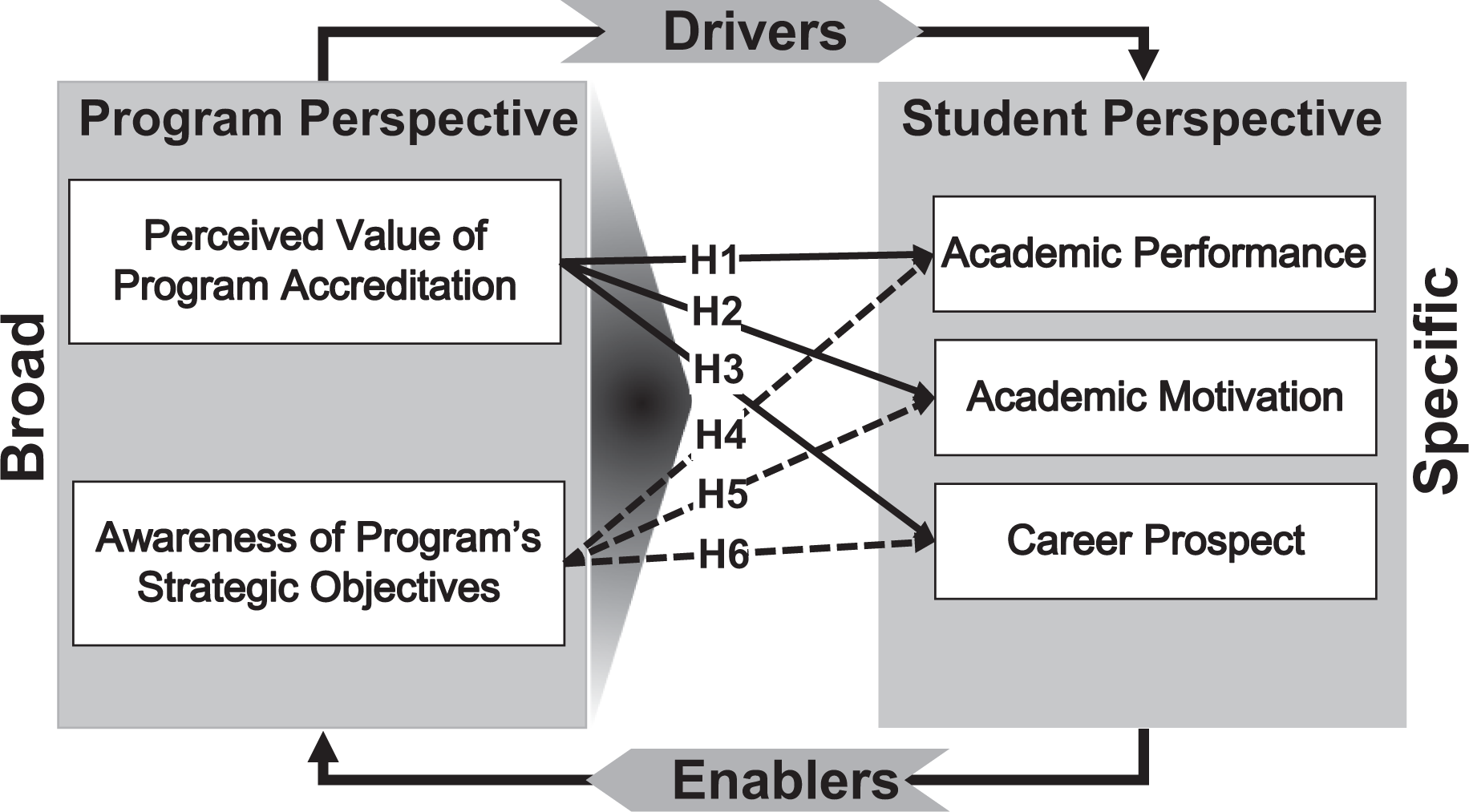
Initial proposed conceptual model.
As can be seen from Figure 1, the program perspective uses two constructs to address the research problems. The first is the perceived added value of accreditation to the educational institution, which is communicated to the students through multiple awareness channels, such as orientation programs, posters and rollups, and by faculty staff. The impact of such knowledge is evaluated by asking students to assess the effect of accreditation on their performance, which is broken down into three constructs: academic performance, academic motivation, and career prospects. The second construct of the program perspective captures the measures taken by the educational institution to make students aware of the program’s mission and strategic objectives. Again, the impact of such awareness on the students’ overall performance is captured in the student perspective side of the model.
Having defined the overall structure of the model, we can see that the program perspective is the driver to achieving the organizational objectives related to students’ academic performance and future careers. In turn, these enable the organization to set future expected learning outcomes strategically. Therefore, on a larger scale, this model can also serve as a means by which to assess and improve a program’s or institution’s pedagogical approach, with the students’ performance and future prospects acting as feedback on the approach, creating a circular cycle of assessment and improvement.
The hypotheses used to test this model were developed to address the research problems stated earlier:
Samples and statistical approach
A set of 77 questions on different aspects of accreditation and performance (based on the conceptual model shown in Figure 1) was developed and circulated using self-administered surveys. For this research, 120 surveys were distributed to junior and senior students at the college of Business at Alfaisal University in the Kingdom of Saudi Arabia. The university was nationally accredited by the National Center for Academic Accreditation and Assessment in 2015 and is regarded as a top-class, high-cost, not-for-profit private university. Since then, the business school has taken practical steps to improve its academic performance and services with multiple action plans to align and comply with the accreditation needs. As a result, the students, faculties and administration staff are aware of the college’s accreditation efforts and are actively participating. The sample of students for this study was randomly selected from among the college juniors and senior students. In addition to the accreditation and operations-related questions, some demographic information was gathered for statistical purposes, for example, to study the impact of gender on the data gathered, using the χ 2 approach as will be presented later. The study plans at Alfaisal University guide junior and senior students to select the courses needed to fulfil their academic requirements for the chosen tracks. The whole business administration degree is normally completed in eight semesters (four years on average). Students in semesters 5 and 6 are classified as juniors while those in semesters 7 and 8 are classified as seniors. The level of overlap and awareness of the business courses and tracks make the junior and senior students an adequate sample for the study The survey questions were answered by respondents on a five-point Likert-type scale, with 1 representing ‘strongly disagree’ and 5 ‘strongly agree’. Each returned questionnaire was reviewed for completeness, and 94 of the responses received were complete and were used for the analysis.
A quantitative analysis of the data gathered to assess the proposed conceptual model was performed using structural equation modeling (see, e.g. Hair et al., 2018). The SmartPLS statistical package (version 3.2.7) was selected to conduct the analysis of the structural equation model. The interpretation of the PLS results focuses on explaining the degree to which the observed variance of the endogenous latent variables (dependent variables) can be attributed to variance of the exogenous variables (independent variables). PLS was adopted and applied using the standard guidelines and principles for managing SmartPLS calculations (see Hair et al., 2011, 2012, 2017; Penga and Lai, 2012; Sarstedt et al., 2011; Vincenzo et al., 2010; Wong, 2013). The proposed conceptual model shown in Figure 1 was then analyzed. The selected constructs for the proposed model are reflective, collectively aiming to explain the perceived benefits for students’ academic performance, career prospects, and motivation.
Model analysis and results
The testing of the proposed model was performed using a structural equation approach, as shown in Figure 2. In this diagram, the filled circles represent the selected constructs of this study, while the rectangles represent the corresponding components. Based on the definitions of each of these constructs, they are presented in this model as “reflective”; that is, the arrows that represent the direction of causality are pointing toward the used components. In Figure 1, the student’s overall academic performance is measured using the three endogenous latent variables of the outer measurement model shown: academic performance, study motivation, and career prospects. The solid arrow lines represent the added value of accreditation as the casual originators while the dashed arrow lines represent the causality of strategic awareness.
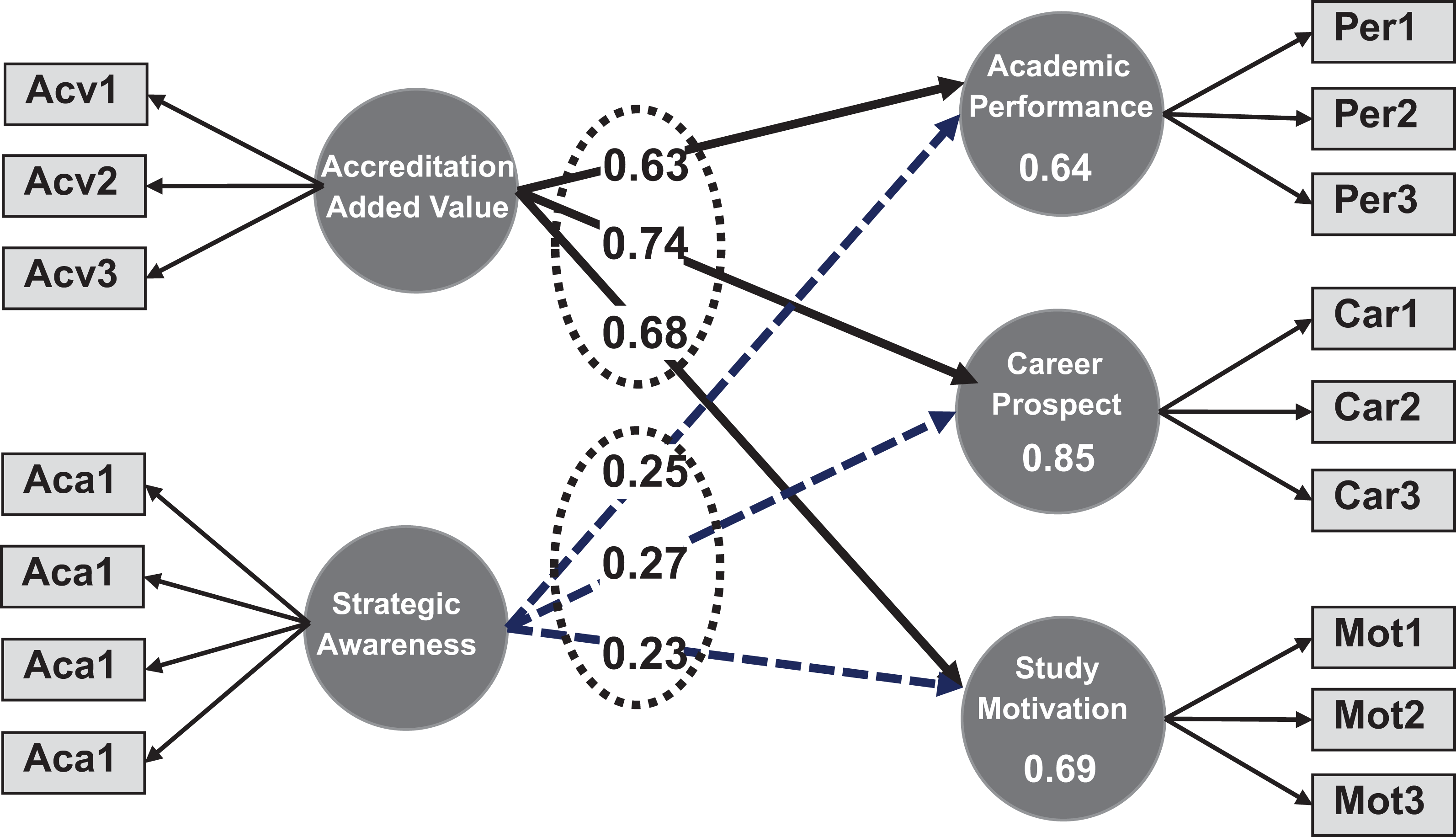
Structural equation path diagram used to test the conceptual model.
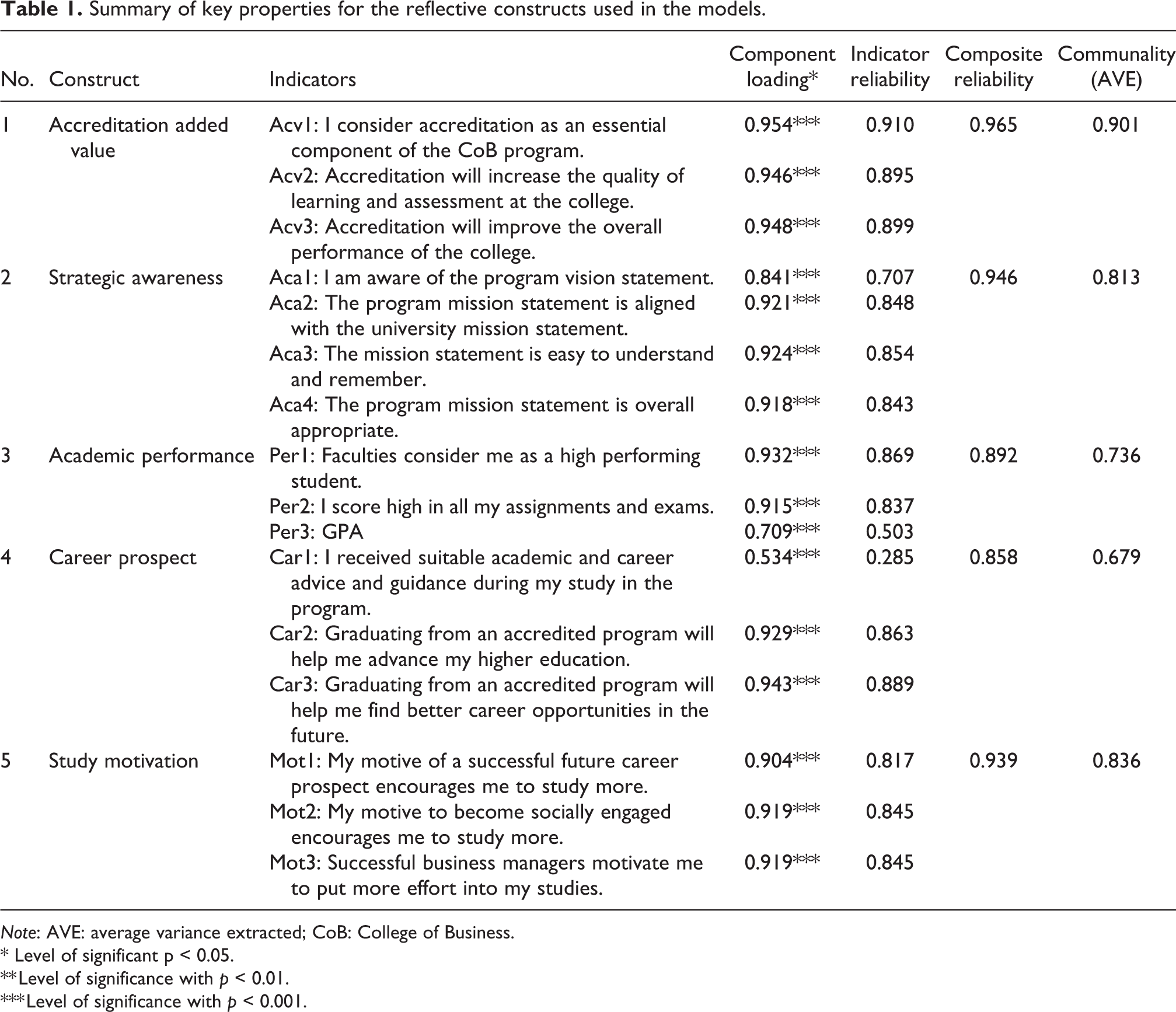
Before conducting detailed statistical analysis, the reliability and validity for the path diagram must first be established. Table 1 shows the key information for this purpose.
Summary of key properties for the reflective constructs used in the models.
Note: AVE: average variance extracted; CoB: College of Business.
* Level of significant p < 0.05.
** Level of significance with p < 0.01.
*** Level of significance with p < 0.001.
The indicator reliability was assessed by examining the loadings of all used components and their significance level (Hair et al., 2011). As shown in Table 2, the loadings of the majority of the used components are about 0.7 and, as we can see from Table 1, all components are significant with p ≤ 0.05, indicated by three asterisks (showing a p value of less than 0.001). These loadings are close to or above the recommended cutoff point of 0.7 (Wong, 2013). However, since this project is largely exploratory, a value of as low as 0.4 can also be accepted (Hulland, 1999). A loading above 0.71 is considered excellent, 0.63 very good, 0.55 good, 0.45 fair, and 0.32 poor (Tabachnick and Fidell, 2007). The corresponding indicator reliabilities are calculated from the squares of these loadings (Wong, 2013), as shown in Table 1. These results give a good indication of the strong correlation between the components and their corresponding constructs, which in turn supports the reliability indicator assessment. Composite reliability analysis (Bagozzi and Yi, 1988; Wong, 2013) was used to test the internal consistency reliability of the constructs. The corresponding values of the constructs are listed in Table 1, which shows values greater than the cutoff point of 0.7, thus confirming the attainment of internal consistency reliability (Bagozzi and Yi, 1988).
Application of the Fornell–Larker criteria to estimate discriminate validity of the constructs in the proposed model.
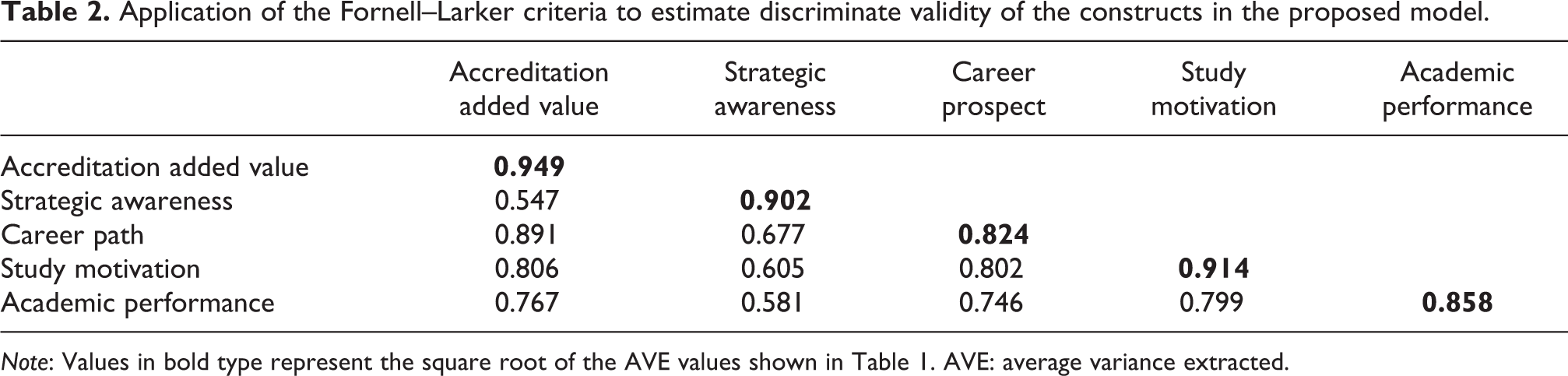
Note: Values in bold type represent the square root of the AVE values shown in Table 1. AVE: average variance extracted.
Having established the reliability of the model, its validity must now be assessed; for this purpose, the convergent validity and discriminant validly were tested. For the former, the values of the average variance extracted (AVE) were measured and are listed in Table 1. For all constructs, these AVE values are greater than 0.5, thus meeting the condition for satisfying the convergent validity at the construct level (Hair et al., 2011). The discriminate validity was assessed by showing that the square root of the AVE values of all constructs was larger than any other correlation values among the constructs (Fornell and Larcker, 1981). The corresponding matrix is shown in Table 2.
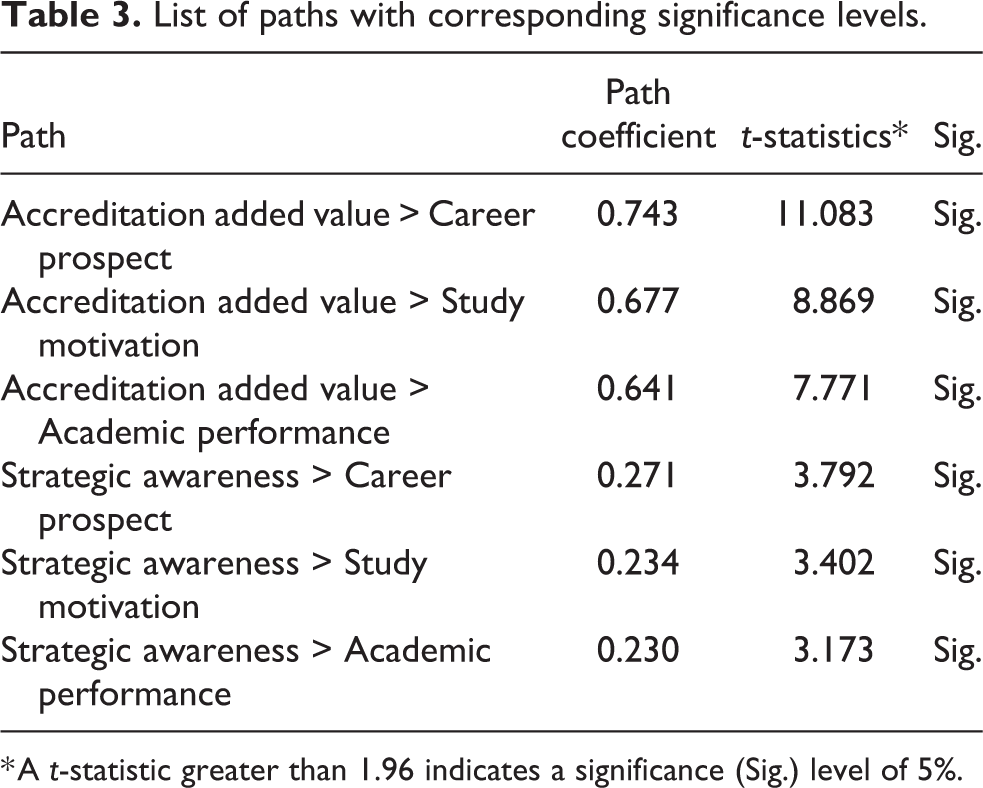
The values in bold along the diagonal of Table 2 represent the square root of the AVE values shown in Table 1. As indicated in the table, each of these values is greater than the constructs’ correlation values listed in the column and row intersecting at that value. In other words, the discriminate validity test is successful (Fornell and Larcker, 1981). The next step in model assessment is to determine the significance level of the internal standard. In SmartPLS, the significance of both the measurement and structural models are determined from the t-statistic which is calculated using a bootstrapping procedure. In addition to the significance level of the measurement model listed in Table 1, the path significance for the structural model is shown in Table 3.
The data presented so far complete the basic analysis of the SmartPLS structural equation model. The values of the coefficient of determination, R 2, are shown inside the circles of Figure 2. These values are used to explain the variance in the target endogenous variables, which show that both the perceived added value of accreditation and the strategic awareness of the college program impact the overall self-actualization status of the students. However, the added value of accreditation seems to have a greater impact than the awareness of a program’s strategic objectives, as shown from the listed path loading values in the table.
Discussion
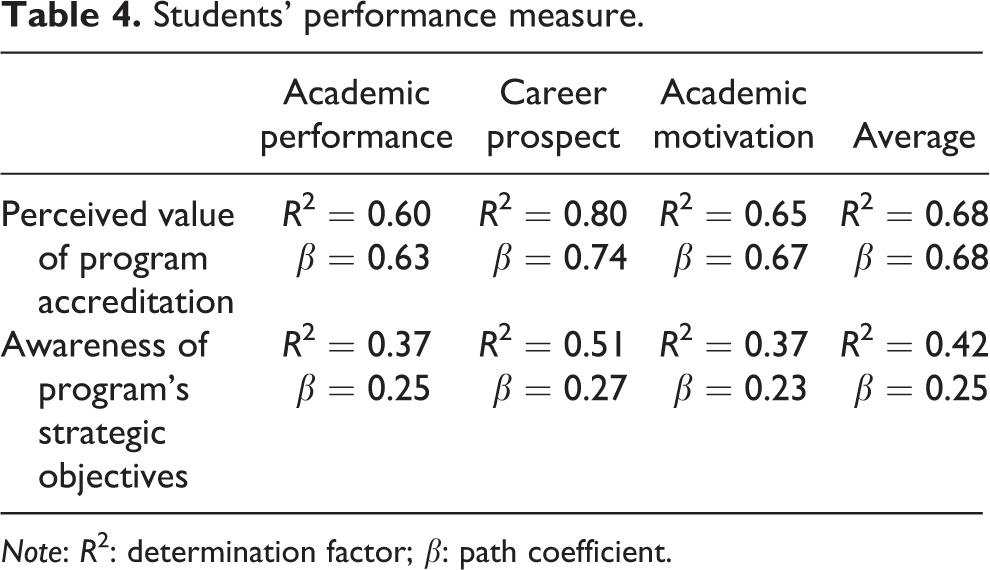
Following the data examined above, Table 3 shows that the six research hypotheses are all statistically significant with positive correlation between the perceived accreditation added value on the one hand and the students’ academic performance and career prospects on the other. Furthermore, the students also seem to relate their awareness of the institutional strategic objectives to their perceived academic and career performance. Table 4 presents the R 2 values and the load of the connection paths to the overall performance of the students. R 2 is a parameter used to assess the extent to which variability in a factor can be explained or caused by the variability of another factor or set of factors. R 2 is essentially the square of the correlation coefficients of the relationship between the factors under consideration as presented in Table 4. It is used in this study to analyze the extent to which students’ perspectives of the value of accreditation and their awareness of the strategic objectives add value to their overall academic and career performance. Therefore, R 2 can be considered a measure of the predictive power of the conceptual model. Table 4 also shows the average of the R 2 values and the path load values for both the value added from accreditation and the awareness of program’s strategic objectives.
List of paths with corresponding significance levels.
* A t-statistic greater than 1.96 indicates a significance (Sig.) level of 5%.
Students’ performance measure.
Note: R 2: determination factor; β: path coefficient.
The above analysis indicates that accreditation does play an important role in the overall performance of students, as concluded by earlier research (Zanten et al., 2012). Furthermore, the data show that the average variance in students’ academic performance explained by the perceived value of program accreditation is 60% higher than that explained by their awareness of the program’s strategic objectives. One way to read these results is to infer that more than two-thirds of the students in this study think that studying in an accredited college increases students’ motivation to improve their academic performance and, specifically, improves their future career prospects. These results indicate that students generally believe that accreditation will make a difference to their academic performance, even if they know very little of the strategic objectives of the program. One simple explanation of this is that, in this era of globalization, students appreciate the importance of acquiring a degree from a university that has been accredited by a well-known international organization. In many ways, the students appear to feel that such global recognition can help them further advance their career prospects.
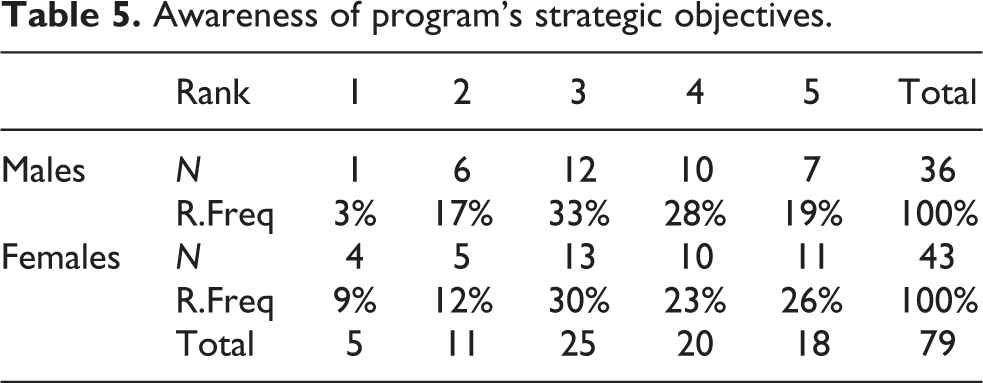
The study will now turn to the question of whether or not the gender of students played a role in the above results. This question was answered using χ 2 analysis, and the results are shown in Table 5. The χ 2 test indicated no significant correlation between gender and awareness of program strategic objectives (χ2 (4, n = 79) = 2.22, p = 0.7). The same analysis was repeated to look for a correlation between gender and students’ perspectives of the added value of accreditation but, again, no significance differences between the results for males and females were found.
Awareness of program’s strategic objectives.
Conclusions
This study concludes that, from a management perspective, more emphasis should be placed on engaging students as a means of achieving the educational strategic objectives of the program, and on ensuring that students engage with and understand the value that accreditation adds to their academic performance and career prospects. The literature covers multiple prospects of the influence of accreditation on business schools, for example, in the context of the impact on quality of teaching, learning, and research (Ke et al, 2016; Lagrosen, 2017; Trifts, 2012); the management of education programs (Jantzen, 2000); competitive strategy (Zhao and Ferran, 2016); and faculty productivity (Azad and Seyyed, 2007). Further, many educational institutions acknowledge the importance of adopting a student-centered approach to learning (Lea et al., 2003; McCabe and O’Connor, 2014), in which students are more responsible for their learning. In such an approach, students are consulted for their feedback on the conduct and processes of the educational program. Feedback obtained from students is intended to evaluate and improve the curriculum and students’ career perspectives, which is a complex endeavor that may introduce collective organizational, philosophical, and pedagogical change (Elen et al., 2007). However, little attention has been paid in the literature to students’ perceived value of accreditation for their learning process. The results of this study contribute to and enhance our understanding of the extent to which added value from accreditation is perceived by students to advance their learning and long-term career prospects. The analysis shows that most of the positive responses to accreditation are a result of students appreciating the value that accreditation adds to their final educational certificate. On the other hand, students seem to place less emphasis on their knowledge of the program’s strategic objectives and alignment with the university as whole. Although these may seem to be important, the students seem to consider them less important than the practical gains of achieving academic recognition from an accredited university or program. Finally, the analysis shows that gender plays no role in these findings; both males and females seem to share the same understanding and consideration of accreditation.
A longitudinal study and/or adoption of the same research approach to other schools would be helpful in collecting contextual data to verify the findings and to further understand the impact of governmental agencies and national cultural factors on students’ preferences. This requirement reflects a limitation of the study and future initiatives are planned. Despite the high observed R 2 values of the dependent variables (over 64%), and in response to another limitation of the article, additional latent variables could be added to the conceptual model to further improve the variances explained. Possible candidates for such variables include pre-admission criteria, pre-admission accreditation status, and academic performance assessed using alternative approaches.
Footnotes
Declaration of conflicting interests
The author(s) declared no potential conflicts of interest with respect to the research, authorship, and/or publication of this article.
Funding
The author(s) received no financial support for the research, authorship, and/or publication of this article.
