



Abstract
This article addresses the following research question: does the entrepreneurial orientation of a university influence the entrepreneurial propensity of its academics? To answer this question, the authors conducted a two-phase study. First, based on a literature review of the entrepreneurial university and Nelles and Vorley’s theoretical framework on entrepreneurial architecture, they developed a conceptual model and research instrument to assess academics’ perceptions of the characteristics most likely attributed to the entrepreneurial university and their effects on an academic’s entrepreneurial propensity. Second, the authors used the research instrument to conduct a pilot study of the effect of a Canadian university’s entrepreneurial orientation on its academics’ entrepreneurial propensity. The pilot study, using the proposed methodology with detailed accounts of collecting, analyzing and interpreting the data, suggests that the proposed methodology is appropriate for measuring the relationship alluded to in the research question. Furthermore, the methodology can help university leadership in designing possible interventions to correct identified deficiencies in the university’s entrepreneurial architecture to stimulate academic entrepreneurship on campus.
This article aims to answer the following research question: does the entrepreneurial orientation of the university influence the entrepreneurial propensity of its academics? The university’s role, and thus its orientation, have evolved significantly over time. In the late 19th century, most universities adopted a broader institutional mandate by embracing the second mission of research which complemented the first mission of teaching. This adoption gave rise to the research university, in which scholars became free to pursue work conducive to expanding the boundaries of human knowledge as they saw fit (Veysey, 1970). Most pundits agree that this transformation of the university’s mandate corresponds to what is usually called the ‘first academic revolution’ (Etzkowitz, 2003; Yusof and Jain, 2010). However, over the past few decades, many academic institutions have converged towards a new university model that integrates teaching, research and economic development (Etzkowitz, 2013), giving rise to the entrepreneurial university. Once unique to a few schools (e.g. Massachusetts Institute of Technology, Stanford, Oxford), the trend towards the entrepreneurial university has spread to virtually every research university in the world as a means of fulfilling an even broader institutional mandate (Etzkowitz, 2013; Sam and van der Sijde, 2014; Wong, 2011).
Indeed, the entrepreneurial university is a global phenomenon spurred by numerous extrinsic and intrinsic factors, such as (1) the greater dependence of the economy on knowledge production; (2) the incorporation of the university in local, regional and national socioeconomic development strategies; (3) the consolidation of the Triple Helix model of university–industry–government collaboration; (4) the need to diversify funding sources of the university; and (5) the introduction of entrepreneurialism into the academic world (Bradley et al., 2013; Stehr, 2007). Factors 1 and 2 are primarily extrinsic drivers that compel universities to adopt the third mission of entrepreneurship. One can argue that these extrinsic factors represent a top-down approach to university transformation, while factors 3, 4 and 5 correspond to intrinsic, bottom-up forces transforming the university from within, or at least with the university’s proactive participation. Most of these factors often overlap and combine to exert complex pressures. In response, universities try to adapt based on their idiosyncrasies and flexibility to change.
Some scholars argue that the above factors are producing a ‘second academic revolution’ in which the university takes on the third mandate of economic development (knowledge capitalization) in addition to teaching (knowledge preservation) and research (knowledge extension) (O’Shea et al., 2007; Gür et al., 2017). Other scholars argue that the entrepreneurial university phenomenon corresponds to natural evolution. This evolution forces academic structures to adapt for the university to play an enhanced role in technological innovation which reflects a new relationship between knowledge producers and users (Rasmussen et al., 2006; Yusof and Jain, 2010). Regardless, many universities embrace the new role either as a new third mission of entrepreneurship or as the extension of their already existing third mission of community engagement or outreach (Etzkowitz, 2014).
The literature has noted that the differences in academics’ perception of their university’s entrepreneurial orientation are partly a reflection of their different scientific disciplines, relations with industry partners and diverging opportunities for engaging in entrepreneurial activities (Kalar and Antoncic, 2015; Lam, 2010). Thus, academics across campus would have more or less propensity for entrepreneurial behaviour based on, for example, their entrepreneurial exposure (Davies, 2001). In other words, academics’ actual involvement in entrepreneurial activities would be partly influenced by how they perceive the environment surrounding them on- and off-campus (D’Este and Patel, 2007; Kalar and Antoncic, 2015; Todorovic et al., 2011). If that is the case, the perception of the university’s entrepreneurial orientation from an individual faculty member’s standpoint can inform the university regarding the steps necessary for an orderly evolution towards an entrepreneurial university. Then, aspiring entrepreneurial universities could introduce changes to their culture and governance and respond appropriately to create an environment supporting and encouraging their academics’ entrepreneurial behaviour. Despite these potential benefits, previous efforts to study the entrepreneurial involvement of academics have focused more on groups of academics (e.g. housed in an academic department) rather than on individual academics. Most of the studies on the entrepreneurial university from the academic’s perspective – that is, those in which the study unit is the individual faculty member – have focused on understanding the facilitators and barriers hindeing universities from becoming more entrepreneurial.
Notwithstanding the growing literature on the entrepreneurial university phenomenon, there is still limited understanding regarding academics’ perception of their university’s entrepreneurial orientation (Kalar and Antoncic, 2015). Moreover, despite the similarities and comparable factors influencing the advent of the entrepreneurial university worldwide, entrepreneurial universities remain distinct from one another in terms of their arrangements, traditions and characteristics, unique to each institution (Guerrero et al., 2014a). Thus, there is a need to devise a methodology that will allow each aspiring entrepreneurial university to measure the institution’s state of evolution towards the new university model (Todorovic et al., 2011). Therefore, we designed a research instrument to assess academics’ perception of characteristics (traits) likely to be archetypal of the entrepreneurial university. We operationalized these characteristics into constructs consistent with the entrepreneurial architecture framework (Nelles and Vorley, 2010, 2011), to our knowledge for the first time. Then, we used the proposed research instrument to run a pilot study to assess the effect of the entrepreneurial orientation of an aspiring entrepreneurial university in Atlantic Canada on the entrepreneurial propensity of its academics.
We divided the remainder of the article into five sections, as follows. First, the ‘Literature review’ section describes the literature review conducted to inform the design of the research instrument. Second, the ‘Conceptual model and proposed hypotheses’ section defines the theory-based conceptual model and proposed hypotheses tested through partial least squares-structural equation modelling (PLS-SEM). Third, the ‘Data collection, data processing and analysis of results’ section describes the curation and analysis of the data and verification of the applicability of the overall pilot study approach and the implications of the findings. Finally, the paper ends with the ‘Conclusion’ section and possible future work.
Literature review
Tabulated synthesis of the literature review.
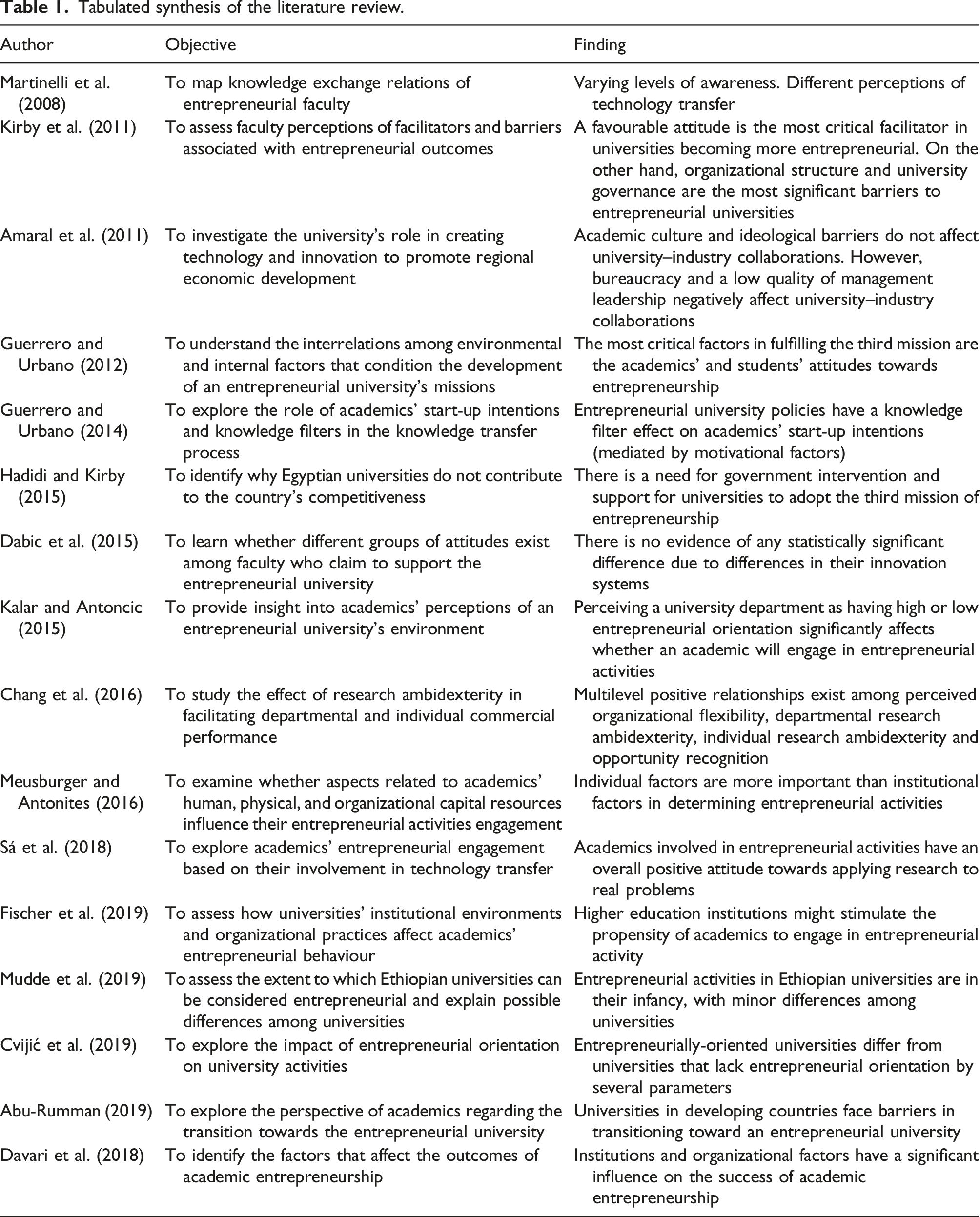
To some extent, Kalar and Antoncic (2015) and Abu-Rumman (2019) have studied academics’ perception of the entrepreneurial orientation of their universities. Kalar and Antoncic (2015) hypothesized that an academic’s perception of their environment plays an essential role in their engagement in all academic activities. Thus, they modified an entrepreneurial orientation scale for universities (ENTRE-U) by Todorovic et al. (2011) to provide insights into academics’ perception of their respective departments and analyzed responses from four European universities. Their findings indicate that academics in the natural sciences perceive their university department to be more entrepreneurially-oriented than their social sciences counterparts. Their results also revealed that perceiving a university department with a high or low entrepreneurial orientation affects whether academics engage in entrepreneurial activities. More recently, Abu-Rumman (2019) explored the academic’s perspective on progressing towards an entrepreneurial university in a large private Jordanian university. His findings show that the university has improved in meeting the guiding framework of the Organization for Economic Co-operation and Development (OECD, 2012), particularly leadership and governance. He argues that these characteristics will significantly influence the university’s efforts to be more entrepreneurial. However, the same results indicate that academics are more comfortable with traditional knowledge management processes such as knowledge creation (research) and dissemination (teaching and publication) than with knowledge transfer (research commercialization).
A few studies have assessed the academic’s attitude towards an entrepreneurial university’s characteristics. Martinelli et al. (2008) conducted an exploratory study to capture the academics’ beliefs, perceptions, opinions, attitudes and awareness related to the measures taken by the administration of a university in England to promote entrepreneurship. Their study explored entrepreneurial outreach and faculty connections at an individual faculty member level to develop a map of knowledge exchange relations. They argued that the university administration does not track all knowledge exchange and related entrepreneurial activities. Thus, only an analysis at the level of the individual faculty member can provide a comprehensive picture encompassing both formal and informal entrepreneurial exchanges of academics. Their results reveal differences concerning academics’ attitudes toward technology transfer and varying levels of awareness of the university’s codes of practice. A few years later, Dabic et al. (2015) sought to address the research question of whether different groups of attitudes existed among academics who claimed to support the idea of a more entrepreneurial university. They modified the ENTRE-U scale to measure academics’ attitudes at a Croatian university and a Spanish university. They argued that, since both scenarios were quite different regarding their innovation ecosystems, they would find faculty groups with very different academic entrepreneurship attitudes. Their study found no statistically significant difference due to the faculty member’s country of origin. More recently, Sá et al. (2018) explored academic entrepreneurship engagement based on technology transfer involvement as an activity performed in research work in Portugal. Their study suggests that Portuguese academics are involved in entrepreneurial activities and have an overall positive attitude toward applying research to real-world problems. However, when comparing academics involved in entrepreneurial activities with those not engaged in such activities, they found significant differences in attitudes, perceptions and behaviours. Furthermore, their results also show that Portuguese academics do not feel encouraged by their institutions to engage in entrepreneurial activities and even suggest that they may feel disincentivized.
Guerrero and Urbano (2014) and Hadidi and Kirby (2015) studied the different motivations of academics to engage in entrepreneurial activities and how they related to their universities’ entrepreneurial orientation. First, Guerrero and Urbano (2014) explored the role of the academic’s start-up intention and knowledge filters (barriers that prevent knowledge from becoming economically useful) in the knowledge transfer process within the entrepreneurial university. In particular, they focused on how motivational factors would act as a knowledge filter on the academic during the knowledge transformation process and how social norms and university policies would influence academics’ start-up intentions. They adopted the knowledge spillover theory of entrepreneurship and the Theory of Planned Behaviour to propose a theoretical model tested with a sample of academics in public entrepreneurial universities located in economically relevant regions of Spain. Their results suggest that university policies have a knowledge filter effect on the academic’s start-up intentions (mediated by motivational factors). Second, Hadidi and Kirby (2015) attempted to identify the reasons for the weak development of innovation and the low contribution of Egyptian universities to the competitiveness of the country, particularly by transferring and commercializing new knowledge. For this, they conducted a study among academics at eight of Egypt’s private and public universities. Their results reveal that, while there is considerable uncertainty among academics in both the private and public sectors about the role of Egyptian universities in the innovation process, there is recognition of the need for government intervention and support if Egyptian universities are to adopt the third mission of entrepreneurship. Their study also considered possible interventions and supports that would be relevant to both academics and policy-makers.
From the academic perspective, most studies of the entrepreneurial university relate to the factors that help or hinder the university’s third mission of entrepreneurship. Kirby et al. (2011) ranked the facilitators of and barriers to universities becoming more entrepreneurial and suggested criteria for evaluating success. They conducted a two-phase study. In phase one, participants rated the importance of several facilitators and barriers and suggested success criteria. The criteria included the number of students in entrepreneurial programs, the number of courses, the number of start-ups created, and the range of university community participation in the university’s funding (for details see Kirby et al. (2011), Table 5). In phase two, they explored whether academics at a Spanish university perceived that the factors identified in phase 1 related to entrepreneurial outcomes. The authors listed several factors, including positive staff attitudes, links with industry, incubators, seed funding and science parks (for details see Kirby et al. (2011), Table 3). This study by Kirby et al. suggests that a favourable attitude towards entrepreneurship is the most critical facilitator of universities becoming more entrepreneurial. The findings also identified organizational structure and university governance as the most significant barriers to the entrepreneurial university.
Following this, Guerrero and Urbano (2012) aimed to understand the interrelations between environmental and internal factors that condition the development of an entrepreneurial university’s teaching, research and entrepreneurship missions. Thus, they modified the Entrepreneurial University Questionnaire developed by Guerrero (2008) and gathered data from academics from several Spanish regions. Their findings suggest that academics’ and students’ attitudes towards entrepreneurship are critical in fulfilling the third mission. Some years later, Chang et al. (2016) studied the effect of research ambidexterity in facilitating departmental and individual commercial performance – that is, helping universities transform into more entrepreneurial institutions. They argued that academics’ ability to recognize opportunities for their research outcomes correlated with their research ambidexterity. They also found positive correlations among departmental and individual research ambidexterity, perceived organizational flexibility and opportunity recognition. Their conclusions suggest that the development of research ambidexterity in entrepreneurial universities resides at both departmental level and at the level of the individual faculty member. Their results also indicate that a university context of organizational flexibility influences academic-level research ambidexterity. That same year, Meusburger and Antonites (2016) examined whether aspects of the academic’s human, physical and organizational capital resources influenced faculty members’ engagement in consulting, sponsored research, intellectual property licensing or assignment, or spin-off creation at South African universities. Their findings support the concept that individual factors are more significant than institutional factors in determining entrepreneurial activities. The key result of their study is that prior entrepreneurial experiences primarily influence an academic’s engagement in entrepreneurial activities.
More recently, Davari et al. (2018) identified the factors influencing academic entrepreneurship in an Iranian university. Their findings showed that institutional factors (formal and informal) and organizational factors (resources and capabilities) positively influenced academic entrepreneurship. Their results reveal that capabilities and resources have the most substantial impact on an academic’s entrepreneurial outcomes. Later, Fischer et al. (2019) addressed the effectiveness of university-level policies expected to impact academics’ propensity to engage in entrepreneurial activity in a Brazilian university. Their results highlight a lack of significance of most institutional variables, suggesting some ineffectiveness in promoting academic entrepreneurship in Brazilian universities. Mudde et al. (2019) assessed how Ethiopian universities were considered entrepreneurial and explained possible differences among them. Their findings indicate that entrepreneurial activities in Ethiopian universities are in their infancy and that the differences between universities are minimal. They conclude that the top-down, central government led operation is not enabling entrepreneurial behaviour at the individual institution level. Finally, Cvijić et al. (2019) used the ENTRE-U scale to explore the impact of entrepreneurial orientation on state universities’ activities in the Republic of Serbia. Their results show that entrepreneurially-oriented universities differ from those that lack entrepreneurial orientation by the extent of their research mobilization, their unconventional approaches, their level of cooperation with industry and university policies implementation.
Although the university’s role in the knowledge economy is increasingly important, there remains a lack of systematic quantitative evidence at the individual faculty member level. The literature review revealed a gap in knowledge regarding the opinion of one of the most important stakeholders – faculty members – on universities’ efforts to embrace the third mission of entrepreneurship. Furthermore, measurement instruments need standardization to allow for comparisons among studies. Thus, there is also a need to develop adequate, reliable and valid instruments to analyze the opinions of academics on the entrepreneurial university. Several studies have developed ad hoc scales based on the ENTRE-U instrument. Todorovic et al. (2011) developed the ENTRE-U scale to measure university departments’ entrepreneurial orientation. They designed it to facilitate empirical research on entrepreneurial orientation in public universities. The ENTRE-U scale consists of four dimensions: research mobilization, unconventionality, industry collaboration and the perception of university policies, targeting department heads as the study unit. Todorovic et al. (2011) argue that targeting department heads is appropriate since the survey concerns departmental level (rather than individual faculty member level) variables.
Conceptual model and proposed hypotheses
Based on Nelles and Vorley’s (2010, 2011) work on entrepreneurial architecture adapted to the entrepreneurial university, we developed a conceptual model and research instrument to assess academics’ opinions on the university’s third mission of entrepreneurship. Burns (2005) first introduced the concept of an organization’s entrepreneurial architecture in the context of corporate entrepreneurship. Nelles and Vorley (2010, 2011) used this concept within a grounded theory approach for studying the third mission’s institutional and organizational dynamics. Through multiple cases, they used induction to generate a meaningful conceptualization of entrepreneurial architecture in universities. Their work focused on developing the conceptual elements of entrepreneurial architecture and its application in higher education’s entrepreneurial transformation. Nelles and Vorley (2010, 2011) argued that the entrepreneurial architecture framework was adaptable to various contexts, including public organizations of higher education and research, despite its corporate origins. An entrepreneurial architecture comprises five institutional elements (dimensions): structures, systems, strategies, leadership and culture (Burns, 2005). These five elements are interrelated and mutually supportive; the coherent presence of all five is necessary but insufficient to implement the third mission successfully. Since they are mutually supportive, the absence or prioritization of one element of the entrepreneurial architecture at the expense of the others might create an imbalance that could undermine the effectiveness of the third mission (Nelles and Vorley, 2011; Vorley and Nelles, 2009). We are the first to use – to our knowledge – the entrepreneurial architecture framework to study the relationship between the entrepreneurial propensity of academics and the entrepreneurial orientation of their university. The few studies that have used the framework have done so to study, for example, how particular contexts can shape universities’ institutional responses to the third mission (Gibson and Foss, 2017; Salomaa, 2019) and how individual universities express their entrepreneurial architecture (Martin et al., 2019).
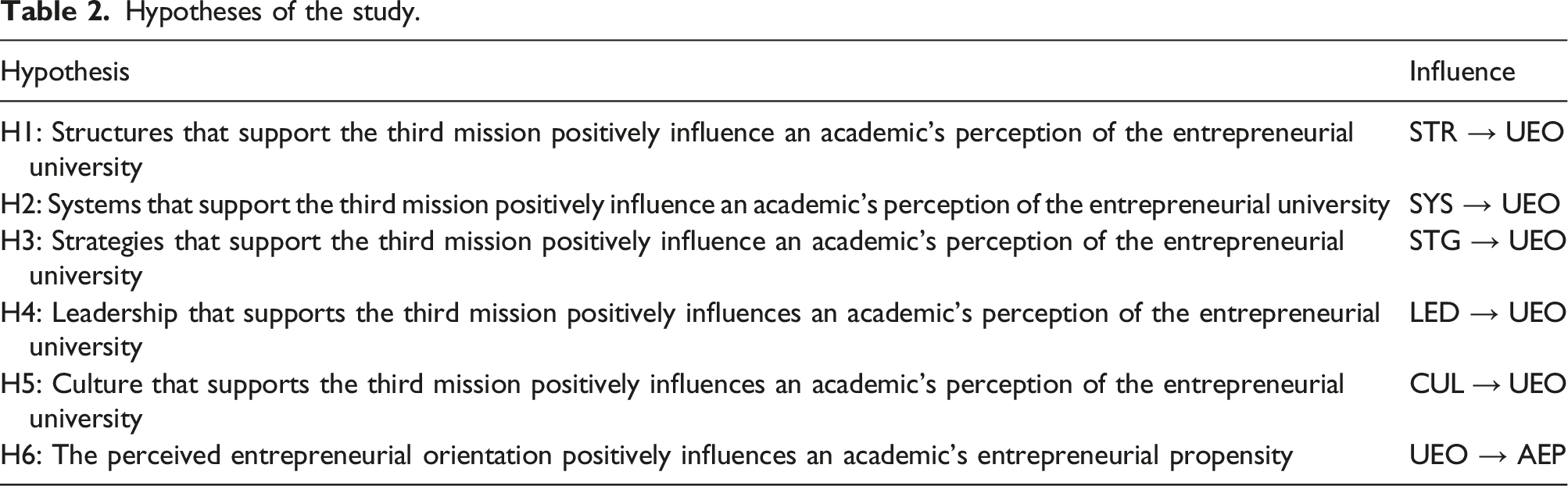
Structures are the organizational mechanisms of knowledge exchange; that is, offices or departments through which faculty, staff and students interface with each other and with players outside the university, and vice versa (Etzkowitz, 2003). For example, a technology transfer and commercialization office, a business incubator, an industrial outreach office, continuing education and professional development, and a cooperative education office are among the structures of an entrepreneurial architecture. In many cases, creating some of these units indicates a deliberate institutional transformation towards an entrepreneurial university. Therefore, we formulate the following hypothesis: H1: Structures that support the third mission positively influence an academic’s perception of the entrepreneurial university.
Systems are the networks of communication and coordination that allow the organization to engage in knowledge exchange. ‘Systems’ also describes the norms of interaction and relationships among internal and external players within the different elements of the entrepreneurial architecture and the local entrepreneurial ecosystem (Bercovitz et al., 2001; Etzkowitz and Klofsten, 2005; Siegel et al., 2003, 2004). The development of these organizational networks is essential to move research with commercial potential across institutional boundaries and integrate academic and non-academic activities into a common framework (D’Este and Perkmann, 2011; Etzkowitz, 2003). Furthermore, systems provide the entrepreneurial university with the means to integrate and operate its internal resources to take advantage of their potential and generate sustainable, competitive advantages (Amit and Schoemaker, 1993; Wernerfelt, 1984, 1995). Therefore, we formulate the following hypothesis: H2: Systems that support the third mission positively influence an academic’s perception of the entrepreneurial university.
Strategies comprise the plans for achieving the entrepreneurial university’s organizational objectives and goals. Entrepreneurial universities formulate different entrepreneurial strategies, such as monetary and non-monetary incentives for faculty members and units that fulfill the third mission (Henrekson and Rosenberg, 2001; Lockett and Wright, 2005; Markman et al., 2004; Powers and McDougall, 2005). Strategies must be consistent with the other entrepreneurial architecture elements and must be sensitive and specific to institutional contexts and conditions. A university’s entrepreneurial architecture should be embedded in the local entrepreneurial ecosystem and, as such, it should respond to specific institutional contexts rather than simply imitating other institutions’ approaches (Nelles and Vorley, 2010, 2011). Therefore, we formulate the following hypothesis: H3: Strategies that support the third mission positively influence an academic’s perception of the entrepreneurial university.
Leadership relates to the key personnel involved in creating and exchanging knowledge and the visionaries who guide the organizational evolution. Leaders could position themselves at all levels of the organization. However, those in key positions (e.g. president, vice president for research) can potentially exert the most effective influence through their decision-making powers (Nelles and Vorley, 2010). Leadership is routinely associated with establishing structures and systems and elaborating organizational strategies, but this need not be the case. A very important leader in the developing entrepreneurial university is the ‘star’ faculty member who has successfully engaged in meaningful research mobilization, such as launching a start-up company or negotiating a lucrative technology licensing agreement (Nelles and Vorley, 2011). Also, entrepreneurial universities would normally develop people’s entrepreneurial leadership in and around the university by promoting entrepreneurial values, attitudes and skills through entrepreneurship education and training (Guerrero et al., 2014b). Strong leadership is often associated with good governance. Therefore, we formulate the following hypothesis: H4: Leadership that supports the third mission positively influences an academic’s perception of the entrepreneurial university.
Culture relates to the ensemble of underlying beliefs, attitudes, assumptions, values and ways of interacting in the organization. Culture will typically determine a university’s propensity for entrepreneurial engagement (Bramwell and Wolfe, 2008; O’Shea et al., 2007). Culture permeates the different university units, although most will also reflect their own culture which may be more or less entrepreneurial. Organizational culture impacts how members perceive, feel and behave (Hansen and Wernerfelt, 1989). Organizational culture shapes the way members set personal and professional objectives, perform tasks and administer resources to achieve them (Huyghe and Knockaert, 2015). Culture is the most challenging entrepreneurial architecture dimension to shape or change. It usually changes very slowly as evolving attitudes and shifting norms become part of how the organization operates. Nonetheless, in well-established entrepreneurial universities, the strong entrepreneurial culture develops and permeates the university’s external boundaries, spreading to the local community (Clark, 1998; Guerrero et al., 2014b; Kirby, 2006). Therefore, we formulate the following hypothesis: H5: Culture that supports the third mission positively influences an academic’s perception of the entrepreneurial university.
Although structures are the most visible dimension of the organizational configuration, the entrepreneurial architecture framework emphasizes the importance of structures embedded in coordinated systems, guided by visionary leaders as agents of a coherent entrepreneurial strategy, and within an environment (culture) that supports and sustains innovation (Nelles and Vorley, 2010, 2011). Furthermore, a well-rounded entrepreneurial architecture should provide the conditions in which academics routinely scrutinize their research for commercial potential. Finally, it should allow academics to translate research results into intellectual property and economic activity (Etzkowitz, 2003; Miller et al., 2018). Therefore, we formulate the following hypothesis: H6: The perceived entrepreneurial orientation positively influences an academic’s entrepreneurial propensity.
We summarize the connections among the hypothesized model constructs in Figure 1 and Table 2. The arrows represent one variable’s direct, positive influence on another variable. Hypothesized model of the entrepreneurial architecture of the entrepreneurial university. Hypotheses of the study.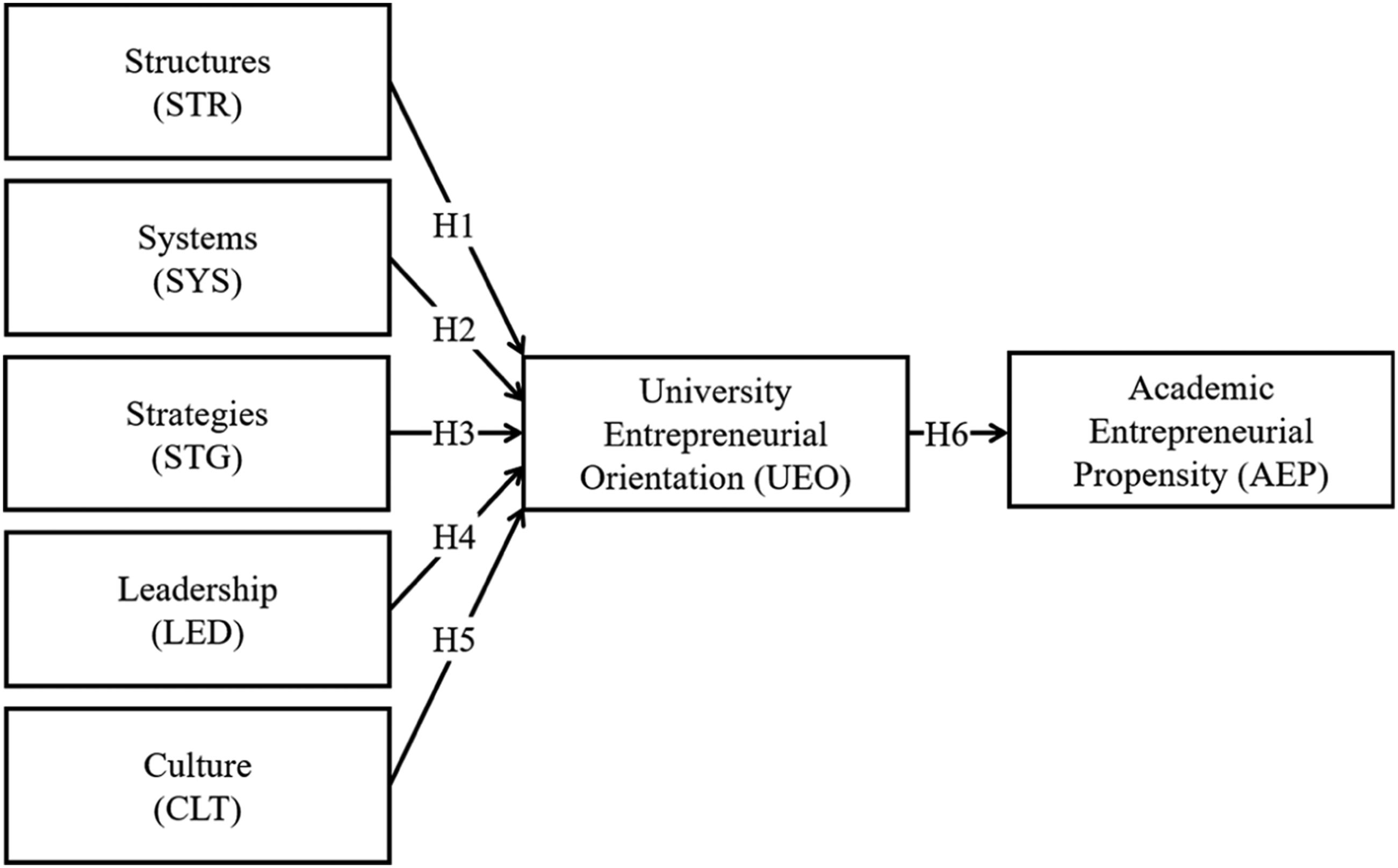
Data collection, data processing and analysis of results
This study employed the convenience sampling method to collect data from faculty members at a public university in Atlantic Canada. This institution is an aspiring entrepreneurial university with growing innovation and an entrepreneurial environment and support system. Convenience samples do not produce representative results, they may provide accurate correlations. In this study, we are more interested in the relationships among variables than in the proportions of the target audience. Furthermore, the study employs cross-sectional data; that is, there is no temporal link between the outcome and the exposure. The purpose of the cross-sectional study was to examine the presence of an outcome and the presence of an exposure (prevalence) at a specific point in time.
Questionnaire.

The pilot study collected the data during June and July 2021. The survey yielded 121 responses with an average completion rate of 91%. We first performed a thorough screening of the data to detect the following: 1. Missing data. 20 rows were missing values. Of these, 15 rows were missing more than two values (>10%) and were deleted. The other five were missing one (four rows) or two (one row) values and were kept for possible imputation. 2. Unengaged respondents. Three rows showed odd patterns of responses (e.g. straight lines) and very short completion time and were deleted, including one row that was missing one value. 3. Data imputation. The Little’s Missing Completely at Random (MCAR) test failed to reject the null hypothesis that the missing values were missing completely at random (chi-square = 133.799, DF = 119, Sig. = 0.167). Thus, we imputed the four rows using the expectation-maximization (EM) algorithm for each category of measurement variables separately. 4. Influential outliers. One row was deleted from the dataset based on the Mahalanobis distance compared to a chi-square distribution with the same degrees of freedom (Aguinis et al., 2013). 5. Data normality. Three variables showed skewness and kurtosis slightly larger than the prescribed threshold of ±1. The largest skewness and kurtosis were −1.169 and 2.384 for the STG3 indicator. These values for skewness and kurtosis show that the distributions are slightly non-normal. The final dataset is composed of 102 rows plus three columns of demographics. Table 4 summarizes the frequency and percentages of the sample’s demographics. Frequency and percentages of the sample’s demographics.

The model tested in this pilot study has seven latent variables with six (first-order) reflective constructs – structures (STR), systems (SYS), strategies (STG), leadership (LED) culture (CLT), academic’s entrepreneurial propensity (AEP) – and one (second-order) formative construct, the university’s entrepreneurial orientation (UEO). The second-order construct assumes that the common underlying, second-order construct, UEO, can account for the seemingly distinct yet related first-order components: STR, SYS, STG, LED and CLT. The six first-order constructs have four indicators each. This pilot study draws on the repeated indicators approach to establish the reflective–formative second-order construct of the model. In other words, we assigned all the indicators of the reflectively measured first-order components STR, SYS, STG, LED and CLT simultaneously to the formative measurement model of the second-order construct UEO. Figure 2 shows the second-order structural model of the pilot study. Second-order structural model.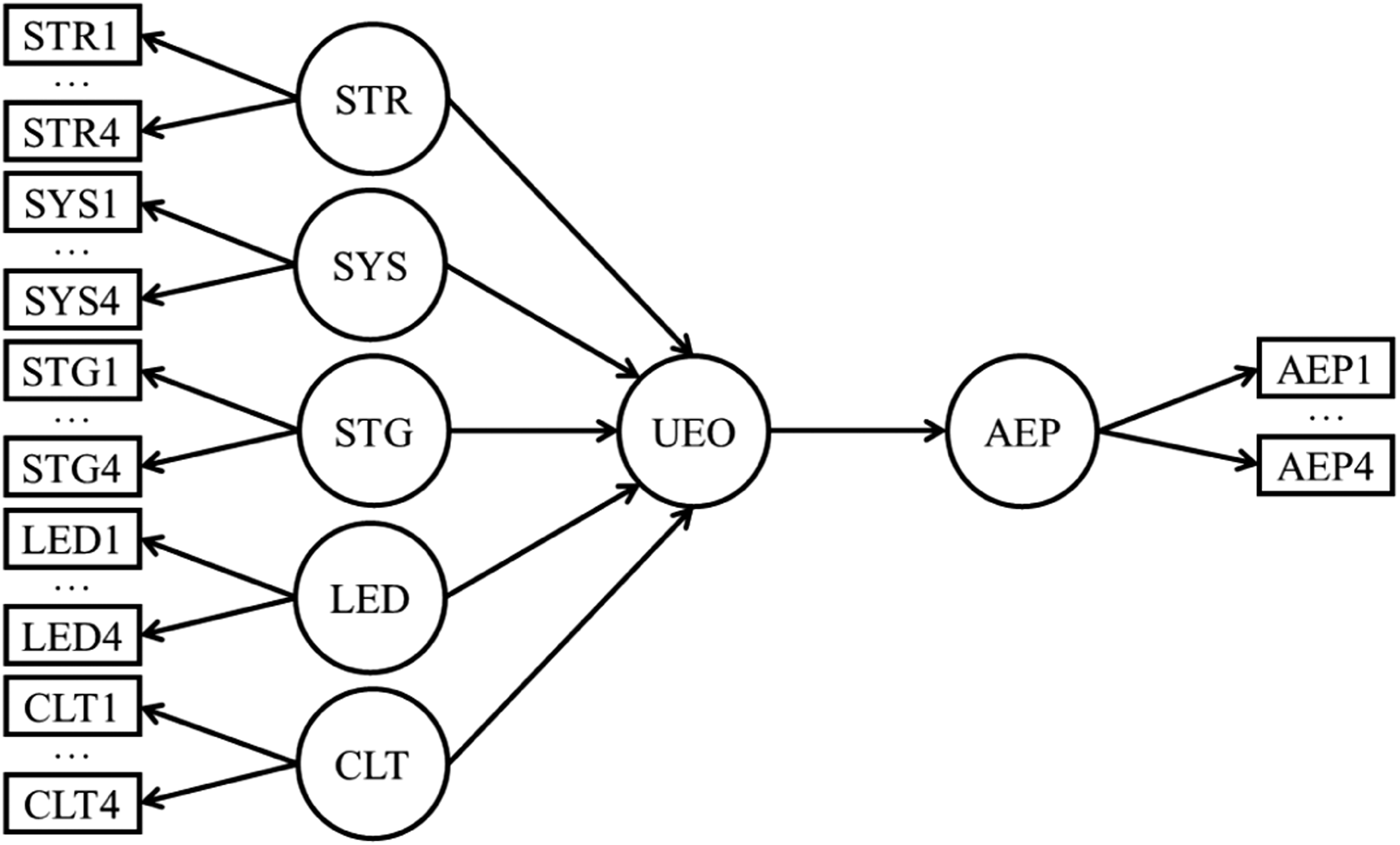
Isolated effects on AEP by individual factors.

The first step in evaluating the PLS-SEM results is to examine the measurement models. As mentioned above, the model under study includes both first-order and second-order measurement models. The STR, SYS, STG, LED, CLT and AEP constructs constitute six first-order reflective measurement models. Meanwhile, the UEO construct represents a second-order reflective–formative measurement model comprising measurement models of the five first-order components (STR, SYS, STG, LED, CLT) and the measurement model of the second-order construct (UEO), characterized by the relationships between the second-order construct and its first-order components (Sarstedt et al., 2019). The evaluation of the second-order measurement model relies on similar assessment criteria for evaluating any formative measurement model (Chin, 2010). We used the (extended) repeated indicators approach for the PLS-SEM analysis. Internal consistency, convergent validity, and discriminant validity are the relevant metrics for validating a reflective measurement model. Validating the formative measurement model involves assessing convergent validity, collinearity among indicators and the significance and relevance of outer weights (Hair et al., 2017).
Summary of measurement model metrics.

Internal consistency
For completeness, we report three metrics of internal consistency reliability: (1) composite reliability (
Convergent validity
We report two metrics of convergent validity: (1) average variance extracted (AVE) – the minimum AVE value in the model corresponds to AEP (0.564), which is above the threshold of 0.50; (2) indicator reliability – examining the outer loadings of the first-order constructs revealed that they were all statistically significant and above the recommended threshold of 0.70 except for STR1 (0.667), SYS2 (0.665), STG3 (0.615), CLT4 (0.645) and AEP1 (0.534) which are slightly below the threshold. Obtaining weaker outer loadings (<0.70) is a frequent occurrence in social science studies using newly developed indicators (Hulland, 1999). Thus, we followed the recommendations of Hair et al. (2017) and considered removing the indicators with outer loadings between 0.40 and 0.70 only when deleting them led to an increase in the composite reliability (or the AVE) above the recommended threshold value. However, we decided to keep all the indicators after carefully examining the effect that removing them would have on each construct’s composite reliability and content validity. Eliminating the indicators does not improve the already good composite reliability and AVE metrics. The two results above provide support for the convergent validity of the first-order constructs.
Discriminant validity
For completeness, we report two metrics of discriminant validity: (1) cross-loadings – a comparison of each indicator’s outer loading with its correlations with other constructs reveals no cross-loadings in the model; (2) heterotrait–monotrait (HTMT) ratio – all HTMT values are below the conservative threshold of 0.85. The highest HTMT value in the model corresponds to STG → AEP (0.428). These two results provide support for the discriminant validity of the constructs.
We followed the three-step procedure outlined in Sarstedt et al. (2019) and Hair et al. (2017) to validate the formative second-order construct. A discussion of the evaluation of the formative second-order measurement model follows.
Convergent validity
We ran a redundancy analysis test (Chinn, 1998) in which the second-order construct (UEO) is related to an alternative single-item measurement of university entrepreneurial orientation (UEO1: (University Name) is an entrepreneurial university). The single item captures the academic’s general assessment of the university’s entrepreneurial orientation as a criterion construct. The redundancy analysis yields a point estimate between the second-order construct (UEO) and the single-item measure (UEO1) of 0.760, which is higher than the threshold of 0.70. Furthermore, the bootstrapping on the model produced a lower boundary of 0.709 and an upper boundary of 0.871 for the 95% percentile confidence interval. These results support the convergent validity of the second-order construct.
Collinearity among indicators
The variance inflation factor (VIF) values for the first-order constructs are all below the threshold of 5.0. The highest VIF value in the model corresponds to CLT (4.542). These results suggest the absence of potential collinearity issues among the lower-order components of the UEO construct.
Significance and relevance of outer weights
We ran bootstrapping to assess the significance and relevance of the relationships between the five lower-order components (STR, SYS, STG, LED, CLT) and their higher-order component (UEO). These relationships appear as path coefficients in the PLS path model, although they represent the outer weights of the second-order construct. These relationships are 0.191 (STR), 0.216 (SYS), 0.214 (STG), 0.251 (LED), 0.233 (CLT) and are all significant at the
All the results above provide support for the validity of the reflective–formative higher-order construct.
Significance testing results of the structural model.

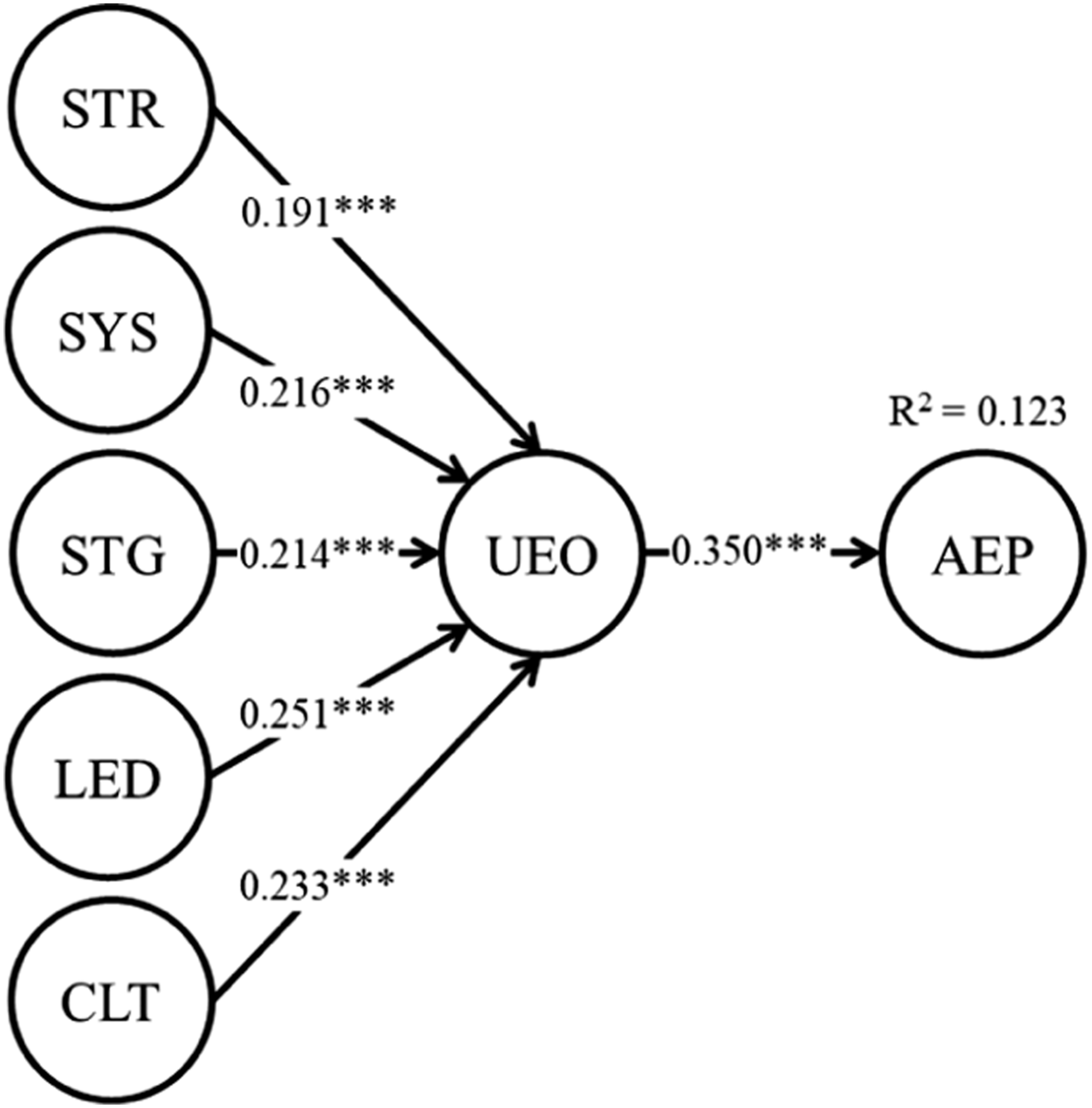
Structural path model with standardized path coefficients.
Explained variance
This pilot study used the coefficient of determination (
Predictive relevance
This pilot study measured the predictive relevance for the endogenous construct (AEP) by calculating the Stone-Geisser’s
The
This pilot study ran bootstrapping with the parameters described earlier to assess the statistical significance of the path coefficients and evaluate their values. In addition, we calculated the total indirect effect on the endogenous AEP construct by the first-order components of the second-order UEO construct. Table 7 shows the bootstrapping report with the path coefficients and the total indirect effects, including bootstrap mean values, standard deviation,
Figure 3 shows the structural model results. The path coefficients representing hypotheses H1 through H6 are statistically significant, giving support for the hypotheses. Statistically significant path coefficients close to +1 represent strong positive relationships (and vice versa for negative values). For example, the path coefficient UEO → AEP (0.350) represents a strong positive relationship. In addition, as mentioned above, we interpret the path coefficients linking the first-order constructs (STR, SYS, STG, LED, and CLT) to the second-order construct (UEO) as outer weights of indicators of the formative measurement model. Again, they are statistically significant and revealed similar relevance in shaping the higher-order construct (UEO).
Finally, as a follow-up analysis, this pilot study calculated the observed effect’s post hoc (retrospective) power based on the sample size and parameter estimates derived from the dataset. This was done to ensure that the sample size in the pilot study (
Figure 4 shows the mean and standard errors of the mean for each lower-order construct. This figure reveals that the academic’s entrepreneurial propensity (AEP) is relatively low compared to how academics perceive the university’s entrepreneurial orientation (UEO), represented by the five dimensions of its entrepreneurial architecture – culture (CLT), leadership (LED), strategies (STG), systems (SYS) and structures (STR). Moreover, among those five dimensions, STR seems to be the one that academics perceived to be more prominent. This finding is consistent with current efforts by the university to transform itself so that it plays an even more instrumental role in the economic and social development strategies of the province. For example, recently the university created a new technology transfer and commercialization office, a campus-wide entrepreneurship centre and a business incubation space. However, academics seem to perceive the five dimensions of the university’s entrepreneurial architecture relatively equally despite the higher perception of the STR dimension. This finding is good news for the university. As mentioned above, the five dimensions of entrepreneurial architecture are mutually supportive; thus, the absence or prioritization of one element at the expense of the others may create an imbalance that could undermine the effectiveness of the university’s efforts. Mean and standard errors of the mean of lower-order factors (total sample).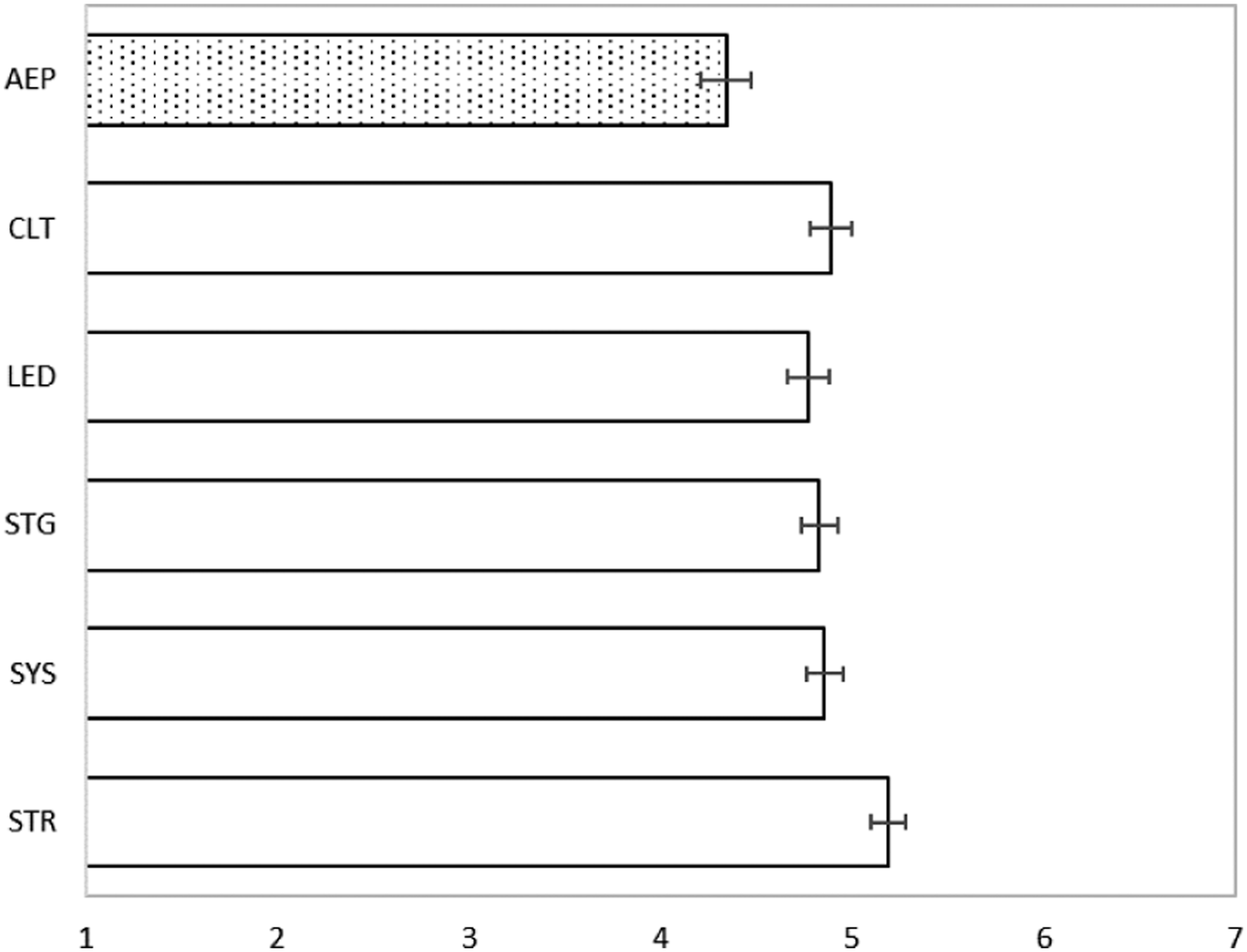
Figure 5 depicts the mean and standard errors of the mean for each lower-order construct broken down by academic rank and sex. Although tenured and non-tenured faculty members at this university show similar AEP (with slightly higher AEP for tenured academics), non-tenured academics seemed to perceive the five dimensions of the university’s entrepreneurial architecture at higher levels. This finding reflects the fact that the younger, non-tenured academics joined the university at the time when the university was starting to implement the majority of the initiatives to promote innovation and entrepreneurship on campus. Furthermore, the relatively low AEP of both tenured and non-tenure faculty members reflects the collective agreement between the university and the faculty, which does not yet reward the entrepreneurial behaviour of academics for promotion and tenure considerations. Furthermore, consistent with other studies regarding entrepreneurial intention and behaviour, male faculty members at this university manifest a slightly higher AEP level than female faculty members (D’Este and Perkmann, 2011; Perkmann et al., 2013). Mean and standard errors of the mean of lower-order factors: academic rank and sex.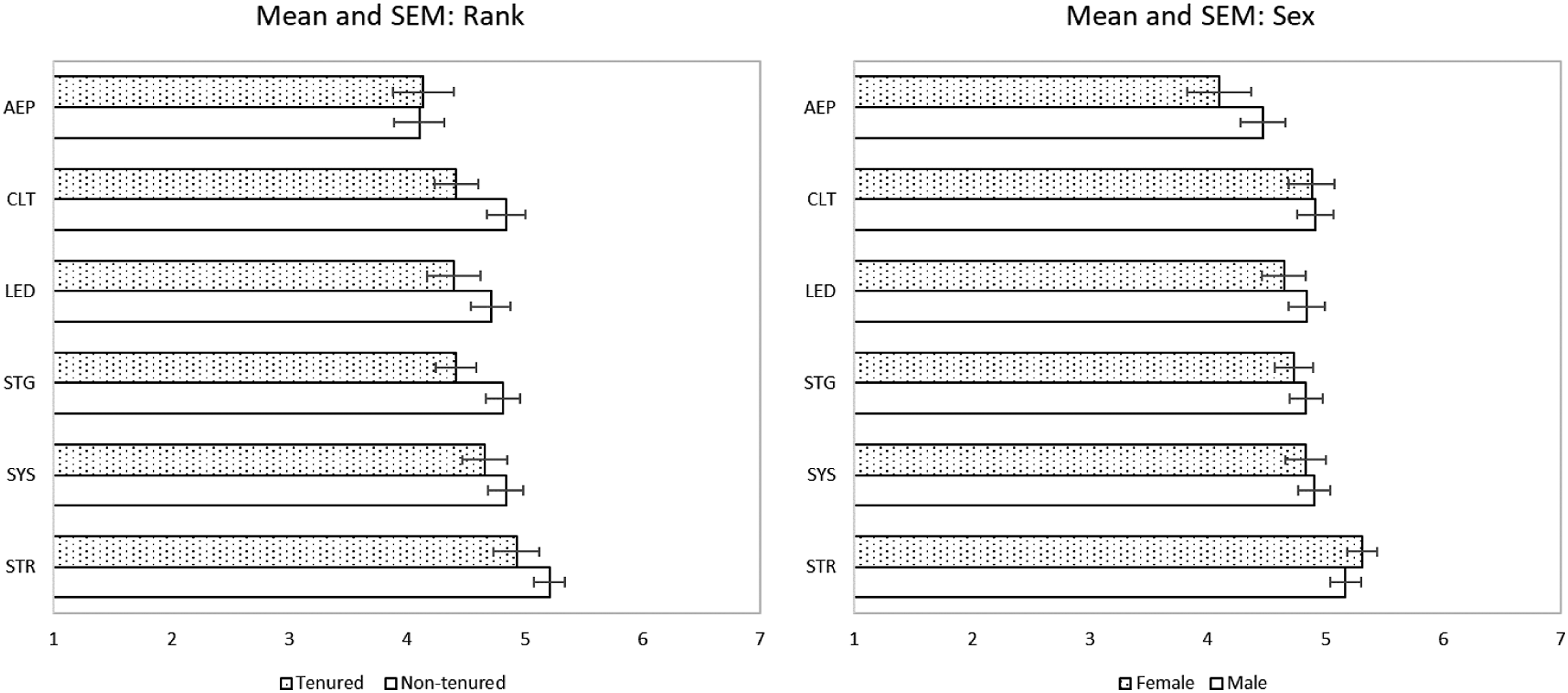
Results from the PLS-SEM suggest that the precursor of AEP (i.e. the higher-order construct UEO) can explain 12.3% of the variation in an academic’s entrepreneurial propensity at this university. These results also confirm a relatively strong correlation between the university’s entrepreneurial orientation and the entrepreneurial propensity of its academics; that is, UEO → AEP (0.350***). These findings may have meaningful consequences for the university. They imply that the university could strongly influence its academics’ entrepreneurial behaviour, but the outcome may not be commensurate with the efforts. In other words, the propensity of academics to engage in entrepreneurial activities has various precursors, only one of which is the university’s environment.
Conclusion
There is evidence in the literature that academics’ perception of their environment plays an essential role in their engagement in all academic activities. For example, perceiving a university department as having a high or low entrepreneurial orientation should affect whether academics engage in entrepreneurial activities (Kalar and Antoncic, 2015). Notwithstanding, the literature review also suggests that individual factors might be more important than institutional factors in determining an academic’s entrepreneurial propensity. Thus, we tried to understand how and to what extent the university’s entrepreneurial orientation affected the entrepreneurial propensity of academics. In addition, the literature review revealed a need for a methodology that would allow aspiring entrepreneurial universities to measure their state of evolution towards the new university model. Therefore, we proposed an instrument for assessing the effect of the university’s entrepreneurial orientation on the academic’s entrepreneurial propensity. We specified the model and hypotheses based on theory and determined how to measure the constructs with a new research instrument. In addition, we used the research instrument to conduct a pilot study of the effect of a Canadian university’s entrepreneurial orientation on its academics’ entrepreneurial propensity. We used the theoretical framework developed by Nelles and Vorley (2010, 2011) on entrepreneurial architecture to construct the model to assess faculty members’ perceptions of the characteristics most likely attributed to the entrepreneurial university.
To our knowledge, we are the first to use the entrepreneurial architecture framework to assess the relationship between the entrepreneurial propensity of academics and the entrepreneurial orientation of their university. The few studies that have used the entrepreneurial architecture framework in the past have done so to study, for example, how particular contexts can shape institutional responses towards the third mission and how individual universities express their entrepreneurial architecture. Developing a scale based on the entrepreneurial architecture framework allows for systematic analysis and comparison among entrepreneurial universities and the evaluation of an (aspiring) entrepreneurial university over time (longitudinal study). These analyses can assess individual dimensions of the entrepreneurial architecture and the five dimensions as a harmonic and mutually supportive aggregate. In response, university leadership can design possible interventions to correct the deficiencies and iterate the entrepreneurial architecture towards fulfilling the third mission. In other words, universities can use the methodology proposed in this article as an analytical tool for organizational change based on one of the most critical stakeholder groups of the entrepreneurial university: the faculty members. The pilot study using the proposed methodology with detailed accounts of collecting, analyzing and interpreting the results suggests that the methodology is appropriate for measuring the relationship between a university’s entrepreneurial orientation and the entrepreneurial propensity of its academics.
Footnotes
Acknowledgements
We acknowledge the support from Atlantic Canada Opportunity Agency (ACOA), The Government of Newfoundland and Labrador, and the Memorial Centre for Entrepreneurship (MCE). We also acknowledge the logistic support provided by Paula Mendonça, Director of Innovation and Entrepreneurship at Memorial University. The corresponding author also acknowledges the additional support provided by the Office of the Vice-President (Research), the Office of the Dean of Business Administration, and the Office of the Dean of Engineering and Applied Science at Memorial University.
Declaration of conflicting interests
The author(s) declared no potential conflicts of interest with respect to the research, authorship, and/or publication of this article.
Funding
The author(s) received no financial support for the research, authorship, and/or publication of this article.
