



Abstract
Offering employment in the public sector in exchange for electoral support (patronage politics) and vote-buying are clientelistic practices frequently used by political machines. In the literature, these practices are typically studied in isolation. In this paper, we study how the interaction between these two practices (as opposed to having just one tool) affects economic development. We present a theoretical model of political competition, where, before the election, the incumbent chooses the level of state investment that can improve productivity in the private sector. This decision affects the income levels of employees in the private sector, and, thereby, the costs and effectiveness of vote-buying and patronage. We show that when the politician can use both clientelistic instruments simultaneously, his opportunity cost for clientelism in terms of foregone future taxes declines. As a result, the equilibrium amount of public investment is typically lower when both tools are available than otherwise.
Introduction
Political clientelism has received lots of scholarly attention over the past three decades. There is an extensive literature about non-programmatic distributive practices such as vote-buying and patronage that politicians use to try to win and retain office. 1 Clientelistic practices have been a subject of interest in seminal theoretical contributions to redistributive politics (Dixit and Londregan, 1996; Gallego, 2015; Lindbeck and Weibull, 1987; Persson and Tabellini, 2000; Rosas et al., 2014) as well as many empirical studies (Frye et al., 2014; Holland and Palmer-Rubin, 2015; Mares and Zhu, 2015). Yet most of the theoretical work study different clientelistic strategies in isolation (Dekel et al., 2008; Robinson et al., 2014; Robinson et al., 2017; Robinson and Verdier, 2013; Stokes et al., 2013). In practice however, politicians and political parties generally combine several non-programmatic methods. For instance, Bratton (2008) demonstrates the co-existence of vote-buying and threats of violence in the Nigerian elections. Recent work on the use of economic intimidation in the elections in Eastern Europe (e.g. Frye et al., 2019; Mares et al., 2018) show that politicians use a portfolio of clientelistic strategies, including vote-buying and economic threats in the workplace. Why do political machines use several instruments simultaneously? One immediate answer is that different instruments are needed to effectively target different sub-groups of the electorate. Gans-Morse et al. (2014) for example have argued that politicians prefer to use a mix of strategies, including turnout-buying of supporters and vote-buying and abstention-buying of citizens who are closer to opposition candidates because they care about net votes. However, to better understand how patrons choose among the menu of clientelistic tools at their disposal, one may need to move beyond the effect of each instrument in isolation and think about how one instrument complements or undermines the other when used together. Mares and Young (2018) have argued that politicians use both positive and negative inducements because they complement each other. For example, loss-averse voters are more likely to vote for the patron when political brokers first offer them privileged access to some goods or services, like cheap credit, state transfers, and then threaten to take these away if turnout and electoral support are not high enough. Rosas et al. (2014) lay out a theory of clientelism where incumbent politicians use programmatic politics (public good provision) and turnout-buying conjointly because they complement each other. The first policy helps the incumbent increase his popularity, and the second policy raises the probability that people will go to the polls.
This paper offers an alternative reason why political machines can resort to several non-programmatic methods simultaneously and show how the multiplicity of clientelistic tools can have a detrimental effect on private sector productivity. Our departure point is that clientelism not only diverts existing resources away from more productive uses but can also generate perverse incentives such as underinvestment in public goods that benefit large segments of the society without generating much political rent to politicians. We present a model, where an incumbent politician can both allocate public sector jobs as a patronage tool and hire a political broker to buy votes for him. Before the election takes place, the incumbent politician first decides on the level of public investment (e.g. in infrastructure) that increases productivity in the private sector. This raises tax revenues, a source of economic rent for the incumbent if he is reelected. The incumbent values income in the private sector only for the tax revenues it generates. This is because voters cannot commit to rewarding the incumbent for high levels of public investment since the latter is decided before the election in an irreversible way and leads to higher income for workers in the private sector regardless of the electoral outcome. After the public investment is made, both the incumbent and the opposition announce income tax rates on private sector incomes. Unlike the opposition, the incumbent has two additional tools he can use before the election. The first is patronage employment, a wage offer for public sector employees in exchange for their loyalty (electoral support). The second option is to buy the votes of private-sector workers using a broker.
Our model builds upon Robinson and Verdier (2013), where patronage motive is present but vote-buying is not an option. Robinson and Verdier (2013) consider a model, where the incumbent sets the level of productivity-enhancing public investment and faces a tradeoff between the higher amount of collected votes and lower future tax revenues. They show that the incumbent politician underinvests vis-à-vis the socially optimal level because lowering investment renders patronage more effective. A lower level of investment means lower incomes in the private sector, thereby making jobs in the public sector relatively more attractive. In our model, there are two additional mechanisms through which lowering investment raises the electoral support for the incumbent. First, lower incomes in the private sector mean more votes bought for a given transfer per client. This increases the incumbent's winning probability. Second, the higher the chances of electoral victory for the incumbent become, the more effort the broker exerts to allure clients. This is because his rewards —unlike his costs— are conditional on the reelection of his patron. The downside is that the lower incomes in the private sector lead to lower tax revenues. Hence, the potential rents to reelection decrease. Therefore, the incumbent faces a tradeoff between the number of votes collected and the level of future tax revenues. But since both patronage and vote-buying incentives work to reduce investment, having both tools at one's disposal, rather than just one of them, reduces the opportunity cost of clientelism (due to lost taxation rent) per vote.
To see why, first consider the case where patronage, via public sector employment, is the only available tool of clientelism. In the model, patronage employment in public sector is socially inefficient. Yet it generates private rents for employees as well as the politician who gets to win the election. A reduction in investment (i.e. incomes) in the private sector attracts more people into the public sector for a given patronage wage. This leads to a narrowing of the tax base. Suppose that, for each dollar of reduction in investment (in the private sector), tax revenues decrease by x dollars, while votes collected by patronage increase by q votes. Then, the opportunity cost of patronage per vote is
Our comparative statics analyses show that higher office rents strengthen the incentives to underinvest in the private sector since stakes in winning the election become larger. This effect is stronger when vote-buying is added to patronage. We also show that when taxation becomes more efficient, the incumbent invests more in the private sector. This is because tax revenues, which depend on public investment, become more attractive in comparison to rents from public sector employment (patronage) and office rents.
We extend the model in various directions. In the baseline model, we assume that voters do not take the winning probabilities of the politicians into account as they vote, although their payoffs may depend on who wins the election. In an extension, we let voting decisions be partly observable to politicians and affect the post-election rewards to individual voters. In this case, voters with perfect foresight behave strategically (i.e. based on the probabilities of electoral victory for each politician), and the underinvestment problem becomes even more severe. When one clientelistic tool raises the winning probability for the incumbent, and voters become more confident about his victory, they have even more incentive to support him. Thus, in this case, vote-buying and patronage complement each other, that is, the use of one clientelistic tool increases the marginal effect of the other tool on the political outcome. This is the second explanation for why the political machine can use several clientelistic tools.
In another extension, we allow for clientelistic competition, in which, not only the incumbent but also the opposition can use patronage and/or vote-buying. We demonstrate that, when political machines compete, the incumbent's incentives to underinvest in the private sector get weaker. When the opposition can also buy votes, underinvestment in the private sector generates a positive externality for the opposition by lowering the cost per vote that the latter faces. Thus, the marginal effect of lowering investment on the incumbent's winning probability decreases. This result hints at one potential upside to clientelistic competition. Allowing for more clientelistic spending would not necessarily be detrimental as long as it levels the playing field in clientelistic competition. Yet, higher competition also intensifies a socially wasteful arms race between political parties, a downside that we abstract from in this model.
As we have mentioned above, in the literature of clientelism there are other clientelistic tools besides patronage and vote-buying, such as turnout buying and abstention buying (rewards to indifferent or opposing individuals for not voting). Although our main results would hold for other combinations of clientelistic tools under certain conditions, patronage is special because it affects the structure of the politician's post-election payoff. It creates additional rents that the politician can receive after winning the election, and these rents do not depend on the level of investment. They depend on how many people are employed in the public sector (tax-free sector). Patronage employment in turn reduces the size of the tax base. Therefore, the cost of patronage for the incumbent depends on income levels in the private sector, and thus on the level of investment. Moreover, because of the diminishing marginal utility of money for the incumbent, patronage rents make additional tax incomes less lucrative. When patronage and any other clientelistic tool are used together, the effect of the other tool becomes more detrimental since there is an additional part of the post-election payoff (rent from the public sector) that does not depend on the level of investment.
Our analysis, first and foremost, contributes to the literature about the connection between political clientelism and economic development. 2 Existing literature largely agrees that clientelism undermines economic development (Bustikova and Corduneanu-Huci, 2017; Kitschelt and Wilkinson, 2007; Remmer, 2007). But what are the channels through which clientelistic politics may restrain economic development? One way to answer this question is to study how rising incomes change the costs of clientelistic practices. One view is that higher incomes lower the marginal utility of money and, as a consequence, vote-buying becomes costlier for the politicians (Calvo and Murillo, 2004; Dixit and Londregan, 1996). Therefore, in a political environment where parties largely rely on clientelistic networks and vote-buying is rampant, politicians may have less incentive to follow growth-promoting policies. The second reason why clientelistic incentives may harm economic development is the hypothesis that poor voters have lower involvement in the broader national economy, and, due to lower levels of education, they cannot properly assess the indirect effects of macroeconomic policies on their economic well-being while welcoming the direct benefits politicians deliver in exchange for their votes (Kitschelt and Wilkinson, 2007). The third reason is connected with the risk-averse behavior of the poor, who prefer immediate vote-buying benefits to future programmatic policy (Kitschelt, 2000; Kitschelt and Wilkinson, 2007). Finally, economic growth may promote social and residential mobility, making it harder for brokers to maintain their clientelistic networks (Bloom et al., 2001; Kitschelt, 2010; Kitschelt and Wilkinson, 2007).
Our paper adds to this literature by analyzing how the developmental consequences of clientelism change when politicians use two instruments (patronage and vote-buying) simultaneously. We show that public investment and per capita incomes decline further when the incumbent politician has two instruments, instead of a single instrument, at his disposal. The reason is that with two instruments, lowering public investment to buy votes becomes cheaper for the incumbent (in terms of lost tax revenues per vote). In other words, having multiple instruments makes clientelism more efficient from the incumbent's perspective, but less efficient from the society's perspective.
This paper also draws on the literature on patron-broker-client relationships within clientelistic networks. Stokes (2005) studies the relationship between brokers and clients in Argentina. She finds that brokers can infer voters’ choices, and because of repeated interactions with clients in their network, they can credibly commit to rewards and punishments. She argues that vote-buying is an effective tool when political machines can use brokers to overcome informational problems. Another mechanism to discipline voters is described in Gallego (2015), where aggregate electoral results motivate voters to cooperate with clientelistic politicians. In our model, the incumbent relies on a broker to buy votes, and the broker makes transfers to voters before the election. Drawing on the existing justifications in the literature, we assume that recipients fully comply with their commitment to support the incumbent. Stokes et al. (2013) present a formal model of clientelism where the patron chooses a political broker, and the latter engages in vote-buying. In that model, the expected utility of the broker depends on the probability that the patron wins the election. We also model brokers similarly. They anticipate benefits from the patron, only if the latter wins the election. Thus, the broker's effort to reach out to voters does not only affect but also depends on the likelihood of electoral victory. Larreguy et al. (2016) observe that brokers have incentives to shirk, and provide evidence from Mexico that the patron's ability to monitor brokers affects the latter's performance. In line with this observation, in our model, we allow the broker to shirk. Our model also allows us to differentiate between three different channels through which productivity-enhancing public investments influence the electoral fate of the incumbent politician, and thus the latter's incentive to invest. The first channel concerns how public investment affects the brokers’ effort. The second channel concerns how investment reduces the size of the electorate the incumbent can attract via vote-buying, keeping the broker's effort constant. Lastly, we identify by how much the incumbent's winning probability is affected due to the effect of investment on patronage employment.
The paper is organized as follows. Section 2 presents the main model and our comparative statics results. In section 3, we study the case when the voters’ electoral choice is partially observable to the patron. Section 4 presents an extension where both candidates compete in vote-buying and patronage. Section 5 concludes.
Model
We present a theoretical model of electoral competition in the shadow of clientelistic politics. There are two politicians: an incumbent political machine (or patron)
3
denoted by superscript ‘
We consider a standard probabilistic voting model. There are two groups of voters:
There are three potential sectors of employment in the economy: public sector, private formal sector and private informal sector. The mass of agents in group
Each worker in the private sector earns a pre-tax income of
Voters, who work in the private sector, can sell their votes in exchange for an individual transfer
Politicians’ payoff (conditional on electoral victory) is the utility of net taxes from the private sector
The timing of the game is as follows:
First, the incumbent chooses the level investment I, and incomes in the private sector are realized. Second, both politicians People vote sincerely, and the candidate who gets the most votes wins the election. Payoffs to politicians (utility from the sum of tax revenues, office rents and patronage rents) net of investment costs, the broker and voters (after-tax consumption and ideological utility associated with the candidate that is voted for) are realized.
Credible policies
We solve for the subgame-perfect Nash equilibrium (SPNE) in pure strategies. For this, we use backward induction. First of all, note that, no matter who wins the election, the level of taxation will be set to make voters indifferent between working in the formal private sector and moving to the informal one. So, the unique credible amount of tax each private sector worker is asked to pay is
Now we consider the public sector. Politician j offers the wage in the state sector


This assumption ensures that (i) it does not pay off for the opposition to hire from any group
5
and (ii) if the incumbent decides to hire anyone, he will only recruit workers from group 1. Interpreted more broadly, this assumption reflects the idea that it may be optimal for the incumbent to target a particular group for patronage due to informational problems or lack of trust in the other groups’ loyalty. Formally, due to Assumption 1, we have
If the incumbent wants to offer employment in the public sector, he should offer a wage that also satisfies the participation constraint for the workers:




Firstly, Assumption 2 allows us to focus on the case where
Assumption 3 guarantees that socially efficient level of the public investment is positive. 8
Fixed costs of vote-buying F is sufficiently large such that vote-buying is socially inefficient. 9
Assumption 4 means that creation of clientelistic networks involves high fixed costs so that it is inefficient to have vote-buying in the society.
Let us denote by
In the private sector, we assume that the vote-buying arrangement is fully credible for brokers as well as clients. This would be the case because the broker provides goods or money to voters before the election, and he interacts with his clients repeatedly (Gallego, 2015; Nichter, 2008; Stokes, 2005) so that non-compliant clients can be identified and excluded from future benefits. Another explanation why credible arrangement takes place can be reciprocity (Finan and Schechter, 2012), that is, the feeling of obligation to vote for the politician who provides vote-buying benefits. Each voter in the broker's network is offered a benefit of
2.2. Behavior of voters
Now, let's turn to the voters’ decision. Constituents from the first group know that public employment with wage




Now we can determine the probability that the political machine wins the election:

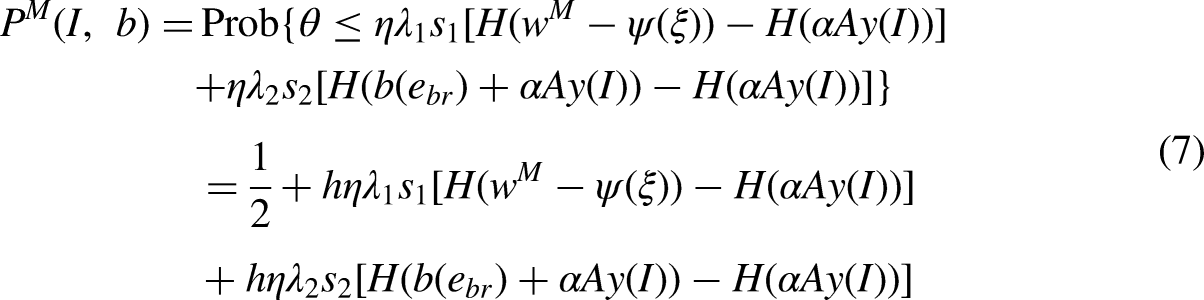
Equation (7) reflects the fact that when the incumbent does not use vote-buying and patronage, elections are fair. Indeed, if
A hired broker has the following optimization problem:


On the one hand, additional effort by the broker increases the incumbent's winning probability, that is,
Now let us turn our attention to the incumbent's choice. He maximizes his expected utility from consumption, which depends on fixed office rent V, tax revenues



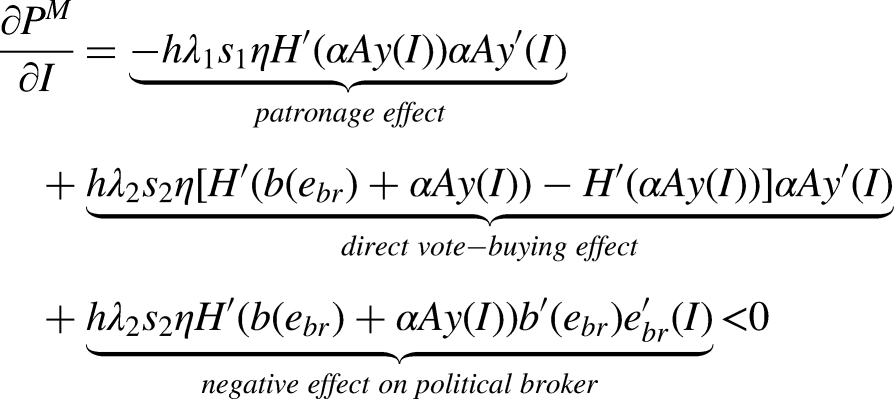
Let's denote
Equilibrium public investment is lower than the socially efficient level when both vote-buying and patronage are used together, that is,
If If
See the Appendix.
The incumbent invests in the private sector just because higher I boosts tax revenues he will collect if he wins the election. However, there are several reasons, why
To compare the levels of public investment when the incumbent uses both clientelistic tools instead of only patronage, we should determine the role of vote-buying. Vote-buying has two effects on public investment. On the one hand, it gives an incentive to the incumbent for investing less so as to attract more votes from constituents who are employed in the private sector. On the other hand, a higher number of purchased votes means a higher probability of winning, and as a consequence, a higher chance of collecting tax incomes after the election. Thus, a higher chance of winning incentivizes investment. When V (fixed office rent) or
Similarly, patronage has also two opposing effects on public investment. However, unlike vote-buying, patronage employment changes the allocation of workers across sectors. Higher employment in the public sector reduces the amount of tax income because only
We have shown that vote-buying and patronage affect I in the same direction. One way to understand this result is to analyze how the incumbent's opportunity cost (in terms of utility from lost taxes) per vote change when he uses two instead of one clientelistic tool. Let's define the opportunity costs of getting one additional vote, as
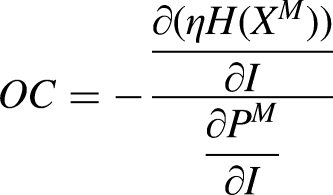
For any given level of
is lower than in the case where he only uses patronage, that is, is lower than in the case where he only uses vote-buying, that is,
The first-order condition in (9) states that the incumbent needs to sacrifice part of the tax revenue (by reducing
When the political machine uses both patronage and vote-buying, simultaneously, the equilibrium level of opportunity cost per vote
is lower than in the case where only patronage is used, that is,
is lower than in the case where only vote-buying is used, that is,
See the Appendix.
The following propositions present the comparative statics results for the solution
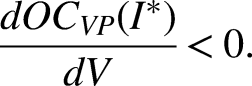
An increase in fixed office rent,
When

See the Appendix.
A higher value of fixed office rent makes clientelism more attractive for the incumbent. Moreover, utility from tax incomes becomes lower when V is high because of diminishing marginal utility of money for the incumbent. It leads to a decrease in investment which, in turn, reduces incomes in the private sector, that is,
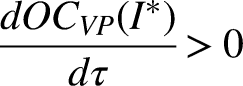
When taxation becomes more efficient, that is,
When,

See the Appendix.
A change in administrative costs of taxation has three effects on public investment. First, when the costs decrease (i.e. higher
In the main model, we have assumed that constituents vote sincerely, and voting is not observable. In this section, we relax both of these assumptions. Now let's suppose that voters know the probability of winning for the incumbent




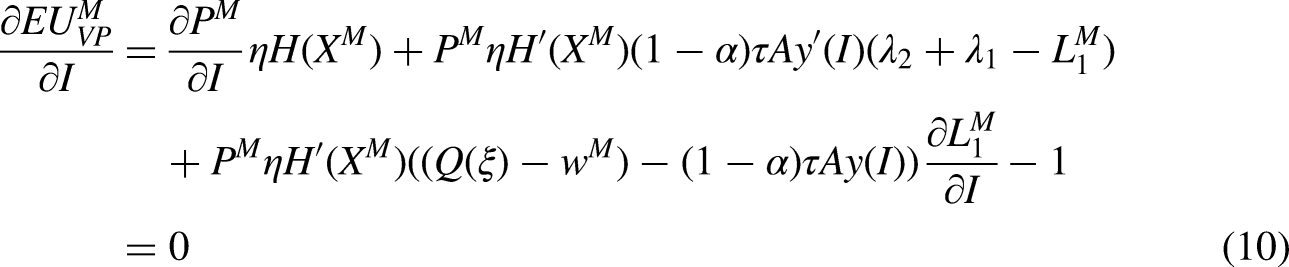
Now that voters anticipate the winning probability that would result for a given set of policies, politicians pursue, and have an incentive to respond to it. The optimal behavior for the incumbent needs to internalize, not only the effects of relative monetary rewards, offered to voters in case of victory, but also how patronage, and vote-buying decisions, shape voters’ expectations, regarding the outcome of the election. Therefore, one should, intuitively, expect patronage and vote-buying to further reinforce each other. If the constituent knows that the political machine uses patronage and vote-buying, he understands that the patron will win the election with a higher probability. Since, in that case, the post-election rewards to supporters accrue with higher probability, voters become uniformly more likely to vote for the incumbent. Moreover, since the broker's effort has a greater impact on election outcomes now, he exerts more effort in this case. Accordingly, we can see the complementarity of two clientelistic tools, since the using of one of them increases marginal effect of other on the political outcome.
In this section, we assume that the incumbent has an alternative technology, in the public sector, which allows him to generate a personal rent of


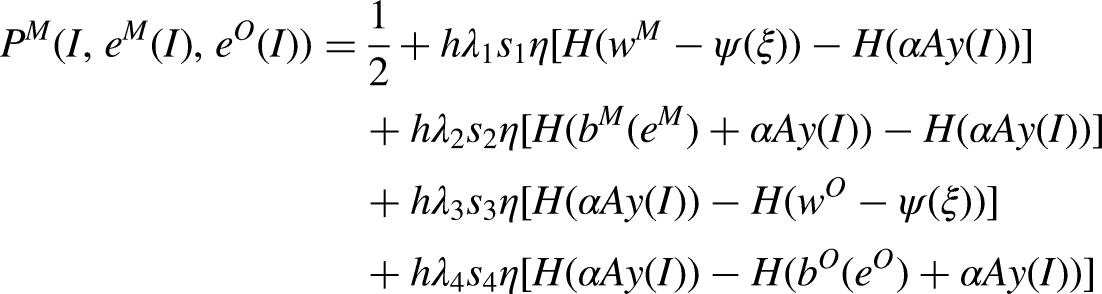
Although monopolistic clientelism is more common, there are cases where clientelism is competitive. For instance, it is not uncommon that different parties target different constituencies via clientelistic tools. Now we extend our main model to consider two competing machines, namely that both the incumbent and the opposition can use both clientelistic tools (patronage and vote-buying). For this purpose, we introduce two more groups in the model: group 3 and group 4, with population mass of
We assume that the incumbent cannot target group 3 or group 4 via any clientelistic tool. Thus, he receives the following number of votes from the third and fourth groups, respectively







When
his opportunity cost is less than the opposition's opportunity cost, when the latter uses both patronage and vote-buying,
his opportunity cost is less than the opposition's opportunity costs, when the latter uses only vote-buying,
his opportunity cost is less than the opposition's opportunity costs, when the latter uses only patronage,
Condition
Finally, note that the net effect of investments for the incumbent, (in terms of the opportunity cost defined in the basic model)
Previous studies consider patronage and vote-buying in isolation. Building on Robinson and Verdier (2013), we have presented a formal model, in which we consider the interaction between two main types of clientelistic practices –patronage via public employment and vote-buying. A political machine chooses the level of public investment which improves productivity in the private sector before the election takes place and faces a tradeoff between getting more votes today and obtaining a lower amount of tax revenue from the private sector if elected.
Similar to some of the previous literature, in our model costs of vote-buying for the politicians rise with the income of individuals due to diminishing marginal utility of money (Calvo and Murillo, 2004; Dixit and Londregan, 1996). However, our work shows that vote-buying and patronage interact in non-trivial ways. Combining both tools makes clientelism cheaper by reducing the opportunity costs of clientelism in the form of lost taxes. This does not necessarily mitigate the economic inefficiency associated with clientelism. In particular, when personal rents from holding office or rents from patronage employment is sufficiently high, using vote-buying and patronage conjointly is more detrimental for economic development than using each in isolation. This problem is exacerbated when the political choice of constituents is observable, and voters’ post-election benefits depend on the likelihood the incumbent wins the election. These predictions are new contributions to the literature on the developmental consequences of clientelism.
Our paper also contributes to the patron-client relationship literature by showing that a high level of public investment has a negative effect on the political broker's efforts. To overcome this effect, the incumbent decreases the amount of public investment. In the case when both politicians use clientelistic strategies, the opportunity cost for the incumbent becomes larger and the latter has less incentive to underinvest While we have abstracted from the agency problems between the patron and the broker, studying these problems within the same framework may be a fruitful direction for future research.
Footnotes
Acknowledgements
We thank the editor, the three anonymous referees and Kemal Kıvanç Aköz for valuable comments. The article was prepared within the framework of the Basic Research Program at the National Research University Higher School of Economics (HSE). Vladimir Shchukin also acknowledges institutional support RVO 67985998 from the Czech Academy of Sciences.
Declaration of conflicting interests
The authors declared no potential conflicts of interest with respect to the research, authorship, and/or publication of this article.
Funding
The authors received no financial support for the research, authorship and/or publication of this article.
