




Abstract

New in the 2015 guidelines
This guideline is an update of a previous version published in 2008. In this version, we have significantly changed the sections on management of hepatitis B and C in line with new evidence and national guidelines, including those produced by NICE; other sections have been updated to reflect new evidence and practice.
Introduction and methodology
This guideline is an update of the guideline published in 2008 and, like its previous version, provides guidance for best practice in the diagnosis, management and prevention of viral hepatitis types A, B and C (HAV, HBV and HCV). It is primarily intended for use in UK Genitourinary Medicine (GUM)/Sexual Health settings, but can be applied or adapted for use in other settings where sexually transmitted infection (STI) assessments are undertaken, such as in integrated STI/contraception sexual health services and other specifically commissioned services, including general practice. This guideline is for use by all healthcare professionals (doctors, nurses and health advisers) and for use when dealing with patients who are attending with symptoms that may be attributed to an STI, with concern about STIs, or are requesting screening for STIs. It will also be useful to managers and commissioners of sexual health services in understanding service needs.
The purpose of the guideline is to help improve the sexual health of individuals attending sexual health clinics by encouraging high standards of care. The guideline offers recommendations on best practice regarding viral hepatitis for both men and women, including adolescents.
The guideline is predominantly based on what a broad range of clinicians believe constitutes reasonable practice, based on best evidence. Evidence is sometimes cited from non-UK sexual health settings and from other settings outside sexual health care where necessary. The recommendations/evidence are graded using the GRADE system (Appendix).
Search strategy
This document was produced in accordance with the guidance set out in the Clinical Effectiveness Group’s (CEG) document ‘Framework for guideline development and assessment’ at http://www.bashh.org/guidelines. The 2015 guideline updates the previous guideline by searching Medline 2008–2014 for ‘hepatitis A’, ‘hepatitis B’, ‘hepatitis C’, ‘hepatitis D’ and ‘Delta virus’ and limited to ‘human’ and ‘English’.
The Cochrane database was searched for ‘hepatitis A’, ‘hepatitis B’, ‘hepatitis C’, ‘hepatitis D’ and ‘Delta virus’. The 2010 European (IUSTI/WHO) guideline on the management of viral hepatitis, the 2009 and 2014 European Association for the Study of the liver (EASL) guidelines for the management hepatitis B and C, the 2014 British HIV Association (BHIVA) guidelines for the management hepatitis viruses and the 2014 American Association for the Study of Liver Disease (AASLD) recommendations for testing, managing, and treating hepatitis C were reviewed. In addition, sections on hepatitis in relevant BASHH and other guidelines were reviewed for other references. Forward and backward searching from key references was also conducted.
Piloting and feedback
The writing committee includes clinicians from the specialties of GUM, hepatology, infectious diseases, microbiology, nursing and sexual health advising. Prior to publication, the final draft of the guideline was placed on the British Association for Sexual Health and HIV (BASHH) website for a two-month consultation period, and copies were circulated to the Genitourinary Nurses Association (GUNA) and the Society of Sexual Health Advisers (SSHA) chairs for comment and peer review. It was also reviewed by the BASHH Public Panel. The guideline was piloted before it was finally ratified.
Contents
1. Key recommendations 1.0 Acute hepatitis 1.1 Hepatitis A 1.1.1 Which asymptomatic patients should be screened for evidence of past HAV infection in the sexual health setting? 1.1.2 What to do if the HAV total antibody test is negative in the asymptomatic patient. 1.1.3 What if the patient is found to have acute hepatitis A? 1.1.4 What to do if a patient presents as a contact of a patient with acute hepatitis A. 1.2 Hepatitis B 1.2.1 Which asymptomatic patients should be screened for evidence of past /current hepatitis B infection in the sexual health setting? 1.2.2 What if the asymptomatic patient is not immune to hepatitis B? 1.2.3 What if the patient is found to have acute hepatitis B? 1.2.4 What if the patient is found to have chronic hepatitis B? 1.2.5 What to do if a patient presents as a contact of a patient with hepatitis B. 1.3 Hepatitis C 1.3.1 Which asymptomatic patients should be screened in the sexual health setting? 1.3.2 What to do if the at-risk patient is HCV non-infected. 1.3.3 What if the patient is found to have acute hepatitis C? 1.3.4 What if the patient is found to have chronic hepatitis C? 1.3.5 What to do if a patient presents as a contact of a patient with hepatitis C. Main text: 2. Hepatitis A 2.1 Aetiology 2.2 Transmission 2.3 Incubation period 2.4 Symptoms 2.5 Signs 2.6 Complications 2.7 Diagnosis 2.7.1 Serology 2.7.2 Other tests 2.8 Management 2.8.1 General advice 2.8.2 Further investigations 2.8.3 Acute icteric hepatitis 2.8.4 Pregnancy and breast feeding 2.8.5 Sexual and other contacts 2.8.6 Follow-up 2.9 Screening and primary prevention 3. Hepatitis B 3.1 Aetiology 3.2 Transmission 3.3 Incubation period 3.4 Symptoms 3.5 Signs 3.6 Complications 3.7 Diagnosis 3.7.1 Table: Hepatitis B serology 3.7.2 Biochemistry 3.8 Management 3.8.1 General advice 3.8.2 Further investigations 3.8.3 Acute icteric hepatitis 3.8.4 Treatment of chronic infection 3.8.5 Pregnancy and breast feeding 3.8.6 Sexual and other contacts 3.8.7 Follow-up 3.9 Screening and primary prevention 3.9.1 Screening 3.9.2 Figure: Flow chart for hepatitis B screening using serum anti-HBc 3.9.3 Figure: Flow chart for hepatitis B screening using serum HBsAg 3.9.4 Primary prevention 3.9.5 Table: Vaccination schedules for hepatitis B 3.10 Hepatitis D (Delta virus infection, HDV) 4. Hepatitis C 4.1 Aetiology 4.2 Transmission in the UK 4.3 Incubation period 4.4 Symptoms 4.5 Signs 4.6 Complications 4.7 Diagnosis 4.7.1 Serology 4.7.2 Other tests 4.8 Management 4.8.1 General advice 4.8.2 Further investigations 4.8.3 Treatment 4.8.4 Figure: NEAT algorithm for the management of acute HCV 4.8.5 Pregnancy and breast feeding 4.8.6 Sexual and other contacts 4.8.7 Follow-up 4.9 Screening and primary prevention 5. Resource implications 6. Qualifying statement 7. Auditable outcomes 8. Declaration of conflicting interests 9. References Appendix: The GRADE system
1 Key recommendations
1.0 Acute hepatitis
What to do if a patient presents with symptoms suggestive of acute viral hepatitis.
Clinically assess the patient and if necessary refer for hospital admission (1A) section 2.8.4. Perform tests to assess the severity of the hepatitis including liver function test (LFT), clotting, and hepatitis serology (including HAV immunoglobulin M [IgM], HBV surface antigen [HBsAg], HCV antibodies/RNA and hepatitis E [HEV] serology/PCR) (1B) section 2.7.2. Inform the appropriate public health authority, for contact tracing (1C) section 2.8.1
1.1 Hepatitis A
1.1.1 Which asymptomatic patients should be screened for evidence of past HAV infection in the sexual health setting?
In the sexual health setting, the HAV total antibody test should be offered to at-risk patients whose immune status is unknown and who do not have a definite history of a completed HAV vaccination course (1B) section 2.9. The patients to be targeted are: at-risk men who have sex with men (MSM) during a local outbreak, people who inject drugs (PWID), HBV+, HCV+ and HIV+ patients (1B) section 2.9. HAV screening should not be offered to patients who are known to be immune or fully vaccinated (1B) section 2.9.
1.1.2 What to do if the HAV total antibody test is negative in the asymptomatic patient
In at-risk patients offer a course of hepatitis A vaccination with either the monodose vaccine or the combined hepatitis A and B vaccine if non-immune to both infections (1B) section 2.9. Discuss safer sex and how to reduce risk of catching this infection (1D) section 2.9.
1.1.3 What if the patient is found to have acute hepatitis A?
Partner notification should be performed for at-risk MSM contacts (oro/anal, digital/rectal and penetrative anal sex) within the period two weeks before, to one week after, the onset of jaundice (1C) section 2.8.5. Employment history should be obtained so patients can be advised appropriately and patients should be advised to avoid food handling and unprotected sexual intercourse until they have become non-infectious (1B) section 2.8.1. Patients should be given a detailed explanation of their condition with particular emphasis on the long-term implications for the health of themselves and their partner(s). This should be reinforced by giving them clear and accurate written information (1B) section 2.8.1. Pregnant women should be advised of the increased risk of miscarriage/premature labour and the need to seek medical advice if symptoms develop (1B) section 2.8.4. The risk from breast feeding is uncertain. Therefore, the balance of risks between infection and stopping breast feeding should be considered on an individual basis (2C) section 2.8.4.
1.1.4 What to do if a patient presents as a contact of a patient with acute hepatitis A
Screen for evidence of HAV infection or immunity (1B) section 2.9. For known sexual contacts, e.g. MSM with oro/anal, digital/rectal and penetrative anal sex within the period two weeks before to one week after the onset of jaundice, offer post exposure prophylaxis with HAV vaccine if not known to be immune/fully vaccinated previously (1A) section 2.8.5. Human normal immunoglobin (HNIG) 250–500 mg intramuscularly should also be considered in addition to the vaccine for patients at higher risk of complications (concurrent chronic hepatitis B or C, chronic liver disease, HIV+ or age >50-year old) (IA) section 2.8.5. If the type of hepatitis of the index case is not known, also offer post-exposure prophylaxis against hepatitis B (1A) section 2.8.5 and section 3.8.6. Give advice on action to take if symptoms suggestive of hepatitis subsequently occur (1D) section 2.8.5.
1.2 Hepatitis B
1.2.1 Which asymptomatic patients should be screened for evidence of past/current hepatitis B infection in the sexual health setting?
Hepatitis B testing in asymptomatic patients should be recommended in MSM, sex workers (of either sex), PWID, HIV-positive patients, sexual assault victims, people from countries where hepatitis B is endemic (outside of Western Europe, North America and Australasia), needlestick victims and sexual partners of positive or high-risk patients (1A) section 3.9.1. The screening tests of choice are anti-HB core antibody and/or HBsAg test with further serology to assess the stage of infection and infectivity as appropriate (1B). Measure anti-HBs in those who have been vaccinated (1B) section 3.9.1.
1.2.2 What if the asymptomatic patient is not immune to hepatitis B?
In at-risk patients, consider vaccination with the monovalent hepatitis B vaccine or the combined hepatitis A and B vaccine if non-immune to both. In most cases, the ultra-rapid 0, 1, 3 week, 12-month vaccination course is recommended (1B) section 3.9.4. Discuss safer sex and how to reduce risk of becoming infected (1D) section 3.9.4. The ultra-rapid vaccination schedule (0, 1, 3 weeks) leads to an anti-HBs antibody response in only 80% of recipients 4–12 weeks after the third dose. This rises to 95% just prior to the 12-month booster dose. Consider offering booster vaccinations of up to three further doses to the 20% without detectable antibodies 4–12 weeks after the primary course even though most would have eventually developed an antibody response (1C) sections 3.8.6, 3.9.4. Protection provided by monovalent vaccination is believed to persist for >20 years once immunity has been confirmed (1B) section 3.8.6. HIV-positive patients respond to vaccination in 7–88%, but antibody titres are lower than in HIV-negative individuals, and response correlates with CD4 count, nadir CD4 count and HIV viral load. Possible strategies for improving response for non-responders are commencing vaccination if the CD4 count rises above 500/mm3, or using larger or more frequent doses (1B) sections 3.8.6, 3.9.4.
1.2.3 What if the patient is found to have acute hepatitis B?
See section 1.0 There is evidence that anti-viral agents can prevent acute liver failure (ALF), improve morbidity and mortality in patients with severe acute infection (1A) section 3.8.3. Clinically assess the patient and if necessary refer for hospital admission (1A) section 2.8.4. Patients should be advised to avoid unprotected sexual intercourse, including oro-anal and oro-genital contact until they have become non-infectious (HBsAg-negative) or their partners have been successfully vaccinated (1D) section 3.8.1. Partner notification should be performed and documented and the outcome documented at subsequent follow-up. Contact tracing to include any sexual contact (penetrative vaginal or anal sex or oro/anal sex) or needle sharing partners during the period in which the index case is thought to have been infectious. The infectious period is from two weeks before the onset of jaundice until the patient becomes surface antigen negative (1D) section 3.8.6. Patients should be advised not to donate organs/semen/blood until non-infectious (loss of HBsAg) (1B) section 3.8.1. Patients who are HBsAg+ve should be given a detailed explanation of their condition with particular emphasis on the implications for the health of themselves and their partner(s) and routes of transmission of infection (1C) section 3.8.1. Hepatitis B should be notified to the public health authorities (the route of which depends on the country) (1D) section 3.8.1.
1.2.4 What if the patient is found to have chronic hepatitis B?
Arrange referral to a hepatologist or other suitable specialist for disease monitoring, liver cancer screening and possible therapy (1D) section 3.8.4. Arrange screening for hepatitis C, hepatitis D and hepatitis A immunity (1D) section 3.8.4. Vaccinate against hepatitis A if non-immune (1D) section 3.8.4. Patients should be given a detailed explanation of their condition with particular emphasis on the long-term implications for the health of themselves and their partner(s). This should be reinforced by giving them clear and accurate written information (1C) section 3.8.1. Partner notification should be performed and documented and the outcome documented at subsequent follow-up. Trace contacts as far back as any episode of jaundice or to the time when the infection is thought to have been acquired although this may be impractical for periods of longer than two or three years (1D) section 3.8.6. They should be advised of the need to disclose to new sexual partners, and partners encouraged to be vaccinated (1D) section 3.8.1. Arrange screening for hepatitis B of children who have been born to infectious women if the child was not vaccinated at birth (1C) section 3.8.6. For screening of other nonsexual partners who may be at risk, discuss with the public health doctors (1C) section 3.8.6. If pregnant, inform the woman about the risk of vertical (mother to infant) infection transmission and the need for monitoring and intervention to prevent this (1C) section 3.8.6. Advice for MSM and HIV+ MSM should include use of condoms, gloves for fisting, single person only sex toys/condoms on sex toys and changed between partners. Also not to share lube and avoid group sex situations such as ‘chem-sex’ parties (1D) section 4.8.6. and 4.9.
1.2.5 What to do if a patient presents as a contact of a patient with hepatitis B
Screen for evidence of HBV infection or immunity (1A) section 3.8.6. Specific hepatitis B immunoglobulin (HBIG) 500 IU intramuscularly may be administered to a non-immune contact after a single unprotected sexual exposure or parenteral exposure/needlestick injury if the donor is known to be infectious. This works best within 12 h, ideally should be given within 48 h and is of no use after more than seven days (1A) section 3.8.6. An accelerated course of hepatitis B vaccine (at 0, 1, 3 weeks or 0, 1, 2 months with a booster at 12 months in either course) should be offered to all non-immune sexual and household contacts, including to those given HBIG. Vaccination theoretically will provide some protection from disease when started up to six weeks after exposure (1A) section 3.8.6. Contacts who have previously been vaccinated and achieved immunity can have a single booster dose, with no HBIG (1A) section 3.8.6. Avoid sexual contact, especially unprotected penetrative sex, until vaccination has been successful (anti-HBs titres >10 IU/l.) (1D) section 3.8.6.
1.3 Hepatitis C
1.3.1 Which asymptomatic patients should be screened in the sexual health setting?
Offer testing for hepatitis C to PWID, HIV-positive individuals, people with haemophilia or other patients who received blood or blood products pre-1990 who are previously unscreened and in people sustaining a needlestick injury if the donor HCV status is positive or unknown (1A) section 4.9. Other groups to be tested are sexual partners of HCV-positive individuals, sex workers, tattoo recipients, migrants from high endemic countries, alcoholics and ex-prisoners (1A) section 4.9. Screen with anti-HCV antibody. It may take three months or more for the anti-HCV test to become positive after exposure in which case use HCV-RNA PCR if a more recent exposure is suspected (1A) sections 4.7.1 and section 4.9.
1.3.2 What to do if the at-risk patient is HCV non-infected?
Discuss the low risk of sexual transmission (except in HIV+ MSM), safer sex and how and how to reduce any risk of catching this infection (1D) section 4.9. Discuss safer injecting practices, including not sharing any of the paraphernalia, and access to needle exchange schemes for current PWID (1D) section 4.9. All HIV+ individuals should be screened for HCV at HIV diagnosis and every year thereafter. Patients with HCV Ab+ who have self-cleared or have been successfully treated should have annual an HCV RNA test (1D) section 4.9.
1.3.3 What if the patient is found to have acute hepatitis C?
See section 1.0 and 4.7.1. Patients should be referred to a specialist centre for assessment, monitoring and treatment and access to clinical trials (1A) section 4.8.3. Patients with acute HCV should be followed with four-weekly HCV RNA quantitation; those who fail to show a viral load reduction by at least 2 log10 at week 4 or those who remain positive at week 12 should be considered for treatment (1A) section 4.8.3. Patients should be advised to avoid unprotected sexual intercourse (1D) section 4.8.6. Partner notification should be performed and documented and the outcome documented at subsequent follow up. Contact tracing of sexual contacts to take place if the index patient or partner are HIV+ (vaginal, anal or oro/anal sex) or for needle sharing partners during the period in which the index case is thought to have been infectious (1D) section 4.8.6.
1.3.4 What if the patient is found to have chronic hepatitis C?
Arrange referral to a hepatologist or other suitable specialist for disease monitoring, liver cancer screening and possible therapy(1A) section 4.8.3. The need for treatment should be managed in a specialist clinic with access to directly acting antivirals (DAAs)-based therapy and clinical trials (1A) section 4.8.3. In the era of DAAs, HIV-positive patients respond to treatment as well as HIV-negative patients, and should be considered for therapy, bearing in mind important drug–drug interactions between the DAAs and antiretroviral therapy (ART) regimens (1A) section 4.8.3. Trace contacts back to the time when the infection is thought to have been acquired, although this may be impractical for periods of longer than two or three years. Contact tracing of sexual contacts to take place if the index patient or partner are HIV+ (vaginal, anal or oro/anal sex) or for needle sharing partners during the period in which the index case is thought to have been infectious (1D) section 4.8.6. Patients should be advised of the need to disclose to new sexual partners (1D) section 4.8.6. Arrange screening for hepatitis C of children who have been born to HCV+ women if the child was not tested previously (1A) section 4.8.6. In patients with chronic infection, sexual transmission should be discussed. It seems likely that if condoms are used consistently then sexual transmission will be avoided, but given the very low rates of transmission outside of HIV co-infection, monogamous partners may choose not to use them. Sexual contacts with HIV should be advised of the risk of sexual transmission, with regular testing and condom use encouraged (1D) section 4.8.6. Advice for MSM and HIV+ MSM should include use of condoms, gloves for fisting, single person only sex toys/condoms on sex toys and changed between partners. Also not to share lube and avoid group sex situations (1D) section 4.8.6. For other non-sexual contacts thought to be at risk, consider contact tracing on a case-by-case basis (1D) section 4.8.3. Arrange screening for hepatitis A and B. Vaccinate against hepatitis A and B if non-immune (1A) section 4.8.3. Patients should be given a detailed explanation of their condition with particular emphasis on the long-term implications for the health of themselves and their partner(s). This should be reinforced by giving them clear and accurate written information (1D) section 4.8.1. Women should be informed of the small potential risk of vertical transmission in pregnancy (1D) section 4.8.1.
1.3.5 What to do if a patient presents as a contact of a patient with hepatitis C
Screen for evidence of past or current HCV infection (1D) section 4.8.6. Sexual transmission should be discussed. It seems likely that if condoms are used consistently then sexual transmission will be avoided, but given the very low rates of transmission outside of HIV co-infection, monogamous partners may choose not to use them (1D) section 4.8.6. Sexual contacts with HIV should be advised of risk of sexual transmission, with regular testing and condom use encouraged (1D) section 4.8.6. There is currently no available vaccine or immunoglobulin preparation that will prevent transmission section 4.8.6.
2. Hepatitis A virus infection
2.1 Aetiology
Hepatitis A is a picorna (RNA) virus. It is particularly common in areas of the world where sanitation is poor (developing countries), where it mainly affects children. In the developed world, it is less common (352 cases reported in England and Wales in 2009) and causes disease in all age groups. 1
2.2 Transmission
Outbreaks have been reported in MSM, linked to oro-anal or digital-rectal contact, multiple sexual partners, anonymous partners, sex in public places and group sex.8–14 However, several seroprevalence studies in the UK, Spain, USA and Italy show a similar rate of hepatitis A (IgG) antibodies in homosexual and heterosexual men.15,16 HIV-positive patients are not at increased risk but may be more infectious.17,18 Outbreaks have also been reported amongst PWID,1,19 in institutions for people with learning difficulties, and in contaminated batches of factor VIII.20–22 Patients are infectious for approximately two weeks before and one week after the period of jaundice by the non-parenteral routes but virus can be found in blood and stool until after the serum aminotransferase levels have peaked.
23
In HIV-positive patients, HAV viraemia may continue for over 90 days.17,18
2.3 Incubation period
2.4 Symptoms24,25
Most children and up to half of adults are asymptomatic or have mild non-specific symptoms with little or no jaundice.
In the more ‘typical’ case there are two phases of symptoms:
The prodromal illness: flu-like symptoms (malaise, myalgia, fatigue), often with right upper abdominal pain. This phase lasts for 3–10 days and is followed by. The icteric illness: jaundice (mixed hepatic and cholestatic) associated with anorexia, nausea and fatigue which usually lasts for 1–3 weeks. It can persist for 12 or more weeks in a minority of patients who have cholestatic symptoms (itching and deep jaundice).
25
Fever is rare in this phase.
2.5 Signs16,24,25
Non-specific in the prodromal phase. Icteric phase – jaundice with pale stools and dark urine. Liver enlargement/tenderness and signs of dehydration are also common.
2.6 Complications
Acute liver failure (ALF) complicates approximately 0.4% of cases, although 15% of patients with acute infection may require hospital care, of whom a quarter will have severe hepatitis (prothrombin time [PT] >3 s prolonged or bilirubin >170 µmol/l).26,27 ALF due to hepatitis A is more common in patients already infected with chronic hepatitis B or C, although studies differ widely in measured rates.26,28 Chronic infection (>six months) has only been reported in a small number of case reports.
29
The overall mortality is <0.1%, although rises to 40% in those with ALF. Patients with ALF should be considered for liver transplantation.26,27 Pregnancy – the infection does not have any teratogenic effects, but there is an increased rate of miscarriage and premature labour, proportional to the severity of the illness.30,31 There have been case reports of possible vertical transmission.30,32,33
2.7 Diagnosis (See also: BASHH CEG 2014 summary guidance on tests for STI: www.BASSH.org)
2.7.1 Serology
Confirmed by a positive serum Hepatitis A virus – specific IgM (HAV-IgM) which usually remains positive for 45–60 days, although can be positive for six months or more.34,35 HAV-IgG does not distinguish between current or past infection and may remain positive for life.
34
For all patients with an undiagnosed type of acute hepatitis also test for HBV, HCV (see sections 3.7 and 4.7.1) and HEV. HEV in the UK is as common as HAV and most cases arise from eating processed pork products.
36
2.7.2 Other tests
Typically, the serum/plasma aminotransferases (AST/ALT) is in the range 500–10,000 IU/l, the bilirubin up to 500 µmol/l, and alkaline phosphatase levels <2× the upper limit of normal, but higher if there is cholestasis.24,26–28 PT prolongation by more than 5 s is a sign of severe infection. ALF is typically associated with PT prolongation by 50 s or more.24,26
2.8 Management
2.8.1 General advice
Employment history should be obtained so the patient can be advised appropriately and patients should be advised to avoid food handling and unprotected sexual intercourse until they have become non-infectious (from two weeks before to one week after the onset of jaundice) (1B).2–14 Patients should be given a detailed explanation of their condition with particular emphasis on the implications for the health of themselves and their partner(s). This should be reinforced by giving them clear and accurate written information (1D).
37
Hepatitis A is a notifiable disease for public health purposes in England, Wales and Northern Ireland.
38
2.8.2 Further investigations
Screen for other STIs in cases of sexually acquired hepatitis or if otherwise appropriate (1B). 8
2.8.3 Acute icteric hepatitis
2.8.4 Pregnancy and breast feeding
Pregnant women should be advised of the increased risk of miscarriage/premature labour and the need to seek medical advice if this happens (1B).30,31 The risk from breast feeding is uncertain, although there are no reported cases of transmission from breast milk. Even if the infant is infected, the disease is normally mild or asymptomatic.
39
Therefore, the balance of risks between infection and stopping breast feeding should be considered on an individual basis (2C).
2.8.5 Sexual and other contacts
Partner notification should be performed for at-risk MSM contacts (oro/anal, digital/rectal and penetrative anal sex) within the period two weeks before to one week after the onset of jaundice (1D). This to be documented and the outcome documented at subsequent follow-up. Other people thought to be at risk (household contacts, those at risk from food/water contamination) should be contacted via the public health authorities (1D).
40
Hepatitis A vaccine may be given up to 14 days after exposure providing exposure was within the infectious period of the source case (during the prodromal illness or first week of jaundice) (IA).41,42 HNIG 250–500 mg intramuscularly should also be considered in addition to the vaccine for patients at higher risk of complications (concurrent chronic hepatitis B or C, chronic liver disease, HIV+ or age >50-year old) (IA).
41
HNIG that is effective against HAV is in short supply in the UK and can only be obtained from Public Health England (England and Wales), Health Protection Scotland or the Northern Ireland Public Health Laboratory Belfast.
41
HNIG works best if given in the first few days after first contact with an efficacy of 90% and is unlikely to give any protection if given more than two weeks after first exposure, but may reduce disease severity if given up to 28 days after exposure.
41
Patients are most infectious for two weeks before the jaundice (i.e. before the illness is recognised).41,42 Hepatitis A vaccine schedule: doses at 0 and 6–12 months; 95% protection for at least ten years (1A).41–45 Current advice is to revaccinate after ten years (IB);41–46 however, there is increasing evidence that vaccine-induced immunity may be ≥20 years and possibly lifelong, so no further booster doses may be needed after the primary course in immunocompetent patients (1B).43–44 HIV-positive patients respond (as demonstrated by antibody production) in 46–88%, but titres are lower than in HIV-negative individuals and correlate with CD4 count.45,46 If patients with a low CD4 count (<300 cells/mm3) are vaccinated, they should be revaccinated if the CD4 count rises above 500/mm3 as a result of effective HIV treatment if the HAV IgG remains negative on retesting (1C).45–47 The combined Hepatitis A+B vaccine is given on the same schedule as the hepatitis B vaccine and has similar efficacy to the individual vaccines, although early immunity to hepatitis B may be impaired (1B).48,49 If an outbreak is suspected or if the index case is a food handler, notify the local CCDC/health protection team by telephone (1C).38,39
2.8.6 Follow-up
2.9 Screening and primary prevention
Current evidence still suggests that most MSM are not at increased risk for hepatitis A infection,15,16 and therefore universal vaccination in this group cannot be strongly recommended (1B). However, many outbreaks have been reported amongst homosexual men in large cities, and therefore clinics in these areas (e.g. London) should offer vaccination when increased rates of infection have been recognised locally (1B).8–14,41,42 Screening for pre-existing hepatitis A exposure before vaccination has been found to be cost-effective (2B).50,51 PWID and people with chronic hepatitis B and C infection should also be vaccinated (1B).41,42 Vaccination is also recommended via primary care for travellers to developing countries, people with chronic liver disease, those with occupational exposure risk (who should be directed to their occupation health department) and for people at risk in an outbreak (1A).41,42 Health/sex education should stress the routes of transmission and the higher incidence in developing countries (1D).41,42
3. HBV infection
3.1 Aetiology
Hepatitis B is a hepadna (DNA) virus. It is endemic worldwide, apart from isolated communities, with very high carriage rates (up to 20%) particularly in South and East Asia, but also in Southern Europe, Central and South America, Africa and Eastern Europe. In the UK, HBV seroprevalence varies from 0.01–0.04% in blood donors and to >1% in PWID and MSM. In 2011, 5478 HBV cases were notified in England and Wales, of which 428 were acute infections. 52 There are eight distinct genotypes (A-H) which vary in geographical distribution, pathogenicity and treatment susceptibility. 53
3.2 Transmission
Sexual transmission occurs in unvaccinated/non-immune MSM and is associated with multiple partners, unprotected anal sex and oro-anal sex (‘rimming’).53,54 Transmission also occurs with heterosexual contact, e.g. 18% infection rates for regular partners of patients with acute hepatitis B.52–56 Sex workers are also at higher risk.57,58 Other routes are: vertical (infected mother to infant), parenteral (unscreened blood and blood products, injecting drug users sharing needles, syringes and other ‘works’, occupational needlestick injuries, non-sterile acupuncture and tattoo needles).52–53,59–62 Sporadic infection occurs in people without apparent risk factors, in institutions for learning difficulties and also in children in countries of high background prevalence; in these cases the mode of transmission is poorly understood.63,64
3.3 Incubation period
40–160 days. 59
3.4 Symptoms
Virtually, all infants and children have asymptomatic acute infection. Acute infection is also asymptomatic in 10–50% of adults and is especially likely in those with HIV co-infection.24,65–67 Chronic carriers are usually asymptomatic but may have fatigue or loss of appetite.
66
The prodromal and icteric phases are very similar to hepatitis A, but may be more severe and prolonged.
24
3.5 Signs
As for hepatitis A in the acute phase. If chronic infection occurs there are often no physical signs. After many years of infection, depending on the severity and duration, there may be signs of chronic liver disease including spider naevi, finger clubbing, jaundice and hepatosplenomegaly, and in severe cases thin skin, bruising, ascites, liver flap and encephalopathy.68–70
3.6 Complications
Acute infection
ALF occurs in less than 1% of symptomatic cases, but carries a worse prognosis than that caused by hepatitis A.26,27 Pregnancy – there is an increased rate of miscarriage/premature labour in acute infection.
31
There is a risk of vertical transmission (see above).53,59 Mortality is less than 1% for acute cases.
26
Chronic infection
Chronic infection (>six months) occurs in 5–10% of symptomatic cases, but the rate is higher in immunocompromised patients with HIV infection, chronic renal failure or those receiving immunosuppressive drugs.52,68,69,71,72 Profound immunosuppression, for example in advanced HIV infection or in patients taking immunosuppressive treatment can also reactivate hepatitis B.
73
A higher rate of chronic infection is also found in patients at institutions for learning disabilities.
63
Almost all (>90%) of infants born to infectious (HBeAg+ve) mothers will become chronic carriers unless immunised immediately at birth.
59
There are four phases of chronic infection or carriage:
Immune tolerant (hepatitis B e-antigen-positive, high levels of HBV DNA, normal aminotransferase levels, little or no necro-inflammation on liver biopsy). Immune active, HBeAg-positive phase (hepatitis B e-antigen-positive, high but falling levels of HBV DNA, raised aminotransferases, significant necro-inflammation and progressive fibrosis). Inactive hepatitis B carrier (typically HBeAg-negative, low levels of HBV DNA and normal aminotransferases). HBeAg-negative chronic active hepatitis (HBeAg –ve, detectable and fluctuating HBV DNA, inflammation and progressive fibrosis, genetic sequencing might detect mutations in the precore or core promoter mutations regions of the viral genome). Concurrent hepatitis C infection can be associated with more aggressive chronic hepatitis with greater risk of cirrhosis and liver cancer.73–75 Concurrent HIV infection increases the risk of progression to cirrhosis and death.72,76 Acute Hepatitis A co-infection can be severe in patients with HBV.
77
Concurrent delta virus infection, or delta virus superinfection is typically associated with acute hepatitis and chronic hepatitis of increased severity, and may be associated with more rapidly progressive fibrosis, cirrhosis and end-stage liver disease. Between 10 and 50% of chronic carriers will develop cirrhosis leading to premature death in approximately 50%;68,70,75 10% or more of cirrhotic patients will progress to liver cancer.68–70,75
Progression to cirrhosis may occur during phases 2 and 4.67,68 Primary liver cancer may complicate chronic HBV infection at any stage, but most commonly after development of cirrhosis.
3.7 Diagnosis (see also STI screening and testingguidelines hepatitis A, B and C)
3.7.1 Table: Hepatitis B serology.34,67–70
3.7.2 Biochemistry
Acute infection: see hepatitis A (2.7.2). Chronic infection: in most cases the only abnormality will be mildly elevated serum aminotransferase levels; in many the liver enzymes will be normal.
3.8 Management
3.8.1 General advice
Patients should be advised to avoid unprotected sexual intercourse, including oro-anal and oro-genital contact until they have become non-infectious (loss of HBsAg) or their partners have been successfully vaccinated (see below) (1D).52,54,59 Patients should be advised not to donate organs/semen/blood until non-infectious (loss of HBsAg) (1B).52,54,59 Patients who are HBsAg+ve should be given a detailed explanation of their condition with particular emphasis on the implications for the health of themselves and their partner(s), routes of transmission of infection (see below) (1C).52–63 Hepatitis B should be notified to the public health authorities (the route of which depends on the country) (1D).
59
3.8.2 Further investigations
Screen for other STIs in cases thought to have been sexually acquired (1D).54,55,59 In chronic infection, a liver imaging ultrasound should be performed and, in addition, liver fibrosis should be assessed by either a non-invasive technique (such as fibroscan) or with liver biopsy in selected patients (1B).78,79
3.8.3 Acute icteric hepatitis
3.8.4 Treatment of chronic infection
Arrange screening for hepatitis C, hepatitis D and hepatitis A immunity (1D). Refer all HBsAg+ve patients to a specialist experienced in the management of viral hepatitis (1D).78,79 The decision to treat depends on pattern of disease, HBV DNA level and presence or absence of significant necro-inflammation and hepatic fibrosis. Treatment is usually given to adults with an HBV DNA >2000 IU/ml with evidence of necro-inflammation and/or fibrosis.78,79 Treatment options are tenofovir, entecavir or pegylated interferon (1A).78,79 Treatment responders have long-term benefits in terms of reduced liver damage and decreased risk of liver cancer.82,83 All patients should have an HIV test prior to starting HBV therapy because of the similar risks of acquisition, the different treatment strategies required in HIV co-infection and the significant risk of antiretroviral-resistant HIV developing if lamivudine, tenofovir or entecavir are used as monotherapy (1A).78,79 Lamivudine, emtricitabine and tenofovir will suppress hepatitis B viral replication during therapy of HIV,47,87–90 and will prevent HBV-associated liver damage if given as part of triple ART (1B).47,87–90 Lamivudine and emtricitabine should only be given to HIV+ patients in combination with tenofovir as part of highly active antiretroviral therapy (HAART) because of the rapid high rate of resistance that occurs to these drugs if given as the only HBV-active agent (IA).87–90 Entecavir should not be used in HIV+ patients without adequately suppressed HIV as it causes the M184V-(lamivudine/emtricitabine) resistant mutation.
47
Active surveillance by a hepatologist of patients with significant fibrosis/cirrhosis for hepatocellular carcinoma (HCC) with ultrasound and alpha-feto protein is recommended 6–12 monthly (1B).78,91 In the context of HBV, there is a high risk of HCC development in some groups of non-cirrhotic patients. This includes African patients over the age of 20, Asian males over 40, Asian females over 50 and patients with a family history of HCC. HBV-infected patients meeting these criteria should be offered HCC screening in the hepatology clinic.
91
3.8.5 Pregnancy and breast feeding
In the absence of intervention, vertical transmission occurs in 90% of pregnancies where the mother is hepatitis B e-antigen positive and in about 10% of surface antigen-positive, e-antigen-negative mothers. Most (>90%) infected infants become chronic carriers.
92
Infants born to infectious mothers are vaccinated from birth. HBIG 200 IU IM is also given in certain situations where the mother is highly infectious (1A).59,78,92 This reduces vertical transmission by 90%. Consider tenofovir monotherapy for pregnant women with HBV DNA >107 IU/ml in the third trimester to reduce the risk of transmission of HBV to the baby (1A).
78
Hepatitis B activity may increase immediately following pregnancy but is seldom associated with clinical consequences.78,93
3.8.6 Sexual and other contacts
Partner notification should be performed and documented and the outcome documented at subsequent follow-up. Contact tracing to include any sexual contact (penetrative vaginal or anal sex or oro/anal sex) or needle sharing partners during the period in which the index case is thought to have been infectious (1D).37,40 The infectious period is from two weeks before the onset of jaundice until the patient becomes surface antigen negative. In cases of chronic infection, trace contacts as far back as any episode of jaundice or to the time when the infection is thought to have been acquired, although this may be impractical for periods of longer than three years
40
(1D). Arrange screening for hepatitis B of children who have been born to infectious women if the child was not vaccinated at birth (1C).59,78 For screening of other non-sexual partners who may be at risk, discuss with the public health authorities (1C).59,78 Specific HBIG 500 IU intramuscularly may be administered to a non-immune contact after a single unprotected sexual exposure or parenteral exposure/needlestick injury if the donor is known to be infectious. This works best within 12 h and ideally within 48 h and is of no use after seven days (IA).59,78,94,95 HBIG that is effective against HBV is in limited supply in the UK and can only be obtained from Public Health England (England), NPHS Microbiology Cardiff (Wales), Blood Transfusion Service (Scotland) or the Northern Ireland Public Health Laboratory Belfast.
59
An accelerated course of recombinant vaccine should be offered to those given HBIG plus all sexual and household contacts (at 0, 7 and 21 days or 0, 1, 2 months with a booster at 12 months in either course) (1A).59,61,96–101 Vaccination theoretically will provide some protection when started within six weeks after the contact's first exposure (1B).
59
Contacts who have previously been vaccinated and achieved immunity can have a single booster dose, with no HBIG (1B).
95
Contacts should themselves avoid sexual contact, especially unprotected penetrative sex, until it is shown that infection has not been acquired, and it has been shown that vaccination has been successful (anti-HBs titres >10 IU/l) (1D).59,61,96–101 The ultra-rapid vaccination schedule (0,1,3 weeks) leads to an anti-HBs antibody response in only 80% of recipients 4–12 weeks after the third dose.96–101 This rises to 95% just prior to the 12-month booster dose. It would be prudent to offer booster vaccinations of up to three further doses to the 20% of sexual or household contacts without detectable antibodies 4-12 weeks after the primary course (1C), even though most would have eventually developed an antibody response. Protection from monovalent vaccines is believed to persist for >20 years once immunity has been confirmed (1B).
102
HIV-positive patients respond (antibody production) in 7–88% but titres are lower than in HIV-negative individuals, and correlates with CD4 count, CD4 count cell nadir and HIV viral load.87,103–106 Possible strategies for improving response for non-responders are commencing vaccination if the CD4 count rises above 500/mm3 or using larger or more frequent doses
47
(1B). Patients with a chronic infection should be advised of the need to disclose to new sexual partners, and partners encouraged to be vaccinated (1D).
3.8.7 Follow-up
Acute infection: as for hepatitis A. In view of the possibility of chronic infection, serology should be repeated after six months even if the LFTs are normal.69,78 Chronic infection: if untreated, patients should be regularly reviewed at intervals of one year or less, ideally by a physician with expertise in this disease (1B).69,78 Immunity after recovery from infection (surface antigen negative) is lifelong in over 90% (1B).69,78
3.9 Screening and primary prevention (see also BASHH Clinical Effectiveness Group 107 )
3.9.1 Screening
Hepatitis B testing in asymptomatic patients should be recommended in MSM, sex workers (of either sex), PWID (including people who inject steroids and ‘recreational’ drugs [‘slamming’]), HIV-positive patients, sexual assault victims, people from countries where hepatitis B is endemic (outside of Western Europe, North America and Australasia), needlestick victims, heterosexuals with a large number (≥10/year) of partners and sexual partners of positive or high-risk patients (1A).52–62 For needlestick injury follow PHE guidelines.
59
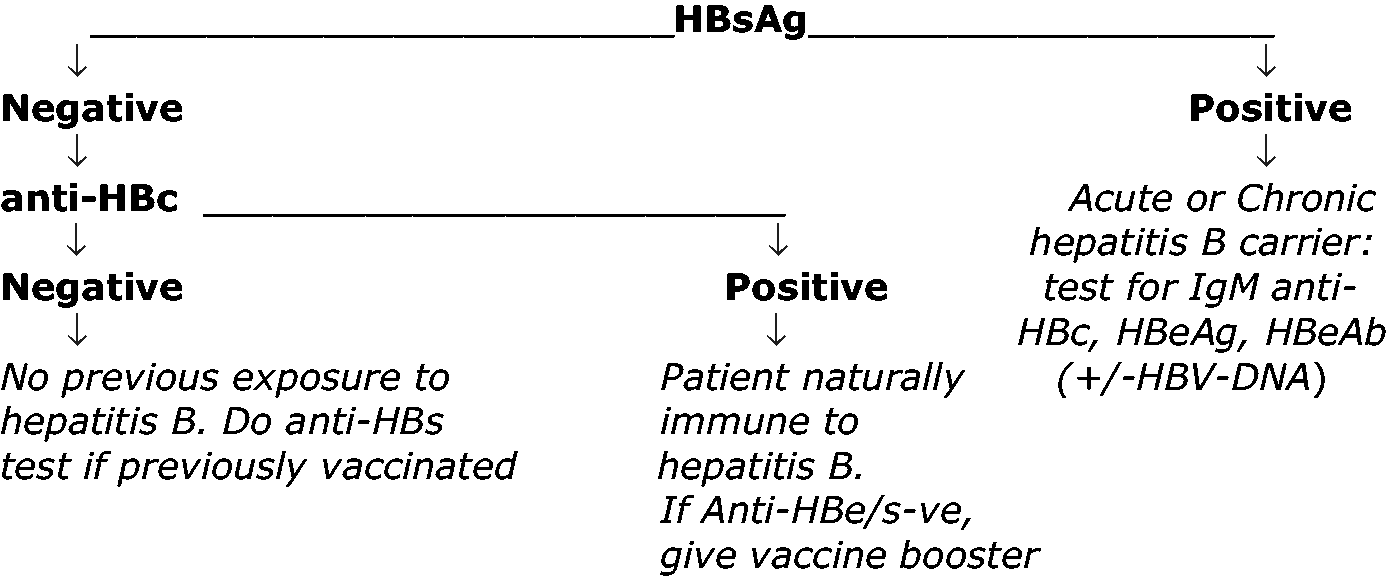
If non-immune, consider vaccination (see below) (1A).96–102 If found to be a chronic carrier, refer the patient to an expert in hepatitis for long-term surveillance and to consider therapy (1A).72,73,78–86 The screening tests of choice are anti-HB core antibody and/or HBsAg test with further serology to assess the stage of infection and infectivity as appropriate (1B); measure anti-HBs in those who have been vaccinated (1B).97–102,108,109 In those who are anti-HBc+ve and HBsAg–ve measure anti-HBs and anti-HBe. If both are negative, the anti-HBc may be a false positive. In this case, a single hepatitis B vaccine dose will induce anti-HBs if there has been past natural HBV exposure (anamnestic response, measured four weeks after single dose of HBV vaccine). If anti-HBs are still negative after a single booster, regard as non-immune and give a full course of vaccine (1C).
110
3.9.2. Figure: Flow chart for hepatitis B screening using serum anti-HBc

3.9.3 Figure: Flow chart for hepatitis B screening using serum HBsAg
3.9.4 Primary prevention
Discuss safer sex and how to reduce the risk of catching this infection (1C). Vaccination should be offered to non-immune patients in the above groups (1A),59,97–102,108,109 except those people born in countries of high endemicity but not at continuing risk who are being screened primarily to detect chronic carriage (1B).
78
HIV-positive patients show a reduced response rate to the vaccine and become anti-HBs negative more quickly, although double dose vaccine increases the response by 13% (1B).47,103–106,111 Response correlates with CD4 count if not on ART but also with viral load and ART use.103–106 Offer a repeat course of three doses of double-dose vaccine, for HIV-positive vaccine non-responders (1B). Vaccine response improves if the CD4 count rises and the viral load is undetectable with patient on ART. If there is no response after six doses, the vaccination course should be repeated once the CD4 is above 500 cells/mm3, and the viral load is undetectable (1B).103–106,111 The vaccination schedule for both the monovalent and the combined hepatitis A + B vaccines is outlined in Table 2. The ultra-rapid 0, 1, 3 week regimen offers the advantage of a higher completion rates and more rapid development of early immunity. Test for response (anti-HBs >10 IU/l, ideally >100 IU/l) 4–12 weeks after the last dose (1A).59,97–102,108,109 Only 80% of ultra-rapid vaccine recipients will have detectable anti-HBs antibodies at this stage (see ‘Sexual and other contacts’ above). If someone is at high risk of acquiring infection and are in the 20% without an early antibody response, consider further booster doses (1C). This should be as a repeat course (1C) with response rates up to 100%.109,110 Alternatively, for those at lower risk, offer a booster at 12 months by which time 95% would be anti-HBs positive.59,97–102,108,109 Vaccines with novel adjuvants (e.g. Fendrix ®) are effective for haemodialysis patients and others who have not responded to conventional vaccine (1A).112–115 It is probable that booster doses of vaccine are not required for at least 15 years in immunocompetent children and adults who have responded to an initial vaccine course, (1B)102,116–119 although in those vaccinated in infancy 10% will be non-immune and show no immunological memory after 18 years.
119
HIV-positive and other immunocompromised patients will still need to be monitored and given boosters when anti-HBs levels fall below 100 IU/l (1C).87,103–106,119 Evidence suggests that if vaccine courses are not completed in immunocompetent patients, the outstanding doses can be given four or more years later without the need to restart a three-dose course (1B).
120
One or two doses of vaccine may provide immunity in 40% and over 90% of immunocompetent patients, respectively.120,121
3.9.5 Table: Vaccination schedules for hepatitis B using monovalent vaccine or combined A+B vaccine.41–43,59,96–106
3.10 Hepatitis D (delta virus infection, HDV)
This is a small incomplete RNA virus that can only infect individuals who have HBV. It is only found in patients with hepatitis B (HBsAg+ve) infection. The main risk groups are: people who have acquired the infection abroad, PWID and their sexual partners, sex workers and sporadically in other groups. 122 Suspect HDV in an individual with hepatitis B infection if the acute hepatitis is severe, if chronic hepatitis B carriers experience a further attack of acute hepatitis or if the liver disease in chronic HBV is rapidly progressive.24,26,54,69 It is associated with a high rate of fulminant hepatitis and progression to cirrhosis.24,26,73
All hepatitis B positive patients should have an anti-HDV test. Diagnosis is confirmed by a positive anti-HDV antibody and HDV-RNA test.34,108 Response to antiviral therapy is poor.123,124 Refer to physician with experience in managing HBV/HDV co-infections for assessment and treatment (IV, C).
4. Hepatitis C virus (HCV) infection
4.1 Aetiology
Hepatitis C is a RNA virus in the flaviviridae family. It is endemic worldwide with an estimated 185 million individuals infected and with prevalence rates varying from 1% in Europe to as high as 4% in North Africa/Middle East. 125 Recent national estimates suggest approximately 215,000 individuals are chronically infected with HCV in the UK. Most (90%) is due to infection with genotypes 1 and 3. 126
4.2 Transmission in the UK
Parenteral spread accounts for the majority of cases through shared needles/syringes in PWID (including the practice of ‘slamming’ recreational drugs – see 4.9 below), transfusion of blood or blood products (pre-1990s), re-use of needles in healthcare, renal dialysis, needlestick injury, sharing a razor with an infected individual and sharing of straws and notes for snorting recreational drugs.125–135 Sexual transmission is extremely unlikely in heterosexual relationships (<0.1%/10 years) but the rate increases if the index patient is also HIV infected.136–142 There has been a steadily rising incidence of acute HCV in MSM in the South of England since the year 2000, which is largely linked to HIV co-infection.126,138,140 Associated factors include the presence of other STIs including syphilis and lymphogranuloma venereum (LGV), traumatic anal sex, fisting, sharing sex toys, communal lubricant, group sex, sero-sorting and use of recreational drugs.138–140 More recent data from enhanced surveillance suggests ongoing, but perhaps a levelling off, of rates of sexual transmission of HCV among HIV-positive MSM.
140
There is also evidence of increased rates of infection in sex workers.
143
Other risk groups include former prisoners, people from highly endemic countries, tattoo recipients, people who inject steroids and recreational drugs, people who snort cocaine and alcoholics.144–147 Vertical (mother to infant) spread also occurs at a low rate (about 5%), but higher rates (7% or more) are seen if the woman is co-infected with HIV.148–152 In all groups transmission risk correlates with the quantity of detectable HCV-RNA in the mother’s blood.148–152 Amongst blood donors, 25% of those with HCV infection do not admit to having risk factors.
153
4.3 Incubation period
The incubation period is 4 to 20 weeks. HCV serology is positive three months after exposure in 90%, but can take as long as nine months. Occasional cases of infection proven by HCV RNA detection (see ‘diagnosis’) do not result in positive antibody tests.
154
In the context of HIV infection, the appearance of HCV antibodies may be significantly delayed.155,156
4.4 Symptoms131,132
The majority of patients (>60%) have asymptomatic infection. The uncommon cases of acute icteric hepatitis are similar to hepatitis A.
4.5 Signs
Acute icteric hepatitis see hepatitis A (Section 2.4). Chronic hepatitis see hepatitis B (Section 3.4)
4.6 Complications
Acute hepatitis C
Acute fulminant hepatitis is rare (≤1% of all hepatitis C infections). Hepatitis A super-infection of chronic hepatitis C carriers.28,131,132,157 may cause a very severe hepatitis. However, acute hepatitis A can reduce HCV replication.
158
Approximately 50-85% of infected patients become chronic carriers; a state which is usually asymptomatic but may cause nonspecific ill health.153,159,160 Patients with favourable polymorphisms around the IL28B gene are more likely to clear virus spontaneously.
161
Pregnancy: complications of acute icteric hepatitis: as for hepatitis A.
21
Chronic hepatitis C
Once established (infected > six months), the chronic carrier state rarely resolves spontaneously (0.02%/year).131,132 Symptoms/signs are worse if there is a high alcohol intake or other liver disease.162,163 Significant liver disease can be present in the 35% of carriers who have normal serum aminotransferase levels.131,132,164,165
Up to 30% of chronic carriers will progress to severe liver disease after 14-30 years infection, with an increased risk of liver cancer (approximately 14% of all patients and up to 33% of those with cirrhosis).68,69,81,131,132,164–168 HIV co-infection worsens the prognosis although this may be ameliorated to some degree by ART.169–171 Recent data suggests a deleterious effect of HCV on both overall and HIV/AIDS related-morbidity/mortality.
172
4.7 Diagnosis (see also STI Screening and Testing Guidelines Hepatitis A, B and C)
4.7.1 Serology
Acute infection
This is defined as recent exposure to HCV following which the patient is HCV-RNA positive but anti-HCV negative or seroconverts from anti-HCV negative to positive. An antibody test may not become positive for several months after acute infection but a test for HCV-RNA will usually be positive after two weeks.154–156,173
Chronic Infection
A screening antibody or antibody/antigen test such as an enzyme immunoassay (EIA) or other immunoassay is initially performed and RNA detection confirms active infection154–156,173,174 (1A). In HIV+ patients with a low CD4 count (<200 cells/mm3) the EIA may be negative and HCV-RNA detection may be needed for diagnosis.
175
Chronic infection is confirmed if an HCV-RNA assay is positive six months after the first positive test.154–156,173,174 All patients should have a viral RNA test to confirm viraemia and the HCV genotype should also be identified129,163,176 (1A).
4.7.2 Other tests
Acute infection – as for hepatitis A (2.7.2). Chronic infection – as for hepatitis B (3.7.2).
4.8 Management
4.8.1 General advice
Patients should be reassured that hepatitis C is curable (1A).
127
Patients should be told not to donate blood, semen or organs and given advice on other routes of transmission (see below) (1D).126,153 Patients should be given a detailed explanation of their condition with particular emphasis on the long-term implications for the health of themselves and their partner(s). This should be reinforced by giving them clear and accurate written information. (1D) Acute hepatitis is a notifiable infection in England, Wales and Northern Ireland.59,126 Refer all HCV RNA +ve patients to a specialist for further management (1A).
127
4.8.2 Further investigations
Screen for other STIs in cases thought to have been sexually acquired (1C).136,137 Non-invasive methods of assessing liver fibrosis such as Hepatic elastography (e.g. FibroScan) and/or serum markers (e.g. FibroTest, APRI, FIB-4, ELF) are the investigation of choice for disease staging
177
although the liver biopsy remains the investigation of choice for selected patients.178,179 A liver imaging ultrasound should also be performed (1B).
180
4.8.3 Treatment
Acute infection
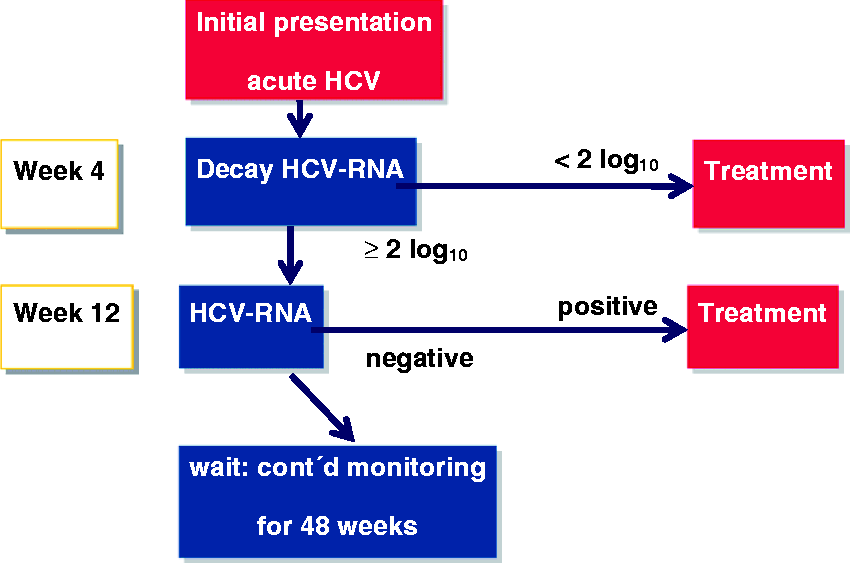
There is clear evidence that treatment given during the acute phase reduces progression and will reduce the rate of chronicity (1A).181,182 Spontaneous resolution of acute hepatitis C is defined as loss of HCVRNA within the first six months. Patients with acute HCV should be followed with four-weekly HCV RNA quantitation; if there is less than a 2 log10 decline in HCV viral load at week 4 or the HCVRNA remains positive at week 12, they should be considered for treatment in the acute phase. Treatment in the acute phase generally has significantly higher success rates than treatment in the chronic phase. (1A).183,184 Patients should be referred to a specialist centre for monitoring and treatment and access to clinical trials (1A).183,184 See algorithm below for the management of Acute HCV (NEAT algorithm) (1A).
184
4.8.4 Figure: Summary of NEAT algorithm for the management of acute HCV. 183
Chronic infection
With the advent of DAAs the treatment paradigm for chronic HCV is rapidly evolving
185
The need for treatment should be managed in a specialist clinic with access to DAA-based therapy and clinical trials (1A). In the era of DAAs, HIV-positive patients respond to treatment as well as HIV-negative patients, and should be considered for therapy, bearing in mind important drug-drug interactions between the DAAs and antiretroviral therapy regimens (1A).47,186 Patient selection for therapy and specific-therapy will depend on HCV genotype and viral load, liver disease stage, ability to tolerate Interferon-alpha and co-morbidities.177,186 Given the potential for fulminant hepatitis in co-infection with hepatitis A and C and the worse prognosis of hepatitis B and C co-infection, patients with hepatitis C should be vaccinated against both hepatitis A and B (1A).28,131,132,157,187
4.8.5 Pregnancy and breast feeding
At present there is no clearly demonstrated intervention to reduce HCV transmission from mother-to-child).
149
Ribavirin is teratogenic. Treatment of HCV in pregnancy is not recommended (1D). Women should be informed of the small potential risk of transmission in pregnancy (see transmission) (1D).148–152 Breast feeding: there is no firm evidence of additional risk of transmission (1B).148–152
4.8.6 Sexual and other contacts
Partner notification should be performed and documented and the outcome documented at subsequent follow-up. Contract tracing to include any sexual contact if the index patient or partner are HIV+ (penetrative vaginal or anal sex) or needle sharing partners during the period in which the index case is thought to have been infectious (1D).
37
If there is no acute infection trace back to the likely time of infection (e.g. blood transfusion, first needle sharing) although this may be impractical for periods longer than two or three years (1D). Screen contacts for evidence of past or current HCV infection (1D). For other non-sexual contacts thought to be at risk, consider on a case-by-case basis (1D). There is currently no available vaccine or immunoglobulin preparation that will prevent transmission. Spontaneous resolution of infection and previous successful treatment do not provide protection if further HCV exposure occurs. In acute infection, patients should be advised to avoid unprotected sexual intercourse (1D). In patients with chronic infection, sexual transmission should be discussed. It seems likely that if condoms are used consistently then sexual transmission will be avoided, but given the very low rates of transmission outside of HIV co-infection136–142 (see above), monogamous partners may choose not to use them. Sexual contacts with HIV should be advised of the risk of sexual transmission, with regular testing and condom use encouraged (1D).136–142 Advice for MSM and HIV+ MSM should include use of condoms, gloves for fisting, single person only sex toys/condoms on sex toys and changed between partners. Also not to share lube and avoid group sex situations (1D).
4.8.7 Follow-up
Patients with chronic untreated HCV should have liver fibrosis assessments 6-12 monthly (1A).177,178 Patients with advanced fibrosis/cirrhosis should have six-monthly HCC screening with ultrasound and alpha-feto protein (1A).
179
Previous exposure to HCV does not confer immunity and risk of re-infection and dual/super infection is well documented.188,189
4.9 Screening and primary prevention
It may take three months or more for the anti-HCV test to become positive after exposure (see ‘incubation period’) (1A). Offer testing for hepatitis C in all PWID, including people who inject steroids and ‘recreational’ drugs, all HIV-positive patients, people with haemophilia or other patients who received blood or blood products pre-1990 and remain untested, (1A).124–130,138–140,188,189 For needlestick injury follow Public Health England guidelines. In the last few years, ‘chem-sex parties’, largely attended by MSM and involving multiple sexual partners and the use of ‘recreational drugs’ such as gamma-hydroxybutyric acid/gamma-butyrolactone (GHB/GBL), mephedrone and crystal methamphetamine, have been described.
190
The drugs are frequently injected (‘slamming’), leading to high risk of blood borne viruses (BBVs), including HCV and HIV. They also lead to a loss of attention to safer sex. MSM with such risks should be screened for HCV and other BBVs and the risks/prevention discussed (2D). Other groups to be tested include: the sexual partners of HCV-positive individuals, sex workers, tattoo recipients, migrants from highly endemic countries, alcoholics, people who snort cocaine and ex-prisoners (1B).136,137,141–143,145,146 Currently there is no evidence that HIV-negative MSM without other risk factors should be routinely screened (1B).
191
All HIV+ patients should be screened for HCV at HIV diagnosis and every year thereafter. Patients with previous infection who have cleared the infection (either spontaneously or through treatment) should have annual HCV PCR (1D).
192
Offer additional HCV testing in HIV+ MSM if other STIs have been diagnosed including syphilis and LGV or in situations of traumatic anal sex, fisting and sharing of sex toys.138–140 Since September 1991 all donated blood in the UK has been screened for HCV.
193
Needle and syringe exchange schemes have led to a fall in parenterally transmitted infections including HCV, HBV and HIV, although not consistently, as this infection can be transmitted through sharing other drug paraphernalia such as shared spoons, filters and water.127,194–196 Non-sterile needle use in the healthcare setting remains an important cause of HCV transmission in developing countries.
128
Discuss how to reduce any risk of catching this infection where appropriate (1D).
5. Resource implications
The major costs that arise from these guidelines are the additional costs of testing and vaccination. Testing costs will vary from laboratory to laboratory but screening tests for hepatitis (e.g. anti-HBc, anti-HCV, anti-HAV) cost £10-20 each, with similar costs for each additional blood test done on patients testing positive. NAATs (e.g. HBV-DNA, HCV-RNA) when performed, cost in the range £30–40 per test, with genotyping costing about £50. Vaccination costs are in the range £10-20 per dose for monodose vaccines and more for multiple-component vaccines. Additional clinic visits will also incur resources costs.
6. Qualifying statement
The recommendations in this guideline may not be appropriate for use in all clinical situations. Decisions to follow these recommendations must be based on the professional judgement of the clinician and consideration of individual patient circumstances and available resources.
All possible care has been undertaken to ensure the publication of the correct dosage of medication and route of administration. However, it remains the responsibility of the prescribing physician to ensure the accuracy and appropriateness of the medication they prescribe.
Planned review date: 2019
7. Auditable outcomes
Acute hepatitis (A, B or C)
Patients with acute hepatitis infection should have blood samples taken for liver function tests at the first attendance after the diagnosis is known (target >90%) A clear immediate management plan should be recorded within two months of the diagnosis being made (target 97%) Services should have easily accessible, local written guidance for the provision of partner notification for all cases of acute hepatitis A clear follow-up plan should be recorded (target 97%) Partner notification should be recorded as resolved in accordance with the BASHH Statement on Partner notification for Sexually Transmissible Infections: http://www.bashh.org/documents/2012%20Partner%20Notification%20Statement.pdf (target 97%)
Hepatitis A
Provide written information on transmission and outcome of hepatitis A to infected patients (target >95%)
Hepatitis B
Test patients in known at-risk groups for infection/immunity (target >90%). This could be risk-specific e.g. MSM or commercial sex workers. Offer vaccination to all nonimmune patients at continuing risk (target >90%) In those offered vaccination, give a full course of three doses (target >65%) Provide written information on transmission and outcome of hepatitis B to infected patients (target >95%)
Hepatitis C
Screen all patients with HCV for HAV (target >95%) and for HBV (target >95%) Provide written information on transmission and outcome of hepatitis C to infected patients (target >95%) Refer all confirmed HCV viraemic patients to a specialist clinic for assessment and consideration for treatment (target >95%)
8. Declaration of conflicting interests
Gary Brook: None.
Sanjay Bhagani: has received honoraria for speaking engagements, served on advisory boards and has received support for conference attendance from Abbvie, BMS, Gilead, Janssen and MSD.
Ranjababu Kulasegaram: received honoraria for speaking engagements, served on advisory boards and has received support for conference attendance from Abbvie, BMS, ViiV, Janssen and MSD.
Adele Torkington: None declared.
David Mutimer: has been a paid advisor and has received honoraria from Gilead Sciences, AbbVie, Janssen and BMS.
Elizabeth Hodges: None declared.
Louise Hesketh: None declared.
Simon Farnworth: None declared.
Verity Sullivan: None declared.
Charles Gore: receives no payments of any description from any pharmaceutical company. However, The Hepatitis C Trust receives some financial support from AbbVie, BMS, Gilead, Janssen and MSD.
Emma Devitt: None declared.

N: normal.
In very early infection the IgM and IgG anti-core can be negative.
