



Abstract
Immune reconstitution inflammatory syndrome (IRIS) is a condition characterized by excessive inflammatory response to an underlying pathogen following immune recovery. IRIS associated with coccidioidomycosis infection is rare, with only a few cases reported to date. Unfortunately, the mortality rate for disseminated coccidioidomycosis-related IRIS in the available literature is extremely high. We present a case of paradoxical IRIS associated with disseminated coccidioidomycosis in an HIV-infected patient following initiation of antiretroviral therapy, who was successfully treated with steroid therapy.
Introduction
Immune reconstitution inflammatory syndrome (IRIS) is extremely rare in patients with disseminated coccidioidomycosis with only a few cases reported to date. Diagnosis is challenging, as IRIS is a diagnosis of exclusion, and guidance on the use of steroid therapy in the literature is limited given the rarity of this condition. We present a case of paradoxical IRIS 1 associated with disseminated coccidioidomycosis in an HIV-infected patient following initiation of antiretroviral therapy (ART), who was successfully treated with steroid therapy.
Case description
A previously healthy 27-year-old African American man presented to the emergency department with four weeks of fever, cough, malaise, and weight loss. HIV screening was positive with CD4 cell count 166 cells/mm3 and HIV RNA 3.97 million copies/ml. Additional workup revealed coccidioidomycosis based on a serum complement fixation titer of 1:256 and an excisional inguinal lymph node biopsy showing coccidioides spherules. Computed tomography of the chest showed innumerable pulmonary nodules (Figure 1). The patient’s clinical course improved with fluconazole 800 mg daily.
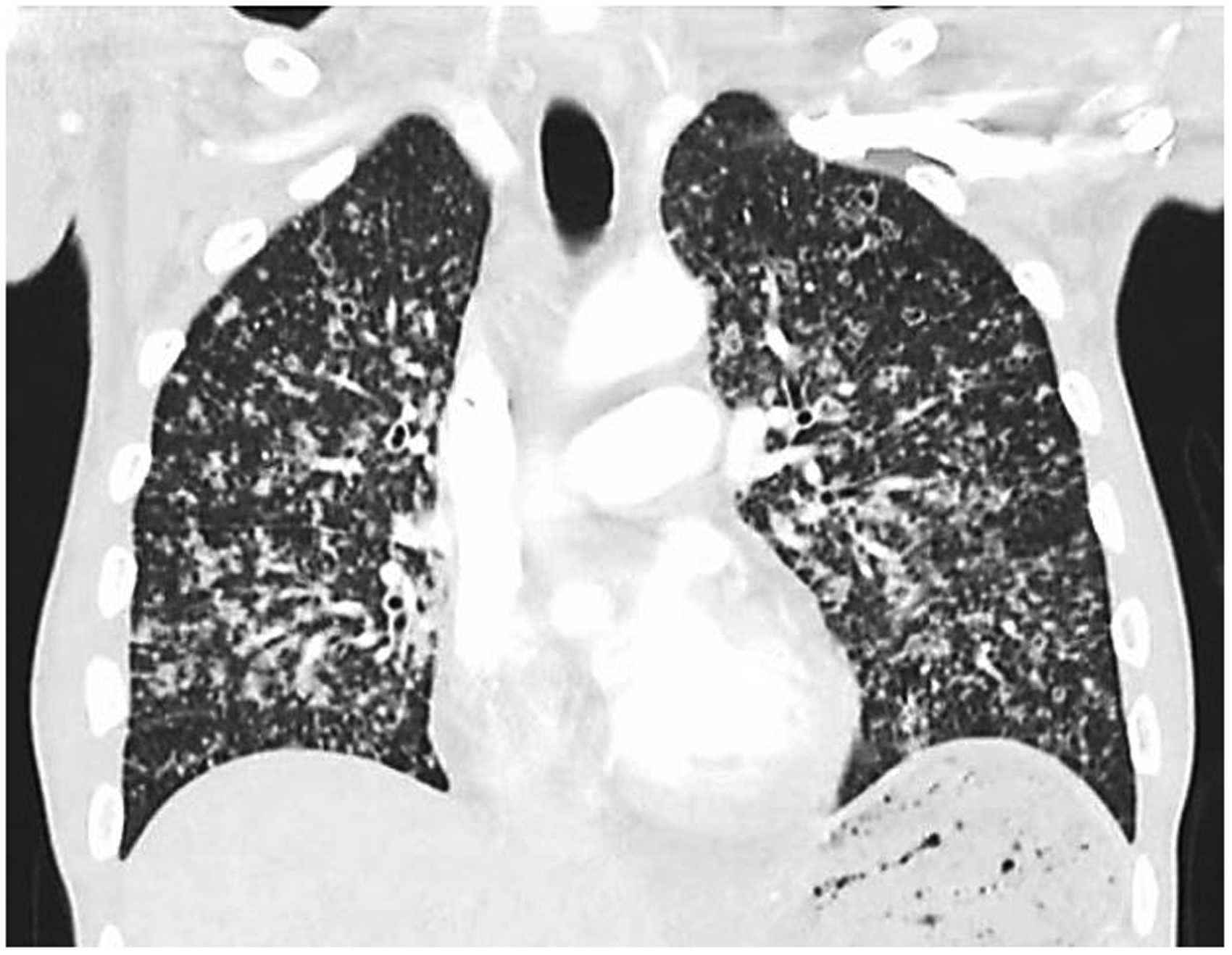
Chest computed tomography imaging of patient with disseminated coccidioidomycosis.
He was treated with fluconazole for 28 days prior to starting once-daily tenofovir alafenamide-emtricitabine 200 mg–25 mg and dolutegravir 50 mg in clinic. The following week, he presented to the hospital with shortness of breath, cough, and fever. Serum coccidioides complement fixation titer was 1:64 and a bronchoalveolar lavage sample showed coccidioides spherules. He subsequently began to spike fevers, became hypoxemic requiring high flow oxygen, and had significantly elevated inflammatory markers. His symptoms persisted despite empiric antimicrobial coverage with therapeutic doses of vancomycin and piperacillin-tazobactam, in addition to his previous fluconazole and ART. Additional infectious workup was unremarkable. Repeat CD4 cell count was 387 cells/mm3 and HIV RNA 193 copies/ml. A three-day course of methylprednisolone taper (125 mg, 100 mg, and 50 mg) was tried for suspected IRIS with immediate resolution of fever and hypoxemia; these symptoms returned two days after cessation of methylprednisolone. Given reports of coccidioides refractory to fluconazole therapy, 2 fluconazole was discontinued and he was started on posaconazole 300 mg twice daily and prednisone 60 mg daily (1 mg/kg/day). Prednisone was tapered by 5 mg every three days over the course of 36 days. The patient defervesced and continues to do well after discharge.
Discussion
The advent and improved accessibility of ART have significantly decreased the morbidity and mortality of HIV infections. Unfortunately, the initiation of ART is not without risk of complications, especially in the setting of concurrent opportunistic infections (OIs). HIV-associated IRIS is now a well-recognized condition, characterized by a pathologic inflammatory response to an underlying pathogen following immune recovery. The incidence of IRIS in this population has been estimated to be around 7.6 to 13%, and is commonly associated with mycobacterial, fungal, and viral infections.3,4
Common risk factors for the development of IRIS include advanced immunosuppression, severity of dissemination of OI, shorter duration of OI treatment prior to initiation of ART, and rapid immune reconstitution. 5 Extensive literature search for coccidioidomycosis-related IRIS resulted in seven reported cases to date6–9 (Table 1). Our patient exhibited a CD4 cell count of 166 cells/mm3 at the time of his coccidioidomycosis diagnosis, which is higher than those previously reported. However, the HIV RNA load was significantly elevated at 3.97 million copies/ml. He was treated with fluconazole for 28 days prior to starting ART. Systemic inflammation occurred 14 days after initiation of ART.
Summary of previously reported coccidioides-associated IRIS cases.

ART: antiretroviral therapy; IRIS: immune reconstitution inflammatory syndrome; LAmB: liposomal amphotericin; NR: not reported.
Management of severe IRIS typically involves administration of corticosteroids; however, the use of steroid is known to worsen disseminated fungal infections due to its immunosuppressive effect. 10 Literature on outcomes of steroid use in disseminated fungal infections is limited, but a study by Azadeh et al. demonstrated no adverse effects of short-term corticosteroid therapy in acute pulmonary coccidioidomycosis. 11 To our knowledge, steroids were not given in any of the previously documented coccidioides IRIS cases. A potential alternative therapy worth consideration is thalidomide, as there have been reports of IRIS secondary to mycobacterium and cryptococcus successfully treated with thalidomide as a steroid-sparing agent.12,13 However, given our patient’s rapid clinical deterioration and the difficulties in acquiring thalidomide, we decided to try a short course of methylprednisolone to which our patient responded very well.
The 2016 IDSA guideline on coccidioidomycosis management recommends that ART should not be delayed because of concern for IRIS. 14 However, it should be recognized that the initiation of ART is not without risks. Given the high mortality rate, we suggest prudence with starting ART and close monitoring in patients with risk factors.
Footnotes
Declaration of conflicting interests
The authors declared no potential conflicts of interest with respect to the research, authorship, and publication of this article.
Ethical approval
Informed consent to publish this report was obtained from the patient.
Funding
The authors received no financial support for the authorship and publication of this article.