



Abstract
Noise pollution is one of Ghana’s environmental risks and it has become the norm in metropolitan areas to the point where residents in these locations experience noise nuisance and may be at risk of hearing loss. Most developed and developing countries have established traffic noise standards as a control mechanism to reduce traffic noise exposure emissions. This study aims to investigate current practices of traffic noise regulations and policy. Various agencies responsible for the control of noise pollution and the urban road sector were interviewed about traffic noise standards and practices, and it was observed that these agencies’ noise practices were based on Environmental Protection Agency (EPA) established guidelines, which did not include transportation noise regulation. Except for a Driver and Vehicle Licensing Authority (DVLA), regulation that allows a certain vehicle horning system for specific vehicle users, this study discovered that this policy is not fully implemented. A preliminary survey was conducted to collect traffic field data and inhabitants’ perceptions of traffic noise. Of the 30 respondents, 26 respondents (86.7%) affirmed that they experience traffic noise pollution at various locations, while 23 respondents (76.7%) reported various health effects due to exposure to traffic noise. This can be related to the observed noise levels which exceeded the dissatisfaction score of 5 (89 dB(A)), and also Leq value (109.1 dB(A)) was greater than the environmental permissible limit of the EPA standard of 70 dB(A). This indicates that roadside residents suffer from noise annoyance. It is recommended that transport, and environmental-related agencies work unanimously to ensure that effective control of traffic noise pollution is developed, enforced, and implemented.
Introduction
Health outcomes of noise pollution on human and the environment is a concern in both developed and developing countries. Noise is generated from different sources: agriculture, industries, construction, and transportation (i.e., road traffic, and aeroplane activities, among others). According to Therrien, Tummala, noise has many adverse effects on both human hearing and health. 1 Also, Murphy et al. defined environmental noise as any unwanted sound created by human activities that are considered harmful or detrimental to human health and quality of life. 2 Furthermore, noise emissions from various industries, such as transport, industries and recreational activities, have been reported to affect humans.3–6 Therefore, by definition, noise as pollution should be avoided, controlled, regulated, or eliminated due to its negative impact on humans and human-environment relations.
Traffic noise-related impacts.
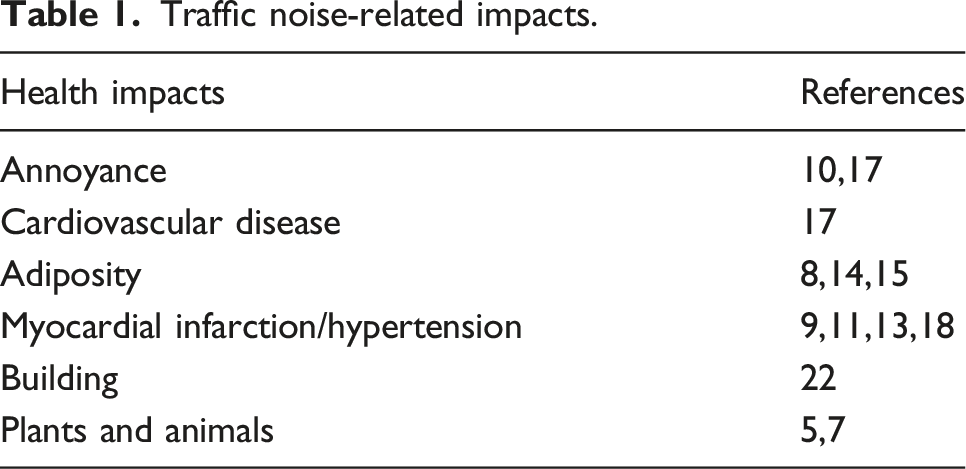
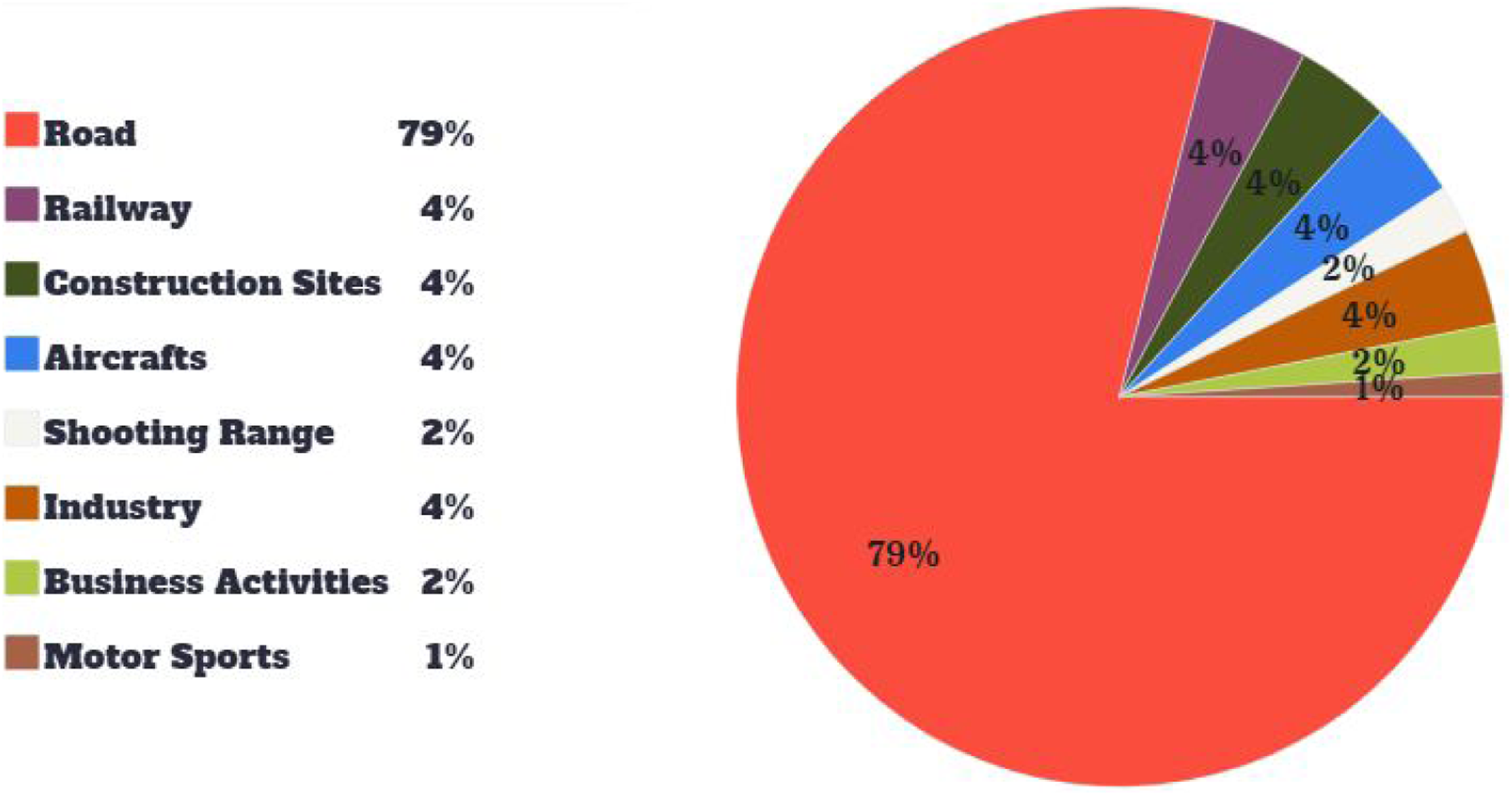
The focus of this study is on traffic noise sources and their impact on the environment, as it is the most dominant source of noise, as shown in Figure 1. Traffic noise is a combination of noises produced from several sources. The sources include tire-pavement noise, aerodynamic noise; (which is related to the turbulent airflow around the vehicle), and the power unit noise (engine, fan, exhaust, transmission, etc.).
23
Despite previous findings, there is still more to understand and contribute to knowledge in the area of traffic noise exposure modelling. Therefore, this research aims to determine the state of practise of traffic noise regulations in Ghana. Over the centuries, industrialization and massive rise in motorization intensified noise drastically and as such, Citizens within and outside of cities have been impacted by traffic noise to a greater extent. Typically, motor vehicles do not make enough noise to directly harm hearing, but they do make enough noise to bother, worry, and disrupt sleep. Noise may unintentionally aggravate cardiovascular or psycho-physiological problems.13,24 Although people may get used to noise, they can still be negatively affected. Traffic noise has gained more attention than other fields of transportation and environmental studies in most Asian, American and European cities.23,25–31 Furthermore, studies carried out in Sub-Saharan Africa cities6,32–37 on traffic noise. In Ghana, from existing literature noise studies have been conducted but, not in the area of traffic noise.3,38–43 The proportion of noise generation. Norwegian Pollution Control Authority.
44
Existing noise regulations and standards of practice
Studies conducted by researchers to obtain information regarding existing noise regulations20,45,46 have shown that especially in developed cities significant efforts have been made to establish traffic noise regulations and standards as a means of control policy to mitigate traffic noise exposure. Currently, there are several established noise regulations and control policies for most developed and developing countries. However, some of these established guidelines covered other sources of noise apart from traffic noise.
In 2020, the European Union (EU) developed environmental noise guideline and control policy that applies to all countries within Europe. This guideline is a revision of the 2018 WHO guideline and consists of noise generated by road traffic, air, rail, industry and construction. 47 The goal of this amendment was to account for the influence of road, air, and rail in existing recommendations so that noise pollution and noise exposure from these activities may be considerably reduced. To meet this objective, the EU identified the need to implement an updated EU noise policy aligned with the latest scientific evidence, as well as measures to reduce noise at the source, including improvements in city design. Similarly, other institutions from different continents have developed the same overall objective.
In addition, in Africa, many countries (Ghana, Nigeria, Kenya, South Africa, Liberia, etc.) have established general noise regulations and control policies based on WHO-recommended guidelines from 1995.48–50 With these established guidelines, scholars and environmental specialists have conducted several types of research to understand the effectiveness of the noise regulations that have been implemented and to what extent the noise guidelines have been violated. There are complaints about noise every day, according to a report by the Environmental Health and Sanitation Unit of the Madina Municipal Assembly of La Nkwantanang. ‘People have become very interested and aware of the danger that noise poses, so complaints are coming in’. 51 Even with the complaints and awareness, effective noise regulation and implementation of appropriate control policy is lacking. For example, ‘it took 14 years of tenacity and indescribable pain and suffering for two residents on the outskirts of Accra to be awarded damages in a high court ruling against two noisy neighbouring churches’. 51 From the literature, it has been revealed that control policy and practices on the continent need to be considered20,52 and policy enforcement should be enhanced to achieve the WHO goal as recommended. Especially, in Ghana, the noise pollution control policy and enforcement remain a challenge in all sectors. Despite the established regulations and control policy on noise pollution, traffic noise guidelines and control policy have not been fully formulated as other types of noise pollution. The state of practise in Ghana and other developing nations is also another challenge that needs to be improved.
Developing countries with traffic noise guidelines and control policy
Despite the challenges of traffic noise pollution faced by many developing countries, especially in sub-Saharan African countries (Ghana, Nigeria, Kenya, Ivory Coast, among others), little attention is paid to it compared to other noise pollution (construction and industrial). Some of these countries have developed regulations and control policies regarding general noise pollution including vehicular noise limits based on vehicle acceleration. In Nigeria, there are established regulations and enforcement policies that seek to minimise environmental noise. 49 However, the established guidelines on the maximum permissible noise levels for all states are construction sites, entertainment places, public announcements, worship centers, and accelerating vehicles. Additionally, these sound level regulations were captured for both day and night and various noise sources. Though for motor vehicles, the vehicle maximum permissible noise was based on vehicle acceleration. For example, the permissible noise limit for vehicles intended for the carriage of passengers and having a maximum mass greater than 3.5 tones is 78 dB(A). 49 Also, similar to Nigeria, Liberia’s noise regulations and control policy covered all aspects of every county. 50 The noise levels for traffic considered vehicle acceleration and capacity. The maximum permissible noise levels are: for vehicles having a mass of more than 3.5 tonnes with engine power more than 150 kW is 80 dB(A) while engine power less than 150 kW is 83 dB(A). 50 In Kenya, the Environmental Pollution Agency and these guidelines indicate that motor vehicle noise thresholds as 84 dB(A). 53 This established regulation has no specifications regarding types of vehicles and the associated noise-induced. In other words, the regulations set up are generally for all types of vehicles, regardless of the vehicle type. It is important these guidelines be formulated based on the vehicle specification; which may enhance the control policy and make enforcement easy to carry out. This regulation is obvious in South Africa which has a noise regulation act that includes traffic noise regulation standards for all vehicle types and its associated noise limit.
Developing countries with no traffic noise guidelines and control policy – the case of Ghana
One of the most significant environmental impact associated with transport is that of the noise that emanates from the movement of the various transport modes. In Ghana, road transport is the most dominant transportation infrastructure, with rail and aviation serving only a small number of domestic passengers, and this is a major environmental threat to the country in relation to noise pollution. 54 Noise pollution in Ghana’s capital, Accra, is currently at an alarming level, posing a serious health danger to people in both the public and private sectors, and as such, some locations may soon approach a pain threshold, perhaps resulting in irreversible hearing loss. 44 Noise in urban residences has become a norm although people are becoming more aware of and irritated by the frequent and loud sounds in their community, as a result of urban development. 54
One of the primary agencies in Ghana that works to protect and improve the environment is the Environmental Protection Agency. They are committed to ensuring the quality of air, soil, water, and sea for the benefit of present and future generations. Noise regulating agencies like the EPA are present in some regions of the country, working with the Ghanaian government on all phases of policy implementation and administration, inspecting possible pollution incidents, and responding quickly to them. In addition to identifying and disseminating information and administering directives, the EPA has the responsibility of issuing notices to bodies that take steps to regulate the level, severity, and nature of environmental noise (EPA, Act 490, 1994).
Requirement for ambient noise control policy.
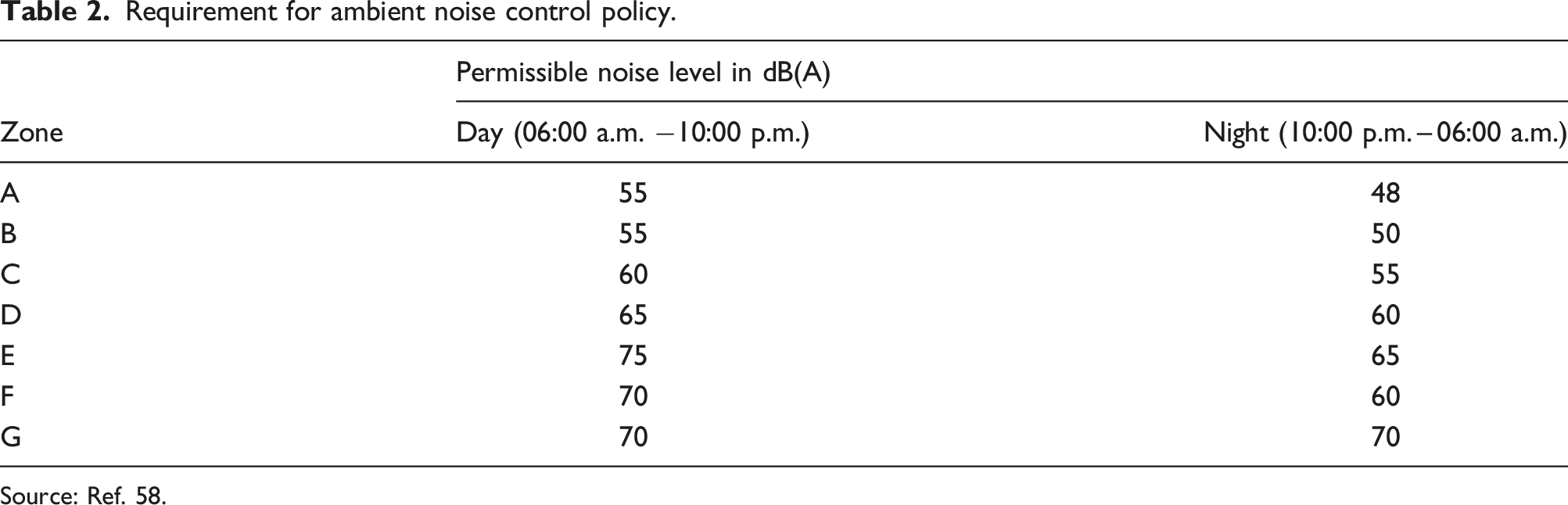
Source: Ref. 58.
Table 2 presents the noise pollution guidelines in Ghana, the different locations classification were based on zones: Zone A (residential areas), Zone B (schools, hospitals, offices, and law courts), Zone C (mixed use areas), Zone D (areas with light industrial activities), Zone E (commercial), Zone F (light industrial areas) and Zone G (heavy industrial areas).
Scenario formulation and discussion
Every country’s environmental policies take noise into account; hence, to achieve this, noise research is crucial for predicting noise levels in the environment.
59
To support the need for extensive research and the establishment of traffic noise guidelines in Ghana, a survey that consisted of different sections was tested (Figure 2). Framework of the study.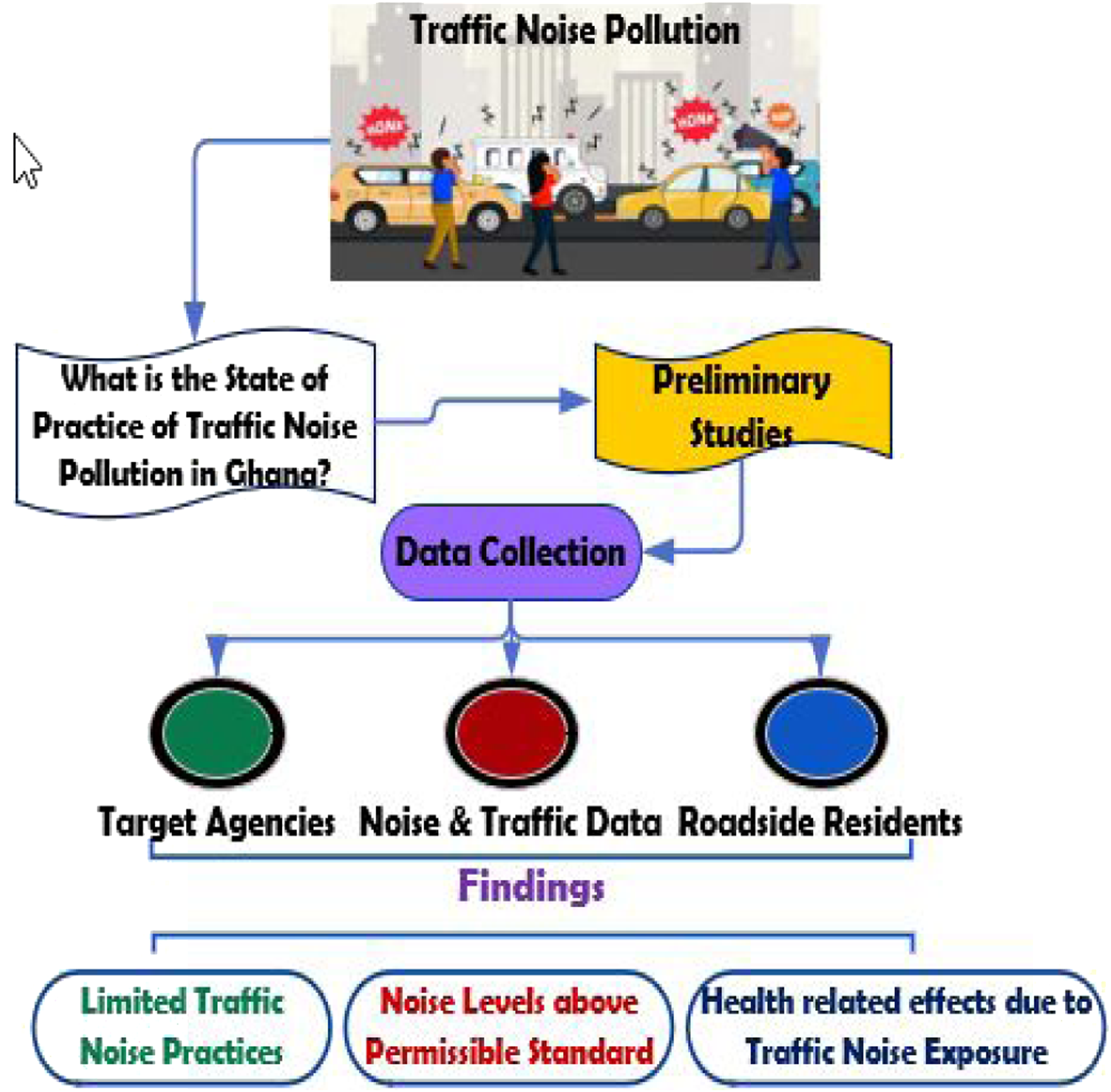
The findings are summarised below in the form of scenarios. Each scenario is evaluated and discussed on the basis of feedback received from roadside residents, field measurements, and relevant agencies presented in Figure 2.
Scenario 1 – key agencies
To confirm previous studies, an interview was conducted among various agencies responsible for managing noise pollution and the urban road sector in Ghana. The purposive sampling method was adopted; this is also known as judgemental, selective, or subjective sampling, which depends on the researcher’s judgement when choosing the units (such as persons, cases/organisations, events, or pieces of data) that are to be researched. 60 This method was used because its main objective is to concentrate on specific demographic characteristics that are of interest to best address the research concerns. 61 In this case, our target agencies/institutions were Environment Protection Agency (EPA), Kumasi Metropolitan Assembly (KMA), Driver and Vehicle Licensing Authority (DVLA), and the Department of Urban Roads (DUR), they were selected because they had particular characteristics that are of interest to the study. Four agencies were surveyed and direct canvassing method was used for the survey. For effectiveness and compliance, the direct canvassing method has shown to have a greater influence on the respondents’ feedback. 62 A structured interview was conducted among the four purposively selected agencies and institutions. Respondents were asked to identify existing traffic noise-related policies and practices.
According to the survey, responses from the Environment Protection Agency (EPA) indicate that Ghana has established guidelines and control policy on noise pollution.
58
However, there is no specific section that captures traffic noise limits within the existing criteria. Therefore, this indicates that there is no permissible noise limit on traffic noise including vehicle classification which implies that restrictions and penalties regarding defaulters on road noise pollution do not exist. Also, an interview was conducted at KMA, DVLA, and DUR regarding the traffic noise guidelines and practices, and it was confirmed that the noise practices at these agencies were based on established guidelines from EPA and of which transportation noise regulation is not included (Figure 3). Response from target agencies.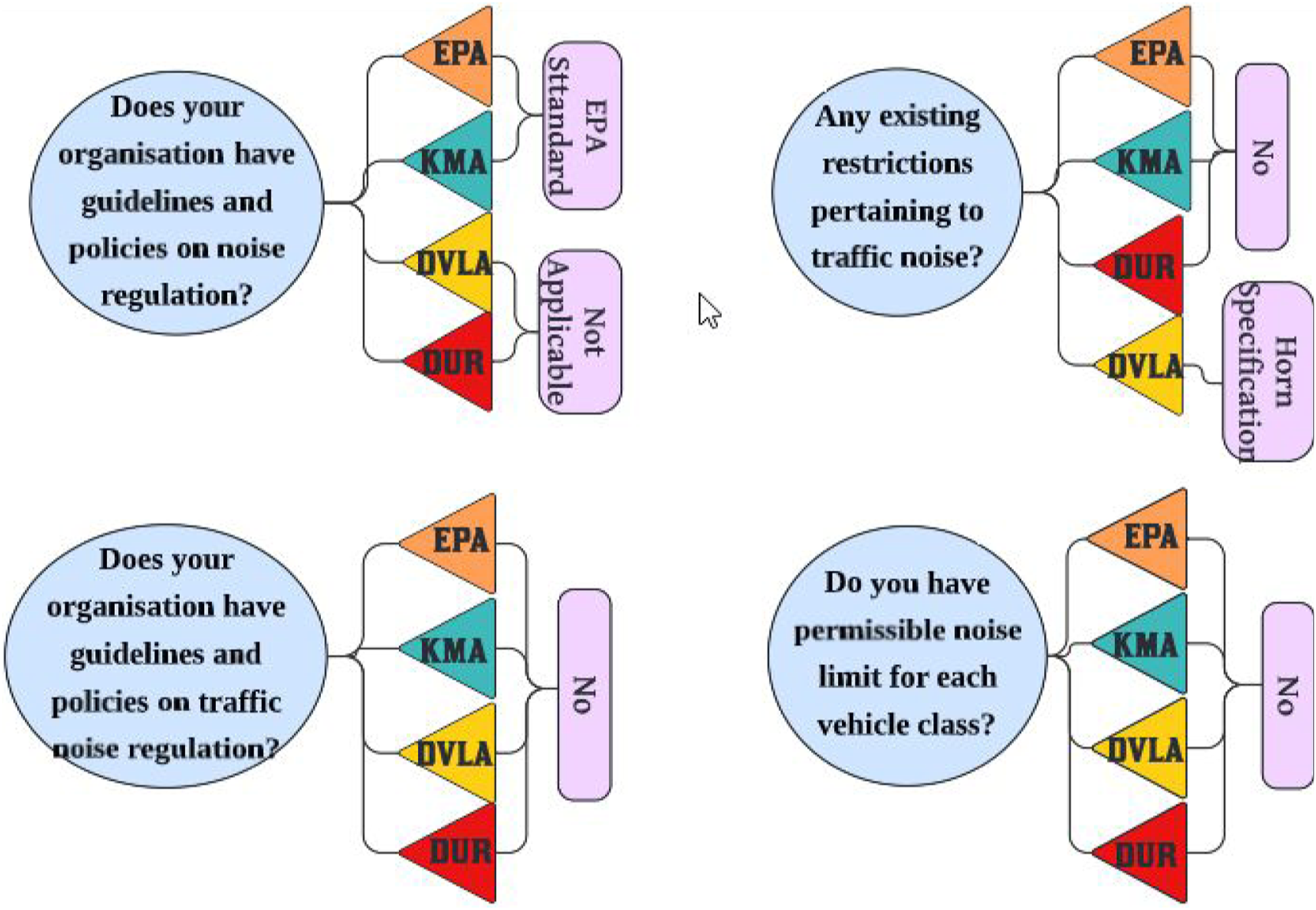
Additionally, DVLA personnel stated that the current traffic noise assessment is based on the vehicle horn system and is categorised for specific vehicle users. That is, a person driving a motor vehicle must ensure that it is equipped with a pneumatic horn that gives a single note when pressed and no motor vehicle must fix a warning appliance (a siren) other than the approved type, except for government vehicles occupied by executives, fire service, ambulance and bullion van. However, it is obvious from this research that this is not fully enforced.
Scenario 2: Roadside residents
Furthermore, a preliminary survey was conducted to obtain initial traffic field data and residents’ perceptions of traffic noise. A paper-based questionnaire survey was conducted to evaluate the opinions of residents living in close proximity to the highway at the study location. The questionnaire comprised of questions concerning socio-demographic data of the respondent, knowledge of the respondent on traffic noise, respondent perception of traffic noise, self-related health response on few traffic noise effects, and traffic noise characteristics. The need for perception studies is a result of the challenges in clinically assessing the long-term effects of exposure to noise levels mostly generated from urban traffic. 63
In 2001, the International Commission on Biological Effects of Noise (ICBEN) Group 6 issued a proposal for a series of fundamental standardized noise response concerns for community noise assessments. 64 These questions and the corresponding scales of answers were included in this survey. Face-to-face surveys were used to obtain information on how the public reacts to road traffic noise at Stadium road, Asokwa, Kumasi. The smartphone noise app Noise Capture was used to record the traffic noise levels every second from 7 a.m. to 7 p.m. for a four-time band at every two-hour duration. The measurement procedure adopted was in accordance with the Ghana Standards Authority for ambient noise control 58 and international standards; CoRTN and FHWA.65,66
Fifty questionnaires were randomly distributed and 30 respondents gave their feedbacks, as a rule of thumb, the sample size is satisfactory for a pilot study. 67 Among the participants in the survey, 20 (67%) were male and 10 (33%) were female, with ages between 18 and 65 years and above. The variation in gender is a true reflection of the study area as most of the respondents were commercial and private workers and these businesses are majorly operated by males. Out of the total respondents, 14 (47%) were in the age group of 18–30 years, 10 (33%) of 30–45 years, and 6 (20%) of 45–65 years. This indicates that majority of respondents are predominantly of the younger age.
From the survey, in terms of noise sensitivity, 26 (87%) affirmed that they experience traffic noise pollution at various locations, while 23 (77%) reported various health effects (stress, headache, sleep disturbance, hypertension, and lack of concentration) due to exposure to traffic noise. These health effects were more prevalent for the male respondents. While 7 (23%) of the total respondents are unaware of any health effects due to traffic noise exposure (Figure 4). Descriptive statistics of respondents.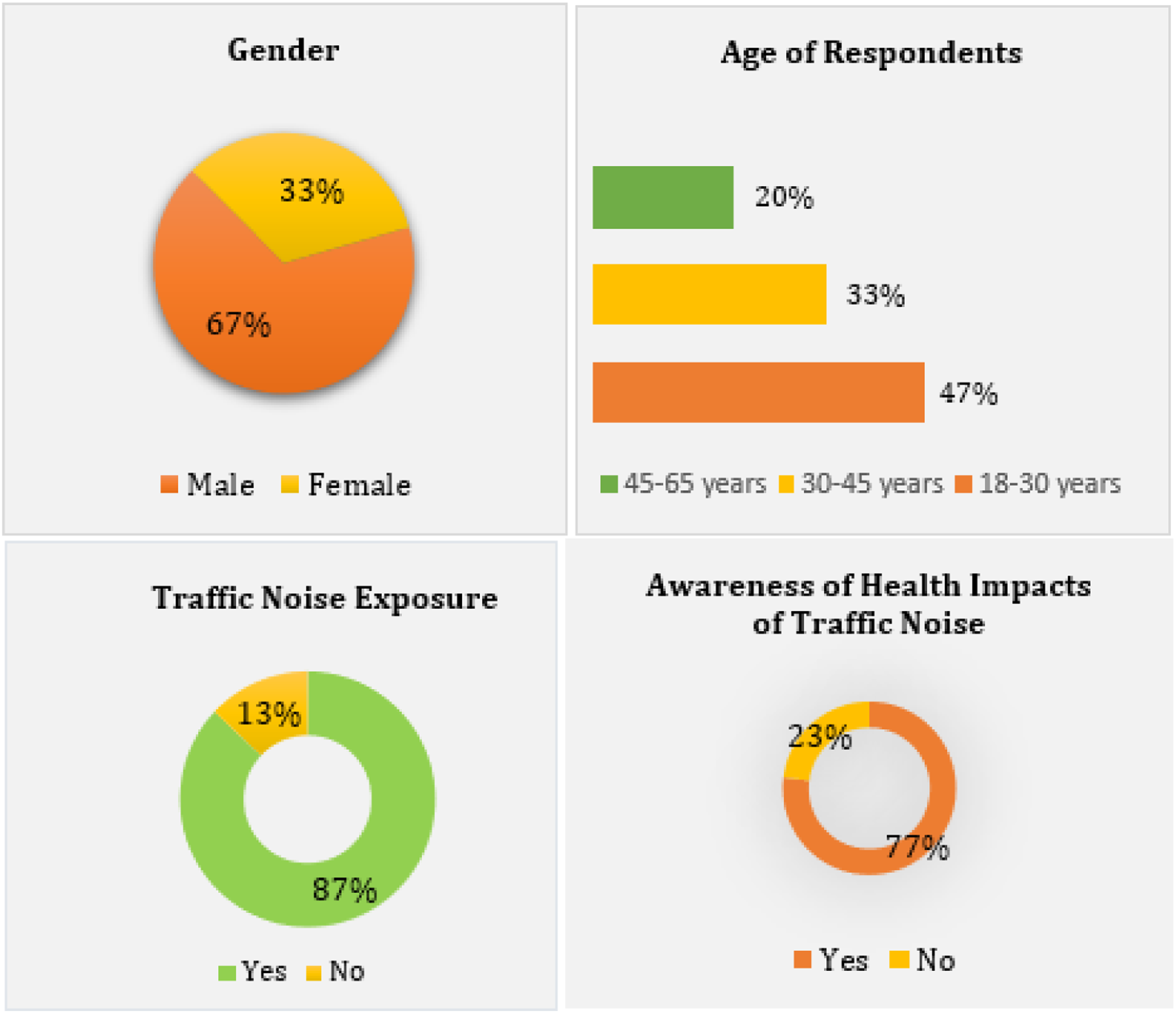
Regarding the major sources of noise, 69% of the respondents considered traffic noise as the major source of noise pollution, followed by 18% of the respondents who considered commercial activities, 8% choose community noise, and 5% choose religious activities as the major sources of noise in the study area. These results support the findings of earlier studies, in which traffic noise contributed significantly to environmental noise, and its effects were primarily non-auditory, such as annoyance, which interferes with sleep, learning, communication and other tasks.68–70
Scenario 3: Measured noise levels
Dissatisfaction score with respect to noise descriptors.

Prohibited levels of environmental traffic noise indices. 71
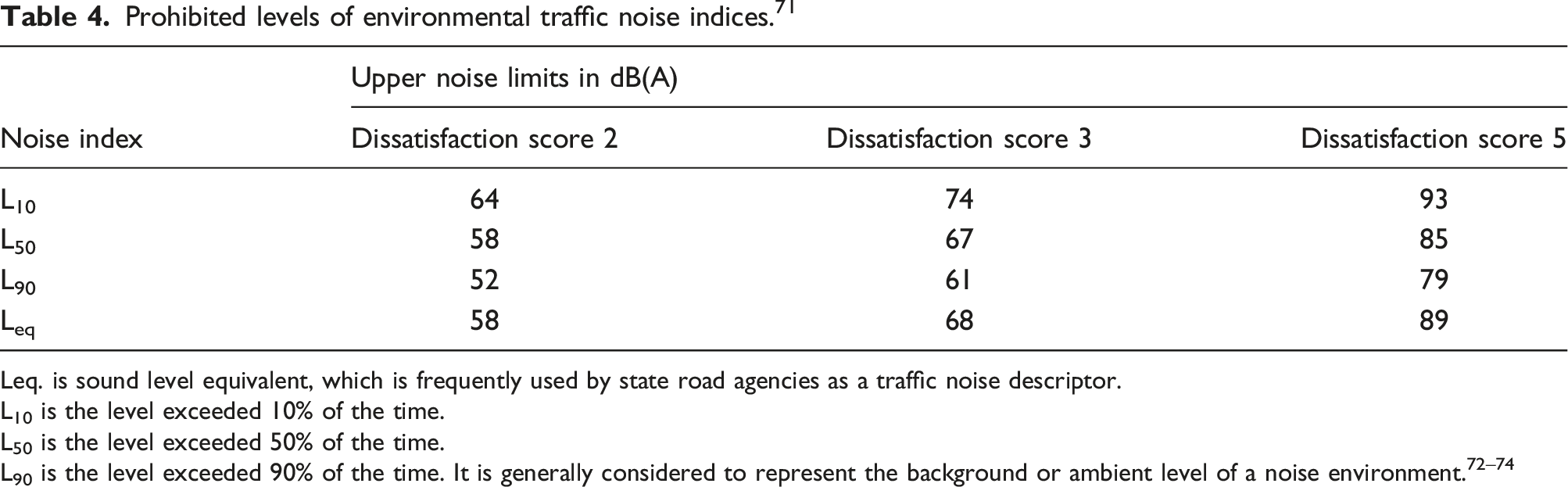
Leq. is sound level equivalent, which is frequently used by state road agencies as a traffic noise descriptor.
L10 is the level exceeded 10% of the time.
L50 is the level exceeded 50% of the time.
Furthermore, a quality control chart (Figure 5) was used to check the variations of Leq noise levels with time and to determine the disparity range at level 3 sigma (+/− 3 standard deviation from the mean). The upper-class limit and lower-class limit are 89 and 59 dB(A) respectively (Table 4). From the readings there was a slight variation in the morning from the specified class limits and a major variation in the evening; this resulted in a one-point control rule violation (less than −3 sigma). Leq quality control chart.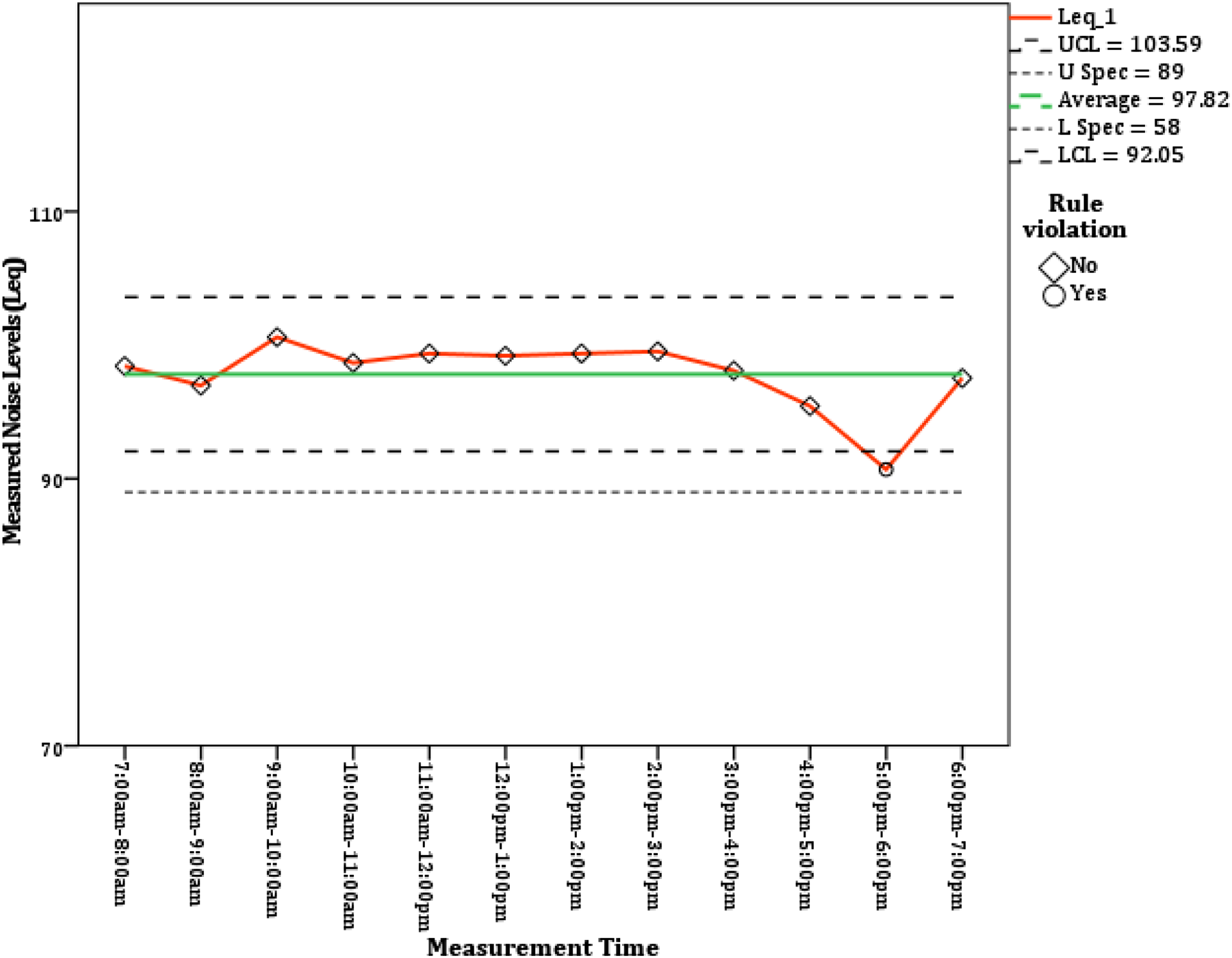
The effects of road traffic noise in urban areas have been examined not only due to traffic volume, but also due to the high rate of annoyance response that road traffic noise can generate, leading to a reduction in urban quality of life. 75
Conclusion
Every government’s overall road noise control policies are to ensure that a satisfactory noise environment is achieved and maintained to safeguard public well-being and to protect people from excessive noise. Therefore, many institutions have made numerous efforts to curb the problem associated with road traffic noise through the establishment of a control policy.
The essence of this study was to understand the current traffic noise practices in terms of guidelines and control policies. In the case of developing countries, specifically in sub-Saharan Africa, the regulation of traffic noise is limited, including the evaluation criteria and the state of practise. This is evident from the findings from the survey at the different agencies of this study as little is known when it comes to the state of practice for traffic noise and policy in Ghana.
When considering the assessment of traffic noise, noise measurement is required as the base process to determine the level of noise and its associated underlying factors. 76 From the measurements it was observed that the noise levels were above the permissible limit and as such cause annoyance, which may lead to other health related problems. The country, which is still developing and already faces economic difficulties, may be impacted by this, if not addressed. Ghana cannot risk losing its vibrant working class to noise-induced hearing loss or other self-reported health effects caused by environmental noise pollution, specifically traffic noise.
The study will further be expanded to carry out evaluation and measurement of traffic noise levels at various locations in the city. This would help develop a model that could be used to predict traffic noise exposure for the country.
Therefore, it is recommended that all stakeholders, transport, health, and environmental agencies, work unanimously to ensure that effective control of traffic noise pollution is developed, enforced, and implemented. In addition, enlighten the population about the possible health outcomes due to traffic noise exposure as well as the various measures that can help in reducing the exposure. It is also recommended that the relevant authorities introduce a road traffic noise monitoring scheme. This will establish a system for reporting to the Transportation Ministry on road traffic noise abatement measures.
Footnotes
Declaration of conflicting interests
The author(s) declared no potential conflicts of interest with respect to the research, authorship, and/or publication of this article.
Funding
The author(s) disclosed receipt of the following financial support for the research, authorship, and/or publication of this article: This work is supported by the Regional Transport Research Education Centre Kumasi.
Ethical approval
The study was carried out according to the procedures and requirements of the Human Research, Publications & Ethics Committee of Kwame Nkrumah University of Science and Technology, Kumasi with certificate number CHRPE/AP/8211/22.
