



Abstract
The preservation of historic sites requires a multisensory approach, in which sound plays an important role. A good acoustic environment could contribute to the aesthetic, ecological, and cultural improvement of historic sites, as well as increase visitor attendance with their surroundings. Due to the unique spatial qualities and social-cultural distinctions of these locations, it seems essential to consider the inherent differences in their soundscapes. The hypothesis of this study is to assess the interrelationships between soundscape evaluations and environmental indicators including visual quality and overall impression as well as the related semantic attributes. The historic El-Goli Park of Tabriz, which is in a semi-natural environment, was evaluated as the field study. Field measurements at sampled locations were conducted to record sound pressure levels (SPL) to generate sound maps. At the same time, a questionnaire survey was used for the subjective assessment of soundscape quality. The main results are as follows: 1. Natural sounds (birds and water) and human sounds (voices and footsteps) are the sounds primarily perceived as dominant and pleasant. 2. For a selected location, the higher the percentage of visitors reporting a pleasant sound (mainly natural sounds), the higher the reported soundscape quality, visual quality, and overall impression. 3. Among the social/demographic/behavioral factors considered, “age” and “time period during a day of visit” were associated with soundscape perception. These results may be helpful for the soundscape of historic city parks and will offer helpful insights into landscape policy and regional acoustic environment planning.
Introduction
As one of the country’s most important cultural heritages, historic Iranian gardens were created based on a combination of vernacular, architectural, and aesthetic factors, including various water forms and decorative flower arrangements. 1 These gardens reflect a philosophy, a culture, a tradition, and a response to time concerns. Historically (about 100 years ago), most Iranian gardens were built for private use; however, in the modern era, they are open to the public and are one of the most prevalent forms of urban parks in Iran. Additionally, these places are characterized as cultural and historic symbols of cities, regions, or even countries that receive a large volume of visitors each year. To conserve and develop the identity characteristics, landscape elements, and overall impact of such locations, it is essential to consider their spatial quality, particularly from a soundscape perspective.
In the current era, urbanization, transportation, and industrial activities are all associated with noise pollution. 2 Urban parks are important in promoting health and well-being by reconnecting with nature and reducing exposure to urban pollutants such as air pollution,3–5 providing opportunities for physical exercise, social connection, and stress relief6–10 and producing multiple ecosystem services such as conserving biodiversity.11,12 However, since these green spaces are often surrounded by noisy areas, such as roads, the positive effects of the natural environments of urban parks are weakened.13–15 Therefore, sound levels in noisy areas should be reduced, but mere noise reduction is not able to improve the acoustic environment or visitor experience.2,16,17
In addition to noise reduction, researchers consider the soundscape in terms of human perception of sounds.18,19 The term “soundscape” refers to the “acoustic environment as perceived, experienced, and/or understood by an individual or a society in context”.20,21 It aims to analyze the sonic environment not only by its loudness (SPL measurement), but also by understanding the interrelationships between sound sources, the environment, and the people who use space.
The effects of soundscape are investigated in different contexts, such as open urban spaces, 22 urban parks,23,24 urban squares, 25 and urban streets.26,27 They produce different results depending on the context involved, for example, from peaceful and peaceful sensations to lively, varied, and exciting sensations, 28 which can cause individuals to connect with their environment.19,29 Furthermore, the role of soundscape in mitigating noise problems while improving the acoustic comfort of the environment,25,30 and promoting human health status has been studied in terms of increased restoration and reduced stress-inducing mechanisms. 31 On the other hand, the nonacoustical components were also examined. It has been verified the greenery impacts on the soundscape experience in a positive way.13,32,33 Moreover, from the space users’ perspective, previous studies addressed the effects of socio-demographical, behavioral, and cultural factors on their perception of soundscape32,34 and experience of visiting.23,35
In addition to visual aspects, the sensory experience of visitors, in which sound plays a crucial role, is required to protect historic parks and represent their characteristics (Kang et al., 2016). By intervening in site design, the soundscape can act as an incentive to improve the ecological, historical, cultural, and aesthetic qualities of historic parks.19,36 Particularly pleasing and dominant sound sources, such as natural sounds, contribute to the overall quality of experience of the place and the degree of visit.37–39 However, more research is required on the distribution and perception of historic sites, considering the diverse urban setting and its distinct sociocultural factors.
Several researches have been done in connection with the improvement of environmental conditions in different uses. 38 discuss the importance of managing soundscapes in monumental sites to enhance visitors' experience. The study conducted in the Alhambra of Granada, Spain, supports the hypothesis that the perceived soundscape quality is primarily determined by subjectively dominant sounds, such as birds, water, and visitors' voices and footsteps. The study suggests that identifying subjectively dominant sound sources can help prioritize corrective actions for soundscape management and enhancement, requiring less effort and time than extensive questionnaires. Moreover, 40 used objective acoustic measurements and subjective evaluations to categorize the soundscape elements as nature sounds, human activity sounds, and mechanical sounds. This study analyzed the soundscape elements, temporal changes, and visitor preferences in 14 plant spaces within Jinan Forest Park. The study found that visitors preferred natural sounds and closed nature spaces with lower sound levels. The study also recommended five soundscape design methods to enhance visitor experience, consistent with traditional Chinese garden design principles. 22 emphasizes the importance of preserving soundscapes in cities and presents the findings of two field studies conducted in Tianjin, China. The studies identified urban parks and historic districts as the most recommended locations for sound preservation, and social/communal sounds, animal sounds, and water sounds as the top categories. The soundscapes were also classified into five clusters based on their characteristics. The study provides useful insights for city planners and policymakers to preserve and improve the soundscapes in urban environments. On the other hand, 37 investigated the effects of soundscape perception on visitors' experiences in a historical block in China. Natural sounds and music had positive effects on satisfaction, while construction and traffic sounds had negative effects. Water and handcraft sounds contributed to a distinctive historical impression. Positive soundscape perception contributed to satisfaction. Results suggest that soundscape design should be considered in the renovation of historical blocks.
This study aims to answer the following research questions: 1. To investigate the soundscape of El-Goli Park, one of the famous examples of Iranian historical gardens, and its impact on visitors' perception of the park’s overall quality. 2. To identify the types of sounds, present in the park and their subjective impact on visitors' perception, and to explore the relationship between the soundscape and landscape quality of the park. 3. To provide recommendations for improving the park’s spatial quality by defining behaviours with identified soundscapes, based on the findings of the study. 4. The involvement of soundscape in the park design and the participation of park visitors into the design process can help create a healthier and more satisfying open public space for citizens and contribute to the development of sustainability in landscape and urban planning. 5. Overall, this study aims to contribute to the conservation and enhancement of the quality of historic urban parks, by providing insights into the subjective and contextual nature of soundscapes and their role in shaping visitors' experiences.
The research approaches the problem by conducting a social-acoustic survey of the soundscape of El-Goli Park, which involves collecting data on the types of sounds present in the park, their sound pressure level, and visitors' subjective perception of them. The data is then analysed to identify the dominant sounds perceived in the environment and their impact on visitors' overall impression of the park’s quality. The research also investigates the relationship between the soundscape and landscape quality of the park, by analysing visitors' perception of the park’s visual features and their overall impression of the park. This helps to provide a more comprehensive understanding of the factors that contribute to visitors' experiences of the park’s spatial quality. Based on the findings of the study, the research provides recommendations for improving the park’s spatial quality by defining behaviours with identified soundscapes, such as protecting or promoting natural sounds, and controlling or reducing mechanical sounds. Overall, the research employs a multidisciplinary approach that combines acoustic and social science methods to investigate the soundscape of the hist.
The outline of the rest of the study has been stated below:
Methodology - In this part, we will describe the research design, participants, data collection methods, and analysis procedures that we used in our study. We will also discuss the ethical considerations and limitations of our methodology. Results and discussion - In this part, we will present and interpret the findings of our study, focusing on (1) The objective results including the analyzed sound maps, (2) The subjective results including the identification of different sound sources and subjectively dominant sounds, the relationship between subjective indicators and A-weighting sound levels, evaluation of soundscape quality by subjective attributes, and relationship between social/demographic/behavioral factors and soundscape quality. Besides, we will discuss the implications of our findings for theory and practice. Conclusion - In this part, we will summarize the main points of our study and provide concluding remarks. The limitations of our study and suggestions for future research are also stated.
Methodology
Study area
The El-Goli park in Tabriz, Iran, was selected as a case study for the evaluation of the quality of the soundscape. El-Goli park, also known as Shah-Goli, is a living sample of Iranian historical gardens from the 16th century. With an area of around 70 hm2, this park is located in the southeast region of Tabriz, Iran, which is surrounded by main highways in the south and west, and residential areas in the east and north. El-Goli park is made up of a vast garden, a 40,000 m2 artificial lake, an octagonal mansion in the center of the lake, and recreational spaces such as Luna Park and cafés (Figure 1). It is an excellent example of a topographic design. The lake is built on a natural hillside. Two beautiful stairways with flowing waterfalls connect the lake to the top of the hill. This park was listed in the national heritage of Iran in 2009. Location and general view of El-Goli Park in Tabriz.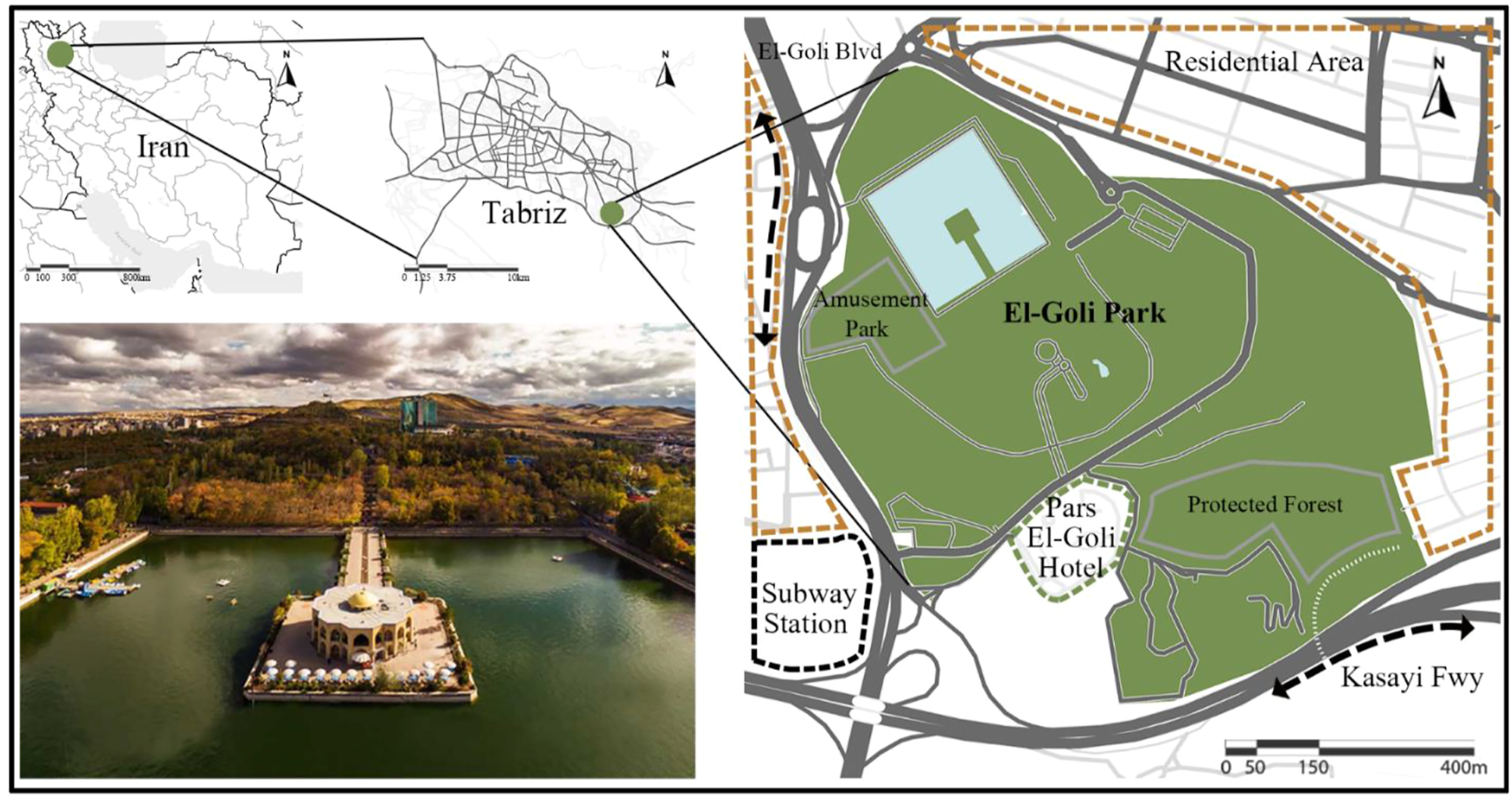
El-Goli includes a wide diversity of soundscapes that can be heard in varying proportions from natural, human, and mechanical sound sources. Around the main pool, due to the large volume of visitors, its proximity to Luna Park and busy highways, mechanical and human sounds prevailed. Natural sounds were prevalent during the day and around the green hill. Additionally, there were various forms of water sounds, including waterfalls, cascades, jets, and channels. This park provides visitors with a wide range of natural landscapes, water features, and recreation facilities.
Selection of sampled positions
The concept of the mental imagery of individuals was used to determine the positions in El-Goli Park.
41
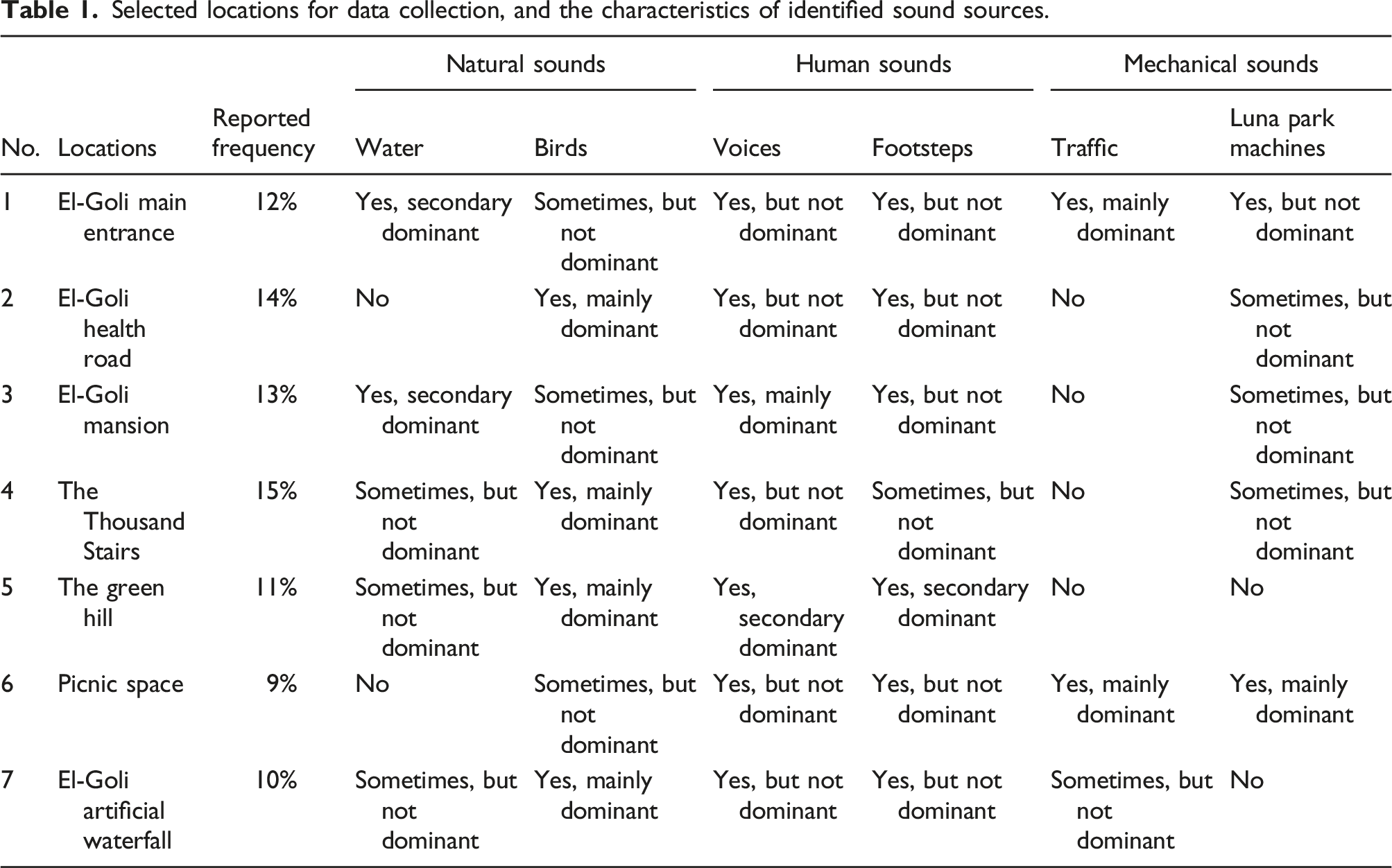
First, the researcher categorized visiting spaces into 13 distinct regions based on the presence of the park’s main visual and auditory sources. Subsequently, participants with visiting experience in El-Goli Park were asked to choose seven of the 13 designated places and complete the online questionnaire based on their mental image of the park. Throughout this procedure, the opinions of 150 participants were collected. Finally, based on the findings, the situations with the highest scores were selected for a detailed evaluation of the park soundscape (Figure 2). Table 1 presents a brief description of each location, including general information about the characteristics and type of the existing sound sources as well as the reported frequency. The characteristics and frequencies of the selected locations were as follows: 1. El-Goli main entrance: (12%): Water fountains, adjacent to the city’s main artery and service centers, including restaurants. 2. El-Goli Health Road (14%): A green route covered with tall trees and equipped with sports facilities. 3. El-Goli mansion (13%): The historic building, located in the middle of the pool, a large volume of visitors, the sound of the park’s speaker playing music and Luna Park machines. 4. The Thousand Stairs (15%): a stepping path with cascades, surrounded by lush greenery and singing birds. 5. Green Hill (11%): Tall green trees, birdsong, and human sounds. 6. Park picnic space (9%): Adjacent to the city artery and metro station, with a high noise level and little vegetation. 7. El-Goli artificial waterfall (10%): Near the residential area, bird song, the sound of running water and, at certain times of the day, a waterfall. The location of selected locations in El-Goli Park for data collection is shown in Figure 2. Selected locations in El-Goli Park for data collection. Selected locations for data collection, and the characteristics of identified sound sources.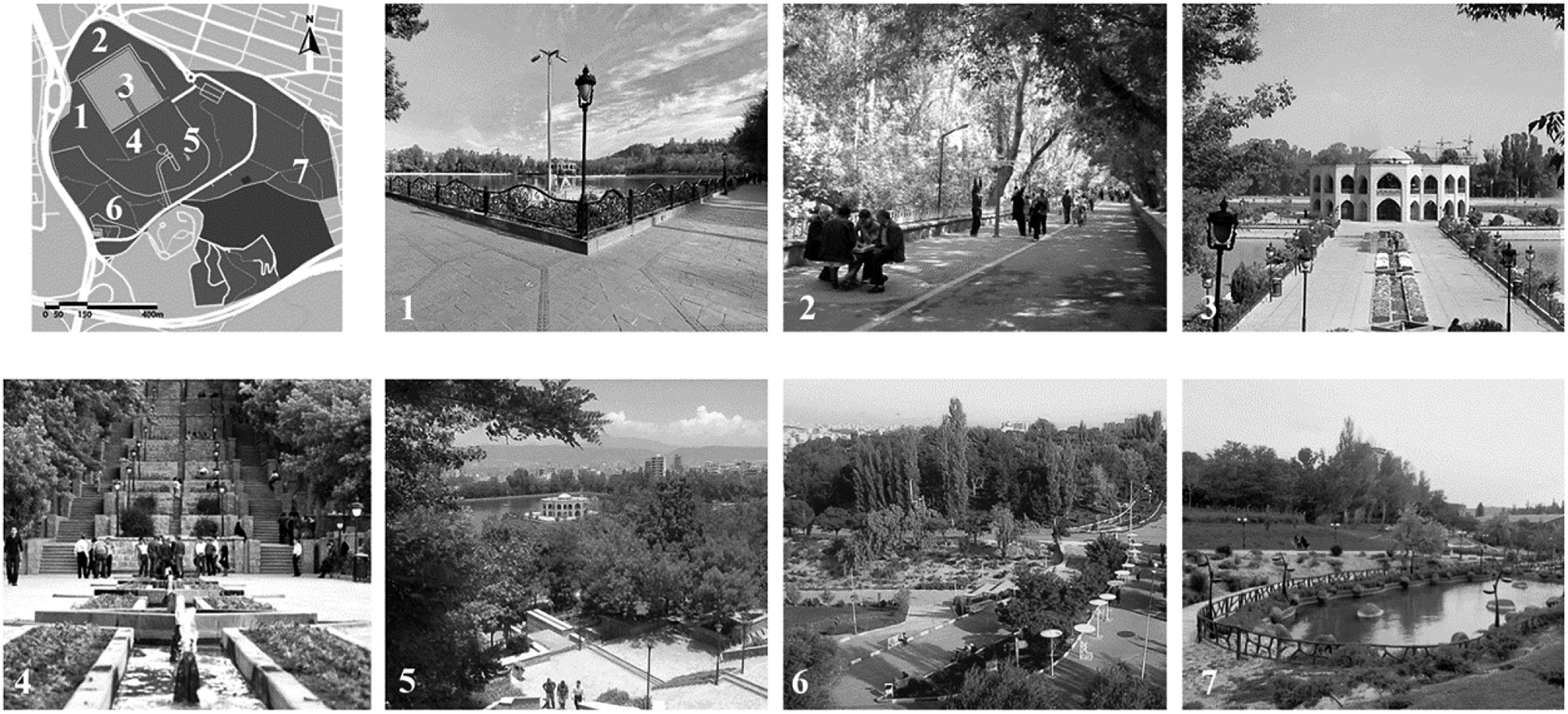
Acoustical evaluation
Acoustic data was gathered at seven specific locations in the park during three distinct time periods (9–11 a.m., 2–4 p.m., and 7–9 p.m.) over 10 weekdays and five weekends in August and September of 2021. A ST-8851 sound level meter set to slow and A-weighted mode was used for measurements, with the microphone placed around 1.5 m above the ground to minimize reflections and ground disturbances. 42 To minimize weather-related disruptions, measurements were taken on days with no rain and wind speeds below 10 m/s. Care was taken to reduce ambient noise during the recording process, and recordings were repeated if excessive noise was present. The LAeq, or equivalent continuous A-weighted sound pressure level, was recorded for 5 minutes at each location, with the mean value used to calculate the equivalent LAeq. To achieve this, four separate recordings were conducted at each location. The sound level for each acoustic measurement was computed by determining the equivalent-energy sound pressure level over a sufficient time interval to ensure that the sound level indicator remained stable (LAeq,5 min). Subsequently, the four acoustic measurements taken at each location were energy-averaged to generate a representative sound level value (dBA) for that particular location.
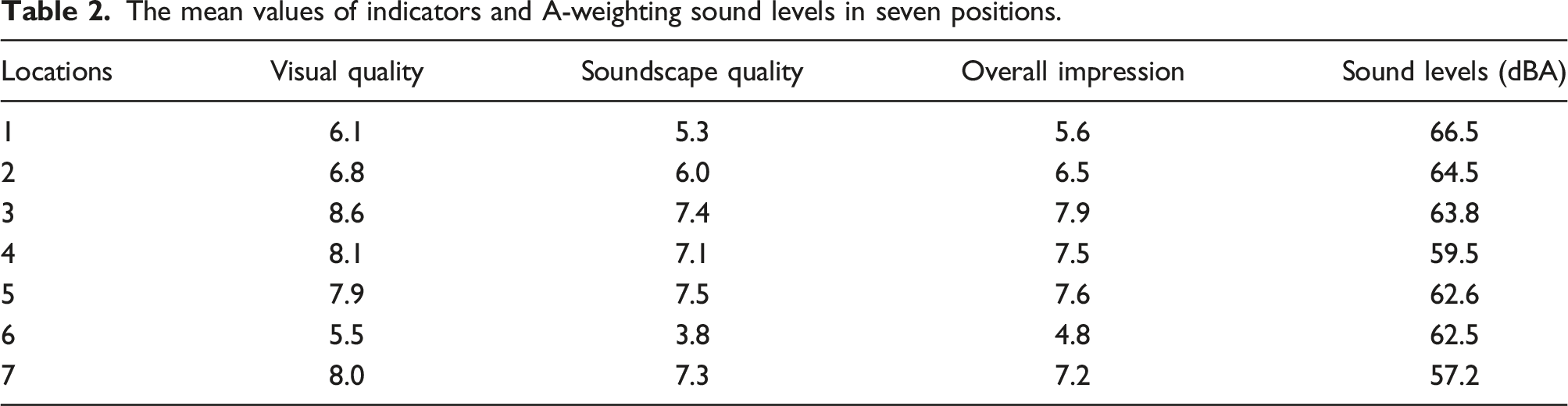
The mean values of indicators and A-weighting sound levels in seven positions.
Acoustic data collection in the seven selected positions was performed in three different time periods of the day, namely 9–11 a.m., 2–4 p.m. and 9-7 p.m., in August and September 2021. A calibrated ST-8851 sound level meter set in slow and A-weighted mode was used. During the sound measurements, the microphone of the meter was placed approximately 1.5 m above the ground to reduce the effects of acoustic reflection and disturbances of the ground. 42 The equivalent continuous A-weighted sound pressure level (LAeq) was recorded for 5 min at each station. The mean value of the measured data was calculated to achieve the equivalent LAeq, which was then entered into ArcGIS software with the two-dimensional coordinates of the seven locations. The sound maps was generated using the IDW (inverse distance weighting) interpolation technique43,44 based on the collected data. There is a total of 12 sound maps corresponding with different time periods, which depict the temporal variations of sound levels in the park environment.
Subjective evaluation
The current research is prepared according to Part 2 of the 12,913 standards in the form of Technical Specifications. In particular, Annex C of the 12,913-2:2018 proposes Methods A for the collection of soundscape data to be used for on-site assessments. This method shows perceptual structures and elements of the sound environment.
350 visitors were randomly selected to participate in the subjective evaluation of soundscape quality in El- Goli Park via questionnaire. The survey was carried out at the seven sample sites and the same time intervals were determined as for the acoustic data collection. During the process of filling out the questionnaire, the researcher was actively present to explain and guide the questions and ambiguities about the study to the participants. In total, 335 valid questionnaires were collected, including 159 males and 176 females. Each survey position was evaluated by more than 45 people. The data collected were analyzed using SPSS 26.0 and correlational statistical methods. All participants were informed about the voluntary nature of the study before taking part. Considering that the differences in the basic physical environment might be caused by the time, the survey at the seven positions was carried out from 9:00 a.m. to 21:00 a.m. Most visitors were sitting (55%) and the rest were walking (18.3%) or standing (26.7%). Moreover, the data-collection points represented the overall soundscape, and all the existing sounds (in such selected position) could clearly be heard. For instance, at a site with a loud water fountain, the data-collection point was selected in a way to report not only the water sound, but also all the other sounds present there. These data provide a comprehensive background of the respondents to ensure a random sampling of participants and allow potential adjustments to these factors in the statistical analyses.
The choice of questionnaire and its corresponding semantic attributes was based on extensive prior research conducted by a number of authors, including.23,32,37,38,45–47 The attributes selected for inclusion in the questionnaire were primarily focused on identifying positive aspects of the soundscape, as well as factors related to the spatial, temporal, or variety of sound sources present in the environment. By referring to previous studies, a list of features, factors, and semantic attributes related to the soundscape environment was developed, encompassing both the acoustic characteristics of the environment and the associated psychological responses of humans. Through careful study, analysis, comparison, and expert consultation, the necessary variables were selected and refined to meet the specific needs of the research at hand, resulting in the creation of a two-part questionnaire framework. An example of the questionnaire used in the park is shown in Appendix 1. Questionnaire surveys have been conducted simultaneously with the monitoring step, and it consists of two parts. The first part of the questionnaire is allocated to demographic data. In the second part, four subsections were defined for reported soundscape responses. (i) Information of the participants
This part was designed to collect socio-demographic and behavioral information of the interviewee. Specific indicators selected in this research include gender, age, education background, occupation, residential status, visit frequency, length of stay, the time period on a day of visiting and visit motivations. The purpose of visiting was classified into five: ‘to increase peace of mind’, ‘to enjoy the scenery’, ‘to enjoy a quiet environment’, ‘physical activities (walking, biking, etc.)’ and ‘social purpose (meeting friends or family)’. Figure 3 illustrates the sample data collected in the park. Sample information collected from the questionnaire database. (ii) Soundscape Perception Information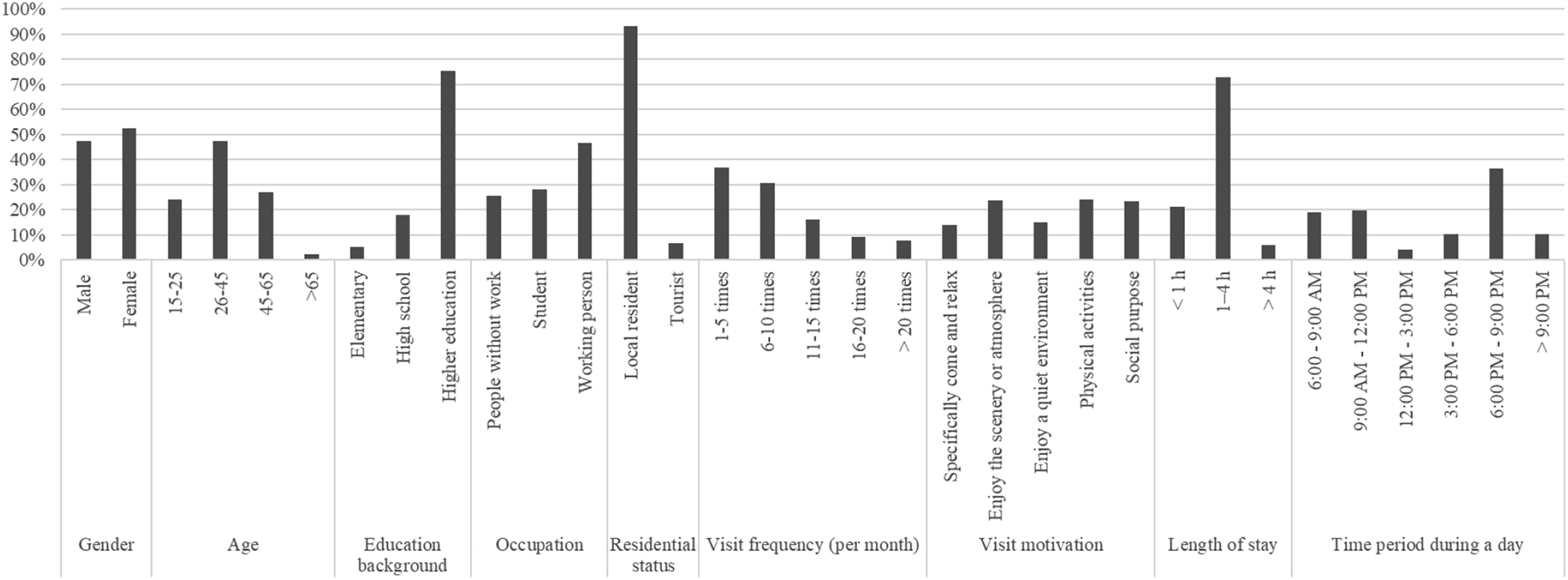
In the second part, four subsections were defined for soundscape responses. Firstly, participants were asked to report three different types of sounds they had heard in the related context. Each perceived sound was rated on a five-point Likert scale from one to 5 (1 representing “most unpleasant” and five representing “most pleasant”). Secondly, participants were asked to identify a sound they considered to be “dominant” in the soundscape. Then, three indicators including landscape quality, soundscape quality and overall impression were determined for participants to score on a scale of 1–10 (1 indicating the lowest quality and 10 indicating the highest). Lastly, a matrix of 10 semantic attributes was provided to describe the soundscape quality of El-Goli Park. Each pair of semantic attributes was evaluated using a seven-point bipolar classification scale of −3 to 3 (−3 being the ‘most unpleasant’, three the ‘most pleasant’, while 0 is neutral, meaning neither pleasant nor unpleasant). The semantic attributes were pleasant - unpleasant, quite - loud, smooth - rough, diverse - simple, relaxing - agitating, directed - everywhere, natural - artificial, steady - unsteady, near-far, normal - uncommon.
Results and discussion
The main objective of this study is to examine the distinct auditory environment of a historic park located in Iran and determine the sounds that visitors find agreeable or disagreeable. Furthermore, the research delves into the correlation between the quality of the soundscape, the quality of the landscape, and the general impression visitors have of the park. The study highlights the significance of considering qualitative factors, such as people’s perception of sounds, when evaluating the soundscape’s quality. Additionally, the study uncovers meaningful links between specific socio-demographic characteristics of visitors and their perceived assessment of the sonic environment in this particular context.
Sound maps
Sound maps of 12 determined time periods demonstrate the distribution of the sound pressure level across the whole El-Goli Park (see Figure 4). All maps are in the equal range of 46–70 dBA. The seven sampled positions are indicated by numbers on the sound maps. These places are, respectively: 1. Main entrance, 2. Health Road, 3. The Mansion, 4. The Thousand Stairs, 5. The Green Hill, 6. Picnic Space, 7. El-Goli artificial waterfall. Sound maps modeled by IDW method.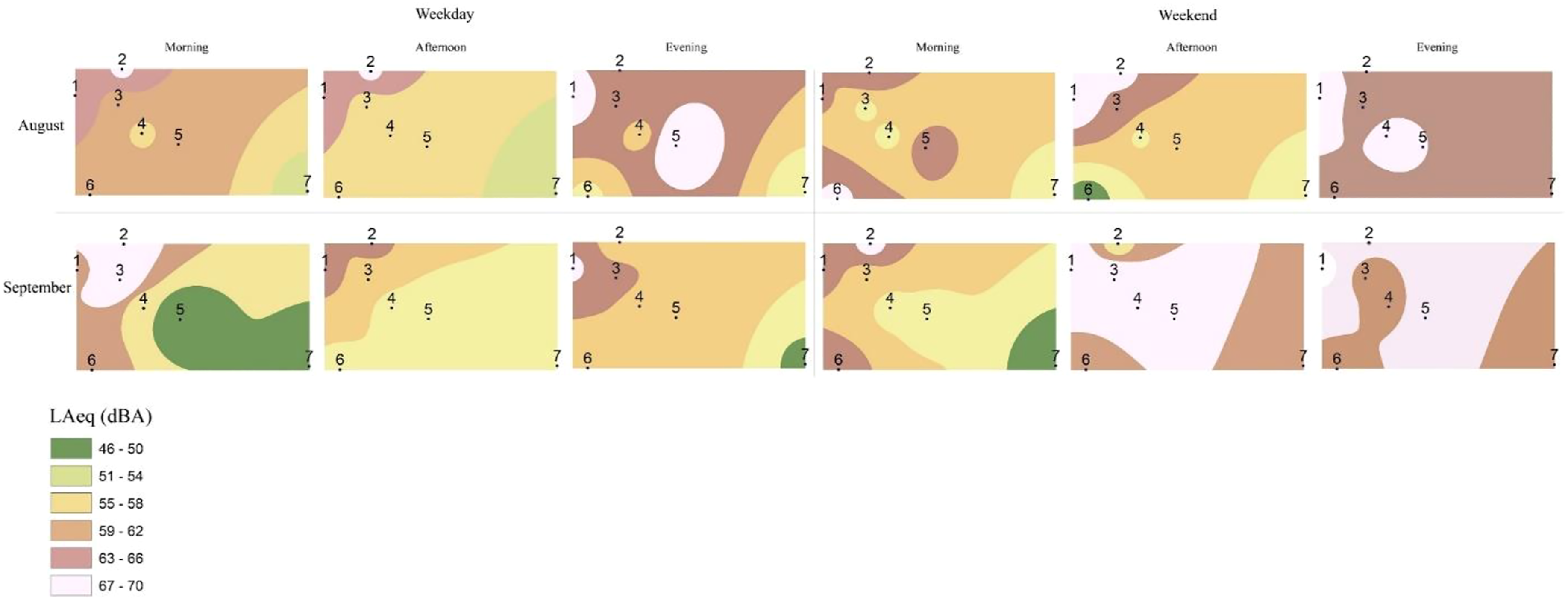
Regarding the monthly pattern, the comparison of the results between both months does not show any considerable change in the pattern of sound distribution in El-Goli park. When it comes to the weekly pattern, the average sound pressure level measured on weekends every 2 months (August and September) was higher than on the weekdays. For example, in August weekend evening, the average sound pressure level ranged above 65 dB, while this value was lower than 60 dB for the August weekday evening. El-Goli park due to its functional role in a regional level, receives a large number of visitors on weekends from locals to surrounding cities, and as a result, there is a higher noise level in the park’s sonic environment. As for the daily pattern, the average sound pressure level in the evening was higher than in the morning and afternoon. One of the main reasons can be the opening time of the Luna park complex in the evening and the activation of the relevant devices and also the sound of the people visiting.
Subjective evaluation
SPSS 26.0 was used to establish a database of all subjective and objective results. Descriptive statistics (bar charts, radar chart, and stacked bar chart) were used to provide a summary of soundscape evaluations. Pearson’s correlation was conducted to test the correlations between the three perceived indicators (soundscape quality, visual quality, and overall impression), and sound pressure levels after being checked the normality of the data by the Kolmogorov-Smirnov (KS) test. Furthermore, a nonparametric Spearman correlation test was conducted to find the relationships between the soundscape quality and the 10 semantic attributes. Lastly, the test was used to verify significant relationships between the soundscape quality indicator and visitors’social/demographic/behavioral factors.
Identification and description
In total, 16 types of sound were identified by 335 participants. The highest frequency of the type of sound was related to bird sounds (59% of participants). In the second group, more than 30% of the participants reported three types of people talking (43%), water (41%), and traffic sounds (33%). Wind (21%), speaker playing music (16%), tree rustle (14%), footsteps (12%) and Luna Park (12%) placed in the next category. Finally, the sounds of sports activities, kids playing, lawn mowing, street musicians, cycling, airplanes, and construction were in the fourth category with the lowest frequency.
As mentioned above, the sound of birds (59%) was the most reported sound, which was due to the extensive natural environments of the park and the desirable habitats for various species of birds. In particular, the pervasive presence of crows as a key feature of the park’s sound environment was assessed separately, accounting for 22% of 59% of all bird sounds. Human sounds were the second reported sounds, probably referring to the historical aspects, the unique landscapes and beauties, and the recreational opportunities for the park visitors. The sound of water forms, including large fountains of the main pool, running water streams, and small cascades, was the third most perceived sound. In addition, traffic noise was reported to be relatively high due to the location of the park in the vicinity of busy urban arteries, which dictates the need to anticipate strategies to reduce the level of noise. It should be noted that the sounds identified by less than 1% of the participants were excluded (Figure 5). Types of sounds identified and percentage of participants reporting each sound.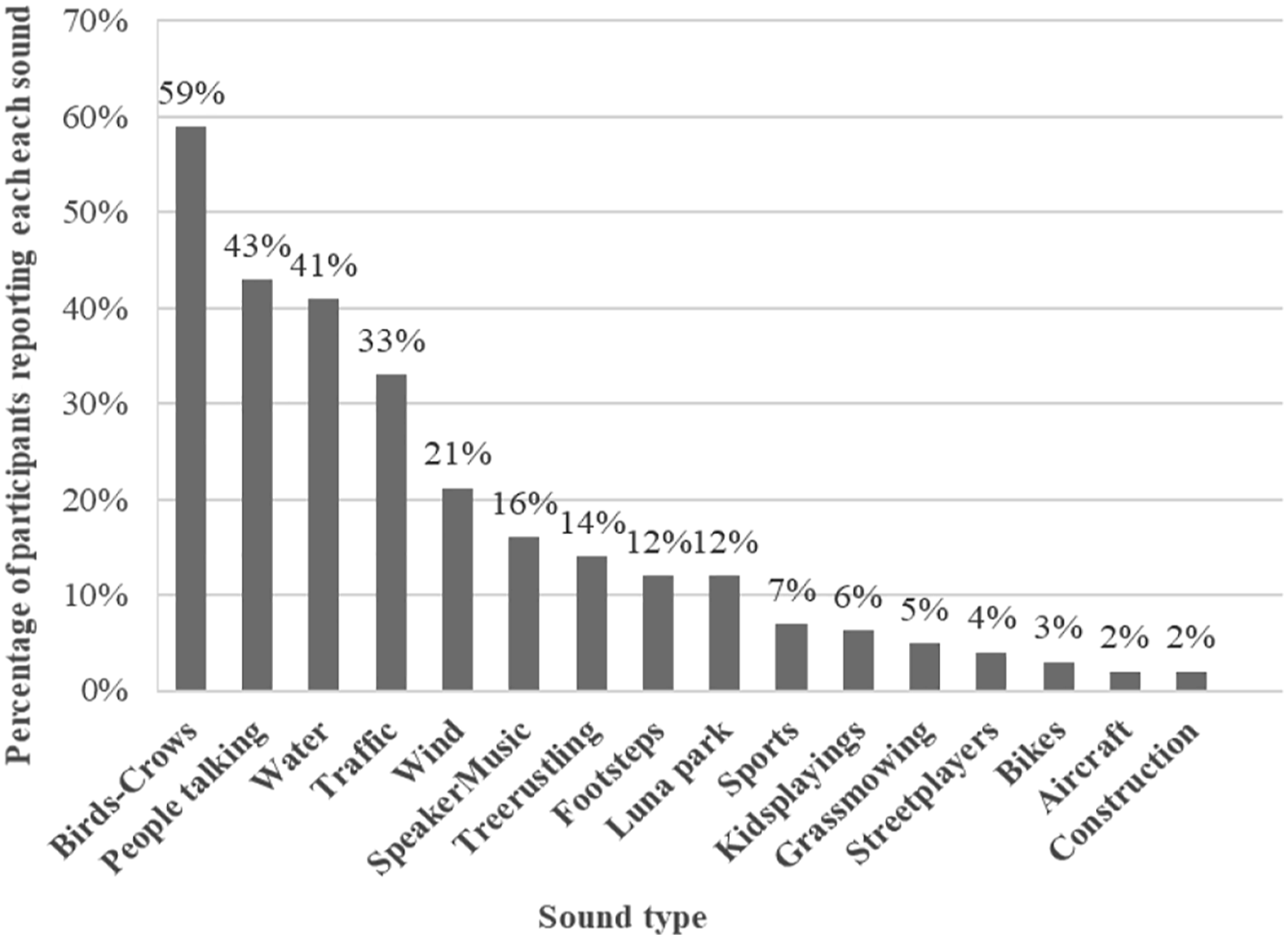
A high percentage of the respondents considered natural sounds, such as water forms (80%), singing birds (67%), wind blowing (68%), and tree rustling (70%) pleasant (Figure 6). This was in line with the results reported by.48,49 The pleasantness of natural sounds implies the close relationship between man and nature as a platform for the feeling of presence, peace, and liberation. Although the results showed a high pleasantness of birds singing, crows' sound was ranked as less pleasant sound compared to the other species of birds in the park (38%). Human-made sounds, such as playing music, the sounds of individuals’ footsteps, and talking, were also evaluated as pleasant in a remarkable portion of the total survey (65%, 62%, and 44%, respectively). Considering the positive relationship between human sound perception and its pleasantness in this urban park, the finding was consistent with previous studies
50
but was in odds with the reported results of,38,51 which suggested that human sounds are usually described as annoying in spaces used for walking or resting when their level tends to mask other natural sounds and can weaken our understanding of the context. However,
48
found that the perceived human and natural sounds correlated positively with eventfulness and pleasantness of the environment and enhances the visitor’s connection with the surrounding environment. Probably, the lack of suitable urban spaces such as pedestrian spaces, especially urban squares, and open public spaces
52
in most urban areas of Iranian cities, especially the city of Tabriz, has provided urban parks as a place for doing social activities, interactions between individuals, and gatherings. Percentage of participants reporting the pleasantness of each sound in the park.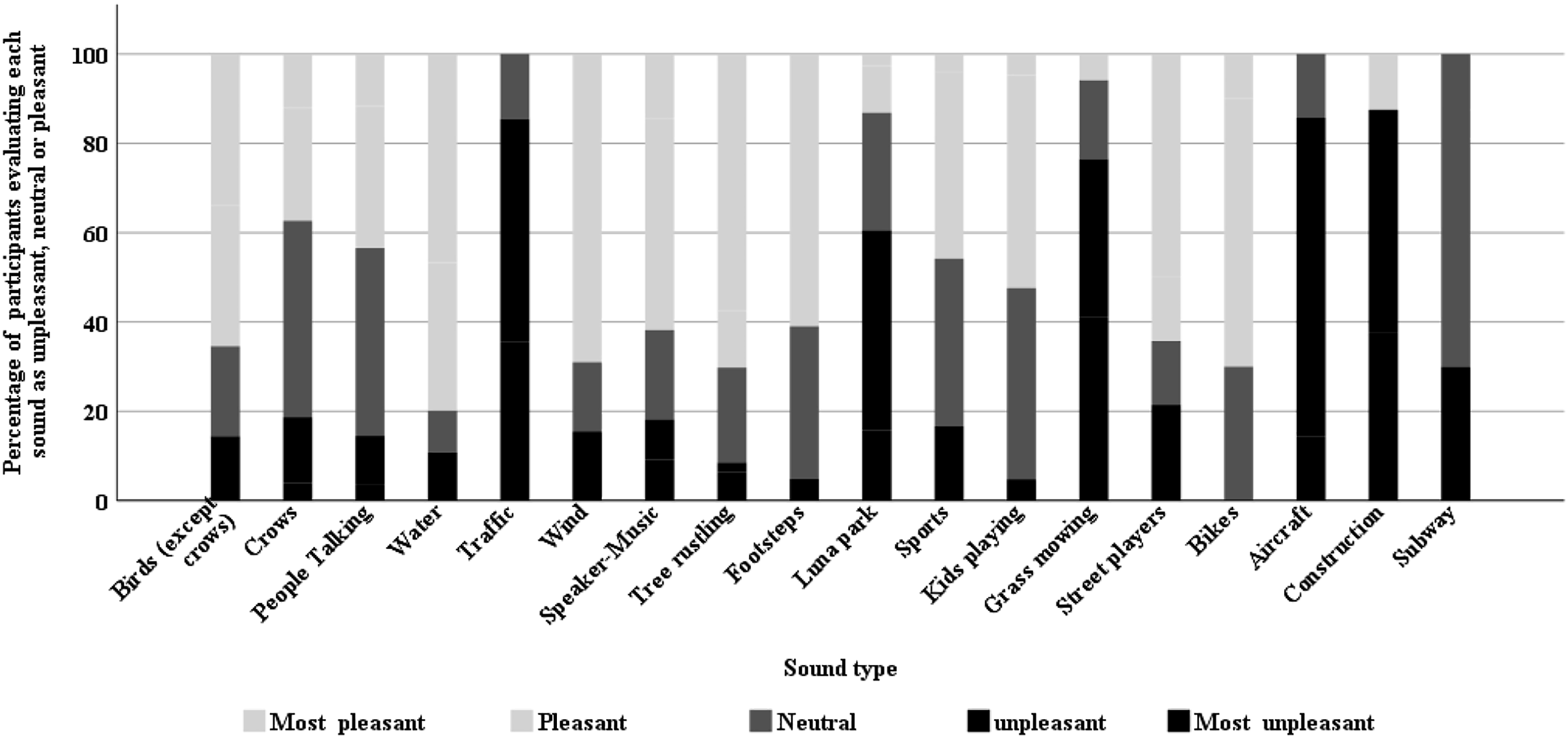
However, technological sounds including construction (88%), traffic (86%), aircraft (87%), and Luna Park devices (60%) were considered by many participants to be unpleasant and annoying sounds. However, the sound of the park’s speaker playing music was evaluated as less unpleasant (18%) than the other reported mechanical sounds. One of the reasons for this is that people’s expectations from any place. Most people visit natural and green environments for cognitive restoration 53 and to feel relaxed and reduce stress and anxiety caused by noise. 54 Therefore, mechanical noises weaken the performance of urban parks and, in most cases, cause the masking of pleasant sounds such as water sounds and birdsong. However, the sound of the park’s speaker playing music was considerably more pleasant (62%) compared with other perceived technological sounds. Once again, we can mention the lack of public open spaces, such as urban squares, for performances and shows of music and people gatherings. Finally, it can be concluded that natural and human sounds are pleasant, and, in contrast, mechanical sounds were perceived to be unpleasant, respectively, which are compatible with the results of previous studies.13,45,48 The percentage of participants reporting the pleasantness of each sound in the park have been shown in Figure 6.
Identification of subjectively dominant sounds
Sound of birds (29% of respondents), followed by sound of people (17%), the sound (13%) and traffic noise (12%) were the most frequently stated sound as being subjectively dominant in El-Goli park (Figure 7). The results of the most frequently identified subjectively dominant sounds (nearly 70% of people) showed a great similarity to the four most frequently reported types of sounds. It can be inferred that the frequency of sound in an environment can be one of determinants of the subjectively dominant sound in people’s perception. 10% of the people did not report any subjectively dominant sounds. This may happen due to the specific composition in a soundscape, masking effects, and, therefore, imperfect transmission of sound information. Percentage of participants reporting the dominant subjective sound.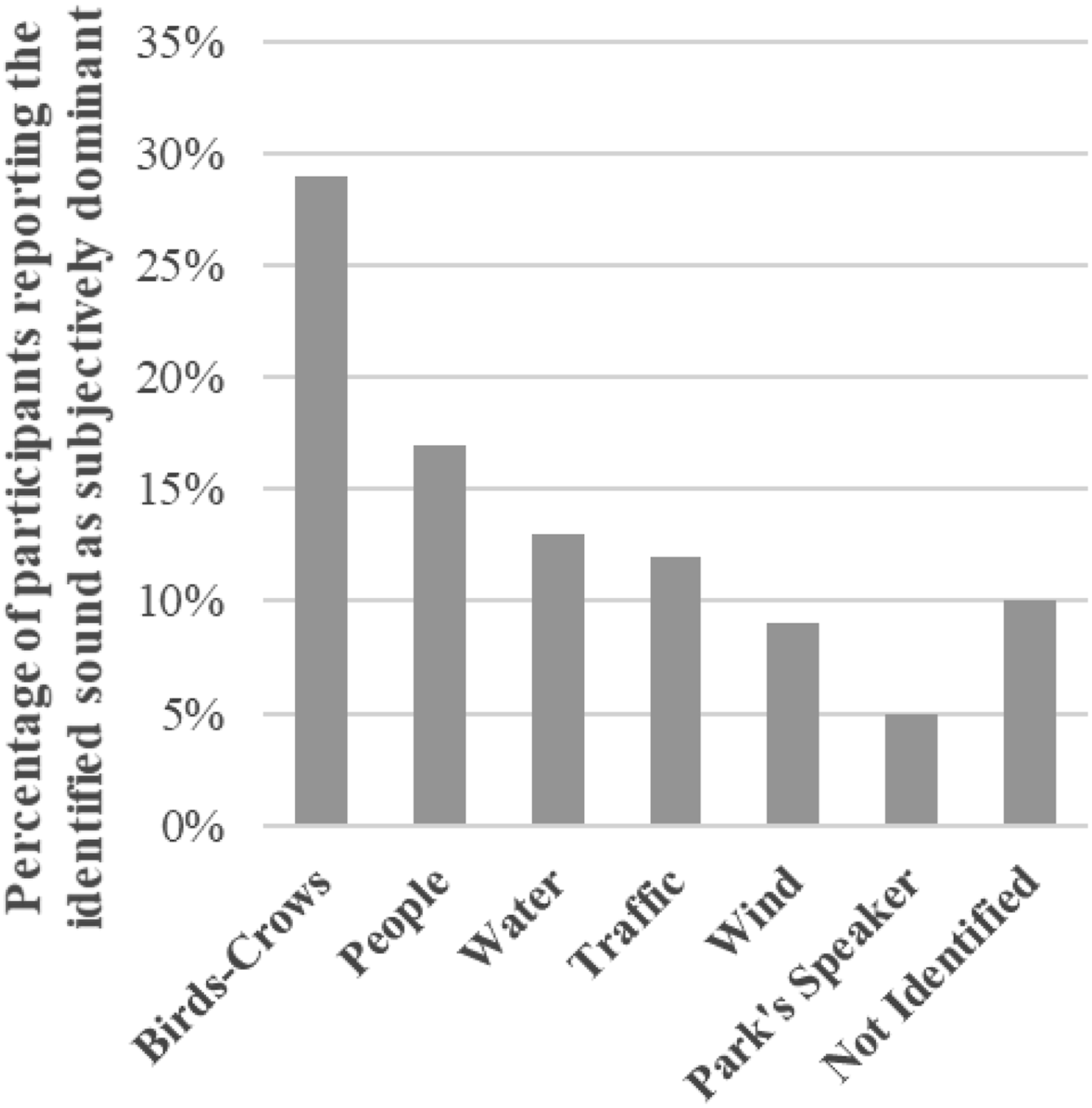
Relationship between determined indicators and A-weighting sound levels
To reach a complete understanding of the park soundscape and the factors affecting it, participants were asked to rate three selected indicators. Table 2 summarizes the average values for soundscape quality, visual quality, overall impression, and sound pressure levels for each of the seven examined locations. Visual quality has a higher score compared to soundscape quality and overall impact, and overall impact scored higher than soundscape. In general, the soundscape has a lower quality than the visual landscape, which may have influenced the overall impression of the park. By comparing the highest (7.5) and lowest (3.8) quality of the soundscapes reported by the participants, both places recorded nearly the same sound levels. It may be concluded that higher sound levels do not always imply poor quality of soundscape, because individuals consider various aspects in perception of soundscape of the environment, including their preferences in sound elements in any area. 16
Pearson correlation between mean values of indicators and A-weighting sound levels.

Evaluation of soundscape quality by subjective attributes
The average value of the subjective responses to the selected pairs of descriptors is demonstrated in Figure 8. The average value of subjective responses to the 10 pairs of semantic attributes indicates that El-Goli park’s soundscape has a more usual (1.5) and pleasant (1.4) feeling than the other qualities. Natural (1.1), near (1.1), soothing (1), and diverse attributes (1), placed in the middle range. On the other hand, participants described the soundscape as less smooth (0.7), steady (0.2), and directional (0). In addition, the park was evaluated with an average noise of −0.2%. These findings can be used in the landscape design and planning process to improve the soundscape quality and reduce its shortcomings. However, the sonic environment of the studied park was largely positive from the respondents' point of view (Figure 8). Mean values of semantic attributes reported by participants for sampled locations.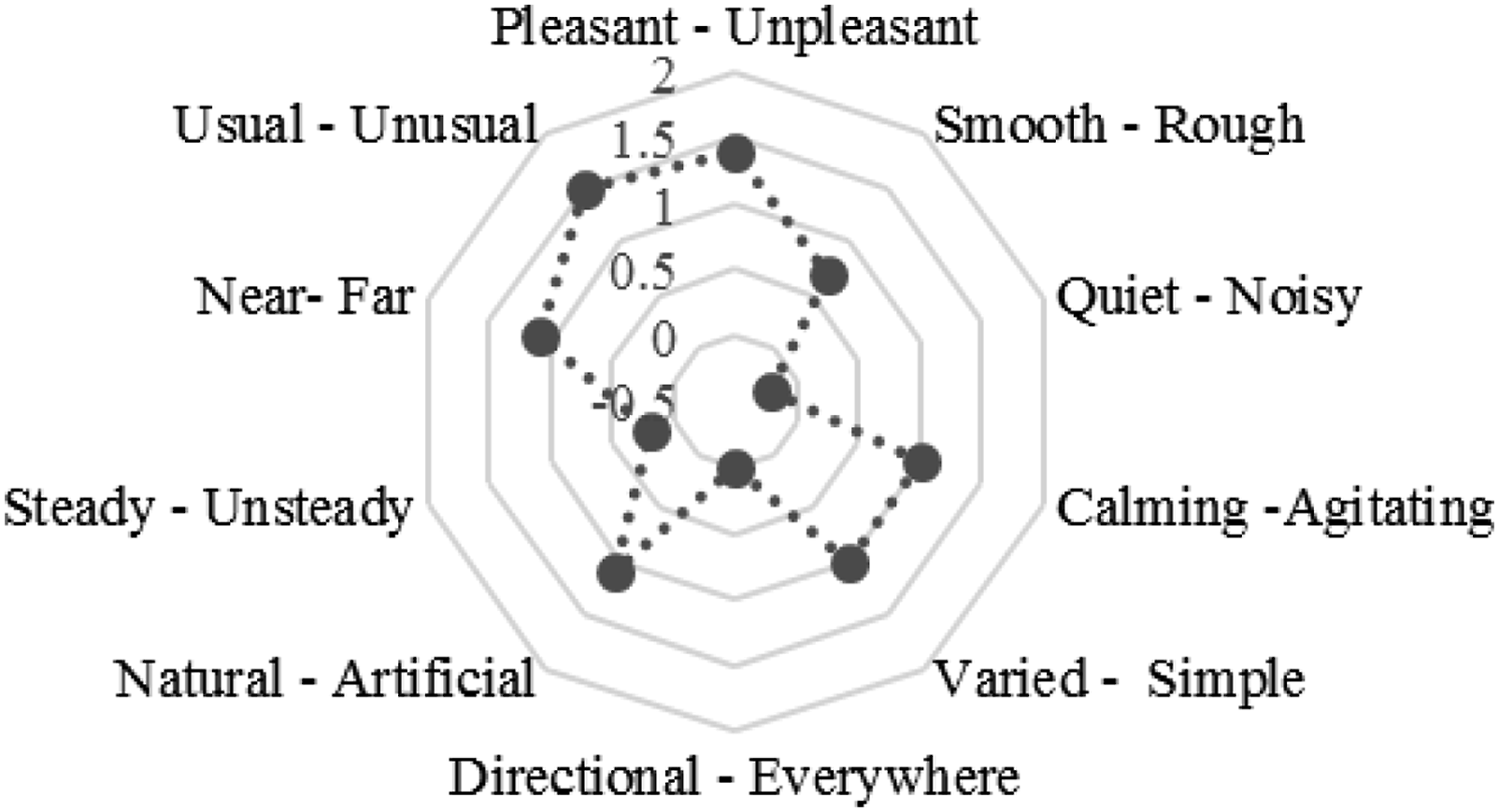
Spearman correlation between soundscape quality and 10 pairs of semantic attributes.

The strong correlation between the soundscape quality of El-Goli Park and the characteristics in terms of “natural,” “calming,” “smooth,” and “quiet” can be traced to the park’s lush greenery areas, various water resources, and the fact that it is located far from the city’s bustling streets without the annoying beep of automobiles and motor vehicles. By referring to green spaces, most people expect to access a tranquil environment, far from the anxieties and stresses of city life. 54 As a result, they consider the high quality of soundscapes with low levels of urban noise.
The adjectives “steady” and “usual” showed a low correlation with the soundscape quality of the park. One may claim that the regularity and familiarity of sounds can contribute to the improvement of soundscape perception in historic spaces. The findings contrast with previously reported results, 38 which indicated that the “usual” adjective has a negative relationship with soundscape quality, and unexpected and random sounds are associated with higher levels of soundscape quality.
In addition, the “varied”, “near”, and “directional” adjectives are not related to the reported soundscape quality. These three factors are rooted in the type of personality, emotions, and sensitivity of individuals and therefore, they cannot be regarded as a reliable and accurate factor in assessing the soundscape quality.
Relationship between social/demographic/behavioral factors and soundscape quality
Spearman correlation between soundscape quality and social/demographic/behavioral factors.

p-value <0.01.
On the other hand, a negative correlation has been found between the time period during a day of visiting the park and the perceived quality of the soundscape (ρ = −0.214, p < 0 .005). It might be attributed to a composite effect of increasing number of visitors, congested traffic hours, and late at night at Luna park activities. This finding is consistent with the results of previous study, 37 which can support the assumption that mechanical noise in historic parks is considered as unpleasant sounds.
The current study explores the concept of soundscape from both objective and subjective perspectives and investigates whether there is a correlation between the examined indicators. To obtain a comprehensive understanding and evaluation of the soundscape in the chosen park, the study examines the various sound sources and their indicators in different locations and at different times, considering the dynamic nature of the sound factor. However, there are some limitations to this study. Firstly, the research only analyzed the soundscape of El-Goli park for 2 months, so the findings may not reflect the complete soundscape pattern throughout the year. Furthermore, the data collected may not be sufficient to provide information about the soundscape quality of the park during other seasons. Additionally, this study focused on a specific historic urban park in Tabriz, Iran. As urban parks can have different features and services, the results obtained for the soundscape quality in this park may not be applicable to other types of urban parks.
Conclusions
El-Goli park, as one of the famous examples of Iranian historical gardens, plays an important role in the lives of locals because of providing a variety of green and natural places, including flora and aquatic forms. This park is known as one of the key landmarks in the region. Therefore, it is vital to conserve and enhance the quality of such historic places. The purpose of this research was to conduct a social-acoustic survey of the soundscape of Elegli Park.
The main results of this research are: • The natural sounds and sounds of human activity are perceived as pleasant, while the mechanical sounds are identified as unpleasant, in the historic urban park. • It has been acknowledged that the frequency of the reported sound can be considered as one of the influential factors to identify subjectively dominant sounds perceived in the environment. • There is a significant relationship between soundscape quality, landscape quality and the overall impression of the park. It can be concluded that the combination of soundscape and landscape can effectively help to strengthen the overall quality of the space. On the other hand, the sound pressure level did not show a correlation with the three defined indicators, which indicates the inadequacy of acoustical measurements to assess the soundscape of the environment and the need to consider its qualitative dimensions, including people’s perception of sounds. • Soundscape quality is associated with the semantic attributes of “pleasant”, “calming”, “smooth”, “natural”, “quiet”, “usual” and “steady”. • Visitors’ perceived quality of the soundscape can be affected by their “age” and “time period during a day of visit”.
The findings could be used to explicitly define the behavior with identified soundscapes in terms of protection, promotion, control, and reduction, which can lead to an improvement of the park’s spatial quality. However, in order to provide a more comprehensive and accurate assessment, it is necessary to carry out a longitudinal study regarding the park’s soundscape over a longer period of time (like, in a whole season or year-round) and in different historic sites with their unique features. Thus, future studies may focus on the investigation of soundscape perception in various contexts and over extended time periods.
Supplemental Material
Supplemental Material - The assessment of soundscape quality in historic urban parks: A case study of El-Goli Park of Tabriz, Iran
Supplemental Material for The assessment of soundscape quality in historic urban parks: A case study of El-Goli Park of Tabriz, Iran by Negar Mohamad Zadeh, and Rahmat Mohammadzadeh in Noise & Vibration Worldwide
Footnotes
Declaration of conflicting interests
The author(s) declared no potential conflicts of interest with respect to the research, authorship, and/or publication of this article.
Funding
The author(s) received no financial support for the research, authorship, and/or publication of this article.
Supplemental Material
Supplemental material for this article is available online.
References
Supplementary Material
Please find the following supplemental material available below.
For Open Access articles published under a Creative Commons License, all supplemental material carries the same license as the article it is associated with.
For non-Open Access articles published, all supplemental material carries a non-exclusive license, and permission requests for re-use of supplemental material or any part of supplemental material shall be sent directly to the copyright owner as specified in the copyright notice associated with the article.
