



Abstract
Urban buses, particularly in large cities, are exposed to significant noise pollution. This paper presents a new family of materials at the micro/nano level designed for urban noise attenuation, specifically for application in urban buses. Melamine foam is combined in series with nanomembranes, creating a composite material that functions as a Helmholtz resonator. As sound waves pass over the nanomembranes, they are disturbed, and the sound resonates within the melamine foam. This interaction reduces the energy of the sound waves and enhances the noise absorption coefficient. In ten cases studied, the average sound absorption coefficient was approximately 89%, with peak frequencies ranging from 2400 Hz to 4300 Hz. The average thickness of the nanomembranes was around 5.0 µm, while the melamine foam had a thickness of 13 mm. The mean noise reduction achieved was about 11 dB, which depends on factors such as the morphology, thickness, and pore size of the nanomembranes. A case study conducted in downtown São Paulo demonstrated that applying these materials to urban buses can significantly reduce interior noise levels. Finally, the proposed system is fully scalable and adaptable for various applications where acoustic insulation is required.
Introduction
Urban noise was identified as a pollutant and potential health hazard by the World Health Organization (WHO) in the early 1970s. 1 Concerns about environmental noise have since grown due to the rapid urban population growth. For instance, approximately 125 million people in Western Europe are estimated to be exposed to road traffic noise. 2 Sorensen et al. 3 further noted that over 20% of the European Union population experiences noise levels exceeding 55 dB, a limit defined by WHO for residential areas during the daytime; 40 dB is the nighttime/evening limit to prevent sleep disturbances, which are often exceeded in urban residential areas. This issue is not confined to specific regions, as urban populations in countries like the US, Canada, Brazil, and India have also seen an uptick in traffic and road noise in recent decades.4–7 Buses in large cities are especially susceptible to urban noise, as drivers and passenger are confined in a small space for long period of time without minimal protection against urban noise surrounding them.
Calixto et al. 8 established the permissible noise levels in various urban locations based on construction type and traffic flow. Forson et al. 9 expanded upon this by correlating urban morphologies, such as vegetation surfaces and architectural forms, with noise propagation. Faulkner and Murphy 10 conducted a subsequent study measuring noise levels across different urban areas of Dublin. In addition to urban morphology, they mapped urban noise considering the types of vehicles in circulation. Similarly, Nascimento et al. 11 conducted a comparable study in Goiania, Brazil, a city with 1.3 million inhabitants. Despite the stark differences between Dublin and Goiania, the results were comparable: Goiania recorded noise levels >60 dB(A), whereas Dublin detected road noise >55 dB(A).
As discussed by Rochat and Reiter, 12 highway traffic noise results from tire-pavement interaction, aerodynamic sources, and vehicle components like engines and exhausts. McBride et al. 13 pinpointed the spectral content of tire-pavement noise between 500 and 1500 Hz. However, as discussed by Soni et al, 14 for major highways the noise levels is between 85–92 dB(A) with frequency range 400–800 Hz. This is mainly due to the predominance of heavy diesel trucks with two axles and twin tire mounting. Urban noise frequency and intensity vary with time, location, and population density. Van Renterghem et al. 15 detected urban park noise frequencies from 2500 Hz to 8000 Hz, influenced by traffic. Bus and taxi drivers in large cities are potential victims of long-term exposure to high levels of noise and vibration. In the case of vibration, some studies are trying to identify the possible sources of vibrations 16 and possible solutions. 17 The noise problem is somehow neglected.
Urban noise has harmful effects on both humans and animals, necessitating the development of mitigation strategies, such as novel noise attenuation materials for urban areas. These materials are specifically designed to target frequencies between 500 Hz and 4500 Hz. The new hybrid material proposed in this paper combines dissimilar microstructures to tailor acoustic behavior, based on the principle of the Helmholtz resonator. This approach differs from traditional acoustic materials 18 (e.g., foams and non-woven fabrics) and acoustic metamaterials. 19 The combination of nanostructures and microporous foams not only reduces weight but also enables the tuning of specific frequencies.
This paper explores the resonator response of different nanomembrane morphologies to sound waves and examines how these variations in nanomembrane structure affect the noise absorption coefficient.
Materials and experimental procedures
The technique utilized for synthesizing nanomembranes in this study was electrospinning, depicted in Figure 1. According to Selvaraj and Subramanian,
20
electrospinning involves applying a high voltage, typically ranging from 10 kV to 50 kV, to a polymeric solution. Ziyadi et al.
21
further explained that this voltage creates an electric field between a syringe needle and a target, initiating the formation of a jet that carries the polymeric solution. During its journey from the needle tip to the target, the polymeric solution undergoes solvent evaporation, resulting in the formation of nanofibers. Electrospinning schematic representation.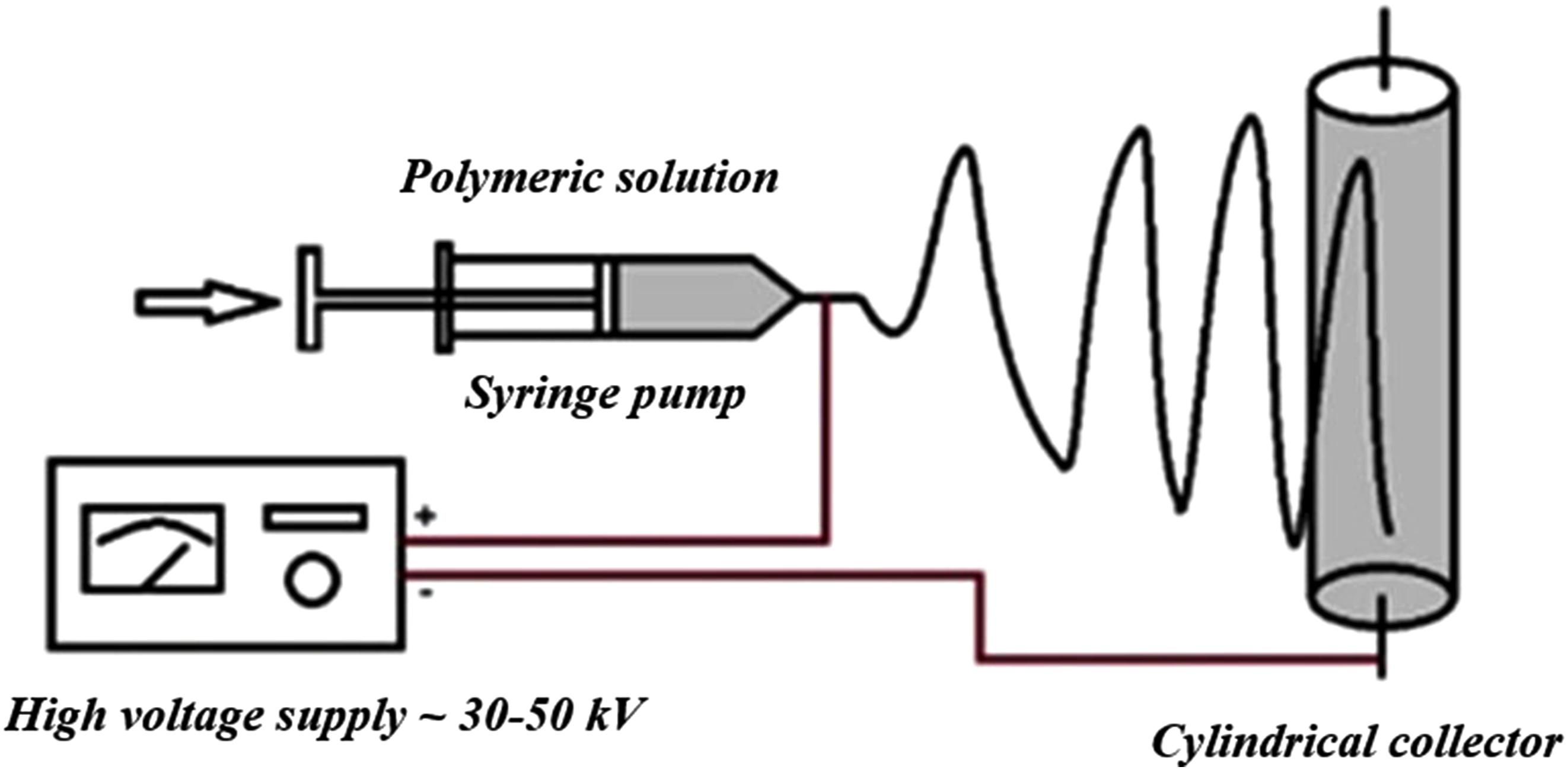
The electrospinning parameters, including polymer and solvent selection, were optimized through a series of experimental tests conducted by Leão et al. 22 The voltage-to-distance gap ratio was chosen based on equipment limitations, with a maximum applied voltage of 35 kV and a maximum needle tip-to-collector distance of 25 cm, both of which influence electrostatic force and fiber formation. Additionally, external parameters such as temperature and humidity were controlled, as the electrospinning device was housed within a sealed acrylic container.
It is important to note that thinner fibers result from a larger distance between the needle tip and the collector, combined with a higher electrostatic force. This configuration leads to greater fiber stretching and a decrease in fiber diameter.
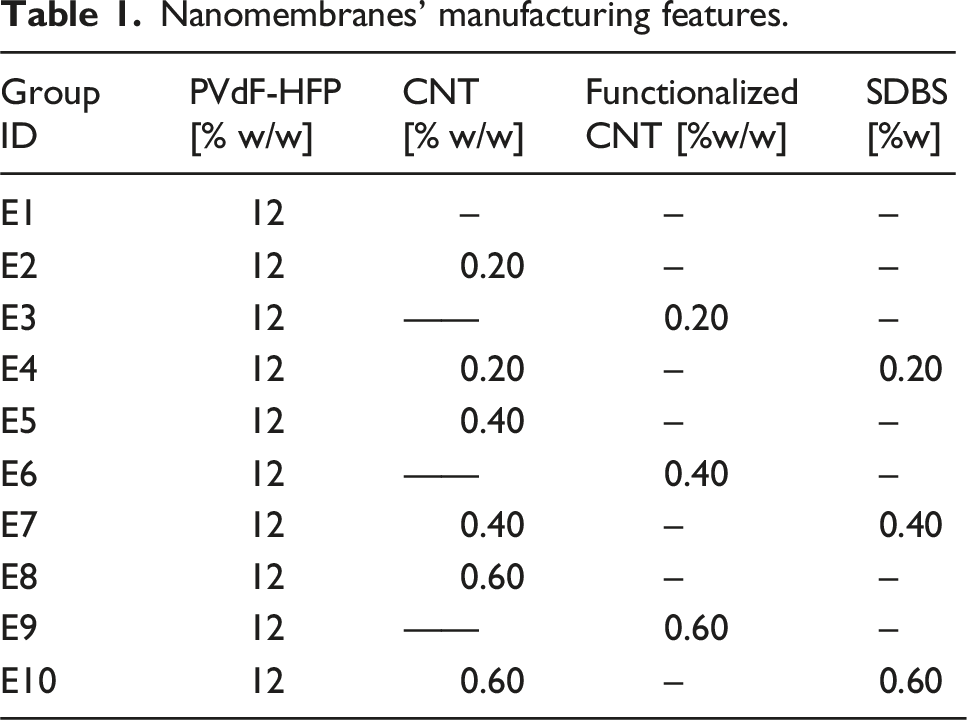
Similarly to Aqeel’s study, 23 the strategy to enhance the electrical conductivity of the polymeric solution involved adding carbon nanotubes (CNTs). These CNTs were functionalized with sodium dodecyl benzenesulfonate (SDBS) at a concentration of 100 ppm. 24 Leão et al 22 employed the non-covalent functionalization method, using sonication at 42 kHz to disperse the CNTs. SDBS serves a dual purpose: it facilitates stable dispersion of CNTs in water by creating non-covalent bonds among CNTs, water, and SDBS itself, thereby preventing CNT agglomeration. Additionally, SDBS reduces surface tension, which is crucial for the formation of nanofibers. Based on prior experiments, a concentration of approximately 20% w/w of SDBS was selected.
Nanomembranes’ manufacturing features.
The acoustic material used in this study was Basotect® UL, specifically melamine foam with a density of 6 kg/m³ and a thickness of approximately 0.5 inches (around 13.0 mm) is the same used by Leão et al
22
in a previous study where the melamine foam and the nanomembrane were associated in series, as shown in Figure 2(a). Acoustic tests were conducted following ASTM C 384 standards
25
using an impedance tube, see Figure 2(b), to evaluate frequencies ranging from 700 to 5700 Hz, chosen to encompass the urban noise spectrum between 800 and 4500 Hz. Details for the impedance construction can be found in da Silva et al.
26
(a) Melamine foam + nanomembrane physical arrangement; (b) in-house impedance tube.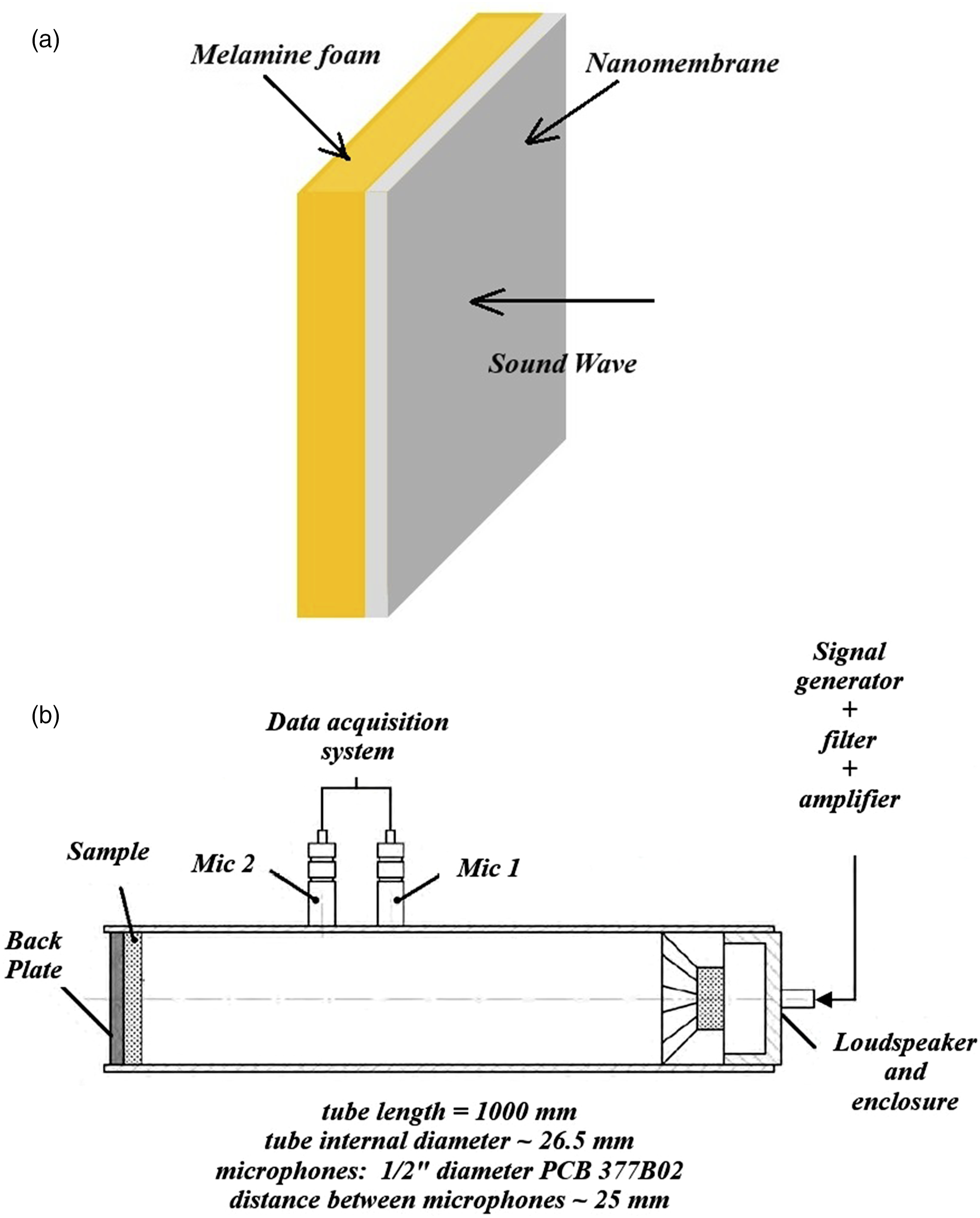
Data analysis and discussion
According to Ghafari et al.,
27
the morphology of nanomembranes is significantly influenced by electrospinning parameters. Furthermore, Hurrell et al.
28
discussed how acoustic properties are directly linked to the microstructural morphology of materials. Leão et al.
29
elaborated on this relationship, studying interactions between sound waves and the microstructure’s walls, channels, and fibers. To investigate these correlations between nanomembrane microstructure and overall acoustic response, a detailed morphological analysis was conducted. SEM observations from groups E1 to E10 are depicted in Figure 3(a)–(j). Table 2 summarizes the key morphological parameters for each group studied. These morphological changes are reflected basically by two parameters, i.e. the porous diameter and the fiber diameter. These two parameters change the air flow resistivity and consequently the noise absorption coefficient. Nanomembranes’ SEM observations by groups. (a) E1; (b) E2; (c) E3; (d) E4; (e) E5; (f) E6; (g) E7; (h) E8; (i) E9; (j) E10. Nanomembranes’ key dimensions.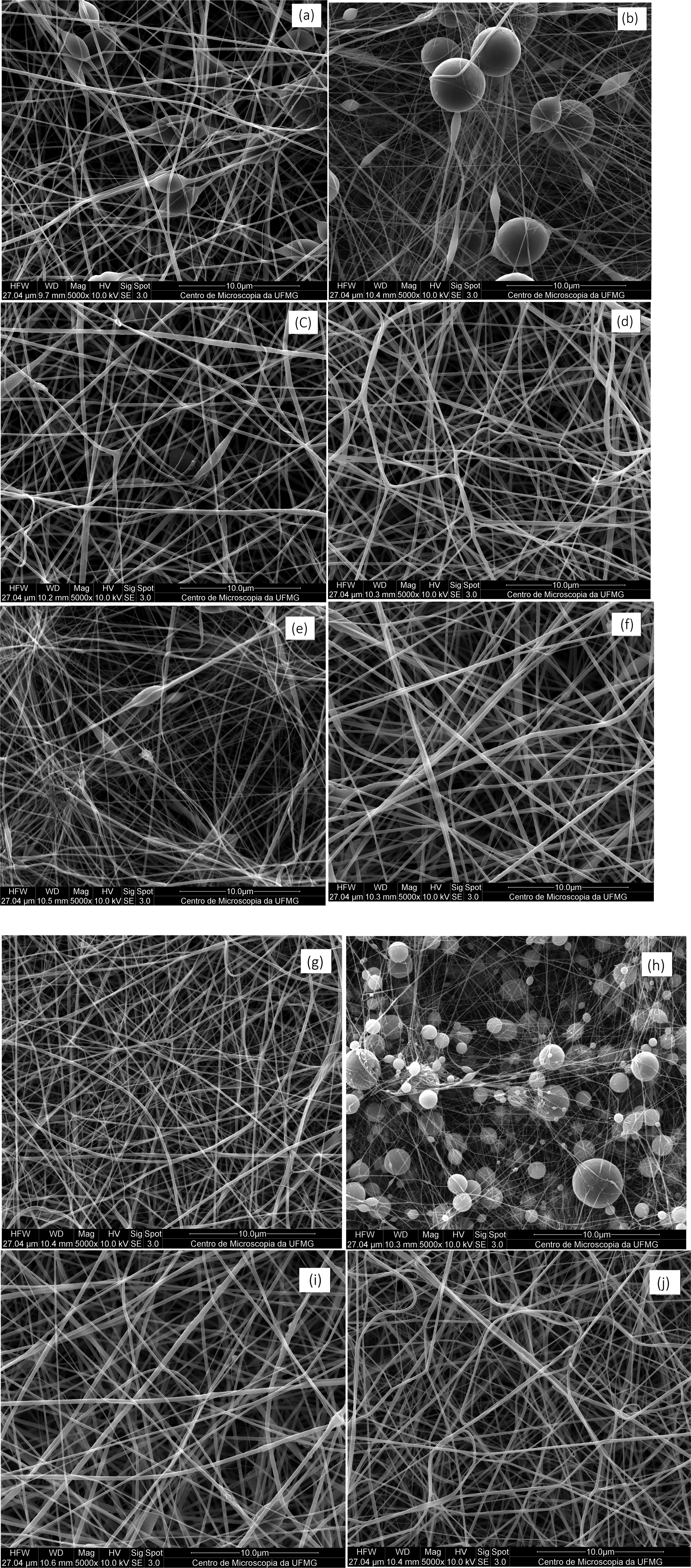
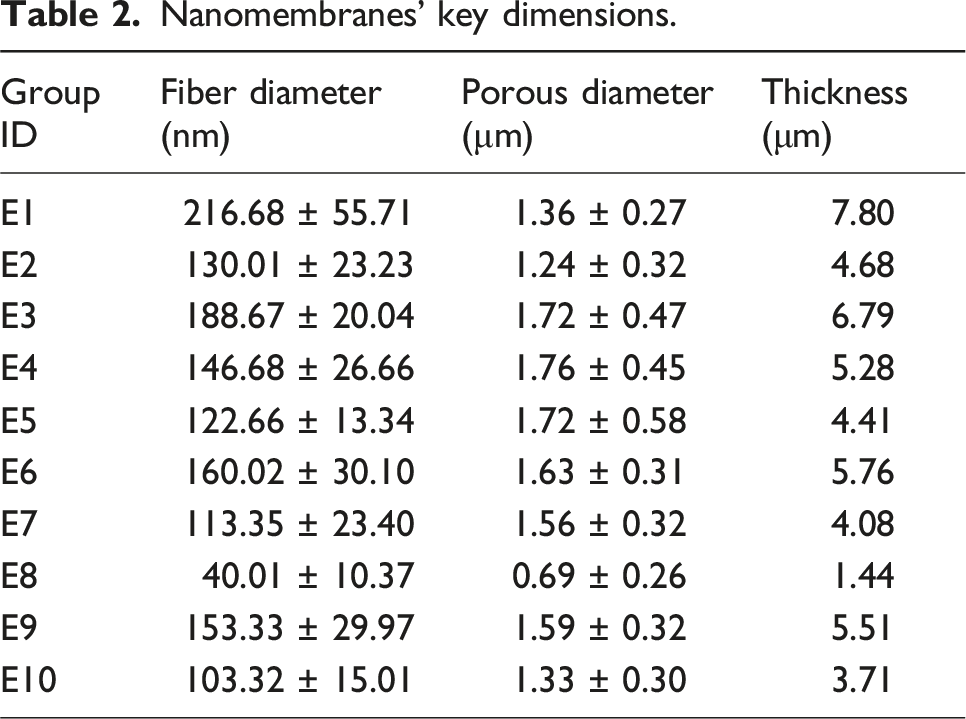
The expected reduction in fiber diameter with the addition of CNTs was observed. As discussed by Mousavi et al., 30 carbon nanotubes exhibit electrical conductivity ranging between 106 to 107 S/m. This increased electrical conductivity enhances the electrostatic forces, resulting in greater stretching of the fibers. Since the fiber volume must remain constant, increased stretching leads to a decrease in fiber diameter.
Understanding these morphological changes is crucial as they directly influence the acoustic performance of the nanomembranes. The findings contribute to optimizing the design and fabrication of nanomembrane-based acoustic materials for effective noise attenuation in urban environments. However, the unexpected formation of large beads (spherical agglomerations) in the nanomembranes warrants explanation. As discussed by Liu et al., 31 one possible cause for the high occurrence of bead (polymer agglomerations) formation is the non-uniform evaporation of the solvent (acetone/DMF) during the electrospinning process. Sánchez-Cid et al. 32 noted that dimethylformamide (DMF) is more stable than acetone under electrospinning conditions. The addition of carbon nanotubes (CNTs) led to an increase in viscosity, from 90 MPa·s without CNTs to 240 MPa·s with 0.6% w/w CNTs. As observed, the E8 samples exhibited the highest viscosity of 240 MPa·s. However, increasing the CNT concentration to 0.6% w/w also enhanced the electrostatic force, which resulted in a smaller fiber diameter. This competing mechanism, however, also promoted a significant increase in bead formation. Unfortunately, it was not possible to measure the overall viscosity of the solution during fiber formation.
The non-covalent functionalization of CNTs by adding a small amount of surfactant had dual effects. Firstly, it decreased surface tension, effectively reducing bead formation. However, it also resulted in an increase in fiber diameter compared to non-functionalized CNTs. This phenomenon can be attributed to the reduced electrical conductivity of the polymeric solution due to the functionalized CNTs. Aqeel et al. 23 attributed this decrease in electrical conductivity to defects introduced during the functionalization process. Additionally, the interaction between CNTs and SDBS at a molecular level likely influenced this behavior.
Further reduction in fiber diameter and more uniform fiber formation was achieved by adding a higher concentration of SDBS to the polymeric solution. The surfactant’s reduction in surface tension promoted consistent flow of the polymeric solution within the needle, maintaining nearly constant electrostatic forces. The surface tension 33 of PVdF-HFP is around 15.3 mJ/m2. The addition of SBDS to the polymeric solution led to a decrease in surface tension by 24–33%, reducing it to a range of 11.6–10.2 mJ/m2, corresponding to concentrations between 0.2% and 0.6% w/w. The CNT/SDBS combination affected not only the solution’s electrical conductivity but also had a direct influence on the overall solution viscosity. This observation is supported by the data in Table 2. As the concentrations of CNT and SDBS increased from 0.2% w/w to 0.6% w/w, the fiber diameter decreased from 147 nm to 103 nm. As discussed by Leão et al., 22 the reduction in viscosity “facilitates” solution stretching, leading to smaller fiber diameters. However, the pore diameter in each case was a result of local phenomena, with a constant transversal speed maintained at 62.5 mm/min.
Since this study involves a hybrid system of nanomembranes and melamine foam, it is essential to examine the morphology of the support material, melamine foam. Figure 4 illustrates the microstructure of melamine foam, with an average fiber diameter of approximately 5.0 µm, a pore diameter close to 100 µm, and a porosity of around 97% (0.97). According to Leão et al.,
22
these morphological characteristics are suitable for melamine foam to act effectively as a cavity for the Helmholtz resonator, with the nanomembranes serving as the resonator neck. In its pure form, melamine foam exhibits a peak acoustic absorption coefficient of approximately 0.94 in a high-frequency range (∼6150 Hz). This aligns with findings by Tang and Yan,
34
who indicated that melamine foam’s peak energy absorption coefficient typically occurs between 5000–6500 Hz, varying with foam thickness and density. However, when nanomembranes are introduced, the acoustic properties change significantly. Table 3 summarizes the system’s acoustic characteristics, including noise reduction values based on the absorption coefficient. As discussed by Zeqiri et al.,
35
there exists a mathematical relationship between noise reduction (d), also known as transmission loss, and noise absorption coefficient (C). This relationship is typically expressed as equation (1): Melamine foam micrograph. New hybrid system acoustics properties.


As this research is dealing with the urban noise frequency ranged between 500 and 4500 Hz, the noise drop/transmission loss mean value 
Moreover, the peak absorption coefficient values for the foam/nanomembrane system shifted from around 6150 Hz (foam without nanomembranes) to frequencies between 2400 and 4300 Hz. This phenomenon can be explained by the Helmholtz resonator effect. 36 The resonator effect occurs at nano/micro levels when the airflow is changed by the interactions between the air particles and the nanofibers. These interactions can be represented by the nanofibers’ vibration. These vibrations not only perturb the airflow inside the nanomembrane itself but also affect the airflow inside the support material/melamine foam. Based on such assumptions, Leão et al. 22 postulated that inside the resonator, the airflow resistivity is no longer constant. This assumption is reasonable, as small morphological changes inside the nanomembranes lead to differences in peak frequencies and a decrease in noise transmission. Given the focus on urban noise frequencies ranging from 500 to 4500 Hz in this research, it’s essential to calculate the mean noise drop or transmission loss value (d̄) based on the acoustic properties summarized in Table 3.
The values presented in Table 3 demonstrate a significant reduction in noise transmission, indicating the effectiveness of the nanomembrane-melamine foam hybrid system. Furthermore, the peak absorption coefficient values for the foam/nanomembrane system have shifted from approximately 6150 Hz (for foam without nanomembranes) to frequencies ranging between 2400 and 4300 Hz. This shift can be attributed to the Helmholtz resonator effect. 36
The Helmholtz resonator effect at the nano/micro level occurs due to airflow perturbations caused by interactions between air particles and nanofibers. These interactions induce vibrations in the nanofibers, which alter the airflow within both the nanomembrane and the melamine foam support material. According to Leão et al., 22 such vibrational effects disrupt the uniformity of airflow resistivity inside the resonator. Even minor morphological changes in the nanomembranes can lead to shifts in peak frequencies and improvements in noise transmission reduction.
Furthermore, Zhao et al. 37 suggested that membranes used in noise reduction systems, such as those in landing gears and aluminum mesh, are more efficient at higher airflow velocities. The new system is expected to behave similarly; however, further experiments are needed to confirm this. Additionally, the density and thickness of the resonator cavity are key parameters that will influence the overall noise absorption coefficient at different frequencies. The resonator frequency 36 is inversely proportional to the square root of the cavity volume and directly proportional to the square root of the neck area, which, in this case, corresponds to the nanomembrane’s area.
By analyzing Figure 5(a)–(d), several conclusions can be drawn regarding the resonator effect, which appears to depend significantly on three key parameters: the thickness of the nanomembranes (equivalent to the resonator’s neck), the porous size of the nanomembranes, and the wall thickness of the nanofibers. According to Kalinova
36
the natural frequency of the resonator is inversely proportional to the square root of the resonator’s neck thickness. Therefore, thicker nanomembranes result in lower resonant frequencies. Conversely, Wang et al.
38
note that an increase in porous diameter also lowers the resonator’s frequency. Sound absorption coefficients plot: (a) case: E01 and Foam; (b) cases: E02–E04; (c) cases: E05–E07; (d) cases: E08–E10.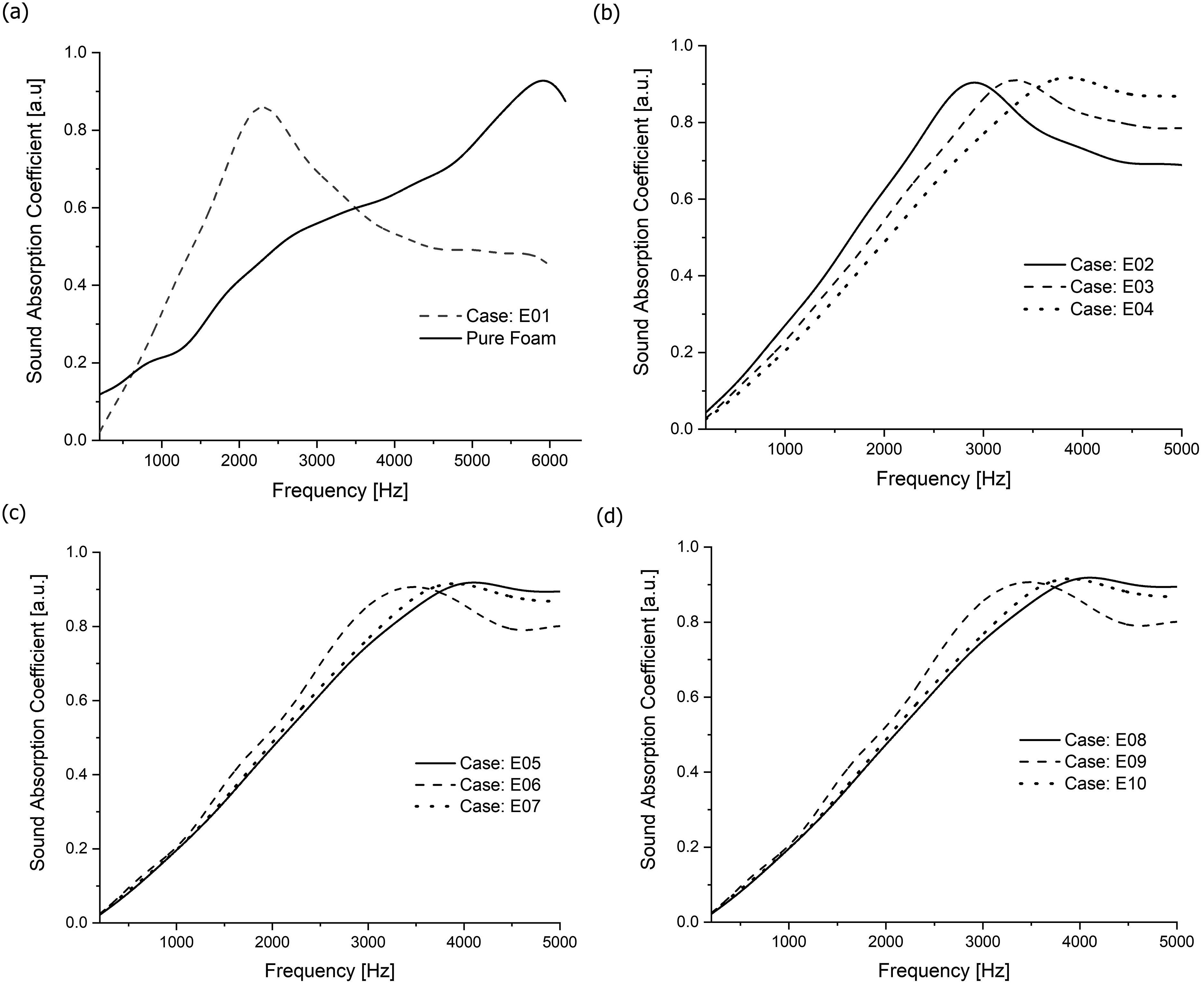
Moreover, the resonator’s wall thickness is directly proportional to its resonant frequency. Thinner walls are more prone to vibration when airflow passes through, as discussed by Wang et al. 38 These parameters—thickness of the neck, porous size, and wall thickness—are interdependent and collectively influence the resonant behavior, as observed in Figure 5(a)–(d). For instance, in Figure 5(a), case E1 exhibits the thickest neck (7.80 μm) and walls (216 nm), resulting in the lowest resonant frequency (2388 Hz) and a steep slope in the linear part of the curve, indicating high stiffness due to the thick walls.
The overall acoustic response depends on the nanofiber diameter, the pore diameter, and the foam’s (cavity’s) porous structure. The resonant frequency is influenced by the cavity volume and the neck area, which corresponds to the nanomembrane area. This area is determined by the porous structure and the fiber diameter/wall thickness. As discussed by Pelegrinis et al., 39 the resonator’s noise absorption coefficient is related to the characteristic impedance and the airflow resistivity. The porosity of the nanomembrane is the key parameter that controls airflow resistivity.
Conversely, in Figure 5(d), case E8 (foam + nanomembrane + 0.60 wt.% CNT) displays the thinnest wall thickness (40 nm), smallest porous size (0.69 μm), and thinnest neck thickness (nanomembrane thickness approximately 1.44 μm). Although these factors would typically suggest a higher resonant frequency individually, the thinner walls facilitate easier vibration, counteracting the effects of the other parameters and resulting in a different outcome. Note that, as discussed by Oliva and Hongisto 40 traditional acoustic foams are thicker and have their peak performance at high frequency, in general around 5500–6500 Hz, while the new system is thinner and capable of a peak performance around mid-frequencies, i.e. 2000–3000 Hz.
Case study: area around Congonhas airport in downtown São Paulo
To demonstrate the practical application of this hybrid material, we turn to a real-world scenario at Congonhas Airport in São Paulo, Brazil. According to Pereira Barboza et al.,
41
São Paulo is densely populated, with Congonhas Airport located in a heavily urbanized area of approximately 172 km2, serving millions of passengers annually. The noise levels in this area exceed recommended limits, with daytime and nighttime noise often surpassing 65 dB and 55 dB, respectively, as noted by Roca-Barceló et al.
42
(see Figure 6(a) and (b)). In addition to the noise generated by aircraft around the airport, the heavy traffic noise produced by buses and cars must also be considered. The city of São Paulo is served by 1304 bus routes, with 13,300 buses transporting around 6.0 million people each day.
43
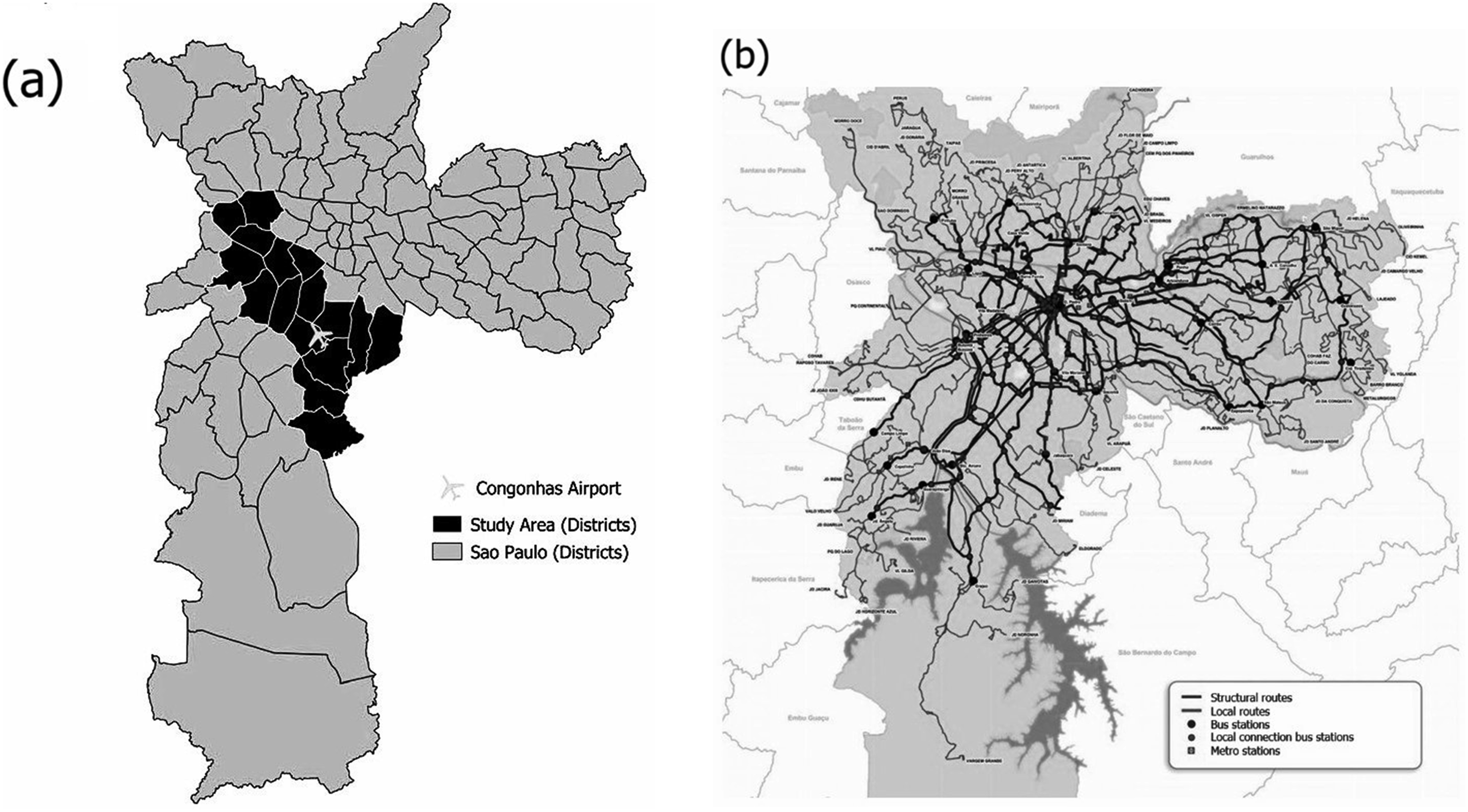
The noise levels reported by Roca-Barceló et al. 42 around Congonhas Airport can be extrapolated to passengers and drivers inside the buses circulating in this area, as there are currently no acoustic isolation materials in these public transportation vehicles in Brazil. The effectiveness of the proposed system aligns with the noise frequency spectrum measured by Yang et al. 44 for buses, which ranges between 1 kHz and 4 kHz, with a peak around 2500 Hz. Therefore, the new system could be an effective solution to mitigate this problem.
Numerical models indicate that 85% of the population living, passing through, or working around Congonhas Airport—totaling approximately 2.13 million inhabitants—could experience noise levels below 55 dB with the application of the new acoustic panels to municipal buses. Public transportation, particularly buses, could also benefit from the implementation of these new acoustic panels. The manufacturing process for the nanomembranes is scalable and cost-efficient, making widespread adoption feasible. Figure 7(a) and (b) show the noise map published by Roca-Barceló et al.
42
for the study area around Congonhas Airport, along with the proposed noise map for the same area considering the use of the new acoustic material system. Noise map: (a) before using the new acoustic material; (b) after using the new acoustic material.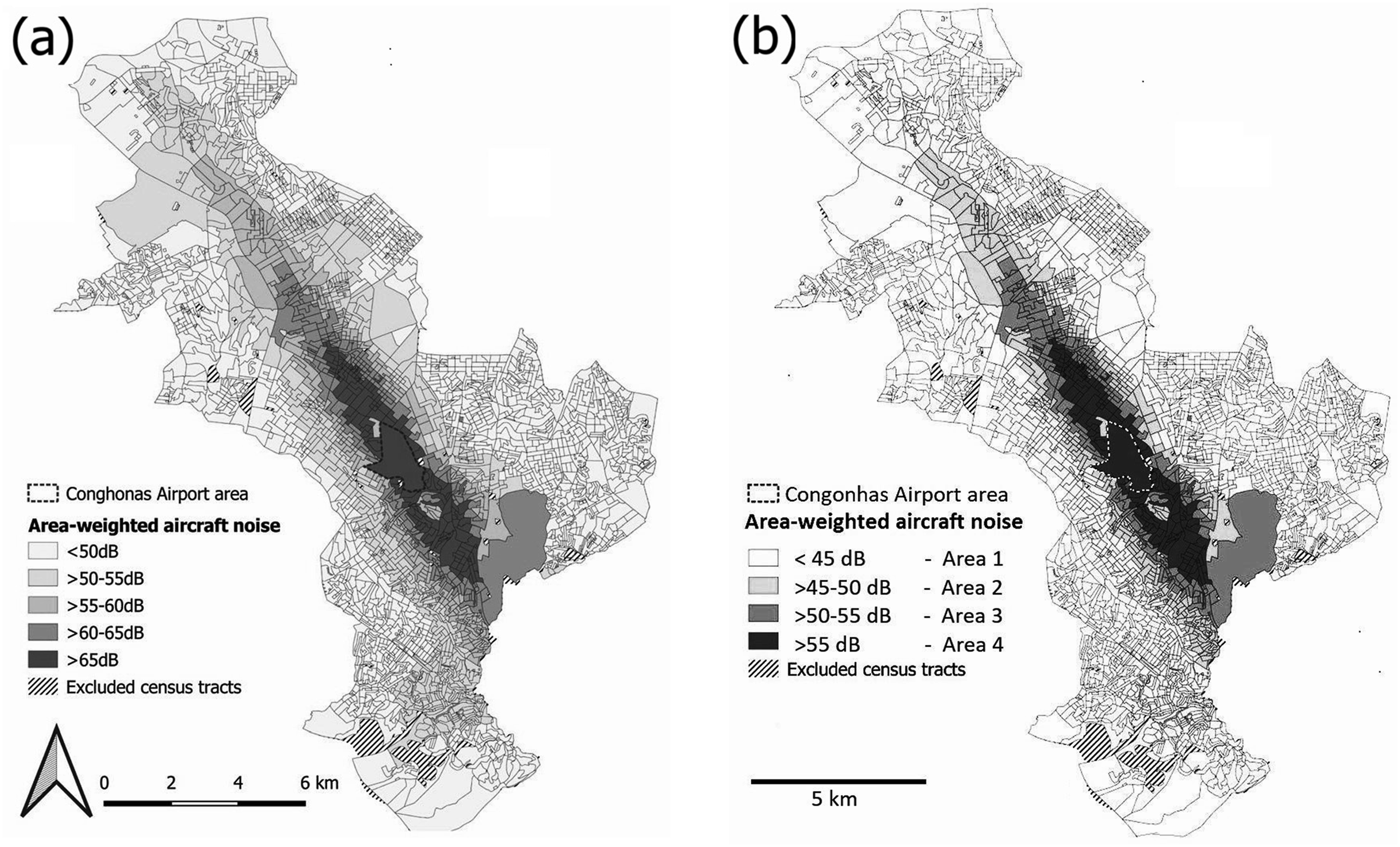
In summary, the application of the hybrid acoustic system could be a promising solution for mitigating urban noise inside buses circulating around Congonhas Airport. However, it is important to note that while the new acoustic isolation system is designed to be placed between the bus’s external surface and the internal panels, all acoustic foams are susceptible to humidity absorption. Therefore, the space between the external surface and the internal panels must be sealed to ensure optimal performance and durability. This sealed condition is especially important during Brazil’s rainy season, from November to March.
Conclusions
Urban noise inside public transportation, particularly buses, has been identified as a significant contributor to various health issues. Despite its clear impact on public health, there is still a need for effective and cost-efficient acoustic materials capable of attenuating noise in urban buses. Recently, a new class of materials at the micro/nano level has been developed to address this challenge. Experimental data has shown promising results with an innovative approach that combines acoustic foam and nanomembranes, forming a Helmholtz resonator system. In this setup, the nanomembranes, with an average thickness of 5.0 µm, act as the resonator neck, while the acoustic foam, 13 mm thick, serves as the resonator cavity. The combination achieves an average sound absorption coefficient of approximately 89%, corresponding to an average noise reduction of 11 dB.
Importantly, the peak frequencies for effective noise absorption ranged from 2400 Hz to 4300 Hz, covering the critical frequency range of 2500–2800 Hz associated with urban noise in and around buses. The effectiveness of this hybrid material was further demonstrated in a case study involving Congonhas Airport, the second-busiest airport in Brazil, located in downtown São Paulo. This area experiences high levels of both aircraft and heavy traffic noise. The noise levels in the area during the daytime reach around 65 dB. By applying the proposed system, peak noise levels could be reduced to approximately 53 dB near the airport and to less than 45 dB within a 5 km radius from the airport’s main runway.
Finally, the nanomembranes are fully recyclable and can be replaced by sustainable polymers, such as Polylactic Acid (PLA).
Footnotes
Author contributions
Elvis C Monteiro: Conceptualization; Data curation; Formal analysis; Investigation; Methodology; Resources; Validation; Visualization. Antonio F Avila: Conceptualization; Data curation; Formal analysis; Funding acquisition; Investigation; Methodology; Project administration; Resources; Supervision; Validation; Visualization; Roles/Writing - original draft; and Writing - review & editing.
Declaration of conflicting interests
The author(s) declared the following potential conflicts of interest with respect to the research, authorship, and/or publication of this article: The authors certify that they have NO affiliation with or involvement in any organization or entity with any financial interest (such as honoraria; participation in speakers’ bureaus; membership, employment, consultancies, stock ownership, or other equity interest; and expert testimony or patent-licensing arrangements), or non-financial interest (such as personal or professional relationships, affiliations, knowledge or beliefs) in the subject matter or materials discussed in this manuscript.
Funding
The author(s) disclosed receipt of the following financial support for the research, authorship, and/or publication of this article: The authors are grateful for the financial support provided by the Brazilian Research Council (CNPq) under grant 406040/2021-4 and 307385/2022-1. The CAPES Foundation under grant 001. They also would to acknowledge the UFMG’s Mechanical Engineering Graduate Studies Program (PPGMEC) and the UFMG’s Microscopy Center (CM), for providing the technical support.
