



Abstract
Excessive vibration in horizontal-axis washing machines, primarily caused by unbalanced rotating masses during high-speed spinning, leads to structural noise, reduced component life, and transmission of forces to the supporting floor. This study presents a comprehensive approach for vibration reduction through the design and optimization of a Tuned Dynamic Vibration Absorber (TDVA). A detailed mathematical model of the washing machine drum system was developed by incorporating the effects of inclined suspension springs and dampers, equivalent vertical stiffness, and the unbalanced mass eccentricity excitation. Den Hartog’s equal-peak tuning principle was employed to obtain absorber stiffness and frequency ratios. To enhance tuning accuracy under real damping conditions, a Genetic Algorithm (GA) was implemented to optimize the absorber mass by minimizing the frequency response amplitude of the primary system. The GA achieved rapid convergence, identifying an optimal absorber mass of approximately 0.654 kg, which was shown to significantly reduce the resonant peak. A compact cantilever-based absorber prototype was designed with a tunable tip mass to achieve the optimized stiffness-mass combination. Experimental investigations were performed on an actual washing machine to validate the model predictions. Results demonstrate that the optimized TDVA achieves up to 46–50% reduction in vibration amplitude near the natural frequency, outperforming classical designs and non-optimized absorbers. The study confirms that the hybrid Den Hartog analytical tuning with evolutionary Genetic Algorithm based optimization produces a highly effective and practical vibration mitigation solution for household washing machines. This integrated modeling, optimization and experimental framework provides a robust guideline for future appliance vibration control design.
Introduction
Household washing machines are among the most widely used domestic appliances, yet vibration during operation particularly in horizontal-axis drum models remains a persistent challenge to its manufacturers. During the spinning cycle, the presence of an unbalanced mass caused by uneven laundry distribution generates large centrifugal forces that excite the drum-tub assembly. These forces transmit significant vibrations to the cabinet structure and supporting floor, resulting in excessive noise, user discomfort, structural fatigue, and reduced machine lifespan. Modern high-speed washing machines, which operate at elevated rotational speeds to improve drying efficiency, are even more susceptible to dynamic instability and resonance amplification. Consequently, enhancing vibration control in washing machines has become a critical requirement for improving appliance performance, safety, and reliability.
Horizontal-axis washing machines exhibit complex dynamic behaviour due to the combined action of an unbalanced rotating mass, nonlinear suspension characteristics, inclined springs and dampers, and varying load conditions. Prior research has focused on modelling these dynamic forces and developing vibration mitigation solutions. Lee et al. 1 developed one of the most detailed dynamic models for a horizontal-axis washing machine, incorporating the drum, tub, suspension system, and unbalanced mass effects. Their study provided a multi-degree-of-freedom (MDOF) mathematical model capable of predicting lateral, vertical, and rotational motions of the drum under different operating speeds. The authors demonstrated that drum eccentricity and nonlinear suspension characteristics lead to complex dynamic behavior, particularly during the transition from washing to spinning. Model predictions were validated using experimental data, establishing the study as a foundational reference for dynamic modeling of washing machines. The work highlighted the need for improved suspension tuning and vibration suppression devices. Building on the need for vibration mitigation, Ahn and Kim 2 investigated the use of a dynamic vibration absorber (DVA) specifically designed for reducing drum vibration in washing machines. Their study involved both analytical modeling and experimental validation of a DVA mounted on the washing machine tub. The authors demonstrated that a properly tuned absorber significantly lowers vibration amplitude near the resonance frequency during spinning. The research further examined absorber placement, stiffness tuning, and mass selection, showing that the DVA effectively suppresses out-of-balance forces without requiring major changes to the machine design. This work provided clear evidence that DVAs are a practical solution for consumer appliances. Other studies have explored improved suspension architectures, active control methods, and tuned mass dampers (TMDs) for reducing structural response. Although these investigations have contributed substantially to understanding and controlling washing machine vibrations, several challenges remain unresolved. Classical absorber tuning rules such as Den Hartog’s equal-peak method assume simplified system dynamics and often fail to achieve optimal damping for real machines that exhibit structural damping and multi-directional responses. Additionally, prior experimental studies lack systematic optimization of absorber parameters and do not fully integrate numerical modelling with practical absorber design.
To address these limitations, there is a growing need for hybrid methodologies that combine analytical tuning, numerical modelling, and intelligent optimization to design highly effective vibration absorbers tailored to actual machine dynamics. Genetic Algorithms (GAs), inspired by natural evolution, have emerged as powerful tools for optimizing vibration absorbers due to their ability to handle nonlinear objective functions and multimodal design spaces without requiring gradient information. When integrated with Den Hartog’s equal-peak principle and detailed system modelling, GA optimization offers the potential to achieve superior absorber tuning that minimizes vibration amplitude under realistic operating conditions.
The present study proposes a comprehensive framework for the design, optimization, and experimental validation of a tuned dynamic vibration absorber for a horizontal-axis washing machine. A complete mathematical model of the drum–tub system is developed by incorporating inclined springs, inclined dampers, equivalent vertical stiffness, and the unbalanced mass excitation. Den Hartog’s equal-peak tuning principle is used to obtain preliminary absorber parameters, which are subsequently optimized using a Genetic Algorithm to minimize the frequency response amplitude of the primary system. A practical absorber prototype is designed using a mild steel cantilever beam with an adjustable tip mass, enabling fine-tuning of absorber stiffness. Extensive experimental tests including free-vibration analysis, damping estimation using logarithmic decrement, and multi-point accelerometer measurements are conducted to validate the analytical and numerical results. This integrated modelling optimization and experimental approach provides a robust pathway for achieving substantial vibration reduction in washing machines. The findings not only confirm the effectiveness of the optimized DVA but also demonstrate a practical route for implementing advanced vibration control solutions in commercial home appliances.
Literature review
Dynamic vibration absorbers have been widely studied for suppressing resonant vibrations in mechanical systems, from automotive components to building structures. Den Hartog 3 laid the foundational theory of DVA tuning which introduced the equal-peak tuning principle for vibration absorbers, which ensures minimum maximum amplitude of vibration by balancing the two resonance peaks. Subsequent research has expanded DVA applications to automotive, aerospace, and rotating machinery. Recent advancements include nonlinear absorbers and adaptive tuning systems. In appliances, applications of DVAs remain relatively unexplored, particularly in optimizing for unbalanced rotating masses like those in washing machine drums. In the context of washing machines, DVAs have been studied as both rigid-mass-spring systems and viscoelastic tuned absorbers. Recent work also incorporates optimization algorithms for absorber tuning. However, practical designs for domestic appliances must balance simplicity, cost, and robustness.
Dynamic vibration absorbers (DVAs) have been widely researched as an effective means for suppressing unwanted vibrations in mechanical and structural systems. Recent studies emphasize theoretical advancements, optimal parameter selection, and experimental verification of absorber performance under realistic operating conditions. Zhang et al. 4 conducted an in-depth theoretical and experimental study on a ball-type vibration absorber applied to offshore wind turbines. Their work introduced a nonlinear spherical pendulum model that captures the multi-directional nature of the absorber motion under wind and wave excitations. A key outcome of the study was the demonstration that ball vibration absorbers can provide substantial vibration mitigation even under stochastic loading conditions. Through scaled laboratory tests and full simulation studies, the authors verified that the absorber maintains stability and performance robustness across a wide range of operating parameters. This work highlights the potential of using novel absorber geometries, especially for large-scale, low-frequency structural systems. In contrast, Sun and Nagarajaiah 5 focused on the optimal design of tuned mass dampers (TMDs) for civil engineering structures subjected to harmonic and seismic excitations. The study derived closed-form optimality conditions for TMD stiffness and damping through analytical optimization, considering both undamped and damped primary structures. Their results established generalized tuning formulas that outperform classical Den Hartog equal-peak design under certain conditions, especially when structural damping is significant. Importantly, the authors demonstrated that optimal damping ratios and frequency tuning parameters vary substantially with the damping level of the host structure an insight critical for accurate absorber design. This work forms a strong analytical foundation for modern DVA optimization. Complementary to this, Bakre and Jangid 6 investigated optimal TMD parameters for damped primary systems using numerical optimization techniques. Unlike analytical approaches, their study employed parametric sweeps to identify damping and tuning ratios that minimize steady-state response amplitudes. The authors showed that optimal absorber parameters are highly sensitive to the damping ratio of the primary structure, with significant deviations from classical tuned conditions when damping is non-negligible. The study also concluded that optimally designed TMDs yield substantial vibration reduction over a broad frequency range, thereby enhancing robustness to off-tuning. Their numerical results strongly support the growing consensus that classical absorber designs must be modified when applied to real-world damped systems.
Vibration control in horizontal-axis washing machines has been a major focus of research due to issues such as excessive drum oscillation, noise, loss of stability during high-speed spinning, and increased floor vibration. Several studies have examined the dynamic behavior of washing machines and proposed strategies to mitigate these vibrations, particularly through improved modeling and vibration absorber design. In another contribution, Sohn and Park 7 focused on the modeling and control of the suspension system in drum-type washing machines. Their research proposed an improved suspension configuration and evaluated its vibration control performance using both linear and nonlinear models. The authors implemented an advanced control strategy including active control algorithms to stabilize the drum during unbalanced spinning conditions. Results showed significant reduction in vibration transmission to the cabinet structure, suggesting that control-augmented suspension systems offer advantages over passive systems alone. This study contributed a deeper understanding of suspension dynamics and their effect on drum stability. More recently, Lee and Lee 8 explored the integration of tuned absorbers specifically designed for drum-type washing machines. Their study investigated the effect of absorber tuning frequency, mass ratio, and damping ratio on the vibration levels during both washing and spinning modes. Experimental tests showed that multiple tuned absorbers attached to the frame can significantly reduce vibration at the resonance frequency while maintaining stability at higher spin speeds. The authors also highlighted the importance of precise tuning, as small deviations from the optimal frequency can reduce absorber efficiency. This research confirmed that tuned absorbers remain an effective and low-cost solution for commercial washing machines. Collectively, these studies show steady progress from detailed dynamic modeling of washing machines to practical implementation of DVAs, controlled suspension designs, and advanced tuned absorber configurations. The literature emphasizes that vibration reduction can be achieved through accurate modeling, improved suspension tuning, and absorber optimization. These findings provide a strong foundation for developing advanced vibration absorbers, including those optimized using modern algorithms such as Genetic Algorithms.
Optimization techniques, particularly evolutionary algorithms, have become essential tools for solving complex engineering problems involving vibration control, structural tuning, and parameter identification. The following works represent foundational and advanced contributions to genetic algorithms (GAs), engineering optimization, tuned mass damper (TMD) design, and numerical analysis.
Goldberg’s seminal text on genetic algorithms 9 laid the theoretical foundation for evolutionary search and optimization. The book introduced key GA mechanisms such as selection, crossover, mutation, fitness evaluation, and schema theory, establishing why GAs are well-suited for nonlinear, multimodal optimization problems. Goldberg demonstrated that GAs do not require gradient information and are capable of efficiently searching large and complex design spaces an attribute highly beneficial in vibration absorber optimization where system dynamics may be nonlinear and sensitive to parameter variations. This work remains a cornerstone reference for the development and application of GA in engineering. Deb’s classic book on engineering optimization 10 provided rigorous mathematical formulations for various optimization methods, including linear, nonlinear, unconstrained, and constrained optimization. Deb emphasized the importance of design sensitivity, search space characterization, and convergence behavior. Though not limited to evolutionary algorithms, the book offered practical guidance on problem formulation and highlighted the strengths of population-based search, especially when dealing with multi-objective engineering problems. This work is widely referenced for structuring optimization problems related to absorber tuning and dynamic system performance enhancement. Bekdas et al. 11 introduced a hybrid optimization strategy combining Genetic Algorithms (GA) with Artificial Bee Colony (ABC) algorithms for the optimum design of tuned mass dampers. Their study demonstrated that hybrid evolutionary methods outperform single-algorithm approaches in terms of convergence speed and solution robustness. Through numerical experiments on multi-degree-of-freedom structures, the authors showed that the hybrid GA-ABC algorithm yields superior absorber parameters that produce substantial vibration reduction across a wide frequency band. This research validates the effectiveness of metaheuristic hybridization for vibration control applications, suggesting that single GA optimization can be further improved through algorithmic integration. Goswami and Chakraborty 12 applied GA directly to the optimal parameter design of TMDs for vibration control in building structures. Their study modeled absorber tuning frequency, damping ratio, and mass ratio as decision variables and optimized them by minimizing structural response under harmonic loading. The authors demonstrated that GA-based optimization achieves better vibration attenuation than classical tuning rules derived from Den Hartog theory. The results confirmed that GA can efficiently explore the nonlinear design space and is particularly valuable when system damping or external forcing deviates from idealized assumptions. This research provides strong justification for using GA-based tuning of absorbers in engineering systems such as washing machines. Finally, Bathe and Wilson’s foundational work on numerical methods 13 offered a rigorous treatment of finite element analysis (FEA), providing theoretical and practical tools for discretizing and solving dynamic systems. Their text covers stiffness matrix formulation, numerical integration schemes, convergence criteria, and error estimation methods essential for accurately modeling vibration systems and validating absorber performance. In modern vibration absorber studies, FEA is frequently used to simulate system response and verify the effectiveness of optimized absorber parameters, making this reference highly relevant to DVA design. 14
Recent work in vibration control systems has expanded beyond traditional passive designs toward active control and intelligent systems, confirming that while research is advancing, application to consumer appliances like washing machines remains limited. An active Vibration Control with Electrodynamic Actuators 15 have developed for rotating machines using electrodynamic actuators and state-space control formulations. Such systems actively suppress resonance peaks in the frequency response of rotating machinery using feedback from velocity or displacement sensors coupled with electrodynamic actuators, demonstrating the effectiveness of active control in reducing dynamic responses in mechanical systems. An active vibration isolation system with an active dynamic vibration absorber and Kalman filter estimated acceleration feedback has been developed, 16 showcasing a framework similar in principle to active suppression using sensors and absorbers, although in a different application domain such as air spring systems. In parallel engineering fields, novel dynamic vibration absorber designs are being proposed with enhanced frequency regulation capabilities such as multi-resonant units for multi-frequency excitation suppression highlighting the need for better bandwidth control in DVAs. 17 Active vibration isolation platforms, such as those using piezoelectric Stewart platforms and advanced linearization strategies have been developed which demonstrates the trend toward intelligent control and active mitigation of vibration across complex systems. These approaches use actuator networks and active control algorithms for isolation, which conceptually align with active control objectives even if applied in different contexts such as robotics or precision platforms. 18 Recent research has introduced intelligent vibration damping bases for washing machines using stiffness-variable magnetorheological elastomers to adapt to varying excitation conditions. This work shows the shift toward adaptive vibration mitigation in household machines but remains passive/semi-active rather than true closed-loop active control with actuators. 19
Hybrid vibration absorbers that combine tuned mass dampers and feedback-controlled actuators have been proposed to overcome limitations of both passive and active systems, demonstrating improved performance in vibration suppression through acceleration feedback. 20 Developments in particle damping technology and advanced DVA configurations to dissipate vibration energy in rolling and mechanical systems have also been reported, indicating continued research into improved vibration absorber effectiveness in engineering systems. 21
The reviewed literature indicates that vibration control in washing machines and other dynamic systems has been extensively studied through three major research directions which are dynamic modeling of vibration sources, design of passive vibration absorbers and optimization of absorber parameters using heuristic algorithms. Studies on washing machine dynamics highlight that drum vibration originates from unbalanced rotating masses and nonlinear suspension behavior. These works establish that accurate mathematical modeling is essential for predicting vibration responses and evaluating absorber performance. The literature also confirms that tuned vibration absorbers (TVAs) and tuned mass dampers (TMDs) are effective passive solutions for reducing resonance-induced vibrations during high-speed spinning. Foundational vibration-control research by Den Hartog and subsequent analytical tuning methods have provided classical guidelines for absorber frequency and damping. More recent works integrate modern optimization techniques, including hybrid evolutionary algorithms and genetic algorithms (GA), to obtain absorber parameters that outperform classical tuning rules. Literature review demonstrates that GA-based or hybrid optimization leads to superior absorber behavior compared with traditional designs. Overall, the literature suggests that while tuned absorbers are effective, their performance is highly sensitive to design parameters such as mass ratio, tuning frequency, and damping. This creates a strong motivation for optimization-driven absorber design specifically tailored to real-world, damped systems like washing machines.
Although extensive research has been carried out on vibration reduction in washing machines and rotating mechanical systems, most existing studies primarily focus on passive or semi-active solutions such as tuned mass dampers, suspension optimization, and magnetorheological or elastomer-based damping elements. These approaches are generally effective only within a narrow frequency range and lack the capability to adapt in real time to changing operating conditions such as load imbalance, varying spin speeds, and nonlinear excitation forces. Recent optimization-based studies, including genetic algorithm–based tuning of suspension or absorber parameters, are predominantly implemented offline and applied mainly to passive components. Furthermore, active vibration control techniques, although well explored in large-scale structures and aerospace applications, have not been practically implemented or experimentally validated for household washing machines due to constraints related to cost, size, power consumption, and controller complexity. This gap highlights the need for a compact, cost-effective, and intelligent active vibration control system capable of adapting to varying operating conditions, which motivates the present study.
This work presents a hybrid DVA design methodology that integrates Den Hartog’s equal-peak tuning principle with Genetic Algorithm optimization, applied to a detailed dynamic model of a horizontal washing machine drum. The study develops and experimentally validates a cantilever-type tuned absorber structure, demonstrating significant vibration reduction compared with classical tuning and unoptimized designs. This combination of analytical tuning, evolutionary optimization, and real-machine validation establishes a novel and practical framework for vibration mitigation in household appliances.
Mathematical modeling of washing machine drum
The selection of a horizontal-axis washing machine drum for vibration analysis is scientifically justified due to the fundamental differences in vibration characteristics between horizontal and vertical drum configurations. These differences directly affect the direction, magnitude, and transmission of dynamic forces, making the horizontal-axis configuration more suitable for controlled vibration studies. Horizontal drums generate higher vertical vibrations because the imbalance force acts in a rotating vertical plane. These vertical vibrations are more responsible for the transmission of vibrations into the floor. The reaction forces are transmitted primarily into the vertical direction through the suspension system. During high-speed spin, the drum produces strong vertical oscillations, which are critical for vibration analysis. Hence horizontal drum washing machines cause more floor vibrations than vertical drum. Vertical machines do not produce such pronounced vertical vibration patterns. A horizontal washing machine drum is selected over a vertical drum for vibration study because horizontal-axis machines produce higher vertical vibrations, which causes floor to vibrate heavily. Vertical-axis machines produce more lateral vibrations, which are irregular and less relevant.
Horizontal drum washing machines experience significant vibration during the spinning cycle due to unbalanced rotating laundry. The suspension system consists of inclined springs and dampers, which can be mathematically modeled to predict vibration response. By deriving an equivalent horizontal stiffness and damping, the system can be analyzed more easily and extended with a Dynamic Vibration Absorber (DVA) for vibration control. Figure 1 shows physical model of the horizontal drum of mass M and eccentric mass of m. The suspension system consists of two identical springs (stiffness k) and two identical dampers (damping c), mounted at an inclination α (springs) and β (dampers) with respect to the horizontal axis. When the drum undergoes a vertical displacement x, both springs and dampers try to provide spring restoring forces and damping forces. Vibration model of horizontal washing machine drum.
Consider a small vertical displacement x of the drum (positive downward). For a spring inclined at angle α from the horizontal, the projection of the vertical displacement (δs) along the spring axis (spring deformation) is given as

Spring axial force in one spring is given as

The vertical component of this spring force is given as


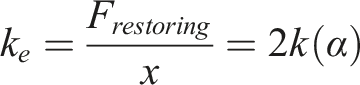
Thus the equivalent vertical spring stiffness is given as
Similarly, for each damper inclined at angle β, the damper deformation is given as


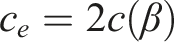
Two dampers give equivalent damping is given as
An unbalanced mass m rotating with angular speed ω at eccentricity e produces an inertia (centrifugal) force of magnitude:

This force rotates with the drum and its vertical component (forcing in the measured x-direction) is:

Now apply Newton’s second law of motion which says summation of all forces acting on drum is equal to mass of drum multiplied by acceleration (positive downward):

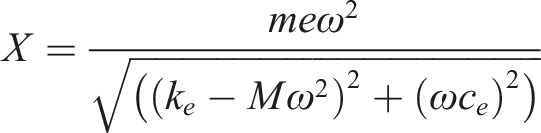
Assume steady-state harmonic motion, the magnitude of steady-state amplitude:
Mathematical modeling of DVA
Figure 2 shows the 2-degree of freedom (DoF) model. The model shows a single-DoF washing machine drum being the primary system mounted with another single-DoF absorber system makes the whole assembly as a 2-degree of freedom (DoF) system. Primary (drum) effective mass Two-DoF model of washing machine drum with DVA.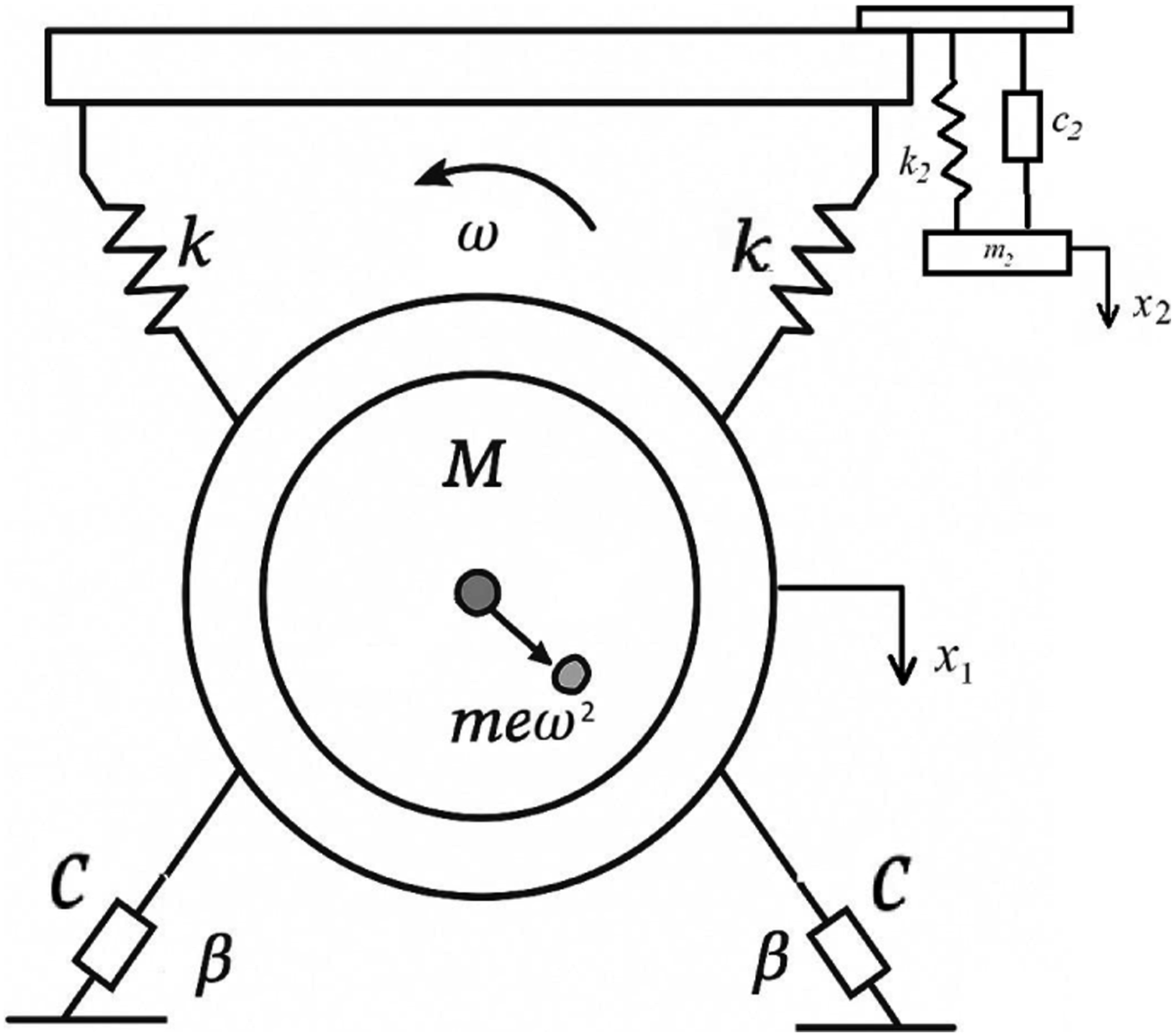
Equation of motion of the two-degree of freedom system is given by

Assume harmonic response


Substitute in eqution (2),

Substitute X2 into equation (1) to get
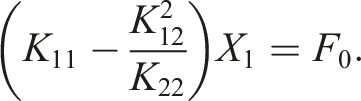

This gives a finite

Hence for nonzero

Split into real and imaginary parts:
Real:
Imaginary:
Therefore, Exact cancellation condition (theoretical):

So, the interpretation of above analytical treatment is that the absorber must be undamped and tuned so its stiffness equals
Methodology and experimentation
The washing machine is approximated as a single-degree-of-freedom (SDOF) system with equivalent mass m1 and stiffness k1. The absorber consists of a secondary mass m2, connected via stiffness k2 and damping c2. Figure 3 shows the design procedure of dynamic vibration absorber (DVA) using Den Hartog’s equal-peak method. First step is to determine the natural frequency of the washing machine for resonant condition. Then the DVA is designed by tuning the absorber frequency with the excitation frequency. Effectiveness of the DVA is evaluated by taking the various combinations of masses and stiffness. Determine the percentage change in vibration levels with and without DVA. Select the optimum DVA design for maximum vibration reduction. Methodology.
Experimental procedure to estimate natural frequency
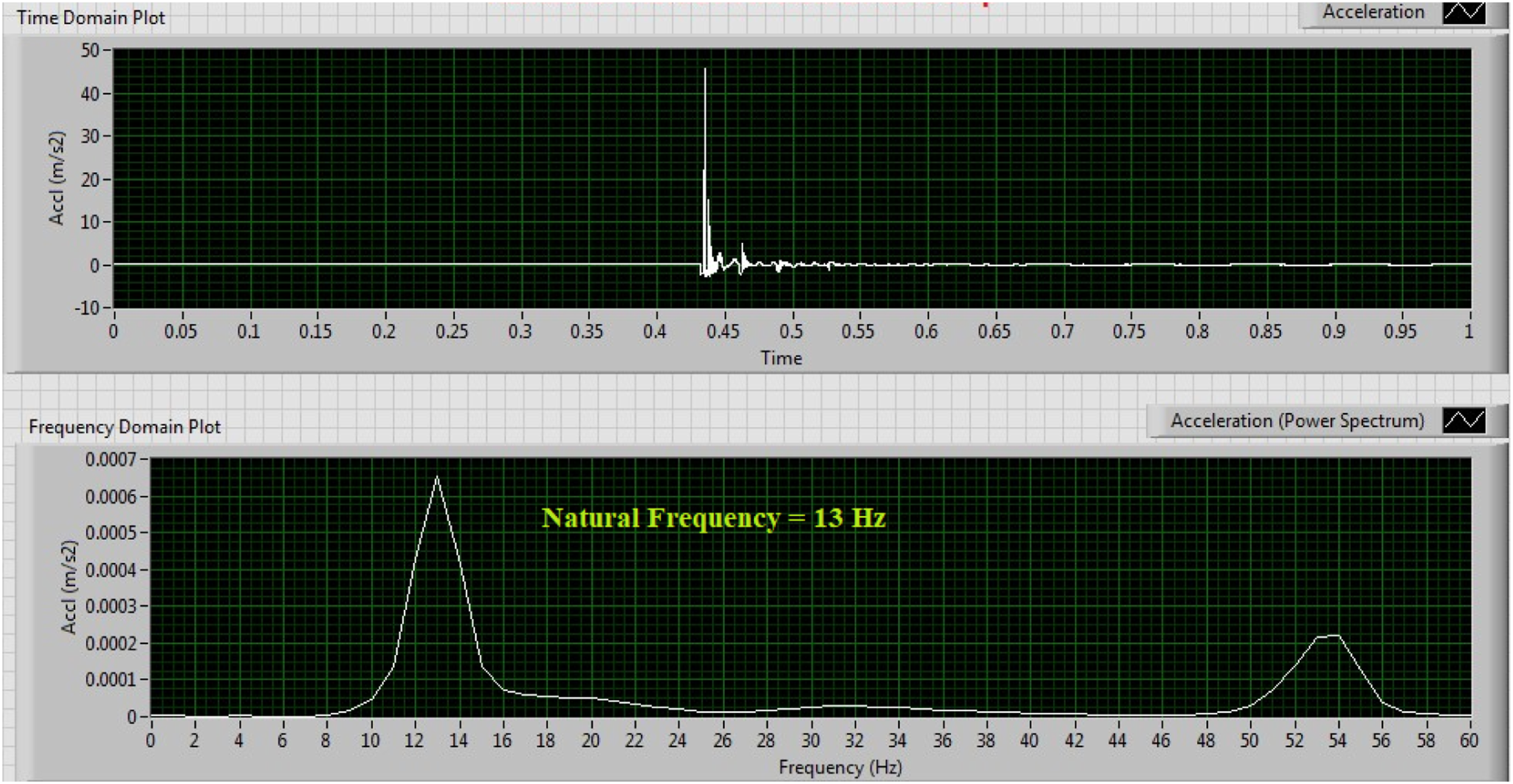
The effective vibrating mass of the horizontal drum assembly was considered as 30 kg, accounting for the drum, rotating components, and a portion of the laundry load, as identified from experimental modal testing. Natural frequency of washing machine drum is estimated using impact/hammer test in laboratory. Figure 4 shows washing machine setup, accelerometer, data-acquisition system to compute the Frequency Response Function (FRF), resonant peak etc. A hammer with soft head is used to give the initial excitation to system. A single axial industrial accelerometer, frequency range up to 20 kHz and sensitivity 100 mV/g, is used to measure the drum vibrations. The accelerometer has inbuilt charge/IEPE signal conditioner to amplify the signal. NI 9134 Data acquisition (DAQ) system is used for the measurement. Sampling frequency of the DAQ system is 51 kilo samples per second. A LabVIEW virtual instrument program is developed to analyse signal in time and frequency domain. The accelerometer is mounted firmly on the drum to measure vertical motion. The horizontal drum is hit by the hammer at an outer radius in the vertical direction so that the impact excites that mode well. Several impact points around the drum were used to confirm repeatability or extract mode shape. Test data of at least 3 seconds per impact is used so that the free response decays and gives good frequency resolution (3 s record → Δf = 0.33 Hz. The hammer strike was relatively quickly and cleanly to avoid glancing blow. Washing machine and measuring setup.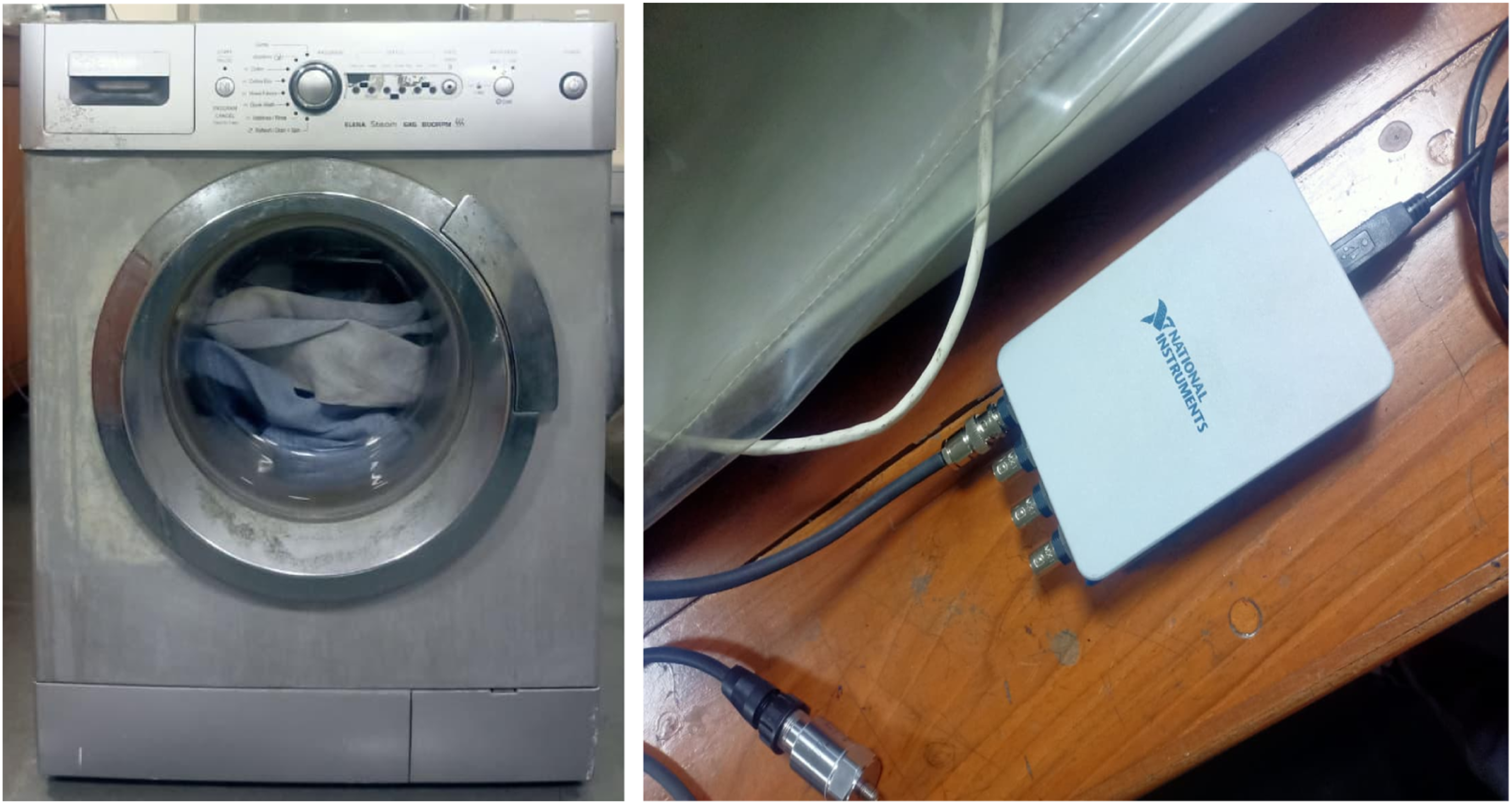
Figure 5 shows time domain and frequency domain plot of the vibration response using impact hammer of 100 gm weight. The resonance frequency Free vibration test excitation with 100 gm impact hammer. Free vibration test excitation with 200 gm impact hammer. Free vibration test excitation with 500 gm impact hammer.

Selection of absorber parameters
Figure 8 shows the time-domain free/impulse response (top) with amplitude decrement which is clear case of underdamped system. This is the most direct and accurate method of damping coefficient estimation when SNR is good. From the time-trace, extract successive peak amplitudes of the free decay: Amplitude decrement of washing machine drum in impulse hammer test.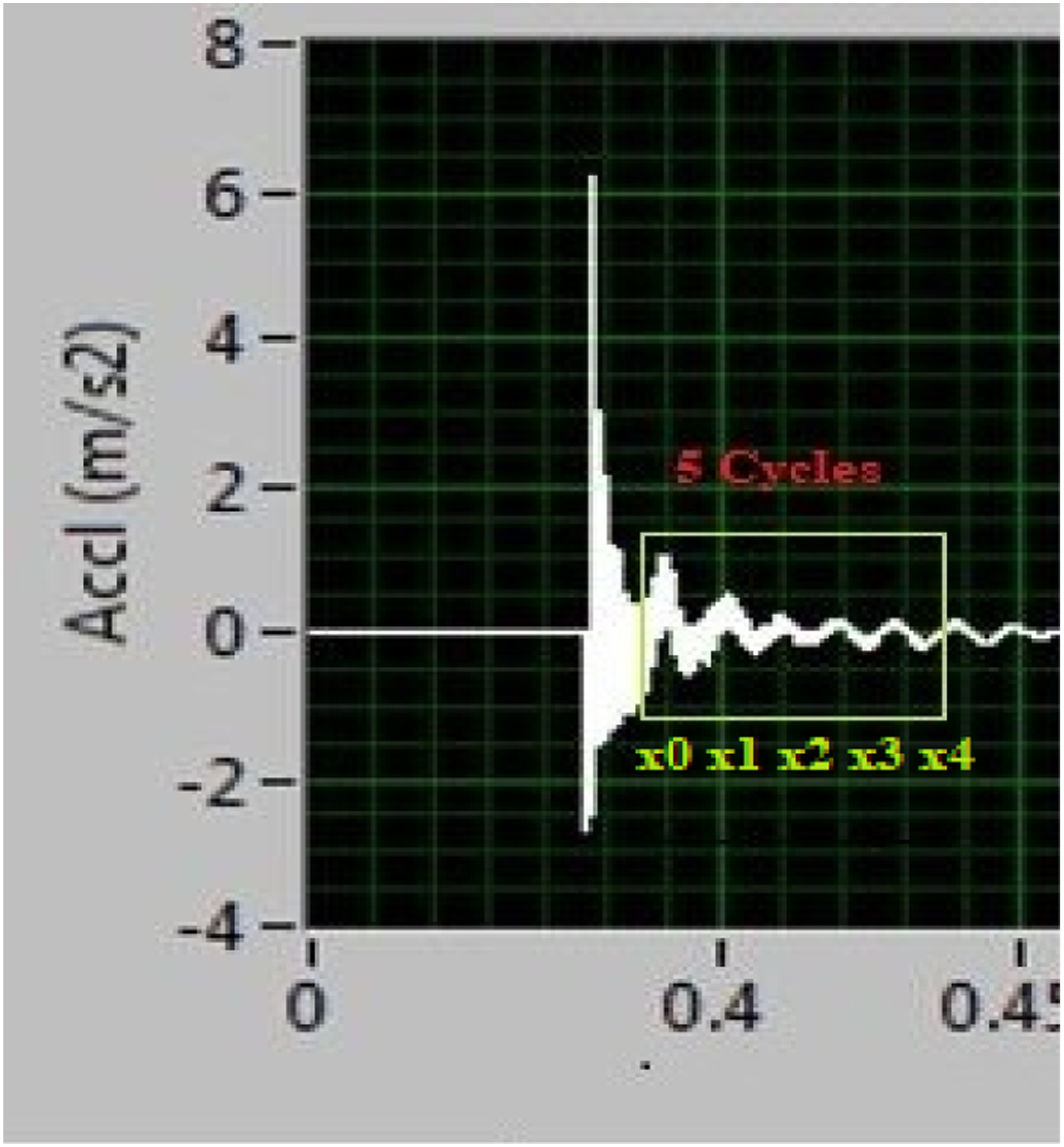

From time plot (Figure 8), pick amplitudes of first peak (
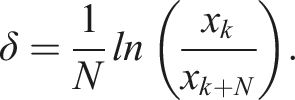


From the free-vibration peaks, logarithmic decrement of damped (underdamped) washing machine drum is estimated as 0.1022 (δ = 0.1022) and a damping ratio as 0.0163 (ζ ≈ 0.0163). This indicates a lightly damped system (≈1.6% damping) with a high quality factor (∼31) and a narrow resonance bandwidth (∼0.21 Hz at 13 Hz). The low damping (c = 1066 Ns/m) implies the system is sensitive to mistuning hence DVA should therefore be tuned carefully and validated experimentally.
Design and development of DVA
Spring stiffness under various loading conditions.
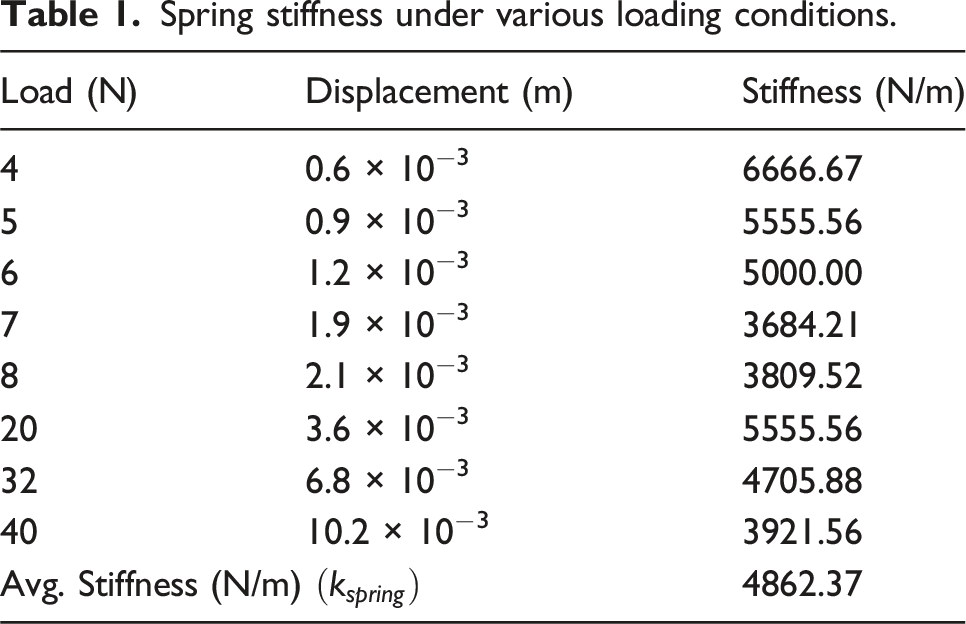
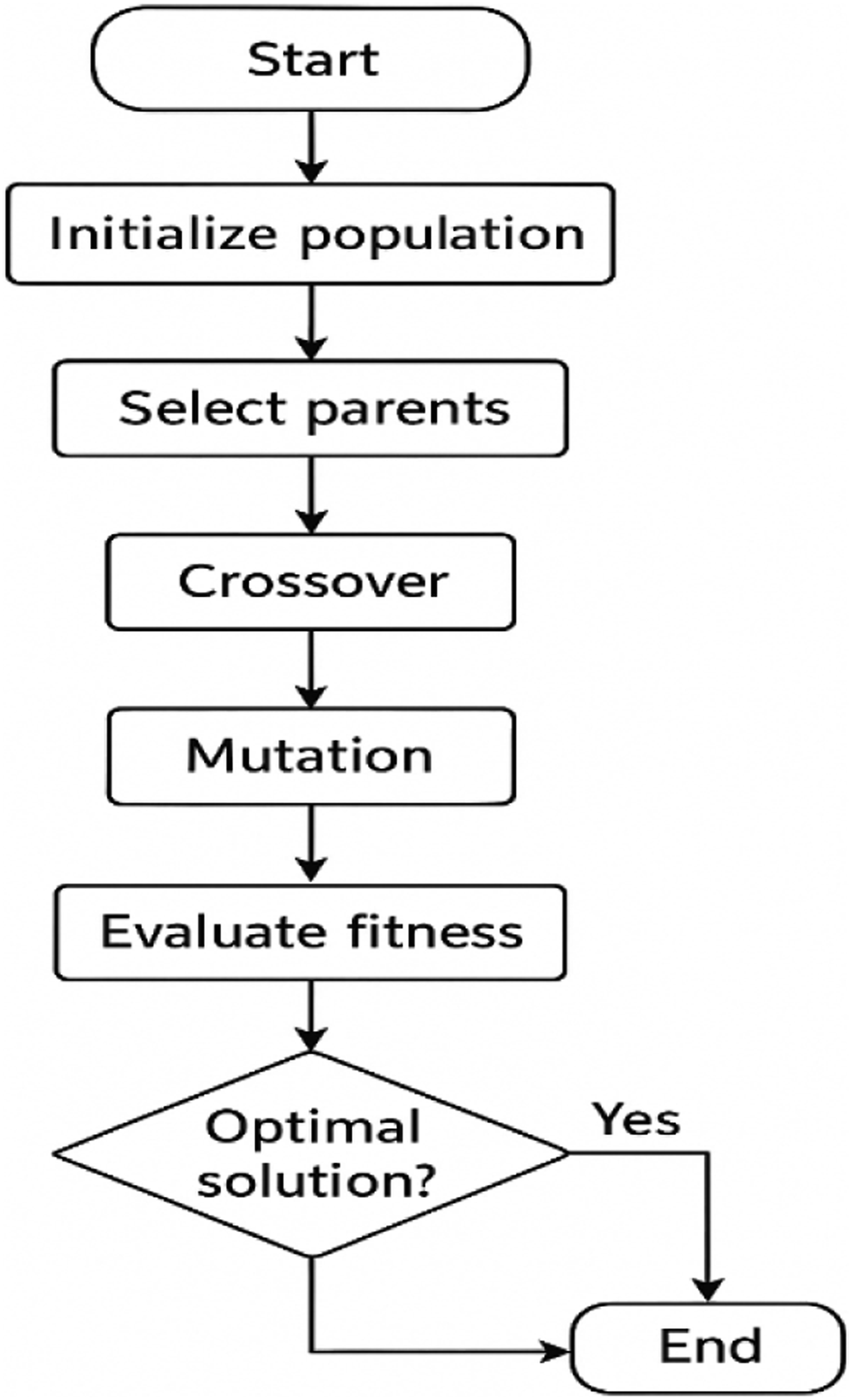
Figure 9 shows the attachment of absorber system to washing machine. The spring is connected to a cantilever beam hence the combine stiffness of the arrangement will be determined by considering the stiffness of spring and stiffness of beam in series. Stiffness of beam is determined as follows Genetic algorithm steps.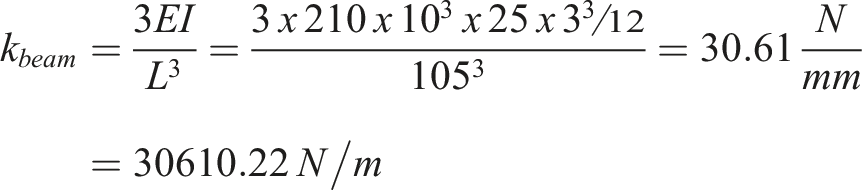


Absorber mass is determined for the absorber frequency of 13 Hz (81.68 rad/s) with spring stiffness of 4195.85 N/m. The mass is determined as follows.

Absorber mass comes out to be 0.629 kg which gives mass ratio (μ =
Checking effectivity and optimization using genetic algorithm
Genetic Algorithm (GA) is a population-based evolutionary optimization method inspired by the principles of natural selection. It is particularly suitable for engineering vibration problems where the relationship between design variables and the dynamic response is nonlinear, multi-modal, or difficult to optimize using classical analytical techniques. In the present work, a GA is employed to determine the optimal absorber mass (m2) that minimizes the vibration amplitude of the washing machine drum excited at its operating frequency. The vibration response of a 2-DOF system, consisting of the drum and the attached absorber, depends nonlinearly on the absorber mass (
The first step in GA flow is to select absorber mass is treated as a chromosome whose values are bounded between a minimum and maximum value (e.g., 0.45 to 1.1 kg). Next step is to generate an initial population of random absorber masses to representing various possible DVA designs. Fitness evaluation of the GA model is determined for each candidate mass to compute absorber natural frequency, damping, drum vibration amplitude using the 2-DOF dynamic model and peak amplitude. Peak amplitude is the fitness value wherein lower peak amplitude is best fit. Candidates with low vibration amplitude (better solutions) are selected to reproduce. Poor solutions are discarded. To study the crossover, two parent solutions are combined to produce new absorber masses. This helps GA explore new combinations. In mutation step, a small random change is applied to some candidates. Mutation prevents premature convergence and keeps exploration broad. The process repeated for 40 generations.
Figure 10 shows the result of 40 convergence generation cycles. After successive generations, the GA converges to an absorber mass that yields minimum vibration amplitude, optimally tuned to the drum’s natural frequency and ensures best absorber performance. This mass is considered the optimal DVA mass. GA convergence cycles.
Figure 11 illustrates the vibration response of the washing machine drum with and without a Dynamic Vibration Absorber (DVA), where the absorber mass has been optimized using a custom Genetic Algorithm (GA). The red peak represents the uncontrolled vibration response of the washing machine drum. The system shows a sharp and high resonance peak around 13–14 Hz, which corresponds to the natural frequency of the washing machine drum. The amplitude reaches approximately 6.0 × 10⁻³ m, indicating strong vibration levels. Such high resonance is responsible for excessive shaking, noise, and transmission of vibration to the floor during high-speed spin cycles. The blue curve shows the vibration response when a GA-optimized DVA is attached to the washing machine. The optimized absorber mass for this test case is approximately 0.654 kg, obtained through the GA process. Instead of one large resonance peak, the characteristic “split resonance” (two smaller peaks) appears, which is typical of Den Hartog’s Equal-Peak tuning principle. Both peaks are significantly lower than the uncontrolled resonance peak. The response becomes smoother and the system energy is distributed around two smaller peaks instead of one large one. This demonstrates that the GA-selected absorber mass effectively suppresses drum vibration at the operating frequencies of interest. Vibration response of washing machine drum with optimized DVA and without DVA.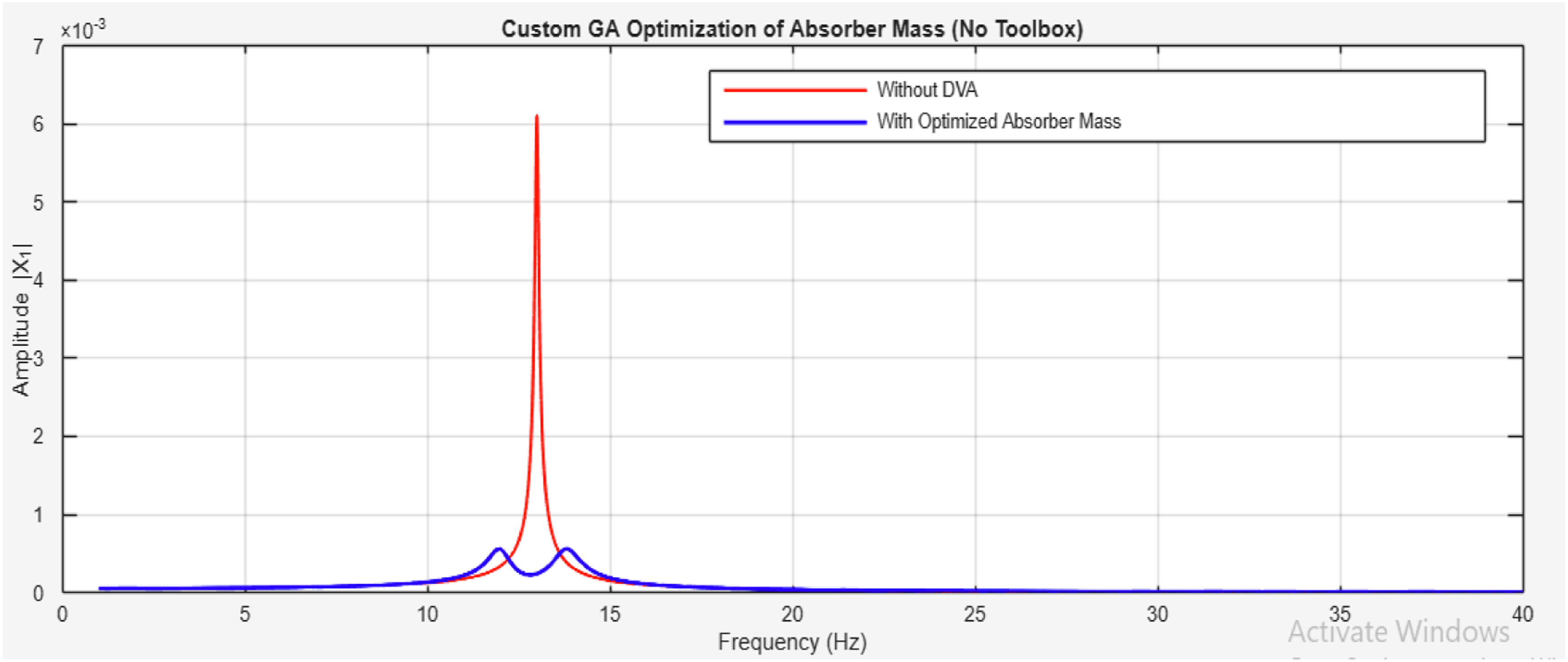
The GA result shows how the algorithm iteratively searched for the absorber mass that minimizes vibration amplitude of the washing machine drum. From Generation 1 onward, the GA quickly identified a near-optimal mass around 0.6547 kg with a fitness of approximately 0.000559. This indicates that even at the beginning, the solution space guided the GA close to the optimal region. Generations 1 to 5 show the same best mass: 0.6547 kg. By Generation 6, the mass slightly improves to 0.6542 kg, lowering the fitness value to 0.000558. From Generation 6 to Generation 40, the GA consistently keeps the best mass extremely close as 0.6542–0.6544 kg. This implies the algorithm has found a stable global optimum and is refining within a narrow band. The fitness value decreases marginally from 0.000559 to 0.000558. This small improvement shows the solution is already optimal and the GA is now doing fine tuning. Once it finds the best mass region (around 0.654 kg), the population converges and all future generations stay around that value. This result means that attaching a tuned mass of approximately 0.65 kg to the washing machine drum will provide maximum vibration reduction. The DVA is tuned to be very effective near the machine’s natural frequency (∼13 Hz). The consistency across 40 generations confirms high reliability of the optimized mass.
Experimental evaluation of DVA performance
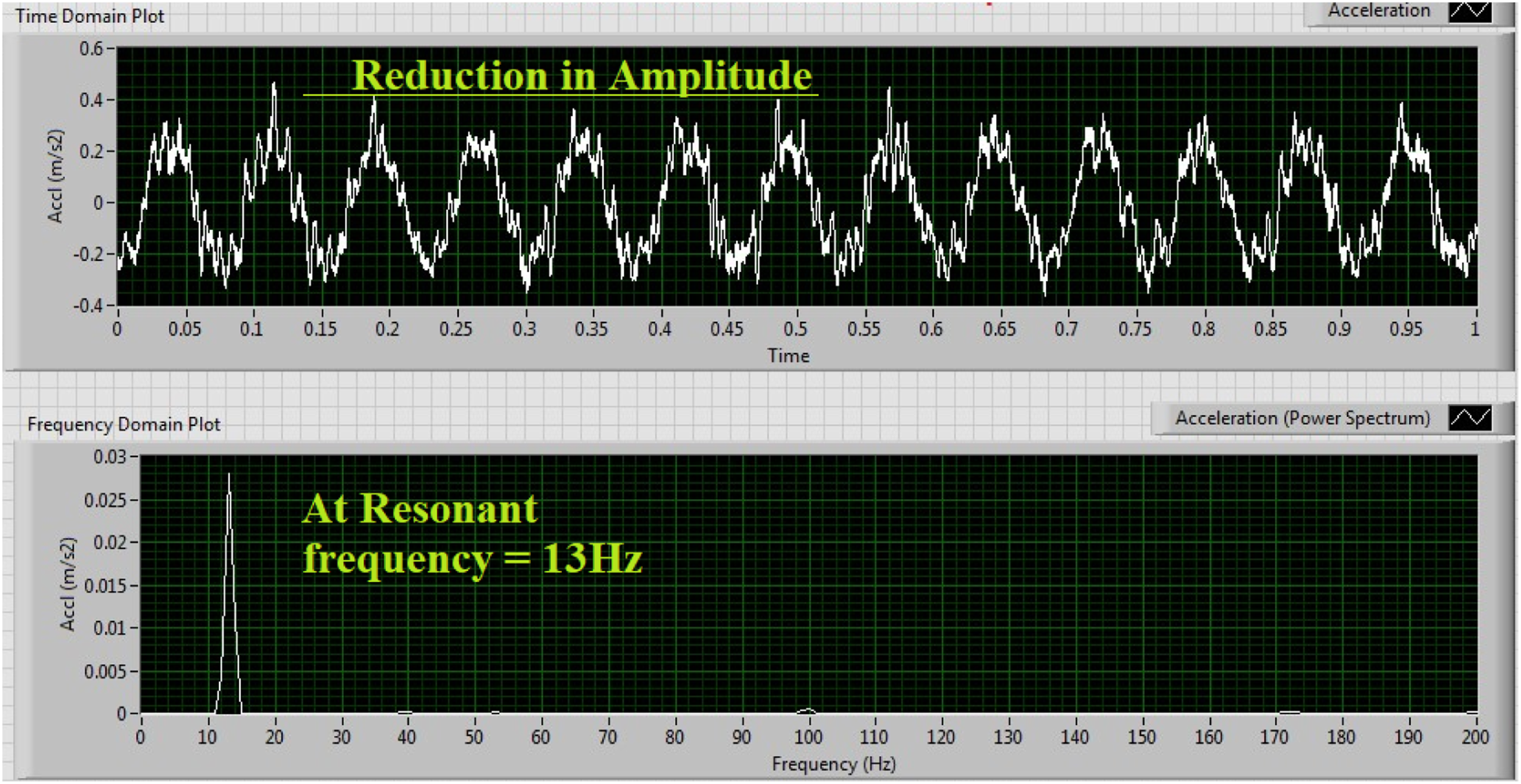
Accelerometer and DAQ system is used to measure vibration amplitude before and after DVA installation. The experimentation was conducted to evaluate the effectiveness of various Dynamic Vibration Absorber (DVA) masses in reducing vibration levels of a horizontal-axis washing machine. The horizontal-axis front-loading washing machine was kept on a rigid, level platform. All transportation locks were removed and the machine was operated under spin-only mode to isolate drum vibration behavior. The machine drum was loaded with cloth (approximately 2 kg) to impart unbalance excitation and consistent dynamic conditions. The DVA system (rectangular cantilever beam + absorber mass) was mounted at the designated location on the washing machine frame. Absorber masses of 0.45, 0.6, 0.75, 0.9, 1.1 kg were prepared for successive testing. Five different points were identified to check the vibration levels on the washing machine which are Front Right corner of top panel (FR), Front Left corner of top panel (FL), Rear Right corner (RR), Rear Left corner (RL) and Center of top panel (directly above drum). Each sensor was firmly mounted to ensure reliable measurement. A single-channel Data Acquisition System (DAQ) was connected to the accelerometers with sampling frequency of 25 kHz. The DAQ system is connected to the LabVIEW software for data logging. Figure 12 shows the cantilever-spring arrangement to attach the absorber mass to washing machine. DVA (without mass) installed on washing machine.
Performances of various absorber masses at tuned frequency.


Vibration response for absorber weight = 600gm at center position.
Results and discussion
Vibration reduction of 46.92% is achieved by installing the optimized DVA mass on the washing machine under consideration. The designed DVA shifts the original resonance of the washing machine into two new resonance peaks of equal amplitude, located on either side of the original resonance. The peak amplitude of vibration is significantly reduced compared to the uncontrolled system. Experimental implementation confirms reduction in vibration and noise levels. The absorber mass ratio μ strongly affects performance; higher μ values improve attenuation but increase system weight. Proper damping is critical to avoid excessive absorber motion. The implementation of DVA significantly reduces vibration without altering the machine’s primary structure. Lightweight, cost-effective absorbers can be integrated into the machine casing. However, performance is sensitive to DVA detuning, suggesting potential for adaptive or semi-active absorbers.
Validation of experimental results
To ensure the reliability and scientific credibility of the experimental findings, a comprehensive validation of the vibration reduction performance of the dynamic vibration absorber (DVA) was carried out through analytical comparison, frequency-domain consistency, repeatability checks, and optimization agreement. The experimentally measured natural frequency of the washing machine drum was found to be approximately 13 Hz, which closely matches the analytically predicted natural frequency obtained from the equivalent spring–mass model. This agreement confirms the correctness of the mathematical modelling and equivalent stiffness formulation used in the study. Furthermore, the optimal absorber mass identified experimentally (∼0.6–0.65 kg) aligns well with the theoretically tuned mass ratio predicted using Den Hartog’s equal-peak tuning principle, validating the absorber tuning methodology. Frequency response measurements conducted before and after attaching the DVA demonstrate a clear reduction in the resonance peak amplitude at the primary natural frequency. The resonance frequency remains nearly unchanged, indicating that the absorber effectively redistributes vibrational energy without altering the fundamental dynamics of the primary system. This behaviour is consistent with classical tuned mass damper theory and confirms that the observed vibration attenuation is not incidental but a result of proper absorber tuning. The experimentally optimal absorber mass closely matches the value obtained through Genetic Algorithm (GA) based optimization, which converged to an absorber mass of approximately 0.654 kg. The negligible variation between experimental and optimized values (<2%) validates the effectiveness of the optimization framework and confirms that the GA successfully identifies a global optimum rather than a local solution. Experiments were repeated for different absorber masses under identical operating conditions. The measured acceleration responses exhibited consistent trends, with the absorber mass of 0.6 kg yielding the highest vibration reduction (≈47%) at the drum centre. Minor deviations in acceleration levels across different sensor locations are attributed to structural asymmetry and measurement noise, which are inherent in practical washing machine systems. The damping ratio estimated using the logarithmic decrement method resulted in a damping coefficient of approximately 1066 Ns/m, which falls within the expected range for suspension systems used in domestic washing machines. The calculated damping value further supports the validity of the experimental time-response data and confirms realistic system behaviour. The close agreement between analytical predictions, numerical optimization results, and experimental measurements strongly validates the experimental outcomes. The results confirm that the proposed DVA design and tuning methodology effectively suppress washing machine drum vibrations and can be reliably implemented in practical applications.
Conclusion
This study demonstrates the feasibility of using a tuned dynamic vibration absorber for vibration control in domestic washing machines. Using Den Hartog’s equal-peak tuning, the absorber parameters were derived and validated with an example design. Results show that a small absorber mass (≈5% of system mass) can significantly reduce vibration amplitudes. This study can be implemented in all vibration systems which has steady or constant vibrations and not in varying vibration systems. This research demonstrates that dynamic vibration absorbers are a viable solution for reducing washing machine vibrations during the spin cycle. Optimization using a genetic algorithm enables effective parameter selection. The Genetic Algorithm is a powerful optimization tool for tuning the absorber mass in a Dynamic Vibration Absorber system for a washing machine drum. Its ability to globally search the design space and navigate complex dynamic response curves makes it significantly more effective than traditional deterministic optimization methods. By minimizing the peak vibration amplitude of the drum, GA ensures improved vibration control and enhanced operational stability of the washing machine. Future work may explore broadband absorbers, nonlinear designs, and integration with smart control systems for further improvement.
Footnotes
Declaration of conflicting interests
The authors declared no potential conflicts of interest with respect to the research, authorship, and/or publication of this article.
Funding
The authors received no financial support for the research, authorship, and/or publication of this article.
