



Abstract
In this study, we consider the sulfur dioxide emissions trading pilot scheme (SETPS) of China, with pilot provinces as the treatment group and other provinces as the control group. We employ the difference-in-differences method to estimate the effects of the SETPS on pollution mitigation and economic growth. Results show that the SETPS plays a robust role both in China’s industrial sulfur dioxide abatement and in economic growth. Furthermore, by applying regression analysis to explore regional heterogeneity, we find that it has a stronger effect on industrial sulfur dioxide reduction in the Central China than it does in the Eastern and Western China, and it also exerts a positive influence on economic growth in the Western China. Moreover, a time-trend analysis indicates that the pollution reduction effect of the SETPS has decreased, while the economic growth effect has slightly increased since 2007.
Keywords
Introduction
The economy and society of China have changed fundamentally since the reform and opening up in 1978. According to the World Bank, China’s annual average gross domestic product (GDP) growth rate was 6.93% during 1978–2015 (2000 as the base year), and the GDP value followed a similar trend. China’s GDP exceeded Japan, and China became the second largest economy in the world, after the United States, in 2010. However, this rapid economic growth has come at the cost of the environment. Recently, haze has become a key environmental issue. 1 Numerous studies have shown that several Chinese cities rank among the world’s most polluted cities. 2 In particular, some regions with better economic development, such as Beijing–Tianjin–Hebei, Pearl River Delta, and Yangtze River Delta, are suffering more than others. 3 For instance, 11 cities in the Beijing–Tianjin–Hebei region rank among the 20 most polluted cities in China. It has been proved that pollution affects human health, the eco-environment, and long-term economic development. 4 Therefore, it is important to prioritize and address pollution control.
According to several studies, economic growth, energy consumption, and lax local environmental standards are major contributors to pollutant emissions.5,6 Moreover, the GDP-oriented evaluation system has resulted in fierce competition among regional governments, which in turn further leads to environmental deterioration. 7 Thus, several attempts have been made to balance environmental protection and economic growth by the leadership of China. To control air pollutant emissions and maintain economic growth, a series of environmental policies have been formulated. Improving the quality of economic growth and changing economic growth targets have been added to the Twelfth Five-Year Plan.
In terms of environmental governance in China, the primary method employed before the reform and opening up was command-and-control regulations, including the Air Pollution Prevention and Control Law, Two Control Zone policy, and Emissions Standard of Air Pollutants. However, these measures could not sufficiently reduce emissions.8,9 The successful implementation of market-based regulations in developed countries has attracted attention in China since 2000, and China implemented the sulfur dioxide emissions trading pilot scheme (SETPS) in 2002. The Environmental Protection Bureau chose four provinces, three cities, and one business entity as pilot regions or entities. This is particularly known as the “4 + 3 + 1” project, which has been expanded to include 11 regions (Jiangsu, Tianjin, Zhejiang, Hubei, Chongqing, Hunan, Inner Mongolia, Hebei, Shanxi, Henan, and Shaanxi provinces) in 2007. Emissions trading is a source governance, not an end-of-pipe governance, which can theoretically solve the problem of invalid allocations of emissions permits. 10 Although the transaction volume was low (zero in most of the pilot regions) at the start of the implementation, it gradually increased after 2007.
According to the existing literature, the impact of environmental regulations on pollution emissions is either positive or negative and that on economic growth may have crowding-out effect or may have “innovation offsets” effect. The SETPS has been implemented in China for almost 16 years. Yet, certain questions persist: Can SETPS really mitigate air pollution in China? As environmental regulation, can it motivate innovation and improve economic growth? In other words, can it lead to the win–win development of the environment and the economy and achieve the Porter effect? Given the significant implications for economic performance and environmental policy, many studies have examined the feasibility, abatement costs, and benefits of the SETPS.11–13 However, few studies have investigated whether it has improved the environment and stimulated economic growth in China.
To fill this gap, we consider the SETPS with pilot provinces as the treatment group and other provinces as the control group. We apply the difference-in-differences (DID) method to estimate the effects of the SETPS on pollution mitigation and economic performance based on the provincial-level panel data during 2001–2012. We provide empirical evidence for the effects of the SETPS on the environment and economy by selecting industrial sulfur dioxide intensity and economic growth as the dependent variables. The SETPS is considered to be effective if it reduces the industrial sulfur dioxide intensity and improves economic growth. Our findings indicate that the pilot regions are significantly better in industrial sulfur dioxide abatement and economic growth than those regions that are not part of the pilot program.
This study contributes to the existing literature in several ways. First, the current research on emissions trading mainly focuses on several specific aspects, such as market demand, operating mechanisms, price control, and environmental effect,14–17 yet lacks a general framework for integrating the environment and the economy. This study attempts to fill this gap by empirically analyzing the effects of the SETPS on both the environment and the economy in China, thus enriching the literature on market-based environmental regulations. Second, some previous studies neglect the fact that the transaction volume was nearly zero, and the market environment was immature during the first round of the SETPS. 11 Compared with the first round, the second round can be considered a more effective quasi-natural experiment. Thus, we take 2007 as the pilot year in order to ensure the reliability of our conclusion. Third, this study can improve the understanding of how SETPS affects pollution abatement and economic growth and can serve as a useful reference for environmental policy-making in other developing countries.
The rest of the paper is structured as follows: The next section reviews the existing literature. A further section introduces the methodology, variables, and data employed in the empirical analysis, which is followed by a section in which the estimation results are discussed and reported. The penultimate section presents the robustness check and mechanism analysis. The final section concludes the study and provides policy suggestions.
Literature review
The existing literature identifies two types of environmental regulations used in environmental governance: Formal and informal regulations; and market-based environmental regulations are classified as formal ones. The relevant literature is reviewed from three aspects, as indicated below.
Effects of environmental regulations on emissions reduction
In general, most developing countries take necessary steps to resolve severe air, water, and solid waste problems by relying mainly on formal regulations, such as mandatory emissions, technical standards, and environmental taxes. 18 Most studies have demonstrated that there is a positive correlation between environmental regulations and environmental quality.19,20 For example, Dasgupta et al. 21 conduct an empirical study on the relationship between environmental charges and sewage pollution at the firm level, and find that environmental charges have a positive emission-reduction effect on the main pollutants in sewage. Similarly, Greenstone 20 examines the effect of the Clean Air Act Amendments (CAAAs) on pollution emissions of the iron and steel industry in all media during 1987–1997. He finds that the CAAAs leads to significant reduction in the total emissions of particulate matter and ground-level ozone pollutants. Similar conclusions have been drawn by Wang and Wheeler. 22 Marconi 23 investigates the impact of environmental regulations on air and water pollution-intensive enterprises using industry-level data of bilateral trade between China and 14 European Union countries during 1996–2006. Their study suggests that the regulations cause a significant reduction in the pollutants discharge. Cole et al. 24 confirm that both informal and formal regulations can effectively decrease the intensity of air pollution. In addition, many studies testify to the positive effect of informal regulations on pollution reduction.8,25–27
A few studies have found contradictory results. For instances, Blackman and Kildegaard 28 explore the inspections enforced by an environmental agency in Mexico’s leather goods capital and find that regulatory pressure is not related to the reduction of pollution. Dong et al. 29 note that formal regulations have a limited effect. Because government regulators act as sole agents, it is difficult for them to control small polluters with dispersed pollution. Although each of these polluters makes a slight contribution to the overall pollution, the collective impact on the environment is serious as it is either too expensive or too difficult to monitor their emissions. Wang et al. 30 examine the effect of China’s emissions trading on the control of sulfur dioxide emissions. They claim that emissions trading has not played an important role. In an analysis of China’s sulfur dioxide emissions trading, Shin 31 argues that sulfur dioxide emissions trading has not been institutionalized in the pilot areas, and, thus, the scheme is failed. However, he does not provide empirical evidence.
Regulation tools are the media of policy objectives and policy outcomes. 32 Compared with command-and-control environmental regulations, market-based regulations were rarely used in China before the reform and opening up, although the latter had lower costs and higher consensual goals. The main reason for this phenomenon is the lack of independent enforcement; China confronts serious enforcement problems in terms of environmental regulations owing to its fiscal decentralization and political centralization. 33 Nevertheless, the government introduced the SETPS in 2002, which was one of the China’s most important market-based environmental regulations. Thus, this study endeavors to empirically explore the effect of the SETPS on pollution abatement.
Effects of environmental regulations on economic performance
The correlation between environmental regulations and the economy has attracted great attention for more than two decades. Conventional economics holds that environmental regulations will increase firms’ cost of pollution control and discharge, squeeze out productive resources, and reduce productivity and market competitiveness. Moreover, environmental regulations primarily affect economic performance in two ways. First, they may produce a crowding-out effect. To meet environmental standards, the government must invest more in environmental pollution control. Owing to limited resources, pollution control investment will crowd out other productive investments. Second, environmental regulations may produce a constraint effect. To meet the pollution reduction conditions, enterprises need to change technological research and development, production, and marketing management, thus restricting their own development. These two effects arise because external environmental costs are internalized. The environmental costs shared by society are transferred to polluting enterprises, thus indirectly increasing enterprises’ opportunity costs. This is known as the compliance cost hypothesis.34–36 However, Porter and Linde 37 are skeptical of these views. They argue that, although environmental regulations will increase both the environmental and production costs of enterprises in the short term, moderate environmental regulations are conducive to innovation and resource utilization in the long run. In addition, they are helpful in accelerating the transformation and upgrading of industrial structure, thus ultimately enhancing the competitiveness of the industrial market. They build a dynamic model focusing on the manufacturing sectors of 17 European countries during 1997–2009. Their results show that appropriately designed environmental standards can foster innovation, which can partially or completely offset the costs of compliance. These “innovation offsets” can reduce the net cost of conforming to environmental regulations and provide an absolute advantage to foreign enterprises that are not subject to similar regulations. This is known as the Porter hypothesis. Similar conclusions have been made by Berman and Bui, 38 Alpay et al., 39 Horbach, 40 Johnstone et al., 41 Lee et al., 42 Ramanathan et al., 43 Xie et al., 44 and Liu et al. 45
Studies focusing on the influence of environmental regulations have shown that they may facilitate an improvement in economic benefits. 46 However, few studies empirically investigate the impacts of environmental regulations on economic growth and environmental protection jointly, especially for market-based regulations in China.
Mechanism of emissions trading to improve environmental quality and economic growth
Based on the experience of Organisation for Economic Co-operation and Development countries, enterprises can meet environmental standards stipulated by policymakers through three methods: reducing the quantity of products, controlling pollutants, and buying emissions rights. If the cost of emissions trading is greater than the benefits from the first two methods, an enterprise will either reduce production or increase its investment in pollution control;47,48 otherwise, it will purchase emissions rights. 49 In comparison with command-and-control environmental regulations, emissions trading is a flexible environmental regulation that allows enterprises to decide how to achieve policy targets, leading to decreased costs and pollution.50–53
Emissions trading promotes economic growth in four main ways. First, it provides economic benefits by improving the efficiency of resource utilization.14,39,44 Porter and Linde 37 find that pollutants are a form of inefficiency involving unnecessary or incomplete resource utilization. Reducing pollutant emissions is often consistent with raising the productivity of resources utilization. Second, emissions trading may stimulate innovation, which may partially or completely offset the costs of compliance. Third, emissions trading may indirectly affect economic performance by improving the quality of the environment. 54 For example, improving environmental performance can promote the implementation of product differentiation strategies, enhance the ability of enterprises to enter the market, and reduce the risk of enterprise accidents and legal sanctions. 55 Fourth, environmental regulations may create new demand, particularly for products related to pollution monitoring and control. 56
Some studies investigate the emissions reduction or economic effect of the SETPS in China, but their conclusions remain inconsistent.11,17,30,57,58 For example, Wang et al. 30 argue that China’s emissions trading has little effect on reducing emissions. Similarly, Tu and Shen 11 use the kernel-based propensity score DID model to show that the SETPS in China has begun to have positive effects on reducing pollution abatement costs since 2009. Cheng et al. 17 further confirm the emissions reduction potential of emissions trading in Guangdong Province, based on the Computable General Equilibrium model. They find that in comparison to 2010, emissions trading will reduce sulfur dioxide and nitrogen oxide emissions in Guangdong by 33% and 31%, respectively, in 2020.
Although these studies attempted to understand the effects of the SETPS on environmental protection and economic performance, they ignored the fact that the market environment was immature during the first round of the SETPS and took 2002 as the pilot year. China implemented the scheme in 2002, however, the effects of the SETPS were weak owing to the inactive market, unsound infrastructure, and limited emissions trading volume in the first few years of the program. To improve the SETPS implementation effect, the government launched the second round of the SETPS in 2007, which greatly improved the scale of emissions trading transactions. Therefore, we take 2007 as the pilot year. The time node we choose is more scientific than earlier studies.
Methodology and variables
Methodology
This study uses the DID method, which is widely employed in quasi-natural experiments and policy evaluation studies.59,60 Before adapting this approach, it is imperative to investigate parallel trends between the treatment and control groups. As we can see in Figure 1, the industrial sulfur dioxide intensity (ln(SO2)) was virtually parallel to that of the treatment group before 2007; however, after 2007, the industrial sulfur dioxide intensity of the treatment group gradually approached that of the control group after 2007. This implies that the intensity reduction of the control group was slower than that of the treatment group. With regard to economic growth (ln(GDP)), the treatment group and the control group were basically the same before 2007 but diverged thereafter. The treatment group maintained its growth rate, while the control group showed a downward trend, indicating that economic growth in the control group was slower than that of the treatment group. Therefore, Figure 1 provides preliminary proof that the economic benefits and intensity reductions in the pilot provinces were greater than in the non-pilot provinces.
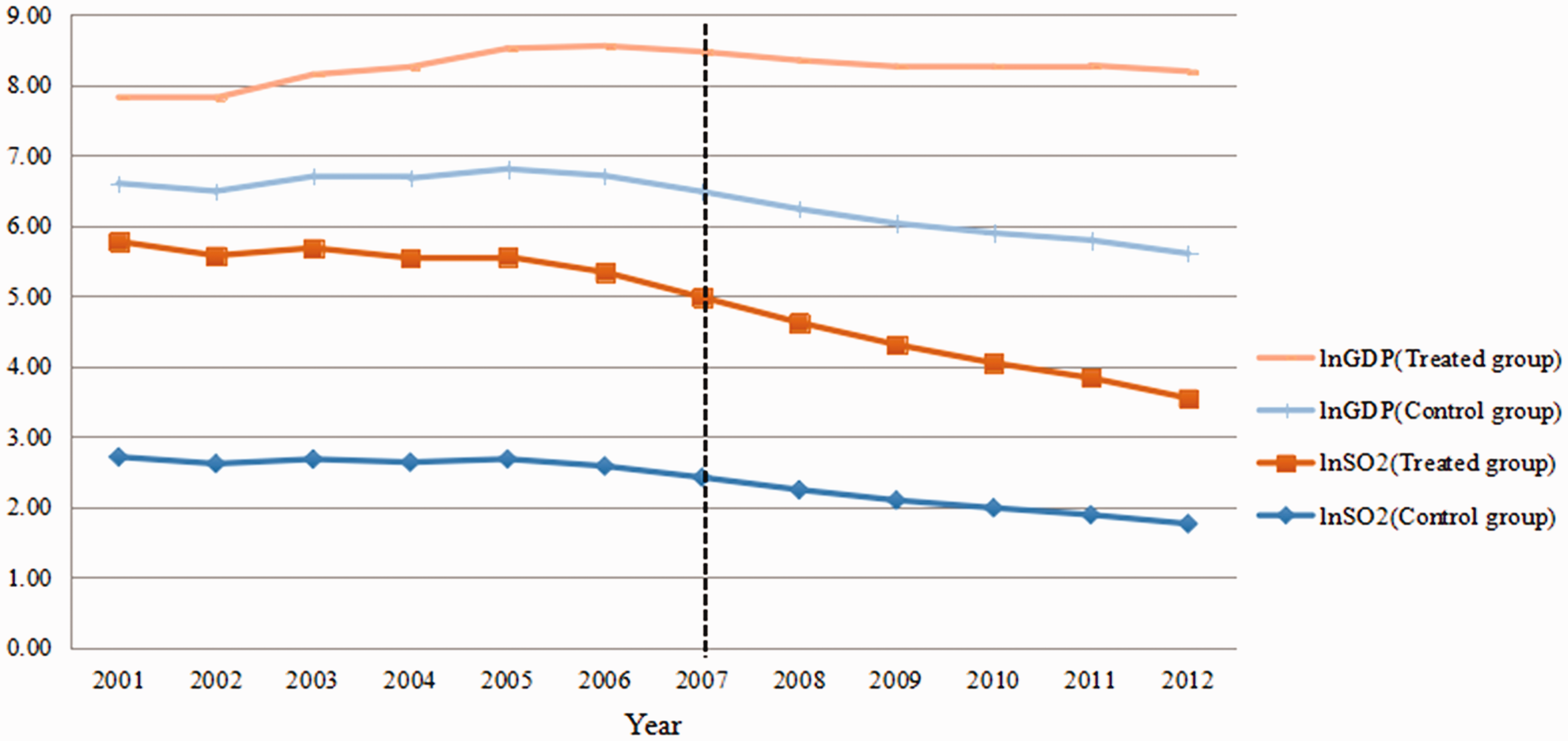
Parallel trend test.
Many scholars in economics have applied the DID method to analyze the effects of external shocks, such as economic crises, policy efficiency, natural disasters, and so on.8,59 We apply the following equation to conduct the DID analysis

The parameters of the DID model.

DID: difference-in-differences.
Variables and data sources
To investigate the effects of the SETPS, we set two dimensions of the dependent variables (Y) based on data availability and the relevant literature. Specifically, we use the natural logarithm of industrial sulfur dioxide emissions per unit of GDP to measure its industrial sulfur dioxide intensity (ln(SO2)) and to reflect the influence of the SETPS on the reduction of environmental pollution. In addition, we use the natural logarithm of GDP (ln(GDP)) to reflect the impact of the SETPS on economic growth.
The key explanatory variables are the dummy variable (pilot), the year dummy variable (T), and their interaction term (pilot × T). If a province implemented the SETPS during 2007–2012, the value of pilot is one, and zero otherwise. The year dummy variable (T) is set to one for the post-implementation years, and zero otherwise. The interaction term (pilot × T) between the province and year dummy variables is our primary concern.
According to the relevant literature and data availability, we select three control variables for our investigation.
The logarithm of GDP per capita (ln(pgdp)). The mechanism behind the influence of economic growth on environmental quality is complicated and uncertain. Grossman and Krueger
61
argue that environmental quality in a region is closely related to its economic growth. On the one hand, economic growth results in greater environmental degradation. On the other hand, if economic growth levels exceed a certain point, people will no longer be willing to exchange environmental quality with economic growth.
60
The logarithm of energy consumption structure (ln(ecs)). The consumption of fossil fuels, such as coal, oil, and natural gas, significantly contributes to China’s economy and environmental pollution. Although energy is fundamental to human development, it is not conducive to sustainability.
62
Nasreen et al.
63
claim that an increase in energy consumption is detrimental to the quality of the environment in the long run. Zhang et al.
60
adapt the energy consumption structure as a proxy variable for energy consumption and find that energy efficiency exerts the most obvious impact on China’s carbon emissions reduction. Accordingly, the logarithm of energy consumption structure is used as a proxy for the energy consumption level. The logarithm of environmental protection expenditure (ln(epe)). Environmental protection expenditure (EPE) is a vital determinant of environmental quality.64,65 Halkos and Paizanos
64
analyze the effects of government expenditure on sulfur dioxide emissions, finding that government expenditure has a direct and indirect negative effect on emissions. Thus, to improve environmental protection, the government should increase the investment in environmental protection. Zhang et al.
60
also find evidence of two effects of government expenditure on pollutant emissions: a direct effect on pollution and an indirect effect through its influences on GDP per capita. Therefore, we use the logarithm of EPE to reflect the impact of EPE on environmental pollution and economic performance.
Table 2 summarizes the descriptive statistics of the variables. The data for 2001–2012 are obtained mainly from the China Statistical Yearbook (2002–2013), China Energy Statistical Yearbook (2002–2013), and China Environmental Yearbook (2002–2013). All nominal variables are deflated to the 2001 consistent price.
Descriptive statistics of the variables.

SD: standard deviation.
Results and discussion
Benchmark regression
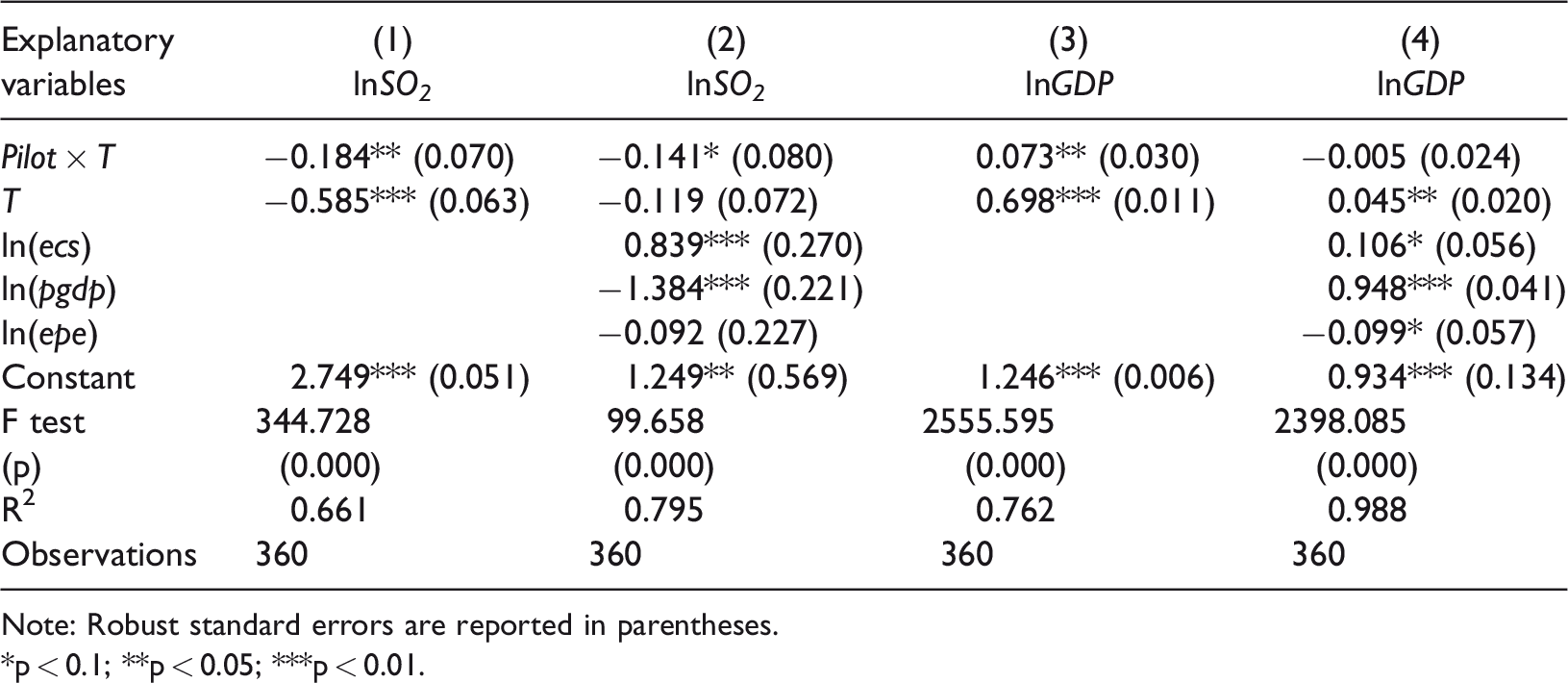
Table 3 shows the benchmark regression results. Columns (1) and (3) show the results of the fixed-effect regression without the control variables. The other columns show the regression results with the control variables. The variable pilot is discretized and no longer present in the results when using the fixed-effect regression. As shown in Columns (1) and (2), the pilot effect (pilot × T) is negative and statistically significant, regardless of whether the fixed effects are included. The average industrial sulfur dioxide intensity reduction during 2001–2012 in the pilot regions is 16.8% faster than in non-pilot regions. a This proves the success of the SETPS project in reducing pollutant intensities. However, the pilot effect coefficients of the interaction term change after introducing the control variables, with the pilot effect decreasing to 13.2%. The coefficient of T is negative and statistically significant, indicating that industrial sulfur dioxide intensity decreased after 2007 in spite of other factors. When the control variables are taken into account, industrial sulfur dioxide intensity maintains the same trend, although the coefficient of T is non-significant. In Column (3), we find that the pilot effect is significantly positive, validating the Porter hypothesis. Thus, the SETPS project stimulates economic growth. However, in Column (4), the coefficient values become negative and non-significant when the control variables are taken into account.
Benchmark regression results.
Note: Robust standard errors are reported in parentheses.
*p < 0.1; **p < 0.05; ***p < 0.01.
The energy consumption structure has a significant and positive relationship with industrial sulfur dioxide discharge and economic performance. As China’s economy has continued to grow at unprecedented rates over the past decades, air quality has deteriorated to some of the worst levels in the world. The over-reliance on energy consumption is a major contributor. However, GDP per capita decreases industrial sulfur dioxide intensity and increases economic growth, both at significant levels. This implies that it is possible to improve the quality of environment in China by increasing GDP per capita. When GDP per capita increases, it enhances the residents’ awareness of environmental protection. 66 With regard to EPE, the coefficient in Column (2) is negative and statistically insignificant. In Column (4), the coefficient is negative and statistically significant. The relationship between EPE and GDP is consistent with the findings of many prior empirical studies, such as Bergh and Karlsson. 67 This negative relationship may have several many reasons. For instance, according to Barro, 68 increasing government expenditure may produce distortion effects and then decrease savings and restrict growth. Nurudeen and Usman 69 claim that if the government expenditure is financed by banks, it will restrict private investment. These effects may hinder economic activities and eventually cause a decline in GDP.
Benchmark regression considering time fixed effects
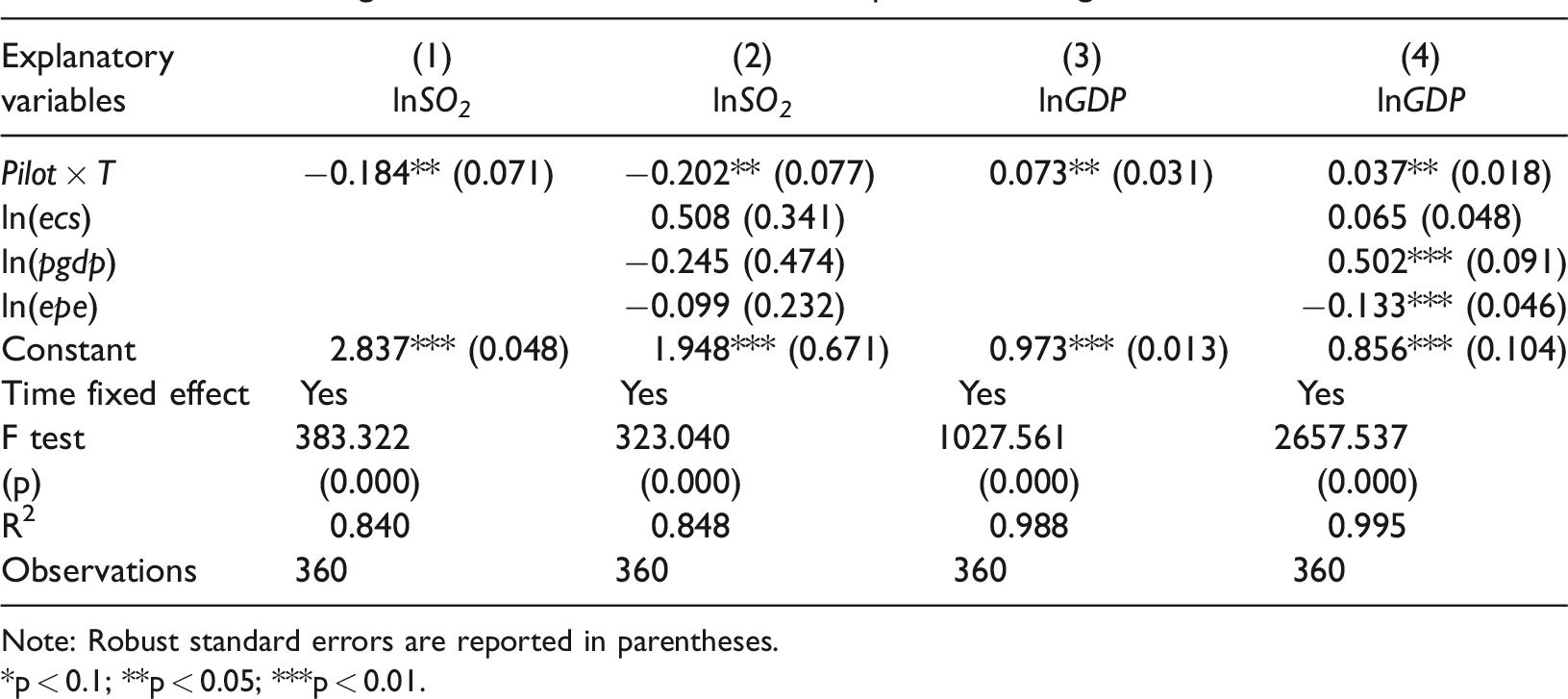
The coefficient of T decreases when we consider the time fixed effects because of the existence of multicollinearity between T and time fixed effects. Thus, we use a two-way fixed-effect model that contains region and time but excludes T (see Table 4). The results show no obvious difference to those in Table 3. The coefficients of the interaction term (pilot × T) are almost the same in Column (1) of Tables 3 and 4, indicating that the SETPS in the treatment group helps reduce industrial sulfur dioxide intensity to a larger extent than in the control group. Although the coefficients in Columns (2) and (3) differ between the two tables, the signs and significance in Table 4 are in line with those in Table 3. In Column (4), the pilot effect becomes positive and significant after controlling for all fixed effects, indicating that the pilot scheme helps increase economic growth.
Benchmark regression results for the whole sample considering time fixed effect.
Note: Robust standard errors are reported in parentheses.
*p < 0.1; **p < 0.05; ***p < 0.01.
After controlling for all fixed effects, the energy consumption structure still has a positive effect on two dependent variables, although its coefficient is non-significant. As in Table 3, GDP per capita has a positive significant effect on economic growth but a negative effect on industrial sulfur dioxide intensity. The EPE in Table 4 is consistent with that in Table 3 in terms of both signs and significance.
Regional discussion
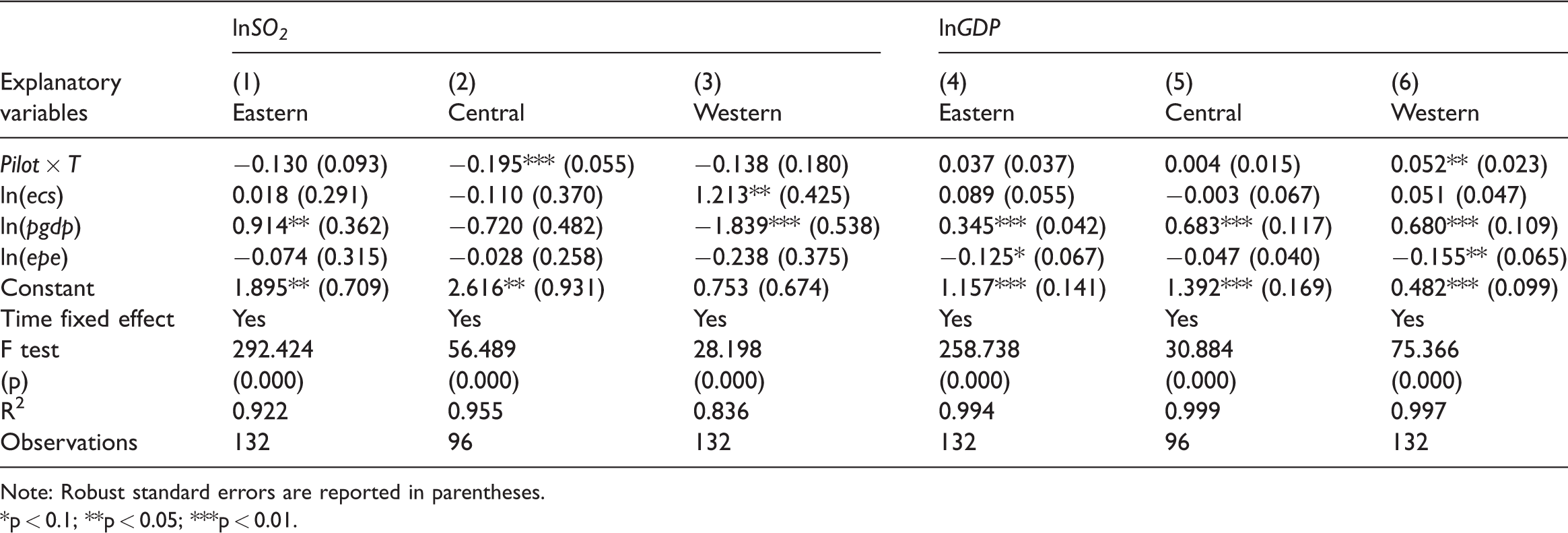
Table 5 shows the region-based results. Here, we find that, after the implementation of SETPS, the significant difference in industrial sulfur dioxide intensity in the Central China becomes greater than that before implementation. This suggests that provinces in the Central China focus more on the SETPS or that the SETPS plays a more active role in reducing industrial sulfur dioxide intensity. In addition, the SETPS exerts a positive impact on economic growth, especially in the Western China, suggesting that the Western regions are more concerned with its role in economic growth.
Regional regression results.
Note: Robust standard errors are reported in parentheses.
*p < 0.1; **p < 0.05; ***p < 0.01.
Time-trend analysis
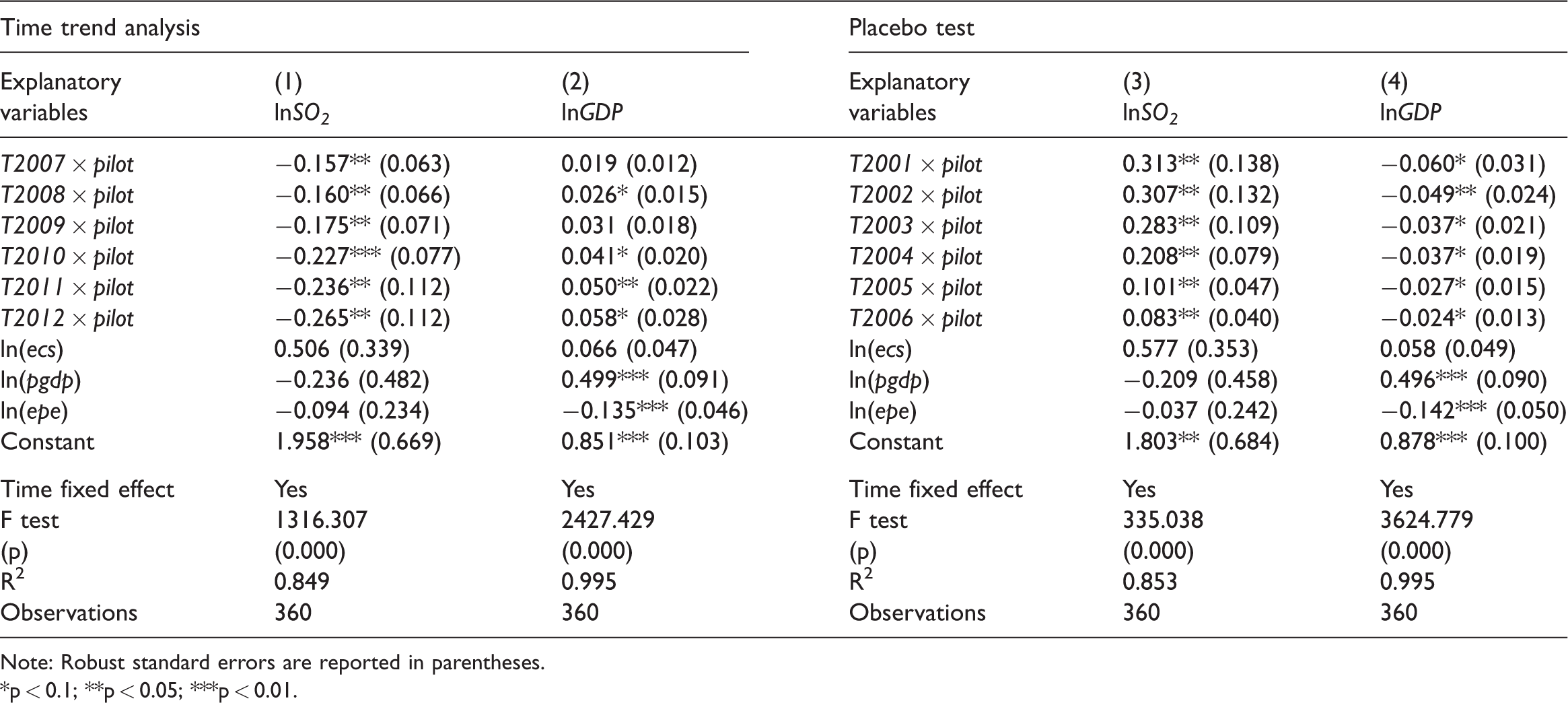
Columns (1) and (2) of Table 6 show the changes in industrial sulfur dioxide intensity and the economic growth effects of the SETPS over time. We employ six interaction terms between the year dummy variables from 2007 to 2012 (T2007–T2012) and pilot, instead of the interaction term pilot × T used previously. As shown in Column (1), the SETPS plays an important role in reducing industrial sulfur dioxide intensity as the corresponding regression coefficients of the six interaction terms are all negative and significant at or above the 5% level, indicating an average annual industrial sulfur dioxide intensity reduction of 18.4%. Moreover, the emissions reduction of the SETPS shows an overall downward trend (see Figure 2). In terms of economic growth, as shown in Column (2), the effects of the scheme from 2007 to 2012 are positive, although the coefficients are not statistically significant in 2007 and 2009. In addition, overall, the effects show a slightly upward trend.
Results of time trend analysis and placebo test.
Note: Robust standard errors are reported in parentheses.
*p < 0.1; **p < 0.05; ***p < 0.01.

Trends in the effects of the SETPS on environmental and economic performance.
One possible reason for these results is that, under the centralized administrative system in China, beneficiaries can avail micro-level policy benefits sooner than macro-level policy benefits, as the latter involves several administrational procedures. Moreover, the principal participants in China’s SETPS are state-owned enterprises, which tends to respond better to national policies than private enterprises do. Therefore, the SETPS is effectively implemented to reduce industrial sulfur dioxide intensity. In addition, as most companies participating in emissions trading are large-scale ones, they have better emission-reduction facilities and robust technological innovation capabilities. Thus, the SETPS has stimulated economic effects.
Robustness check and mechanism analysis
Placebo test
The above results are insufficient for demonstrating the effects of the SETPS since 2007. The parallel assumption in a DID estimation requires the establishment of anti-factual logic. The DID estimation assumes that the unobserved difference between pilot regions and non-pilot regions is the same when the SETPS is not in play. Therefore, we conduct a placebo analysis, as a robustness test, to ensure that different trends do not exist for the pilot and non-pilot regions prior to the implementation of the SETPS. 70 To explore whether the SETPS could achieve pollution abatement and economic performance during 2001–2006, we multiply the year dummy variables (T2001–T2006) from 2001 to 2006 by pilot to establish six new interaction terms, instead of using the previous interaction item (pilot × T). We expect the effects of the interaction between the year and pilot variables to be insignificant.
Columns (3) and (4) of Table 6 display the results of the two regressions. In Column (3), the coefficients of the interaction terms are significant and positive, thus differing from Column (1). This indicates that the SETPS did not promote abatement in industrial sulfur dioxide intensity during 2001–2006. The positive coefficients indicate that industrial sulfur dioxide intensity in the treatment group was significantly more severe than in the control group. For economic growth, the coefficients of the interaction terms in Column (4) are significantly negative during 2001–2006, thus differing from Column (2). The negative coefficients show that economic growth in the treatment group was worse than in the control group. The coefficients of the other control variables are almost the same as the benchmark regression that considers the time fixed effects.
Elimination of institutional change and similar policy interference
China implemented the Cleaner Production Standards in 2006–2007. The Cleaner Production Standards before 2006 differ greatly from the revised standards. These standards enabled the transformation from end-of-pipe treatment to cleaner production, which promoted the application of advanced production technologies, along with upgraded and optimized industrial structure. They also affected energy conservation and economic growth. After 2010, China began to implement inter-regional environmental cooperation; therefore, the effects of the SETPS might include noise. To exclude the possible interference from institutional changes and similar policies, we eliminate samples from 2001–2005 and 2011–2012 and retain samples from 2006 to 2010 for retesting. Columns (1) and (2) of Table 7 contain the regression results, which show that the sulfur dioxide emissions reduction effect is significantly negative at the 5% level, and the economic growth effect is significantly positive at the 10% level. The basic conclusions of this study are robust.
Elimination interference results and retest of the results of different indexes.

Note: Robust standard errors are reported in parentheses.
*p < 0.1; **p < 0.05; ***p < 0.01.
Retest of different indexes
We use different indicators to measure the two explanatory variables. We choose the natural logarithm of sulfur dioxide emissions (ln(poll)) to represent environmental pollution and select the natural logarithm of the industrial output value (ln(io)) to represent economic growth. The regression results show that the emissions reduction effect of SETPS is significantly negative at the 5% level, and the effect of economic growth is significantly positive at the 1% level. The estimation results still support the main conclusions of this study, indicating that the conclusions are robust (see Columns (3) and (4) in Table 7).
Mechanism analysis
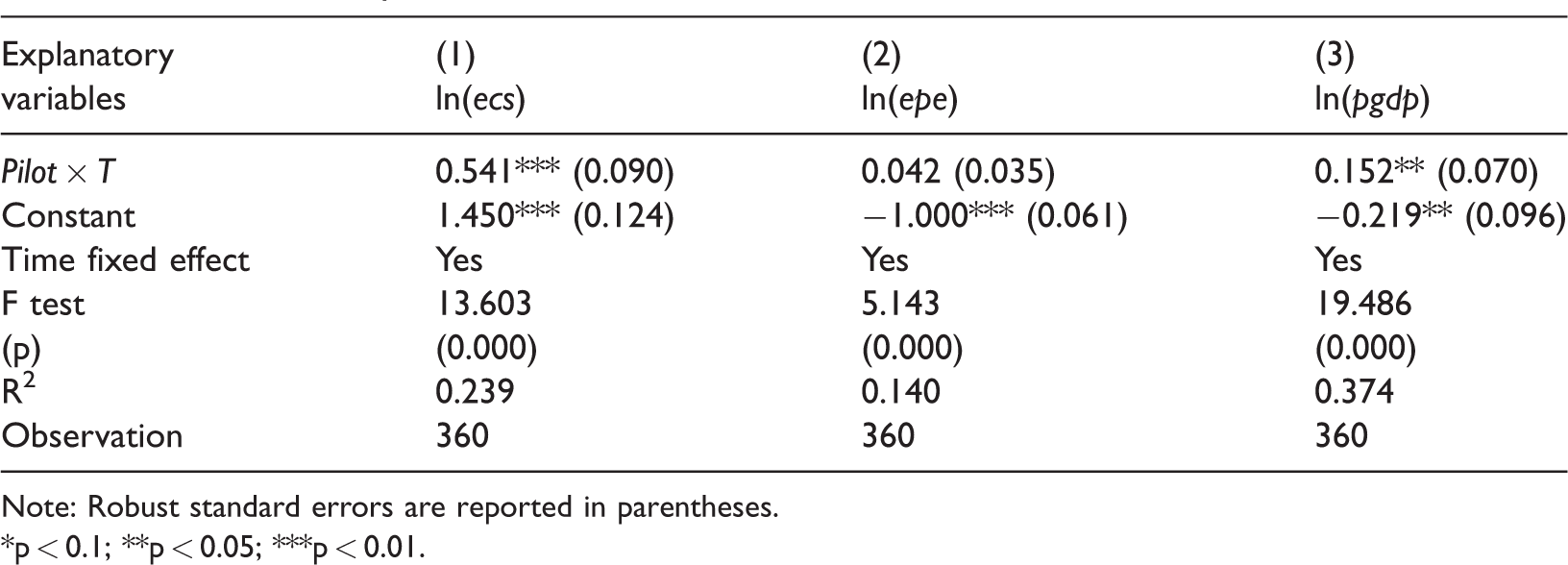
The above results show that the SETPS has significantly reduced industrial sulfur dioxide intensity and stimulated economic growth. Then, the question is what factors cause these differences? This section identifies the underlying mechanisms of the effects by investigating the role of the SETPS in driving the factors of economic growth and emissions abatement. Following Zhang et al.,
60
the interaction term (pilot × T) becomes the independent variable, and the control variables become the dependent variables. The model is as follows

Mechanism analysis results.
Note: Robust standard errors are reported in parentheses.
*p < 0.1; **p < 0.05; ***p < 0.01.
Because the interaction term (pilot × T) represents the net effect of the SETPS on the other variables, we focus on its coefficient. As shown in Table 8, the interaction term has a significant and positive influence on the energy consumption structure and GDP per capita and has an insignificant and positive influence on EPE. This indicates that the SETPS improves the energy consumption structure and GDP per capita, resulting in the abatement of industrial sulfur dioxide intensity and economic growth. One possible reason for this important finding is that, with the gradual improvement in China’s emissions trading system, the SETPS induces polluting enterprises to improve their energy efficiency and technologies, which in turn improves the energy consumption structure and GDP per capita.
Conclusions
Traditional environmental policy regimes have relied too heavily on command-and-control environmental regulations, often leading to negative reactions and incentive distortions. However, the SETPS could be a viable alternative for adjusting China’s sustainable development strategy. In this study, we investigate the effects of the SETPS on environmental governance and economic growth by using the DID method and panel data of China’s 30 provinces during 2001–2012. We classify the 11 provinces that implemented China’s pilot scheme as the treatment group, and the remaining provinces as the control group. The key conclusions are as follows.
First, China’s SETPS has successfully reduced pollution as it has a significantly positive effect on reducing industrial sulfur dioxide intensity. The pilot provinces perform significantly better than the non-pilot provinces in promoting regional economic growth. These conclusions are also robust after controlling other variables, time fixed effects, and region fixed effects, as confirmed by a robustness check. Second, an estimation analysis of regional heterogeneity shows that the SETPS has a stronger effect on industrial sulfur dioxide reduction in the Central China than it does in the Eastern and Western China, and it also exerts a positive influence on economic growth in the Western China. Third, the role of the SETPS in reducing industrial sulfur dioxide intensity has had an overall downward trend, but its role in improving economic growth has shown an upward trend since 2007. Moreover, a placebo test shows that these trends did not exist prior to 2007, suggesting that the time trend is the result of the SETPS. In addition, the SETPS has a significant and positive effect on the energy consumption structure and GDP per capita in the pilot provinces.
Based on these findings, we identify several implications for policymakers to adjust China’s SETPS. First, to a certain extent, SETPS can alleviate the serious pollution and enable China to seek sustainable development under the constraints of energy. However, to realize the Porter effect, the government should focus on the role of the SETPS in environmental governance and economic growth. Particularly, effective measures should be taken to vigorously promote market construction and technological innovation of cleaner production. Second, the Central region should continue to strengthen the emissions reduction effect of the SETPS and encourage economic development, while the Eastern and Western regions should pay more attention to the effect of the SETPS on environmental governance. In addition, the pilot emissions trading market is not sufficiently active, while the demand for the SETPS remains unstable. Therefore, the government should expend greater efforts to distribute the initial emissions rights, create a good trading environment, maintain the order of market trading, and formulate incentive policies for emissions trading. It is also imperative that the government boosts both the environmental quality and the economy by taking the role of SETPS.
Our research has some limitations. First, after the 2008 Global Financial Crisis, China initiated a large economic stimulus package with policy instruments such as infrastructure investment and urbanization. This could impact the treatment effects of the SETPS. Second, because of the difficulty in acquiring official micro-level data, we only evaluate the performance of pilot provinces; however, the pilot samples at the micro-level are also essential in the SETPS. Follow-up studies on the SETPS at the micro-level are thus necessary. Finally, in future studies, we will analyze the changes in carbon dioxide intensity between pilot regions and non-pilot regions to understand carbon co-benefits in the SETPS process.
Highlights
We estimate the effects of sulfur dioxide emissions trading pilot scheme in China. The DID method is employed. The SETPS has a positive effect on industrial sulfur dioxide reduction. The SETPS exerts a positive influence on economic growth. The pollution reduction effect of the SETPS has decreased since 2007.
Footnotes
Acknowledgments
The authors would like to thank the efforts by the editor and all anonymous reviewers.
Author's note
Rashid Maqbool is also affiliated with Department of Construction Management, Tsinghua University, Beijing, China.
Declaration of conflicting interests
The authors declared no potential conflicts of interest with respect to the research, authorship, and/or publication of this article.
Funding
The authors disclosed receipt of the following financial support for the research, authorship, and/or publication of this article: This study was funded by the National Social Science Foundation of China (18BGL176).