



Abstract
Green retrofit of existing residential buildings is a sustainable way to improve the energy efficiency. However, such implementation faces some challenges due to the different willingness of residents involved. There is a lack of comparative study on residents’ preceptions of green retrofit in China, which is of great concern to the government. Therefore, this study investigates residents’ housing conditions and their perceptions of a green retrofit, based on the feedbacks from 9936 questionnaires which are collected from urban and rural residents throughout China. The Chi-squared test is employed to identify the key influencing factors, including demographic and housing characteristics. The results show that more than 90% of the respondents are willing to adopt retrofit, and installing a zoned temperature control system of individual rooms is a generally acceptable measure. The retrofit subsidy is a topic of high concern, and the respondents are more likely to undertake unified free retrofit, compared with separate retrofit supported by a partial subsidy. Besides, household income, city of residence, housing type and housing problems will cause significant differences in residents’ perceptions. After evaluating the retrofit potential of different resident groups, some suggestions are proposed for policymakers. The findings from this study can help develop differentiated strategies for residents, to promote green retrofit of existing residential buildings in China.
Introduction
Over the past decades, sustainable development has been severely challenged by the global issues of climate change and energy shortage.1,2 The building and construction sector, which is one of the major contributors to the issues, is responsible for about 30% of global anthropogenic greenhouse gas emissions and over 30% of primary energy consumption worldwide.3–5 Since 2010, CO2 emissions related to buildings have been found to increase by nearly 1% every year.6,7 Therefore, improving building energy efficiency has become a worldwide concern in recent years.8,9
Compared with new constructions, the existing buildings with high energy consumption account for the majority of the building and construction sector.10–12 In China, rapid urbanization has placed enormous pressure on energy, resources and the environment. 13 The existing construction area has grown to 60.1 billion square meters by 2018, of which residential buildings accounted for 78.7% with huge energy-saving potential. 14 Many residential buildings built decades ago in China failed to consider the energy-saving issues, and had defects in heat insulation and other aspects. Thus, green retrofit of existing residential buildings is a sustainable way to improve the energy efficiency, in addition to the construction of new green buildings.15–17
As more and more attention has been paid to green retrofit, China has put forward energy-saving standards for new buildings, and simultaneously promotes green retrofit of existing buildings. The retrofit tasks have been decomposed step by step into the assessment requirements of the governments at all levels. During the 11th Five-Year Plan period, the green retrofit of residential buildings was first carried out in Northern China. It can refer to the upgrading of heating-ventilation and air conditioning, lighting, water heating and other systems to improve the energy performance of residences.18,19 The Chinese government has also instituted a series of related policies in terms of regulation, evaluation and especially financial support. The documents such as the Assessment Standard for Green Retrofitting of Existing Building, and the Building Energy Conservation and Green Building Development 13th Five-Year Plan have been put into action successively.20–22 In 2020, China plans to retrofit 39,000 old residential communities across the country.
However, compared with the smooth progress of the green retrofit of public buildings, the retrofit of existing residential buildings in China is facing certain difficulties due to the involvement of different stakeholders. Residents, as one of the important participants, their perceptions of green retrofit vary with personal characteristics, and will greatly affect the effectiveness of retrofit strategies.23–25
In many other countries, researchers have taken note of this issue, and conducted investigations to advise on the development of appropriate and acceptable policies. Hwang et al. 26 conducted a survey on residents from a mature public residential estate in Singapore, which had just completed a green retrofit pilot program. It investigated residents’ perceptions of the program and their willingness to extend green retrofit to individual houses which can help improve upon the current retrofit program. In England, to design targeted interventions of green retrofit to specific households groups, Trotta 27 empirically investigated the drivers for retrofit decisions. The study focused on the dwelling-related characteristics, which seem to have higher influence on retrofit investment than socio-demographic characteristics. Another research 28 from Slovenia examined the determinants for homeowners to undertake green retrofit of single-family houses. It emphasized the role of various sources of energy information and advice received from professional consultants, friends and relatives, the Internet, etc., calling for information popularization to promote retrofit. Similarly, Abreu et al. 29 explored the influence of homeowners’ age on the motivation for green retrofit in Portugal. It indicated that the younger ones were generally more environmentally conscious and preferred little-by-little retrofit, while the older appreciated integral retrofit. For a more comprehensive analysis, a research 30 in northern Sweden identified homeowners’ intention to undertake green retrofit, derived from their views on the benefits and barriers of retrofit. Improving the indoor environment that promotes health and comfort was found to be an important driver, while the difficulty of finding low-interest loan and reliable information sources widely hindered the implementment of retrofit. Additionally, Broers et al. 31 introduced a comprehensive model for homeowners’ decision-making process concerning green retrofit, which distinguishes the various stages of the process, multiple influencing factors, and homeowners’ considerations.
In China, some similar studies have also proved the effects of residents’ attributes on the promotion of energy strategies. Xu and Ge 23 evaluated the sustainability of the coal-to-gas policy in Northern China based on residents’ satisfaction. Residents had the highest satisfaction with the heating level and the lowest with the subsidy amount. Jia et al. 32 surveyed residents’ attitude towards six energy-saving measures in Beijing. It showed that financial incentives and a sense of energy conservation are the key factors driving the public to adopt the measures. Sepcifically, in terms of green retrofit, Liu et al. 33 analyzed three cases of retrofitting old residential buildings in China. It was found that retrofit programs should not only involve the residents, but also consider their preferences, motives, knowledge and living habits. Otherwise, it might cause residents’ dissatisfaction, technology abuse, equipment destruction, and weakening support for future programs. This conclusion was further confirmed in the research, 4 which providing a critical review of existing retrofit policies and barriers in China. However, these studies fail to explain which characteristics affect residents’ intentions to undertake green retrofit in China, and how they do so.
Unlike the situation in other countries, there are great differences in topographical conditions, climatic conditions, current housing conditions, and residents’ living habits among various regions of China. The government also emphasizes that during the promotion of green retrofit, it is necessary to investigate residents’ willingness and requirements, and obtain their understanding and cooperation. It can be seen that how to fully consider the local differences, to combine the needs and wishes of residents, and to make targeted strategies for green retrofit of existing residential buildings is the focus of China’s building energy-saving work at this stage. Nevertheless, the residents’ perceptions of green retrofit have not been fully examined and discussed in China. It is necessary to carry out a comparative study on the retrofit willingness of Chinese residents from a national level, to distinguish the requirements of different resident groups and provide reference for the formulation of targeted policies.
Targeting the urban and rural residents throughout China, this study conducts a questionnaire survey on their housing conditions and perceptions of a green retrofit based on China’s unique national conditions. The Chi-squared test of independence is employed to identify the key influencing variables, including residents’ demographic and housing characteristics. After evaluating the retrofit potential of different resident groups, some suggestions are proposed for policymakers, to help them formulate differentiated strategies and promote green retrofit of existing residential buildings in China.
The remaining part of this paper is organized as follows: “Methods” section introduces the research framework, as well as the methods of data collection and statistical analysis. “Results and section” section investigates the main influencing factors, and discusses their effects on residents’ perceptions of a green retrofit. Based on the evaluation, “Policy recommendations and perspectives” section raises some recommendations for the development of relevant policies. Finally, the conclusions of the whole study are given in the final section.
Methods
Figure 1 illustrates the analytical framework employed in this study, which is conducted according to the data from an online questionnaire survey. Based on the questionnaire, the residents’ demographic characteristics (household income) and housing factors (city of residence, housing type and housing problems) are taken as independent variables, and their perceptions of a green retrofit (willingness, acceptable measures and expected supporting policies) as dependent variables. Considering that most research parameters are qualitative discrete variables, the statistical methods of t-test and F-test are not applicable, therefore the Chi-squared test is employed to identify the key influencing factors. After analyzing their impacts and assessing the retrofit potential of different resident groups, some suggestions are then proposed to help develop appropriate strategies for green retrofit of existing residential buildings in China.
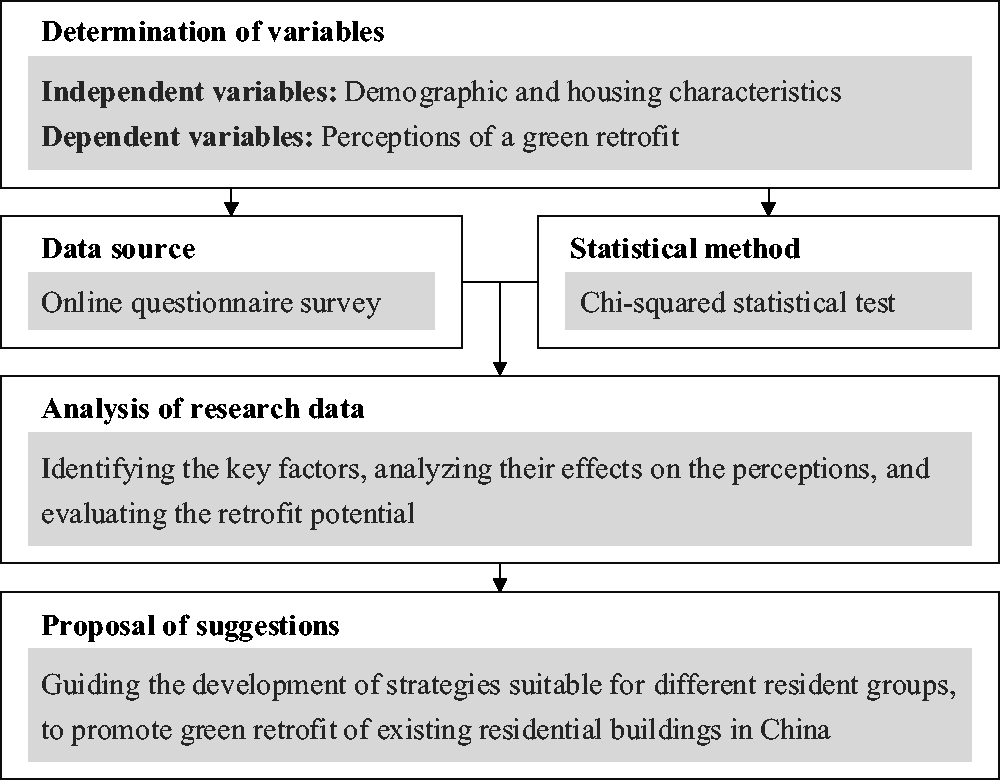
Analytical framework.
Design of questionnaire
The questionnaire for this study is divided into three sections, as shown in Figure 2. The first section covers the demographic and housing characteristics of respondents, including their age, education, occupation, annual household income, city of residence, and housing type.
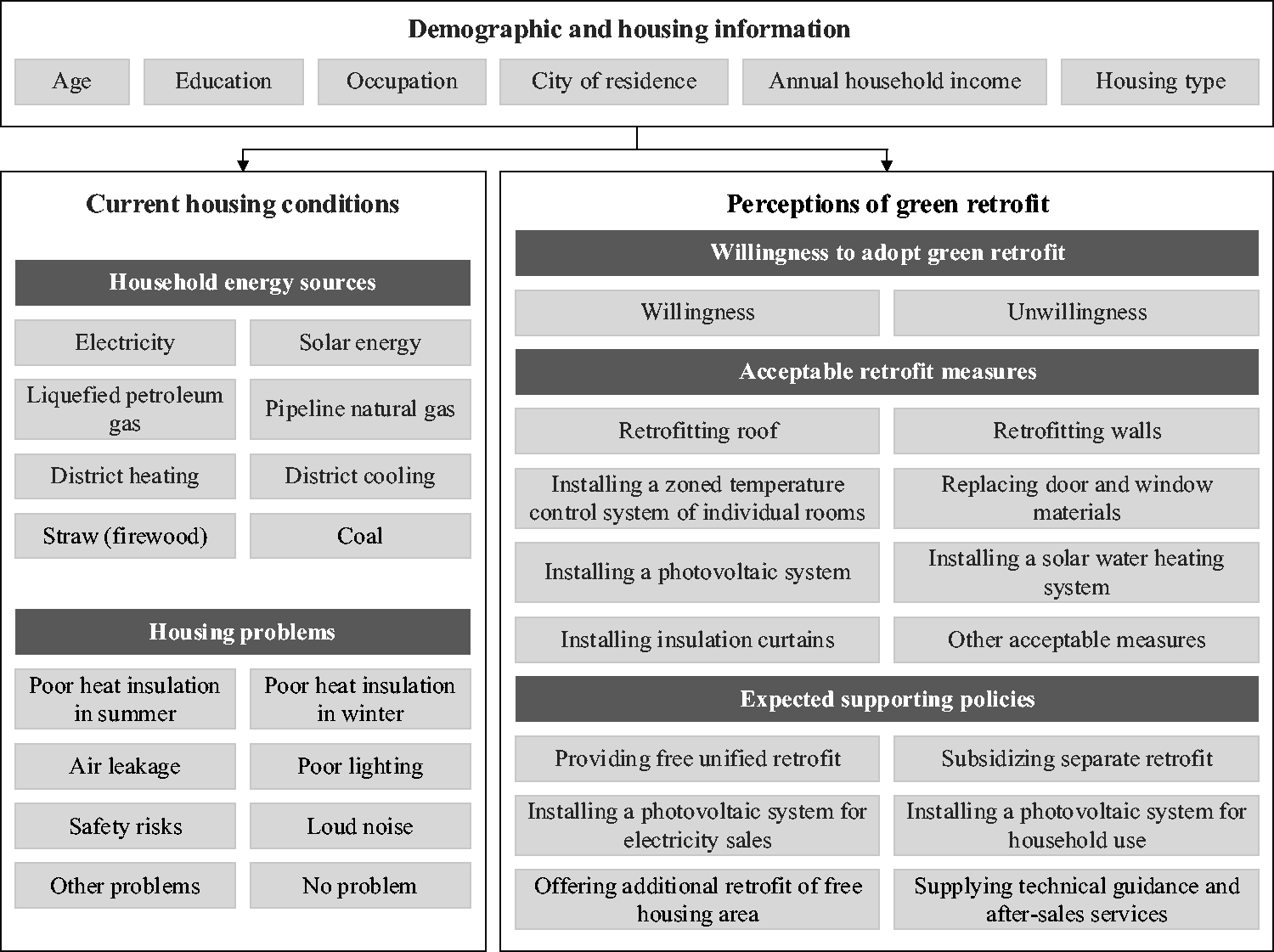
Questionnaire outline.
In the second section, the current housing conditions of respondents are investigated, including household energy sources and housing problems. The energy sources consist of electricity, pipeline natural gas, coal, straw (firewood), solar energy, etc. The housing problems are mainly concerned with issues that affect energy consumption, such as poor heat insulation and poor lighting.
The third section asks the respondents’ perceptions of a green retrofit, including their acceptable retrofit measures and expected supporting policies. Installing a zoned temperature control system of individual rooms, replacing door and window materials, and retrofitting roof and walls are common measures taken during the retrofit. The policies involve different retrofit methods, financial subsidies, additional retrofit of free housing area, technical guidance and after-sales services, etc.
Data collection
Regarding the urban and rural residents across China as the research target, a total of 12,803 samples have been collected from the questionnaires distributed online in 2019. To ensure the validity of the feedback results, questionnaires with too short filling time and inconsistent personal information are excluded. Finally, 9936 samples are selected with an effective response rate of 77.6%.
The respondents are distributed in a wide geographical area of China with diverse climate, which are generally divided into five thermal climate zones according to the Code for Thermal Design of Civil Building (GB 50176–2016).34,35 They are namely the severe cold zone (SCZ), cold zone (CZ), hot summer and cold winter zone (HSCWZ), hot summer and warm winter zone (HSWWZ) and mild zone (MZ), as depicted in Figure 3.

Geographical map of thermal climate zones in China35.
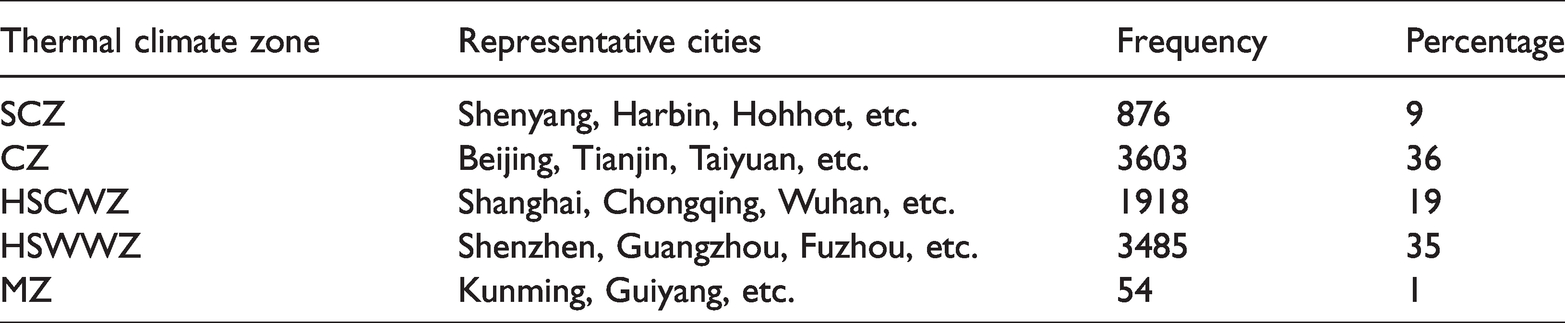
The random distribution of samples among thermal climate zones is listed in Table 1, and Table 2 further presents the demographic and housing information of respondents from different zones. As samples from the MZ accounts for only 1% of the total, they are ignored during the comparative analysis of thermal climate zones in this study. It can be found that the majority of respondents are young people with an intermediate level of education, who may act as decision-makers in their family during the retrofit. About 70% of the respondents have their annual household income ranging from 30,000 to 3,00,000 Chinese Yuan (CNY). Most of the respondents live in multi-family residential buildings.
Distribution of samples among thermal climate zones.
Descriptive statistics of samples from different thermal climate zones.

Statistical analysis
Cross analysis
Cross analysis is usually used to analyze the relationship between two or more grouped variables. In this paper, it is employed to calculate the sample frequency when evaluating the housing conditions of different resident groups and their perceptions of green retrofit. It is assumed that the variable X is classified into X1, X2, …, Xm, and Y is classified into Y1, Y2, …, Yn. Therefore, the probability of samples choosing Yj (j = 1,2,…,n) in the Xi (i = 1,2,…,m) group can be calculated by equation (1)

Chi-squared test
The Chi-squared test of independence is a hypothesis test which assesses the independence between qualitative variables.36–38 Specifically, it measures the difference between the actual counts and the expected counts, based on counts that represent the number of items in the sample for each category. In this research, the Chi-squared test is employed to evaluate the influence of residents’ demographic and housing characteristics on their perceptions of green retrofit.
Based on the analysis in “Cross analysis” section, the test of null hypothesis H0 is developed that the variables X and Y of random samples are independent. The test compares the observed frequencies of data with expected frequencies, determining whether the deviation is large enough to reject the null hypothesis. The chi-squared statistic χ2 is defined as the sum of the squared difference between observed and expected frequencies divided by the expected frequencies, as expressed in equation (2). Thus, the larger the value of χ2, the greater the difference between the observed frequencies and expected frequencies. Besides, the degrees of freedom υ can be calculated by equation (3)



Results and discussions
Statistical analysis results
The p values of the statistical test results are listed in Table 3. According to the theory in “Chi-squared test” section, when p ≤ 0.01, the independent variable has a very significant effect on the dependent one. The effect is slightly weaker, but still significant when 0.01 < p < 0.05. While when p ≥ 0.05, it means that there is no significant effect between independent and dependent variables. It can be seen that both thermal climate zone and housing type have great impacts on residents’ household energy sources. Housing type is the primary influencing factor affecting residents’ housing problems.
p values of the statistical test for different variables (**p < 0.01 and *p < 0.05).
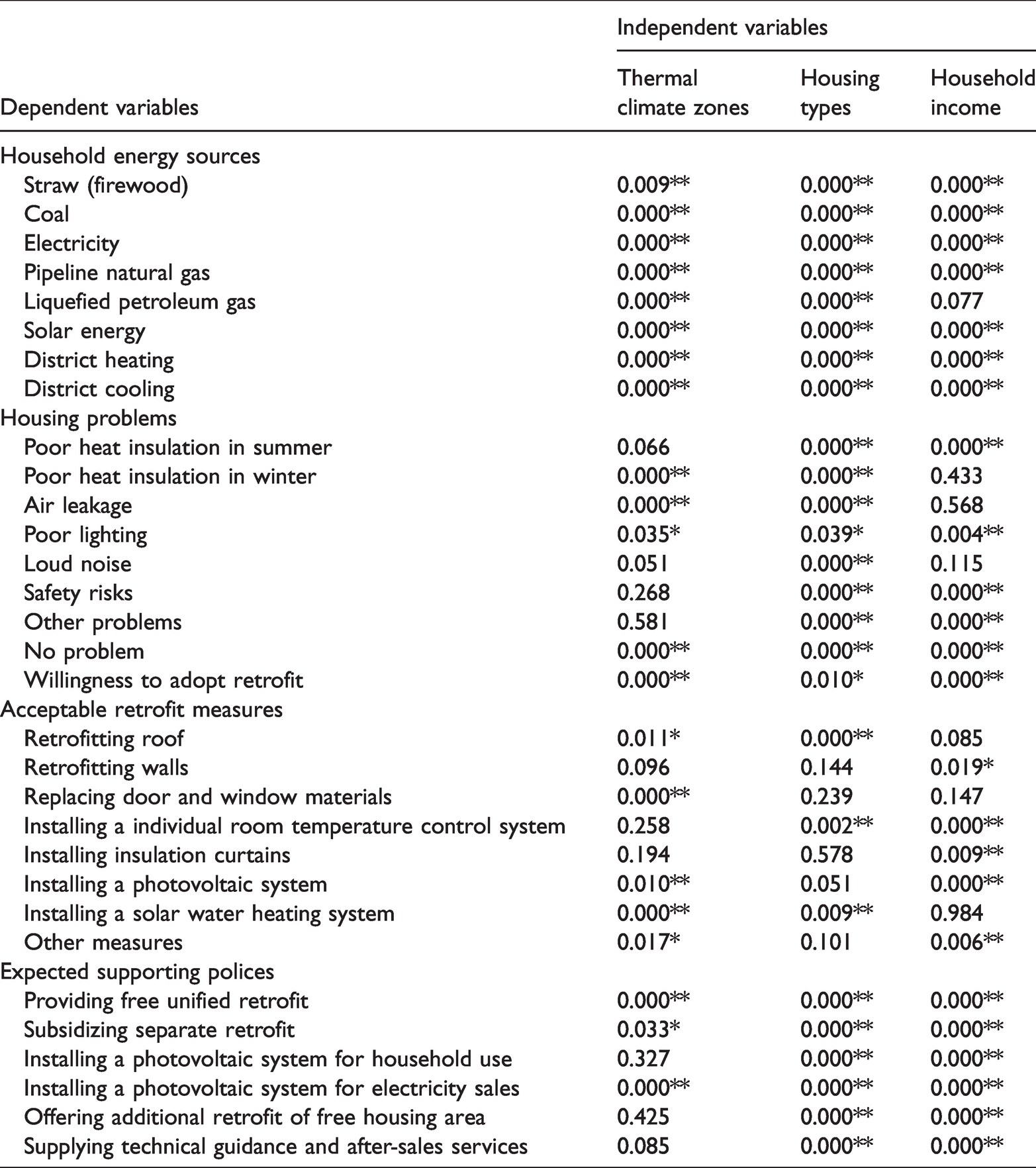
In terms of residents’ willingness to adopt green retrofit, the difference brought from thermal climate zone and household income is larger than that caused by housing type. As for the acceptable retrofit measures, all the characteristics will not lead to significant differences, while they only affect some of the measures. Furthermore, the expected supporting policies are greatly influenced by residents’ housing type and household income. This study will mainly discuss the effects of factors at the 0.01 level of significance.
Residents’ housing conditions
Household energy sources
The results show that electricity, pipeline natural gas and solar energy are the most commonly used energy sources in China’s residential buildings at present, with the usage exceeding 80%, 60% and 40% respectively. It can be seen that China has made certain progress in promoting electrification and utilization of solar energy.
The household energy sources are mainly affected by the thermal climate zones where residents live and their housing types, as shown in Figure 4. Considering the influence of thermal climate zones, 69.3% of the respondents in the CZ always use natural gas, which is higher than the average. It reflects the achievements of pollution control and coal-to-gas conversion in the Beijing-Tianjin-Hebei region and surrounding cities. In the SCZ and HSWWZ, the usage of natural gas is obviously lower than that in other zones, while the usage of liquefied petroleum gas is higher. It may result from the mountainous terrain, which hinders the laying of natural gas pipelines. Furthermore, due to the lack of available resources, the usage of solar energy in the SCZ (32.9%) is the lowest among all climate zones.
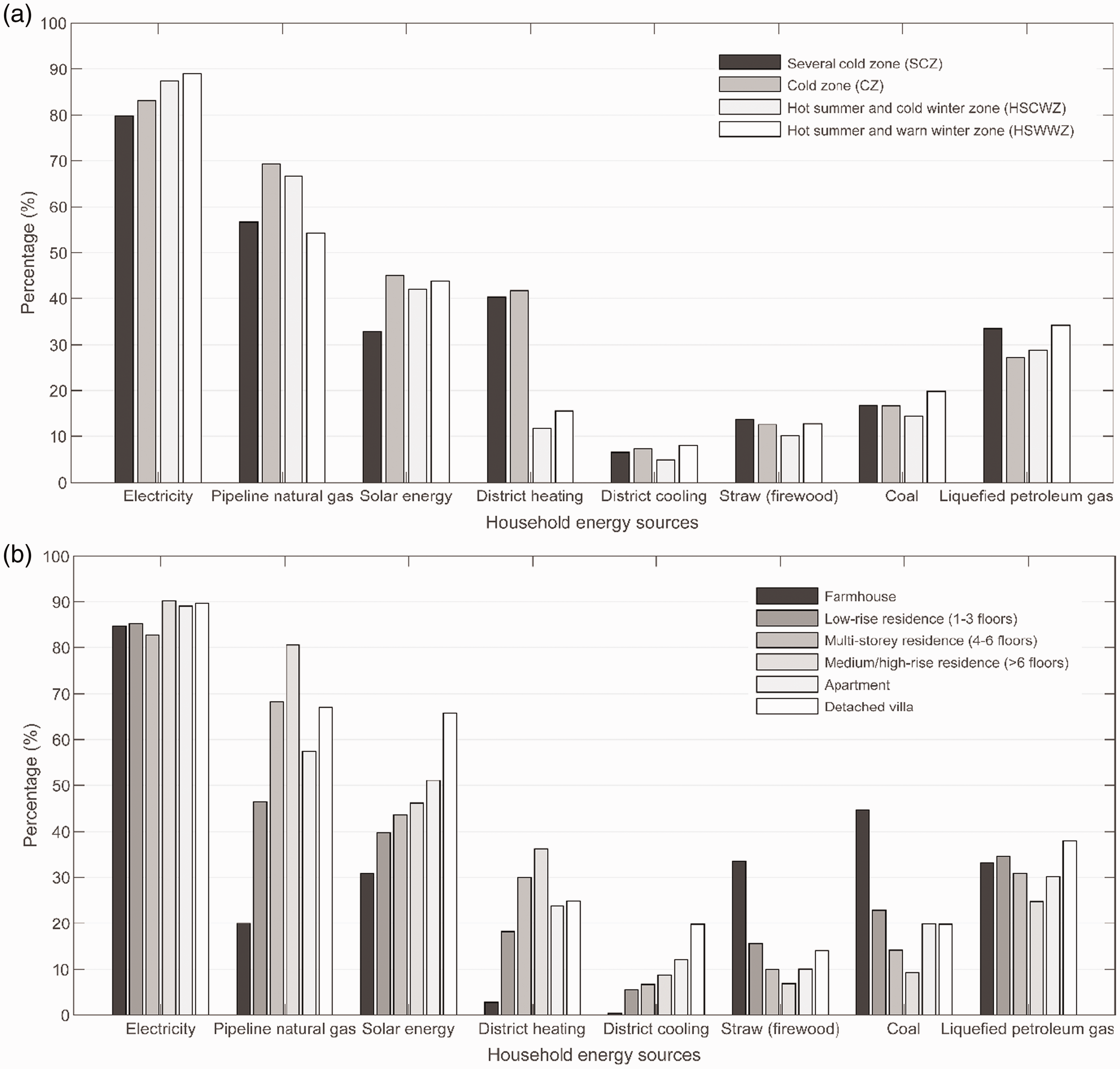
Usage of household energy sources among residents (p < 0.01): (a) in different thermal climate zones; (b) in different types of houses.
As for the influence of housing types, only 20% of the respondents living in farmhouses usually use natural gas, which is far below the average, while straw (firewood) and coal are more common. This is because using the straw (firewood) and coal is more convenient and less costly for rural residents. Another problem is that the scattered locations of farmhouses make it difficult to install natural gas pipelines. Besides, 65.7% of the respondents living in detached villas use solar energy for water heating or power generation, which is significantly higher than the average. It reveals the advantages of developing solar energy and other renewable energy sources in detached villas.
Housing problems
Poor heat insulation is the primary issue of current residential buildings in China. According to the survey, 43.2% and 42.2% of the respondents are troubled by this problem in summer and winter, respectively.
There are differences in housing problems among residents living in different types of houses, as presented in Figure 5(a). The problems of poor heat insulation and air leakage are more serious in farmhouses, which indicates that there is great potential for green retrofit in such types of houses. Additionally, respondents living in apartments and low-rise residences often suffer from poor lighting. More attention should be drawn to improve natural light. From all aspects, those living in detached villas have the least housing problems, among which 39.8% chose “no problem” in the questionnaire.
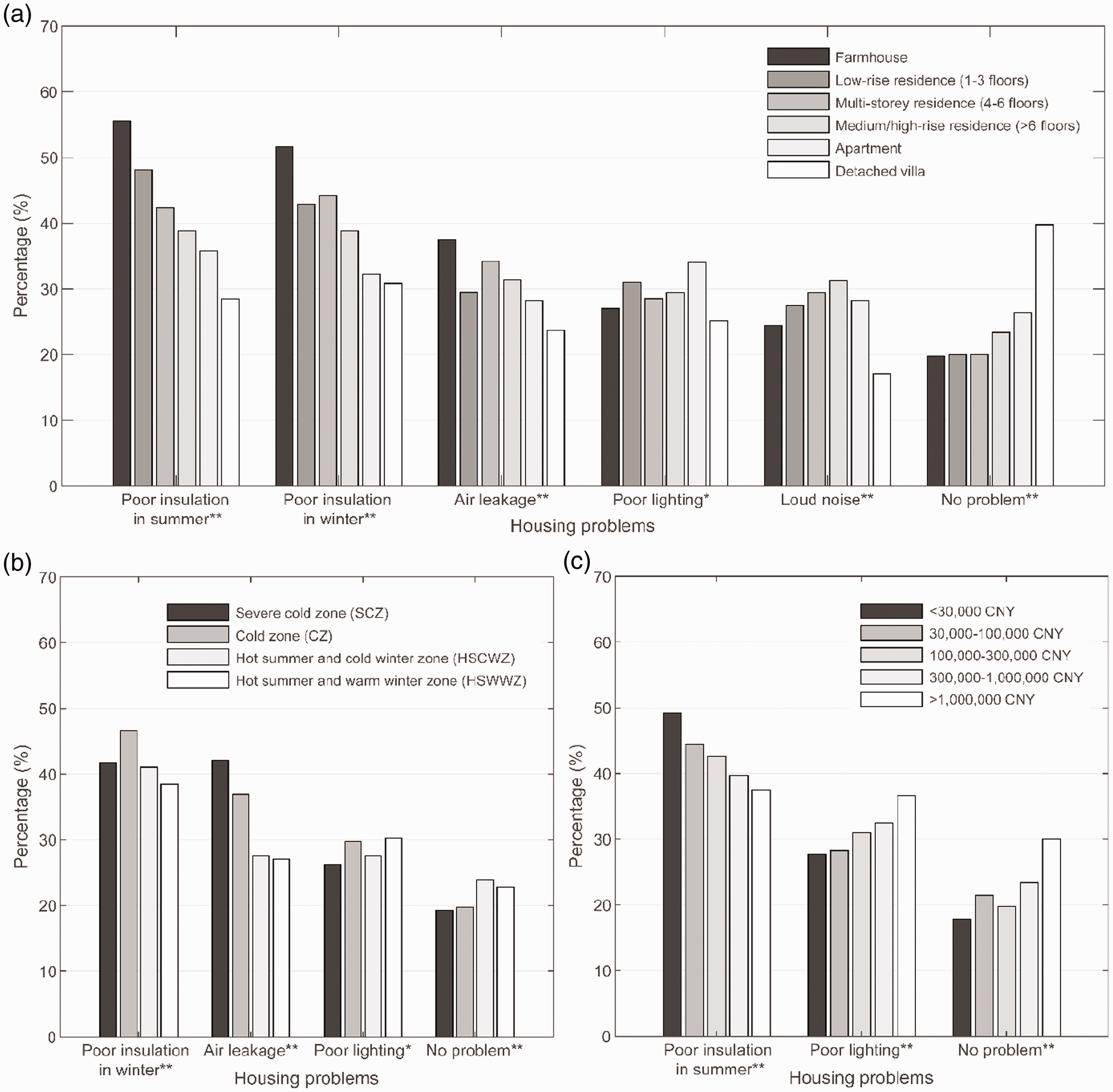
Proportion of housing problems among residents (**p < 0.01 and *p < 0.05): (a) in different types of houses; (b) in different thermal climate zones; (c) with different annual household income.
Figure 5(b) exhibits the main impacts of thermal climate zones on residents’ housing problems. The troubles of air leakage are apparently more common in the SCZ and CZ, and respondents in the CZ are worried about the problems of poor heat insulation in winter as well. It can be found that the proportions of residences without problems in the HSWWZ and HSCWZ are much higher than those in other zones. Furthermore, as shown in Figure 5(c), the proportion of respondents without housing problems increases when the household income rises. Among the existing problems, they have less trouble with heat insulation, while concern more about lighting issues with the growth of income.
Residents’ perceptions of green retrofit
Willingness to adopt green retrofit
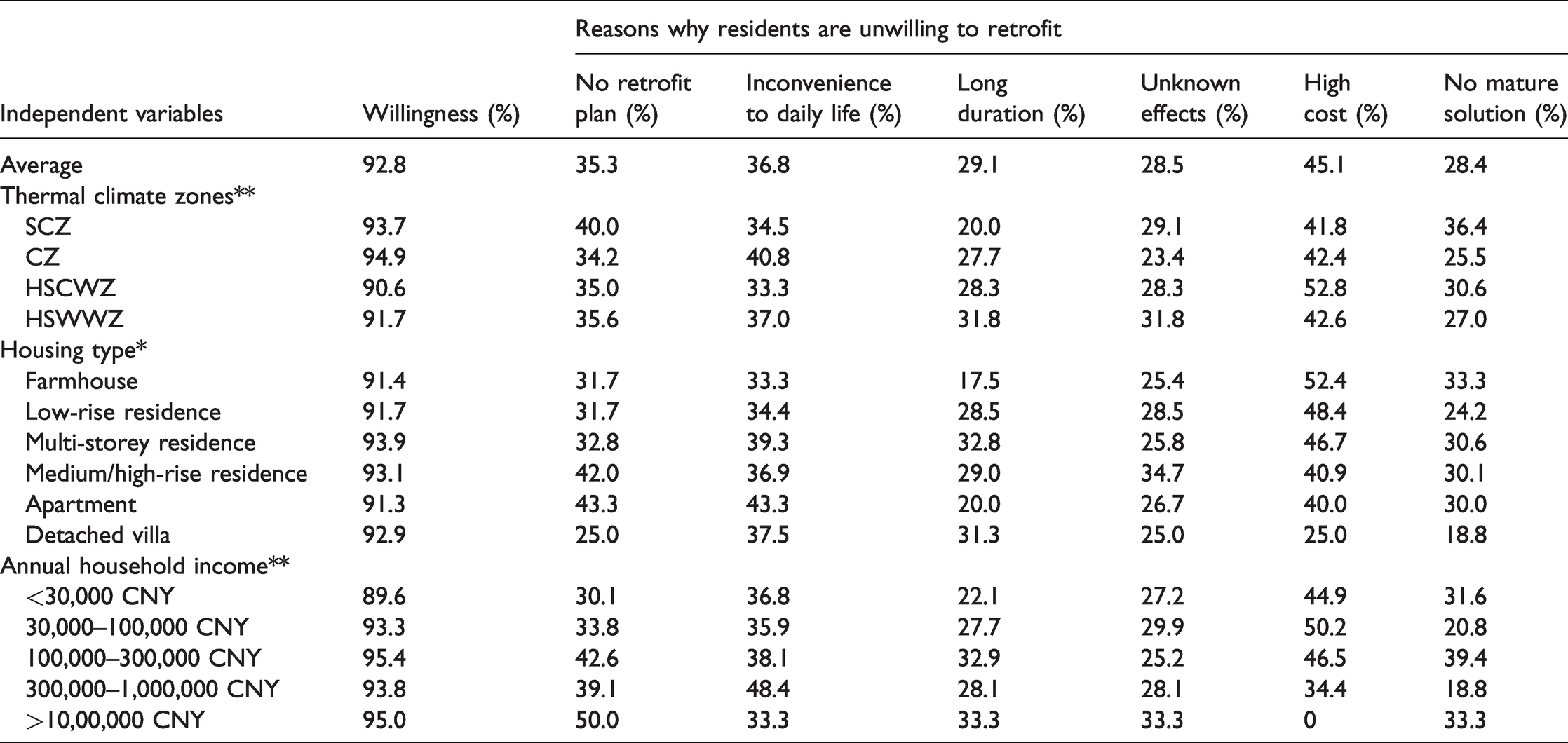
The majority of residents are willing to undertake green retrofit of their residences, as listed in Table 4. Since there are more housing problems in the SCZ and CZ mentioned in “Housing problems” section, respondents in these zones are more likely to adopt green retrofit. It can be seen that housing problems have an important influence on residents’ intentions. Figure 6 indicates that respondents with potential safety risks in their houses have the highest willingness to adopt green retrofit, reaching 96.9%, followed by those with housing problems of poor heat insulation in winter and air leakage. Although only 18.1% of the residences have safety risks, this issue is one of the decisive factors in retrofit implementation. Moreover, respondents whose annual household income is less than 30,000 CNY have the lowest willingness (89.6%) to retrofit their houses.
Willingness of residents with different characteristics to retrofit (**p < 0.01 and *p < 0.05).
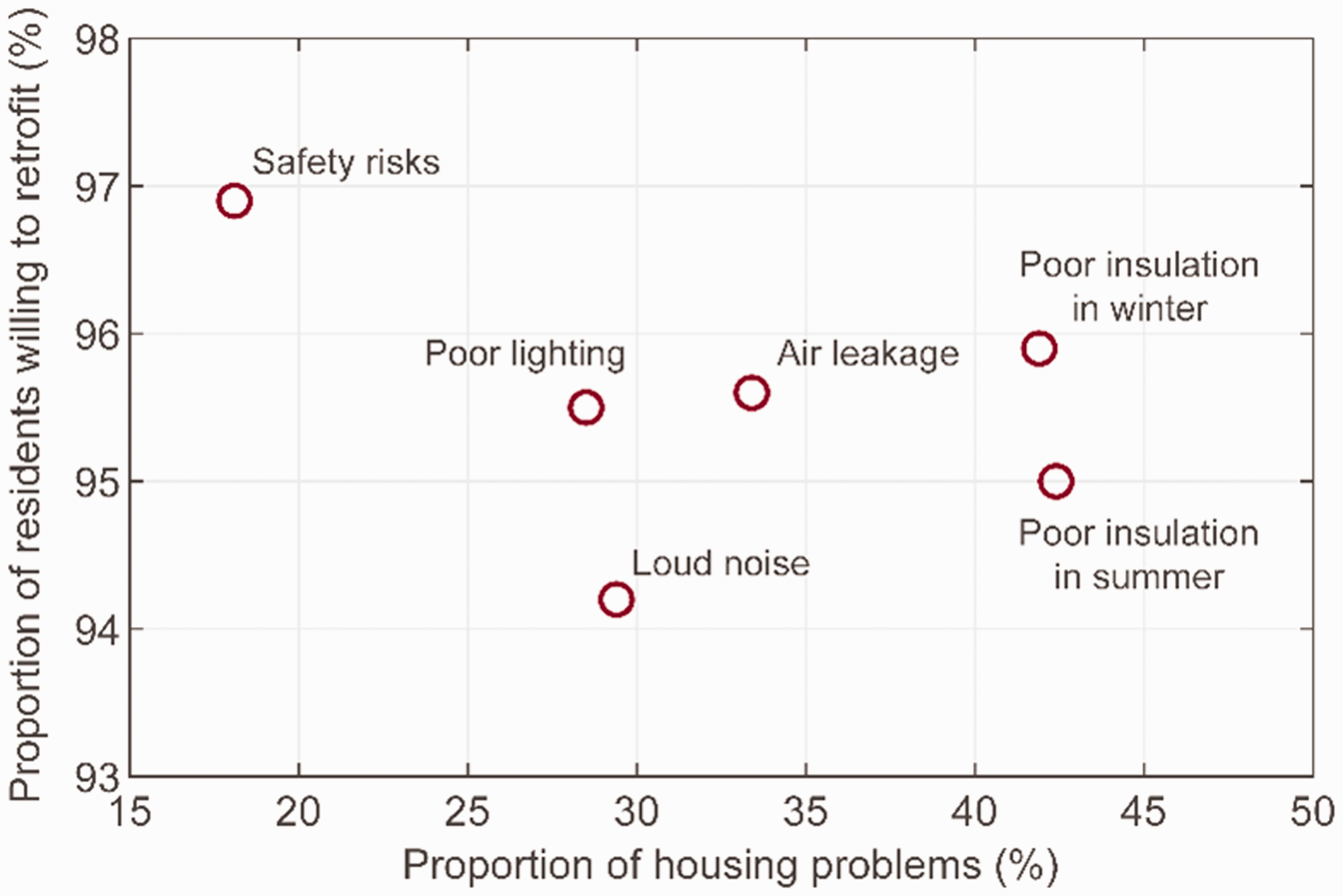
Willingness of residents with different housing problems to adopt green retrofit.
Worrying about the high cost is the primary reason why residents are unwilling to undertake green retrofit, including those living in farmhouses, low-rise and multi-storey residences, and those with an annual household income of less than 3,00,000 CNY. By contrast, residents living in medium/high-rise residences and apartments, and those whose annual household income is more than 10,00,000 CNY, often refuse to retrofit because there is no retrofit plan. These groups of residents have better housing conditions and fewer housing problems. Another important reason is that residents may worry about the inconvenience that the retrofit will bring to daily life.
Acceptable retrofit measures
Among the retrofit measures, installing a zoned temperature control system of individual rooms, solar water heating systems, and replacing the door and window materials rank the top three in terms of their acceptability to respondents, reaching 48.7%, 47.9% and 46.9%, respectively. By comparison, only 33.4% of the respondents are willing to retrofit the roof of their houses.
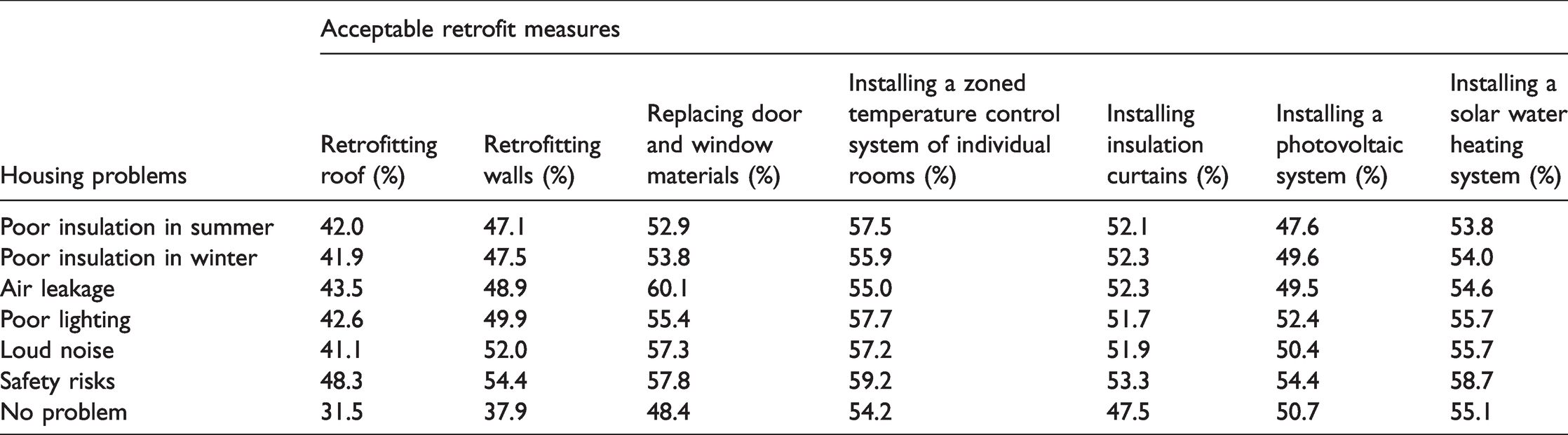
Figure 7 shows the differences in acceptable retrofit measures among residents with various attributes. Considering the effects of thermal climate zones, respondents in the SCZ and CZ are more likely to accept the replacement of door and window materials, which stems from the housing problem of air leakage mentioned in “Housing problems” section. While installing photovoltaic panels or a solar water heating system is more popular in the HSWWZ due to the sufficient solar energy, as drawn in Figure 7(a). Speaking of the housing problems (Table 5), the most acceptable measure for respondents with heat insulation issues is to install a zoned temperature control system of individual rooms. To solve air leakage and loud noise, replacing door and window materials is the most desirable measure. Besides, although some respondents do not have housing issues, they are willing to take retrofit measures, for example, to install a solar water heating system, to improve energy efficiency.
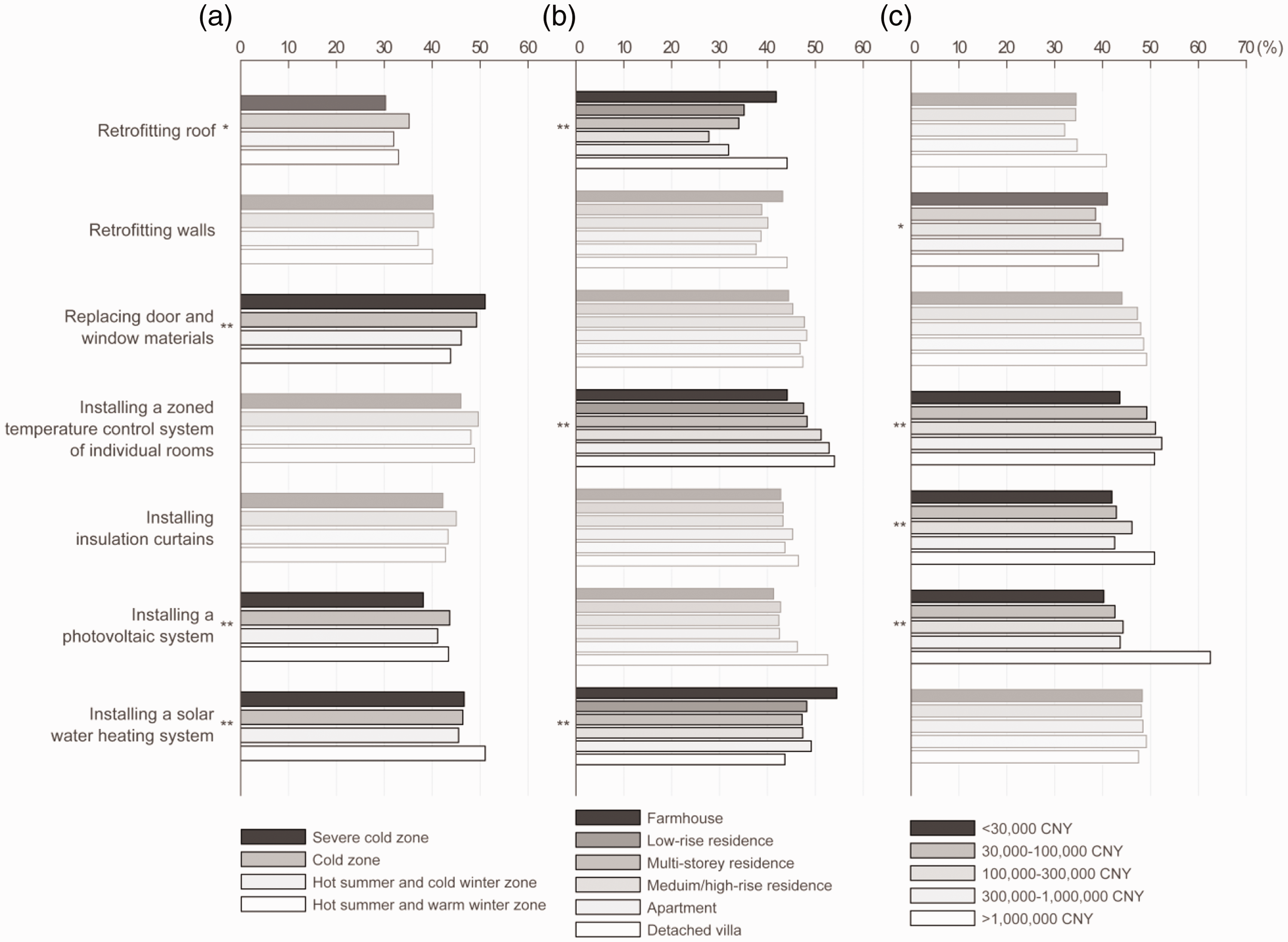
Acceptability of retrofit measures to residents (**p < 0.01 and *p < 0.05): (a) in different thermal climate zones; (b) in different types of houses; (c) with different annual household income.
Acceptability of retrofit measures to residents with different housing problems.
Regarding the effects of housing types shown in Figure 7(b), respondents living in farmhouses and detached villas have higher intentions to adopt roof retrofit than others. This is mainly because there are few disputes over the roof property rights of these two types of residences. At the same time, the installation of a solar water heating system is most welcomed by those living in farmhouses, which is accepted by 54.5% of them. In terms of the influence of income, respondents with an annual household income of more than 10,00,000 CNY prefer to install insulation curtains and photovoltaic systems in their houses. Especially, up to 62.5% of them intend to install a photovoltaic system, which is the most acceptable measure among this group of residents, as displayed in Figure 7(c).
Expected supporting policies
The expected supporting policies for green retrofit are mainly influenced by residents’ housing types and household income, as presented in Figure 8. Generally, the retrofit subsidy is a topic of high concern. Respondents who are likely to adopt unified free retrofit are 10% more than those who are willing to undertake separate retrofit with a partial subsidy. However, unified free retrofit is difficult to carry out on a large scale because of the high financial cost. Respondents’ expectation for unified free retrofit decreases with the increase of household income, and those with an annual household income of 300,000–1,000,000 CNY prefer to retrofit separately with a partial subsidy. In addition, unified free retrofit is most popular among those living in farmhouses, but least welcomed by those living in detached villas. This is because residents with higher income and better housing conditions are able to afford the retrofit, so they pay more attention to personal needs and experiences.
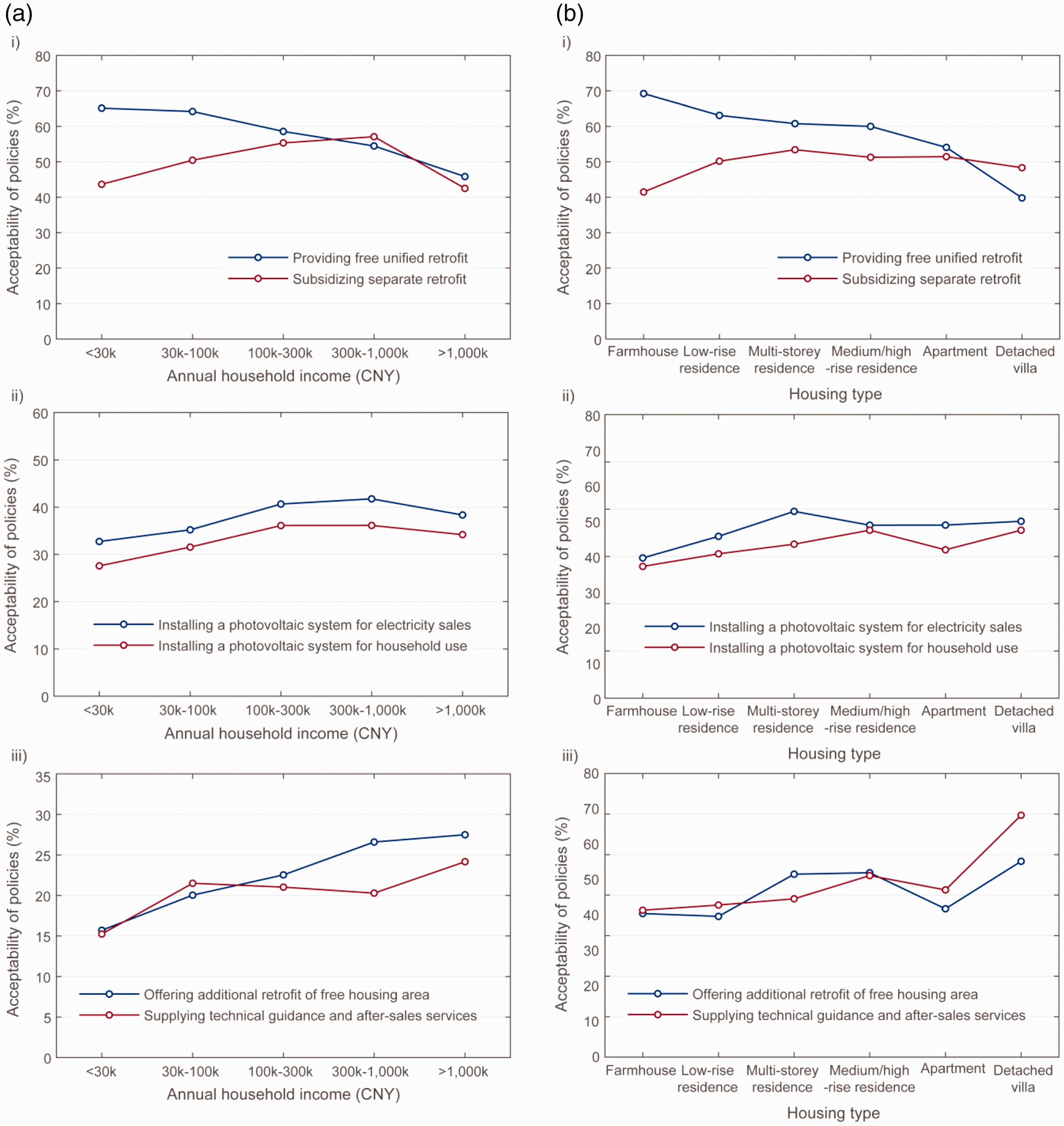
Acceptability of supporting policies to residents (p < 0.01): (a) with different annual household income; (b) in different types of houses.
For the utilization of photovoltaic power generation, it can be seen that regardless of housing types and household income, respondents tend to install a photovoltaic system for selling renewable electricity rather than household use. About 36.6% of the respondents are willing to sell electricity, 4.1% more than those who prefer household use. This is because residents can get high revenue based on the local feed-in-tariff policy. Considering the polices of offering additional retrofit of free housing area, and providing technical guidance and after-sales services, their acceptability to respondents is relatively low, only around 20%. Specifically, respondents’ expectation for additional retrofit of free housing area rises with the increase in household income. Those living in detached villas have obviously higher demands for technical guidance and after-sales services compared with those living in other types of houses.
Policy recommendations and perspectives
The study demonstrates that the majority of urban and rural residents in China are willing to carry out a green retrofit of their residences, which has great development prospects. At the same time, residents with different characteristics differ greatly in housing conditions, acceptable retrofit measures and expected supporting policies. Thus, it is necessary to adopt differentiated implementation strategies. Based on the survey results, the following suggestions are put forward for policymakers to promote green retrofit of existing residential buildings in China.
Making differentiated implementation plans for green retrofit of residences
Since there are significant differences in housing conditions and appropriate retrofit measures among different resident groups, differentiated implementation plans for green retrofit should be developed based on the full evaluation. In recent years, the Clean Air Action Plan has promoted clean heating in northern China, especially the rapid progress of coal-to-gas conversion in the CZ with great heating demands. While in the SCZ and HSWWZ, it is difficult to lay natural gas pipelines on a large scale because of the mountainous terrain. Furthermore, residents living in the HSWWZ have a higher acceptance of installing equipment for solar utilization due to the abundant solar energy resources. Priority should be given to promoting solar water heating or photovoltaic systems in residences there. Notably, during the implementation process, the property rights of the space for green retrofit (such as the roof) need to be resolved. It is suggested to carry out green retrofit first in farmhouses and detached villas, where residents have few disputes and high willingness.
Establishing a self-assessment and countermeasures toolkit for housing problems
The results show that there are more or less problems in China’s urban and rural residences, which have great potential for green retrofit. Although residents have a clear understanding of their housing problems, it is hard to obtain detailed information about the solutions, costs, implementation cycle, and available subsidies. Residents are always worried about the high cost of the green retrofit and the inconvenience brought to daily life, which are the primary reasons why they are unwilling to adopt retrofit. Therefore, this paper proposes to establish a self-assessment and countermeasures toolkit for housing problems. On the one hand, residents can employ the toolkit to identify the existing housing problems through energy consumption, lighting, noise, indoor environmental quality and other data indicators. On the other hand, the toolkit can provide reliable solutions to the problems encountered by residents, as well as clear cost-benefit analysis, explanation of subsidy policies and necessary technical guidance.
Developing targeted incentive strategies for green retrofit of residences
The financial investment from the Chinese government is essential for the promotion of green retrofit. Special subsidies for green retrofit should be set up to mainly support the installation of heat metering and temperature control devices in residences. It is also necessary to subsidize the retrofit of the building envelope, replacement of door and window materials, and installation of solar energy facilities. The unified free retrofit expected by most residents is unlikely to be implemented on a large scale due to financial pressures. With the increase of household income, the dependence of residents on subsidies for green retrofit gradually decreases. It is suggested to develop targeted incentive strategies aimed at different resident groups. For example, when residents apply for the U.S. Department of Energy’s Weatherization Assistance Program, the primary factor affecting eligibility is income. In California, the annual household income (before tax) should be less than 60% of the state average. 40 In terms of high-income groups, it is recommended to explore market-oriented innovative mechanisms such as carbon finance and carbon trading, to enhance the initiative of communities and residents to reduce emissions. In communities of Zhongshan City, Guangdong Province, China, the excess carbon emission rights obtained by the emission reduction of photovoltaic systems can be sold in the carbon trading market. The economic benefits will be fed back to the residents, thereby forming a virtuous circle.
Conclusions
According to the questionnaire survey of urban and rural residents in China, residents with different characteristics have significant differences in housing conditions and perceptions of the green retrofit. In terms of the current housing conditions, electricity, pipeline natural gas and solar energy are the commonly used energy sources in residential buildings, with the usage exceeding 80%, 60% and 40%, respectively. Besides, poor heat insulation is the main housing problem for residents. 43.2% and 42.2% of the respondents are troubled by this issue in summer and winter, respectively.
More than 90% of the residents are willing to undertake green retrofit of their residences, and those with potential safety risks in their houses have the highest willingness. Worrying about the high cost is the primary reason why residents are unwilling to retrofit. Those with better housing conditions may have no retrofit plan and worry about the inconvenience brought to daily life. Among the retrofit measures, installing a zoned temperature control system of individual rooms, a solar water heating system, and replacing door and window materials have the highest acceptability to respondents, reaching 48.7%, 47.9% and 46.9%, respectively. Priority should be given to the green retrofit of farmhouses and detached villas, where residents have few disputes and high willingness. Considering the supporting polices, the retrofit subsidy is a topic of high concern. Respondents who are likely to adopt unified free retrofit are 10% more than those who are willing to undertake separate retrofit with a partial subsidy. The expectation for unified free retrofit rises with the decrease of household income. Besides, respondents prefer to install a photovoltaic system for electricity sales rather than household use, regardless of housing types and household income. This is because they can get high revenue based on the local feed-in-tariff policy.
Based on the results of the national survey, this study fully has considered the local differences in China, and combined the needs and wishes of residents to make the following suggestions. First, aimed at different resident groups, differentiated implementation plans should be made for green retrofit of residential buildings. Second, a self-assessment and countermeasures toolkit should be established to identify the housing problems and provide reliable solutions. Third, targeted incentive strategies for green retrofit should be developed. For high-income resident groups, it is recommended to explore market-oriented innovative mechanisms such as carbon finance and carbon trading, to enhance the initiative of residents to reduce emissions. The findings distinguish the requirements of different resident groups and provide reference for Chinese policymakers to formulate targeted policies on green retrofit of existing residential buildings.
Although this study has made valuable findings, there are still some limitations. Firstly, comparative studies of the retrofit measures and supporting policies are only carried out on several groups of common situations. Secondly, the research is mainly based on residents’ opinions from questionnaires, which are influenced by subjective factors. Thirdly, the conclusions are universal in China to a certain extent, but further investigations of the study area are needed when formulating specific policies. Future research will aim at the significant influencing factors identified in this study and demonstrate the findings with the help of big data analysis of residents’ characteristics. In-depth correlation model will be developed to support relevant policy formulation.
Footnotes
Declaration of conflicting interests
The author(s) declared no potential conflicts of interest with respect to the research, authorship, and/or publication of this article.
Funding
The authors disclosed receipt of the following financial support for the research, authorship, and/or publication of this article: The authors appreciate the financial support provided by the National Key R&D Program of China for the Research and Development of City Energy Efficiency and Low Carbon Solution Tool Project (Project Number: 2017YFE0105600).
