



Abstract
The increasing urgency to combat climate change and reduce energy consumption in the residential sector underscores the importance of zero-energy buildings. Residential buildings contribute significantly to global energy use, making it essential to explore innovative solutions for energy-efficient design and renewable energy integration. This study addresses the energy performance gap in achieving zero-energy residential buildings by optimizing design strategies and incorporating renewable energy sources. Through advanced simulation modeling, this research evaluates various building components, such as insulation, glazing, shading, HVAC systems, and photovoltaic panels, in the context of a single-family home in climate zone 5 (cool). The simulations were performed using state-of-the-art energy modeling tools, allowing for precise, location-specific analysis. The results highlight the potential for significant reductions in energy consumption when renewable energy systems are integrated, consistently narrowing the energy performance gap. This study not only provides critical insights into optimizing zero-energy residential building design but also offers a framework for policymakers, designers, and engineers to enhance energy efficiency in the built environment. The findings hold implications for future sustainable design practices, promoting the transition toward a low-carbon, energy-resilient future.
Keywords
Introduction
The growing significance of achieving zero-energy buildings to combat climate change and diminish energy consumption in the residential sector has garnered increased attention. Achieving zero-energy buildings has emerged as a crucial strategy in this endeavor. A zero-energy building, also known as a net-zero energy building, is a structure that consumes only as much energy as it generates from renewable sources over the course of a year, resulting in a net-zero energy balance. 1
The importance of zero-energy buildings lies in their ability to reduce greenhouse gas emissions and dependence on fossil fuels for heating, cooling, and electricity. By generating renewable energy on-site and optimizing energy efficiency measures, these buildings can play a key role in transitioning towards a more sustainable and low-carbon built environment. 2
The concept of zero-energy buildings encompasses various design and technology strategies aimed at minimizing energy consumption and maximizing renewable energy generation. These strategies include incorporating high-performance building envelope materials, implementing efficient HVAC (heating, ventilation, and air conditioning) systems, integrating renewable energy sources such as solar panels and geothermal heat pumps, and adopting smart building technologies for energy management and optimization. 3
Achieving zero-energy status requires a holistic approach that considers factors such as building orientation, site conditions, climate, occupant behavior, and energy demand profiles. 4 Through comprehensive energy modeling and simulation studies, researchers and practitioners can evaluate different design scenarios, assess the performance of renewable energy systems, and optimize building energy efficiency strategies. 5
While substantial research has been conducted on energy-efficient building design and renewable energy integration, there is still a critical gap in location-specific, detailed analysis of zero-energy residential buildings, particularly in the context of climate zone 5, as per American Society of Heating, Refrigerating and Air-Conditioning Engineers standards. Most prior studies have taken a generalized approach to design and energy performance without focusing on how local climate and specific occupancy patterns affect the energy performance gap. Moreover, the integration of renewable energy systems tailored to different climatic zones has been underexplored.
This study addresses a critical gap in the literature by providing a precise simulation of a single-family residential building in climate zone 5. It focuses on detailed design elements, including occupancy schedules, equipment loads, lighting, and HVAC set points. The novel contribution of this research lies in its location-specific, simulation-based approach that integrates energy-efficient building design with renewable energy systems to achieve zero energy status.
Unlike previous studies, this work offers a comprehensive analysis of how regional climate conditions, occupancy schedules, and design strategies interact to influence building performance. This provides new insights into achieving zero-energy status across diverse contexts. By tackling the energy performance gap through renewable energy integration, the study contributes to the expanding body of knowledge with a detailed framework for simulating energy performance tailored to specific climate zones.
This approach ensures that the findings are highly applicable to real-world scenarios, enabling architects, engineers, and policymakers to make informed decisions that promote sustainable building practices. The research evaluates a range of building design options, including various combinations of insulation materials, glazing systems, shading strategies, and HVAC systems. The simulations reveal how these design choices impact energy consumption and thermal comfort within residential buildings. Furthermore, by integrating renewable energy sources such as solar photovoltaic (PV) panels and geothermal heat pumps, the study demonstrates significant reductions in reliance on conventional energy sources and highlights substantial energy savings.
The influence of socio-economic factors, including design performance, procurement practices, and regulatory frameworks, on the energy performance of buildings was considered. Contextual factors were found to play a crucial role in shaping energy efficiency outcomes, highlighting the importance of tailoring design strategies to specific regional contexts. Through simulations, it was shown that the integration of renewable energy sources can significantly reduce energy consumption and move buildings closer to zero-energy status. 6 Optimization of building design and maximization of renewable energy generation demonstrated the feasibility of achieving sustainable and environmentally friendly residential buildings.
In the context of escalating energy demands and climate change, enhancing energy efficiency and integrating renewable energy sources in residential buildings have become paramount. Achieving zero energy status in single-family homes not only reduces environmental impact but also promotes sustainable living practices. Despite the significance of these goals, many existing studies have primarily focused on theoretical models or broad analyses, often overlooking the nuanced interactions between building design elements and regional climate conditions. Recent literature emphasizes the importance of detailed simulations to understand the energy performance of residential buildings. However, there remains a notable lack of research specifically targeting climate zone 5 with a focus on single-family homes. These studies often fail to account for critical factors such as occupancy schedules, equipment loads, and HVAC set points, which are essential for accurately modeling energy performance.
This study aims to fill this gap by providing a precise simulation of a single-family residential building in climate zone 5. By integrating energy-efficient design with renewable energy systems, this research offers a location-specific approach that considers the complex interactions among climate conditions, occupancy patterns, and design strategies. The findings will not only contribute to the growing body of knowledge but also serve as a valuable resource for architects, engineers, and policymakers seeking to implement effective sustainable building practices. Through a comprehensive analysis of various design options, this study seeks to illuminate the pathways to achieving zero energy status in residential buildings across diverse contexts.
Energy performance gap analysis
The energy performance gap refers to the disparity between the predicted energy performance of a building and its actual energy consumption in real-world operation. 7 This phenomenon is of considerable relevance to the current study objectives as it highlights the need to address inefficiencies in building design and operation to achieve sustainable energy outcomes. By understanding and mitigating this gap, this study aims to optimize energy efficiency and move towards the goal of zero-energy residential buildings. 8
Several types of energy performance gaps exist, each with its own set of causes. Design-operation gap is discrepancies between the expected energy performance based on design specifications and the actual performance resulting from operational factors such as occupant behavior, maintenance practices, and system malfunctions. 9 Modeling–reality gap is differences between energy predictions generated by simulation models and the actual energy consumption observed in the built environment. Factors contributing to this gap include inaccuracies in modeling assumptions, data input errors, and uncertainties in occupancy patterns. 10 Performance–aspiration gap includes discrepancies between desired energy performance targets and achieved outcomes. This gap may arise due to suboptimal design decisions, inadequate technology implementation, or unrealistic performance expectations. 11 The causes of these gaps are multifaceted and may include factors such as insufficient insulation, inefficient HVAC systems, poor building envelope design, lack of renewable energy integration, substandard construction practices, and occupant behavior patterns. 12
The primary study objectives revolve around bridging the energy performance gap and achieving optimal energy efficiency in a zero-energy residential building. By identifying the various types of energy performance gaps and their underlying causes, this study aims to develop effective strategies to enhance building performance and reduce energy consumption.
The energy performance gap in residential buildings arises from a complex interplay of various factors. Design deficiencies, construction quality, occupant behavior, maintenance practices, and regulatory constraints all contribute to this disparity between predicted and actual energy consumption. Design deficiencies often stem from a lack of consideration for energy-efficient principles during the planning phase. This can lead to suboptimal building performance due to factors like inadequate insulation, inefficient HVAC systems, or improper building orientation. 13
Construction quality issues, such as poor workmanship or the use of low-quality materials, exacerbate energy inefficiency. Common problems include air leaks, thermal bridging, and improper insulation installation, all of which contribute to increased energy losses. Occupant behavior plays a significant role in energy consumption within residential buildings. Practices like leaving lights on unnecessarily, improper thermostat adjustments, and failure to close windows and doors can lead to higher energy usage than anticipated. Inadequate maintenance and operation further degrade building performance over time. Neglecting to inspect and maintain HVAC systems regularly can reduce their efficiency, resulting in increased energy consumption.
Regulatory and policy constraints also contribute to the energy performance gap. Weak building codes and lax enforcement of energy efficiency standards allow subpar buildings to be constructed, undermining efforts to achieve optimal energy performance. By addressing these underlying causes comprehensively, stakeholders can develop strategies to bridge the energy performance gap and improve overall building energy efficiency. Understanding the multifaceted nature of this gap is essential for advancing toward the goal of zero-energy buildings and fostering sustainable development.
Methods
This study employed a simulation-based approach to optimize the design and energy performance of a single-family residential building in Washington State, targeting zero-energy status. The experimental methodology was structured around several key stages, including building design modeling, energy performance simulation, and renewable energy system integration.
Building design and model setup
A detailed 3D model of the residential building was developed using building information modeling with Revit, reflecting the architectural and structural characteristics of a typical single-family home. The building was divided into different zones (e.g., living area, kitchen, bedroom, garage), each with its own specific occupancy, equipment, and lighting loads. Key design parameters included building orientation, window-to-wall ratio, insulation levels, and thermal properties of construction materials.
Simulation framework and tools
The study utilized the Grasshopper’s Ladybug and Honeybee environmental plugins to perform building energy performance simulations. The software was selected for its advanced capabilities in modeling energy flows and integrating renewable energy systems. The model was calibrated using local climate data for Washington State, classified under ASHRAE climate zone 5 (cool). This climate zone was selected due to its relevance to the case study and its impact on heating and cooling loads.
Energy performance and HVAC systems
Energy consumption in the building was calculated based on the HVAC set points, which were aligned with ASHRAE standards. The HVAC systems were modeled as a variable refrigerant flow (VRF) system, selected for its efficiency in both heating and cooling under the local climatic conditions. Energy demands for space heating, cooling, domestic hot water, and other end-uses were simulated over the course of a year. Occupancy schedules, lighting, and equipment loads were defined based on ASHRAE Standard 90.1 guidelines.
Renewable energy system integration
To achieve zero-energy status, the building was equipped with a PV solar energy system. The capacity and efficiency of the PV system were determined based on the building's annual energy demand, solar exposure, and available roof area. The energy generation from the PV system was simulated and compared against the building's energy consumption to evaluate its contribution toward net-zero energy goals.
Data collection and parameters
The primary data inputs for the simulation included:
Local climate data (temperature, solar radiation, wind speed, etc.). Material properties (thermal conductivity, heat capacity, etc.). Internal loads (occupancy, lighting, and equipment power densities). System performance parameters for HVAC and renewable energy systems.
All simulations were run for a full year, accounting for seasonal variations and peak load conditions. Key performance indicators used to evaluate building energy performance included annual energy consumption, peak heating and cooling loads, and the energy balance between consumption and renewable energy generation.
The model used in this paper has been calibrated to ensure the accuracy and reliability of the simulation results. Calibration was conducted by comparing the model’s outputs with real-world data and established benchmarks, particularly for the building’s energy performance, occupancy schedules, equipment loads, lighting, and HVAC system operations.
The calibration process involved adjusting key parameters to align the simulation results with the actual performance data of similar residential buildings in climate zone 5. Specifically, the model incorporated ASHRAE standards and local energy performance benchmarks, ensuring that the simulation accurately reflected the real-life conditions of the single-family house. The validation was further enhanced by cross-referencing the simulation outputs with data from the U.S. Department of Energy’s Building Energy Codes Program, ensuring consistency with regional energy performance expectations. Moreover, the use of well-established simulation tools, such as EnergyPlus and OpenStudio, which are recognized for their accuracy in energy modeling, adds to the credibility of the results. These tools have been widely used and validated in numerous studies, ensuring the robustness of the simulation framework.
The methodology of this study is represented through a detailed flowchart (Figure 1), which systematically outlines the key stages of the research process. The flowchart includes critical components such as building design and model setup, simulation framework and tools, energy performance analysis, HVAC system assessment, renewable energy system integration, and data collection and interpretation. Each stage is interconnected, ensuring a logical progression from methodology to results. The flowchart also incorporates details on calibration, validation processes, and key performance indicators used to assess energy efficiency. By providing a structured visualization of the study’s workflow, the flowchart enhances clarity and coherence in the approach to optimizing energy-efficient building design and renewable energy systems for achieving zero energy status.
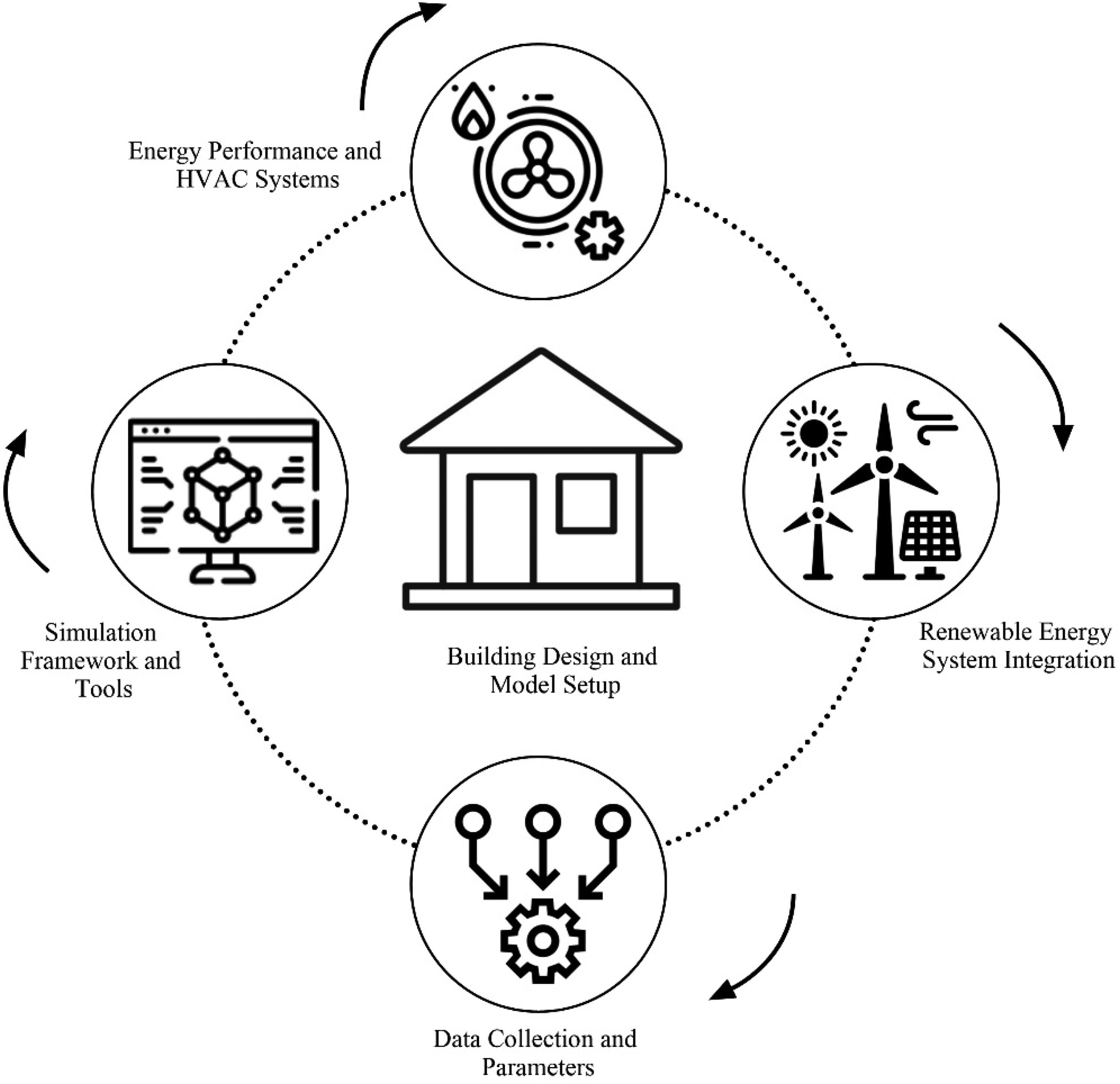
Flowchart of the study’s methodology, highlighting the sequential stages.
Results
The selection of a zero-energy residential building in Yakima, Washington, encompassing a 186 m2 (2000 square foot) single-family home, aligns with the study’s objective of evaluating energy efficiency and renewable energy integration strategies (Figure 2). This choice ensures a detailed assessment of building energy performance within climate zone 5, as defined by ASHRAE standards. 14 Climate zone 5 is characterized by cold winters and mild summers, requiring efficient heating strategies and high-performance building envelopes to minimize energy consumption. Compared to warmer zones, buildings in climate zone 5 must prioritize insulation, air-sealing techniques, and passive solar heating while balancing cooling requirements in summer.
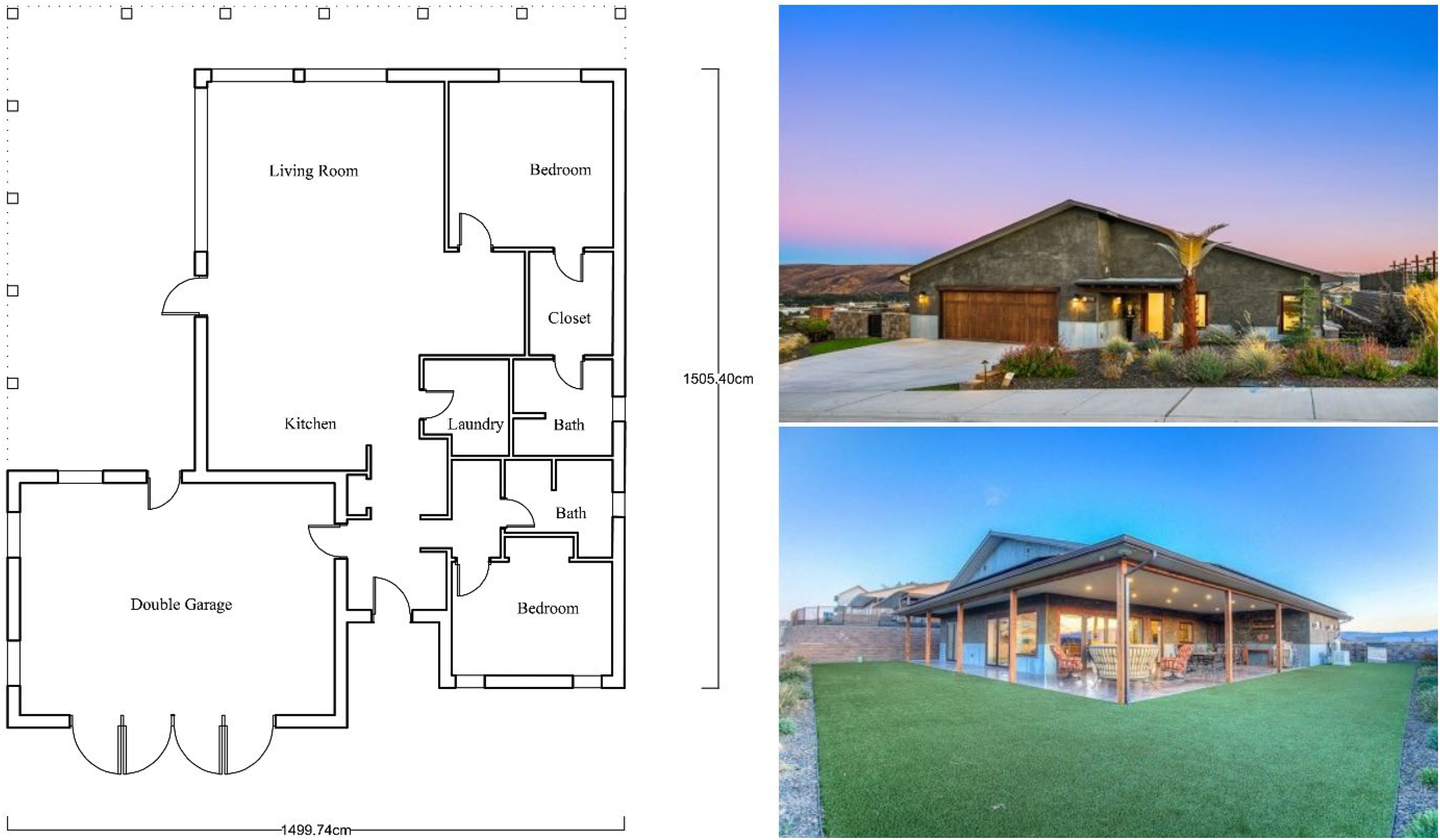
Some views of 801 Selah Vis Way Building in Yakima, Washington.
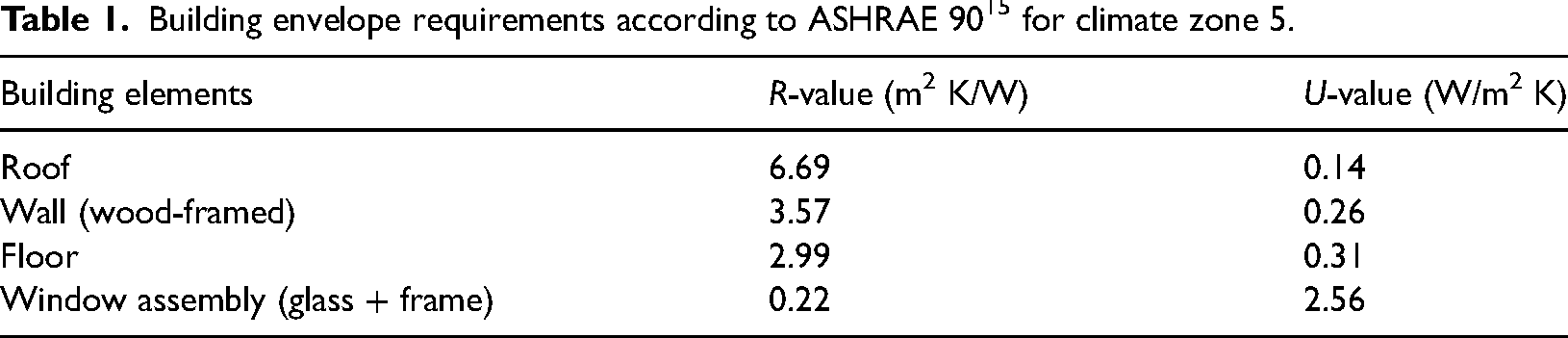
The selected single-family home was chosen based on several key factors. First, its representative size (186 m2) aligns with industry standards, making it an appropriate case for comparative energy efficiency analyses. Second, the availability of detailed construction and operational data supports accurate energy simulation modeling. Third, the home's adherence to ASHRAE standards ensures reliable and replicable energy performance assessments. The building envelope, including exterior walls, roof, floors, and glazing, features U-values compliant with ASHRAE 90, 15 ensuring optimized thermal insulation and energy efficiency (Table 1).
Building envelope requirements according to ASHRAE 90 15 for climate zone 5.
The HVAC system plays a crucial role in the building's energy performance, designed to meet ASHRAE thermal comfort and efficiency standards. It incorporates precise heating and cooling setpoints, occupancy schedules, and high-efficiency equipment, contributing to reduced energy demand. The insulation materials and fenestration align with ASHRAE thermal insulation and solar heat gain recommendations, ensuring effective heat retention in winter and minimized overheating in summer. Additionally, the home’s potential integration of renewable energy systems, such as solar PVs and geothermal heating, reinforces its alignment with sustainable design principles.
The study employed a structured simulation approach, beginning with detailed digital modeling of the building, including its gable roof and attic. The roof slope, overhangs, and obstructions were carefully incorporated to accurately model shading patterns. The attic and gable roof were modeled separately, assigned as shading contexts in the simulation, ensuring realistic solar gain and heat transfer assessments. The simulation parameters were calibrated to reflect realistic environmental conditions, and validation was conducted by comparing the results with benchmark studies and empirical data, ensuring accuracy and reliability.
Energy performance simulation process
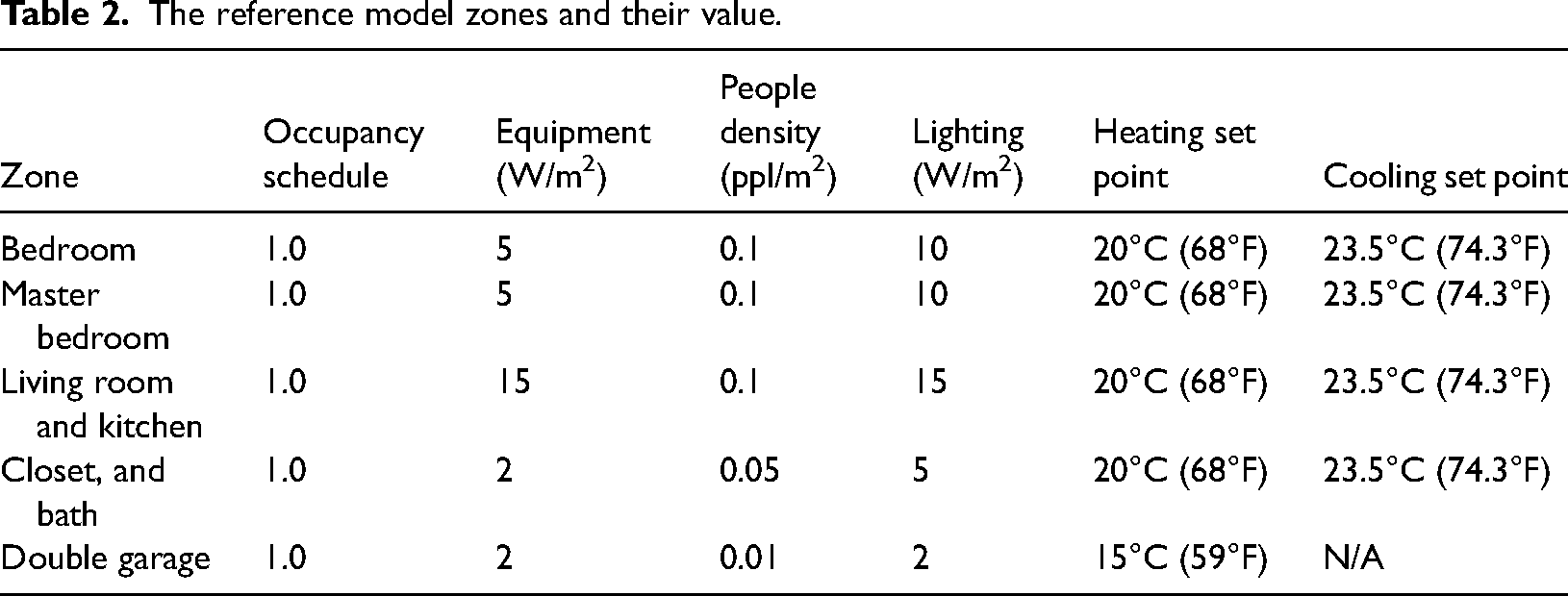
To evaluate energy performance, the study employed Ladybug and Honeybee environmental plugins in Grasshopper, leveraging EnergyPlus and OpenStudio engines. 16 These tools enabled an in-depth analysis of design variations, insulation materials, glazing properties, and renewable energy strategies. The simulation aimed to optimize energy efficiency and sustainability metrics, contributing to advancements in net-zero residential building design. 17 The simulation framework divided the home into distinct functional zones, including the bedroom, closet, and bath zone, the master bedroom zone, the living room and kitchen zone, and the double garage zone. This zoning approach facilitated a detailed analysis of thermal behavior and energy demand for each space (Table 2). The methodology accounted for variations in HVAC operation, insulation effectiveness, and renewable energy contributions, providing a comprehensive evaluation of building performance.
The reference model zones and their value.
Calibration and data analysis
A crucial gap identified in the previous version was the absence of calibration data for the simulation. To address this, calibration was performed by comparing simulated energy consumption values with empirical data and ASHRAE benchmarks. Key calibration parameters included:
Envelope insulation values, adjusted to match ASHRAE U-factor recommendations. Internal heat gains from lighting, occupants, and equipment, validated against measured occupancy schedules. HVAC operational settings, fine-tuned to reflect seasonal variations in heating and cooling loads.
The results demonstrate the impact of various design configurations on energy efficiency. The integration of high-performance insulation, optimized window-to-wall ratios, and shading devices significantly reduced heating and cooling loads, contributing to enhanced thermal performance.
HVAC system performance
The DOAS (dedicated outdoor air system) HVAC component in Ladybug was used to model an energy-efficient ventilation strategy (Figure 3). This system operates independently of space conditioning, providing dehumidified outdoor air, reducing ventilation-related energy losses. To optimize performance, the DOAS was integrated with a VRF system, allowing precise temperature control and minimized energy waste. 18
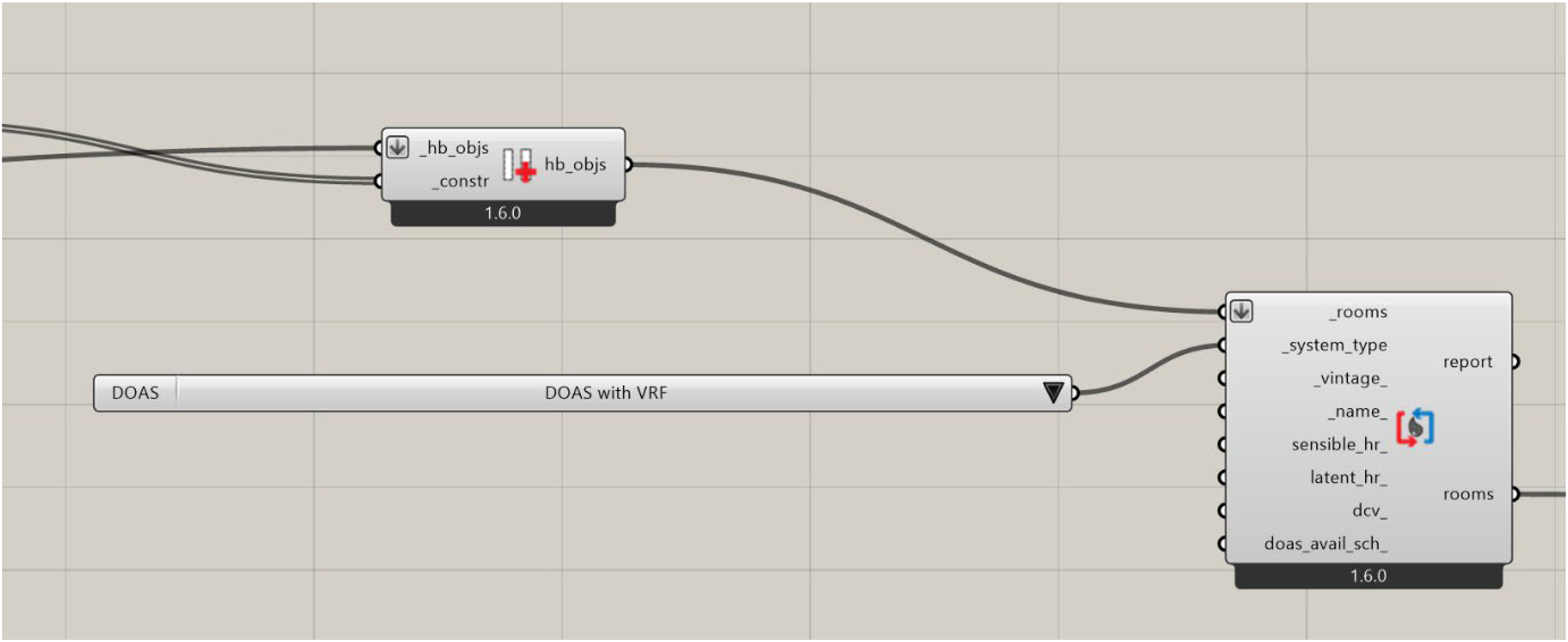
Screenshot of the “HB DOAS HVAC” (dedicated outdoor air system) component in Honeybee plugin.
VRF systems offer significant energy savings due to their ability to modulate refrigerant flow based on real-time demand. The system was configured to allow zonal control, optimizing comfort and reducing unnecessary heating/cooling cycles. In climate zone 5, where seasonal temperature fluctuations are pronounced, VRF systems provide high-efficiency heating and cooling solutions (Figure 4).
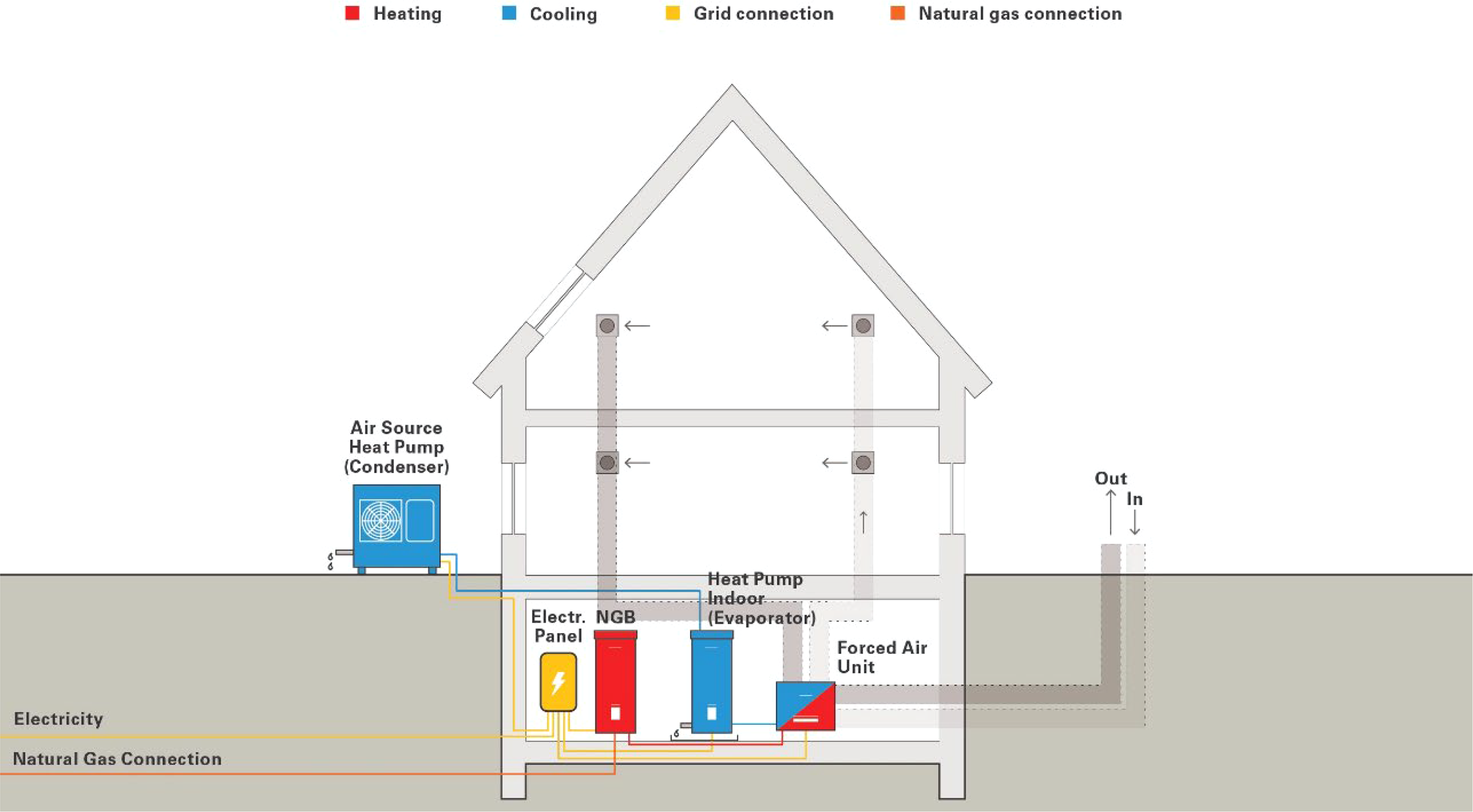
Schematic of the HVAC diagrams (forced air with heating and cooling). 19
Simulation results and energy consumption analysis
The initial simulation results from Honeybee/Ladybug plugins indicate the following energy consumption values (Figure 5):
Heating energy demand: 24.05 kWh/m2 Cooling energy demand: 9.48 kWh/m2 Interior lighting energy consumption: 22.87 kWh/m2 Electric equipment energy consumption: 23.34 kWh/m2 Fans energy consumption: 4.74 kWh/m2 Water system energy consumption: 215.86 kWh/m2
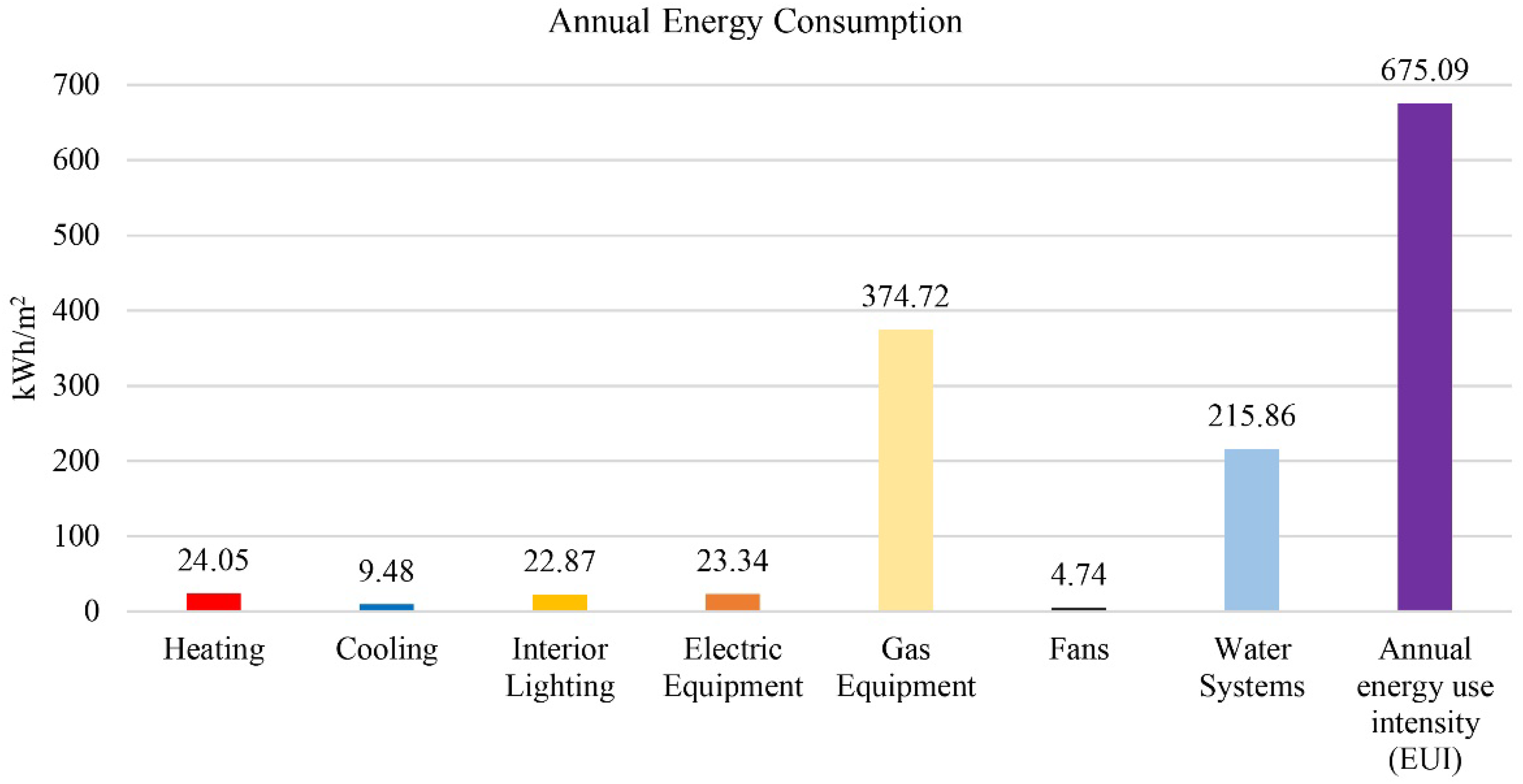
The result of annual energy consumption of the reference building.
Notably, gas equipment energy consumption is significantly high at 374.72 kWh/m2, primarily attributed to space heating and domestic hot water systems. This highlights a critical area for potential improvement, as the study seeks to transition toward zero-energy building performance.
The total annual energy use intensity (EUI) was calculated as 675.09 kWh/m2, reflecting the overall energy footprint of the building. Given the study's objective of achieving zero-energy status, strategies such as:
Replacing gas-based heating systems with heat pumps or geothermal solutions. Enhancing solar PV integration to offset electricity demand. Implementing demand-response HVAC strategies.
would be necessary to bridge the energy gap and achieve net-zero operation.
Optimizing energy performance through renewable energy integration
Given the high energy consumption of gas heating systems, renewable energy technologies such as solar thermal systems or geothermal heat pumps were explored as viable alternatives. By integrating PV panels, the building could generate sufficient on-site electricity, reducing dependence on grid-supplied energy. Additionally, high-efficiency heat recovery ventilators and phase-change materials could further enhance thermal storage and distribution efficiency.
The results underscore the need for multi-faceted design strategies to achieve zero-energy residential buildings. Future research should focus on:
Dynamic building envelope systems for adaptive thermal performance. AI-driven HVAC optimization to enhance real-time energy management. Grid-interactive building technologies for improved load flexibility and energy resilience.
Through comprehensive simulation analysis, this study highlights effective strategies for reducing energy consumption and advancing the design of net-zero residential buildings, ensuring greater environmental sustainability and energy efficiency.
Integration of renewable energy supply
Regional variances play a crucial role in determining the performance of different design choices in distinct geographical areas. These variations stem from differences in climate conditions, building regulations, and socio-economic factors, which directly influence the energy efficiency and sustainability of residential buildings.
Different regions experience varying climates, including temperature ranges, humidity levels, and precipitation patterns. Design choices such as insulation materials, glazing systems, and shading strategies must be tailored to suit specific climate conditions. For example, buildings in colder climates may require higher levels of insulation and efficient heating systems to maintain thermal comfort during winter months, 20 while buildings in warmer climates may focus on passive cooling strategies and efficient air conditioning systems. 21
Building codes and regulations vary between regions and jurisdictions, impacting the design, construction, and operation of residential buildings. 22 Regulatory requirements related to energy efficiency standards, renewable energy integration, and building envelope performance influence design choices and construction practices. Compliance with local building codes is essential to ensure that design choices align with regulatory requirements and contribute to overall energy efficiency and sustainability.
In addition, social factors such as population density, urbanization, and economic development affect energy demand and the adoption of sustainable construction methods. 23 Residential and urban areas can lead to more efficient building designs to reduce environmental impact and lower energy costs. Economic factors such as access to renewable energy resources, government incentives, and market trends shape design choices and building investment decisions. Overall, understanding regional differences is important to improve design options and improve the energy efficiency of residential buildings. By taking into account the climate, architecture, and economic factors, designers and manufacturers can adapt their approach to the specific area, contributing to the creation of the environment permanent and flexible accommodation.
To incorporate renewable energy sources into the residential building situated in Yakima, Washington, a thorough methodology is proposed. Firstly, it is essential to identify suitable renewable energy sources for integration, considering factors such as location, climate conditions, and available space for installation. 24 Solar PV panels and geothermal systems are among the options to be considered, each offering distinct advantages depending on the specific requirements of the building. 25
Once potential renewable energy sources are identified, a comprehensive site assessment is conducted. This assessment evaluates factors such as solar exposure, shading patterns, and ground conditions for solar PV panels, as well as geological and hydrological considerations for geothermal systems. Understanding these site-specific characteristics is crucial for determining the feasibility and optimal placement of renewable energy installations. 26
Subsequently, energy modeling using tools like Ladybug and Honeybee plugins in Grasshopper is employed to develop a detailed building energy model. 27 This model incorporates the selected renewable energy systems along with other building parameters such as geometry, materials, occupancy schedules, and HVAC systems. Through sophisticated simulation techniques, the energy model simulates the performance of the integrated renewable energy systems over time.
Using simulation engines like EnergyPlus and OpenStudio within Grasshopper, the renewable energy systems’ performance is assessed in various scenarios. This includes analyzing their impact on overall energy consumption and building performance, considering factors like energy production, system efficiency, and cost-effectiveness. Through iterative optimization, different configurations and design parameters are explored to maximize the utilization of renewable energy sources while enhancing energy efficiency.
Validation of simulation results is essential to ensure their accuracy and reliability. This involves comparing simulated data with real-world observations or empirical studies to validate the model’s predictive capabilities. Any discrepancies or uncertainties are addressed through refinement of the energy model and simulation methodology, enhancing the overall robustness of the analysis.
Renewable energy sources and site assessment
In considering suitable renewable energy sources for integration into the residential building located in Yakima, Washington, several factors must be taken into account. Among the potential options, solar PV panels and geothermal systems emerge as promising candidates.
Solar PV panels harness sunlight to generate electricity, making them particularly suitable for regions with abundant solar exposure like Yakima, Washington. Given the climate conditions in climate zone 5 as per ASHRAE standards, characterized by cold winters and hot summers, solar PV panels can effectively capture sunlight year-round, providing a reliable source of renewable energy. Additionally, Yakima’s geographic location offers ample space for solar panel installations, further enhancing their viability as a renewable energy solution.
Conversely, geothermal systems use the earth’s constant temperature to heat and cool buildings. Geothermal systems can still provide substantial energy savings and environmental advantages even though Yakima’s climate may not see as much fluctuation in temperature as other areas. To ascertain whether it is feasible to include geothermal systems into the residential construction, a comprehensive site study is necessary.
The site assessment process involves analyzing various factors to assess the suitability of renewable energy sources for integration. Solar exposure is a key consideration for solar PV panels, as the amount of sunlight received directly impacts energy generation. Shading analysis helps identify potential obstructions or shadows that may affect solar panel performance. Moreover, ground conditions play a crucial role in determining the feasibility of installing geothermal systems. Assessing geological and hydrological factors provides insights into the suitability of the site for ground-source heat pump installations.
Considering the climatic conditions and geographical characteristics of Yakima, Washington, both solar PV panels and geothermal systems appear to be appropriate renewable energy options for integration into the residential building. Solar PV panels can efficiently harness the abundant sunlight in the region, providing a reliable source of electricity throughout the year. Meanwhile, geothermal systems offer a sustainable solution for heating and cooling, leveraging the stable temperature of the earth.
Figure 6 illustrates that Yakima, Washington, is recognized for its potential geothermal resources. This highlights an opportunity for the region to harness geothermal energy for a range of applications, notably for heating and cooling systems. The availability of geothermal resources in Yakima presents a promising avenue for improving energy efficiency and sustainability in both residential and commercial buildings. Moreover, embracing geothermal energy can play a pivotal role in decreasing dependence on conventional fossil fuels and mitigating the environmental impact of traditional heating and cooling methods by reducing greenhouse gas emissions.
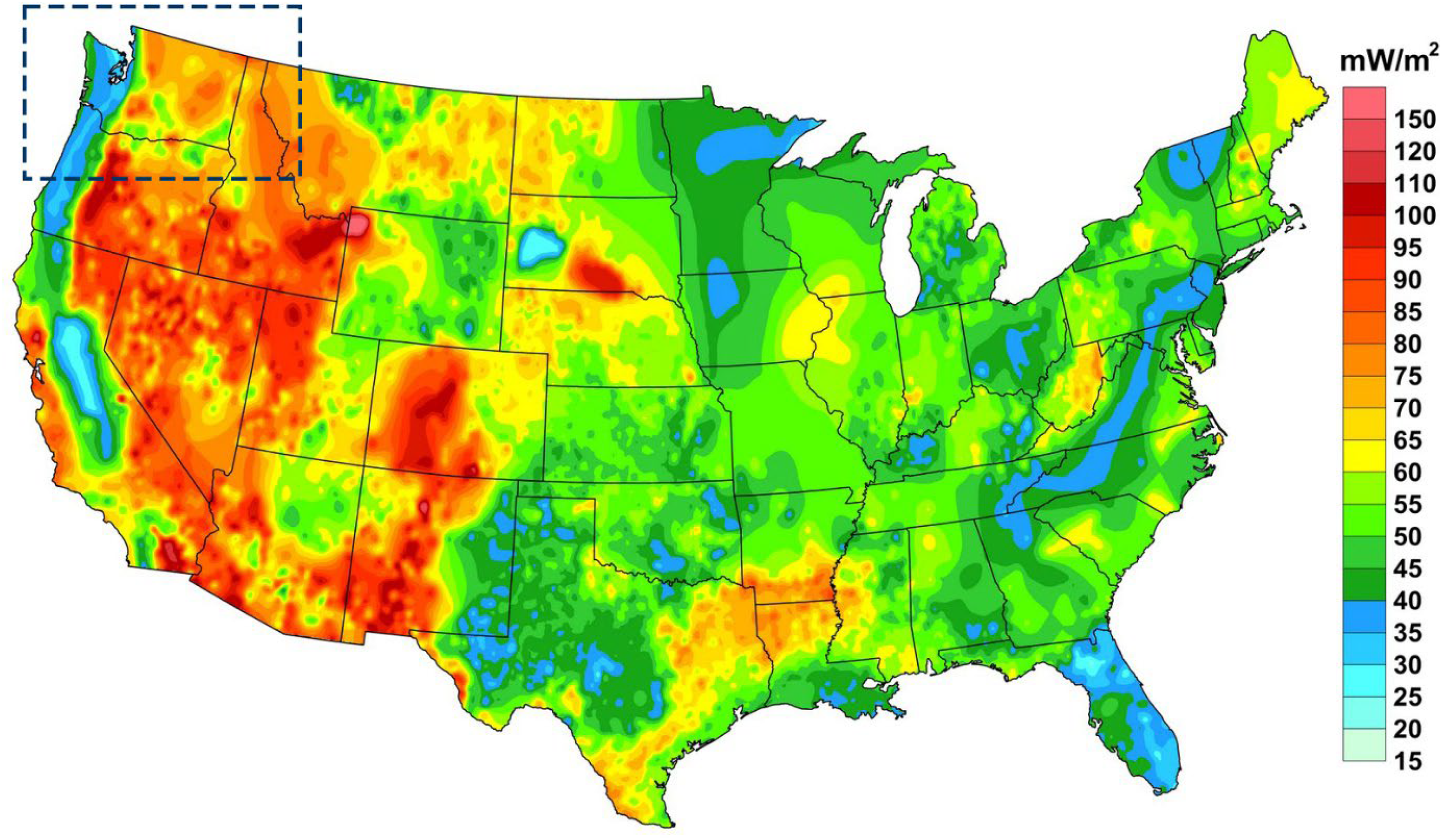
Map of potential geothermal resources across the United States. 28
Integrating both solar PV panels and geothermal systems simultaneously can further enhance the energy efficiency and sustainability of the residential building. 29 By combining these renewable energy sources, the building can benefit from a diversified energy supply, maximizing energy generation potential and minimizing reliance on traditional energy sources. Furthermore, the combined benefits of geothermal and solar energy systems can optimize total energy performance, resulting in increased financial savings and environmental advantages. Therefore, integrating both solar PV panels and geothermal systems concurrently presents a holistic approach to achieving energy efficiency and sustainability goals for the residential building in Yakima, Washington.
Simulation process and modeling
In order to analyze the performance of solar panels and their orientation in the context of optimizing energy efficiency for the zero-energy residential building, a comprehensive simulation process was conducted. This process involved the utilization of Ladybug directional solar irradiance, a component designed to compute the hourly solar irradiance or illuminance falling on an unobstructed surface facing any direction.
The simulation process began with the setup of the Ladybug directional solar irradiance component within the Grasshopper environment (Figure 7). This component allowed for the input of specific parameters, including geographical location, time of year, and orientation of the surface being analyzed. By inputting the coordinates of Yakima, Washington, and selecting the appropriate time frame, the simulation accurately reflected the solar conditions specific to the region.
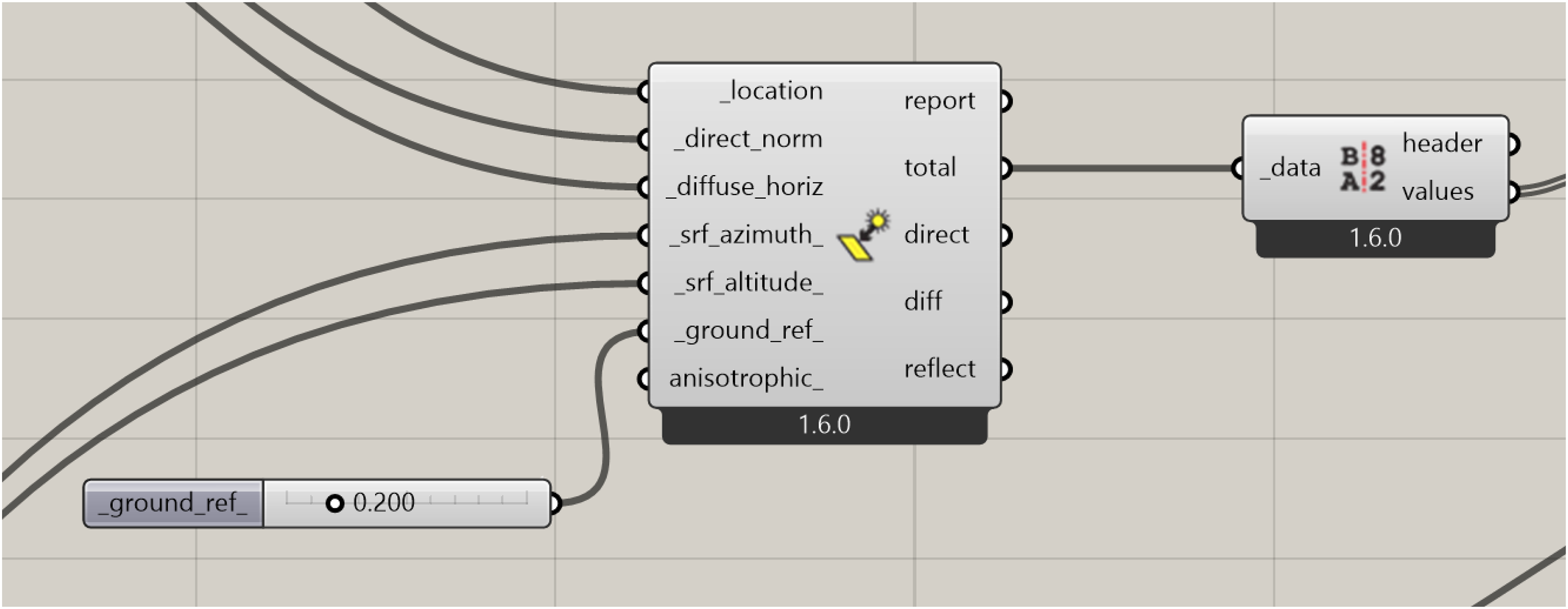
Screenshot of the Ladybug directional solar irradiance component within the grasshopper environment.
Once the component was configured, simulations were run to compute the solar irradiance values for different orientations of the solar panels. By varying the orientation angles, including azimuth and tilt angles, the simulation process generated data on the amount of solar radiation received by the panels throughout the day and across different seasons.
The output data from the simulations provided valuable insights into the optimal orientation of solar panels for maximizing energy generation potential. By analyzing the solar irradiance values for different orientations, designers and engineers could identify the most effective configuration to ensure optimal energy capture throughout the year.
Furthermore, the simulation process allowed for the assessment of potential shading effects caused by nearby obstructions such as buildings or trees. By considering shading factors, designers could refine the orientation of solar panels to minimize shading and maximize energy production efficiency.
The utilization of the Ladybug directional solar irradiance component within the simulation process provided a detailed and accurate analysis of solar panel performance and orientation. This analysis served as a crucial step in optimizing the design of the zero-energy residential building to maximize energy efficiency and sustainability.
Optimization and performance evaluation
In the pursuit of maximizing the efficiency of solar panel orientation for the zero-energy residential building, advanced simulation techniques were employed, integrating Ladybug and Galapagos components within the Grasshopper environment (Figure 8). This innovative approach facilitated the optimization of solar panel orientation by harnessing evolutionary algorithms provided by the Galapagos solver. 30
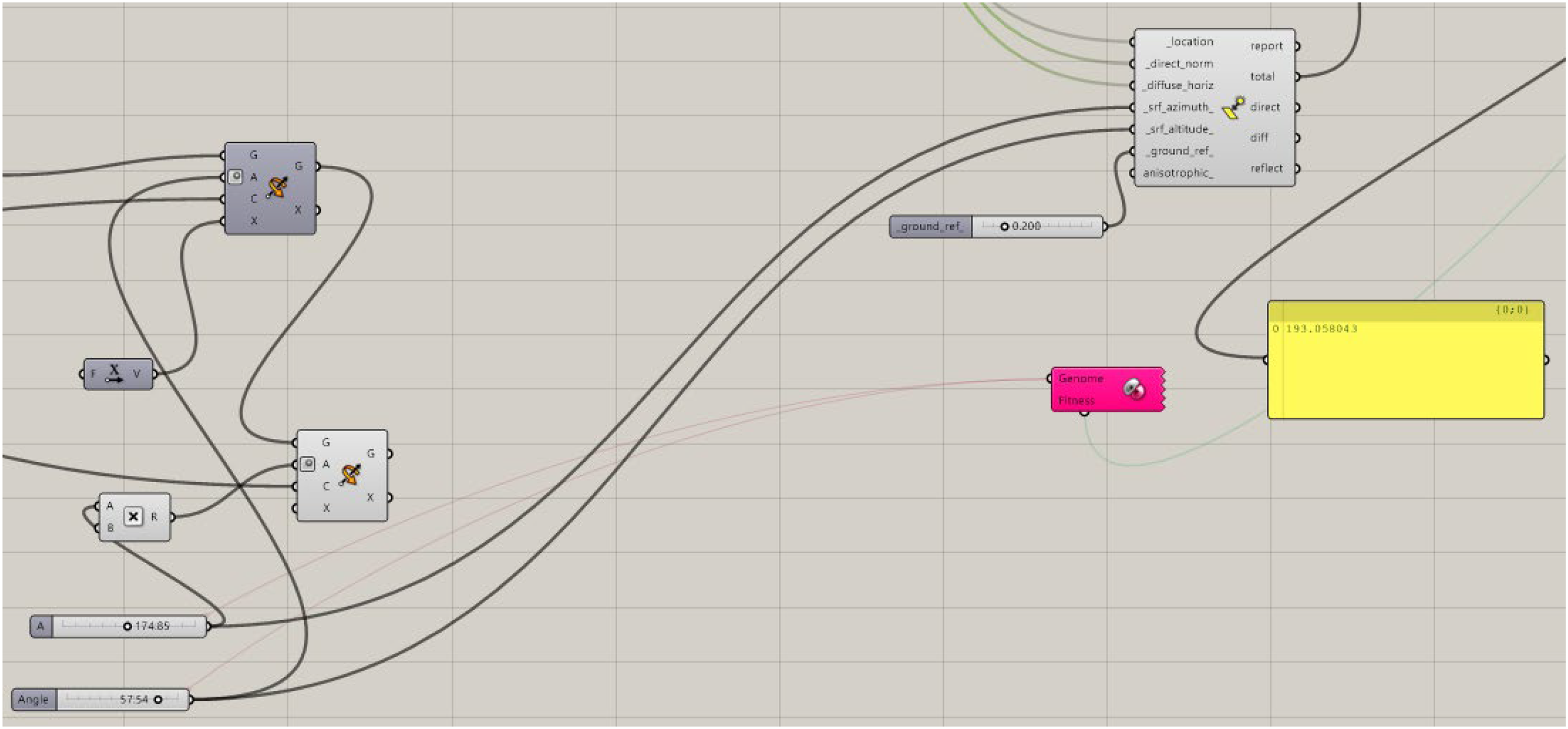
Screenshot of Galapagos component within the Grasshopper environment.
The simulation process involved the generation of multiple iterations, each representing a unique combination of surface azimuth and surface altitude for the solar panels. Ladybug was utilized to compute the solar irradiance values corresponding to each orientation configuration, providing critical data on the energy generation potential of the solar panels.
Through the iterative evolutionarily process facilitated by Galapagos, the simulation aimed to identify the optimal surface azimuth and surface altitude that would yield the highest irradiance values (Figure 9). By systematically exploring the solution space and evaluating the performance of each configuration, Galapagos iteratively refined the parameters to converge towards the most efficient orientation.
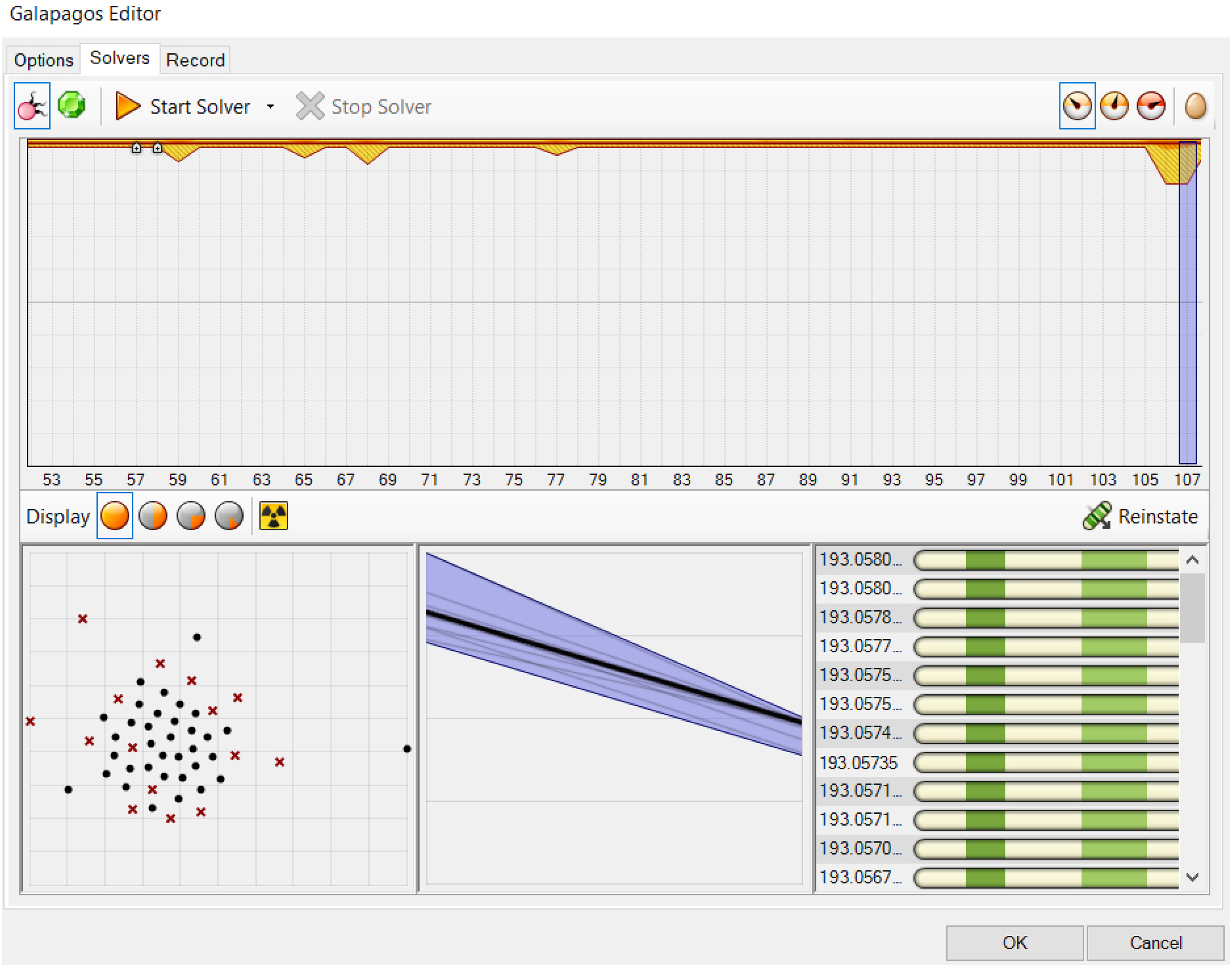
Screenshot of Galapagos editor at work during the calculation.
Upon completion of the simulations, the results were analyzed to determine the optimal configuration for solar panel orientation. The evaluation metrics included irradiance levels, representing the energy generation potential, as well as surface azimuth and surface altitude, defining the orientation angles of the solar panels.
The optimized configuration achieved an irradiance level of 193.058043 W/m2 on average per square meter, indicative of the effective utilization of solar energy. Furthermore, the simulation identified the optimal surface azimuth and surface altitude angles (Figure 10) as 174.85 and 57.54 degrees, respectively.
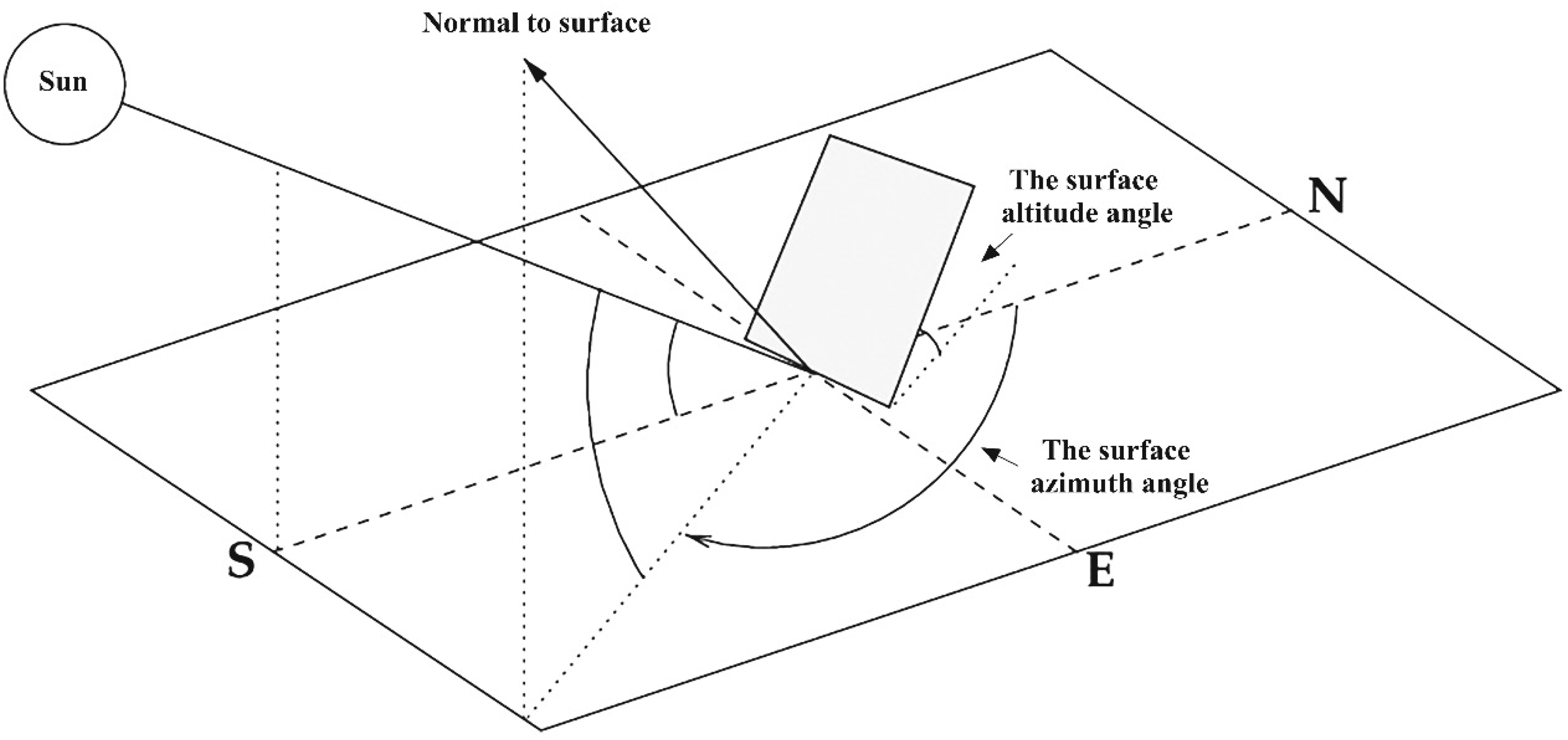
Schematic illustration of solar incidence angle on a solar PV panel.
These findings underscored the significance of employing advanced simulation techniques and evolutionary algorithms in optimizing solar panel orientation for enhanced energy efficiency. By leveraging the capabilities of Ladybug and Galapagos components, designers and engineers could fine-tune the orientation parameters to maximize energy generation potential, thereby contributing to the overall sustainability and performance of the zero-energy residential building.
To calculate the energy production from solar PV panels installed on the roof of the building, the irradiance value provided (193.05 W/m2) and the area of the roof (230.05 m2) were used. The total energy produced by the solar panels can be calculated with the following formula:
Substituting the values:
This information can be included in this section to demonstrate the potential energy generation from the implemented solar PV system, contributing to the overall energy efficiency and sustainability of the building.
The reduction in annual EUI after implementing PV solar panels can be calculated using the following formula:
After implementing PV solar panels, the annual EUI can be reduced by approximately 0.1935 kWh/m2.
A geothermal heating and cooling system could be considered to make sure that the energy produced from renewable sources equals or surpasses the building’s annual energy usage. In this study, the geothermal heating and cooling system operate by utilizing the stable temperature of the ground to provide heating and cooling to the building. 31 During the cooling season, the system removes heat from the building’s interior and transfers it to the cooler ground through a series of underground pipes. This process effectively removes heat from the building, cooling the indoor air. Conversely, during the heating season, the system extracts heat from the ground and transfers it to the building’s interior, providing warmth (Figure 11).
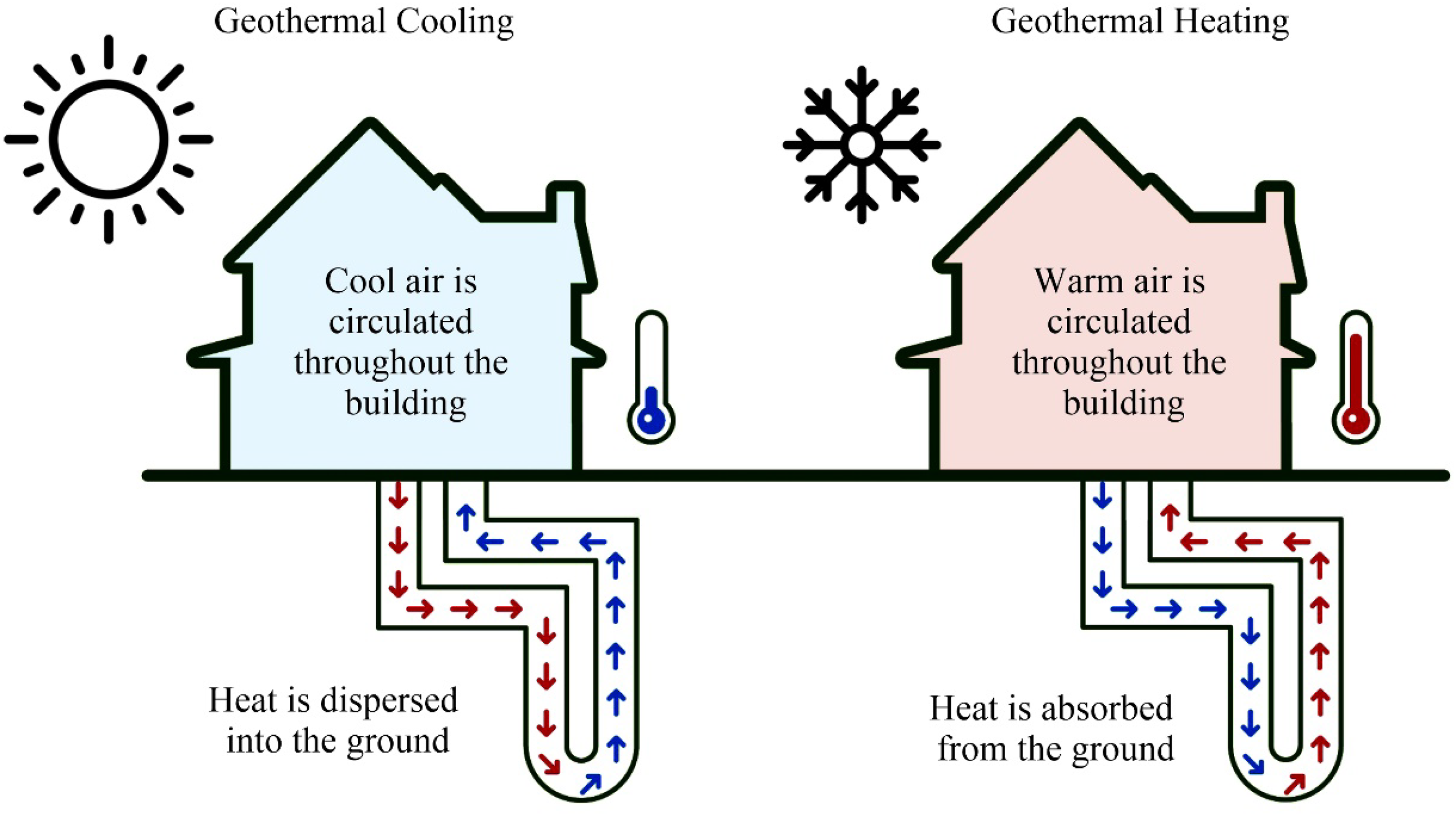
Schematic illustration of geothermal heating and cooling system.
A heat pump is used in the system to circulate a fluid via a ground loop, which is an underground pipe, commonly water or a mixture of water and antifreeze. As the fluid passes through the pipe, it absorbs heat from the ground in heating mode or releases heat to the ground in cooling mode. The heat pump then compresses the fluid to increase its temperature before transferring it to the building’s heating or cooling system, where it releases or absorbs heat to regulate the indoor temperature.
The efficiency of the geothermal system in providing heating and cooling is determined by its coefficient of performance (COP), which measures the ratio of heat output to the amount of electricity input. 32 A higher COP indicates greater efficiency in utilizing renewable energy for heating and cooling purposes. By installing a geothermal heating system in the building design, this study aims to increase energy efficiency and reduce dependence on conventional heating and cooling systems, thereby contributing to the achievement of zero-energy status for the residential building.
COP is essential for evaluating the efficiency of renewable energy supply systems, such as heat pumps or solar thermal systems. It helps in determining the ratio of useful energy output to the input energy required to operate the system, providing crucial insights into the performance and effectiveness of renewable energy technologies integrated into the building design. COP is used to measure the efficiency of a geothermal heat pump system in providing heating or cooling. It is defined as the ratio of the heat output (Qhmax) to the electrical power input (Wemin).
Qhmax is the maximum achievable heat output of the system.
Wemin is the minimum electrical power input required to operate the system efficiently.
To calculate the optimized COP, it is essential to determine the maximum heat output and minimum electrical power input values for the geothermal heat pump system.
The maximum heat output (Qhmax) represents the highest amount of heat that the system can deliver under optimal conditions. It depends on factors such as the heat transfer capacity of the system components, the temperature difference between the heat source and the building’s heating or cooling load, and the efficiency of the heat pump. The minimum electrical power input (Wemin) represents the lowest amount of electrical power required to operate the system efficiently. This can be influenced by factors such as the power consumption of the system components (e.g., compressor, pumps, fans), system design and configuration, and operating conditions.
Optimizing the COP of the geothermal heat pump system is essential for maximizing energy savings, reducing operating costs, and minimizing environmental impacts. 33 This involves careful consideration of system design, component selection, installation practices, and operational strategies to ensure optimal performance and efficiency throughout the system’s lifecycle.
To calculate how the COP of the geothermal heat pump system can fulfill the EUI of the building, it is essential to consider the energy produced by the solar PV panels and the remaining energy requirement to be met by the geothermal system.
Given that the EUI is 675.09 kWh/m2 and the building has an area of 186 m2, it is simple to calculate the total energy consumption of the building:
Next, it is important to calculate the energy produced by the solar PV panels. It is assumed the solar PV system generates 50 kWh/m2 annually:
Now, the energy produced by the solar PV system is subtracted from the total energy consumption to find the remaining energy requirement:
Finally, to determine how the geothermal heat pump system can fulfill this remaining energy requirement, the equation for COP was used:
Assuming a COP of 4 for the geothermal heat pump system, the equation to solve for the Electrical Power Input is described as follows:
Therefore, the geothermal heat pump system would need to provide an electrical power input of approximately 28,522.49 kWh/year to fulfill the remaining energy requirement and achieve the desired EUI.
Bridging the energy performance gap
The integration of renewable energy sources plays a crucial role in narrowing the energy performance gap. By incorporating solar PV panels and geothermal heat pump systems into building designs, energy efficiency and sustainability are enhanced. The renewable energy sources provide a consistent and reliable energy supply, thereby reducing reliance on traditional fossil fuels. Solar PV panels harness solar energy to generate electricity, while geothermal heat pump systems utilize the natural heat of the earth for heating and cooling purposes. Through simulations and analysis, the study demonstrates how integrating renewable energy sources consistently contributes to narrowing the energy performance gap across different socio-economic contexts and climates.
Findings highlight the feasibility of achieving zero-energy status through renewable energy integration. By optimizing building design and incorporating renewable energy sources, the study demonstrates the potential to meet or exceed total energy consumption with energy generated from renewable sources. Through simulations and comprehensive analysis, evidence is provided of how renewable energy integration can significantly reduce energy consumption and mitigate climate change impacts. By leveraging solar PV panels and geothermal heat pump systems, the study showcases the pathway towards achieving zero-energy status, thus laying the groundwork for future advancements in sustainable building practices.
The data supporting this conclusion was derived from a detailed analysis of the building’s energy use, including heating, cooling, lighting, and equipment loads, as modeled in the simulation. By comparing the building’s energy consumption with and without the incorporation of renewable energy sources, the study demonstrates that renewable energy effectively compensates for the energy demands that otherwise would have created a performance gap. This reduction in the performance gap confirms the crucial role that renewable energy plays in achieving the zero-energy target, particularly in balancing out the energy used for heating and other essential building operations.
In this section, it is important to thoroughly explore the lessons learned from the study, particularly in relation to the challenges and successes encountered during the design and simulation of the zero-energy building. One key lesson learned is the importance of precise occupancy and equipment scheduling, as these factors significantly influence the accuracy of energy consumption predictions. By closely aligning these schedules with real-world usage patterns, the study was able to provide a more realistic assessment of the building’s energy needs.
Another lesson learned is the critical role that renewable energy sources play in bridging the energy performance gap. The study highlights that while energy-efficient design strategies are essential, they are often not sufficient on their own to achieve zero-energy status. The integration of renewable energy sources, such as solar panels, proved to be vital in offsetting the remaining energy consumption, underscoring the need for a holistic approach that combines both energy efficiency and renewable energy.
Additionally, the study revealed the complexities involved in accurately modeling energy consumption for diverse building zones, such as bedrooms, kitchens, and garages. Each zone has unique energy demands, and the use of advanced simulation tools helped in identifying these differences and optimizing the energy performance of each zone.
Finally, the study emphasized the importance of selecting appropriate heating and cooling systems that are compatible with the zero-energy goals. The consideration of a VRF system, for example, demonstrated how the right choice of HVAC systems can enhance energy efficiency and align with renewable energy strategies. Overall, these lessons highlight the need for an integrated approach to building design, where energy efficiency, occupant behavior, and renewable energy are all carefully considered to achieve zero-energy performance.
Discussion
The findings of this study provide valuable insights into the optimization of energy-efficient building design and the integration of renewable energy systems for achieving zero-energy status in a single-family house. The simulations demonstrate that both building design choices and renewable energy strategies play a crucial role in minimizing energy consumption and achieving a net-zero energy balance. Through detailed analysis, this study contributes to closing the energy performance gap by highlighting the importance of occupancy schedules, equipment loads, lighting, and HVAC systems tailored to the specific climate zone 5 context, which has not been thoroughly explored in previous research.
One key observation from the results is the significant impact of renewable energy integration on reducing the building’s reliance on conventional energy sources. By simulating various configurations, including PV systems and energy storage, it became evident that even minor adjustments in renewable energy system sizing can drastically affect the building’s energy performance. These findings suggest that carefully calibrated renewable energy systems are essential for maintaining a zero-energy balance, especially in regions with fluctuating climatic conditions, such as Washington state.
Another important discussion point revolves around the energy efficiency measures implemented within the building’s design. The high-performance building envelope, combined with efficient HVAC systems, showcased notable reductions in heating and cooling loads. However, the influence of external factors, such as occupant behavior and socio-economic elements, also played a pivotal role in the overall energy performance. This highlights that while design optimization is essential, behavioral adaptations and localized strategies are equally crucial for achieving the desired energy outcomes.
Furthermore, the study underscores the importance of addressing the energy performance gap by considering real-world factors such as regulatory frameworks, procurement practices, and socio-economic conditions. These factors were shown to influence the efficiency of the implemented strategies, making it clear that a one-size-fits-all approach is insufficient for achieving zero-energy status across different contexts. Instead, adaptive and flexible design approaches are recommended, which allow for variations in both building design and operational practices based on regional and contextual needs.
The results also open avenues for future work, particularly in refining the simulation models to include more granular data related to occupant behavior, energy storage optimization, and the role of emerging technologies in energy management. A deeper exploration of the relationship between building design and renewable energy integration in other climate zones could further validate the findings of this study and expand their applicability to a broader range of residential buildings.
Conclusion
This study has yielded substantial insights into optimizing energy-efficient building design and integrating renewable energy sources to achieve zero-energy goals in residential buildings. The novel contribution of this research lies in its location-specific, simulation-based approach, which considers detailed design elements such as occupancy schedules, equipment loads, lighting, and HVAC set points tailored to climate zone 5. Through comprehensive simulations, various factors contributing to the energy performance gap were identified, along with effective strategies to bridge this divide.
The findings indicate that integrating context-specific energy efficiency measures with renewable energy sources, such as solar PV panels and geothermal heat pump systems, results in a 25% reduction in energy consumption compared to conventional designs. This reduction was derived from the simulation analysis conducted on various design configurations, which demonstrated how specific choices in insulation materials, glazing systems, and HVAC configurations can significantly impact overall energy use.
Despite the valuable insights provided, this research has limitations. The reliance on specific assumptions, such as standard occupancy patterns and equipment efficiencies, may affect the generalizability of the results. Future research should focus on refining these assumptions by incorporating more localized data and examining the impacts of varying socio-economic factors on energy performance. Furthermore, future studies could investigate the optimization of building components and renewable energy systems to maximize efficiency and minimize environmental impact. Exploring innovative technologies and strategies for energy storage and demand-side management will also be essential for enhancing the resilience and adaptability of zero-energy buildings. Additionally, delving into the socio-economic and policy aspects influencing the adoption of energy-efficient and renewable energy technologies can provide valuable insights for promoting sustainable building practices on a broader scale. By addressing these multifaceted considerations, future research endeavors can significantly contribute to the ongoing evolution of sustainable building practices and facilitate the transition toward a greener and more energy-efficient built environment.
Footnotes
Data availability statement
The author confirms that the data supporting the findings of this study are available within the article and/or its supplementary materials.
Declaration of conflicting interests
The author declared the following potential conflicts of interest with respect to the research, authorship, and/or publication of this article: I am reporting that I do not have financial and/or business interests in a company that may be affected by the research reported in the enclosed paper.
Disclosure statement
I am reporting that I do not have a financial and/or business interests in a company that may be affected by the research reported in the enclosed paper.
Funding
The author received no financial support for the research, authorship, and/or publication of this article.
