



Abstract
The present era is facing a dilemma relating to engaging the essentialities of energy resources to attain economic prosperity due to the ensuing environmental complications. Consequently, sectors such as transport, aviation, and refining industries are under the scrutiny of reducing their reliance on fossil fuels achievable with the promotion of hydrogen energy which is largely neglected in the environmental empirics. To this end, the environmental impacts of green hydrogen in the top seven hydrogen-consuming countries are assessed from 1995 to 2019. Moreover, the roles of green finance, environmental-related technologies, energy efficiency, and digitalization are considered in the model specified within the STIRPAT framework. Second generation estimators comprising cross-section autoregressive distributed lag, Common Correlated Effect Mean Group, Augmented Mean Group, and Method of Moment Quantile Regression are employed in evaluating the stated hypotheses. Feedbacks from the analysis uncovered that green hydrogen; green finance, environmental-related technologies, energy efficiencies, digitalization, and structural change promote environmental sustainability in the top seven hydrogen-consuming countries. Contrariwise, natural resource dependence and urbanization trigger CO2 emissions, thereby exacerbating environmental complications. Based on the findings, policy measures leading toward sustainable environment are suggested.
Keywords
Introduction
The challenge of worsening climate change and the resultant environmental consequences continue to attract the center of policy debates for more than three decades despite frantic efforts from national, regional, and international governments to curb the pervasive pollution surge. There seems to be a clear indication that the ecosystem's vulnerability to degradation escalates as humanity progresses in civilization and economic development. This is predicated on the ground that global greenhouse gas (GHG) emissions in this generation era have escalated and threatened the global sustainability of the ecosystem in a manner that is incomparable to the experience of the pre-industrial age. Consequently, there are global efforts through collaboration and agreements on policies that are believed will salvage the present generation from the ravaging impacts of GHG emissions. For instance, the 2021 Climate Change Conference (COP26) of the United Nations recorded the commitments of over 193 countries on the necessity of keeping global warming below 2 degrees Celsius, believed to be detrimental to human survival and sustenance of the ecosystem. 1 , p.26 Besides, CO2 emissions are considered the major contributors to the aggregate volume of global GHG emissions triggered by a rise in fossil fuel consumption. 2 Consequently, COP26 emphasizes the need for a steady transition to 100% renewables as a precondition for reaching CO2 neutral economy by 2050. 3
The sustainability path to renewable energy remains an illusion without considering the criticality of hydrogen, among other components, for at least three reasons. First, hydrogen is a component of energy produced from various sources including nuclear power, natural gas, biogas, and renewable power sources comprising solar and wind. 4 The possibility of deriving hydrogen from renewable sources makes it a low- CO2 emission energy source with a high prospect of promoting sustainable development. 5 Second, hydrogen's economic benefits are not limited to fuel or energy carriers; it is efficient in deploying power and plays a fundamental role in the transition to renewable energy. More so, it promotes environmental quality and increased economic growth, thus suggesting how critical it is in the net zero emission targets. It aids in decarbonizing the ecosystem and achieving the proposed 2050 net zero emissions target. 6 Third, there is a rapid increase in the expansion of the global hydrogen market, with an estimated value of 129.85 billion dollars in 2021, projected to rise by 6.4% between 2022 and 2030. 7 The preceding accentuates the criticality of hydrogen energy sources as substitutes for fossil fuels and an instrumental tool for achieving net zero emissions by 2050. Moreover, energy efficiency is another angle believed to be inevitable in minimizing the volume of energy-related CO2 emissions surge. The efficacy of efficient energy in moderating CO2 emission surge heightens the research interest in carbonless sources of energy in recent times.
It is instructive to clarify that the global drive for a sustainable environment transcends the transition to clean and eco-friendly energy sources to encapsulate essential policy measures advancing the roles of green finance, environmental-related technologies, and digitalization. For instance, green finance has been argued to be a critical policy option that facilitates the achievement of the green economy. Conceptually, green finance involves any form of financial service or product created to achieve favorable environmental outcomes through loans or investments that promote advancement in green projects or reduce the surge in global warming. The various instruments of green finance, comprising green bonds, green investment funds, climate change mitigation and adoption, carbon capture, green-tagged loans, air pollution abatement, and climate risk insurance, are driven through financial flows from the banking sector, insurance, micro-credit, and investment by the government, corporate business organizations, and nonprofit organization. 8 Interestingly, the global prediction for green finance (green bonds) is estimated to reach 2.63 trillion USD by 2023. 9 Besides, copious empirical studies confirm that green finance drives a sustainable environment by moderating GHG emissions surge.10–12
Furthermore, environmental-related technologies have recently surfaced as viable and feasible ways of achieving global sustainability. Besides, the recent COP26 emphasizes the inevitability of technology in energy transition and carbon-neutral environment agenda. 3 Among numerous arguments, the ability of technological innovations to drive increased growth rates at decreasing CO2 emissions rates in a drive toward sustainable development has been empirically documented. 13 The essential impacts of the digital economy in a global drive for net zero emissions is yet another stride attracting extensive research in the environment empirics. The roles of digitalization in the pathways to global sustainability are evident from the desire to derive the best from technological progress. Precisely, evidence abounds that digitalization simplifies human activities and promotes development at a low cost and huge returns without harming the ecosystem. 14
Despite the foregoing narratives, researches on the environmental impacts of green hydrogen, energy efficiency, green finance, environmental-related technologies, and digitalization are scarce in the literature. This empirical scarcity is a massive disservice to the global drive for sustainable development, thus calling for an urgent study to advance this narrative empirically.
Research objective and contributions to knowledge
The dearth of empirical studies probing the green hydrogen–environmental sustainability nexus in top hydrogen-consuming economies triggers the core of empirical inquiry in the current study. Subsequently, this study primarily hopes to investigate the extent to which green hydrogen facilitates the pathways to environmental sustainability. The empirical model controls for the impacts of energy efficiency, green finance, environmental-related technologies, and digitalization. Besides, the criticality of natural resource dependence is further evaluated to extend the empirical regularity of the policy insights emanating from the study.
Drawing from the study's objectives, the contributions of this current research are sixth-fold.
First, the empirical submissions on the environmental impacts of hydrogen energy are vastly conflicting despite its potential to lead the way to global net zero emissions. For example, Jahanger et al. 15 find that hydrogen energy mitigates CO2 emissions, whereas Dash et al. 16 find that it triggers CO2 emissions. To resolve this empirical ambiguity, this study employs a recent advancement in hydrogen energy source, which is green hydrogen, otherwise called hydrogen technology which enhances the roadmap toward hydrogen economy. Besides, green hydrogen is CO2 neutral and has a high prospect of enhancing the achievement of net zero emissions by 2050. For this reason, many advanced economies are buying into the idea of entering into a green hydrogen deal as one of the strategies for phasing out the heavy reliance on fossil fuels. For instance, countries in the European Union and related advanced economies entered into a green hydrogen deal in July 2020 to enhance the attainment of a hydrogen economy. 17 Despite these potentials of green hydrogen, no studies have been conducted on how it can empirically mitigate CO2 emissions in the top hydrogen-consuming economies. Hence, this study will constitute the first empirical investigation of the environmental effects of green hydrogen in the seven most hydrogen-endowed economies comprising China, the United States, India, Russia, the United Kingdom, Iran, and Saudi Arabia. 18
Second, the engagement of green finance and environmental-related technologies in a green hydrogen-environmental sustainability model is off empirical records, thus, making this study the first to advance such novelty. Third, the study considers how digitalization and energy efficiency intervene in sustaining the environment of the top hydrogen-consuming countries. Besides, the dual engagements of the two variables are necessary to ensure smooth and hitch-free implementation of the plans and strategies toward hydrogen economy. Fourth, the current study embarks on comprehensive analyses of the green hydrogen–environment nexus both from the panel and country-specific angles.
Fifth, considering a battery of estimation techniques that address slope heterogeneity, cross-sectional dependence (CSD), endogeneity, simultaneity, and reverse causality, is a notable contribution to the extant studies. Consequently, this study utilizes a recently advanced and robust estimation technique, cross-section autoregressive distributed lag (CS-ARDL). Interestingly, CS-ARDL makes it possible for the long-run and short-run estimates to be evaluated while equally accounting for the speed of adjustment for the distortions that occurred in the short run. Additionally, the study employs three robust estimators comprising Common Correlated Effect Mean Group (CCEMG), Augmented Mean Group (AMG), and Method of Moment Quantile Regression (MMQR) in verifying the validity of the stated model. Besides, the country-specific analyses are conducted based on the novel Fully Modified Ordinary Least Square (FMOLS). Furthermore, relying on the strengths of the Stochastic Impacts by Regression on Population, Affluence, and Technology (STIRPAT) framework, this study extends the debates on the environmental impacts of green hydrogen in environment empirics. STIRPAT model accounts for non-monotonic or non-proportional impacts stemming from the various environmental forces. 19 Besides, the STIRPAT model is one of the most accepted frameworks for modeling environment determinants. 20 Specifically, the overall estimators can provide unbiased estimates essential for deducing possible policy implications for achieving a sustainable environment in the sample countries.
Sixth, it is important to clarify that the sustainable development agenda of 2030 is impossible without resolving the lingering environmental issues. Consequently, policy implications from this study will provide practical insights into achieving the emerging global drive for hydrogen economy and carbon-neutral environment by 2050.
The empirical setting of the current research inquiry follows the succeeding structures; section one entails introduction, research, and objective/novelties. Section two focuses on stylized facts and a review of existing empirical works and section three centers on research methodologies. The presentation and economic interpretation of the findings are illustrated in section four. Section five provides details on the conclusion, relevant policies, and caveats for future research exploration.
Stylized facts: recent strides in hydrogen energy in the decarburization roadmap for the seven top hydrogen economies
This section provides detailed explanations of the key indicators in the current study, specifically as it relates to the recent developments in hydrogen energy globally and the panel of the seven top hydrogen-consuming nations. Starting with hydrogen energy contribution to the global energy mix, reports indicate positive and landmark progress. The remarkable contributions of hydrogen to the decarbornization target are apparent in sectors where CO2 emissions abatement is complicated due to the difficulty of providing alternative energy sources to fossil fuels such as aviation, shipping, and heavy-duty transport. 21 Currently, about 120 million tonnes of hydrogen are produced annually. 22 However, there seem to be some environmental challenges attributed to the supply and demand for hydrogen. For instance, about 95% of hydrogen production comes from fossil fuels generated either through coal gasification or steam methane reforming. 22 The carbonless portion entailing about 5% constitutes chlorine production generated through electrolysis, thus making the share of hydrogen from renewable sources insignificant.
The impending environmental challenges emanating from the sources of deriving hydrogen, which are mainly CO2-inducing, accentuate the urgency and essentiality of green hydrogen. As a result, countries are committing to reach CO2 neutrality by 2050 or earlier while ensuring their economies continue to develop. 22 The recent developments in hydrogen energy are in the rising transition to hydrogen technology, as evident in the seven top hydrogen-consuming countries. For instance, the trend in Figure 1 reveals a persistent rise in green hydrogen on the aggregate from Russia, India, the United Kingdom, China, the United States, Saudi Arabia, and Iran. It is important to note that, these countries are facing a successive surge in CO2 emissions, entrapping their environment in continuous degradation (Figure 2). The persistent rise in GHG emissions in these countries is in tandem with empirical evidence because countries such as Russia, India, the United Kingdom, China, the United States, and Saudi Arabia are major contributors to the volume of CO2 emissions globally.
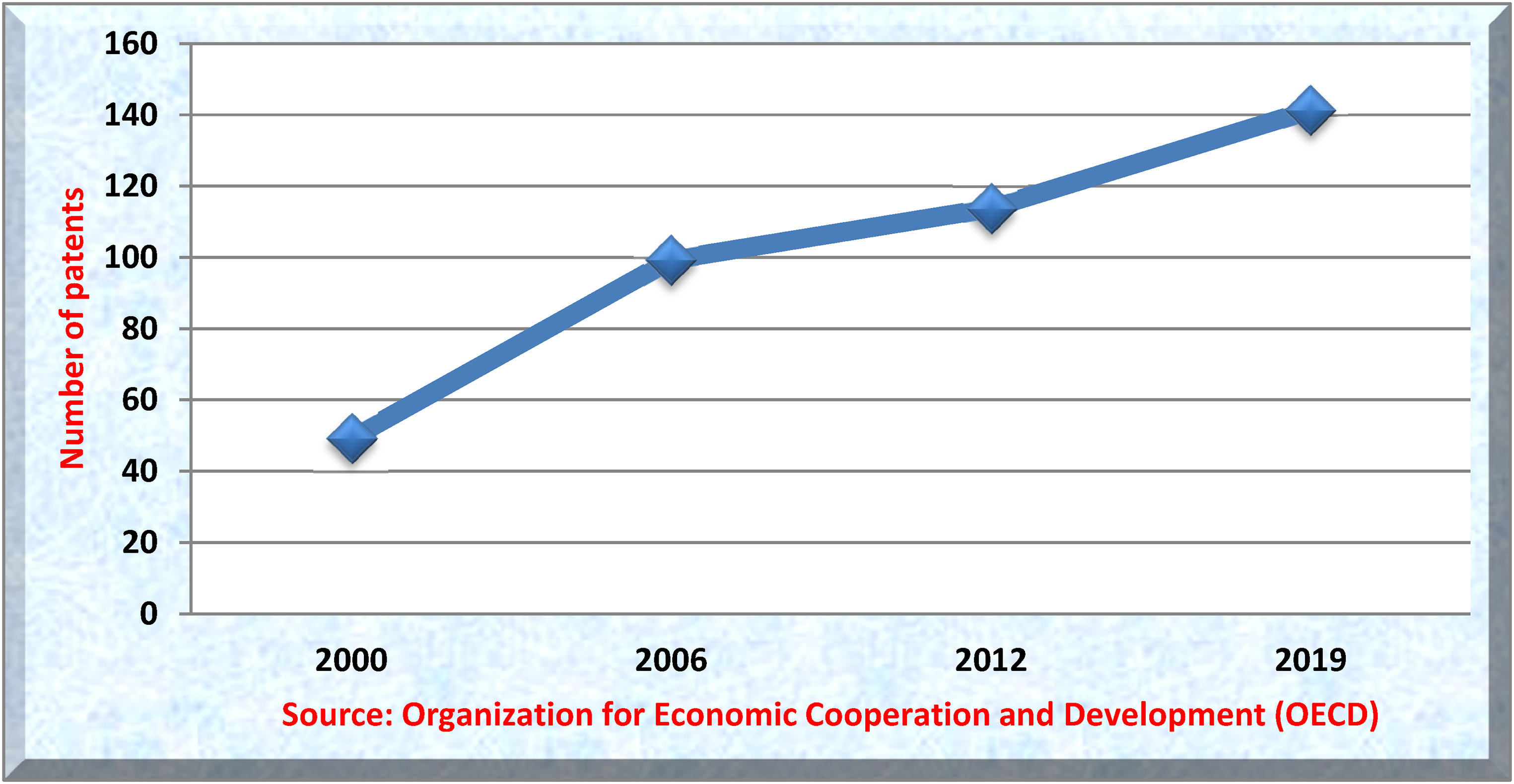
Green hydrogen.

CO2 emissions.
Asides from the prospects of abating the CO2 emissions surge that these countries can benefit from green hydrogen, they are equally advancing in environmental-related technologies and green finance (Figures 3 and 4). For instance, China engaged in numerous green finance policies nationally to promote the transition to a green economy. 23 Besides, available data uncover that 10 countries which are rated higher in green finance investment include both the United States and the United Kingdom. 24 Similarly, the selected leading hydrogen-consuming nations have records of good performance in terms of development and progress in energy efficiency and digitalization (Figures 5 and 6).
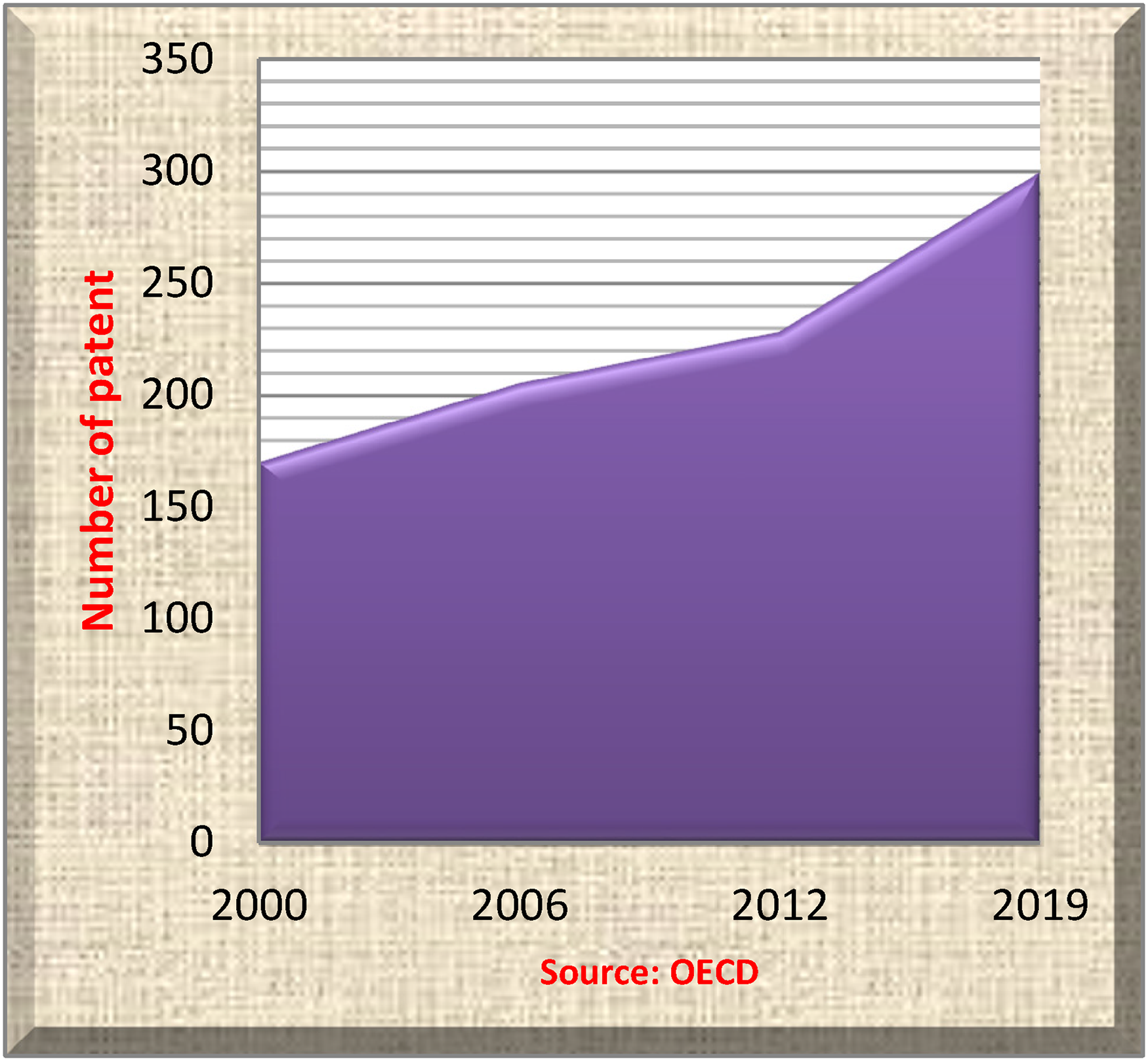
Environmental-related technologies.

Green finance.
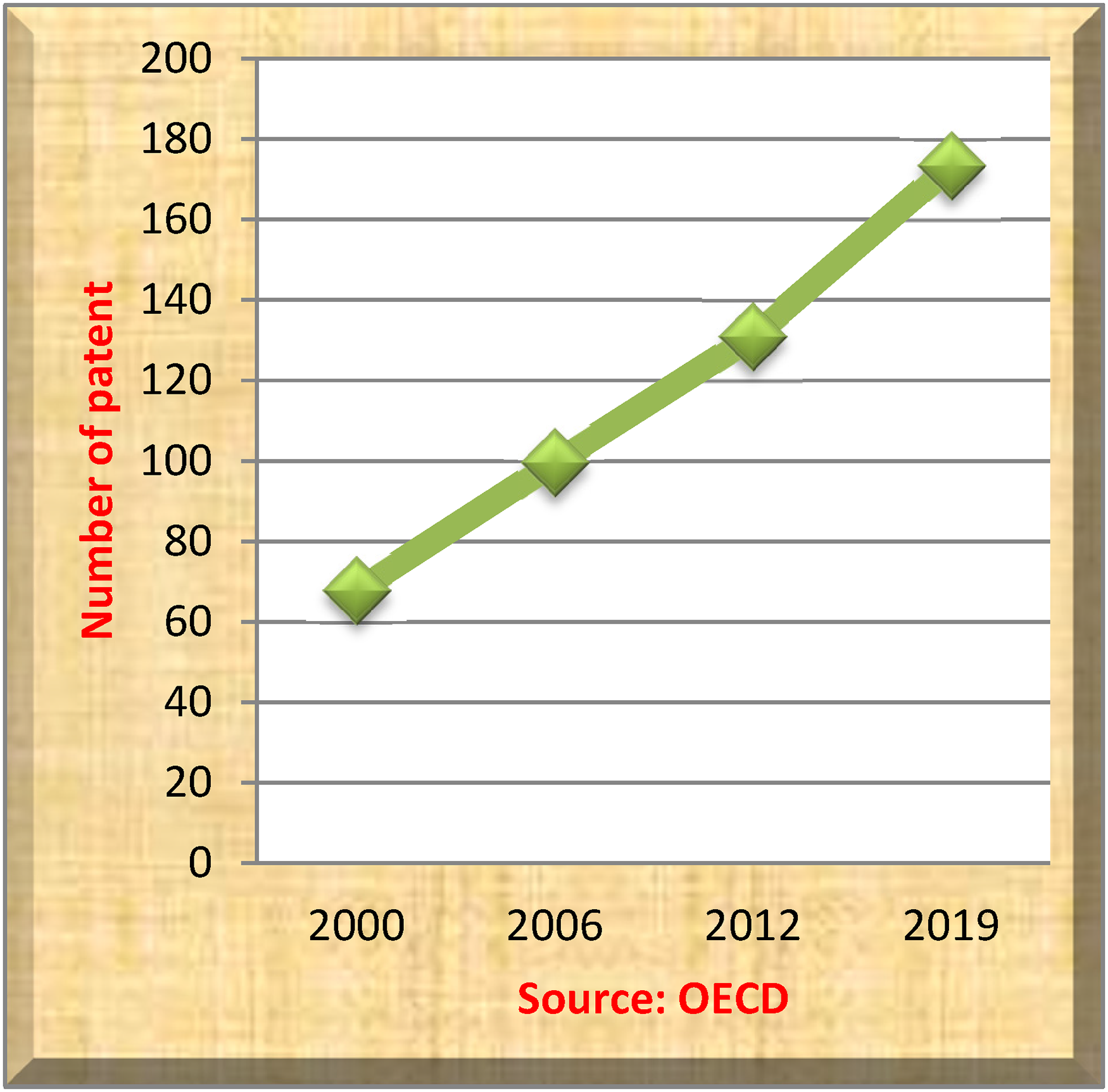
Energy efficiency.
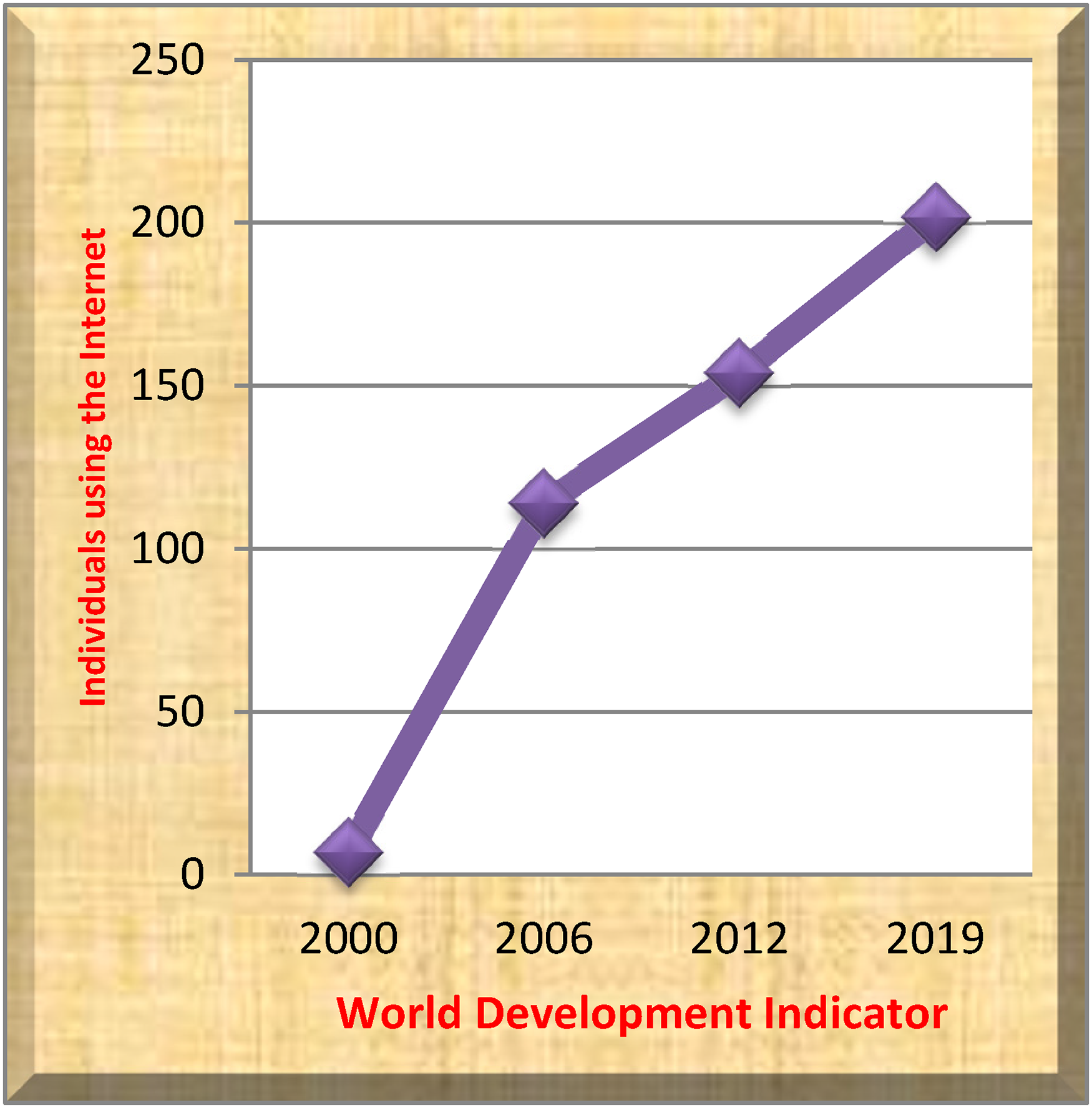
Digitalization.
The above-stylized facts suggest that there are green lights in pursuing a sustainable environment for the selected top seven hydrogen-consuming economies. However, a mere statistical plot of the trend in these indicators cannot justify any form of substantial causal nexus between these indicators and environmental sustainability. The initial submission necessitates the need to subject the relationship between the highlighted variables to empirical verification.
Literature review
The pervasiveness of climate change on environmental sustainability continues to increase despite frantic efforts from policymakers and research pundits. Consequently, copious empirical studies have been advanced to identify the moderators and promoters of global warming from different angles. To ensure a cautious review of the extant studies, this section is delineated into three subsections as follows: (i) energy structure–environment nexus; (ii) eco-innovation–environment nexus; and (iii) green finance–digitalization–environment nexus.
Energy structure–environment nexus
This section focuses on studies relating to the interlock between energy structure (comprising hydrogen, renewable energy, and energy efficiency) and environment in recent times. Feedbacks from the research studies on the impacts of energy consumption on environmental pollution are instigating renewed attention in eco-friendly energy sources. For instance, Özbay et al. 2 examine the channel of interaction between hydroelectricity and CO2 emissions in China from 1985 to 2018. The empirical model controls for the impacts of globalization, urbanization, and economic growth using the famous quantile regression and quantile-on-quantile estimators. Findings reveal that hydroelectricity substantially mitigates CO2 emissions across the quantiles. Conversely, economic growth, globalization, and urbanization exacerbate CO2 emission surges. Dash et al. 16 probe the environmental hydropower consumption in BRICS. The specification of the model includes other key indicators such as population, economic growth, and industrialization. The study reveals that hydropower consumption triggers environmental contamination. Equally, the impactful roles of economic growth, population, and industrialization are empirically confirmed. Jahanger et al. 25 examine the association between hydropower and CO2 emissions based on quarterly data from 1965 to 2018 in Malaysia. The essential roles of urbanization are estimated in the model based on Quantile Autoregressive Lagged (QARDL) estimator. Findings uncover that hydropower mitigates CO2 emissions.
Some studies focus on assessing two-way effects of hydrogen on the environment such as Chang et al. 15 who evaluate the extent to which the direct and indirect effects of hydropower energy consumption dictate the variation in CO2 emissions for a panel of top-10 hydropower energy-consuming countries from 1991 to 2018. The model specified for the nexus is evaluated based on Quantile-on-Quantile (QQ) which is noted to be suitable for time series. Findings from the analysis reveal that CO2 emissions inversely respond to changes in hydropower energy consumption. Similarly, Alsaleh and Abdul-Rahim 26 report how hydropower effectively and efficiently enhances water quality in a panel study conducted for 27 EU countries from 1990 to 2019. Alnour et al. 27 evaluate the association of hydropower consumption with environmental quality in Sudan from 1990Q1 to 2018Q4. Similarly, the effects of urban population and economic growth are investigated with the use of SVAR model to effectively check the likely observable structural shocks. The results uncover economic growth and hydropower consumption as substantial mitigating factors for environmental pollution. Conversely, urban population growth positively drives pollution emissions in the country. Zheng et al. 28 examine disaggregated level impacts of hydroelectricity on fossil fuel consumption-related CO2 emissions (FFCO2) in Bangladesh. The components of FFCO2 considered comprise emissions emanating from coal, gas, and oil estimated using the novel Fourier-based econometric methods which are robust for addressing issues relating to structural break. Findings from the empirical analysis expose that hydroelectricity consumption significantly moderates emissions from the highlighted components. On the flip side, the emissions are substantially escalated based on the engagements of economic globalization in the model.
The emerging efforts in resolving the challenges of global warming from the angle of energy consumption have seen continuous demand for the promotion of renewable energy. For instance, Khezri et al. 29 examine the association of renewable energy and CO2 emissions in 29 Asia-Pacific countries for a period of 18 years straddling 2000−2018. The analyses include covariates such as economic complexity index, energy consumption, urbanization, and trade openness. Results uncover that renewable energy through solar and wind energy reduces CO2 emissions. Similarly, economic complexity mitigates CO2 emissions, whereas trade openness and urbanization trigger CO2 emissions. Cui et al. 30 assess the functional impacts of renewable energy on ecological footprint from 1980 to 2017. The essential roles of urbanization, economic complexity, human capital, and economic development are examined based on FMOLS, DOLS, and canonical cointegrating regression. Feedback from the empirical model exposes that renewable energy and human capital minimize ecological footprint. Conversely, economic development, urbanization, and economic complexity induce ecological footprint. Y. Sun et al. 31 estimate the impacts of renewable energy shocks on CO2 emissions from 1991 to 2018 in the ten most polluted economies. The effects of globalization, economic growth, and green energy using the STIRPAT framework are based on MMQR. The results reveal renewable energy moderates renewable in lower and upper quantiles, whereas green innovation is only found efficient in mitigating CO2 emissions in the fourth and ninth quantiles. Contrarily, globalization, population, and economic growth induce CO2 emissions across all quantiles.
The contributions of energy consumption to the surging emissions motivate global advocacy on the need to ensure it is efficiently utilized. Within these empirical strides, Lei et al. 32 investigate the extent to which energy efficiency moderates CO2 emissions surge in the Chinese economy from 1991 to 2019. The model also considers the impacts of renewable energy while relying on the nonlinear ARDL estimator to draw the direct and indirect effects of the main regressors. Feedbacks from the empirical analyses show that negative shock in energy efficiency triggers carbon emissions, whereas positive shock impedes CO2 emissions. Additionally, the feedback from positive and negative shocks of renewable energy moderate and promote CO2 emissions, respectively. Akram et al. 33 estimate how energy efficiency mitigates CO2 emissions in MINT economies comprising Mexico, Indonesia, Nigeria, and Turkey for the period stretching 1990–2014. The empirical model caters for the essential impacts of nuclear energy, renewable energy, and economic growth estimated based on the nonlinear panel autoregressive distributed lag model. The empirical results expose that energy efficiency and renewable energy mitigate and induce CO2 emissions based on varying shocks. Murshed et al. 34 examine the nexuses of renewable and nuclear energy on environmental quality in G7 economies by controlling for the role of economic growth and economic complexity from 1995 to 2016. The study captures environmental quality with two variables comprising CO2 emissions and carbon footprints. Findings reveal that nuclear energy substantially reduces both pollutants to raise the bar of environmental quality in the G7 economies. On the contrary, renewable energy escalates the surges in CO2 emissions and carbon footprints. Jamil et al. 35 estimate the extent to which renewable energy and remittance cause significant changes in CO2 emissions of selected G-20 countries from 1990 to 2019. The set of control variables employed in the study includes economic growth, financial development, and trade openness. The empirical evidence relies on FMOLS and DOLS estimators. Results support the existence of inverse nexus between renewable energy and CO2 emissions. On the opposite end, financial development, economic growth, and remittance exacerbate the emission surge.
Eco-innovation–environment nexus
There is a growing interest in the engagement of technological innovation in environmental empirics due to the recent progress recorded globally. In this empirical perspective, Hussain et al. 36 examine the association between environmental-related technologies (ERTs) and consumption-based emissions from 1990 to 2016 in seven emerging economies. The study's scope extends to evaluating the role of renewable energy using CCEMG and another set of second-generation estimators. Results show that ERTs are efficient in mitigating consumption-based CO2 emissions. Also, renewable energy turns out to negatively predict the emissions. Conversely, economic growth triggers the emissions in the sample economies. Alataş 37 probe the nexus between environmental technologies and transport CO2 emissions in fifteen selected European Union economies from 1977 to 2015. The empirical evidence relies on robust estimators comprising AMG and CCEMG. Findings reveal a significant reduction in transport sector CO2 emissions as a reaction to the impacts of environmental technologies. More so, energy consumption, economic growth, and urbanization escalate emissions contribute to the emissions from the transport sector.
Similarly, Abid et al. 38 examine the tripartite impacts of technological innovation and financial development from 1990 to 2019 in G8 economies. The empirical verification of the model specified is anchored on FMOLS estimator. Feedbacks show that technological innovation, financial development, and foreign direct investment reduce CO2 emissions. Furthermore, Amin et al. 39 estimate how eco-innovation impacts consumption-based CO2 emissions in the Next-Eleven economies from 1995 to 2019. In addition, the role of energy productivity is considered in a model estimated based on CS-ARDL and AMG techniques. Findings show that the emissions respond inversely to eco-innovation, exports, and energy productivity. On the contrary, imports and economic growth significantly induce a rise in the emissions. Chien et al. 40 evaluate how eco-innovation and solar energy impact CO2 emissions in China from 1990 to 2018. Feedbacks from the analyses expose that eco-innovation and solar energy curb CO2 emission surge for the Chinese economy. Conversely, population size and economic growth jointly escalate the emissions. Yunzhao 41 focuses on how eco-innovation impacts CO2 emissions in E7 economies from 1995 to 2018. The empirical model endogenizes renewable energy, and environmental taxes. Findings show that the three explanatory variables comprising eco-innovation, environmental taxes, and renewable energy mitigate CO2 emissions.
Green finance–digitalization–environment nexus
The divergence in the role of financial deepening in the pervasive surge in CO2 emissions motivates the recent advocacy and emerging attention on green finance. Consequently, numerous empirical studies are emerging toward advancing the enhancing roles of green finance in a pathway to sustainable environment. For instance, Sharif et al. 42 assess the impacts of green finance on CO2 emissions in G7 economies from 1995 to 2019 by controlling for the combined effects of green technological innovation. The study adopts advanced estimators that are robust for CSD and slope heterogeneity. Findings show that green finance promotes a sustainable environment by moderating CO2 emissions. Similarly, green technological innovation supports sustainability agenda, whereas globalization and economic growth impede it. Zhao et al. 12 probe the impacts of green finance and green growth on CO2 emissions in China from 2014 to 2018. Results uncover the enhancing effects of both exogenous indicators on a sustainable environment through a substantial reduction in CO2 emissions. C. Sun 31 investigates how green finance associates with CO2 emissions by relying on the famously emerging big data and machine learning simulation tests. The simulation is conducted through the system, and the outputs correlate with the actual situation. Feedbacks show that the green finance model performs relatively well with CO2 emissions following the constructed machine learning and big data.
Furthermore, Huang and Chen 43 evaluate the association of green finance with environmental quality in selected 30 provinces in China for the period straddling 2009–2017. Findings reveal that green finance positively and significantly promotes environmental quality. The study reveals the presence of identifiable threshold effects at which green finance effectively drives environmental quality. Similarly, Kirikkaleli and Adebayo 44 estimate the impacts of green finance on environmental quality in Brazil based on quarterly data running from 2001Q1 to 2018Q4. The study verifies the empirical model by utilizing dynamic ARDL to draw the feedbacks in both the long and short runs. Results indicate that green finance significantly promotes environmental quality. Similarly, political risk and green innovation support the pathways to environmental quality. Conversely, an inverse relationship is evident in the nexus between economic growth and environmental quality. Some studies have given particular focus to investigate the role of digitalization in the environment empirics. For example, Hou et al. 45 investigate how digital finance drives sustainable environment in the presence of green finance and green technological innovation in selected five provinces in China. Findings indicate that the execution of green finance initiatives is important for achieving sustainable environment. Similarly, both green technological innovation and digital finance substantially drive environmental quality. Wei and Ullah 46 evaluate the extent to which digital infrastructure supports the strides toward achieving environmental quality. In addition, the impacts of international tourism assessed in the stated model based on three estimators comprising FMOLS, DOLS, and quantile regression. Results which show that both indicators positively contribute to environmental quality are supported by feedbacks from quantile regression.
Gap in the literature
The extant literature has been flooded with empirical studies dedicated to unraveling the ambiguities enthralling the survival of the present and future ecosystems from the adverse effects of global warming. The preceding paragraphs consist of a review of the extant studies. Despite the extensive empirical studies, some lacunas are apparent. For instance, the preponderance of the empirical studies focuses more on renewable energy in combating global warming without little effort on the components of the energy sources such as hydrogen and others. Besides, the empirical submissions on hydrogen are grossly conflicting. For instance, Jahanger et al. 25 find that hydrogen energy mitigates CO2 emissions, whereas Dash et al. 16 find that it triggers CO2 emissions. This suggests the need for exploring eco-friendly hydrogen which is empirically proven with the emergence of hydro technology. Moreover, the verification of hydrogen on environmental pollution in the top hydrogen economies is not empirically confirmed.
Method
This section provides details on the methodological approach adopted in carrying out the empirical examination of the research model.
Research scope, data, and source
The scope of the current research covers panel analyses for selected top seven hydrogen-consuming economies comprising China, the United States, India, Russia, the United Kingdom, Iran, and Saudi Arabia. The endogenous variable is CO2 emissions employed as a proxy for environmental sustainability such that a reduction in CO2 emissions is perceived as a movement toward CO2 neutrality translated as a sustainable environment. Contrariwise, a rise in CO2 emissions is denoted as a deterrent to decarbonizing the environment suggesting unsustainable environment. The exogenous variables are green hydrogen, energy efficiency, environmental-related technologies, green finance, digitalization, urbanization, natural resource dependence, and structural change. The years under consideration are from 1995 to 2019, motivated by numerous reasons, of which two are prominent. First, the commencement year of investigation, being 1995, is chosen because most of the key variables, such as green hydrogen, energy efficiency, and environmental-related technologies, are not available on equal grounds. Second, the end year of the study, 2019, is selected because most of the indicators are not available beyond 2019. Concise information about the variables and the sources from which they are collected are provided in Table 1.
Data analyses.

Note: Energy Information Administration (EIA)
Theoretical framework
To model the environmental consequence of hydrogen in the top seven hydrogen-consuming economies, amidst the other selected covariates, the study relies on the famous STIRPAT model propounded by Dietz and Rosa.
47
STIRPAT framework constitutes one of the commonly adopted models used to explain environmental quality determinants.
48
The model hypothesizes a strong case for the role of population and affluence in enhancing rapid and persistent increases in global greenhouse gas (GHG) emissions in the present and future. The three key indicators that constitute the build-up model for the STIRPAT framework are population (P), affluence (A), and technology (T). The following equation explains the relationship.

Research hypotheses
The economic intuitions justifying the directions of why and how the exogenous variables influence significant variation in the endogenous variable are explained in this section. This becomes essential to enhance a detailed understanding of the reactions and interactions among the indicators in the empirical model. Regarding green hydrogen–CO2 emissions nexus, there are emerging facts advancing how green hydrogen facilitates the achievement of green economy, leading to sustainable environment. This submission is supported by Dong et al.,
5
thus leading us to maintain indirect association between green hydrogen and CO2 emissions as follows
The environmental impacts of green finance have been documented from the CO2 mitigating angle.11,31 Based on this empirical position, we anticipate an indirect nexus between green finance and CO2 emissions thus
Model specification
The model illustrating the relationship between the exogenous and endogenous variables is specified based on the existing studies13,49 with some modifications as thus stated:
Estimation procedures
Following the rule of thumb and the standard procedures evident in the extant studies, these steps are summarized in Figure 7 and further elaborated in the subsequent subsections.

Flow chart of empirical procedures.
Slope homogeneity and Cross-Sectional Dependency tests
The relationship among economic indicators in a panel model is often characterized by the issue of common factors that can distort the model of providing accurate predictions. Consequently, testing for the presence of CSD has become a standard empirical procedure for deciding on the best estimator between first and second-generation groups. Hence, the presence of CSD is often considered a priority in recent empirical studies.1,13,55 Besides, slope heterogeneity is another critical econometric problem that can lead to erroneous results in panel regression. The presence of slope heterogeneity suggests that all slope coefficients are the same across all cross-sectional units. The CSD model states thus;


Panel unit root and cointegration tests
The inevitability of avoiding erroneous results in the parameter estimates provided by the panel regression model necessitates the validity of stationarity tests.
56
In the presence of CSD, second generation unit root estimators are often adopted. Moreover, the cross-sectionally augmented IPS (CIPS) estimator credited to Pesaran
57
is used in favor of the second-generation specified as follows:


Cross-Sectional Autoregressive Distributed Lag
Confirming the long-run relationship in a panel model will validate the essentiality of evaluating how the variables interact in the short-run and long-run. The conventional practice in the empirical studies suggests giving precedence to CS-ARDL proposed by the estimator.
59
The rationale behind adopting the CS-ADRL estimator bothers on the estimator's ability to address econometric issues relating to endogeneity, slope heterogeneity, and CSD in panel models.
60
The model states thus
Common Correlated Effects Mean Group and Augmented Mean Group
The choice of employing CCEMG bothers the associated issues relating to heterogeneity and CSD of slope coefficient. The Common Correlated Effects (CCE) estimation technique is credited to the original work of
61
and augmented by.
62
Among different strengths, CCE is robust for econometric issues relating to nonstationary, structural breaks, and unobserved common factors. The equation depicting CCE method states thus:


Fully Modified Ordinary Least Squares
The current research expands the frontier of knowledge in hydrogen-environment debates by substantiating the panel analyses with time series analyses for each of the top hydrogen-consuming countries. The time series analysis is done based on the novel FMOLS estimator
64
which is robust for the issues relating to slope heterogeneity.
65
The FMOL estimator is based on
66
which accounts for both heterogeneous panel and heterogeneous group mean evaluated using two statistics. First, three statistics comprising 


The second statistic bothers on the pooled residuals stated along the between-the dimension of the panel that is found robust for a non-homogeneous autocorrelation parameter in the cross-section. It can be specified as follows:


Method of Moments Quantile Regression
The current study employs the Method of Moments Quantile Regression (MMQR) credited to Machado and Silva.
68
The MMQR estimator is a robust estimation technique that accounts for the presence of outliers and is efficient in the case of unobserved slope heterogeneity inherent in a panel model. Besides, MMQR estimator provides estimates based on conditional heterogeneous covariance impacts of the exogenous indicators on CO2 emissions. This is achieved by facilitating the individual impacts of the regressors to influence the variation in the entire distribution rather than just shifting means. Following Machado and Silva,68 the model explicating the MMQR estimator can be stated thus:
Pre-estimation analyses
This research relies on four approaches to explicate the nature of the dataset employed in examining the environmental impacts of green hydrogen amidst other covariates in hydrogen-consuming countries. These channels include summary statistics, normality tests, correlation matrix, and trend analysis. The motivation for the analyses is anchored on the opportunity it will provide for having a good idea about the nature of the indicators as they relate to the sample countries. To start with, Table 2 showcases the various values relating to the summary statistics. As evident in the table, the average value for the seven countries is 2429 suggesting a high value of CO2 emissions emanating from each selected country. This value is corroborated by the movement displayed in Figure 8, where CO2 emissions have unstable movements in the last two decades with most parts being on the increase. The average value for green hydrogen stands at 53.2, environmental-related technologies average 1226.4, green finance has a mean value of 216.5, digitalization averages 41.2, and energy efficiency averages 91.8. These averages are suggestive of the fact that the respective indicators perform well in the selected countries, an assertion that is supplemented by the trend analysis presented in Figure 8. The consciousness of the top hydrogen-consuming nations to flatten the curve of CO2 emissions is evident in the average value of natural resource dependence which is 9.4 with an apparently declining trend in the recent time as displayed in Figure 8. The effort to decarbonize the economy is equally apparent from the high value of service sector contribution to GDP in the selected countries which is supported by a rising trend as presented in Figure 8. Urbanization seems to be on the rise giving an average value of 67.9 which is supported by increasing movements in Figure 8.

Trend analyses of the selected indicators.
Summary statistics and normality analysis.

Besides, the dataset exhibits some significant level of abnormality as apparent from the values of the skewness, kurtosis, and Jarque-Bera in Table 2. Moreover, the correlation matrix in Table 2 suggests the model is free from multicollinearity that could distort reliable prediction on the extent to which the exogenous variables predict the endogenous variables.
Empirical results and discussion
Cross-sectional dependence, correlation, and slope homogeneity results
Table 3 denotes the outcomes of the tests for CSD and slope homogeneity which are necessary to determine the appropriateness of estimation techniques between the first and second generations. As evident from the outcomes, the null hypothesis of independence in the panel model cannot be accepted because of the significant level of the probability values which are less than 5%. Interestingly, these values are significant at a 1% level emphasizing the coherence of the results in explicating considerable interloping among the variables across the cross-section units. Likewise, a high correlation is noticeable in the model with a specific range between 61% and 95%. This outcome can lead us to posit that macroeconomic instability in one of the seven selected top hydrogen-consuming countries could result in momentous variation in others.
Panel unit roots and cointegration tests outcomes.

The significant levels at 1%, 5%, and 10% represented by ***, **, and *, respectively.
The outcomes of the slope homogenous test are provided in Table 4 with the major findings suggesting that the null hypothesis of the homogeneous slope coefficient cannot be accepted. This submission is posited based on the significant delta and adjusted delta tildes statistics. Consequently, we conclude that the first-generation unit root tests are not appropriate to conduct the empirical verification rather the second-generation unit root tests remain the most efficient and appropriate.3,13
Dependency and slope homogeneous outcomes.

The significant levels at 1%, 5%, and 10% represented by ***, **, and *, respectively.
Panel unit root and cointegration results
The confirmation of slope interdependence and heterogeneity in the cross-section units leading to the appropriateness of the second-generation unit root method influences the adoption of the cross-sectionally augmented panel unit root IPS (CIPS) test Similarly, to ensure strong empirical regularity of the emanating results, we employ the first-generation unit root tests as robustness. The results in Table 3 uncover that all the variables have unit roots at levels. Nonetheless, the series become stationary after subjecting them to the first difference. Similarly, the outcomes from the first-generation stationarity tests support the outcomes of CIPS. The cointegration test results in Table 5 support the existence of long-run association among the indicators going by the group (Gt and Ga) and panel (Pt and Pa) statistical values.
Results of the panel quantile regression.
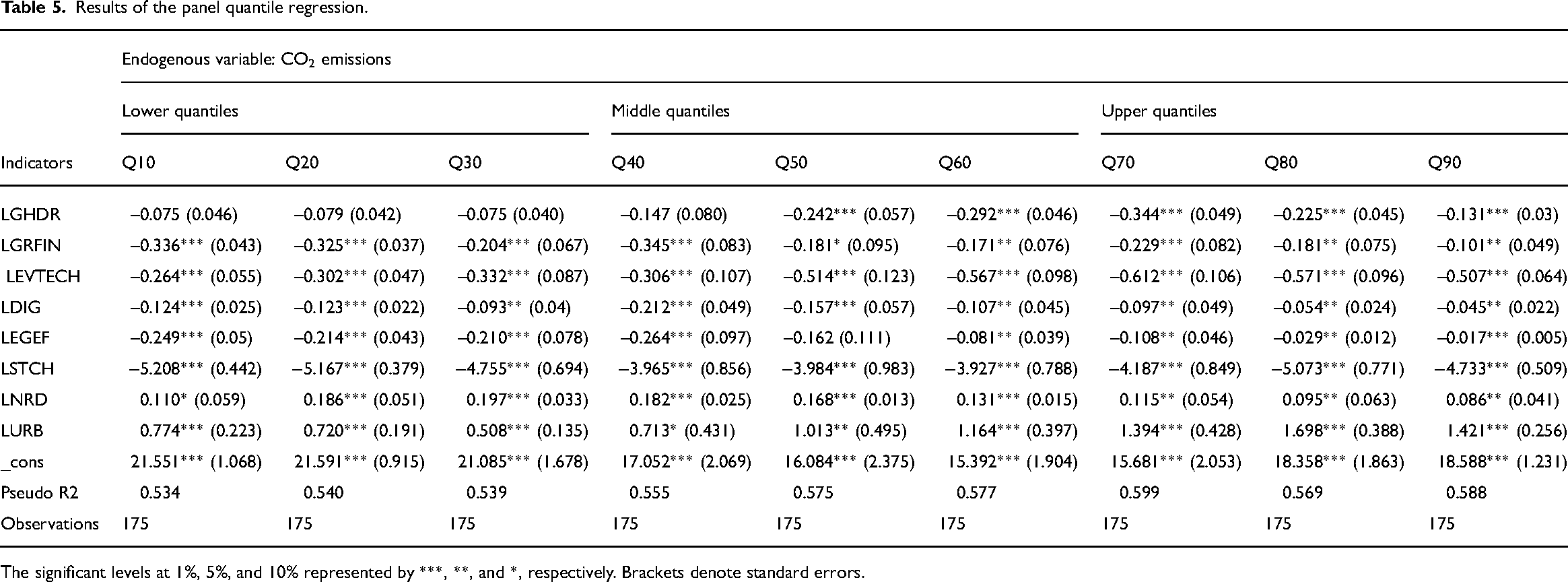
The significant levels at 1%, 5%, and 10% represented by ***, **, and *, respectively. Brackets denote standard errors.
Long-run results
Panel empirical results
To arrive at far-reaching policy insights, this research relies on CS-ARDL estimator. Furthermore, CCEMG and AMG estimators are employed to enhance the robustness of the CS-ARDL results. The results in Table 6 show that green hydrogen mitigates CO2 emissions in the short and long run. This is noticeable from the negatively signed and significant green hydrogen coefficients suggesting that a one percent increase in green hydrogen leads to a corresponding decrease in CO2 emissions. The effects of green finance are observed to be significant and negative, implying an inverse nexus with CO2 emissions. Consequently, a substantial improvement in green finance leads to a proportionate decline in CO2 emissions. Besides, environmental-related technologies in Table 7 negatively and significantly impact CO2 emissions in the short and long run. Digitalization exerts negative effects on CO2 emissions in the long-run implying that advancement in the digital economy leads to a substantial decline in CO2 emissions. More so, energy efficiency and structural change significantly and negatively impact CO2 emissions in the short and long run. Conversely, triggering effects are observable from natural resource dependence and urbanization on CO2 emissions, suggesting that both indicators induce substantial increases in CO2 emissions. It is instructive to clarify that the empirical results emanating from long-run estimators employed as robustness checks comprising CCEMG and AMG provide sturdy support to justify the validity and reliability of the CS-ARDL findings. Going by the findings of the error correction term, the correction of the distortion in the short run can be corrected at 80% speed of adjustment. The reported corrections are evident following the fulfillment of the ECT to the rule of thumb relating to negative and significant coefficients. The various outcomes of the empirical analyses are presented in Figure 9.
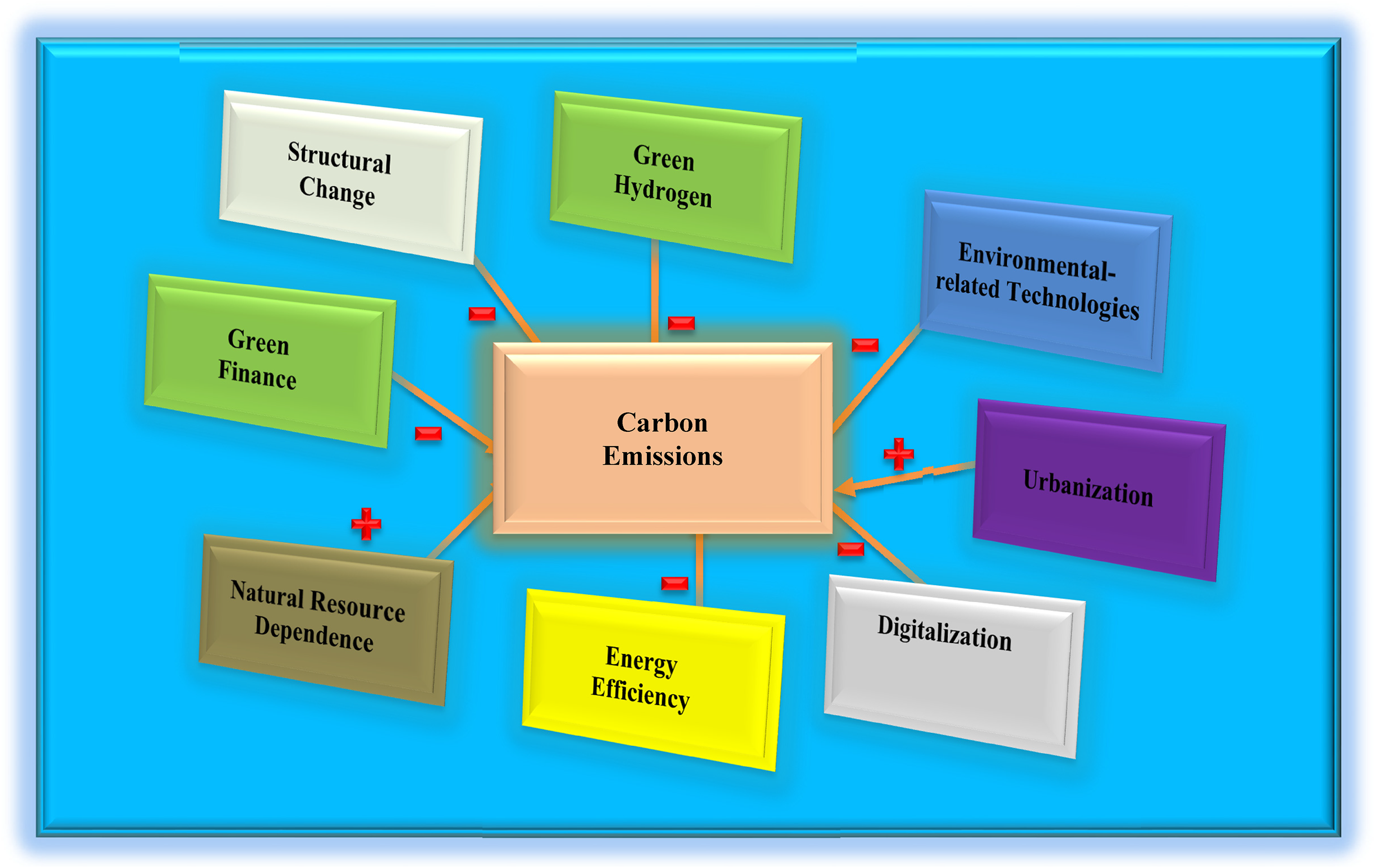
Graphical presentation of environmental sustainability's drivers in top hydrogen-consuming economies.
Country results of the green hydrogen–environmental sustainability nexus.

The significant levels at 1%, 5%, and 10% represented by ***, **, and *, respectively. Brackets denote standard errors.
Empirical results from short-run and long-run estimates.
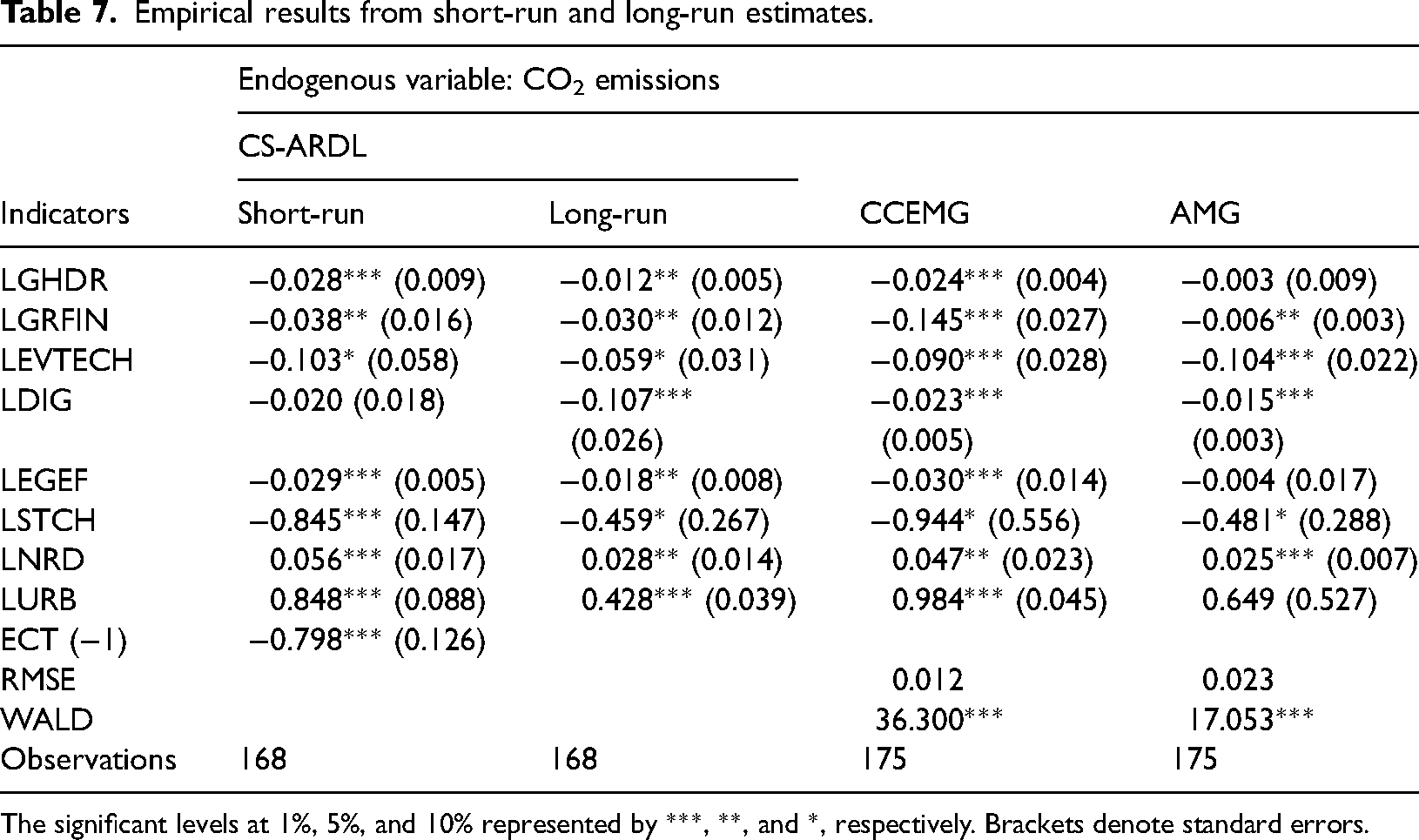
The significant levels at 1%, 5%, and 10% represented by ***, **, and *, respectively. Brackets denote standard errors.
Country-specific empirical results
The essentiality of extending the novelties of this paper to knowledge frontier on the hydrogen–environmental sustainability nexus motivates the consideration of country-specific analyses of the nexus using the novel fully modified OLS (FMOLS). The results in Table 6 reveal that green hydrogen substantially moderates the surge in CO2 emissions across the individual country of the top seven hydrogen-consuming economies. Hence, a percentage rise in the rate of green hydrogen consumption in these countries leads to a corresponding decline in CO2 emissions. The environmental impacts of green finance are substantially noticed in Australia, Canada, China, Saudi Arabia, and the United States suggesting an inverse relationship between green hydrogen and CO2 emissions in the economies. Environmental-related technologies significantly moderate CO2 emissions in the seven selected countries as evidenced by the negative and statistical significance of environmental-related technologies on CO2 emissions. Similarly, digitalization exerts mitigating effects on CO2 emissions across the selected countries. Structural change hinders carbon emissions surge in all the countries except Russia.
The inducing roles of natural resource dependence are statistically supported in China, India, Russia, Saudi Arabia, and the United States. Intuitively, a percentage increase in natural resource depletion leads to a substantial rise in the stock of CO2 emissions thereby complicating the pollution tragedy embattling the concerned economies. Besides, urbanization proves to be a key driver of CO2 emissions across the seven countries. This implies that an increase in urban settlement occasioned by the influx of people from the rural to the urban area will escalate the share of urban contributions to the total GHG in the various top hydrogen-consuming countries. It should equally be noted that the predictive power of the model in explaining the extent to which changes in the exogenous variables (comprising green hydrogen, green finance, environmental related technologies, digitalization, energy efficiency, structural change, natural resource dependence, and urbanization) lead to variation in the endogenous indicator (CO2 emissions) is accentuated by the high values of both R-squared and adjusted R-squared ranging between 79% and 99%.
Discussion
Panel empirical fallouts
The present study explores the impacts of green hydrogen on environmental sustainability amidst the intervening roles of energy efficiency, environmental-related technologies, digitalization, structural change, natural resource dependence, and urbanization on CO2 emissions in the top seven hydrogen-consuming economies. The research objective is pursued through the novel STIRPAT framework estimated based on second-generation estimators comprising CS-ARDL, CCEMG, and AMG. Feedbacks from the empirical analyses show that green hydrogen promotes environmental sustainability by mitigating the surge in CO2 emissions. Consequently, promoting the consumption of green hydrogen energy as an alternative to fossil fuels will not only reduce environmental vulnerability to pollution but also reduce the huge reliance on fossil fuels in sectors such as aviation, transport, and other industries utilizing fossil fuels as energy sources.
These empirical outcomes corroborate previous studies such as Dong et al. 5 and Wang 69 that find empirical support for the mitigating impacts of green hydrogen and hydroelectricity on CO2 emissions.
The empirical outcomes uncover the moderating role of green finance on CO2 emissions in the selected sample countries as obvious from the negative signs of the green finance indicators in the short and long run. The economic intuition from this outcome is that persistent advancement in green finance will pave the way for flattening the curve of CO2 emissions. Besides, since eco-friendly projects and investments such as green bonds, air pollution abatement, CO2 capture, and CO2 mitigation and adaptation, among others, are enhanced through the notion of green finance, an increase in such projects and investment is expected to drive environmental sustainability through a significant reduction in CO2 emissions. These results are well supported by the submissions from Zhao et al. 12 and C. Sun. 31 The estimated model reveals that environmental-related technologies hinder a significant increase in CO2 emissions, suggesting that they are positive predictors of the sustainable environment. This outcome is intuitional and aligns well with the reality of what is operating in recent times. Specifically, environmental-related technologies such as wastewater treatment, industrial emissions elimination, recycling and water management, waste to energy, vertical garden, and farms are effective and efficient in decarbonizing the ecosystem. Besides, notable strands of empirical studies allude that environmental-related technologies facilitate the achievement of net zero emissions..13,70
The impacts of digitalization on CO2 emissions mitigations are only significant in the long-run, which suggests that it takes some considerable periods before the adoption of digitalization could effectively mitigate CO2 emissions. Besides, it takes some level of economic status for the individual and household to adopt digitalization in economic activities. The empirical findings of Adha et al., 50 Ren et al., 52 and Balogun et al. 71 support the notion that digitalization mitigates CO2 emissions. The moderating role of energy efficiency is significant only in the long-run whereas insignificant impacts are reported in the short run. This is inconsonant with Lei et al. 32 and R. Li et al. 72 who provide empirical support for energy efficiency in inhibiting incessant surges in CO2 emissions. The impacts of structural change are negatively significant on CO2 emissions in the short and long run across the top seven hydrogen-consuming countries. Consequently, a substantial increase in service sector's contribution to GDP will significantly reduce CO2 emissions surge. The plausibility of this result lies in the fact that the service sector emits less or insignificant CO2 to the ecosystem which is suggestive of why the advanced economies are transiting from manufacturing-based economies to service-based. The moderating roles of structural change driven by the service sector have been empirically documented. 13 The impacts of natural resource dependence on CO2 emissions are positive and significant in the short and long run suggesting that as the countries deplete the available stock of natural resources, the environment is polluted. This submission is well supported by the empirical findings in the study conducted by Shen et al. 54 and Ibrahim and Ajide. 73 Urbanization is noted to drive CO2 emissions surge in the estimated short and long-run models. Intuitively, a persistent increase in the rate of population concentrated in urban areas escalates the level of CO2 emissions. This result is equally arguable on the ground that industrial activities are concentrated more in the urban areas with the majority emitting considerable volume of CO2 in the atmosphere. The empirical submissions in Cui et al. 30 and Y. Chen et al. 74 support the results in this study.
Country-level empirical fallouts
The empirical findings in Table 6 corroborate the panel findings in Table 7 considering that green hydrogen substantially reduces CO2 emissions. The results are plausible considering the contributions of the seven countries to global volume of hydrogen consumption. Besides, it is a confirmation of the submission of advancing green hydrogen as the essential energy source to complement other clean energy strides focusing on substantial reduction in CO2 emissions in a stride toward net zero emissions. 22 The emerging roles of green finance in the promotion of sustainable environment through the significant reduction in CO2 emissions are apparent in five countries consisting of Australia, Canada, China, Saudi Arabia, and the United States. However, India and Russia are yet to have substantial level of investment in green finance that could trigger a significant decline in CO2 emissions. The significant impacts of environmental-related technologies in moderating CO2 emissions across the seven countries further corroborate empirical confirmation submitted by recent studies.70,75 The mitigating effects of digitalization on CO2 emissions corroborate the panel outcomes. Similarly, energy efficiency, structural change, natural resource dependence, and urbanization supplement the findings reported in the panel analyses.
Disintegration of the impacts of green hydrogen and other regressors using the method of moment quantile regression
The empirical verification of the impacts of green hydrogen on sustainable environment in the top seven hydrogen-consuming countries are elaborated through the MMQR estimator. Based on the outcomes in Table 5, the impacts of green hydrogen are substantial in mitigating CO2 emissions from the 50th to 90th quantiles implying that the early stage of hydrogen energy consumption is not substantial enough to offset the existing CO2 emissions driven by fossil fuels. In other words, the result could be perceived as accentuating the fact that shifting from fossil fuels to hydrogen energy would require some time lags for fulfilling replacement and CO2 mitigation to take place. Green finance, environmental-related technologies, digitalization, energy efficiency, and structural change significantly moderate CO2 emissions across the quantiles. Conversely, natural resource dependence and urbanization promote the surge in CO2 emissions across the quantiles. The graphical presentation of the quantile regression is presented in Figure 10. Similarly, a graphical comparison of the results that emanate from the four estimators is presented in Figure 11. This is necessary to have a glance view of how the robust estimators faired in the current research.
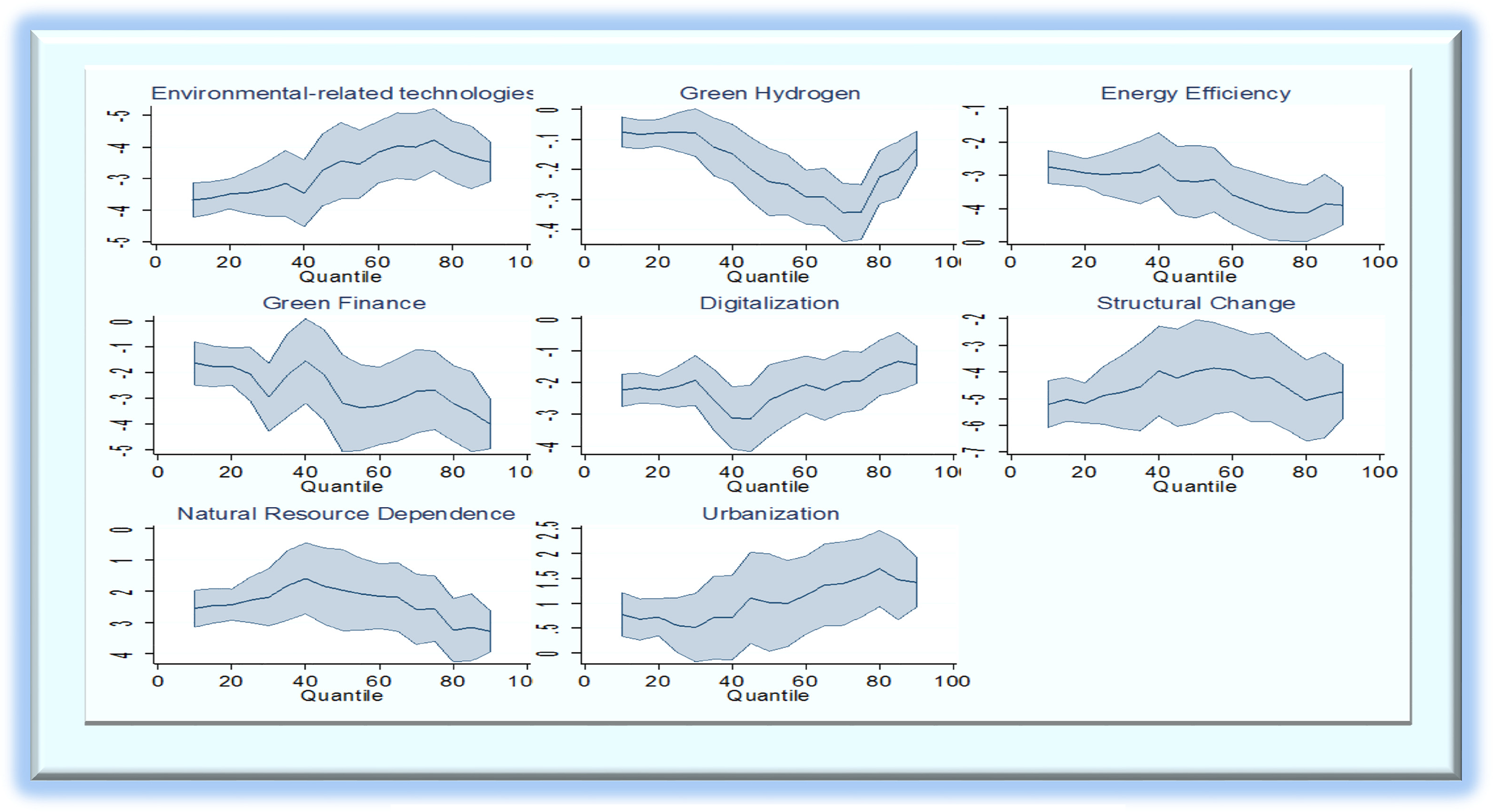
Quantile regression plot.
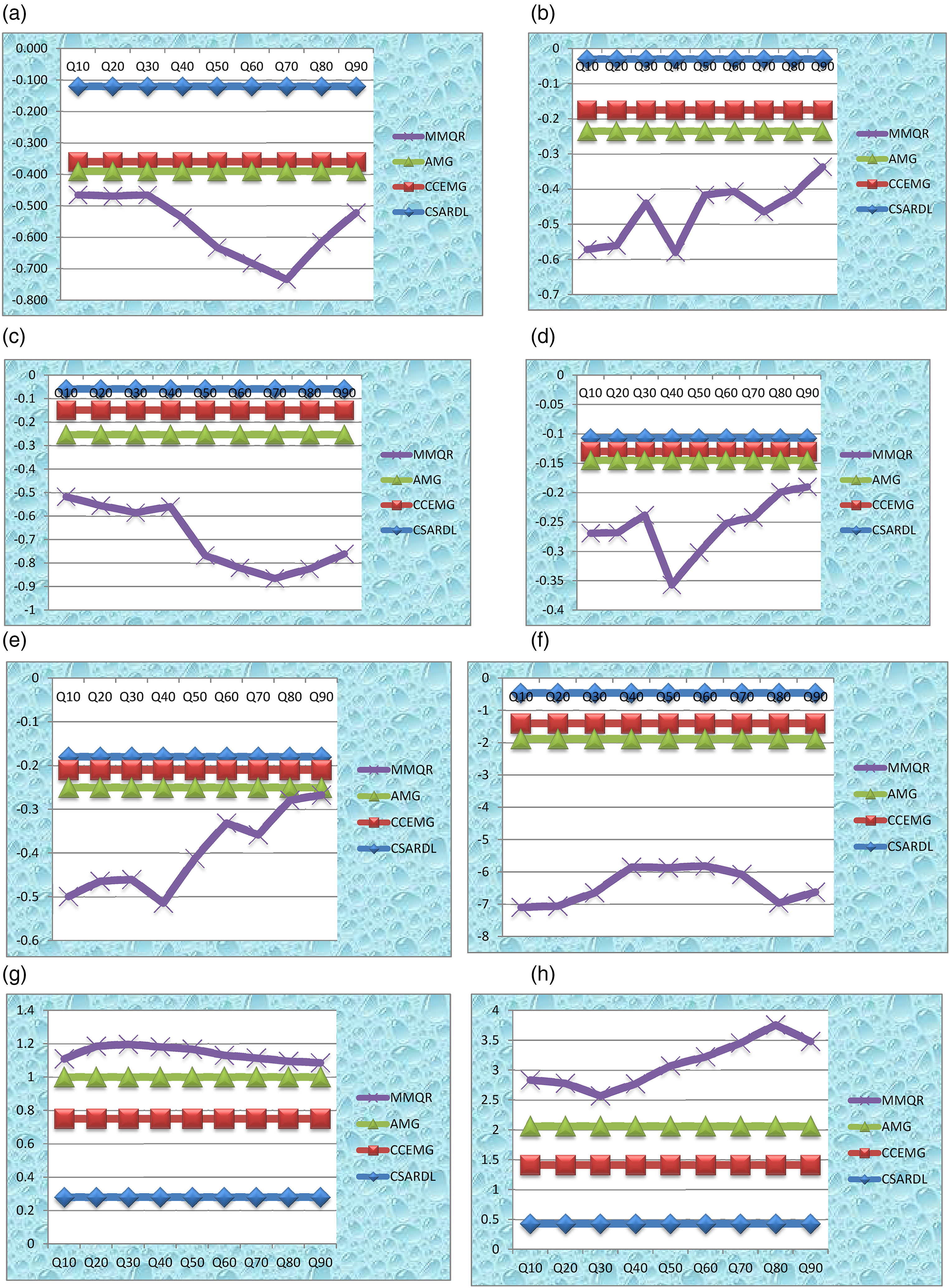
Plots of coefficient.
Outcomes of panel causality nexus
The feedback on the heterogeneous panel causality is provided in Table 8 for the direction of the relationship between each of the exogenous variables and CO2 emissions in the selected seven top hydrogen-consuming nations. Based on the findings, it is evident that bidirectional causality exists between green hydrogen and CO2 emissions such that policy measures implemented to promote the consumption of green hydrogen in the net zero emissions target will significantly influence the substantial reduction in CO2 emissions. Similarly, policy measures implemented to curtail the surge in CO2 emissions can stimulate an increase in the consumption of clean energy such as green hydrogen through efforts to phase out fossil fuels. Bidirectional causality is confirmed between green finance, environmental-related technologies, energy efficiency, and natural resource dependence on CO2 emissions. By implication, policy measures implemented to promote investment in green finance, increase the level of advancements in technologies, and enhance efficient use of energy will lead to the substantial reduction in CO2 emissions. Additionally, CO2 emission mitigation and adaptation policies implemented toward the CO2 neutrality target could require raising the level of investment in green finance, promoting technological innovation, and efficiently utilizing energy resources in the seven top hydrogen-consuming nations.
Findings of the heterogeneous panel causality.

The significant levels at 1%, 5%, and 10% represented by ***, **, and *, respectively. Brackets denote standard errors.
Unidirectional causality is evident between natural resource dependence and CO2 emissions suggesting that policy measures that promote the depletion of natural resources will instigate substantial increases in CO2 emissions. Furthermore, unidirectional causality is apparent in the nexuses of digitalization and urbanization with CO2 emissions. Intuitively, policy measures executed to promote digitalization would enhance carbon emission mitigation while economic plans that drive urbanization drive CO2 emissions. A graphical representation of the panel causal nexus is presented in Figure 12(a). Moreover, the country-specific causality for each of the seven countries is presented diagrammatically in Figure 12(b)–(h). It is evident from the figures the causalities reveal heterogeneous trends across the countries ranging from bidirectional to unidirectional and no causality. For instance, while unidirectional causality is evident between structural change and CO2 emissions in Australia, a bidirectional nexus is evident in China. More so, no causality was reported between green finance, energy efficiency, and CO2 emissions in India. Besides, energy efficiency and structural change did not cause CO2 emissions in Russia.

(a) Panel causal relationship. (b) Causal relationship in Australia. (c) Causal relationship in Canada. (d) Causal relationship in China. (e) Causal relationship in India. (f) Causal relationship in Russia. (g) Causal relationship in Saudi Arabia. (h) Causal relationship in the United States.
Conclusion, policy insights, and caveats
The various viewpoints that emanate from the analyses of the current study which lead to the derivation of essential policy implications and the possible limitations are discussed in the following subsections.
Conclusion
The pervasiveness of climate change constitutes the core hindrance to attaining sustainable ecosystem globally. To lay this long-embattled issue to rest, policymakers, governments, international organizations, and research pundits are working unanimously to arrive at practical solutions in halting the unceasing rise in CO2 emissions. Consequent to the foregoing, this study examines the impacts of green hydrogen on CO2 emissions in selected top seven hydrogen-consuming countries from 1995 to 2019. The empirical model controls for the effects of green finance, environmental-related technologies, energy efficiencies, digitalization, structural change, natural resource dependence, and urbanization. The study aligns with the usual empirical procedures evident from extant studies by conducting various tests and the feedbacks are instrumental in choosing the second-generation estimators comprising CS-ARDL, AMG, CCEMG, and MMQR.
The empirical findings from the estimated model expose that green hydrogen; green finance, environmental-related technologies, energy efficiencies, digitalization, and structural change promote environmental sustainability in the top seven hydrogen-consuming countries. This is apparent from the significant reduction in CO2 emissions in reaction to the impacts of the aforementioned indicators. In contrast, natural resource dependence and urbanization induce the surge in CO2 emissions thereby exacerbating environmental complications. The preceding submissions are important for supporting sustainable environment in the top seven hydrogen-consuming nations. Results from CS-ARDL, AMG, and CCEMG are corroborated by MMQR through examination of the nexus in three categories comprising lower, middle, and upper quantiles.
Policy insights
Some relevant and viable policies observed to be highly fundamental in driving the pathways to environmental sustainability in the top seven hydrogen-consuming countries. Consequently, the following policy insights are thus provided.
The roles of green hydrogen in the estimated model promote environmental sustainability by mitigating CO2 emissions, suggesting that green hydrogen energy is supportive of the net zero emissions targets. Consequently, governments and policymakers in the top seven hydrogen-consuming nations should implement policy measures that will enhance the complete transition to hydrogen technology. Besides, since fossil fuel-based hydrogen production and consumption has been noted to drive CO2 emission, the government should mandate key industrial activities such as producing fertilizer, treating metals, refining petroleum, and processing foods to adopt green hydrogen which is renewable energy-based and promotes decarbonization. Moreover, industries such as transport, aviation, and other fossil fuel-dependent industries should be supported to embrace green hydrogen.
Green finance is observed to drive CO2 neutrality across the panel of top hydrogen-consuming countries. Consequently, policy measures that enhance green projects and investment should be promoted. The strides ongoing in China, the United Kingdom, and the United States in terms of massive investment in green finance should be extrapolated to the other seven top hydrogen-consuming economies. The government should persuade private bodies and nonprofit organizations to partake in promoting investment in green bonds, green projects, green-tagged loans, and climate risk insurance.
The functionality of technology in promoting sustainable environment of the top seven hydrogen-consuming nations is well proven from the empirical front. This indicates that government should strive more to promote technology in all facets of the economy.
The environmental impacts of energy efficiency are noted to support and drive sustainable environment. This implies that promoting efficient energy consumption at homes leading to less energy utilization for cooking, heating, cooling, and running appliances is a great opportunity to pave the way for a sustainable environment. Companies and businesses should be encouraged to observe and pursue the efficient utilization of energy resources. The implementation of energy-efficient policies becomes more important for countries like China, the United States, Russia, and India, which are major drivers of global GHG emissions. It is believed promoting energy efficiency in these countries will not only flatten the curve of CO2 emissions in their environment but also reduce the global volume of GHG emissions.
The emerging efforts in promoting the digital economy should be embraced by the top hydrogen-consuming economies owing to the empirically documented mitigating impacts of digitalization on CO2 emissions leading to the sustainability of the environment. Besides, the structural change driven by the service sector should be supported and promoted from the policy front. The triggering impacts of natural resource dependence can be curtailed through CO2 taxation and diversification of the economy to the real sectors. The inducing roles of urbanization on CO2 emissions can be controlled through the sponsorship of infrastructural development in the rural areas and the encouragement of industrial concentration in the rural areas to create jobs for the rural habitats.
Caveats and future research opportunities
The present study has been able to provide reliable empirical assessment of the impacts of green hydrogen on environmental sustainability. That notwithstanding, few limitations are noticeable as thus. First, the disaggregated of different components of hydropower and hydroelectricity can be of immeasurable assistance in reaching a robust policy implication. Second, the environmental impacts of green hydrogen on other variants of pollutants such as nitrous oxide, methane, P.M.2.5, and sulfur dioxide could also provide extended empirical views of how hydrogen contributes to the overall level of environmental sustainability. Third, the current inquiry can be extended to some selected continents like the European Union, Sub-Saharan African countries, and the Asian region. The preceding limitations are worthwhile research opportunities that future studies could explore to ensure global sustainability in the post-COP26 era.
Authors’ contribution statement
Jiahao Shen: conceptualization, modeling, and data collection. Lanre Ibrahim Ridwan: conceptualization, literature review, and proofreading. Lukman Raimi: modeling, analysis, and policy insights. Mamdouh Abdulaziz Saleh Al-Faryan: proofreading and policy insights.
Footnotes
Declaration of conflicting interests
The author(s) declared no potential conflicts of interest with respect to the research, authorship, and/or publication of this article.
Funding
The author(s) received no financial support for the research, authorship, and/or publication of this article.
