



Abstract
A hybrid method for improving the efficiency of heat pipe evacuated-tube solar-collector (HPETC) is proposed for incorporating the phase-change materials (PCMs) in both off-demand and regular operation. The proposed hybrid approach is called an improved honey badger algorithm (HBA). The crossover and mutation operator improves the honey badger's (HB) foraging habit. The proposed approach aims to generate hot air at various rates of airflow under incident and nonincident solar-radiation situations. The analysis is done on the effects of different energy-storage systems and the position of the heat pipe (HP). In a normal heat-pipe evacuated-tube solar collector, the HP is put within the glass tube that is closer to the upper-surface, and it is held in place through an aluminum fin. However, in the proposed method, the HP is rearranged in the tube's middle. In order to identify the PCM with the highest average-fin temperature, the temperatures of the area-weighted average-fin are measured and compared throughout the glass tubes under typical conditions. For maximizing the thermal-energy carrying capability, the average liquid fraction volume of PCMs is measured for a 24-h flow period. The average liquid-fraction volume of PCMs is continuously observed in stagnation mode till the glass tube reaches the maximal value. The structured mesh patch conforming method is used to invalidate the HPETC system's constituent parts, improving numerical stability and convergence. The proposed method efficiency is 0.43. The proposed method shows high efficiency compared with other existing methods.
Keywords
Introduction
With accelerating industrial and population-growth, the consumption of hot water is rapidly expanding on a global scale. Fossil fuel or electricity is used to meet the growing demand for hot water. 1 The need to transfer renewable energy as a substantial source has grown essential because of the rising demand for energy used in heating water. 2 This would greatly lessen the reliance on nonrenewable sources in residential and government sectors. 3 On the contrary, the emissions produced by nonrenewable sources are a significant motivator to decrease dependence on them and shift toward the usage of renewable energy sources, which are pollution-free and ecologically beneficial. 4 By generating energy without using fossil fuels’ harmful environmental effects and greenhouse gas emissions, clean energy production contributes to averting climate change. The most significant uses of solar renewable energy are domestic-solar-water-heating systems. 5 However, it encounters difficulties and issues that have preoccupied the minds of scientists who are interested in such systems. 6 One of the most significant issues to assure attention is the provision of hot water for extended periods of time notwithstanding less solar radiation during the night or a cloudy sky. 7 Research in this area has focused on this issue extensively.
The use of thermal energy storage materials is incorporated into solar-water heating systems because it is the best way to address the problems of the system's inability to produce hot water in the absence of solar radiation. 8 The evacuated tube solar-water-heater with a heat pipe (HP) (ETCHP), which differs from the traditional flat-plate-collector (FPC), 9 and it is the most important solar-collectors with a high degree of control over the functional temperature of hot water. 10 As a result, the ETCHP system is highly efficient than the FPC system. 11 A copper HP is entirely filled with a working fluid at a specific vacuum pressure that makes up the ETCHP. 12 The HP is divided into lower and upper halves; the upper half is the condenser and the lower half is the evaporator. 13 Two glass cylinders are centered with the HP in the middle. To lessen the convection-based thermal transfer losses, the area between them is vacuumed. 14 The inner cylinder is covered with a dark-blue absorbent color to serve as the absorber of solar collectors while the outside cylinder is transparent and permeable to sunlight. 15 The phase-change materials (PCMs) are substances, which are employed as storage mediums in latent heat storage methods. 16 PCMs are compounds that emit or absorb energy during phase transitions. The phase transitions from solid to liquid and solid to solid are frequently used for heating, cooling, and domestic hot water applications, respectively. The phase transitions of solid-to-gas and liquid-to-gas have high energy transfer but it is less frequently used due to the substantial volume transition they undergo. 17
Low thermal conductivity characterizes the majority of the thermal energy used in solar-water-heating systems, which lowers the efficiency of water-heating systems. 18 Numerous studies have been done to improve the effectiveness of solar-water-heating systems by including thermal energy storage within those systems, 19 increasing the likelihood of supplying hot water for extended periods of time, as well as lessening temperature difference of the outlet-hot-water-temperature and lessening the heat loss. 20
The evacuated tube collector (ETC), FPC, and heat pipe evacuated tube solar collector (HPETC) have all been the subject of extensive research. 21 In particular to materials, the nonavailability of PCMs with required thermo-physical properties, phase transition temperatures, and latent heat are frequently encountered. Matching of optimal PCM properties, limited availability, low thermal conductivity, flammability, subcooling, and corrosion (inorganic PCMs) are the major hindering factors in the growth of the latent-heat-thermal-energy-storage (LHTES) system. Deploying more number of PCMs and their arrangement greatly influence the thermal performance, thereby designing an appropriate arrangement of multiple PCMs is not an easy task for a specific application. Moreover, the selection of encapsulation geometry is not straightforward like that of a single PCMs-related thermal-energy-storage system.
Objective and contribution
To improve the efficiency of an HPETC, this article proposed an enhanced honey badger algorithm (HBA). The proposed approach aims to generate hot air at various rates of airflow under incident and nonincident solar-radiation situations. After sunset, the air is continually heated by a PCM, which is made of tritriacontane paraffin, and also serves as a heat source. The impact of HP location and the impact of different kinds of energy-storage technologies are analyzed.
In normal HPETC, the HP is put within the glass tube and is closer to the upper surface, and it is held in place through an aluminum fin. However, in the proposed method, the HP is rearranged in the tube's middle. In order to identify the PCM with the highest average-fin temperature, the temperatures of the area-weighted average-fin are measured and it is compared throughout the glass tubes under typical conditions. For maximizing the thermal-energy carrying capability, the volume of the average liquid fraction of PCMs is measured for a 24-h flow period. The volume of average-liquid fractions of PCMs is continuously observed in stagnation mode till the glass tube reaches the maximal value. The structured mesh patch conforming method is used to invalidate the HPETC system's constituent parts, improving numerical stability and convergence. The proposed method efficiency is 0.43. The proposed method shows high efficiency compared with other existing methods.
The remaining article is organized as follows, the recent research works: a brief review section describes the brief recent research work, and the experimental set-up of the proposed system section explains the experimental set-up of the proposed system. The performance optimization using the proposed HBA approach section explains the performance optimization using the proposed HBA approach, the result and discussion section discussed the result and the last section describes the conclusion.
Recent research works: A brief review
Different research have earlier presented in the literature were based on solar thermal collectors (STCs) using different methods and perspectives. Few of them were mentioned here.
A novel kind of black-ice removal system employing LHTES and an STC was originally developed and tested in the field, according to Kim et al. 22 Heat energy was stored in the LHTES by the STC and released through the concrete pavement by the embedded pipes. When compared to the active technique, the effect on snow or ice melting was low. However, a traditional eradication technique entails additional costs. The prospect of creating effective and long-lasting black nickel selective coating-based STCs at ambient temperature was investigated by Kafle et al. 23 The thermal, structural, and optical performance of the black nickel coating on the copper sheets and tubes were assessed for their influence on pH, electric current density (Id), temperature, and deposition time (Td) of optical dependence, the thermal and structural performance of the black-nickel-coating on the copper-sheets and tubes, which allowed for the optimization of the STCs’ quality. However, the study focused on various substitute materials because of the toxicity of their plating solution and extremely energy-intensive electroplating technique. Semiconductor-dielectric composites were among the materials used as selective coatings were considered as a viable alternatives. Using various kinds of nano-fluids, Zakaria et al. 24 have determined the absorption effectiveness of a solar-collector. In order to create distilled water outside, experimental work was done to study the FPC and ETC. However, a viscous nano-fluid might result in a slower internal fluid motion at high nano-particle concentrations, which can be a limiting factor for evaporation at the free surface. The technological viability of FPC, two nonconcentrating collectors, and ETC, for the preheating of boiler-fed water was proved by Ali et al., 25 Three fuels (coal, oil, and natural gas) were compared using RETScreen and TRNSYS for economic analysis and GHG emission reduction in order to select the collector, which performed the best for a range of climatic and geographic characteristics all over Pakistan.
Bhalla et al. 26 have validated a directly absorbing nanofluid-based STCs were being introduced for the heating and cooling of residential and industrial buildings. In these STCs, nanoparticles absorb the incident radiation, convert it into heat and finally transfer to the working fluid in full volume. The performance of these collectors depends on parameters such as material (metallic, nonmetallic, and graphite), size and shape of the nanoparticles (sphere, spheroid, ellipse, ellipsoid, buckyball, etc.) and the dielectric constant of the base fluid. A numerical study (using finite difference method) on nanofluid (graphite nanoparticles dispersed in ethylene glycol)-based STC was conducted. Fossil fuels were being utilized to meet global residential heating demands, according to Ushamah et al., 27 and its increase in carbon footprint was forcing the globe to switch to renewable energy technology. A solar hybrid district heating network combined with seasonal thermal energy storage (TES) was a crucial method to reduce household fossil-fuel usage. However, the earlier research was unable to identify the performance gap of one system under the influence of different environmental circumstances causing different heat needs. Chen et al. 28 have presented the excellent optical, thermal, and flow features of nano-fluids, which make them an excellent choice for direct-absorption-solar-collectors (DASCs). The stability of nano-fluid over a long period of time and working temperature restrict its use in DASCs for commercial purposes. Carbon quantum dot nano-fluids were extremely stable and reproducible for a long time (like 30 days) at the working temperature and were created by using microwave-heated polyethylene glycol 200. Since the optical absorption effectiveness would be compromised when nano-particles agglomerate or settle, the stability of nano-fluids has earlier restricted its use in solar collectors.
Background of the research work
Recent research shows the performance improvement of the HPETC system by using various methods, like improving the mass-flow-rate of water or air in the main-fold, utilizing various techniques for removing heat from the glass tube by interchanging heat-transfer-fluid (HTF) inside the HP, various absorber coating, and climatic conditions. Next, the combination of PCM and HPETC system has consistent temperature distribution in the glass tube, reduced loss of heat due to the storage of extra heat present in the inner side of the PCM, and a higher HTF outlet temperature. The earlier research examines how an HPETC performs in various weather scenarios or when different optimization factors were changed. According to the authors’ understanding, no one has yet investigated how reconfiguring the HP can improve HPETC performance and how it affects the PCM melting process. The aforementioned issues inspired to do this research.
Experimental setup of the proposed system
One of the effective solar collectors is the ETC. 29 The two glass tubes of an ETC are concentric to each other and connected at both ends. The space amid the tubes is evacuated at a high temperature to generate an insulating vacuum that assists to lessen the loss of heat. Additionally, an absorbent substance is placed on the inside glass tube of the ETC, and it can convert up to 95% of solar radiation into useful heat. The outer glass tube of ETC is made of transparent glass, which allows sun rays to travel via it. The ETC is exceptional because of the absorber's circular shape, and it has a high-solar-conversion effectiveness and traces the sun invisibly. With the aid of an aluminum fin, the HP is maintained closer to the upper surface of the inner glass tube, which further enhances the heat conversion between HP and the absorber wall. The HP has the capacity to quickly transport a significant thermal energy emitted from a glass tube to the manifold after absorbing it. The HP is constructed using copper and it has pure water at lower-vacuum pressure that enables water to begin steaming at just about 30°C. Because water is a very efficient latent heat-energy absorber when it turns into steam, the HP has a high heat transfer capacity. Steam is produced when water boils and rises swiftly to the top of the HP, from which it condenses back into a liquid phase, and thermal energy to the main fold is transferred. Due to gravity, the condensed water completes the same cycle by flowing again in a downward direction. 30 When comparing to the solar collectors, the HPETCs perform better even in cold climates because of their superior design. Figure 1 shows the HPETC (a) application in a solar water heating system (b) operation principle. The HPETC's operations included 10 tubes. Additionally, the effectiveness of an HPETC is combined with the materials of energy storage, like PCMs examined. As PCM, the tritriacontane paraffin (C33H68) is chosen. This kind of PCM exhibits a high heat storage capacity and it is a suitable choice for the system's working conditions.
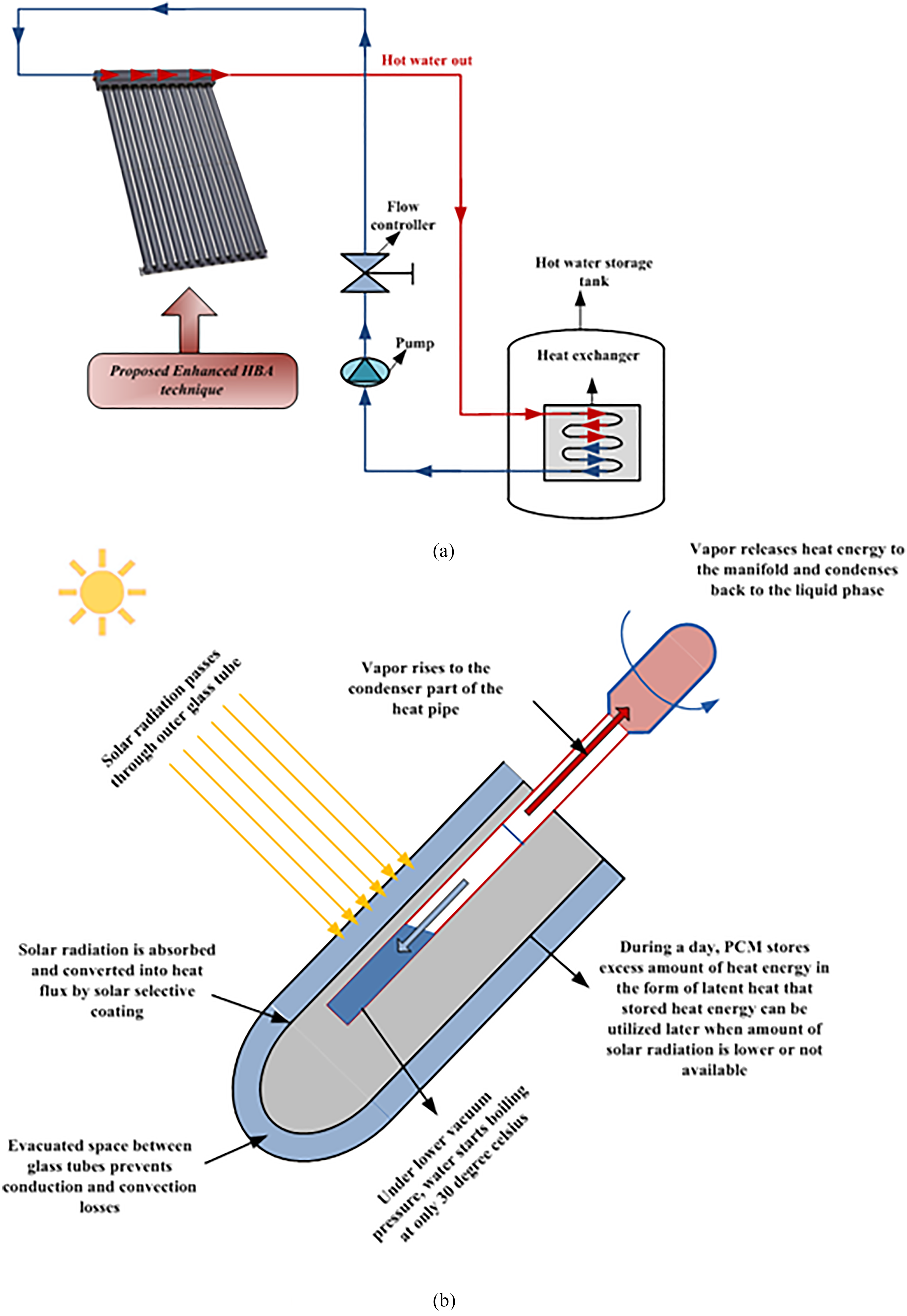
HPETC (a) application in a solar water heating system (b) operation principle. HPETC, heat pipe evacuated-tube solar-collector.
By permitting solar—to travel through it, the semi-transparent wall of the outer glass tube is described to have 80% transmissivity, while the opaque wall of the inner glass tube has 92% absorptivity. A heat-conductive fin made of aluminum has a shell-conduction layer with a thickness of 0.2 mm. The HP's primary function is the water manifold in order to transmit the heat and it is accumulated inside the PCM-filled tube. Without the use of additional electricity, HPs have the capacity to transfer enormous volumes of heat energy via the lowest feasible cross-sectional area across a sizable length. In addition, compared to other metals, the HPs have extremely high heat conductivity. To model the evaporation and condensation phenomena inside the HP, however, is extremely challenging and time- and money-intensive. As a result, our study proposes an improved HBA to boost HPETC efficiency. The chosen PCMs are inexpensive, noncorrosive, nonflammable, and toxic-free. They are also widely accessible. In this system, a header (heat exchanger) with two cross-sectional squares is employed and is shown in Figure 1.
It comprises two mild steel rectangular boxes that are rectangular in shape. There are 40 holes total, 20 on each side of the outside rectangular box. The header has two vents for safety reasons and allows surplus heat to be expelled as steam into the atmosphere. The collector that faces south is 15° angled with respect to the horizontal. Different layouts and reflectors are utilized to improve the ETSC's thermal performance. With an 80% reflectivity, an aluminum sheet is employed as a reflector beneath the evacuated tubes. When the outlet air is pumped concentrically into the circular pipe, the arrangement’s goal is to raise its temperature. As a result, the airflow is obstructed and the surface area of the circular pipe is increased. As a result, the airflow rate drops and residential time amid the pipe rises, raising the temperature of the air exiting the pipe.
The investigations use two distinct kinds of fins
Circular fin and Copper coil
The copper coil in question has a diameter of 0.07 m and a length of 1.5 m. The copper wire has a diameter of 0.006 m. The other fin in use measures 1.5 and 0.073 m in length and diameter, respectively. Mild steel is utilized to make the circular fins. Utilizing reflectors improves the efficiency of the evacuated tube of solar-air-collector by preventing solar-radiation loss that falls between the tubes. To bounce the sun's rays off, the tubes of evacuation, two reflectors, one on every side of the header are placed underneath them. Each reflector has a 1.56 m by 1.18 m size. The sheet is made of mild steel that has been galvanized and coated with aluminum for optimum reflectivity. Water serves as the convective heat, which transmits medium in the investigational arrangement's header and evacuated tubes. Solar radiation heats the water in the tubes, which is subsequently transmitted to the thermal carrying unit and ultimately to the air. The air at the solar collector is blown through a blower with a 0.350 kW power rating. A regulator is used to regulate the rate of airflow while the blower is driven by the AC main-supply. The choice of a PCM is influenced by factors including toxicity, latent heat of fusion, melting temperature, etc.
System operation
In the experimental setup, 40 evacuated tubes and the header are filled with water, which is in temperature. For gathering the solar-energy, the solar collector is visible to the atmosphere every day. When the radiation of solar radiation strikes the evacuated tubes and it absorbs the sunlight's heat and move it to water. The water has begun to warm up, which has caused the thermosyphon phenomena to begin, in which hot water rises in evacuated tubes and cold water descends. These evacuated-tubes are joined to the exterior rectangular-box, which allows the hot-water to enter.
5
The inside rectangular boxes of this outer rectangular box houses the substance to store thermal energy. The inside rectangular box's TES material warms up from the heat transferred from the water. Now, the air flows via the circular pipe are the part of inner rectangular box. From the material of storing the thermal energy, the air in the circular pipe is warmed by absorbing heat. A similar thermosyphon phenomenon occurs in the header where the fluid of cold-working is in low-head and hot-working is in high-head. To get various conclusions, three cases are examined:
ordinary-collector copper-coil and ordinary-collector circular-fin and ordinary-collector
Numerical modeling of the system
In phase-I of this work, tritriacontane paraffin (C33H68) is chosen as the PCM. Tritriacontane is an excellent option for the operational state of the system and exhibits a high storage heat capacity, according to a preliminary examination of its efficacy. Two separate three-dimensional models are created using ANSYS design modeler to explore the impact of the position of HP on the changing phase process of PCM. 14 These models are depicted in Figure 2(a) and (b). The inner tube's opaque wall, which has a predetermined absorptivity of 92%, defines how much solar energy can travel through it and into the outer glass tube. A shell with a layer of conduction thickness of 0.2 mm is known as an aluminum heat-conductive fin. The primary function of HP is to transfer heat that is built up inside the PCM-filled tube to the water manifold. Without the use of additional electricity, HPs have the capacity to transfer enormous volumes of heat energy through the lowest feasible cross-sectional region across a sizable length. In addition, compared to other metals, the heat conductivity of HPs is extremely high. Simulating the evaporation and condensation phenomena inside the HP is extremely challenging and takes a lot of effort and money. As a result, the HP is regarded as an increasing heat-conductive device in this numerical analysis. Figure 3 shows the Proposed HPETC cross-sectional image.

Representation of header with PCM unit. PCM, phase-change material.

Proposed HPETC cross-sectional image. HPETC, heat pipe evacuated-tube solar-collector.
Conditions of boundary
Commercially available computational fluid dynamics (CFD) software called ANSYS-Fluent 2020-R2 is utilized for the HP ETC's unstable simulation. There are two operating modes used for the simulation analysis. In normal operation, the excess energy of solar/heat is saved in latent heat by utilizing PCM while heat is removed from the tube of inner glass through HP by pumping water via the manifold at a fixed rate of 45 LPH. In contrast, solar radiation is emitted by the HPETC system in stagnation mode (on-demand), where water circulation (forcing cooling effect) is not permitted for meeting the peak demand for hot water in the evening, The HPETC system reflects sunlight. Throughout the day and stores the heat energy (via a phase-change process) inside the PCM. With a 45° mounting angle, the simulations are run. Calculations are used to determine the collector's useful heat gain.5,31 The same unstable solar radiation boundary condition is used across all simulations, allowing for a comparison of the thermal performance between Phase I and Phase II. With the exception of density and the particular heat values of PCMs, the thermal characteristics of HPETC's components are considered as constant values. The particular heat values for the PCM are explained in the polynomial function of piece-wise linear. The natural-convection impact is given because of the approximation of Boussinesq, and it is expressed below: The liquid PCMs are Newtonian-fluid; The inherent convective motion of liquid PCMs is laminar (Ra < 1010) and is compressible.
here,




Equations of governing
The conditions of the boundary are defined before the equation of governing, which are resolved in 86,400 s. Thus, the governing equations can be expressed in three dimensions as follows:








Performance optimization using proposed HBA approach
A meta-heuristic optimization method called the HBA is based on the clever foraging behavior of honey badger (HB). 31 The dynamic search behavior of HB uses honey seeking and digging mechanisms to shape the exploitation and exploration stages. The HB digs or follows honeydew bird scent to discover the food sources. In this article, this approach is used to resolve the optimization problem. The proposed hybrid technique is Enhanced HBA. The step-by-step process of Enhanced HBA is described as follows,
Initializing the count of HBs, i.e. population position and size. In this article, the initialized parameters, like temperature, and solar irradiance are initialized. Thus, it is expressed as,

In this step, the initialized populations are generated at random.
The fitness is based on objective function. Thus, it is explained below,

The solution will depend on the size and location of the prey. Thus, it is explained below,



For keeping the smooth change from exploration to exploitation, the control of density factor (α) was utilized. Thus, it was computed below,

The flag F and local search is used for escaping the value of local-optima.
By redesigning the HBA, the subsequent updating function uses crossover and mutation operators and its solution is enhanced. According to the accompanying, the updated equations: like crossover rate is achieved between the two persons who produce a different solution set. The process performs the value of individual fitness and a newly generated solution. The individuals are randomly mutated by considering the particular mutation rate at the process of mutation. According to the accompanying equations (18) and (19), the crossover and mutation rates of Harris Hawks are calculated.


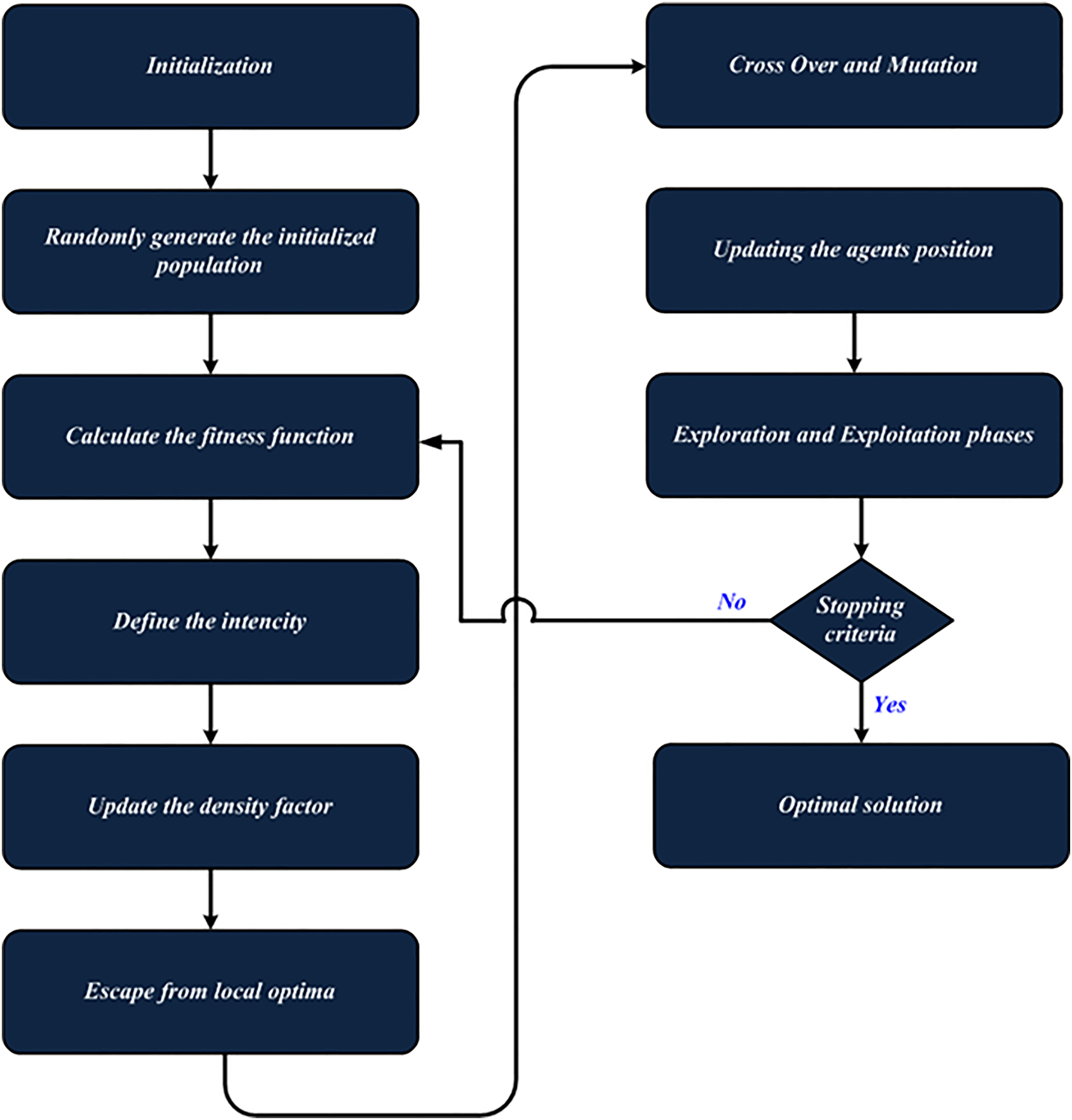
Flowchart of HBA approach. HBA, honey badger algorithm.
The exploitation and exploration were measured as,


Verify the termination criterion, if the condition was met, an optimum result was attained, or else again the process was repeated.
Result and discussion
Here, the performance of a proposed technique based on HPETC 32 combined with the performance of PCM is checked by investigating the outlet air temperature at various airflow rates. 33 The performance of the proposed method is analyzed under ordinary-collector, ordinary-collector with copper-coil, and ordinary-collector with circular-fin. By then, the proposed method performance is compared with various existing approaches, like heap-based optimizer (HBO), Salp Swarm Algorithm (SSA), and cuckoo search algorithm (CSA).
Analysis of the temperature for a typical collector at 0.018
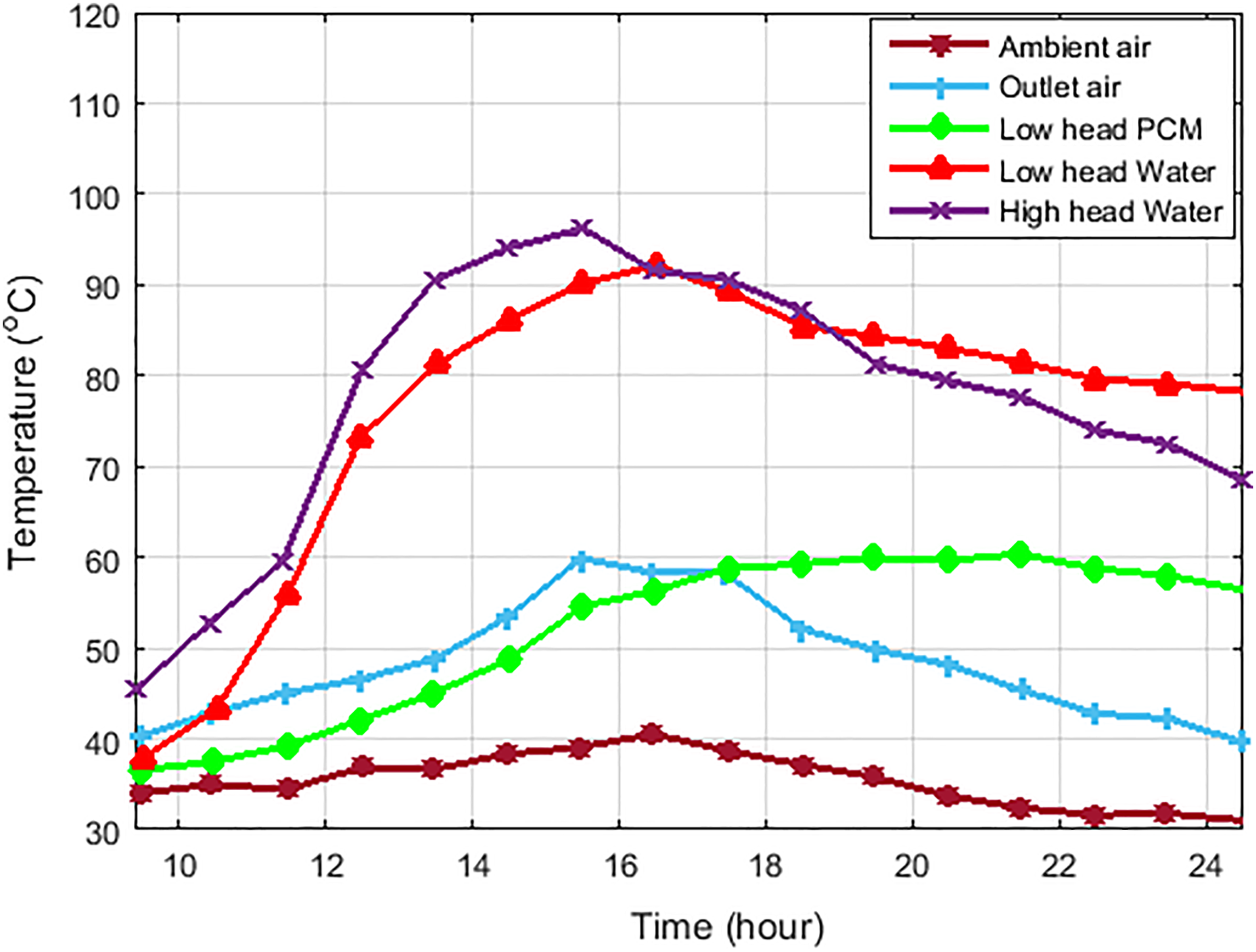
Analysis of temperature for a typical collector at 0.018
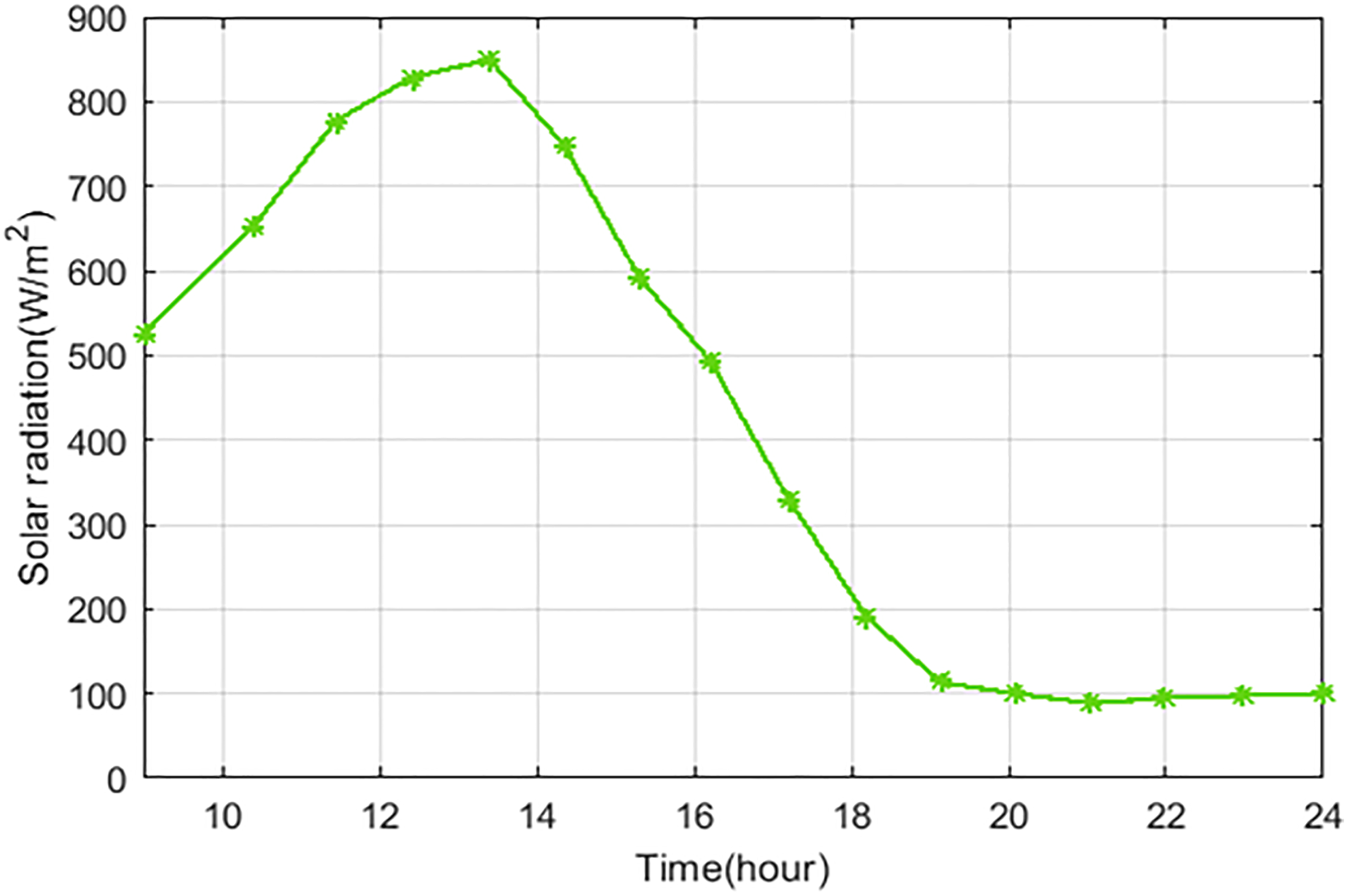
Investigation of irradiance for a typical collector at 0.018
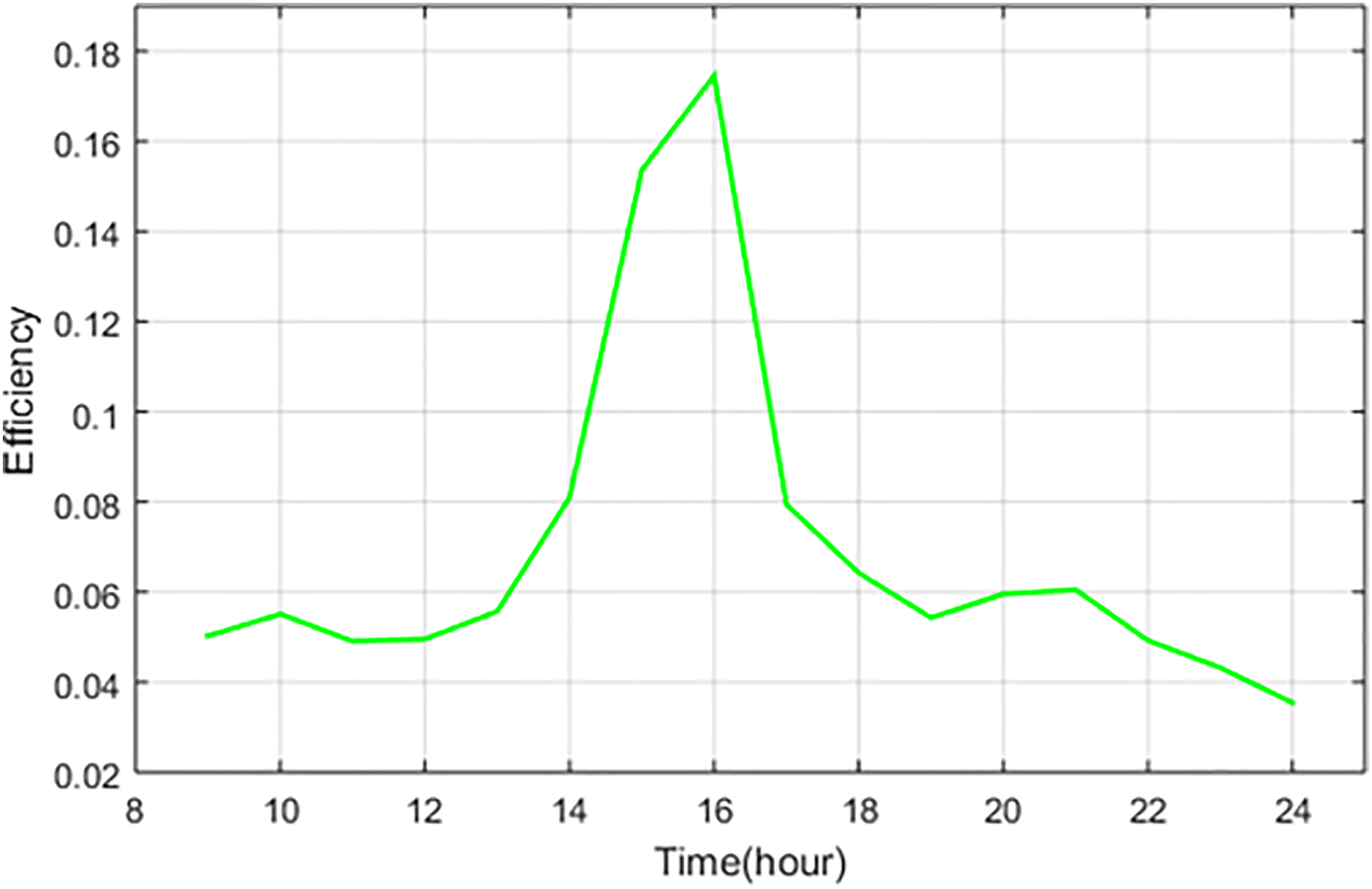
Analysis of efficiency difference for a typical collector at 0.018
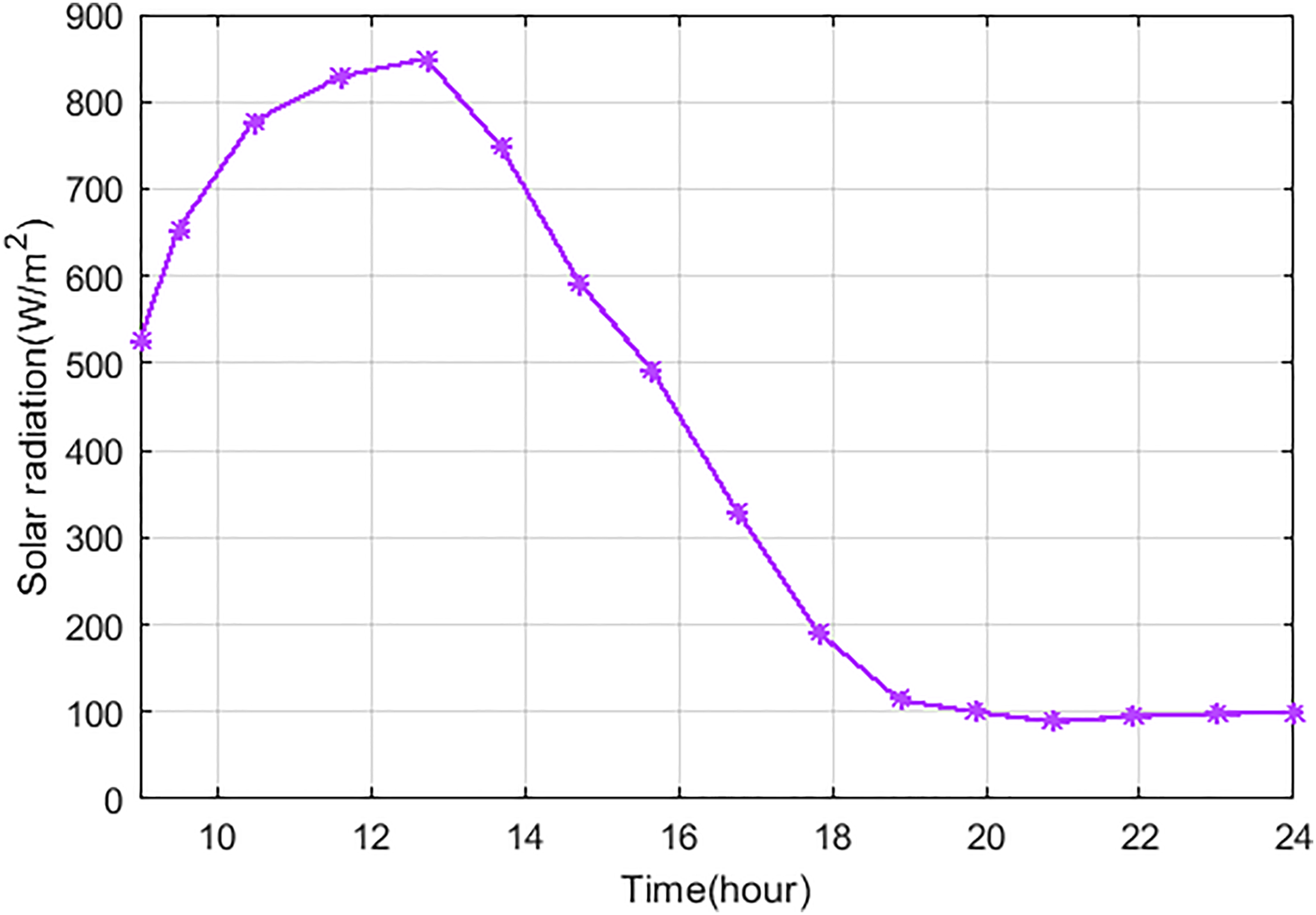
Analysis of irradiance for a typical collector at 0.018
Analysis of temperature for a typical collector at 0.035
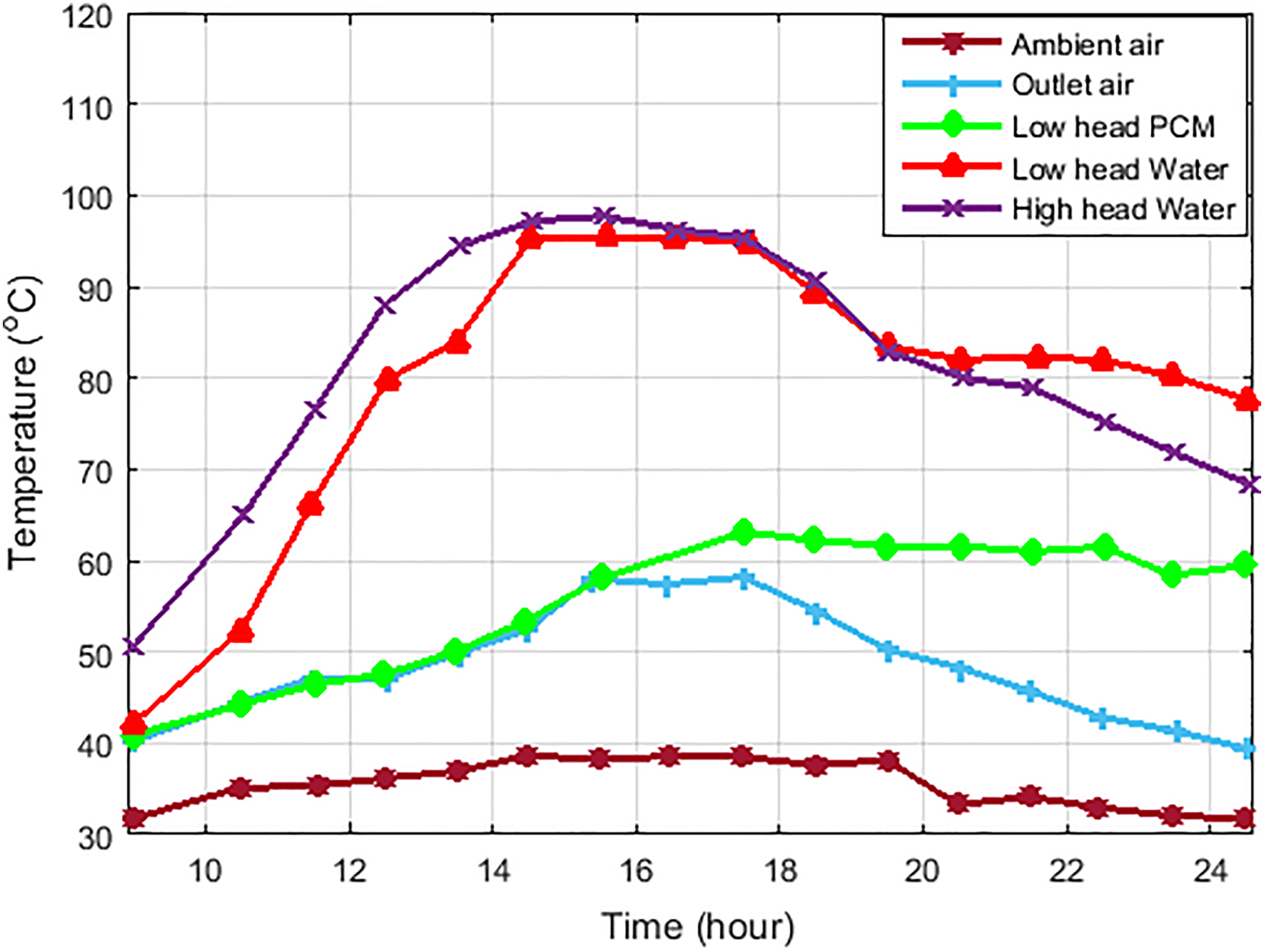
Analysis of temperature variation for a typical collector at 0.035
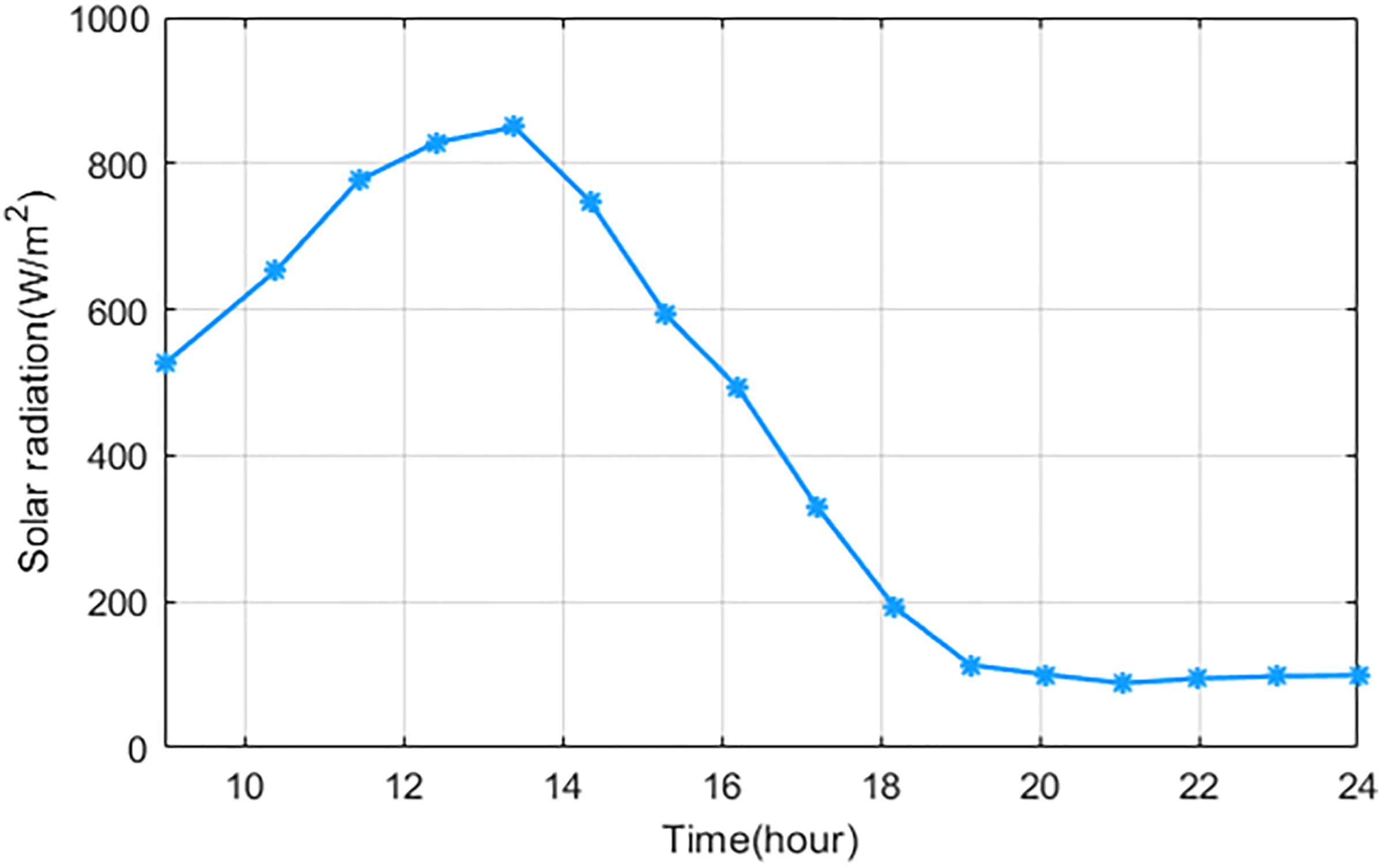
Analysis of irradiance for an ordinary collector at 0.035
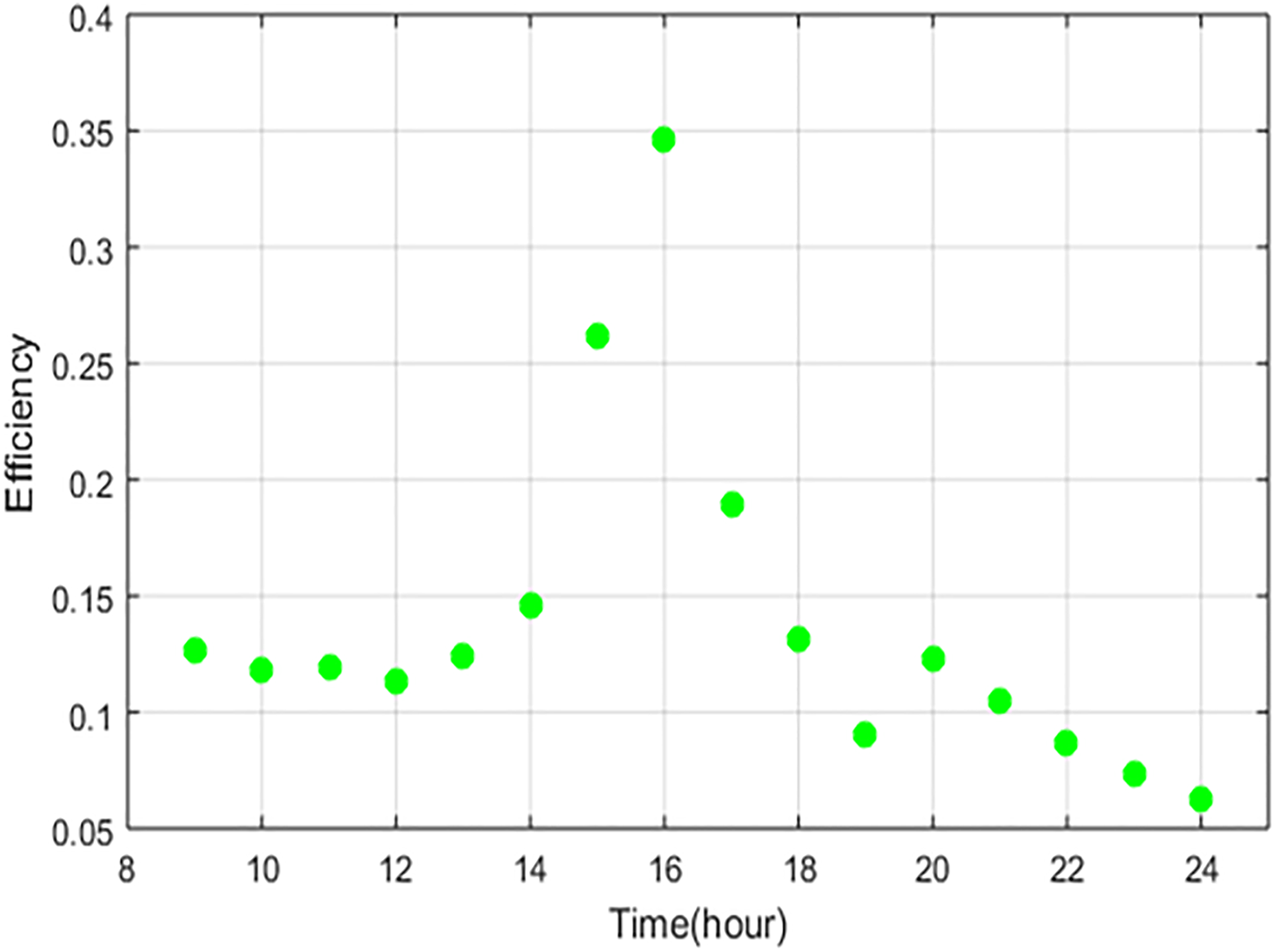
Analysis of efficiency for an ordinary-collector at 0.035
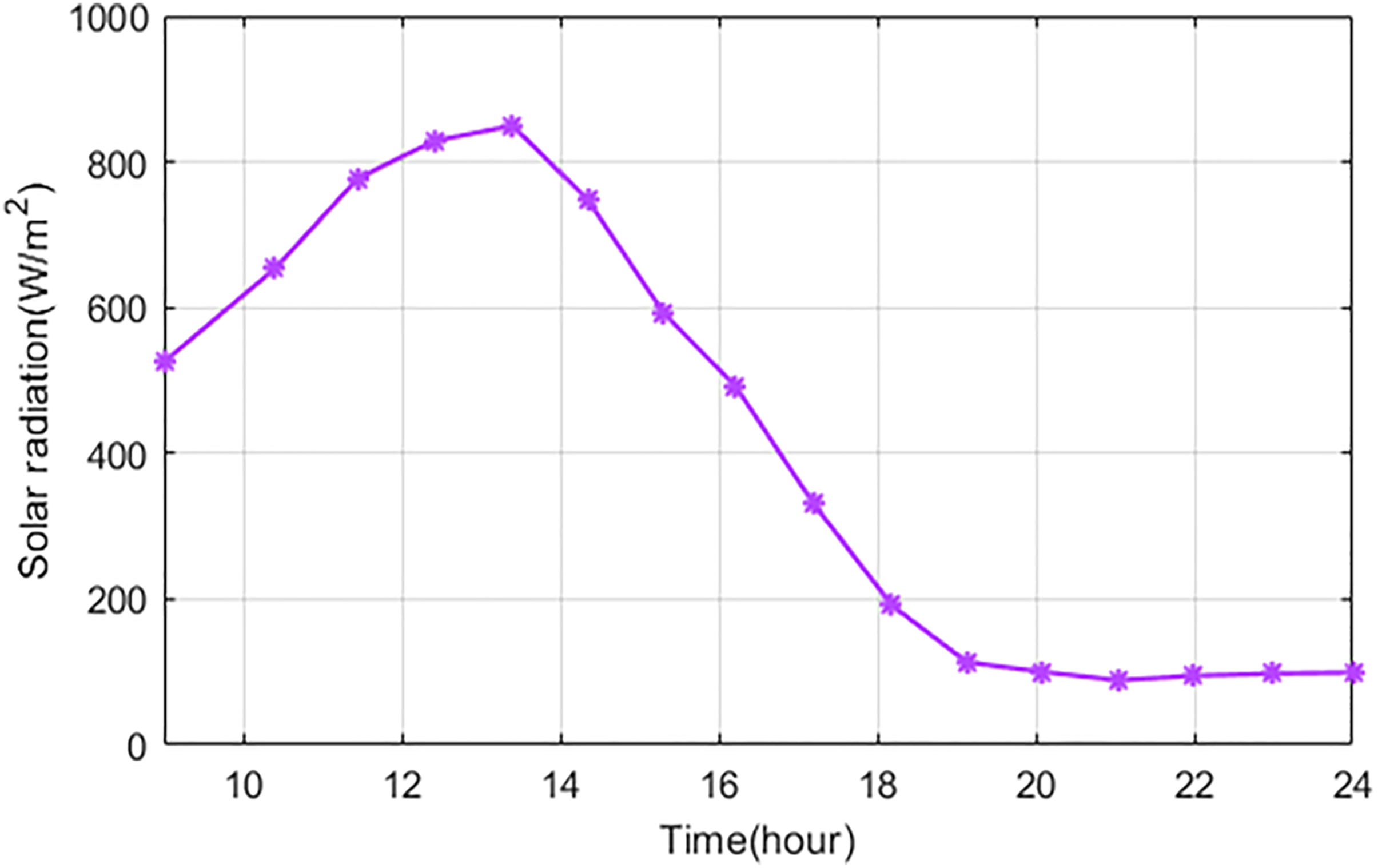
Investigation of an ordinary collector irradiance at 0.035
Analysis of the temperature for a typical collector at 0.018
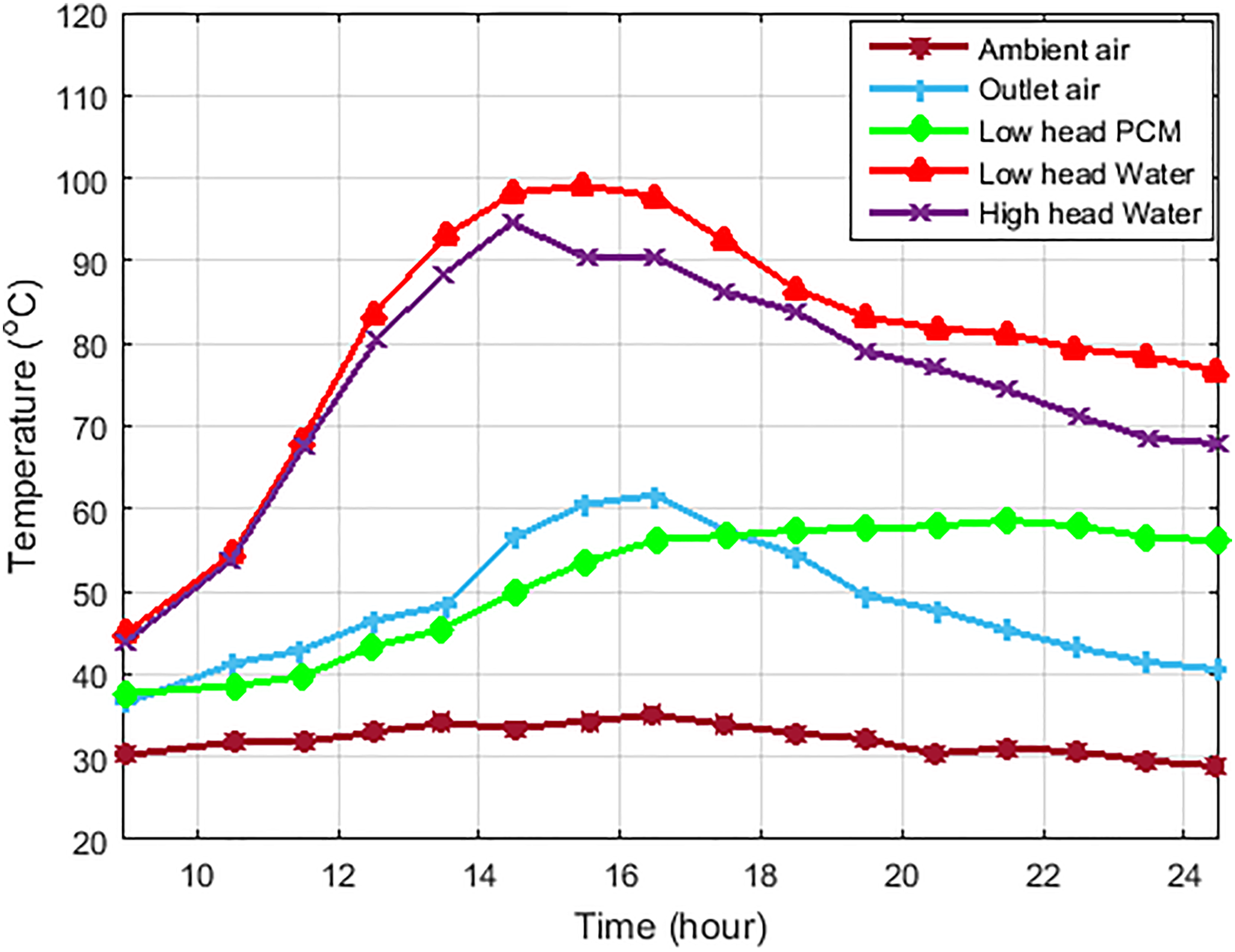
Variation in temperatures for a typical collector with a copper coil at
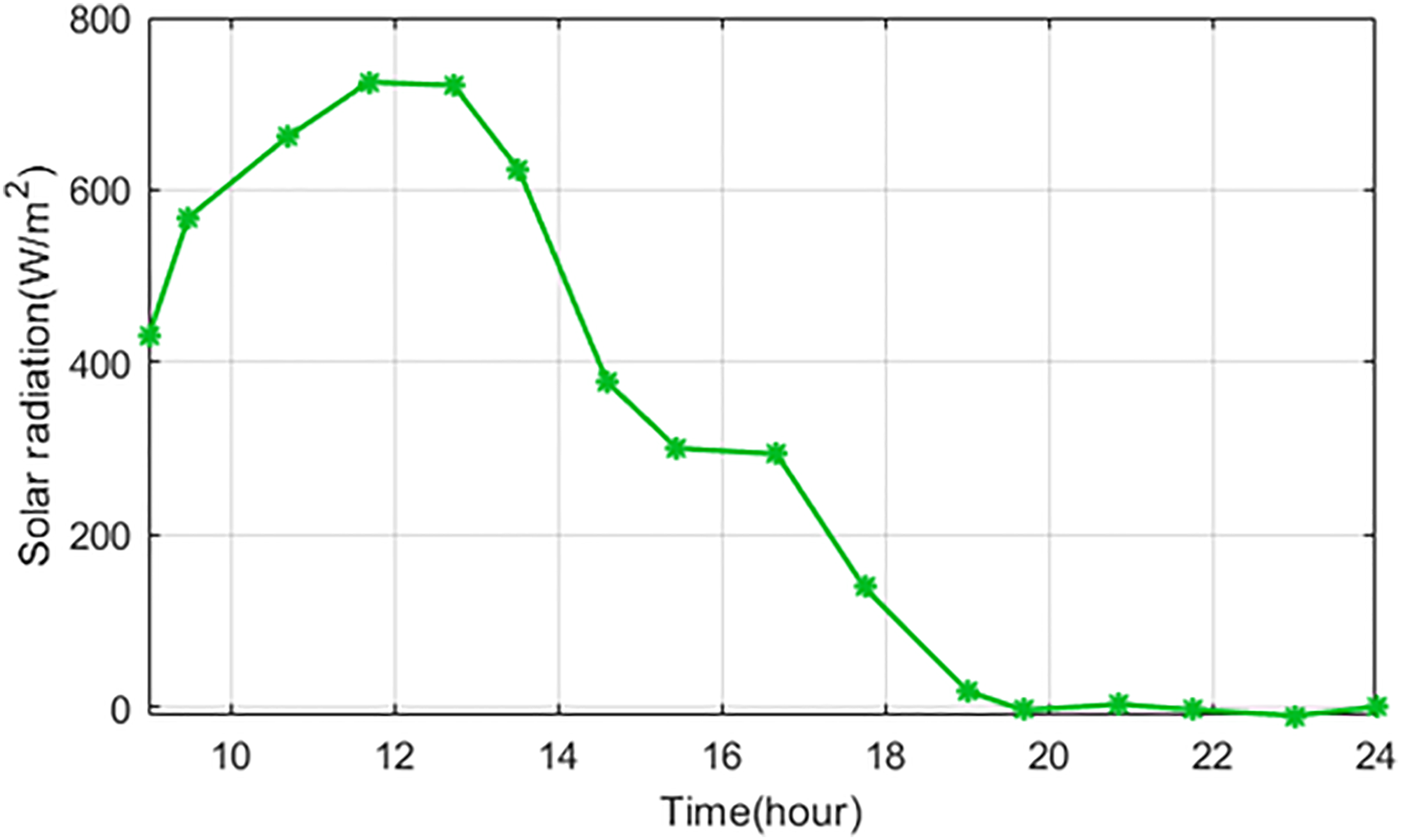
Analysis of irradiance at 0.018
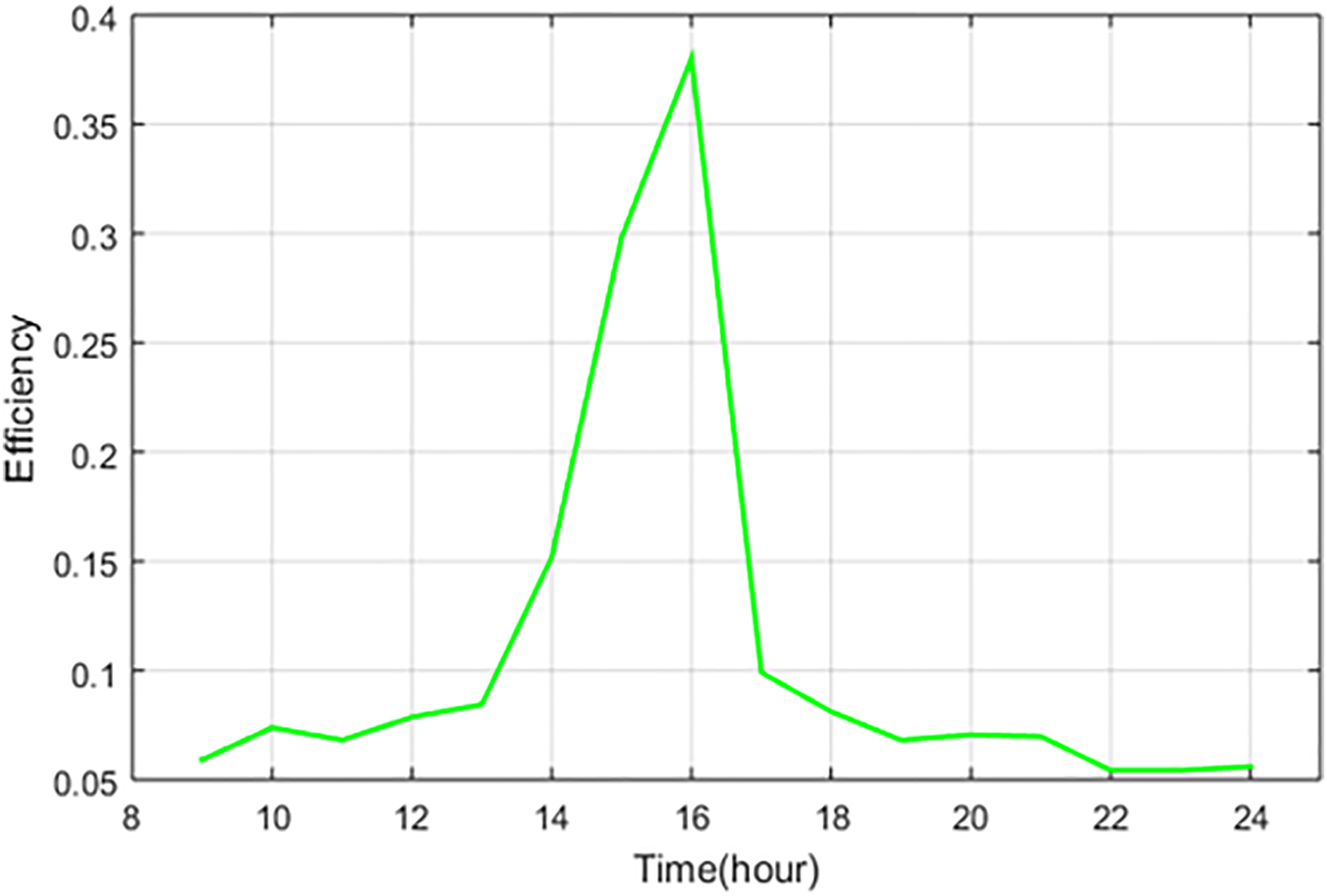
Analysis of efficiency at 0.018
Analysis of solar irradiance at 0.018

Analysis of solar irradiance at 0.018
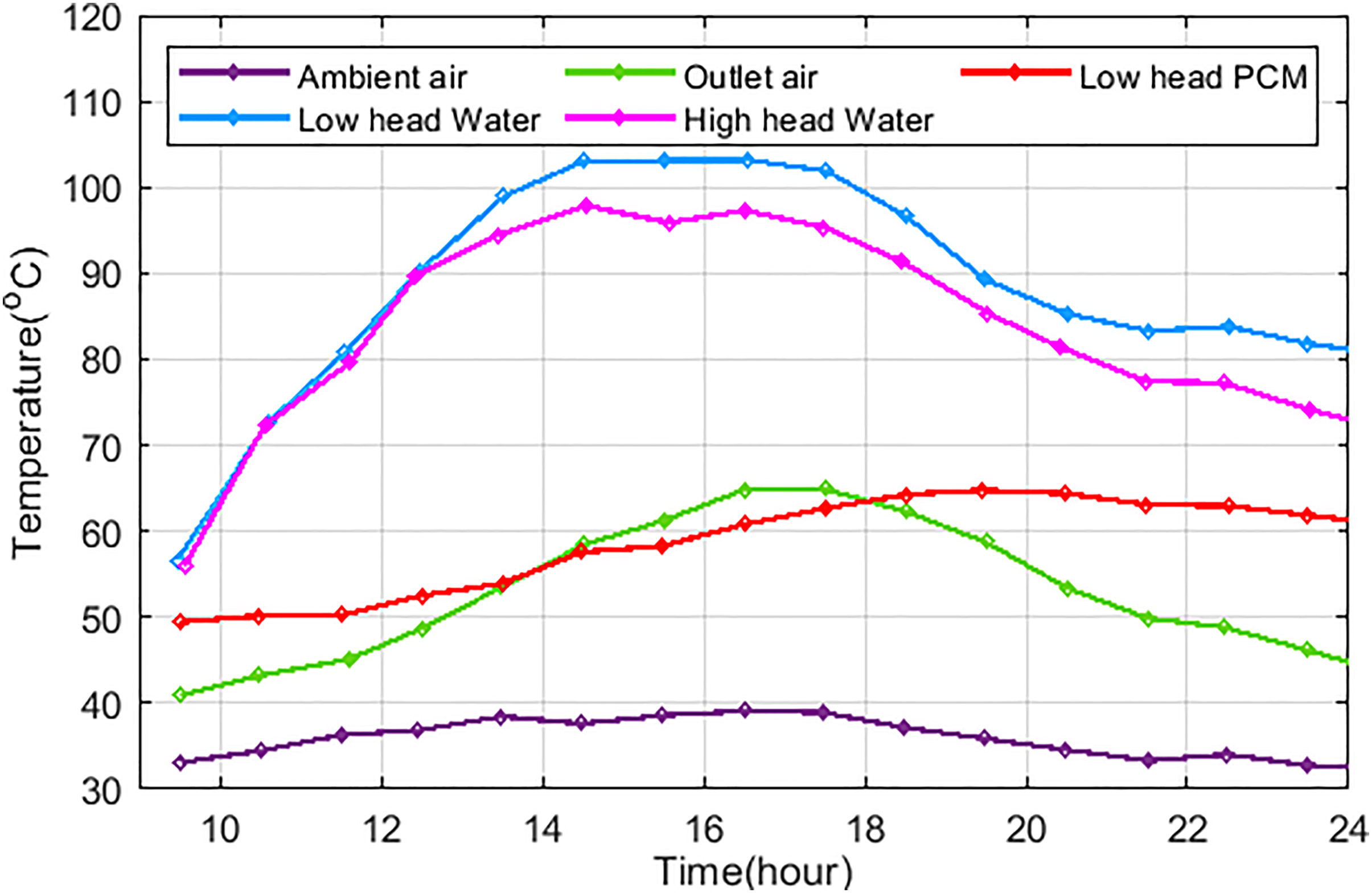
Investigation of difference in temperatures at 0.035
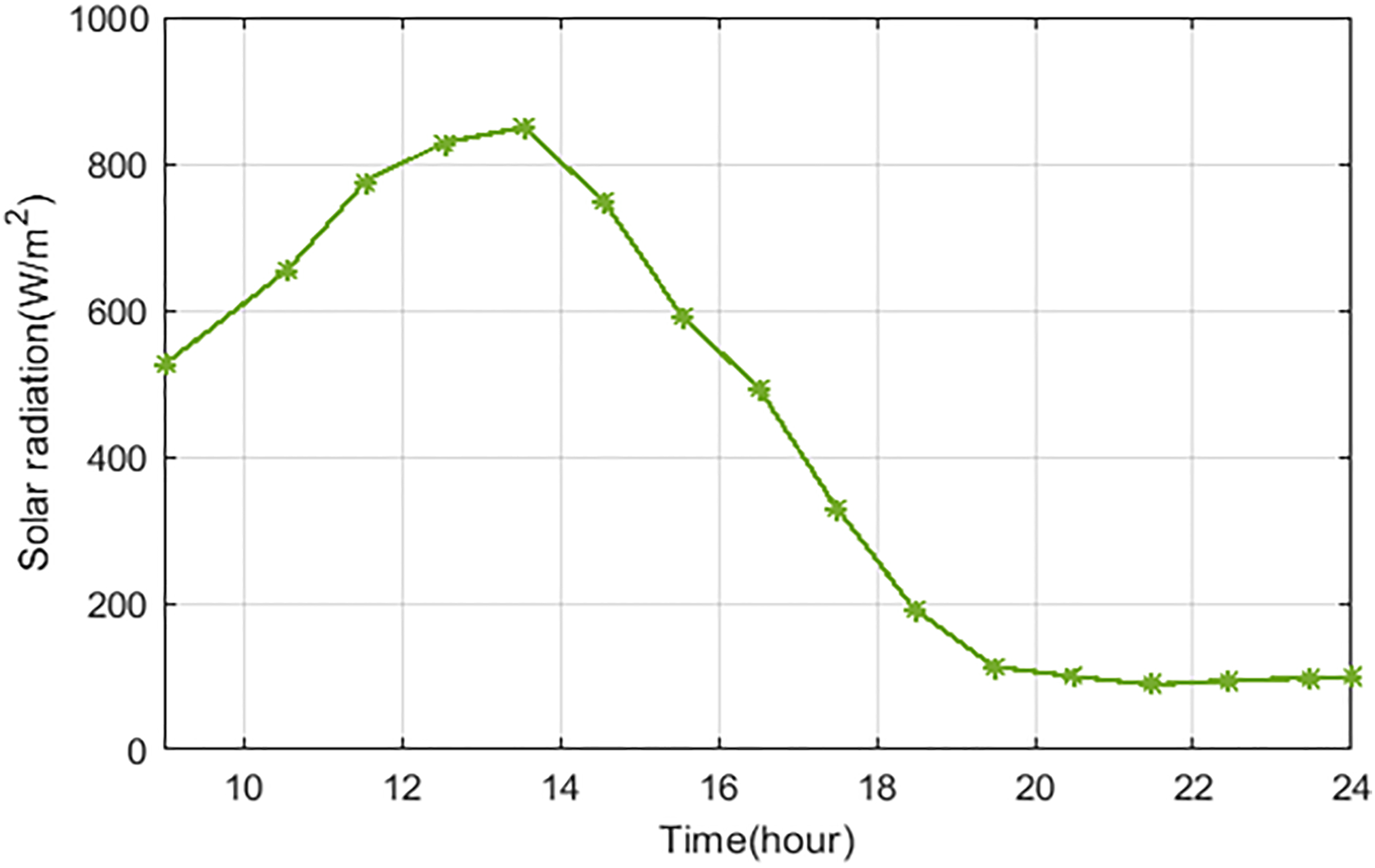
Analysis of irradiance for copper coil and ordinary-collector at 0.035
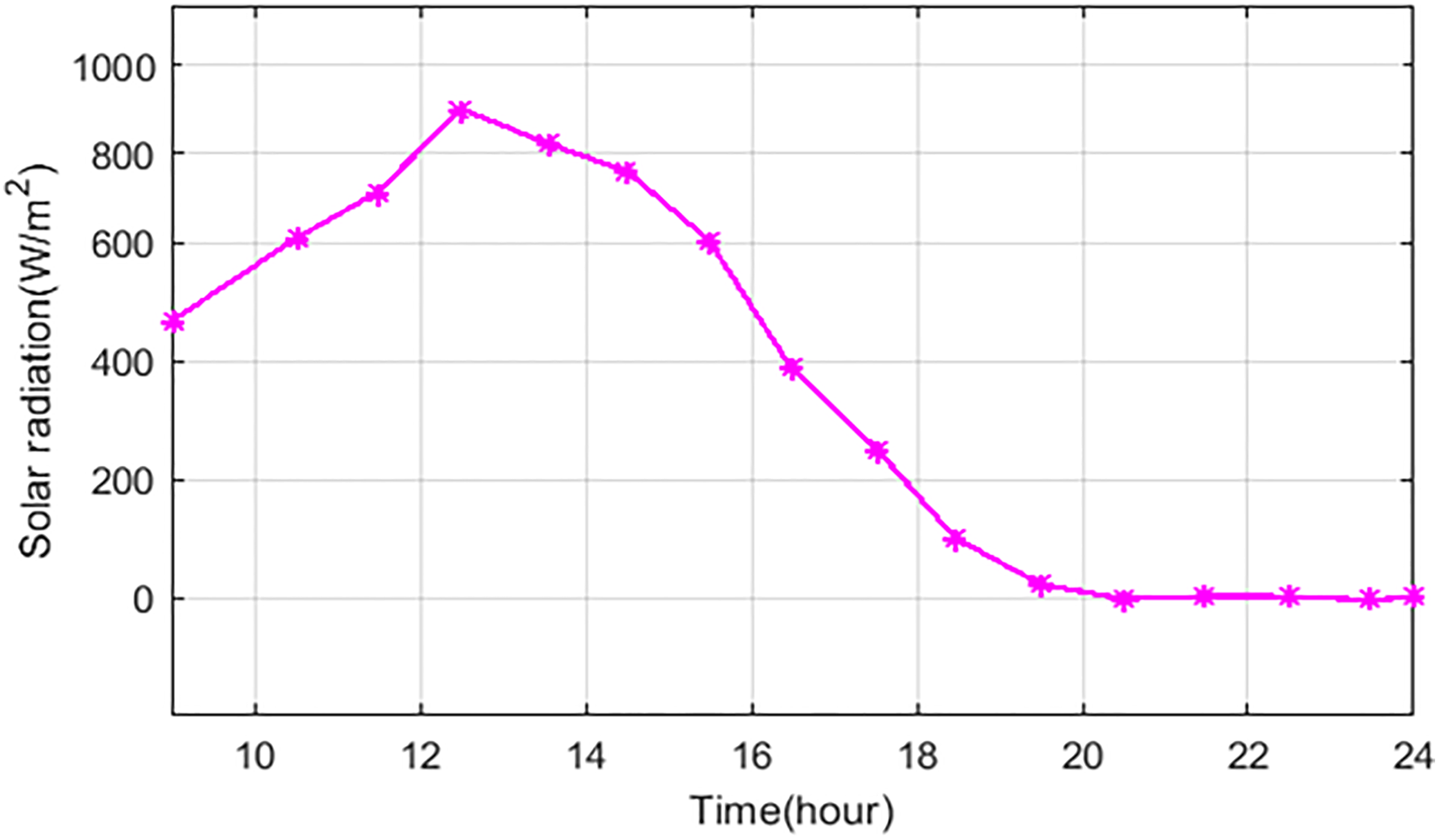
Investigation of solar irradiance for copper coil and ordinary-collector at 0.035
Analysis of the temperature for a typical collector at 0.018
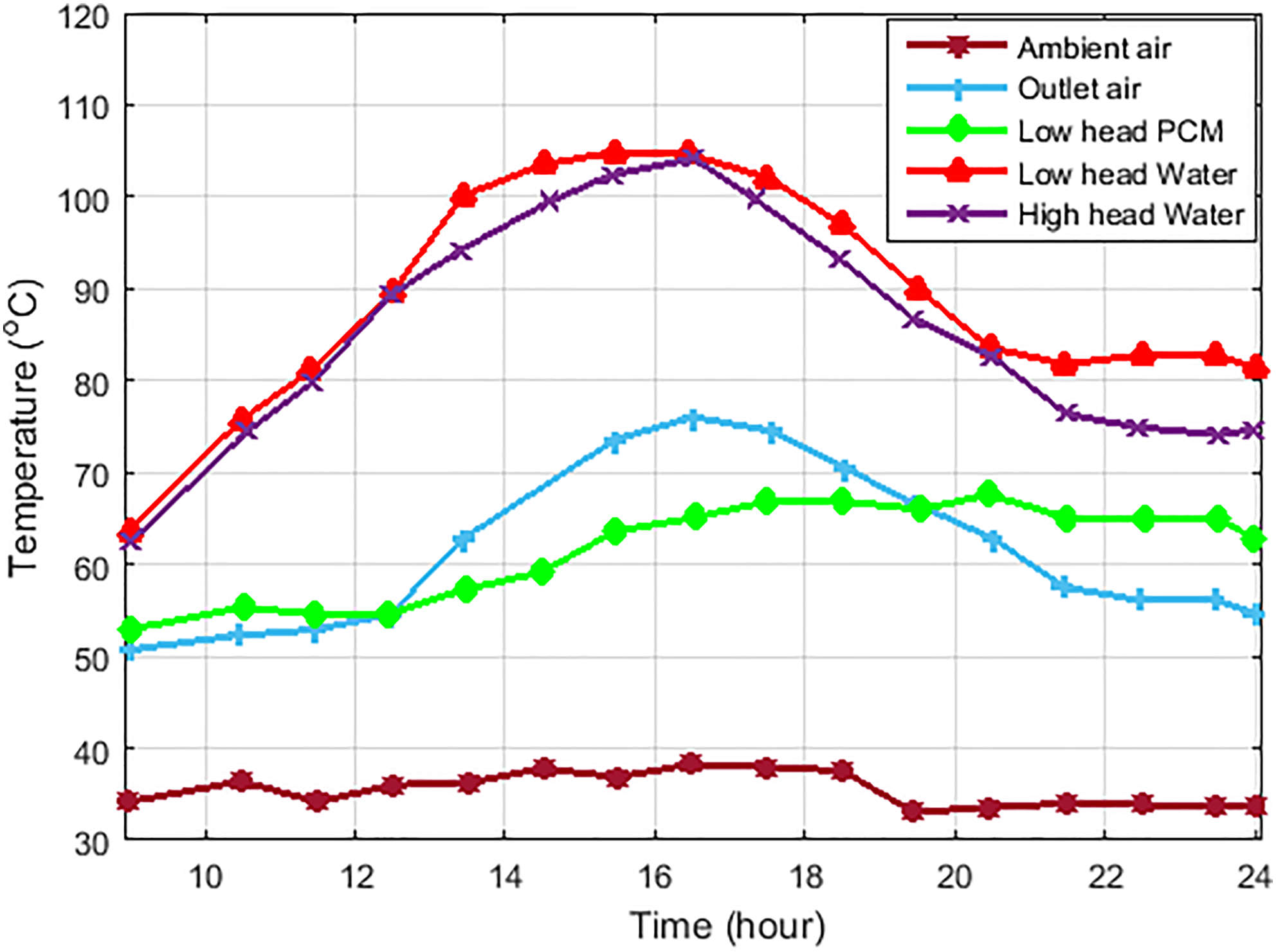
Analysis of the difference in temperatures at 0.018
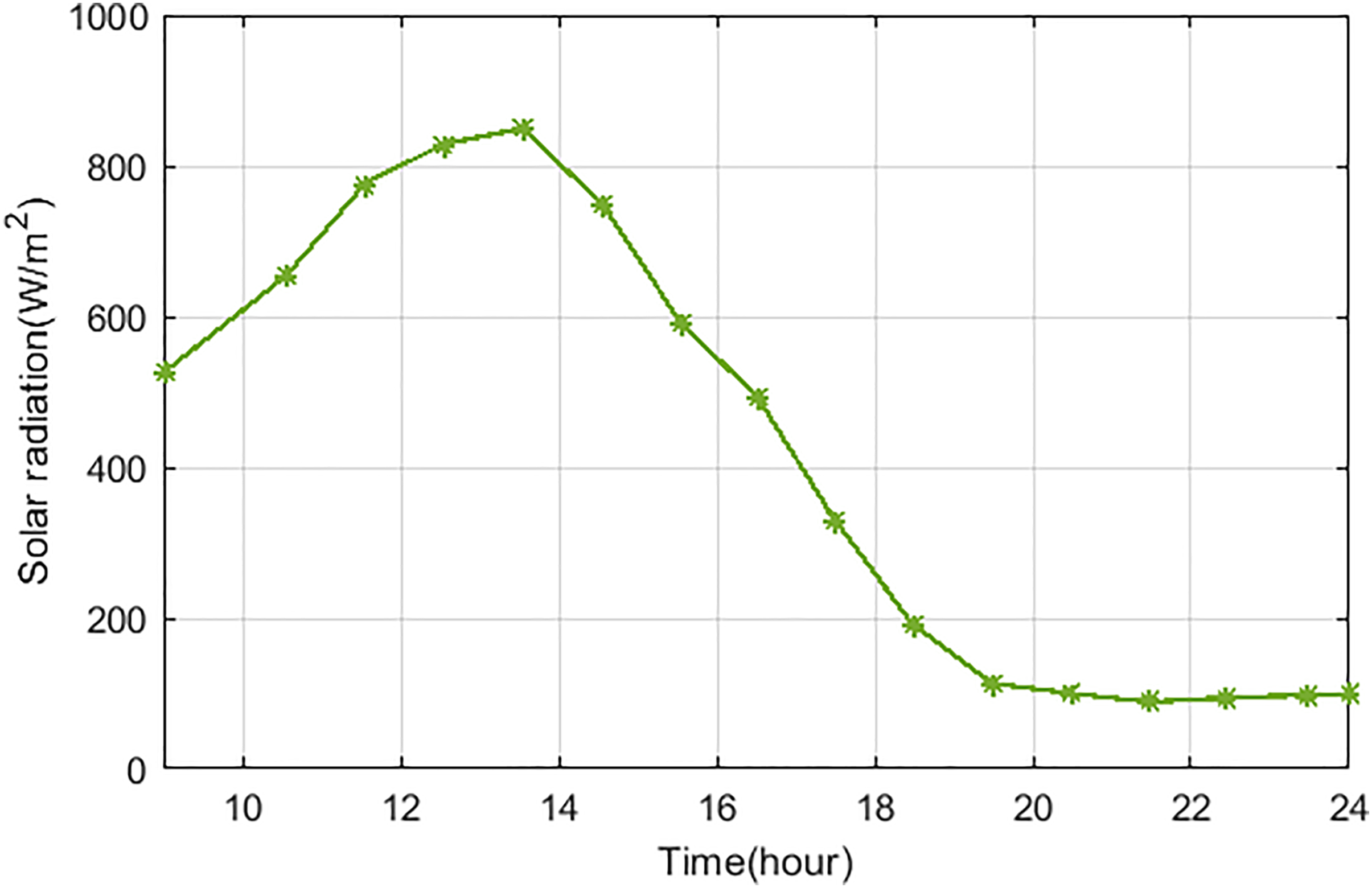
Analysis of irradiance for an ordinary-collector and copper coil at 0.018
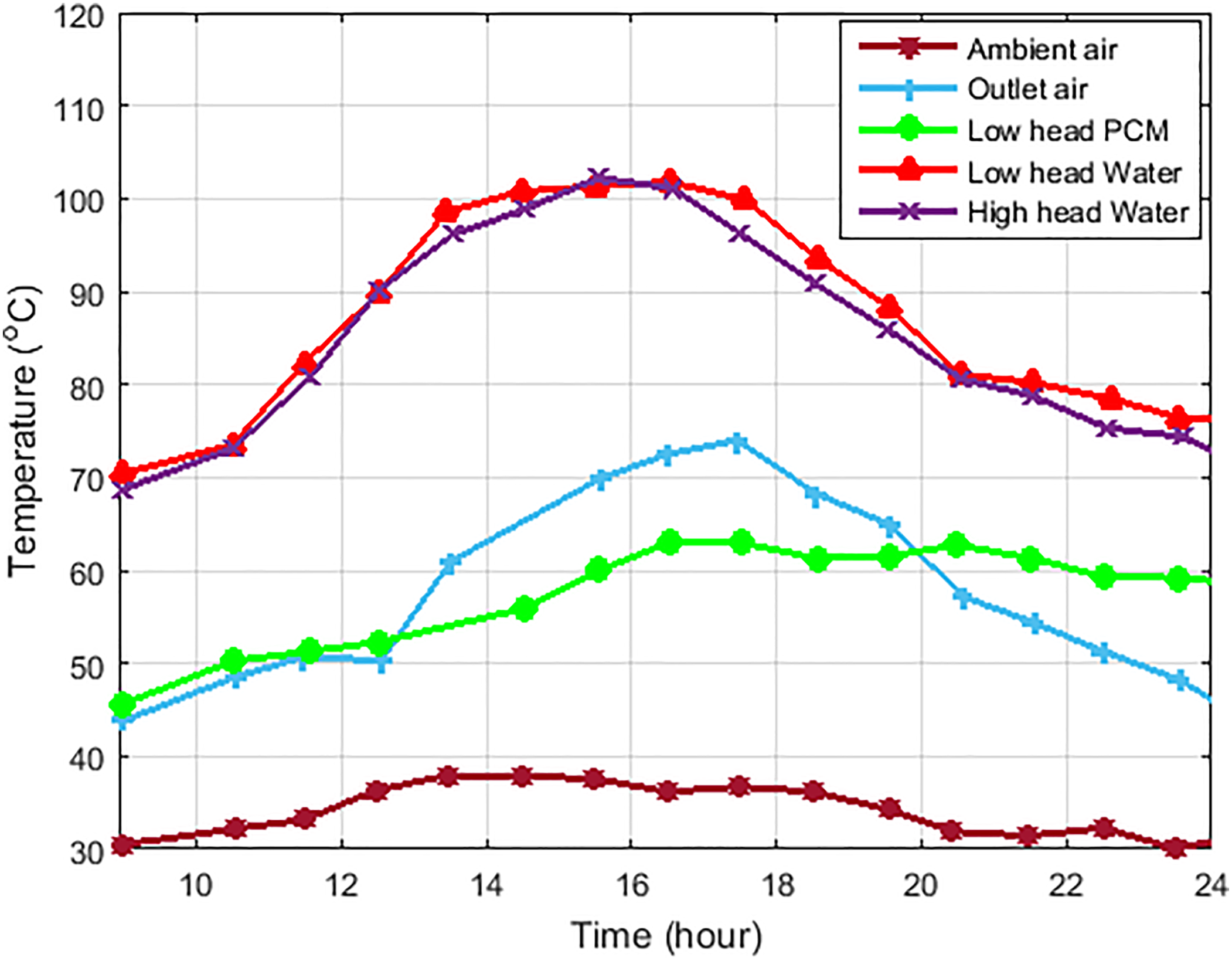
Analysis of temperature for a typical collector at 0.035
Analysis of solar irradiance for ordinary-collector and circular-fin at 0.035
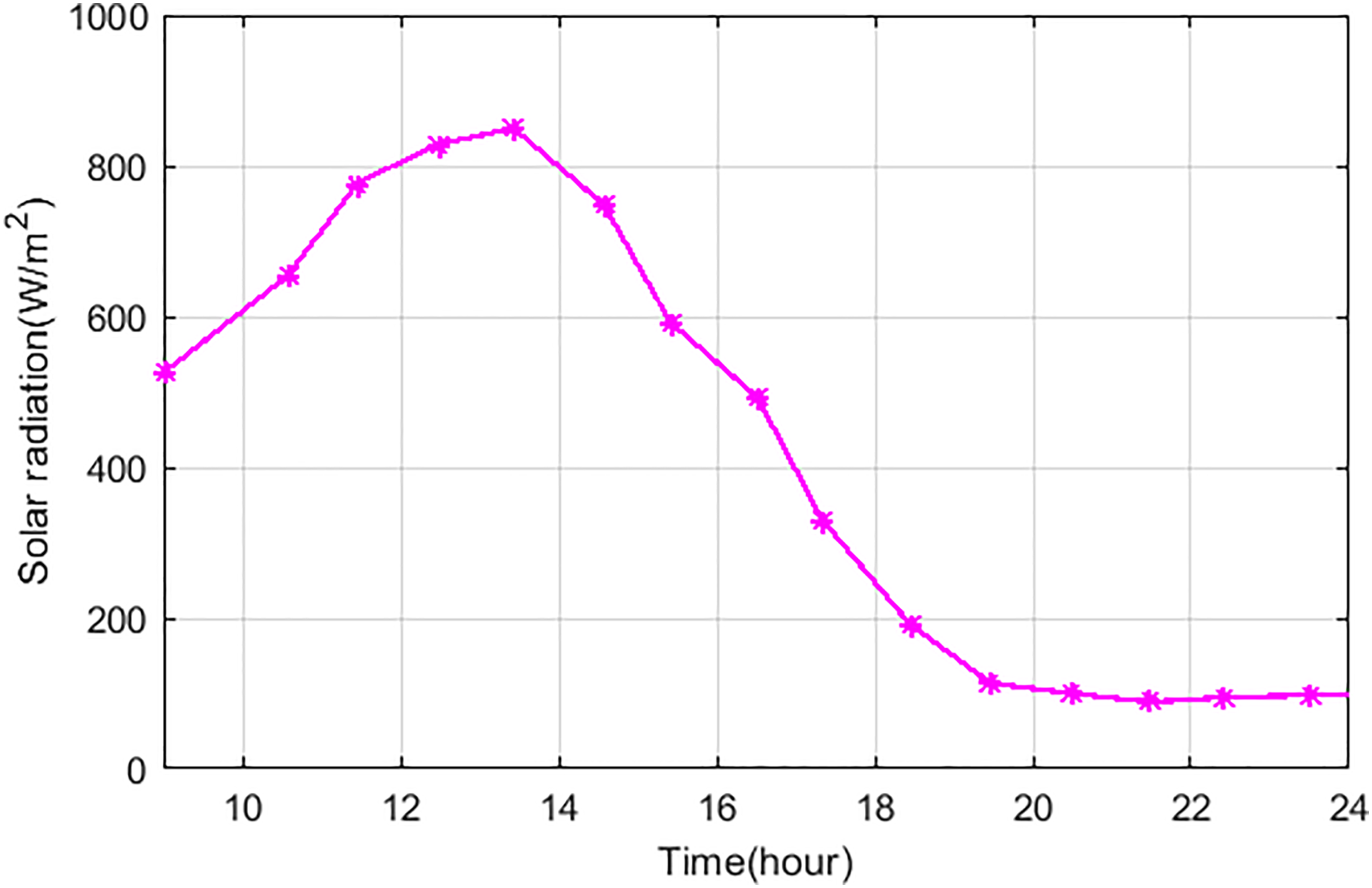
Analysis of solar irradiance for ordinary-collector and circular-fin at 0.035 kgs−1.
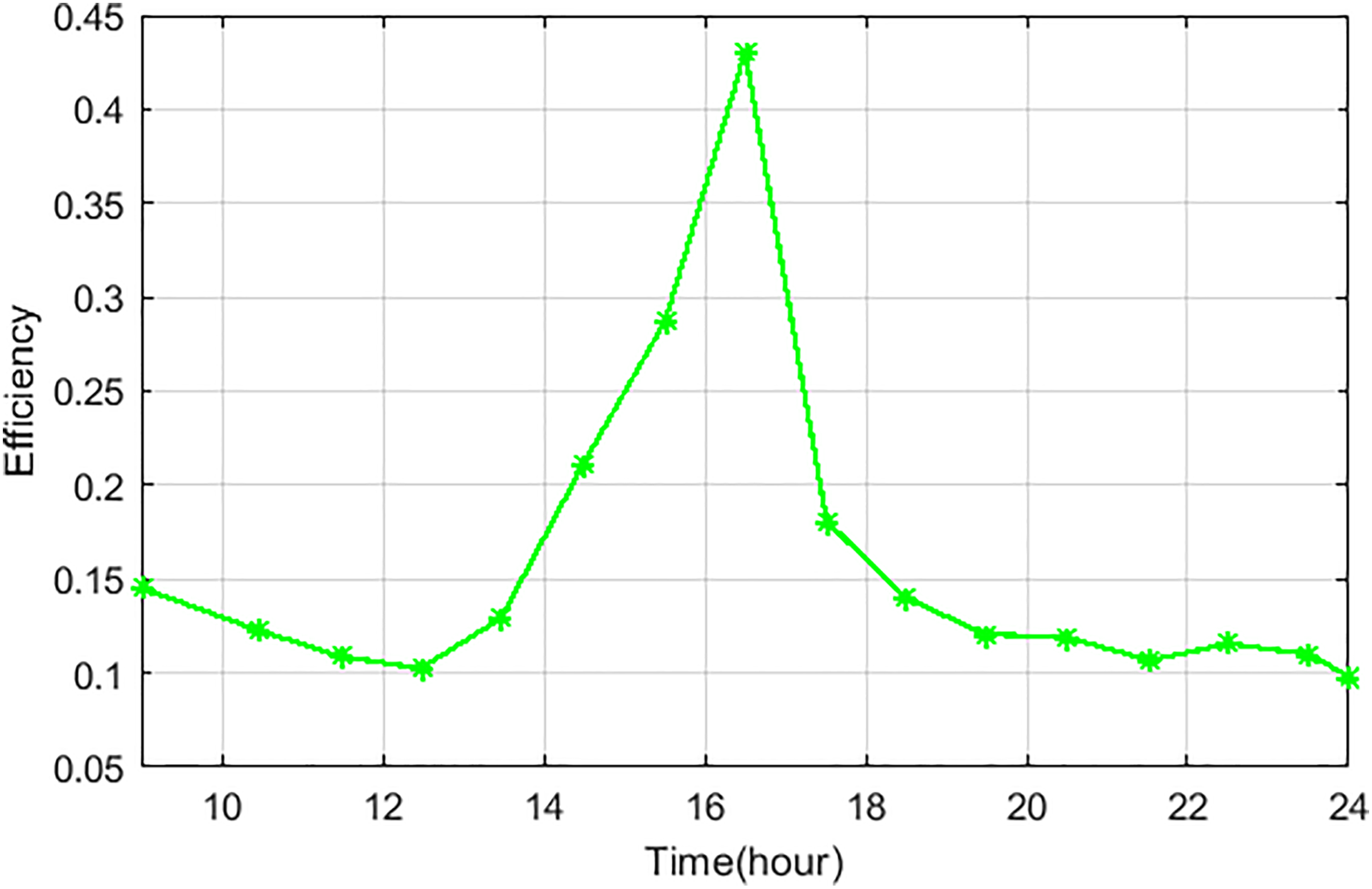
Analysis of effectiveness for an ordinary-collector and copper coil at 0.018
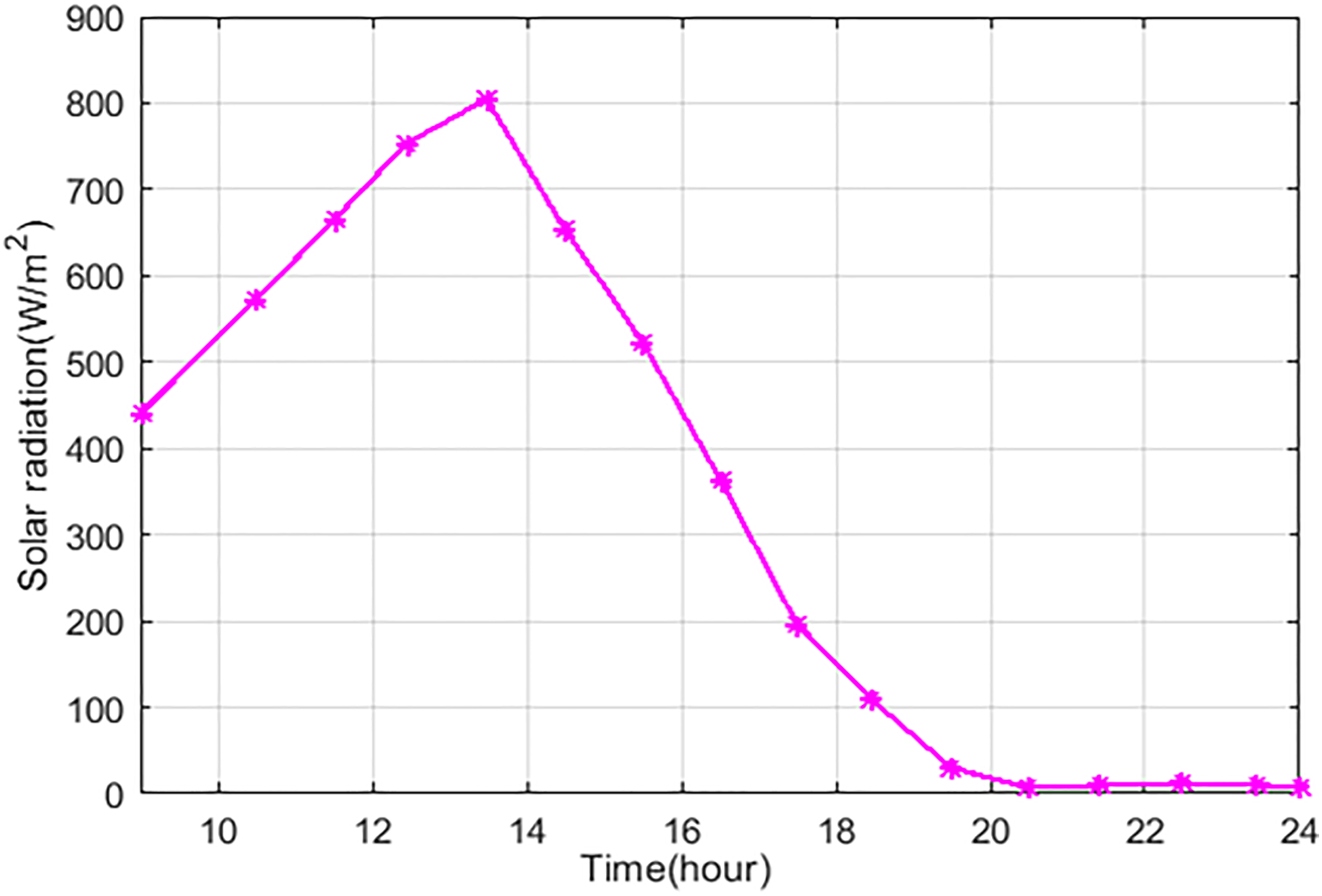
Analysis of solar irradiance for ordinary-collector and circular-fin at 0.018 kgs−1.
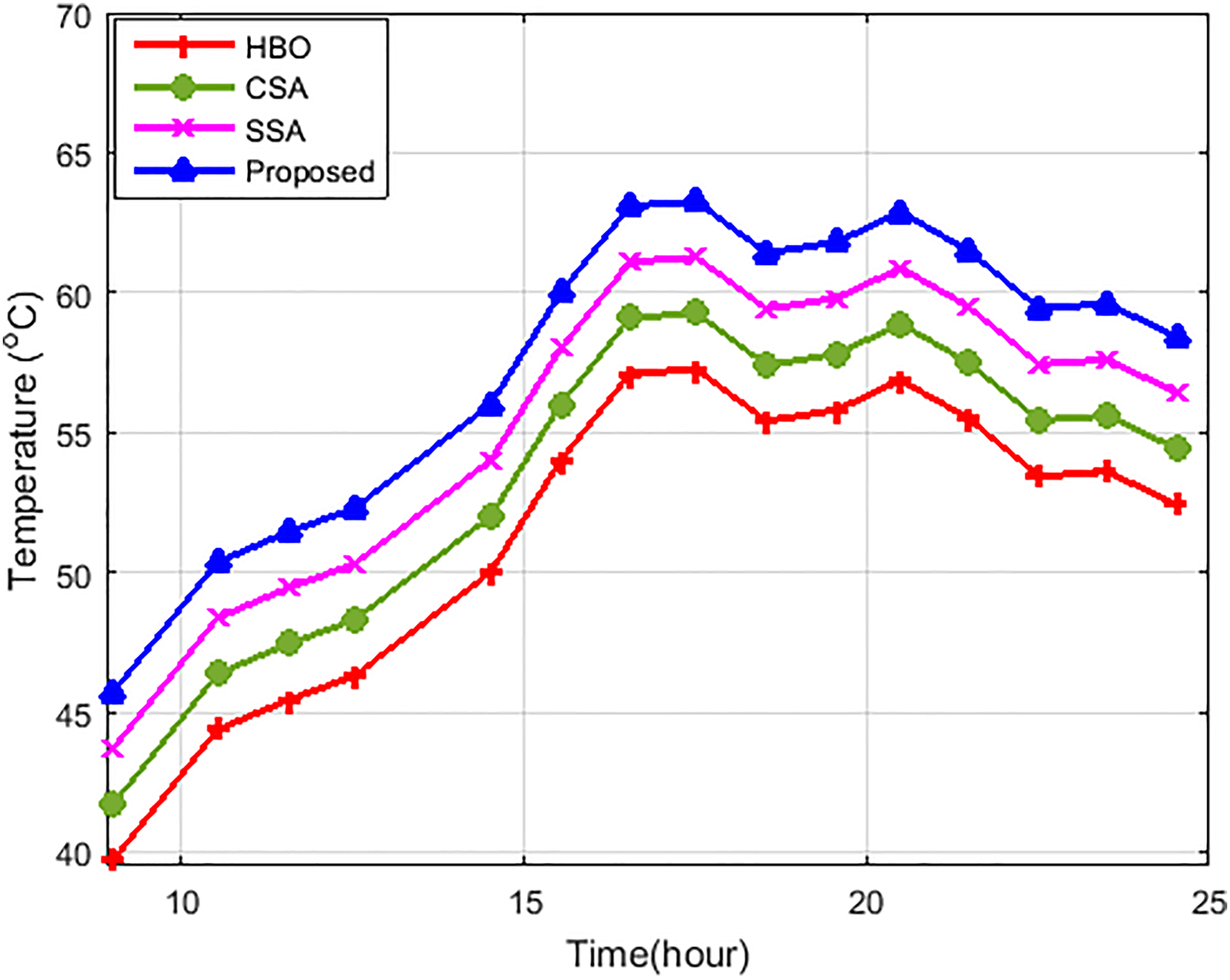
Comparison of temperature with proposed and existing methods.
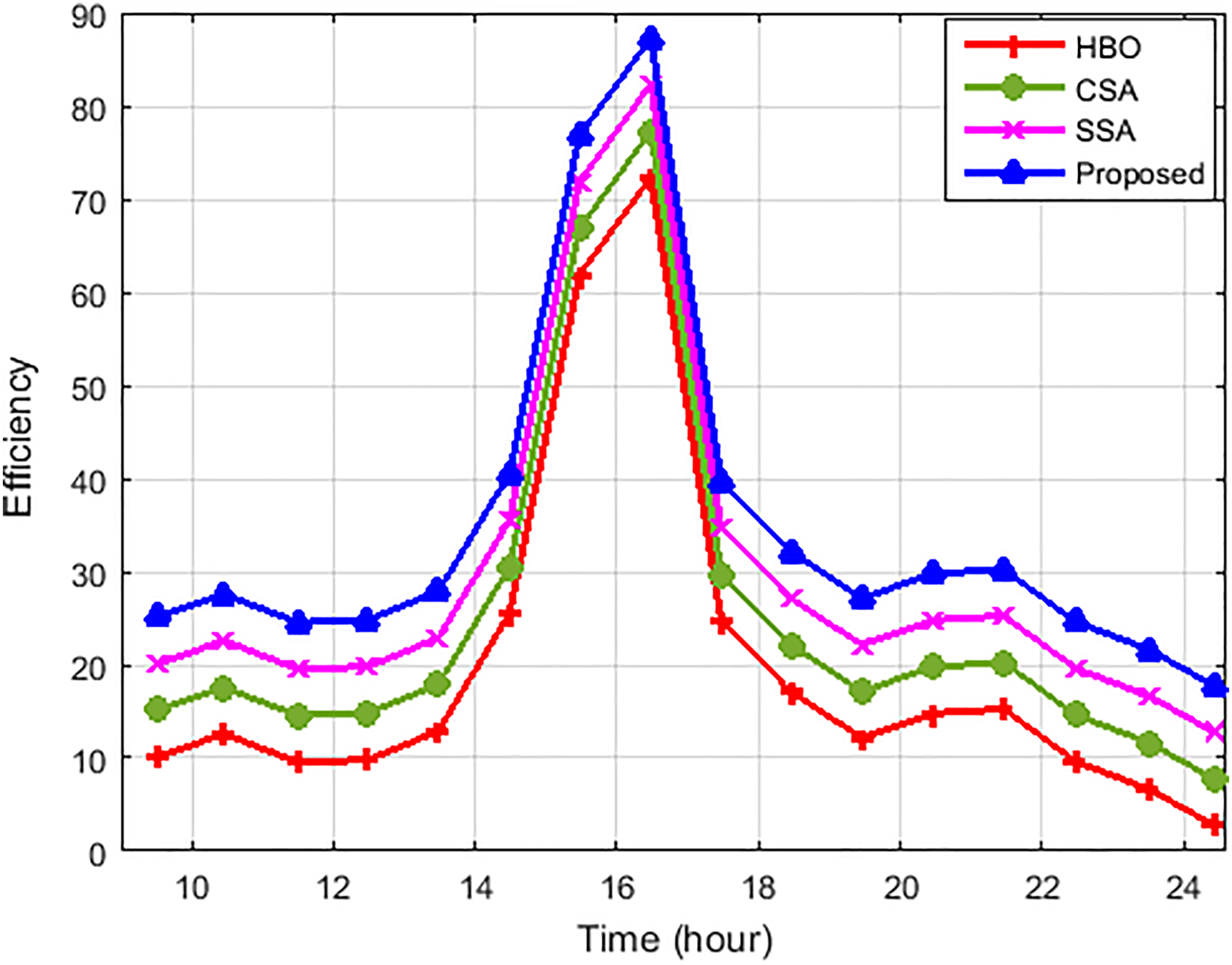
Comparison of total efficiency with proposed and existing methods.
Conclusion
This work examined the performance optimization of a PCM combined with ETC. Here, the system performance is boosted by using the proposed enhanced HBA approach. The system uses a header and a PCM storage unit to store solar energy under incident solar radiation and create hot air under the nonincident solar radiation. The outcome section shows that the maximum efficiency of ETC in less air flow rates is lower than it is at high flow rates. By extending the proposed system's operating hours, the circular fin and copper coils can greatly improve efficiency. The performance of the created system is examined with various flow rates of mass, and the impact of changing the system's thermal performance flow rate is also studied. The proposed system's design and construction can successfully address the issues with conventional evacuated-tube-solar-collectors. The performance of the proposed method is analyzed under ordinary-collector, ordinary-collector with copper-coil, and ordinary-collector with circular-fin. By then the proposed method performance is compared with various existing approaches such as HBO, SSA, and CSA. From the simulation, it concludes that the performance of the proposed method-based efficiency is high than the existing one. In the future, some changes in the design like the use of IoT-based control strategies that can be used to regulate the flow rate of HTF, switching on/off valves, etc., based on the weather conditions during both charging and discharging processes. Different profiles of compound parabolic concentrator (CPC) can be tested with the proposed system for optimizing the geometry in maximizing the useful heat energy gained. Further studies should include the role of reflective coating at nano metric scale on the CPC with the objective of reducing the reflective losses.
Footnotes
Declaration of conflicting interests
The authors declared no potential conflicts of interest with respect to the research, authorship, and/or publication of this article.
Funding
The authors received no financial support for the research, authorship, and/or publication of this article.
