



Abstract
Organic phase change materials (PCMs) have gained huge importance for thermal energy storage systems, but their applicability is restricted due to their low thermal conductivity and hardness. The aim of this research work is to solve the problem by developing a novel organic binary eutectic PCM employing paraffin wax and coconut oil in the eutectic mixture (ratio 1:1) to soften the PCM for thermal comfort applications. 3D expanded graphite (EG) was used as a filler to enhance the thermophysical properties of eutectic-EG PCM composite formed by melt-mixing technique. The percolation limit of EG was 0.5 wt-% to form the thermal network in PCM matrix. The thermal conductivity of eutectic-EG PCM composite enhanced significantly from 0.2 W m−1 K−1 to 0.55 W m−1 K−1 at 2 wt-% of EG in pristine PCM. Differential scanning calorimetry (DSC) was carried out to analyse the energy storage enthalpies and temperatures of composites. The 50 consecutive thermal heating and cooling cycles performed by conventional heating system showed the good thermal reliability of the composite. The numerical 2D simulation was conducted to reveal the heat propagation behaviour in the developed composite with the post-EG addition and to validate the enhanced thermal conductivity results obtained experimentally. The cost analysis results reveals that the cost per mean power of the composite is composite is approximately 100% lower than the pristine PCM. The developed composite's outstanding energy storage property indicates its potential for developing the soft heating pads/cartridges for human comfort and also the solar thermal energy storage applications for medium temperature ranges.
Keywords
Introduction
The global demand of energy surges enormously with the rapid modernisation of industry and the society. To meet this increased energy demand, fossils fuels are being used as the primary sources. However, their vigorous usage not only leads to adverse health and environmental effects, but these are depleting very fast also. 1 Therefore, it is imperative to replace them with renewable and clean energy sources. Solar energy in the form of heat can be utilised as high-quality source, but unfortunately its utilisation is restricted by weather, space, and intermittent nature. 2 The thermal energy storage (TES) systems are the most unique energy storage technique, which improve the renewable source utilisation and enhance energy efficiency. TES technologies are majorly based on three categories: latent heat, sensible heat and thermochemical. 3 The latent heat TES system takes the advantage of phase change materials (PCMs) which absorb and release large amount of energy while undergoing phase transition at nearly constant temperature. Owing to the outstanding heat storage performance of PCMs, they are also extensively utilised in many fields, e.g., solar, 4 electronics, 5 textiles, 6 construction, and so on. 7 Based on the nature of material, PCMs are broadly classified in two major parts: organic (paraffins and non-paraffins) and inorganic (salt hydrate).8,9 The organic PCMs are endorsed due to the properties like less chemical reaction, high energy storage enthalpy and non-toxicity. However, the paraffin (organic PCMs), as individual component is constrained due to the hardness (after solidification) and melting temperature being higher than the human thermal comfort. Successively, this leads to the usage of Eutectic-phase change material (EPCM) because their composition can be tailored as per the desired property. The eutectic PCMs are the mixtures of two or more organic PCMs which melt and freeze at the same suitable eutectic temperature and possess the desirable characteristics for the intended applications. Despite of the significant advantage of eutectic PCM, several technical barriers such as melting leakage and low thermal conductivity, limit their commercialisation. The low thermal conductivity does not allow the heat flux effectively to diffuse and store in the mass of PCM. Hence, the PCM layer which is near the heat source only melts. Therefore, there is need to enhancement in the thermophysical properties of eutectic PCMs which can lead to improvement in performance of the energy storage systems. The most reliable and economical solution is the dispersion of various metal oxides, metal, and carbon-based nanomaterials such as titanium di-oxide (TiO2), 10 copper oxide (Cu), 11 zinc oxide (ZnO), 12 aluminium oxide (Al2O3), 13 silver nanoparticle (Ag), 14 graphene nanoparticles, 15 carbon nanotubes (CNTs), 16 graphene oxide (GO), 17 and graphite's 18 as one of the fillers in the matrix of PCM. Amongst these, the expanded graphite (EG) a carbon-based material is opted as the most active thermal conductor and it offers excellent properties such as high surface area, good thermal stability, high thermal conductivity and 3D complex pore structure which will enhance the thermal storage efficiency of PCMs.
Few outstanding recent research work conducted in the area with an aim to investigate the role of EG in enhancing the thermophysical properties of PCMs are outlined. Kalidasan et al. 19 developed binary eutectic salt hydrate PCM composite for the low temperature thermal regulation systems. The composites were prepared by using the sodium phosphate dibasic dodecahydrate (SPDD) and sodium sulphate decahydrate (SSD) in the 62:38 mass ratios with borax as a nucleating agent and EG as a nanoparticle with concentration ranges from 0.5 to 3 wt-%. The result showed that thermal conductivity was enhanced to 0.855 W m−1 K−1 from 0.453 W m−1 K−1 for 2 wt-% of EG nanoparticles in the base eutectic PCM. Zhou et al. 20 formed PCM nanocomposite using magnesium chloride hexahydrate as the pristine PCM and EG as the nanoparticles for thermal comfort applications. The differential scanning calorimetry (DSC) results showed that the latent heat and phase transition temperature of the developed composites were 144 J/g, and 117 °C, respectively. The thermal analysis showed improvement in thermal conductivity by 7.7 times higher as compared to pristine PCM. Zhang et al. 21 used hydrophilic expanded graphite (HEG) to form the nanocomposite with magnesium nitrate hexahydrate (MNH) by the physical mixing technique to investigate the thermophysical properties. Their DSC results revealed that melting point and latent heat of the developed composite were 89.05 °C and 137.38 J g−1, respectively, and the thermal conductivity enhanced by 5.17 times to that of base MNH. Kalidasan et al. 22 developed the PCM composites by dispersing the graphene silver hybrid nanoparticles at the (1:1) ratio in the SP50 an inorganic salt hydrate PCM. The results shows that the thermal conductivity of the composites enhances to 0.937 W m−1 K−1 from 0.593 W m−1 K−1 for the 0.9 wt-% of hybrid nanoparticles in PCM. Zhang et al. 23 developed organic binary eutectic PCM nanocomposite by using the palmitic acid (PA)/stearic acid (SA) and EG via impregnation method with the optimum absorption ratio of PA-SA: EG = (13:1) by mass. In addition, the thermal cycling test results demonstrated that the developed composites had excellent thermal reliability and remained stable over at 700 thermal cycles. The thermal conductivity of the developed composite enhanced to 2.51 W m−1 K−1, which was much higher than PA-SA (0.26 W m−1 K−1). These results indicated that utilising EG as a supporting material was an effective way for enhancing the thermophysical properties of the material. Yu et al. 24 developed paraffin/expanded composite by melt blending method. The author showed that reducing the EG particle size had a positive effect in the enhancement in the thermal conductivity of the developed composite. In addition, the reduction of particle size led to the reduction in the average heating surface temperature of sample. Ao et al. 25 prepared the nanocomposite by dispersing EG with mass fractions of 8%, 9%, 10%, 11% and 12%, in stearic acid base PCM. The thermal conductivity of the SA/EG-12 (with 12% mass fraction) nanocomposite was enhanced to 6.54 W m−1 K−1, which was 19.179 times higher as compared to pristine PCM. Further, the author showed that the heat storage process (heating/cooling) of the SA/EG-12 was 2.3/3.1 times faster than that of SA.
As discussed above there is an active role of EG as a filler in enhancing the thermophysical properties of organic, inorganic, and eutectic PCMs. However, to the best of our knowledge, no paper is available which provides information on the formation and characterisation of eutectic PCM (paraffin and coconut oil) and EG composite. There is a need to explore the advantages of the eutectic PCM/EG composite in terms of its benefits/applications to meet the medium temperature range 50 to 60 °C for human thermal comfort zone and solar thermal energy storage (STES) purpose.26,27
In the present research work, a binary and homogeneous flexible eutectic PCM was formed by the melt-mixing technique using the paraffin wax and coconut oil in the optimised eutectic mixture ratio 1:1 that possess the desirable characteristics for the intended application. The carbon material EG was assorted as the filler aiming to enhance the very desirable properties like thermal conductivity, thermal stability and reliability in the softened eutectic PCM. The microstructural and morphological behaviour of EG dispersed eutectic PCM was analysed by using scanning electron microscope (SEM). Chemical stability of the eutectic-EG PCM composite samples were investigated using Fourier transform infrared spectrometer (FTIR). The thermophysical properties such as thermal conductivity, thermal stability, latent heat storage potential and phase transition temperature of the developed composites were examined using transient-thermal hot bridge (THB), thermogravimetric analysis (TGA) instrument and also by the heat flow curves obtained from DSC. The reliability of the developed composite was further investigated by measuring its 50 consecutive heating and cooling thermal cycles through the conventional heating system. Furthermore, 2D numerical simulations studies were carried using ANSYS to better understand the heat transfer characteristics in the developed composite with the addition of EG nanostructure. The current research can be explored for various medium temperature applications with different temperature range, such as pads and cartridges for human thermal comfort application in health care, electronic cooling devices (40–75 °C), 28 solar stills (40–80 °C), 29 and battery thermal management (36–67 °C), 30 solar water heating (40–80 °C), 31 and so on.
Experimental details
Materials
A combination of different organic PCMs was used to design and develop a binary eutectic PCM for thermal comfort energy storage application. Technical grade paraffin wax (PW), with melting temperature around 62 °C was procured from the Sigma Aldrich and used as Pristine PCM. Raw coconut oil (brand ‘parachute’, Marico Pvt. Ltd), melting temperature around 20 °C was purchased from the local vendor, to form the eutectic PCM. Expandable graphite flakes procured from Sigma Aldrich were utilised as thermal conductivity enhancer.
Preparation of the expanded graphite
EG was produced through thermal treating of expandable graphite in a muffle furnace. The first step was to dry the expandable graphite in vacuum oven for 15 hours at 60 °C to remove the moisture. Then, a calculated amount of the expandable graphite was kept in a crucible and placed in the muffle furnace at constant temperature of 900 °C. After 1 minute, the crucible was removed and allowed to cool naturally to the room temperature.
Preparation of the eutectic-EG PCM composites
The eutectic PCM was prepared by the melt-mixing technique 32 as shown in Figure 1 using paraffin wax and coconut oil. The solid (5 g) paraffin wax (density = 0.82 g/mL at 20 °C) was first melted above its phase transition temperature by the temperature controlled hot plate. The molten PW was mixed thoroughly with 5 g of coconut oil (density = 0.903 g/mL at 25 °C) by using a magnetic stirrer to develop binary eutectic PCM which was allowed to cool down (solidification) naturally at room temperature. To enhance the thermophysical property of the so developed binary eutectic PCM, the EG nanostructure was opted due to its higher thermal conductivity, its ability to provide large surface area and its 3D complex pore structure for efficient absorption of eutectic PCM. The EG in different weight percentage ranging from 0.5 to 2.5 wt-% was then added to individual molten eutectic PCM followed by vigorous stirring for 20 min to form stable eutectic-EG PCM composites. To obtain the homogeneous dispersion of EG in the eutectic PCM composites, the prepared composites were ultrasonicated for 15 min.
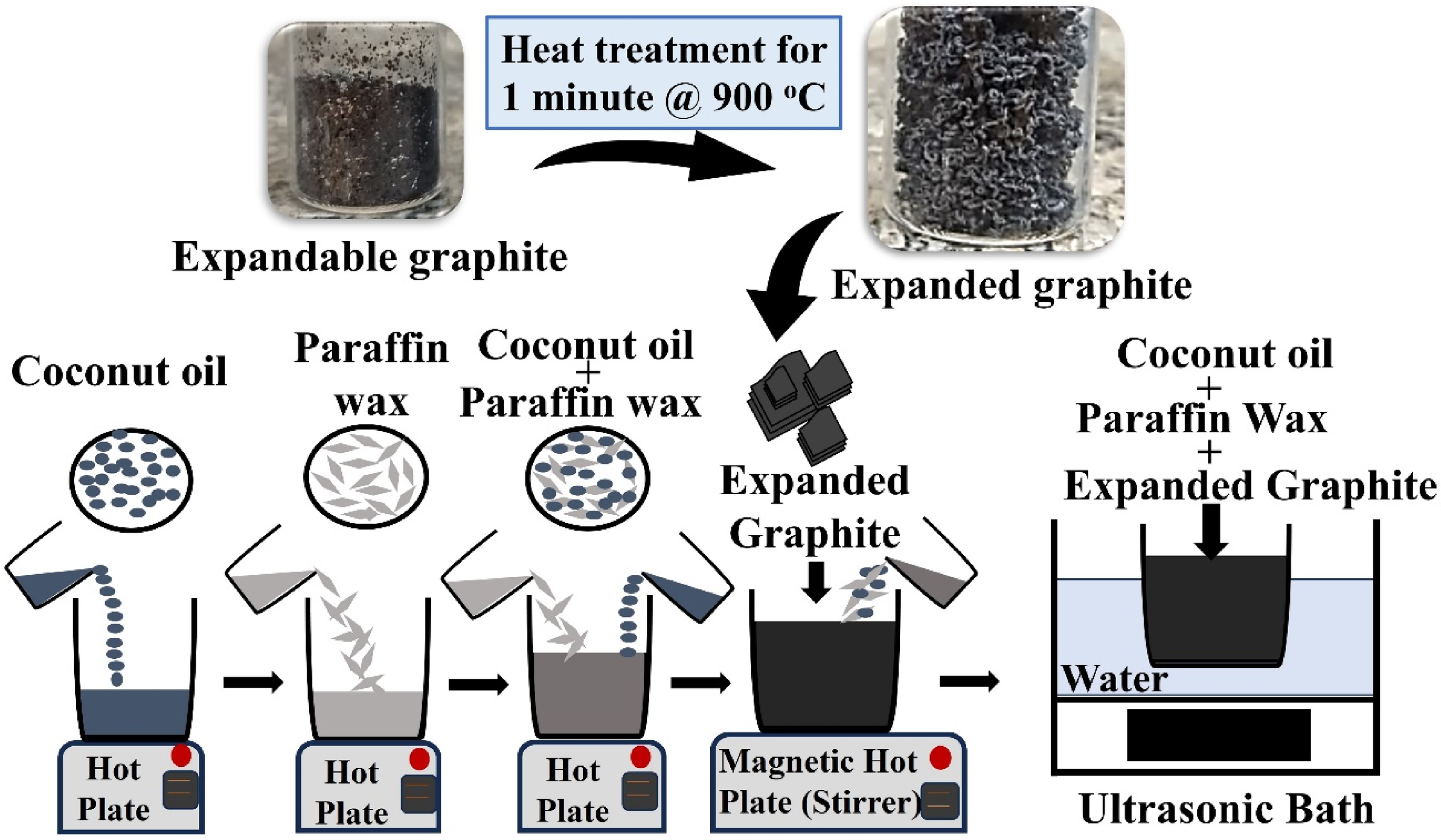
Schematic representation to form the eutectic (paraffin wax + coconut oil)-EG PCM composites.
Characterisation methods
The morphological and microstructure behaviour of EG and its composites with the eutectic PCM were investigated using the SEM (model Zeiss EVO-18). FTIR (Toshvin, DRS-8000A) in the wavenumber range of 4000–500 cm−1 with KBR Pellets was used to analyse the chemical interaction between EG and the eutectic PCM matrix in the as-developed composites. Linseis transient hot-bridge thermal conductivity metre (THB6N43) was used to investigate the thermal conductivity of the as-developed composites under the controlled laboratory conditions. Prior to thermal conductivity measurement, the material was melted and poured into the mould to form the solid brick samples (having dimensions of 8 × 5 × 1.5 cm, respectively), and then each surface of the samples was polished to ensure the good contact between the sensor and the samples. A TGA model (PerkinElmer 8000) was used to investigate the thermal stability of the as-developed composites in the temperature range of 30 to 500 °C at the heating rate of 10 °C/min under nitrogen atmosphere. The DSC (PerkinElmer 4000) was used to analyse the thermal properties of the as-developed composites such as latent heat, melting and solidification temperature in the temperature range of 20 to 65 °C with a scan heating rate of 5 °C/min under the nitrogen atmosphere. Further, conventional heating and real-time solar illumination experimental setup, as reported in our earlier publications 33 were used to investigate the heat transfer properties (charging–discharging) of the as-prepared eutectic-EG PCM composites in comparison to pristine eutectic PCM. Herein, the conventional heating set up was featured in heated-from-below configuration. The eutectic PCM and eutectic-EG PCM composite temperature in the conventional heating experimental setup was measured by inserting the temperature sensor into the material by drilling a small hole on the lid of vial. The temperature readings were recorded by a digital thermometer. During melting processes, the temperature of eutectic PCM and eutectic-EG PCM composite was increased at rate of 2 °C/min. The numerical analysis utilising ANSYS was conducted to investigate the thermal energy storage performance of the developed PCM composites.
Numerical simulation model for heat transfer analysis
The transient (unsteady state) numerical simulation for the melting process of eutectic PCM (paraffin wax and coconut oil) and 2 wt-% EG in eutectic PCM was performed in the rectangular latent heat thermal energy storage system (LHTES) by means of the finite volume solver ANSYS Fluent. In the current study, to further facilitate the understanding, a 2D rectangular domain was adopted for the simulations as shown in Figure 2. The length and width of the rectangular LHTES system were considered as 100 and 50 mm, and the geometry was created by the ANSYS Space Claim. Based on our experimental analysis, we observed that the optimised mass fraction of EG was 2 wt-% for the maximum enhancement in thermal conductivity in eutectic PCM. The obtained stable eutectic-EG PCM composites were considered for the comparative study (simulation) with pristine eutectic PCM. The enthalpy-porosity formulation was used to model the phase change phenomenon. In the rectangular geometry, the isothermal boundary conditions were applied to the right-hand side wall, while the other three walls were insulated, as shown in Figure 2. The uniform mesh structure was opted in the fluid domain configuration for the process. To begin the melting numerical simulation process, we considered the initial temperature of the entire system, i.e., eutectic PCM [case (A)] and 2 wt-% EG in eutectic PCM [case (B)] at 303 K (room temperature). The temperature of the right-hand side wall exposed to heat source was maintained at 343 K, which was above the phase transition temperature of PCM for both the cases. The proposed numerical simulation model for melting process assumes a two-dimensional domain, unsteady state, liquid PCM flow was Newtonian, laminar and incompressible. Thermal properties were considered constant, volumetric changes during phase transformation are ignored, and radiation heat transfer was neglected for simplicity of numerical model, without significant loss in accuracy. The details regarding the numerical procedure, setting and validation may be obtained from our previous work. 34
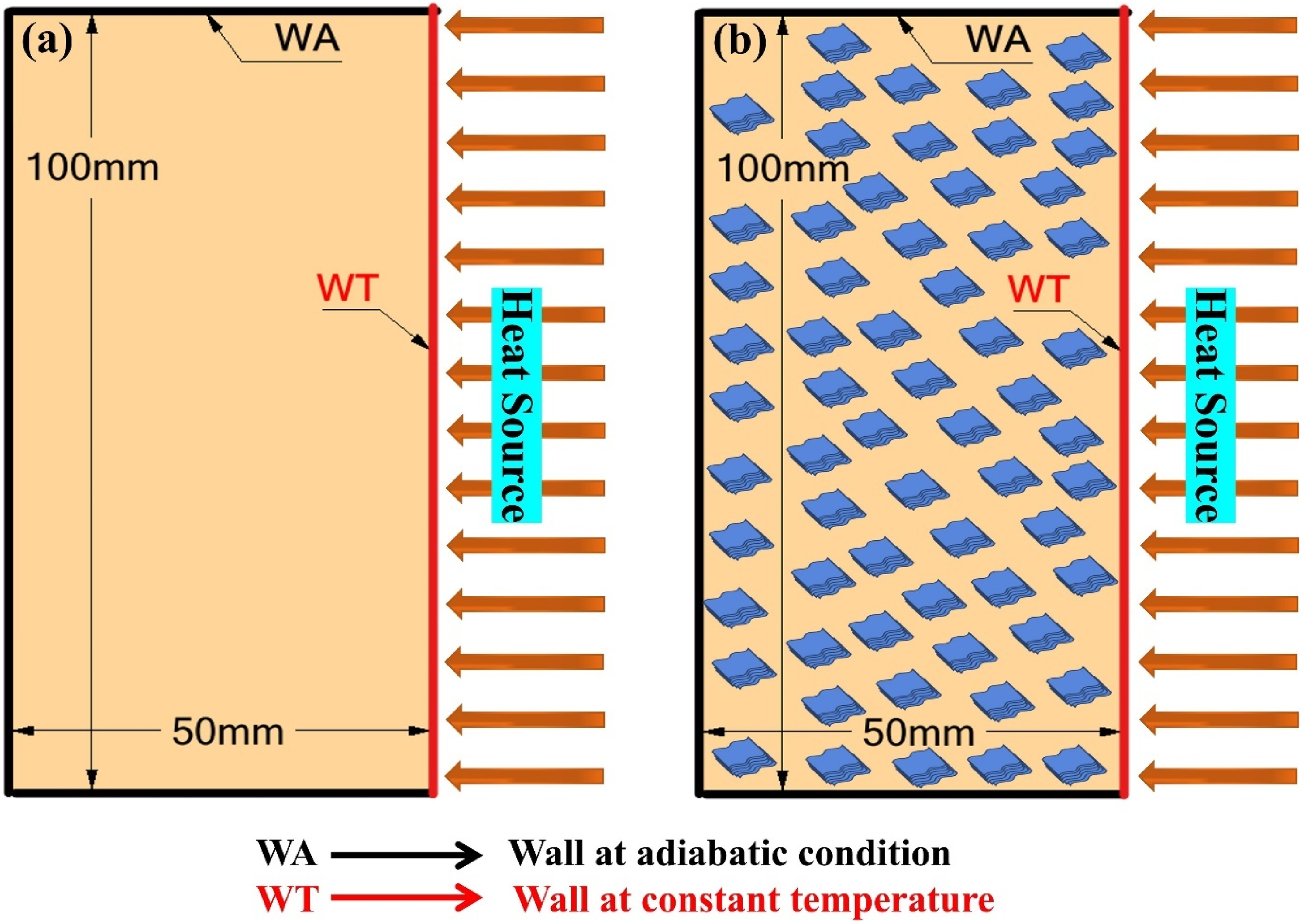
Representation of simulation model for heat transfer of (a) eutectic PCM: case (a), and (b) 2 wt-% EG in eutectic PCM: case (b).
Results and discussion
Morphology and microstructure analysis
The SEM images were taken to understand the morphological behaviour of EG, eutectic PCM and its composites with EG as shown in Figure 3.
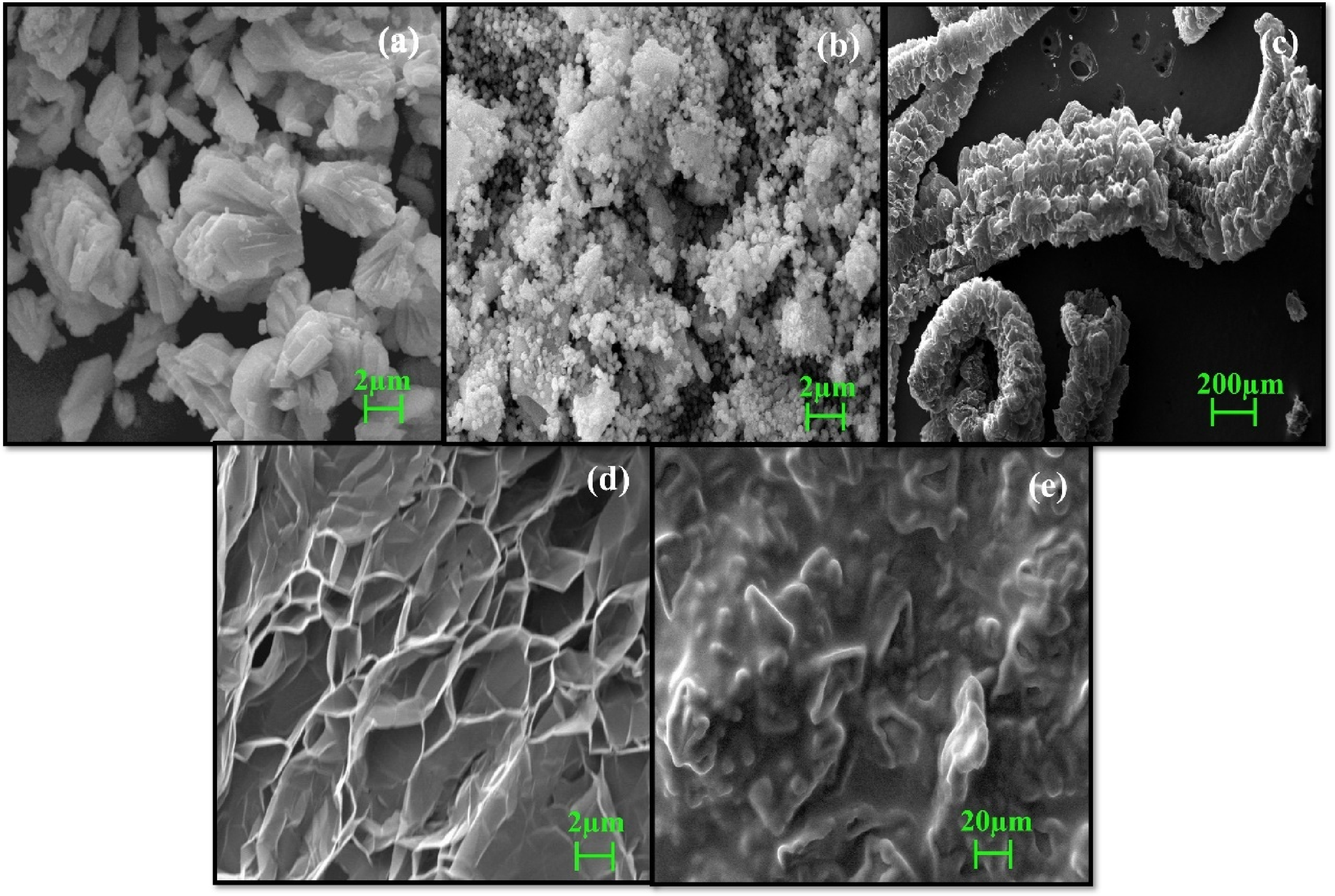
SEM micrograph of (a) paraffin wax, (b) eutectic PCM, (c, d) expanded graphite and (e) eutectic-EG PCM composite.
The micrograph of the pristine paraffin (melted and solidified) displayed the sticky nature of the material, as it belongs to the alkane family group, as shown in Figure 3(a). The micrograph of eutectic PCM (paraffin wax and coconut oil) Figure 3(b), clearly showed a dense structure which confirmed the homogenous distribution of the coconut oil in the paraffin wax. The micrograph of the EG is shown in Figure 3(c) and (d). The EG has a worm-like rod structure as shown in Figure 3(c) and consisted of flake like multiple layered nanosheets which had plenty of crevice-like pores representing a three-dimensional arrangement that could be seen on the surface of EG, Figure 3(d). These EG nanostructures were used as fillers in the matrix of the eutectic PCM. After mixing and ultrasonication with the eutectic PCM, the pores of the EG got filled with the PCM content due to the phenomena of capillary effect and facilitated the formation of percolation network for the better enhancement of heat transfer in multiple directions, as shown in Figure 3(e). In addition, the developed composites showed the homogeneous dispersion of EG and presented good compatibility of eutectic PCM due to phenomena of the adhesion, cohesion, and surface tension derived from EG pores. 35
Structural analysis
To investigate the chemical interaction between the eutectic PCM and EG in eutectic PCM composites, the FTIR measurements were done within the wave number range of 4500–500 cm−1 and the results are shown in Figure 4.
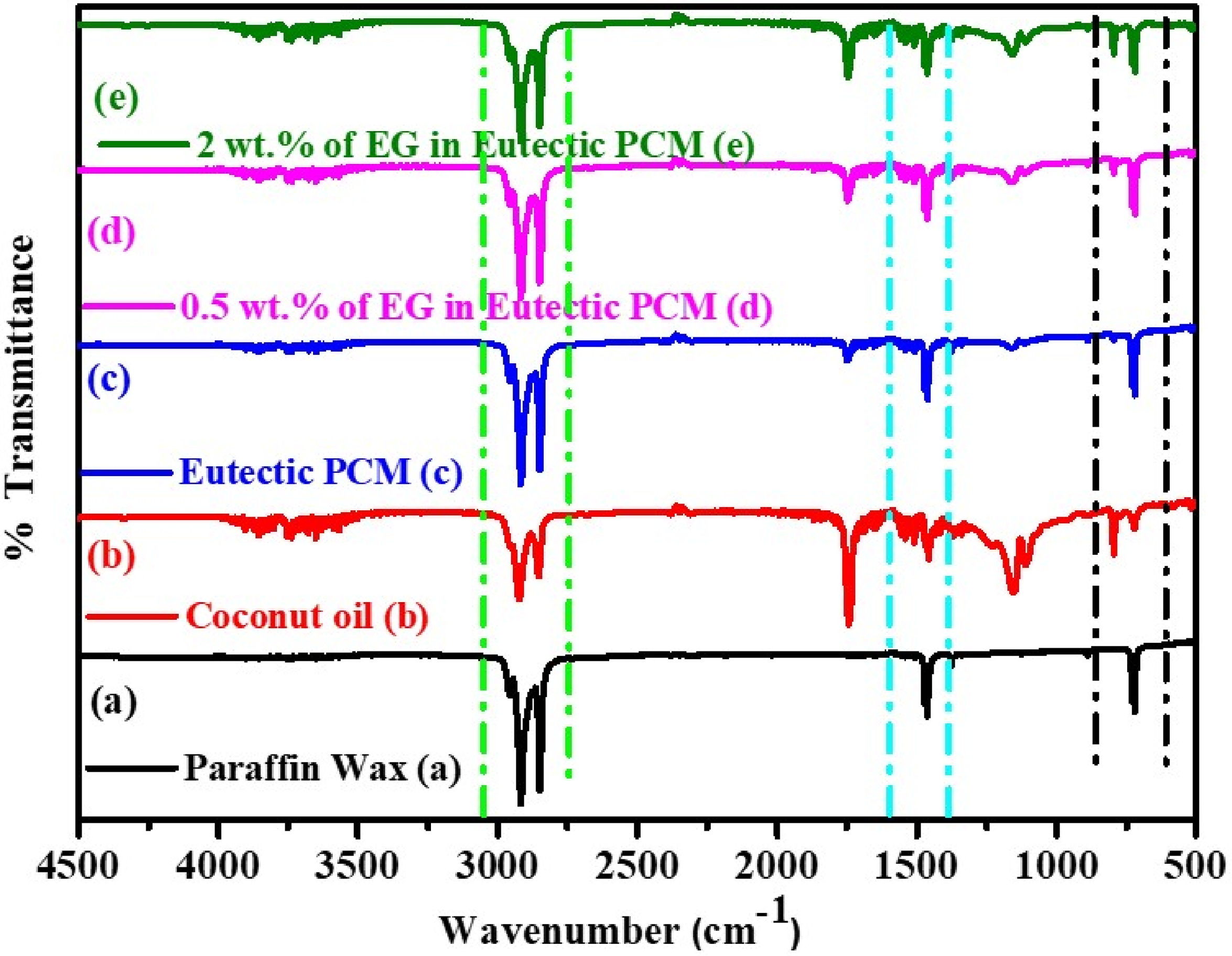
FTIR spectrum of paraffin wax (curve a), coconut oil (curve b), eutectic PCM (curve c) and eutectic-EG PCM composites with 0.5 and 2 wt-% EG (curves d and e).
The FTIR spectrum of pristine paraffin wax (curve a) shows four characteristic peaks for –CH3 symmetric stretching at 2916 cm−1, –CH2 symmetric stretching at 2848 cm−1, a mixture of –CH2 and –CH3 at 1462 cm−1 and a peak at 718 cm−1 for the rocking deformation bending, which are in good agreement with the reported literature. 36 This shows that the investigated sample belongs to the alkane group. The FTIR spectrum of pristine coconut oil (curve b) shows characteristic peaks at 2922 cm−1 and 2850 cm−1 for –CH3 and other peak at 1742 cm−1and 1153 cm−1, 1110 cm−1, obtained by the C=O and C–O bond in the coconut oil. This shows that the investigated sample belongs to the fatty acids. 37 The FTIR spectra of eutectic PCM (curve c) shows both the combined peaks of paraffin wax and coconut oil being obtained in the spectra. This confirms the formation of the eutectic PCM. On comparison the FTIR spectrum of eutectic-EG PCM composites with samples 0.5 and 2 wt-% EG [curve (d) and curve (e)] with the eutectic PCM (curve c) shows no new significant peak or shift in peaks. All the characteristics absorption peak and functional groups have appeared in eutectic-EG PCM composite after the inclusion of EG, with respect to the pristine eutectic PCM. This clearly confirms that no chemical reaction takes place between the EG and the eutectic PCM. Therefore, in the present study, it is confirmed that the EG is only physically mixed in eutectic PCM to form the eutectic-EG PCM composites ensuring good compatibility of the prepared PCM composites. Such finding aligns with the other research groups too.35,38
Thermal conductivity analysis
The heat transfer ability is one of the most significant parameters of PCMs, as the storage and release of thermal energy highly depends on the thermal conductivity for STES system. The main aim of this work is to analyse the effect of thermal conductivity of EG as a filler on the eutectic PCM (paraffin wax–coconut oil). The thermal conductivity of the eutectic PCM and its composites with the EG is depicts in Figure 5(a) and Table 1. The thermal conductivity values at 0.5, 1, 1.5, 2 and 2.5 wt-% of EG in eutectic PCM were 0.24, 0.31, 0.40, 0.55 and 0.45 W m−1 K−1, respectively. The results showed that the thermal conductivity of the eutectic PCM enhanced with the increase in weight concentration of EG up to a certain weight percentage, i.e., 2 wt-% and thereafter falls slightly with further increase in concentration. This enhancement in thermal conductivity adopts a non-linear pattern. However, the thermal conductivity was not affected significantly for less than the 0.5 wt-% of EG in eutectic PCM, i.e., (0.2 and 0.4) wt-%. Therefore, this confirms that the percolation limit to form the thermal network in our typical case is 0.5 wt-%. The maximum thermal conductivity reached 0.55 W·m−1·K−1 at 2 wt-% of EG in Pristine PCM. This increment can be attributed to the homogenous dispersion of high thermal conductivity expanded graphite as a filler in the eutectic PCM. These fillers had created a high thermal 3D percolation network, which developed an efficient pathway for allowing better heat transfer in multiple directions39–41 as shown in Figure 5(b). Further, this enhancement can also be ascribed to the porous nature of the expanded graphite in the composites. The pores in expanded graphite were filled completely with the eutectic PCM (Figure 3(e)) and established the proper contact between the adjacent molecules, so that the effective thermal conductance in the developed composites occurred easily and reached the inner surface of the material for quicker heat transfer. In general, the thermal conductivity in PCM composites highly depends on the two mechanisms: (a) electron transfer (free electron) and (b) phonon transfer resulting in molecular vibrations about their parental sites with different frequencies. 10 However, the heat transfer in PCM composites highly depends on the phonon transfer, while the contribution of the electron transfer is almost negligible. The percentage increment in thermal conductivity with 0.5, 1, 1.5, and 2 wt-% of EG in eutectic PCM were 20%, 55%, 100% and 175%, respectively, as compared to pristine PCM. On the contrary, the added higher weight percentage, 2.5 wt-% of expanded graphite in eutectic PCM, resulted in slight decrease in thermal conductivity from 175% at 2 wt-% to 145 at 2.5 wt-% of EG. This decline in thermal conductivity can be attributed to the sedimentation or agglomeration phenomena, which occurs at a higher concentration of particles. This phenomena in particles bring about the non-uniformity in the composites, which leads to the breakdown of the active 3D thermal conducting channels in the matrix and thus reduced the heat transfer property within the composites.39,42 The results presented here, are in good agreement with the other researcher groups.19,36,43 Initially, the phonons propagating through the matrix from one particle to another in between them and the interface resistance between the particle/matrix and amongst particles are responsible for the effectively heat transfer in PCM-nanocomposites. However, the increase in concentration of the expanded graphite at higher weight percentage develops a high thermal boundary resistance, which impedes the propagation of low acoustic phonons in the percolation matrix formed by the fillers in the PCM matrix. 44 This develops the hotspots due to phonon-phonon and phonon-impurity scattering and resists the heat conductance which in turn reduced the thermal conductivity of the composites. 19 Thus, in the particular case, 2 wt-% may be the appropriate concentration of expanded graphite to offer the better thermally conductive network for effective heat transport in the so-formed typical eutectic-EG PCM composites.

(a) The measured thermal conductivity of eutectic PCM (A) and eutectic-EG PCM composites with different wt-% [0.5 (B), 1 (C), 1.5 (D), 2 (E) and 2.5 (F) ] of EG, and (b) schematic representation of thermal conductivity enhancement mechanism on addition of EG in eutectic PCM.
The thermal conductivity of eutectic-EG PCM composites.

Heat transfer characteristics
The energy storage (charging) and release (discharging) rates are one of the crucial parameters of PCMs that control their performance in thermal energy storage applications. The heat transfer characteristics of eutectic PCM and eutectic-EG PCM composites with the increasing weight concentration of EG ranges from 0.5 to 2.5 wt-%. was evaluated at a slow heating rate of 2 °C/min with the help of a conventional heating system and depicted in Figure 6(a). At the initial stage of the melting cycle, both eutectic PCM and eutectic-EG PCM composites were kept at the room temperature. The results showed that on increasing the weight concentration of EG from 0.5 to 2 wt-% in eutectic PCM, a significant decrease in the charging time to reach the melting point was observed in comparison to base eutectic PCM. The respective % decrease in the melting time to complete the melting process of all samples (B–F) inferred from the melting curve, as shown in the inset (b) of Figure 6. The % reduction in charging time with 0.5, 1, 1.5, 2 and 2.5 wt-% of EG in eutectic PCM for melting complete process are 12.2%, 24.56%, 28.07%, 31.57% and 29.82%, respectively, as compared to pristine eutectic PCM. The enhancement in the heat transfer rate in the developed composites can be attributed to the addition of inherent high conducting enhancer and higher aspect ratio (surface to volume ratio) of expanded graphite as a filler that develops a better thermal network, which in turn reduced the melting time significantly. However, as mentioned previously this slightly decline in % reduction in melting time of 2.5 wt-% EG in eutectic PCM can be attributed to agglomeration and clustering of particles leading to settling and formation of disrupted thermal network for heat transfer. This time save to complete the melting process of eutectic-EG PCM composites with added wt-% fraction of EG correlates well with the thermal conductivity results as shown in Figure 5(a). Similarly, the cooling curves (discharging) of eutectic PCM and eutectic-EG PCM composites are shown in Figure 6(b). The results show the similar behaviour in terms of time, like the charging curve i.e., the cooling time of eutectic-EG composites reduced with increasing the wt-% of EG nanostructure. These results indicate that the addition of expanded graphite in eutectic PCM improves the heating and cooling process which is also reflected in the terms of thermal conductivity enhancement. Thus, our developed soft composites would be more efficient in thermal energy storage systems, thereby improving the overall energy utilisation efficiency.
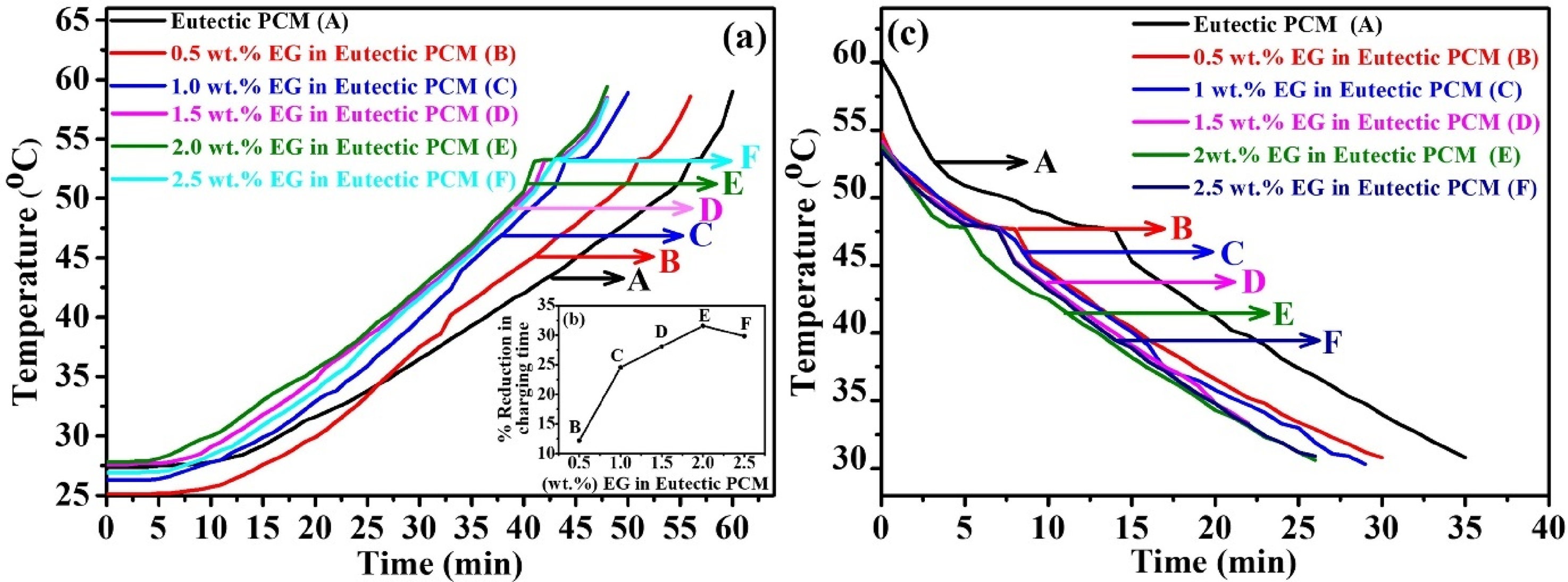
(a) Melting curve and (c) solidification curve of, eutectic PCM (A) and eutectic-EG PCM composites at different wt-% [0.5 (B), 1 (C), 1.5 (D), 2 (E) and 2.5 (F)] of EG, respectively. (Inset (b) sequential % reduction in charging time of eutectic-EG PCM composites.)
Thermal stability analysis
Thermal stability is also another crucial parameter to ensure the durability and reliability of material for thermal energy storage system. TGA was used to investigate the effect of expanded graphite on the thermal stability of the eutectic composites. The thermal decomposition curve for the eutectic PCM and its composites with different wt-% concentration of EG are shown in Figure 7. The thermal decomposition process for all the samples showed the one-step degradation process corresponding to the weight losses with increase in the temperature and were in close proximity to each other.42,45 All the respective samples (A–F) showed no loss in weight fraction below the 200 °C indicating the thermal stability up to this point. However, the weight loss in the range of 87% to 89% was observed in the temperature range of 200–400 °C, which can be attributed to the decomposition loss. The onset degradation temperature for the respective samples (A–F) were 211 °C, 213 °C, 214 °C, 215 °C, 219 °C and 205 °C, respectively. The onset temperature of the samples greater than that of the eutectic PCM suggested better thermal stability. The results revealed that the thermal stability of eutectic-EG PCM composites increased slightly with the addition of the EG. The region beyond 400 °C represents the residual amount after the decomposition of the PCM. On the contrary with 2.5 wt-% of EG in eutectic PCM a decrease in the thermal stability was observed indicating a complete degradation ahead of the eutectic PCM. This can be attributed to the agglomeration and clustering of the particles in the sample at the higher concentration. Our results are also in close agreement with those reported by other research groups. 36 It is very interesting to note that the prepared composites maintained a constant nature when operated below the temperature range of 200 °C. The long-term stability of 2 wt-% of EG in eutectic PCM composite was also studied before and after 50 thermal heating and cooling cycles as presented in Figure S1 (supporting information). The results show that the composite does not show any significant degradation / variation and confirms that it is quite stable even after 50 thermal cycles. By further analysing the FTIR spectra before and after 50 thermal cycles of the composites as shown in Figure S2 (supporting information). The result reveals that the chemical structure of the composite also remained stable. Hence, the composite would be very beneficial for the application in medium temperature STES systems. 46

TGA curve of eutectic PCM (A) and eutectic-EG PCM composites at different wt-% [0.5 (B), 1 (C), 1.5 (D), 2 (E) and 2.5 (F)] of EG.
Thermal properties
The energy storage density in PCMs is one of the most important thermophysical parameter to evaluate the potential of material in latent heat storage system. The DSC technique was used to examine the thermal energy storage property of pristine paraffin wax, eutectic PCM and eutectic-EG PCM composites during the charging and discharging process. Herein, the main aim of this study is to investigate the effect of expanded graphite on the thermophysical properties including the phase transition temperature (melting / solidification) and latent heat capacity (melting and solidification) in eutectic PCM. The DSC result of Paraffin wax is shown in Figure 8. The curve represents the two endothermic transition peaks. The first peak shows the solid-solid transition which represents the rearrangement of the molecular structure from the ordered structure to the distorted structure. 47 The second peak represents the solid -liquid transition which involves the large absorption of the latent heat during the phase transformation and its of particular interest for the development of energy storage systems. The DSC showed that the latent of melting (Hm) and solidification (Hc) were 141.6 and 137.9 kJ·kg−1, respectively, while melting (Tm) and solidification (Tc) temperature were 63 and 57 °C, respectively. According to the company's specification, the melting temperature of pristine paraffin wax is in the range of 62 to 65 °C. It is very important to maintain the melting point within the range to ensure its functionality for a particular application. The DSC melting enthalpy curves of eutectic PCM (a) and eutectic-EG PCM composites at different wt-% [ 0.5 (b), 1 (c), 1.5 (d), 2 (e) and 2.5 (f)] of EG are shown in Figure 9. The curve (a) represents the eutectic PCM, reveals the melting temperature (Tm) and latent of melting (Hm) were 56.7 °C and 122.3 kJ kg−1, respectively. The eutectic PCM showed good miscibility as reflected through a single endothermic peak obtained in the curve as also reported by Kalidasan et al. 17 The observed melting latent heat enthalpy for the 0.5, 1, 1.5, 2 and 2.5 wt-% of EG in eutectic PCM were 119.6, 108.4, 96.03, 83.39 and 81.66 kJ kg−1 considering the onset between 30 and 60 °C. The addition of EG reduces the melting latent enthalpy of the composites. It may be attributed to the introduction of non-PCM to the PCM which has no effect on the phase changing process. The dispersed EG affects the local bonding environment between PCM matrix and filler interrupting the melting process. Similar findings were also reported in literature, but our results presented here are slightly better and showing improvement in thermophysical properties. Xie et al. 48 developed the salt hydrate eutectic with the (1:1) mass fraction of Na2SO4.10H2O-Na2CO3.10H2O with the latent of melting (Hm) and solidification (Hc) reported to be 195.3 kJ kg−1 and 135.6 kJ kg−1, respectively. Addition of expanded vermiculite as a nanomaterial in eutectic, the latent of melting (Hm) and solidification (Hc) too dropped down to the 113.0 kJ kg−1 and 79.6 kJ kg−1. Also, Liu et al. 49 developed a novel microencapsulated phase change material based on n-eicosane core and a phenol-formaldehyde resin shell (MicroEPCM) modified by nano-SiC. The DSC results show that the phase change enthalpies of the MicroEPCM modified by nano-SiC are lower than those of unmodified MicroEPCM.
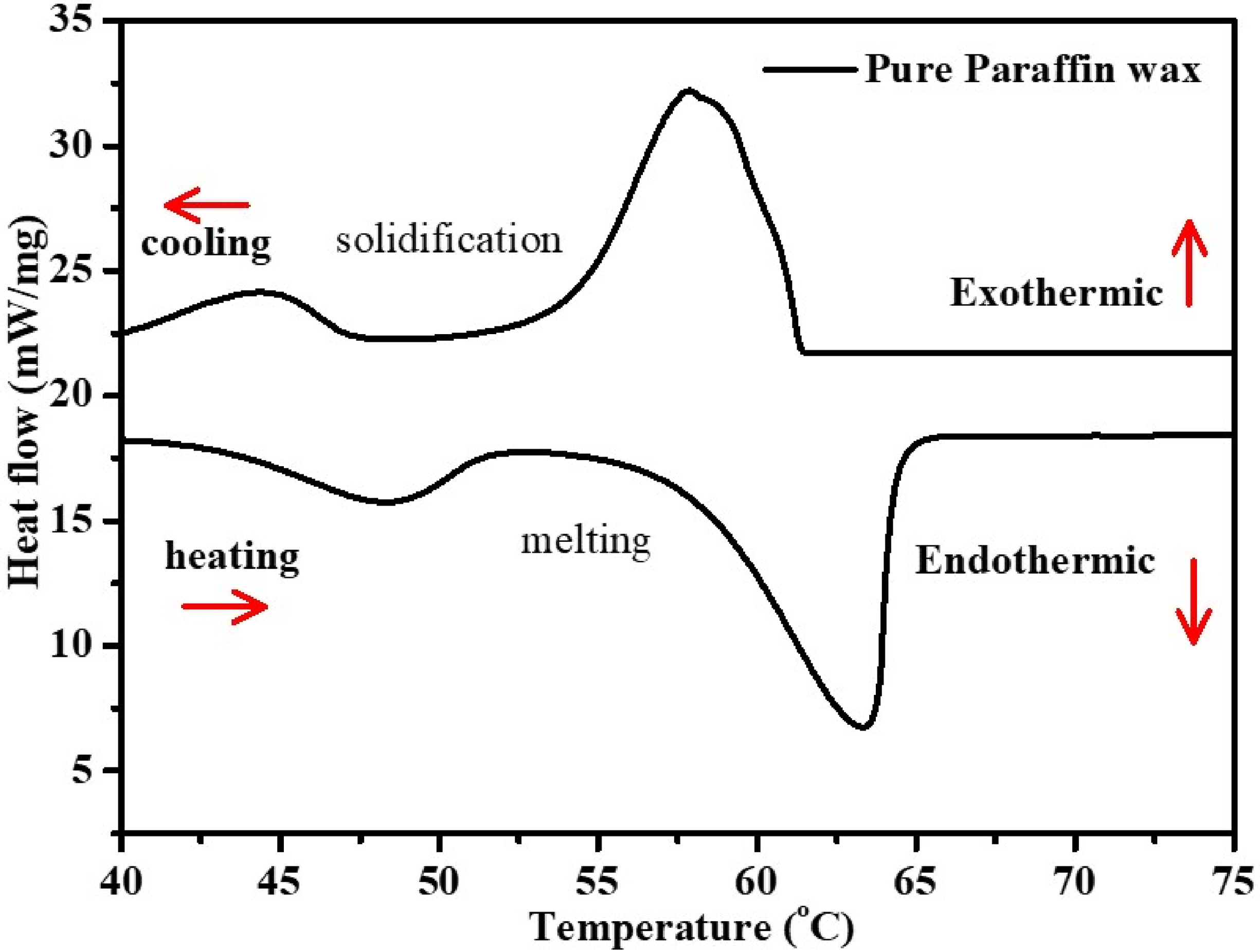
DSC heat flow result of pure paraffin wax.
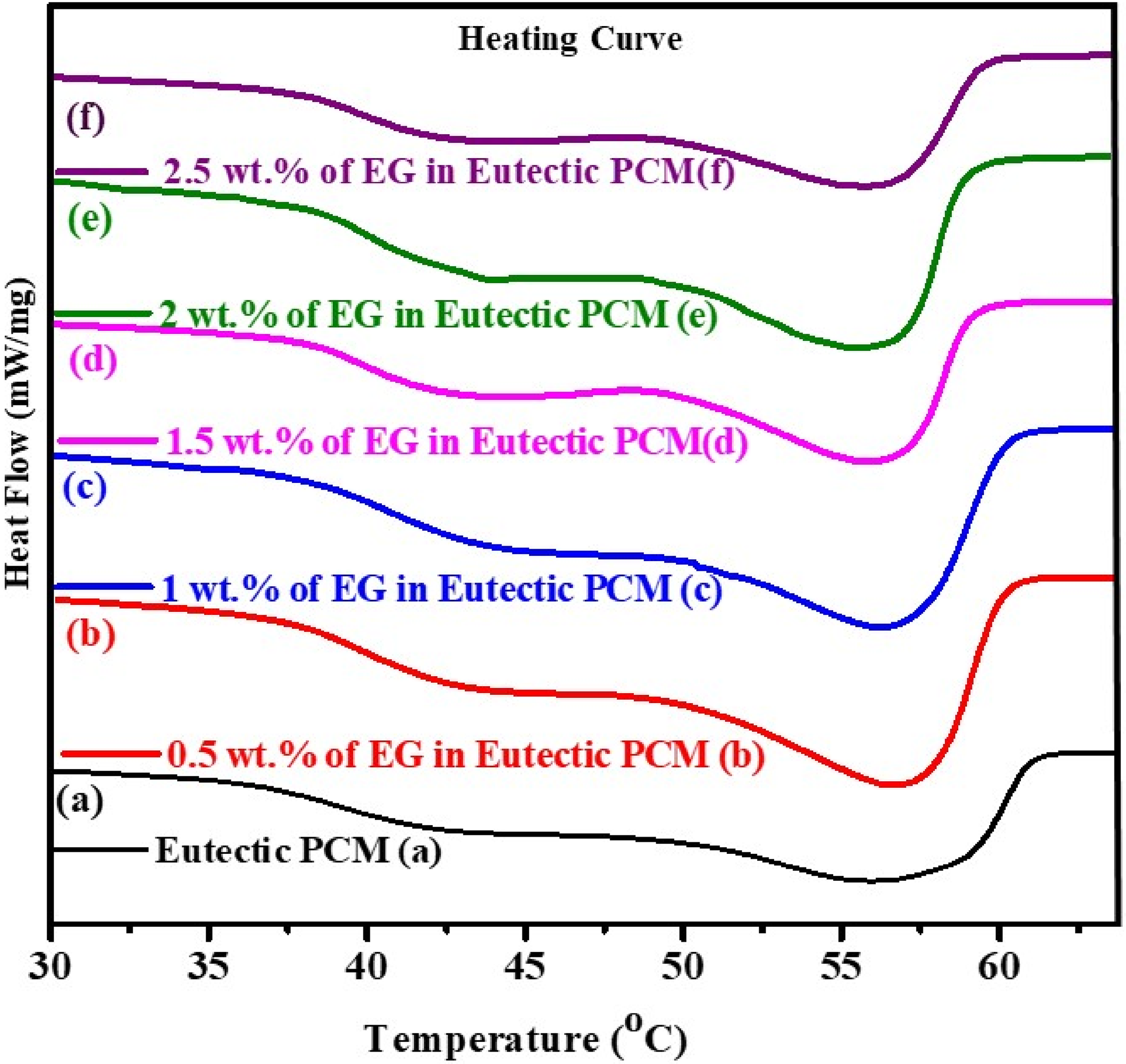
DSC heating curve of eutectic PCM (a), and eutectic-EG PCM composites at different wt-% [0.5 (b), 1 (c), 1.5 (d), 2 (e) and 2.5 (f)] of EG.
Further, the solidification enthalpy curves of eutectic PCM (a), and eutectic-EG PCM composites at different wt-% [ 0.5 (b), 1 (c), 1.5 (d), 2 (e) and 2.5 (f)] of EG are shown in Figure 10. The curve (a) related to the eutectic PCM reveals the solidification temperature and latent of solidification were 52.8 °C and 115.1 kJ·kg−1, respectively. The observed solidification latent heat enthalpy for the 0.5, 1, 1.5, 2 and 2.5 wt-% of EG in eutectic PCM were 110.84, 102.3, 93.21, 90.1 and 88.08 kJ·kg−1, respectively. The solidification enthalpy curves of the eutectic-EG PCM composites show similar behaviour to that of melting enthalpy curves of composites. These results suggests that the EG is not significantly contributing to the latent heat. However, the observed decrease in latent energy can be balanced against the substantial increase in thermal conductivity by many folds, leading to an enhancement in the overall efficiency of the thermal energy storage system. The thermal properties inferred from the DSC curve of the Pristine PCM, eutectic PCM and its composites with EG inferred are summarized in Table 2.
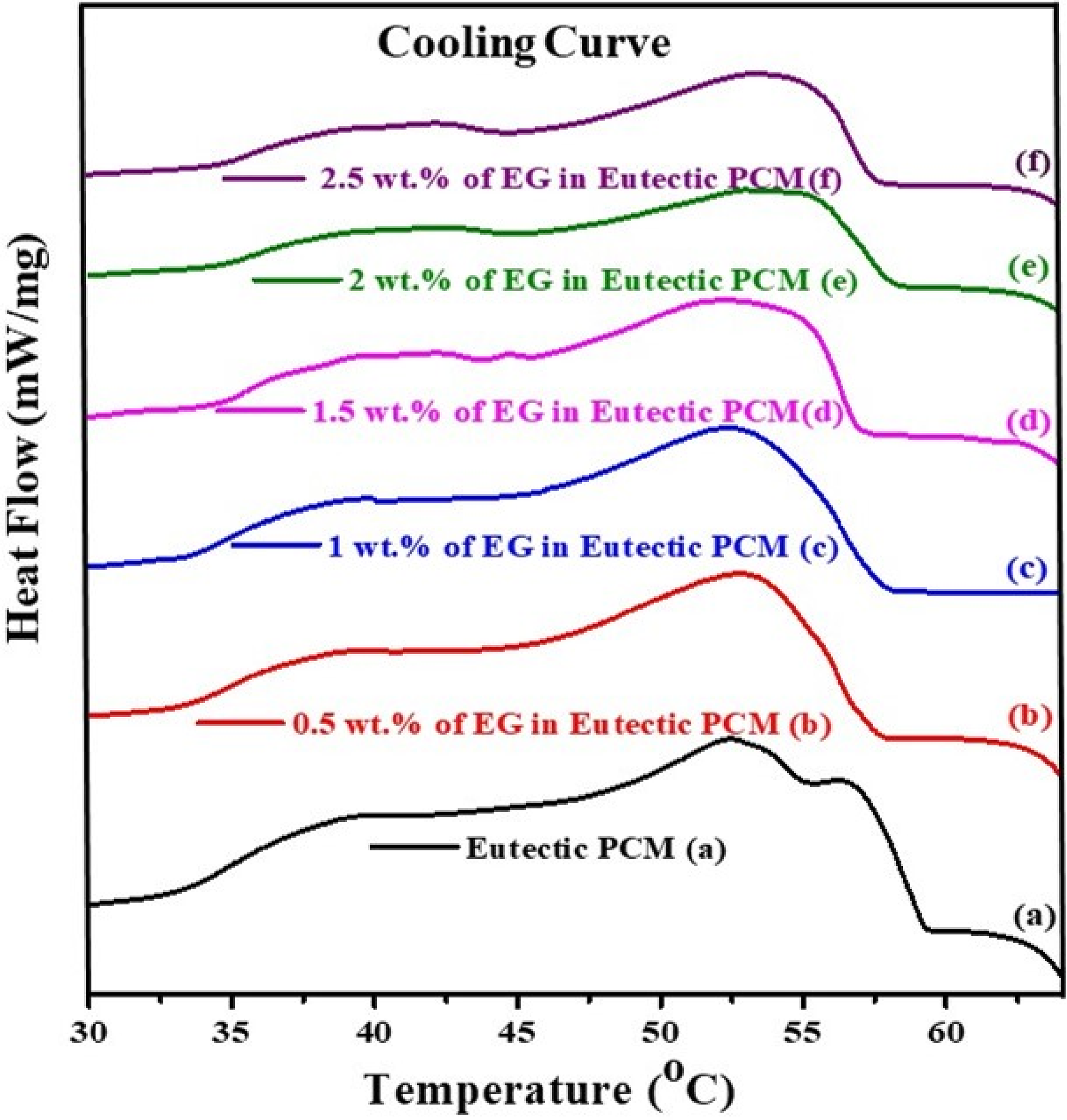
DSC cooling curve eutectic PCM (a), and eutectic-EG PCM composites at different wt-% [0.5 (b), 1 (c), 1.5 (d), 2 (e) and 2.5 (f)] of EG.
Thermal properties for pure paraffin wax, eutectic PCM and eutectic-EG PCM composites at different mass fraction of EG.
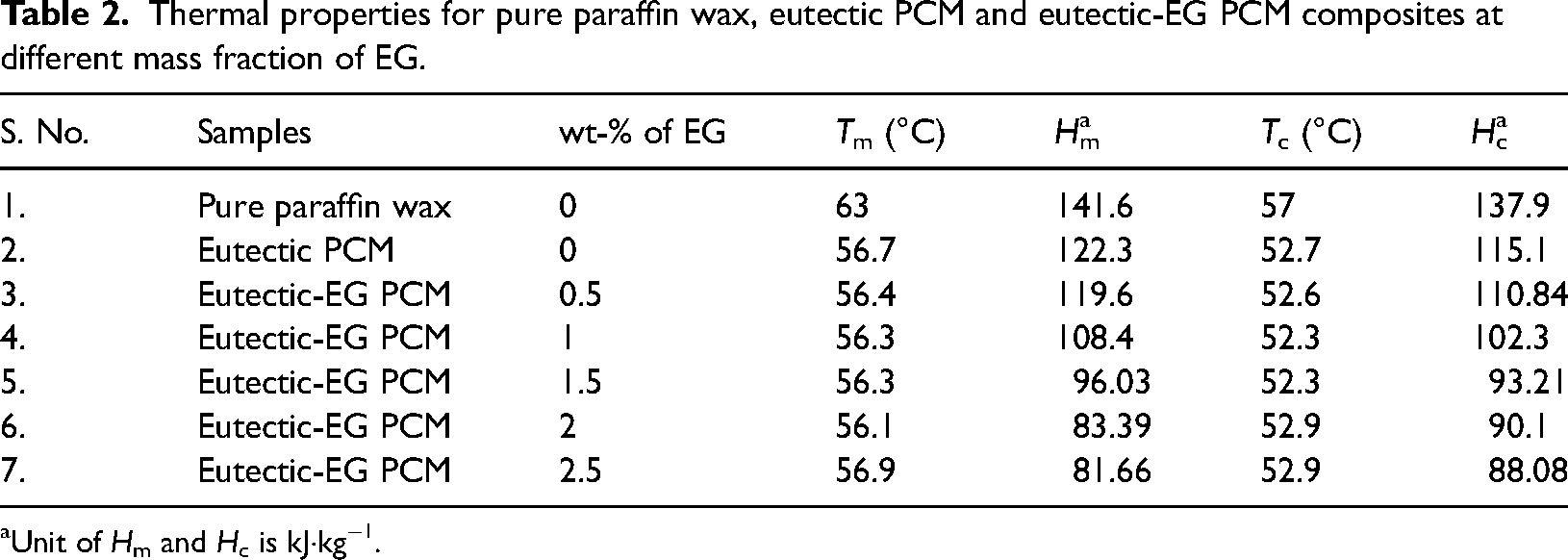
Unit of Hm and Hc is kJ·kg−1.
Furthermore, apart from most crucial thermal parameter, latent heat of PCM, there is another important parameter, i.e., specific heat of the materials/composites. The specific heat (Cp), only plays a role in storing the energy in sensible heating zone and this stored energy is relatively small as compared to the energy stored in latent heat during the phase change. The specific heat of paraffin and coconut oil is 2.38 kJ kg−1 and 3.23 kJ kg−1 respectively, in case of their solid phase, whereas, under liquid phase, their values are 2.1 kJ·kg−1 and 2.35 kJ·kg−1, respectively.50,51 Thus, the specific heat capacity of the mixture/composite material, CpEut, can be calculated as a mass-weighted average of the specific heat capacities of the individual components
52
by using the following equation (1).
Simulation analysis for energy storage and heat transfer in eutectic and eutectic-EG PCM compostie
To have indepth understanding of heat flow rate and it's mechanism, herein we have performed the simulation analysis using ANSYS. Figure 11(a) represents the liquid fraction versus time history for 60% melting of case (A): eutectic PCM, and case (B): 2 wt-% EG in eutectic PCM. The study showed that for 0.60 liquid fraction, the melting rate of case (B) was enhanced and the total melting time decreased by 50.57% in comparison to case (A). This enhancement can be attributed to the increase in thermal conductivity by the addition of expanded graphite which developed thermal percolation network for better heat transfer. Hence, with the passage of time both the curves diverged because of the difference in the melting rates for both the cases. The heat transfer rate in PCM is crucial factor for the storage and release of energy. The Figure 11(b) depicts the instantaneous average temperature vs time history for both the cases. At time interval of 5160 s the case (B) shows 60% melting of the PCM with an average temperature of 332.93 K, while the case (A) shows the 28.6% melting of PCM with an average temperature of 322.23 K. This implies that heat cannot penetrate deep inside the PCM quickly in case (A) due to the inherent lower thermal conductivity. Therefore, in case (A) the liquid PCM moves towards the sensible heating with slow melting of PCM as compared to case (B).
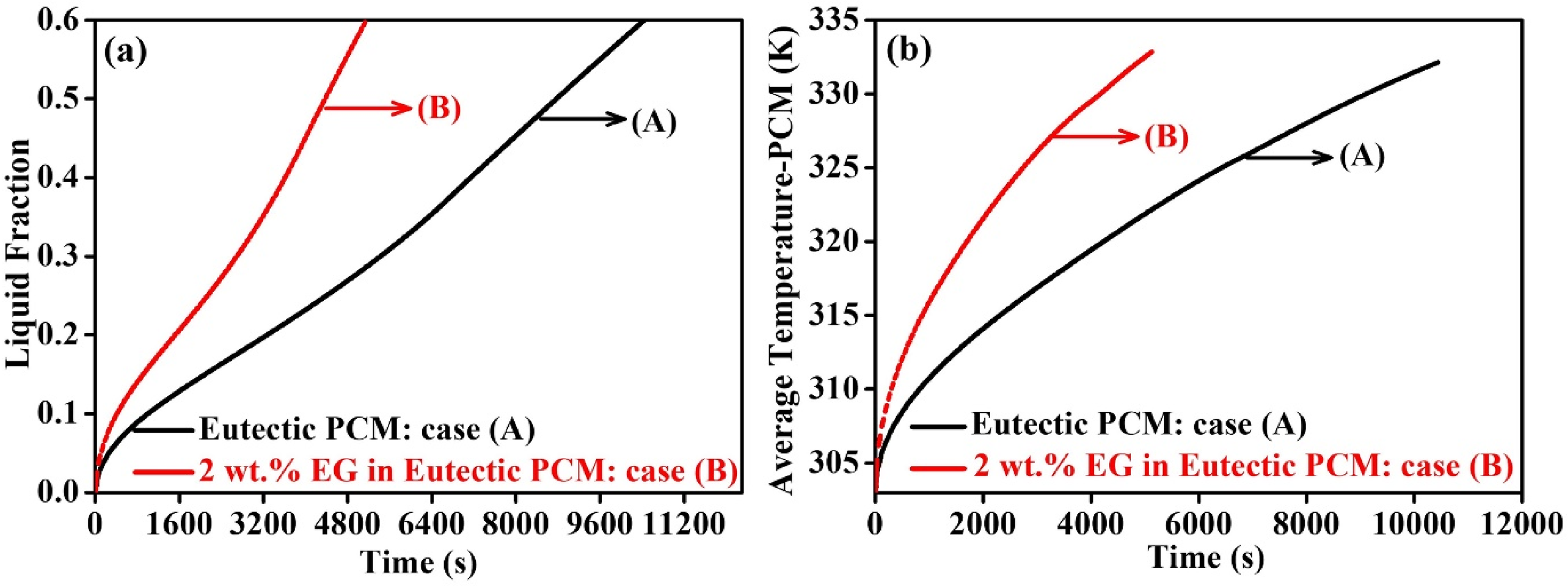
(a) Liquid fraction vs time history; and (b) average temperature vs time history; of case (A): eutectic PCM, and case (B): 2 wt-% EG in eutectic PCM, respectively.
The Figure 12(a) illustrates the liquid fraction contour plots for both the cases (A) & (B) within a rectangular enclosure at different interval time in response to the thermal charging. Initially, it can be observed from the contour plots that melting pattern appears similar in both the cases. However, the intensity of melting region (liquid-fraction contour) in case (B) is higher and this region grows faster in comparison to the case (A) at any instant of time. Hence, this larger liquid fraction contours region indicate that the more heat diffuses i.e., in other words there is an improvement in heat transfer rate inside the PCM and hence reduces the total thermal charging (melting) time. The liquid fraction contour plots very well justify the results of liquid fraction vs time history curve as shown in Figure 11(a). The average temperature contours at different time interval for both the cases are shown in Figure 12(b). It is clearly observed that initially heat is trapped into the narrow region (close to the heat diffusion wall) due to the low thermal conductivity in both the cases and moves slowly deeper into the solid region. However, the thermal conductivity of case (A) is much lower in comparison to the thermal conductivity of case (B). Therefore, the average temperature of pristine PCM at shallow surface rises rapidly due to the sensible heating of the molten PCM, which in turn decreases the overall melting rate of the PCM. At the time (t = 5100 s) in PCM domain, for the coordinates, 6 mm from the left wall and 40 mm above the bottom wall, it is observed that the temperature for case (A) is 310.79 K, while that of case (B) is 324.8 K. These observations clearly indicate that the heat diffusion occurs at a slower rate in case (A) from the heating wall as compared to case (B).
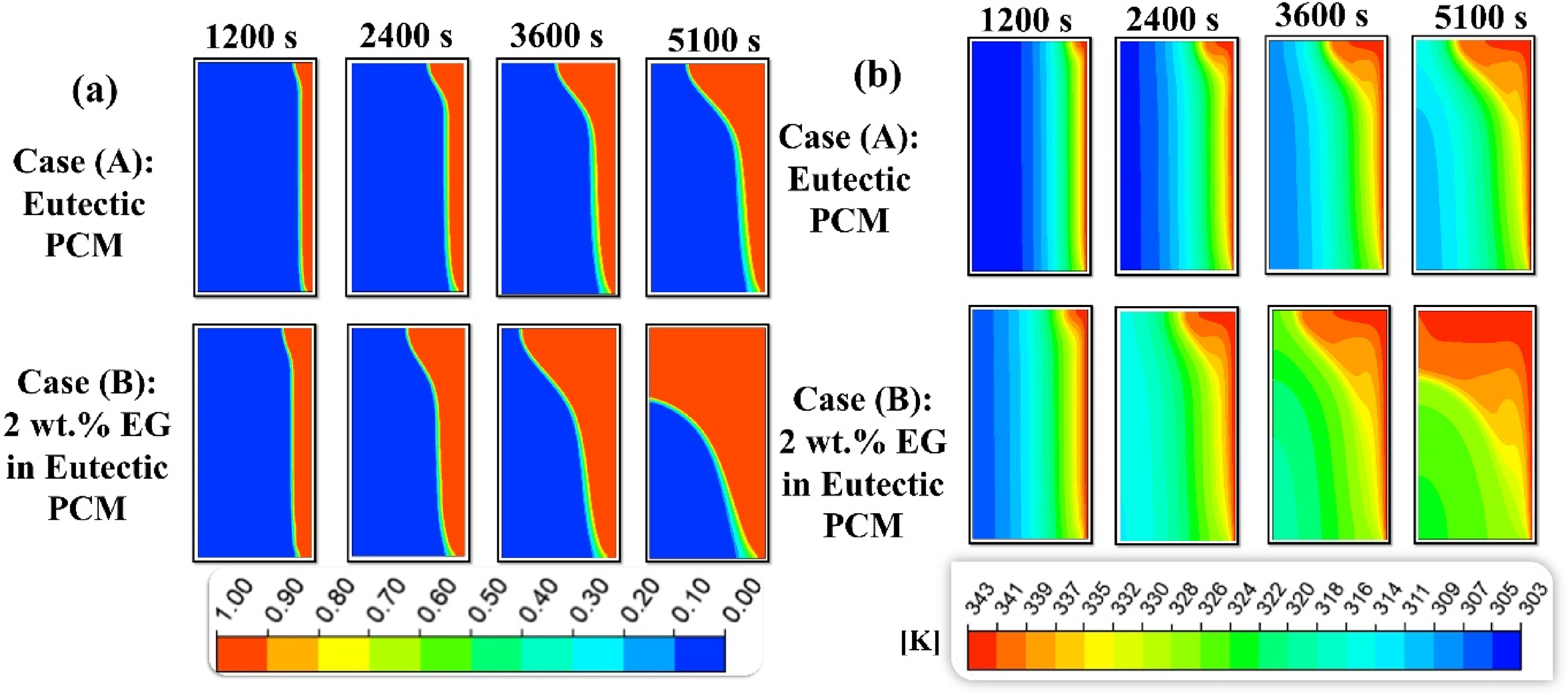
(a) Liquid fraction contours and (b) average temperature contours; at various time intervals for case (A): eutectic PCM, and case (B): 2 wt-% EG in eutectic PCM, respectively.
The amount of effective thermal energy stored in the PCM is very important for a specfic application in energy storage system. The energy stored by PCM for both the cases for liquid fraction value up to 0.60 as shown in Figure 13. The following equation, Equation (2) is used to calculate the energy accumulated in the system.
55

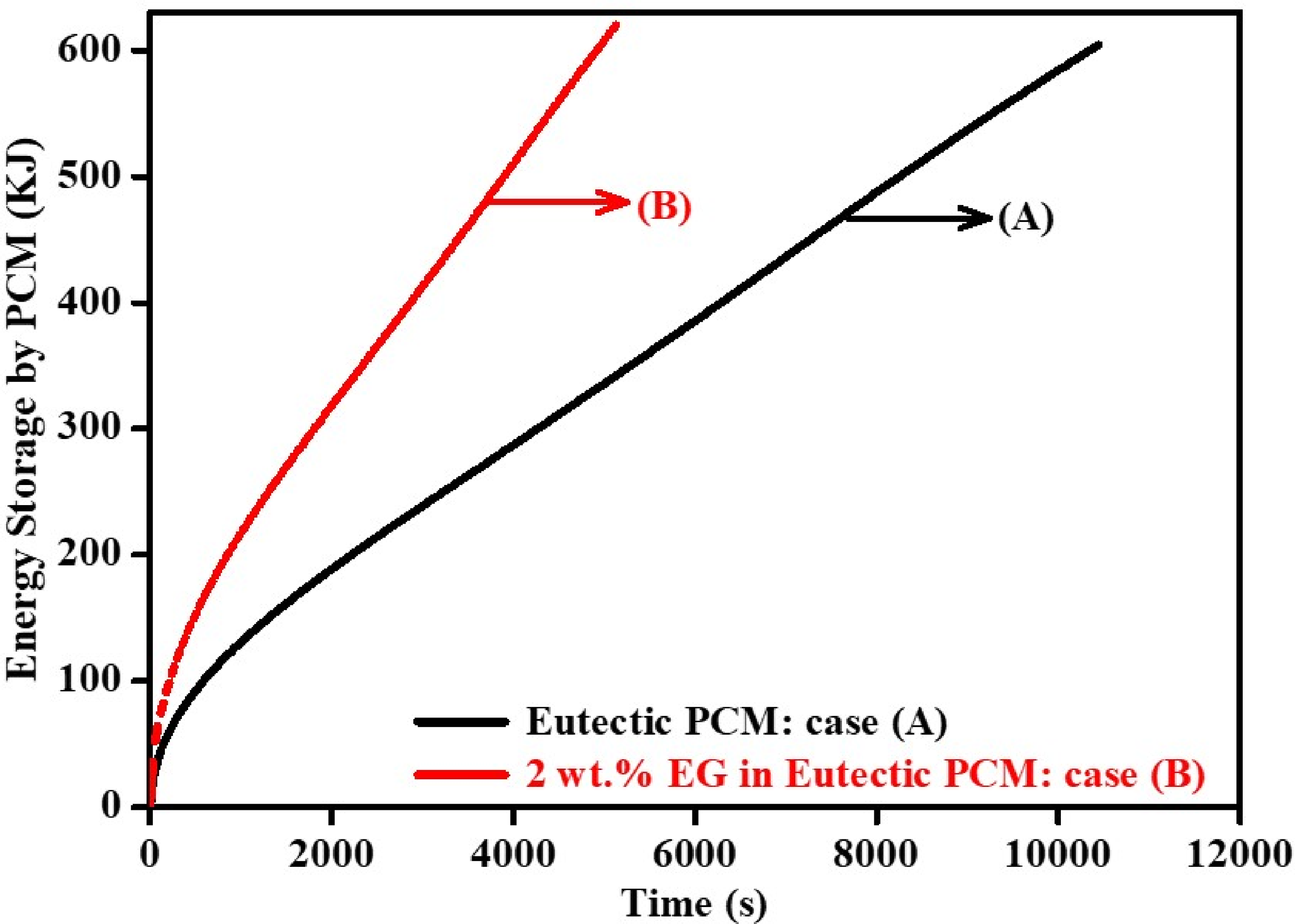
Energy storage vs time history of case (A): eutectic PCM, and case (B): 2 wt-% EG in eutectic PCM.
Figure 14 represents the mean power for both the cases for 60% melting region within a 2D rectangular enclosure. The mean power (
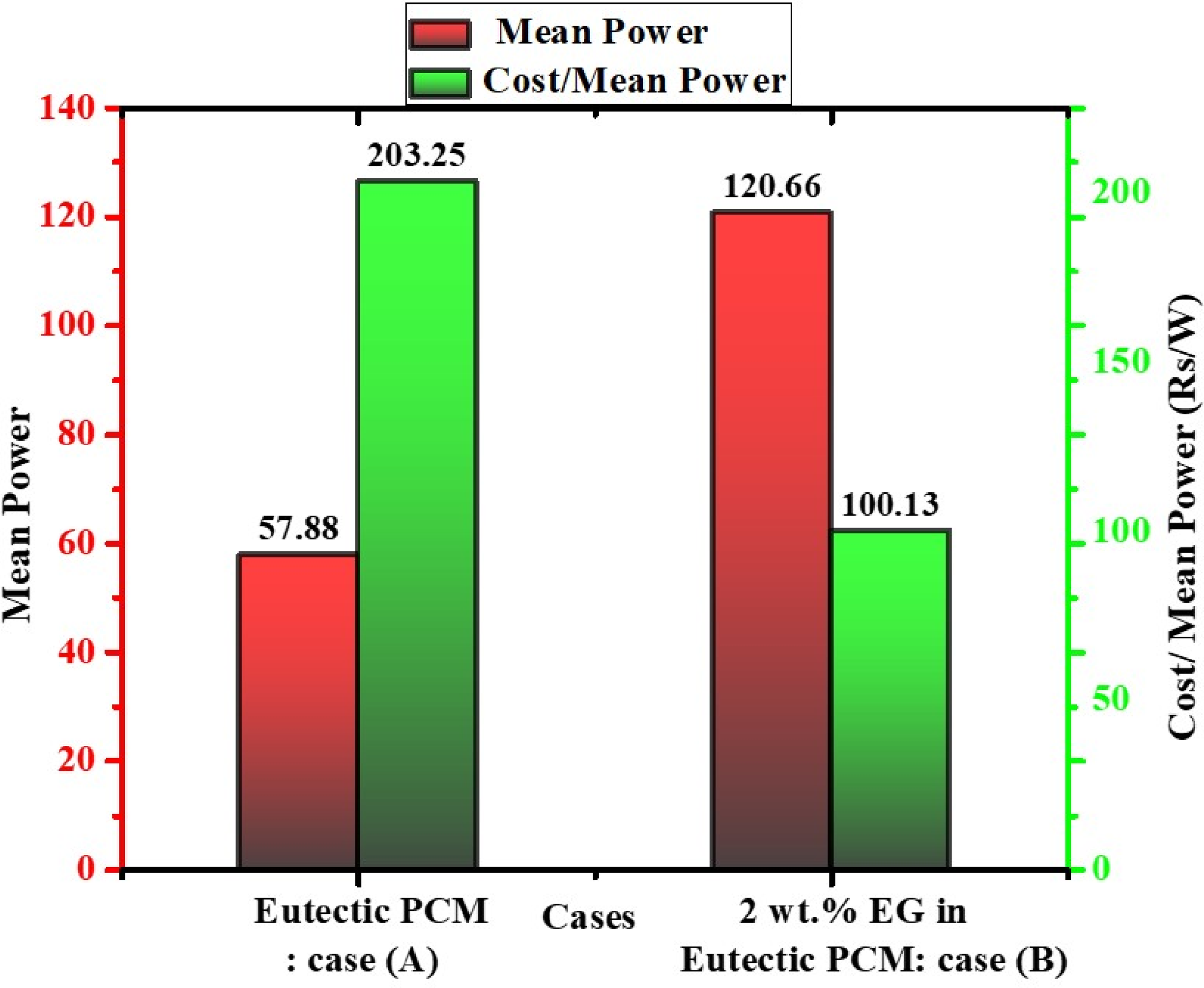
Mean power and cost/mean power after 60% thermal charging of system of case (A): eutectic PCM, and case (B): 2 wt-% EG in eutectic PCM.
The mean power of case (B) is 108.5% greater that the case (A) for the 0.60 liquid fraction of the PCM. This is mainly attributed to the reduction in melting time to melt the PCM which is 50.57% lesser after the addition of expanded graphite as compared to case (A). Further there is a little difference in the energy storage around (3.03%) after the 0.60 liquid fraction as shown in Figure 13; hence resulting in enhancing the effectiveness of the thermal system drastically.
The cost of thermal energy storage system plays a crucial role for determining their practical viability and feasibility in real world application. However, such systems face challenges in gaining acceptance if the cost is too high. The cost/mean power (

The properties of material with respect to cost per energy.

The cost analysis of a LHTES system after completion of 60% thermal charging reveals that the cost per mean power of case (B) is approximately 100% lower than the case (A). These results conclude that the cost per mean power is also affected by the thermal conductivity of material by addition of appropriate amount of the graphite in the system. This implies that the 2 wt-% of EG in optimised soft eutectic PCM enhance the overall efficiency of the system and retain the reasonable capacity to store the thermal energy more efficiently.
Real-time solar absorbance analysis
High value of solar absorption coefficient in PCM is essential to harness the solar radiation into heat energy in order to facilitate its implementation in efficient STES system. The charging and discharging rate in PCM also depend upon the thermal conductivity of material. To analyse the fast charging developed by expanded graphite in eutectic PCM, a real-time solar absorption multiple experiments were conducted, the way as reported by our group. 33 The system consisted of mainly three important parts namely (a) 25 ml beaker containing the samples i.e., eutectic PCM and eutectic-EG PCM composites, (b) a Fresnel lens (26 inches × 17 inches) to focus the solar irradiance onto the samples, and (c) a thermal insulated tank to hold the beaker along with K-type thermocouples to record the data at regular interval of time. During the experiment the eutectic PCM took 28 min to complete its charging (melting) process, while in the case of 2 wt-% EG particles in eutectic PCM, the charging time drastically reduced to 10 minutes under the same ambient conditions. This rapid charging observed in eutectic-EG PCM composites clearly indicates the enhancement in thermal conductivity by the addition of EG NPs in eutectic matrix. This increment may be attributed to the addition of high thermal conductive EG as a filler, which creates the 3D percolation network for allowing the phonon transportation into the least resistance path. Hence, this enhancement in thermal conductivity can reduce the duration for the storage and release of the thermal energy and can be used as potential material for an efficient energy storage system.
Conclusion
The current research work focussed on the formation of a novel optimised organic eutectic PCM employing paraffin wax and coconut oil and also on the effect of expanded graphite as a filler on its thermophysical properties for thermal comfort energy storage applications. The SEM analysis showed that the pores of the EG were filled by the as-prepared eutetic PCM, ensuring a strong binding in between them. The FTIR analysis confirmed physical interaction only without any chemical interaction occuring among the EG and eutectic PCM in eutectic-EG PCM composites which provided the stability during cyclic endurance. The addition of nanoparticles, the concentration plays pivotal role in the PCM matrix. Herein, 0.5 wt-% concentration of EG was observed as the percolation limit to form the thermal networks, below which no significant change was detected in the enhancement of thermal conductivity. The thermal conductivity of the composites enhanced with the increase in wt-% of EG nanostructure in a concentration dependent manner and reached to maximum enhancement achieving 0.55 W·m−1·K−1 at 2 wt-% of expanded graphite in eutectic PCM, which resulted in the improvement of ∼175%. This can be attributed to the creation of thermal pathways and hence a better 3D percolation network for efficient heat conductance in multiple directions. The heat transfer characteristics showed that the % of time saving (reduction to complete melting process) for 2 wt-% of EG in eutectic PCM was 31.57% as compared to pristine PCM. The real-time solar irradiance experiments revealed that the eutectic PCM took 28 min to melt completely, while the melting time of 2 wt-% of expanded graphite in eutectic PCM reduced significantly to 10 min. This enhancement in thermal conductivity can be attributed to the improved thermal conductive network by EG, which reduced the resistance pathway for phonon transportation. The 50 consecutive thermal heating and cooling cycles showed the good thermal reliability of the composite, which is requisite property in storage applications. DSC results showed average melting temperature of eutectic composites to be around 53 °C, which remain well suited for human thermal comfort applications. However, observed slight loss in energy through DSC can be offset by the substantial increase in thermal conductivity, leading to an enhancement in the overall efficiency of the thermal comfort energy storage system. Numerical simulation analysis of LHTES with two-dimensional enclosure strengthened the significance for enhancement of thermal conductivity in eutectic PCM by the addition of EG for optimising the energy storage. The simulation result revealed that the 2 wt-% of EG in eutectic PCM: case (B) exhibited 50.57% reduction in total melting time, an impressive 108.5% rise in mean power, a 3.03% increase in thermal energy storage and a ∼100% reduction achieved in cost per mean power as compared to pristine eutectic PCM: case (A). These results explained the economic benefit of improving the thermophysical properties of developed composites and ensures its reliability to meet the medium temperature range 50 to 60 °C for human thermal comfort zone application and STES systems. Specifically, the prepared composites had good potential for designing and developing the soft/flexible pads and cartridges for the hot instigation purpose in the health care field. Nevertheless, the developed composites utilisation not restricted to the above-mentioned application only, but also has a good potential for waste heat recovery in industries, electronic cooling, solar stills and battery thermal management systems.
Highlights
A novel organic binary eutectic PCM is developed by the melt-mixing technique.
Eutectic-EG PCM composite results in a remarkable 175% increase in thermal conductivity.
Numerical analysis using ANSYS in a 2D enclosure reveals heat propagation behaviour post-EG addition in eutectic PCM.
Formulated composite exhibited reduction in melting time of 50.57% and 100% reduction in the cost per mean power.
Supplemental Material
sj-docx-1-eae-10.1177_0958305X241310199 - Supplemental material for Development of soft eutectic phase change material modified with expanded graphite for thermal energy storage and human comfort applications
Supplemental material, sj-docx-1-eae-10.1177_0958305X241310199 for Development of soft eutectic phase change material modified with expanded graphite for thermal energy storage and human comfort applications by Neeraj Gupta, Vivek Kumar, Rohit Ranganathan Gaddam, Abhishek Verma, Jayesh Kumar, Rohitash Kumar, Nitesh Kumar, P. K. Bhatnagar and V. K. Jain in Energy & Environment
Footnotes
Abbreviations
Acknowledgments
The authors are thankful to Founder President, Dr Ashok K. Chauhan, Amity University Uttar Pradesh, for his constant support and encouragement. The authors would also like to thank Mr Purandas Mudavath, Dept. of Chemical Engineering and CIF, IISER Bhopal for support in measurements. The authors also gratefully acknowledge the financial support received from the Defence Laboratory Jodhpur, DRDO, Govt. of India [Project No. DLJ/TC/1025/I/61].
Authors contributions
Data availability statement
Research data is available upon request.
Declaration of conflicting interests
The authors declared no potential conflicts of interest with respect to the research, authorship, and/or publication of this article.
Funding
The authors disclosed receipt of the following financial support for the research, authorship, and/or publication of this article: This work was supported by the Defence Research and Development Organisation, (grant number DLJ/TC/1025/I/61).

Supplemental material
Supplemental material for this article is available online.
References
Supplementary Material
Please find the following supplemental material available below.
For Open Access articles published under a Creative Commons License, all supplemental material carries the same license as the article it is associated with.
For non-Open Access articles published, all supplemental material carries a non-exclusive license, and permission requests for re-use of supplemental material or any part of supplemental material shall be sent directly to the copyright owner as specified in the copyright notice associated with the article.
