



Abstract
Energy security has become a crucial issue as the world economy depends more and more on energy supplies. In the context of the top energy-consuming nations, this research examines the connection between digital financial inclusion, information and communication technology (ICT), education, and energy security risk from 2011 to 2022. To that end, the study applies the two-stage least squares and system generalized method of moments estimation techniques. According to our study's findings, digital financial inclusion and associated factors, including automatic teller machines, bank branches, debit cards, and electronic payments, mitigate energy security risks. The energy security risks are also reduced due to ICT, education, gross domestic product, and renewable energy production. However, carbon emissions increase energy security risks. These findings suggest that policymakers in top energy-consuming economies should focus on the digital inclusiveness of the financial sector, ICT diffusion, and human capital to increase the opportunities for investment in the energy sector to mitigate energy security risks.
Introduction
In the contemporary world, energy is a key input that is essential for societal advancement, economic expansion, and the reduction of poverty. Energy security and sustainability have grown to be one of the most important and explored areas of scientific inquiry. 1 Challenges like rising energy consumption and environmental degradation, which challenge a sustainable and appropriate supply of energy, are connected to energy research. 2 A rise in economic activity and population are driving up energy needs. Global energy consumption is anticipated to rise by 145% by 2030, and Petroleum 3 predicts that this pace will double by 2050. However, concerns about climate change sparked arguments concerning energy production methods. The majority of the world's energy is now produced by fossil fuels, which also contribute significantly to the release of greenhouse gases that cause global warming. 4 In 2020 and 2040, the International Energy Outlook predicted increased carbon dioxide (CO2) emissions of 35.6 and 43.2 billion metric tons, respectively. 5 Consequently, both rich and emerging nations, particularly those that rely on fossil fuels, must grapple with the challenging job of reconciling energy security with environmental sustainability.
The susceptibility of a country's energy supply to a variety of possible interruptions and difficulties that might have serious geopolitical, social, and economic repercussions is referred to as energy security risk (ESR). 6 Geopolitical tensions, resource depletion, infrastructure vulnerabilities, disruptions brought on by climate change, market dynamics, technology flaws, and the challenging process of switching to more sustainable energy sources are just a few of the many elements that contribute to this multilayered risk. 7 Energy flows and tensions worldwide may be disrupted by increasing geopolitical unrest in areas that produce energy, such as wars that undermine vital supply chains or transit routes. The need to diversify energy sources and make investments in sustainable alternatives is urgent, given the depletion of limited fossil fuel stocks. An outdated or insufficient energy infrastructure is vulnerable to malfunctions, mishaps, and cyberattacks, emphasizing the need for robust systems. 8 Furthermore, the dangers associated with dependence on centralized energy generation are increased by the escalating effects of climate change, especially severe weather events, which have the ability to interrupt energy production and transmission. Vulnerabilities may emerge when civilizations go through energy transitions as a result of market fluctuations, technical progress uncertainty, and the intermittent nature of renewable energy sources. To alleviate energy security threats and maintain a consistent and dependable supply of energy, proactive solutions centered on energy diversification, infrastructure resilience, international collaboration, technical innovation, and policy support are crucial. 9
The promotion of a low-carbon energy future now heavily relies on financial institutions. 10 The total amount of investment required globally, even to meet the Sustainable Development Goals the United Nations put out and the climate goals outlined in the “Paris Climate Agreement,” has been estimated at US$100 billion. Investments in energy infrastructure are expected to be between US$1.6 and US$3.8 trillion year between 2020 and 2050 to sustain efficient systems and prevent adverse climatic effects. These statistical findings demonstrate the importance of the low-carbon energy revolution and energy security, which are current needs. 11 ESR is a critical concern for the world's largest energy-consuming economies. The United States leads with an ESR score of 727, followed by New Zealand at 757. Canada is third with an ESR score of 802, Australia fourth at 805, and Denmark fifth with an ESR score of 864. Norway ranks sixth at 869, Russia seventh at 875, China eighth at 912, Indonesia ninth at 932, and United Kingdom tenth at 944. 12 These economies are the largest consumers of energy and face the highest risk of energy security issues.
Financial inclusion and well-being are anticipated to benefit greatly from the modernization of the current financial sector. 12 The delivery of automated operations and procedures and their application to boost financial services have both been revolutionized by digital finance, 13 and it has also recently attracted the interest of academics. 14 According to earlier research,15,16 financial technologies are essential for combating poverty, reducing financial instability, and promoting urban development. Ecological advantages may be reached by directing renewable energy thanks to digital financial inclusion (DFI). 17 According to Butu et al., 18 community groups with a strong online presence and multilateral financial institutions may successfully get financing for renewable energy sources. This seems like a reasonable argument given that Lee and Wang 19 believe that current technical developments may increase energy security more quickly. DFI is associated with increased energy demand as indicated by prior studies such as by Lee et al. 20 and Bakhsh et al. 21 An Increase in energy demand poses potential challenges to energy security if not met with corresponding increases in energy production and distribution capabilities. Moreover, the literature suggests that DFI drives the adoption of energy-efficient technologies, fostering a positive impact on energy security by increasing energy efficiency. 22 Another channel is that DFI facilitates funding for sustainable energy initiatives and positively impacts energy security. 23 DFI also enables the economic and infrastructure development that enhances energy security.
Information and communication technology (ICT) is considered one of the key pillars of the economy, promoting social progress and economic development. 24 ICT development makes enterprises, households, and individuals facilitate communication and improves technological innovation, productivity, and progress. 25 Many scholars argue that ICT greatly benefits the economy and society because it generates opportunities, promptly increases conveniences, and helps in cost savings. 26 Meanwhile, ICT also plays an important role in energy consumption and energy security. 27 In the field of energy sector, ICT-based applications include grid optimization systems and artificial intelligence. Thanh et al. 28 suggested that system optimization through cloud servers and internet of things helps in improving the grid power energy efficiency. In return, ICT ensures the sustainability of energy security.
Education is among the most critical drivers of energy security. 29 Studies described that in this era of rapid economic globalization, technological development, and environmental challenges, the relationship between education and ESR has arisen as a critical area of investigation. 30 ESR has increased as the energy sector has undergone several transformative changes, such as urbanization, population growth, and demand for clean energy sources. Against this backdrop, the education sector plays a pivotal role in influencing policy decisions regarding ESR. A highly educated workforce is more likely to adopt and develop technologies that enhance energy efficiency and contribute to the resilience of energy security. 31 Education also increases energy security by shaping societal norms and values. 32 Moreover, education fosters a global perspective, promoting cooperation and collaboration among nations to address shared energy challenges that enhance joint energy security.
In the literature that is currently available, empirical studies have looked at how DFI affects different sides of energy, including energy consumption, energy efficiency, and energy innovation29,33; however, limited empirical studies have specifically looked at how DFI affects risks associated with energy security. Prior studies ignored the disaggregated level impact of automatic teller machines (ATMs), debit cards, electronic payments (EP), and bank branches (BB) on energy security. The studies of Ha 34 and Thanh 28 have empirically explored ICT's impact on ESR, but they ignored endogeneity and normality issues. None of the prior research has looked at the link between education on ESR in top energy-consuming nations. A thorough investigation of the impact of DFI, ICT, and education on energy security is noticeably lacking in previous research by using updated dataset. To fill this lacuna, the present study examines the impact of DFI, ICT diffusion, and education on ESR for leading energy-consuming economies over the 2011–2022 period.
This study makes unique and novel contributions to the literature, as it is different from the prior studies in various important ways. First, using updated panel data, our study provides fresh evidence of DFI, ICT, and education on ESR. Second, the study employed “two-step system generalized method of moments (GMM) and two-stage least squares (2SLS)” estimation techniques, which can handle potential endogeneity and unobserved heterogeneity. Additionally, the study employed panel quantile regression (PQR) with fixed effects to confirm the robustness of the findings. Thirdly, within the context of energy security, our study is a pioneer focusing on the policy dimensions, specifically, DFI, ICT, and education, in the case of top energy-consuming economies. Our study provides policymakers with better understanding, essential information, and evidence regarding ESRs. Lastly, the research provides policymakers and stakeholders with evidence-based insights on leveraging the advantages of DFI, ICT, and education while preserving energy security, and assisting in creating comprehensive policies that support fair growth.
In the subsequent section, we have discussed the theoretical framework and model construction. The third section provides details about data and descriptive analysis. The fourth section comprehensively discusses the empirical findings of the study. The last section concludes the study along with policies, limitations, and future directions.
Theoretical framework and model construction
The concept of DFI brings about a transformative shift in the realm of financial services, with implications that extend beyond mere accessibility. Through its multifaceted impact, DFI not only broadens the reach of financial services but also intersects with energy security considerations in significant ways. 19 A pivotal aspect of this intersection lies in the reduction of physical travel required to access financial services. By circumventing the necessity for trips to traditional banks or financial institutions, DFI contributes to a decrease in fuel consumption and a corresponding reduction in greenhouse gas emissions stemming from transportation. 35 This reduction in travel aligns harmoniously with energy conservation objectives, exerting downward pressure on the demand for fossil fuels. As such, it indirectly fosters an environment conducive to enhanced energy security by mitigating strain on energy supply systems. Integral to this paradigm is the streamlined efficiency enabled by digital financial services. 32 These services expedite transactions, rendering payments and money transfers swifter and more seamless. The consequential effect is observed in the optimization of supply chains and economic activities, potentially curbing energy wastage entailed by conventional, time-intensive financial processes. 36
Beyond the confines of financial access, DFI intertwines with sustainable energy endeavors. It empowers individuals and communities to access funding for renewable energy solutions. This empowerment translates to reduced reliance on conventional fossil fuel-based energy sources, thereby fostering energy diversification and augmenting energy security. Moreover, the resilience of communities in the face of energy-related disruptions gains reinforcement through DFI. In moments of natural calamities or emergent crises, the availability of digital financial tools facilitates the efficient allocation of funds, resources, and aid. Consequently, these tools become instrumental in aiding affected communities to navigate energy-related challenges more effectively. 37 The transformative potential of DFI extends to the realm of energy management itself. It ushers in the prospect of adopting smart energy management systems, underpinned by digital technologies that enable real-time monitoring and optimization of energy consumption. 38 This empowers individuals and businesses alike with the means to digitally oversee and regulate their energy usage, engendering more effective management of overall energy demand. The corollary outcome is a diminished susceptibility to energy shortages, ultimately bolstering energy security.
The influence of ICT and education on energy security is imperative. ICT improves energy distribution efficiently. Concurrently, education empowers the skilled labor force to leverage these technologies effectively, reducing the risk of disruptions and enhancing energy security.
1
ICT enables logistics performance, enhancing operational efficiency and reducing ESR.
39
The combined efforts of ICT and education also promote energy efficiency and conservation through smart applications, reducing overall energy demand. Theory of energy security also highlighted that collaborative impact of ICT and education plays a pivotal role in creating a more efficient and secure energy ecosystem. The above theoretical analysis shows that DFI, ICT, and education are an important factor of energy security. Therefore, we have developed the following basic econometric model:

The data used, which cover both time (T) and space (N), accurately illustrate the properties of panel layouts. Panel analysis was handled using various econometric techniques, such as 2SLS, two-step system GMM, and PQR with fixed effects according to Liu et al. 14 The innovation in the model lies in its approach to analyzing ESR. The model considers the effects of DFI, ICT diffusion, and education on energy security. The 2SLS, two-step system GMM, and PQR models appear well suited for this model due to the characteristics of panel data from 2011 to 2022 for the top 60 energy-consuming countries. The utilization of 2SLS, two-step system GMM, and PQR are suggested by previous literature and it provides a more comprehensive analysis by capturing conventional econometric problems.19,27 Conventional econometric methods (such as fixed effect and random effect) approaches fail to provide trustworthy results, including “serial correlation, endogeneity, and heteroskedasticity.” This study tackles issues through the application of the 2SLS methodology. The 2SLS, an updated ordinary least square method method formed by Cumby et al., 41 does not correlate the error term and the regressors. The 2SLS approach is our analytic tool owing to its many benefits over more conventional methods. 42
Although the 2SLS represents some notable advantages, it still shows various limitations compared to the two-step system GMM.
37
Therefore, Arellano and Bond
43
have used GMM for panel analysis since it is better equipped to handle problems (serial correlation, endogeneity, and heteroskedasticity). The method is the best when there are more cross sections than time series. The GMM methodology incorporates the lagged dependent variable that addresses the endogeneity issue. The GMM technique has many variations, including one- and two-step system GMM estimate procedures. A two-step system GMM method performs well in unbalanced data.
44
The two-step system GMM produces dependable outcomes by addressing serial correlation and heteroscedasticity concerns.
45
Therefore, in addition to 2SLS, we have also adopted the two-step system GMM approach in this analysis. The equation utilized in the research, based on the dynamic two-step system GMM approach, is as follows:

Data and descriptive analysis
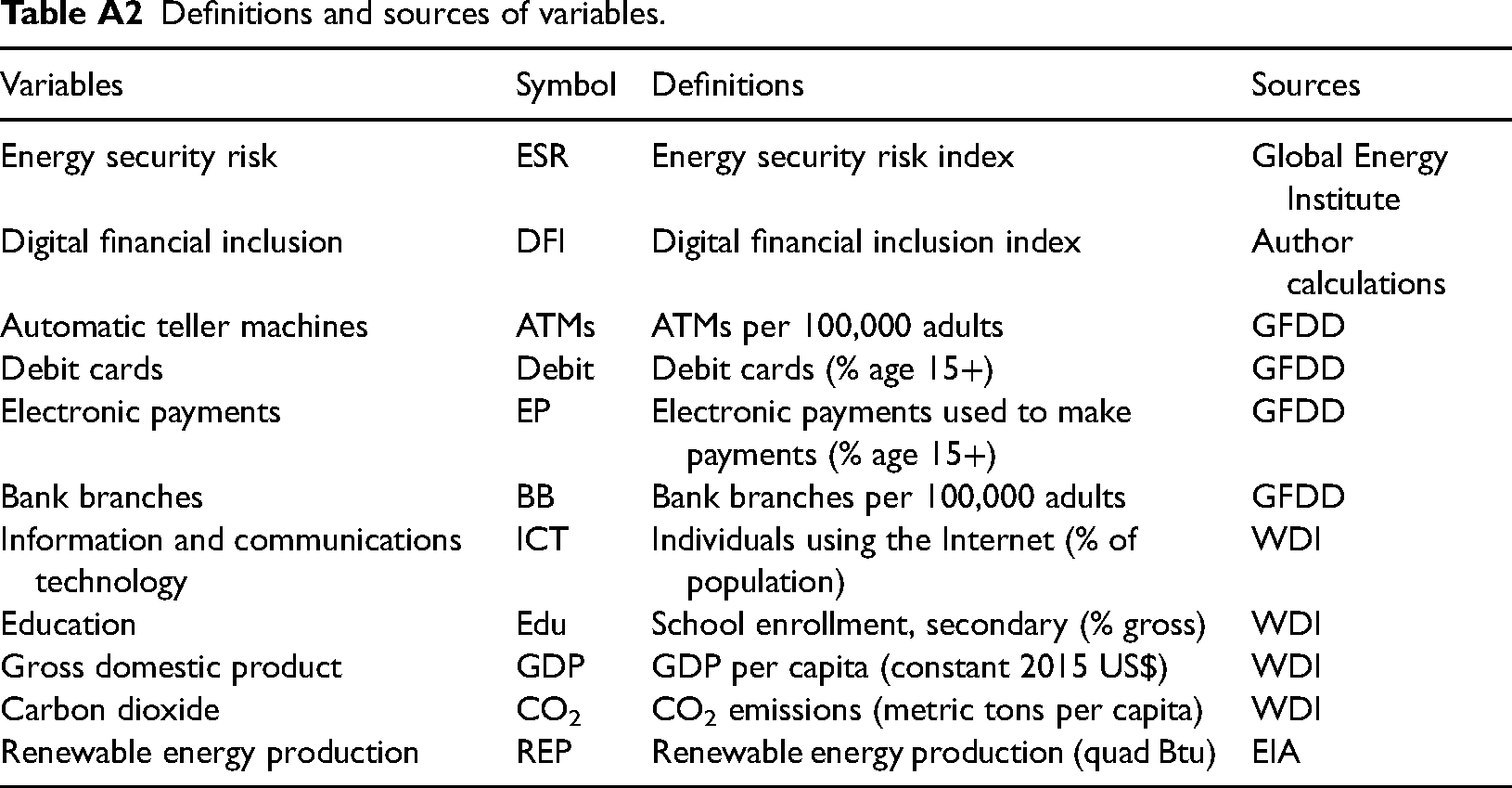
To explore the nexus between financial inclusion, ICT, education, and ESR, this study undertakes data collection for the leading economies in terms of energy consumption over the period spanning from 2011 to 2022. Our sample consists of 60 leading energy-consuming economies (see Table A1). The variable under scrutiny here is the ESR, 1 which is gauged using the ESR index established by the Global Energy Institute. DFI is a main independent variable that is measured at aggregated and disaggregated levels. The aggregated measurement employs the DFI index, formulated by the author. The DFI index comprises four variables: ATMs, debit cards, EP, and BB. Principal component analysis method is used to assign appropriate weights to each variable. However, to capture a more nuanced understanding, the disaggregated analysis employs four determinants: the number of ATMs per 100,000 adults, the percentage of individuals aged 15 and above with access to debit cards (Debit), the percentage of individuals aged 15 and above using EP for transactions, and the density of BB per 100,000 adults. These determinants are drawn from the Global Financial Development Database (GFDD) dataset. Second independent variable is ICT, which is measured by the percentage of the population using the internet. The third independent variable is education, measured by gross percentage of secondary school enrollment. Data series for ICT and education are obtained from the World Development Indicators (WDI). This study incorporates a range of control variables into the model. These control variables are selected based on previous scholarly works.19,29 The variables encompass GDP per capita (adjusted to a constant 2015 US$ value), CO2 emissions (measured in metric tons per capita), and REP measured in quad Btu. GDP and CO2 data are sourced from the WDI, while REP data are collected from the Energy Information Administration (EIA) (see Table A2).
Table 1 presents a comprehensive overview of descriptive statistics, a vital step in verifying the robustness of the variables. These assessments encompass various key measures, including mean, median, range (maximum and minimum), standard deviation, skewness, and kurtosis. The mean values for the variables are as follows: ESR at 6.981, DFI at 3.732, ATMs at 4.211, Debit at 3.846, EP at 3.830, BB at 2.889, ICT at 4.122, Edu at 4.591, GDP at 9.485, REP at 1.371, and CO2 at 6.225. Highest mean score is reported for GDP, which shows that GDP per capita is high in the selected leading energy-consuming economies. Maximum score is reported for REP, i.e., 26.99, whereas minimum score is reported for BB, i.e., −0.946. Conversely, the standard deviation values for these variables are as follows: ESR at 0.229, DFI at 0.810, ATMs at 1.219, Debit at 0.769, EP at 0.814, BB at 1.119, ICT at 0.520, Edu at 0.238, GDP at 1.132, REP at 3.452, and CO2 at 4.706. The skewness test demonstrates that six series (DFI, Debit, EP, ICT, GDP, Edu) are negatively skewed while the remaining five series (ESR, ATMs, BB, REP, CO2) are positively skewed. The Jarque-Bera test results confirm that our model's variables are non-normally distributed.
Descriptive statistics.

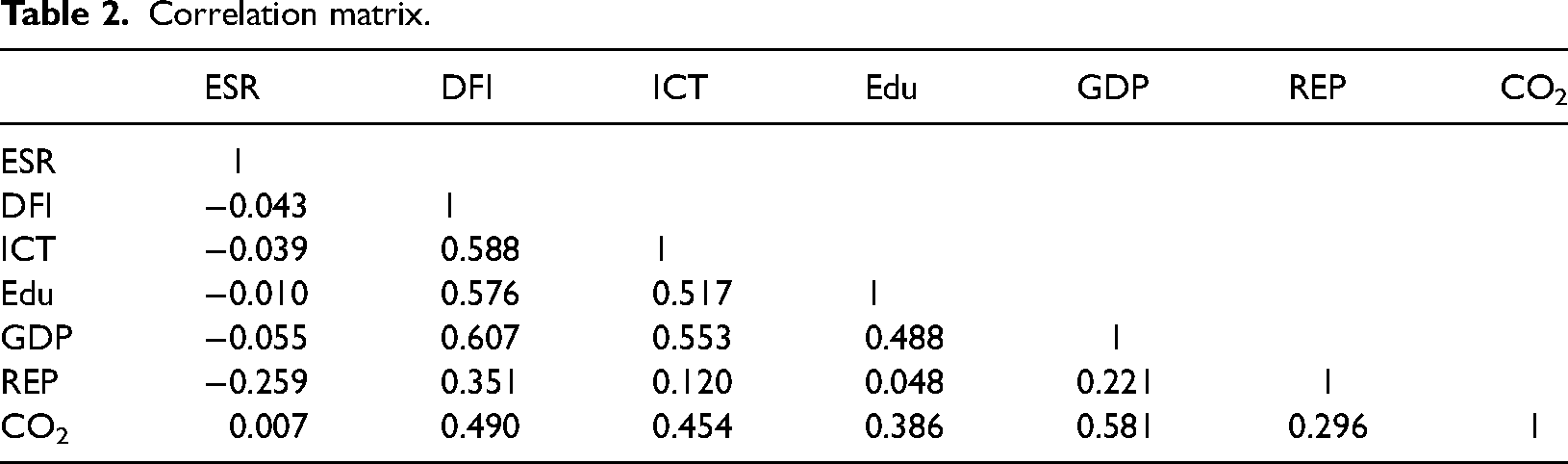
The correlation matrix results are represented in Table 2. The correlation coefficient ranges from −1 to +1, where −1 represents the perfect negative correlation, and +1 highlights the perfect positive correlation. From the correlation matrix, we confer that the highest correlation coefficient is 0.607 between DFI and GDP. The correlation coefficients between ESR and most other variables are negative such as −0.043 with DFI, −0.039 with ICT, −0.010 with Edu, −0.055 with GDP, and −0.259 with REP. To conclude, we can say that the correlation coefficients are positive or negative, but none equals +1 or −1. Thus, we can proceed further because variables are not perfectly correlated.
Correlation matrix.
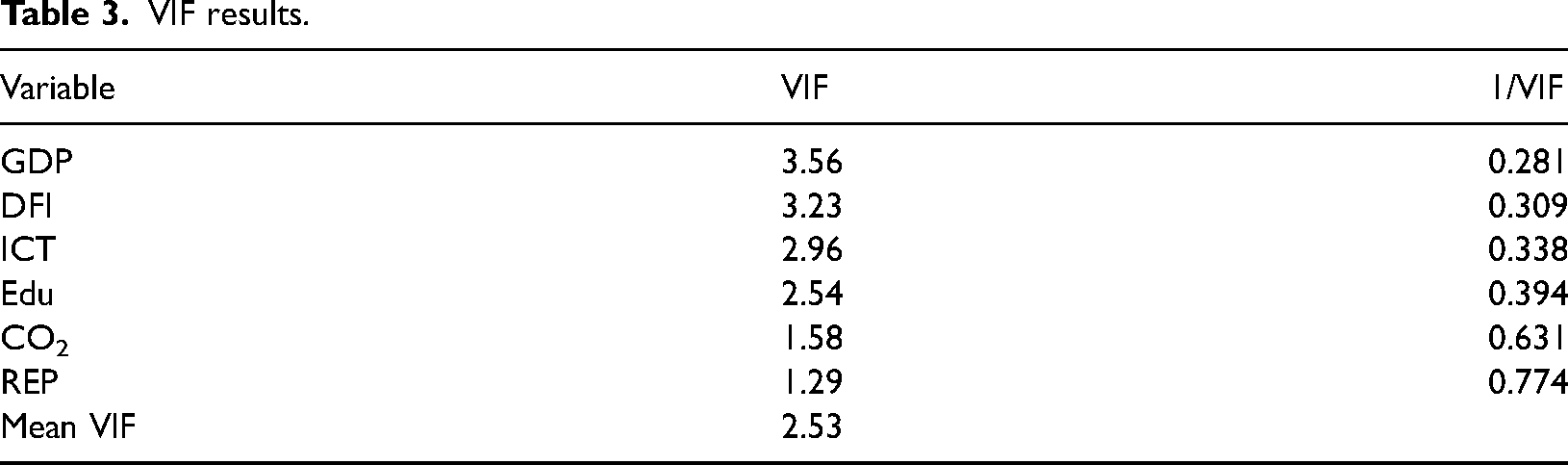
The values of the variance inflation factor (VIF) are shown in Table 3 to assess the degree of multicollinearity. The VIF scores provide information on the degree of correlation between each variable and the others. GDP has a noteworthy VIF of 3.56, indicating a mediocre correlation with other variables. DFI, ICT, and Edu all have similar VIF values of 3.23, 2.96, and 2.54, which point to a moderate but not very high degree of correlation. On the other hand, CO2 and REP comparably low VIFs of 1.58 and 1.29, respectively, show a minimal relationship with different parameters. The mean VIF of 2.53, which is lower than the established cutoff limit of 5, demonstrates that the model's average level of multicollinearity is acceptable. This cutoff point is 5. Although there is some connection among some of the variables, these results suggest that multicollinearity is not a serious problem in our model.
VIF results.
Empirical results and discussion
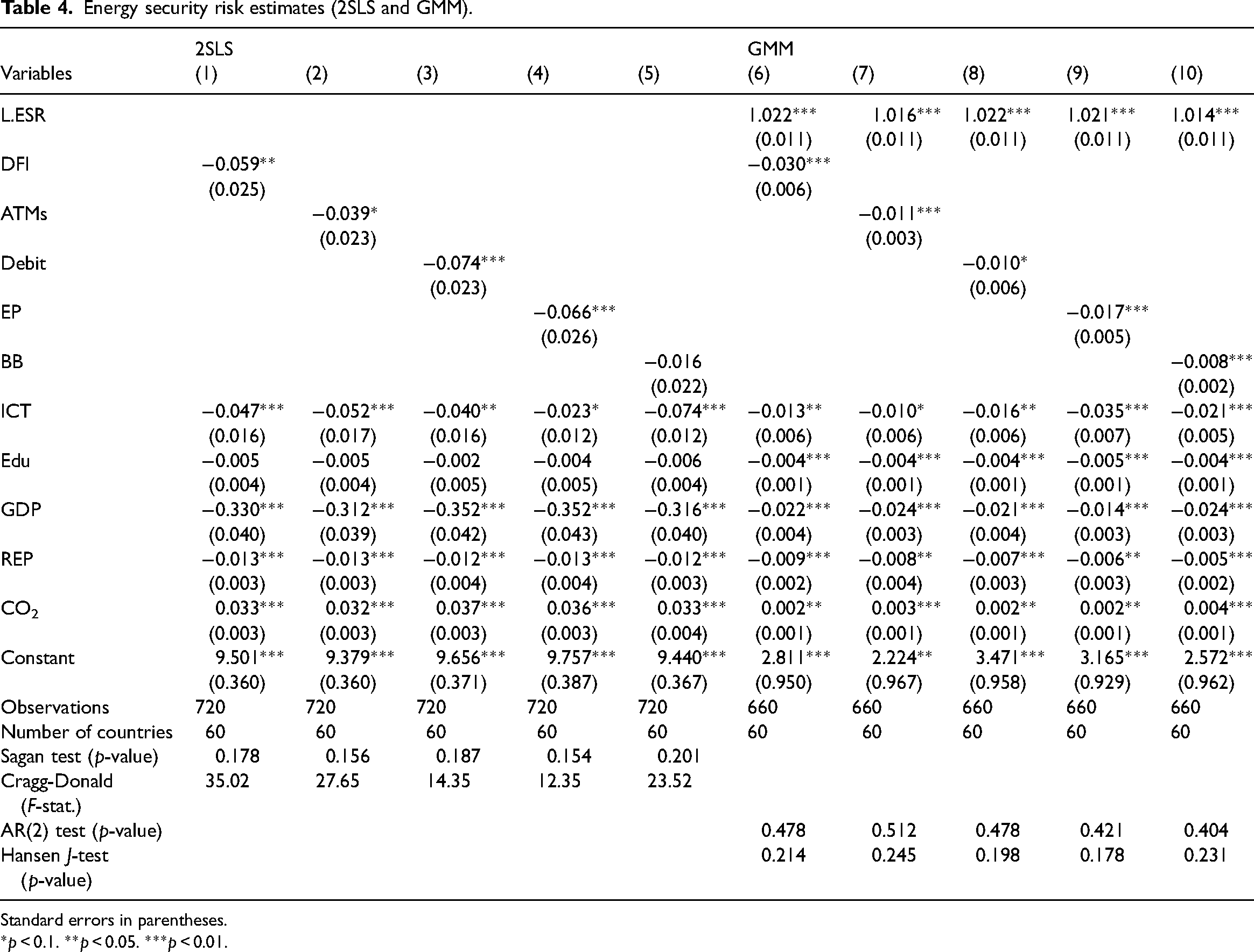
Table 4 displays the outcomes of the 2SLS-GMM models. Ten models are estimated: five for 2SLS models and five for GMM models. The DFI, ATMs, Debit, EP, and BB estimates are unfavorably correlated with ESR. For every 1% increase in the DFI, ATMs, Debit, EP, and BB, the ESR in the 2SLS models fall by 0.059%, 0.039%, 0.074%, 0.066%, and 0.016%, respectively, and in the GMM models falls by 0.030%, 0.011%, 0.010%, 0.017%, and 0.008%, respectively. This finding is supported by Tu et al., 31 who reported that DFI enables individuals and businesses to access financial services and conduct transactions electronically, reducing transportation costs. This leads to energy savings by minimizing transportation-related energy consumption. As more people adopt digital payment methods, the reliance on energy-intensive processes contributes to overall energy efficiency. The study of Ha 50 described that increased access to digital financial services enhances economic growth and resource allocation. People with access to formal financial channels are more likely to save, invest, and engage in productive economic activities. This leads to higher income levels and improved standards of living. With greater financial stability, individuals and businesses make informed decisions about energy consumption, investing in energy-efficient technologies and practices that lower energy demand and mitigate risks associated with energy scarcity. These empirical inferences are supported by Lee and Wang, 19 who reported that DFI facilitates access to financing for renewable energy projects. Therefore, individuals and businesses can easily access loans and credit for installing solar panels, wind turbines, or other renewable energy systems. The availability of such financing mechanisms accelerates the adoption of clean and sustainable energy sources, reducing reliance on fossil fuels and enhancing energy security. Similar results are also reported by Popescu, 51 who revealed that with increased access to digital financial services, individuals can more easily monitor their financial transactions and expenses. This heightened awareness of financial activities extends to energy-related spending as well. As people become more conscious of their energy consumption and associated costs, they take proactive steps to reduce waste and adopt energy-saving habits. These empirical inferences suggest that DFI decreases the risk related to energy security.
Energy security risk estimates (2SLS and GMM).
Standard errors in parentheses.
*p < 0.1. **p < 0.05. ***p < 0.01.
Additionally, the ICT estimates are negatively associated with ESR. More specifically, for every 1% increase in ICT, the ESR drops by 0.047%, 0.052%, 0.040%, 0.023, and 0.074% in the 2SLS models and by 0.013%, 0.010%, 0.016%, 0.035%, and 0.021% in the GMM models. This finding also aligns with Lee et al., 29 who described that ICT development enables the creation of smart grids, energy management systems, and real-time monitoring tools. These technologies facilitate the efficient distribution and consumption of energy by optimizing energy flows and reducing wastage. Smart grids, for instance, use data analytics and automation to match energy supply with demand, minimizing the risk of energy shortages and ensuring a stable energy supply. The finding also infers that ICT tools allow consumers to monitor and control their energy consumption more effectively. The finding of Thanh et al. 28 claimed that ICT development has enabled remote work and the digitalization of various processes. This leads to reduced energy consumption associated with commuting and physical office spaces. As more people work remotely or engage in digital transactions, the demand for energy-intensive activities like transportation and office lighting decreases, contributing to energy conservation and enhanced energy security. The study of Cozzi et al. 52 emphasized that ICT plays a crucial role in designing energy-efficient infrastructure, such as smart buildings and data centers. These structures utilize sensors, automation, and data analytics to optimize energy usage, heating, cooling, and lighting. By reducing energy wastage in infrastructure operations, ICT-driven designs enhance energy security by lowering overall demand and reducing strain on energy supply systems. Moreover, ICT tools enhance the efficiency of supply chain operations by providing real-time tracking, route optimization, and inventory management. This reduces energy consumption in transportation and logistics, as goods are transported more efficiently and waste is minimized. An optimized supply chain enhances the resilience of energy distribution networks and reduces the risk of disruptions.
However, a 1% rise in Edu leads to a significant fall in ESR by 0.004%, 0.004%, 0.004%, 0.005%, and 0.004% only in the GMM models. These findings match the study of Ha, 50 which noted that a more educated population tends to possess higher levels of energy literacy and awareness. As individuals gain knowledge about the environmental consequences of different energy sources and the importance of energy efficiency, they are more likely to make informed choices that contribute to a reduction in overall ESR. Our empirical result is also consistent with Ofosu-Peasah et al., 32 who have documented that highly educated individuals are at the forefront of developing and adopting technologies that enhance energy efficiency. This contributes to the diversification of energy sources and reduces ESRs. The findings also infer that a well-educated workforce, including policymakers and government officials, is likelier to design and enact policies prioritizing sustainable energy practices. This, in turn, enhances the overall stability of energy supplies and mitigates risks associated with energy security. Studies have demonstrated that education is pivotal in shaping societal values and norms, influencing individuals to adopt more sustainable lifestyles. Their empirical inferences are also supported by Laldjebaev et al., 53 who revealed that educated individuals prefer to adopt energy-efficient technologies and practices, contributing to a reduction in overall energy demand and decreasing vulnerabilities associated with ESRs.
Furthermore, the ESR reduces by 0.330%, 0.312%, 0.352%, 0.352%, and 0.316% in 2SLS models and reduces by 0.022%, 0.024%, 0.021%, 0.014%, and 0.024% in the GMM models with every 1% rise in GDP. Similar to this, the 1% rise in REP causes ESR to decline in 2SLS models by 0.013%, 0.013%, 0.012%, 0.013%, and 0.012%, while in the GMM models, this decrease is recorded as 0.009%, 0.008%, 0.007%, 0.006%, and 0.005% due to 1% rise in REP. In contrast, according to the 2SLS and GMM models, every 1% increase in CO2 results in a rise in ESR of 0.033%,0.032%,0.037%,0.036%, 0.033% and 0.002%,0.003%, 0.002%, 0.002%, and 0.004%. In the GMM models, the estimated coefficients of L.ESR lead to a rise in the ESR by 1.022%, 1.016%, 1.022%, 1.021%, and 1.014%, implying that past values of ESR favorably impact the current values of ESR. Regarding diagnostics tests, the results of Sagan and Cragg and Donald tests affirm that our model are free from issues such as serial correlation and endogeneity, and the choice of instruments is appropriate in 2SLS models. The results of AR(2) and Hansen J-test statistics are insignificant and infer that our models are free from autocorrelation and endogeneity problems in GMM.
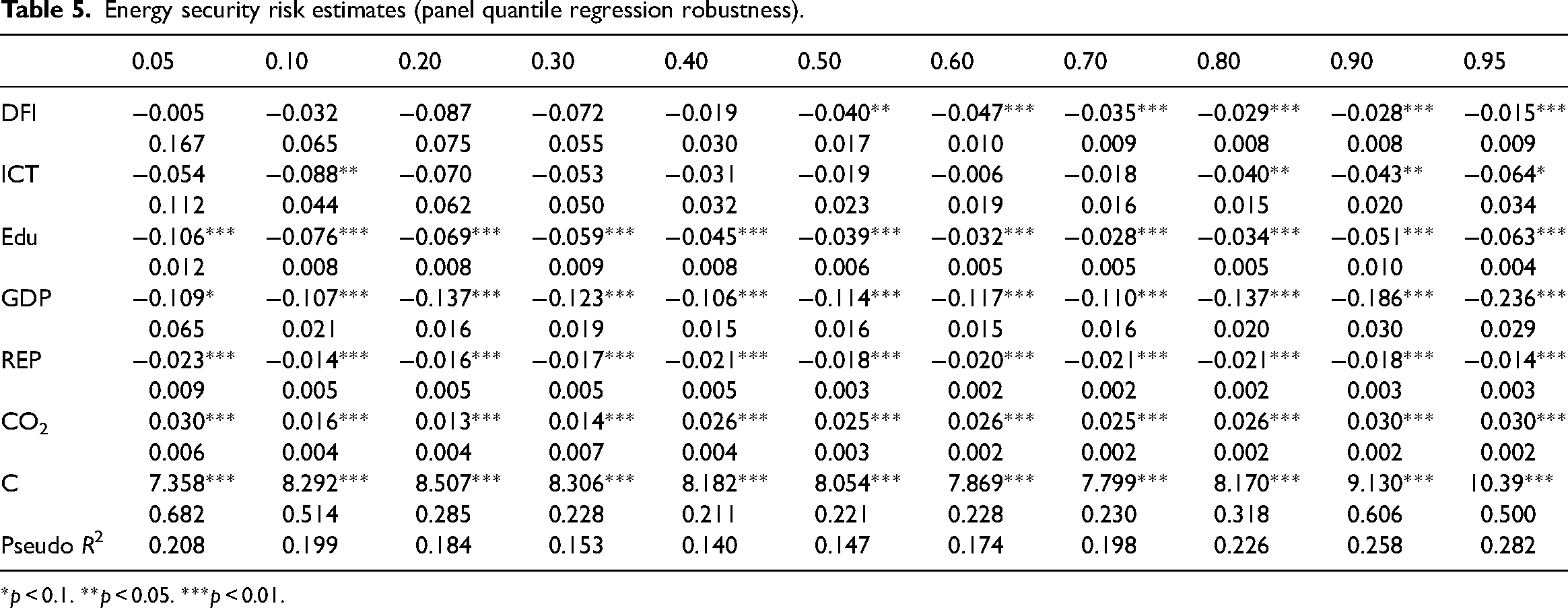
Our study employs panel quantiles regression with fixed effects to confirm the robustness of 2SLS and GMM estimates. This method is commonly employed in panel data to address issues related to non-normality. The results of PQR are shown in Table 5. From the results, we confer that DFI is significantly and negatively associated with ESR. The relationship between DFI and ESR is similar in 2SLS and GMM models. The estimates attached to DFI are negatively significant from 0.50 to 0.95 quantiles. The findings infer that DFI hurts ESR in middle and higher quantiles. The coefficient linked to ICT is negative at quantile of 0.10 and then from 0.80 to 0.95 quantiles. It demonstrates that ICT reports a significant negative impact on ESR only at the lowest and upper highest quantiles. However, 2SLS and GMM models report a strong negative association between ICT and ESR. Thus, our study infers that ICT diffusion can potentially reduce ESRs in leading energy-consuming economies. Edu impact on ESR is negative and significant at all quantile ranges. Similar to GMM results, this finding confirms that education positively reduces ESR in the selected sample of economies. Additionally, in all quantiles, i.e., from 0.05 to 0.95, the GDP and REP estimations are negatively significant. These results imply that GDP and REP mitigate ESR at all levels of ESR. In contrast, CO2 increases the ESR at all its magnitude because CO2 has positively affected ESR from 0.05 to 0.95 quantiles.
Energy security risk estimates (panel quantile regression robustness).
*p < 0.1. **p < 0.05. ***p < 0.01.
Conclusion and implications
As the vital base for economic growth and human beings, energy security occupies a paramount position in the sustainable development agenda of nations worldwide. Therefore, this research investigates how DFI, ICT, and education influence ESR in the leading energy-consuming nations. In pursuit of this objective, the study has employed a combination of the 2SLS and two-step system GMM methodologies. The robustness of the findings has been rigorously confirmed using PQR. The study has yielded the subsequent outcomes, drawing on these advanced techniques. According to our study's findings, DFI and associated factors, including ATMs, BB, debit cards, and EP, mitigate ESRs. The ESRs are also reduced due to ICT, Edu, GDP, and REP. However, carbon emissions increase ESRs. The robust estimates of PQR show that DFI and ICT reduce ESRs in middle and higher quantiles. While Edu also significantly reduces ESRs in all quantile ranges.
Based on the findings, several policy suggestions have emerged. Governments implement targeted programs that enhance digital financial literacy among citizens. These initiatives can empower individuals to make informed decisions about energy consumption, encourage the adoption of energy-efficient practices, and amplify the benefits of DFI in managing energy resources. Governments should also foster partnerships between financial institutions, energy providers, and technology companies. Collaborative efforts lead to innovative solutions that integrate digital financial services with energy consumption data, enabling customers to make real-time, data-driven decisions for optimizing energy usage. Governments design financial incentives, such as reduced interest rates or tax breaks, for individuals and businesses that invest in energy-efficient technologies. These incentives can stimulate greater adoption of sustainable energy practices by leveraging digital financial platforms. A well-developed specialized financing mechanism is made for renewable energy projects. Encourage the integration of digital financial platforms with smart home energy management systems. This enables consumers to monitor and control their energy usage, promoting responsible consumption and reducing ESRs. The government should use microfinance institutions to provide energy-related microloans to underserved people. This approach can facilitate the adoption of clean cooking solutions, solar energy products, and other energy-efficient technologies, enhancing both energy security and financial inclusion. Strengthen mobile payment infrastructure to enable whole energy bill payments through digital platforms. This convenience can encourage timely payments, reducing the risk of energy supply disruptions due to unpaid bills. The government should also allocate resources for the development of ICT infrastructure. Launch public awareness campaigns utilizing ICT channels to educate citizens about smart energy consumption practices. Facilitate public–private partnerships to encourage the development of innovative ICT solutions for energy security. This can include the use of artificial intelligence and IoT applications for more secure and efficient energy infrastructure. The government should develop energy education programs at all levels, including primary schools and universities. These energy education programs should include the basics of energy consumption and production and the significance of the use of sustainable energy practices. There is a need to launch such awareness campaigns that educate the citizens regarding energy security practices. Moreover, governments should establish collaborations between energy industry stakeholders and educational institutions.
The study acknowledges several limitations and offers directions for future research. Our study measures ICT through total number of internet users as a percentage of the population. Future studies can consider other measures of ICT such as artificial intelligence, online service index, and telecommunication infrastructure. The study does not consider specific economies in the analysis. Future studies can extend this analysis at the country level. Such exercise will help in the formulation of more appropriate policies. Future studies can also make comparisons between developed and developed economies. Future studies can explore the asymmetric impact of DFI, ICT, and education on ESR by applying nonlinear autoregressive distributed lag estimation method.
Footnotes
Declaration of conflicting interests
The authors declared no potential conflicts of interest with respect to the research, authorship, and/or publication of this article.
Funding
The authors disclosed receipt of the following financial support for the research, authorship, and/or publication of this article: This work was supported by Guangdong Institute of Higher Education (22GYB138) and The Guangdong Society of Education (GDESH14023).

Notes
Appendix
Definitions and sources of variables.
| Variables | Symbol | Definitions | Sources |
|---|---|---|---|
| Energy security risk | ESR | Energy security risk index | Global Energy Institute |
| Digital financial inclusion | DFI | Digital financial inclusion index | Author calculations |
| Automatic teller machines | ATMs | ATMs per 100,000 adults | GFDD |
| Debit cards | Debit | Debit cards (% age 15+) | GFDD |
| Electronic payments | EP | Electronic payments used to make payments (% age 15+) | GFDD |
| Bank branches | BB | Bank branches per 100,000 adults | GFDD |
| Information and communications technology | ICT | Individuals using the Internet (% of population) | WDI |
| Education | Edu | School enrollment, secondary (% gross) | WDI |
| Gross domestic product | GDP | GDP per capita (constant 2015 US$) | WDI |
| Carbon dioxide | CO2 | CO2 emissions (metric tons per capita) | WDI |
| Renewable energy production | REP | Renewable energy production (quad Btu) | EIA |