



Abstract
Digitalization has emerged as a key player in reducing pollution and fostering a shift towards a low-carbon economy. However, its effectiveness in enhancing environmental sustainability hinges on the collaborative efforts of various economic stakeholders and their engagement with digital technologies. This research delves into the role of digitalization in advancing green innovation and facilitating the transition to renewable energy, focusing on its impact on environmental sustainability. Analyzing data from leading Asian countries from 1990 to 2022 through Panel quantile regression, the study reveals that digitalization significantly boosts environmental sustainability with green innovation and energy transition efforts. The findings highlight that green innovation is critical in diminishing ecological degradation, with notable effects (−0.085%, −0.104%, and −0.028%) across different quantiles, decreasing resource consumption and fostering sustainability. Furthermore, the shift towards renewable energy contributes to a cleaner environment by supporting decarbonization initiatives, thereby lessening environmental degradation. The analysis demonstrates that digitalization (−0.002%, −0.015%, −0.006%) curtails environmental degradation across various quantiles. Importantly, digitalization's interaction with green innovation and renewable energy acts synergistically to curb ecological degradation in Asia's leading economies. The study suggests that policy integration involving digitalization and green innovation could yield more excellent environmental benefits than the isolated impact of digitalization. By enhancing efficiency, optimizing resource utilization, encouraging the uptake of renewable energy, and fostering sustainable practices, the combined effect of digitalization and green initiatives offers substantial prospects for reducing environmental degradation. Consequently, policy frameworks that incorporate digitalization can significantly improve environmental quality.
Introduction
Over the past few decades, every country has been dealing with urgent climate-related problems, such as declining biodiversity, increased pollution, and depletion of natural resources. As a result, the necessity for a new growth model that strikes a balance between resource utilization and environmental sustainability is becoming increasingly apparent. 1 The 2030 Agenda for Sustainable Development's 17 Sustainable Development Goals (SDGs) identify sustainable, inclusive economic growth as a top priority for policymakers, environmentalists, and energy economists. In this shift to a low-carbon economy, digitalization (DGT), which includes things like patterns of energy efficiency, digital infrastructure, and renewable energy, is essential. Digital technology adoption is necessary to achieve both sustainable economic growth and a clean environment. 2 By facilitating industrial transformation, knowledge dissemination, and the transition of industries toward services, the digital economy supports low-carbon economic development. As such, digitization has garnered substantial interest as a crucial element in pollution reduction, leading scholars and decision-makers to investigate its influence on environmental sustainability. 3
A growing number of nations have comprised renewable energy consumption (REN) in recent decades. The high percentage of fossil fuels in the total amount of energy consumed is the main cause of significant climate change. The shift to renewable energy has been noteworthy in this regard. 4 The International Energy Agency (IEA) reports that carbon emissions (CO2) per unit of GDP decreased from 0.6 to 0.38 kg. At the same time, the global percentage of REN in total energy rose from 6.6% in 1990 to 11.1% in 2019. Furthermore, as global warming is making economic development unsustainable, renewable energy has the potential to fundamentally alter the paradigm of environmental sustainability. 5 To achieve energy efficiency and reduce emissions simultaneously, technological innovation (TI) is essential. 6 In addition, TI has a significant distinction in maximizing the application of conventional and REN sources, hence reducing CO2. 7 Because of this, TI may aid in the creation of new green energy resources as well as the expansion of the use of already existing ones, both of which aid in enhancing environmental sustainability and reducing CO2. 8 Green innovation refers to the development and implementation of new ideas, processes, technologies, products, or services that aim to mitigate environmental impact, conserve natural resources, and promote sustainability across various sectors. Its indicators encompass products with lower environmental footprints, including biodegradable materials, energy-efficient appliances, and non-toxic alternatives. It focused on optimizing resource utilization, such as efficient water usage, recycling, and sustainable sourcing of materials. Green innovation included advancements in clean technologies, such as carbon capture and storage, sustainable agriculture methods, and eco-friendly transportation solutions.
Though different, sustainability in production and DGT are closely related to SDG-7 (Affordable and clean energy), SDG-12 (Responsible consumption and production), and SDG-13 (Urgent action to combat climate change and its impacts). By encouraging innovation and transferring to environmentally friendly green technologies, the SDGs’ digitization of production models enables businesses to achieve target production. As a result, DGT reduces waste and modernizes the industrial process while increasing efficiency. 9 DGT not only enhances environmental quality but also triggers CO2 emissions, consequently this becomes a reason for economic prosperity. 10 SDG-12 directly reduces the emission level by enhancing recycling technologies and making advancements in the circular economy. Global emissions could drop by 15% because of the economy's extensive adoption of digital technologies. 11 The three methods by which DGT affects environmental sustainability are the use effect, rebound effect, and substitution effect. According to the use-effect theory, the creation and utilization of digital instruments result in higher energy consumption, but they also produce trash, which has adversely impacted on environment. According to the rebound effect, efficiency increases brought about by DGT contribute to energy savings. Still, they may also result in high energy consumption, negating the benefits of the saved resources and energy. 12 Dematerialization, decarbonization, and demobilization are three substitute consequences of DGT on environmental sustainability. Demobilization may result in less demand for transportation, which would lower air pollution and emissions associated with mobility. 13 DGT has varying effects on the environment, though, and its ability to save the environment depends on how different economic players work together and interact with DGT.14–16
Figure 1 illustrates the trend of CO2 in top Asian economies from 1990 to 2022. Notably, there is a consistent upward trend in CO2 emissions across all South Asian nations. Korean republics and Japan stand out with the highest levels of carbon emissions. The significant increase in carbon emissions has contributed to a rise in average temperatures in the region, leading to numerous extreme weather events.
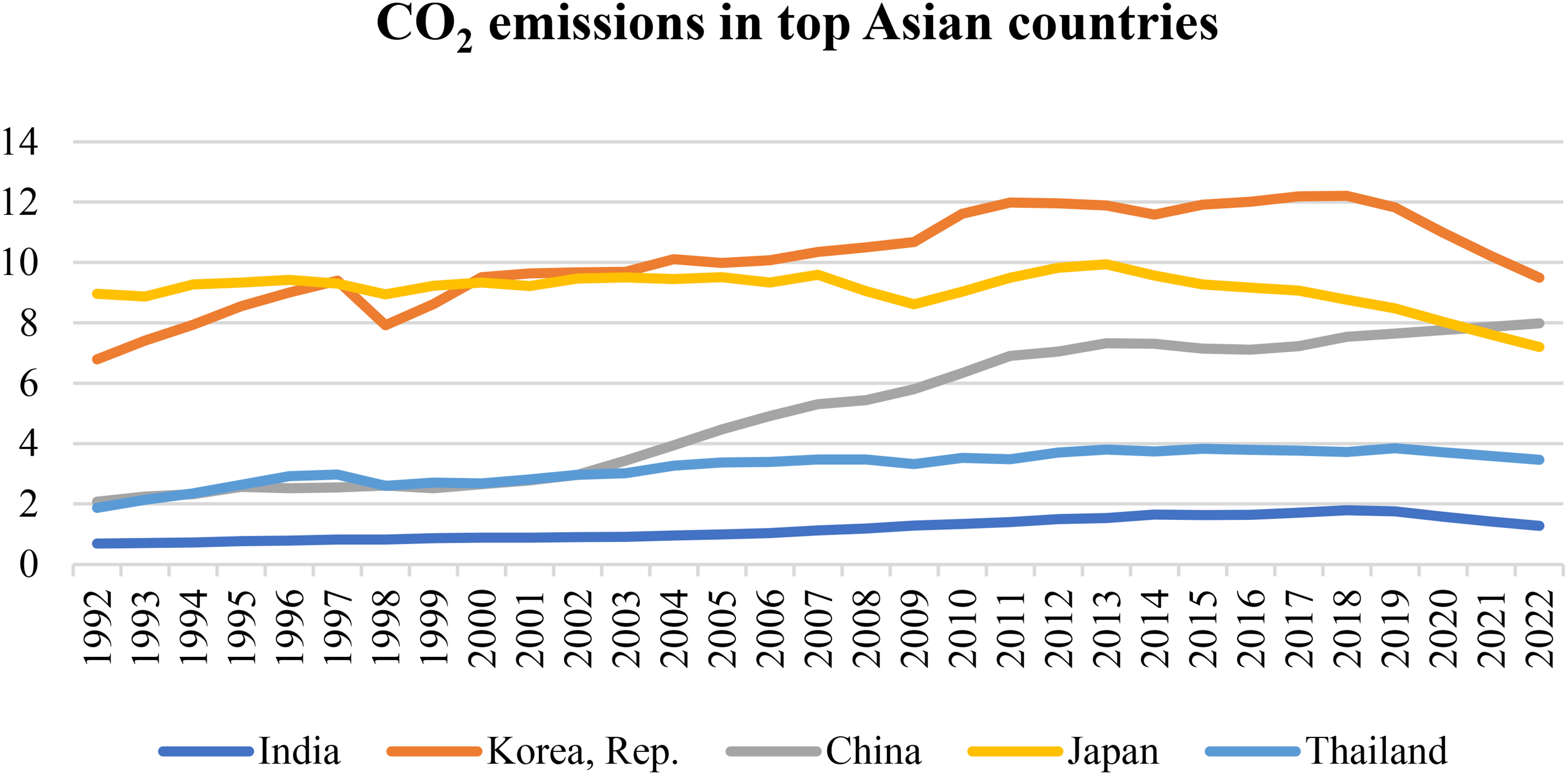
CO2 emissions from 1992 to 2022.
This research provides multiple original insights into the field's current understanding. First, it investigates how DGT interacts with REN and green TI to affect the CO2. Unlike prior research focused solely on the direct impact of DGT on the environment, this study delves into the interactions between these variables, particularly in top Asian countries (India, China, Korean republic, Japan, and Thailand), driven by SDGs 7, 12, and 13. Second, given the leading role of top Asian members in aligning policies with SDG objectives, the empirical findings could provide constructive visions for government policymaking in addressing climate change within the digital economy. Moreover, while previous studies often rely on emission levels as environmental indicators, this research adopts CO2 as a comprehensive measure of environmental degradation, considering the planet's biocapacity to support economic activities. Third, methodologically, it utilizes a panel quantile estimator to address potential challenges like endogeneity, reverse causality, and heterogeneity. Empirical findings suggest that DGT, along with TI and REN, contributes significantly to environmental sustainability. Additionally, the relationship between DGT and green innovation strengthens the way in which DGT reduces its ecological imprint, and the REN strengthens the way in which DGT promotes environmental sustainability.
The paper proceeds with a literature review in the “Literature” section, followed by detailed data and model specifications in the “Material and methods” section, Results and discussions in the “Empirical results” section, and a conclusion with policy recommendations in the “Conclusion and policy recommendation” section.
Literature
Renewable energy, digitalization, and environment
Renewable energy sources are essential components of mitigating the fossil fuel problems and achieving SDG-7. Various studies have consistently demonstrated their positive impact. Danish et al. 17 emphasized the mitigating influence of REN on CO2 in the BRICS economies. According to Lin and Wang's findings, the BRICS countries’ CO2 is successfully reduced by their use of REN. In 24 OECD countries, Destek and Sinha 18 found less environmental impact. Digitalization has significantly boosted the development of renewable energy technologies in leading Asian countries by optimizing energy production and consumption patterns. Technologies such as smart grids, artificial intelligence (AI)-driven forecasting, and IoT sensors enable more efficient management of renewable resources like solar and wind power. 19 In countries like China and India, digital tools have facilitated the large-scale deployment of renewable resources by improving grid management and energy storage solutions, thus increasing the reliability and efficiency of renewable energy sources. 20 The incorporation of digital technologies in renewable energy projects has led to an increased share of renewables in the energy mix of top Asian countries. For instance, predictive maintenance tools and performance monitoring have reduced costs and enhanced the operational efficiency of renewable installations, making them more competitive with traditional energy sources. This digital shift has resulted in cleaner energy grids, with a significant reduction in reliance on fossil fuels and a move towards more sustainable energy solutions. 21
Gençer et al. 22 highlighted the significance of industrial and inter-sectorial integration as well as the convergence of power and transportation. They emphasized that REN has an influencing role in addressing CO2 within the industrial sector. Cardoso and González 23 assessed that the lack of energy-efficient policies and REN in Argentina has resulted in increased operational costs and higher environmental impacts. Baloch et al. 24 have checked the REN impact on CO2 emissions by using the data from 1990 to 2015 of BRICS economies and found that REN is a vital indicator for reducing CO2. Kokkinos et al. 25 evaluated the impact of REN on achieving a sustainable low-carbon environment. Their findings underscored that energy in metropolitan zones significantly influences the effectiveness of REN policies aimed at reducing carbon emissions. Similarly, Poruschi and Ambrey 26 concluded that the installation of solar panels could facilitate REN, particularly in densely built environments in Australia. Wang et al.,14–16 contributed to understanding the multifaceted dynamics shaping global environmental sustainability and informs policy interventions in 208 countries. The aim of this study is to achieve a balance between economic growth and environmental protection.
Moreover, Li et al. 27 investigated the correlation between low-carbon REN and environmental policies in China. Their research indicated that REN initiatives in Chinese areas have resulted in a sustainable solution for SDGs. Caglar et al. 28 explored the better impact of renewable energy on environment than non-renewable energy consumption on 10 countries (China, Brazil, Germany, Indonesia, India, Japan, Mexico, Russian Federation, United States and United Kingdom. Mujtaba et al. 29 examined data from leading Asian nations and found that REN has a major influence in reducing CO2 and environmental deterioration. According to Bekun et al., 30 the E-7 countries’ environmental sustainability is significantly influenced by their use of REN. According to Sun et al., 31 it is crucial for resolving environmental problems in the ten most polluted nations. Cao et al., 32 ; Feng et al., 33 ; Fatima et al., 34 found the similar results. Husaini et al. 35 confirmed that REN has the potential to lower emissions in the E-7 countries. Wolde-Rufael and Mulat-Weldemeskel 36 emphasized its contribution to reducing environmental pollution in a subset of eighteen Latin American and Caribbean nations. Concerning the connection between DGT and REN, Li et al. 27 proposed that DGT and energy structures working together can mitigate environmental deterioration. While Shahbaz et al. 7 explored that the digital economy promotes REN, Usman et al. 37 reported that developing the information and communication technology (ICT) industry in South Asia could increase energy efficiency. Additionally, it demonstrates the valuable effects of DGT on sustainability and energy efficiency in Asian economies Zhang et al.. 38
TI, digitalization, and environment
The SDGs are largely dependent on innovation since they reduce environmental pressure by promoting low-carbon technologies and changing production patterns. The research explores the connections between innovation and digitization as well as the environment in this area. First, it becomes clear that funding ecologically linked technologies is essential to reducing harmful environmental effects. Numerous research has explored the potential of innovation and its effects on the environment. Lin and Zhu 39 noted a positive contribution of TI to carbon emissions mitigation in China from 2000 to 2015. According to Gormus and Aydin, 40 technical innovation has reduced environmental deterioration in the top 10 inventive economies. Kamyab et al., 41 investigated different methods to reduce agricultural emissions. It divided these methods into three categories: Sustainable agricultural practices, improved livestock management, and precision agriculture. Each category includes various innovative approaches and technologies designed to decrease emissions and increase agricultural sustainability. Shan et al. 10 used a bootstrap ARDL model to show how green TI helps reduce environmental harm in Turkey. As global economies strive for industrial transformation, innovation in environmental technologies has emerged as a key driver for promoting sustainable growth. These innovations shape the influence of environmental attributes.42,43 They are often hailed as the solution to combat CO2. 6 However, previous research has focused on evaluating the influence of eco-innovations on environmental quality using CO2 as a stand-in for environmental contamination. By using data from OECD economies, Bashir et al. 44 showed how environmental improvements help reduce CO2, which helps to improve environment quality over time. On the other hand, the effect of environmental innovation on CO2 has yet to be the subject of much research. Ahmad et al. 45 explored that TIs not only complete the task efficiently but also maintain the environmental quality. Similarly, Gormus and Aydin 40 showed that environmental technology and EFP had a comparable association in a few OECD nations, most notably in the US, South Korea, and Finland. They did point out that the coefficient estimates for other nations, like the UK, Switzerland, Sweden, Netherlands, Israel, Germany, and Denmark, differed. Ahmad and Wu 46 demonstrated how eco-innovation improves environmental quality in 20 chosen countries while having a negative impact on CO2. On the other side, DGT may encourage the formation of new sectors and alter manufacturing methods, opening doors for the advancement of technological advancements that are ecologically friendly. According to Usai et al., innovation capacities in European nations are immediately impacted by cutting-edge digital technologies like robotics and big data. By reducing financial barriers, Xue et al. 47 demonstrated how China might advance green innovation through the adoption of digital technology. According to Li et al., 27 the digital economy improves industrial infrastructure. Furthermore, the importance of digitization promoting innovation in energy storage systems in China was emphasized by Zhang et al.. 38 Wang et al.48–50 confirm AI's role in enhancing energy efficiency and reducing emissions, the specific impact of trade openness remains a subject of investigation. import diversification has a significant effect on reducing carbon emissions, while the impact of trade openness exhibits asymmetry. This study contributes to understanding the complex dynamics between trade policies and environmental outcomes, informing policymakers about the asymmetric implications of trade diversification and openness on carbon emissions.
Digitalization and environment
The intersection of DGT and the environment has become a focal point in recent literature 51 ; Su et al., 52 , with DGT permeating every facet of the economy and fostering sustainable economic growth. However, the environmental impact of DGT remains a topic of debate, with studies presenting contrasting viewpoints on its effects. According to one set of research, digitization is essential for cutting emissions and slowing down environmental deterioration. Matthews et al. 53 and Al-Mulali et al. 54 observed emissions reduction in developed countries due to e-commerce. Teleconferences were also found to decrease transportation-related emissions significantly, 55 and DGT was shown to contribute to emissions reduction in the transportation sector. 56 Furthermore, studies by Leng et al. 57 , Mao et al. 58 and Esmaeilian et al. 59 all lend credence to the idea that digitization encourages environmentally friendly production and lessens environmental deterioration. Danish 60 and Haseeb et al. 61 explored that DGT improved the quality of the environment in various countries, while Chien et al. 62 reported positive contributions to environmental quality in emerging markets and BRICS countries, respectively. However, another group of studies suggests that widespread DGT may hinder green growth and worsen environmental quality. Hischier and Reichart 63 found that online transactions are less detrimental to the environment compared to printed newspapers, while Danish et al. 17 linked that DGT adversely impacted environment quality in certain economies. Similarly, According to Avom et al., 64 rising carbon emissions caused by DGT have a detrimental impact on environmental quality in Sub-Saharan African nations. Digitization makes it easier for manufacturing components to travel between locations and promotes information integration and distribution. Digital technology has been shown to have technology spillover effects that reduce carbon emissions in surrounding locations. 65 Several elements, including trained labor, capital investment, sophisticated equipment, and market dynamics, have an impact on the rise of DGT sectors. 66 Barteková & Börkey 67 claimed that DGT enhances sustainable growth and and social well-being. Major cities with strong business environments and support systems draw professional talent, capital, and companies from surrounding areas during the early phases of municipal digitization, which widens the digital divide between cities. 68 Overall, improvements in production efficiency and quality have resulted from the major reduction of spatial barriers to information sharing and the acceleration of resource allocation brought about by digital technology. 69 Furthermore, by boosting efficiency and broadening market reach, digital technology and online commercial activities like e-commerce and online services have upended conventional company structures. Because of this, the rise of these creative industries has promoted the fusion of real and digital economies, accelerating technical development in important economic domains and promoting structural change and economic expansion. 38 But economic growth has also raised the demand for energy-related goods and increased energy consumption. 70 Rising energy consumption rates and rising CO2 are a result of the economy's rapid expansion as well as the adoption of energy-intensive technology like cloud computing. 71 Digital technologies have a major role in helping traditional industries adapt to green businesses. By offering intelligent tools, they improve information accuracy, optimize the internal structure and industrial architecture, and enable the logical allocation of production factors. 72
Literature gap
Now, it becomes evident that previous studies have primarily focused on assessing the direct impact of DGT on the environment using a single indicator, typically internet usage. However, the process of DGT involves multiple dimensions that can influence environmental sustainability. Through the adoption of DGT, opportunities arise for promoting TI, and improving the REN. Despite these potential synergies, there remains a notable gap in the literature regarding the moderating influence of these factors on the relationship between DGT and CO2. Moreover, research in this area is particularly scarce for top Asian countries (India, China, Korean republic, Japan, and Thailand), highlighting the need to address this gap to inform environmental policy revisions within these nations. To close these gaps, the purpose of this study is to build a composite index based on four important DGT criteria to examine how DGT affects environmental sustainability. Additionally, the study explores the potential moderating effects of DGT with TI and REN on the DGT-CO2 relationship. By considering these factors holistically, this research aims to contribute valuable insights into how DGT can facilitate the achievement of carbon neutrality, highlighting the importance of interdisciplinary approaches in environmental policy formulation and implementation.
Material and methods
Theoretical framework
The theory of sustainable development posits that economic growth, social progress, and environmental protection can be achieved concurrently to meet the needs of the present without compromising the ability of future generations to meet their own needs. Within this framework, DGT, green innovation, and REN are seen as essential components of transitioning towards a more sustainable future and mitigating carbon emissions. DGT can lead to increased efficiency in resource use, improved monitoring and management of energy consumption, and the optimization of industrial processes. By enabling smarter energy grids, intelligent transportation systems, and more efficient manufacturing processes, DGT can help reduce carbon emissions. Sustainable development theory emphasizes the importance of innovation in developing environmentally friendly technologies and practices. Green technology innovation involves the development of cleaner energy sources, eco-friendly products, and sustainable production methods. By investing in green innovation, societies can transition towards low-carbon economies and reduce their reliance on fossil fuels, thereby lowering carbon emissions. The theory promotes switching from energy systems that rely on fossil fuels to those that use REN sources, including hydroelectric, solar, and wind power. The REN entails substituting cleaner fuels for coal and other carbon-intensive sources. REN can assist in lowering carbon emissions and lessening the effects of climate change by encouraging the use of REN technologies and enhancing energy efficiency. The Theory of Sustainable Development provides a comprehensive framework for understanding how DGT, TI, and REN can contribute to the goal of reducing carbon emissions while promoting sustainable economic prosperity and social well-being (Figure 2).
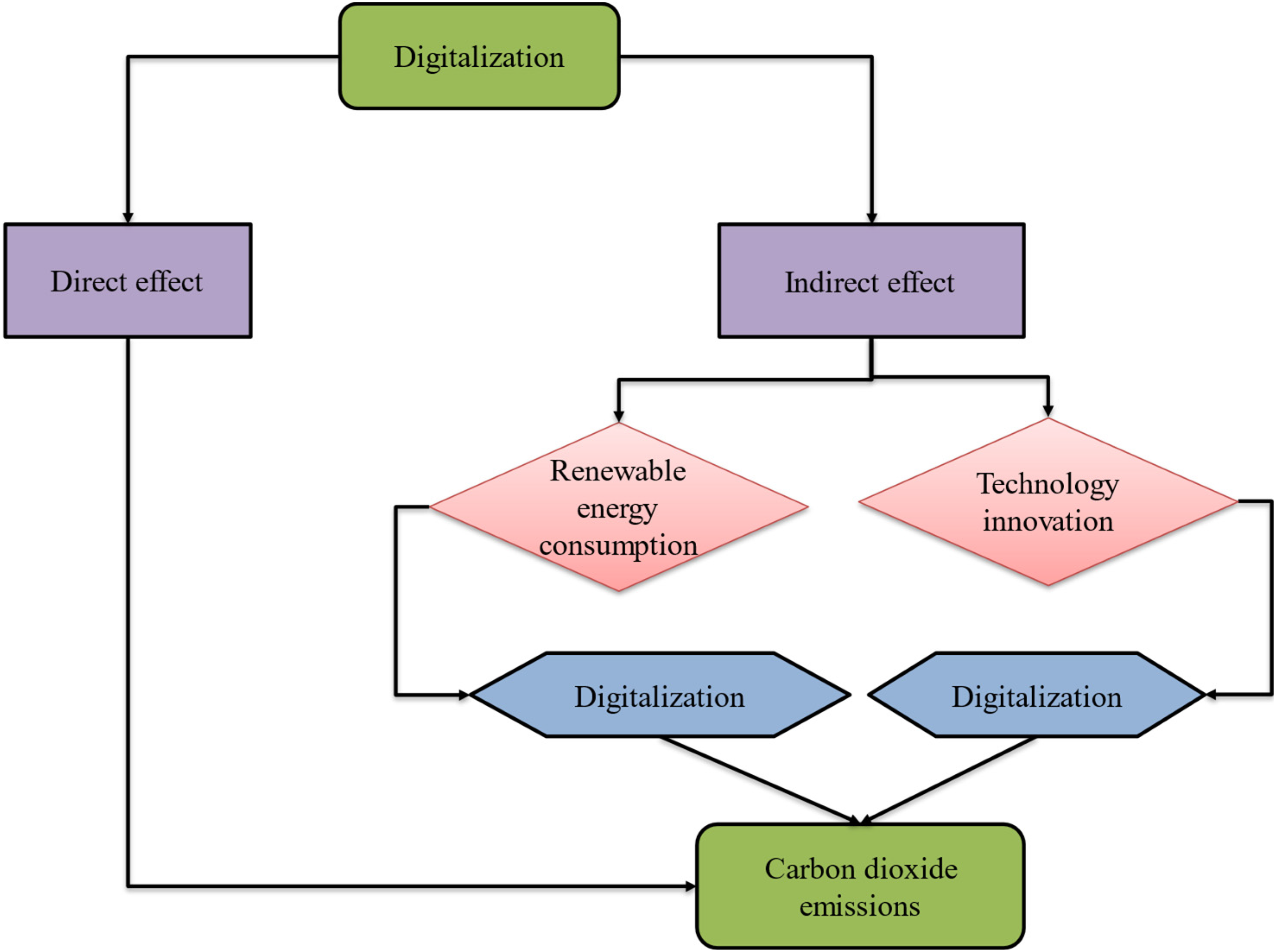
Theoretical framework.
The equations below offer a systematic framework for examining the complex interactions and interrelations among the variables,
73
elucidating the pathways through which DGT, REN, and TI contribute to the fundamental objective of minimizing CO2.



Empirical framework
This paper aims to examine how green innovation and REN moderate the relationship between DGT and decreased CO2 across selected top Asian countries including (India, China, Korean republic, Japan, and Thailand). The reason for selecting these economies is that these countries represent major economic hubs in Asia, influencing regional and global dynamics. They have large populations and prioritize to reflect diverse demographic trends and consumption patterns, impacting sustainability initiatives. Countries with significant environmental challenges or successes were included to study diverse approaches to sustainability. Data spanning from 1990 to 2022 are utilized in a panel dataset. Instead of relying solely on carbon emissions, this study adopts the CO2 concept proposed by Wackernagel and Rees (1997) to capture a broader spectrum of environmental degradation caused by human activities. This includes activities that contribute to the CO2, such as the extraction of natural resources, deforestation, building, transportation, and urban development.
The main independent variable is DGT, which includes internet users, fixed broadband subscriptions, and mobile cellular subscribers. These indicators reflect the development of digital infrastructure fundamental to the DGT process. Over the past decade, top Asian countries have witnessed significant arise in technology products. In addition to DGT, other independent variables include green innovation and REN consumption. These variables are essential in understanding the broader context of the DGT-CO2 relationship. Table 1 provides detailed descriptions of all variables, facilitating a comprehensive analysis of the moderating effects of DGT with TI and REN.
Measurement of the variables.

TI: technological innovation; REN: renewable energy consumption; DGT: digitalization.
Cross-sectional dependence
To initiate the empirical examination, we first address the cross-sectional dependence (CD) issue, which has the potential to introduce inconsistency and bias into empirical results (Phillips & Sul, 2003). The interconnectedness among various economies gives rise to CD among datasets.
We use an empirical test created by Pesaran (2004) to allay this worry. We apply the subsequent formula to evaluate CD in our dataset:
Panel unit root testing
Following the confirmation of CD, we conducted unit root tests to address this issue. Economists typically recommend second-generation unit root tests for mitigating CD as they offer improved power to accommodate it. Furthermore, these tests presuppose that the dataset has no CD. To achieve this, we used the CADF and CIPS tests since they take heterogeneity and CD into account across the dataset.
Panel quantile regression
The panel quantile regression (PQR) method was first presented by Koenker and Bassett in 1978. It estimates numerous regression functions, each of which corresponds to a distinct quantile of the conditional distribution. Quantile regression lines are determined by different quantiles of the data distribution, in contrast to ordinary least squares regression, which calculates coefficients based on the average of the data set. The reason for applying PQR is that it accommodates non-normal and heteroscedastic data, making it robust to violations of standard regression assumptions. Additionally, it accounts for unobserved heterogeneity and time-invariant characteristics within panel data settings, enhancing the validity of the estimates. Alternative methods, such as fixed effects or random effects models, may not adequately capture the heterogeneous effects across different quantiles, potentially leading to biased estimates. Moreover, these methods may overlook the presence of outliers or extreme values, which can significantly impact the results. We can examine the link between explanatory and explained variables over the whole data distribution with this approach. In empirical economics, quantile regression is frequently used (McDonald et al., 2016; Xu & Lin, 2016).
The following is the expression for the quantile regression model:


Empirical results
Descriptive statistics
Table 2 provides descriptive statistics for the variables under investigation. Over the sample period, the variable with the highest average value is DGT, recorded at 36.75, while it shows the lowest average value of 0. The average values of other variables, including CO2, TI, REN, and POP, fall between these extremes. Additionally, the maximum values for DGT and REN are 98.638 and 26.372, respectively. Standard deviations were calculated to evaluate the variability of the variables and reduce possible economic problems like false results. According to the results, CO2 is the least volatile. However, these standard deviations are not deemed problematic for our econometric analyses based on the available data.
Descriptive statistics.

TI: technological innovation; REN: renewable energy consumption; DGT: digitalization.
Correlation results
In Table 3, the Variance Inflation Factor (VIF) results are shown, with VIF values below 10, signifying an absence of multicollinearity concerns. The correlation plot depicted in Figure 3 illustrates the pairwise correlations among variables using varying shades. A deep blue shade indicates a perfect positive correlation. Conversely, a paler red shade suggests a reduced multicollinearity problem among independent variables.
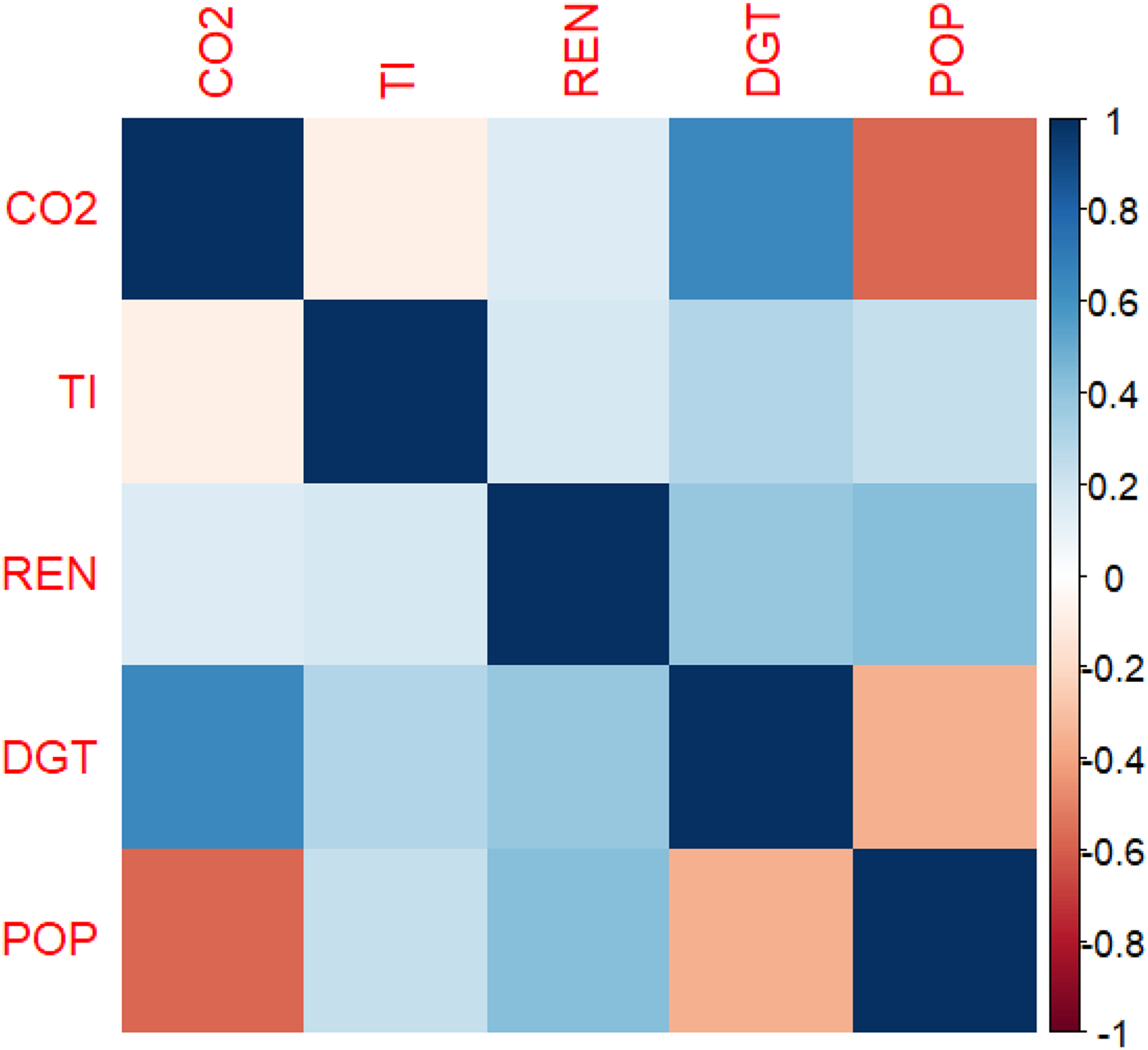
Correlation plot.
Variance inflation factor.

TI: technological innovation; REN: renewable energy consumption; DGT: digitalization; VIF: variance inflation factor.
Cross section dependency
The results presented in Table 4 indicate the test statistics for CD among all variables CO2, TI, REN, DGT, and POP. The test statistic for CO2 is 3.81, indicating a statistically significant level of CD among carbon emissions. TI has a 12.06 test statistic, suggesting a highly significant level of CD among TI variables. REN, DGT, and POP have a test statistic of 6.71, 15.07, and 12.35, respectively. The results suggest that there is significant CD among all the examined variables, highlighting potential interrelationships and interactions between them within the dataset.
Cross-section dependency results.
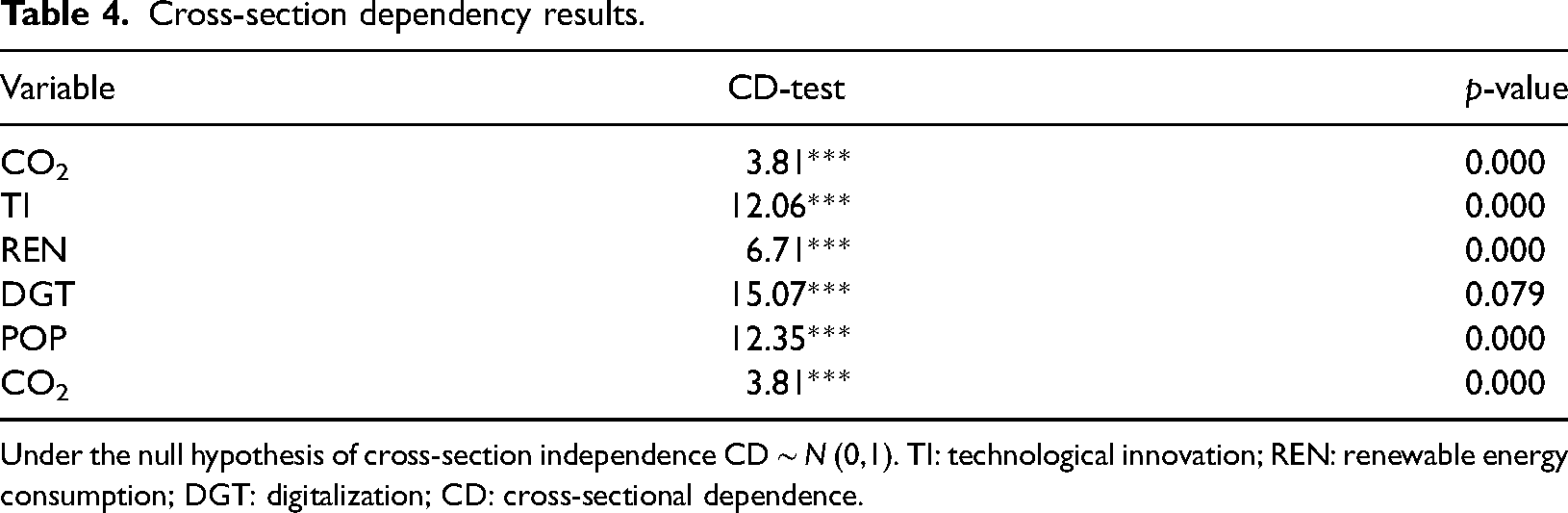
Under the null hypothesis of cross-section independence CD ∼ N (0,1). TI: technological innovation; REN: renewable energy consumption; DGT: digitalization; CD: cross-sectional dependence.
Testing for unit root
The results in Table 5 present the testing for unit root or stationarity using two different tests: The CIPS test and the test. These tests help determine whether the variables exhibit a unit root (non-stationarity) or are stationary. The outcomes indicate that all variables are non-stationary at the level except POP. Additionally, these findings suggest that first differencing may be necessary to achieve stationarity for further analysis.
Testing for unit root/stationarity.

TI: technological innovation; REN: renewable energy consumption; ICT: information and communication technology.
Slope heterogeneity
Table 6 presents the results of testing for heterogenous slope coefficients. The null hypothesis posits the presence of homogenous slope coefficients. According to the findings in Table 6, both the Delta tilde and Delta tilde adjusted tests yield significant results at the 1% level, indicating the presence of heterogenous slope coefficients.
Slope heterogeneity/homogeneity.

Panel quantile regression
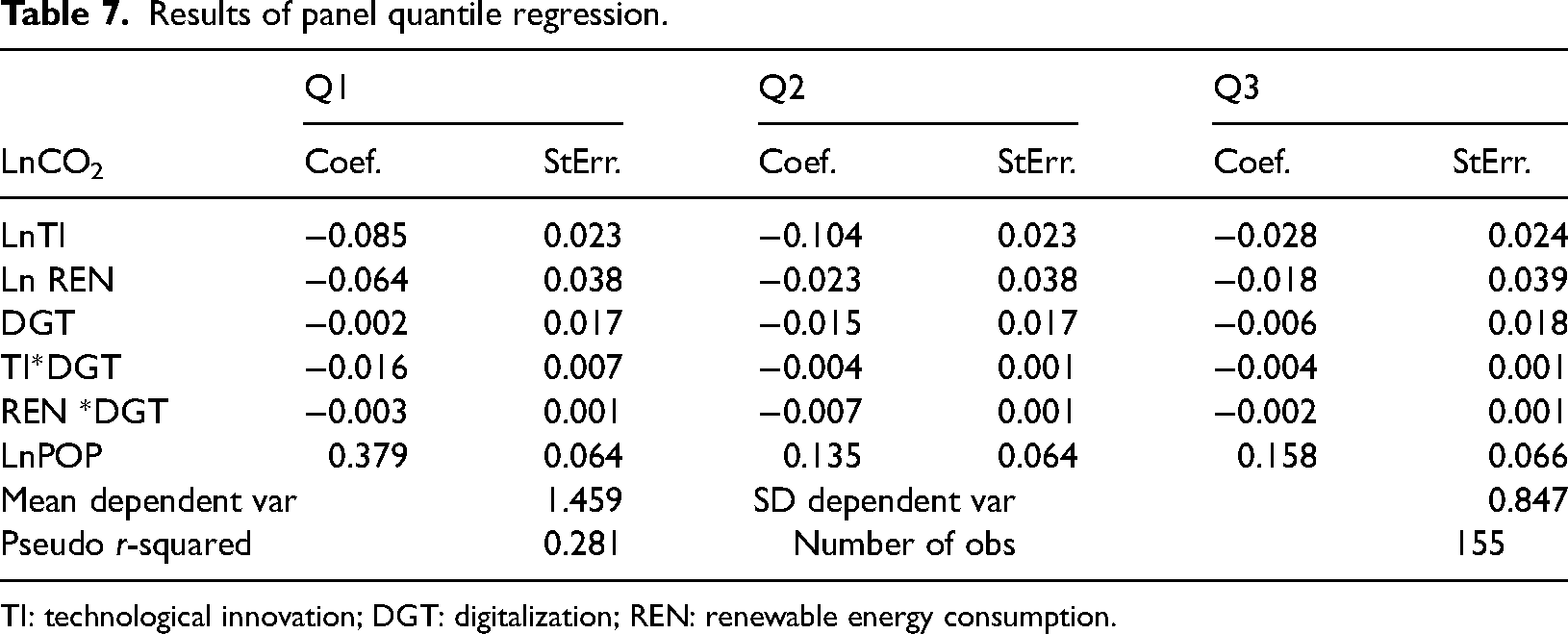
Finally, Table 7 presents the results of PQR, which shows the association among the variables. Regarding green innovation's effect on CO2, our results show that a unit increase in TI corresponds to a (−0.085%, −0.104%, −0.028%) decrease in CO2 across all quantiles. This underscores the effectiveness of TI as a policy instrument in mitigating the adverse effects of energy consumption. By facilitating the transition from conventional technologies to greener, energy-efficient alternatives, green innovation reduces resource consumption and promotes environmental quality. Thus, top Asian countries must promote green innovation initiatives, as they enable firms to advance technologically in their production processes, thereby reducing their environmental footprint. This result aligns with the empirical findings of Hashmi and Alam 74 and Ahmad and Wu 46 for top Asian countries.
Results of panel quantile regression.
TI: technological innovation; DGT: digitalization; REN: renewable energy consumption.
Additionally, our findings demonstrate that an increase in REN leads to a reduction in CO2. Specifically, a one-unit increase in the REN is associated with a decrease in CO2 across all quantiles (−0.064%, −0.023%, −0.018%). This illustrates how REN sources help decarbonization efforts and enhance environmental performance, which in turn helps the shift to a cleaner environment. Therefore, the incorporation of REN into the energy mix must be given top priority in the energy strategies of leading Asian nations to attain long-term enhancements of environmental conditions. This result is in line with earlier studies by Suki et al. (2022) and Huang et al.. 75 Moreover, the findings indicate that DGT (−0.002%, −0.015%, −0.006%) reduces the CO2 across all quantiles. It shows that DGT facilitates remote work and telecommuting, reducing the need for commuting and office space. This leads to lower energy consumption associated with transportation and office buildings, consequently decreasing CO2. It can also optimize resource utilization in agriculture, water management, and energy distribution. By accurately monitoring and managing resource use, DGT can help minimize waste and environmental impact. This result aligns with the results of.14–16,73,76
Additionally, the findings show that the interaction term coefficient (DGT*TI) between green innovation and DGT is negative and statistically significant. This implies that in the leading Asian countries, DGT and green innovation work together to lower CO2. Integrating policies on DGT and green innovation may have an encouraging impact on environmental quality compared to the individual effects of DGT alone (shown in Figure 4(a). In essence, the moderating effect of green innovation strengthens the mitigating influence of DGT on CO2. The integration of (DGT*TI) offers a range of opportunities to reduce CO2 by improving efficiency, optimizing resource use, facilitating REN adoption, and promoting sustainable behaviors. Digital tools have streamlined collaboration between universities, research institutions, and industries across Asia. Online databases, virtual labs, and collaborative platforms allow for seamless sharing of data and research findings, expediting innovation in climate-related technologies. For example, the Chinese Academy of Sciences uses digital archives and AI to predict environmental changes and develop climate response strategies. Digital platforms facilitate citizen engagement through crowdsourcing data and participatory monitoring of environmental conditions. This grassroots level data collection enhances the accuracy of environmental assessments and empowers citizens by involving them directly in climate action initiatives. This finding is like the conclusions drawn by Ma et al. (2022).

(a) Tracing the effect between TI and CO2 with moderating effect of DGT. (b) Tracing the effect between REN and CO2 with moderating effect of DGT. TI: technological innovation; REN: renewable energy consumption; DGT: digitalization.
Moreover, the negative coefficient of the interaction term (DGT* REN) is statistically significant (−0.003%, −0.007%, −0.002%) across all quantiles. These results imply that the combination of DGT and REN has significant potential to reduce the CO2. Furthermore, REN reinforces the negative impact of DGT on the CO2. This indicates the role of DGT in enhancing the technical efficiency and cost-effectiveness of REN systems, thereby contributing to decarbonization efforts. Thus, the interaction between (DGT * REN) emerges as a key driver for promoting environmental sustainability. These results reaffirm that the interaction between DGT, TI, and REN collectively enhances the effect of DGT and mitigates CO2. Thus, it highlights the importance of integrating DGT with other factors to achieve environmental sustainability in top Asian countries (shown in Figure 4(b).
Asia's top economies have harnessed digital technologies to enhance public awareness and education regarding sustainable development and climate change. Digitalization has played a pivotal role in fostering collaboration and partnerships among government bodies, industries, and academic institutions, addressing the multifaceted challenges posed by climate change. The integration of digital platforms and strategies varies significantly across the region, reflecting diverse technological landscapes and policy priorities. China leverages platforms like WeChat and Sina Weibo for wide-reaching climate change education and awareness campaigns. The government and environmental NGOs use these platforms to disseminate information, interactive content, and real-time pollution indexing. Apps like Ant Forest turn green actions into a game, encouraging users to reduce their carbon footprint and engage in reforestation projects, thus promoting environmental consciousness through daily activities. Japan utilizes its sophisticated ICT infrastructure to promote sustainable practices through public portals and e-government services. The “Cool Choice” campaign by the Ministry of the Environment encourages citizens to make lifestyle choices that mitigate climate impact, facilitated through digital tools and resources that educate the public on sustainable alternatives. South Korea's comprehensive digital campaigns integrate climate change into public education systems, using online platforms to provide resources and interactive learning modules. The country also employs smart technologies in cities to enhance urban sustainability, thereby using digitalization as a method for both education and implementation of climate-smart solutions. India uses digital media extensively to reach its large and diverse population. Platforms like the India Climate Collaborative bring together business, NGOs, and media to drive climate change initiatives. The government's “Digital India” initiative promotes the use of online resources to educate and engage citizens in sustainability practices.
Lastly, the impact of the control variable (POP) is statistically significant on the CO2. While expanding ecological reserves is crucial for future generations, empirical evidence suggests that this expansion leads to increased resource exploitation and a larger CO2. POP density exerts a positive impact on CO2, suggesting that it does not promote economies of scale, digital advancements, and resource efficiency in businesses, ultimately increasing CO2. This result aligns with the empirical findings of Wang et al.14–16 and Rani et al.. 77
Robustness analysis
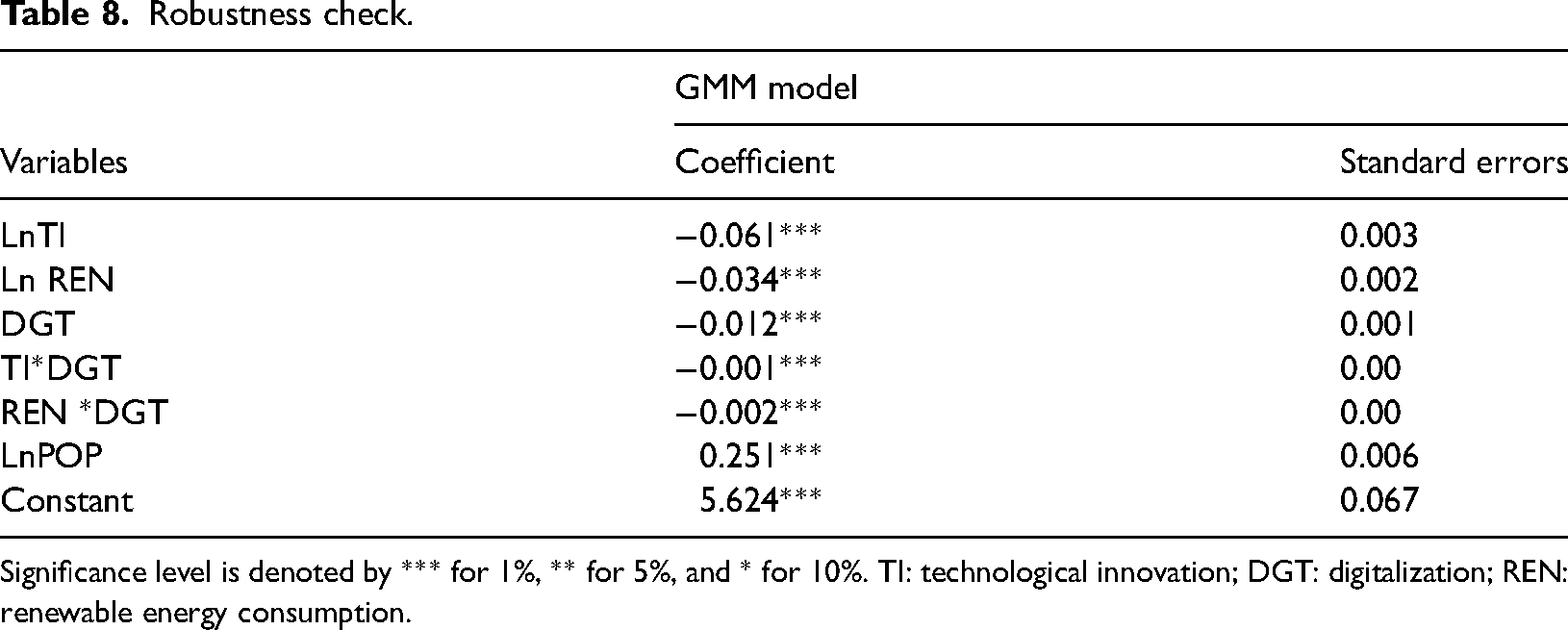
To ensure the reliability of the findings obtained from the PQR, a robustness check is conducted using the GMM model. The empirical outcomes of this robustness analysis are presented in Table 8. The coefficient of the LnTI is statistically significant (−0.062) at the 1% level, indicating that TI has a negative impact on the CO2. The standard error associated with this coefficient is 0.002. Consistent with the regression results from PQR, REN and DGT demonstrate negative and statistically significant effects (−0.035) and (−0.013) on the CO2, respectively. It represents that digital platforms and applications can raise awareness about environmental issues and promote sustainable behaviors among individuals and organizations. For example, smart home devices can help users monitor and reduce energy consumption, while digital platforms can facilitate sharing economy initiatives and promote sustainable consumption patterns. Moreover, the results pertaining to the interaction variables (DGT*TI and DGT* REN) align with those obtained in Table 8. Therefore, it is concluded that robustness results are checked in this study, and results are consistent with those derived from the PQR results. The control variable POP density exhibits a statistically significant positive impact on the CO2.
Robustness check.
Significance level is denoted by *** for 1%, ** for 5%, and * for 10%. TI: technological innovation; DGT: digitalization; REN: renewable energy consumption.
Conclusion and policy recommendation
The current study comprehensively investigates the impact of DGT on environmental sustainability, particularly its interaction with TI and REN, aligning with SDGs 7, 12, and 13. Utilizing panel data from top Asian countries including (India, China, Korean republic, Japan, and Thailand) over the period 1990–2022, the findings show that environmental degradation is negatively and statistically significantly impacted by (DGT*TI), and (REN *DGT) reduces resource waste and mitigates CO2 through dematerialization, decarbonization, and demobilization impacts. It also improves manufacturing efficiency using automation systems. The conversion of traditional technologies into greener ones depends heavily on green innovation. One unit increase in TI corresponds to a decrease in the CO2 across all quantiles (−0.085%, −0.104%, −0.028%). More energy-efficient alternatives, minimizing resource waste and enhancing the mitigating effect of CO2. REN strengthens the environmentally sustainable impact and contributes to decarbonization. In essence, the moderating effect of GI strengthens the mitigating influence of DGT on CO2. The integration of (DGT*GI) offers a range of opportunities to reduce CO2 by improving efficiency, optimizing resource use, facilitating REN adoption, and promoting sustainable behaviors. The study confirms that digitalization facilitates enhanced sustainability practices across multiple sectors by integrating innovative technologies with environmental objectives. This alignment is crucial for reducing ecological footprints and promoting sustainable economic growth in Asia. By leveraging digital tools, Asian countries can optimize the use of natural resources like solar, wind, and tidal energy, contributing significantly to clean and sustainable energy generation. The interaction between (DGT* ET) emerges as a key driver for promoting environmental sustainability. These results reaffirm that the interaction between DGT, GI, and REN collectively enhances the effect of DGT and mitigates CO2. The POP shows a positive relationship with CO2 which suggests that populations explosion increase the CO2. The research underscores the necessity of TI in clean energy sectors to achieve sustainable economic growth. Digitalization not only supports the deployment of renewable energy technologies but also stimulates economic activities that are both profitable and environmentally friendly. The study's policy recommendations include encouraging investments in environmentally friendly technologies and incorporating green innovation policies into DGT goals. It encourages the use of REN sources and reorganizes manufacturing practices. Governments must keep an eye on emerging digital trends and help energy companies integrate these technologies into their operations. Financial institutions should widely use digital technology at the same time to improve the effectiveness of financial transactions and product development.
Not all regions within Asian countries may have equal access to digital technologies, leading to disparities in implementing digital solutions for sustainability. Addressing this requires investments in infrastructure and technology diffusion programs. Digitalization involves handling vast amounts of data, raising concerns about privacy breaches and cyber threats. Robust data protection laws, cybersecurity measures, and public awareness campaigns can help mitigate these risks. There may be a shortage of individuals with the necessary digital skills to implement and manage sustainable initiatives. Investing in education and training programs focused on digital literacy and environmental sustainability can bridge this gap. Increased digitalization leads to the generation of electronic waste (e-waste), posing challenges in its proper disposal and recycling. Implementing effective e-waste management policies, promoting circular economy practices, and encouraging product design for longevity and recyclability can address this issue. Digital technologies often require significant energy consumption, potentially offsetting the environmental benefits they aim to achieve. Investing in renewable energy sources, optimizing energy-efficient technologies, and adopting sustainable computing practices can help minimize this impact. Addressing these challenges requires a multi-stakeholder approach involving governments, businesses, academia, and civil society to develop comprehensive strategies that harness the potential of digitalization while ensuring environmental sustainability.
The study's possible drawback, though, is that it only looked at a few modifiers, like REN and green innovation. To provide a more thorough knowledge of the topic, future studies might examine other elements influencing the environmental effectiveness of DGT, such as trade dynamics, globalization, environmental taxation, and institutional quality.
Footnotes
Data availability statement
All the data and material are publicly available it can be provided on demand.
Declaration of conflicting interests
The authors declared no potential conflicts of interest with respect to the research, authorship, and/or publication of this article.
Funding
The authors disclosed receipt of the following financial support for the research, authorship, and/or publication of this article: This work was supported by the Philosophy and Social Science Planning Fund of Tianjin, China (grant number: TJYJ18-019).

Statement and declaration
The authors declare that they have no known competing financial interests or personal relationships that could have appeared to influence the work reported in this paper. It is also declared this work represents original research and has not been published or submitted elsewhere.