



Abstract
The global concern over carbon emissions has necessitated a deep understanding of energy use and air pollution. The fossil fuel- and nuclear-dependent Russian economy is an exciting exception. It examined how nuclear energy consumption (NEC), electricity generation, R&D investment, clean energy production technology, e-commerce penetration, capital creation, and carbon pollution affect the Russian economy. Short- and long-term interactions between these variables are assessed using the ARDL-Bound testing model for 1995Q1–2020Q4. The results show that NEC negatively correlates with CO2 emissions. The study also supports the inverted U-shaped Environmental Kuznets Curve (EKC) hypothesis, showing a positive and significant relationship between clean power production technology and CO2 emissions and a negative and significant relationship between square clean alternative energy innovation and CO2 emissions. Scientific and technical expenditures, fossil fuel coal liquefaction, and investment all negatively and statistically significantly affect CO2 emissions. However, the analysis implies that e-commerce increases CO2 emissions. These findings highlight the need for significant R&D investment to create precise and realistic ways to decrease carbon emissions and protect the environment in accordance with COP 26 targets. These findings have significant implications for the Russian economy, showing that improving energy sources and investing more in R&D may reduce carbon emissions.
Keywords
Introduction
The paramount significance of energy conservation and efficiency in mitigating the contribution of fossil fuel emissions to meeting global energy demands and structural shifts is essential for attaining long-term climate objectives. The UNFCCC
1
mandates that Russia's economy develop new regulations to decrease greenhouse gas (GHG) emissions to zero level. These policies include:
Achieving an 80% net reduction in GHG emissions. Maximizing the captivating capacity of forests and other ecosystems. Humanizing forest management practices, enhancing response capabilities, preserving and increasing wild areas. Introducing new technological innovations in farming and transitioning towards cleaner energy. The introduction of high-tech for the manufacture, transport, and dispersal of greener fuels around the nation.
Research by Parra et al.
2
confirms that oil exploration-related activities such as oil fields, energy carriers, labor, and power capacity contribute to GHG emissions and changes in the environment's performance. Fossil fuels extracted from the earth's crust are the primary contributors to GHGs. The high global dependence on fossil fuels leads to a higher level of carbon emissions, necessitating the expansion of renewable energy consumption (REC) initiatives.
3
Structural change is crucial to achieving socioeconomic growth and environmental quality. The asymmetric structural change on CO2 emissions controls with the effects of REC and nonrenewable energy (NRE) reduction. The economy's higher reliance on fossil fuel increases CO2 emissions at different frequencies. Azam et al.
4
observed that long-run elasticity and causality tests indicate that natural gas does not impact economic growth or CO2 emissions reduction. However, they suggested that the expansion of REC and nuclear energy consumption (NEC) is crucial for environmental sustainability globally. According to the IEA,
5
the Russian economy has experienced the largest ever year-on-year increases in energy-related CO2 emissions in absolute terms from 2010 to 2021. In 2020, emissions increased by almost 2.1 Gt; however, due to the pandemic, emissions were reduced by 1.9 Gt in 2021. Despite this decrease, CO2 emissions have increased by 6% in economic output since 2010, with a low of 5.15% of total output.
Extracting and developing new fossil fuels poses a significant environmental risk and significantly contributes to increased CO2 emissions.6–8 To combat this issue, there is a pressing need for green investment and R&D in REC sources.9,10 Alternative energy sources, such as solar, tidal, wind, hydro, wave, rain and geothermal power, and biomass, are vital in achieving net-zero CO2 emissions.11,12 The employment of technology in the transportation sector has a substantial environmental effect. On the one hand, the rise in automobile traffic has resulted in higher CO2 emissions. However, improvements in hybrid and electric cars, as well as ride-sharing services, may reduce emissions. 13 In order to battle air pollution and lessen our carbon footprint, we must put incentives to promote the broad use of these environmentally friendly transportation solutions.14,15
In 2019, Russia's electricity sector exhibited a diverse generation mix, contributing to a total generation of 1121 terawatt-hours (TWh). The energy landscape was characterized by a substantial reliance on natural gas, which accounted for 46% of the total generation, totaling 514 TWh. Nuclear energy played a significant role, constituting 19% of the generation mix with 209 TWh, emphasizing the country's commitment to this low-carbon energy source. Hydroelectric power contributed 18% (197 TWh), further diversifying the energy matrix. Coal and oil, while still substantial, comprised 17% (188 TWh) and less than 1% (8.6 TWh), respectively. The inclusion of biofuels and waste, along with emerging solar energy, added 2.9 and 1.3 TWh to the mix, showcasing a nascent but growing role of renewables. Notably, Russia maintained a net export balance, exporting 20.0 TWh against 1.6 TWh of imports, resulting in a net export of 18.4 TWh. This surplus aligns with the country's status as a major energy exporter. Total electricity consumption in 2019 reached 756 TWh, with a per capita consumption of approximately 5200 kWh, offering insights into the energy consumption patterns on an individual level within the Russian population. 16 Figure 1 shows the Russia's total electricity generation for ready reference.
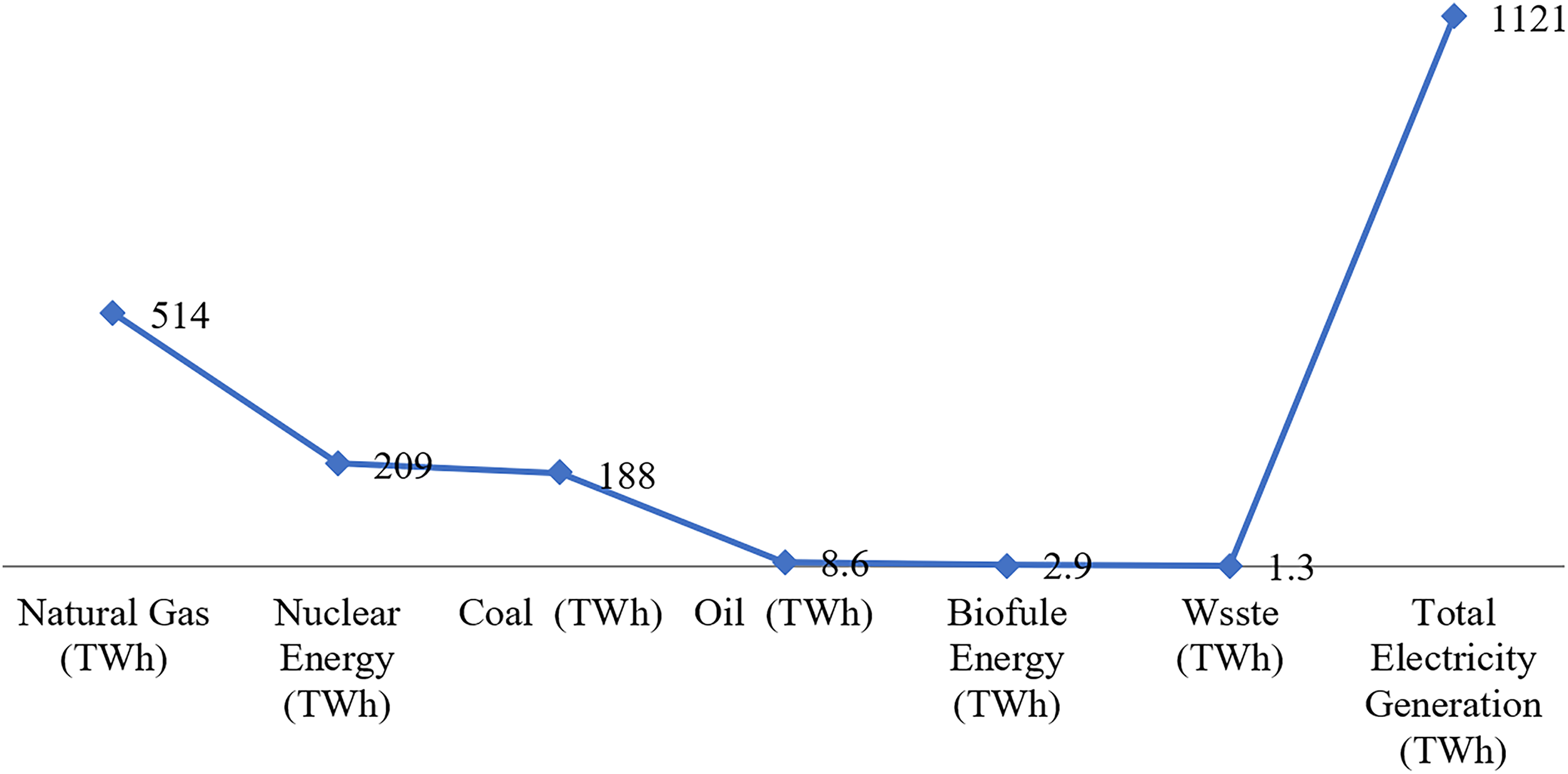
Russia's energy landscape.
Renewable energy is essential to decarbonization for climate change mitigation and a more promising future. Renewable energy sources are an attractive alternative to fossil fuels because they employ renewable resources without emitting GHGs. 17 Communities may minimize their carbon footprint, prevent climate change, and improve air quality by switching to renewable energy sources. Renewable energy infrastructure investments boost energy security, resilience, innovation, and economic development. Decarbonization and a thriving future for future generations need sustainable energy sources. 18
The primary objective of this study is to investigate the relationship between oil resources, REC, and ICTs infrastructure in maintaining environmental sustainability in the context of globalization. The study examine the CO2 emissions reduction or accumulation associated with using oil resources, ICT infrastructure, REC resources, high-tech exports, greenfield investments, and GDP per capita. The main research questions to be addressed include the following:
To what extent does e-commerce penetration reduce the level of CO2 emissions in the Russian economy? Does the use of RE sources reduce CO2 emissions in Russia? How does the use of oil resources contribute to CO2 emissions in the Russian economy? How do ICT infrastructure and REC reforms promote higher economic growth and environmental sustainability in the Russian economy? To examine the effect of NEC on CO2 emissions. To establish the connection between clean and green technology and CO2 emissions to confirm the Environmental Kuznets Curve (EKC) hypothesis. To investigate the influence of e-commerce infrastructure and domestic investment on reducing CO2 emissions, and To analyze the relationship between fossil fuel electricity production and its impact on CO2 emissions in the country.
This study aims to analyze the role of e-commerce infrastructure in ecological sustainability and CO2 emissions reduction. Additionally, it examines the impact of different sources of REC, including NEC, on sustainability and CO2 emissions reduction. The study evaluates the potential for achieving targeted economic growth and environmental sustainability goals through greenfield investments, e-commerce and REC reforms. The study aimed to investigate the following objectives:
Previous studies have confirmed the study's research aims, notably nuclear energy's worldwide carbon emission reduction benefits.19,20 Prior research has also supported the EKC theory on economic development and emissions and highlighted the less-studied link between green technology and emissions.21,22 Jurburg et al.
23
and Kwilinski et al.
24
have highlighted how e-commerce penetration may help decarbonize. Olujobi et al.
25
found that fossil fuels hinder a country’s sustainable development strategy, emphasizing the necessity for a switch to sustainable energy.
By studying CO2 emissions and their environmental impact, this study contributes to understanding. The research investigates the ability of renewable energy sources to mitigate carbon emissions and climate change damages to fill a gap in the literature. Long-term sustainability requires examining the relationship between clean energy technologies and CO2 emissions.26–28 Thus, this research matters. The research contributes to the argument by recognizing that these technologies may increase energy efficiency and technology.29–31 The study discusses isolating power generation from fossil fuels and carbon dioxide emissions, which is helpful for stakeholders and policymakers considering sustainable energy production. The study explains the different causes of CO2 emissions and provides solutions to promote sustainable development and mitigate climate change.
Literature review
Environmental sustainability is intricately linked to NEC, clean energy generation systems, and CO2 emissions. The connection between green power generation techniques, NEC, and CO2 reduction has been adequately explored in the literature. Ulucak and Erdogan 32 examined how NEC, internationalization, and commerce affected demand-based carbon emissions in OECD countries. The NE output was shown to be positively correlated with production-based CO2 emissions reduction, and the EKC curve was validated for use in estimating emissions from both carbon sources. NE plants are increasingly linked to releasing carbon dioxide due to human use. In addition, commercial activities like trading tend to result in more GHG emissions. CO2 emissions from industry and consumption are inversely related to globalization. According to the findings, the chosen nations might benefit from a more concrete nuclear strategy concerning NEC and CO2 emissions based on production and consumption. From 1965 to 2019, Kartal 33 analyzed the top five polluting nations in terms of their energy utilization, lignite use, NEC, green power use, petroleum use, and biogas use, as well as their air pollution. Research showed that nuclear power has a net negative effect on CO2 emissions, which are proportional to petroleum-based fossil fuels. In addition, a solid and gloomy link exists between alternative energy and CO2 emissions. Furthermore, there is a negative correlation between the use of carbon fuels and the burning of coal. Based on their findings, the study advocate for a simple standard outline and ecologic emissions reduction approach to aid in ecological sustainability, boost ecological integrity while producing energy, and highlight the role of nuclear power in green, long-term conservation. Using data from the G7 countries from 1979 to 2019, Li and Haneklaus 34 analyzed the connection between the use of clean energy, income, trade openness, urbanism, and CO2 emissions. Long-term carbon footprints were reduced by 0.099% for a 1% increase in eco-friendly technologies, as indicated by the research. Further, freer trade is associated with higher levels of atmospheric carbon release. Furthermore, NEC may help cut down on anthropogenic emissions. Similarly, the relationship between urbanization and the degradation of ecosystems is positive, but the relationship between hydropower and sustainable energy usage and environmental stewardship is gloomy. To enhance air protection, the study suggests setting a new course for the production of emission reduction by bolstering the existing structures for nuclear power, hydro, and biofuel of electricity. Over the years 1995–2015, Lau et al. 35 studied the effect of 18 OECD countries’ bilateral trade, RECs, and use of power generated from NE on their CO2 emissions level. According to the findings, renewables increase the rate at which carbon pollution is produced. The correlation between carbon footprint and fossil energy sources is optimistic, too. Power from nuclear plants has also been shown to reduce CO2 emissions. Similarly, evidence from OECD economies supports the EKC hypothesis that NEC improves environmental sustainability. The study suggested formulating sensible energy and economic strategies to take into consideration the need for a high standard of environmental sustainability to be maintained.
Pata and Samour
36
examined how nuclear efficiency and the application of its regulations affected the government's final general consumer expenditures, wealth creation, and CO2 emissions in three of the world's leading carbon emitters from 1991 to 2016. The results show that global leaders in environmental emissions supported the EKC hypothesis. CO2 emissions are inversely proportional to fossil fuel energy and positively proportional to NE and other energy sources. Environmental protection and government expenditure on final products and services are positively correlated with economic health and environmental degradation. According to the study, the top carbon-emitting countries should establish a comprehensive approach to promote macroeconomic stability, public and private fiscal basis, environmental sustainability, and NEC source compatibility. Vo et al.
37
examined greener energy, NEC, trade openness, and air pollution in nine countries from 1971 to 2014. The data show that three economies have a U-shaped correlation, whereas the other six have an inverted U. Alternative sources, energy production, and NEC reduce emissions. Free trade also reduces carbon emissions. Sustainable energy, NEC, trade liberalization, and carbon pollution also interact. The findings revealed that combining RE and NEC may help certain economies reduce CO2 emissions and preserve an ecologically favorable atmosphere. Khan and Ahmad
38
study of the safe environmental assumption and ecological sustainability suggests that FDI investment may improve environmental outcomes and that NEC and pollution abatement are linked. According to the research, promoting foreign capital in the NE conversion sector will help with achieving sustainability and environmental protection. Using data from the Pakistani economy from 1973 to 2017, Mahmood et al.
39
analyzed the impact of NEC on pollutant emission reduction. According to the findings, using NE generates more pollution than using other energy sources. In addition, the relationship between using NEC and producing GHGs works both ways. It has been found through studies on the impact of renewable and NEC on ecological carbon pollution that there is no U-shaped relationship between CO2 emissions and income.
36
Additionally, studies on the negative relationship between nuclear bioenergy emissions40–43 found that increasing NEC decreases CO2 emissions and improves sustainability practices. Based on stated literature reviews, the study's first research hypothesis is as follows:
H1: It is likely to increase the share of NEC to help sustain environmental sustainability that provides an innovative framework for low carbon emissions.
Appiah Otoo et al. 44 studied the effects of ICT on CO2 emissions in 110 countries between 2000 and 2018. Research results showed that high-quality ICTs improved environmental quality. Worse, deteriorating ecosystems are positively correlated with subpar ICTs. In nations with a high density of ICTs, there is granger causality between ICTs and CO2 emissions. However, in countries with low ICTs, the causation is unidirectional. The research urged reducing the severity of environmental damage and making low-quality ICTs more effective via moderation and improvement. Between 1985 and 2020, Khan et al. 45 analyzed the interplay between ICTs, CO2 emissions, REC, political risk, and economic development in Morocco. The findings show a close connection between private ICTs collaboration and CO2 emissions. More importantly, using RE sources reduces pollution. In the same vein, rising GDP, political instability, and GHG emissions go hand in hand. The study concluded that a stable governmental system and adequate private sector engagement in ICTs reduced CO2 emissions and pollution. Wang et al. 46 examined ICT concentrations and CO2 emissions in 41 Yangtze River Delta cities from 2003 to 2016. Technological innovation mediates ICT clustering and CO2 output, the study found. GHG output is negatively connected to offshore investment and ICT clustering. ICTs negatively affect CO2 emissions when technological innovation exceeds a threshold. The study suggests that improving the ICT sector, implementing new technologies, and increasing institutional technology may improve environmental quality and minimize pollution. Nwani et al. 47 analyzed African states’ economic independence, industrial output, mobile phone and internet use, and consumption-based carbon emissions from 1995 to 2017. This study confirms a positive association between industrial output and CO2 emissions. Telecom advances have been related to increasing CO2 emissions, and cell phone and internet use negatively affect carbon production. Some nations should emphasize mobile phone and internet penetration technologies to promote cleaner and more sustainable consumption.
Godil et al. 48 examined how financial development (FD), ICTs, and institutional quality affect CO2 emissions in Pakistan from 1995Q to 2018Q. GDP, institutional quality, and CO2 emissions were positively and statistically significantly correlated across time, indicating that as these factors grew, so did CO2 emissions. A country's carbon footprint decreases as its economy grows and its population uses better ICTs in infrastructure. Empirical evidence supports the EKC hypothesis in a country. The study’s conclusion emphasizes the necessity for purposeful planning for institutional quality and environmental sustainability. ICTs and human capital affect ASEAN CO2 emissions, according to Haini et al. 49 The results show that ICTs decrease CO2 emissions, whereas human capital development increases CO2 production indirectly via economic growth. Human capital and multi-sector ICTs cut CO2 emissions. The study revealed that ASEAN countries must invest in cutting-edge ICT infrastructure to reduce carbon emissions. Wang et al. 50 examined how ICT investment volume, intensity, structure, and efficiency affected carbon emissions in 20 OECD countries from 2000 to 2009. This study tested the notion that ICT investments increase CO2 emissions. Further, the structure and efficiency of ICT investments restrict carbon emissions. Sustainable energy and mitigation may reduce national carbon emissions. Ahmed and Li 51 link ICTs, globalization, trade, and CO2 emissions using data from six ASEAN connection-2025 countries. The study found that international business and globalization help countries minimize their carbon footprint, while long-term energy consumption and CO2 emissions are inversely connected. Additionally, GDP growth and CO2 emissions have a U-shaped relationship. ICTs also raise energy consumption. The analysis concluded that environmental restrictions should limit carbon emissions. Su et al. 52 examined how ICT growth and utilization affect BRICS GHG emissions and production. An inverted U-shaped relationship was found between technical advancement, commercial openness, and the control variable. Additionally, the number of households with landlines, internet, and mobile cellular subscriptions positively correlates with CO2 emissions and negatively correlates with emissions. ICTs with high power consumption and trade openness increase CO2 emissions. The analysis found that BRICS states must enhance technical use and innovation to counteract environmental degradation.
Shabani and Shahnazi
53
examined ICTs, energy use, and CO2 emissions in Iran from 2002 to 2013. According to the study, EKC may be in every business. In production, ICTs increase CO2 emissions while they decrease them in transportation and services. Its usage increases CO2 emissions in the industrial and service sectors. The results suggest that technical innovation and ICTs are needed to prevent environmental degradation. In 113 developed and less developed countries, Simpson et al.
54
examined ICT development and environmental degradation. The data show that internet use increases CO2 emissions in industrialized nations while fixed telephone network growth increases emissions in developing ones. Additionally, cell phone technology has kept CO2 emissions the same. The study's CO2 reduction strategy included modernization and technology. Higón et al.
55
examined the nonlinear relationship between ICTs and CO2 emissions in 116 developing and 26 wealthy countries from 1995 to 2010. Developing countries’ mean ICT adoption and CO2 emissions were higher than predicted, demonstrating a U-shaped relationship. In addition, there is an inverse correlation between the growth of ICTs and CO2 emissions, suggesting that doing so would have the additional benefit of reducing emissions. The research found that there is progress in using ICTs across a range of highly polluting businesses to lower national averages for CO2 emissions. From 1998 to 2014, Xu et al.
56
investigated regional variations in China's high-tech sector and CO2 emissions in linear and nonlinear ways. The estimated non-parametric values of the residual sum of squares are 0.693, 0.054, and 0.085, respectively. Moreover, a U-shaped correlation between ICTs and CO2 emissions may be seen in the central and western areas, but an inverted U-shaped correlation is in the east. The research indicated that three areas needed special consideration when crafting mitigation plans. CO2 emissions, ICTs, commerce, FD, and energy consumption in Tunisia were all studied by Amri
57
between 1975 and 2014. ICTs were found to have a negligible effect on CO2 emissions, and the data could not support the EKC hypothesis. There is also a negative correlation between trade, FD, energy use, and ecological health. Among the study's many suggestions for improving the country's economy are cutting back on imports and exports and launching RE projects. ICTs with CO2 intensity and mobile-internet oriented positively affect CO2 emissions and degrade the environment.58–61 Based on the above literature reviews, the study research objective is as follows:
H2: It is likely to develop the e-commerce infrastructure to reduce CO2 emissions with green innovation. H3: The R&D expenditures would likely reduce CO2 emissions and improve environment quality.
Using data from 1990 to 2018, Zakari et al. 62 examined the connection between petroleum products and ecological sustainability in Africa's four largest oil-producing nations. According to the findings, crude oil output is positively related to environmental quality in the medium to long term. Furthermore, the usage of oil has a severe impact on environmental standards. Oil production and consumption, as well as environmental quality, are positively correlated with environmental accords. For better environmental conditions, the study recommend encouraging investment in RE sources. Fethi and Rahuma 63 used 2007–2016 to examine the connection between R&D and CO2 emissions in the top 20 nations exporting refined oil. The research found that R&D had a long-term, inverse connection with CO2 emissions. R&D improved earnings, reduced CO2 emissions, and saved energy. Countries that export refined oil also favor an extended EKC hypothesis. Higher CO2 emissions and actual income may increase R&D and lower energy use. Lin and Wang 64 examined China's CO2 emissions and investment size, efficiency, energy intensity, and energy structure from 2000 to 2016. Data shows a positive association between size, investment efficacy, and carbon emissions. Energy structure and intensity adversely affect CO2 emissions. The analysis suggested focusing on energy-saving technology R&D and promoting clean power to boost green technology and equipment investment. Akbostancı et al. 65 examined how energy intensity, manufacturing, building, and five fuels affected Turkish carbon emissions from 2003 to 2012. Industrial and construction fuels increase CO2 emissions, whereas five fuel types decrease them. A positive association exists between non-metallic and CO2 emissions.
Residential solar energy utilization is disproportionate, according to Kuşkaya. 66 This study investigates the influence of household solar energy usage on CO₂ emissions in the US from 1989 to 2020. The study shows that residential solar energy dramatically cuts CO2 emissions in 1–2 years. The study suggests energy measures to boost household solar power efficiency. Kuşkaya and Bilgili 67 examine wind energy utilization and GHG emissions over time. Using monthly data from 1989 to 2017, the research draws three findings. First, greater wind energy may increase CO2 emissions. Second, wind energy may reduce CO2 emissions. Third, wind turbine emissions peak at specific times. The study suggests promoting wind energy policies to reduce CO₂ emissions. Geothermal power reduced carbon emissions, helping decarbonizes. 68 The environmental effect of geothermal energy is objectively evaluated to identify its clean energy potential. The study uses EU data to highlight the importance of geothermal resources in sustainable energy transitions and GHG reduction. Alsaleh and Abdul-Rahim 69 study EU28 pollution reduction from hydropower growth. A detailed analytical framework examines hydropower growth and environmental consequences to determine pollution-reduction efficacy. The study suggests hydropower investments for European environmental sustainability. Alsaleh and Abdul-Rahim 70 analyze how bioenergy growth reduces EU28 pollution and supports environmental sustainability. The research investigates bioenergy's environmental implications and renewable energy possibilities. The research finds that bioenergy expansion's carbon emission reduction makes it sustainable in Europe. Iswara et al. 71 examined oil and gas production, energy usage, and CO2 emissions in 25 upstream fields from 2015 to 2018. The research concluded that oil and gas production reduced GHG emissions, which are inversely linked to energy intensity. To decrease emissions to zero, the research advises policy changes. Al-Rukaibi and Al-Salem 72 studied the relationship between per capita energy consumption and CO2 emissions to determine power production and water supply needs. The research found that each citizen used 8.9 terajoules of energy per year and produced 21.1 metric tonnes of CO2 equivalent. Similarly, the energy sector generated the country's total CO2 emissions of 48.6 MtCO2 and the rate of 0.69 kgCO2/kWhr. There is also a CO2 emissions of 0.45 kgCO2/kWhr from the 20% oil fuel energy generation. The RE industry is expected to contribute 13% of global CO2 emissions in the years to come. Results provided policymakers, academics, and practitioners with resources to hasten the oil refining industry's transition to a low-carbon model. Using data from 1980 to 2019, Mahmood et al. 73 examined how oil prices, GDP per capita, and urbanization affected CO2 emissions in GCC nations. Based on the data presented, an increase in oil prices correlates positively with an increase in carbon emissions. As cities expand, so make their CO2 footprints. Furthermore, a positive correlation exists between economic expansion and CO2 emissions. Both the scaling up of oil prices and CO2 emissions and the scaling down of oil prices and carbon emissions include scale and composition effects. Ashraf and Umar 74 examined the connection between FDI, oil prices, and GHG emissions in Gulf nations. According to the findings, there is a long-term positive correlation between FDI and CO2 emissions. Furthermore, oil and the cost of emitting CO2 are linked progressively. The positive correlation between FDI and CO2 emissions further supports the validity of the pollution haven theory. The study recommended focusing on methods encouraging FDI in clean businesses rather than polluting ones. Between 1990 and 2015, Aslan et al. 75 found a correlation between oil importers, FDI, income, REC, and CO2 emissions. According to the data, there is a positive correlation between FDI oil importers and CO2 emissions. Also, nations producing oil and exporting it positively correlate with CO2 emissions. There is also promising evidence connecting economic expansion and rising carbon emissions. The research suggested bringing attention to the strategic actions of exporting and importing oil to cut down on CO2 emissions. By looking at the years 1972–2018, Parra et al. 2 conclude the impact of oil drilling on the ecosystem. The research reveals that the oil exploration instruments—oil fields, energy carriers, labor, and power capacity—create GHGs and oil-produced water, which alters the environment's performance. Alsaleh et al. 76 examine how global competition influences the growth of the EU-28 bioenergy industry. This study examines bioenergy-specific data to show how regulatory frameworks, investment patterns, and market dynamics affect industry growth and viability. This research reveals how sustainable energy development impacts global competitiveness. Thus, renewable energy sources must be promoted and their environmental impact reduced. Alsaleh and Abdul-Rahim 77 study how global competition affects European hydropower sustainability practices. Sustainable hydropower operations are studied by examining market competitiveness, technological innovation, and regulatory restrictions. Industrial sustainability strategies should integrate global competitiveness aspects to increase environmental stewardship and competitiveness. Wang and Alsaleh 78 focus on global competitiveness marketplaces while analyzing geothermal power sustainability. This study empirically examines how market dynamics, regulatory frameworks, and technological innovation affect the viability of the geothermal energy sector. The research's illumination of sustainability practices and global competitiveness enhances renewable energy transition talks.
Based on the stated literature reviews, the study research hypothesis is as follows:
H4: An increase in oil energy production will likely increase CO2 emissions and environmental concerns. H5; It is likely that clean energy production technology reduces carbon emissions and validates a country's EKC hypothesis. H6: Domestic investment on environmental friendly technologies is likely to reduce CO2 emission.
Rehm 79 argues that nuclear power is the cleanest, most sustainable, and safest future choice. The study emphasizes nuclear power to resist climate change and assure a sustainable energy future. Imran et al. 80 examine the complex relationship between nuclear power and carbon reduction. The nuclear power plant generates minimal carbon dioxide but consumes fuels and chemicals that release carbon into the environment at different stages in the fuel cycle. The study recommends reducing nuclear power emissions and doing lifecycle reviews to identify its environmental impact. Mendrela et al. 81 assess the long-term viability of nuclear hydrogen production. Hydrogen as a clean energy carrier and nuclear power combine to offer new decarbonization opportunities for numerous sectors. The study emphasizes the necessity for extensive sustainability studies to ensure hydrogen production methods are economically and environmentally viable. Ayhan et al. 82 examine whether nuclear power, renewable energy, and technology can assist OECD countries in addressing climate change. The study examines energy consumption patterns and environmental regulations to show how different energy sources might meet sustainability goals. It emphasizes coordinated tactics to use new technology and laws to green energy systems. Lin and Ullah 83 advance knowledge by estimating the environmental impacts of nuclear power, natural gas, and coal changes using the new DARDL approach. Their comprehensive study on energy source environmental implications aids energy policy and planning. The DARDL method, which considers air pollution, water usage, and land degradation, may help explain energy production environmental trade-offs.
The study builds on the work of previous research studies in the field of clean energy production technology (CEPT) and sustainability. As a low-carbon energy option, NEC has the potential to cut down on harmful emissions considerably. NE stations do not release harmful GHGs or air pollutants when generating electricity, unlike power plants that utilize fossil fuels. Because of this, it is a viable choice for nations with emissions reduction goals. The study used NEC and clean energy technology to mitigate CO2 emissions due to its decarbonization characteristics, while previous studies only used both in the pollution damage function.84–86 This analysis extends this literature by examining the environmental impacts of sustainable power generation using a novel mix of R&D investment, electricity output, and CEPT squares. To investigate the link between sustainable power production, economic development, and environmental sustainability over short and long periods, the research tests the EKC hypothesis. This may be done by promoting the green economy, which invests in REC and sustainable transportation. Therefore, this method may promote sustainable development while reducing some of the environmental costs of economic progress.87,88 Carbon pricing, RE subsidies, and pollution limits are some policies that encourage sustainable behavior and prevent environmental harm. Previous studies limited to work on the stated factors in country-specific,89–91 which this study adds depth and nuance to the existing literature and helps to fill gaps in our understanding of the complex relationship between CEPT, economic growth, and environmental sustainability.
Theoretical framework
Before constructing the econometric model, the theoretical framework of this study is established to assist in explaining the variables in Table 1. The technology organization framework, developed by Tornatzky and Fleisher 92 is utilized to understand the three potential technological, organizational, and environmental acceptance influences. The technological perspective examines internal and external aspects of technology. The model of human interaction with the environment, developed by Stern, 93 is also employed to understand the four connections between human activity and the environment, including the use of natural resources, minerals, energy, food fibers, and other significant economic and environmental resources in economic activities. The enhanced version of Ahn et al. 94 Unified Acceptance and Use of Technology model is used to examine sustainable technology innovation and external variables affecting green and sustainable technologies. The extended Technology Acceptance Model by Davis 95 is used to understand how renewable energy can achieve sustainable and green investment goals, improve logistics performance, export capabilities, technology, and resource inputs, increasing competitiveness. This theoretical framework illuminates the elements that influence clean energy technology adoption and dissemination and their effects on sustainability and economic development.
Environmental theories and models.
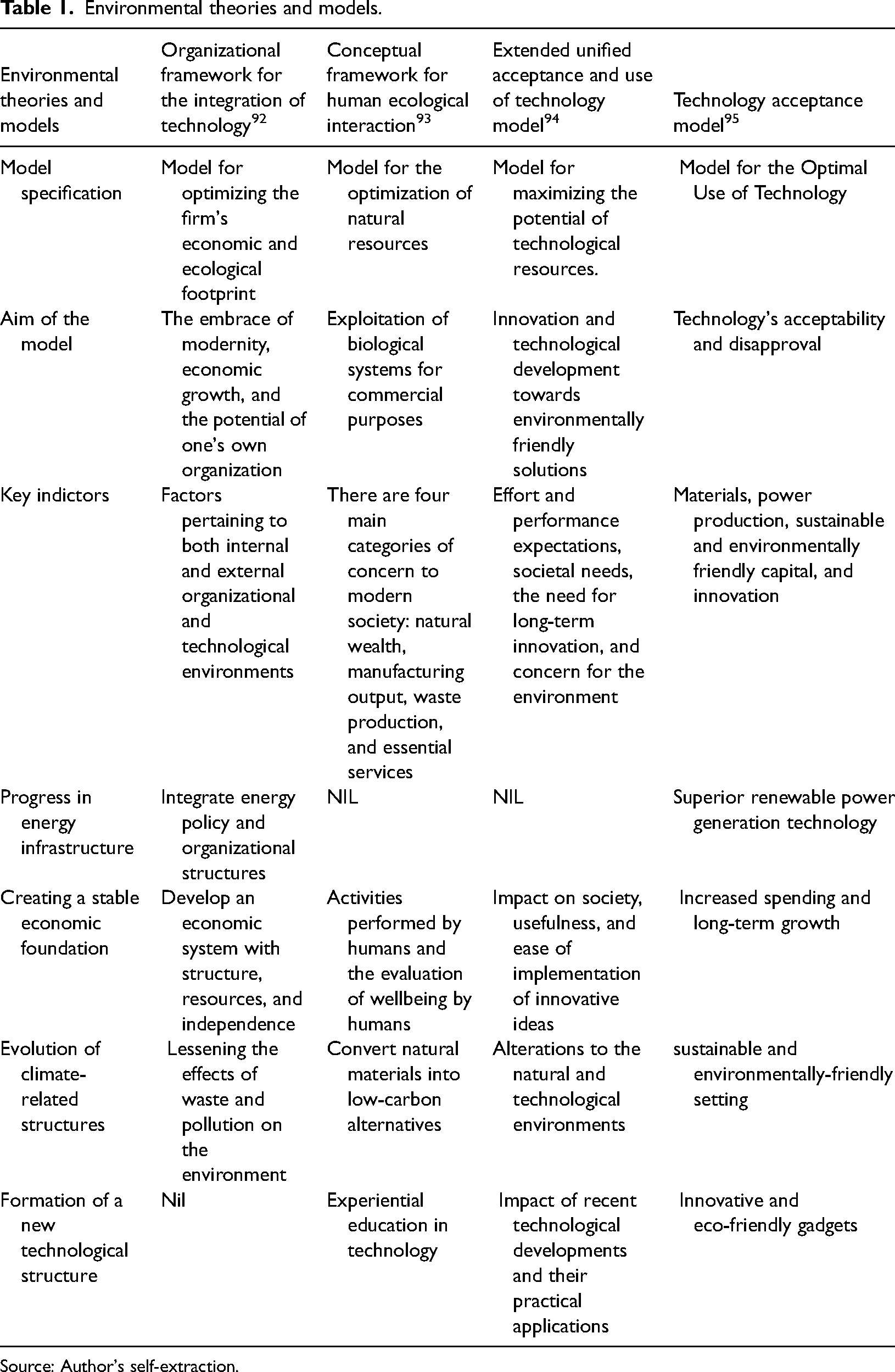
Source: Author's self-extraction.
Data source and methodology
The research applies the time series data of Russian economy for a period of 1995Q1–2020Q4 and data acquired from World Bank. 96 Table 2 shows the variables that used to calculate the impact of NEC, electric generation, R&D spending, internet security server deployment, and capital formation on carbon emissions in the Russian economy.
List of variables and measurement.

Source: World Bank. 96
Using the ADF unit root test
97
and an AR(1) model to examine the stationary time series of the predictor components, the study determines the likelihood of each of the three outcomes. To begin, the series is at a standstill. After then, it maintains stability at the difference but moves neither the level nor the difference. These are the ADF equations (1) to (7):





The study used the ARDL method.98–100 The ARDL approach is more unified than others for establishing the short- and long-run relationship between variables since it just needs to know whether the underlying study variables are [I(0); I(1)] or continuously co-integrated in direction. Short-term ARDL is best described by equation (8):
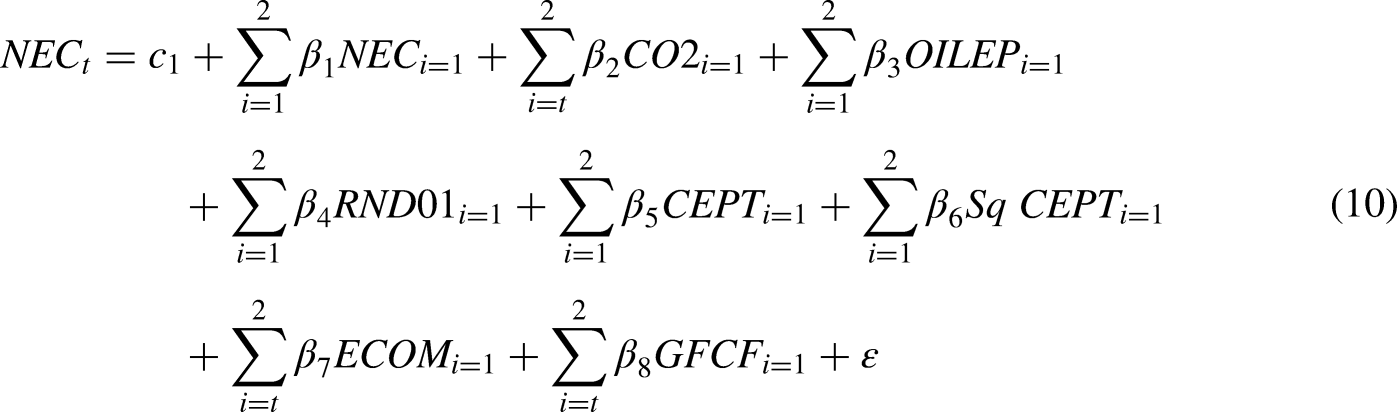
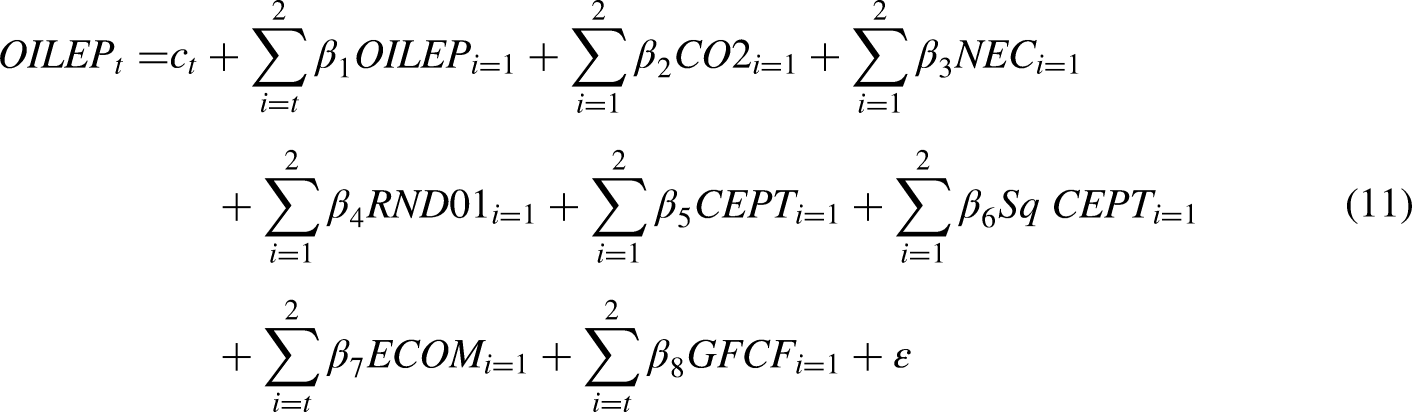
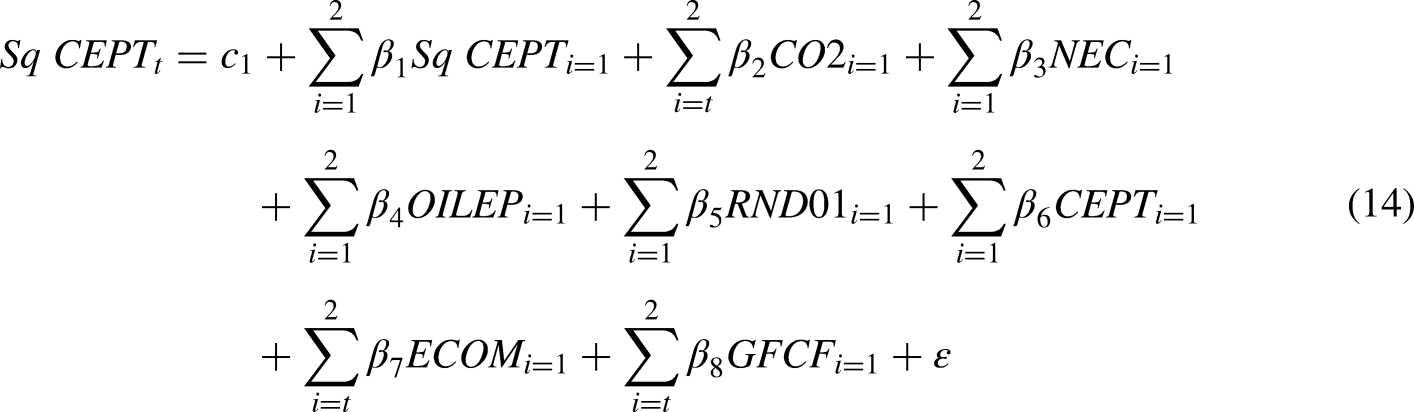
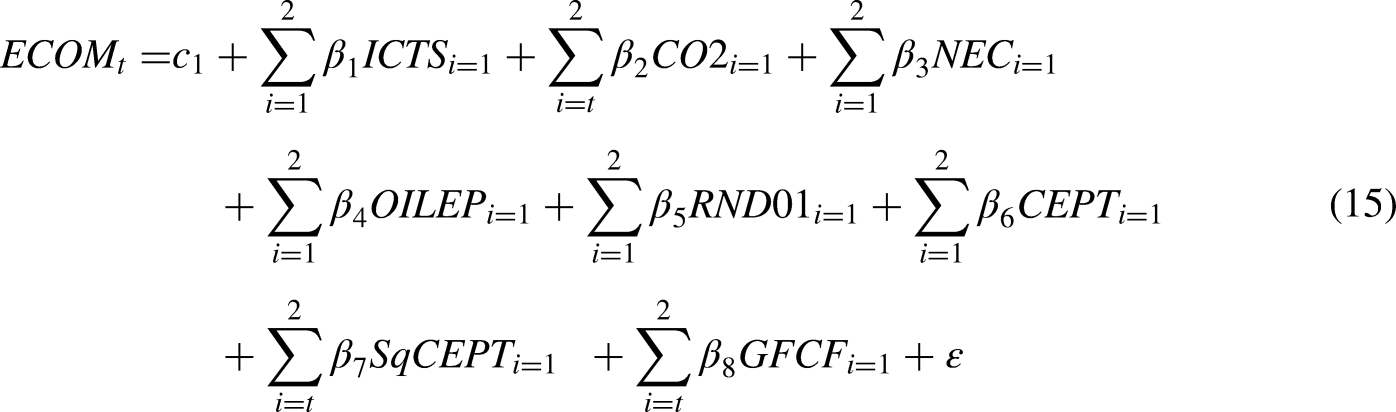
When the estimates were created, a VAR Granger causality test was conducted; this yielded four possible results, any of which may be true given the nature of the relationship between the variables in question: unidirectional causality, backward causality, forward causation, and indifference. Granger causality is shown using the VAR framework, and the corresponding equations (9) through (16) are provided for a multivariate system: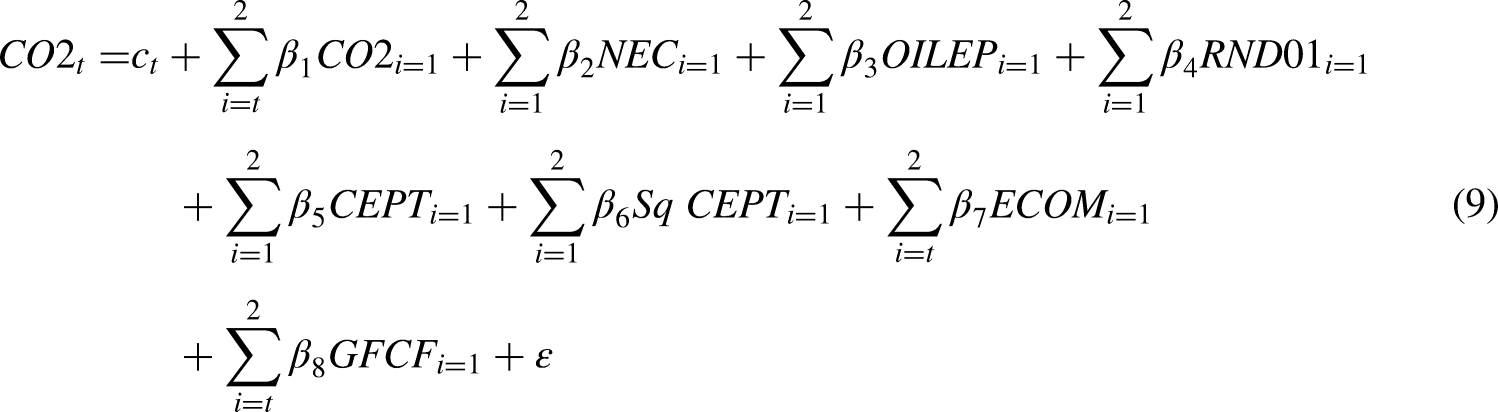








Results discussion
Table 3 demonstrates descriptive statistics and describes the data's characteristics for each variable. CO2 emissions (in metric tonnes per inhabitant) range from 10.070 to a maximum of 11.885, with a mean of 11.104 and a standard deviation (SD) of 0.485, respectively, indicating a negatively skewed. NEC ranges from a low of 5.599 to a high of 8.248. Negative skewness and kurtosis accompany the mean value of 7.427% and the SD value of 0.779%. Low skewness and kurtosis values are also associated with a minimum value of 64.617 in electricity output, linked to a mean of 66.223% and a SD value of 1.002%.
Descriptive statistics.

Source: World Bank 96 and Author's estimate.
The minimum and the maximum values for R&D spending are 15,106 and 29,269, respectively, with a SD value of 1,589,835 and a mean value of 24,011.42. The minimum value for the CEPT is 999,889.1, while the mean and SDs are 1,589,835 and 263,836.8, respectively. The mean values of ECOM and capital formation creation are 1132.728 and 17.839, with minimum values of 17.094 and 12.555, respectively, and SDs of 2697.892 and 2.555. Table 4 shows the correlation matrix estimates. It has been shown that the value of a country's CO2 emissions is positively correlated with the value of its NEC, including fossil fuel and alternatives. Saidi and Omri 101 findings were consistent with those of Ozcan and Ulucak's 42 and Syed et al. 41 research. NEC-industrial production relationships must be considered to increase economic sustainability and environmental conservation. Policies and methods to promote NEC and green market investments may be needed. These studies also suggest evaluating the factors’ asymmetric connection and creating strategies to assist new energy high-tech enterprises. This will boost the environment and economy by providing renewable energy employment. Environmental integration legislation should boost nuclear and renewable energy usage, and inventive methods should boost economic growth.
Correlation matrix.

Source: Author's estimate.
Producing power also results in more CO2 being released into the atmosphere. Ike et al., 102 Magazzino et al., 103 and Mujtaba and Jena 104 all support this connection, arguing that improvements in energy structure and technological development may result in cleaner and more sustainable energy sources. More durable industrial practices, new materials, and nuclear waste management may reduce CO2 emissions. CO2 emissions are positively correlated with R&D investment. Usman and Radulescu, 86 Wang and Zhu, 105 and Khan et al. 106 all found that improvements in CEPT and breeder reactor technology led to lower use of fossil fuels, which in turn led to lower CO2 emissions, lending credence to this link. Sustainable development objectives may be aided by enacting “green fiscal policies” and boosting government spending on a green economy. Furthermore, ECOM, domestic investment, and CO2 emissions per capita all go hand in hand with one another. R&D in the ECOM industry and the implementation of green ECOM projects may increase environmental and energy efficiency, as shown by prior research by Mirza et al. 58 and Akeel. 107 This association may also be influenced by government programs that use ECOM to lower emissions and create all-encompassing strategies for environmental sustainability. In addition, a more robust economy may result from ICT indicators’ work to improve environmental quality, fortify institutions, and introduce cutting-edge technology.
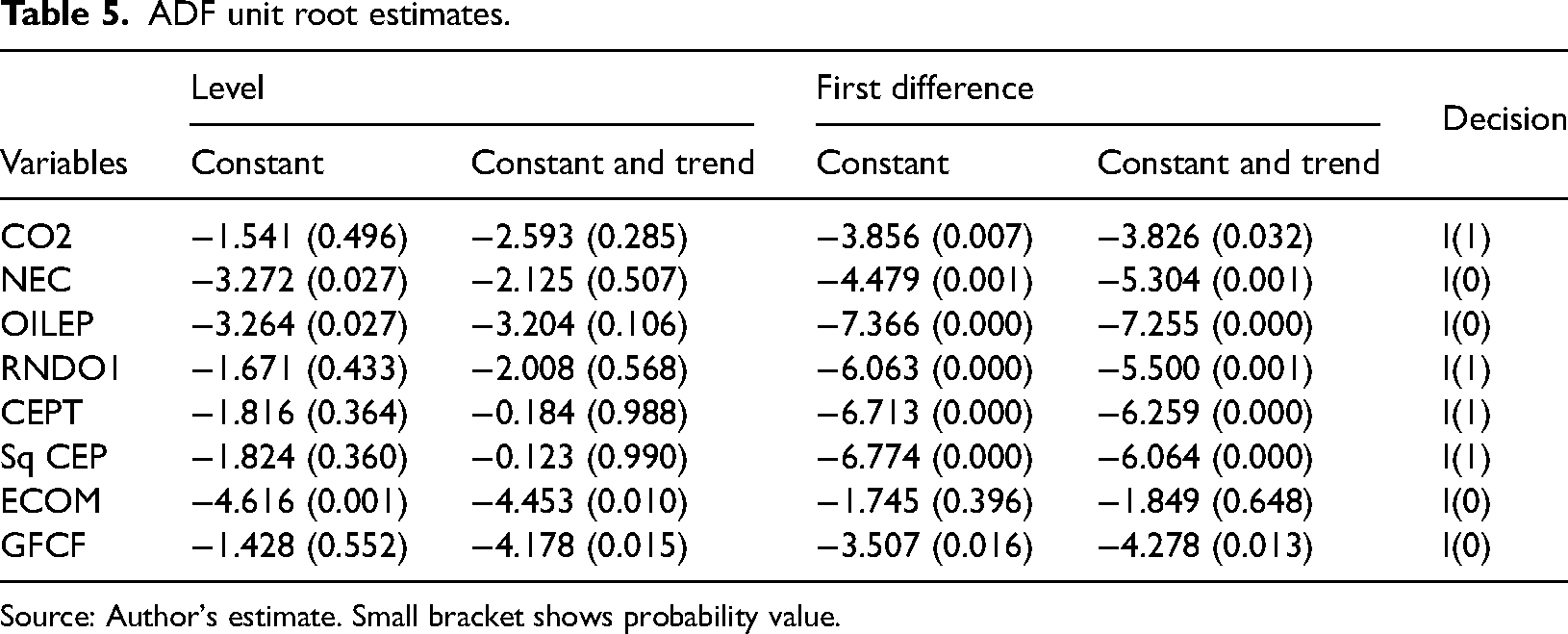
The results of the level and first difference stationarity tests for the research variables are shown in Table 5. According to the ADF unit root results, NEC, electricity generation, GFCF, and ECOM are all stationary at I(0). In contrast, CO2 emissions, R&D expenditures, CEPT, and SQCEPT are stationary at I(1). Dickey 108 highlighted that the ARDL-Bounds testing technique performs well under mixed order of integration.
ADF unit root estimates.
Source: Author's estimate. Small bracket shows probability value.
For time series data, the unit root tests considering structural breaks are necessary. Table 6 shows the unit root estimates with structural breakpoints and found the first order of integration of the variables, that is, I(1), indicating the presence of structural breaks at different time intervals in the Russian economy.
Structural breakpoints unit root estimates.
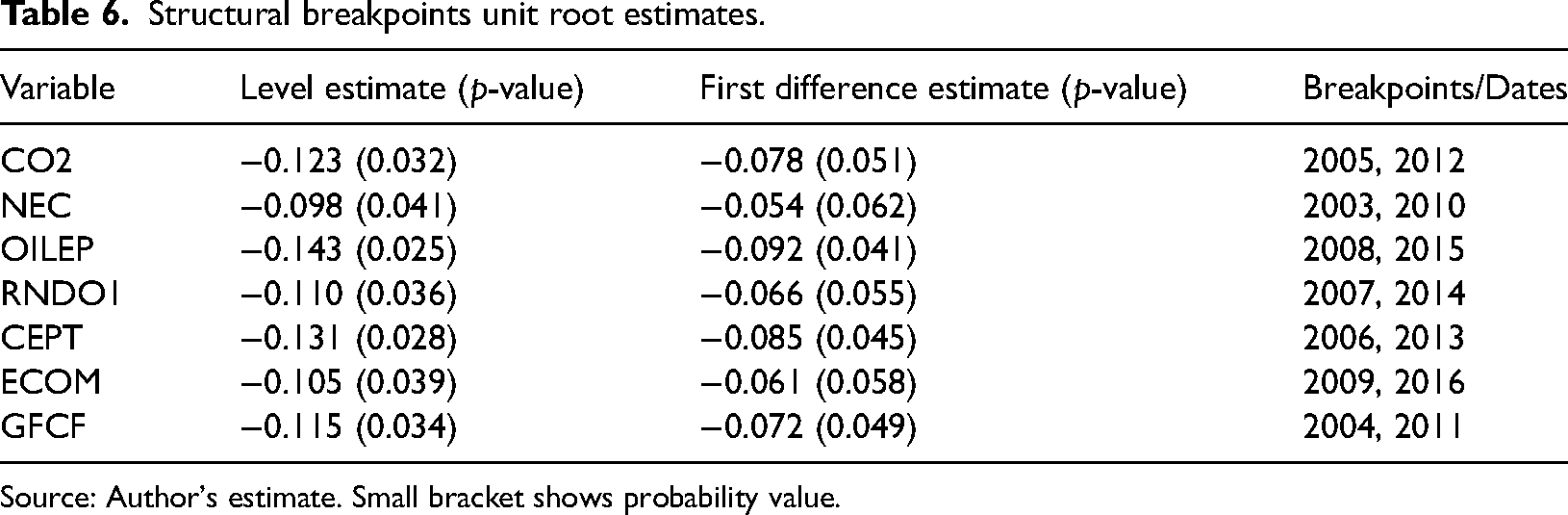
Source: Author's estimate. Small bracket shows probability value.
Different lag criteria are used in the ARDL-Bound testing methodology. We determined that using the various lag section criteria, the shortest of the four possible lag times was the most suitable for our model. Table 7 displays the results of various lag selection criteria, highlighting the optimal lag length value determined by the AIC lag selection criteria value.
Lag length selection criteria.

Source: Author's estimate. * indicates preferred lag length.
Short-term and long-term projections of the correlation between NEC and CO2 emissions are shown in Table 8 from the ARDL. A negative and statistically significant association between these two variables in the near term shows that a rise in NEC is linked to a fall in CO2 emissions. They show a negative but slight correlation in the long term as well. Green energy and better environmental results may result from technological innovation and greenfield investment in the NE sector, as shown by previous research by Çakar et al., 109 Majeed et al., 27 Murshed et al., and Hassan et al. 111 Sustainable growth may be achieved by developing NE and RE production infrastructure. Green energy and improved environmental outcomes may arise from NE industry technical advances and greenfield investments. Technological innovation in NE creates and uses cutting-edge tools and procedures. This may involve nuclear fuel recycling, waste disposal, and advanced reactor research.112,113 These improvements improve nuclear energy's efficiency, safety, and environmental performance, making it a better option for meeting energy requirements while reducing GHG emissions. Instead of improving or expanding NE plants, investors may fund “green field” initiatives. Building new reactors or closing and eliminating hazardous and inefficient ones are examples. New NE infrastructure may reduce fossil fuel usage and enhance low-carbon energy sources in a country’s energy mix. 114 This may encourage green energy use, reducing climate change's negative consequences and improving the environment. 115
ARDL short- and long-run estimates.
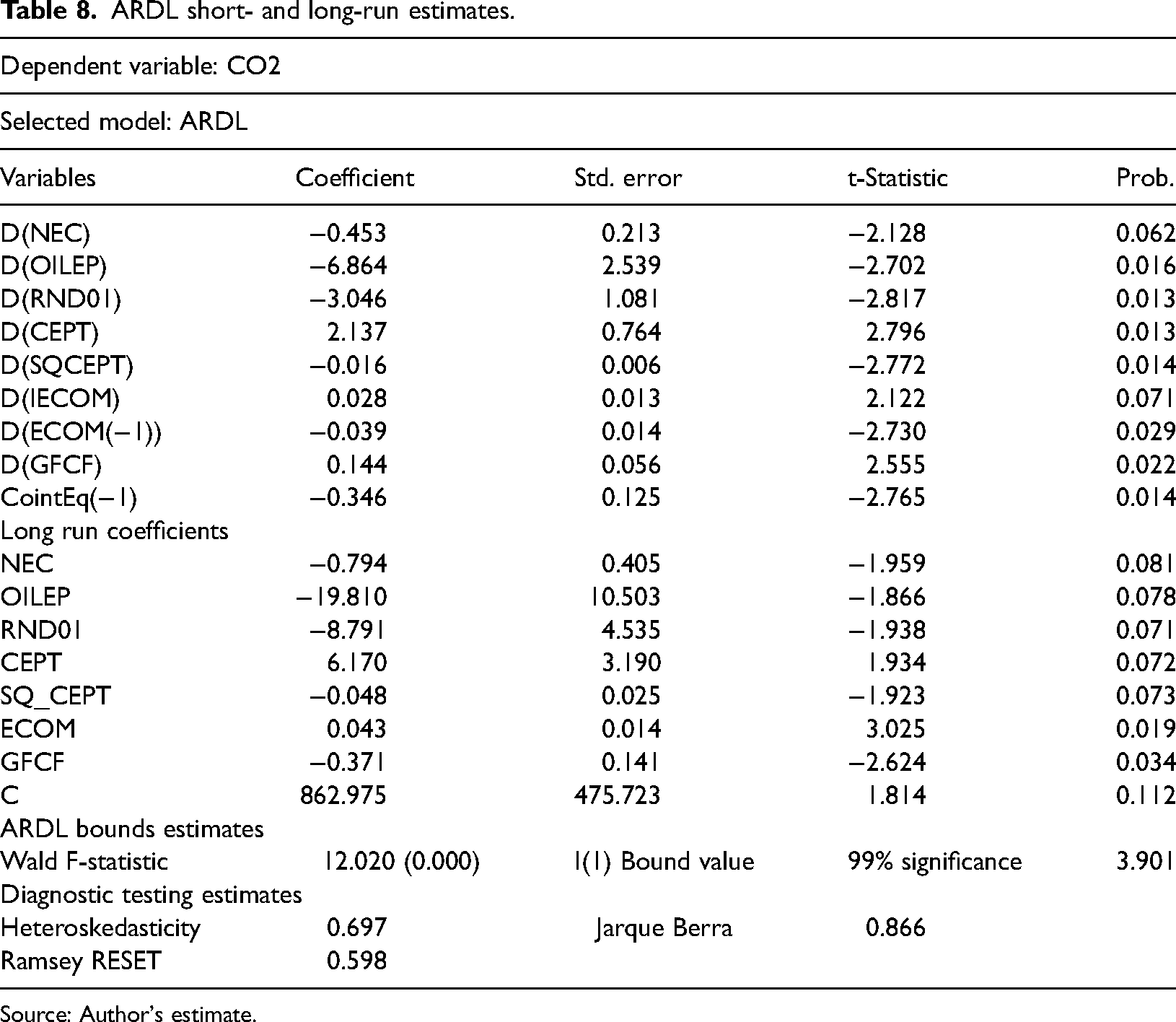
Source: Author's estimate.
In the short and long term, R&D investment inversely affects CO2 emissions. Several factors may explain this link. First, R&D expenditures enable the development and use of novel emission-cutting technology across several economic sectors. 116 Clean energy technology R&D may lead to cleaner, more efficient energy sources. If more eco-friendly and efficient energy sources become ubiquitous, CO2 emissions may decrease. 117 Second, energy efficiency technologies made feasible by R&D may cut energy usage and emissions. Research into improved insulation and energy-efficient equipment may reduce residential heating and cooling demands. 118 Due to rising R&D spending, cleaner and more efficient technologies become cheaper, phasing out polluting and inefficient ones and reducing CO2 emissions. 119 R&D may affect pollution-control policy. Studies comparing policy costs and benefits might enhance emissions-reduction measures. Finally, R&D can help create products that change consumer behavior and reduce pollution. Studies of electric cars and public transit may lead to cleaner mobility. 120 Spending on R&D reduces CO2 emissions in the short and long term by improving energy efficiency, greener technologies, legislation, and consumer behavior. These results match Ma et al., 121 Yang and Liu, 122 and Wang and Zhang. 123 Heavy energy use and rapid economic expansion may provide a solid macro and micro-industrial basis that brings down the price of nuclear power. Decarbonization aims and sustainable development objectives may be advanced by discovering low-carbon technologies and variable-balance energy sources. Switching to clean energy sources, technological innovation, and creating policies favoring environmentally friendly energy sources may reduce carbon emissions in many economic sectors. There is a positive correlation between CEPT and CO2 emissions both in the short and long term. The inverse relationship between SQCEPT and CO2 emissions confirms a country's prevalence of an inverted U-shaped EKC hypothesis. Results show that CO2 emissions increase at the start of a country's CEPT program but decrease as the program moves towards a more sustainable energy infrastructure. Specifically, a 1% increase in CEPT is associated with a −0.043% short-term and −0.094% long-term decrease in CO2 emissions when the ideal tipping threshold is achieved.
The existence of an EKC may be attributable to three distinct effects on a country's per capita carbon footprint. According to the scale effect of the EKC hypothesis, carbon pollution per capita is projected to rise to a certain amount with positive SQCEPT and then reduce when the level of CEPT is enhanced. Because of the shift from oil power generation to environmentally friendly generating power, the EKC has a structural impact on a country's carbon footprint. Finally, the percentage of fossil fuels used to generate electricity and R&D spending affect the EKC's technical impact on a country's carbon emission reduction. Sho et al., 124 Philip et al., 125 Yang et al., 126 and Xia 127 all agree that long-term carbon emission reduction requires harmony between economic and national income redistribution policies, environmental sustainability adjustments, and a strengthening of the multiple effects of technological progress across sectors. Stable macroeconomic policies to attract foreign investment and more vital environmental rules may also assist in battling the climate catastrophe and creating long-term renewable energy plans. 128 These include supporting technical innovation to establish low-carbon economies, cleaner manufacturing technologies, local governments to encourage domestic industry, and inter-regional carbon emission reduction. To reduce environmental emissions, countries with different economic levels and conditions need specialized carbon reduction plans. 129 Cleaner industrial technology and comprehensive legislation and regulations supporting cleaner energy sources are needed to minimize emissions and promote a greener approach. CO2 emissions must be addressed by technology, legislation, and financial incentives. 130
Short-term and long-term CO2 emissions decrease power production. This negative coefficient shows that growing power generation reduces carbon emissions. Gyamfi et al., 131 Hasan and Chongbo, 132 Rehman et al., 133 and Adedoyin et al. 134 found that regional planning, eco-efficient income growth, cooperative actions, and prearranged regional arrangements in problem areas can reduce carbon emissions and accelerate sustainable development. Service sector investment and RE technology research would also improve the environment. According to these assessments, sustainable development and renewable energy investment should be prioritized to reduce carbon emissions and enhance economic growth. Results reveal that GFCF inversely affects short- and long-term carbon emissions. Greener economic growth and reduced carbon emissions are achieved by investing in GFCF. It fosters renewable electricity and green transportation 135 and the economy's carbon emissions and fossil fuel use fall. GFCF investments in energy-efficient equipment and infrastructure may cut carbon emissions. GFCF may promote sustainable development by increasing employment, productivity, and living standards. 136 Thus, GFCF investment may boost economic growth and reduce carbon emissions, making the future more sustainable. GFCF may help battle climate change and build communities. These findings match Abbas et al. 137 and Anwar and Elfaki. 138
Short- and long-term CO2 emissions are positively correlated with ECOM. More secure servers online are connected to increased CO2 emissions, raising worries about the internet technology industry's environmental impact. Secure servers accessible online store and analyze data, and as their use expands, so may their energy needs. Secure internet servers may increase energy use and CO2 emissions. 139 Laptops and smartphones, which use much energy during creation and disposal, may increase as the digital technology sector grows. The energy required to build and operate data centers and internet infrastructure may increase carbon emissions. 140 Secure internet servers reduce per-person CO2 emissions. However, this does not indicate that the online technology business is environmentally detrimental. By investing in renewable energy, energy-efficient data centers, and other green practices, the sector may reduce its environmental impact. 141 Governments and the commercial sector also value ICT regulations and policies that promote renewable energy and carbon offsetting. Jin and Yu, 142 Yilmaz and Uysal, 143 Chen et al., 144 and Khan et al. 45 all agree that improving ICT indicator infrastructure and connecting the growing ICT sector to the clean energy sector is necessary to reduce carbon emissions’ environmental impacts. Better norms and policies to reduce ICT waste and encourage enterprises to invest in energy-efficient technologies are needed to attain zero carbon emissions. Representative countries must improve their FD to improve environmental quality. Policies should incentivize business investment in sustainable infrastructure and RE usage in ICT. 145 Governments may also adopt laws and regulations that promote greener, more efficient ICT production. This may help the sector grow and expand while reducing its environmental impact. 146
The F-statistics value of 12.020 indicates a long-term relationship between the variables, as it exceeds the maximum limit at a 5% significance level. No evidence of heteroskedasticity was found using the Breusch-Pagan-Godfrey test, and the Ramsey RESET test validated the model's stability throughout all stages of the investigation. All variables were also normally distributed, as shown by the Jarque-Bera test statistics, which were larger than 5%.
After completing the diagnostic procedures, the Granger causality test was used to establish a link between the factors shown in Table 9. The findings pointed to a unidirectional causal link between CO2 emissions, NEC, R&D spending, CEPT, and SQCEPT.
Granger causality estimates.

Source: Author's estimate.
The study finds evidence of a unidirectional causal relationship between electricity production and NEC, ECOM and R&D, ECOM and CEPT, and GFCF and CEPT. These findings align with previous studies by Usman and Radulescu,
86
Nakhli et al.,
147
Saqib,
148
and Batool et al.,
149
which suggest that the adoption of green resources is crucial for maintaining a healthy environment and promoting green growth. Additionally, the study highlights the need for further R&D expenditures to develop accurate and efficient policies for reducing emissions from various energy sources and meeting international sustainability standards. The following inferences has been drawn by the causality relationships, that is,
Nuclear energy driven carbon emissions: NEC and carbon reduction policies should be evaluated in a holistic manner: The causality highlights the need to evaluate the relationship between NEC and CO2 emissions in a holistic manner, rather than in isolation, in order to fully understand their impact on the environment. Carbon emissions fueled by R&D in renewable energy generating technologies: Investing in R&D alone may not be enough to reduce CO2 emissions and other measures must be taken, such as the implementation of policies and regulations, and the availability of infrastructure and resources. Energy efficiency, carbon pricing, and regulations on pollution, should also be considered. R&D funding and renewable energy generation fueled by e-commerce: ECOM could be leveraged to improve the efficiency and scalability of clean energy production technology, and Non-renewable electricity production drives nuclear energy demand: The transition to clean energy sources should be done in a holistic manner, taking into account the interplay between different energy sources. The reliance on fossil fuels should be reduced simultaneously with efforts to reduce NREC, in order to achieve a sustainable energy mix.
Table 10 presents the results of a VDA, which estimates various variables’ short-term and long-term effects on carbon emissions. The analysis found that in the short term, the variance in carbon emissions can largely be explained by changes in the variable itself and that other variables have little influence. However, over the next ten years, the study found that electricity production strongly impacts carbon emissions over time. Specifically, the VDA estimates that 61.931% of the variance in carbon emissions can be attributed to changes in electricity production, followed by 13.223% from SQCEPT, 6.658% from R&D expenditures, and 2.462% from NEC.
VDA estimates.
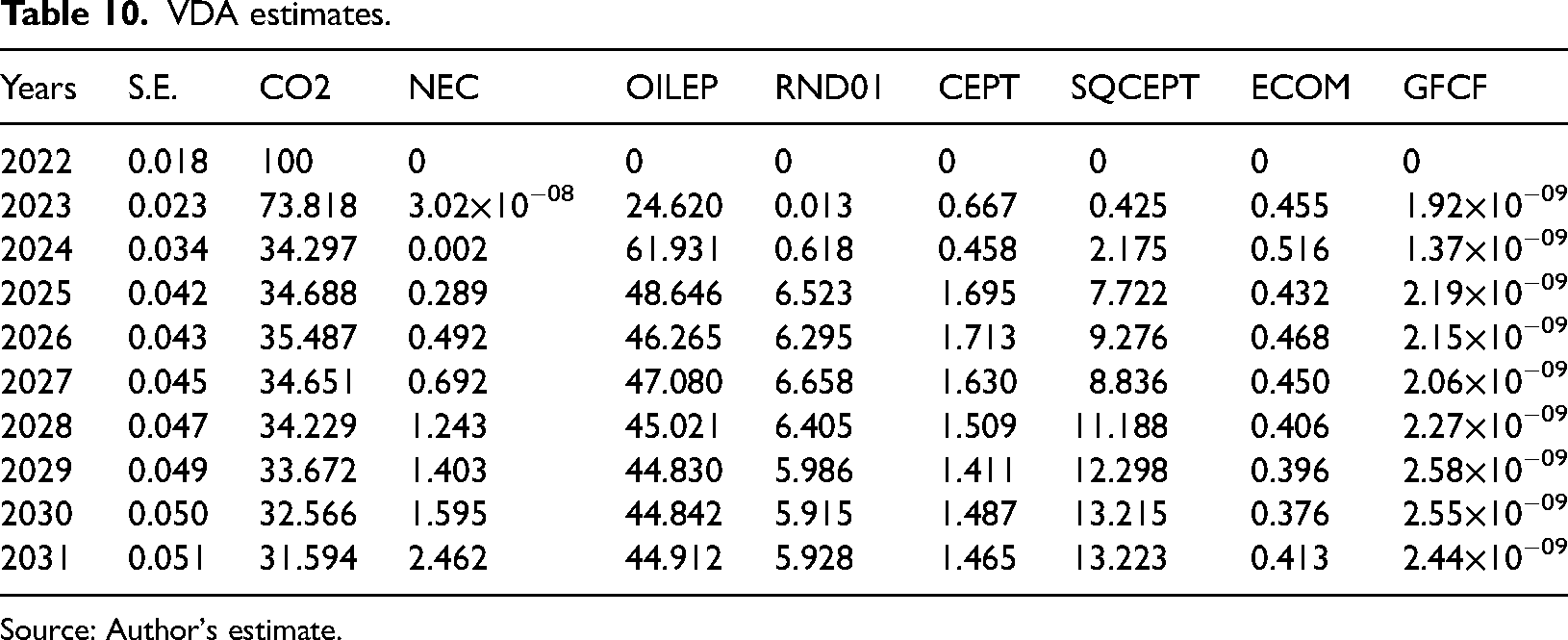
Source: Author's estimate.
The results of this study have critical monetary consequences since they show that efforts to reduce carbon emissions should center on decreasing the quantity of power generated by carbon-emitting sources. It also emphasizes the significance of R&D investments and the implementation of CEPTs in lowering carbon emissions over time.
Conclusions
Climate change is a global threat that demands rapid action. The shift to a low-carbon economy that prioritizes green and unpolluted ecosystems is vital to solving this problem. This research compares NEC, power production, R&D expenditure, CEPT, ECOM, GFCF, and CO2 emissions using 1995Q1–2020Q4 Russian economic data. Statistical investigation indicated that NEC and CO2 emissions were negatively and significantly correlated, whereas CEPT was positively correlated. The data corroborate the inverted U-shaped EKC hypothesis, which links SQCEPT to CO2 emissions negatively and significantly. R&D investment, electricity generation, and GFCF also inversely affected CO2 emissions. The study also linked ECOM usage to CO2 output. The research also demonstrated unidirectional causation between electricity output, NEC, R&D spending, CEPT, and SQCEPT.
The research suggests that policymakers invest in nuclear and alternative energy sources, build CEPT structures, and boost clean energy to minimize CO2 emissions and preserve environmental sustainability. 150 Investment in NE and other energy sources may affect the economy. First, it may enable new technologies and sectors that create jobs and enhance economic development. Second, it might reduce Russia's dependence on fossil fuels, lowering energy costs and price surges. Global warming may be mitigated by reducing national GHG emissions. 151 Funding renewable energy technology and RE may have significant financial consequences. It may reduce energy expenditures and GHG emissions, benefiting the environment and health. Increasing energy diversity and lowering fossil fuel use improves national energy security. 152
Given its benefits, it must be considered under certain limitations. Since it only analyzes quarterly data from 1995 to 2020, the study may overlook short-term variations in energy usage and carbon emissions due to current events and policy changes. The findings need to be more generalizable since the study exclusively examined the Russian economy. This is particularly true when energy, regulatory, and socioeconomic dynamics change. Future research should compare data from various countries or regions to determine what causes carbon emissions worldwide and how effective mitigation methods are. While stressing the necessity for R&D to build strategies to cut carbon emissions in line with COP 26 goals, the study does not explain how to speed up technological innovation and clean energy adoption.
Several promising new avenues may lead to beneficial research in this subject. Research might start with political and socioeconomic factors affecting energy transitions in Russia and other fossil fuel-dependent nations. Examine how legislative incentives, regulatory frameworks, and international agreements affect decarbonization efforts. Researching the pros and cons of mitigation options, including renewable energy, energy efficiency, and carbon pricing schemes, is also needed. To conclude, multidisciplinary approaches that combine economics, environmental science, engineering, and policy analysis can help understand carbon emissions and develop evidence-based strategies to meet sustainable development goals.
Recommendations
Policymakers should finance NEC and other alternative energy initiatives, according to the study. Incentives for building and utilizing NE stations and other RE infrastructure may help. CEPT frameworks and renewable energy expansion are essential policy ideas. Supporting RE source R&D is crucial. Financial incentives for establishing sustainable energy systems like solar panels and wind turbines in buildings and infrastructure may also achieve this aim. 153 To build a cleaner technical infrastructure, ICT R&D that improves energy system efficiency is essential. Incentives for energy systems, ICT adoption, and R&D assistance would be helpful in accomplishing decarbonization goals. 154 The study stresses the need to increase demand for NE, green energy, and better technology to reduce carbon emissions. Russian lawmakers may use the study's recommendations to pass carbon reduction and environmental sustainability laws.
Building a nuclear energy infrastructure for greener, more sustainable energy is pivotal for sustainable development. This includes improving transportation, storage, and power-generating infrastructure and developing clean energy-specific nuclear raw material production technologies. 155 To reduce emissions and global warming, a carbon-free transportation system is needed. Environmental sustainability programs need financial incentives and accompanying infrastructure to proliferate. 156 Environmental education and quantifiable government and business sector objectives can motivate people to pursue a greener energy future. Making these steps financially feasible requires an energy pricing system that encourages investments in efficient and low-carbon technologies. 157 A green and clean economy is needed to mitigate climate change. Public displays of R&D and technology attempts to reduce CO2 emissions and increase energy efficiency are crucial. International environmental and climate change contributions are also essential for lowering CO2 emissions. 158 This requires broad adoption of cutting-edge technology and adaptable policy to produce a “carbon-neutral” society. Planning for future energy demands and setting targets like the 2050 decarbonization goals will help us move toward a greener, more sustainable future. 159
Transitioning to a low-carbon economy and RE generating technologies may have several benefits. Promotion and expansion of R&D in high-tech enterprises may accelerate technical advances in associated disciplines. The government may lead technical innovation and set a model for energy sector growth. Incentives may boost energy R&D development over time. A system that evaluates patents based on invention promotion may foster healthy technological innovation. When R&D barriers are removed, innovative technologies may be created and introduced faster and perform better. These strategies may mitigate climate change and lead to a sustainable future.
A low-carbon economy requires showing that technical, research, and development programs reduce carbon emissions and boost energy efficiency. This is crucial to the objective. The success of these projects may inspire other countries and regions to embrace ecologically friendly and sustainable ways. This change is difficult, particularly given Russia's economy. The country has long relied on fossil fuels and has struggled to adopt renewable energy fully. The nation has traditionally relied on fossil fuels. Despite this, Russia is realizing it must shift to a low-carbon economy due to demand from domestic and international stakeholders. Showcasing clean and sustainable technology, research, and development may help the country move to a more sustainable future. This helps the nation reach its objective faster.
Footnotes
Declaration of conflicting interests
The authors declared no potential conflicts of interest with respect to the research, authorship, and/or publication of this article.
Funding
The authors disclosed receipt of the following financial support for the research, authorship, and/or publication of this article: Researchers Supporting Project number (RSP2025R87), King Saud University, Riyadh, Saudi Arabia.
