



Abstract
Reactive Black 5 (RB5), an azo dye, is released in large quantities in the water systems of developing countries, affecting many ecosystems and humans. This study explored converting onion skin, an agricultural waste product, into biochar (onion skin biochars, OSBs) through pyrolysis at 500°C to 700 °C (OSB500–OSB700) under nitrogen flow and comprehensively characterized using Fourier transform infrared spectroscopy, scanning electron microscopy, zeta potential analysis, and Brunauer–Emmett–Teller surface area measurements. Among these, OSB700 exhibited the highest adsorption capacity for RB5 (92.0%), significantly outperforming OSB500 (33.9%) and OSB600 (35.6%). The removal efficiency was optimized under acidic conditions (pH 3) due to favorable zeta potential interactions. When combined with near-infrared radiation (NIR) photothermal heating at 5 W cm2-1, OSB700 demonstrated enhanced RB5 adsorption (81.09% removal at 1000 ppm RB5) and a photothermal-induced rise in solution temperature from 27.1°C to 70°C within 7 minutes. The cellular toxicity results indicated that OSB700 possesses a high level of biocompatibility. Even at a concentration of 100 μg mL−1, OSB700 did not induce cytotoxicity in human vascular endothelial EA.hy926 cells. Moreover, RB5-induced cytotoxicity in EA.hy926 cells (37.5% viability at 1000 ppm) was significantly alleviated to 91.9% viability after treatment with NIR-exposed OSB700. These results suggest that OSBs has considerable potential as a low-cost sorbent for removing RB5 from aqueous phases. When OSB700 was combined with NIR irradiation, it displayed enhanced RB5 adsorption activity and reduced RB5-induced cytotoxicity.
Keywords
Introduction
Biochar is derived from carbon-rich biomass waste and generated through pyrolysis under oxygen-limited conditions at elevated temperatures (< 900 °C). 1 In recent years, biochar has garnered significant attention because of its abundant carbon content, structural stability, microporous architecture, active surface functional groups, high pH, and cation exchange capacity.1,2 Moreover, it exhibits substantial carbon sequestration potential while remaining environmentally friendly. 3 These attributes endow biochar with the capability to ameliorate soil acidity, remediate soil quality, enhance soil water retention and aeration, regulate soil temperature, augment soil fertility, bolster soil microbial activity, elevate crop yields, mitigate greenhouse effects, and facilitate water purification by reducing waterborne pollutants.4–8 Compared to conventional adsorbents like activated carbon, biochar offers cost-effectiveness and sustainability, particularly in the context of water treatment for removing dyes, heavy metals, and organic contaminants.9–13
Globally, more than 100,000 commercially available dyes exist, and their annual production exceeds 700,000 metric tons.14,15 Among these, reactive dyes are popular in the textile industry because of their vibrant colors, ease of use, splendid hues, and exceptional colorfastness.16,17 Notably, Reactive Black 5 (RB5), which constitutes 50% of the global consumption of reactive dyes, is the most prevalent contaminant in textile wastewater.18,19 RB5 and its intermediates are notorious for their extreme toxicity, carcinogenicity, mutagenicity, and teratogenicity.17,19,20 Furthermore, owing to the poor biodegradability and high solubility of RB5, its discharge into the environment poses a grave threat to ecosystems and human health.19–21 Simultaneously, azo dyes such as RB5 possess deep and highly saturated colors, which impede the penetration of sunlight and consequently inhibit aquatic photosynthesis, reducing oxygen levels in water and further impacting aquatic life. 22 Additionally, the high solubility of reactive dyes renders them recalcitrant to removal from wastewater by conventional physicochemical and biological treatment methods.17,23,24 Nevertheless, adsorption treatment, owing to its cost-effectiveness, simplicity, and high efficiency, is considered an optimal approach for addressing RB5 contamination. 25
Recent studies have demonstrated the potential of agricultural residues such as date palm fibers, bamboo, walnut shells, guar gum, and water bamboo peel to serve as precursors for biochar production, offering sustainable solutions for water treatment. 11,13,16,24,26–28 However, the novelty of this study lies in utilizing onion skin, a locally abundant agricultural waste in Yunlin County, Taiwan, with an annual harvest of over 58 million kilograms. 29 According to the Ministry of Agriculture, Yunlin County has the greatest onion cultivation in Taiwan. The transformation of discarded onion skin into onion skin biochar (OSB) represents an innovative approach to waste management and circular economy practices.
Approximately 55% of solar radiation falls within the near-infrared range with wavelengths of 700 to 2500 nm. 30 Recent studies demonstrated that certain materials can efficiently convert near-infrared radiation (NIR)-absorbed energy into heat, thereby elevating local temperatures and enhancing the efficiency of specific processes.31,32 Previously, the photothermal conversion effect induced by NIR was primarily employed in the development of cancer and antimicrobial technologies, whereas it has limited application in environmental remediation. In addition to biochar's inherent adsorption capabilities, this study introduces the use of NIR photothermal heating to enhance the removal efficiency of RB5. By combining OSB with NIR technology, this study seeks to establish a cost-effective, environmentally friendly modality for wastewater treatment. Beyond adsorption efficiency, the study uniquely evaluates the biological toxicity of treated effluents, ensuring both environmental and human health safety. Our study demonstrated that OSB700, prepared at 700 °C, exhibited a significantly higher adsorption capacity for RB5 (92.0%) compared to OSB500 (33.9%) and OSB600 (35.6%). The enhanced performance of OSB700 can be attributed to its higher specific surface area (48.957 m2 g−1) and improved porosity. Furthermore, OSB700, when combined with NIR irradiation, achieved an RB5 removal rate of 81.09% for high-concentration RB5 (1000 ppm), while simultaneously reducing RB5-induced cytotoxicity in human endothelial cells to 91.9% viability. This highlights its potential for efficient dye removal and toxicity mitigation.
Materials and methods
Chemicals
In this study, RB5 was obtained as a standard from Sigma-Aldrich (Dye content ≥ 50%; St Louis, MO, USA). Prior to experimentation, RB5 was prepared as a solution in deionized water with the pH adjusted using 0.1 M HCl or NaOH. The RB5 concentrations were measured at 594 nm using an SP-UV 500DB UV-visible spectrophotometer (Spectrum Instruments GmbH, Überlingen, Germany). All samples collected during the adsorption tests were filtered through a 0.45μm membrane before analysis to eliminate impurities. Thiazolyl blue tetrazolium bromide (MTT; purity ≥ 97.5%; Sigma-Aldrich, St Louis, MO, USA) and dimethyl sulfoxide (DMSO; purity ≥ 99.7%; Honeywell, North Carolina, USA) were used for cytotoxicity analysis.
OSB preparation
The residual pulp and skin of onions were separated. Onion skin was then cleaned with deionized water, cut into small pieces (approximately 2–3 cm), and dried in an oven at 70 °C. Subsequently, the minced onion skin was ground using a grinder. The resulting onion skin powder was collected, subjected to electrostatic elimination, weighed, and placed in quartz crucibles, which were then sintered in a tubular high-temperature furnace (Olink, Uppsala, Sweden) at 500°C (OSB500), 600°C (OSB600), or 700 °C (OSB700) for 2 hours with a heating rate of 5 °C min−1 and nitrogen flow rate of 2–3 cc min−1. Following carbonization, the OSB powder was cooled, sieved through a 200-mesh sieve to ensure uniform particle size, and stored in glass bottles in a dry box.
OSB characterization
We analyzed the physicochemical characteristics of OSBs, including their shape, average size, size distribution, and zeta potential. The zeta potential of OSBs was determined using a Zetasizer Nano-ZS90 (Malvern Panalytical, Worcestershire, UK). The shapes and average sizes of OSBs prepared at different temperatures were observed using a S4800-I field-emission scanning electron microscope (Hitachi, Tokyo, Japan). Surface functional groups were identified through Fourier transform infrared (FTIR) spectroscopy (Thermo/Nicolet 6700 FT-IR ATR, Thermo Fisher Scientific, Waltham, MA, USA) in the range of 4000 to 650 cm−1. The Brunauer, Emmett, and Teller specific surface area was determined using adsorption data in the relative pressure range of 0.05 to 0.30 (AutoSorb iQTPX, Quantachrome Instruments, Boynton Beach, FL, USA).
Cell cultures
EA.hy926 human endothelial cells were cultured in DMEM (Dulbecco's Modified Eagle Medium) medium containing 10% fetal bovine serum. The culture medium was changed three times a week, and cells were maintained in an environment at 37 °C with 5% CO2.
Measurement of the cytotoxicity of OSBs and RB5
EA.hy926 cells were seeded in 96-well plates (8000 cells per well) and co-cultured with OSBs (1–100 μg mL−1), RB5 (50–1000 ppm), and RB5 aqueous solution after adsorption treatment for 24 hours. Cell viability was measured using the MTT assay, and absorbance at 570 nm was determined using a Multilabel Reader (Victor X4, PerkinElmer, Waltham, MA, USA). Cell viability was calculated as a percentage relative to the control group.
RB5 adsorption capacity
To compare the adsorption capacity (qe) of OSBs for RB5, OSB500, OSB600, and OSB700 were added to RB5 solutions for adsorption experiments. The sealed samples in glass bottles were stirred at 150 rpm using a magnetic stirrer. Subsequently, the RB5 residual concentration was determined using an ultra-violet (UV)-visible spectrophotometer at 594 nm after filtration through a 0.45 μm membrane.
The impact of various conditions on RB5 removal by OSBs was assessed, including the OSB adsorbent dosage, solution pH, initial RB5 concentration, and reaction time. The experimental conditions included 10 mL of RB5 (initial concentration, 10–100 mg L−1) with varying pH 2 to 12, and reaction exposure times (1–60 hours). RB5 adsorption experiments were conducted at 15°C, 25°C, 35°C, or 70 °C, whereas all other experiments were conducted at 25 °C.
The RB5 dye removal efficiency and qe were calculated as follows:


To better understand the temperature effect on RB5 adsorption by OSB700, we have calculated the thermodynamic parameters, including Gibbs free energy (ΔG), enthalpy (ΔH), and entropy (ΔS). The calculations were based on the Van’t Hoff equation and relevant equilibrium constants derived from experimental adsorption data at various temperatures (288 K, 298 K, 308 K, and 343 K). The thermodynamic state functions for RB5 adsorption over OSB700 were determined by using the following equations:


Temperature monitoring of laser-induced heat generation
OSBs were evenly dispersed in culture medium or deionized water using a magnetic stirrer at 150 rpm and irradiated with an 808 nm NIR light source at a power density of 5 W cm2−1 for 1 hour. Real-time images were captured every minute using an infrared thermal imaging camera to record and observe the temperature changes in the samples.
Statistical analysis
All experiments in this study were conducted in triplicate. Data were analyzed using one-way analysis of variance, and significant differences were determined by Dunnett's multiple comparisons test. Differences were considered significant at p < 0.05.
Results and discussion
Characterization of OSBs
As the sintering temperature increased, the surface of OSBs shifted from sleek to rugged (Figure 1(a)–(c)). Specifically, OSB500 exhibited a uniform and smooth texture, the surface of OSB600 displayed some undulations, whereas OSB700 had a rough and irregular surface.
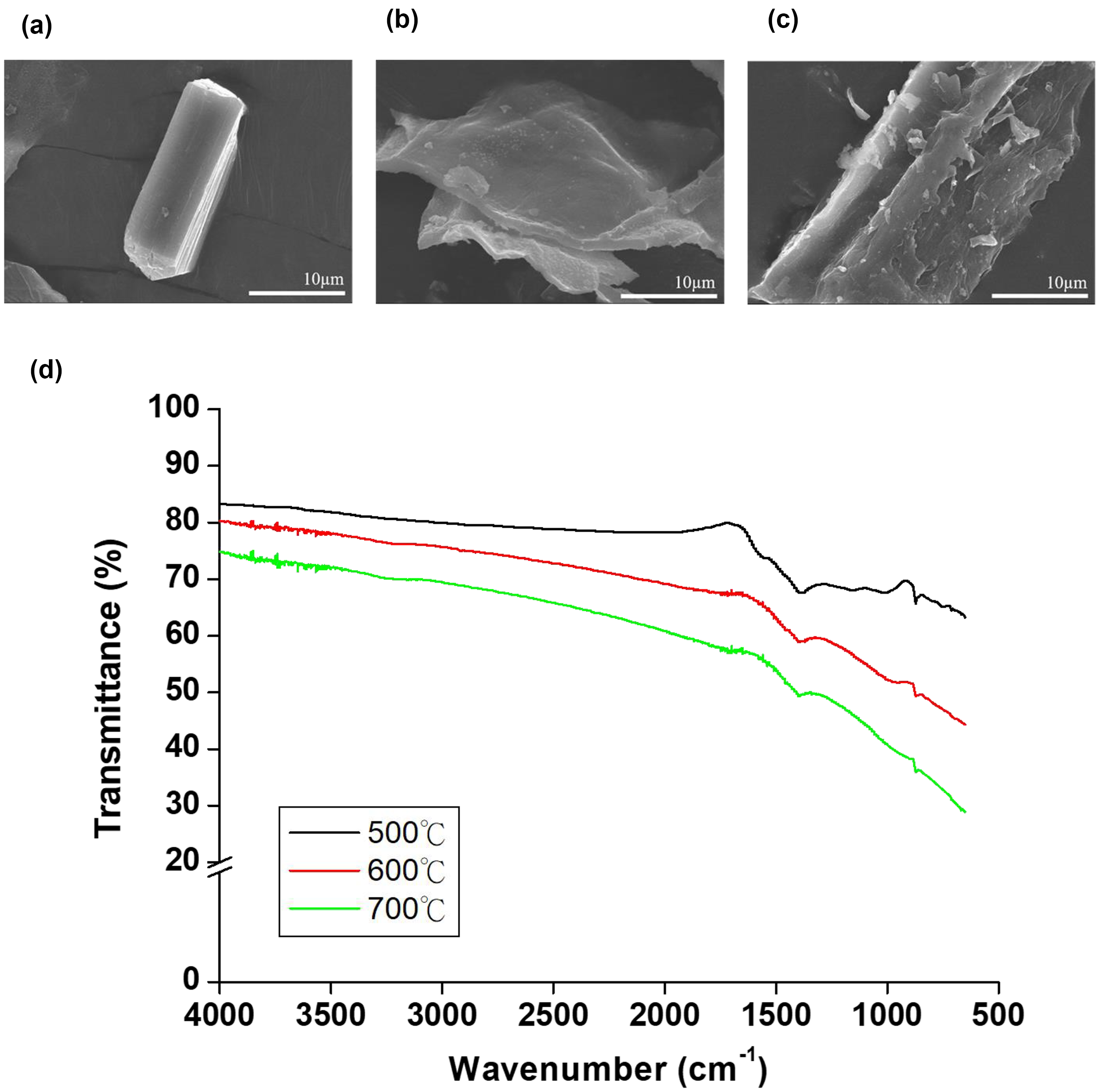
Physicochemical properties of OSBs. (a) SEM micrograph of OSB500. (b) SEM micrograph of OSB600. (c) SEM micrograph of OSB700. (d) FTIR patterns of OSBs. FTIR: Fourier transform infrared; OSB: onion skin biochar; SEM: scanning electron microscopy.
FTIR analysis revealed that the primary bands of OSBs fall within the range of 1000 to 675 cm−1, which was associated with the stretching vibrations of C-H bonds within the main chain. Bands located between 1300 and 1000 cm−1 might be correlated with the C-O skeletal vibrations in OSBs (Figure 1(d)). Furthermore, the absorption peak of C = C stretching was evident at 1600 to 1400 cm−1 in OSB500, but this functional group was conspicuously absent in OSB600 and OSB700. From the FTIR spectroscopic data, it appears that higher sintering temperatures elevate the carbonization degree of the material, leading to reductions in surface functional groups. These experimental data also corroborate that temperature modulation effectively enhances the surface properties of OSBs and augments their capability to remove pollutants.
The specific surface area and porosity of OSBs ranged 3.036 to 48.957 m2 g−1 and 0.012 to 0.018 cc g−1, respectively (Table 1). Among the three types of OSBs, OSB700 exhibited the highest specific surface area of 48.957 m2 g−1 and adsorption pore volume of 0.018 cc g−1. Therefore, preparing OSBs at higher temperatures should enhance their specific surface area and pore volume. In this study, RB5 (100 µg mL−1) adsorption tests were conducted using the three OSBs under the same conditions. The results indicated that OSB700 displayed significantly higher efficiency in RB5 adsorption than OSB500 and OSB600 (Supplemental Figure S1). This result is likely attributable to the higher specific surface area and pore volume of OSB700. Our subsequent experiments focused exclusively on OSB700.
The BET surface areas and pore volume of OSBs.
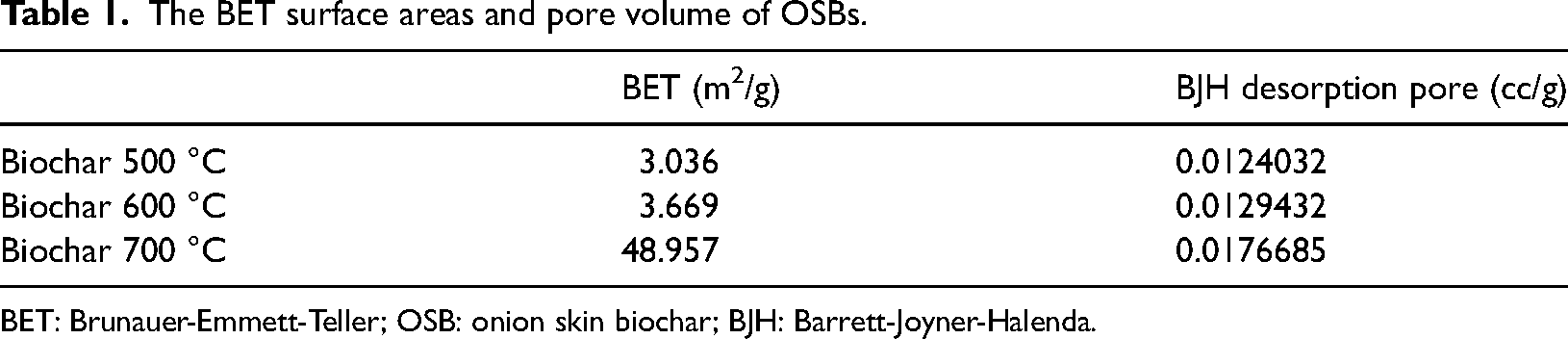
BET: Brunauer-Emmett-Teller; OSB: onion skin biochar; BJH: Barrett-Joyner-Halenda.
Cytotoxic effects of OSBs and RB5 in human vascular cells
To assess the biocompatibility of OSB700, we examined its cytotoxicity in EA.hy926 cells after 24 hours using the MTT assay. As depicted in Figure 2(a), OSB700 at concentrations of 1 to 100 μg mL−1 did not induce cytotoxicity in EA.hy926 cells, supporting the safety of onion skin-derived OSBs produced through sintering.
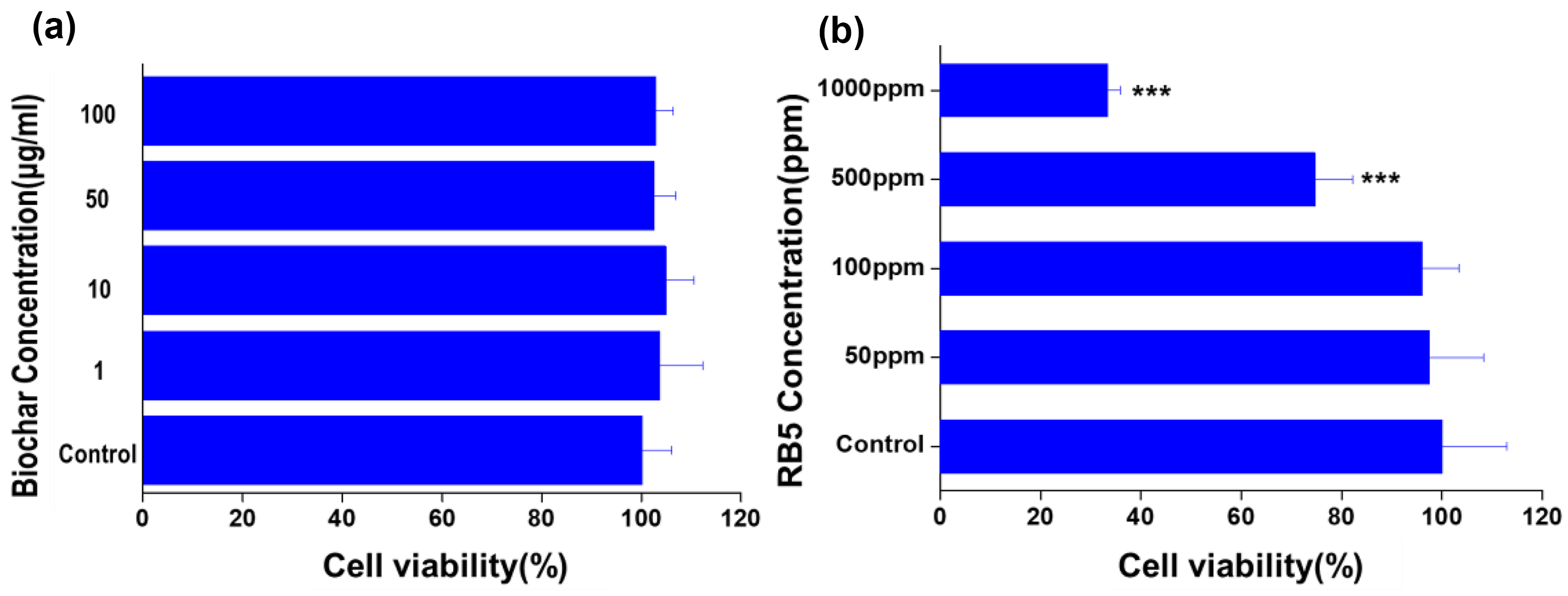
Cytotoxic effects of OSB700 and RB5 in human vascular cells. (a) Cytotoxic effects of OSB700 in EA.hy926 cell. (b) Cytotoxic effects of RB5 in EA.hy926 cell. OSB: onion skin biochar; RB5: Reactive Black 5.
Furthermore, we evaluated the toxicity of RB5 at concentrations of 50, 100, 500, and 1000 ppm. As presented in Figure 2(b), EA.hy926 cells exposed to 50 and 100 ppm RB5 for 72 hours displayed viabilities of 97.5% and 96.1%, respectively. However, exposure to 500 and 1000 ppm RB5 reduced the percent viable cells to 74.7% and 33.4%, respectively. Relevant studies demonstrated that RB5 can reduce survival and alter heart rates in zebrafish, as well as cause developmental abnormalities. These findings collectively underscore the adverse impact of RB5 on living organisms. 33 The cell toxicity results suggest that RB5 exhibits toxicity at higher concentrations, implying potential harm from prolonged exposure in both humans and the environment.
Effects of pH on RB5 adsorption by OSB700
Next, the effect of pH on the ability of OSB700 to adsorb RB5 was assessed. The highest removal efficiency was observed at pH 3 (73.37%, Figure 3(a)). The adsorption mechanism of OSB700 might involve two aspects: electrostatic interactions between RB5 and OSB700 and chemical reactions. 24 The superior removal efficiency at pH 3 is likely attributable to the participation of H+ ions, causing the surface of OSB700 to become positively charged. This enables OSB700 to adsorb the anionic dye RB5 and increase the electrostatic attraction between them, leading to enhanced qe (mg g− 1 ).34,35 This also explains why more RB5 can be removed at lower pH.
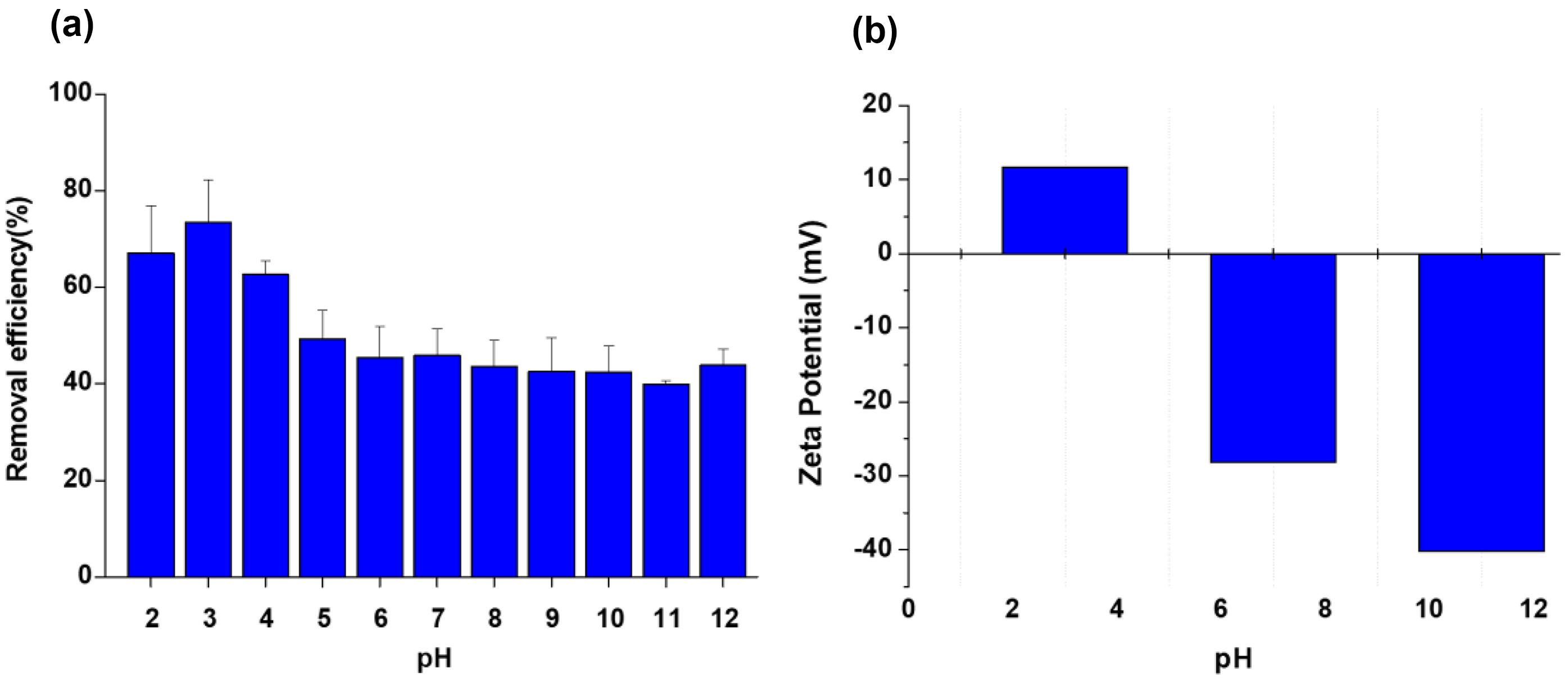
Impact of pH on adsorption of RB5 and zeta potential on OSB700. (a) RB5 adsorption of OSB700 at different pH. (b) Zeta potential of OSB700 at different pH. OSB: onion skin biochar; RB5: Reactive Black 5.
Conversely, at alkaline pH, RB5 retains some adsorption capability, suggesting potential chemical adsorption. As pH increases, the number of negatively charged sites increases, whereas the number of positively charged sites decreases because of electrostatic interactions, leading to electrostatic repulsion between the OSB700 adsorbent surface and RB5, consequently reducing RB5 adsorption. OSB700 exhibited superior adsorption efficiency for RB5 in acidic environments (Figure 3(a)), corroborating previous studies in which adsorbents such as sawdust, rice husks, 36 coconut husks, 37 bamboo waste, 35 palm kernel shells, 38 and bamboo shoot shell biochar 24 exhibited better adsorption performance for dye pollutants under acidic conditions. Therefore, the optimal pH was fixed at 3 for subsequent studies.
By utilizing a surface potential analyzer to measure zeta potential, we determined the surface charge and stability of OSBs in aqueous solutions at pH 3, 7, and 11. At pH 3, OSB700 surfaces carried positive charges (Figure 3(b)), facilitating interaction with RB5 through electrostatic attraction, thus enhancing its adsorption efficiency (Figure 3(a)). At pH 7 and 11, the OSB700 surface was negatively charged (Figure 3(b)), resulting in electrostatic repulsion with RB5, consequently reducing its adsorption efficiency (Figure 3(a)). This finding underscores that acidic conditions are more favorable for OSB700-mediated dye absorption.
Effects of the initial RB5 concentration on the adsorption efficacy of OSB700
Figure 4 illustrates the relationship between the adsorbent and the initial concentration of RB5. As the RB5 concentration increases, the removal efficiency gradually decreases, and qe increases concurrently. At higher RB5 concentrations, there are more anions in the solution, making them readily disperse and adsorb onto OSB700, resulting in higher qe. The decrease in removal efficiency can be attributed to the saturation of adsorption sites on the OSB surface with increasing adsorbate concentrations, limiting the adsorption of residual anions in the solution, thereby reducing adsorption efficiency. Hence, the removal efficacy deceases as the initial RB5 concentration increases. The highest qe of 14.06 mg g−1 was achieved at an initial RB5 concentration of 40 mg L−1 (Figure 4). Therefore, this condition was employed for subsequent experiments.
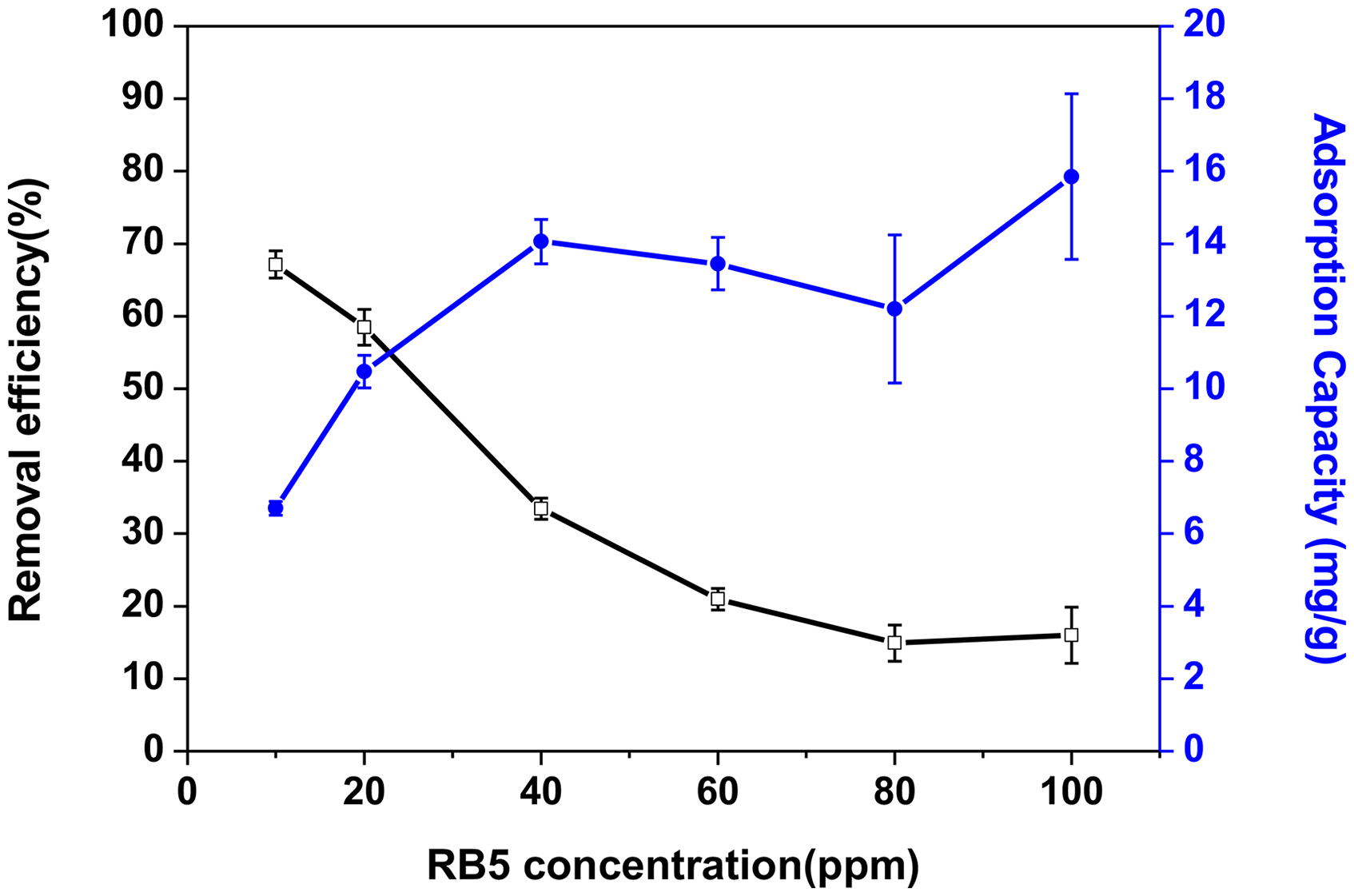
Impact of initial RB5 concentration on adsorption of RB5 on OSB700. OSB: onion skin biochar; RB5: Reactive Black 5.
Effects of temperature on RB5 adsorption by OSB700
Figure 5 illustrates qe of OSB700 for RB5 at different temperatures (15°C, 25°C, 35°C, and 70 °C) and its dependency on the experimental time. Relevant experimental parameters include an OSB700 dosage of 1 g L−1, pH 3, and an RB5 concentration of 40 mg L−1. As illustrated in Figure 5, as the temperature increased from 15 °C to 35 °C, qe increased from 11.64 to 16.93 mg g−1, whereas qe was approximately 23 mg g−1 at 70 °C. The results indicate that higher experimental temperatures lead to greater qe, suggesting that the adsorption of RB5 is endothermic, 39 in line with previous findings.38,40 Additionally, similar results were observed in adsorption experiments with banana peel biochar/iron oxide composite materials for methylene blue. When the methylene blue concentration ranged 25 to 500 mg L−1 and the biochar composite material dosage was 0.5 g L−1, qe increased from 500 mg g−1 at 20 °C to 750 mg g−1 at 40 °C. 41 Meanwhile, qe for RB5 gradually increased with contact time with OSB700. The experimental results illustrate that the adsorption process was faster during the initial stages but approached a plateau in later stages. This phenomenon could be attributable to a reduction in the number of adsorption sites on OSB700 over time.42,43
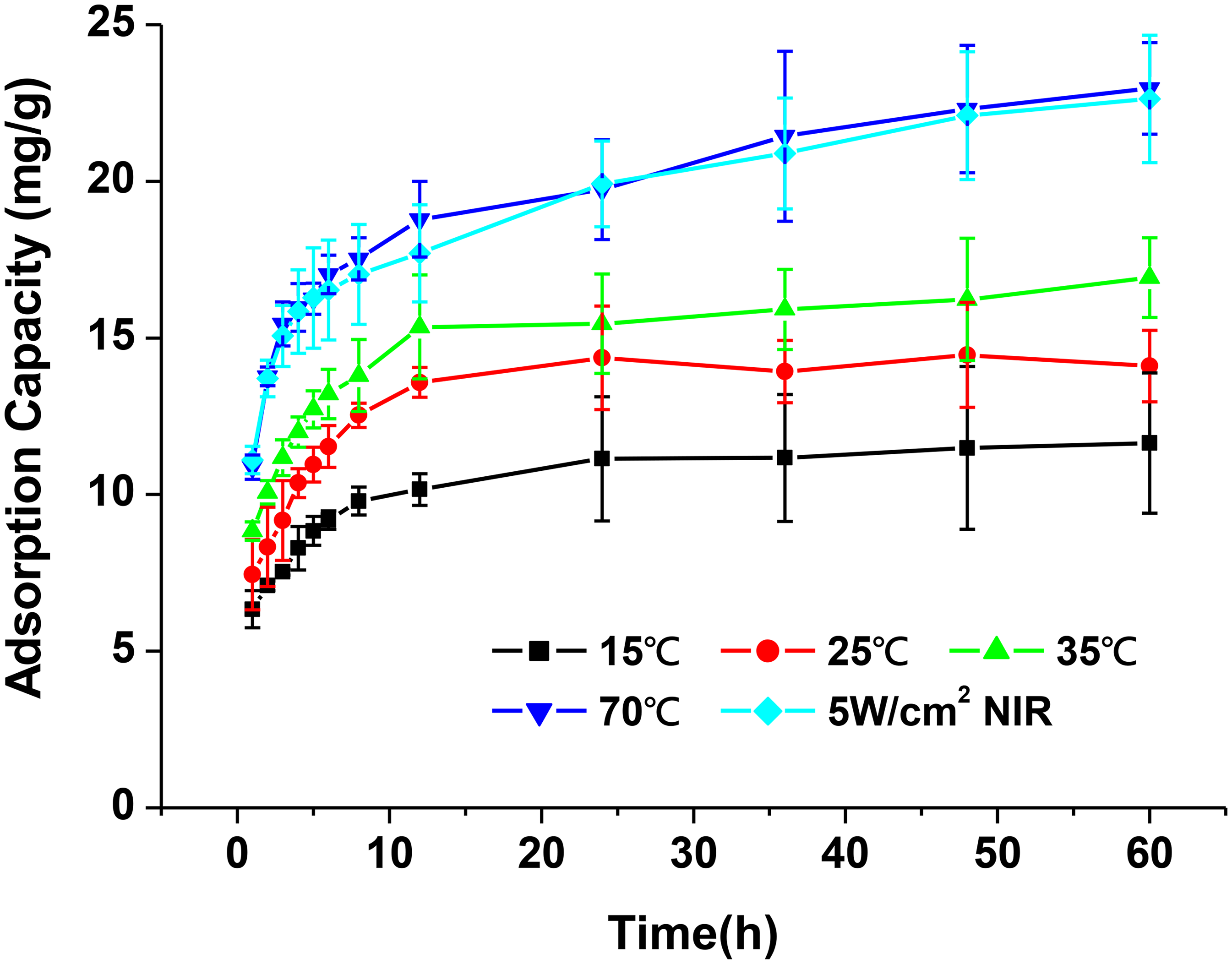
Impact of temperature and contact time on adsorption of RB5 on OSB700. OSB: onion skin biochar; RB5: Reactive Black 5.
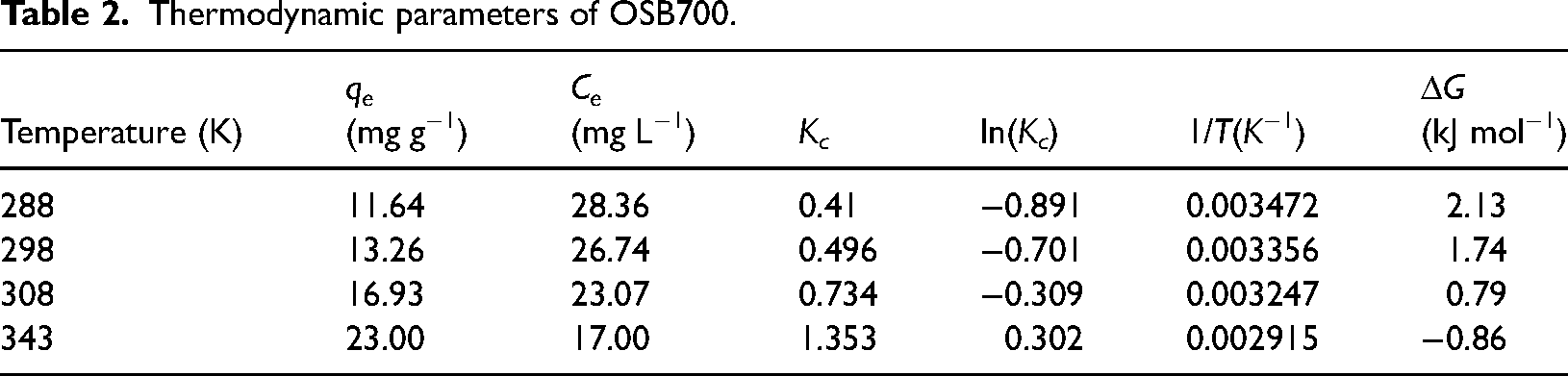
Thermodynamic parameters were calculated to understand the adsorption mechanism of RB5 on OSB700. The calculated enthalpy (ΔH = 18.13 kJ mol−1) indicates an endothermic process, while the positive entropy (ΔS) suggests increased randomness at the solid–liquid interface. Gibbs free energy (ΔG) changes from 2.13 kJ mol−1 at 288 K to −0.86 kJ mol−1 at 343 K, indicating that the adsorption becomes more spontaneous at higher temperatures (Table 2). These results align with previously reported studies, such as those employing orange waste biochar composites and chemically activated sunflower stem biochar for pollutant adsorption, where thermodynamic analyses confirmed similar endothermic and spontaneous adsorption mechanism.44–47
Thermodynamic parameters of OSB700.
Effects of NIR on RB5 adsorption by OSB700
This study first investigated the photothermal effect induced by OSB700 under NIR (5 W cm2−1). The results demonstrated that after 7 min of NIR exposure, the temperature of OSB700-containing solution rapidly rises from room temperature (27.1 °C) to nearly 70 °C (Figure 6(a)). As presented in Figure 6(b), qe of OSB700 for RB5 was approximately 23 mg g−1 under NIR (5 W cm2−1). The swift increase in the temperature of OSB700-containing solution supports its excellent photothermal performance, enabling the material to absorb NIR and induce photothermal effects, thus enhancing the adsorption of pollutants. The elevation in temperature facilitates the rapid diffusion of pollutants within the biochar pores, 48 and it might also lead to the breaking of certain chemical bonds on the biochar, thereby increasing the number of adsorption sites. Additionally, the adsorption process involves endothermic reactions, and thus, the increase in surface temperature accelerates adsorption reactions. 49
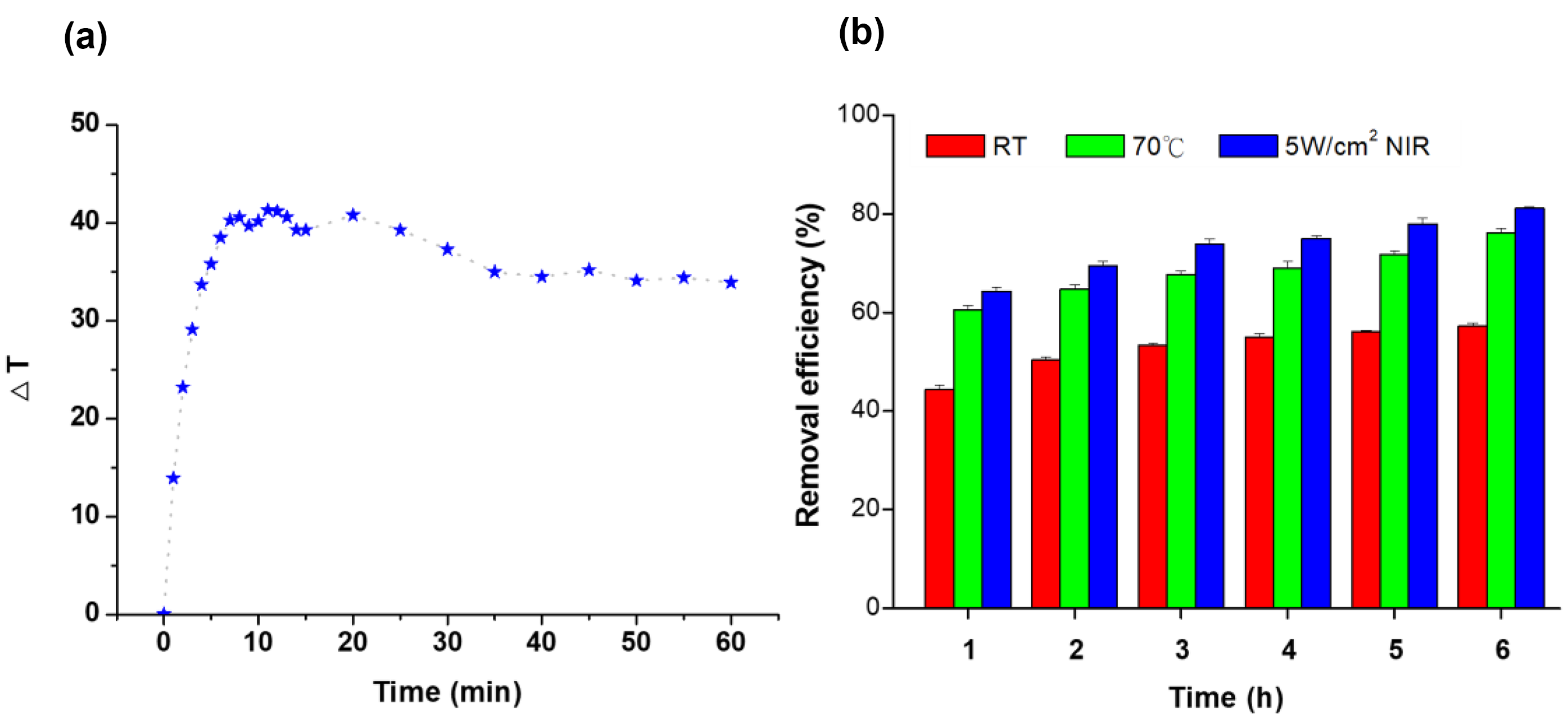
Impact of NIR on RB5 adsorption by OSB700. (a) Photothermal effect of OSB700 under NIR. (b) Adsorption capacity of OSB700 at different temperature. NIR: near-infrared radiation; OSB: onion skin biochar; RB5: Reactive Black 5.
Moreover, OSB700 demonstrated effective adsorption performance under acidic conditions and with a high adsorption capacity (qe = 23 mg g−1) under NIR irradiation. These conditions not only can mimic the challenges in real wastewater system containing RB5, such as varying pH levels and high contaminant concentrations, but imply that onion skin-derived biochar provides an eco-friendly and low-cost approach to wastewater treatment, particularly in developing regions where agricultural waste is abundant. Combined with the low energy requirements of NIR irradiation, this approach offers practical feasibility for large-scale wastewater treatment, especially in resource-limited settings. These aspects collectively underscore the novelty of both the method and the product, highlighting its potential to address critical environmental challenges in a sustainable and efficient manner. This aligns with the goals of the circular economy and sustainable waste management practices.
Effects of different operating conditions on the adsorption of high-concentration RB5 by OSB700 and its cytotoxicity
The ability of OSB700 to remove high-concentration RB5 (1000 ppm) was tested under three conditions: room temperature, 70 °C, and NIR exposure at 5 W cm2−1 (OSB concentration, 4 g L−1; pH 3; Figure 7). At room temperature, the RB5 removal rate was 57.19%, increasing to 76.10% at 70 °C. However, following exposure to 5 W cm2−1 NIR, the removal rate reached 81.09%. These results indicate that higher temperatures lead to better pollutant removal efficiency and suggest that dye adsorption is an endothermic process. OSB700 exposed to NIR irradiation outperformed that heated at 70 °C, highlighting the enhancement of pollutant adsorption through the induction of photothermal effects under NIR.
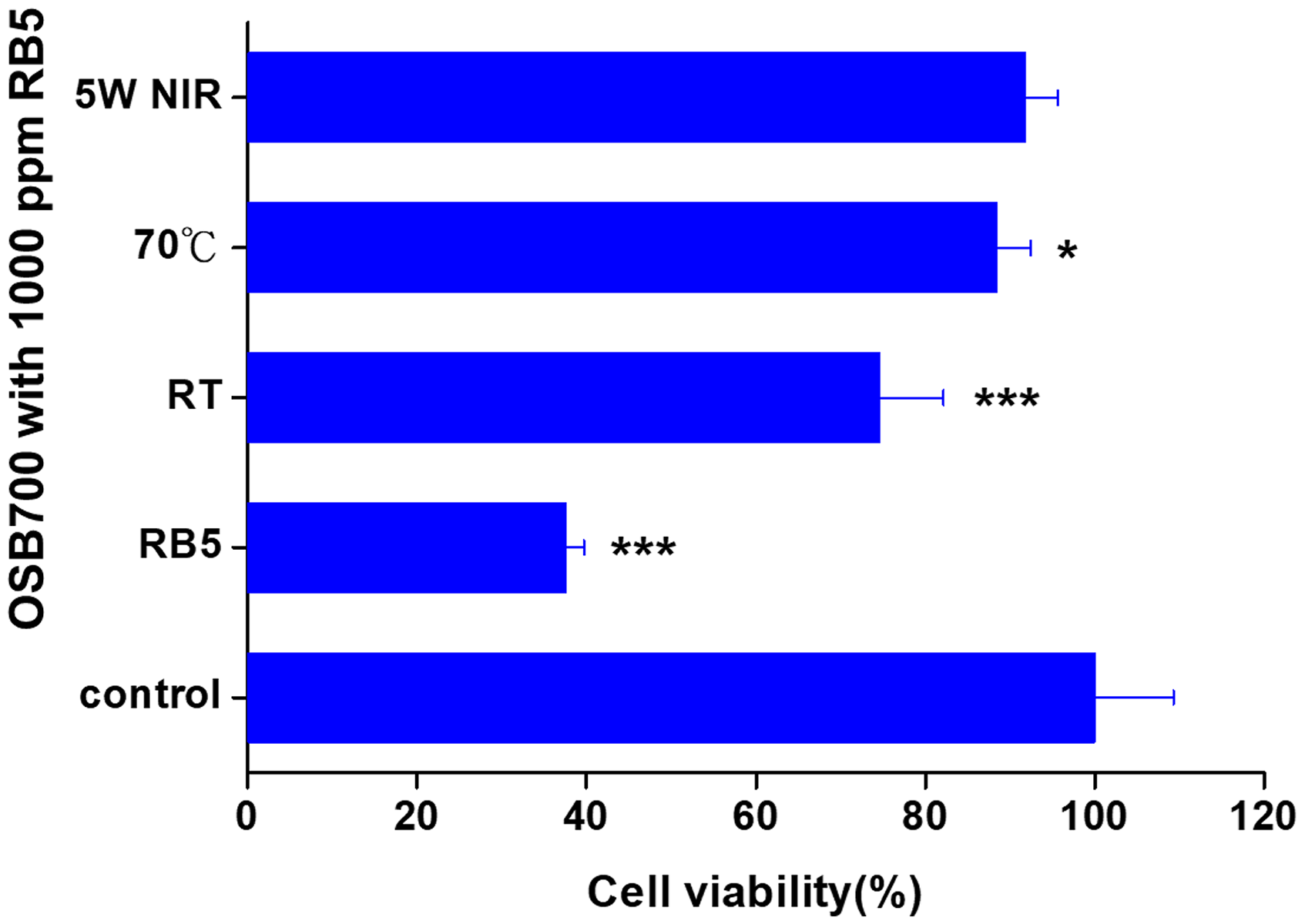
Impact and cytotoxicity of different operating conditions on the adsorption of high-concentration RB5 by OSB700. OSB: onion skin biochar; RB5: Reactive Black 5.
Cell supernatants were collected after pollutant adsorption under various conditions and subjected to cytotoxicity assays. EA.hy926 cells exposed to a pure RB5 solution (1000 ppm) had 37.5% viability (Figure 7). When cells were exposed to supernatants obtained after RB5 adsorption at room temperature, their viability increased to 74.7%. Heating the solution to 70 °C further increased cell viability to 88.6%. After inducing photothermal effects through NIR exposure (5 W cm2−1), the supernatant obtained after RB5 adsorption showed significantly reduced harm to cells (viability, 91.9%). Although cell viability improved under the adsorption conditions, the experimental group combining NIR and heating technology exhibited the highest cell viability, indicating that the photothermal effects induced by heating contribute to pollutant adsorption. Moreover, 5 W cm2−1 NIR exposure resulted in effective RB5 adsorption and reduced cytotoxicity, thereby minimizing the cell damage caused by RB5.
This highlights OSB700's capability to mitigate the harmful impacts of dyes on aquatic ecosystems and human health. The integration of OSB700 with NIR technology not only improved adsorption efficiency but also enhanced its applicability in real-world scenarios by leveraging photothermal effects. This method allowed rapid pollutant removal and reduced the cytotoxicity of high-concentration RB5 effluents.
Conclusions
This study reutilized agricultural waste to address the risks of environmental pollution and human health posed by polluted wastewater. The study successfully demonstrated the potential of OSB, particularly OSB700, as a cost-effective and environmentally friendly adsorbent for the removal of RB5 from aqueous solutions. The results demonstrated that OSBs are safe and nontoxic, and their ability to remove RB5 increased at higher sintering temperatures. In an acidic environment, OSB700 adsorbed RB5 via its surface charge. Furthermore, when OSB700 is combined with NIR, its RB5 removal efficiency significantly increased because of the elevation in environmental temperature caused by photothermal conversion. Simultaneously, the toxic effects of the treated RB5 effluent on human cells were significantly reduced. We believe that this study will significantly enhance the feasibility of agricultural waste reuse and reduce the harm caused by polluted wastewater to both human health and the environment.
Supplemental Material
sj-docx-1-eae-10.1177_0958305X251322897 - Supplemental material for Enhancement of Reactive Black 5 adsorption uptake from aqueous solutions using onion skin biochar under near infrared radiation illumination
Supplemental material, sj-docx-1-eae-10.1177_0958305X251322897 for Enhancement of Reactive Black 5 adsorption uptake from aqueous solutions using onion skin biochar under near infrared radiation illumination by Yi-Chun Chen, Xin-Yu Jiang, Ku-Fan Chen, Chih-Chao Liang, Chia-Hsiang Lai, Kun-Yi Andrew Lin and Chia-Hua Lin in Energy & Environment
Footnotes
Abbreviation
Acknowledgement
This manuscript was edited by Enago.
Authors’ contributions
C-HL and Y-CC contributed to the conception and design of research; K-YAL, C-CL, K-FC, and X-YJ performed the experiments; K-YAL, C-HL, and C-CL analyzed the data; K-YAL and X-YJ interpreted the results of experiments; Y-CC prepared the figures; Y-CC and C-HL drafted the manuscript; Y-CC edited and revised the manuscript; and C-HL and Y-CC approved final version of the manuscript.
Declaration of conflicting interests
The authors declared no potential conflicts of interest with respect to the research, authorship, and/or publication of this article.
Funding
The authors disclosed receipt of the following financial support for the research, authorship, and/or publication of this article: This work was supported by the National Science and Technology Council (grant number NSTC-112-2221-E-150-007-MY3, NSTC-112-2314-B-150-001-MY3).

Supplemental material
Supplemental material for this article is available online.
References
Supplementary Material
Please find the following supplemental material available below.
For Open Access articles published under a Creative Commons License, all supplemental material carries the same license as the article it is associated with.
For non-Open Access articles published, all supplemental material carries a non-exclusive license, and permission requests for re-use of supplemental material or any part of supplemental material shall be sent directly to the copyright owner as specified in the copyright notice associated with the article.
