



Abstract
Digital intelligence has become a driving force for energy transformation and low-carbon sustainable development. Unlike digitization, intelligence focuses more on the application of digital technologies. In this study, we assessed the level of digital intelligence development (Dig) and energy sustainability efficiency (EE) in China using the entropy weight-TOPSIS method and super-efficiency SBM model. Through integrated kernel density analysis and trend surface modeling, we observe that EE shows a continuous upward trajectory over time, but stagnation is obvious in the central region, and there is a spatial phenomenon of “center collapse”. Based on these basic research results, this study utilizes the spatial Durbin model and the panel threshold model to investigate the direct, spatial, and threshold effects of Dig on EE. The findings suggest that Dig greatly promotes EE. However, this favorable impact exhibits limited spatial spillovers, with its advantages concentrated within specific regions. Whereas there are disparities in the level of EE across localities, region-specific investments in digital infrastructure are needed to maximize energy sustainability benefits. In addition, our analysis finds that the level of economic development and industrial structure are key threshold variables affecting Dig for EE. It is worth noting that Dig can only contribute substantially to promoting EE if both the level of economic development and industrial structure exceed the specified thresholds. Meanwhile, this study contributes to the literature by combining spatial econometric modeling with digital transformation indicators to assess their heterogeneous impact on energy sustainability.
Keywords
Introduction
Sustainable development is linked to the survival and future of humanity and is a key framework for achieving long-term economic and social progress. 1 The 2015 United Nations Summit on Sustainable Development (UNCSD) established the 2030 Agenda for Sustainable Development (2030 Agenda), which contains 17 Sustainable Development Goals (SDGs). Among them, SDG 7 focuses on ensuring access to affordable, reliable, sustainable, and modern energy for all, emphasizing an increased share of renewable energy and research and development of clean energy technologies. 2
Against the backdrop of a global consensus to drive a clean energy transition, energy systems are facing transformational change. 3 Science, technology, and innovation are at the heart of this change, requiring comprehensive upgrading of the energy sector's infrastructure and modernization of the industry chain. 4 However, the potential shortage of technologies for clean energy development remains a serious challenge. 5 Advances in technologies such as smart power plants, smart grids, intelligent robotic exploration and extraction, and automated troubleshooting have driven the digitalization and intelligence of energy production and operations, enabling real-time interaction between energy supply and demand. Despite significant efforts, effective emission control and the transition towards sustainable energy systems remain formidable challenges due to multifaceted technological, economic, and policy constraints. 6 In this context, digital intelligence–enabled smart cities and advanced artificial intelligence frameworks have garnered considerable scholarly and practical attention as innovative solutions. These approaches facilitate the seamless integration, real-time optimization, and intelligent management of renewable energy resources, thereby substantially enhancing the efficiency and reliability of clean energy systems and supporting the broader goals of carbon neutrality and sustainable development.7,8
In China, the construction of a modern energy system has been prioritized. The 14th Five-Year Plan for China's Modern Energy System depicts a strategic vision driven by the scientific and technological revolution, changes in global climate governance, the convergence of new energy sources and information technology, the shift to a decarbonized and smarter way of life, and the transition to a non-fossil-fuel-dominated energy system. 9 The plan further emphasizes the deep integration of energy and information technology and states that renewable energy will account for about 60% of new power generation in 2020, and the rate of clean heating in northern China will exceed 65%.
Therefore, under the dual drive of global and national policies, research on sustainable energy development is particularly important. Especially in China, it is crucial to study the impact of digital intelligence on the efficiency of energy sustainability. This will not only facilitate the energy transition but also optimize the structural framework to help achieve peak carbon and carbon neutrality targets.
Research on sustainable energy development within the context of digital intelligence primarily concentrates on two key facets. Many studies have shown that digital intelligence has a positive impact on energy sustainability. Luo 10 argued that digital intelligence can directly improve the efficiency of green technology development through energy saving and emission reduction, environmental governance, improving the quality of human capital, and facilitating the development of the national economy. The study by Ran 11 also emphasized the important role of the digital economy in facilitating the environmentally sustainable transformation of industries, pointing out that the advancement of digital technology promotes eco-friendly practices in various industries and significantly improves the efficiency of natural resource utilization. In addition, Wang 12 shows that there is a substantial positive link between digitization and high-quality energy development and that an increase in the digital economy index shows a significant synergy with an increase in the high-quality energy development index. Studies by Wang & Shao13–15 also confirm the idea that digitization can significantly improve energy efficiency.
While digital intelligence holds potential for energy sustainability, some studies have also found mixed or even negative results. Dong, 16 using national-level panel data from 2008–2018 for empirical testing, showed that while digitalization significantly reduced carbon intensity, it also increased per capita carbon emissions. Xue, Tang, Wu, Liu, and Hao 17 found that the development of digital intelligence both promoted the overall growth of energy consumption and facilitated the improvement of the energy consumption framework, with the main influencing mechanisms being economic growth, improved energy efficiency, and changes in industrial structure. Lange 18 argues that digitalization itself may increase energy consumption, and only when digitalization promotes green technology innovation and industrial upgrading, rather than just economic growth, can it truly contribute to sustainable development.
Existing research has also focused on the spatial impact of digital intelligence on energy sustainability. Wang et al. 12 found a clear high spatial concentration between digitalization and high-quality energy development, indicating that regions with a higher level of digital economic development also tend to have relatively higher energy development quality.
While past research has explored the connection between digital intelligence and energy efficiency, some significant gaps remain. First, current research on the impact of digital intelligence on energy efficiency mainly focuses on reducing pollution and improving efficiency in processing or utilization, resulting in a relatively limited scope. It's important to note that the “Digital Intelligence” mentioned in this study does not merely refer to the narrow application of digital technologies. Instead, it refers to the deep integration of digital technologies such as big data, artificial intelligence, and the Internet of Things with the energy industry, to achieve intelligent and efficient energy production, transmission, and consumption. This integration is not just a simple accumulation of technologies, but rather an innovation and transformation of traditional energy development models. Second, the traditional linear econometric models frequently used in research frameworks do not fully consider the inherent characteristics of digital technologies, such as openness, permeability, and timeliness. The assumption of spatial homogeneity in these models may lead to biased estimation results, hindering a comprehensive analysis of the intricate relationship between digital intelligence and energy sustainability efficiency. In addition, studies often emphasize the direct link between digital intelligence and energy efficiency, overlooking the changes in this relationship across different levels of economic development and industrial structures (Figure 1).
Addressing the limitations of previous research, this study aims to evaluate the impact of digital intelligence on energy sustainability efficiency in China, while considering spatial, economic, and structural heterogeneity. The main contributions of this study are as follows: (1) Comprehensive Measurement: This study incorporates the proportion of renewable energy and environmental protection into the comprehensive measurement section. The output analysis not only focuses on traditional energy sources, such as oil and gas but also assesses the utilization rate of renewable energy and environmental pollution associated with undesirable outputs. This comprehensive approach helps to fully evaluate the sustainability and environmental impact of energy use. This study uses a super-efficiency SBM-DEA model to measure energy efficiency and also uses kernel density estimation and trend surface analysis to analyze spatiotemporal development. (2) Mechanism Analysis: The study explores the inherent mechanisms by which digital intelligence affects energy efficiency, explicitly considering the roles of industrial structure upgrading and economic development level. (3) Spatial Perspective: Unlike traditional methods, this study incorporates spatial correlation factors into the econometric model. This study uses a spatial econometric model to empirically assess the spatial spillover effects of digital intelligence on energy sustainability efficiency.
Theoretical analyses and research hypotheses
The overall impact of digital intelligence on sustainable energy development efficiency
As the Internet and digital technologies become deeply integrated into the development of digital intelligence, the low-cost, accessible, and non-rivalrous nature of data dissemination can effectively mitigate the information asymmetry between transaction participants and the imbalances between supply and demand.
19
The expansion of Internet-based information networks enables both buyers and sellers to reduce information collection costs and to leverage the geographically expansive nature of economic activities,
20
supporting optimized energy generation and expenditure, and reducing unnecessary waste. This fosters an inter-regional “competition effect,” incentivizing enterprises to prioritize resource integration and information sharing, which in turn improves energy utilization efficiency.
21
Furthermore, digital technology, as an emerging technology, can directly modernize energy-related physical equipment and enhance the output efficiency of each stage of the energy production process.22,23 On the other hand, digitalization promotes advancements in green technology, which, in turn, reduces the costs for enterprises associated with reducing energy consumption and greenhouse gas emissions, fostering sustainable energy development. From a governmental perspective, the construction of information networks has made information transmission more efficient and transparent, significantly reducing the government's cost of obtaining information on corporate energy expenditure and pollutant release. This enhanced information access improves the efficiency of regulatory oversight.
24
Driven by government regulatory efforts and the pursuit of efficiency, businesses will increasingly prioritize sustainable energy development. To mitigate potential risks and compliance costs, they will actively seek technologies and strategies for energy savings and emissions reductions. Based on this, this research proposes H1: H1: Digital intelligence has a positive impact on energy sustainability efficiency.
Threshold effects of digital intelligence on sustainable energy efficiency
The impact of digital intelligence on the efficiency of sustainable energy development may vary depending on the level of economic development.
25
On one hand, economic growth often leads to increased energy demand, potentially hindering energy utilization efficiency. In regions with lower economic development, digital intelligence may primarily influence sustainable energy development indirectly, through optimized industrial structures and more efficient resource allocation. Furthermore, in the initial stages of economic growth, governments might prioritize economic expansion over ecosystem preservation and renewable energy advancement, potentially limiting the positive impact of digital intelligence on energy sustainability. Conversely, economic development also provides the necessary financial support and technological infrastructure for fostering digital intelligence. Drawing on the theory of the “polarization effect,” as a region's economic development reaches a certain threshold, its attractiveness to information, technology, capital, and other resources increases significantly, further accelerating technological advancement.
23
Simultaneously, economic growth and rising incomes tend to enhance public environmental consciousness, leading to improved environmental governance and regulatory systems. This, in turn, compels businesses to reduce energy expenditure and optimize sustainable energy development. Based on this analysis, this research posits the following H2a: H2a: The impact of digital intelligence on the efficiency of energy sustainability is characterized by non-linearity at different levels of economic development.
For digital intelligence to effectively enhance energy efficiency, upgrading the industrial structure is an essential requirement.
26
When a region's economy is predominantly based on low-value-added agriculture or traditional industries, the demand for and capacity to implement digital technology within these sectors are limited due to a weak digitalization foundation. Consequently, realizing the potential of digital technology for energy savings and emission reductions becomes challenging, thereby restricting its ability to enhance energy efficiency. Notably, the digital industry originated within the tertiary sector and sees its most mature applications there, suggesting that a service-sector-dominated industrial structure fosters a more conducive environment for the application of digital technology. Only when the industrial structure is upgraded to incorporate high-value-added manufacturing and service industries can the positive spillover effects of digital intelligence be fully realized.
27
These highly digitized industries are better positioned to leverage digital technologies to enhance production efficiency, optimize resource allocation, and foster energy and technological innovation, contributing to more significant reductions in energy consumption and carbon emissions. More specifically, a sophisticated industrial structure—characterized by vibrant economic activity and substantial data generation—fuels improvements in energy efficiency by creating a favorable environment for the application and development of new technologies. The rapid expansion of high-tech and advanced service industries attracts skilled talent, stimulates innovation, and promotes the research, development, and deployment of energy-efficient technologies, leading to significant breakthroughs in energy efficiency. Furthermore, industrial upgrading generates demand for environmentally friendly and low-emission products and services, incentivizing companies to adopt energy-efficient and pollution-reducing technologies, thus further enhancing energy efficiency. Therefore, this research proposes H2b: H2b: The impact of digital intelligence on the efficiency of energy sustainability is characterized by non-linearity at different levels of industrial upgrade.
Spatial spillover effects
Unlike physical capital, digital technology exhibits high scalability due to its low marginal cost, facilitating knowledge and technology spillovers and resulting in strong spatial correlation. 26 This spatial relationship, however, manifests both positive and negative bidirectional spillover effects. 28 Innovation diffusion theory suggests a positive influence, whereby the spatial spillover of digital intelligence significantly enhances sustainable energy efficiency in geographically proximate areas. 26 A “cohort effect” of digital elements can effectively elevate digital intelligence levels in neighboring cities, improving energy sustainability efficiency. For instance, smart grid technology in core regions can accelerate the intelligent transformation of power grids in surrounding areas via demonstration effects and technical assistance.
Conversely, spatial agglomeration theory and the “siphon effect” suggest that negative spillovers can dominate under certain conditions. 29 This effect involves the spontaneous flow of “profitable” digital factors, reallocating resources towards more efficient and developed industrial systems. This can deplete resources in regions lagging in technology, digital economy development, and human capital, inhibiting energy technology innovation and exacerbating inter-regional factor allocation distortions. For example, digitally advanced regions may attract renewable energy technology talent from surrounding areas, thus diminishing innovation capacity in less developed regions. Further, in the context of emerging technologies, high-income cities often prioritize independent R&D, while low- and middle-income cities rely on imitation and absorption. 30 An underdeveloped regional digital economy can therefore impede the adoption of new technologies in lagging regions. Finally, the absorptive capacity theory posits that limitations in digital infrastructure and technological capabilities in less developed regions hinder the effective absorption and utilization of digital technologies and knowledge spilling over from developed regions, further widening the digital divide.
Therefore, in the short term, the rapid growth of digital intelligence in core regions may attract resources and talent, potentially diminishing sustainable energy development efficiency in surrounding areas. However, over time, substantial expansion of high-level digital economies in core regions should foster infrastructure improvements in neighboring peripheral regions, establishing a positive feedback loop that gradually diffuses innovation and improvements. Ultimately, the radiation and penetration effects of core regions are expected to benefit peripheral regions, enhancing their sustainable energy development efficiency. In light of these considerations, H3 is hypothesized as follows: H3: Digital technology enhancements can improve energy use efficiency with significant spatial spillover effects.
Material and methodology
Model setting
Baseline model
To empirically investigate the impact of digital intelligence on energy sustainability efficiency, we establish the following base model, guided by our theoretical analysis and research hypotheses.

Threshold models
This research constructs a threshold model to rigorously verify the nonlinear relationship between digital technology and energy sustainability efficiency. The model builds upon Hansen's
31
panel threshold approach, with economic development level serving as the identified threshold variable. This model aims to examine whether the impact of digital intelligence on energy sustainability efficiency exhibits different characteristics as economic development level and industrial structure vary.

Similarly, this study also uses industrial structure upgrading as the threshold variable, aiming to verify whether the impact of digital intelligence on energy sustainability efficiency differs at different stages of industrial development.

Spatial measurement models
To account for the potential spatial correlation between provincial digital intelligence development and energy efficiency, our empirical analysis employs a spatial econometric model. Given the likely simultaneous presence of spatial lag-induced error terms and random shocks, this research utilizes the general Spatial Durbin Model (SDM). The SDM's advantage lies in its ability to incorporate both spatial transmission mechanisms while also quantifying the influence of independent variables in other regions on the dependent variable within a given region. This aligns directly with the research objectives. Based on this justification, the following spatial econometric model is constructed.

Description of variables
Explained variable
Energy sustainability efficiency (EE) is the metric used as the explanatory variable in this research. Academic research on the linkage between energy and the SDGs mainly includes hierarchical analysis, comprehensive assessment, and input-output models. 32 Among them, the total factor energy efficiency (TFE) measurement method adopts the “input-output” construction idea to incorporate factors into the measurement framework. 33 When including pollutant emissions as an undesired output, the impact of elements affecting energy and heterogeneous outcomes are more easily recognized, especially in sustainability and long-term outcomes. Therefore, this research adopts efficiency as a measure of energy sustainability. This research adopts the super-efficient SBM model defined by Tone (2001), which includes undesired outputs. The inherent limitation of the standard SBM model is that it restricts efficiency values to the range of (0, 1]. Consequently, while it identifies inefficient DMUs, it cannot differentiate between efficient DMUs, as they all receive a score of 1. The super-efficient SBM model overcomes this challenge, enabling a more granular assessment. For this reason, this research adopts the non-desirable output super-efficiency SBM model to assess energy sustainability efficiency.
Based on the super-efficient SBM model described above, this research uses provinces as the unit of analysis. It selects two input indicators and five output indicators to measure each province's annual energy sustainable development efficiency. 34 The input indicators refer to: (1) Pollution control: expressed as the completed investment in industrial pollution control. (2) Capital investment is expressed as state-owned investment in energy sector fixed assets. Output indicators are as follows 35 : (1) Energy diversification: expressed in the proportion of other energy sources as the desired output. (2) Energy utilization: natural gas usage per capita and liquefied petroleum usage per capita as desired outputs. (3) Renewable energy use: the amount of renewable electricity consumption as the desired output. (4) CO2 emissions as a non-desired output.
Explanatory variable
A universally accepted quantitative measure for digital intelligence (Dig) remains lacking. The usual practices are cluster analysis, hierarchical analysis, entropy value method, and so on to measure it. Therefore, we portray the digitalization level by establishing digital intelligence evaluation indicators.16,36 Dig development level of each province in China is obtained by entropy weight-TOPSIS calculation. The specific indicators chosen for this analysis are presented in Table 1 below.
Indicator system for the digital intelligence development level of China's inter-provincial.
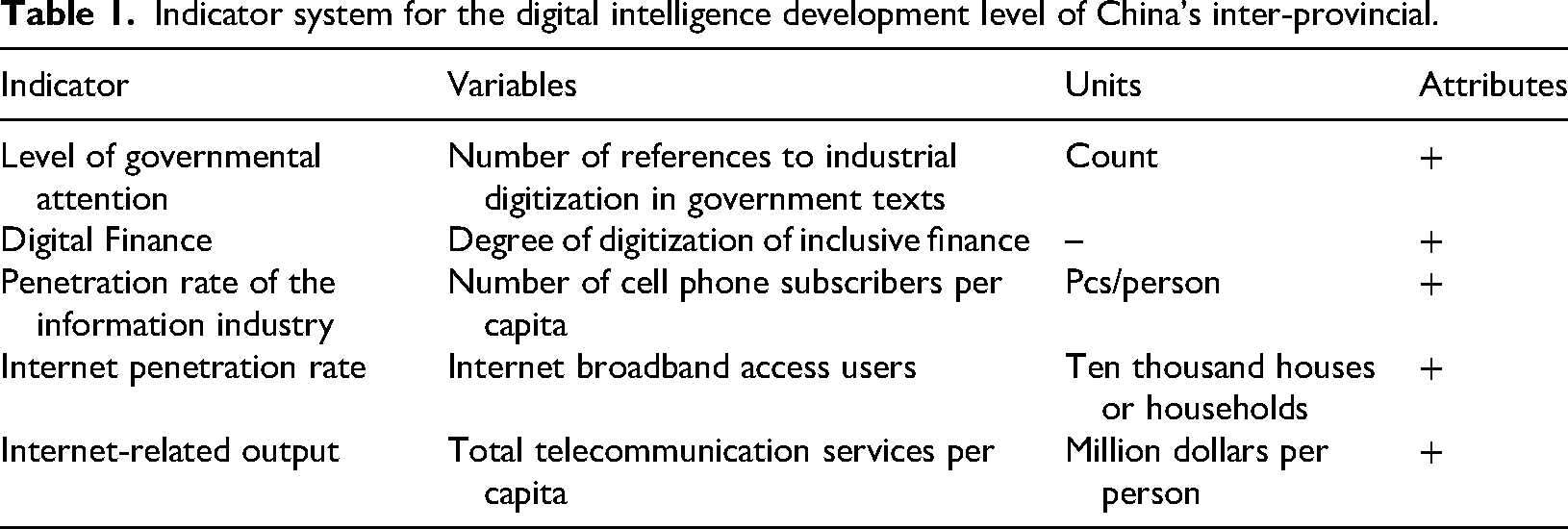
Our selection of the current indicator system is primarily based on the following considerations: First, these indicators are relatively accessible, ensuring the feasibility of the study. Second, these indicators encompass the main aspects of digital intelligence development, including digital infrastructure, digital finance, and digital output, enabling a relatively comprehensive reflection of the digital intelligence development level in each province. However, we also acknowledge that the current indicator system has certain limitations. For example, it lacks a broader measurement of digital capabilities and applications, such as innovation capacity, human capital levels, and the adoption of digital technologies across various industries. These indicators are crucial for comprehensively assessing the deeper impacts of digital intelligence. In the future, contingent on data availability, we will explore more comprehensive digital intelligence evaluation indicator systems.
Other variables
Threshold variables
① The economic development level (GDP)
According to the theory of technological fluctuations, the economic development level can be regarded as an important indicator of technological progress and innovative activity. Advanced economies benefit from well-developed science and technology innovation systems, extensive R&D infrastructure, and abundant factor resources, which collectively foster increased R&D and innovation and, consequently, accelerate technological progress. The accumulation of these technological advancements and innovation activities will drive improvements in energy utilization efficiency and expedite the diffusion of related technologies. Therefore, this research selects the level of economic development as the threshold variable, measured by the logarithm of GDP per capita in ten thousand yuan.
② The industrial structure upgrading (asi)
The nature of advanced industrial structure quality encompasses the shifting proportions of industries and gains in labor productivity, reflecting both “quantitative” and “qualitative” aspects of industrial structure upgrading. Based on this understanding and drawing upon prior research,37,38 this study uses the advancedization of industrial structure quality to characterize this upgrading. The specific formula is as follows: 2. Control variables
Drawing on related literature,11,12,16 the following control variables are incorporated into this research:
① Government Intervention (gov). It is expressed as the per capita financial expenditure of each region. The government's concern for people's livelihood and attention to environmental issues have an important impact on whether energy can be developed sustainably. Reasonable government measures can enable regions to effectively implement energy saving and emission reduction, thus improving energy efficiency.
② Business Environment (asset). It is expressed as the logarithm of the total assets of all state-owned and non-state-owned industrial enterprises above a certain size. Larger enterprises usually have more resources to invest in technological research and development, thus improving energy efficiency and reducing pollution emissions. On the contrary, there may be problems such as diseconomies of scale and waste of resources, short-term interest orientation and insufficient investment in environmental protection, and administrative monopoly and insufficient market competition, which are not conducive to sustainable energy development.
③ Population Size (pop). It utilizes the logarithm of the total population as an indicator. A larger population translates to a more extensive talent pool capable of providing a more substantial human resource base for research, development, production, and management within the energy sector, thereby fostering sustainable energy development. However, it can also exacerbate pressure on transportation, water supply, and power supply, generating congestion costs such as increased energy consumption and expanded consumer demand, resulting in a downward spiral in the regional environment.
④ Infrastructure Development (inf). The logarithm of total investment in fixed assets characterizes it. Highly developed infrastructure provides urban residents with convenient information exchange and real-time interaction channels. However, the construction and operation of this communication infrastructure require a large amount of energy support, which impacts energy utilization efficiency.
⑤ The Urbanization Level (urb). It is expressed as the proportion of the urban population to the total population. Urbanization can promote the intensive use of land, energy, and other resources and improve resource utilization efficiency. High population density and concentrated city infrastructure are conducive to developing public transportation, centralized heating, etc., and reducing energy waste.
Data sources and descriptive statistics
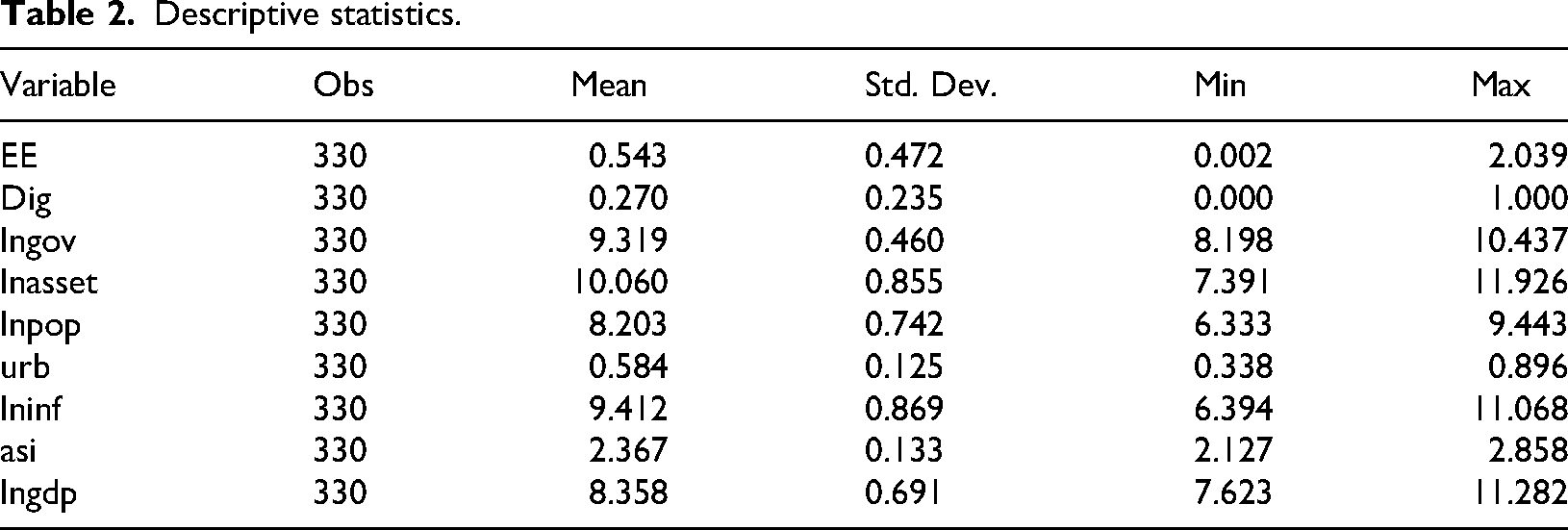
This analysis uses panel data from 30 Chinese provinces (excluding Tibet, Hong Kong, Macao, and Taiwan due to missing data). The CO2 emission data come from the Center for Global Environmental Research website. The remaining data were obtained from the following sources: the China Statistical Yearbook, the China Energy Statistical Yearbook, and statistical yearbooks and bulletins published by individual provinces and cities. Missing values were filled in by linear interpolation. The descriptive statistics of all variables are summarized in Table 2.
Descriptive statistics.
Results and discussion
Energy efficiency for sustainable development
Employing the super-efficient SBM-DEA model, this research assesses China's sustainable energy development efficiency, based on input-output data from 30 provinces spanning 2010 to 2020.
As shown in Figure 2, which displays the kernel density curve of sustainable energy use efficiency for 2010–2020, the proportion of lower EE values was relatively high in the early years (2010–2014). However, the distribution shifted towards higher values in later years (2018–2020), indicating an overall improvement in efficiency. Some years, such as 2011, 2013, and 2015, show a double-peak phenomenon, reflecting a broad range of energy efficiency across regions. The increase in data density at high-efficiency values from 2018 to 2020 suggests that progress in sustainable energy utilization has become more widespread.
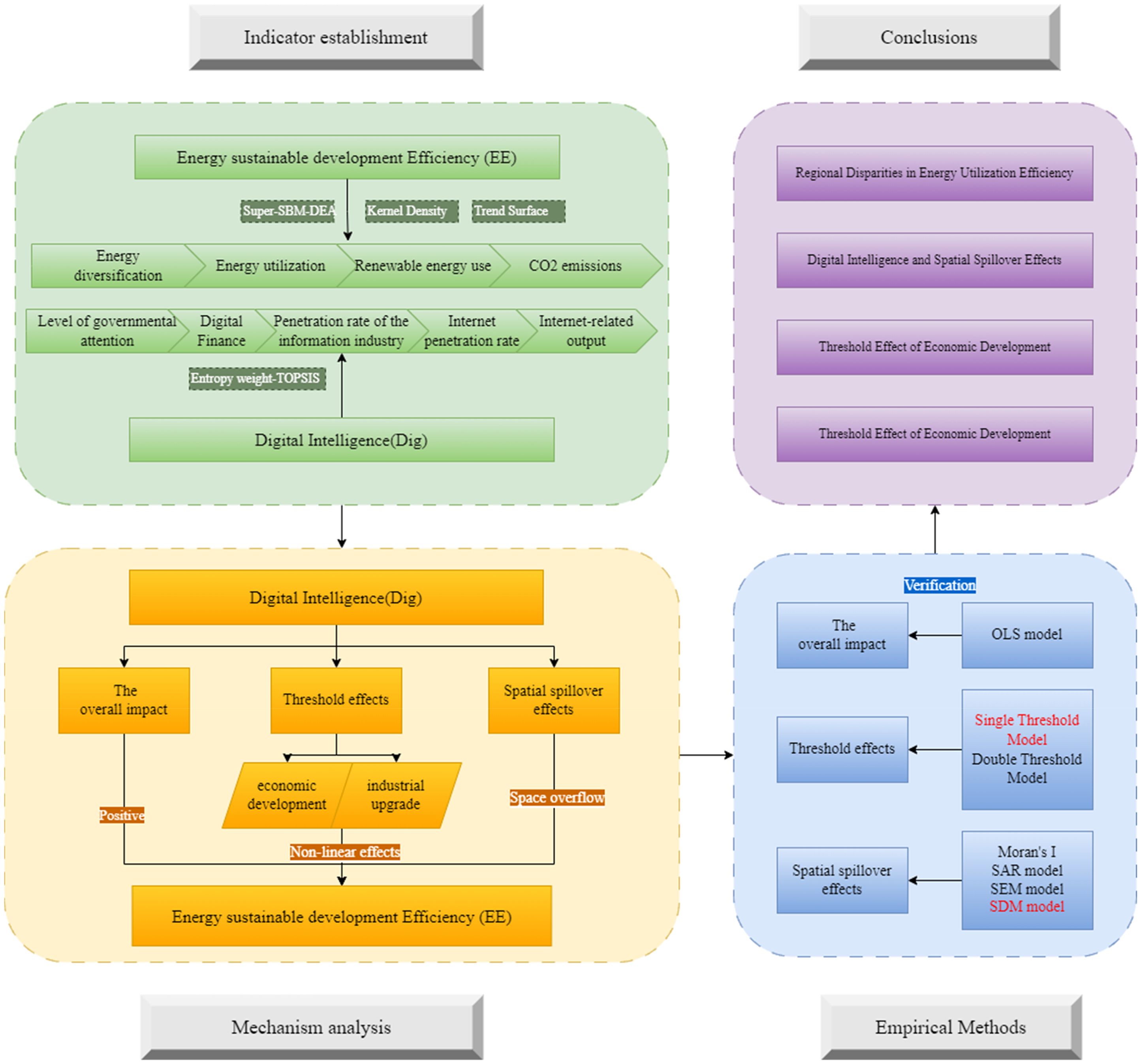
The framework diagram of this study.
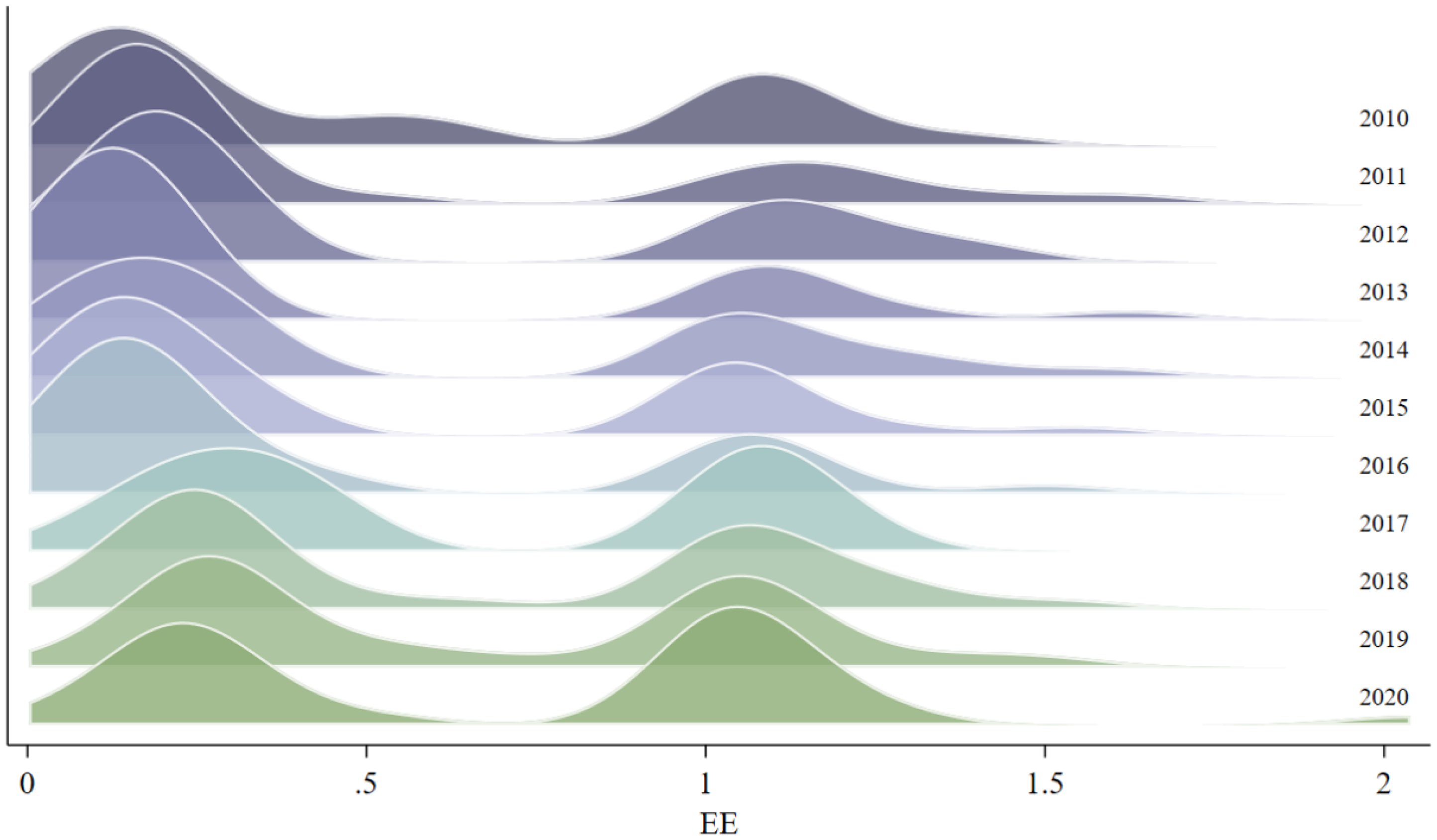
Kernel density curves grouped by time.
The results in Figure 3 show that the sustainable energy utilization efficiency (EE) of each province exhibits significant regional differences. Beijing and Shanghai's EE values are concentrated in the high-value region, demonstrating their advantages in sustainable energy utilization. The distribution of EE values in coastal provinces such as Jiangsu, Zhejiang, and Fujian is more decentralized, but the overall level is higher. Western and inland provinces such as Xinjiang, Qinghai, Gansu, and Shanxi have relatively low and concentrated EE values. Some provinces show a bimodal or multi-peak distribution, indicating that the province has experienced significant changes within the time frame examined. The first peak likely represents lower early-stage EE values, while the second peak may represent improvements due to technological advancements or policy adjustments. This is also consistent with the results in Figure 2.
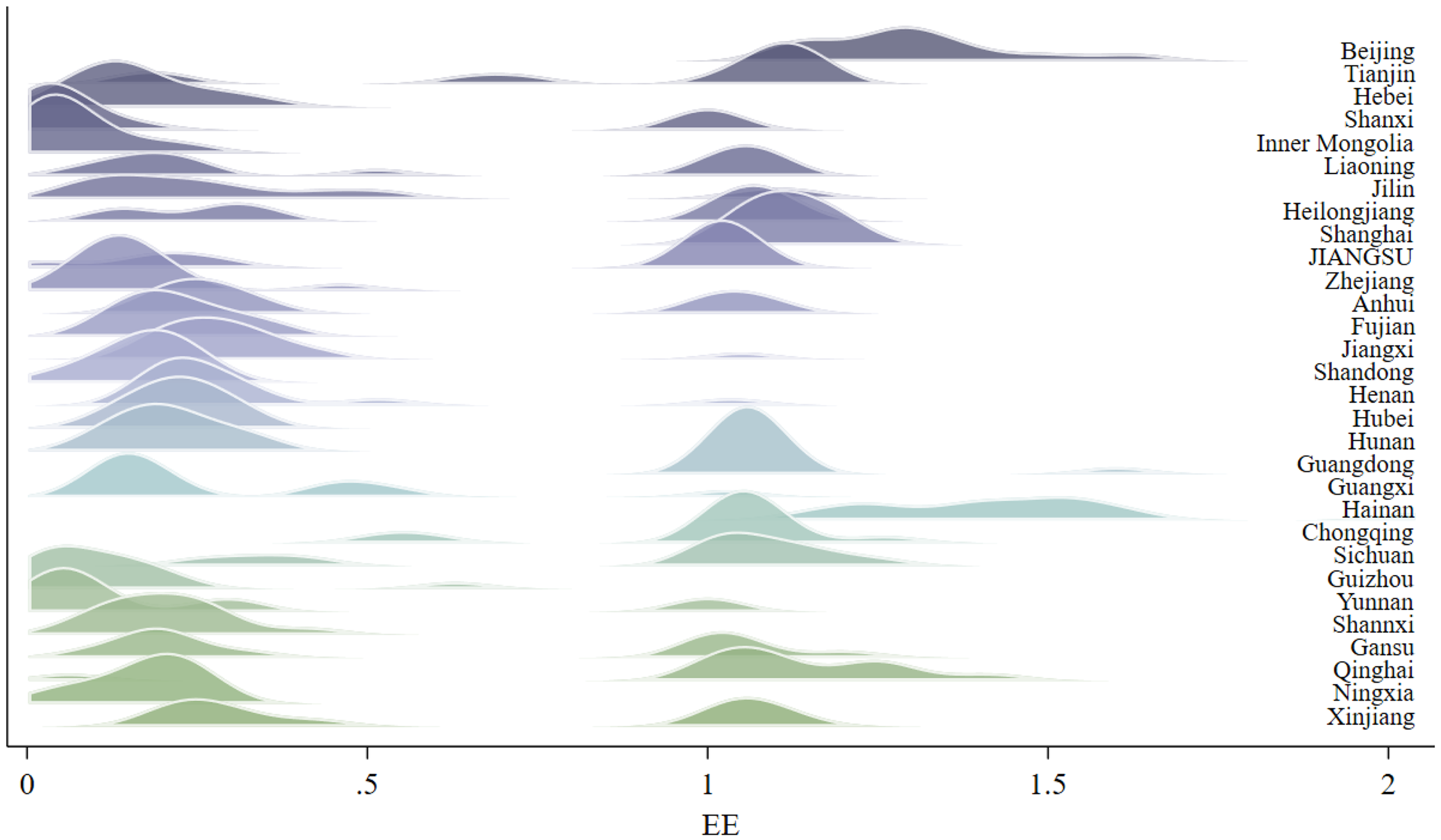
Kernel density curves grouped by region.
To further demonstrate the sustainable development of energy efficiency in each province, this research selects 2010, 2013, 2017, and 2020 as representatives to show the inter-provincial spatio-temporal evolution of efficiency. As is shown in Figure 4. In this research, the natural breakpoint grading method is selected to classify the four-year provincial data, which determines the breakpoints by identifying natural clusters and intervals in the data values to ensure that groups are as distinct from one another as possible, while members within each group are as similar as possible. 39 Sustainable energy development efficiency has improved notably in the eastern part of China, and while it has been generally effective in the western part, inter-provincial differences are diminishing. By 2020, the overall efficiency of sustainable energy development will be balanced and of relatively high quality.
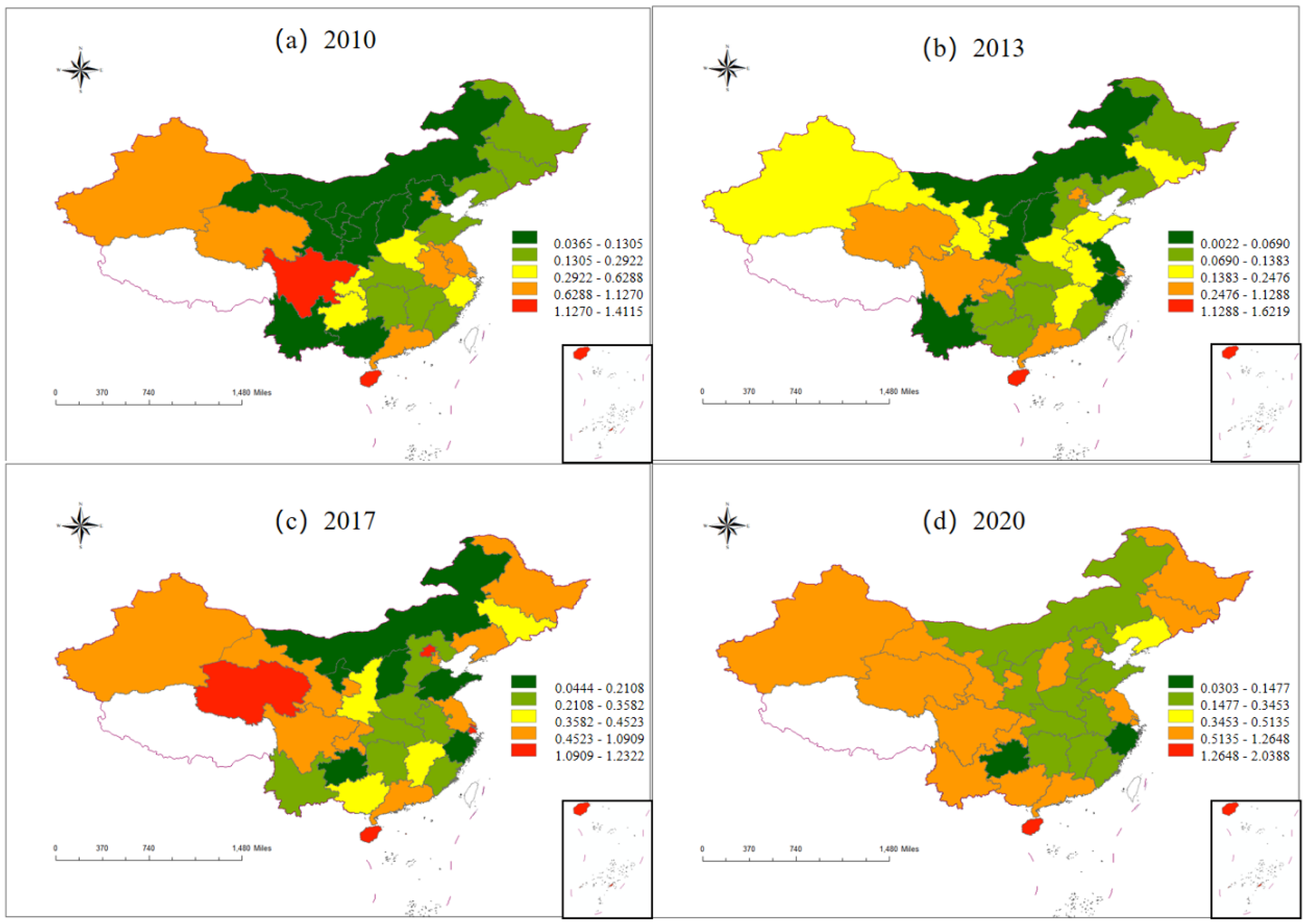
Interprovincial spatiotemporal evolution of energy sustainability efficiency in China.
This study utilizes ArcGIS for trend surface analysis to explore the spatial pattern of energy efficiency. From 2010 to 2020, the development of energy efficiency in China shows staged changes and significant regional differences. Figure 5 shows that energy efficiency in the east-west (green trend surface) and north-south (blue trend surface) directions generally improved between 2010 and 2013. However, in most years examined, especially 2017 and 2020, the energy efficiency of provinces along both directions is characterized by a “central collapse,” i.e., a U-shaped trend surface. This implies that provinces located at the eastern, western, northern, and southern peripheries of China are relatively more efficient than those in the central region. Furthermore, energy efficiency data points are more dispersed along the east-west direction, reflecting the unbalanced development of provinces in this direction, while the relatively centralized distribution of data points along the north-south direction indicates more balanced development.
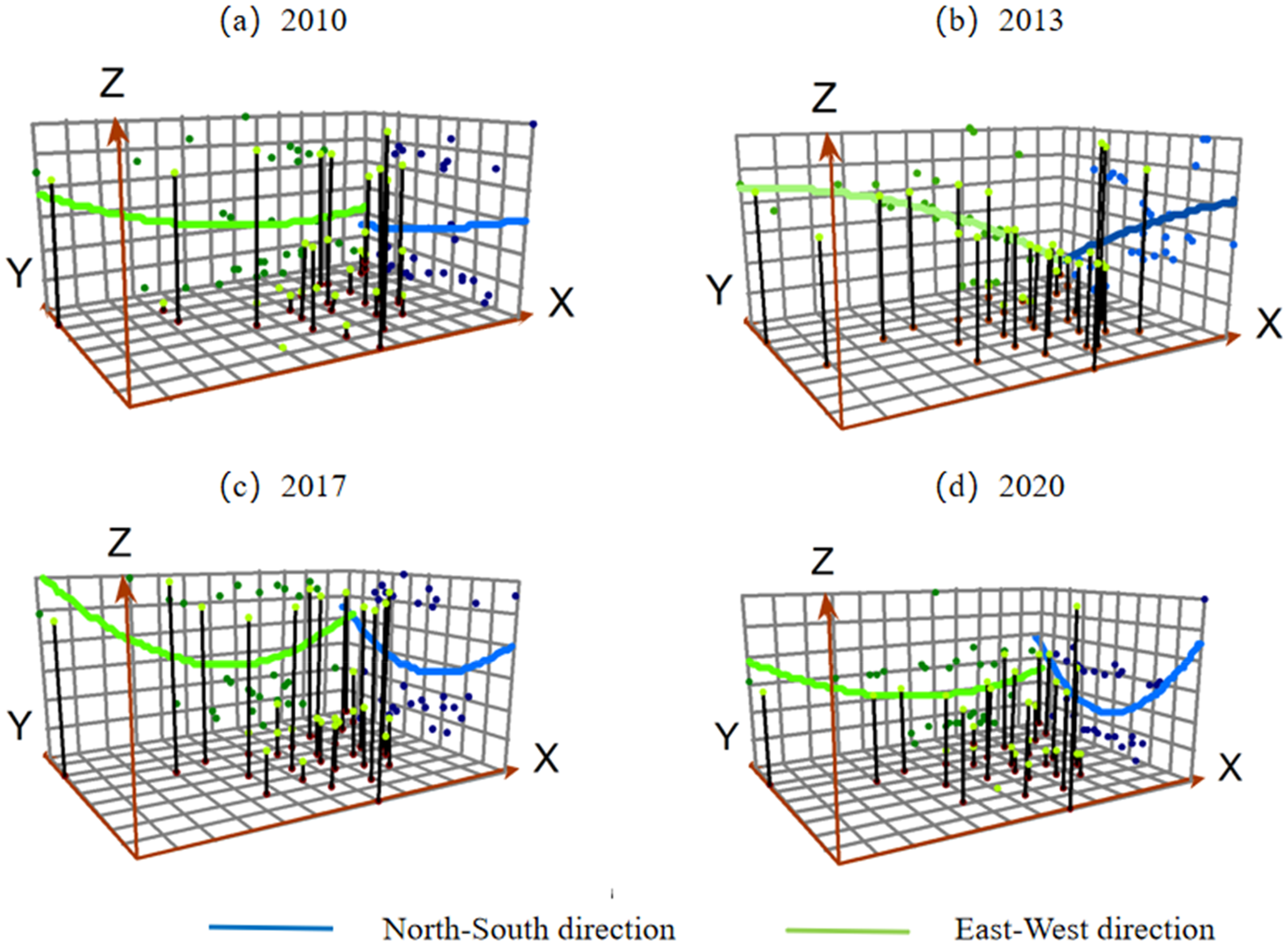
Trend surface analysis of EE.
Calculated levels of digital economy development
This research used the entropy weight-TOPSIS method to measure China's inter-provincial digital intelligence (Dig) development from 2010 to 2020, as shown in Figure 6. Between 2010 and 2020, the average inter-provincial digital intelligence (Dig) development level was 0.2699, with Beijing leading at 0.9281, followed by Shanghai (0.6948) and Guangdong (0.6004), while the remaining provinces averaged below 0.4. The three provinces with the lowest averages were Hunan (0.0513), Jiangxi (0.0762), and Anhui (0.0882). Beijing's digital intelligence development level led among the provinces in all years except 2013 when Shanghai's level was higher.
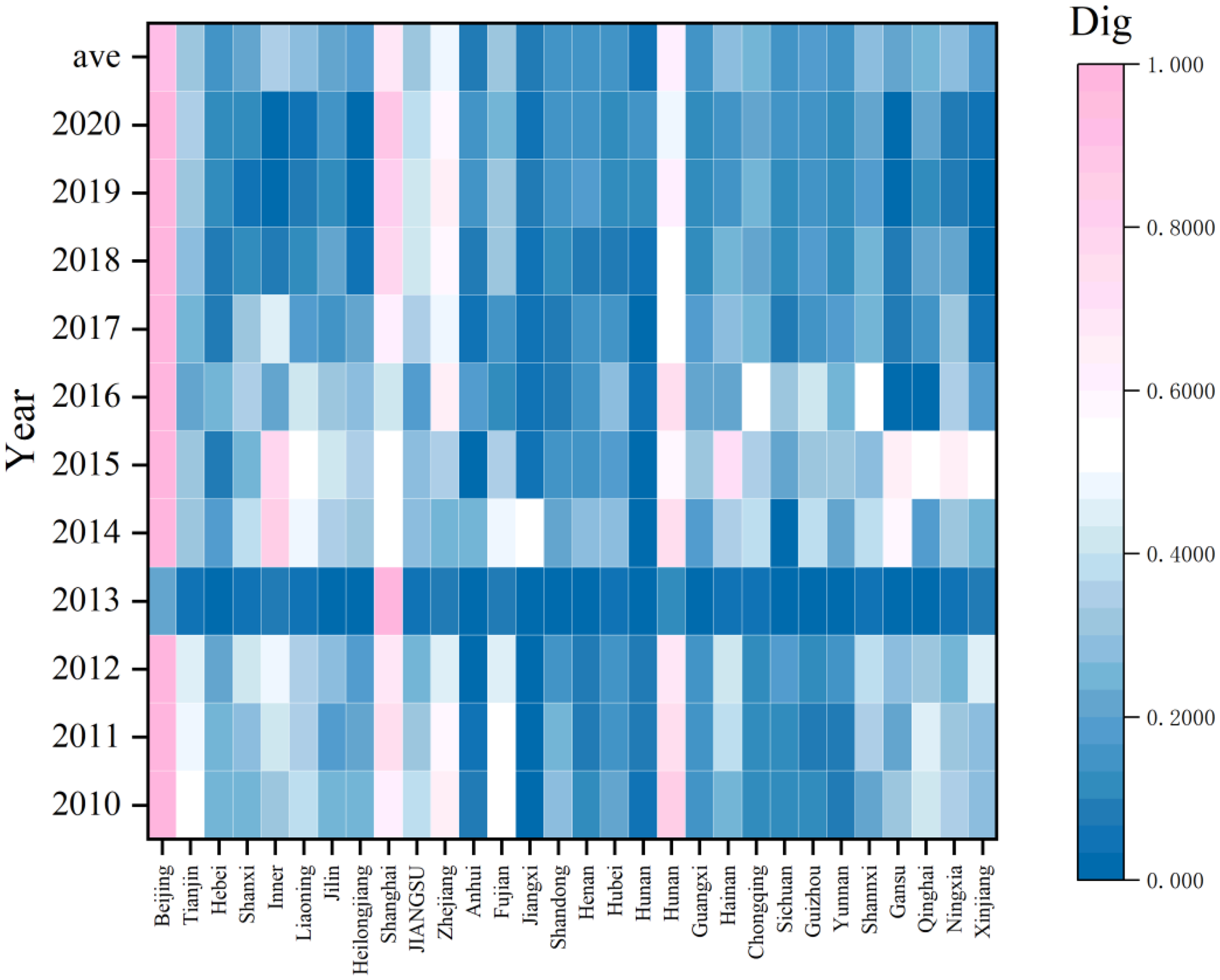
China's inter-provincial digital economy development level, 2010–2020.
Benchmark regression results
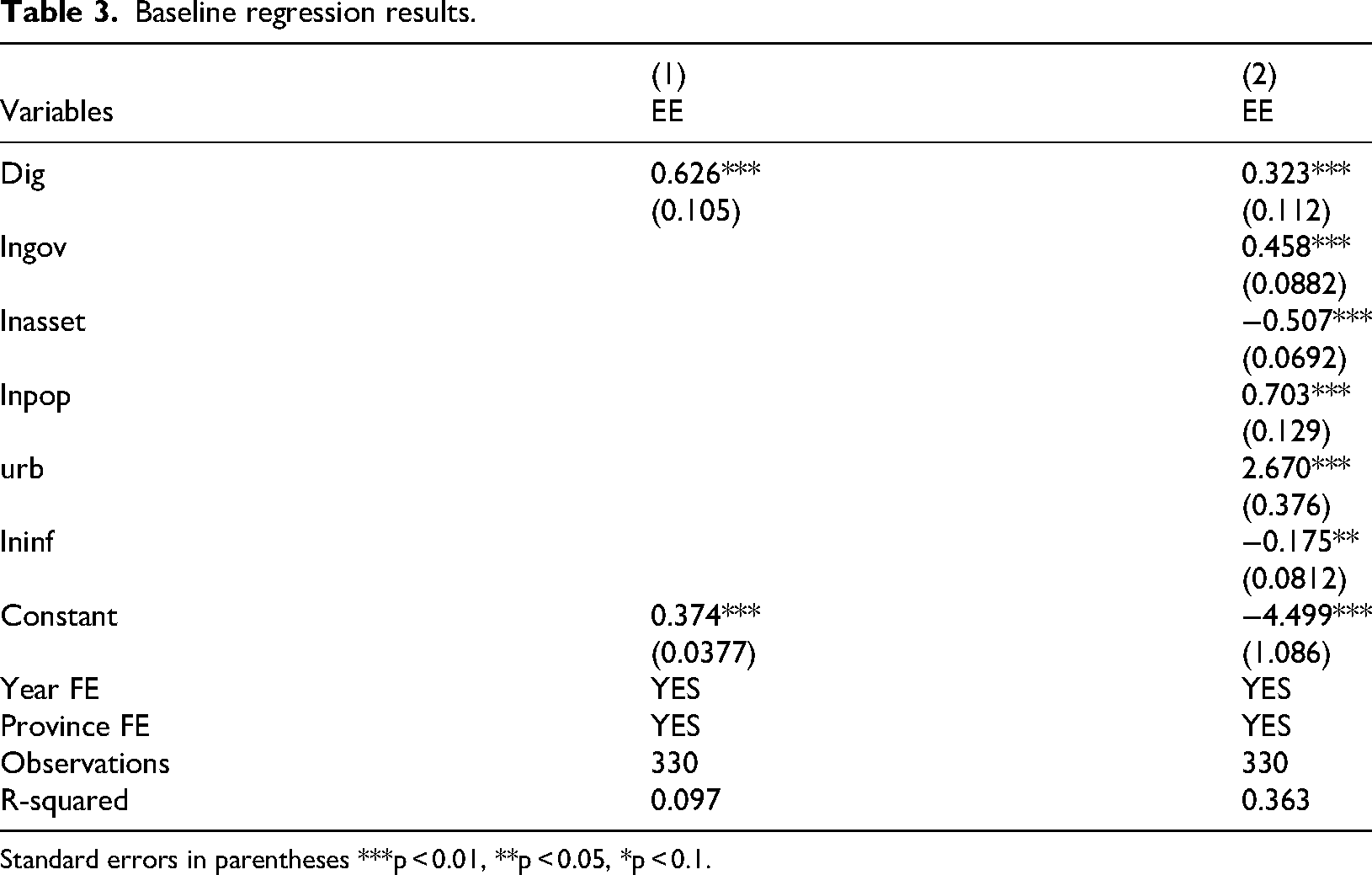
The specific impact of Dig on energy sustainability efficiency is detailed in Table 3. Specifically, column (1) includes only Dig as the independent variable. The estimated coefficient of Dig is 0.0626 and is significant at the 1% level, indicating a significant positive contribution of Dig to energy sustainability efficiency. Column (2) introduces several control variables affecting energy sustainability, and the estimated coefficient of Dig remains significantly positive. These preliminary results support Hypothesis 1 (H1). Logically, increased government expenditure focused on public well-being and environmental protection would be expected to substantially influence energy sustainability. This expectation aligns with the positive and statistically significant coefficient observed in column (2) at the 1% level. Population size and urbanization rate also exhibit a positive effect on energy sustainability, suggesting that a more adequate labor force promotes more efficient energy use. Higher industrialization also contributes positively to energy sustainability. Conversely, the estimated coefficients of asset size and infrastructure size on energy efficiency are significantly negative, indicating that energy efficiency tends to be lower when asset size is larger and facilities are more congested.
Baseline regression results.
Standard errors in parentheses ***p < 0.01, **p < 0.05, *p < 0.1.
Threshold effect tests
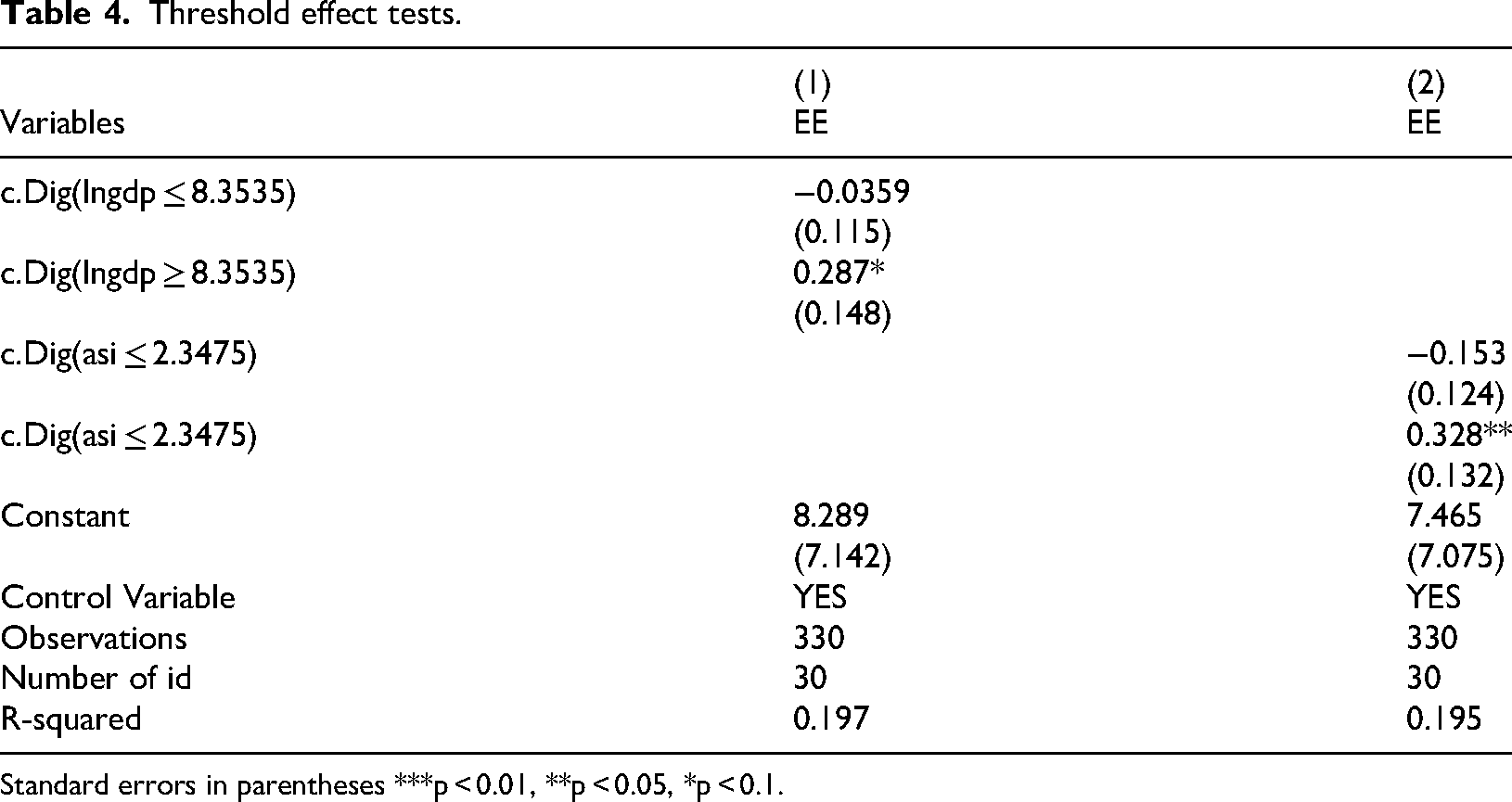
This study examines the nonlinear impact of digital intelligence (Dig) on energy sustainability efficiency, using the level of economic development (lngdp) as a threshold variable, where economic development (lngdp) is characterized by the logarithm of GDP per capita. A threshold self-sampling test (300 bootstrap replications) supports a single-threshold model (F-statistic = 9.19, p = 0.000), indicating a significant threshold effect. The estimated threshold value is 8.3535, and the corresponding regression results are presented in Table 4, column (1).
Threshold effect tests.
Standard errors in parentheses ***p < 0.01, **p < 0.05, *p < 0.1.
According to column (1), the estimated coefficient of Dig is not significant when the level of economic development is at or below 8.3535, suggesting a weak impact of Dig on EE. However, when the level of economic development exceeds 8.3535, the coefficient of digital intelligence increases to 0.287 and is significant at the 10% level, indicating that digital intelligence contributes significantly to energy sustainability efficiency at this higher stage of economic development.
In this study, industrial upgrading (asi) is also used as a threshold variable to test the nonlinear effect of digital intelligence on energy sustainability efficiency. A threshold self-sampling test, conducted under the assumption of a single-threshold model with 300 bootstrap replications, yielded an F-statistic of 10.15 and a p-value of 0.000, indicating a significant single-threshold effect of industrial upgrading on the relationship between digital intelligence and energy sustainability efficiency. The estimated single-threshold value for industrial upgrading is 2.3475, and the regression results of the threshold model are shown in column (2) of Table 4.
According to column (2), the estimated coefficient of Dig is not significant when the industrial upgrading index is at or below 2.3475, suggesting a weak impact of digital intelligence on energy sustainability efficiency. However, when the index exceeds 2.3475, the coefficient of Dig is 0.328 and is significant at the 5% level, indicating that digital intelligence significantly affects energy sustainability efficiency at this higher level of industrial upgrading.
Overall, the effect of digital intelligence on sustainable energy development exhibits a nonlinear characteristic of initially being insignificant before increasing. When the level of economic development is low, the industrial upgrading and technological progress facilitated by digital technology do not significantly promote sustainable energy development. 40 This may be attributed to a lack of essential infrastructure for digital intelligence development, such as adequate network coverage and a skilled digital workforce. These limitations can hinder the effective utilization of digital technologies to improve energy efficiency and implement large-scale digital transformations. Furthermore, certain advanced energy efficiency and emission reduction technologies require substantial capital investment and specialized expertise, potentially exceeding the financial capacity of regions with low per capita GDP. Conversely, digital intelligence plays a significant role when the level of economic development surpasses the critical value of 8.3535. At this stage, many provinces have completed the industrialization process, with service and high-tech industries dominating the industrial structure, thereby enhancing the role of digitalization in energy use efficiency. 15 The incremental benefits of digital intelligence are likely to be more pronounced in such contexts. Moreover, a robust economic environment enables governments to invest more effectively in policies supporting digital intelligence and sustainable energy development. This includes promoting the construction of smart grids and encouraging research and development of new energy technologies. Simultaneously, increased public awareness of environmental protection and sustainable development fosters greater participation in energy-saving and emission-reduction initiatives, creating a more favorable social environment for applying digital intelligence in the energy sector. Thus, H2a is supported.
Similarly, digital intelligence does not effectively influence sustainable energy development when the industrial structure index is low.41,42 This could be because digital intelligence, as a high-technology sector, primarily impacts the modern service sector. Service industries that have already initiated transformation tend to be more profitable and continue to transform. However, when the industrial advancement index exceeds the critical value of 2.3475, these regions typically possess a well-developed digital infrastructure capable of supporting advanced digital transformation. The application of digital technology can then further optimize energy use through mechanisms such as smart grids and energy management systems, thereby enhancing the efficiency of sustainable energy development. Thus, H2b is supported.
Spatial measurement model results
Spatial autocorrelation analysis
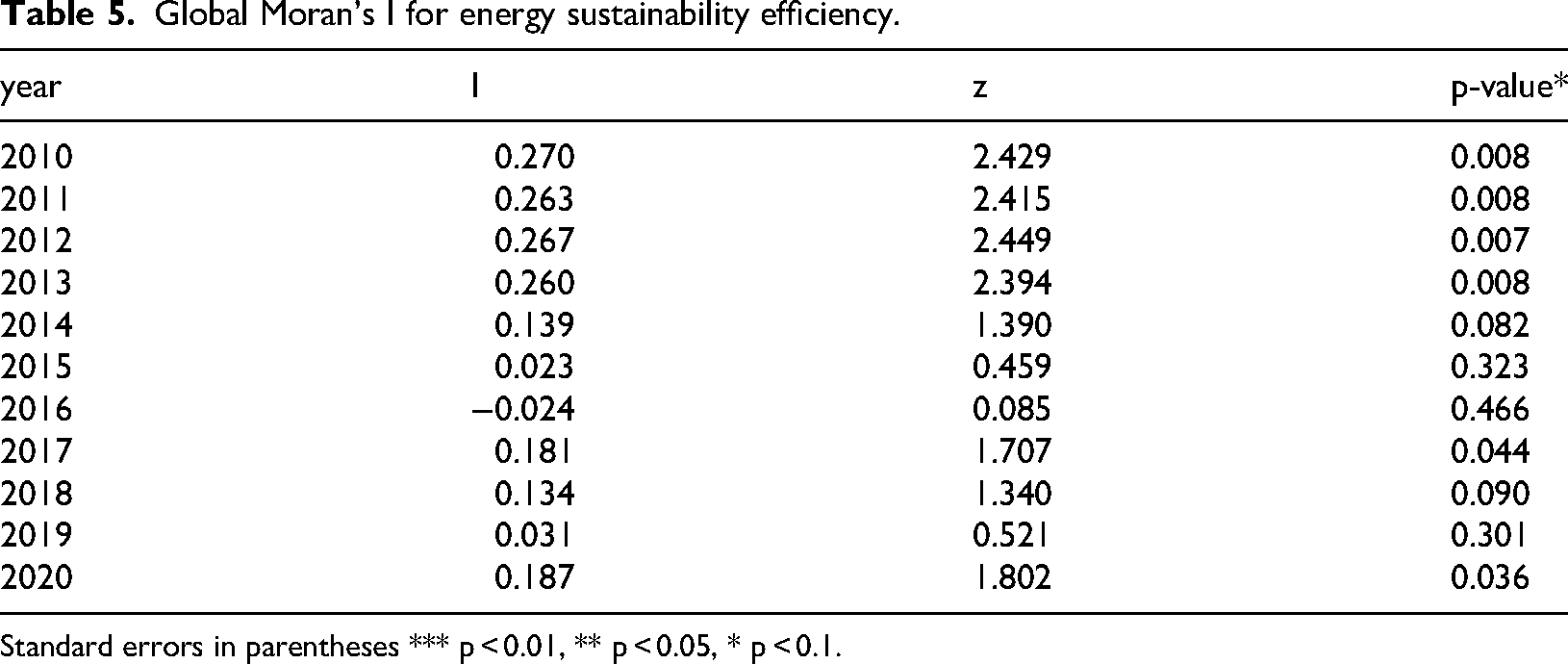
Table 5 demonstrates the global Moran's I test results for interprovincial EE. Our analysis reveals a consistently significant and positive Moran's I for EE throughout the study period, indicating a clear positive spatial correlation and an increasing trend of spatial aggregation. Therefore, incorporating spatial factors into the scope of this research is essential.
Global Moran's I for energy sustainability efficiency.
Standard errors in parentheses *** p < 0.01, ** p < 0.05, * p < 0.1.
To further analyze the local autocorrelation characteristics of energy sustainability efficiency, this research uses 2010, 2013, 2017, and 2020 as time cross-sections to create a local autocorrelation spatial distribution map (Figure 7). From 2010 to 2013, the spatial ranges of high-high and low-low clusters were relatively large, with Moran's I values of 0.27 and 0.26, respectively. The high-high clusters were mainly concentrated in Beijing, Jiangsu, Shanghai, Chongqing, etc., while the low-low clusters were mainly concentrated in Shaanxi, Jilin, and Inner Mongolia. However, by 2017 and 2020, the distribution of high-high and low-low clusters was relatively balanced, with Moran's I values of 0.181 and 0.187, respectively. The spatial distribution range of high-high clusters expanded along the Beijing-Tianjin-Hebei, Yangtze River Delta, and Chengdu-Chongqing urban agglomerations. In 2020, the low-low clusters were mainly concentrated in Inner Mongolia, Ningxia, Jiangxi, Guangxi, and other regions, and their spatial distribution range expanded.

Scatterplot of localized Moran's I.
Results and analysis of spatial measurement estimates
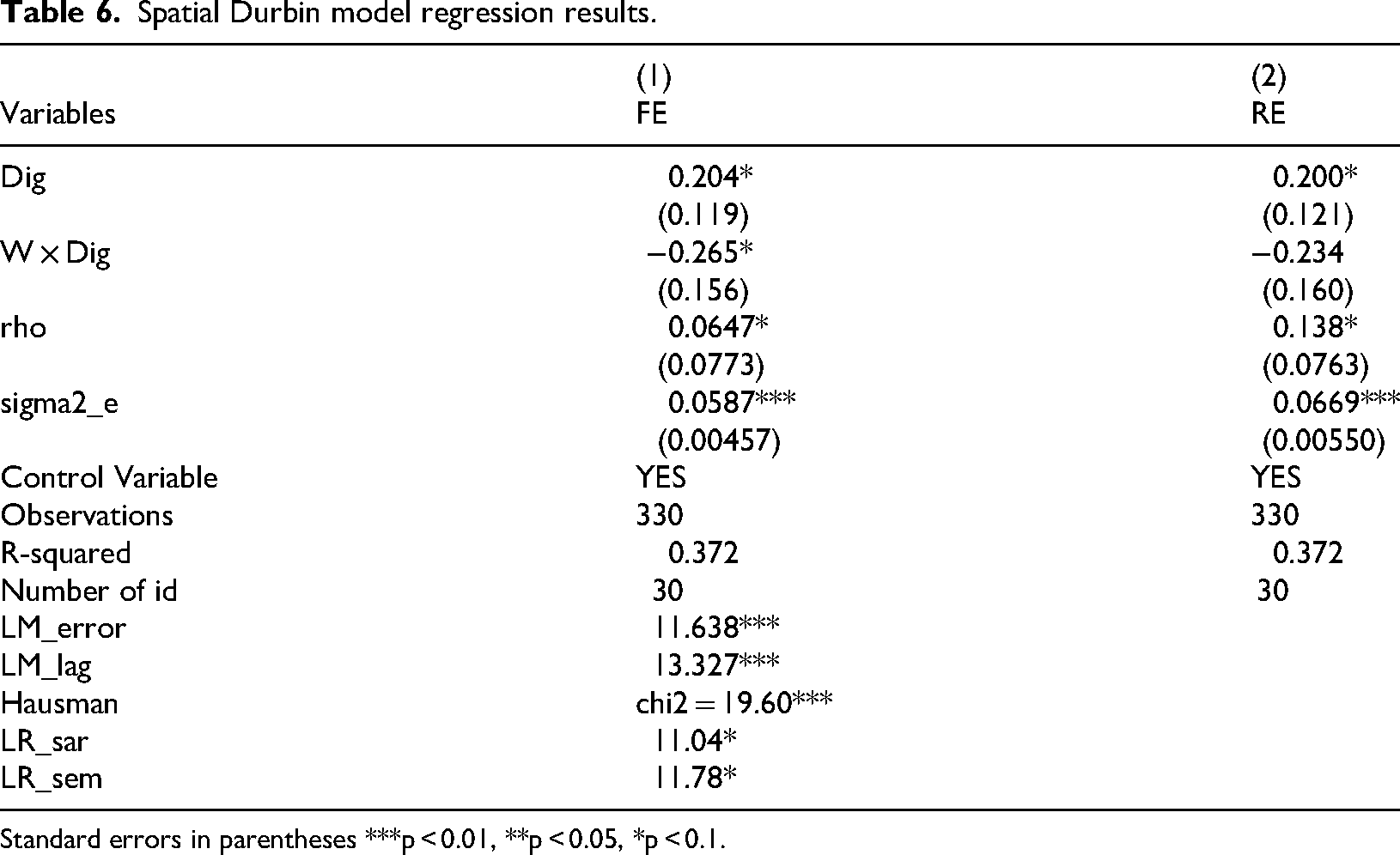
According to the previous theoretical and Moran Index analyses, EE has certain spatial spillover effects. For EE, neighboring regions affect each other, but this effect is unstable, and the spatial effect is insignificant in individual years. This is probably due to the regional coordinated development strategy proposed by the government, which reduces spatial dependence. For example, transfer payments and industrial layout adjustments can promote sustainable energy development in lagging regions and reduce regional disparities. On the other hand, in individual years, some provinces pay more attention to economic development and not enough attention to sustainability, thus pulling down the efficiency, which may weaken the spatial correlation. Therefore, this research establishes a spatial Durbin model to deeply analyze the spatial effect between digital intelligence and the efficiency of sustainable energy development, and the results are shown in Table 6.
Spatial Durbin model regression results.
Standard errors in parentheses ***p < 0.01, **p < 0.05, *p < 0.1.
This research conducted Lagrange Multiplier (LM), Hausman, and Likelihood Ratio (LR) tests to assess model fitness, as presented in Table 6. The LM-lag and LM-error tests were significant at the 1% level, indicating the presence of spatial dependence and supporting the appropriateness of a spatial regression model. The Hausman test, significant at the 1% level, supports the selection of a fixed-effects model. Furthermore, LR tests were conducted to determine whether the SDM could be simplified to a SAR or SEM. The results, with both LR_sar and LR_sem significant at the 10% level, suggest that the SDM model is the most appropriate specification. Therefore, this research employs a time-fixed SDM model for subsequent analysis.
The results presented in the table demonstrate a significant and positive spatial autocorrelation coefficient (Spatial rho) for EE, highlighting a substantial positive spatial spillover effect. This finding suggests that changes in a province's energy-sustainable development efficiency significantly influence the energy efficiency of neighboring regions, further reinforcing the importance of incorporating spatial factors in energy-sustainable development efficiency analyses. Consequently, policies aimed at optimizing sustainable energy development should extend beyond localized approaches and prioritize interregional collaboration and coordination in pollution reduction, carbon mitigation, and energy utilization.
Notably, the results in Table 6 indicate that the effect of digital intelligence on energy sustainability efficiency (W × Dig), as well as the spatial lag term (rho), exhibit significant effects to varying degrees. This suggests that the spatial relationships in energy sustainability efficiency involve both endogenous interactions (within a region) and exogenous interactions driven by Dig.
From column (1), the estimated coefficient of Dig remains significantly positive even when spatial effects are considered, further supporting the positive impact of digital intelligence on sustainable energy development. This provides further validation for H1.
However, the coefficient of the interaction term W × Dig is significantly negative. This suggests that when the overall level of digital intelligence development in a region is relatively low, advancements in digital technology within that region may create a “siphon effect,” attracting high-quality resource elements from neighboring regions. This concentration of resources hinders the development of digital technology and energy efficiency in those neighboring regions, resulting in a negative spatial spillover effect. This indicates that the development of Dig is subject to a “siphon effect” stemming from disparities in development levels between neighboring regions, leading to a negative spatial spillover effect and thus validating H3.
First, when the overall level of digital intelligence development in a region is relatively low, digital technology is difficult to learn and imitate, potentially leading to a “siphoning effect” on geographically proximate cities. 43 Digital technology, unlike physical capital, is not constrained by spatial location. If the gap in economic development between cities is small, long-term R&D and collaborative use can promote synchronized digital technological innovation, improving sustainable energy efficiency and demonstrating a positive spatial spillover effect. However, if the economic development gap is large, the negative effect will be amplified. 44 Furthermore, convergence in industrial structures between neighboring provinces can exacerbate this issue. Enterprises in more digitally advanced regions, leveraging their technological, scale, and brand advantages, may crowd out businesses in neighboring regions, intensifying market competition, and hindering their development. 45 The cross-regional and low-cost nature of Dig can further amplify this competitive pressure.
Conclusions and policy recommendations
Conclusions
This research develops an input-output index system to evaluate energy sustainable development efficiency, measuring its value using the super-efficient SBM-DEA model. Additionally, it establishes a measurement system for Dig, employing the entropy weight-TOPSIS method to assess the comprehensive development levels of Dig across 30 provinces. Using panel data from these provinces spanning 2010 to 2020, this study investigates the impact of Dig on EE and explores the underlying mechanisms, using economic level and industrial structure as threshold variables. The findings of this research are as follows:
First, from 2010 to 2020, China's energy utilization efficiency exhibited phased changes and pronounced regional disparities. Coastal provinces in the east and west generally performed better in energy utilization, whereas the central region lagged, creating a “central collapse” phenomenon. This “central collapse” is characterized by the central region's relatively poor performance in energy sustainable development, often stemming from challenges in integrating renewable energy sources with traditional energy systems and a slower adoption of advanced energy-efficient technologies compared to coastal regions. Kernel density analysis indicates that the density of high-efficiency values has increased since 2018, suggesting more widespread adoption of sustainable energy practices. Trend surface analysis further reveals that the distribution of data points along the east-west axis is more dispersed, reflecting uneven development among provinces in that direction. Conversely, the data distribution along the north-south axis is more concentrated, indicating relatively balanced development in that direction.
Second, Dig can significantly enhance EE, but there is a significant spatial spillover effect. Specifically, although digital intelligence can promote the improvement of local-sustainable development efficiency, it cannot effectively promote the energy-sustainable development efficiency of neighboring regions in the short term.
Thirdly, the impact of digital intelligence on energy sustainability efficiency has a significant single-threshold effect on the economic development level. Below an economic development level (lnGDP) of 8.3535, digital intelligence (Dig) has little impact on sustainable energy efficiency; above this threshold, however, Dig demonstrates a significant positive impact.
Fourth, there is also a significant single-threshold effect of Dig on the efficiency of sustainable energy development in the advanced industrial structure. When the industrial structure index (asi) is lower than 2.3475, the impact of Dig on EE is not significant, while when the industrial structure index (asi) exceeds the threshold value of 2.3475, Dig shows a significant positive promotion effect on energy utilization efficiency.
Policy recommendations
Taking into account the findings of this research, the following insights and recommendations for policy are suggested:
Prioritize Digital Intelligence for Local Impact & Collaborative Innovation: Recognizing the significant enhancement of energy efficiency through digital intelligence (Dig), but also its spatial spillover limitations, prioritize Dig deployment with policies specifically designed to boost local impact. This includes promoting cross-regional collaboration and knowledge sharing through platforms like the China Technology Exchange and investing in robust digital infrastructure (e.g., 5G networks, cloud computing centers) to facilitate effective technology transfer. Consider regional innovation vouchers to encourage collaboration between leading Dig hubs and lagging regions. Differentiate Policies Based on Economic Development & Capacity Building: Address the threshold effect of economic development by differentiating policies based on regional economic status, aligning with the national strategy of “Common Prosperity.” Lower development regions should emphasize foundational development through enhanced digital infrastructure and human capital, focusing on digital literacy training programs and access to affordable Internet. Higher development regions should be encouraged to leverage their advantages to vigorously develop and apply Dig as incubators and drivers of innovation, potentially through tax incentives for R&D and pilot programs for smart city technologies. Incentivize industrial restructuring and digital integration to achieve sustainable practices: Recognize threshold effects related to industrial structure and accelerate the digitization of industries through implementation measures. Incentivize enterprises in these industries to adopt digital technologies (such as artificial intelligence, the Internet of Things, and big data analysis) for innovation and sustainable practices. This can be achieved through subsidies for energy-saving equipment and carbon emission reduction technologies. Target Support to Mitigate the “Central Collapse” Phenomenon through Resource Reallocation and Knowledge Transfer: Address the identified “central collapse” by focusing support and resources on regions lagging in energy utilization. This could involve reallocating resources from national-level innovation funds to support projects in central provinces, facilitating the sharing of successful strategies from coastal provinces through inter-provincial exchange programs, and prioritizing infrastructure investments to enable better connectivity and technology adoption in these areas. Furthermore, the central government should establish clear performance metrics and accountability mechanisms to ensure effective resource utilization and policy implementation in these regions.
Limitations
This study, while informative, has limitations. First, data constraints limited our digital intelligence indicators to infrastructure, finance, and output, potentially overlooking deeper dimensions like innovation and digital adoption. Future research should explore more comprehensive indicators with improved data. Second, while the Spatial Durbin Model (SDM) captures spatial effects, it may not fully represent complex spatial relationships. Finally, provincial-level data may mask intra-regional heterogeneity. Future research could benefit from finer-grained data (e.g., city- or county-level) to investigate the impact of digital intelligence more deeply.
Footnotes

Funding
The authors disclosed receipt of the following financial support for the research, authorship, and/or publication of this article: This work was supported by China Postdoctoral Science Foundation (No:2024M761575), the National Natural Science Foundation of China (NSFC) (grant number 72504160).
Declaration of conflicting interests
The authors declared no potential conflicts of interest with respect to the research, authorship, and/or publication of this article.