



Abstract
This study investigates the relationship between green technological innovation, renewable energy consumption, regulatory quality and carbon dioxide emissions in developing economies. Using a balanced panel dataset of 52 countries over 21 years, the analysis applies a panel quantile regression with mean group and common correlation effects to capture heterogeneous dynamics and GMM model for checking endogeneity further Heterogeneous panel causality results shows the perfect relation among them. The findings reveal that green technological innovation significantly reduces carbon emissions, while renewable energy consumption also mitigates emissions; however, its interaction with GDP displays an inverted U-shaped pattern, indicating that economic expansion combined with higher renewable energy use may initially increase emissions before improving environmental outcomes. These results highlight the importance of prioritizing technological innovation and strengthening renewable energy infrastructure to achieve long-term sustainability goals. The study provides policy-relevant insights for regulators and governments in developing countries to balance economic growth with environmental preservation, offering a practical framework to support global sustainable development objectives.
Keywords
Introduction
Climate change and environmental sustainability have emerged as pressing global challenges, with carbon dioxide (CO₂) emissions recognized as the primary driver of global warming. CO2 emissions have become a pivot in environmental studies as they play an important character in contributing to climate issues. 1 According to the International Energy Agency (IEA, 2021), the increasing reliance on fossil fuels remains the dominant source of rising emissions, emphasizing the urgent need to transition toward cleaner and more sustainable energy pathways. Which focus on ensuring access to green energy, promoting sustainable economic progress, fostering innovation and encouraging sustainable production and consumption to combat climate change US. 2 In response, international frameworks such as the Paris Agreement and the United Nations Sustainable Development Goals (SDGs 7, 8, 9, 12, and 13) have prioritized renewable energy adoption, sustainable production and climate mitigation strategies to achieve low-carbon development. 3 Within this global agenda, green technological innovation (GTI) and renewable energy consumption (REC) are increasingly viewed as essential instruments to reduce emissions while supporting economic growth. 4 All the countries are selected on the basis of data accessible and to estimate (% of CO2) in developing countries and distributed into regions, as shown in below Table 1.
Estimation of CO2% according to region.
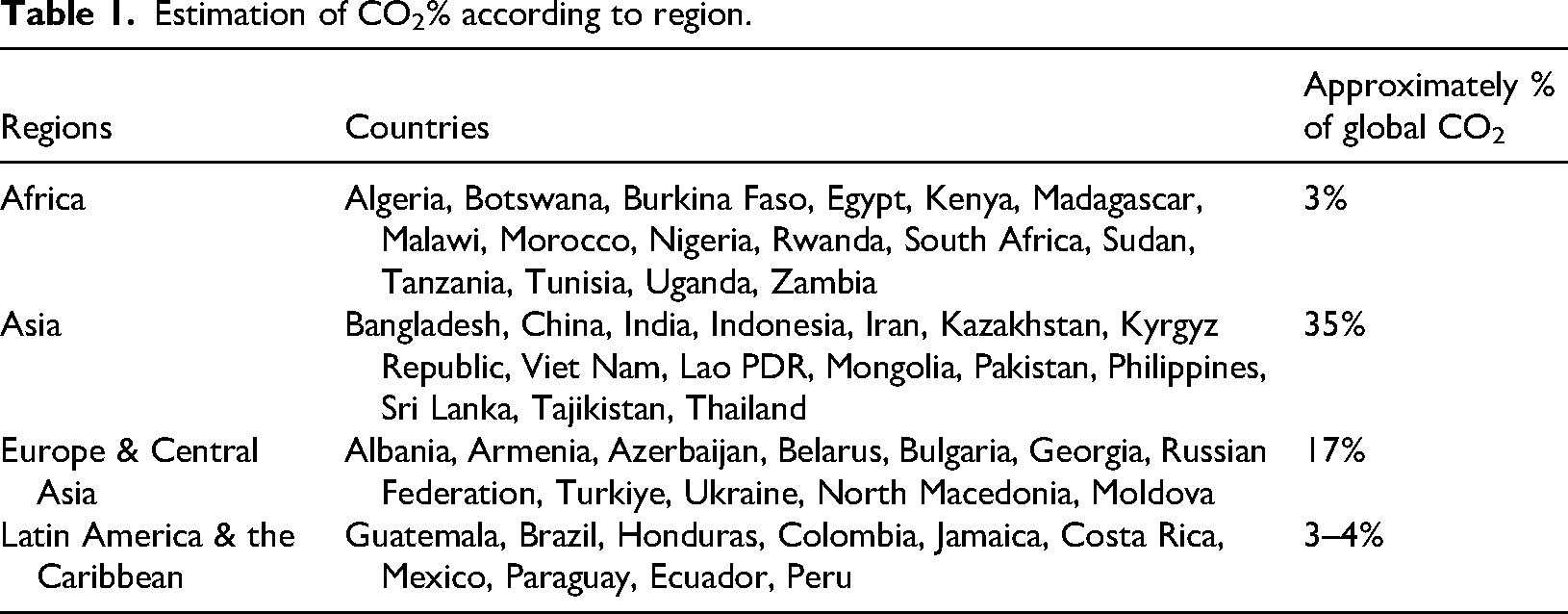
The global landscape of carbon dioxide (CO₂) emissions demonstrates pronounced regional variation, largely influenced by levels of industrialization, energy consumption patterns and land-use practices. According to data from Our World-Data and the (KAPSARC Data Portal) Asia is the predominant clear accounting for over 50% of globally CO₂ emissions. This is primarily driven by countries like China responsible for approximately 35% of global emissions along with India and Indonesia, where rapid industrial growth and heavy reliance on fossil fuels, particularly coal are significant contributors. In contrast, Europe and Central Asia collectively produce around 17% of the global total.
While emissions in Europe have been declining due to a progressive shift toward renewable energy and stricter environmental regulations many countries in Central Asia continue to depend on fossil fuels maintaining steady emission levels. Africa, despite hosting nearly 17% of the global population contributes a mere 3% of CO₂ emissions globally. This relatively low share, as reported by AP News and the Financial Times is attributed to lower levels of industrial activity and energy use. Major emitters on the continent include South Africa, Egypt and Algeria. Meanwhile, Latin America and the Caribbean contribute approximately 3 to 4% of global emissions. Unlike other regions emissions here are less industrial and more associated with deforestation and land-use change particularly in countries like Brazil, Mexico.
According to UN Climate Change Conference 2023 (COP-28) in Dubai, nearly 200 countries reached a landmark agreement, for the first time committing to “transition away from fossil fuels. Known as the UAE Agreement the plan aims for net-zero emissions by 2050 focusing on an equitable and orderly shift in green energy systems.
Key targets include tripling global REC capacity and doubling energy efficiency by 2030, as well as phasing down unabated coal power and inefficient fossil fuel subsidies. The conference also marked the completion of the first Global Stock take, which assessed progress toward Paris Agreement goals. It highlighted the need for a 43% reduction in global greenhouse gas emissions by 2030 and a 60% reduction by 2035, compared to 2019 levels. While the agreement stops short of a full fossil fuel phase-out it represents a significant step forward in international climate action rapidly increasing the volume of green projects.
Green technological innovation refers to the development and diffusion of environmentally friendly technologies aimed at reducing resource consumption, curbing pollution, and fostering long-term sustainability. 5 Empirical studies highlight that GTI not only facilitates renewable energy deployment but also promotes efficiency gains and cleaner production processes, thereby contributing to emission reduction. 6 At the same time, renewable energy serves as a complementary driver, enabling countries to reduce dependence on fossil fuels. 7
However, the success of GTI and REC depends significantly on the quality of institutional frameworks. 8 Strong governance mechanisms enhance the effectiveness of green policies. 9 While weak institutions may undermine their impact. This interplay among GTI, REC, and institutional quality (RQ) remains underexplored in the context of developing economies. 10 However, other scholars argue that developing nations need even stronger institutional frameworks to successfully implement policies and pursue ambitious strategies for reducing the emissions of greenhouse gases.11,12
The findings contribute to the broader debate on how developing economies can reconcile sustainable economic growth with emission reduction. In particular, the study underscores the importance of GTI and REC as crucial policy tools, while highlighting the enabling role of effective governance structures in amplifying their benefits. The results aim to guide policymakers in designing strategies that balance economic development and environmental sustainability, offering a framework for achieving carbon reduction targets in line with global sustainable development objectives.
Despite the growing literature,
The study structure is as follows: Section-2 reviews the existing literature. Section-3 details the Data and Method to use. Section-4 presents the test outcomes and interpretation and Section 5 presents the conclusion with limitations and future Indications.
Literature review
Green technology innovation and CO2 emissions
In fact, previous studies have reported the up's and down's linkages for example u-shaped and V-shaped among GTI and CO2 releases across established and emerging countries, and some of them even providing some valuable and dominating trends. For example, 13 focused on the One Belt One Road (OBOR) countries and found that in the presence of globalization GTI has the possible for a considerable reduction in CO2 emissions pointing toward vital role of international collaboration in promoting environmental sustainability. Expanded their analysis to cover urban areas in China, with a partially-linear practical coefficient panel model to show that dynamic urban innovation settings help intensify the role of GTI in reducing emissions. Extending this inquiry further. 14 Conducted spatial sequential analysis based on a nonlinear spatial-Durbin approach to examine regional differences in China. The findings display that the impact of GTI on CO2 is varied among regions, with a complex and non-inhomogeneous relationship.
There is progressively emerged literature that focus the important role of GTI in reducing CO2 emissions worked by. 15 Expand upon this by exploring the interplay among GTI and green financing, specifically in the G-7 countries, and find that social globalization is an important factor that influences this link. 3 provide robust empirical evidence using patent data indicating that innovative activity in green technologies significantly reduces CO2 emissions.
Meanwhile, 16 find that in a subset of economies in the Asian region, green investments, innovation and economic development can work together in promoting emissions reduction. Collectively, these studies reflect the environmental benefits of green technology but also the financial and social elements that can exponentially increase its effect. Further insight is provided by research that examines the double-sided impact of GTI on both financial development and CO2 control. 17 Using a ARDL approach in the context of Singapore find evidence that green innovations contributed to financial growth and helped decrease CO2 at the similar period.
Similarly. 18 Argue about Turkey's transition to carbon neutrality and mention the significance of GTI and REC in sustainable progress. Broadening the criteria to investigate the part of ecological principles in the successful adoption of appropriate green technologies for decreasing CO2 levels, finding that a supportive policy environment is necessary for the maximum attainable outcome. Together, these studies highlight the multi-dimensional value GTI not individual in protecting the atmosphere, but also in ensuring financial sustainability for the long haul.
The interrelation between GTI, REC use and CO2 has been further examined in several recent studies. 19 Utilized sophisticated panel data techniques to assess how GTI and REC influence carbon objectivity across N-11 nations, presenting strong empirical evidence of their beneficial effects. Another study in Malaysia. 20 Applied the Granger-causality method to uncover a meaningful association among GTI and CO2 emphasizing the potential of innovation as a driver of environmental improvement. Broadening the regional perspective. 21
Explored the BRICS economies and demonstrated how the advancement and adoption of technology contribute to sustainability goals and emissions reductions. These detections collectively underscore the strategic role that innovation and REC play in achieving low-carbon development particularly when reinforced by supportive policies and sustained investments. Further analysis into the environmental and energy technological solutions for reducing CO2 emissions can be found in studies. Firstly. 22 Provide European-based evidence that environmental technologies are highly effective in lowering emissions, affirming their regional success. From a spatial analytical lens. 6
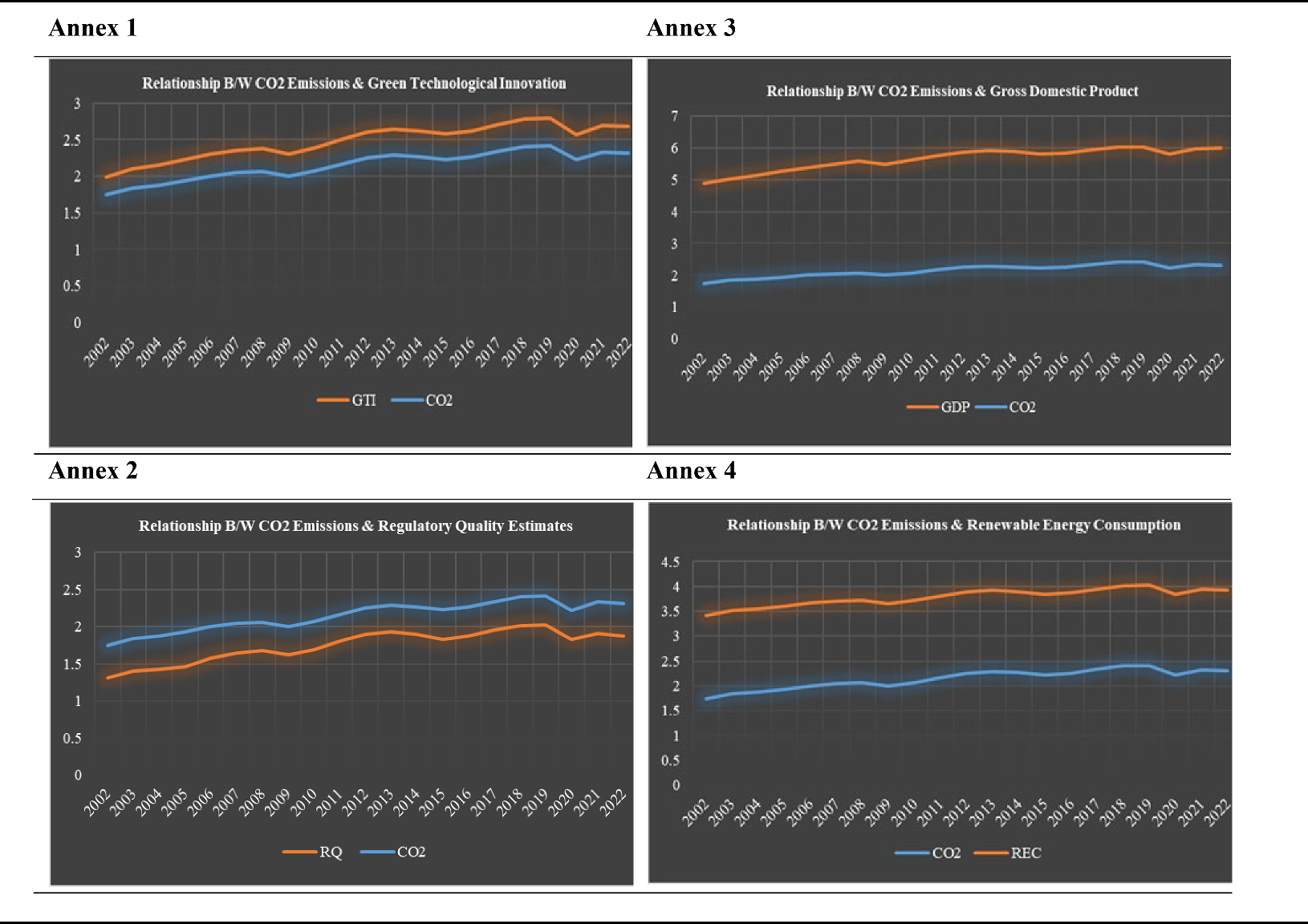
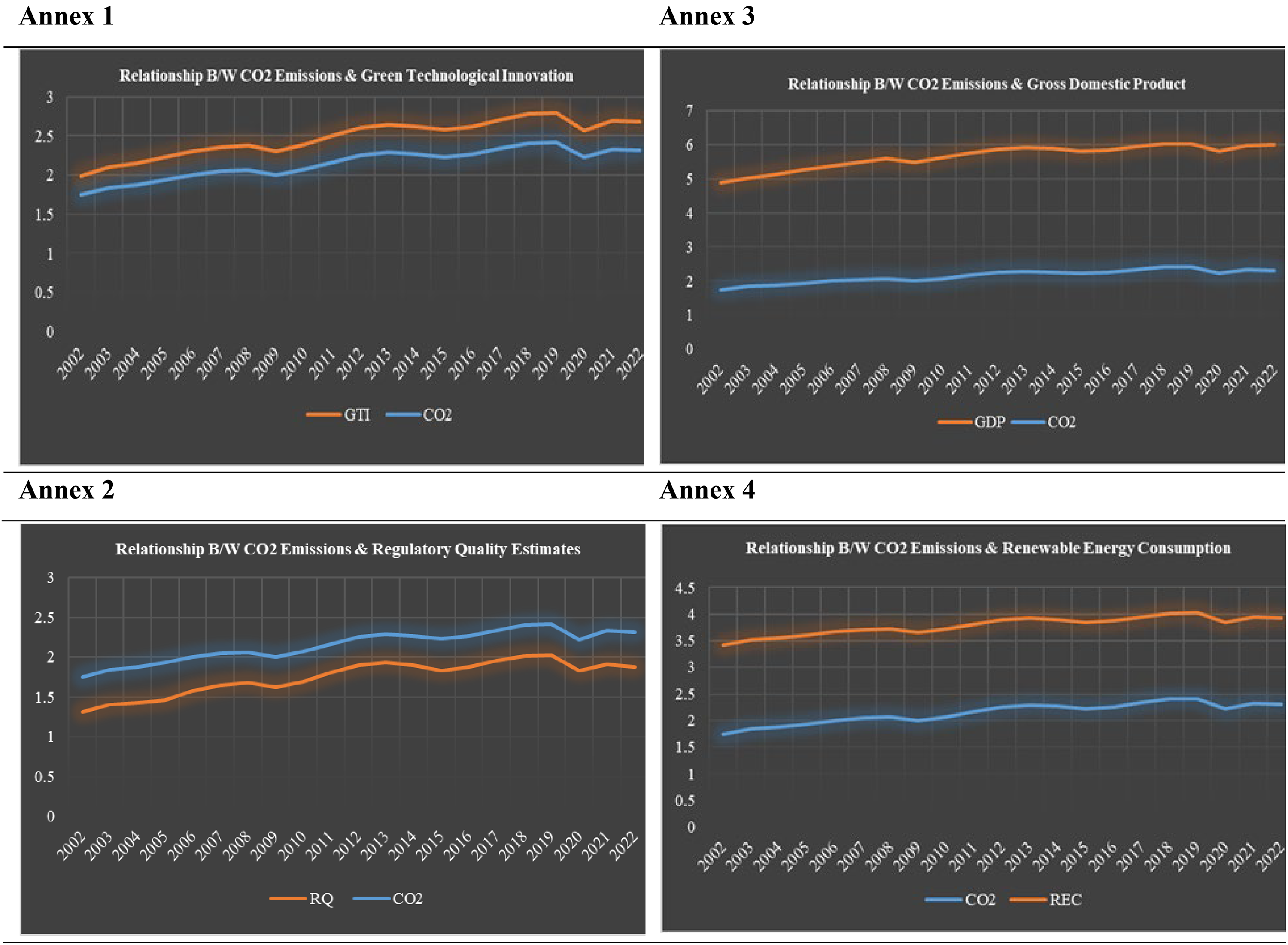
Examined how energy technology advancements contribute to emission reductions, finding that the impact significantly differs depending on geographic and spatial variables. In the ASEAN-6 region. 23 Show through panel data analysis that green technological progress fosters sustainable growth. In the end. 24 focusing on BRICS nations, employed a quantile-on-quantile method to investigate the complex and asymmetric connection among GTI and consumption-driven CO2 emissions, identifying notable variation depending on emission levels. Together, these studies reflect the significance of contextualizing green innovations inside particular regional and spatial dynamics to fully recognize their influence on emissions mitigation. (Annex 1) visually depicts the key takeaways.
Carbon dioxide emissions (CO2) and regulatory quality (RQ)
New research has attempted to understand the multifaceted interplay among CO2 productions, GTI development, and regulatory quality. 25 Works on BRICS states looking at the connection among coal rents, economic evolution with emissions and revealing that the mediating role of regulatory effectiveness is more important. Building on this. 26 Inspect the roles of capital investment, GTI growth and REC in promoting ecological quality improvement emphasizing that the benefits they provide are greater when effective environmental regulations are in place. Turning to Africa. 27 Explore the relationships among institutional excellence, GTI and CO2 emissions demonstrating that effective governance structures substantially enhance the beneficial environmental effects of green technologies.
In concert, these studies emphasize the significance of having high RQ and institutional quality in place for green technologies to actually result in emission reduction as illustrated in (Annex 2).Similarly. 28 Critically evaluated the links between financial and environmental regulations, sustainability and carbon emissions control. 29 Focusing on the nations of the Institute for Economic Co-operation and Development (OECD) it indicate that stricter environmental standards are connected with advanced ecological efficiency in industrial emissions of CO2.
Overall, these results highlight the distinct necessity for financial and environmental regulatory frameworks to be aligned in order to facilitate green growth and lead to real emissions reductions. Therefore, investigate how financial regulations may bolster sustainable development goals, with a specific attention paid to Turkey and providing evidence on the association among structured monetary systems and environmental advancement. In support of Lynch's entry. 30 Check CO2 (within road transport) against a wide variety of 282 cities across China finding some direct support for environmental regulations will help significantly lower CO2 emissions.
Transformation towards a sustainable future and its relation with the emission reduction is also well-discussed in works of. 31 Discuss the mutual outcome of green finance enabling regulation and economic enlargement in directing countries on a path towards environmental sustainability. Meanwhile. 32 Provide a new angle by exploring how the increased CO2 absorption and cadmium resistance of green algae under particular regulatory circumstances could bubble through to the surface by way of biotechnological as a pollution-challenging solution. 33 The influence of pathways of weather technologies and energy transition strategies on job creation and their interplay with CO2 emission reductions, demonstrating the critical role of enabling environmental regulations in shaping these pathways. These varied studies provide a multi-faceted view on how finances, governance, innovation and policy work hand in hand to push the world in the direction of an environmentally sustainable future.
Carbon dioxide emissions (CO2) and GDP growth
The complex link in the middle of the Human Development Index (HDI), GDP and CO2 is extensively addressed in studies by. 34 Explores how economic performance and human development contribute to environmental outcomes, specifically CO2 productions offering appreciated visions into the trade-offs among progress and sustainability. It utilizes panel data analysis to scan the causal links among GDP and CO2 emissions revealing a two-way interaction where economic development and environmental degradation influence each other. 35
Broaden this discussion by applying multivariate Granger causality models to assess the relationships among energy depletion, foreign direct investment, GDP and CO2 emissions in BRIC countries. Their findings emphasize the intricate and interconnected nature of economic improvement, energy use and environmental impact. Collectively, these studies highlight the pressing need for integrated policy approaches that align human development and economic advancement with ecological preservation.
Additional examine into the combined impression of economic progress, energy demand, CO2 emissions and external variables like climate and trade openness. Investigate 36 how extreme temperatures influence electricity usage, air quality and GDP, illustrating the environmental and economic implications of climate variability and underscoring the necessity for resilient energy and environmental frameworks. Examine 37 how energy generation and openness to trade shape economic and emission patterns concluding that both significantly affect growth trajectories and environmental humiliation.
Focusing 38 on the European Union and Western Balkan nations, report a strong linkage between economic extension, energy usage and rising emissions suggesting that current growth models may pose environmental risks. Analyze 39 high-income OECD countries, noting that while initial phases of economic development are often linked with enlarged CO2 emissions, this trend may reverse over time as these countries implement cleaner technologies and stricter environmental policies. Together, these works reinforce the notion that economic and energy policies must be harmonized to foster sustainable development, as conceptually illustrated in (Annex 3).
Renewable energy consumption and CO2
Dealing with climate change requires immediate and drastic action to avert growing environmental disasters. Limiting the rise in worldwide temperature less than 1.5°C and accomplishment net-zero CO2 releases are considered essential actions to mitigate the adverse impact of worldwide warming.40,41 These emissions are not incidental though they are directly tied to energy use especially from burning fossil fuels to assist economic development and industrial activity. As emphasized by. 42
High dependency on fossil fuels markedly gives to environmental destruction which makes the path toward other energy sources more imperative. While the economic growth is a trigger to the global demand for energy and renewable sources (i.e., solar, wind, ocean energy, etc.) are a sustainable solution to something that is urgent. 43 Importantly there is a developing consensus that the growth in the usage of REC has played a salient and possibly critical role in reducing CO2 productions and enabling efforts to reverse environmental humiliation. 44
The shift to little-carbon energy causes is dangerous to extenuating weather alteration and global warming, especially if countries are to adhere to international commitments counting those made under the Paris Agreement.45,46 This transition needs more than just policy support it also needs a practical roadmap to wean the world off fossil fuels. Evidence drives this transition. For instance, that. 47 Show the transition toward carbon neutrality depends on the acceptance of renewable key-energy tools and the enlargement of environmental technologies, especially in OECD countries. Their results underscore how innovation and clean energy can help address global warming. Similarly. 48 Affirm the part of REC in driving down CO2 emissions, further reinforcing the need for clean energy solutions in climate strategies.
Nevertheless, the energy-emissions relationship is nuanced. 1 Using Fully Modified Ordinary Least Squares (FMOLS) and Generalized Method of Moments (GMM) techniques, observed that both renewable and non-renewable energy foundations donate to CO2 releases. This suggests that while renewables are beneficial their implementation and lifecycle effects must be carefully managed to maximize environmental gains. This complex interplay is further illustrated in (Annex 4).
Recent scholars have increasingly emphasized the interconnected roles of green technological innovation, renewable energy, and regulatory quality in advancing environmental sustainability and reducing carbon emissions. 49 Argue that green technological innovation, when combined with strong environmental regulations, provides a critical pathway to achieving net-zero emissions, while. 50 Confirm that renewable energy development and environmental innovation significantly reduce CO₂ emissions in BRICS economies. Similarly. 51 Highlight the nexus between foreign direct investment, technological innovation, energy use, and sustainability in BRICS, with.52,53
Further showing that FDI fosters green innovation and improves environmental quality. Supporting this. 54 Reveal that in South Asian economies, green innovation and renewable energy adoption enhance environmental quality, whereas. 55 Stress that in ASEAN countries, innovation and economic openness must be complemented by regulatory mechanisms to achieve long-term sustainability 56 add that renewable energy investment along the Belt and Road Initiative is environmentally beneficial but contingent on trade openness and governance effectiveness. In Southeast Asia, 57 demonstrate that innovation-driven economic growth depends on regulatory stability, while. 58 Provide evidence that green innovation in Asian developing economies mitigates overall CO₂, transport emissions and carbon intensity.
Methodology
Research design and model
This study explores the complex relationship among GTI, REC, RQ, GDP, GCF, on CO2 emissions. The study employed a novel econometrics model called second generation panel quantile regression mean group with common correlation effect specification. The capability of this model its efficiently address non-stationarity, cross-sectional dependency, heteroscedasticity, heterogeneity and common correlation issues within the panel data. This strategy can certify significant results and notify competent to developing countries to remove carbon emissions also for sustainable improvement strategies and relationship between variables shown in below research design model 1.
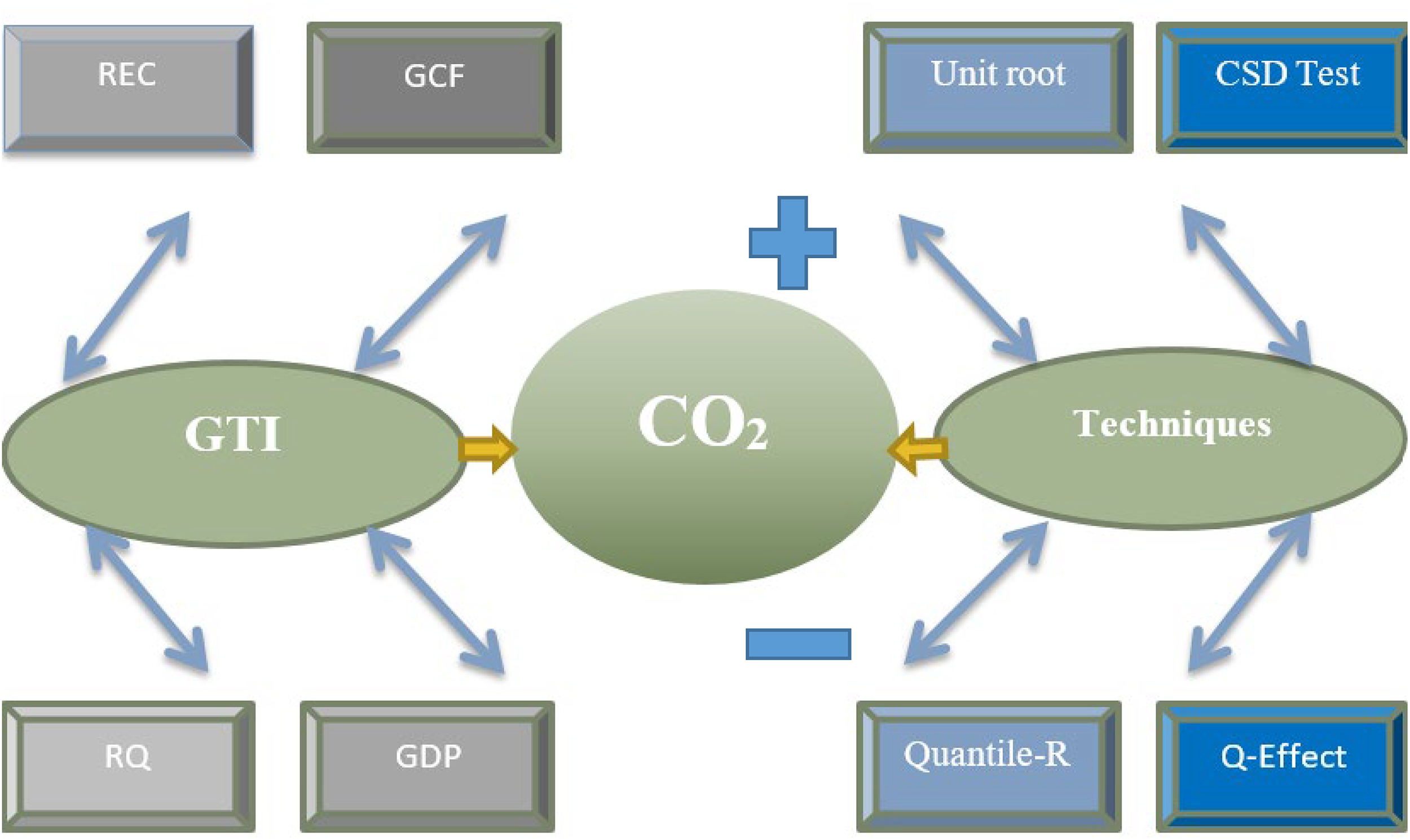
Panel data estimation model
To make the model more robust to outliers and distribution, this study has utilized Panel Quantile Regression (PQR). This model has a capability to handle several types of heteroscedasticity. 44 Also. 59 This methodology tolerates the investigation of variable correlations at various dispersion points, rather than exclusively concentrating on the mean, by exceptional conventional panel data analysis. 60
Data construction and sources
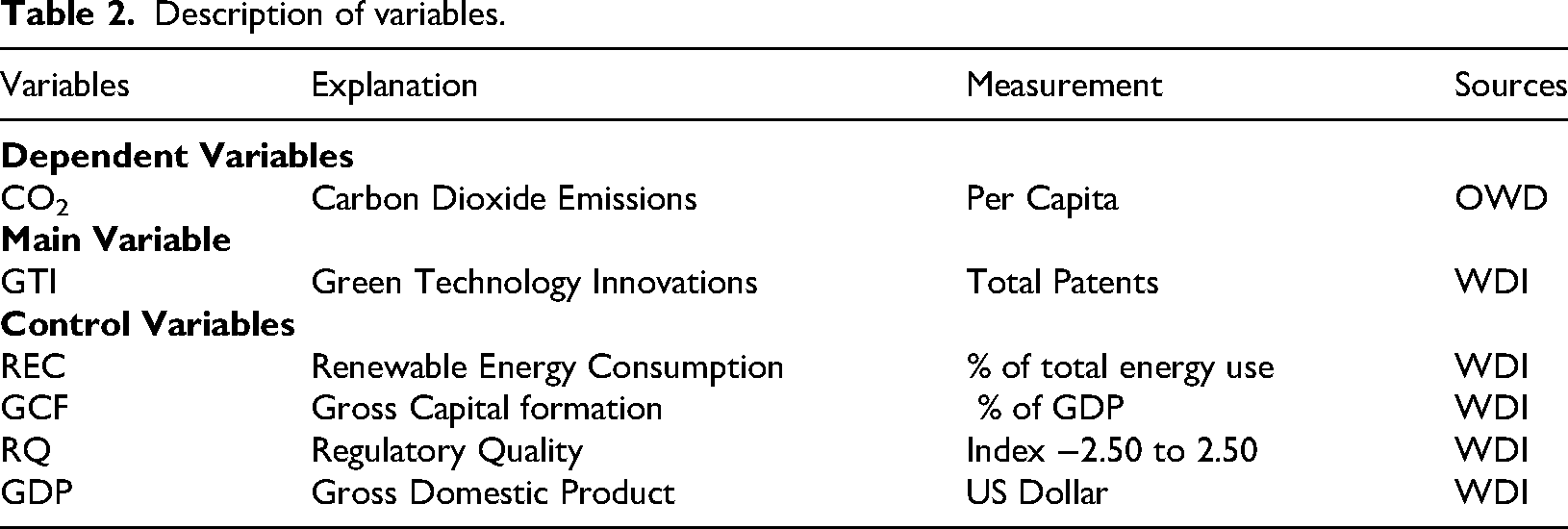
Table 2 provides a complete description of the study variables. The study utilized 21 years developing countries panel data set from 2002 to 2022. The study collected data from World Development Indicators (WDI) and (OWD). The main objective of this study is to investigate the impact of GTI, REC, RQ, GDP and GCF on CO2. World development indicators provide indicator of carbon dioxide emission which previously used by. 61 As a dependent variable. Therefore, GTI, REC, RQ, GDP and GCF are used as an independent variable.
Description of variables.
Equation estimation and specification
The stochastic version that needs to be estimated is represented by equation 1. Here we have the CO2, GTI, REC, RQ, GDP and GCF). The moderator model is formulated and examined using the research conducted by.
62
And is visually depicted using the methodology developed by.
63

In the model, i represents the countries under study, numbered from 1 to 52, while t related to duration that start from 2001 up to 2022. Dependent variables are denoted as CO2. The error terms are represented by x it, εit and γit. The coefficients for GTI are represented as α1, βi and these coefficients quantify the responsiveness of CO2 emissions, RE, GTI, REC, GDP, RQ and GCF to variations in GTI. Specifically, α1, βi measure the impact of GTI on each of these variables.
Panel unit root and cross sectional dependency test
Given the nature of the dataset, it is anticipated to demonstrate characteristics such as mixed order integration, cross-sectional dependence, heteroscedasticity, unobserved heterogeneity and common correlation. Due to the relatively long time dimension of the panel a dynamic panel data modeling framework was adopted to meet the research objectives effectively. Specifically, the study employed a second generation Panel Quantile Regression with Mean Group estimation and Common Correlated Effects to address issues related to outliers, non-normality, mixed integration orders, cross-sectional dependence, heteroscedasticity and correlated errors across units captured in equation 2.
To ensure that none of the series were integrated beyond the first order the Fisher-type Augmented Dickey-Fuller (ADF) panel unit root test was applied as reflected in equation 3, (Pesaran & Smith, 1995). In addition, cross-sectional dependence was explicitly tested to validate its presence in the data, following the approach proposed by.
64
shown in equation 4.

Here, Δγit is the first difference of the series, ρi measures the persistence of the series and θij are the lag coefficients used to control for higher-order correlation in the error term.
Furthermore, to account for potential cross-sectional dependence across countries, we employed the Pesaran (2004) CD test, given as:
Result and discussion
Descriptive statistics
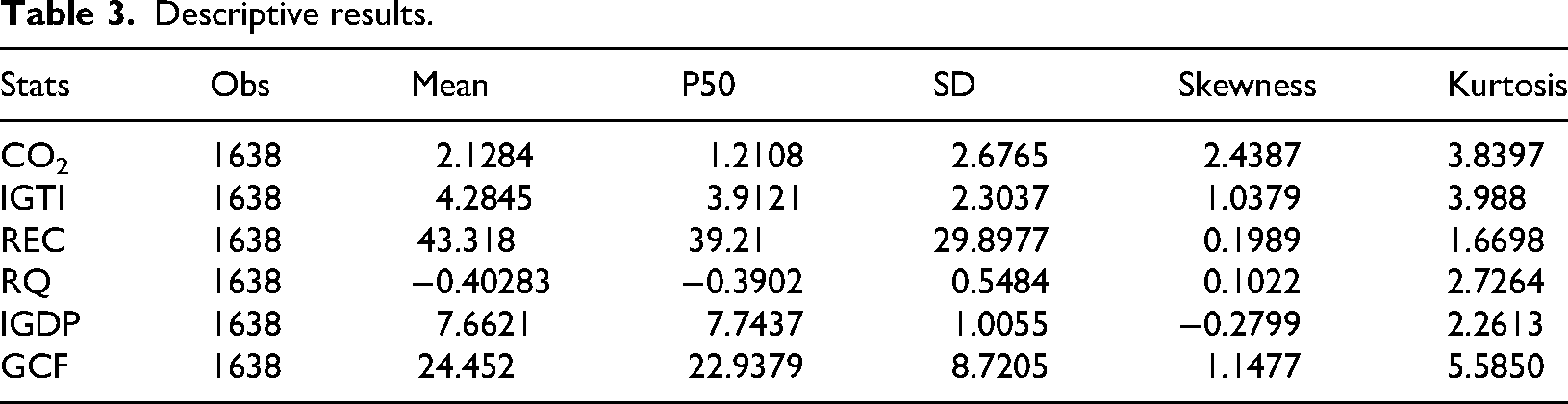
Accordingly, Table 3 explores the descriptive statistics of the study variables. The results show that other than CO2 and RQ the mean value of lGTI, REC, lGDP and GCF is greater than the standard deviation suggesting that these variables is under spread. While the mean value of CO2 and RQ is a smaller than the standard deviation indicating the data is overspread. This mixed order integration of data gives surety to the author that further regression analysis are requires to investigate the relationship of variables. Moreover, the skewness and kurtosis results indicate that the data is normally distributed.
Descriptive results.
Correlation matrix analysis
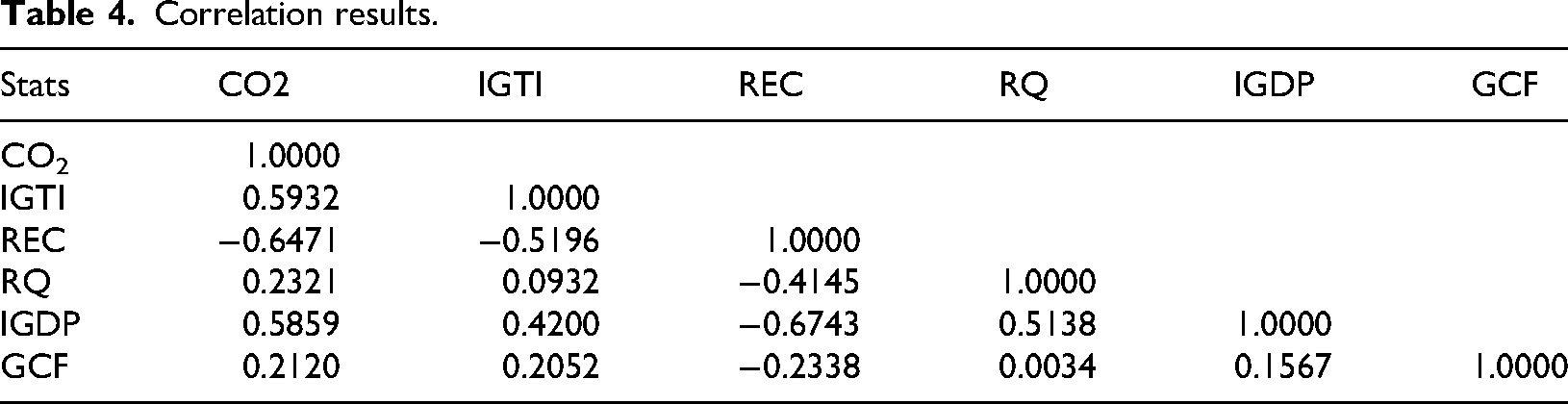
Table 4 provides the correlation matrix results for CO2, lGTI, REC, RQ, lGDP and GCF. The results show that REC (-ve) have negatively correlated with CO2 while other like lGTI, RQ, lGDP and GCF (+ve) have positive association with carbon emissions. Moreover, the findings indicate that there is no strong correlation among the variables suggesting that the absence of multicollinearity issue. 65
Correlation results.
Panel unit-root test
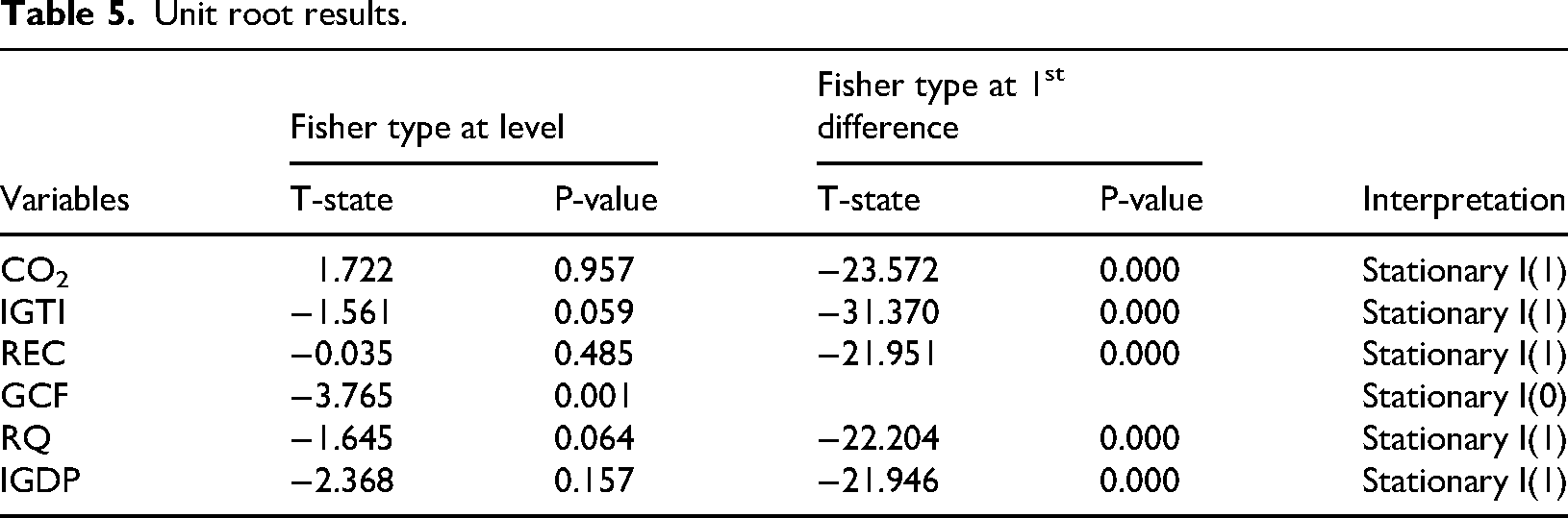
Table 5 presents the results of panel unit root test, the study utilized Fisher-type augmented Dicky fuller test to confirm whether a group variable exhibit stationary or non-stationary behavior. To provide an accurate panel data modeling the statistical features of panel must be stationary over time. The outcomes display that other than GCF remaining variables are stationary at l (1) with a high significant P-value (0.000). While GCF is stationary at l (0), hence the data is mixed integrated that's why using pane quantile regression model.
Unit root results.
Cross-sectional dependency test
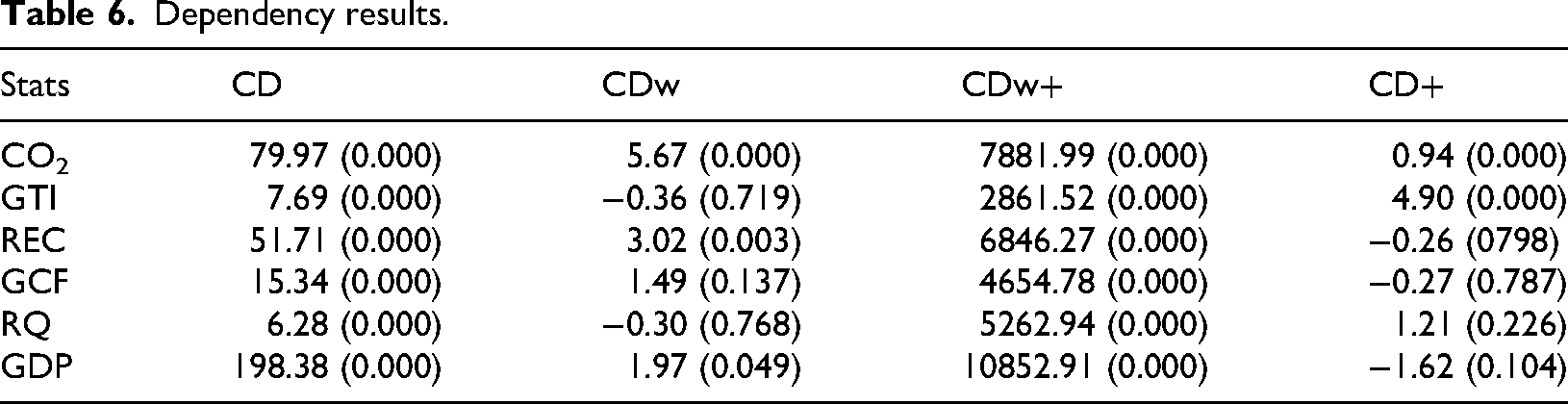
The results from the cross-sectional dependence (CD) tests comprising CD, CDw, CDw + and CD + statistics demonstrate significant interdependencies among key variables, notably CO₂, GTI, REC and GDP. These findings suggest that shifts in one unit can systematically impact others reflecting the deeply interconnected nature of environmental and economic dynamics. While GCF and RQ exhibit relatively little strong evidence of dependence certain indicators still point to the possibility of indirect interactions or spillover effects. These outcomes highlight the necessity of accounting for cross-sectional dependence in empirical investigation to confirm the correctness and reliability of outcomes particularly when evaluating the relations between environmental degradation, innovation and economic progress. The outcomes in Table 6 show that majority variables important suggesting that the selected sample countries data are cross-sectionally correlated.
Dependency results.
Panel quantile regression (long run relationship)
Therefore, we can see that green technological innovation and regulatory quality exhibit a U-shaped relationship that shows in below Table 7. If a certain threshold is surpassed an increase in green technological innovation and regulatory quality leading to an enhanced CO2 in developing nations. These outcomes clearly show that developing countries must adopt efficient green technological innovation and regulatory quality to minimize carbon emissions. These results are similar to the prior study of.9,14
Long-run results.
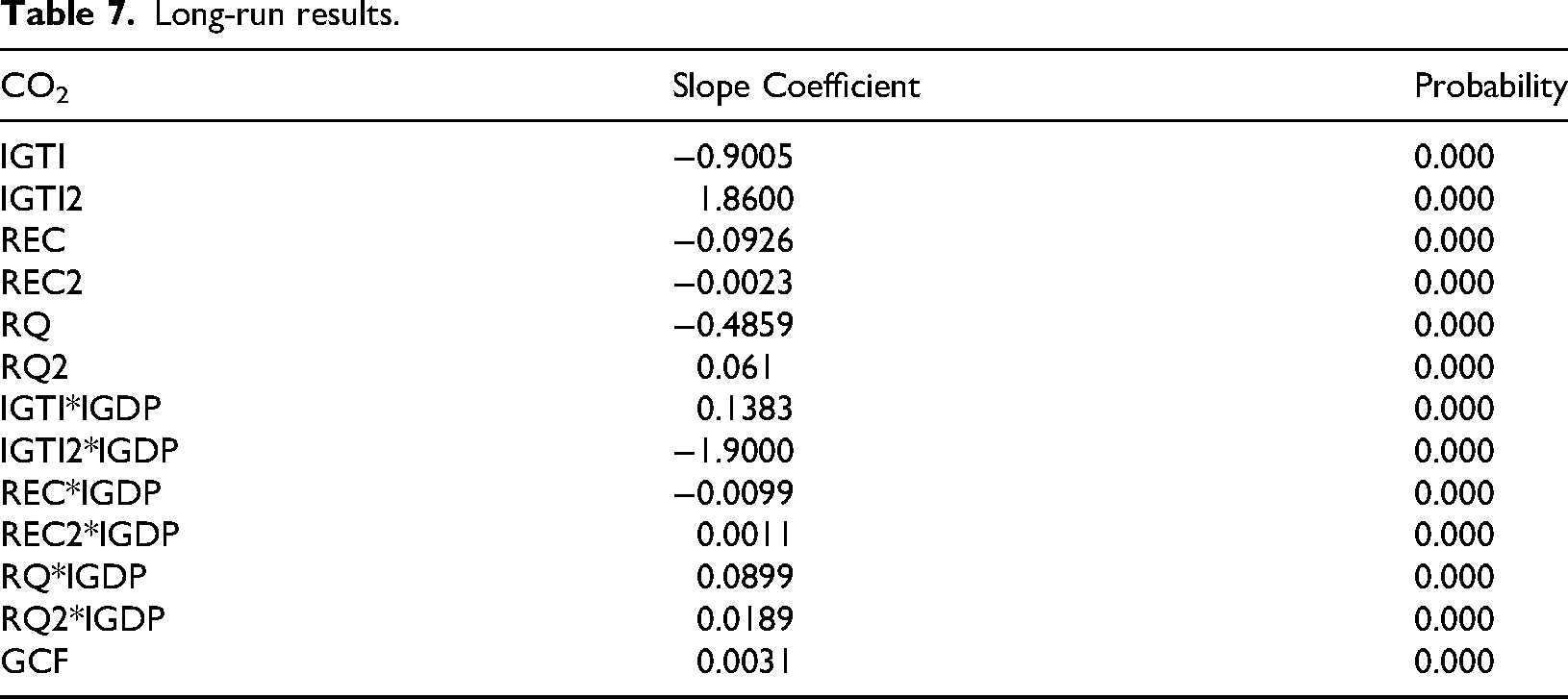
The negative coefficient of REC and REC* (-ve) indicating that both diminished carbon emissions in developing economy. The positive cross product of green technological innovation with gross domestic product and negative cross product of squared technological innovation indicates that adoption of GTI easily decreases CO2 in developing economy. 66 The combine effect of REC with GDP can reduce CO2 emissions. while REC* and GDP increase CO2 emissions indicating that increase in REC with GDP can significantly increase CO2 emission at macroeconomic level.
Moreover, the combine impact of RQ and RQ* with GDP (+ve) is positive indicating that both enhance CO2 emissions in developing economy. So the outcomes are parallel to the earlier study of. 67
Panel data estimation and quantile effects
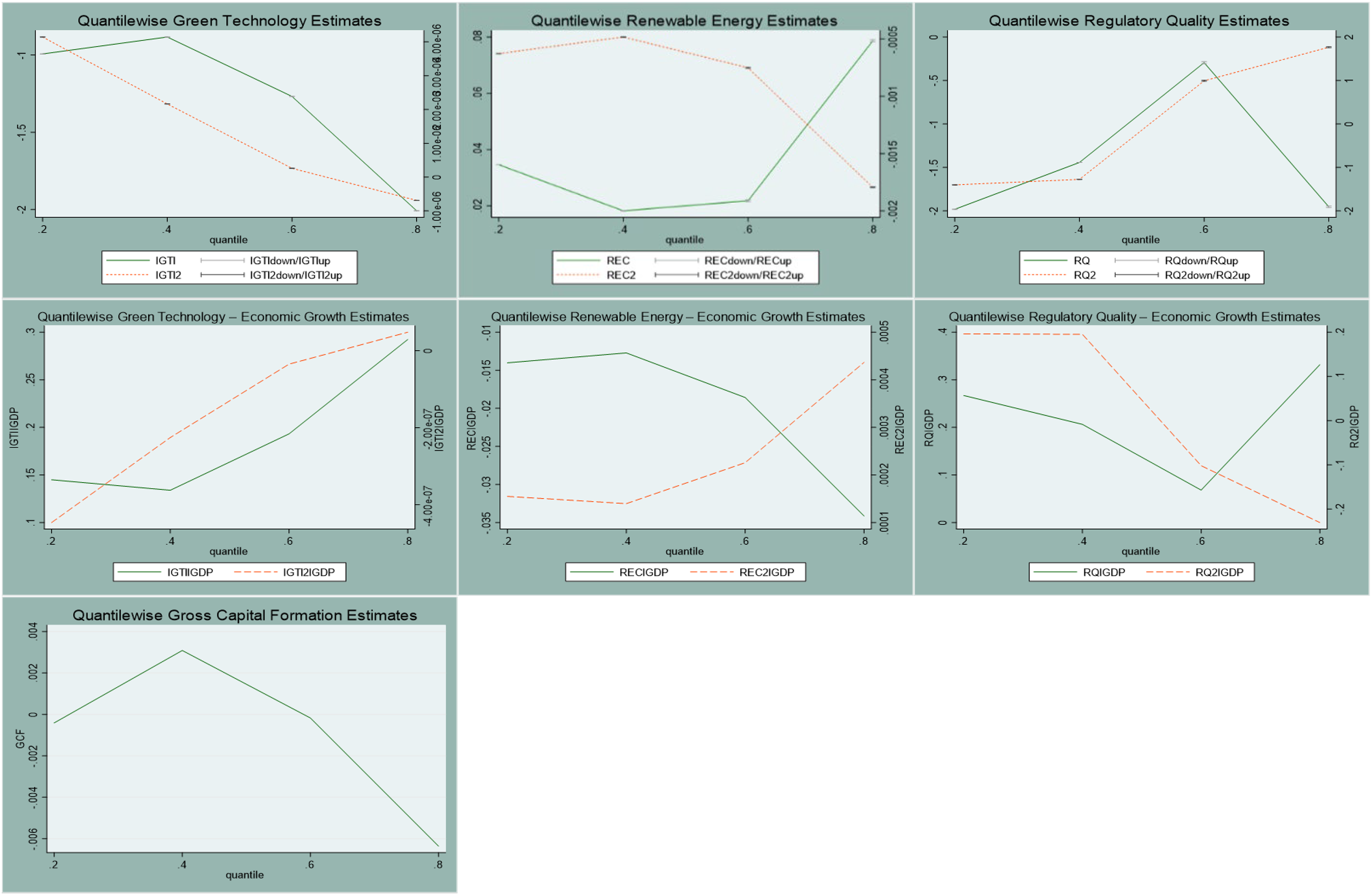
This study, based on 1638 observations from developing economies, applies quantile regression to capture heterogeneous effects of green technological innovation (GTI), renewable energy consumption (REC), and regulatory quality (RQ) across different levels of CO₂ emissions. Unlike mean-based estimators, the quantile approach reveals non-linear and distribution-sensitive dynamics, providing deeper insights into policy design.
The quantile-wise results for green technological innovation (GTI) indicate a U-shaped relationship with carbon emissions. At lower quantiles, GTI significantly reduces emissions, highlighting the effectiveness of early-stage technological adoption in improving energy efficiency and displacing carbon-intensive practices. However, as quantiles increase (higher-polluting economies) the positive effect of the squared GTI term becomes more pronounced, implying that the marginal gains of GTI diminish and can even reverse. Economically, this can be attributed to technological saturation, rising costs of deployment or a mismatch between innovation capacity and absorptive capability. For policymakers, this suggests that GTI must be coupled with institutional support and continuous R&D investment to sustain long-term mitigation benefits, particularly in high-emission contexts.
For renewable energy consumption (REC), the analysis reveals an inverted U-shaped pattern. At lower quantiles, REC initially shows a weak or even positive association with emissions, which may reflect transitional inefficiencies such as the coexistence of fossil fuel infrastructure or the carbon footprint of early renewable deployment. However, at higher quantiles, REC becomes strongly negative, confirming its scaling benefits in high-emission economies where renewable energy begins to substantially displace fossil-based systems. This finding underscores the importance of sustained investment and integration of REC into national grids: the environmental payoff of renewable energy is amplified once economies reach critical thresholds of adoption and efficiency.
In the case of regulatory quality (RQ), results similarly demonstrate a non-linear inverted U-shape. Improvements in governance and environmental regulation initially curb emissions, reflecting the benefits of stricter enforcement and institutional accountability. Yet, beyond a certain threshold, the effect reverses, indicating that overly complex regulations or weak enforcement mechanisms may hinder effectiveness and inadvertently increase emissions. This result emphasizes the need for adaptive and well-targeted regulatory policies ones that evolve with changing economic conditions and avoid excessive bureaucracy that can limit green innovation.
The interaction effects with economic growth further enrich these findings. The GTI–growth interaction rises positively, but its squared term declines, indicating that economic development initially amplifies the benefits of GTI but with diminishing marginal effects. Similarly, the REC growth interaction shows a negative trajectory (emissions-reducing) alongside a positive squared term, implying that renewable energy gains are strongest during moderate phases of economic expansion but may taper off when rapid industrialization increases energy demand.
Finally, gross capital formation (GCF) demonstrates a consistently positive association with emissions across quantiles,
In sum, the
GMM model for endogeneity
The generalized method of moments (GMM) estimation was employed to address potential endogeneity and omitted variable bias, which are common concerns in cross-country panel studies. GMM is particularly suitable for this study because it accounts for unobserved country-specific heterogeneity and dynamic relationships among variables, while also ensuring robust inference in the presence of heteroscedasticity and serial correlation. By using instrumental variables within the GMM framework, the analysis provides more reliable estimates than conventional fixed or random effects models.
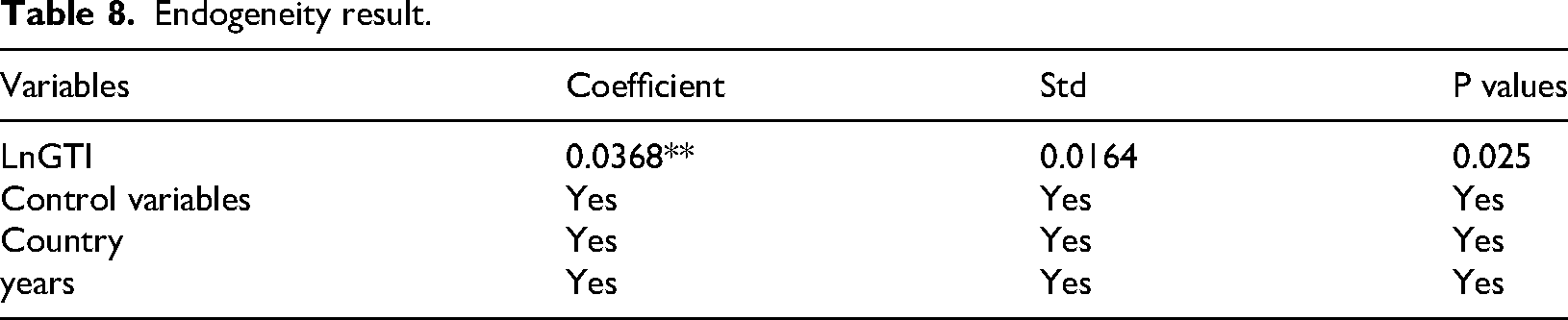
The results, reported in Table 8, demonstrate that green technological innovation (GTI) exerts a positive (+ve) and statistically significant effect on the dependent variable, with a coefficient of 0.0368 (p = 0.025). This indicates that greater adoption of green innovation is associated with improved environmental and economic outcomes once endogeneity concerns are addressed. In practical terms, the finding suggests that investments in environmentally friendly technologies can play a constructive role in advancing sustainability goals in developing economies. The inclusion of control variables, as well as country- and year-specific effects, further strengthens the robustness of these results by capturing unobserved heterogeneity across nations and over time.
Endogeneity result.
Heterogeneous panel causality results
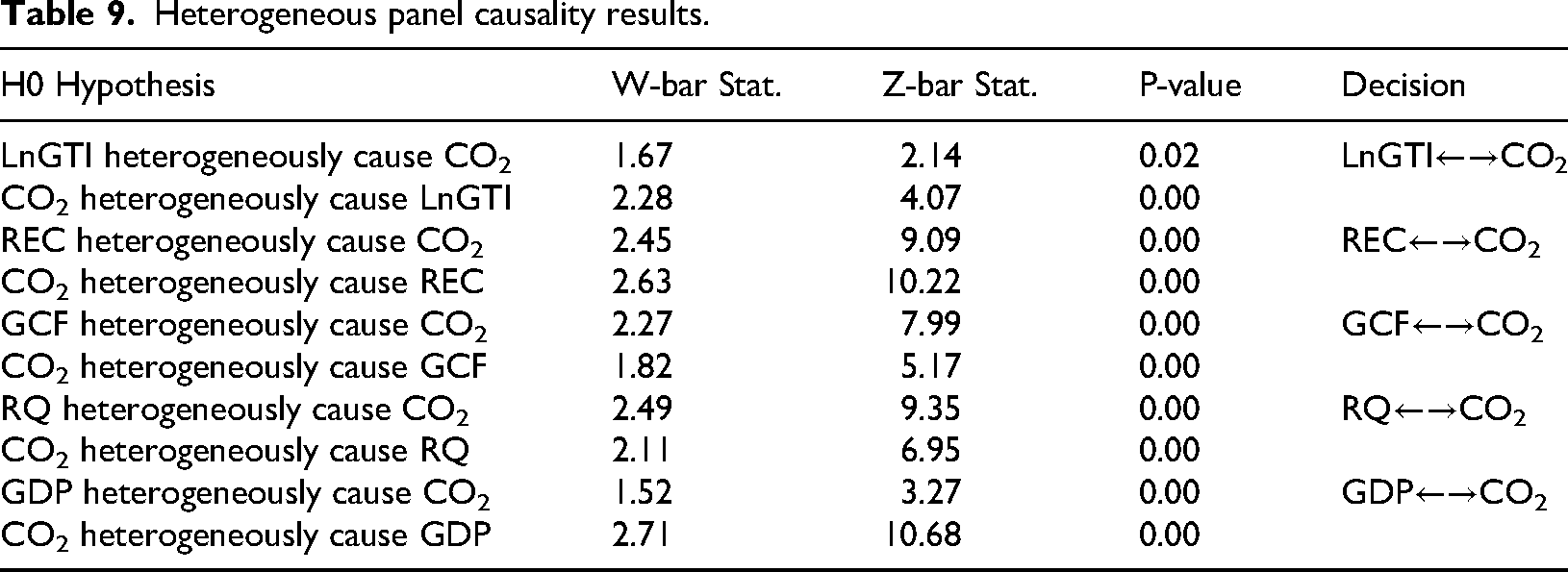
The results from the Dumitrescu and Hurlin panel causality test demonstrate robust and statistically significant bidirectional causality between CO₂ emissions and all examined variables GTI, REC, GCF, RQ and GDP. The significance of the W-bar and Z-bar statistics alongside p-values below the 0.05 level, confirms that changes in these explanatory variables contribute to variations in CO₂ emissions while simultaneously, CO₂ emissions exert a feedback effect on these determinants. These results highlight the complex interdependent dynamics between environmental degradation and economic development indicators. They emphasize the significance of integrated strategy methods that reflect the mutual influence between environmental and macroeconomic factors to design more effective and context-specific strategies for emission reduction and sustainable development.
GTI influences CO₂ emissions primarily through three channels: efficiency, structural change and institutional support. First, it reduces emissions by improving energy efficiency and enabling the use of cleaner technologies. However, rebound effects where increased efficiency lowers costs and raises consumption can offset gains. 68 Secondly innovation can shift economic structures toward low-carbon sectors but this requires sustained investment. Finally, its success depends on effective policy and institutional frameworks without strong regulation and enforcement the benefits may be limited especially in developing countries.69,70
REC minimize CO₂ emissions by replacing fossil fuels (substitution effect) promoting clean technology (technological effect), and through supportive environmental policies (policy effect).71–73 These channels collectively lower reliance on carbon-intensive energy sources and drive sustainable emission reductions.
RQ affects CO₂ emissions by shaping the effectiveness of environmental policy enforcement. Strong regulatory institutions can reduce emissions by promoting clean technologies and enforcing pollution controls while weak regulatory frameworks may lead to poor implementation and higher emissions due to inefficiencies or corruption.74,75 Results shown in below Table 9.
Heterogeneous panel causality results.
Discussion, conclusion and future indications
Discussion
This research provides a complete analysis of how GTI, REC and RQ influence carbon emissions across developing nations. By applying a second-generation panel quantile regression with mean group and common correlation effects the study uncovers a nuanced non-linear relationship among these variables. Specifically, 76 GTI and RQ exhibit a U-shaped pattern with respect to carbon emissions indicating that initial improvements in these areas reduce emissions but beyond a certain point they may unintentionally lead to environmental drawbacks possibly due to regulatory inefficiencies technological saturation or inadequate policy enforcement. Conversely, 77 REC constantly demonstrates a strong negative correlation with carbon emissions confirming its role as a key driver of environmental sustainability. However, the interaction of REC with economic growth reveals an inverted U-shaped relationship suggesting that unchecked economic expansion can offset environmental gains. These findings emphasize the importance of context-specific interventions and show that policies cannot be one-size-fits-all they must adapt to the unique economic and environmental profiles of each country. 78
Conclusion
The empirical findings highlight the complex interplay between technological, institutional, and energy-related factors in achieving environmental sustainability. Green innovation and effective governance remain essential, but their benefits diminish if strategies are poorly designed or insufficiently monitored. Renewable energy emerges as the most consistent driver of carbon reduction, though its effectiveness is shaped by the scale and structure of economic activities. Overall, this study contributes to the literature by demonstrating the non-linear and interactive effects of GTI, REC, and RQ, offering a framework for policymakers in developing economies to align economic growth with climate objectives. The research underscores the urgency of moving away from linear and generic policies toward dynamic, evidence-based approaches that integrate technological innovation, institutional reforms, and renewable energy development.
Policy recommendations
Based on the results, several actionable policy directions are proposed:
Limitations and future research directions
While this study offers valuable insights, some limitations should be acknowledged:
Future studies should consider the following avenues to extend the current work:
Footnotes

Authors contributions
Muhammad Abdullah Khan, Rabia Qammar and Rana Zain ul Abidin has created the concept of article. Muhammad Abdullah Khan wrote original manuscript. Rabia Qammar worked on methodology and validity of data. Rana Zain ul Abidin and Omar Mohammed Horani checked the editing and proof reading of the manuscript. All authors reviewed the manuscript.
Funding
There is no funding for this manuscript.
Declaration of conflicting interests
“The authors have no relevant financial or non-financial interests to disclose.”
Data availability
Data will be provided upon a suitable request.
Author biographies
Appendix
|