



Abstract
This paper focuses on the high rates of female full-time employment in Portugal and examines whether these are consistent with the familialistic features that typify the southern European social model. It employs a comparative methodology to investigate the extent to which recent policy developments and current social values in Portugal are aligned with the familialistic southern European tradition or whether they signal a departure from the model. The analysis reveals that the high rates of female employment are associated with particular features of the case of Portugal, namely, lower gender-based labour market segmentation and welfare state support for dual-earner families. However, this study also shows that the country still retains familialistic characteristics, which are particularly visible in the organization of care and in the persistence of traditional gender values. The article contributes to debates on the southern European social model and sheds light on how high female employment levels can be compatible with relatively high levels of familialism.
One of the main debates in the literature on southern Europe has been whether Spain, Italy, Greece and Portugal form a distinctive type of ‘welfare capitalism’ or just a subtype of the conservative–corporatist regime that is typical in continental Europe (Esping-Andersen, 1990, 1999; Ferrera, 1996; Karamessini, 2008a; Katrougalos and Lazaridis, 2003; Rhodes, 1997). This debate has been particularly intensive in welfare state literature, but there are also authors who maintain that the southern European countries have their own system of employment (Karamessini, 2008b) or capitalist development (Mingione, 2001). Despite disagreement as to whether or not these countries form a separate cluster, both factions agree that they have the same type of welfare, family and employment regime. They share a number of characteristics that differ from or are more pronounced than the other conservative continental European countries. They have a similar background, including late industrialization, a right-wing dictatorship in the 20th century and a strong role played by the church in promoting traditional family-oriented values (Esping-Andersen, 1990). The family has a central role in the organization of employment and welfare and familialism is considered one of the key traits of a hypothetical southern European model (Karamessini, 2008a; Mingione, 2001; Moreno, 2006). Esping-Andersen (1990) observed that the familialistic ideology that underlies welfare policy in southern Europe has been influenced by Catholicism’s ‘subsidiarity’ principle under which state intervention should only occur when the capacity of family members to protect each other had mutually failed. Consistently, state provision of care and policies that help women reconcile employment with the family has traditionally been limited and is still described as lagging behind most western European countries (Esping-Andersen, 2009; Katrougalos and Lazaridis, 2003).
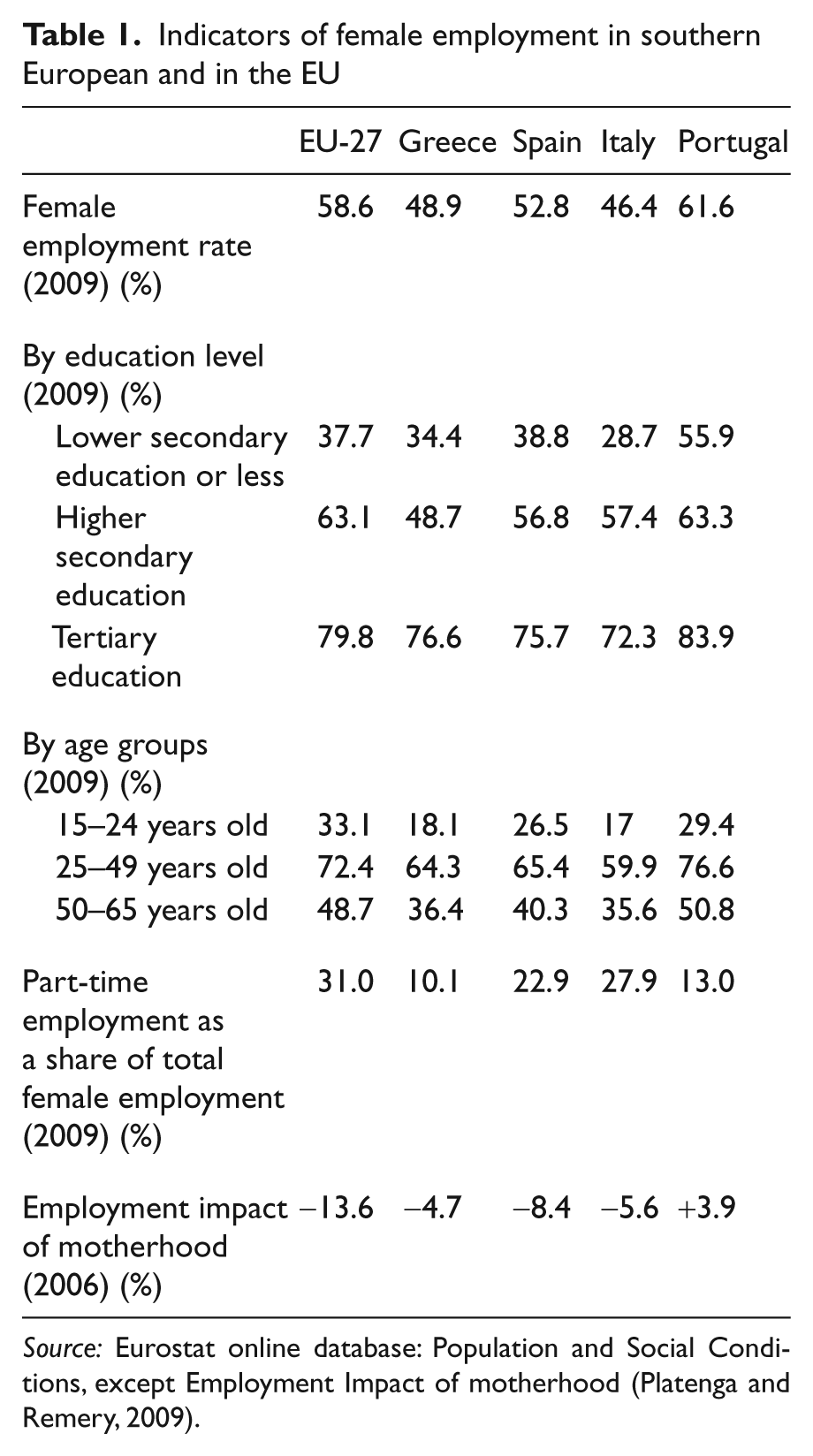
Familialism is also said to underpin the pronounced labour market segmentation and a polarized welfare system whereby prime-age men are treated as breadwinners and as such enjoy disproportionate employment and social protection, whereas women are treated on the basis of their family roles and dependent status (Ferrera, 2007; Trifiletti, 1999). The low female employment rates in Spain, Greece and Italy are then presented as a self-evident consequence of these familialistic arrangements. Despite the literature on southern Europe eventually acknowledging the exceptionally high rates of female employment in Portugal (see Table 1), it mostly overlooks the apparent inconsistencies of such rates with the familialistic features that are said to characterize the organization of welfare and employment in the four countries. Only Mingione (2001) raises the possibility of the divergent patterns of female employment in Portugal signalling a departure from the southern European model. Karamessini (2008a), however, argues that the four southern European countries, including Portugal, still maintain their most distinctive traits:
Indicators of female employment in southern European and in the EU
The resilience of labour market segmentation and familialism is thus responsible for the continuing pertinence of the concept of a ‘south European Social Model’. Despite the differences with Greece, Italy and Spain (especially in terms of high rates of employment of women) Portugal does belong to the SE [southern Europe] social model because it shares with the other countries the main features described above. (Karamessini, 2008a: 66)
Yet arguably the high rates of employment of Portuguese women, which are rooted in the 1960 and 1970s when emigration and military recruitment of young men to the colonial wars created severe labour shortages in a period of strong industrial development (Barreto, 2004), may have led to an erosion of the familialistic tradition in this country. Women’s patterns of full-time continuous employment (see Table 1), similar to those of men, suggest a lower level of gender-based labour market segmentation in this country. Moreover, that also limits the extent to which families can be expected to provide care and other home-based services. These circumstances may have eroded the familialistic assumptions and arrangements that typify the southern European model, arguably leading to a process of gradual divergence of Portugal with the other countries.
Therefore, this paper provides a comparative analysis of the four southern European countries, investigating whether recent trends in Portugal are consistent with the familialistic southern European tradition or whether they signal a departure from the model, focusing on four main areas: the organization of employment, social protection, the organization of care, and family and gender relations.
The term familialism is used in this article in the way employed by Esping-Andersen (1999) to refer to a system in which the family (rather than the state) is expected to take the main responsibility for the welfare of its members. In turn, the term de-familialization is used to refer to the degree to which families are relieved from these welfare and caring responsibilities. A de-familializing system seeks to unburden the household and reduce welfare dependence on kinship. Whilst familialism is associated with a traditional gender division of labour and a strong male-breadwinner ideology, de-familialization relieves women from the familial duties and facilitates their employment participation (Esping-Andersen, 1999).
The structure of employment
Portugal, Spain, Greece and Italy are described as having a similar employment system, whose main feature is its pronounced labour market segmentation (Ferrera, 1996; Karamessini, 2008a; Mingione, 2001). Whilst the share of part-time work is relatively low in these countries, the levels of self-employment, temporary employment and undeclared informal work are high (Mingione, 2001; Simonazzi, 2009; see also Eurostat Population and Social Conditions online database). The patterns of labour market segmentation are described as having a gender and age profile because women and young workers tend to be over-represented in peripheral employment and are more affected by unemployment compared to prime-age men (Karamessini, 2008b). The relatively low rates of female employment are also presented as a typical feature of southern Europe (Ferrera, 2007; Karamessini 2008a), although they only characterize Spain, Italy and Greece. Table 1 presents various indicators of female employment in southern Europe, revealing the much higher rates of employment of Portuguese women. The low share of part-time work indicates that Portuguese women work mostly full-time. Moreover, as shown in the table, there is no negative impact of motherhood on women’s employment, implying that mothers of young children are even more likely to be employed than non-mothers. Noticeably, with regard to female employment, Portugal is profoundly different from the other southern European countries.
Despite these differences, the background of the four countries is similar. Mingione (2001) describes their similar path of slow agrarian transition, where the family has had a strong economic role in shaping the structure of employment. In southern Europe, as this author observes, agriculture has always been characterized by low wages, under-employment and seasonal work, often informal and unprotected. On the other hand, as opportunities in manufacturing are limited and wages low, even though agriculture is declining fast, it remains a crucial element of the livelihood arrangements of families, who cannot depend upon manufacturing employment as a stable and complete source of income (Mingione, 2001). Because of their delayed process of industrialization, the southern European countries missed the ‘golden age’ of post-war industrial development and, in the 1970s, when the oil crisis hit European economies, it undermined the viability of Fordist arrangements in southern Europe (Ferrera 2007). Consequently, a fully proletarianized working class has never materialized (Katrougalos and Lazaridis, 2003; Mingione, 2001). Due to the scarcity of good manufacturing jobs that would provide adequate wages, southern European families have relied on income-pooling strategies to raise sufficient income. These involve different combinations of underemployment and/or seasonal agricultural employment with complementary activities, often in the informal economy. It is argued that the majority of workers involved in irregular manufacturing employment are women, who work hard for low remuneration (Mingione, 2001). However, Portugal appears to be the exception, as women are greatly involved in formal manufacturing employment, with a 41 percent share in 2009 (see Table 2). The specific circumstances of Portugal in the 1960s and early 1970s, when men were away in the colonial wars or emigrated, created severe labour shortages, particularly in a manufacturing industry specializing in traditional labour-intensive industries (Barreto, 2004; Rodrigues, 1996). In the absence of male breadwinners and with the decline of agriculture, women were under economic pressure to enter employment (André and Feio, 1999). The 1974 revolution that led to the transition to a democratic regime brought about considerable economic and social change. While emigration continued to limit the increase of the working population, the manufacturing sector continued to flourish, and an explosion of education and health services (Barreto, 2004) provided women with ever-increasing employment opportunities. These circumstances had a decisive effect on the growth of female employment in Portugal earlier and to higher levels than in the other countries.
Distribution of employment by economic sector and share of women within sectors in the southern European countries and in the EU-27 in 2009 (age 15–64 years)
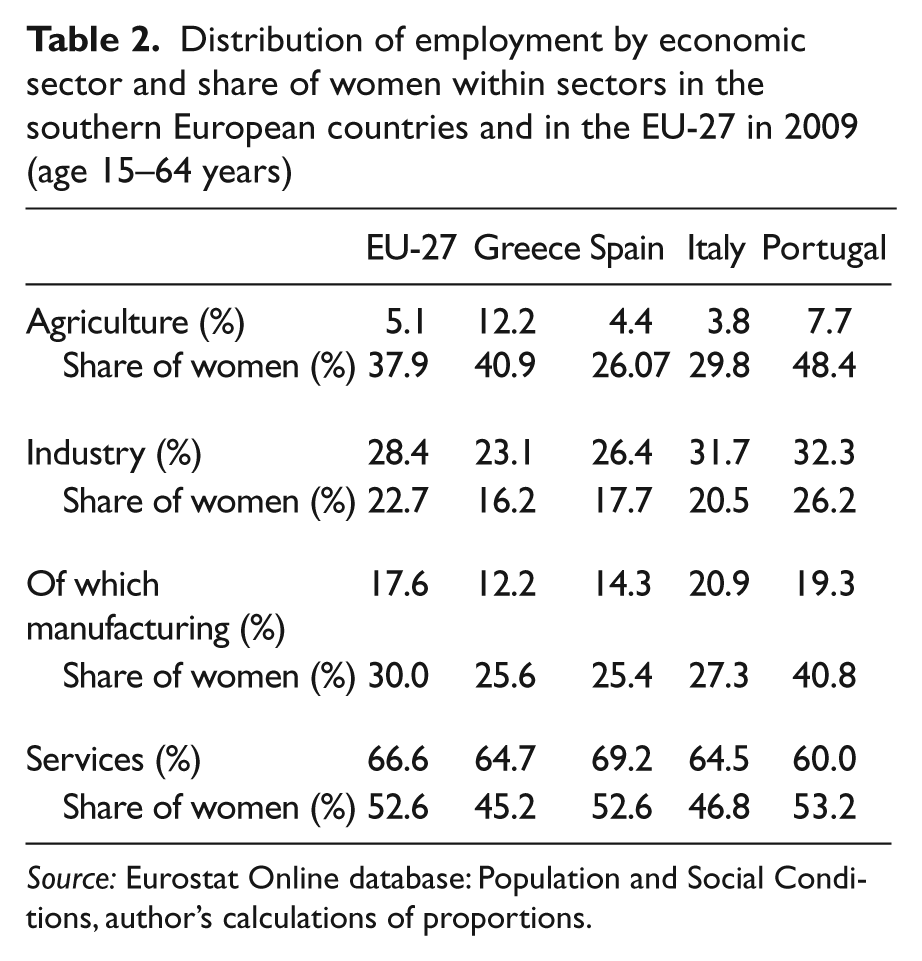
Source: Eurostat Online database: Population and Social Conditions, author’s calculations of proportions.
The familialistic patterns of south European labour markets are also visible in the service sector because many services are performed in the home by women (Mingione, 2001). Bettio and Villa (1998) argue that in Mediterranean countries, the family typically replaces the market and the state in activities ranging from banking, to housing, care and personal services. Potentially, this reduces demand for these services in the market and in the public sector and may limit the supply of female labour (Ferrera, 2005). As most of these services tend to be feminized, their absence is likely to result in a lower demand for female labour. This partly explains why their service sectors are still less developed than in other western European countries (Ferrera, 2007; Mingione, 2001). Despite significant recent growth of education, health and social services, Portugal is where the service sector is still the least developed amongst the four countries (see Table 2). Thus, with the highest levels of employment of women, Portugal presents an unacknowledged problem to arguments that link the southern European familialistic arrangements to the underdevelopment of the service sector. Table 2 shows that women in Portugal are relatively well integrated in the three main economic sectors, diverging from the other countries where women are mostly concentrated in services.
The pronounced labour market segmentation that characterizes southern European labour markets is associated with their protective employment legislation. This was initially developed in the inter- and post-war period and based on familialistic assumptions, namely the ‘urgency of safeguarding the earnings and career stability of the male breadwinner’ (Esping-Andersen, 1999: 23) in countries with underdeveloped income protection against unemployment (Karamessini, 2008a). Employment protection was further reinforced in the 1970s in the context of political unrest (Karamessini, 2008a). An Organisation for Economic Co-operation and Development (OECD) study shows that despite recent convergence with the other European countries, Greece, Spain and Portugal remain the European countries with the strictest employment protection regulations (Organisation for Economic Co-operation and Development, 2004a). The common path of reform of the southern European countries consisted mainly of facilitating the use of temporary contracts (Karamessini, 2008a; Organisation for Economic Co-operation and Development, 2004a).
According to Ferrera (2005), strict employment protection of employees in the core sector led to the differentiation of southern European labour markets into three separate segments with marked differences with regard to employment conditions and security: the regular, the irregular/peripheral and the underground/informal sectors. Labour markets that overprotect permanent employees also create barriers or delay entry to the secure segments of employment for those trying to (re)enter the labour market, such as young people who have finished their education or women who interrupted their careers for child-rearing (Rubery et al., 1999). Accordingly, southern European labour markets are described as favouring male breadwinners in permanent contracts and disfavouring women, young people and other vulnerable workers. However, the actual effect of protective employment legislation on women depends on the degree of their integration in permanent employment. Having secured their position on the core labour market, Portuguese women have benefited from the protective legal framework as much as men, and this was crucial to secure their employment stability.
Strict employment regulation has also been associated with high levels of informal undeclared work (Organisation for Economic Co-operation and Development, 2004a). The informal sector is estimated to constitute a large share of the economy in Italy and Greece (30–45 percent of gross domestic product (GDP)), but substantially smaller in Portugal and Spain (15–22 percent) (Katrougalos and Lazaradis, 2003). Nevertheless, in these four countries undeclared work is believed to constitute an important source of income for vulnerable groups of workers, such as immigrants, young people and women, who have limited access to the core labour market (Ferrera, 2005; Trifiletti, 1999). Obviously the high integration of Portuguese women of all educational levels across all economic sectors suggests a lower importance of the informal economy for women and a less gendered pattern of labour market segmentation in this country. Nevertheless, this may have been achieved at the expense of gender equality. Table 3 shows that the overall gender pay gap is similar in Portugal, Greece and Spain, being quite close to the EU average, although significantly lower in Italy. However, Table 3 also reveals that the gender pay gap in manufacturing is outstandingly high compared with the overall gender gap in Portugal and compared with the manufacturing gender gap in other countries. This wider gender pay gap in manufacturing in Portugal, where women have a much higher share than elsewhere and are concentrated in labour-intensive low-paid industries such as textiles and clothing (Barreto, 2004), suggests that the strong integration of (low educated) women in the (formal) labour market may have occurred at the expense of gender pay equality.
Gender pay gap in 2006 (%)
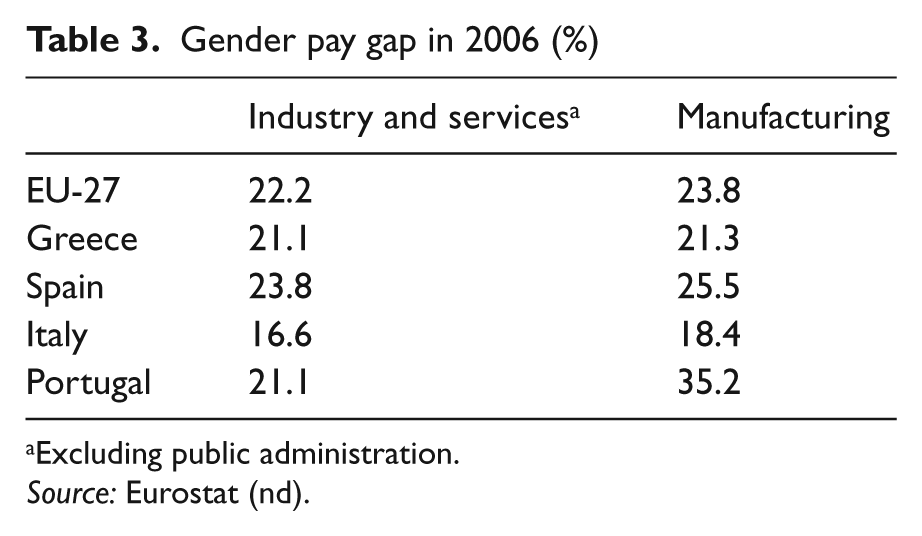
Excluding public administration.
Social protection and family benefits
Notwithstanding the unresolved debate of whether the southern European countries form a separate cluster, there is a wide consensus that they have the same type of welfare regime. Their particular distinctive features include pronounced familialism, fragmentation and polarization of social protection with persistent gaps in coverage, and particularism in the distribution of benefits through the practice of clientelism and in finance through tolerance to tax evasion (Ferrera, 1996; Karamessini, 2008a; Trifiletti, 1999). Katrougalos and Lazaridis (2003), however, argue that clientelism is a feature of social protection and political system of Italy and Greece, but much less so in Spain and Portugal and therefore it should not be considered a distinctive feature of southern European welfare states.
In the absence of adequate social protection and persistent labour market exclusion of some categories of workers, the practices of pooling incomes from different sources and family members, have become typical of southern European livelihoods (Ferrera, 2007; Mingione, 2001). It is argued that southern European families are engaged in promoting the welfare of its members in different ways: providing income support to unemployed family members, promoting housing through cohabitation of adult children with their parents until late in life, mobilizing clientelistic networks in order to gain access to social benefits and public sector jobs and providing child and elderly care (Guerrero and Naldini, 1997; Trifiletti, 1999). Assuming that the family would provide for the care needs of its members and ensure basic economic security, the state has limited its intervention in this area and concentrated on other fronts – mainly pensions (Ferrera, 2007).
Ferrera (2005) emphasizes the fragmentation of social protection, which mirrors the segmentation of the labour market and is pervaded with a familialistic ideology with ‘generous entitlements for the regulars, mostly male breadwinners; modest benefits for the irregulars, and only meagre crumbs (if anything at all) for those workers who were unable to establish any formal contact with the regular labour market’ (p. 5). This results in the polarization of social protection with a gender and age profile in which prime-age men are protected with good benefits whereas women, young people and certain vulnerable social groups are excluded or have access to lower level benefits. For instance, in order to qualify for unemployment benefit workers are required to have a record of dependent employment prior to becoming unemployed (Karamessini, 2008a). This excludes first-time job-seekers, previously self-employed workers and women returners. A study by Azmat et al. (2004) shows that the coverage of the unemployment benefit is much lower in the four southern European countries than in other continental European countries. Whilst Spain and Portugal have significantly higher rates of coverage than Italy and Greece, in Spain there is a large gender gap in benefit coverage. Due to their long-established attachment to employment, Portuguese women are less disadvantaged relative to men in access to benefits that depend on employment records and contributions.
Social assistance and anti-poverty policies have traditionally been the weakest area of social protection in the four countries. The underdevelopment of social assistance in southern Europe has also been associated with its familialistic tradition because families were deemed responsible for providing basic economic security to its members (Ferrera, 2005). Social assistance evolved slowly through progressive categorical additions resulting in a fragmented system with a low level of benefits and gaps that exclude some of the most vulnerable workers and poorest households (Ferrera, 2005). Nevertheless, significant progress has taken place in the last 20 years. All the countries implemented social pension schemes for old people who do not meet the eligibility criteria for the insurance-based pension system 1 and all the other countries except Greece have taken steps towards the creation of minimum income schemes (Matsaganis et al., 2003). However, these attempts have been patchy and only Portugal has successfully implemented a nationwide minimum income programme. In Spain, minimum income schemes started being established in the late 1980s by the regions but only the Basque Country and, to a lower degree, Madrid and Catalonia have implemented a genuine minimum income programme (Arriba and Moreno, 2005). In Italy, an experimental national minimum income programme was launched in 1998 for a period of 2 years and subsequently extended by two more years but ‘frozen’ in 2003 by the Berlusconi government (Sacchi and Bastagli, 2005). More successfully, a pilot programme implemented in Portugal in 1996 was extended nationwide in 1997 and the minimum income programme is now firmly established (Capucha et al., 2005; Pereirinha, 1997). Despite concerns regarding the low level of the benefit, the ability to control fraud, the effectiveness of the activation measures and budget constraints limiting the number of social workers involved, the overall assessment of the Portuguese programme has been mostly positive (Capucha et al., 2005; Ferrera, 2005; Matsaganis et al., 2003; Saraceno, 2006).
Family allowances and child benefits can contribute to de-familialization because they relax reliance on the family when they effectively help offsetting the cost of services (Esping-Andersen, 1999). Income-related family benefits are available in all four countries, but unlike what happens elsewhere in Europe, they do not have a universal system of child or family allowances (Katrougalos and Lazaridis, 2003). Table 4 shows that public expenditure on family benefits are significantly lower than the EU average and, where available, they are mostly means-tested, as in Italy and Portugal.
Public expenditure in family and child allowances as a percentage of the GDP in 2008
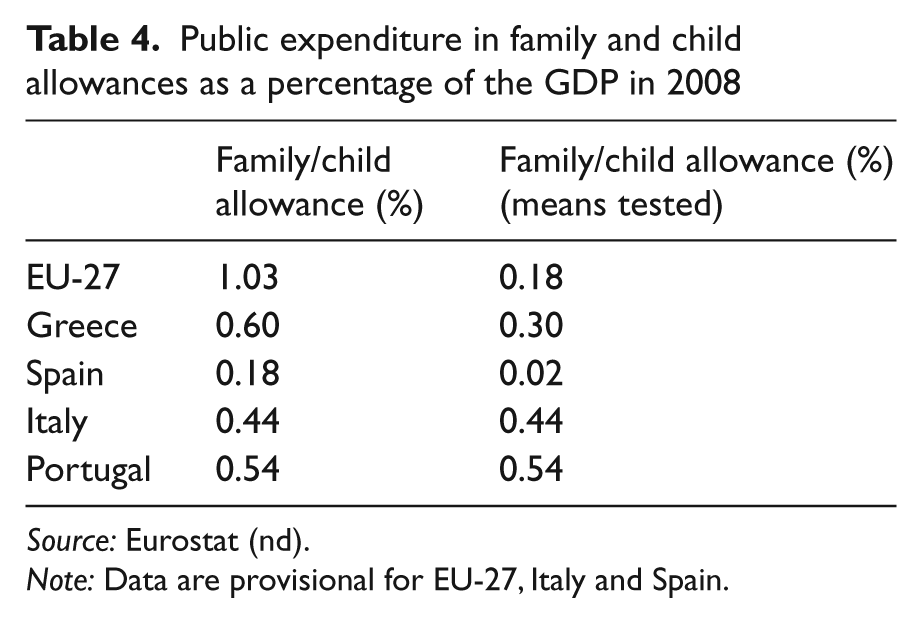
Note: Data are provisional for EU-27, Italy and Spain.
In Portugal, the child benefit is mostly aimed at providing income support for low-income families with children. The Portuguese child benefit 2 is a cash entitlement per child for all low-income families, irrespective of the employment situation of both parents. While the level of the benefit has traditionally been low, significant changes were introduced in this scheme in 2007 and 2008 with the objective of providing greater support for low-income families and to encourage fertility. A new pre-birth benefit was created and pregnant women are now entitled from the thirteenth week of pregnancy. Moreover, the child benefit between 12 and 36 months doubles for families where a second child is present and triples for the third and higher order child. 3 The reference values for the two lowest income levels have also been the object of an extra increase in 2008 but this measure was reversed in 2010 in the context of the economic downturn and public spending restraint. In May of 2008, the childcare benefit system was changed to include a 20 percent increase for single-parent families. 4
Care services and leaves for parents
The pervasive familialistic ideology underlying southern European welfare states implies that care tends to be delegated to families, particularly women (Mingione, 2001). This is reflected in the traditionally low level of state-provided care services in these countries (Esping-Andersen, 1999, 2009; Saraceno, 2006). Yet, all the countries have undergone considerable change in recent decades.
Elderly care in southern Europe has traditionally been family-based and informal (Bettio et al., 2006). Families are legally bound to care for their elderly and state provision is the lowest in western Europe, mainly based on social assistance principles (Simonazzi, 2009). Inadequate public provision in the context of an ageing population and growing female employment increased demand for alternative solutions. Under these circumstances, changing patterns of migration are contributing to the transformation of traditional family arrangements and living-in female migrants are gradually replacing informal home care by native women (Bettio et al., 2006). Despite this ‘migrant-in-the-family’ model being mostly based on the case of Italy, subsequent work suggests that elderly care has similar characteristics in Spain and Greece (Karamessini, 2009; Leon, 2010). However, Wall and Nunes (2010) observe that despite a recent increase in the number of female migrant care workers in Portugal, the majority of carers are native women and that a co-residing carer is not generally affordable for middle-class Portuguese families. Rather than a dominant migrant-in-the-family model, Portugal has a mixed model of public and private family-based arrangements, employing both native and migrant carers (Wall and Nunes, 2010). Yet Portugal is similar to the other southern European countries in that public provision is still insufficient, reflecting the extent it relies on the family.
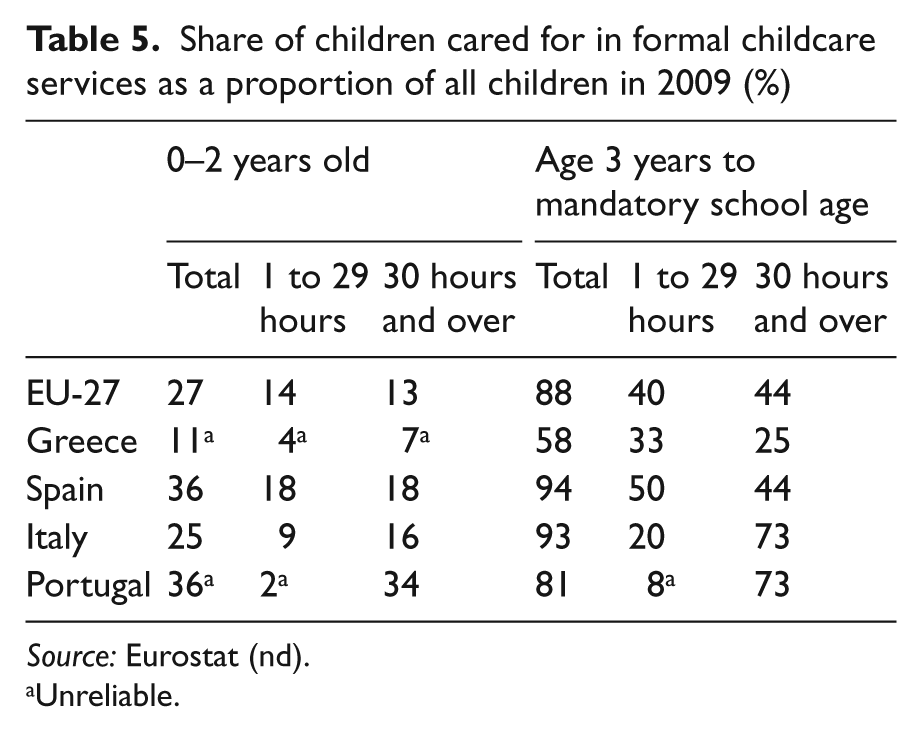
Southern European welfare states, however, appear more committed to increasing the provision of childcare. The coverage of services for children aged 3 years or older is now virtually total in Spain and Italy, approximately 80 percent in Portugal and nearly 60 percent in Greece (see Table 5). Portugal and Italy have the highest rate of full-time coverage for this age group.
Share of children cared for in formal childcare services as a proportion of all children in 2009 (%)
Unreliable.
For children under 3 years old, progress in the last decade has been remarkable in Spain, Portugal and Italy; possibly the result of their efforts to meet the EU Barcelona target of 33 percent coverage by 2010. By late 1990s, the four southern European countries were amongst the western European countries with the lowest coverage of childcare for this age group: 12 percent in Portugal, 6 percent in Italy, 2–5 percent in Spain and 3 percent in Greece (Organisation for Economic Co-operation and Development, 2001; Rubery et al., 1999). One decade later, the proportion of children attending formal care in 2009 was 36 percent in Spain, 34–36 percent in Portugal, 25 percent in Italy, whereas data for Greece, despite the lack of reliability, suggest a substantially lower coverage. Portugal is where the coverage of full-time services is the highest for this age group (see Table 5).
The data indicate that Portugal is where childcare provision is the most supportive of dual-breadwinner families. Arguably, it is where de-familialization has been greater because the availability of full-time services unburdens families from care responsibilities and enables women to participate in the labour market also on a full-time basis. However, the childcare system in Portugal has kept familialistic features – namely its hybrid nature combining formal and informal provision and public and private arrangements. This needs to be understood in the historical context of the development of family policy in Portugal, which goes hand-in-hand with the early entry of women in the labour market. Preceded by the rise of female employment in the 1960s, the 1974 revolution constituted a turning point of family policy in Portugal (Wall and Escobedo, 2009). Growing state acceptance of the responsibility for supporting working mothers led to the development of a network of childcare services through partnerships with non-profit organizations (among which the Catholic church is well represented) (Wall and Escobedo, 2009). As a result, formal childcare in Portugal is largely provided by the non-profit private sector, highly subsidized by the state. However the familialistic elements of the childcare system are particularly apparent in the persistence of informal arrangements as evidenced in a study by Wall et al. (2001), who found that grandmothers were the preferred carers for younger children, but that childminders were also relatively prevalent. Recent data corroborate that despite the growth in formal services, informal arrangements are still widely used in Portugal (Platenga and Remery, 2009).
Despite concerns that families from lower economic backgrounds may be disadvantaged in access to formal childcare (Organisation for Economic Co-operation and Development, 2006), comparative reports indicate that childcare has become relatively affordable in Portugal. An OECD (Organisation for Economic Co-operation and Development, 2007) study shows that the net cost of formal childcare for children under 3 years old was the lowest in Portugal, Greece and Belgium among OECD countries (data for Italy and Spain were not available). An earlier report estimated the fees for full-time daycare for a child aged 1 year in Portugal at 10–15 percent of a dual earner’s family income and at 2–10 percent of earnings of a lone parent (Organisation for Economic Co-operation and Development, 2004b 5 ). Accordingly, a qualitative study revealed that a group of 30 mothers employed in the clothing manufacturing sector in the north of Portugal had relatively good access to affordable formal childcare (Tavora, 2011).
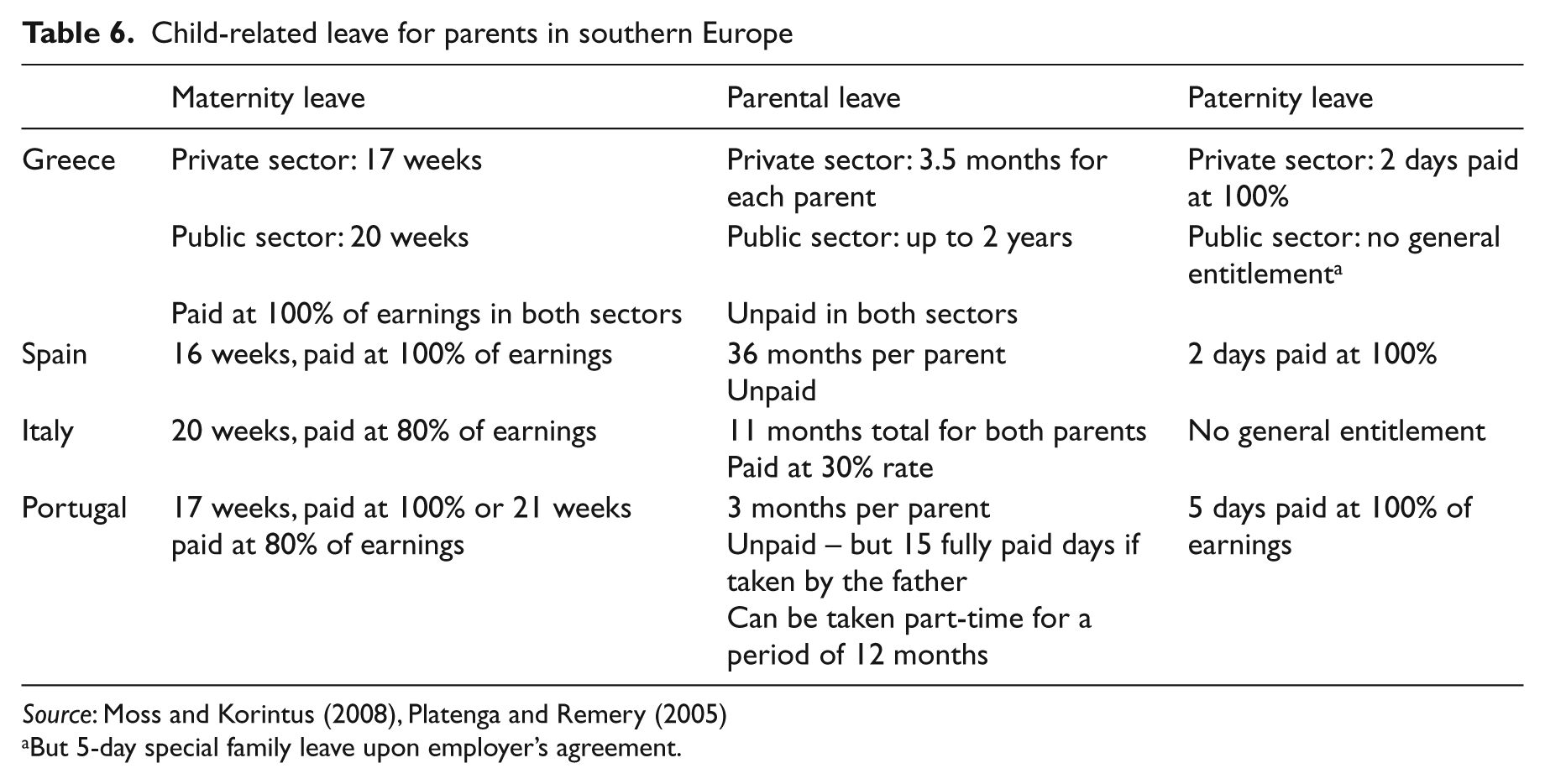
With regard to parental leave, Table 6 shows that until 2008 the four countries offered similar provisions of maternity leave and, while there was a greater variation in the length of parental leave, this was unpaid in Portugal, Spain and Greece. However, although this is not very clear in comparative research, Greek mothers are also entitled to a ‘childminding leave’ after maternity leave (Karamessini, 2010). In the private sector the length of the childminding leave is 6 months and paid at the rate of the minimum wage set by the National General Collective Agreement. In the public sector, this leave is 9 months and fully paid (Karamessini, 2010). Nevertheless, Ray et al. (2010) observe that the impact of the Greek leave system may be limited because the high levels of informality and self-employment in this country reduce its effective coverage rates.
Child-related leave for parents in southern Europe
But 5-day special family leave upon employer’s agreement.
In Portugal, parental leave has significantly improved in the last 2 years. The new Lei da Parentalidade, 6 with a gender-neutral language, replaces the previous rules on maternity, paternity and parental leave and creates a ‘daddy month’ similar to that of Nordic countries. Under the new law, there is a post-birth leave of 5 months paid at a 100 percent replacement rate or 6 months paid at an 83 percent replacement rate if the father takes at least 1 month. Moreover, the post-birth leave can be extended for six more months to be equally shared between both parents and paid at a 25 percent rate. In addition, the new regime includes 10 days fully-paid paternity leave. From an historical perspective, the endorsement of dual-breadwinner families has been explicit in public policy since the political transition. Maternity leave was first introduced in 1976 entitling women to 3 months fully-paid leave, with a substantial impact on women’s employment (Ferreira, 2010). With the increasing recognition of the importance of women’s work, political debates in the 1980s started focusing on parental care rather than solely on maternal care and the leave framework started including provisions for fathers and measures to facilitate the sharing of care between genders (Wall and Escobedo, 2009). The current leave framework articulates these concerns even more forcefully by linking parental leave to the promotion of gender equality, not only in the labour market but also within the family through the encouragement of a more egalitarian sharing of care.
Finally, the public support for dual-breadwinner families in Portugal is further evidenced by the entitlement of workers to 30 days per year of sick child leave for parents of children under the age of 10 years (Moss and Korintus, 2008; Wall and Escobedo, 2009). This entitlement is overall more generous in Portugal than in the other southern European countries. In Spain the corresponding leave is only 2 days, in Italy there is no limit for children aged under 3 years but only 5 days for children between 3 and 8 years old, whereas private sector employees in Greece are entitled to between 6 and 14 days’ sick child leave, depending on the number of children (Moss and Korintus, 2008).
The family and gender relations
The sections above highlighted the central role of the family in the welfare and employment systems in Southern Europe. However, some authors assert that the family itself has distinctive characteristics in southern Europe (Bettio and Villa, 1998; Guerrero and Naldini, 1997). The propensity of family members of different generations to cohabitate and to mutually exchange help in terms of income support and care appears particularly prevalent in southern Europe (Guerrero and Naldini, 1997). Despite these patterns of kinship help and social exchange, Martin (1997) observes that family relations in southern Europe are to a great extent seen in terms of obligations rather than individual choice. Saraceno (2006) stresses that family solidarity in southern Europe is not only a culturally-shared norm, but is also mandated by law and that these countries have the most extended range of ‘obliged kin’ of developed western countries.
With regard to gender relations, Katrougalos and Lazaridis (2003) maintain that the ‘male-breadwinner marriage’ is still the norm in southern Europe, especially among middle-aged people and in rural areas. This is, however, in contradiction with Trifiletti’s (1999) view that the male-breadwinner model has never been the norm in these countries because low (male) wages pressured women into paid employment, although in most cases in the informal sector. Nevertheless, Katrougalos and Lazaridis (2003) argue that the pattern of power relations between genders and the residual family policy contributes to a reinforcement of traditional gender roles in the household. Yet they observe that in Portugal, due to the much higher rates of female (formal) employment, the idea of the domestic housewife is ‘fading away as an outdated stereotype as the contributions made by women’s earnings are an indispensable addition to the family income’ (Katrougalos and Lazaridis, 2003: 87). Anxo and Boulin’s (2005) comparative report shows that, among 14 western European countries, Portugal has the highest proportion of dual full-time working couples. In turn, Greece, Spain and Italy have the highest proportions of male-breadwinner couples, in which men work full-time and women are inactive, and are amongst the countries with lower proportion of couples in which both partners work full time. In this area, Portugal is profoundly different from the other three countries.
Platenga et al. (2009) developed a Gender Equality Index based on four dimensions – equal sharing of paid work, money, decision-making power and time, and used it to compare the European countries in these four areas. Again Portugal arises as the unexpected outlier: while Spain, Italy and Greece score very low, Portugal combines relatively high scores on participation, income and unemployment, with medium scores on pay and socio-economic power, generating a medium score on the overall gender equality index.
However, the increase of female employment in Portugal has not been matched by a proportional increase of participation of men in the domestic sphere or a change of attitudes with regard to gender roles. Recent survey research consistently indicates that Portuguese women, despite generally working full-time, retain the bulk of domestic work and that social attitudes tend to support traditional gender roles (Aboim, 2010; Crompton, 2006). In this area, Portugal is similar to the other southern European as familialism still underpins social values and gender roles in the home.
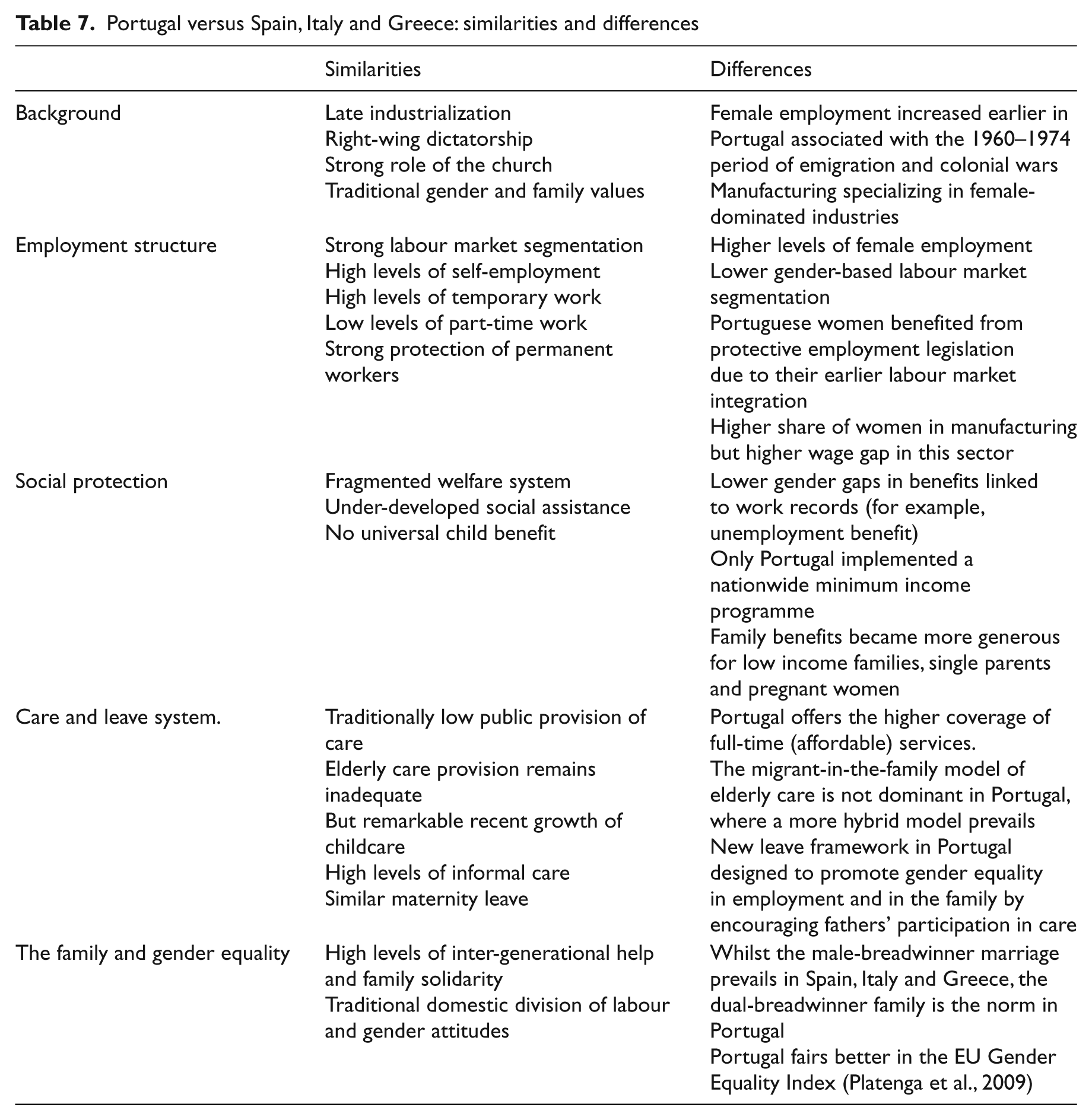
Table 7 summarizes the findings of this article, displaying the similarities and differences between Portugal and the other southern European countries.
Portugal versus Spain, Italy and Greece: similarities and differences
Discussion
The comparative analysis conducted in this paper reveals that the high levels of employment of women in Portugal are associated with a number of particular features that differ from the other southern European countries. However, these distinctive characteristics, mostly associated with and supportive of the employment of women, are only part of the story. The data also indicate that Portugal retains many of the familialistic traits of the southern European model.
Specific historical circumstances induced an earlier and greater involvement of Portuguese women in employment. While southern European women have made inroads into employment through the peripheral segments of the labour market, Portuguese women started establishing their position in the core labour market in the 1960s, much earlier than their counterparts. Having gained a foothold in secure employment, the protective employment legislation typical of southern Europe, coupled with leave entitlements that were initially basic but progressively more generous, contributed to their employment continuity. This is why, despite the strict employment regulations in southern Europe creating cleavages and barriers between core and peripheral segments of the labour market, this segmentation in Portugal does not have a strong gender profile. Nevertheless, the extremely high gender pay gap in manufacturing, where the share of female employment is also much larger than elsewhere, suggests that in Portugal, low-paid employment for women may be a functional equivalent to informal work in other southern European regions. At least, it could be regarded as another form of peripheral employment in the complexly segmented southern European labour markets. Nevertheless, the comparative research by Platenga et al. (2009) reveals significantly higher levels of gender equality in Portugal compared with the other three southern European countries and this is mainly related with lower gender differences in employment, unemployment, income and socio-economic power.
However, the familialistic ideology is still reflected in the inadequate system of social assistance, even though Portugal has so far been the only southern European country to have implemented a minimum income programme with relative success (Ferrera, 2005; Karamessini, 2008a;). Child benefits in Portugal have become more generous for low-income families, for lone parents and pregnant women. However, similarly to what happens in the other countries, these benefits are not universal and are mostly based on social assistance principles.
Despite the traditional reliance on the family for social protection and care, as women have increased their labour market participation, the four countries have sought to modernize their welfare systems accordingly. Yet in Portugal, three decades of high levels of full-time female employment have arguably placed greater pressures on the system. The analysis in this paper suggests that the state has responded to these pressures and that Portuguese family policy reflects an endorsement of dual-earner families and a commitment to gender equality. While the provision of childcare has grown substantially in Italy, Spain and Portugal, it is in the latter where the coverage of full-time (affordable) childcare is the highest. Moreover, the new leave framework has been designed to facilitate parents’ work–family reconciliation, to promote gender equality and to encourage men’s participation in care. Furthermore, in Portugal, parents benefit from the most generous sick child leave, which is crucial to facilitate work–family reconciliation and to enable the employment continuity of mothers. However, the familialistic features of Portugal are still visible in both the childcare and the elderly care system, particularly in its hybrid nature that combines formal, publicly-funded institutional arrangements with family-based and informal solutions.
In summary, this article reveals that despite the earlier growth and higher levels of female employment, Portugal retains many of the southern European familialistic traits. Whilst the welfare system is more supportive of female employment in Portugal than in the other countries, de-familialization has been similarly incomplete. Moreover, familialism is still manifest in the traditional gender division of labour in the home and on social attitudes that support traditional gender roles.
This study contributes to debates on the southern European social model by shedding light on the exceptional case of Portugal and its high female employment. It interestingly demonstrates that, in contrast with what is the general assumption, high rates of female employment can be compatible with high levels of familialism. Moreover, this study highlights the importance of considering gender relations as a central dimension in mainstream (and not only feminist) cross-national research on employment and welfare.
Footnotes
Acknowledgements
I gratefully acknowledge that this study was financially supported by Fundação para a Ciência e a Tecnologia, Portugal. I would also like to thank Jill Rubery, Hugo Figueiredo and the three anonymous referees for their valuable comments and suggestions.