



Abstract
This article introduces seven national studies which examine the impact of austerity measures on collective bargaining in manufacturing in the European Union (EU) countries most affected by the crisis. We explore the changing dynamics in the relationships between domestic actors in the period leading up to the crisis and the influence of supranational actors thereafter. Austerity measures have undermined the structure, process, content and outcomes of collective bargaining, though the nature and degree of changes are conditioned by path-dependent factors of each national system.
Introduction
The sovereign debt crisis began in Greece in 2010 and spread to several other Eurozone economies, with profound consequences for industrial relations in the European Union (EU) member states affected. Deficit reduction measures, driven by the belief that a process of ‘internal devaluation’ was necessary to restore national competitiveness, have been coupled with systematic structural measures aimed not only at ensuring wage moderation but also at amending essential features of the industrial relations systems and collective bargaining (Deakin and Koukiadaki, 2013). In many cases, the measures have been expressly stipulated by the loan agreements with the ‘Troika’ of the International Monetary Fund (IMF), the European Central Bank (ECB) and the European Commission (Koukiadaki, 2014; Marginson, 2015; Schulten and Müller, 2014). While in some EU countries, collective bargaining facilitated responses to the challenges of the crisis, in others the austerity measures were designed to make it weaker and more fragmented (European Trade Union Institute (ETUI), 2015). Furthermore, a comprehensive package of measures was introduced to tighten European economic governance and strengthen the coordination of economic, budgetary and employment policies across all member states. The European Semester process subjects member state labour policies to multilateral surveillance procedures, challenging social dialogue at national level (European Commission, 2015; Van Gyes and Schulten, 2015).
So far, little research has addressed how these policy and legislative changes are influencing the extent and nature of collective bargaining and shaping the content and outcome of collective agreements. Emerging literature (Gallie, 2013; Marginson and Welz, 2015; Rocha, 2014; Schulten and Müller, 2014) has largely evaluated the crisis-driven measures on the basis of macro-level evidence rather than original fieldwork.
We therefore undertook a comparative research project to investigate the impact of structural labour market adjustments on the articulation of management and employee interests and to examine the process and outcome of changes in collective bargaining in seven countries: Greece, Ireland, Italy, Portugal, Romania, Slovenia and Spain. These countries were selected, first because they were among those most affected by the economic crisis, and second, because their labour markets were subject to major regulatory changes associated with the intervention of European and other supranational institutions. The timing of these changes varied. In some countries, such as Greece and Ireland, extensive changes had already occurred when the project started, while others, such as Slovenia, were at the beginning of the process.
Our focus was on manufacturing: an important sector for the business systems of the countries in question. Previous research has found procedural changes in collective bargaining, such as decentralization of wage-setting, more common in manufacturing than services (Glassner et al., 2011). Moreover, understanding the effects of austerity measures on industries with long traditions of multi-level collective bargaining would be particularly insightful: if these measures could destabilize the sector with the most robust industrial relations institutions, this would indicate their potential for disrupting the overall system of industrial relations in each country.
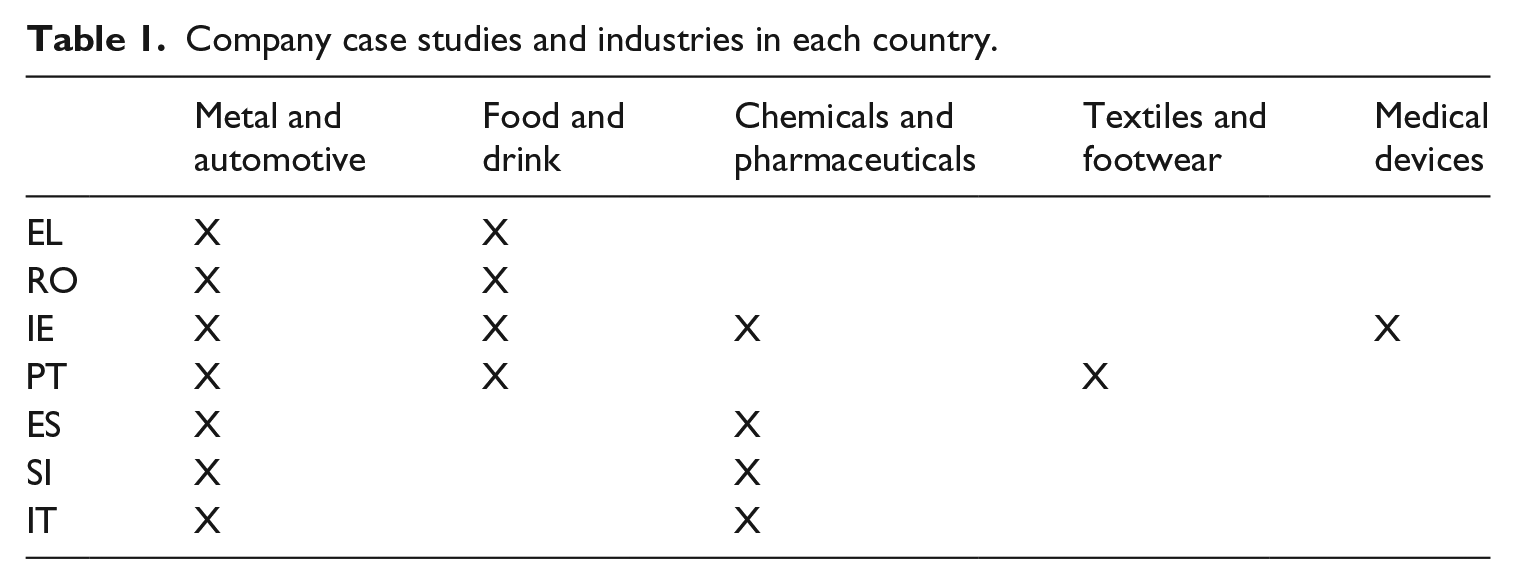
We collected and analysed qualitative data, including case studies, at national, sectoral/regional and company levels. We undertook interviews with key informants about the impact of the changes on collective bargaining in government ministries, employers’ federations and trade unions at national and sectoral levels. We also arranged national workshops with representatives from these organizations, to exchange views and establish dialogue between the social actors and the academic teams. Finally, we carried out company case studies (summarized in Table 1), involving interviews with senior management and human resource (HR) managers as well as workers’ representatives from trade unions and other representative bodies.
Company case studies and industries in each country.
Three themes were explored. The first addressed the ‘context’ of the changes in each country: the historical features of labour market regulation, the critiques that emerged prior to the phase of austerity and the shifts in the capacities and orientations of regulatory actors (MacKenzie and Martínez Lucio, 2015). Two dimensions were crucial here: the dynamics of the labour market, as influenced by the crisis, and the national political and regulatory frameworks. These shaped the response to the crisis in each country, as influenced by supranational organizations and the new European economic governance.
The second involved a critical assessment of the actors’ responses and the changing character and process of collective bargaining. The introduction of wide-ranging changes to collective bargaining had the potential to lead to radical rather than incremental forms of innovation (Streeck and Thelen, 2005). In manufacturing, this could destabilize multi-employer bargaining and other forms of coordination, with negative implications not only for trade unions but also for employers’ associations and government authorities. In this context, we aimed to assess whether a new model of bargaining is emerging with clear reference points for employers and unions, or whether developments are ad hoc and incoherent.
The third theme was the impact of the changes on the content and outcomes of collective bargaining. Recent evidence suggests that, in conjunction with the economic crisis, there has been increased pressure on management and trade unions, resulting in wage reductions and negative outcomes for employment conditions and gender equality (Gallie, 2013; Lehndorff, 2012).
A discussion of these issues is a timely exercise. More than ever, we need dialogue and interaction over the ways in which labour market regulation and collective bargaining in particular are affected by the domestic and supranational institutional responses to the crisis. We have therefore focused this Special Issue on the theme of ‘continuity and change’, in order to shed light on the new dynamics in collective bargaining in Europe. In this context, we argue that what is often understood as a new epoch is only one element in a more complex dynamic of constraint, continuity and change (Harvey, 2006). On the one hand, the new European economic governance is precipitating an accelerated rate of change in national labour market policies at domestic level, which seems to be corroding industrial relations systems to such an extent that some appear now on the brink of collapse. There is also growing evidence of direct state involvement in labour relations issues, which may further unsettle processes of social dialogue. On the other hand, there is evidence of continuous institutional and organizational resilience and reconfiguration in seeking ways to accommodate the changes.
Before the crisis: institutional frameworks, regulatory processes and bargaining outcomes in manufacturing
In the main, the seven countries in this study displayed well institutionalized processes of collective bargaining, even if not among the more articulated European systems. Aggregate trade union density before the crisis was around 35 percent in Ireland, Italy, Romania and Slovenia, and lower in the other three countries (between 15% in Spain and 25% in Greece; Visser, 2013), in most cases with a significant presence in sectors such as metal and chemicals. Although well below the levels in the Nordic countries, this placed them somewhat above the European average. In most of these countries, there is a tradition of state-sanctioned works councils or similar mechanisms: through the rules regarding representativeness and the right to bargain, trade unions are considered to be the legitimate voice for the vast majority of workers even if membership is low. Union density could indeed be considered impressive, given the political background of five of these countries. Greece, Portugal and Spain emerged from dictatorship in the 1970s and had to construct liberal-democratic systems of government in a short period of time (Schmitter, 1974). Trade union representation in Romania and Slovenia was dominated by the state and ruling parties until 1990. Thus, we need to appreciate that these countries had to build up systems of independent collective bargaining and social dialogue very rapidly. For example, in Spain, the industrial relations actors had to construct a system of organized labour relations and related state intervention at the very point in time (the 1980s and 1990s) when these post-war systems were becoming disorganized through neoliberal economic policies and encroachments on the Keynesian welfare state (Martínez Lucio, 1998).
While traditions varied, all the countries had some form of sectoral and/or state coordinating element in wage determination and collective bargaining during the 1990s and the 2000s. Many had state support for the regulatory coverage of workers through sectoral or inter-sectoral agreements, and higher-tier agreements were in most cases extended beyond signatory companies. In some cases, encompassing national pay agreements framed the negotiations; in others such as Portugal, national negotiations tended to focus on broader social issues rather than dealing with pay, beyond prescribing minimum wages. The basic characteristics of collective bargaining at the various levels are summarized in Table 2.
Main features of collective bargaining systems before the crisis.

Throughout these countries existed a curious framing of lower-level collective bargaining. It was primarily located and supported through the national and/or sectoral levels of activity, and the importance of sectoral trade union structures and employers’ associations was reinforced from the 1970s. This southern European model reflected specific types of organization and state traditions (Molina and Rhodes, 2007), in some cases stemming from previous state corporatist structures (Lehmbruch, 1984; Schmitter, 1974). The role of social dialogue and increasingly coordinated collective bargaining cultures, albeit of a more strategic and contingent than structurally embedded nature in cases such as Spain (Martínez Alier and Roca, 1988[1987]), was fundamental to the stabilization of the newly emerging democratic regimes.
However, in many of these countries, there were increasing perceptions of excessive rigidity, though such analyses were contested. First, many social actors, including the agencies within the state, did not deem it wise to overload the reform agenda by seeking to transform the institutions of labour market regulation just as these systems were consolidating. Second, many of the labour rights in countries such as Portugal and Spain were seen as hard-won victories. Hence, these ‘rigidities’ allowed for a system of dialogue to emerge on less contentious matters even if the more sensitive issues were reformed to a great extent prior to 2008 (such as automatic pay increases in Italy and labour classification systems in Spain). Third, supposed labour market rigidities were maintained because welfare systems in the seven countries were less developed than in northern Europe.
There were fissures in this system and, in the first instance, critics pointed to the slow reforms of labour market protections, such as the costs of dismissal. There was a sense in which such labour rights were only partially open to negotiation. Sectoral bargaining was seen by the critics as a cover for the absence of deeper discussion and social dialogue over production efficiencies. There were also concerns that larger firms lacked an arena for robust discussions over such growing problems as the competitive and productivity gaps with non-European competitors. Collective bargaining agendas appeared to be truncated and unable, or unwilling, to tackle deeper issues of workforce temporal and functional flexibility. The ability to adjust wage rates radically in the face of economic shocks was seen by some as unachievable. Yet this critique would obscure the growing importance of learning and training, equality, and health and safety issues within collective bargaining. Nevertheless, there were growing criticisms of the inability to move away from a quantitative collective bargaining agenda, which emphasized minor or incremental changes (in whichever direction) in wages and working hours, and to adopt a qualitative agenda based on more substantive changes to employment practices and work routines through a much wider deployment of workers across space and time within a firm.
The right of the political spectrum began, even before the 2008 crisis, to undermine the partial social partnership consensus that had been generated in the EU ‘periphery’. Much of this critique has been led by the Anglo-Saxon press (The Economist and The Financial Times), which increasingly depicted the inflexibility of such countries in terms of national stereotypes of a racist nature (Fernandez Rodriguez and Martinez Lucio, 2013). Much of this discussion came at an early stage of the crisis or even before.
The notion that the established systems of labour relations were static and dysfunctional is however questionable, not least because of their contribution to the process of democratization in many of these countries. In Italy and Spain, orderly collective bargaining was normally sustained by national and regional social dialogue mechanisms on such issues as continuous learning, new forms of skills, and employability (Stuart, 2007). In Portugal, there was a bipartite agreement on training in 2006 to improve educational qualifications and promote skills development and lifelong learning, with a view to improve working and living conditions, productivity and competitiveness. The notion of a static system of collective bargaining prior to 2008 is unfortunate and, in our view, incorrect.
Macro-level changes after the crisis
The response to economic crisis at European and national levels was multi-faceted. The EU developed measures aimed directly at the member states most affected by the crisis, through economic adjustment programmes that accompanied the loan agreements provided to avert a sovereign default (in Greece, Ireland, Portugal and Romania). At the same time, the introduction of a new set of rules on economic governance, including most notably the European Semester process, in conjunction with less formal means (such as secret letters addressed to national governments) meant that other member states (including in our case Italy, Slovenia and Spain) became subject to increased regulatory intervention (Marginson and Welz, 2015). In a rather paradoxical way, the economic crisis accelerated the process of European integration: first, there has been an expansion, most often ad hoc, of the range of social policy issues addressed at European level; second, in this field there has been an increase in the coercive sanctions deployed by the European Commission (Busch et al., 2013). But both the economic adjustment programmes and measures associated with the wider framework of new EU economic governance affect, as we shall see, a number of key areas of national social policy, going beyond formal EU competences in the field (Koukiadaki, 2014).
The transfer of decision-making powers from national to supranational level accompanied and at the same time legitimized the lack of involvement of the industrial relations actors in the process of adoption of the austerity measures themselves (Rocha, 2014). The measures were imposed in such a compressed period of time that comprehensive negotiation over the concessions was presented as impossible (Koukiadaki and Kokkinou, this issue; Stanojević and Kanjuo-Mrčela, this issue; Trif, this issue). In Greece and Romania, there was some evidence of joint efforts by the domestic actors to contain, at least in some instances, the nature and extent of the measures, but they were marginalized by the national and supranational political actors. In the absence of representation of employer and union interests through institutional structures, there was evidence that interest aggregation was biased towards the interests of large firms (in Greece) and multinationals (in Romania).
However, this was not universally the case. In some countries, the ‘structural reform’ pressures were to some extent curtailed by joint initiatives between the industrial relations actors. For example, government attempts in Italy to intervene in the regulatory framework governing collective bargaining by law were attenuated by a cross-sectoral agreement on productivity in November 2012. The agreement further specified the derogatory potential of decentralized bargaining and assigned ‘full autonomy’ to second-level agreements on specific and important topics, such as work organization and working time (Colombo and Regalia, this issue). These positions were in line with the traditional voluntarism of the Italian industrial relations system, strongly based on customary practices in the relationship between representative organizations. Similarly, in Ireland efforts were made to place safeguards on the extent of labour market reforms, and a national protocol for the orderly conduct of industrial relations and local bargaining in the private (unionized) sector was concluded between the employers’ confederation Irish Business and Employers Confederation (IBEC) and its union counterpart Irish Congress of Trade Unions (ICTU) in 2011 (Dundon and Hickland, this issue). Finally, in Portugal, two cross-sectoral agreements concluded between the social partners (with the exception of the largest, communist-oriented union Confederação Geral dos Trabalhadores Portugueses (CGTP)) paved the way for reforms, though there was evidence that both the Memoranda of Understanding and national legislation that were issued afterwards went further than the scope of the agreements (Távora and González, this issue). These indicate that social partners were keen to engage in and manage the process of change.
In general, internal devaluation was presented as the only feasible route to the restoration of the competitiveness of the southern European member states, in terms of unit labour costs, in relation to Germany and other Eurozone countries (Deakin and Koukiadaki, 2013). As Bruun (2014) has identified, the interventions in the labour market area have focused not only on cutting wage costs but also on the mechanisms and institutions for wage-setting. With respect, in particular, to wage determination and collective bargaining, DG ECFIN’s (Directorate-General for Economic and Financial Affairs) report on Labour Market Developments in Europe 2012, which included a long-list of structural labour market reforms, clearly illustrated the predilection of the Commission regarding the wage-setting power of trade unions (European Commission, 2012: 104). As Schulten and Müller (2010) have pointed out, ‘a comparison with the measures that have been implemented in the southern European countries suggests that DG ECFIN’s catalogue served as the blueprint for the changes in the collective bargaining systems in Greece, Spain and Portugal’ (p. 103). Indeed, with respect specifically to collective bargaining, it is possible to distinguish three categories of reforms (Marginson, 2015). The first refers to the reduction of the coverage of collective bargaining, by restricting or abolishing extension mechanisms and time-limiting the period when agreements remain valid after expiry. The second concerns bargaining decentralization and includes measures related to the abolition of national, cross-sectoral agreements, according precedence to agreements concluded at company level and/or suspending the operation of the favourability principle, and introducing new possibilities for company agreements to derogate from higher-level agreements or legislation. The third category refers to weakening trade unions’ prerogative to act as the main channel of worker representation. In conjunction with the changes in employment protection legislation, including collective redundancies, flexible forms of employment, contracts for young workers and dismissal protection, ‘the reforms have reached deep into the national systems’ (Barnard, 2014: 229).
The micro-level consequences of austerity measures
The impact of these measures on collective bargaining has been significant; the common denominator has been a contraction at higher levels (inter-sectoral and sectoral) and a decentralization trend. This has been stronger in some of the countries, and there has also been variation in the extent to which decentralization has been ‘organized’ or ‘disorganized’ (Traxler et al., 2001). Greece, Ireland and Romania represented clear cases of disorganized decentralization. In Greece, following the temporary suspension of the extension of sectoral agreements, the reduction of the ‘after-effect’ period and changes to arbitration rules, sectoral bargaining declined dramatically. This process was associated with a proliferation of company agreements concluded by the newly permitted non-union ‘associations of persons’, with the highest share of company agreements being in manufacturing (Ioannou and Papadimitriou, 2013; Koukiadaki and Kokkinou, this issue). In Romania, the abolition of the national tripartite agreement on minimum wage setting and of extension mechanisms, and the requirement for the re-registration of the parties following the replacement of economic branches by sectors for the purpose of collective bargaining under the 2011 Social Dialogue Act, led to the near collapse of sectoral bargaining (Trif, this issue). However, the growth of company agreements in Romania was more erratic and there was no evidence that these filled the coverage gap left by the decline at sectoral level. In Ireland, where wage-setting had traditionally allowed a much larger role for national agreements, the 20-year-old ‘national partnership agreement’ collapsed in late 2009, though in this case the pressures on national bargaining were associated with broader economic changes rather than with the labour market measures as such (Dundon and Hickland, this issue).
Portugal, Spain and Slovenia stood somewhere in the middle, with elements of both organized and disorganized decentralization. In Slovenia, the pre-crisis social pacts and incomes policies agreed by the social partners at central levels were not renewed during the crisis, and there was also evidence of pressures on sectoral bargaining in Slovenia, where certain agreements, including in chemicals and rubber manufacturing, were terminated on the initiative of the employers (Stanojević et al., this issue). While the space for sectoral bargaining in Spain was maintained, coverage has decreased and temporary derogations from collective agreements have increased sharply (Rocha, 2014). Legal changes restricting the ‘after-effect’ period of expiring collective agreements and enabling employers to opt out from higher-level agreements left many companies without agreements or with suspended arrangements. Much of the decline was attributed to the uncertainty created by the reforms, but when the favourability principle was reversed in favour of company agreements, some sectoral agreements (as in chemicals) reasserted the previous rule of favouring higher-level agreements (Fernández Rodríguez et al., this issue; Marginson and Welz, 2015). In Portugal, the legal changes before and during the crisis, particularly the restrictions on the after-effect of agreements and the extension of sectoral agreements, intensified pre-existing blockages in collective bargaining and led to a dramatic decline in new collective agreements, although this had only a limited impact on the overall bargaining coverage (Távora and González, this issue). There was strong pressure to decentralize, but the trend was contained partly by the requirement of union authorization for the conclusion of company agreements by non-union representative bodies, and there was no evidence that manufacturing firms were more inclined to conclude such agreements. While strong pressures to decentralization and disorganization of bargaining were also present in Italy (Leonardi, 2014), from a comparative standpoint the trend was much more contained and organized. Higher-level agreements introduced possibilities for derogations, but these were used sparingly by the actors, who shared a common view on their usefulness in times of crisis and beyond (Colombo and Regalia, this issue).
These differences illustrate that though the seven countries faced similar pressures, the effect was not the same in each case. The comparative analysis indicates the emergence of three types of systems of collective bargaining: those close to collapse, those experiencing erosion and those in a state of continuity but also reconfiguration (Marginson, 2015). Rather than these being clear-cut types, they represent points in a spectrum. The most prominent examples of systems close to collapse were Romania and Greece. While other national systems were not so severely affected, they still faced significant challenges with the withdrawal of state support for multi-employer bargaining and trends to disorganized decentralization, producing some erosion (Spain, Ireland, Portugal and Slovenia). Finally, the Italian bargaining system appeared closer to a state of continuity, but also experienced reconfiguration with changes in the logic, content and quality of bargaining.
Three key factors explain the differences and similarities in terms of the impact of austerity measures on bargaining systems. First, while the measures in all the seven countries targeted both employment protection legislation and bargaining systems, they varied in how far-reaching and wide-ranging they were (Greece and Romania as against Italy and Portugal). The extent to which procedural innovations were incremental or radical in nature was here important (Streeck and Thelen, 2005). Where the measures departed completely from the pre-existing norms of bargaining, as in Greece and Romania, they led to the breakdown of existing arrangements. Where they were more incremental, as in Italy, the risk of conflicts leading to a breakdown has been minimized. The second explanatory factor is the extent to which the measures were introduced on the basis of dialogue between the two sides of industry and the national governments. The evidence suggests that where austerity measures were introduced following consultation with the social partners and were less influenced by supranational institutions, the effects were less destabilizing than where they were imposed unilaterally (Italy and Portugal as against Greece and Romania). Finally, the pre-existing strength of these systems was crucial, including how well articulated and coordinated they were before the crisis (Italy as against Spain, Greece and Romania). As Marginson (2015) has suggested, before the crisis there were important differences in terms of articulation and coordination between different EU member states. When faced with the economic crisis and measures directly concerned with patterns of articulation and coordination, the systems that were better articulated and coordinated (Italy and to some extent Slovenia) fared better. These factors also help in understanding cross-country differences in the impact of legal changes on the outcomes of bargaining, especially on wages. As the growth of unemployment led to downward pressures on wages, the actual impact of austerity measures also depended on their breadth and depth. The impact was more severe where these measures led to the decentralization of bargaining, with a consequent decrease in coverage, and where they enabled downward wage flexibility within firms. These processes appeared less pronounced in Italy and Slovenia, where the social partners retained much of their role in wage-setting, than in Greece, Ireland and Spain, where the changes enabled individual employers to use wage reductions as part of their crisis responses, with trade unions unable to resist and in some cases even agreeing in an effort to minimize job losses. The legal changes in Portugal did not enable direct decreases in basic pay but intensified blockages in sectoral bargaining, thereby rendering unions unable to secure wage increases (Távora and González, this issue). In Romania, the dismantling of national and sectoral bargaining also severely constrained unions’ ability to achieve wage increases and protect workers from low pay in a country where wages were already extremely low.
The pre-existing system of collective bargaining and the way the social partners responded to austerity measures was also pivotal in mediating their impact on wages. For instance, in Italy, unilateral state intervention facilitating derogations was counteracted by a bilateral inter-sectoral agreement that helped limit their impact. In both Italy and Slovenia, the impact on wages was also mitigated by the responses of employers, who used new derogation opportunities for increasing working time flexibility at firm level but refrained from using these to reduce wages or avoid increases (Colombo and Regalia, this issue; Stanojević et al., this issue). In Ireland, the collapse of national bargaining and the new derogation opportunities enabled some employers to reduce wages, and while unions initially responded with concession bargaining to minimize job losses, this gave way to a coordinated strategy of ‘adapted bargaining’ for 2-percent wage increases that achieved relative success (Dundon and Hickland, this issue). In the other countries, where systems of bargaining were weaker, the labour market actors were unable to develop coordinated responses to contain the extent and impact of the reforms.
An additional factor explaining the impact of austerity measures on wages was how these processes interacted with developments in national minimum wages. In Greece and Ireland, cuts in the minimum wage aggravated a downward trend, with the most extreme example being Greece, where a 22-percent reduction (extending to 32% in the case of young workers) facilitated reductions in firm-bargained and individually contracted wages. This effect was the opposite in Slovenia, where a significant increase in the minimum wage helped protect bargained wages. In Portugal, a statutory reduction of overtime pay superseded collectively agreed higher rates, negatively affecting the earnings of manufacturing workers.
While austerity measures weakened trade unions and constrained joint regulation, the social costs of these changes were not duly considered by policy-makers. Indeed, the evidence suggests that they not only increased dualism and divisions between those covered by collective agreements and those outside their scope, but also contributed to other inequalities in the workforce in terms of differences in pay and working conditions between existing and new employees, along gender and age lines, and between those with permanent contracts and those in atypical employment. In some countries such as Greece and Romania, the measures led to unintended outcomes, such as the growth of the ‘grey market’ and undeclared payments that reduced state revenue from taxes and social security contributions. Indeed, the extent to which the measures effectively contributed to resolve the economic troubles of the countries studied was questioned by the social partners in our study. Their concerns echoed the analysis by Schulten and Müller (2014) who suggest that the interventionist focus on reducing labour costs cannot correct the macroeconomic imbalances in Europe, but rather aggravates the debt and competitiveness problems of the deficit countries, which rely to a great extent on domestic demand as against exports. As wages are the main source of income for most people, a more sustainable and inclusive growth strategy requires a more solidaristic wage policy that not only supports internal demand but also reverses the current trend towards income inequality. In turn, this requires an institutional setting that can contain downward wage trends in economic downturns and provide stability in economic upturns: coordinated multi-employer bargaining systems, strong unions and adequate minimum wages (Van Gyes and Schulten, 2015).
The responses by trade unions and employers to the changing landscape of collective bargaining reveal a range of issues and tensions and show that there is no clear paradigm shift in their approaches. Instead, we witness a process of change and fragmentation which is uneven and ambivalent in terms of its outcomes. From the employers’ side, there was a growing pattern of strategies to bypass collective worker voice. However, the extent of these trends varied. In some countries, employers were quick to use the new opportunities to reduce labour standards and undermine the labour movement, especially in Greece (in large firms), Romania and Ireland; in Italy and Slovenia, they were more cautious in undermining the legacy and the role of collective bargaining. There was evidence of employer demand for the preservation of sectoral bargaining also in Portugal and Spain, partly to avoid the burden on smaller firms that lack the resources to manage labour relations. There was also a perceived risk of growing politicization, especially the undermining of unions with a proclivity towards social dialogue and ‘realistic’ bargaining.
For their part, the unions were increasingly constrained in their ability to regulate employment and enforce agreements. The culture of bargaining began to change and there was less legitimacy for written texts and negotiated conditions. Unions were in a very difficult position, trying to balance the defence of their representatives and the need to create a bridge for the more excluded workforce that was emerging with increased unemployment and decentralized bargaining. The key problem stemmed from the growing dysfunctional features of the state withdrawing support for multi-employer bargaining and failing to work with social partners on the enforcement of worker rights and collective agreements. The state is being brought into the management and support for new forms of bargaining in more direct and interventionist ways, yet this is occurring just as its ability to respond is being tested by the impact of austerity measures on such areas as labour inspection, judicial processes and state mediation services. This may contribute to an even greater level of fragmentation within regulatory processes, and within smaller firms to greater reliance on external organizations and actors such as consultancies.
The legacy of the economic crisis for the future of collective bargaining in Europe
The austerity measures have threatened the viability of multi-employer bargaining arrangements as a cornerstone of labour market regulation in Europe (Marginson, 2015) and present significant challenges for the regulatory function of the state and the industrial relations actors (Curtarelli et al., 2014). With respect to the state, the unilateral process of adoption of structural reforms as well as the simultaneous increase in intervention in setting terms and conditions of employment point to its re-emergence as key actor. However, it is important to emphasize that this move is conditioned and significantly constrained by the transfer of policy decision-making processes from the national to the supranational level, through the increased intervention of European institutions and the IMF in the design of domestic labour market policy (Marginson and Welz, 2015). With respect to the industrial relations actors, the economic crisis has revealed the fragility of the social contract on which the European project was based. As Dawson (2011) has argued, ‘the social deficit is not an unwanted spin-off from a process otherwise designed to protect national sovereignty but an integral part of the EU’s policy design’ (p. 28). Seen from this perspective, the ‘frontal assault’ (Marginson, 2015) on collective bargaining in Europe’s periphery is in line with other supranational interventions in the industrial relations systems of Northern Europe, as exemplified by the ‘Laval quartet’ of cases in the Court of Justice of EU. Both sets of developments constitute a fundamental challenge to the collective autonomy of the industrial relations actors, which crucially encompasses their freedom to choose the most appropriate level for the conduct of bargaining (Gernigon et al., 2000). Read together, these developments can be seen as designed to reinforce existing trends in the national industrial relations systems, which involve most notably trade union membership decline and lack of capacity or will on the part of coordinated employers to prevent reforms that would erode collective bargaining coverage (Thelen, 2014: 204). The ultimate objective is for systems to move much closer to the single-employer bargaining models that exist in the United Kingdom and a number of Central and Eastern European countries. As Schulten and Müller (2014) suggest, ‘this de facto system change implies not only a decentralization but also a de-collectivization of labour relations, since collective bargaining coverage is usually much lower in countries with mainly company-level bargaining’ (p. 106), ultimately leading to the weakening of the ‘real efficacy of collectively agreed standards’ (Hyman, 2015: 6).
Patashnik (2008: 4) has illustrated that institutional change often involves elements of both decomposition and recomposition; in this respect, the durability of reforms is substantially dependent on the extent to which new policies ‘upset inherited coalitional patterns and stimulate the emergence of new vested interests and political alliances’. As discussed above, the structural reforms propagated by supranational institutions have promoted, in most cases, the decomposition of the institutional structures designed to promote joint regulation on labour market issues. What is more, there is a growing divergence not just between employers and workers (despite attempts to sustain dialogue in some cases) but also among employers and their approaches to regulation. In turn, the functionality of the state in terms of enforcement and monitoring is increasingly in question. While some EU member states (Ireland, Portugal and Romania) have exited the financial assistance programmes, they are still subject to the EU regime of economic governance, including Country-Specific Recommendations under the European Semester process. Nonetheless, there is some evidence of industrial relations actors challenging the extension of the measures in the post-crisis period (as in Ireland). In the case of Greece, recent political developments with the rise of Syriza have not opened the way for the formation of new alliances to overcome the austerity policies. At the same time, other countries, such as Italy, are experiencing domestically significant shifts in the relationship between political actors and industrial relations actors. Against a context of continuing support in Europe for ‘regulated austerity’ (Deakin and Koukiadaki, 2013), the emergence of a ‘counter-movement from below’ on the part of unions so as to mobilize ‘the discontented far beyond their traditional constituency’ (Hyman, 2015: 5) may be the only means for reversing the promotion of an ill-conceived austerity.
Footnotes
Acknowledgements
We are grateful to the members of the national research teams, who appear as authors of the articles which follow.
Declaration of Conflicting Interests
The author(s) declared no potential conflicts of interest with respect to the research, authorship, and/or publication of this article.
Funding
The author(s) disclosed receipt of the following financial support for the research, authorship, and/or publication of this article: The project was funded by the European Commission, Directorate-General (DG) Employment, Social Affairs and Inclusion under its ‘Industrial Relations and Social Dialogue’ scheme (VS/2013/0409).