



Abstract
We report the late-Holocene climate and vegetation of the Lower Narmada valley, Gujarat, western India as inferred from the stable carbon and oxygen isotopic composition (δ13C and δ18O) of sedimentary carbonates and the associated organic carbon. The alluvial plain from the surface to a depth of ~2 m consists of late-Holocene sediments, deposited during last ~3 kyr, probably by large historic and paleofloods. δ13C of both carbonates and organic carbon in the sediments suggest that climate was subhumid throughout the late Holocene (~ 3 kyr) as it is today, and the vegetation was of mixed C3-C4 type with little change in their relative proportions. The modern vegetation mostly comprises shrubs and scattered woody plants (C3) with a little grass (C4) in some places. The recent change in vegetation is attributable to anthropogenic disturbance: the natural grasslands (C4) are replaced by shrubs and woody plants (C3). Two comparatively drier events at ~2.1 ka and ~1.3 ka are observed, consistent with widespread proxy paleoclimatic records and are attributed to a weaker southwest monsoon rain. Marine influence on the isotopic compositions is observed in a cliff section of the Narmada estuary throughout its depositional history of ~4.2 kyr. The radiocarbon ages of the sediments are of the order of decades to a century at the surface and increase almost linearly with depth, being 1000–3000 yr at ~100 cm and 3200–4200 yr at ~200 cm.
Introduction
The Quaternary sediments of the Gujarat alluvial plains, west India are of marine, fluvial and aeolian provenance (Merh and Chamyal, 1997). Until recently, their origin (Chamyal et al., 2003), geomorphic evolution in relation to neotectonism (Chamyal et al., 2002) and sediment characteristics (Bhandari et al., 2005) were studied extensively. However, the time frame of these sediments, especially the top few meters is not well constrained. Soils, mainly vertisols, entisols and inceptisols, have developed over varied landforms in the region (Raj, 2007). These deposits are useful for deciphering the paleoclimate of the region (e.g. Khadkikar et al., 2000; Prasad et al., 2007) the recent past of which is not well explored.
Stable isotopic composition of both carbonates and organic carbon (δ13Ccarb, δ18Ocarb and δ13Coc) in soils and sediments have been widely used to infer regional paleoclimate and paleovegetation (Achyuthan et al., 2007; Bowman et al., 2004; Cerling, 1984; Laskar et al., 2010; Leier et al., 2009; Sukumar et al., 1993). Secondary soil carbonates, often found in arid, semi-arid and subhumid regions are a result of the soil-forming (pedogenesis, Khadkikar et al., 1998; Zaleha, 1997) as well as soil water processes (Khadkikar et al., 1998; Pimentel et al., 1996). They are formed mainly during the warm and dry season when evaporation or evapotranspiration exceeds precipitation making the vadose zone soil water supersaturated relative to the dissolved carbon species (Breecker et al., 2009). Usually δ13Ccarb carries the imprint of the δ13C value of soil CO2, which is in turn controlled by the δ13C of the local plant cover (proportion of C3/C4 biomass) and soil respiration. Figure 1 shows the typical values of δ13C for various types of plant covers, the associated soil organic matter, soil CO2 and soil carbonates. Similarly, δ13Ccarb and δ18Ocarb in authigenic deep sediments can be used to infer paleovegetation and paleoclimate, provided that they are not altered after deposition (e.g. Achyuthan et al., 2007; Alam et al., 1997; Amundson et al., 1988; Dhir et al., 2004; Goodfriend and Magaritz, 1988; Leier et al., 2009; Pendall and Amundson, 1990). δ13Coc in soils and sediments is directly controlled by the type of vegetation at the time of pedogenesis (Balesdent et al., 1993; McPhearson et al., 1993) which is mainly governed by the ambient climate (Deines, 1980; Kohn, 2010; Osmund, 1978; Quade and Cerling, 1995; Weiguo et al., 2003). Additionally, a carbon isotopic fractionation of up to 2–5‰ may occur during the conversion of fresh organic matter into humic substances and during microbial decomposition (Accoe et al., 2002; Quade and Cerling, 1995; Wynn et al., 2006). However, because of refractory nature of soil organic matter, δ13Coc is widely used as a paleovegetation proxy. In the tropics, δ18Ocarb is governed by the rainwater δ18O, the latter depends on the amount of rainfall called ‘amount effect’ (Dansgaard, 1964). Therefore, water residing in the vodose zone or below retains the average isotopic signature of the rain water after some evaporation at the surface. Hence ideally, the δ18Ocarb may be used as a proxy of the δ18O of the local meteoric water when carbonates were formed.
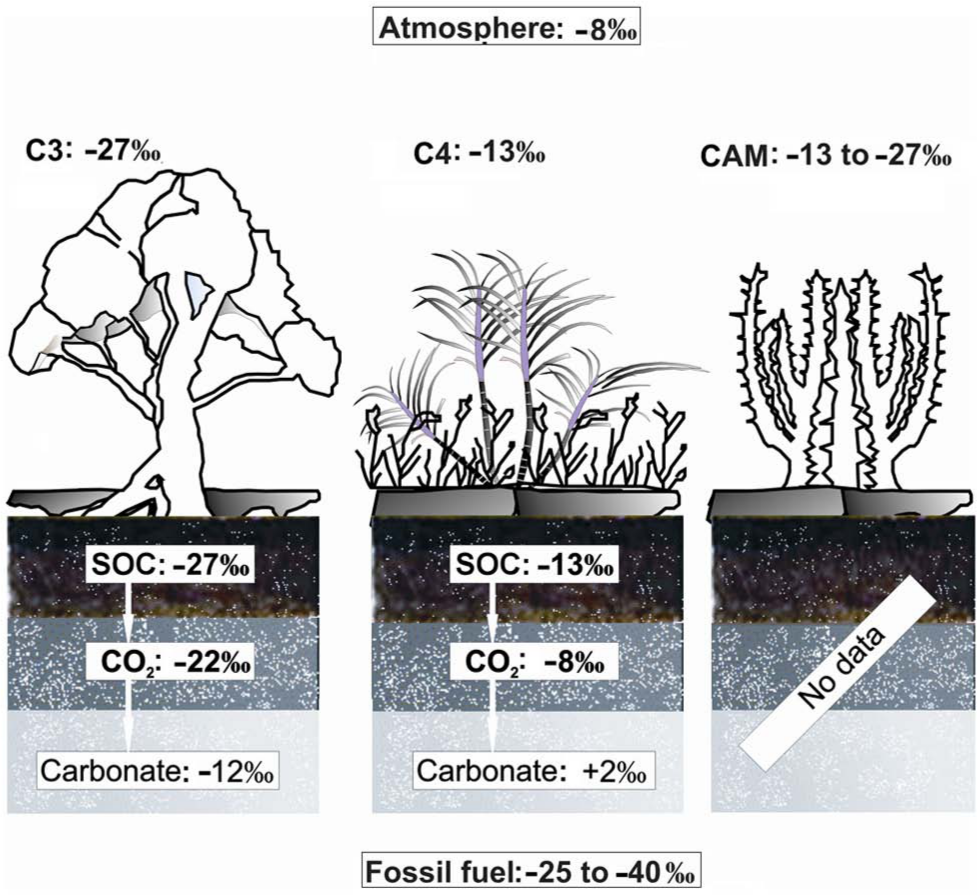
Typical values of carbon isotopic composition (δ13C) in various vegetation types, underlying soils, fossil fuel and atmosphere.
Based on earlier studies, the climate in the mainland Gujarat was found to be humid during the Late Pleistocene (Badam et al., 1986; Kale et al., 2003; Laskar et al., 2010) and the pre-industrial era climate was established prior to ~3 ka (Prasad et al., 2007). However, for the last 3 ka paleoclimate data are missing. Recently, based on a preliminary investigation using stable isotopes in a sediment profile (Kanjeta cliff section), we proposed that the present-day climate in Gujarat was established sometimes prior to ~2.1 ka (Laskar et al., 2010). Now we explore this further using sedimentary carbonates and organic matters from five more sites (Dadhal, Sengur, Dhamlai, Motalimatawada and Lohara) in the lower Narmada valley.
Our objectives are: (1) to estimate the time frame of deposition of the youngest alluvial sediments occurring at the surface up to a depth of a couple of meters, (2) to reconstruct paleoclimate and paleovegetation of the region during the late Holocene (last ~3 ka BP) using δ13C in coexisting carbonates and organic carbon, and δ18O in carbonates and (3) to determine factors controlling the isotopic composition of oxygen in sediment carbonates.
Climate and sediment characteristics of the study area
The Narmada river originating at the Amarkantak hills of Madhya Pradesh, Central India (~1150 m a.s.l.), passes through rocky areas of late Cretaceous–Eocene basaltic lava flows (part of the Deccan Trap) and travels about 1300 km westwards before draining into the Gulf of Cambay (Chamyal et al., 2002). In its lower course (Figure 2), the river passes through the alluvial plains that have overlying Quaternary sediments, mostly sand and silt. The sediments have a maximum thickness of ~800 m and are dominated by overbank deposits (Bhandari et al., 2005). Above this alluvial plain facies, there exists a reddish brown paleosol of thickness 4–5 m, formed between 15 and 10 ka BP in a comparatively wetter climate (Laskar et al., 2010). The overlying, stratified sediments forming the valley-fill terrace were deposited in the late Holocene, during historic and paleoflood events (Chamyal et al., 1997; Kale et al., 2003; Raj, 2008; Sukumaran et al., 2012). Instrumental weather records show several flood events since 1887
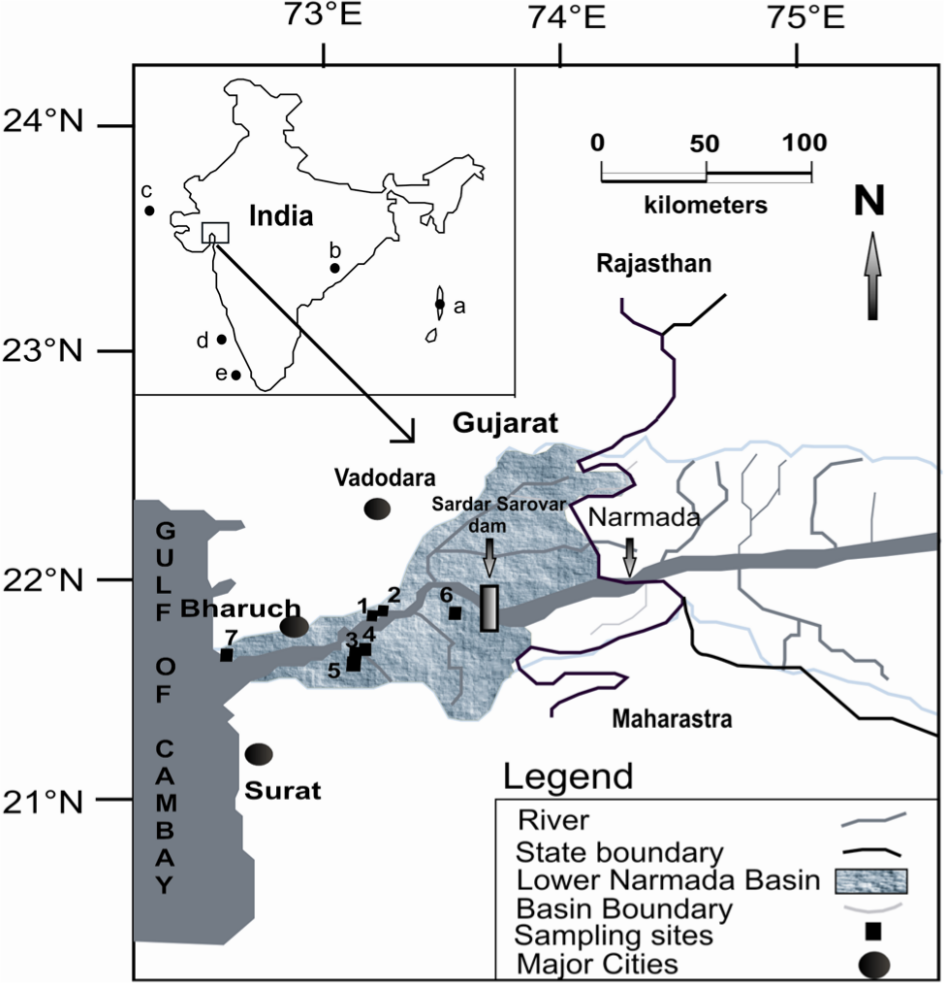
Map of western India showing sampling sites. 1: Kanjeta-1; 2: Kanjeta-2; 3: Dadhal; 4: Sengpur; 5: Dhamlai village; 6: Motalimatawada forest; 7: Lohara. Inset shows a map of India with location of other paleomonsoon proxy records which are compared with the present results: a: Laskar et al., unpublished data (2011) using stalagmite δ18O; b: Yadava and Ramesh (2005) using stalagmite δ18O; c: von Rad et al. (1999) using varve sediments; d: Tiwari et al. (2006) using foraminiferal δ18O; e: Chauhan et al. (2009) using foraminiferal δ18O.
Soils in the uppermost Holocene alluvial deposits are weakly developed inceptisols without any observable diagnostic horizons. They are calcareous in nature, developed in transported alluvium, derived from the trappean rocks. Figure 3 shows two cliff sections of the Narmada River at Kanjeta and Lohara. Details of the soil classification at these sites are discussed elsewhere (Laskar, 2012). The carbonates are produced in situ, formed during pedogenesis and are yet to form nodules. The pedogenic origin of carbonates in the Lower Narmada Valley has been discussed elsewhere (Hedge and Switsur 1973; Khadkikar et al., 2000; Merh and Chamyal, 1997). The analysis was carried out on fine carbonates, most of which were not distinguishable by the naked eye. The source of organic carbon is mainly the vegetation present during pedogenesis, though the chance of percolation of recent organic material cannot be ruled out completely. More details on the topography, physical stratigraphy, geomorphologic settings, sediment types and their origin can be found elsewhere (Bhandari et al., 2005; Chamyal et al., 1994, 1997, 2002).
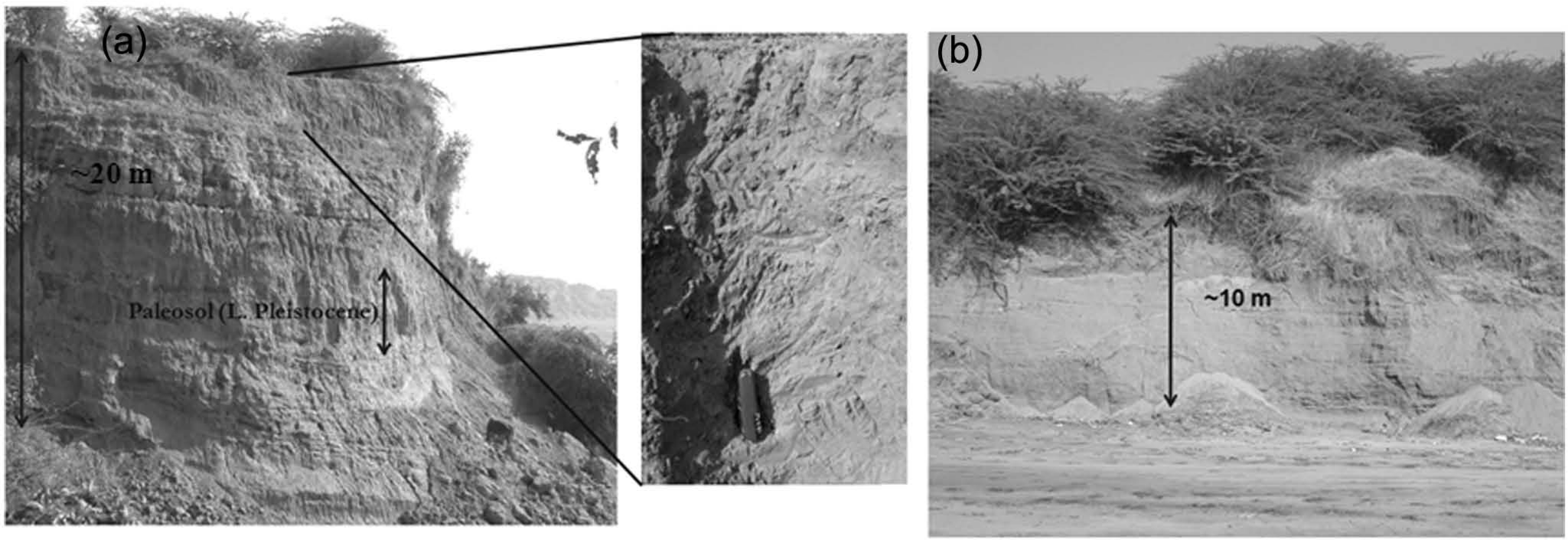
(a) Kanjeta cliff-section before sample collection. A paleosol layer dated back to 15–10 kyr BP (Laskar et al., 2010) is visible at a depth of 10–15 m. (b) Lohara cliff section at Narmada Estuary.
The modern climate of the region is semi-arid to subhumid, with a mean annual rainfall of ~900 mm that occurs mainly during June to August due to the southwest monsoon. The warmest month’s maximum and coldest month’s minimum temperatures are, respectively, 44.8° and 4.8°C. The climatological parameters are obtained from the nearest meteorological site Baroda (22°18′N 73°15′E), about 70–100 km away from the study sites (India Meteorological Department, 1999). The elevation of the study sites varies from a few meters at Lohara to ~150 m at the Motalimatawada reserve forest, Rajpipla. Samples were collected from all sites as bulk sediments at 10 cm intervals from cliff sections and using an auger on plains, packed in clean plastic bags and brought to the laboratory. For the radiocarbon dating of organic carbon, samples were collected from the top, middle and bottom of each section. Along with sediments, various types of vegetation (grass, shrub and wood) were also collected at each site. Details of the individual sites, vegetation cover, soil types and carbon contents are given in Table 1.
Location, soil type, vegetation, carbon content and δ13C values of the surface vegetation in all the sites.
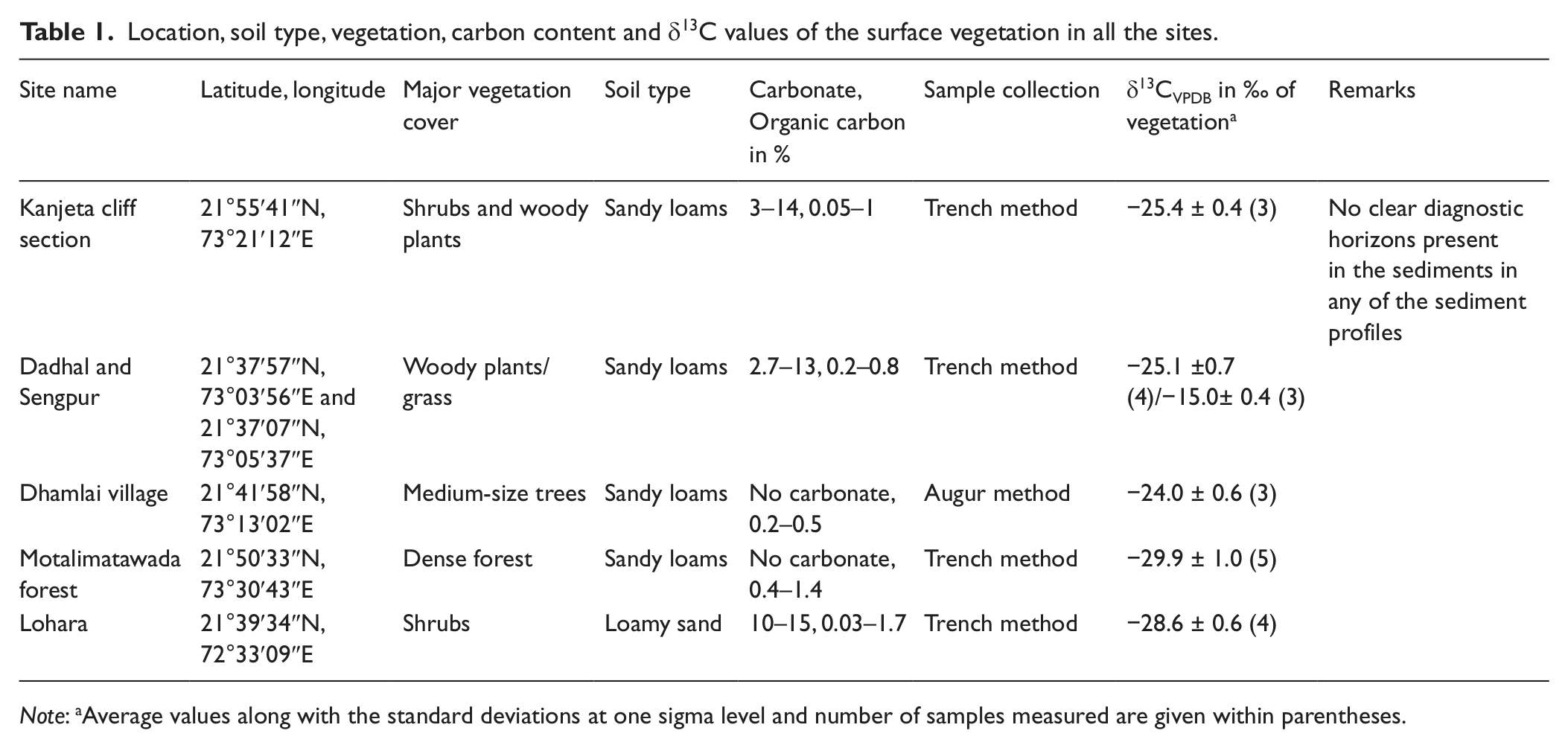
Note: aAverage values along with the standard deviations at one sigma level and number of samples measured are given within parentheses.
Materials and methods
Stable isotope analysis
For stable carbon and oxygen isotopic analysis of pedogenic carbonates, dried sediment sample rich in carbonate (~5 mg CaCO3) was put in a glass tube, evacuated and reacted with 100% orthophosphoric acid at 25°C for about 8 h. The CO2 produced was purified by pumping it through two traps containing alcohol-liquid nitrogen slush (−80°C) to freeze moisture and other condensable gases and two liquid nitrogen traps (−196°C) to freeze CO2. Pure CO2 was transferred to a high vacuum bottle and analyzed using a stable isotope ratio mass spectrometer (Europa Scientific GEO 20-20) for δ13Ccarb and δ18Ocarb at Physical Research Laboratory Ahmedabad. To determine the δ13Coc, a small quantity (~1 g) of well mixed sample was treated with 10% HCl for ~8 h to remove CaCO3, washed with distilled water to obtain neutral pH, dried and heated at 800°C along with CuO powder and silver foil in a small quartz tube (inner diameter: 7–8 mm) for 1 h. The CO2 evolved was purified cryogenically as described for carbonate and analyzed in the mass spectrometer. The concentration of organic carbon was measured by expanding the CO2 in a precalibrated volume with an attached pressure gauge. The precision of concentration measurement was better than 0.1%. Isotopic composition was expressed as δ13C and δ18O in parts per thousand (‰) relative to the Vienna Pee Dee Belemnite (VPDB) standard, where

Rsam and Rstd refer to 13C/12C or 18O/16O ratio in the sample and standard, respectively. The external precision for carbonates, calculated using a secondary laboratory standard was ± 0.1‰ for δ13C and ± 0.2‰ for δ18O (Laskar, 2012; Yadava and Ramesh, 1999). The laboratory standard is a pure calcium carbonate obtained from Makarana Marble of Rajasthan. For reproducibility check, we did a few repeat analyses of some samples and no significant difference was observed between replicates. The accuracy of the measurements for carbonates is checked occasionally by running an international standard (NBS 19 supplied by IAEA), the long-term averages (5 years) of which for δ13C and δ18O are 1.95 ± 0.08‰ and −2.3 ± 0.1‰, respectively, with respect to VPDB (error at 2 sigma level). The accuracy of measurements for organic carbon is checked using international standards ANU Sucrose (IAEA-CH-6) and NBS Oxalic acid II, the obtained δ13C values of which are −10.5 ± 0.1 and −17.7 ± 0.1‰, respectively with respect to VPDB.
Radiocarbon dating
For radiocarbon dating, about 100 to 200 g of sample, after removal of rootlets and pebbles, was treated with 10% HCl for ~8 h to remove carbonates, washed several times with distilled water to make it pH-neutral, and dried in air at 70°C for a couple of days. The dry sample was combusted at 900°C under a continuous flow of pure oxygen at a pressure of 30–40 Torr for 1 h. The CO2 produced was purified chemically and cryogenically to prepare benzene, the radioactivity of which was counted in a liquid scintillation counter (Quantulus 1220) at Physical Research Laboratory Ahmedabad following the standard convention (Laskar, 2012; Stuiver and Polach, 1977; Yadava and Ramesh, 1999;). The radiocarbon ages were calculated using the relation

where Ao and A are the standard and sample activities, respectively. The ages were expressed as years before present (BP). The percent modern carbon (pMC) was calculated using the relation (Stuiver and Polach, 1977; Yadava and Ramesh, 1999):

The radiocarbon ages were corrected for fractionation using δ13C values, measured on a small aliquot of CO2 before benzene synthesis. For samples containing bomb carbon (pMC ≥ 100%), radiocarbon ages were considered to be modern. The radiocarbon dates were converted into calendar ages using calibration programme Calib 6.1.0 and IntCal09 (Reimer et al., 2009; Stuiver and Reimer, 1993).
Results
Chronology of the sediments
Radiocarbon ages (in yr BP) of organic carbon at various depths are shown in Figure 4 and in Table 2. Bomb carbon (pMC>100%) is present in the surface sediments (0–10 cm). The dates in between two measured values are obtained by linear interpolation. The uncertainty in the radiocarbon ages varies between 5% and 25% (Figure 4 and Table 2).
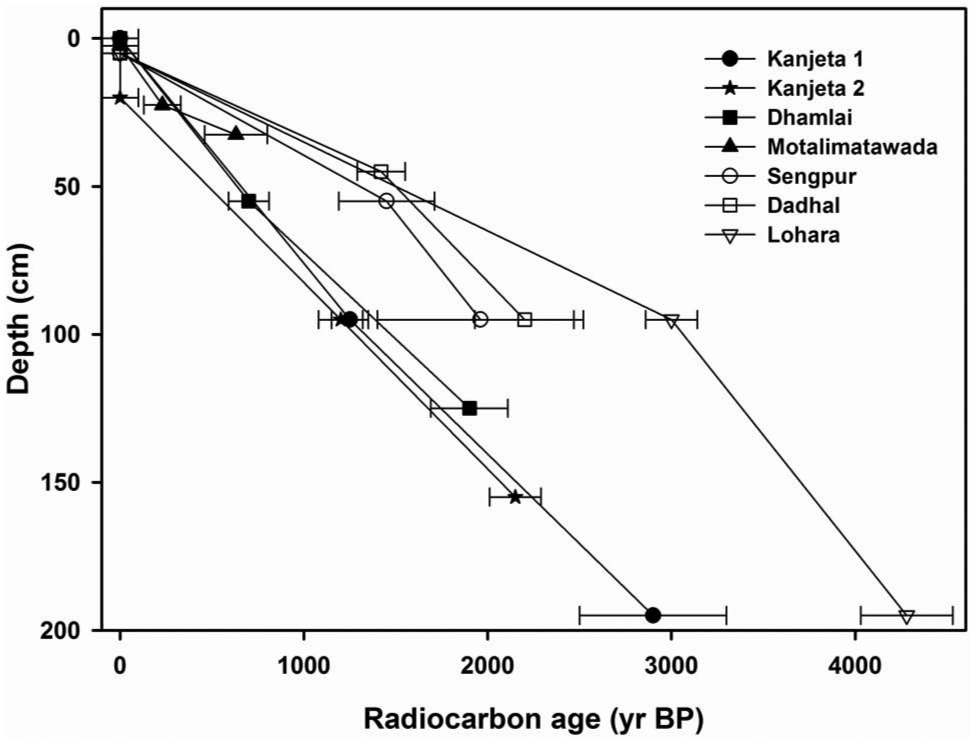
Radiocarbon ages of soil organic carbon at various depths. The 14C content at the top sediment layers (0–10 cm) is measured only in three profiles (Kanjeta 1, Dadhal and Dhamlai) and found modern with significant bomb carbon content (pMC>100%) and is assumed similar for all other sites. For the subsurface layers, the ages are calculated based on actual 14C measurements in all the profiles. The errors are at one sigma level.
Radiocarbon ages and corresponding δ13Coc and calendar ages of the samples at various depths.
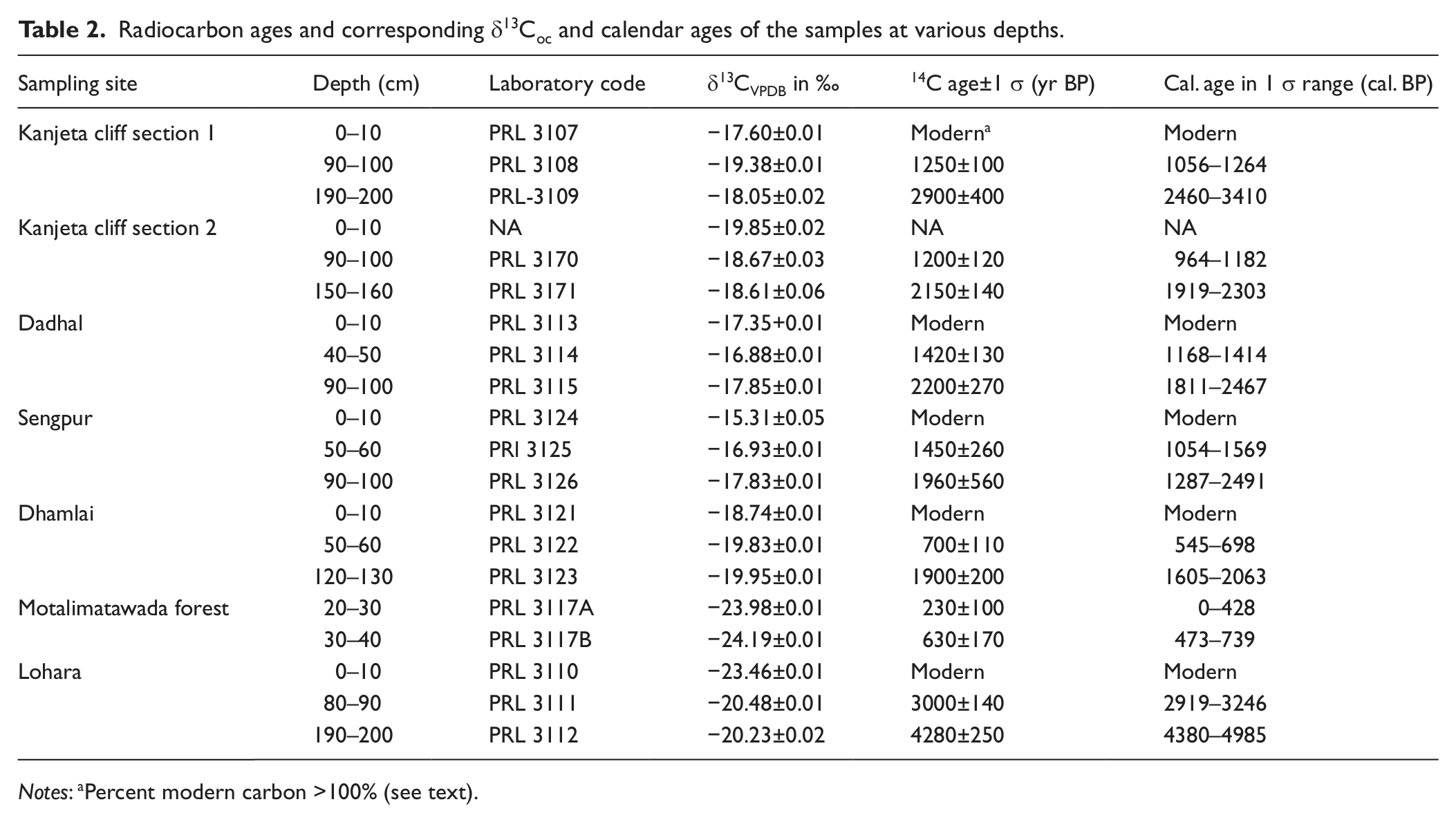
Notes: aPercent modern carbon >100% (see text).
Organic carbon content and stable isotopic composition
Variations of organic carbon content with depth are shown in Figure 5a. The proportion of organic carbon is low (<1%) in all the profiles except at some of the upper most sediment layers. Figure 5b shows the depth profile δ13Ccarb, the values fall in a narrow range from −5 to −8‰, except at Lohara (a cliff section at the Narmada estuary). δ13Ccarb at Lohara remains close to zero with little change throughout the profile. A substantial variation is observed in δ18Ocarb almost in all the profiles (Figure 5c). At Lohara value of δ18Ocarb is close to zero throughout the profile. Figure 5d shows depth profile δ13Coc. The δ13Coc at Lohara, like δ13Ccarb and δ18Ocarb, shows a deviation from δ13Coc in other profiles and they fall in the range of −20 to −22‰. The present-day vegetation in almost all cases is shrubs and scattered woody plants (C3) except at Dadhal and Sengpur where tropical grasses (C4) are also observed. δ13C values of shrubs and woody plants range between −24 and −30‰ and it is −15‰ for grasses (Table 1). Figure 6a and b show the variation in δ13Ccarb and δ18Ocarb with radiocarbon ages. There is hardly any variation in δ13C during the last ~3 kyr (excluding Lohara). δ18O, however, shows a significant deviation at ~1.3 and ~2.1 ka almost in all profiles. The difference between δ13Ccarb and δ18Ocarb (Δ) is shown in Figure 6d. Differences, observed in almost all cases but one, lie between −11 and −13‰. Figure 7 shows a scatter plot between δ13Ccarb and δ18Ocarb. The data points from Lohara cluster in the carbonates precipitated under marine influence.
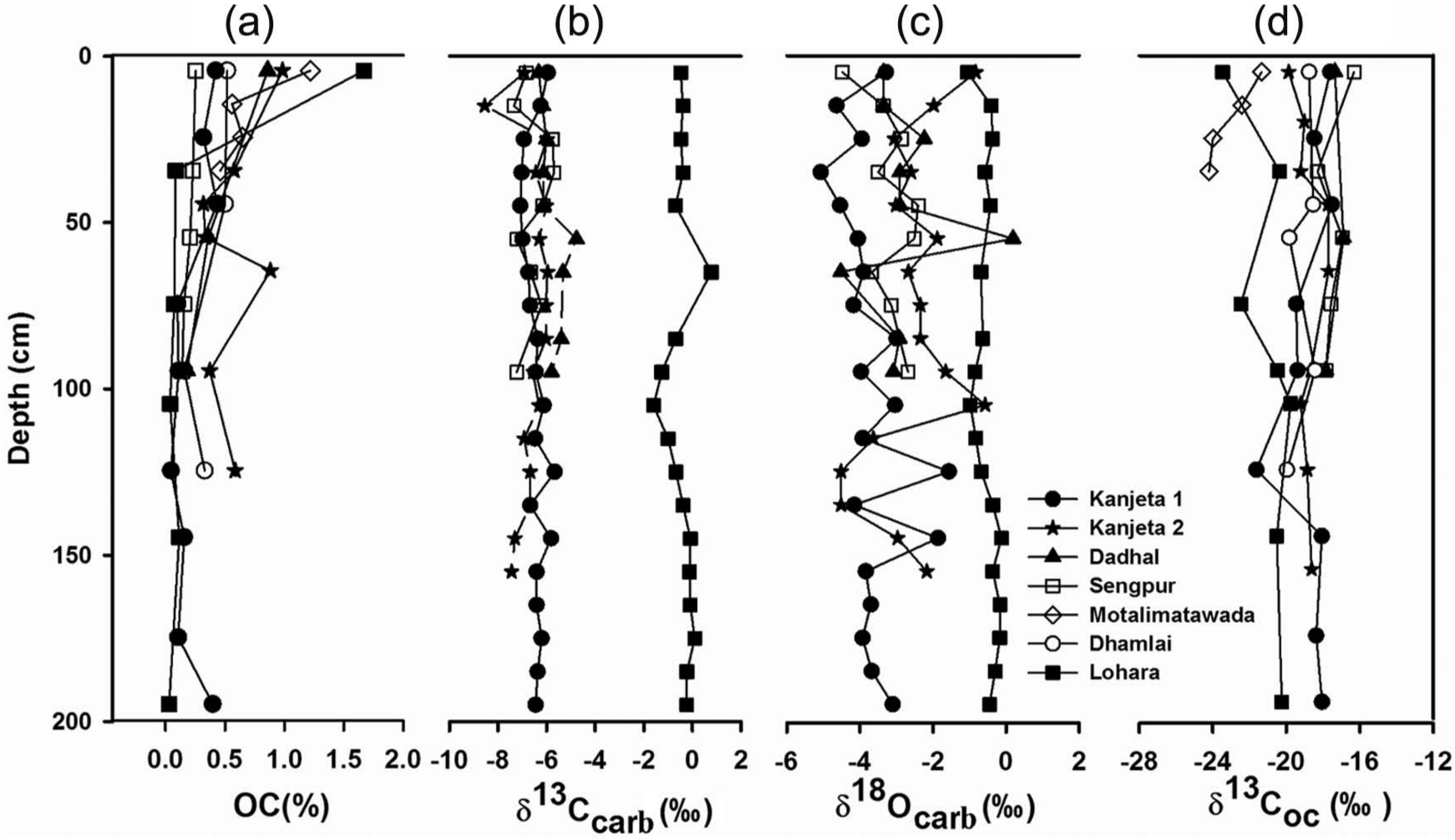
Depth profiles of sediment (a) organic carbon content, (b) δ13C in carbonate, (c) δ18O in carbonate and (d) δ13C in organic matter.
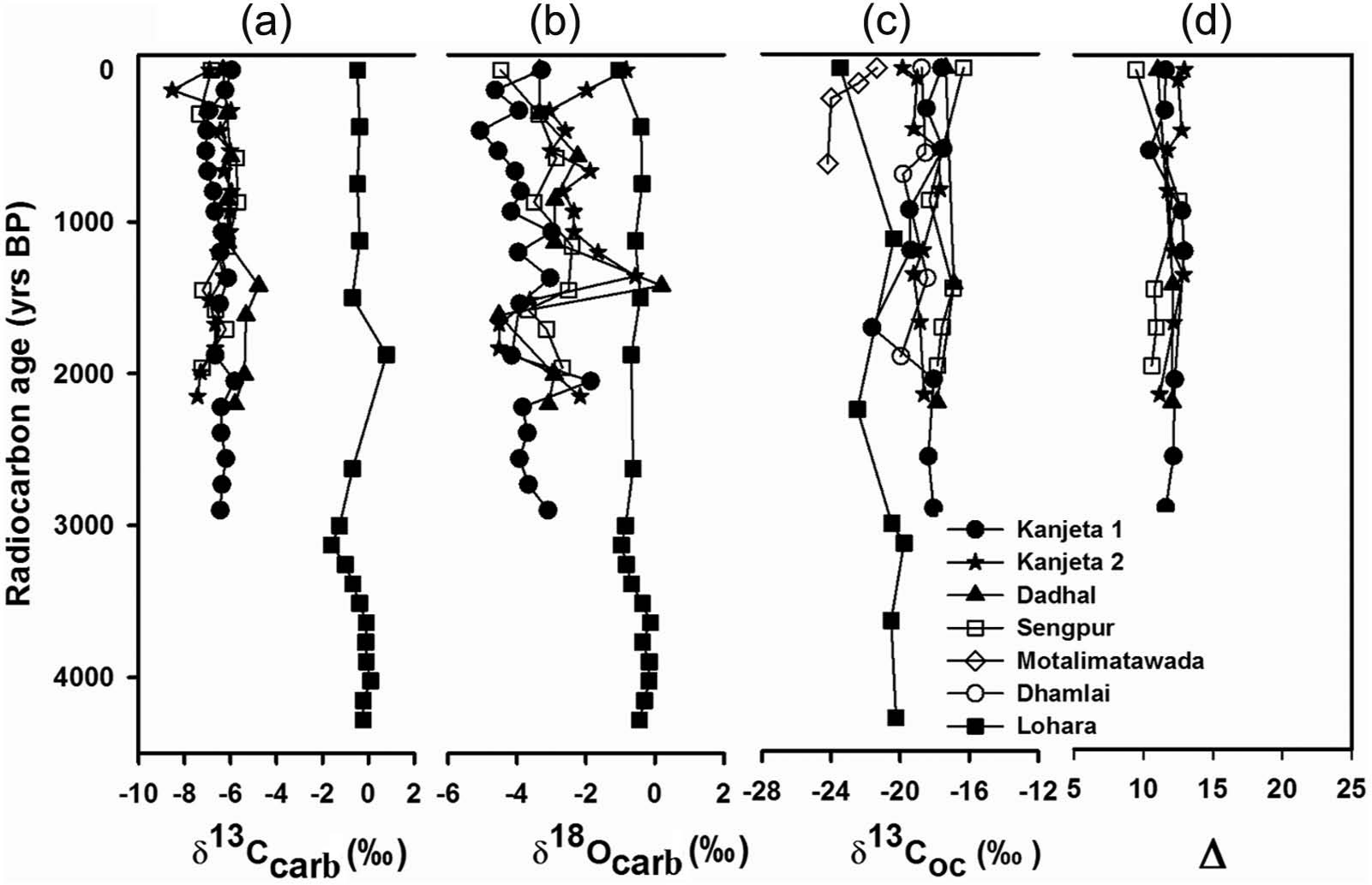
Variation in stable isotopic composition with radiocarbon ages in the sediment profiles: (a) δ13C in carbonate, (b) δ18O in carbonate and (c) δ13C in organic matter. (d) Difference between δ13C values in carbonate and organic carbon (Δ= δ13Ccarb − δ13Coc).
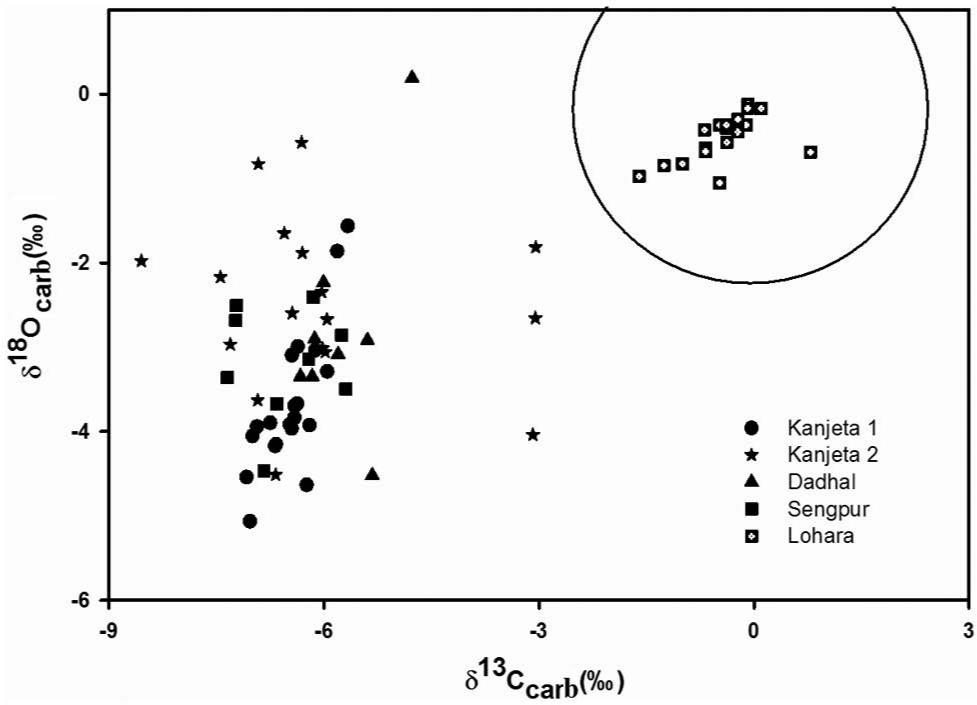
Scatter plot between δ13C and δ18O for the studied sediment carbonates. The encircled region shows the approximate range of δ13C and δ18O of marine carbonate (Zeebe and Wolf-Gladrow, 2003). The carbonates from Lohara plot within the field of marine values.
Discussion
Chronology of the sediments
All the sediments in the study area are exposed and a systematic study of their chronology would be important to understand their geomorphic evolution in the region. Sediments, up to a depth of 200 cm were deposited in the late Holocene (0–3000 yr BP), probably during large historic and paleofloods in the Narmada basin, as suggested by Kale et al. (2003). There is a gradual increase in the ages in all the sediment profiles with depth without any reversal indicating their systematic deposition and non-monogenetic origin. The uppermost sediment layers up to ~10 cm contain bomb carbon indicating that the origin of a significant fraction of the organic matter deposited after 1950
Pedogenic origin of carbonate
There is a 13C enrichment of about 10‰ at 25°oC during the precipitation of carbonates from CO2 (Bottinga, 1969). Again the soil CO2 is enriched in 13C by ~4.4‰ compared with organic carbon because of differences in the diffusivities of the two isotopic species of carbon (Amundson et al., 1998). Therefore, carbonates precipitated under isotopic equilibrium with soil CO2 should have 13C enriched by ~14.4‰ with respect to organic carbon. The difference between carbonate and organic carbon δ13C, observed here, varies between 11 and 13‰ in most cases, smaller than expected (~14.4‰ at 25°C). This could be due to the discrimination against 13C during microbial decomposition. It is believed that when microbes decompose organic matter, they act preferably on isotopically lighter molecules. As a result, the residual biomass may get enriched in 13C up to 3–5‰ (Accoe et al., 2002; Ehleringer et al., 2000; Wynn et al., 2006) while the soil CO2 is likewise depleted (Amundson et al., 1998). Carbonates precipitated from CO2, depleted in 13C, could possibly give rise to this mismatch. Kinetic fractionation during calcite precipitation always leads to 13C enrichment in the residual reservoir, and hence should increase the difference between the two δ13C values, but our observations do not support this. Also the possibility of kinetic fractionation can be ruled out because the carbonate in soils is in isotopic equilibrium with CO2 since the rate of change in p(CO2) in soils is much slower than the rate considered for equilibrium isotopic fractionation (Turner, 1982). Other possibilities for the sources of carbon during calcite precipitation are the atmosphere and limestone bedrock. The mixing of atmospheric CO2 depends on the soil respiration rate. At the higher respiration rate (>1 × 10⁻⁵ mole/cm2 per yr), the contribution from atmospheric CO2 is insignificant below a depth of 10 cm (Cerling, 1984). Contribution from atmospheric CO2 (δ13C ~ −8‰) or limestone bedrock (δ13C ~ −0‰) during carbonate precipitation are not significant as they should increase the difference between δ13C of organic carbon and soil carbonates. Some other less-understood fractionation pathways that could cause this mismatch are reported by Monger et al. (2009).
To check if the origin of carbonate is the soil CO2, we compared δ13C values of organic and carbonate carbon with the laboratory simulation results (Bottinga, 1969). Isotopic fractionation lines between δ13C of coexisting organic carbon and carbonate are drawn for various temperatures with which the present data are compared (Figure 8). Most of the data points lie between 25 and 40°C, which is the temperature of the warmer season in the region when the majority of the carbonates precipitate. This indicates that the source of the carbonates is the soil CO2 from root respiration and microbial decomposition of organic carbon. This also acts as evidence against the diagenetic alteration of the carbon isotopes in the carbonates after their formation. In the nearby semi-arid region of Gujarat, pedogenic origin for carbonates was reported by Sareen and Tandon (1995) in the Sabarmati basin and Gibling and Tandon (1997) in the Rupen river basin. In the Lower Narmada valley, the pedogenic origin of carbonates is discussed in some previous studies (e.g. Hedge and Switsur, 1973; Khadkikar et al., 2000; Merh and Chamyal, 1997). Based on morphology, dimensions and the distribution of microscopic features, Khadkikar et al. (2000) ruled out the possibility that they are products of floodplain accretion. Climate fluctuation and their control of the alluvial fan in the Lower Narmada valley were reported by several others also (e.g. Chamyal et al., 1997; Prasad et al., 2007).
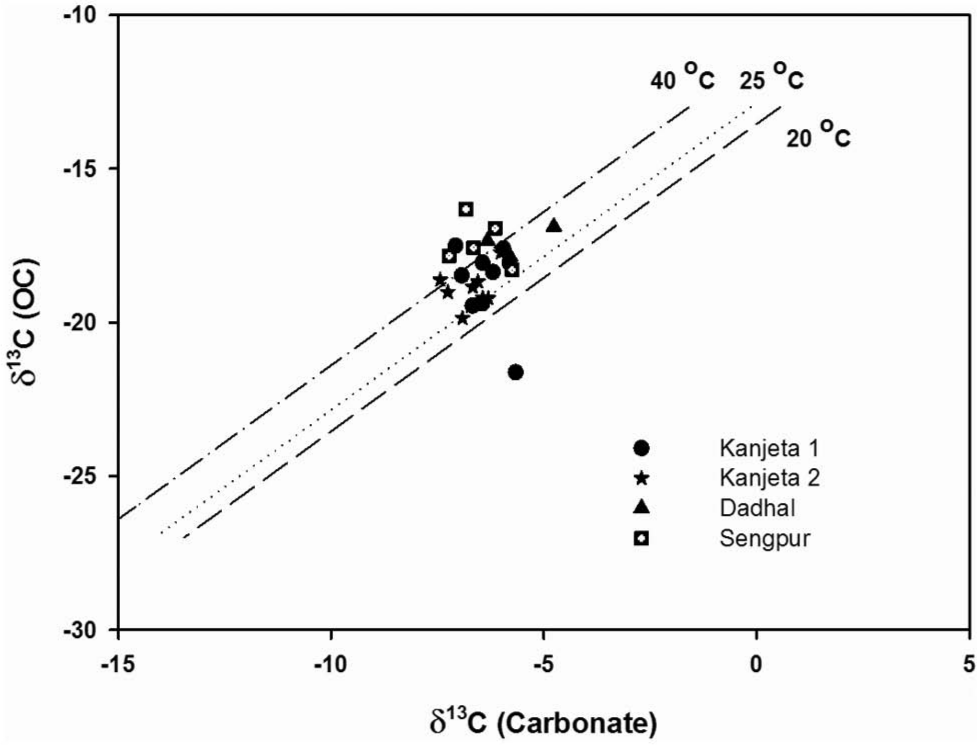
Carbon isotopic compositions of coexisting organic matter and pedogenic carbonate. Straight lines are drawn based on laboratory experiments by Bottinga (1969) to obtain fractionation factor (α) during carbonate precipitation at different temperatures. Most of the points from the present study fall between the 25 and 40°C lines, the warm season temperature of the region. Only data for authigenic carbonates are plotted here.
Paleoclimate reconstruction
Lack of significant variation in δ13Ccarb and δ13Coc in the sediment profiles indicate that there was little change in the vegetation type for the last ~3 kyr, except very recently. The present-day vegetation in the region is quite different from that during the last ~3 kyr. It was mixed C3-C4 during the late Holocene. At present, it is dominantly C3 with average δ13C in most cases ranging from −24 to −30‰, except at two sites where C4 grasses are also present with average δ13C values of −15‰ (Table 1). The recent change is probably due to anthropogenic disturbance which caused replacement of C4 grasses by shrubs and woody plants. Meteorological data show that there was no overall change in the mean values of temperature and precipitation in the region during the last ~150 years. Therefore the shift in vegetation is unlikely a result of a change in precipitation or temperature. The region is very much affected by industrial development. The grasses must have been destroyed and trees planted, along with the natural flourish of seasonal and non-seasonal herbs and shrubs. Shifting of grassland (C4) to woody forests (C3), because of anthropogenic disturbances is also reported by Caner et al. (2007) in southern India. The δ13Ccarb and δ18Ocarb at Lohara remain close to zero throughout the profile. This is probably due to marine influence during carbonate deposition. A difference of ~20‰ between δ13Ccarb and δ13Coc at Lohara is not possible for modern carbonates precipitated under isotopic equilibrium without the influence of an external source (Cerling, 1984). The possible external source is marine influence and is also supported by δ13Coc as it mostly lies between −20 and −26‰ (Bentaleb et al., 1998).
In the tropics, δ18Ocarb is useful as a rainfall indicator, as there is an ‘amount effect’: the higher the rain, the lower the isotopic composition, about −1.5‰ for every 100 mm increase in the monthly precipitation (Dansgaard, 1964; Yadava and Ramesh, 2005). Our observations over several years in the recent past reveal the magnitude of the amount effect in Gujarat to be −1.8‰ per 100 mm increase (Yadava et al., unpublished data, 2012). Figure 6b shows that around 1.3 and 2.1 ka BP, the δ18Ocarb was significantly higher, probably a result of weakening of the southwest monsoon. Evaporation due to relatively dry conditions and/or higher temperature is another possibility. Also the marine influence during this time could shift δ18O towards more positive values, but this does not show up in δ13Ccarb, although higher soil respiration could suppress the contribution from marine carbonate. We reconstructed the southwest monsoon for the last ~4000 years using δ18O of stalagmites from the Andaman islands(Laskar et al., unpublished data, 2011) and observed a strong reduction in the southwest monsoon during 2.0–1.8 kyr BP. Yadava and Ramesh (2005), based on stalactite δ18O from central India, reported a reduction in monsoon of ~33% around 2 ka. von Rad et al. (1999) reconstructed a high resolution paleomonsoon record using variations in the thickness of varve sediments from the northeastern Arabian sea. The two relatively arid phases around ~2.1 and ~1.3 ka BP (Figure 6b) are well documented in varved sediments and are attributed to a weaker southwest monsoon. The reduction in southwest monsoon strength during these periods is also well documented in the foraminiferal oxygen isotopic records (Chauhan et al., 2009; Tiwari et al., 2006). Considering all these evidences, we conclude that the enrichment in δ18Ocarb around ~2.1 and ~1.3 ka BP is due to weaker southwest monsoon.
Conclusions
The uppermost alluvial sediments to a depth of 200 cm exposed in the Lower Narmada valley are late-Holocene deposits, probably accumulated during large historic and paleofloods. Stable isotope based paleoclimate study from the Lower Narmada valley has shown that the climate was semi-arid, established prior to ~3 ka BP, and the vegetation was of mixed C3-C4 type. The present vegetation is mainly shrubs and scattered woody plants (C3) at all sites except Dhadal and Sengpur where grasses (C4) are also present. The change in vegetation in the region is probably due to anthropogenic disturbance in recent time, C4 grasses have been replaced in most cases by C3 shrubs and woody plants. Carbonates present in the sediments are authigenic, formed during pedogenesis and are useful for paleoclimate reconstruction. The marine origin of carbonates and organic carbon is observed at Lohara, a cliff section of the Narmada estuary. Oxygen isotopes of sediment carbonates appear to be useful for paleomonsoon study in the region as their isotopic composition is most likely governed by the amount effect. Two relatively arid phases are observed around 2.1 and 1.3 ka BP and are consistent with a wide variety of proxy records from different geographical locations affected by the southwest monsoon.
Footnotes
Funding
We thank ISRO-GBP for funding. One of the authors (NS) thanks the DST for providing funds under the project DST no. SR/S4/ES-21/Narmada Window/P5.