



Abstract
In order to understand the impact of hydrological changes of the Amazon River on sedimentary organic matter (OM) composition in Amazonian floodplain lakes, three sediment cores were collected from Lake Maracá (eastern Amazonia) along a transect from the Amazon River main channel to inland. The cores were dated with 14C accelerator mass spectrometry (AMS) and studied by x-ray, mineralogical composition, total organic carbon (TOC) and total nitrogen (TN) contents, stable isotopic composition of TOC and TN (δ13COC and δ15N) and glycerol dialkyl glycerol tetraether (GDGT) distributions. Two distinctive sedimentary depositional phases were identified based on the mineralogical composition and the geochemical characteristics of sedimentary OM. During the early–mid Holocene (~13,000–3200 cal. yr BP), low values of TOC followed by a break in sedimentation suggest a complete drying of the lake caused by drier climatic conditions. Between 3600 and 3200 cal. yr BP, this lake received a reduced influence of the Amazon River main stem. This induced a predominant deposition of C3-plant-derived OM supplied by surface erosion and runoff of acidic soil. A distinct connection of Lake Maracá to the Amazon River began after 3200 cal. yr BP and became permanently established, with its modern characteristics, at 1880 cal. yr BP. This change provoked an increased contribution of phytoplankton and semi-aquatic C4 macrophytes as well as C3 plant derived more alkaline soil OM to the sedimentary OM pool. Consequently, our study demonstrates that the source of sedimentary OM in the Amazon floodplain lakes was strongly linked to the Amazon River hydrodynamics during the late Holocene.
Keywords
Introduction
The Amazon Basin covers more than one-third of the South American continent, and its discharge contributes almost one-fifth of the total discharge of all rivers of the world (Mollinier et al., 1997). Due to the flat topography, the high rainfall and the pronounced seasonality of precipitation, large areas of the Amazon Basin are periodically flooded during rainy seasons (Junk, 1997). The flooded areas cover 44% of the entire Amazon Basin (Guyot et al., 2007) and comprise one of the largest wetlands in the world (Melack et al., 2004). The Amazonian floodplains contain thousands of lakes, which are connected temporarily or permanently to the main river channel. These lakes are formed by river water-level fluctuations, which cause the formation of bars and the accumulation of river-transported sediments by diffusive overbank flows and channelized flows (Dunne et al., 1998). Hence, large quantities of sediments (Maurice-Bourgoin et al., 2007; Mertes, 1994) and associated organic matter (OM; Moreira-Turcq et al., 2004) are accumulating in the floodplain lakes.
High-resolution climate records are essential in order to understand the driving forces of past climate changes (Jones et al., 2009). Lake sediment records with annual laminations are one of the prime candidates for obtaining such records (Brauer et al., 2008). Sediment cores recovered in the Amazonian lakes have also been widely used to study palaeoenvironmental and palaeoclimatological changes in the Amazon Basin during the Holocene (e.g. Absy, 1979; Behling and Hooghiemstra, 1999; Bush et al., 2007; Cordeiro et al., 1997; Mayle and Power, 2008; Sifeddine et al., 2001; Turcq et al., 1998). Such studies have provided evidence that the Amazon Basin repeatedly experienced relatively dry periods during the Holocene. Most of these studies have, however, been conducted in the lakes disconnected from the influence of the hydrological dynamics of the Amazon River. In contrast, little is known about the functioning of the Amazon floodplain lakes in association with climate change impacts on hydrology and thus sedimentary OM during the Holocene. Therefore, the aim of this study is to investigate changes in the hydrodynamics of the Amazon River as a response to climate changes through the study of the sedimentary OM composition during the late Holocene.
Study area
Lake Maracá is situated near the city of Monte Alegre on the southern bank of the Amazon River at 500 km from the mouth of the estuary (Figure 1). This lake represents an area of 50 km2, and during periods of high water-level, it is connected to the river main channel and with Comprido Lake (Moreira et al., 2013). During the period of low water-level, the lake is connected to the Amazon River only by small channels and no connection exists with the other lakes (Figure 1). The bedrock of the Terra Firme (i.e. unflooded upland) in the Maracá catchment area is the Cretaceous Alter do Chão Formation (Latrubesse et al., 2009), which has been subjected to intense long-term weathering processes (Irion, 1984). The main clay mineral delivered by Terra Firme creeks is predominantly kaolinite (Amorim, 2010; Behling et al., 2001; Guyot et al., 2007).
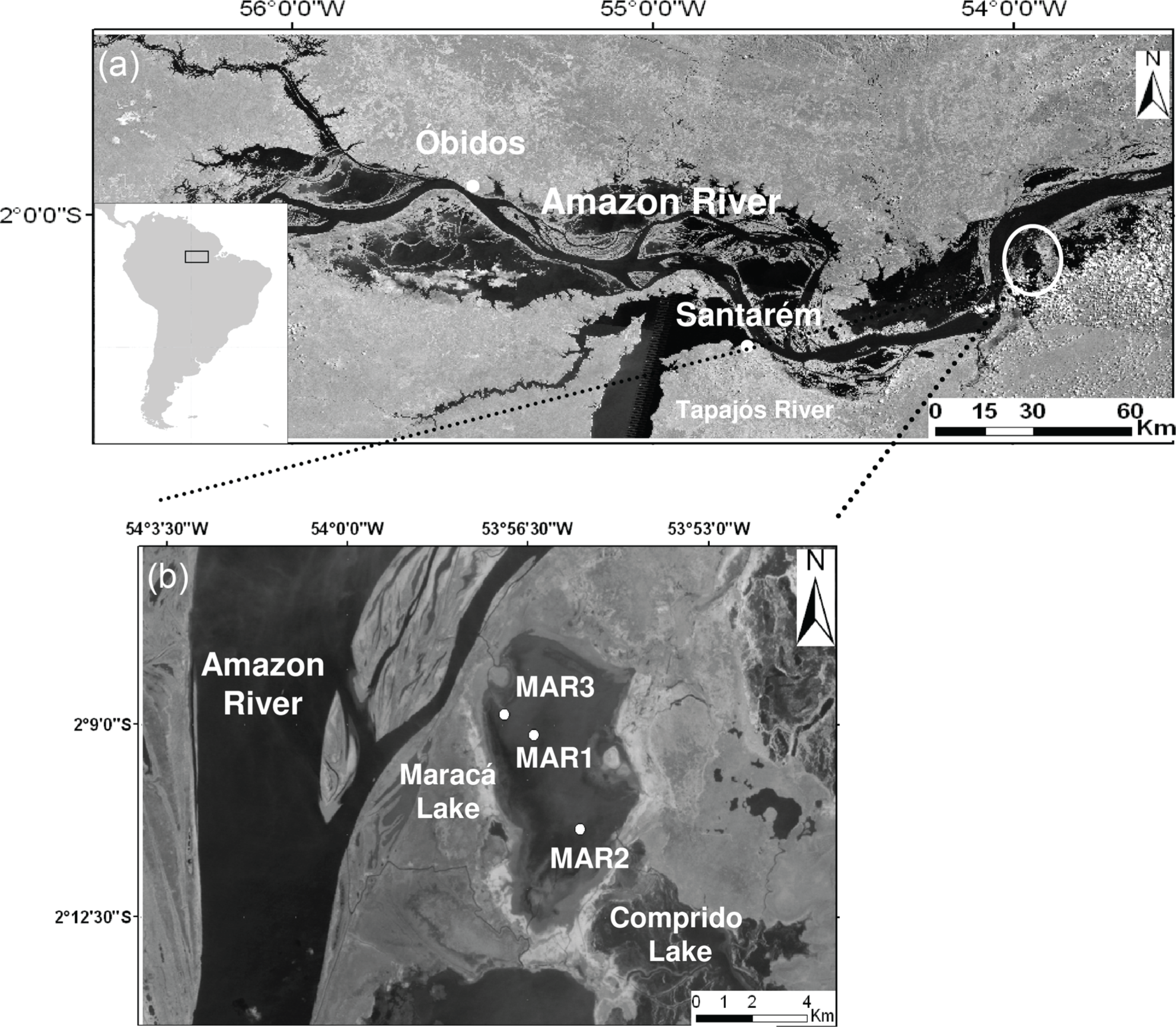
A satellite image showing (a) the lower Amazon basin with the location of Lake Maracá and (b) detailed sediment core sites.
The catchment area is characterized by a humid tropical climate without long dry periods. The annual mean precipitation is about 2200 mm, and the annual mean air temperature is about 27°C (Projeto Radambrasil, 1974). The lake is surrounded by a dense tropical rain forest (Terra Firme forest) in the southern bank, and a forest–savanna transition in the northern bank (Projeto Radambrasil, 1974). Around the lake, there are also pioneer formations (grasslands) with the predominance of Paspalum fasciculatum, Paspalum repens, Echinochloa polystachya (C4 plants) and Eichornia crassipes (a C3 plant).
Material and method
Sediment cores
Three sediment cores (MAR3, MAR1 and MAR2) along a transect from the Amazon River main channel to the inland were collected manually in Lake Maracá in January 2007 (Figure 1) at a water depth of approximately 2 m at all three core sites. Apparently, no differences in the depth occur along the transect. The cores were opened, described, photographed and submitted to x-ray analyses with the SCOPIX x-ray equipment in the Environnements et Paléoenvironnements Océaniques et Continentaux (EPOC) laboratory at the University of Bordeaux I (France). The x-ray images of the cores allow identification of sedimentary structures with high resolution. SCOPIX uses classical x-ray equipment (x-ray source: 160 kV, 19 mA), coupled with new radioscopy instrumentation (charge-coupled device (CCD) camera 756 × 581 resolution), connected to a computer for data acquisition and processing (Migeon et al., 1998). The processing software of this equipment displays the greyscale intensity logs, corresponding to x-ray densities.
Radiocarbon (14C) analysis
The 14C measurements were performed on total organic carbon (TOC) by an Artemis accelerator mass spectrometry (AMS) system based on a 3MV Pelletron from National Electrostatics Corporation (NEC; Middleton, WI, USA) at ‘Laboratoire de Mesure du Carbone 14’ (LMC14) – UMS 2572 (CEA/DSM CNRS IRD IRSN – Ministère de la Culture et de la Communication). Microscopic analyses are performed to remove possible contaminants. After that, the samples are treated with HCl 0.5 N at 80°C for 1 h to remove carbonates. The calibrated ages were obtained using the CALIB 6.0 available at http://radiocarbon.pa.qub.ac.uk/calib (Stuiver et al., 1998). The calibration curve used was IntCal09.14C. In order to obtain age–depth models, the software CLAM (Blaauw, 2010; current version 2.10.1) was used based on the linear interpolation (Blaauw, 2010).
Clay mineral analysis
Clay mineralogy was determined on the <2 µm granulometric fraction, obtained by size-fractionation of bulk samples in deionized water according to Stokes’ law. These compositions were investigated by x-ray diffraction (XRD) analysis, using a Siemens D500 diffractometer with Ni-filtered CuKα radiation operating at 40 kV and 30 mA. Oriented, air-dried, glycolated and heated (500°C for 3 h) samples were scanned from 2° to 15° (2θ) for 2 s, 0.02° intervals. To evaluate the quantitative variability of clays, the surface of each typical clay reflection was measured on the glycolated sample diffractogram and expressed as a percentage of the total diffracted surface, allowing comparison between samples.
Elemental and stable isotope analysis
Samples were analysed for TOC and total nitrogen (TN) contents and stable isotopic compositions of TOC (δ13COC) and TN (δ15N) with a C/N analyser (FISIONS NA-2000) connected to an isotope ratio mass spectrometer (Micromass Optima) at the University of California (Davis, USA). Samples were treated with 1 N HCl at 25°C for 12 h in order to remove carbonates prior to the analyses. The δ13Coc and δ15N values are reported in the standard delta notation relative to Vienna Pee Dee Belemnite (VPDB) and atmospheric N2 standards. The C:N mass ratios (calculated with the weight percentages of TOC and TN) was multiplied by 1.167 (the ratio of atomic weights of nitrogen and carbon) for converting to C:N atomic ratios. The analytical precisions (as standard deviation for repeated measurements of the internal standards) for the measurements were 0.1 mg/g for TOC, 0.05 mg/g for TN, 0.06‰ for δ13Coc and 0.13‰ for δ15N.
Glycerol dialkyl glycerol tetraether analysis
Briefly, freeze-dried samples were extracted with an Accelerated Solvent Extractor (Dionex ASE 200) using a mixture of dichloromethane (DCM) and methanol (MeOH; 9:1 v:v). The extract was separated into apolar, ketone and polar fractions over an Al2O3 column using hexane:DCM (9:1 v/v), hexane:DCM (1:1 v:v) and DCM:MeOH (1:1 v:v), respectively. The polar fractions (DCM:MeOH, 1:1 v:v) were analysed for glycerol dialkyl glycerol tetraether (GDGT) according to the procedure described by Schouten et al. (2007). The polar fractions were evaporated to dryness under nitrogen, re-dissolved by sonication (5 min) in hexane:propanol (99:1 v:v) and filtered through 0.45 µm polytetrafluoroethylene (PTFE) filters. The samples were analysed using high-performance liquid chromatography–atmospheric pressure positive ion chemical ionization–mass spectrometry (HPLC-APCI-MS). GDGTs were detected by selected ion monitoring of their (M+H)+ ions (dwell time: 237 ms) and quantification of the GDGT compounds was achieved by integrating the peak areas and using the C46 GDGT internal standard according to Huguet et al. (2006).
The branched and isoprenoid tetraether (BIT) index, the degree of cyclization (DC) and the cyclization ratio of branched tetraethers (CBT) were calculated according to Hopmans et al. (2004), Weijers et al. (2007) and Sinninghe Damsté et al. (2009), respectively:


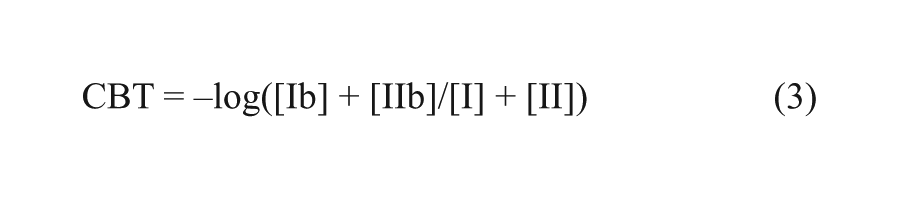
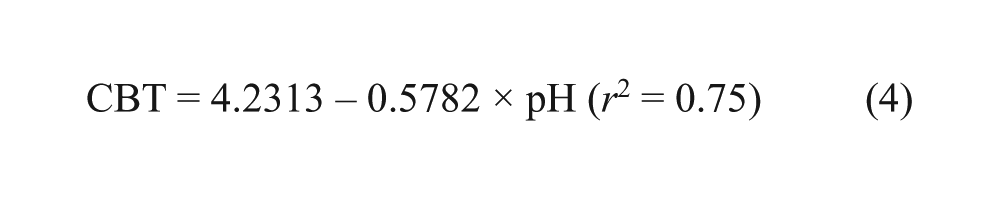
The roman numerals refer to the GDGTs indicated in Appendix 1. I, II and III are brGDGTs and IV is the isoprenoid GDGT, crenarchaeol. For the calculation of pH, the regional soil calibration for the Amazon Basin was used (Bendle et al., 2010):
Results
Lithology
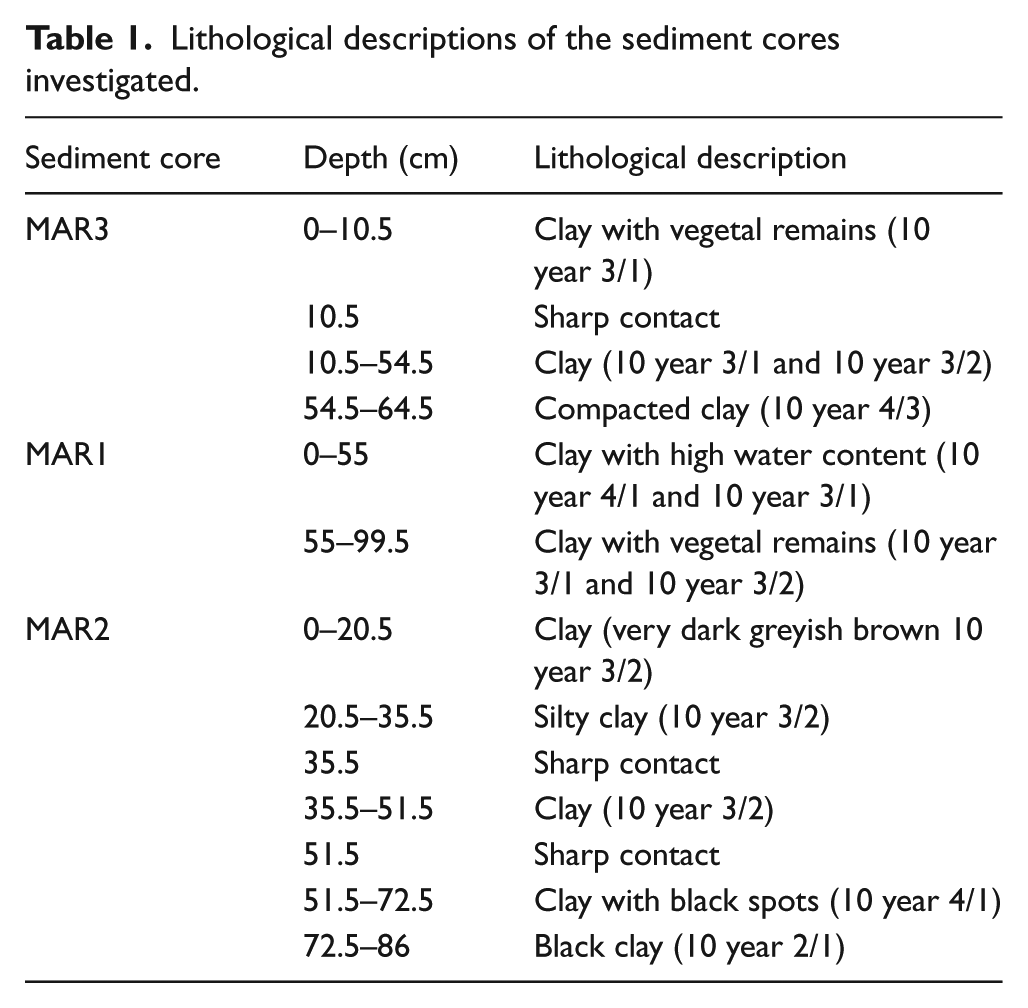
The MAR3, MAR1 and MAR2 sediment cores from Lake Maracá mainly consist of clay (Table 1). The bases of MAR1 (100–55 cm) and MAR2 (86–72 cm), according to the lithological description, are composed of organic-rich clay layers. Above such layers, no organic-rich clay layers were found in these cores.
Lithological descriptions of the sediment cores investigated.
X-ray analysis
Since silicate material absorbs more x-rays than OM, the silica-rich horizons were revealed as darker sections, whereas the OM-rich layers were revealed as lighter coloured sections. A negative correlation between the grey level of the radiographs and the TOC contents was observed (Figure 2), which supported the x-ray results. In the MAR2 and MAR3 cores, a significant correlation was observed between TOC and grey level (MAR3: r = 0.7, n = 65, p < 0.05 and MAR2: r = 0.82, n = 80, p < 0.05), while the MAR1 core showed no significant correlation (r = 0.1, n = 100, p < 0.05).
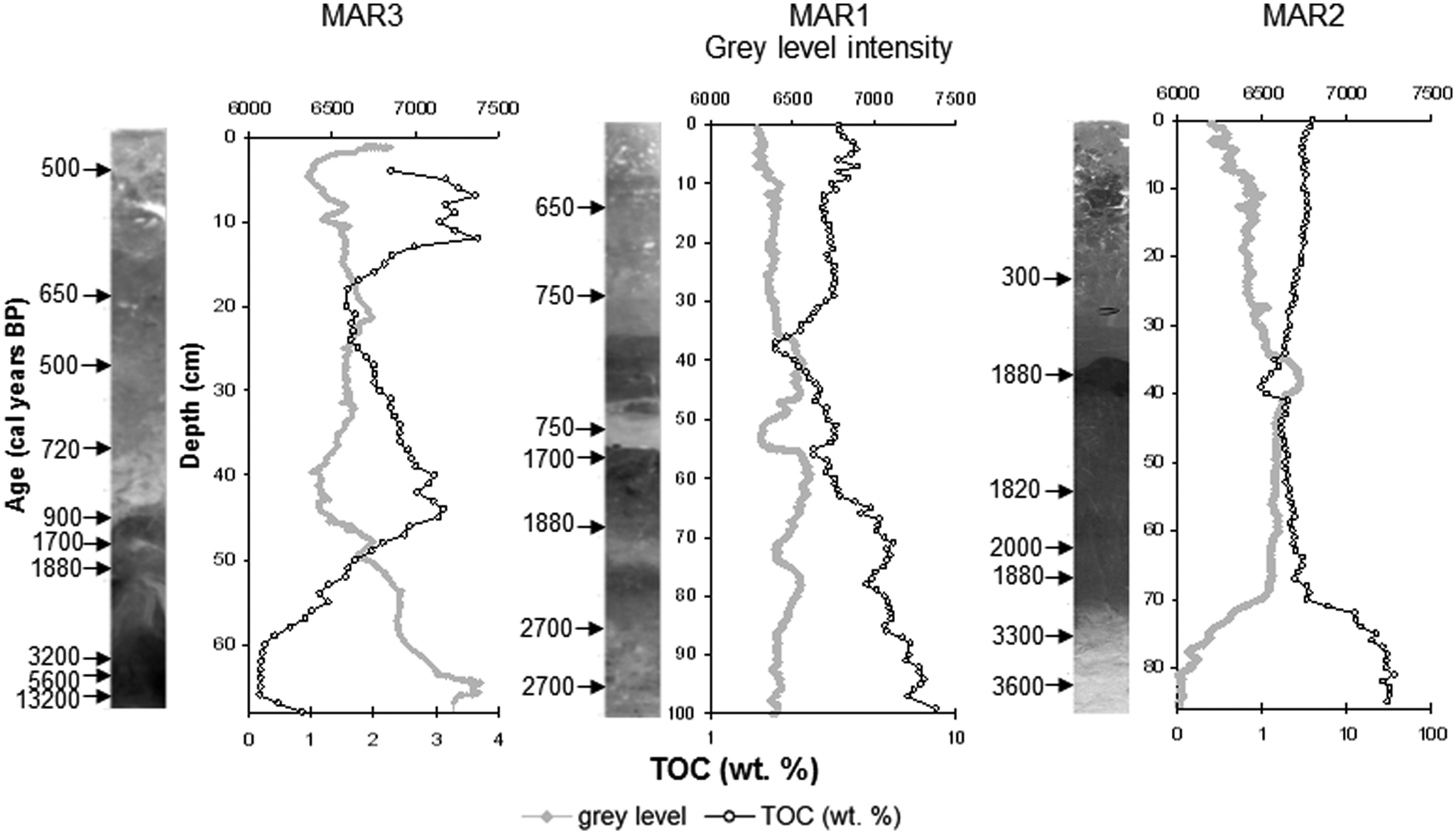
X-ray images and grey level values of MAR3, MAR1 and MAR2 cores in comparison to TOC contents (wt%). Note that the x-axes for TOC contents are plotted on a logarithmic scale.
Radiocarbon dating
A total of 12 TOC AMS radiocarbon dates were obtained for MAR3 with an age of the basal section of 5500 cal. yr BP (Table 2). Seven TOC AMS dates defined the sedimentary chronology of the MAR1 core, with an age of the basal section of 2700 cal. yr BP (Table 2). The MAR2 sedimentary chronology was established with seven TOC AMS radiocarbon dates, with an age of the basal section of 3600 cal. yr BP (Table 2). The age–depth models were based on linear interpolation using the software CLAM (Blaauw, 2010) and presented in Figure 3. The confidence intervals of the age–depth models were calculated at 95%. Thus, uncertainty ranges as well as a ‘best’ age-model can be obtained (Blaauw, 2010) and are presented in the Figure 3.
AMS 14C data of the sediment cores investigated.

AMS: accelerator mass spectrometry.
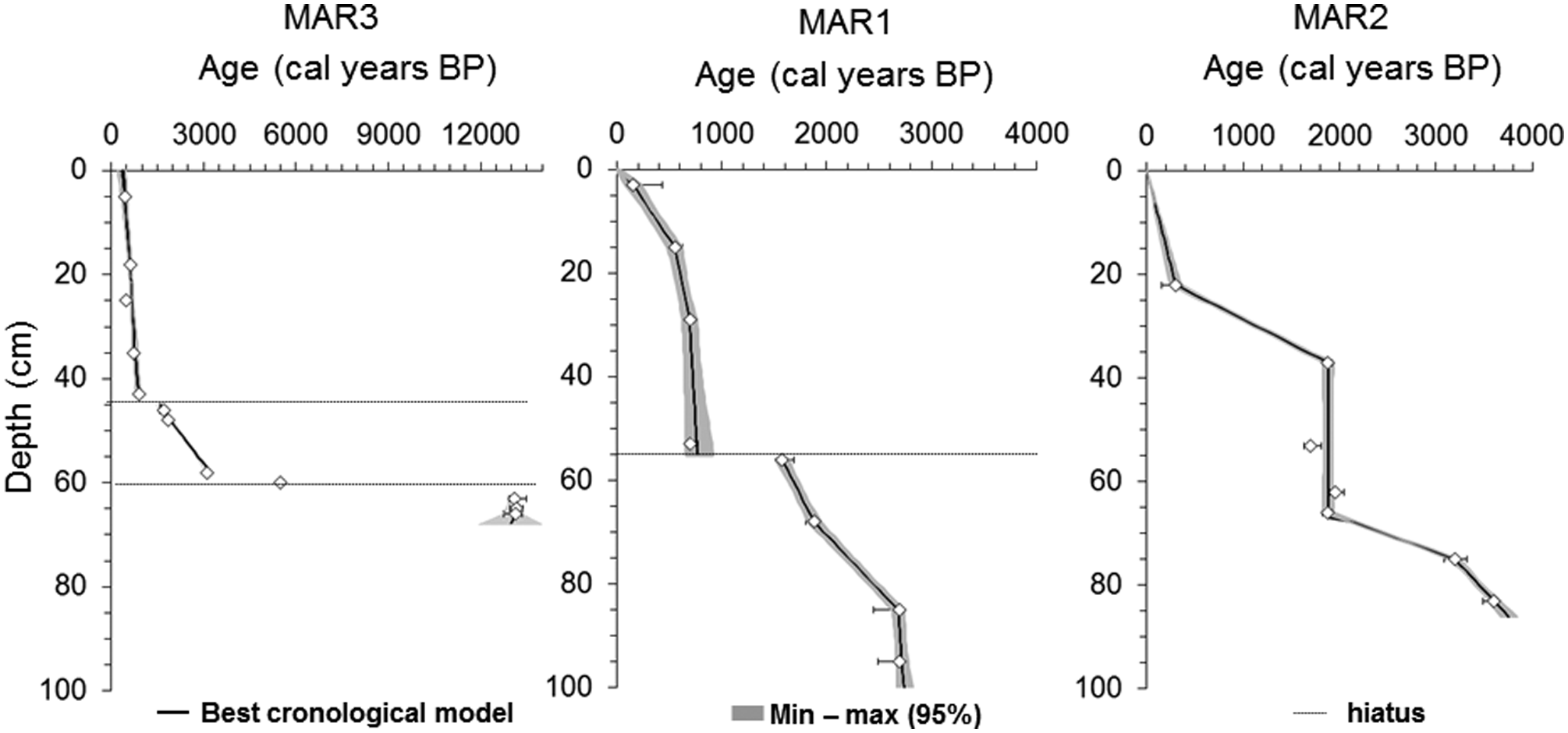
Age–depth models for MAR3, MAR1 and MAR2 sediment cores, constructed based on linear interpolation using the software CLAM (Blaauw, 2010).
The MAR3 age–depth model showed a break in sedimentation (hiatus) between 13,000 and 3200 cal. yr BP. As shown by the x-ray results in Figure 2, the sedimentary contact corresponding to this break at 60 cm was perturbed. The material producing an age of 5600 cal. yr BP at 60 cm was a mixture of OM from above and below the hiatus. A second hiatus occurred between 1700 and 900 cal. yr BP. In the last 900 cal. yr BP, a high sedimentation rate was observed (Figure 3). In MAR1 age–depth models, two sediment packages of uniform age occurred at 2700 and 750 cal. yr BP. A hiatus in the sedimentation also occurred in this core between 1700 and 750 cal. yr BP (Figure 3). The MAR2 age–depth model presented a package of sediment at 1880 cal. yr BP. A very slow rate of sedimentation occurred between 1880 and 300 cal. yr BP (Figure 3).
Mineralogical characterization
The main mineralogical components of all three cores are kaolinite, smectite and illite with small percentages of chlorite. In core MAR3 (the closest to the Amazon River), the kaolinite and smectite presented mean values of 46% and 34%, respectively (Figure 4). In the lowermost core section, in both MAR1 and MAR2 (~3600–1880 cal. yr BP), the predominance of kaolinite was evident with mean values of 46.9% and 73.8%, respectively. An evident transition from a kaolinite-rich sediment to a smectite-rich sediment was coeval in both cores. After this shift (in the last 1880 cal. yr BP), smectite was the most abundant mineral in MAR1 and MAR2, with the mean values of 47% and 44%, respectively.
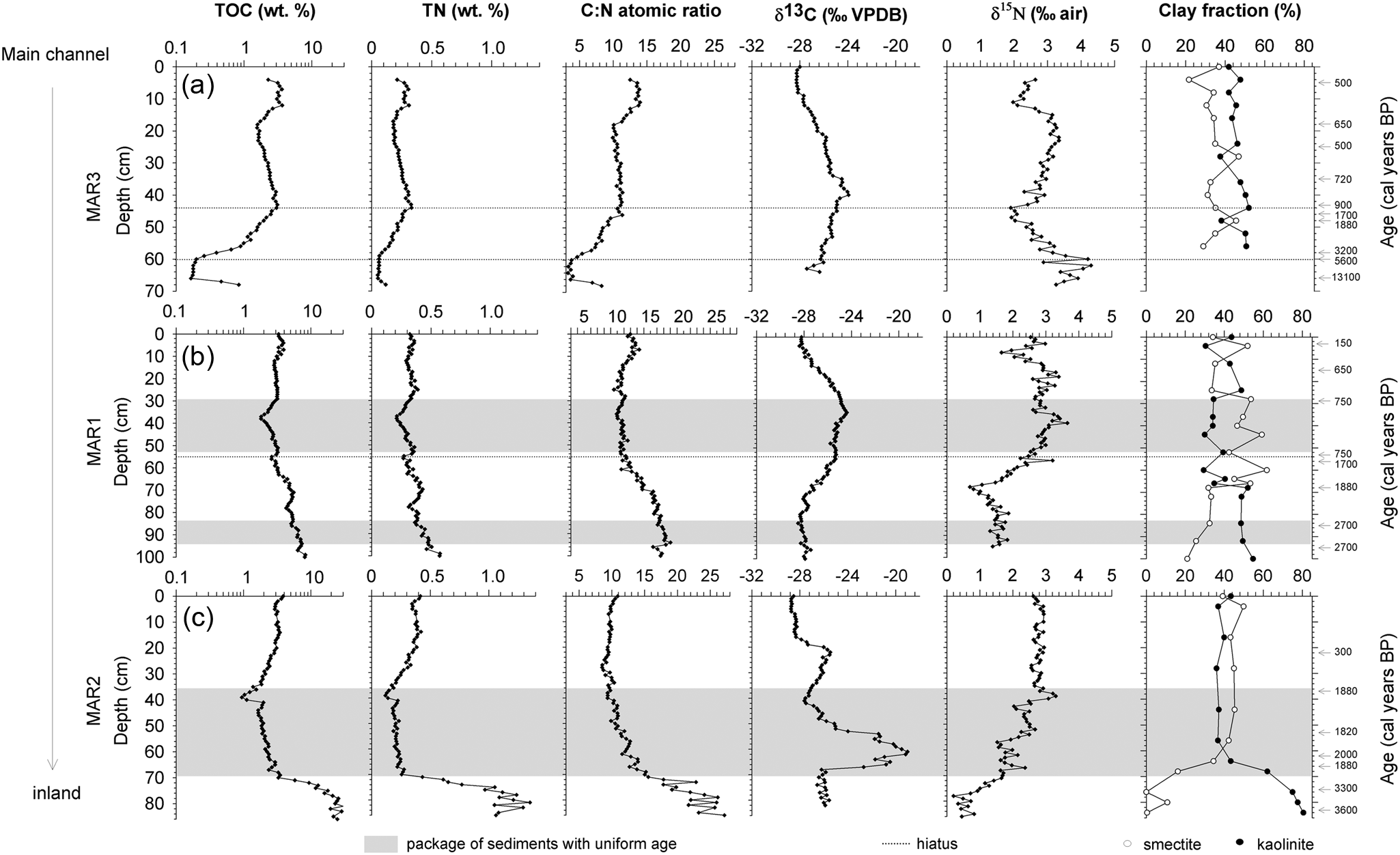
TOC contents (wt%), C:N atomic ratio, δ13COC, δ15N values and clay fraction for (a) MAR3, (b) MAR1 and (c) MAR2. Note that the x-axes for TOC content are plotted on a logarithmic scale. Packages of sediment of uniform age are represented by grey boxes and hiatuses by dotted lines.
TOC, TN and C:N atomic ratio
The sediments of core MAR3 had relatively low TOC levels between 0.2 and 4 wt% with an average of 2 wt% (Figure 4). The TN content in MAR3 was an average of 0.2 wt%, ranging from 0.05 to 0.2 wt%. The average C:N atomic ratio was c. 13.2 and varied between 3.3 and 18.3. In MAR1 and MAR2, TOC, TN and C:N atomic ratio were generally higher than those in MAR3, and both cores revealed similar trends, with higher values in the lowermost core section (~3600–1880 cal. yr BP) that decreased towards the core top (the last 1880 cal. yr BP). In the MAR1 and MAR2 cores, the lowermost core section mean values of TOC, TN and molar C:N atomic ratio were 5.8 and 16.7 wt%, 0.4 and 0.87 wt%, and 18.9 and 22.8, respectively. The mean values of TOC, TN and C:N atomic ratio for the core top, in the MAR1 and MAR2 core, were 3.1 and 2.4 wt%, 0.3 and 0.2 wt%, and 14 and 14.1, respectively.
Stable isotopic composition
The δ13COC showed substantial variation in all three cores (Figure 4). Cores MAR3 and MAR1 had similar values between −28.3‰ and −24.0‰. MAR2 presented similarly negative δ13COC values, ranging from −28.7‰ to −25.1‰. However, the δ13COC values were larger between 70 and 56 cm (~2500–1880 cal. yr BP), with the mean value of −20.9‰.
δ15N values of core MAR3 varied between 1.9‰ and 4.3‰ with the maximum value in the lowermost core section (Figure 4). The δ15N values in cores MAR1 and MAR2 varied in a similar way. In cores MAR1 and MAR2, low values in the lowermost core section were found, with the averages of 1.4‰ and 0.9‰, respectively. Towards the core top, the values increased in MAR1 and MAR2, with the mean values of 2.8‰ and 2.5‰, respectively.
GDGT concentration and distribution
We analysed GDGTs for core MAR2. The concentrations of crenarchaeol and the summed branched GDGT concentrations (I, II and III, structures in Appendix 1) varied between 2 and 13 and between 34 and 900 µg/gOC, respectively (Figure 5). The BIT index was high, varying between 0.91 and 0.98, as is similar to that reported for most soils (Hopmans et al., 2004; Weijers et al., 2006). The DC (Sinninghe Damsté et al., 2009) ranged from 0.01 to 0.28 (Figure 5). The CBT-reconstructed pH followed the pattern of the DC, with values between 4 and 7.3.
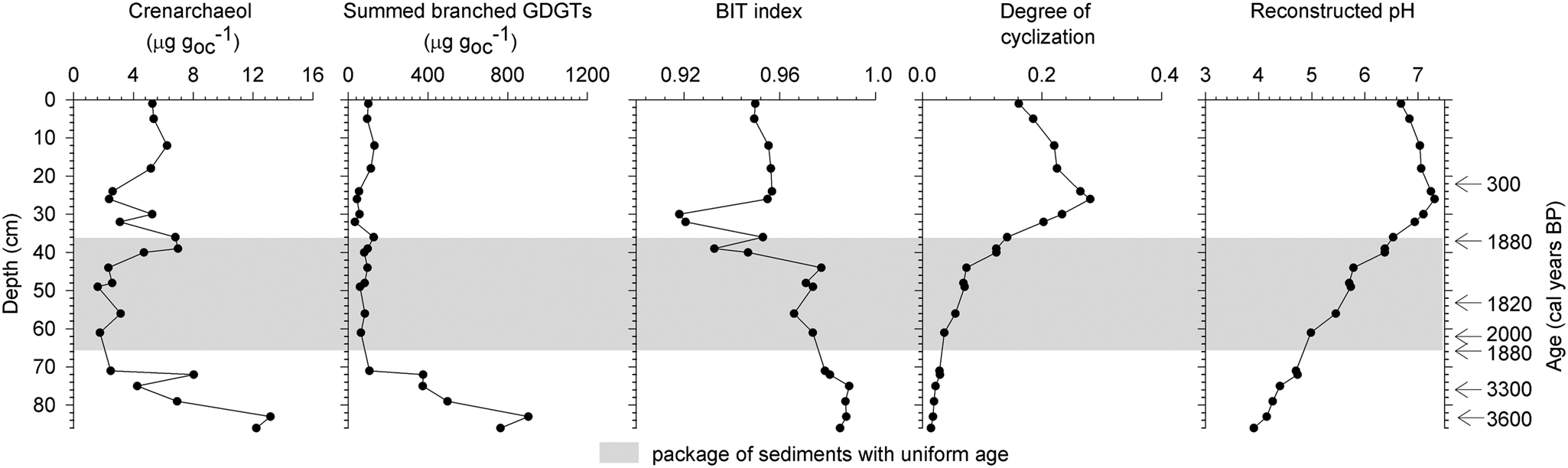
Crenarchaeol (µg/gOC), summed branched GDGTs (µg/gOC), BIT index, degree of cyclization and reconstructed soil pH for the MAR2 core. The package of sediments of uniform age is represented by the dotted line.
Discussion
Palaeohydrological changes
The chronology, lithology, x-ray analysis and the clay mineralogy revealed the existence of different hydrological phases in the evolution of Lake Maracá. The MAR3 core, due to its proximity to the main channel, experiences a more direct influence of the Amazon River and thus, different sedimentation processes were recorded at this core site. This core may represent the development of the linkage between the Amazon River and the lake. The MAR1 and MAR2 cores showed similar records and hence may represent a more lacustrine environment than the MAR3 core. Another difference in the MAR3 core was the break in sedimentation observed between 13,100 and 3200 cal. yr BP (Table 2). This interval overlapped with the hiatus found in Comprido Lake that is connected to Lake Maracá during high water-levels (Moreira et al., 2013). These hiatuses suggest an interruption of sedimentation due to a dryness of both lakes and might be a consequence of reduced runoffs from the lakes’ watersheds and weakened Amazon River floods. The lacustrine environment recorded in the MAR3 core started at 3200 cal. yr BP when the water-level of Amazon River began to increase.
3600–1880 cal. yr BP
Between 3600 and 1880 cal. yr BP, the predominant clay mineral in MAR3, MAR1 and MAR2 sediment cores was the kaolinite, with only a low (<30%) smectite content (Figure 4). The clay minerals of Terra Firme are dominated (i.e. almost 100%) by kaolinite (Amorim, 2010; Behling et al., 2001), while Amazon River sediments have a clay assemblage characterized by relatively high smectite content (up to 50%; Guyot et al., 2007). Thus, kaolinite-rich and smectite-poor sediments indicate a higher sediment input from the local drainage basin and a lower sediment supply from the Amazon River. These findings suggest that at the beginning of late Holocene, Lake Maracá was a semi-isolated lake with a reduced influence of the Amazon River and predominant runoff from local drainage areas. This weaker Amazon River influence can be related to a lower water discharge upstream in the Amazon River associated with reduced precipitation (Behling et al., 2001).
The radiocarbon dating between 95 and 85 cm in MAR1 (Table 2) revealed the deposition of a package of sediments with uniform age at 2700 cal. yr BP. This event might have been caused by strong input of sediment into the lake either due to a high river input or an erosion of the catchment area. As the kaolinite remained predominant during this event (Figure 4), it seems that the Amazon River influence on this event was low. When the lake is more isolated from the river, processes in the floodplain become less dependent on the river channel and more subjected to local climatic events (Junk, 1997). In the Bolivian floodplains, Aalto et al. (2003) observed that this type of episodic deposition was linked to climatic oscillations such as La Niña events, which can be responsible for the transport of large volumes of sediment to the floodplains.
A similar event around 2700 cal. yr BP was also observed in other climatic records throughout the tropical South America, with different impacts on the ecosystems. For instance, Mayle et al. (2000) reported that the humid evergreen rain forests in the southern margin of Amazonia expanded due to the increased precipitation after 2790 cal. yr BP. In the Carajas region, at 800 m elevation outside the flooded area of the Amazon basin, Cordeiro et al. (2008) showed that between c. 2800 and 1300 cal. yr BP, lacustrine production increased, as shown by the increase of chlorophyll derivatives and TOC accumulation rate. Amorim (2010) observed that, in the greatest Amazon floodplain lake (Curuai floodplain), a 2700-year event was characterized by very high sedimentation rates. This author interpreted this event as the consequence of an abrupt flood. According to Palcacocha Lake record (Equator), after 2700 cal. yr BP, a period without El Niño events was observed (Moy et al., 2002), and in Cariaco Basin, a peak of titanium at 2770 cal. yr BP indicates strong precipitation in Venezuela (Haug et al., 2001).
1880 cal. yr BP to the present
This period was marked by depositional events recorded in MAR3, MAR1 and MAR2 cores. At 1880 cal. yr BP, an abrupt change in sedimentation, followed by the deposition of a package of sediments of uniform age, was evident in MAR2 core. In MAR1 core, a similar event was recorded at 750 cal. yr BP (Table 2, Figure 3). In MAR3 core, high sedimentation rates occurred during the last 1000 cal. yr BP. These events suggest a strong sediment input from the Amazon River. A shift from kaolinite to smectite-rich sediments confirms that the Amazon River influence after 1880 cal. yr BP increased compared to the input from the surrounding local drainage basin. Behling et al. (2001) observed that in Lake Calado (central Amazonia) the proportion of Várzea Forest pollen increased since 2080 14C years BP (2020–2140 cal. yr BP), while herbs growing on the dry muddy areas around the lake decreased. This evidence provides support for rising water-levels in the Amazon River along the late Holocene.
From 1880 cal. yr BP to the present, no significant hydrological changes are evident from the mineralogical content of MAR2 sediment core, while MAR1 and MAR3 show variability in clay mineralogy. This high variability may be related to the alternating dominance of sediment supply either from the local watershed or the Amazon River probably because the two core sites are closer to the Amazon main channel, while at MAR2 site, the floods are buffered by the distance from the main channel. Several sedimentary events were recorded in the MAR1 and MAR2 cores (Table 2).
The increasing amount of smectite marks the expansion of Lake Maracá to its late Holocene size. According to Bush et al. (2007), the last millennium may represent the period of highest sustained lake levels within the Holocene in Amazonian lowlands. A wetter late Holocene was also recorded in other sites of the Amazon Basin (Behling and Costa, 2000; Behling and Hooghiemstra, 1998; Behling et al., 2001; Cordeiro et al., 2008; Hermanowski et al., 2012; Turcq et al., 2002). All these data are in good agreement with the highest lakewater-levels reported in this period.
However, these relatively wet conditions during the late Holocene were interrupted by a sedimentary break recorded in both MAR3 and MAR1 cores. These hiatuses occurred between 1700 and 900 cal. yr BP in the MAR3 core and between 1700 and 750 cal. yr BP in the MAR1 core. These hiatuses overlapped with a period of extremely low sedimentation rate recorded in the MAR2 core that could also correspond to a break in sedimentation. There are evidences of dry events in the Amazon Basin during the generally wet late Holocene (Absy, 1979; Liu and Colinvaux, 1988) that are in good agreement with the hiatus found in MAR1 and MAR3 records. A dry phase was also reported in Peruvian Amazonia between 1000 and 850 cal. yr BP (Bird et al., 2011). This is interpreted as a consequence of the Mediaeval Climate Anomaly that would have shifted Intertropical Convergence Zone (ITCZ) to the north. Nowadays, these northern shifts of ITCZ have contributed to the recent large droughts of the Amazon River (Espinoza et al., 2011).
In summary, our results reveal the increase in flood levels of the Amazon River during the last 3600 cal. yr BP. The Maracá record presents hydrological variations that induced significant changes in the source of the buried OM in Lake Maracá, as discussed below.
Floodplain palaeoenvironments
In MAR3 lowermost core section, which represents the early Holocene, extremely low TOC content was recorded (<0.3 wt%; Figure 4). During this period, the Comprido Lake sediments showed, in addition to low TOC values, evidence of the development of graminea banks (Moreira et al., 2013). These results suggested a reduced discharge from lakewatershed and Amazon River and, consequently, a reduced river flooding that caused a complete drying of both lakes during the early–mid Holocene in this region.
While in MAR3 core, the sedimentation started again at 3200 cal. yr BP, in MAR2 and MAR1 cores, the records began at 3600 and 2700 cal. yr BP, respectively (Figure 3). At that time, the sediments show rather different environmental conditions between the sites. At MAR2, closer to the inner margin of the lake, the deposits are very rich in OM (TOC: ~25 wt%) with high C:N (around 25) and low δ15N (0.4‰). This environment corresponds to a marsh with low mineral input (Turcq et al., 2002). The moisture is certainly maintained by the water supply from the nearby Terra Firme. However, at the MAR3 core site, closer to the Amazon River and to the channel inlet, TOC values are low (0.3%), with low C:N (around 5) and moderate δ15N (3 ‰). These characteristics would correspond to an intermittent lake with phytoplankton production during flood period and high levels of OM degradation when the lake dries during low water period. The MAR1 core site corresponds to an intermediate environment. Consequently, the three sites demonstrate a different behaviour with the increasing influence of Amazon River between 3600 and 1880 cal. yr BP (Figure 4). At MAR2 and MAR1 sites, the TOC decreased during this interval that corresponds to the increase of smectite, which in turn indicates higher influx of Amazon River sediments. Indeed, the sediments carried by the Amazon River have low TOC content approximately 0.5–1.5% of the total suspended matter measured at Óbidos station (Moreira-Turcq et al., 2013). Therefore, the higher Amazon River influence diluted the OM content of the sediment at MAR2 and MAR1 sites. However, at 3200 cal. yr BP in the MAR3 core, the TOC is around 0.3%, and the increasing Amazon River influence thus provoked an increase of the TOC to 1.7%.
After 1880 cal. yr BP, the TOC content does not show significant variations; high δ15N and low δ13C indicate a higher contribution of phytoplanktonic OM (see discussion below) attesting a more lacustrine environment.
Sources of sedimentary OM
The C:N atomic ratio, δ13COC, and δ15N were used to disentangle the origin of sedimentary OM in Lake Maracá. TOC (wt%) correlated significantly with TN (wt%), with a 0.06 intercept of the linear regression (r2 = 0.93, n = 65, p <0.001; Figure 6). This indicates that a contribution of mineral nitrogen (NH4+ + NO2− + NO3−) present in fine-grained sediments might have accounted for up to 0.06 wt% of the TN content in Lake Maracá, lowering the C:N atomic ratio (Devol and Hedges, 2001). In most sediment, inorganic nitrogen contents were small compared to those of OM. However, in sediments of the MAR3 lowermost core section with low TOC contents (<0.3 wt%; Figure 4), the proportion of inorganic nitrogen was relatively large (mean of 80% of the TN) leading to unrealistically low C:N atomic ratios (cf. Meyers, 1997; Meyers and Teranes, 2001). Therefore, we corrected TN, by subtracting 0.06 wt% (mineral nitrogen) and calculated the C:N atomic ratio (Figure 7). However, the bottom of MAR3 core presented values of TN close to 0 and, consequently, the C:N atomic ratio in this part of the core was not calculated and not presented in Figure 7.
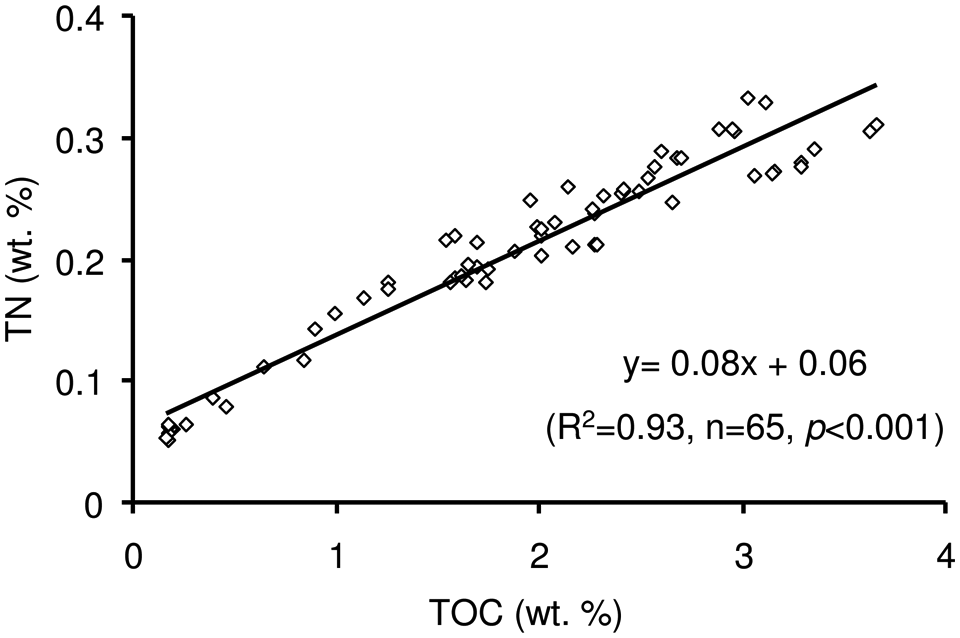
A scatter plot of TN (wt%) and TOC (wt%) for the MAR3 core.

Scatter plots of (a) δ13COC and C:N atomic ratio and (b) δ13COC and δ15N of the cores MAR1, MAR2 and MAR3. The boundaries of major OM sources in (a) are slightly modified from Kim et al. (2012).
The boundaries of the source of OM presented in Figure 7 were based on previous studies in the Amazon Basin, according to Kim et al. (2012) and references therein. In the Amazonian forests, the C3 plants present a δ13COC value of −25‰ to −35‰ (e.g. Hedges et al., 1986; Martinelli et al., 1994, 2003) and a C:N atomic ratio of 13–280 (Hedges et al., 1986; Martinelli et al., 2003). The δ13COC of C4 plants is typically enriched (δ13COC = −9‰ to −16‰) relative to C3 plants (e.g. Martinelli et al., 2003) with a C:N atomic ratio of 14–93 (Moreira-Turcq et al., 2013). The C:N atomic ratio used to represent the phytoplankton OM source in the Amazon aquatic system was the same reported in other lakes (4–10; Meyers, 1994). Moreira-Turcq et al. (2013) found the occurrence of localized phytoplankton blooms in several lakes within the Curuai floodplain during the different seasons. These blooms were responsible for enriched δ13COC values of suspended particulate matter reaching maximum values of −23‰. In addition, Araújo-Lima et al. (1986) characterized the phytoplankton and periphyton in the Amazon aquatic system with δ13COC values between −28‰ and −34‰.
The OM buried between 3600 and 1880 cal. yr BP had C:N atomic ratios and δ13COC values that suggest the predominance of C3-derived OM as the main source in both MAR1 and MAR2 cores (Figure 7). During the same period, the MAR1 and MAR2 cores recorded values of δ15N close to 0‰ (Figures 4 and 7), supporting the view that the lake received a large proportion of land-derived OM (Meyers and Teranes, 2001; Peterson and Howarth, 1987). However, the cyanobacteria in lakes may also be nitrogen-fixing organisms and can also produce an OM with δ15N close to 0‰ (Talbot and Johannessen, 1992). Nevertheless, the high C:N atomic ratios, BIT values and reconstructed pH (discussed in section ‘Sources of crenarchaeol and branched GDGTs’) found in this phase (Figures 4, 5 and 7) ruled out the predominant contribution of cyanobacteria to sedimentary OM during this period.
Since 1880 cal. yr BP, lower C:N atomic ratios and enriched δ15N values were indicative of enhanced contribution of phytoplankton to the sedimentary OM pool. Based on fatty acid and stable isotope (δ13COC and δ15N) analyses, Mortillaro et al. (2011) showed that phytoplankton and C3 aquatic plants (macrophytes) were important OM sources in the current aquatic system in the lower Amazon Basin. Taken together, after 1880 cal. yr BP, the lacustrine sediments in Lake Maracá were in general a mixture of C3-derived OM and aquatic-derived OM. However, just before 1880 cal. yr BP and during the deposition of a package of sediments at that time, a rise in δ13C values may suggest a higher input of C4 macrophyte OM in lake sediments of MAR2 core (Figures 4 and 7). Hence, the C4 macrophyte vegetation was more dominant in the lake inner marginal area than in the centre of the lake where the MAR1 core was collected. Although many species of aquatic macrophytes in Amazon floodplain lakes are C3 species, a few C4 plants frequently dominate the macrophyte community and biomass (Junk and Piedade, 1997). The inflow of the river after 1880 cal. yr BP can be responsible for the increase in nutrient concentration. Some of the C4 semi-aquatic and aquatic grasses (such as P. fasciculatum and E. polystachya, respectively) require high levels of nutrients (Piedade et al., 2010), which can explain the high δ13C values accompanied by an increased fluvial input into Lake Maracá. Another characteristic that can explain the high development of C4 macrophytes is their high rates of photosynthesis that allow them to grow faster during the rising water period and colonize deeper water than C3 plants (Melack and Forsberg, 2001). Hence, the development of a C4 aquatic macrophyte community observed in the MAR2 core (Figure 7) indicates the rise of the lakewater-levels in agreement with palaeohydrological interpretations.
Sources of crenarchaeol and branched GDGTs
In addition to the bulk parameters, we used GDGT molecular markers and indices to further investigate the origin of sedimentary OM in Lake Maracá. In the MAR2 core, branched GDGTs and crenarchaeol were found in all lake sediments at varying concentrations (Figure 5). The identification of both branched GDGTs and crenarchaeol in Lake Maracá is consistent with their presence in the Andes and lowland Amazon soils (Bendle et al., 2010; Huguet et al., 2010; Weijers et al., 2006). Both branched GDGT and crenarchaeol concentrations were substantially higher between 3600 and 1880 cal. yr BP in comparison to those in the following period. The BIT values during the same period were close to the average value of lowland Amazon soils (0.97; Bendle et al., 2010; Huguet et al., 2010) and slightly decreased in the upper section. The DC values were low between 3600 and 1880 cal. yr BP, resulting in a low CBT-reconstructed pH (~4) and increased up section (Figure 5). The low reconstructed pH values correspond well to those of acidic tropical soils in the lower Amazon Basin (Batjes, 2005). The black waters in the Amazon Basin, where the OM is mainly derived by leaching of these soils, are also rich in dissolved organic carbon, and are relatively acidic (Aucour et al., 2003). Thus, the high-branched GDGT concentrations and low DC and reconstructed pH values (~4; Figure 5) found between 3600 and 1880 cal. yr BP suggest that the branched GDGT, and also the OM, in Lake Maracá was primarily derived from acidic soils transported from the surrounding Terra Firme through local black water reaches, known locally as igarapés.
Since 1880 cal. yr BP, the GDGT molecular markers and indices indicate that although branched GDGTs are still predominant (i.e. BIT > 0.9), aquatic-produced crenarchaeol proportions to the sedimentary GDGT pool increased, resulting in slightly decreased BIT in comparison to those for the period of 3600–1880 cal. yr BP. Recent studies have indeed shown that in situ production of crenarchaeol in lakes and rivers may influence the BIT index in lake sediments (e.g. Blaga et al., 2011; Kim et al., 2007; Sinninghe Damsté et al., 2009; Tierney and Russell, 2009; Tierney et al., 2012). The DC and reconstructed pH data showed that the distribution of branched GDGTs after 1880 cal. yr BP was quite different from that in the Amazon lowland soils, that is, the fractional abundance of branched GDGT Ib and IIb (see Appendix 1) is substantially higher. This indicates that the branched GDGTs found in the Unit I did not originate predominantly from the surrounding soils. Because the soil pH is higher in the Andes (Batjes, 2005), this difference may indicate that a major part of the branched GDGTs in the lake was brought in by the Amazon River containing branched GDGTs originating from Andean soils. This possibility would be in good agreement with the enhanced proportion of Andes-derived smectite observed after 1880 cal. yr BP in MAR1 and MAR2 records. However, recently, it has been suggested that aquatic in situ production of branched GDGTs in lakes or in the river channels may influence the branched GDGT distribution (e.g. Sinninghe Damsté et al., 2009; Tierney et al., 2012). The pH values of the Amazon River waters vary between 6 and 7 (Aucour et al., 2003), which is also in good agreement with the CBT-reconstructed pH values after 1880 cal. yr BP (Figure 5). Thus, aquatic production may at least be partly responsible for changing the branched GDGT distribution after 1880 cal. yr BP. In any case, the substantial change in the distribution of branched GDGTs at that time indicates a substantial shift in the source of the OM from being mainly derived from soil to being more aquatically influenced, in line with the other proxies and the reconstruction of the hydrology.
Palaeohydrological response to late Holocene climate change
Our results suggest that Lake Maracá was almost fully disconnected from the Amazon River during the early–mid Holocene, as revealed by the hiatus in the MAR3 core record. The present connection between the Lake Maracá and the Amazon River became established after 1880 cal. yr BP. Many lacustrine records have shown a severe mid-Holocene (between 7000 and 3000 cal. yr BP) drought occurred in various regions in the Amazon Basin (e.g. Absy, 1979; Behling and Hooghiemstra, 1999; Behling et al., 2001; Bush et al., 2007; Cordeiro et al., 1997, 2008; De Freitas et al., 2001; Desjardins et al., 1996; Irion et al., 2006; Mayle and Power, 2008; Mayle et al., 2000; Moreira et al., 2012; Sifeddine et al., 1994, 2001; Soubies, 1980; Turcq et al., 1998; Weng et al., 2002). The mid-Holocene dry event seems to be part of a time-transgressive dry period that can be tracked from north to south in both the Andes and the Amazon lowlands (Bush et al., 2007). During the late Holocene (the last 3000 cal. yr BP), more humid conditions than during the mid-Holocene prevailed in different regions of the Amazon Basin (e.g. Behling and Costa, 2000; Behling and Hooghiemstra, 1998; Behling et al., 2001; Cordeiro et al., 2008). These Holocene climate variations appear to be caused by an orbitally driven increase of the South American Monsoon due to an increase of summer insolation (Dias et al., 2009). Our results suggest that the last 1880 cal. yr BP may represent the period of the highest floodplain lake level in the lower Amazon Basin and thus the most humid period in the Amazon Basin throughout the late Holocene. The Lake Maracá records show that the sedimentary OM composition of this floodplain lake was strongly influenced by the hydrodynamics of the Amazon River, which in turn were linked to regional climatic changes.
Conclusion
We investigated the Amazon River hydrological changes during the Holocene through the interpretation of the organic and mineral sedimentary sources in an Amazonian floodplain lake, Lake Maracá (eastern Amazonia). During the early–mid Holocene (~13,100–3200 cal. yr BP), low values of TOC followed by a break in sedimentation observed in MAR3 core suggests a complete drying of the lake caused by drier climatic conditions, as observed in different studies along the Amazon Basin and in other regions influenced by the South American Monsoon (e.g. Absy, 1979; Behling and Hooghiemstra, 1999; Behling et al., 2001; Bush et al., 2007; Cordeiro et al., 1997, 2008; De Freitas et al., 2001; Desjardins et al., 1996; Irion et al., 2006; Mayle and Power, 2008; Mayle et al., 2000; Sifeddine et al., 1994, 2001; Soubies, 1980; Turcq et al., 1998; Weng et al., 2002). Between 3600 and 2700 cal. yr BP when the sedimentation restarted at the MAR3 site, the lower concentration of smectite (the major mineral in the sediments transported by the Amazon River) indicates that the lake received a reduced water inflow from the Amazon River. During this period, the δ13COC and δ15N values were depleted, while C:N atomic ratios, TOC and branched GDGTs contents, and BIT values were high. Reconstructed soil pH values were low (~4), corresponding to those of soils in the surrounding catchment area. This suggests that sedimentary OM was predominantly derived from C3-land plants and was associated with derived acid soil OM transported by local black water streams (igarapés) to the lake. A distinct connection of Lake Maracá to the Amazon River began after 3200 cal. yr BP and became permanently established, with its modern characteristics, at 1880 cal. yr BP. The increase in Amazon River influence provoked a relative enrichment in smectite and a reduction in OM content at MAR2 and MAR1 sites.
After 1880 cal. yr BP, a series of depositional events accompanied by an abrupt increase in the smectite content suggests a larger sediment input from the Amazon River into the lake. During this period, the sedimentary OM was characterized by lower values of C:N atomic ratio, TOC, branched GDGT content and BIT values while δ15N was higher. The reconstructed soil pH values continuously increased reaching a maximum pH value of 6.5–7 during the last 1880 years, probably caused by increased sediment inputs originated from the Andes, where soil pH is higher than in the lower Amazon basin. This indicates that the contribution of phytoplankton and C3-derived, alkaline soil OM to lake sediments increased, which was probably associated with the lakewater-level rises linked to higher water-level of the Amazon River since 1880 cal. yr BP.
Footnotes
Appendix 1
Acknowledgements
The authors would like to thank the technical groups of Agência Nacional das Águas from Brazil (ANA) and Companhia de Pesquisa dos Recursos Minerais (CPRM; Manaus) for their help during the cruise. We would like to thank J. Ossebaar at NIOZ and Keila Aniceto and Clarice Lira at Universidade Federal Fluminense, for analytical support.
Funding
The research leading to these results has received funding from the European Research Council under the European Union’s Seventh Framework Programme ((FP7/2007-2013)/ERC grant agreement no. (226600)). This study was also partly supported by a Marie Curie European Reintegration Grants (ERG) to JHK and by the French project ANR ELPASO 2010 BLANC 608-01. This research was supported by the French Research Institute for Development (IRD), by the HYBAM Research Program (Hydrology and Geochemistry of the Amazonian Basin,  ) in the frame of its cooperation agreement with the Brazilian Research Centre (CNPq process nos. 492685/2004–05 and 690139/2003–09). This project was also supported by the project INSU Paleo2 − PASCAL (Past Climate Change Impacts on Carbon Accumulation in Amazonia Floodplain lakes (2010–2012)). LM’s work was supported by a fellowship of FAPERJ, Brazil.