



Abstract
This work is focused on the use of firewood by the first farming communities of the settlement of La Draga (Banyoles, Spain). The two occupation phases have been dated between 5324 and 4980 cal.
Introduction
The study of the subsistence strategies practised by the first farming societies usually focuses on the production of animal and plant foodstuffs. In contrast, other productive processes, equally essential for subsistence, such as obtaining firewood and other forest products, have received less attention. Studying the forest economy is certainly not a simple task, due above all to the scarce evidence enabling its study. Wood, generally carbonised, is one of the few remains left by the consumption of forest resources. These remains basically correspond to the residue left by the intentional combustion of firewood for domestic use. However, the first farming societies would have also maintained a forest economy that allowed them to obtain other kinds of resources. At archaeological sites with exceptional conditions for the conservation of these kinds of remains, like lacustrine settlements and sites in peat bogs, it has been possible to document the use of wood to make instruments (Baudais, 1987; Coles and Orme, 1985; Oeggl and Schoch, 2000; Pétrequin, 1996; Tegel et al., 2012); the gathering of wild fruit and seeds, tubers and fungi (Tolar et al., 2011) and the use of plants as animal feed (Favre and Jacomet, 1998) and resins (Binder et al., 1990; Regert et al., 1998), in addition to firewood (Dufraisse, 2006, 2008).
The continuing use of the forest environment had significant consequences for the development of forests and their modern forms, as the extraction of wood necessarily entailed changes in the biodiversity. This type of practice involved the deforestation of woodland and thus favoured the expansion of certain species that were in turn used by these societies (Badal et al., 1994; Jansen and Nelle, 2012). The exploitation of the forest environment involves a complex series of relationships that make it feasible, and therefore, this use needs to be regulated socially to ensure its sustainability.
The communities who adopted food production had to face the problem of maintaining a management of forest resources that was suited to the new needs, caused by sedentary settlement patterns or reduced mobility. The farming communities’ needs of wood resources were different and on a larger scale than before. Population sizes increased and productive activities were more intensive, and therefore, larger amounts of raw materials were needed. In addition to building materials, more firewood was required in permanent settlements with greater diversification of tasks. This led to an intensification and organisation of the use of forests in the areas around the settlements, which in turn made possible the other economic activities carried out in the settlements. At the same time, the first farming communities possessed technology enabling a very different management of the environment than was possible in earlier periods. Adzes, for example, were a better tool for cutting down trees. Similarly, pathologies observed in some oxen have been interpreted as the result of their use as draught animals, which is evidence for greater possibilities for the transport of tree trunks to the dwelling places (Saña, 2011).
The objective of this work is to characterise the use of firewood by the first farming communities of the settlement of La Draga in the north-east of the Iberian Peninsula (Banyoles, Spain). The present assessment of the use of firewood is based on the study of the remains of carbonised wood. The comparison of the anthracological data with other archaeobotanical studies carried out at the site enables an appreciation of how wood resources were used and the impact of this use on the environment.
La Draga, environmental context and historical background
The site of La Draga is located on the eastern shore of Lake Banyoles (Girona, north-eastern Spain), at 172 m a.s.l. (Figure 1). Part of the site is under the waters of this karst lake, which currently has a circumference of about 8 km, while the levels of the site found on land are partially within the water table. This has enabled excellent conservation of organic matter, and it is the only lacustrine site known in the Iberian Peninsula (Bosch et al., 2000, 2006a, 2011). The site corresponds to an open-air settlement of the first farming communities in NE Iberia and has a surface area of about 8000 m2, of which 784 m2 have been excavated.
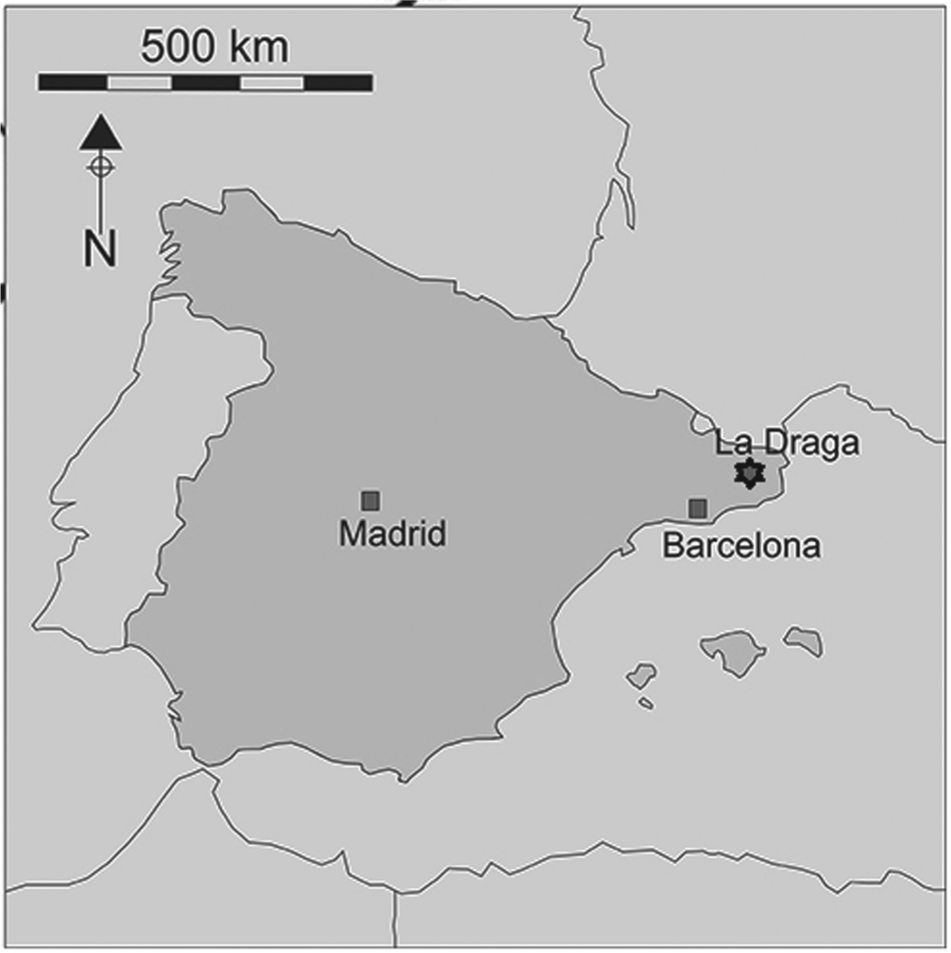
Location of the site of La Draga (Banyoles, Spain).
La Draga was occupied in the late 6th millennium cal.
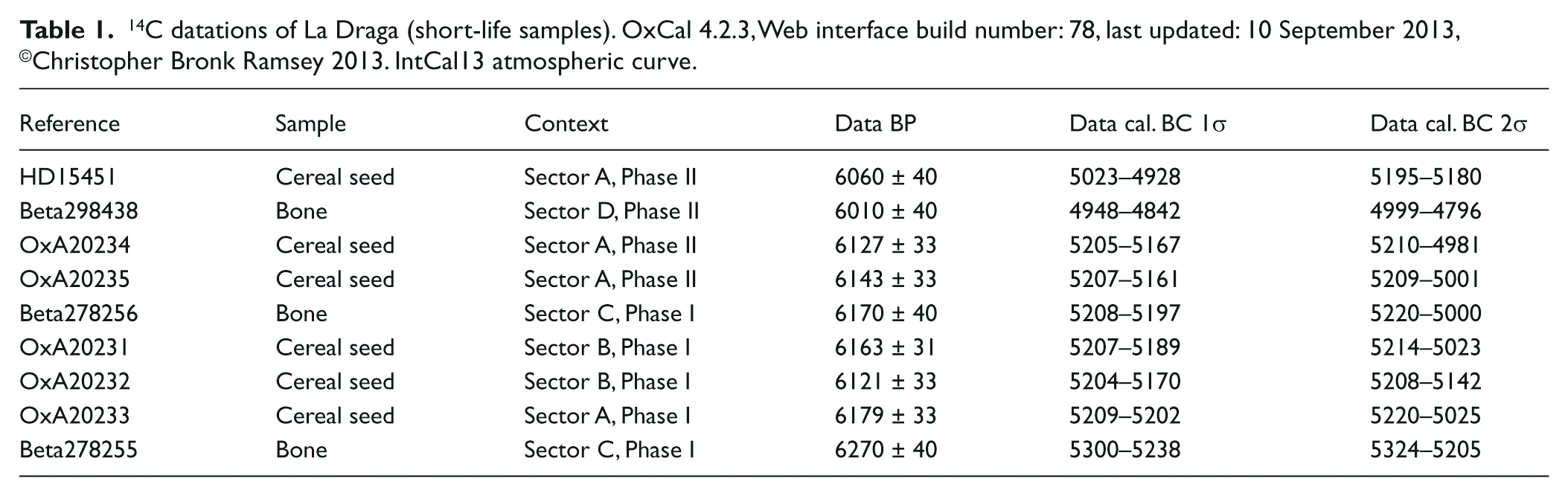
A series of nine datings have been obtained for short-lived samples (seeds and bones), and these situate the occupation at La Draga between 5324 and 4796 cal.
14C datations of La Draga (short-life samples). OxCal 4.2.3, Web interface build number: 78, last updated: 10 September 2013, ©Christopher Bronk Ramsey 2013. IntCal13 atmospheric curve.
The inhabitants at La Draga based their subsistence on agriculture and livestock. The most abundant cultivated plants were cereals, dominated by tetraploid and hexaploid naked wheat (Triticum aestivum/durum). This was accompanied by barley (Hordeum vulgare) and to a lesser extent by emmer wheat (Triticum dicoccum), naked barley (H. vulgare var. nudum) and einkorn wheat (Triticum monococcum). Together with the cereals, pulses were grown, and remains of broad beans (Vicia faba) and peas (Pisum sativum) have been found, as well as opium poppy (Papaver somniferum subsp. somniferum/setigerum), potentially a cultivated species (Antolin and Buxó, 2011). The livestock was dominated by Bos taurus, Capra hircus, Ovis aries and Sus domesticus, which could have been used for both meat and other products, like milk and wool (Saña, 2011). Gathering wild fruits like acorns and hazel nuts complemented these resources, which shows that the forests were not only used for wood. Hunting and fishing were also practised marginally.
The pollen studies carried out in Lake Banyoles (Pérez-Obiol, 1994; Pérez-Obiol and Julià, 1994) show that about 9000 BP, the forest cover expanded considerably with the spread of oak and hazel forests in the area. About 7000 BP, fir trees spread towards lower regions as a consequence of a drop in the temperatures. The analyses of sediment samples taken at the archaeological site itself (Burjachs, 2000) show that when La Draga was occupied, the forest cover was significant (about 85.3% arboreal pollen). The forests were formed by oak (deciduous Quercus sp.), fir (Abies cf. alba), pine (Pinus sp.) and evergreen oaks (Quercus ilex-coccifera). Other taxa were lime (Tilia sp.), maple (Acer sp.) and juniper (cf. Juniperus), while the shrub layer was represented by heathers (cf. Erica), box (Buxus cf. sempervirens), rock rose (Cistaceae) and buckthorn (Rhamnus sp.). Riparian vegetation consisted of hazel (Corylus cf. avellana), ash (Fraxinus sp.), elm (Ulmus sp.), alder (Alnus cf. glutinosa), poplar (Populus sp.), willows (Salix sp.), elder (Sambucus sp.) and vines (Vitis cf. vinifera). The brief episodes of deforestation contemporary with the occupation of the site, which show up in both the pollen analysis at La Draga (Burjachs, 2000) and the samples taken from the lake sediments (Pérez-Obiol and Julià, 1994), were followed by a rapid recovery of the forest mass. Burjachs suggests that the favourable climate and a sustainable economy that did not threaten the regeneration of resources allowed the rapid vegetation recovery.
The previous charcoal analysis performed on remains from the site of La Draga succeeded in documenting the use of resources from deciduous woodland and riparian vegetation growing around the lake (Piqué, 2000a).
Materials and methods
The archaeological site of La Draga has been excavated in a series of seasons from 1991 to 2012. From 1991 to 2005, the excavations concentrated on Sector A, where the archaeological level is above the water table; Sector B, with the archaeological level in the phreatic layer; and Sector C, which is totally under water. The charcoal remains recovered between 1991 and 2000, mainly in Sector A, have been studied before (Piqué, 1996, 2000b). New excavations from 2010 to 2012 focused on an area of 58 m2 called Sector D (Figure 2). In the present work, all the samples are included: the charcoal recovered in the 2010–2012 field work and those which were recovered in previous excavations.
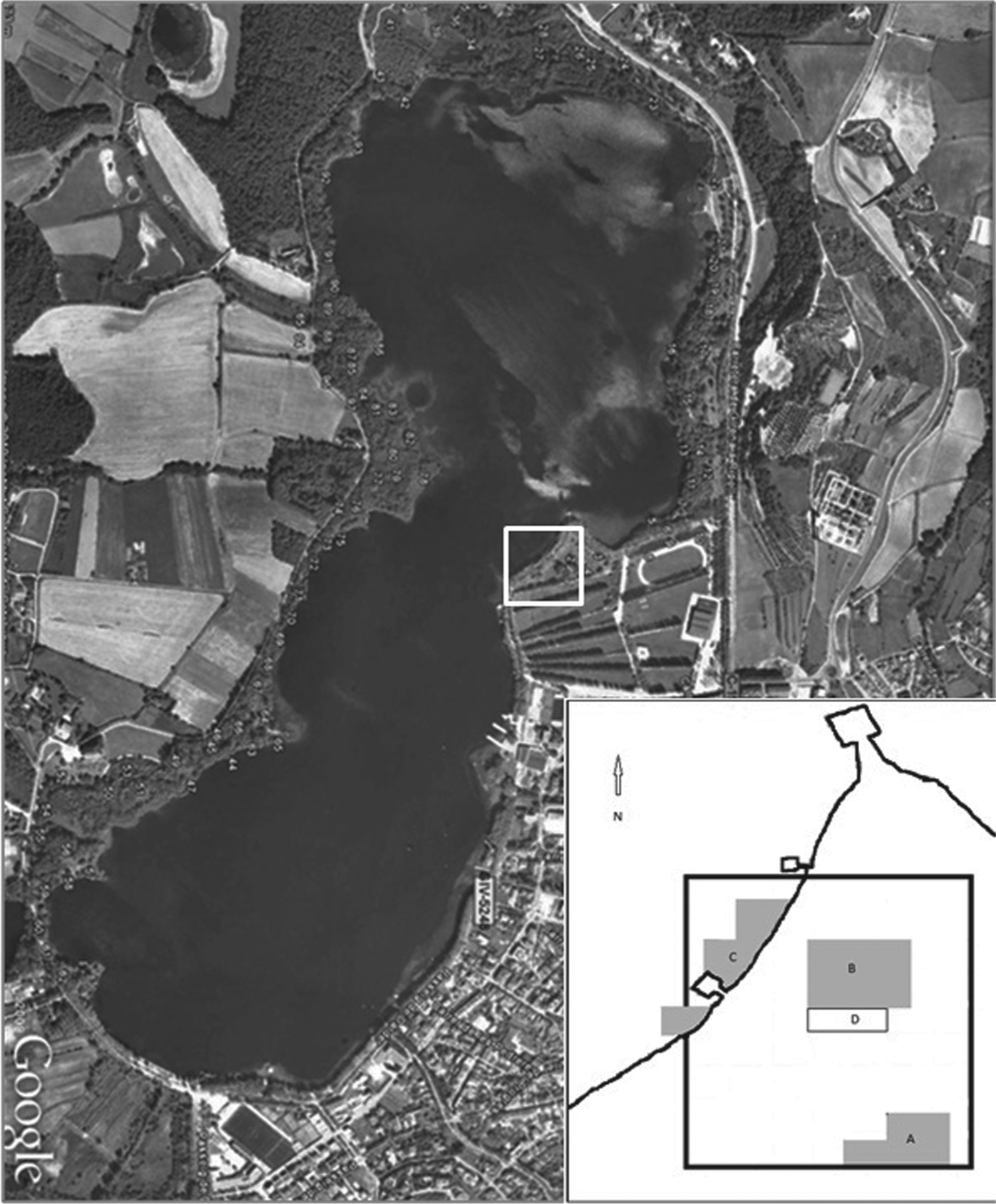
Localisation of the excavated areas of La Draga.
In the 2010–2012 excavations, the charcoal was collected in 2-mm mesh screens when the sediment was washed, and the pieces were separated according to the archaeological levels determined in the excavation and square metre. As the amount of charcoal was huge, subsampling in the laboratory aimed to separate a minimum of 25 charcoal fragments per square metre, in order to represent spatial diversity, and per level, to represent temporal diversity. A total of 718 charcoal fragments from Level VI, VIa, V and IV were analysed, corresponding to the second occupation phase at the site, and 1120 fragments from Levels VII and VIII, corresponding to Phase I. The results have been compared with those obtained previously by the study of 1812 fragments from combustion structures, indeterminate pits, post holes and a waste tip in Sector A (Piqué, 1996, 2000b). These structures are attributed to the more recent occupation phase at La Draga as they are associated with the level of travertine and as the radiocarbon determinations corroborate. However, we have differentiated them as they were collected in a series of structures with particular functions, whereas the charcoal in Sector D was found dispersed in the sediment and is therefore the result of different formation processes. The charcoal in Sector A was collected by hand and/or when washing the sediment.
The identification of the wood was carried out by viewing the pieces in the three anatomical planes of the wood (transversal, radial longitudinal and tangential longitudinal). The samples were prepared by the manual fracturing of each piece of charcoal. The samples were observed with an Olympus BX51 optical microscope with brightfield reflected light and compared with reference samples of modern wood. The keys for their identification are described by Schweingruber (1990) in an atlas of European species.
Results
The consumption of deciduous Quercus sp. (oak) predominated among the deciduous woodland species, followed by B. sempervirens (box). Other species identified were Acer sp. (maple), Tilia sp. (lime), Prunus sp., Pinus sylvestris-nigra (pine), Taxus baccata (yew) and Rosaceae/Maloideae. The most frequent species in the riparian vegetation was Laurus nobilis (laurel), and together with this, other species were consumed more marginally: Ulmus sp. (elm), Fraxinus sp. (ash), C. avellana (hazel), Salix sp. (willow), A. glutinosa (alder), Sambucus sp. (elder), Populus sp. (poplar), Clematis vitalba (old man’s beard) and Cornus sanguinea (dogwood). Finally, some evidence of Mediterranean vegetation was found, Q. ilex-coccifera (holm oak) and Arbutus unedo (strawberry tree), although in smaller proportions. These two taxa may have enriched the oak forest, creating mixed forests in favourable sunnier and drier areas.
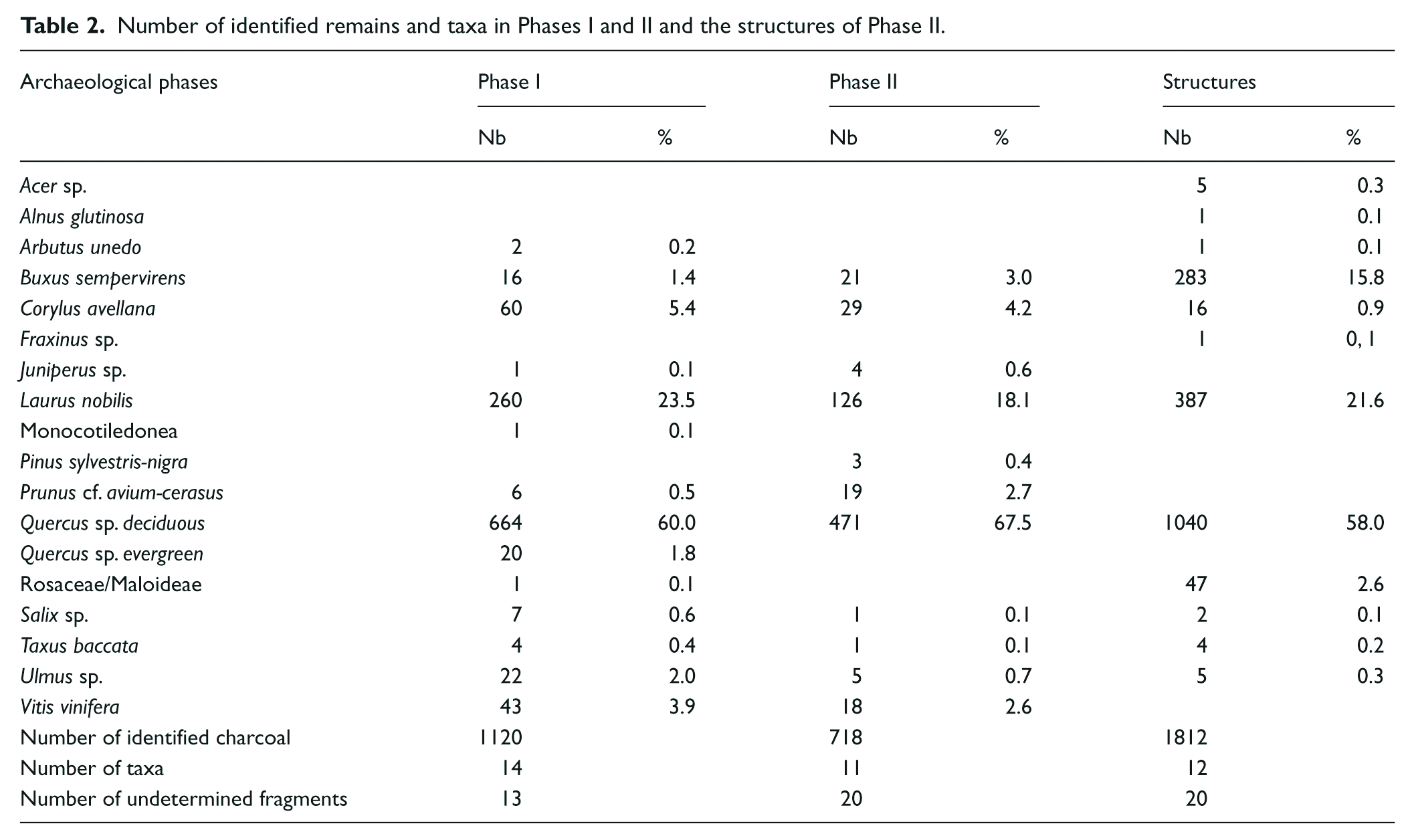
The study of all the charcoal was able to determine the use of 18 tree and shrub taxa: Acer sp., A. glutinosa, Arbutus unedo, B. sempervirens, C. avellana, Fraxinus sp., Juniperus sp., L. nobilis, monocots, P. sylvestris, Rosaceae/Maloideae, Prunus cf. avium-cerasus, deciduous Quercus sp., evergreen Quercus sp., Salix sp., T. baccata, Ulmus sp. and V. vinifera (Table 2). A larger number of taxa were documented in Phase I (14) than in Phase II and in the Sector A structures (11 and 12, respectively). The main taxa in the dispersed charcoal in Phases I and II and in the Phase II structures are deciduous Quercus sp. and L. nobilis (Figure 3). In addition to these, a further five taxa are found in both phases and sectors: B. sempervirens, C. avellana, Salix sp., T. baccata and Ulmus sp., although in varying frequencies. The other taxa appear in very low frequencies and in some cases are represented by a single charcoal fragment. Evergreen Quercus sp., monocots and Rosaceae/Maloideae are only found in Phase I. Pinus-type sylvestris-nigra only appears in Phase II. Juniperus sp., Prunus sp. and V. vinifera are only present in Sector D, and finally, Acer sp., A. glutinosa and Fraxinus sp. are only found in the structures of Sector A.
Number of identified remains and taxa in Phases I and II and the structures of Phase II.

Frequency of the most abundant taxa in the different contexts.
In quantitative terms, the most frequent taxa in all sectors are deciduous Quercus sp. and L. nobilis (Figure 3). Deciduous Quercus sp. is always the most abundant: 59.29% of the remains in Phase I, 65.6% in Phase II and 57.4% in the structures. The frequencies of L. nobilis vary from 23.21% of the remains in Phase I to 17.55% in Phase II and 21.18% in the structures. In all cases, these two taxa amount to nearly 80% of the remains. The third taxon in importance, B. sempervirens, is more variable in its frequencies, as it is more abundant in the Sector A structures (15.62%) than in Phase I (1.43%) and Phase II (2.92%) in Sector D.
Discussion
Landscape and catchment area of wood resources
According to the species identified, at La Draga, the wood raw materials appear to have been procured in the riparian vegetation and oak forests in the surroundings of the site. In this area, pollen analyses indicated the presence of dense tree cover that would have been a basic source of firewood. The results obtained in the study of the charcoal recovered in the 2010–2012 seasons show that no differences can be seen in the plant communities where firewood was collected in the two occupation phases at the site.
Deciduous forests were exploited most for firewood in both phases. In this environment, the arboreal layer was exploited the most, and oak the most frequently gathered species. The shrub layer is only represented in very small percentages. Indeed, deciduous Quercus sp. is the most common taxon at early-Neolithic sites located at low altitudes in north-east Iberia, this taxon is the best represented in la Bauma del Serrat del Pont, La Draga (Obea et al., 2011; Piqué, 2000a, 2005), Cova del Frare (Ros and Vernet, 1987) and Cova de la Guineu (Allué, 2005), as well as in L’Abeurador, Font-Juvenal and other sites of the region Liguro-Provençal in south-east of France (Heinz and Thiébault, 1998; Thiébault, 2001). According to pollen analysis results (Burjachs, 2000), deciduous Quercus was the most abundant taxon in the area. Availability and abundance of Quercus in the surroundings of the site would favour their use as firewood as well as raw material for other uses.
River bank vegetation was also frequently exploited, and in this case, both arboreal taxa and the shrub and lianoid layer were used. It is difficult to establish which species formed part of riparian communities and which accompanied the oak forests, as at present, many of them grow in both types of plant communities. Here, A. glutinosa, Fraxinus sp., C. avellana, L. nobilis, Salix sp., Ulmus sp. and V. vinifera have been considered riparian species. Of these, L. nobilis is the most common in the charcoal remains. At the present time, laurel is part of the typical riparian vegetation in Mediterranean lowlands, and therefore, it is plausible to think that it was abundant at La Draga at the time when the site was occupied. The use of laurel has been documented at other early-Neolithic sites in the north-eastern Iberian Peninsula, such as Cova 120 (Agustí, 1987), although not in such significant quantities as at La Draga. The abundance of this species at La Draga suggests that the forest by the side of the lake was widely cleared to obtain agricultural land, and the wood was used as fuel. Riparian vegetation is well documented in the pollen analysis of La Draga (Burjachs, 2000). However, in other contemporary sites of the region, these kinds of environments are less represented among the charcoal remains (Piqué, 2005). The proximity of the lake without doubt is the reason for the abundance of firewood gathered in this kind of forests.
More occasional and sporadic use of other meso- and supra-Mediterranean species has been documented: Q. ilex-coccifera, Arbutus unedo and the conifers P. sylvestris-nigra, T. baccata and Juniperus sp. These might have accompanied the oak forests or been gathered in more distant areas, more favourable for their growth. Pollen analysis demonstrates that these taxa grew in the region (Burjachs, 2000), however, in lesser abundance and probably restricted to the most favourable places.
If the different phases are compared, the use of riparian vegetation was more important in Phase I, where it is represented by 35.41% of the remains (Figure 4). In Phase II, this percentage decreases slightly, to 25% of the remains, whereas in the Phase II structures, the percentage is 22%. L. nobilis is still well represented, although in smaller proportions, and other taxa like Vitis and Corylus either become testimonial or disappear from the structures in Phase II.
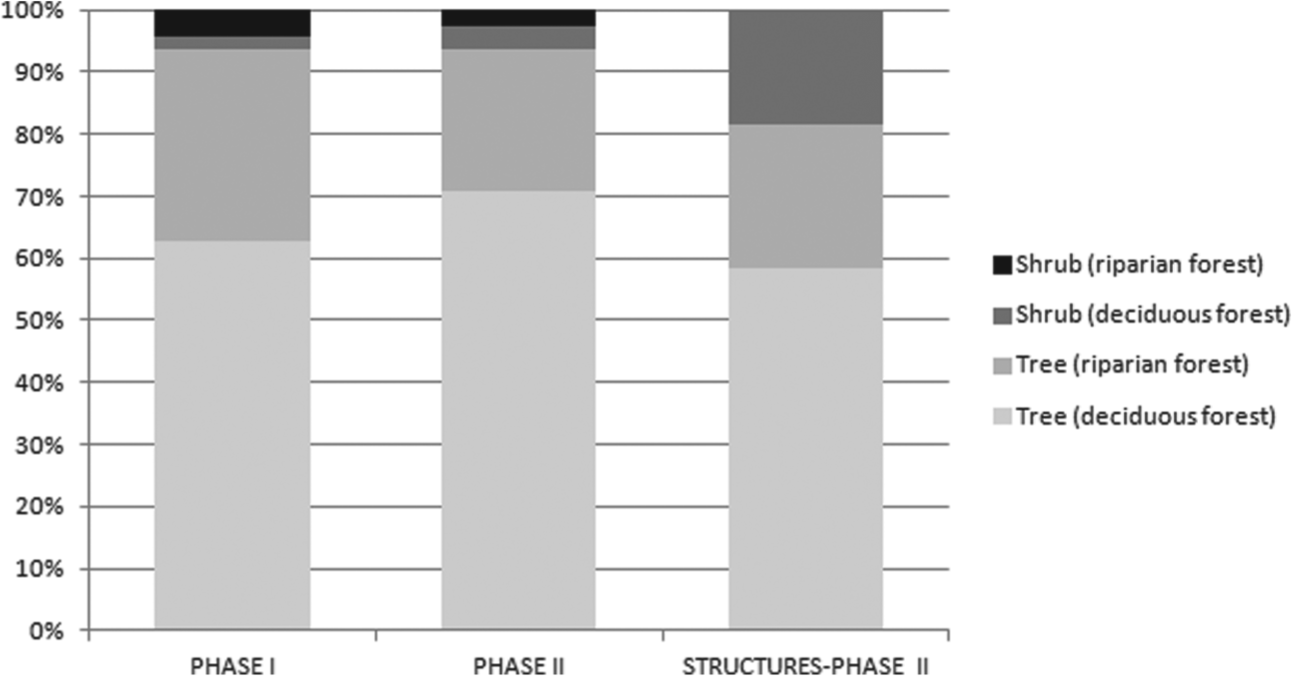
Representation of the vegetation types documented at La Draga.
The corollary of the decrease in the use of riparian species was greater pressure on the deciduous forest. Thus, in Phase II, the consumption of oak increases, which may indicate greater pressure on the arboreal layer to obtain firewood. Also, it increases shrub utilisation as firewood, as it is shown by the presence of B. sempervirens and Rosaceae/Maloideae in the structures. In the Mediterranean area at the present time, these taxa tend to colonise open areas left by the deforestation of oak woods. It should be stressed that the use of box wood to make instruments has been documented in Phase I at La Draga (Piqué, 2000b), and therefore, this species must have been common in the surroundings of the settlement. However, its use as fuel only increases significantly in Phase II. It is therefore possible that the long duration of the settlement might have caused the degradation of the oak forest and the expansion of colonising taxa, which were previously less frequent. The inhabitants at La Draga might have used these changes in the biodiversity in the surroundings of the site to obtain firewood resources that had been scarcer earlier and reserved for other uses, such as the manufacture of instruments.
The use of firewood in relation with other uses of wood at La Draga
The data from the anthracological study are not the only evidence about the use of wood resources at La Draga. As it is a lacustrine site, it has provided a unique assemblage of plant remains that enable an excellent understanding of the local flora and the use made of it.
About 155 wooden objects have been recovered, as well as hundreds of posts, sticks and shapeless pieces of wood (Bosch et al., 2006a). While all the objects belong to Phase I, the same cannot be said of the posts and sticks. The wood used to make the objects also provides information about the local vegetation and the use of resources in the environment.
The comparison of anthracological and xylological data provides interesting information about the composition of the riparian vegetation and the deciduous forests, although because of the nature of these remains, it is not possible to determine the exact relative importance of these species in the surroundings. The taxonomical identification of the wood used to make the artefacts shows that the number of taxa used for this purpose is slightly higher than found among the remains of firewood. In addition, some taxa are only found in one of these types of object, which may be interpreted as a selective use of certain species depending on the purpose they were intended for. In the remains of charcoal and manufactured wood, a total of 21 taxa have been documented (Table 3). The use of 18 taxa was documented in manufactured wood (Bosch et al., 2006b). Deciduous Quercus sp. and B. sempervirens are the most often used raw materials. Deciduous Quercus sp. first was used for building and to make vessels, ladles, paddles and handles of axes. Buxus was used mainly to produce combs, digging sticks and handles. The other taxa were used more sporadically to make certain artefacts, for example, bows were of T. baccata, shafts of Salix sp. and massive projectiles of Cornus sp. Seven of the taxa (Acer sp., Clematis vitalba, Cornus sp., Pinus sp., Populus sp., Sambucus sp. and Tilia sp.) are not found in the charcoal, which widens the range of the surrounding flora with data about other species in the deciduous and riparian forests. In contrast, three taxa (Ulmus sp., P. cf. avium and V. vinifera) have only been identified in the charcoal remains.
Taxa identified in the manufactured wood and charcoal in Phase I.

The contrasts between the two sources of data suggest that different strategies were followed in the use of wood resources, depending on the purpose of the wood, although the materials were gathered or cut in the same plant communities. Above all, the high frequency of B. sempervirens among the artefacts in Phase I is significant, as 83 of the 155 objects were made from this wood. During this phase of the occupation, the wood of B. sempervirens was used mainly to make objects, while it is scarce among the charcoal remains. At the same time, the study of posts and architectonic elements has shown that deciduous Quercus sp. was used mainly as building material (Gassmann, 2000). Hundreds of oak trees were cut down to build the settlement, which must have produced openings in the forest cover. This is in accordance with the decrease in tree pollen seen in the palynological studies, coinciding with the occupation at La Draga (Burjachs, 2000; Pérez-Obiol, 1994). Unlike the case of B. sempervirens, oak was widely used for all kinds of purposes: fuel, building materials and manufacture of artefacts.
Diversity in the use of firewood in Phase II: the structures
The anthracological record in the Phase II structures exhibits differences in comparison with the results of the dispersed charcoal remains in the two occupation phases. The 17 combustion structures correspond stratigraphically to Phase II. Three of them have been dated with short-lived samples, and these datings are in the most recent band within the sequence of dates obtained for the whole site: 5023–4928, 5207–5167 and 5207–5161 cal.
The study of the charcoal from the 17 combustion structures reveals some recurrences in the use of firewood. Although charcoal found in combustion areas is generally thought to represent only the last pieces of firewood used, as the sample is so large in this case, it is deemed possible to propose hypotheses about the patterns of wood use. The taxonomical composition of the different structures is given in Table 4.
Distribution of remains in the combustion structures according to taxon.

On the settlement, the taxonomical diversity of the combustion areas is low and consists of between one and six taxa, except in the waste tip, where eight taxa were identified. Oak is the most common species in all the structures, in both quantitative and qualitative terms, as it amounts to 62.8% of the total fragments in the combustion areas and is found in all the structures. B. sempervirens and L. nobilis are the other two most common species: 14.6% and 16.2% of the fragments, respectively. While oak is found in all the structures, laurel and box appear in 64% of them. The other identified taxa are less significant quantitatively, as they amount to only 6.4% of the fragments and are found in few of the structures.
Another interesting point is that the taxa are not distributed homogeneously in the hearths. In some of them, deciduous Quercus sp. predominated, whereas in others, it is accompanied by B. sempervirens and/or L. nobilis. If hearths with few remains (E-43 and E-52) are excluded, three groups can be discriminated. The first is dominated by oak (E-14, E-26, E-17, E-23, E-40, E-43, E-5, E-52, E-6, E-63, E-65 and E-71), the second by box (E-50 and E-51) and the third by laurel (E-56, E-87 and E-9). The differential distribution of taxa in the combustion areas may be related to different times of use, reflecting a change in firewood catchment areas, although variations in the vegetation composition in the surroundings of the settlement during its occupation should also be considered. The degradation of the vegetation around the settlement may have led to the expansion of colonising species, which would then have become more easily available. This might well be the case of B. sempervirens. In addition to the combustion areas, the charcoal remains in the waste tip, and other indeterminate structures have been studied. The waste tip (E-32) contained a large number of remains, where again deciduous Quercus sp., B. sempervirens and L. nobilis are represented and amount to 95% of the fragments, underlining the importance of these taxa.
The wood of Quercus sp. B. sempervirens and L. nobilis is very hard and dense and therefore resistant and of good quality. It is currently thought that high-density wood is more resistant to combustion and therefore, as it burns more slowly, is highly valued as fuel. However, other taxa documented at the site share the same properties and yet were not used to the same extent. It is likely that the greater availability and accessibility of these taxa meant that their use was more cost-effective.
Conclusion
The study of the charcoal from Phases I and II, together with the data provided by the wooden objects in Phase I and the structures in Phase II, has been able to characterise the composition of the local flora and the changes it underwent between 5324 and 4980 cal.
L. nobilis was an important species in the riparian vegetation, and is widely represented among the charcoal fragments and wooden objects, and in all the sectors. The vegetation on the lakeside also consisted of hazel, willow, poplars, clematis, elm, vines, alder and ash. The deciduous forest was formed by deciduous Quercus sp. maple, box, Rosaceae/Maloideae and Prunus sp. Conifers and Mediterranean species would have occupied more favourable areas.
The charcoal remains reflect the strategy of procurement and use of firewood by the inhabitants at La Draga. This strategy seemed to be focused on certain taxa among the various woody plants in the surroundings. Thus, deciduous Quercus sp. and L. nobilis make up the largest part of the identified remains, and we therefore believe that they are indicators of the inhabitants’ preferences and that the lakeside vegetation and the deciduous forests suffered the first impact of the agricultural communities. In the more recent phase, B. sempervirens was also used intensely, and instead of being destined exclusively for the manufacture of implements, it was used in a similar diversified way as deciduous Quercus sp. and L. nobilis. The addition of box to the species used as fuel may have been the result of the greater expansion of the species, as it colonised degraded areas and became more common in the surroundings of the settlement in the last occupation phase.
The predominance of deciduous Quercus sp., B. sempervirens and L. nobilis over other taxa indicates certain management of forest resources by the community. Probably factors such as accessibility of the resources, abundance in the environment and properties of the wood were the main criteria in the design of wood resource management strategies for energy production.
Footnotes
Funding
This work was funded by Ministerio de Economía y Competitividad of Spain (grant numbers HAR2012-38838-C02-01 and HAR2012-38838-C02-02 (Organización social de las primeras comunidades agrícola-ganaderas a partir del espacio doméstico. Elementos estructurales y áreas de producción y consumo de bienes/Arquitectura en madera y áreas de procesado y consumo de alimentos)).