



Abstract
Stable isotopes in mollusk shells have been widely used for hydrological balance reconstructions. However, their use is restricted to lakes that preserve the calcareous material of the shells. Lago Cisnes is located in Patagonia (47°S) and shows a continuous record of three species of mollusk during the past 5000 years. The isotopic records of δ18O in Pisidium sp., Lymnaea sp., and Biomphalaria sp. show discrepancies among them, which can be explained by the differential effect that evaporation has on the habitat where each species lives. Between 1800 and 500 cal. yr BP, the three species show similar isotopic variations, suggesting that climatic condition affecting in the same way the different microhabitats in the lake. Around 1700 cal. yr BP, an enrichment of 18O on mollusks shells indicates drier conditions that prevails until 1100 cal. yr BP. Later on, isotopic signal tends to decrease, suggesting a humid period between 750 and 500 cal. yr BP. Such humid conditions lasted until 170 cal. yr BP, which were evidenced only by Biomphalaria sp. and Pisidium sp. Climate variability during the late Holocene in Lago Cisnes is in agreement with marine records from northern Patagonia, which would suggest westerlies weakening during a northward migration after 1100 cal. yr BP and/or an important temperature control on the evaporation, where low temperatures could decrease the evaporation driven by the westerlies. Additional records in this area would be requested to clarify the westerlies effects on the east flank of the Andes.
Introduction
The climate variations during the late Holocene are considered key events for understanding current climate behavior (Christiansen and Ljungqvist, 2012). However, unlike records from the Northern Hemisphere, accurate paleoclimate records from the Southern Hemisphere are still limited (Meyer and Wagner, 2009; Sepúlveda et al., 2009), which creates uncertainty in climatic reconstructions, on both a regional and a global scales (Mann et al., 2008; Marcott et al., 2013; Neukom and Gergis, 2012).
In different parts of Chile, the late Holocene has been identified as a particularly stable period with predominantly wet conditions (Grosjean et al., 1998; Jenny et al., 2002; Torres et al., 2008; Villa-Martínez et al., 2012). Nevertheless, several authors (Lamy et al., 2001; Kilian and Lamy, 2012; Moreno et al., 2009) indicate that small changes in the south-central area during this period could primarily be associated with changes in the strength and position of the westerlies, which influence the precipitation regime. Although the core of the westerlies is centered between 50°S and 55°S, its influence extends to 33°S, peaking between 40°S and 55°S (Garreaud et al., 2009; Lamy et al., 2010). Patagonia is particularly interesting, given that it is located in the zone of major influence of the westerly winds, constituting a suitable place to study changes in climatic conditions during the late Holocene (Moy et al., 2009).
Pollen studies conducted in the area have indicated that the late Holocene has been predominantly humid, and the magnitude of the climate change occurred during this interval has been relatively minor compared to previous periods because of the stabilization of the westerlies, which allowed the establishment of the current Nothofagus forest (Markgraf et al., 2007; Villa-Martínez and Moreno, 2007; Villa-Martínez et al., 2012). However, these minor changes have influenced glacial advances during a cold and wet period of the late Holocene documented through historical evidence (Araneda et al., 2007, 2009). Solari et al. (2010) used stable isotopes in microbialites and found that the water temperature change of the Lago Sarmiento (51°S) was close to 2°C, and the water level variation was 5 m between a warm and cold period, coinciding with the timing of the Northern Hemisphere ‘Medieval Warm Period’ (MWP) and ‘Little Ice Age’ (LIA), respectively. On the other hand, Moy et al. (2008), through the application of stable isotopes in mollusk shells in Lake Guanaco (51°S), found several evaporative periods and climatic variations similar to those recorded in the Northern Hemisphere during the last 1000 years.
The differences between pollen studies and other proxies could be accounted for not only due to the sensitivity of the proxies but also due to the fact that the latitudinal and longitudinal changes of the westerlies may have generated regional effects (Villa-Martínez and Moreno, 2007). On a larger timescale, Villa-Martínez et al. (2012) determined that the behavior of the westerlies generates a puzzle effect in Patagonia, where continental records reveal both positive and negative anomalies of precipitation, even on a small spatial scale.
Given the minor climate changes evidenced mainly by pollen studies during the late Holocene in the area, it is necessary to use sensitive indicators in order to detect small changes during this period. In this context, the use of stable isotopes contained in autogenic and biogenic carbonates is a potentially valuable proxy because they are highly sensitive to changes in evaporation rate and local temperature (Leng and Marshall, 2004) and are suitable for paleohydrological reconstructions (Li and Ku, 1997; Mayr et al., 2007; Talbot, 1990) and paleoclimatic reconstructions (Apolinarska and Hammarlund, 2009; Baroni et al., 2006; Jones et al., 2002; Von Grafenstein et al., 2000).
The westerlies behavior during the late Holocene suggests that its influence on changes in evaporation rate was similar at the regional scale (Moy et al., 2008). Nevertheless, because the records during this period are restricted to southern Patagonia (47°S–55°S), it is unknown whether changes in the westerlies generated the same effects in the North (40°S–47°S) or if minor latitudinal changes continued to generate the puzzle effect, as observed in an earlier period (Villa-Martínez et al., 2012). The area near 47°S is particularly interesting because it is located in an intermediate zone, where the effect of the westerlies on precipitation during the late Holocene has seldom been studied. Therefore, this paper aims to identify and characterize the climatic conditions that prevailed during the late Holocene and the relationship with changes to the westerlies in central Patagonia.
Site description
Lago Cisnes (47°06′S–72°26′W; 452 m elevation) is a small body of water, found in the basin of the Chacabuco River, in an area of glacial alignment (De la Cruz et al., 2004; Figure 1). The lake has a surface area of 523 m2 and a maximum depth of 18 m. A small stream (inflow) connects it to other small lakes located northeast of the basin. Another creek flows out of Lago Cisnes and connects it with the Chacabuco River that is located 4 km away from the lake (Figure 1). The surface water temperature in summer was ~16°C, while the temperature at the bottom was ~13°C with no temperature stratification. The lake pH and conductivity, measured during summer 2010, were 8.6 and 460 µS/cm, respectively.
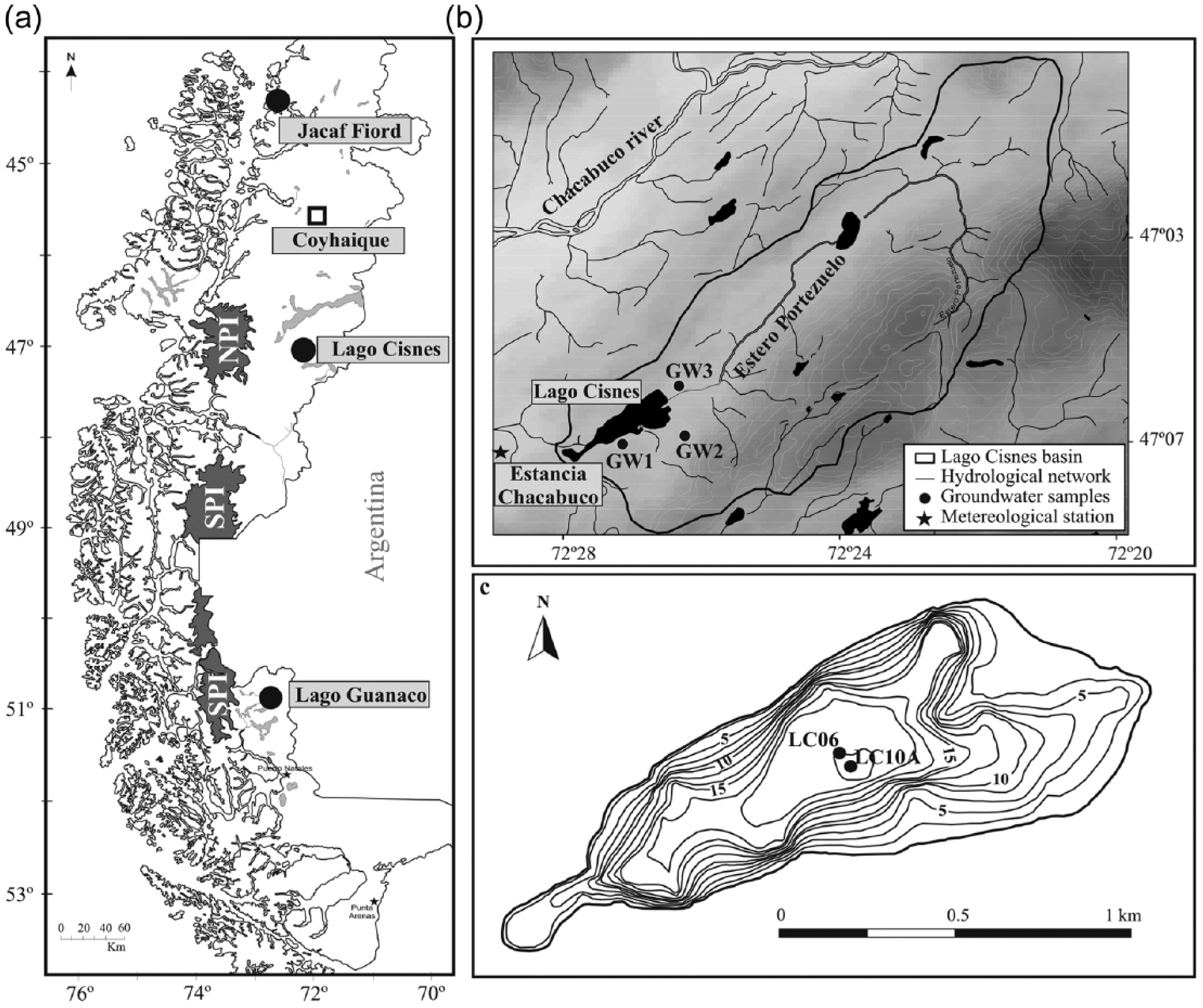
(a) Chilean Patagonia map including the records of Jacaf Fiord and Lago Guanaco, (b) basin of Lago Cisnes: this shows the meterological station (Estancia Chacabuco) and location of the groundwater samples, and (c) bathymetry of Lago Cisnes with the coring site.
The marsh vegetation consists mainly of Juncus sp. and Scirpus sp., which are dense on the southern edge of the lake. Cover by Myriophyllum sp. and Chara sp. reaches down to 6 m water depth. The terrestrial vegetation is mainly represented by shrub steppe, dense thickets, and some clusters of Nothofagus sp. (Marticorena and Rodríguez, 1995).
The area features a continental climate with temperature amplitude of more than 10°(Garreaud et al., 2013). Annual mean temperature obtained of the dataset CRU TS is 5°C (Mitchell and Jones, 2005). A temperature record was obtained from the surroundings of Lago Cisnes with a temperature sensor HOBO® data logger between December 2009 and February 2011. The temperature average from this record during the summer was 11°C. The precipitation of the study site is low, which enhances evaporation rates. The average annual rainfall recording in the nearby meteorological station Estancia Valle Chacabuco is around 200 mm (Valdés, 2009). The rainy season is from May to August, when about 50% of the annual total precipitation falls in the form of snow.
The westerlies have a negative influence on the precipitation in this area which generates arid conditions and high evaporation (Garreaud, 2007; Garreaud et al., 2013). The database ICOADS (Worley et al., 2005) shows that the velocity of the westerly winds is 7 m/s, which increases between August and November. Although there is no significant correlation between the wind velocity and the precipitation, the decrease in precipitation coincides with the months where wind velocity increases. Moy et al. (2008) and Ohlendorf et al. (2013) suggested that in the east side of the Andes, the wind velocity would be more related with evaporation rates than precipitation, which could be reflected in the lakes from the study area.
Materials and methods
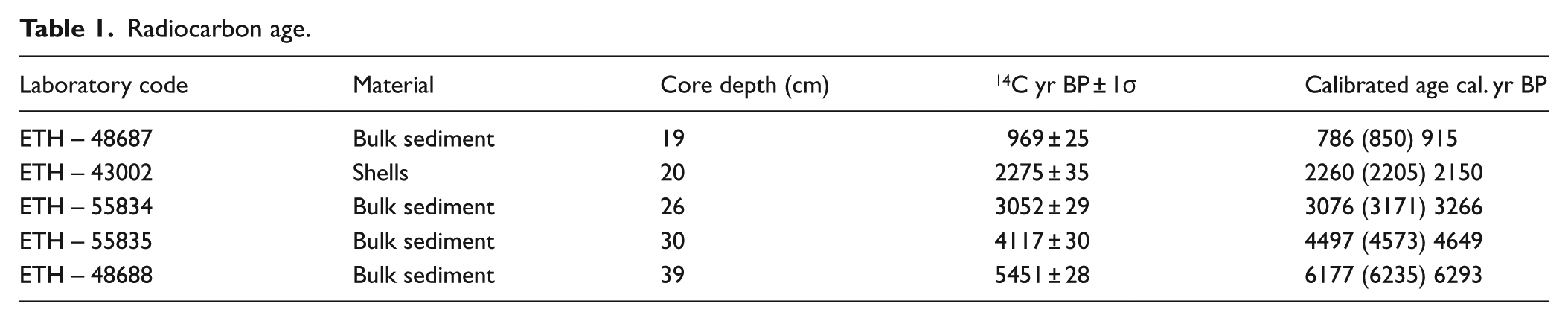
A bathymetry study was performed in Lago Cisnes (Figure 1) in January 2006 with a Garmin GPSmap® 178C echo-sounder. This allowed us to select an appropriate site for sediment coring. Two sediment cores, LC06 (47°06′45″–72°26′47″) and LC10A (47°06′44″–72°26′44″), were collected from the deepest part of the lake (18 m) using an Uwitec gravity corer. The first core (LC06), 34 cm in length, obtained in 2006, was sub-sampled in 1-cm-thick slices, while the second core, measuring 175 cm (LC10A), collected in 2010, was opened longitudinally and sub-sampled in 1-cm-thick slice for total organic carbon (TOC) analyses. Dating for LC10A was performed by radiocarbon analysis (14C) of four bulk sediment samples and one shell sample, and analysis of 210Pb and 137Cs activities was performed for the first 13 cm of the sedimentary record. Radiocarbon values were calibrated with OxCal 3.10 (Bronk Ramsey, 2005) using calibration curve SHCal13 (Hogg et al., 2013; Table 1), while the values of 210Pb were converted into age using the constant rate supply (CRS) model (Appleby and Oldfield, 1978). All the dates were logged to the Clam code (Blaauw, 2010) in R to obtain the chronological model. A smooth spline equation allowed to estimate the ages of undated levels in LC10A. These ages were further transferred to LC06 by the correlation of the TOC profiles (Figure 2d).
Radiocarbon age.
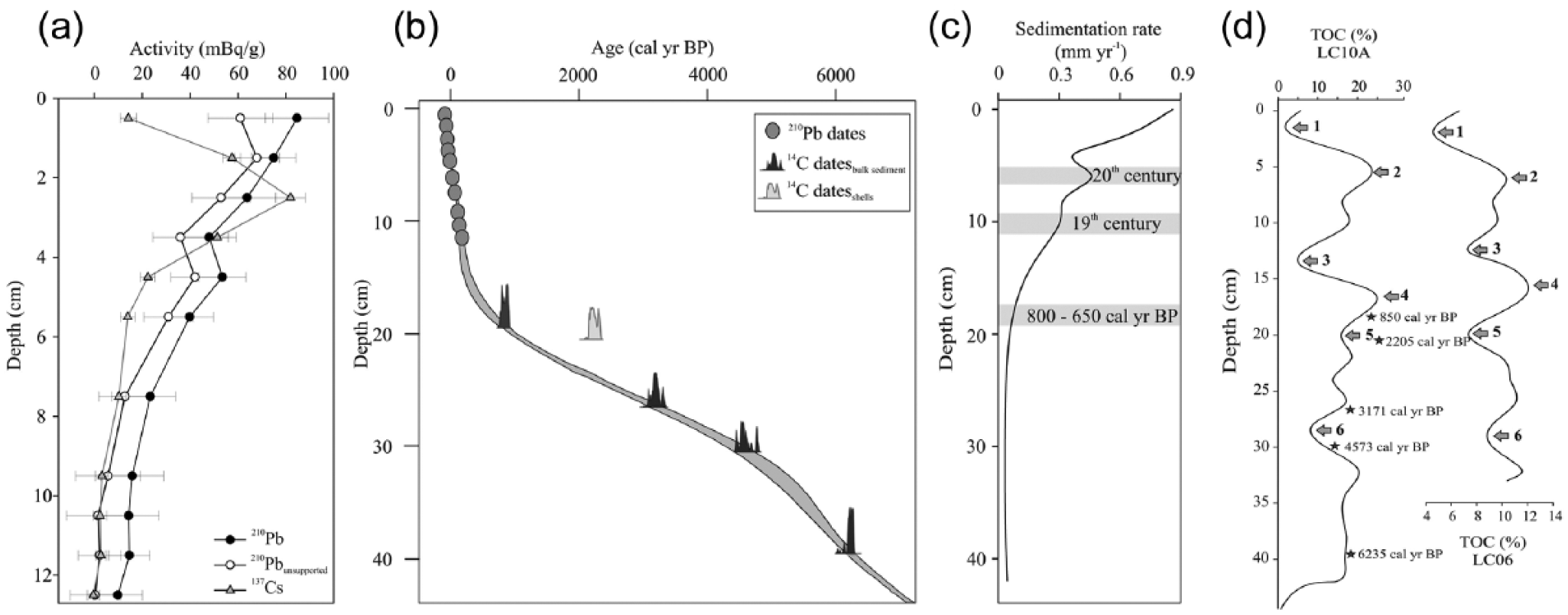
(a) 210Pbtotal, 210Pbunsupported, and 137Cs activity plotted against depth (cm), (b) chronological model based on 210Pb and 14C using Clam, (c) sedimentation rate, and (d) correlation between LC06 and LC10A through TOC profiles: gray arrows show the similar peaks of TOC, and black stars correspond to radiocarbon age (cal. yr BP).
The shells were selected using tweezers every 1-cm-thick slide (28 cm3 of sediment). The shells were washed two to three times with distilled water, when necessary using ultrasonic cleaning. Later, the shells were dried at room temperature, identified according to several authors (Burch, 1982; Cuezzo, 2009; Ituarte, 2009; Korniushin, 2000), and quantified under a low-power binocular microscope. To assess diagenetic alterations, four pools of shells from different sediment sections were analyzed by x-ray diffraction (XRD). All shells were composed of 100% aragonite, indicating that they were exposed to minimum diagenetic alteration, thus preserving their primary isotopic signal. The mollusks that were found corresponded to specimens of Lymnaeidae, Sphaeriidae, and Planorbidae families, within which only Sphaeriidae, represented by Musculium sp. and Pisidium sp., appeared throughout the entire sediment core. For each family, 6–10 shells were randomly selected for analysis (δ18O and δ13C) from each 1-cm-thick slice. They were milled and homogenized; aliquots of 10 µg were used for δ18O and δ13C analyses. Additionally, current specimens of Pisidium sp. were collected on the lake shore and also analyzed for stable isotopes. These analyses were carried out in the stable isotope laboratory at the Vrije University of Brussels, Belgium. The procedure for determining δ13C and δ18O was performed according to McCrea (1950) in order to release the CO2 from the biogenic carbonate. The stored CO2 was injected into a Finnigan Mat Delta E isotope ratio mass spectrometer (IRMS). The results were presented in standard delta notation, with δ13C and δ18O reported relative to the VPDB standard. The analytical reproducibility (2σ) based on laboratory standard NBS-19 was 0.06‰ for δ13C and 0.10‰ for δ18O.
During the summers of 2009 and 2010, lake water samples were obtained from different depths (0.5 and 18 m), together with samples of rainwater and groundwater near the study site, for analysis of δ18O and δ2H. The groundwater samples were taken by making a hole in the ground of 30 cm depth. All samples were stored in polyethylene bottles and refrigerated at 4°C prior to isotopic analysis. To set the local meteoric water line (LMWL), the data of the isotopic composition of regional meteoric water were obtained from the International Atomic Energy Agency-IAEA/WMO (2004) database (http://ishohis.iaea.org for Coyhaique). The isotopic analysis of oxygen and deuterium in the water samples was measured with the high-temperature pyrolysis technique (thermal combustion (TC) or elemental analysis (EA)) at the Hydrogeology Isotope Laboratory of GeoZentrum Nordbayern (Germany). Samples were analyzed in an IRMS Thermo Delta V Plus with continuous flow. Water values were reported relative to VSMOW. The external reproducibility (1σ) was 0.15‰ and 1.5‰ for δ18O and δ2H, respectively.
Sedimentological analyses were performed after extraction of the shells. In order to determine the magnetic susceptibility, 1 mL of powder of dry sediment was used in the Bartington MS2G magnetic susceptibility meter. The content of organic matter and carbonates was analyzed in 1 g of dry sediment using the loss on ignition technique (Heiri et al., 2001). Analyses of TOC, total nitrogen (TN), and stable isotopes (δ15N and δ13C) were performed with a Fisons NA 1500 NC elemental analyzer in line with an Optima mass spectrometer, and prior to this, the samples were treated with sulfuric acid (1 N) to remove carbonates. The remaining portions of each section were analyzed for mineralogy using XRD in a Bruker D8-Advance diffractometer with CuKa radiation. Data were analyzed semi-quantitatively following Cook et al. (1975). The intensity of the main peak of each mineral was measured and corrected using a multiplication factor.
Results
Chronology and correlation between cores
Radiocarbon ages from core LC10A are summarized in Table 1 and represented in Figure 2b. The obtained ages maintain a stratigraphic order throughout the profile, covering the past 6000 years. The activity of 210Pb was detected only in the first 13 cm (Figure 2a), and calculated ages were included in the chronological model. The peak activity of 137Cs was recorded at 2 cm, which, according to the CRS model, corresponds to AD 1969. This age is close to the peak of 137Cs recorded for the Southern Hemisphere (AD 1963; Quiroz et al., 2005; Walker, 2005), and therefore, the chronological model was able to provide dates that are in agreement with 137Cs data. Regarding the radiocarbon ages, only the age of the shell was not considered as it showed to be older than the one determined through the sediment. The sedimentation rate was low, with values fluctuating from 0.04 to 0.8 mm/yr. The values begin to increase above the youngest radiocarbon age, around 19, 10, and 4 cm (Figure 2c). The TOC profile used for the correlation between the cores LC10A and LC06 showed several similarities (Figure 2d), which allowed to established that the age of the bottom of LC06 was 5000 cal. yr BP.
Isotopic signal in modern waters
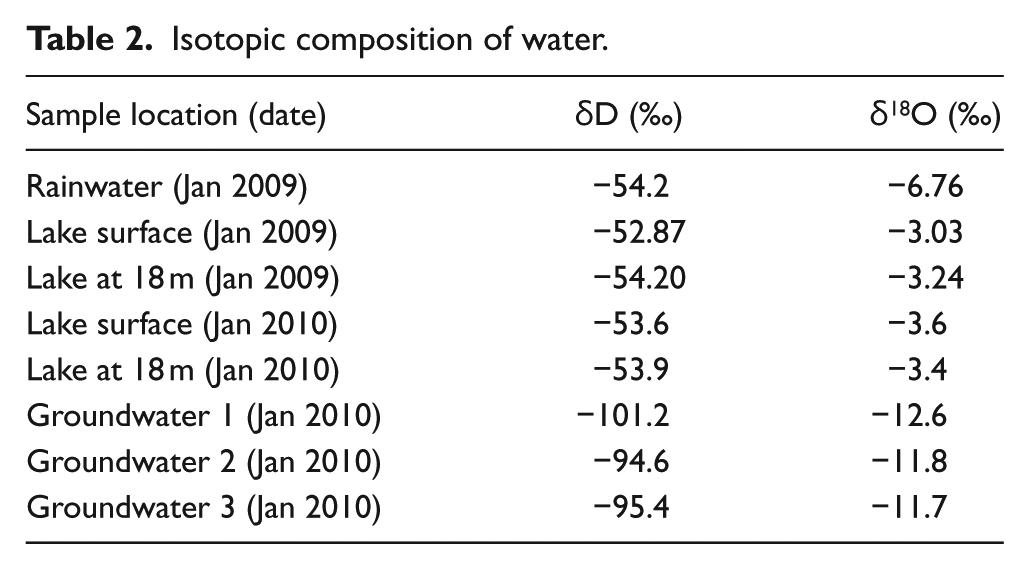
Data obtained from IAEA showed that δ18O values from rainfall were positive and significantly correlated to temperature (r = 0.63, p < 0.005), where high δ18O values were associated with high temperatures, while more negative values were found, in general, during periods of low temperatures. These data also allowed us to establish the LMWL of Coyhaique and to compare the signal obtained from precipitations in Lago Cisnes, which was within the range of the LMWL (Figure 3). The δ18O and δD values in all groundwater samples were similar (Table 2) and were located near the LMWL. The δ18O and δD values of lake water taken from the lake surface and from the lake bottom were similar, and inter-annual differences were minimal. The isotope values of the lake water were found to be below the LMWL, reflecting the influence of evaporation on the isotopic composition of lake water (Figure 3).
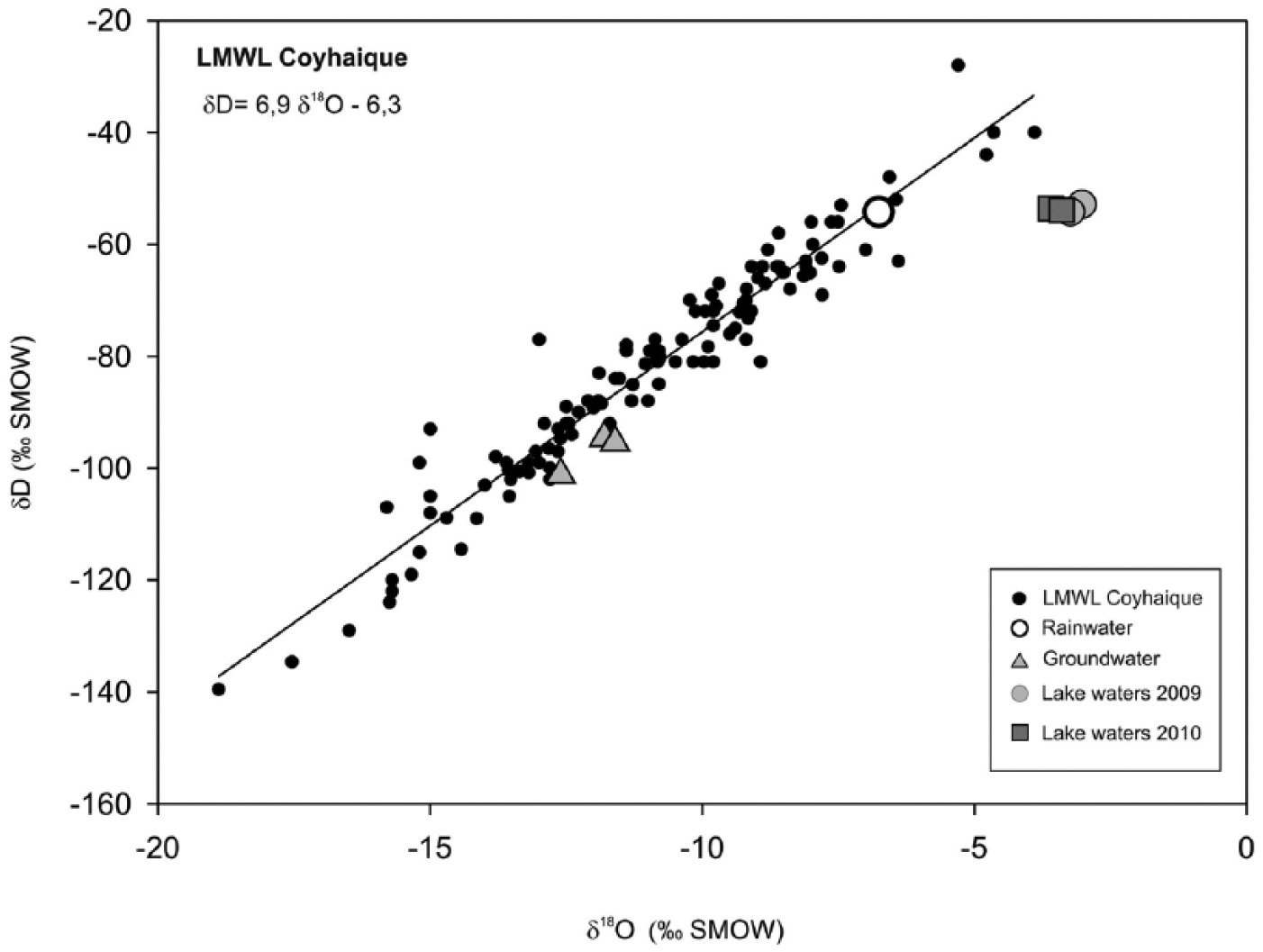
Stable isotope values of precipitation, surface water, and groundwater plotted against local meteoric water line (LMWL) of Coyhaique.
Isotopic composition of water.
Isotopic composition in mollusk shells
The isotopic values of the current bivalves (−3.38 for δ18O and −4.98 for δ13C) were within the wide range of the values of δ13C and δ18O of the shells analyzed throughout the sedimentary record (Figure 4). The range of δ18O values in the three species analyzed was from −6.0‰ to −2.2‰, with Lymnaea sp. and Pisidium sp. showing greater variability of the signal. From 5000 to ~1900 cal. yr BP, the variations of δ18O were relatively stable, with values that tended to be more negative in the bivalve Pisidium sp. (−4.9‰ to −4.0‰) and less negative in the gastropods Biomphalaria sp. (−2.6‰) and Lymnaea sp. (−3.3‰). After 1900 cal. yr BP, the variations of δ18O in Pisidium sp. increased, fluctuating between −3.9‰ and −5.9‰ with the highest peak of the record (−2.8‰). This value was similar to those found in Lymnaea sp. for the same period and remained high until ca. 1200 cal. yr BP. Subsequently, the values of δ18O for Pisidium sp. tended to be more negative between 950 and 170 cal. yr BP, coinciding with Biomphalaria sp. and Lymnaea sp, which also displayed more negative values (~500 cal. yr BP). From 150 cal. yr BP, the isotopic values of oxygen in Pisidium sp. tended to increase, in general, with values fluctuating from −5.0‰ to −2.2‰. Gastropods showed slightly higher values; however, variations recorded in Lymnaea sp. (−5.4‰ to −2.3‰) were higher than those of Biomphalaria sp. (−3.5‰ to −3.2‰).
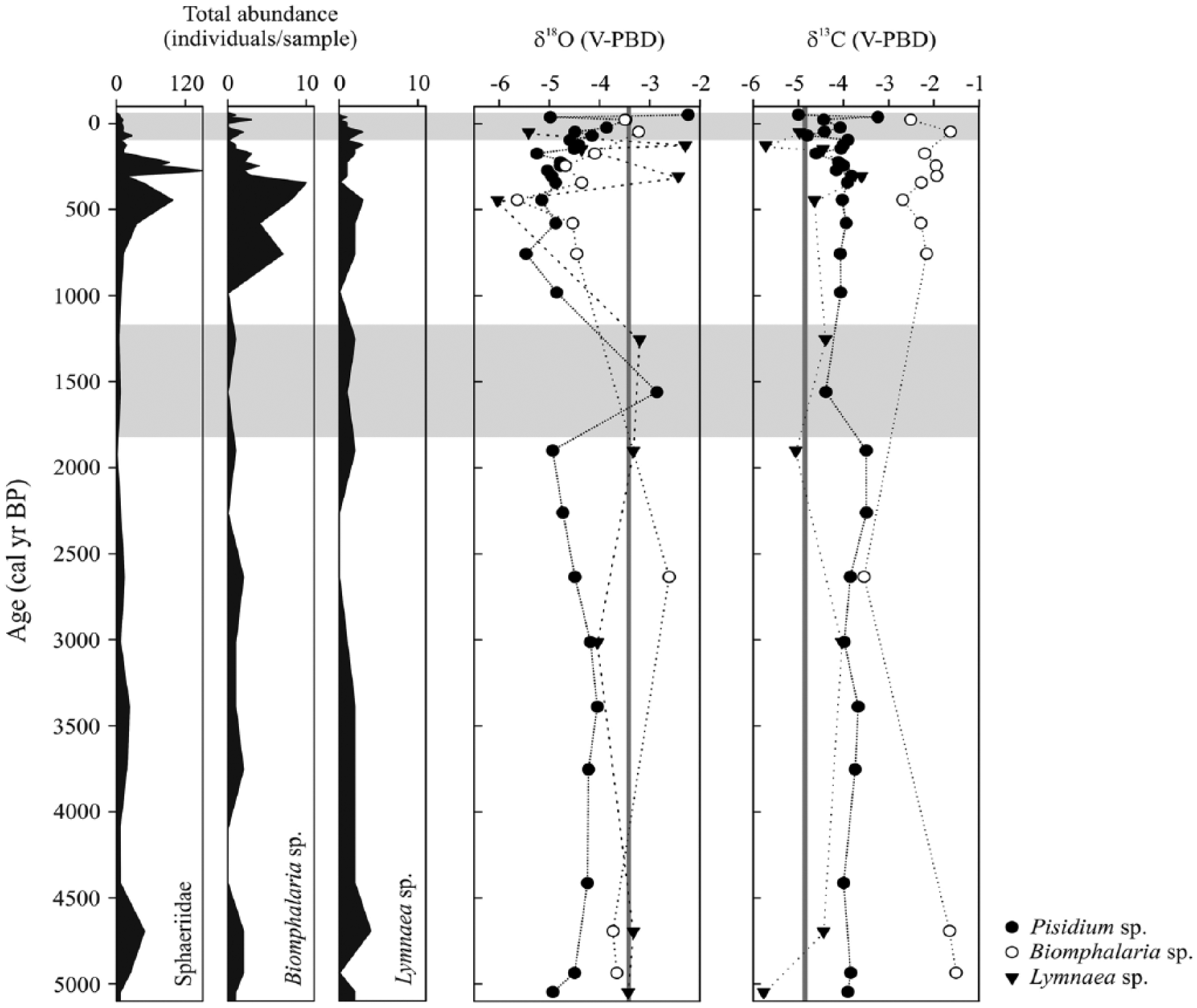
Abundance total of three mollusk taxa and their oxygen and carbon stable isotope records from sediment core LC06 plotted against age (cal. yr BP). The abundance of Sphaeriidae family was represented for Musculium sp. and Pisidium sp. However, isotope signals of this family correspond only to Pisidium sp. Isotopical trends are represented by dotted lines. Periods of increased evaporation were indicated by gray bands. The solid gray line represents current isotopic value of Pisidium sp.
The carbon isotopic signature found in the three mollusk species remained relatively stable throughout the record; however, each taxon showed a different range of values, with Biomphalaria sp. showing less negative values (−3.5‰ to −1.7‰) and Lymnaea sp. showing more negative values (−5.8‰ to −3.6‰). The δ13C signal in Pisidium sp. varied between −4.9‰ and −3.2‰, with a period (between 5000 and 1900 cal. yr BP), where there were less negative values and a peak in AD 1985 ± 5 that had the highest value (−3.2‰). After 800 cal. yr BP, the interspecies differences increased because the Biomphalaria sp. signal tended toward less negative values (−2.2‰ to −1.63‰) than those of Lymnaea sp. and Pisidium sp. (Figure 4).
Sedimentological characterization of sediment cores
The results of the sedimentological analyses performed on sediment core LC06 are shown in Figure 5. The magnetic susceptibility values ranged from 11 × 10−6 to 174 × 10−6 SI, with an average of 40.8 × 10⁻⁶ SI. Two high values occurred in ~1900 cal. yr BP and AD 1992 ± 5 with 174 × 10−6 and 147 × 10−6 SI, respectively. In general, an increase in magnetic susceptibility was inversely related to TOC and TN.
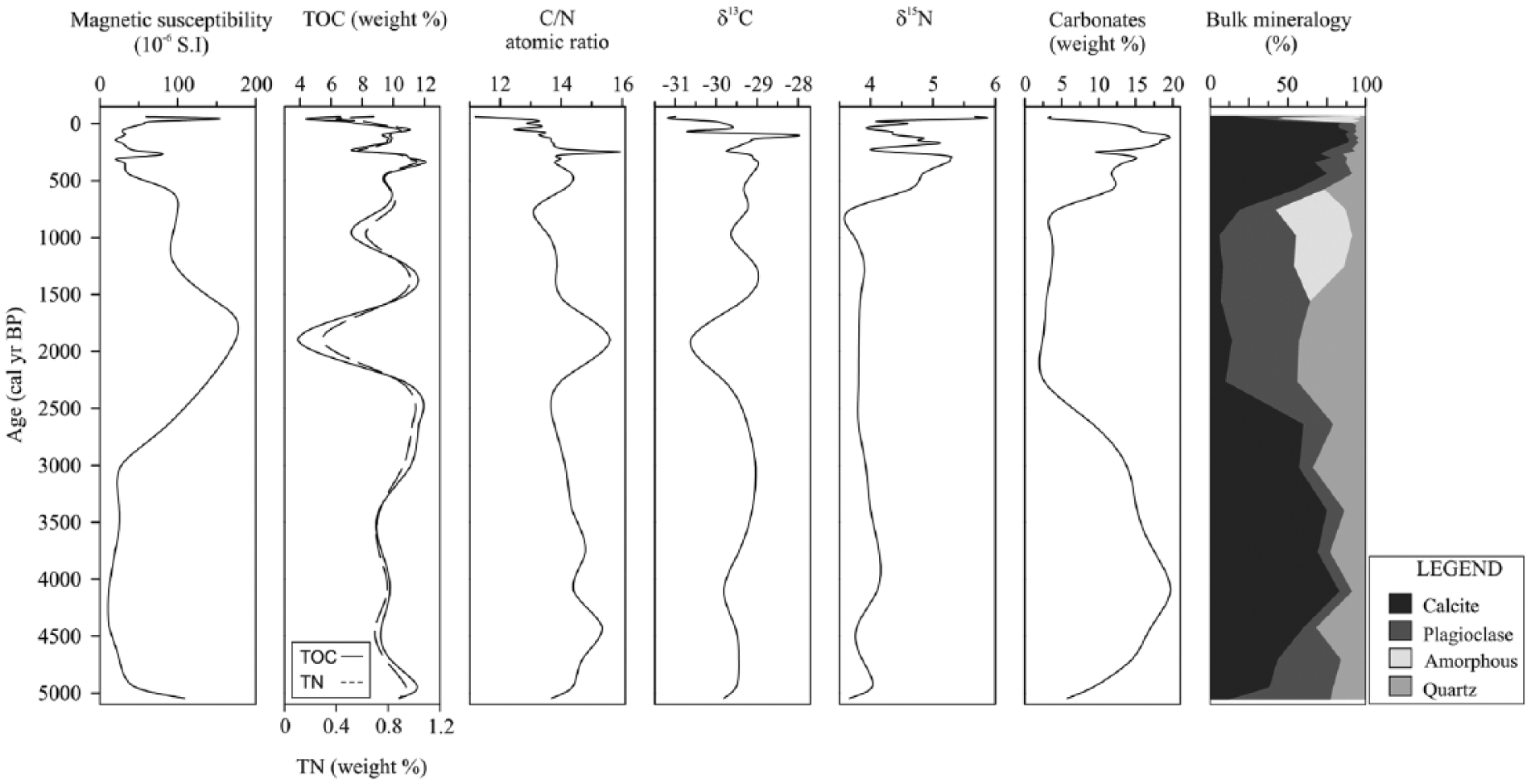
Sedimentological characterization of LC06 core.
The profiles of TOC and TN showed similar trends, with the ranges of TOC and TN values varying from 3.8% to 11.6% and 0.2% to 0.9%, respectively. The atomic ratio C/N showed inverse tendencies to those of TOC and TN and fluctuated between 11.2 and 15.9. The isotopic values of carbon and nitrogen ranged from −31.2‰ to −28.1‰ and 3.6‰ to 5.8‰, respectively. The δ15N is relatively stable between 5000 and ca. 800 cal. yr BP. After this period, the signal began to increase rapidly, reaching a value of 5.3‰.
The carbonate content ranged between 2.4% and 19.5%, averaging 11.3%. A decrease in carbonate content occurred between 2200 and 800 cal. yr BP and in AD 1992 ± 5. Trends in the carbonate content were directly related to the percentage of calcite. The bulk mineralogy was mainly represented by quartz, calcite, plagioclase and amorphous particles. The amorphous particles were present only in two periods, between ca. 1500 and 550 cal. yr BP, and again between AD 1969 and 1992, coinciding with an increase in plagioclase and a decrease in calcite (Figure 5).
Discussion
The chronological model suggests a low sedimentation rate which could be associated with low regional precipitation. However, the sedimentation rate increases above the youngest radiocarbon (15 cm) age and remains high upward. Three major sudden increases in the sedimentation rate that occurred in the upper part of the core could be associated with either climatic or anthropogenic factors (Figure 2c). The first increment around 750 cal. yr BP coincides with low values of δ18O (Figure 4), suggesting that more humid conditions would generate a positive hydrological balance. The second increment observed from the 19th century until the present would be related with land-use intensification by indigenous people before the arrival of settlers at the beginning of the 20th century. The third most recent change would be related to intensive cattle grazing by the settlers (Martinic, 1995). Such practice promotes active erosion leading to more sedimentary supplies to the lake recorded by an increase in the sedimentation rates (Figure 2c).
Interpretation of stable isotopes
Trends of δ18O values in the shells of the three species of mollusks were roughly similar, and their values varied along the sedimentary record, which could primarily be a reflection of changes in the water balance of the lake. Due to the fact that δ18O values in current samples of Pisidium sp. (−3.38‰) were generally similar to the δ18O values of the lake water (Table 2), we can infer that carbonate precipitation in bivalves was close to the isotopic equilibrium and thus would reflect the oxygen isotopic composition in the lake water. A change in the isotopic signal toward an enrichment of the heavy isotope could reflect a negative water balance generated by increased temperatures, which favors evaporation, and/or a decrease in precipitation, while the depletion of heavy isotope would suggest a positive water balance in the lake, caused by a decrease in temperature and/or increase in precipitations. Several authors (Apolinarska et al., 2009; Baroni et al., 2006; Heaton et al., 1995; Von Grafenstein et al., 1999) indicate that wet periods are characterized by low values of δ18O in shells, while drier periods show a less negative δ18O signal.
Taking into account the δ18O trends in the three species, it is possible to distinguish four periods where climatic variations might have affected the water balance in the lake. Between 5000 and 1800 cal. yr BP, the δ18O in Pisidium sp. recorded a slight variation evidencing that the rate of evaporation in the lake was lower than it is currently. Around 2600 cal. yr BP, Biomphalaria sp. recorded the highest value, suggesting an increase in evaporation. This condition was subsequently registered in the δ18O signal in Pisidium sp. and Lymnaea sp., whose values began rising after 1900 cal. yr BP, becoming even greater than those recorded in the current specimens of Pisidium sp. (Figure 4), providing evidence that during the period from 1800 to 1200 cal. yr BP, the lake may have experienced an intense evaporation.
Around 1000 cal. yr BP, climatic conditions became wetter, which is reflected in lower δ18O values, which reached a minimum between 750 and 500 cal. yr BP. In Pisidium sp., the difference between this signal and the current period is greater than 2‰ and remains at low values until ~170 cal. yr BP. An increase in δ18O was recorded in Lymnaea sp. about 400 cal. yr BP; however, the isotopic signal tended to decrease at the end of this period and reached similar levels to those of the other two taxa. The δ18O signal of Pisidium sp. and Biomphalaria sp. during the last 150 years tended to increase, suggesting a change in the water balance of the lake toward greater evaporation.
Discrepancies detected in Lymnaea sp. with respect to the other species during drier periods could be related to the type of habitat used by this species, which prefer shallower habitats than the other taxa (Utzinger and Tanner, 2000). Although there is no significant differences in the isotopic composition of the water at different depths of the lake, it is possible that in inshore waters of the lake (e.g. <30 cm of depth), where the pulmonate gastropods generally inhabit, are more affected by evaporation generating a change in the isotopic composition in favor of 18O enrichment and greater interspecies variability. Jones et al. (2002) noted that differences in the levels of δ18O among gastropods could be associated with water temperature changes and increased evaporation around the marginal part of the lake. A similar situation was described by Bonadonna and Leone (1995), who showed that high values of δ18O in Lymnaea truncatula could be associated with the presence of this species in marginal wetlands, where the water is more subject to evaporation. Conversely, based on the similarity between δ18O in Biomphalaria sp. and Pisidium sp., we infer that the microhabitat of both species could be associated with deeper areas, where environmental conditions were more homogeneous.
Regarding the carbon isotope signal, minor variations were observed throughout the sedimentary record. The main differences were observed between the δ13C values of Biomphalaria sp. in relation with the other species (Figure 4). The covariance between δ18O and δ13C was strong in Pisidium sp. (r = 0.5, p < 0.05), while no covariance was found for Lymnaea sp. and Biomphalaria sp. The covariance between δ18O and δ13C provides important information about the process that mollusks use to fix carbon from the lake system (McConnaughey and Gillikin, 2008). A strong covariance between δ18O and δ13C indicates that the carbon incorporated to the shells is from dissolved organic carbon (DIC) of the lake water (Jones et al., 2002). At the contrary, a low covariance between δ18O and δ13C means that the carbon that the mollusks incorporate comes from metabolic processes (Jones et al., 2002). Therefore, the covariance in Pisidium sp. could be reflecting the isotopic composition of the DIC, and no covariance in Lymnaea sp. and Biomphalaria sp. would indicate that variations in the isotopic signal could reflect a greater influence of metabolic (e.g. vital effect) or environmental processes (e.g. microhabitat; Jones et al., 2002; Shanahan et al., 2005).
Similar relationships between δ13C and δ13CDIC of bivalves were found by Von Grafenstein et al. (1999) in German lakes. They state that δ13C values in current samples of Pisidium were within the range of δ13CDIC. Therefore, considering that in the Lago Cisnes the values of δ13C in Pisidium sp. were similar to the values found in current samples, we can infer that the isotopic composition of the DIC during the studied period was similar to the current one. Regarding the low covariance, Bonadonna and Leone (1995) suggest that a weak correlation with the oxygen isotope and rapid variations of δ13C would indicate that the δ13C of Lymnaea and Planorbidae would be more influenced by the ecological behavior of every organisms (Bonadonna and Leone, 1995) in the Valle di Castiglione Lake (Italy). Leng et al. (1999) also indicated that freshwater snails generally present low vital effect. For the Lago Cisnes, the low range of variations in δ13C in both gastropods could suggest a low vital effect, and therefore, the differences in the ranges of values between Lymnaea sp. and Biomphalaria sp. could reflect an influence of environmental conditions. The high δ13C values of Biomphalaria sp. would reflect a habitat with high vegetal cover (e.g. Chara), where the DIC is strongly enriched in 13C (Coletta et al., 2001; Jones et al., 2002). On the contrary, the lower values for Lymnaea sp. would rather be related to environments with a high degradation of organic matter (Bonadonna and Leone, 1995).
Interpretation of sedimentological proxies
The content of organic matter in the sediment of Lago Cisnes, represented by TOC, showed variations throughout the past ~5000 cal. yr BP (Figure 5). The contribution of allochthonous and autochthonous components, which can be estimated by the values of the atomic ratio C/N, allows us to infer that the organic matter in the lake is mainly composed of a mixture of algal and vascular plant contributions. Based on the trends of the TOC and the atomic ratio of C/N, periods of lower lake internal productivity and/or higher input of terrestrial organic matter were identified between 2200–1550 and 250–150 cal. yr BP.
During these periods, the decrease in the carbonate content of the sediment (Figure 6) was significant, particularly during the first interval. The decrease could be mainly associated with low productivity of the lake because decreases in photosynthesis result in less precipitation of endogenic carbonate (Leng et al., 1999). The alga Chara sp. could play an important role in the precipitation of carbonates in the sediments of the Lago Cisnes, so it is possible that, around 2200 cal. yr BP, its abundance in the shallower zones has begun to decrease due to a lake water level lowering.
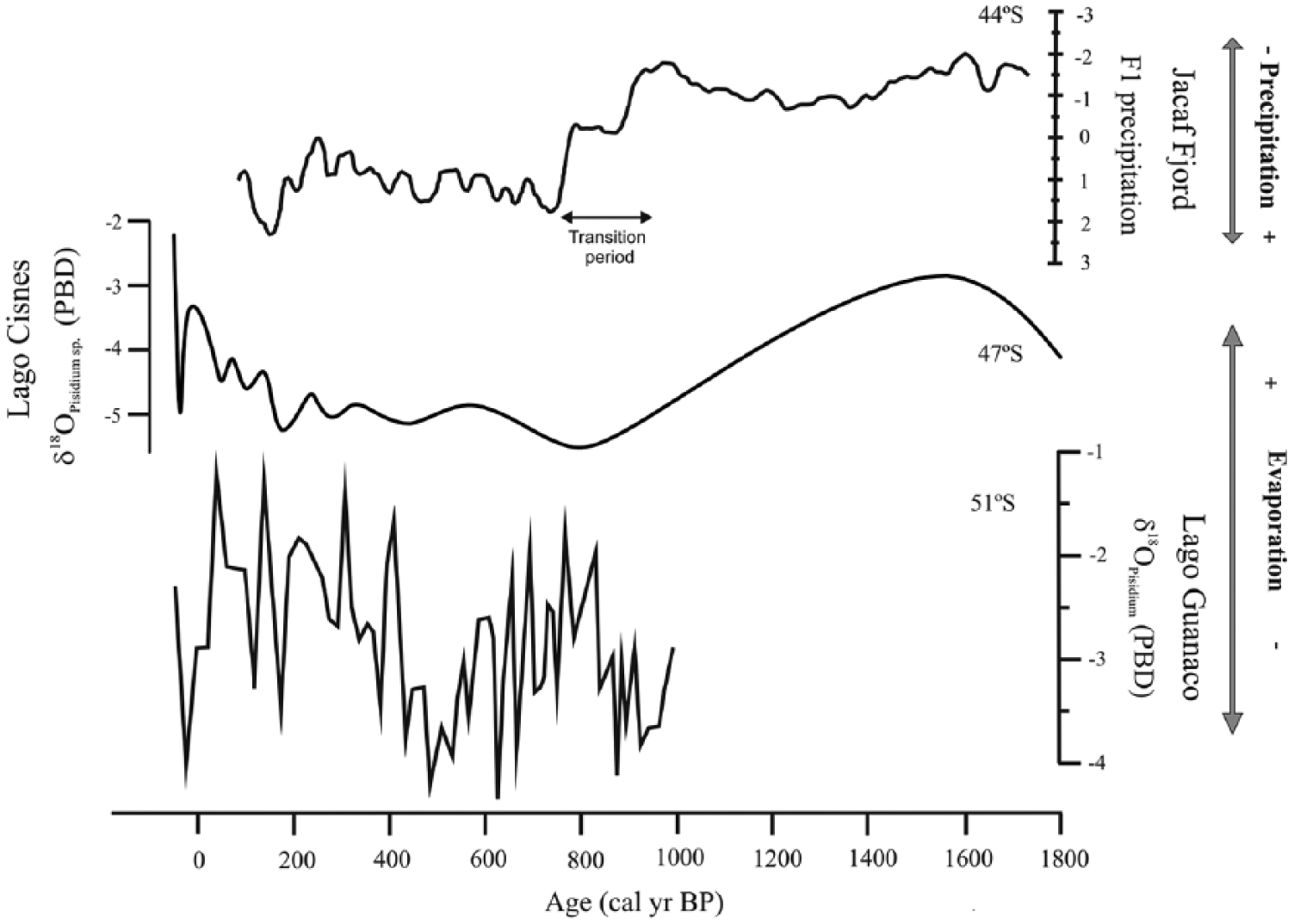
Comparison of climate records of the Jacaf Fjord (Sepúlveda et al., 2009) and Lago Guanaco (Moy et al., 2008) with the record from Lago Cisnes. The data of Sepúlveda et al. (2009) are based on a terrestrial index, corresponding to factor 1 of the principal component analysis, while the data of Moy et al. (2008) correspond to oxygen isotope values in Pisidium valves. For Lago Cisnes, only the δ18O of Pisidium sp. was considered.
The low content of carbonate may also have been accentuated by the deposition of volcanic material, which causes a dilution of the carbonate fraction in sediments (Zanchetta et al., 2012). Although it was not visually possible to identify volcanic material, the change in magnetic susceptibility, carbonates, TOC, and δ13C between 1900 and 1550 cal. yr BP coincided with the eruption event of the Hudson Volcano in 1560 cal. yr BP (Haberle and Lumley, 1998). While the volcanic deposit is considered as a punctual event, Kilian et al. (2006) suggest that in less humid areas to the east of the Andes, the alteration generated by tephra in the sediment can be very slow and cover periods even greater than 1000 years. On the other hand, Jouve et al. (2013) reported that microtephras identified in sediments of Lake Potrok Aike (51°S) significantly influenced the content of organic carbon and iron for at least 4000 years because the volcanic deposits that remained around the lake may have been subsequently transported through wind or fluvial processes. The high δ18O values in the sediment core of the Lago Cisnes around 800 cal. yr BP shows an increase in evaporation that could be related to an intensification of westerlies. Therefore, higher wind velocity could have transported terrestrial material to the lake, which joined to the low productivity of the lake could explain the persistence of low carbonate content The rise of carbonates after 800 cal. yr BP coincided with a period of increased humidity reflected in the signal δ18O and an increased δ15N, which may indicate a change in productivity. Vuorio et al. (2006) noted that high values of δ15N would evidence a rapid increase in productivity of the lake and a change in phytoplankton assemblages in favor of the increase in chrysophytes, dinophytes, and diatoms. In Lago Cisnes, the moisture enhancement could favor an increase in the lake water level. A high water level could promote the development of Chara sp., generating an increase in carbonates in the sediment. Finally, the rapid variations of δ15N after 250 cal. yr BP could be related to human activities in the area along with a subsequent change to dry conditions, according to the δ18O signal. The decrease in all values in the top of the sediment core coincides again with the deposition of volcanic material which corresponds to the last eruption of the Hudson Volcano which occurred in AD 1991 (Haberle and Lumley, 1998).
Paleoclimatic interpretation and comparison with regional records
Trends in oxygen isotopic composition of mollusks were recorded during the past 5000 years showing variations in the rate of evaporation or precipitation in Lago Cisnes. These variations could be related to temperature, precipitation, and wind speed. This last parameter is the most important in that, on the east side of the Andes, an increase in wind speed generates more precipitation in water bodies (Moy et al., 2008; Ohlendorf et al., 2013).
The isotopic values between 5000 and 1800 cal. yr BP showed stable climatic conditions, for the most part wetter than the present time. These trends are consistent with the results of Lamy et al. (2001) who noted that climate conditions over the past 4000 years in southern Chile were wetter than during the middle Holocene due to a strengthening and equatorward shift of the westerlies. Increased precipitation generated by the westerlies toward the north of Patagonia may also have favored the glacier advances, as evidenced by Bertrand et al. (2012) in the Glaciar Gualas (46°S) between 4130 and 850 cal. yr BP.
Although the influence of the westerlies to the east of the Andes should generate dry conditions, the isotopic record in Lago Cisnes indicates otherwise. One possible explanation could be the decrease in temperature during this period, which could reduce evaporation caused by the influence of westerlies. Lamy et al. (2002) inferred using alkenones that sea surface temperatures (SSTs) in southern Chile tended to decrease after 5500 cal. yr BP, which coincides with the wet period in Lago Cisnes. Kilian and Lamy (2012) also mentioned that some studies in progress in southern Patagonia suggest a cooling of SST between 3500 and 2500 yr BP.
An increase in evaporation between 1800 and 1150 cal. yr BP was evidenced by the high values of δ18O in Pisidium sp. The high values in magnetic susceptibility between 1800 and 1500 cal. yr BP could be interpreted as a higher wind transport of terrestrial material. Thus, both parameters would suggest a greater influence of westerlies in this area. Similarly, Gilli et al. (2005) record an intensification of the westerlies through an increase in the magnetic susceptibility recorded in lacustrine sediments from Lake Cardiel (49°S) between 1800 and 1200 cal. yr BP. Therefore, it is possible that the influence of the westerlies in southern Patagonia has reached latitudes close to 47°S which would be reflected by a high evaporation rate in Lago Cisnes. However, north of 47°S, the westerlies did not affect the area, which was reflected in a lower contribution of terrigenous material to the Jacaf Fjord (44°S) between 1975 and 900 cal. yr BP, which was interpreted as less precipitation in the coastal zones (Sepúlveda et al., 2009).
Mohtadi et al. (2007) based on the SST, sea surface salinity, and the marine productivity, estimated that between 1300 and 750 cal. yr BP, the westerlies shifted northward ~2° toward their current location. The equatorward position of the westerlies could be related to the wet, cold conditions evidenced in the Jacaf Fjord after 900 cal. yr BP (Sepúlveda et al., 2009). In Lago Cisnes record, the wet conditions became apparent after 1100 cal. yr BP, coinciding with the transition from dry to wet conditions evidenced in the Jacaf Fjord (Figure 6; Sepúlveda et al., 2009) and the beginning of the sustained cooling in the SST (Mohtadi et al., 2007; Sepúlveda et al., 2009).
Conversely, on the eastern slope in the south of Patagonia, a decrease in precipitation was identified for the same period by means of pollen analysis at Cerro Frias (50°S; Tonello et al., 2009), while Moy et al. (2008), using δ18O of bivalves, identified a dry period between 900 and 500 cal. yr BP. A low precipitation could mean less influence of the westerlies; however, Moy et al. (2008) attribute the evaporation evidenced by δ18O of Pisidium in Lago Guanaco to be directly related to the speed of the westerlies in Torres del Paine. The equatorward position of the core of the westerlies would have generated less influence on southern Patagonia, while high-velocity winds would have affected northern Patagonia, with an increase in the evaporation rate. Nevertheless, this condition was not recorded in the Lago Cisnes, suggesting that other factors, such as temperature, could have an influence during this period.
Indeed, the temperature in Lago Cisnes could also be a major factor in the lake water balance. Although, in eastern Andes, the westerlies are related to evaporation, the decrease in temperature could mitigate the effect of the winds. The similarity between marine records of Andes and those of Lago Cisnes after 1000 cal. yr BP could therefore suggest two scenarios: a weakening of the westerlies, which brought precipitation toward the west but generated less evaporation toward the eastern slope of the Andes, or a significant decrease in temperature, which may have contributed to the positive water balance in the lake.
The wettest period occurred between 750 and 450 cal. yr BP, which was characterized in Lago Cisnes mainly by the decrease in the δ18O values in the three taxa of mollusks (Figure 4). The magnetic susceptibility values decreased rapidly (Figure 5), which may indicate a minor influence of the westerlies, possibly due to a weakening or a displacement to a poleward position of the westerlies. This wet period also coincided with a cold peak identified around 600 cal. yr BP by Villalba (1994), who used tree-ring to make a temperature reconstruction.
Although the isotopic record of Lake Guanaco (Moy et al., 2008) shows several peaks of evaporation between 700 and 550 cal. yr BP, the trend is an increase in wetness after 600 cal. yr BP. This is similar to conditions at Lago Cisnes (Figure 6), so it could be inferred that during this period, lower temperatures could have had more influence. Moreno et al. (2009) suggests that the correspondence between the pollen index of Lago Guanaco with neoglacier advances, one of which occurs between 570 and 70 cal. yr BP, could be triggered by the activity of the westerlies but could also be related to the decreasing temperatures.
The variations found from Lago Cisnes were generally consistent with other climate records in the area and showed little fluctuation over the last 5000 years. A plausible explanation could be the low rate of sedimentation of the lake, which did not allow a higher resolution reconstruction, so other minor variations may have been diminished. However, climate trends after 1100 cal. yr BP were more similar to those evidenced in coastal areas of northern Patagonia. This suggests that after 1100 cal. yr BP, the strength of the westerlies may have decreased when they were positioned farther north. The temperature could also have played an important role on evaporation on the eastern slope of the Andes, mainly during periods when the westerlies were weak. Therefore, the effect of both forcings over the study area could explain the discrepancies with other regional records. Higher resolution studies in this area would be appropriate to supplement the information of Lago Cisnes, in particular on the strength and the location of the westerlies during the last millennium.
Conclusion
The Lago Cisnes record shows variations in the water balance during the late Holocene. These were assessed by isotopic signals of different mollusks. Their δ18O values were roughly similar, predominantly during wetter periods, and their ecological characteristics may have implications for paleoclimatic interpretation. The signal of δ18O in the bivalve Pisidium sp. seems to be the most appropriate climate proxy.
The isotopic variations of the signal found in the lake seem to respond primarily to the variations of the westerlies. Nevertheless, a part of these variations also seem to be influenced by the temperatures. The dry period recorded between 1800 and 1150 cal. yr BP coincided with the shift of the core of the westerlies to a northward position, which could have led to an increased evaporation in the eastern slopes of the Andes, probably accentuated by high temperatures recorded in other studies.
The predominantly wet period after 1100 cal. yr BP was similar to the paleoclimatic records for the western slopes of the Andes which allows us to infer two situations: a weakening of the westerlies when its moved north and/or the influence of low temperatures that may have lessened the effect of evaporation related to the speed of the westerlies on the eastern side of the Andes. The combined effect of both factors might explain the discrepancies with other records. The incorporation of a larger number of studies with high resolution in the area would allow for a better understanding of the effect of the intensification of the westerlies on the eastern slope of the Andes.
Footnotes
Acknowledgements
The authors would like to thank to Dr Gilles Lepoint for providing carbon and nitrogen results, Dr Sebastien Bertrand for help with the chronological model, Pablo Pedreros for mollusk identification, and the reviewers for their contributions. Special thanks to Conservacion Patagonica for permitting the access to the lake.
Funding
Financial support for this study was provided by Fondecyt no. 1120807, 1120765, CRHIAM/Conicyt/Fondap 15130015, and CGRI Wallonie-Chile cooperation project.