



Abstract
The present work is pursued on the benthic foraminiferal groups obtained from NGHP core samples of the western Bay of Bengal to understand the variations of paleoceanography and Indian Summer Monsoon (ISM), as well as socio-economic changes in ancient India. Benthic foraminiferal AMS 14C dating reveals that the studied interval spans between 335 BC and 1355 AD, covering the history of the last 1690 years. We compared foraminifera group counts with published isotopes, sunspot number, summer monsoon index, hematite-stained grain, Al/Ca, 14C data sets. Angular Asymmetrical Benthic Foraminifera, infaunal, and dysoxic groups exhibit declining trends with warm, humid intervals with intensified ISM signature from 335 BC to 406 AD (Roman Warm Period) and from 787 to 1202 AD (Medieval Warm Period). The Increasing trend of the above foraminiferal groups captures the signature of weak ISM from 406 to 787 AD (Dark Age Cold Period) and from 1202 to 1355 AD (Medieval Warm Period and Little Ice Age Transition). Whereas rounded symmetrical benthic foraminifera, epifaunal, and oxic groups show a reverse relation with the abovementioned groups. Spectral analysis of foraminiferal groups shows significant periodicities of 563/561, 450, 321, 281/250, 22/27, and 17/16/15 years, corresponding to various solar cycles. This research uncovers the relationship between solar activity and monsoonal changes, which influenced India’s economic growth and played a crucial role in the establishment and demise of successive dynasties throughout the Indian subcontinent during the late-Holocene.
Introduction
Climate is inextricably linked to the human race’s evolution, existence, and well-being. Throughout history, different regions of the world have experienced climatic changes that caused ancient civilizations to rise and fall. Knowledge of paleoclimatic variation is instrumental in devising a strategy for fending off nature’s wrath. The monsoon and climatic conditions are crucial for the Indian subcontinent as these control the agriculture and economy of this country. Therefore, the Indian monsoon system is considered a potential driving force in the development of human civilization on the subcontinent, particularly during the Holocene (Ponton et al., 2012; Prasad et al., 2014). The Indian summer monsoon (ISM) is a manifestation of a land-sea breeze, which forms due to the temperature contrast of the Indian landmass and the adjacent Indian Ocean (Clemens et al., 1991). The ISM plays a crucial role in cross-equatorial moisture exchange and in determining the agricultural practices of the vast South Asian population (Gadgil and Gadgil, 2006). The ISM is a large-scale complex combined land-ocean-atmosphere climatic event that transports water vapor to the Indian subcontinent (Clemens et al., 1991). The precipitation and overall seasonal changes in the Indian subcontinent are believed to be controlled by the intensity of ISM linked to different climatic factors like the position of the Intertropical Convergence Zone (ITCZ) and sunspot activity (Gadgil, 2003; Gadgil and Gadgil, 2006; Gupta et al., 2005).
Different marine biota can provide valuable information regarding the past climate and how they respond to climatic changes. Among them, unicellular, eukaryotic, and test-bearing benthic foraminifera are extremely sensitive to ecological factors, like availability of dissolved oxygen, nutrient supply, organic carbon, depth, ocean currents, temperature, and salinity. Thus, this group is used as a vital proxy for paleoclimatic reconstruction. Several studies have been conducted using foraminiferal census count around the globe to understand paleoclimatic variations (Kaiho, 1991; Manasa et al., 2016; Nigam et al., 1992; Severin, 1983; Suokhrie et al., 2018). Temporal variation in the abundance and morphology of foraminiferal tests is an evolutionary adaptation due to environmental change. Thus, benthic foraminiferal test morphology variations can be used to reconstruct climatic changes and paleomonsoon intensity (Nigam et al., 1992). Several researchers prefer foraminiferal morpho-groups for paleoclimatic study over species-level identification due to the chances of errors during species-level identification and restricted geological range of benthic foraminiferal species across the large geological time scale (Manasa et al., 2016; Nigam et al., 1992). Researchers have grouped benthic foraminifera in terms of Angular Asymmetric Benthic Foraminifera (AABF) and Rounded Symmetric Benthic Foraminifera (RSBF) from the riverine influx-dominated regions and suggest these groups have potential for paleomonsoonal reconstruction (Manasa et al., 2016; Nigam et al., 1992; Suokhrie et al., 2018).
The Bay of Bengal (BoB) is considered a unique three-side landlocked ecological environment in the Indian Ocean due to its substantial freshwater influx, higher sedimentation rate, seasonal reversal of monsoon, and water column stratification (Bhadra and Saraswat, 2021). The higher sedimentation rate provides an opportunity to reconstruct high-resolution (sub-centennial to multi-decadal timescales) paleomonsoonal and climatic history. Several studies have been performed using benthic foraminiferal assemblages from this basin to understand paleoclimate and paleomonsoonal history (Ma et al., 2019; Manasa et al., 2016; Saalim et al., 2019; Suokhrie et al., 2018; Verma et al., 2021). Foraminiferal research of Manasa et al. (2016) elaborately described the habitat and ecological preferences of RSBF and AABF from the north-western BoB. The ecological preferences of benthic foraminiferal morphotypes and morpho-group can be a valuable tool for predicting the past monsoon intensity of BoB (Saalim et al., 2019, 2022). The study of Verma et al. (2021) shows millennial-scale climatic variations from high-resolution benthic foraminiferal data from western BoB during the last 45 ka. Suokhrie et al. (2018) reported the AABF and RSBF species spatial variation from the subsurface core of the Pennar river mouth to find the climatic factors that control the relative abundance of these morpho-groups and exhibited prominent cyclicity signature from the foraminiferal dataset, indicating a strong relationship between monsoon and sunspot activity during the last 1887 years. Besides, researchers extensively used other biogeochemical proxies (δ18O of planktic and benthic foraminifera, speleothem, Mg/Ca ratio of planktic foraminifera) in the different sites of BoB to understand monsoonal and hydrographic changes (Govil and Naidu, 2011; Sijinkumar et al., 2016). However, all these studies in BoB are limited to a longer timescale. The high-resolution age data model of decadal to centennial scale is also lacking in the studied site. In addition, comprehensive analysis of the strengthening/weakening of the ISM research related to changes in civilization, and socio-economic patterns due to climatic shifts in the BoB are also limited.
In this study, we generated high-resolution age data from the National Gas Hydrate Program (NGHP) site 15A, Krishna-Godavari basin (K-G basin), using the AMS 14C dating technique and produced an age-depth model. We also generated high-resolution benthic foraminifera group counts to understand the paleoclimatic and paleomonsoonal changes. Temporal variations in foraminiferal proxies are used to find the cyclic changes in the benthic environment during the late-Holocene age. The benthic foraminiferal groups are compared with published data (isotopes, sunspot number, summer monsoon index, hematite-stained grain, Al/Ca, 14C) to understand the decadal to centennial short-term climatic events during the late-Holocene period. Finally, an attempt has been made to correlate the climatic/monsoonal changes with the cultural patterns within ancient India. This holistic approach helps to establish a strong correlation between benthic foraminifera and paleomonsoonal activity and depicts a paleoclimatic history in BoB during the late-Holocene.
Location and oceanographic settings
Sediment samples from the NGHP Hole 01-15A were collected for this study. The studied hole is situated along the eastern continental margin of India (16°05.6983′N, 082°09.7467′E; water depth ∼926 m), close to the Godavari River mouth in the K-G basin (Figures 1a, d; Collett et al., 2007). The studied site lies in the western part of the U-shaped BoB and is influenced by the south-westerly in the summer session (June–September) and north-easterly during the winter session (November–January). Several major river systems (Ganga, Brahmaputra, Mahanadi, Godavari, Krishna, Cauvery, Irrawaddy) and their tributaries contribute a substantial amount of sediments and fresh water to the bay during the southwest (SW) monsoon (Dandapat et al., 2020). Sengupta et al. (2006) estimated that a total annual terrestrial input to the BoB is about 2950 km3. The BoB receives the maximum precipitation (average 318 mm/month) in summer, while it receives the least (average 88 mm/month) in winter (Ramesh Kumar and Prasad, 1997). The surface circulation of the BoB is controlled by periodically reversing monsoon winds that drive the East Indian coastal currents (EICC) (Durand et al., 2011). During the SW monsoon, EICC flows northward along with the east coast of India. The Southwest Monsoon Current (SMC) flows eastward, south of Sri Lanka (Schott et al., 1994) and in the eastern section of Sri Lanka, supplied by south-eastward flow from the south-central Arabian Sea (Mergulhao et al., 2013) (Figure 1b). It eventually runs into the BoB, turning northeast (Vinayachandran et al., 1999). During the northeast (NE) monsoon, the EICC flows equatorward and eventually merges into the westward flowing Northeast Monsoon Current (NMC) in the southern bay (Figure 1c). The riverine freshwater influx during ISM reduces the surface salinity of the bay by 0.5 PSU (Behara and Vinayachandran, 2016). It increases its surface temperature by 2°C (Gopalakrishna and Sastry, 1985), resulting in strong stratification and reducing the depth of mixed layers (Shenoi et al., 2002). The strong stratification inhibits the vertical mixing of nutrients and produces low primary productivity in the BoB (Prasanna Kumar et al., 2002). However, Ittekkot et al. (1991) suggested increased productivity due to the nutrient-rich riverine discharge. The water mass characteristics in the BoB are divided into four types. The upper surface (up to ~100 m) is dominated by a low-saline Bay of Bengal Water (BBW). The depth between 100 and 1000 m is mostly dominated by Red Sea Intermediate Water (RSIW) and Indonesian Intermediate Water (IIW) (You, 1998). A mixture of North Atlantic Deep Water (NADW) and North Indian Deep Water (NIDW) makes up most of the water mass between 1200 and 2000 m (Tchernia, 1980).
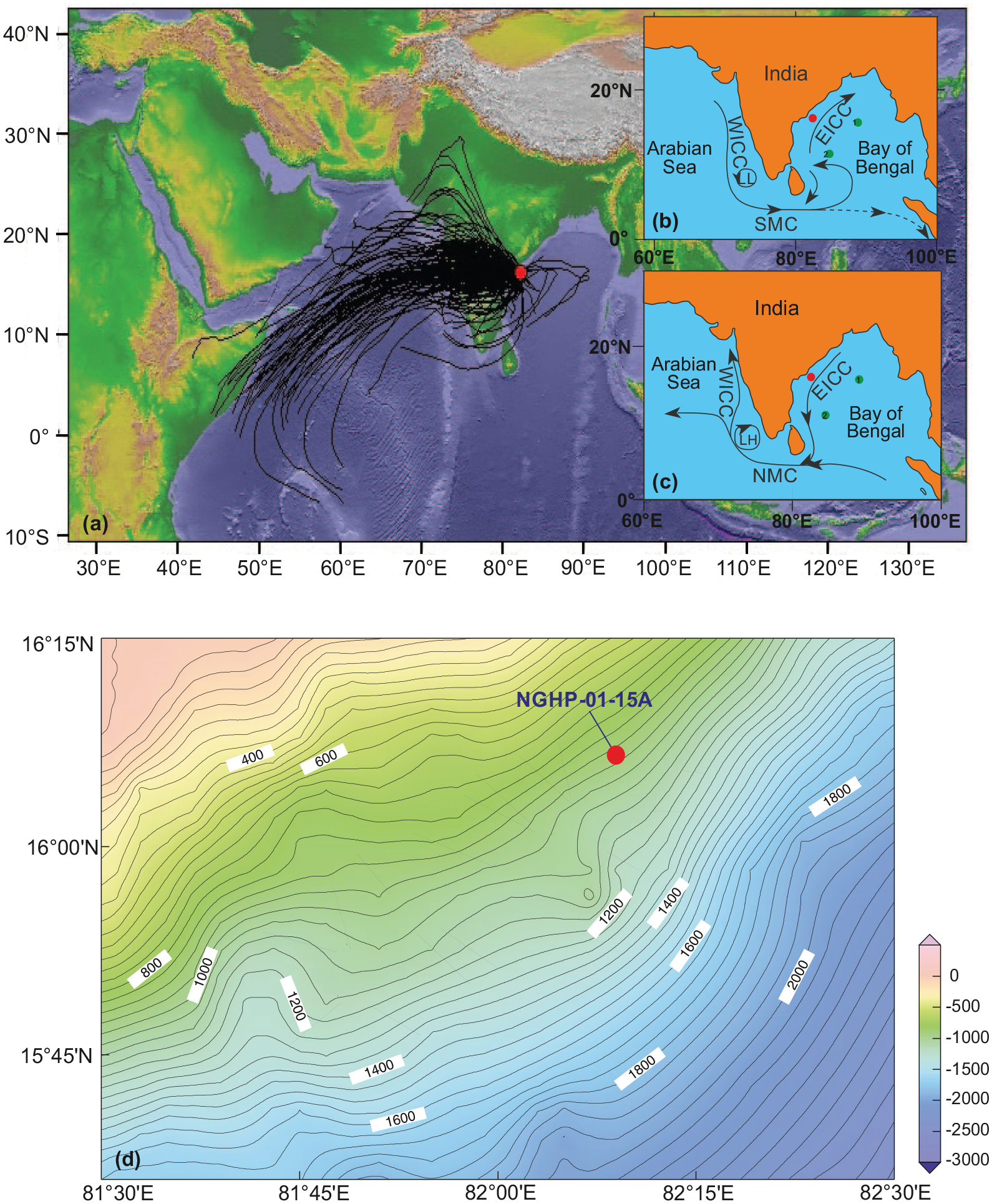
(a) Map showing the location of the studied core (marked by solid red circle) and wind trajectories for 2010 Common Era (CE) following the hybrid single-particle Lagrangian integrated trajectory model (HYSPLIT) described by Draxler and Rolph (2003) using Meteoinfo software. (b and c) Schematic representation of surface currents of the Indian Ocean during the summer and winter monsoon seasons, respectively. NMC: Northeast Monsoon Current; SMC: Southwest Monsoon Current; EICC: East Indian Coastal Current; WICC: West Indian Coastal Current; LH: Lakshadweep High; LL: Lakshadweep Low. (d) Bathymetry map of the Krishna- Godavari (K-G) offshore basin with location site (NGHP-01-15A) marked by a solid red circle. Color index on the right-hand side indicates bathymetry (Collett et al., 2007).
Materials and method
Chronology
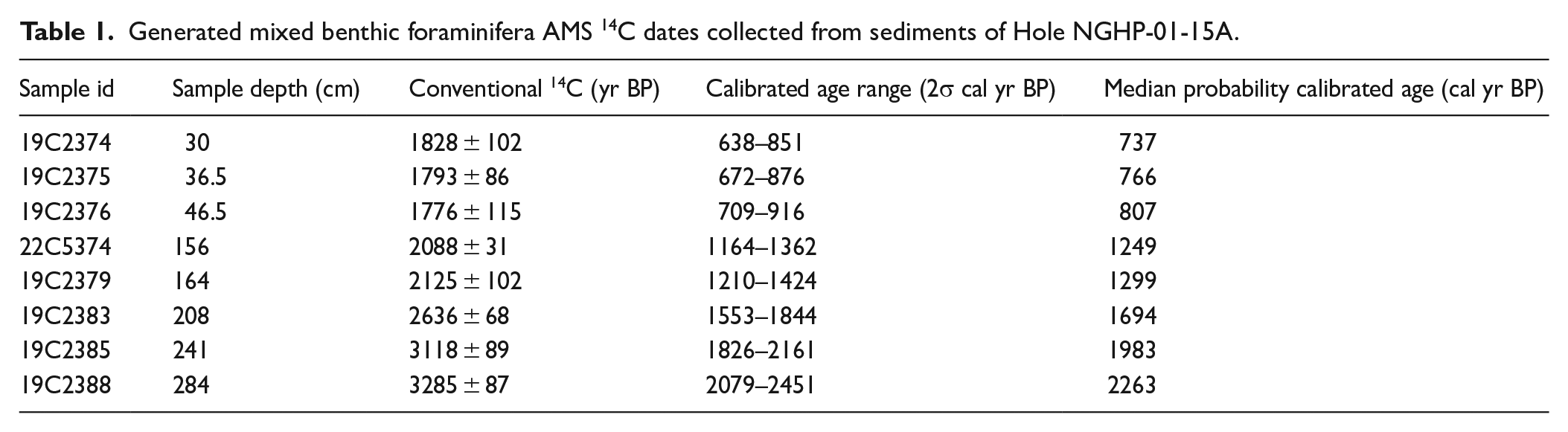
The chronology of studied sediments has been established based on the mixed benthic foraminiferal radiocarbon isotope dates. A total of eight selected samples were considered from different intervals for date estimation using Accelerator Mass Spectrometry (AMS) at Inter-University Accelerator Center (IUAC), New Delhi, India (Table 1). Approximately 10 mg of foraminifera test were oxidized in an ultrasonic cleaner with 15% H2O2 for 5–10 min before rinsing with Milli-Q water and dried. The foraminifera tests were first flushed with 50 ml/min Helium for 15 min, then hydrolyzed using 0.5 ml H3PO4 (85% or 103%) to produce CO2 (Wacker et al., 2013). The resulting CO2 was converted to graphite by iron reduction and poured into different cathode capsules, which were placed in AMS for radiocarbon measurements. An age-depth model was generated using the BACON 2.2 software (Blaauw and Christen, 2011). The Bacon model software is a statistical tool that estimates the accumulation rate (in years/cm) using the Markov Chain Monte Carlo iteration method (Blaauw and Christen, 2011). This model used the Marine13 calibration curves to convert 14C radiocarbon dates to calendar ages (Reimer et al., 2013). The calib 7.1 marine reservoir correction database provides a ΔR-value of 511 ± 57 (Southon et al., 2002) as a first approximation, for the NGHP-01-15A site in the western BoB. ΔR is considered constant for this study due to less upwelling in the studied site and very low fluctuations of ΔR in low-latitude tropics during this short period (Dutta et al., 2001; Hughen et al., 2004; Reimer et al., 2002; Sijinkumar et al., 2016).
Generated mixed benthic foraminifera AMS 14C dates collected from sediments of Hole NGHP-01-15A.
Benthic foraminiferal analysis
The top 3 m of continuous core (Sections 1H-1 and 1H-2) of Hole 15A were considered for this study to estimate benthic foraminiferal populations and reconstruct paleomonsoonal climatic patterns. Sediments of these sections were sliced in 1 cm intervals, and 274 samples were collected. Sediments were not recovered within depths 60–62 and 138–150 cm in section 1H-1 and depths 138–150 cm in section 1H-2. Foraminifera separation was done following Bhaumik et al. (2011) to obtain ⩾63 μm fraction. Published literatures were used to identify the benthic foraminiferal species (Holbourn et al., 2013; Tappan and Loeblich, 1988).
Recorded benthic foraminifera species were classified into different groups based on the morphology, mode habitat, and ecology [Angular Asymmetric Benthic Foraminifera (AABF), Rounded Symmetric Benthic Foraminifera (RSBF), epifaunal, infaunal, oxic, dysoxic] (Kaiho, 1991; Manasa et al., 2016; Severin, 1983). Besides, Shannon diversity index (H) was calculated using the Paleontological Statistics (PAST, V3.25) software; to assess the overall response of benthic foraminiferal species assemblages to the environmental conditions (Hammer et al., 2001). All the calculated parameters, different foraminiferal groups, and species diversity index are given in Supplemental Annex 1.
Spectral analysis
In order to determine the presence of cyclicity in climatic events, we used the PAST program (Hammer et al., 2001) to conduct spectral analysis of the time series. The REDFIT 22 program was used to calculate the red noise for all foraminiferal groups for the whole study period (Schulz and Mudelsee, 2002). We used the rectangle window and 1000 Monte-Carlo simulations as standard parameters for this analysis. Our run test found that the autoregressive (AR1) model could be suitable to describe this record (with a significance level of 95%).
Results
Chronology
The calibrated eight AMS 14C dates of the foraminiferal sample cover the time span from 737 to 2263 cal yr BP (Table 1 and Figure 2). Ages for the rest of the samples are interpolated using these eight calibrated ages which cover the past 1690 years, from 335 BC to 1355 AD, showing linear relation without hiatus and reversal. The median Bacon age estimates are used to determine the ages of individual climatic events that are suggested by the record (Table 1 and Figure 2). The accompanying age uncertainties (Figure 2) are considered while drawing conclusions or comparisons. The average age uncertainty obtained from Bacon modeled age is about ±126 years at 95% confidence interval (Table 1). Therefore, linking highly specific cultural events to any short-term climatic proxy changes is not recommended in this study due to this chronologic uncertainty. Hence, the age of climatic events is determined and perhaps adjusted based on comparisons with data from other regional and global paleoclimate archives that have stronger chronological constraints. The primary focus of this study is to find the potential linkages between Indian civilization history and regional climatic changes, based on combined global paleoclimatic records during the late-Holocene, rather than this studied core alone.
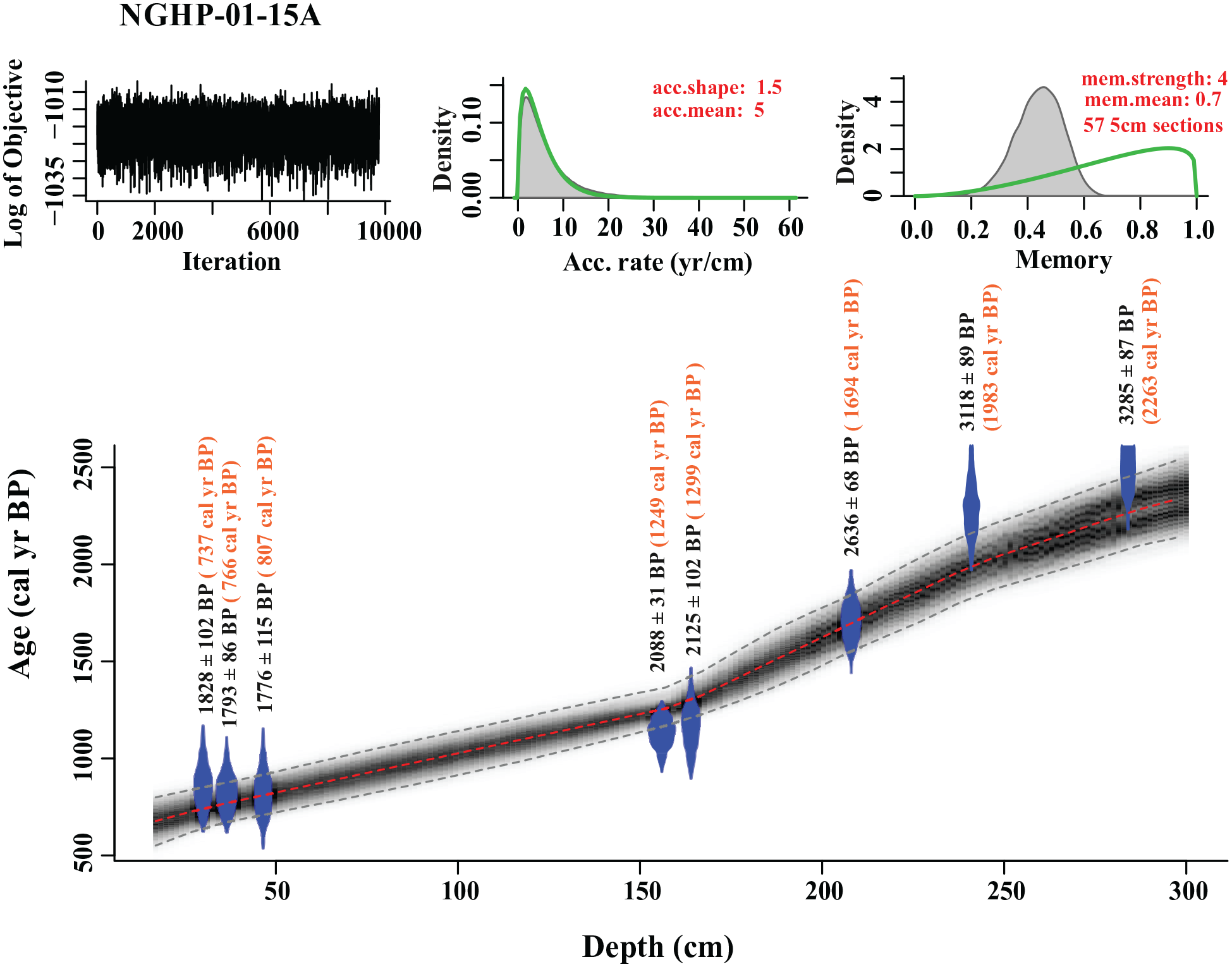
Eight (8) AMS 14C dates of mixed benthic foraminifera collected from NGHP 01 - 15A of K-G basin calculated by Bacon R age-depth model. The upper left panel shows information for Markov Chain Monte Carlo (MCMC) iteration while the upper middle panel and upper right panel indicate prior (green) and posterior (gray) distributions of accumulation rate and memory, respectively. The calibrated 14C dates with 2σ uncertainty range (marked by blue lenticular shape) and age-depth model (darker gray portion indicates more likely cal yr BP; red dotted line shows depth-wise weighted mean age; light gray stippled lines indicate 95% confidence intervals) are shown in the bottom panel.
Benthic foraminiferal data
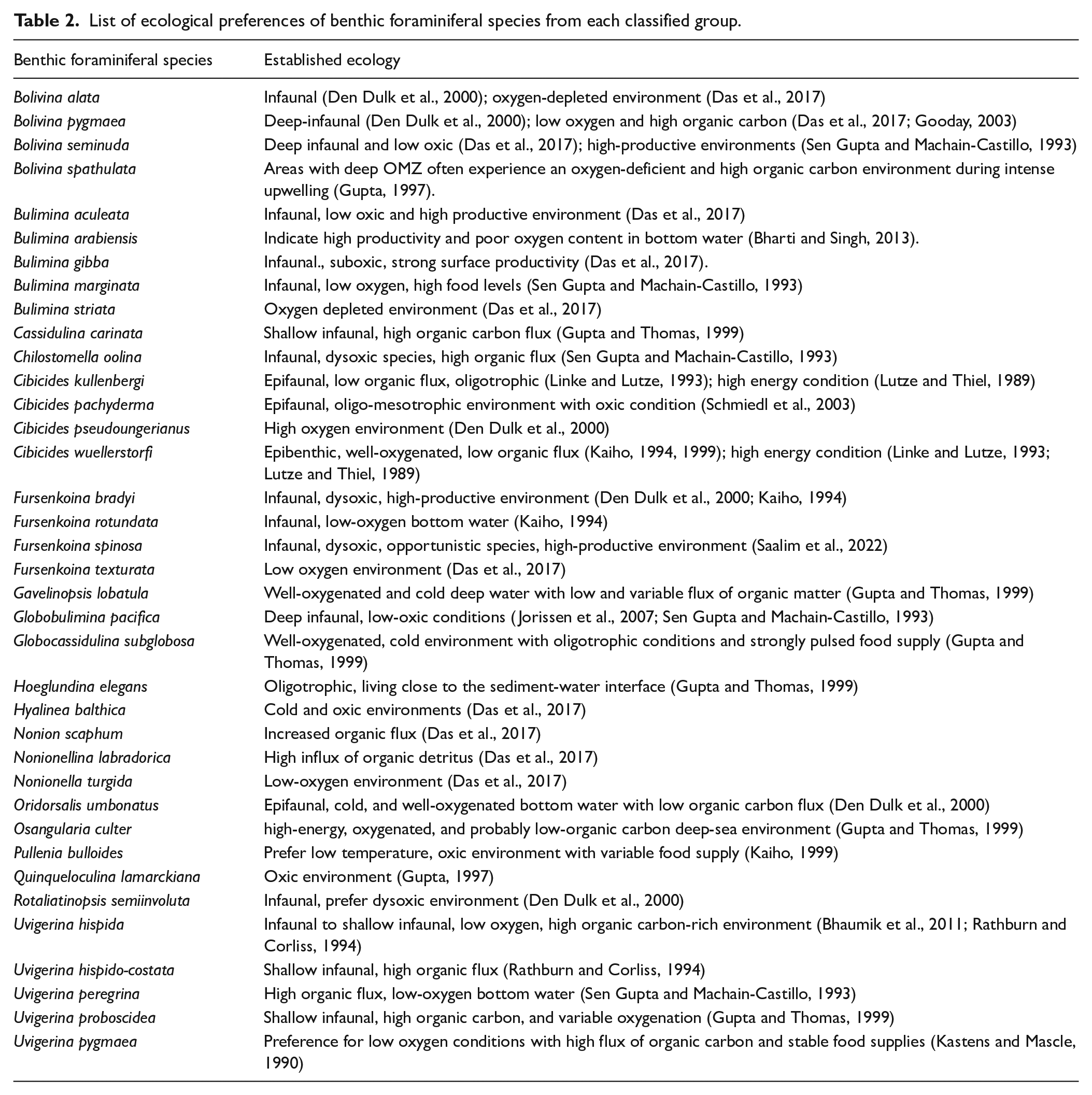
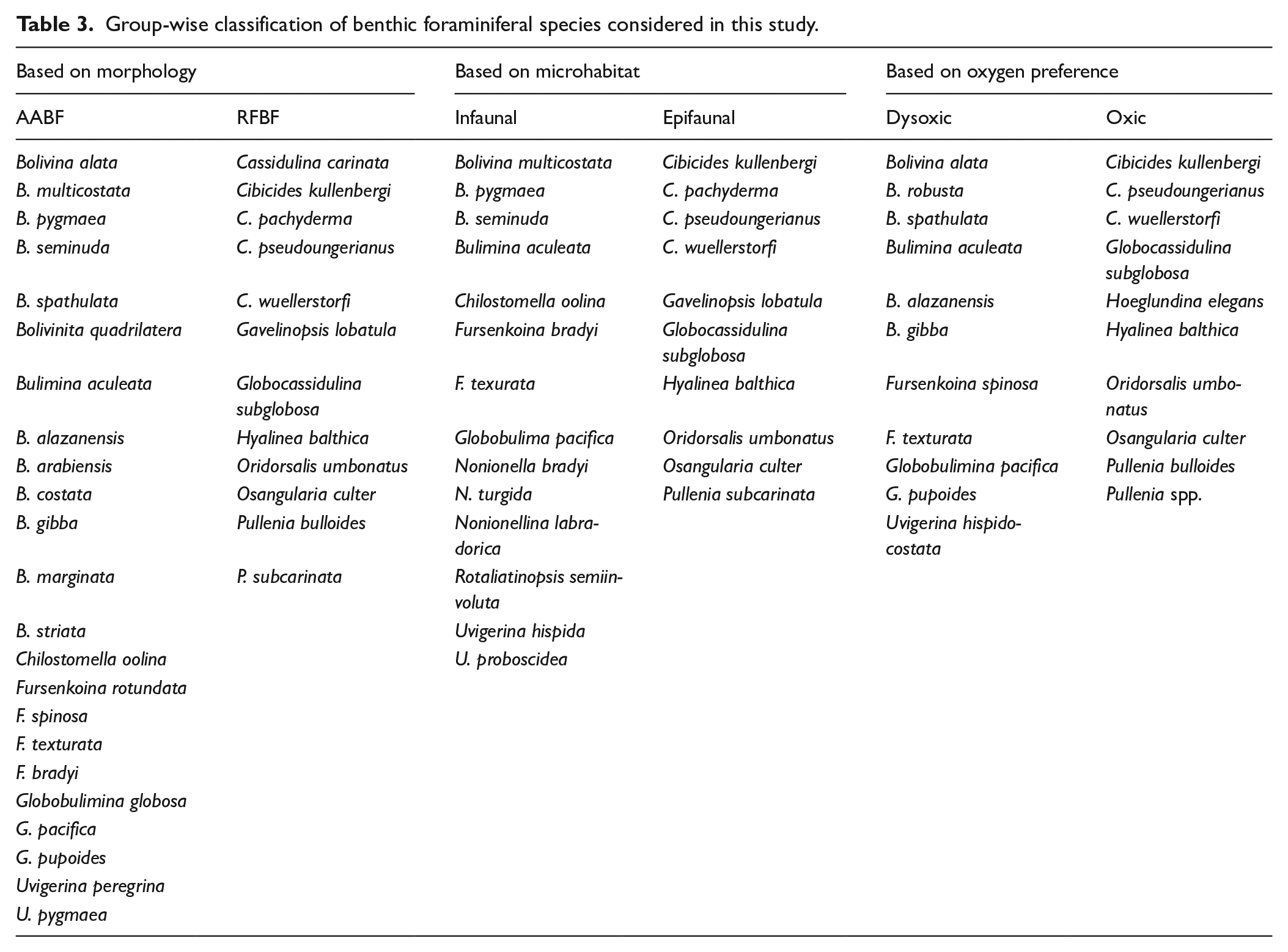
Sixty-three (63) species of benthic foraminifera were identified from the Hole NGHP-01-15A. Ecological preferences of group-forming benthic foraminifera are given in Table 2. Out of these, 52 species of benthic foraminifera were used for forming AABF, RSBF, dysoxic, oxic, infaunal, and epifaunal foraminiferal groups (Table 3).
List of ecological preferences of benthic foraminiferal species from each classified group.
Group-wise classification of benthic foraminiferal species considered in this study.
Benthic foraminiferal morpho-group
We grouped the considered benthic foraminiferal into AABF and RSBF morpho-groups based on the study of Severin (1983) and Nigam et al. (1992). AABF morpho-group includes flattened elongated forms that are oval to compressed in the apex view, usually have parallel or sub-parallel sides, tapered forms, either rounded or angular in the apex view, and taper along their length in the side view (Nigam et al., 1992). The thin wall-bearing AABF species prefers the dysoxic environment where oxygen levels are 0.1–0.3 ml/l (Kaiho, 1994). The relative abundance of AABF shows an overall decreasing trend from ~335 BC to ~406 AD, with a sudden decline between ~306 and ~406 AD. Then it shows an increasing trend up to 787 AD with an intermittent low at ~617 AD. AABF shows its maximum abundance (100%) from ~787 to ~807 AD. However, onward ~807 AD, this parameter shows a gradually decreasing trend up to ~1202 AD with few intermittent highs. It shows a gently increasing trend onward ~1202 AD up to ~1355 AD with one minimum at ~1330 AD (Figure 3a).
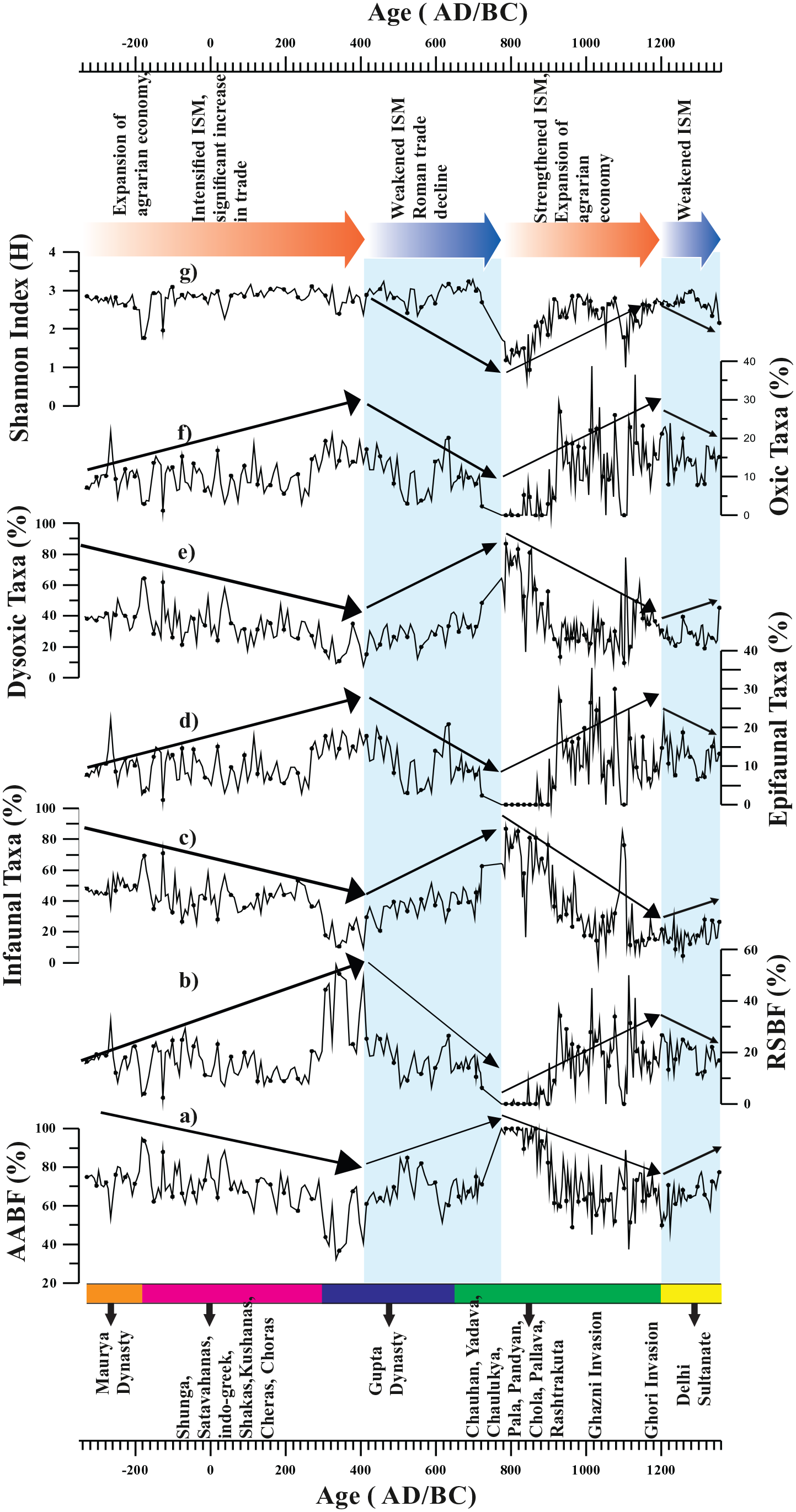
Relationship between temporal variation of Benthic foraminiferal groups [(a) total Angular Asymmetric Benthic foraminifera (AABF), (b) total Rounded Symmetric Benthic Foraminifera (RSBF), (c) total Infaunal taxa group, (d) total Epifaunal taxa group, (e) total Dysoxic taxa group, (f) total Oxic taxa group, (g) Shannon (H) Index] with ISM variability and cultural changes over the past ~1690 years in the Indian subcontinent. The reigns of the different dynasties are shown by the horizontal color panels at the bottom. Orange color = Maurya dynasty; Pink = Shunga, Satavahanas, Indo-Greek, Shakas, Kushanas, Cheras, Choras dynasties; Blue = Gupta dynasty; Green = Chauhan, Yadava, Chaulukya, Pala, Pandyan, Chola, Pallava, Rashtrakuta and Yellow = Delhi Sultanate. The white vertical bars with thick solid red arrows on top represent periods from 335 BC to 406 AD and 787 to 1202 AD which shows intensified summer monsoon. The light cyan-vertical bars with thick solid blue arrows represent periods from 406 to 787 AD and 1202 to 1355 AD which shows weakened summer monsoon.
RSBF morpho-group encompasses both trochospiral forms with flattened and more rounded sides (the rounded side may already be convex to some extent), along with planispiral forms (Nigam et al., 1992). Species of this group prefer to live in an oxic environment with oxygen levels ranging from 1.5 to 6.0 ml/l (Kaiho, 1994). RSBF shows an overall consistent increasing trend from ~335 BC to 406 AD, with a sharp increase from ~306 to ~406 AD. Then this parameter shows a prominent decrease from ~406 to ~775 AD. This group is almost absent between ~775 and ~803 AD. However, an increasing trend is observed from ~807 to ~1202 AD with some intermittent highs and lows, which is followed by a gradual decrease up to ~1355 AD (Figure 3b).
Benthic foraminifera microhabitat group
Different functional morphologies are exhibited by benthic foraminifera depending on their adopting ability to variations in seafloor environments and microhabitats (Bhaumik et al., 2014; Corliss and Chen, 1988; Rathburn and Corliss, 1994). So, it is likely possible to reconstruct paleoenvironments using morphotypes of benthic foraminifera and their association with specific microhabitats (Nigam et al., 1992). Considered benthic foraminiferal taxa are classified into infaunal and epifaunal groups based on microhabitat preference (Table 2).
The species of the infaunal group live 1 cm below the seafloor and have cylindrical, ovate shapes with biserial and triserial coiling (Corliss and Chen, 1988). The relative abundance of infaunal taxa follows an almost similar trend to AABF. A gradual decreasing trend in the infaunal group is observed from 335 BC to 406 AD, with a sharp decrease between ~306 and ~406 AD. Then increasing trend in the relative abundance of this group is observed up to ~787 AD. Afterward, it shows a gradually decreasing trend up to ~1143 AD with a prominent high at ~1097 AD and followed by an interval of increasing trend between ~1143 and ~1355 AD (Figure 3c).
Epifaunal species are generally found in the upper 1 cm of sediment and having plano-convex or biconvex shapes with planispiral or trochospiral coiling (Corliss and Chen, 1988). The abundance pattern of this group is similar to that of RSBF group and shows a gradually increasing trend from ~335 BC to ~443 AD, with a prominent high from ~306 to ~416 AD. This group characteristically decreases in abundance between ~443 and ~779 AD. This group is absent between ~779 to ~866 AD. The population of this group shows a sudden increase between 870 and 1206 AD, which is followed by a gradual decrease up to 1355 AD (Figure 3d).
Oxygen-sensitive foraminiferal group
The bottom water oxygen concentration is considered a key parameter that influences the microhabitat structure and morphological characteristics of benthic foraminifera. Therefore, the benthic foraminiferal association can be a potential indicator for understanding bottom-water oxygenation. Based on oxygen concentration preferences, benthic foraminifera are classified into two groups as dysoxic taxa and oxic taxa (Tables 2 and 3).
An assemblage of dysoxic foraminifera prefers to flourish in an environment where oxygen concentration is less than 0.5 ml/l (Kaiho, 1994). The abundance record of this group reveals rapid downcore fluctuations with gradual decreasing trends from ~335 BC to ~406 AD and then increasing up to ~787 AD. However, the abundance of this group was conspicuously decreased from ~787 to ~1238 AD with an intermittent high at 1105 AD followed by a gradual increase up to ~1355 AD (Figure 3e).
The oxic foraminiferal assemblage prefers to proliferate in an environment in which the oxygen concentration is greater than 0.5 ml/l (Jorissen et al., 2007; Kaiho, 1994). This group shows remarkable variation in its downcore abundance with an increasing trend between ~335 BC and ~397 AD followed by decreasing trend up to ~779 AD with a peak at ~634 AD. This group is nearly absent from ~779 to ~823 AD. Afterward, it shows an increasing trend between ~835 and ~1224 AD with intermittent highs and then decreases up to ~1355 AD (Figure 3f).
Species diversity
The species diversity (Shanon Index) pattern is shown in Figure 3g. The Shanon index (H) varies from 0.69 to 3.28. This index shows consistent abundance from ~335 BC to ~699 AD and decreases from ~699 to ~787 AD. A further increasing trend was observed from ~787 to ~1188 AD with some intermittent lows and then decrease up to 1355 AD (Figure 3g).
Cyclicity
Spectral analysis was conducted on the AABF/RSBF morpho-groups, infaunal/epifaunal taxa, and dysoxic/oxic taxa to determine the periodicity in climatic variations and monsoonal changes in the decadal to millennial-scale (Suokhrie et al., 2018). The spectral analysis of the AABF morpho-group shows cyclicity of 563 and 281 years at 95%-Chi2 (Figure 4a). The RSBF morpho-group shows periodicity of 563, 281, 22, and 16 years at 95%-Chi2 (Figure 4b). Time series analysis of infaunal taxa shows prominent peaks at 561 for 95%-Chi2 value and 281 years for 80%-Chi2 value (Figure 4c), whereas epifaunal taxa show significant peaks at 450, 250, 27, and 17 years for 95%-Chi2 value (Figure 4d). Dysoxic taxa show distinct peaks at 563, 321, and 15 years (95%-Chi2 value) (Figure 4e), in contrast to oxic taxa, which show significant peaks at 450, 321, and 16 years (for 95%-Chi2 value) for spectral analysis (Figure 4f).
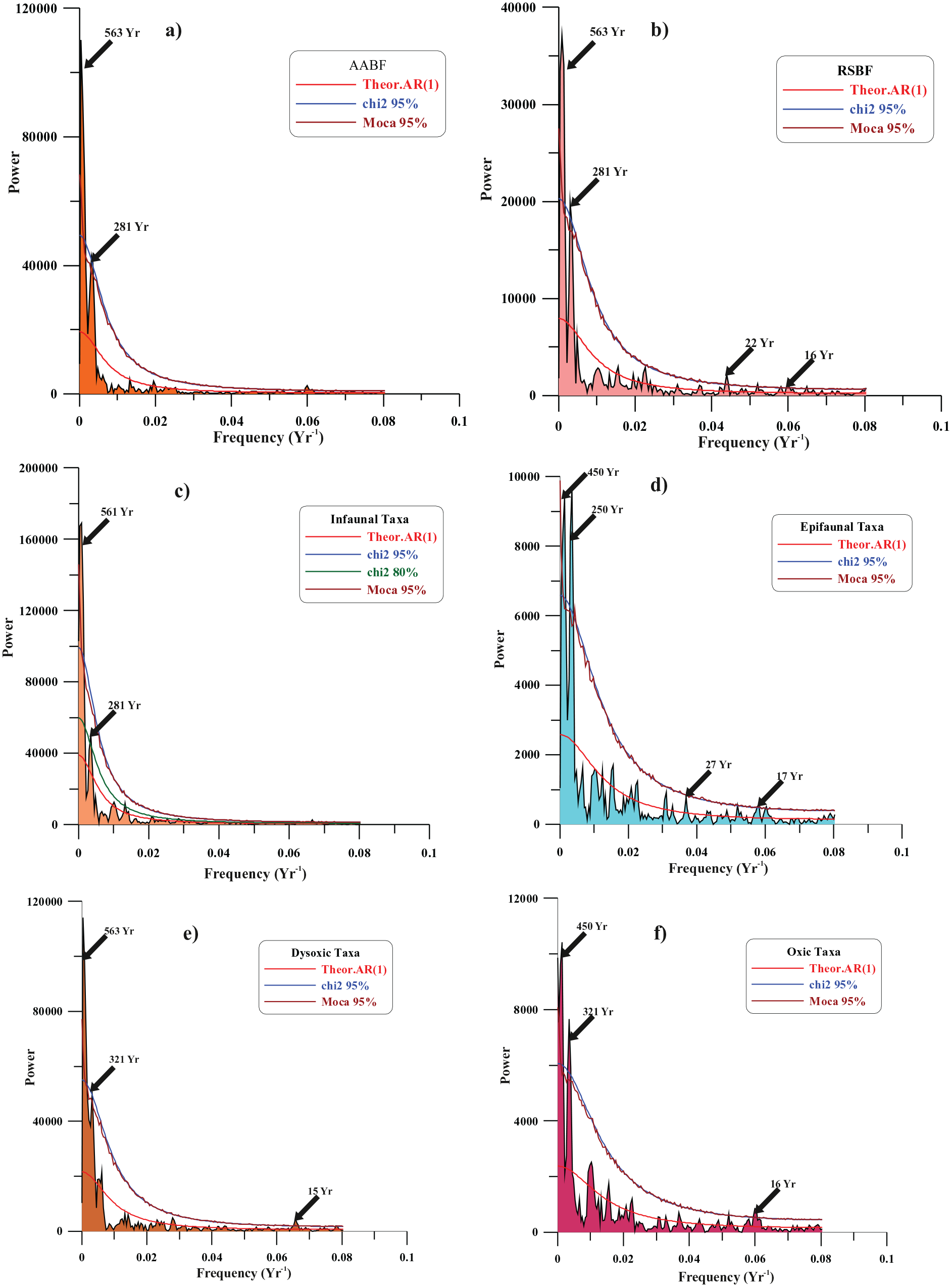
Spectral analysis of (a) AABF, (b) RSBF, (c) Infaunal taxa, (d) Epifaunal taxa, (e) Dysoxic taxa, and (f) Oxic taxa groups for time interval of 335 BC–1355 AD for the studied core depicting statistically most significant periodicities. Theor.AR, theoretical auto regression; Moca, Monte Carlo.
Discussion
Relation of foraminiferal response, climatic factors, and Indian cultural activities
The spatial and temporal variation of benthic foraminiferal groups are influenced by the various physio-chemical parameters like dissolved oxygen concentration, sea water temperature, organic carbon flux related to productivity, riverine influx related to monsoon intensity, bottom water condition, water depth, salinity, and other factors (Kaiho, 1994; Nigam et al., 1992). We identified four oscillating trend patterns (335 BC–406 AD; 406–787 AD; 787–1202 AD, and 1202–1355 AD) during the last 1690 years from the sediments of the K-G basin based on temporal variation of foraminiferal groups (AABF-RSBF, Infaunal-Epifaunal taxa, Oxic-Dysoxic taxa) and species diversity index (Shanon index). Besides, we have tried to emphasize the climatic roles in these prominent phases interlinked with cultural growth in the Indian subcontinent during the late-Holocene.
Period between 335 BC and 406 AD
This interval is characterized by the gradually decreasing trend of AABF, infaunal, and dysoxic groups, as well as consistent abundance with an intermediate rising trend of RSBF, epifaunal and oxic groups (Figure 3). The decreasing trend of the AABF morpho-group represents well-oxygenated bottom water with high turbulent energy (Suokhrie et al., 2018). Alternatively, a high relative abundance of RSBF is related to high-energy, well-oxygenated, low-saline water (Manasa et al., 2016; Verma et al., 2021). Therefore, all the foraminiferal proxies collectively indicate the presence of a well-oxygenated, low-saline, energetic environment that prevailed during this interval over the studied site. This interval is also characterized by the consistently high abundance of species diversity. Study of Das et al. (2017) relates high species diversity with intensified summer monsoon. The decreasing trend of infaunal species and gradual increasing trend of epifaunal species of the studied core suggest this interval was suffered by relatively lower productivity. Durand et al. (2011) shows an influx of enormous amount of sediment-loaded fresh water to the NW BoB during the intensified summer monsoon, resulting low-salinity and progressively turbid waters. The mixing of freshwater during intensified summer monsoons lowered the salinity and triggered ocean water stratification due to density differences. Ocean water stratification inhibits the vertical advection of nutrient-rich subsurface water to the surface and reduces surface productivity (Da Silva et al., 2017).
Climate change has been emphasized as a significant factor in the rise and fall of many civilizations throughout history (Dixit et al., 2014; Sinha et al., 2019). The Indian subcontinent experienced a thriving period of two important civilizations, viz. Maurya and Gupta Empires during this time. The Maurya Empire, the first united and powerful kingdom, endured from 320 BC to 185 BC during the observed intensified summer monsoon time. The agrarian economy flourished in the Mauryan Empire due to substantial precipitation. A decreasing trend in AABF, infaunal, and dysoxic groups and an increasing trend in RSBF, epifaunal and oxic groups is observed between 335 BC and 265 BC in our record (Figure 3), corroborating flourishing of the Maurya Empire (Thapar, 1990). This indicates strengthening of the summer monsoon as well as high precipitation which leads to expansion of agricultural production. Many hydraulic structures (dams, canals, and lakes) with spillways were created for irrigation and drinking purposes during the Mauryan period (Sutcliffe et al., 2011). The Mauryan kings were intrigued by the irrigation schemes (Singh et al., 2020a). The Mauryan Empire’s Ahar-Pyne system, which is an excellent example of rainfall gathering and irrigation management, is still in operation in Bihar and Chhota Nagpur region (Pant and Verma, 2010). A sudden increase in AABF, infaunal, and dysoxic groups and a decrease in RSBF, epifaunal and oxic group is observed at 183 BC in our record (Figure 3) corroborating collapse of the Maurya Empire (Thapar, 1990). This indicates weakening of the summer monsoon as well as less precipitation which leads to drought-like conditions, unfavorable for agriculture. A similar observation is also inferred by Kathayat et al. (2017) based on speleothem δ18O data.
Following the collapse of the Mauryan Empire, the Indian subcontinent was divided into smaller political regions governed by Shungas, Satavahanas, Indo-Greeks, Shakas, Kushanas, Cheras, and Cholas between 200 BC and 300 AD. This period experienced an intensified ISM, which is evident from the decreasing AABF, dysoxic, infaunal and increasing RSBF, oxic, epifaunal foraminiferal groups (Figure 3). The strong ISM-induced precipitation made agriculture a primary source of revenue during this period (Thapar, 1990). In addition, this highly productive environment helped in the growth of trade and promoted cultural dynamism (Thapar, 1990). The last part of this phase coincides with the starting and growth stage of the Gupta dynasty (300–360 AD) in the Indian subcontinent. This great emperor flourished with thriving arts, literature, and science. This might be influenced by favorable climatic conditions induced by strong ISM. Heavy precipitation triggered huge crop production, and artificial water storage systems and dams were built; thus, irrigation and the overall economic condition flourished during this time. It helped the Gupta emperors to rule over a larger part of the Indian subcontinent (Thapar, 1990). Therefore, the climate and climate-driven ocean circulation played an important role in the growth of the Indian economy and the rise-fall of different dynasties in the past.
Period between 406 and 787 AD
The increasing trend of AABF, infaunal, and dysoxic groups and decreasing trend of RSBF, epifaunal and oxic groups demonstrate weak ISM conditions, therefore, less precipitation from 406 to 787 AD. The predominance of infaunal taxa and dysoxic species points to a low-oxygen microhabitat with a decrease in soluble oxygen concentration in the sediments (Gooday, 2003; Kaiho, 1994). According to various researchers, the prevalence of AABF indicates less oxygenated, low energy, colder, and hypersaline environment (Nigam et al., 1992; Suokhrie et al., 2018). As a result, the high relative abundance of AABF signifies that there is a less fluvial influx and reduced turbulence related to weaker monsoon. The benthic diversity index is significantly influenced by the amount of organic carbon flux brought on by primary production and the level of bottom water oxygen condition (Gooday et al., 2000). A sudden decrease in the diversity index along with an increasing trend in dysoxic taxa during this period (699–787 AD) point to a benthic environment that is oxygen-poor and eutrophic, which is associated with a cold phase during which the ISM was weaker (Singh et al., 2015). Besides, the solar proxy data used by previous workers (Scafetta, 2012; Steinhilber et al., 2009) suggest a significant solar minimum that promotes a cold climate during this time span. The weaker summer monsoon contributes less rainfall, reduces surface water stratification, and promotes vertical convection of nutrient-rich water to the surface, causing high surface primary productivity during this period (Da Silva et al., 2017; Verma et al., 2021). Therefore, the foraminiferal proxy records suggest that the period from 406 to 787 AD was relatively cold and dry.
The benthic foraminiferal data show a weakened ISM during this period. Therefore, low precipitation and dry climate caused instability in the agriculturally based socio-economic stature of the Indian subcontinent. Declined precipitation influenced to happen several major drought events, and several harsh climate driven pandemics, such as the plague occurred during this time (Büntgen et al., 2016; Thapar, 1990). These may be one of the major reasons for the destruction of the super Gupta dynasty during this period (~500–550 AD). In addition, in the global scenario, the demise of the great Western Roman Empire and the event named as Great Migration Period in the Roman Empire declined the trade relationship during the last stage of the Gupta dynasty. This economic crisis ignited the development of small regional dynasties like Pushyabhuti, Chaulukya, and Palas dynasties (Thapar, 1990).
Period between 787 and 1202 AD
From 787 to 1202 AD, the increasing trend of RSBF, epifaunal, oxic groups and the decreasing trend of AABF, infaunal, dysoxic groups of foraminifera indicate an interval of intense summer monsoon related to a warm and humid climate. The abundance of RSBF within this age range suggests a turbulent environment caused by a high riverine influx. This study reveals that RSBF is extensively influenced by the fluvial system and indicates a dynamic environment compared to AABF. According to Severin (1983), sediment turbulence substantially impacts the size and shape of epibenthic foraminiferal species, causing them to acquire more symmetry during periods of extreme turbulence. Monsoon runoff is responsible for most of the turbulence in Indian coastal waterways. This interval is also characterized by an increasing trend of diversity index attributed to oxygenated bottom water conditions with oligotrophic environment related to warm/wet intervals suggesting intensified summer monsoon (Singh et al., 2015).
During this period, various kings/dynasties including Chauhan, Yadava, Chaulukya, Pala, Pandyan, Chola, Pallava, and Rashtrakuta established regional administrations in India. Foraminiferal morpho-groups suggest a strong ISM prevailed during most of this interval (787–1202 AD), which helped to grow agriculture and trading. Therefore, the socio-economy condition was boosted, and arts, architecture, philosophic ideas reached a new dimension. Many of the temples and monasteries built during this time, including the Pattadakal monuments are now regarded as UNESCO World Heritage Sites. Agriculture became the backbone of this economy. The Indian economy flourished due to the heavy rainfall and excellent crop production. However, a persistent drought destroyed the socio-economic backbone of Central Asia at the end of this period (Yadava et al., 2016). Therefore, India faced several invasions from central Asian rulers like Mahmud of Ghazni and Mu’izz ad-Din Muhammad Ghuri, who plundered the rich wealth of India. This indicates that climate and ISM variability strongly influenced India’s socio-economical activities in the past.
Period between 1202 and 1355 AD
The interval between 1202 and 1355 AD is marked by a gradual increase of AABF, infaunal, dysoxic and a decrease of RSBF, epifaunal, oxic foraminiferal groups. Faunal data suggest a weaker summer monsoon prevailed during this interval, leading to a drought-like condition in the Indian subcontinent. The weakening of the summer monsoon may be caused by the dynamics of the El Niño Southern Oscillation (ENSO) (Prasad et al., 2014) and fluctuations in solar variability (Stuiver et al., 1997). The decreasing trend of benthic diversity index along with the increasing trend of dysoxic taxa within this period, indicates high surface primary productivity and oxygen-depleted bottom water condition related to cold/dry period suggesting a weakening of ISM (Singh et al., 2015).
During this period the long-lasting Hindu dynasties were declined and Delhi sultanate was established. The Indian subcontinent saw significant cultural (Indo-Islamic culture), linguistic (Hindi-Urdu), religious (Islamic), and architectural (construction of mosques and tombs) advancements. Various irrigation systems were developed all throughout the area, including different well types, water storage systems, and low-cost, sustainable water harvesting methods (Siddiqui, 1986). There were a number of changes made to the market at this time, including the creation of government-run centralized merchandise, the building of granaries, and the hiring of market administrators to enforce stringent grain price rules. Less precipitation during this time period leads to crop failure and famine, disease (cholera, malaria, plague), locust invasions, human and animal fatalities, settlement abandonment and population relocation, migration, and warfare (Rawat et al., 2021).
Climatic evolution during the last 1690 years
Comparisons of data from several regional and global paleoclimate archives are used to ascertain the ages of various climatic events. Overall, climatic stories from combined regional paleoclimatic evidence provide a more robust picture of climate variability considering associated age uncertainties. The identified four phases are characterized by the alternate strengthening and weakening of ISM corresponding to periodic warming and cooling events.
The phase-I (335 BC–406 AD) with intense ISM precipitation was observed from the temporal variation of foraminiferal groups corresponding to the Roman Warm Period (RWP). Relatively lighter planktic foraminiferal δ18O records from a nearby site in BoB (Ponton et al., 2012) and speleothem δ18O records from the Himalaya, Uttarakhand (Kathayat et al., 2017) indicate this interval was relatively warmer (Figure 5). Studies on Al/Ca ratio (Dutt et al., 2018), Summer Monsoon Index (SMI) (An et al., 2012), Ti (%) (Haug et al., 2001), together with δ18O records suggest summer monsoon was intensified during this interval (Figure 5). This period also experienced strong solar wind and solar activity, as evident from dendrochronological studies of mid-latitude trees (Solanki et al., 2004) and less production rate of Hematite-Stained Grains (HSG %) (Bond et al., 2001) (Figure 5). Hence, it is considered that the summer monsoon was intensified within this relatively warm interval causing higher precipitation over the Indian subcontinent, which in turn was responsible for the substantial freshwater influx to the BoB and lowering the salinity of this zone.
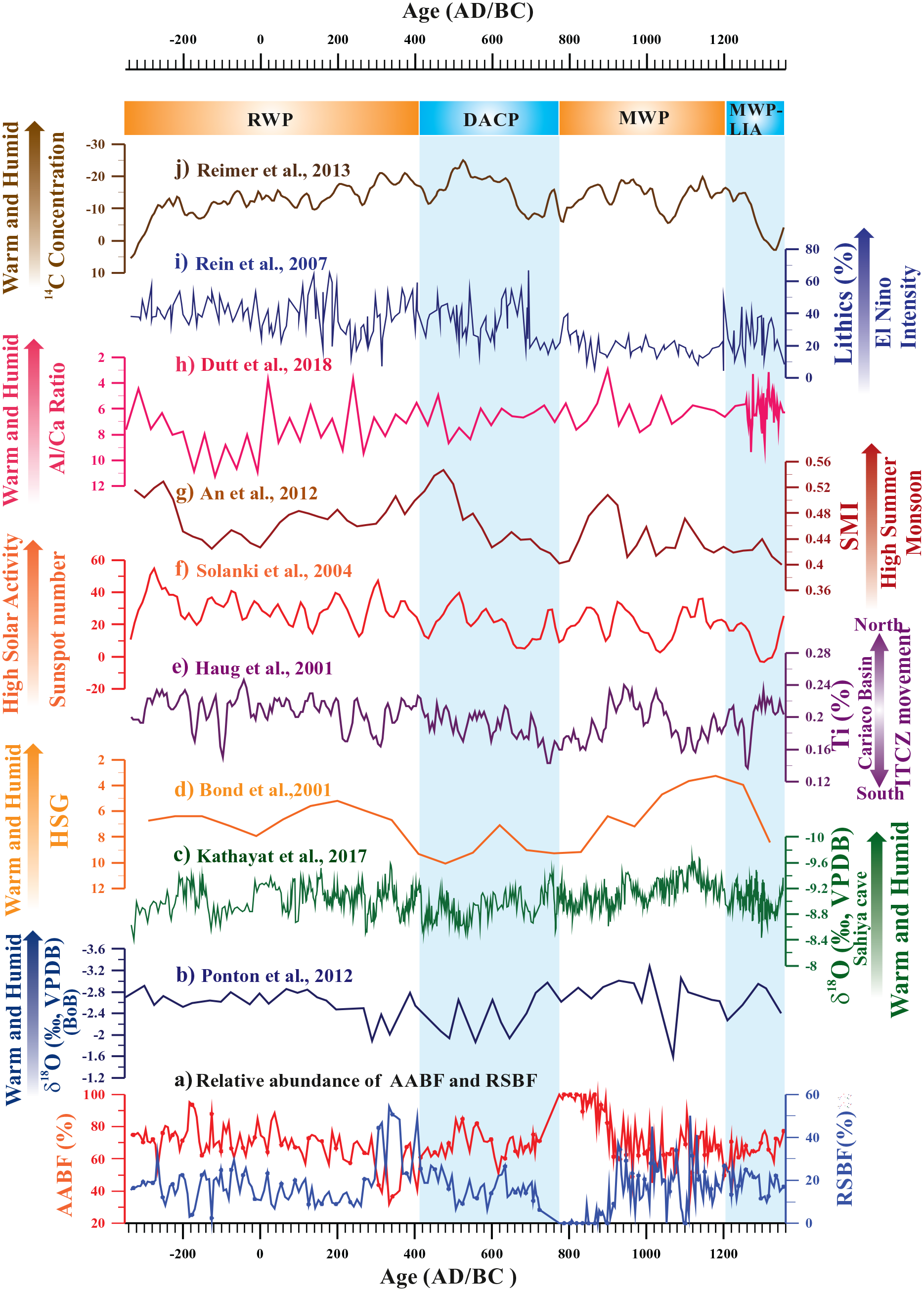
Proxy record of climate change of sediments from NGHP-01-15A of K-G basin for the time period 335 BC–1355 AD compared with other proxy records. (a) Relative abundance of Angular asymmetric benthic foraminifera (AABF, Red color) and Rounded symmetrical benthic foraminifera (RSBF, blue color), (b) δ18O measured on Globigerinoides ruber from core 16A, BoB (Ponton et al., 2012), (c) Speleothem δ18O record from the Sahiya cave, Uttarakhand (Kathayat et al., 2017), (d) Hematite stained grains (HSG %) from the North Atlantic Ocean (Bond et al., 2001), (e) Ti (%) from ODP Site1002, Cariaco Basin (Haug et al., 2001) (f) Sunspot numbers (Solanki et al., 2004), (g) Summer Monsoon index, Qinghai lake, Tibetan plateau (An et al., 2012), (h) Al/Ca Ratio, Tso Moriri lake, Ladakh (Dutt et al., 2018), (i) Lithic sediments (%) in a deep sea core off the Peru Coast (Rein, 2007), (j) 14C concentration in the atmosphere (Reimer et al., 2013). The horizontal color bars [Orange = Roman Warm Period (RWP) and Medieval Warm Period (MWP); Blue = Dark Age Cold Period (DACP) and Medieval Warm Period-Little Ice Age Transition period (MWP-LIA Transition)] are shown on the top panel. The white vertical bars represent intensified summer monsoon periods (335 BC–406 AD and 787–1202 AD). The light cyan-vertical bars represent weakened summer monsoon-period (406–787 and 1202–1355 AD).
Desprat et al. (2003) have pursued temperature reconstruction and high-resolution pollen analysis from NW Iberia and suggested the period from 250 BC to 450 AD was relatively warmer and humid and considered the RWP. The RWP is also recorded in and around the Indian subcontinent. A study by Chauhan et al. (2010) on the foraminiferal record in the Arabian Sea shows the RWP existed between 300 BC and 450 AD. Contrary, planktic foraminiferal δ18O record from BoB (Naidu et al., 2020) shows the presence of RWP from ~0 to 400 AD. The speleothem δ18O records from the Sahiya cave, Uttarakhand, and the sediment’s properties from Himalayan Bednikund Lake show the RWP extended from ~350 BC to 350 AD and 660 BC to 90 AD, respectively (Kathayat et al., 2017; Rawat et al., 2021). Previous workers identified the extension of RWP from 550 BC to 500 AD based on temperature and precipitation variations (Banerji et al., 2020; Frisia et al., 2005). The high-resolution δ18O ratio of archeological shells (Mercenaria campechiensis) and otoliths (Ariopsis felis) from South-West Florida shows RWP extends from 1 to 550 AD (Wang et al., 2013). Therefore, our foraminiferal records indicate the RWP (335 BC–406 AD) with an average uncertainty of ±145 years is consistent with the earlier estimated durations. In general, within the uncertainties, the reconstructed summer monsoon intensity based on the temporal variation of the foraminiferal group is comparable to other regional and global records from different proxies.
The weak ISM condition was recorded within phase-II (406–787 AD). Based on our findings coupled with previous observations, the relatively cold and dry period from 406 to 787 AD is considered the Dark Age Cold Period (DACP) (Helama et al., 2017). Studies on Ti (%) and shifting of ITCZ (Haug et al., 2001), SMI from the Tibetan plateau and Lake Qinghai (An et al., 2012), and HSG concentration (Bond et al., 2001) point out the weakening of the ISM and reduction in temperature during this period (Figure 5).
The review work of Helama et al. (2017) suggests the interval from 400 to 765 AD was relatively cold and dry and considered as DACP. It has been reported that this cold period coincides with an arid phase of the north Atlantic as well as on the Indian subcontinent and neighboring countries (Chauhan et al., 2010; Rawat et al., 2021). The speleothem δ18O records from the Sahiya cave and the sediment’s properties from Himalayan Lake show the DACP was extended from ~400 to ~800 AD and 90 to 900 AD, respectively (Kathayat et al., 2017; Rawat et al., 2021). In contrast, planktic foraminiferal δ18O record from the Arabian Sea (Chauhan et al., 2010) and BoB (Naidu et al., 2020) shows the presence of DACP from 400 to 700 AD and 450 to 900 AD. The DACP documented in our benthic foraminiferal record is extended from 406 to 787 AD with an average uncertainty of ±107 years. As a result, the DACP span indicated by our foraminiferal data is within the range of earlier reported durations.
Intensified ISM is observed through foraminiferal records in phase-III (787–1202 AD) corresponding to the Medieval Warm Period (MWP). Studies based on the different archives (tree rings, ice and sediment cores, speleothem) suggest that the climate was globally warm and humid from 1000 to 1300 AD (Chen et al., 2015; Gupta et al., 2005; Kathayat et al., 2017). Haug et al. (2001) suggest that high Ti (%) is observed during the MWP indicative of a northerly position for the ITCZ, causing high precipitation (Figure 5). The positioning of the ITCZ and differential heating of land and ocean work together to create monsoonal precipitation across India (Gadgil, 2003). Lighter δ18O of planktic foraminifera Globigerinoides ruber from core 16A in the BoB (Ponton et al., 2012) and depleted speleothem δ18O values in Sahiya cave in Uttarakhand, India (Kathayat et al., 2017) suggest intensified ISM conditions during the MWP throughout South Asia (Figure 5). The SMI from Lake Qinghai also clearly demonstrates that precipitation will be significantly higher during this time (An et al., 2012) (Figure 5). The strong ISM during the MWP is linked to global warming caused by increased solar insolation, as evident from low atmospheric 14C concentration (Reimer et al., 2013; Solanki et al., 2004; Figure 5). During this interval, the decreased HSG concentration is attributed to the positive phase in North Atlantic Oscillation (NAO), which results in increased monsoonal precipitation in lower latitudes (Bond et al., 2001) (Figure 5). The global events of MWP have also been documented in NW Himalaya (Singh et al., 2020b), the BoB (Govil and Naidu, 2011; Naidu et al., 2020), central India (Sinha et al., 2007), and the western Arabian Sea (Gupta et al., 2005). The Sahiya cave δ18O record shows MWP was extended from ~730 to 1150 AD (Kathayat et al., 2017). Furthermore, δ18O record from the sediments of Himalayan Lake shows the MWP was present from ~900 to ~1190 AD (Rawat et al., 2021). Planktic foraminiferal δ18O records from the Arabian Sea (Chauhan et al., 2010) and BoB (Naidu et al., 2020) show the presence of MWP from ~900 to 1400 AD and ~750 to 1150 AD, respectively. Our benthic foraminiferal data documents MWP from ~787 to 1202 AD with an average uncertainty of ±101 years, coherent with the previously recorded global data.
In phase-IV (1202–1355 AD), a slight increase in AABF, infaunal and dysoxic group indicates the weakening of summer monsoon, which is correlated with the transition phase of MWP and LIA. The speleothem δ18O record from the Sahiya cave and stalagmite δ18O record from the Dandak cave show cold and drier climatic conditions during this phase (Kathayat et al., 2017; Sinha et al., 2007). Schneider et al. (2014) recorded weakened ISM across the Indian subcontinent during the early stages of the LIA, which was related to a southern shift of the ITCZ. During this period, the offshore Peru lithic flux (%) record suggested a shift toward higher ENSO activity which is also correlated with both reduced solar activity and SMI (An et al., 2012; Rein, 2007; Solanki et al., 2004; Figure 5).
Stalagmite δ18O record from southern Oman demonstrates the changes from warmer MWP to colder LIA about 1310 AD (Fleitmann et al., 2004). Based on δ18O and δ13C records of Globigerinoides ruber from the central Mediterranean Sea, the MWP-LIA transition was observed from 1200 to 1400 AD (Grauel et al., 2013). The transition from the MWP to the LIA is marked by the stalagmite δ18O record of Andaman Island, revealing a significant reduction in monsoon strength between 1150 and 1550 AD (Laskar et al., 2013). According to numerous archives, including stalagmite (Zhang et al., 2008), marine sediment (Lee and Park, 2015), and peat sediment (Ren, 1998) shows, the MWP-LIA transition took place around 1300 AD, which was characterized by a decrease in precipitation over the East Asian summer monsoon region. The MWP-LIA transition period documented in our foraminiferal record is extended from 1202 to 1355 AD with an average uncertainty of ±103 years which is consistent with other earlier reported global and regional records.
Periodicity
Several systems play critical roles in modifying the monsoon at various time scales. Changes in orbital parameters and solar cycles are attributed to the majority of documented monsoonal variation over the Holocene (Agnihotri et al., 2002; Gupta et al., 2005; Tiwari et al., 2005). Variations in solar output can cause significant climatic changes. Several mechanisms can explain how monsoon dynamics respond to solar forcing. During the high solar activity, stratospheric ozone absorbs more UV radiation, raising the stratospheric temperature, causing strong winds that influence the Hadley circulation and mainly affect evaporation and precipitation (Dogar, 2018; Shindell et al., 1999). The second mechanism depicts that changes in solar activity affect cosmic ray’s influx and cloud cover. Fluctuations in cloud cover caused by solar activity influence the lower atmospheric temperature and control the monsoonal activity (Marsh and Svensmark, 2000). Therefore, there is a direct correlation persisting between the solar cycle and monsoonal activity during Holocene (Gupta et al., 2005).
We carried out power spectrum time series analysis on AABF, RSBF, infaunal, epifaunal, dysoxic, and oxic groups to understand the forcing factors which control the monsoon mechanism. The monsoonal variabilities are influenced by the different solar cycles. To date, several solar cycles have been described as 11 years (Schwabe cycle), 22 years (Hale cycle), 80–90 years (Gleissberg cycle), 180–200 years (de Vries cycle), and 500 years (Eddy cycle) (Eddy, 1976; Xu et al., 2014). Obtained cycles (563/561, 450, 321, 281, 250, 27/22, and 17/16/15 years) through our spectral analysis of foraminiferal groups show close proximity to several described solar cycles (500, 200, 22, and 11 years). Therefore, the spectral analysis suggests a close linkage between solar activities and monsoonal variabilities. The differences observed in these derived and established cyclicities may be related to the uncertainties in the radiocarbon dating and the time lag in the benthic foraminiferal abundance.
Our derived cycles (563, 561, and 450 years) are correlated with ~500 years cyclicity of the tree ring 14C time series, suggesting that they are driven by the same solar factors (Thamban et al., 2007). The 321-year periodicity found in our dataset is a close resemblance to the ~350 years cycle recorded in the cosmogenic radionuclides (14C and 10Be) of the Holocene found in Antarctica and the Arctic region (McCracken et al., 2013) and also similar to the ~350 years cycle recorded in the δ14C residual database (Stuiver et al., 1998). The cosmogenic radionuclide is produced during the interaction of cosmic rays including high-energy neutrons with the nuclei of atmospheric constituents (Heikkilä et al., 2013). They interact with the atmosphere after the formation and possibly have an effect on many global climatological phenomena, such as monsoons. The correlation between our obtained cycles related to monsoonal activity and the associated solar cycle of cosmogenic radionuclides in ice cores suggests that the monsoon is influenced by solar activity. Additionally, a 350-year cycle of solar variability is also associated with monsoon changes as described by the benthic foraminiferal communities at the western BoB (Rana and Nigam, 2009). Based on the 281 and 250-year periodicity observed in the foraminiferal dataset, SWM has a quasi-periodicity of ∼210 ± 50 years, which corresponds to the De Vries/Suess cycle (Azharuddin et al., 2019; Usoskin and Mursula, 2003). Based on spectral-time series analysis of the Globigerina bulloides in Hole 723A from the western Arabian Sea, Gupta et al. (2013) reported that the DeVries/Suess solar cycle is statistically stronger at 208 years in the Indian monsoonal records. The 200-year Seuss cycle (Stuiver and Braziunas, 1993) has also been an important cycle linked to solar variations and described by many as a possible forcing mechanism for monsoon (Azharuddin et al., 2019; Gupta et al., 2005; Rana and Nigam, 2009; Tiwari et al., 2005). The other shorter solar cycles i.e 27, 22, 17, 16, and 15 years in our foraminiferal record are correlated with the 22-year Hale cycle and the 11-year Schwabe cycle. The results of the spectral analysis indicate changes in paleomonsoonal conditions caused by different long-term periodic fluctuations related to the solar cycle.
Conclusions
An assemblage record of benthic foraminifera groups obtained from core NGHP-01-15A in the western Bay of Bengal has enabled the reconstruction of climate history during the last 1690 years (late-Holocene). The following conclusions are drawn from this study:
High-resolution AMS 14C dating of mixed benthic foraminifera depicts the sediments of the entire studied core of NGHP-01-15A were deposited and recorded climatic events from 335 BC to 1355 AD.
Temporal variations of AABF, RSBF, epifaunal, infaunal, oxic, and dysoxic taxa are strongly influenced by the changes in oxygen concentration and organic matter flux to the sea floor.
The strengthening and weakening of the Indian Summer Monsoon directly controlled the socio-economic growth and stability of Indian civilizations. The climate plays the most crucial role in the establishment and demise of different dynasties over the Indian subcontinent through time.
The studied sediment core records signatures of the Roman Warm Period, Dark Age Cold Period, Medieval Warm Period, and transition phase between MWP-LIA which are consistent with the global record.
The spectral analysis of foraminiferal groups shows 563/561, 450, 321, 281, 250, 27/22, and 17/16/15 years cycle. Cycles obtained through these foraminiferal groups point toward the interrelationship between solar activity and monsoonal variations.
Supplemental Material
sj-xlsx-1-hol-10.1177_09596836231163505 – Supplemental material for Late-Holocene paleoceanographic and climatic changes and their impact on Indian socio-economic conditions: Benthic foraminiferal evidence from the Bay of Bengal
Supplemental material, sj-xlsx-1-hol-10.1177_09596836231163505 for Late-Holocene paleoceanographic and climatic changes and their impact on Indian socio-economic conditions: Benthic foraminiferal evidence from the Bay of Bengal by Satabdi Mohanty, Swagata Chaudhuri, Ajoy K Bhaumik and Pankaj Kumar in The Holocene
Footnotes
Acknowledgements
AKB and PKB thankfully acknowledge the Ministry of Earth Sciences (MoES) for funding (MoES Project No. MoES/P.O.(Geosci)/24/2014) and extending the AMS facility for 14C through project No. MoES/16/07/11(i)-RDEAS and MoES/P.O. (Seismic)8(90)-Geochorn/2012. SM, SC, and AKB are thankful to the Department of Applied Geology, IIT(ISM) Dhanbad and DST, Govt. of India (FIST I and II) for providing the infrastructural facilities for this study and providing fellowship. The authors are thankful to late Shweta Singh, WIHG; Dr. Praveen K. Mishra, Department of Geology, Cluster University of Jammu; and Prof. Ravi Bhushan, PRL, Ahmedabad for their valuable scientific support on the manuscript. Authors thank to reviewers, editior, and associate editor for their constructive reviews and comments to increase the quality of the manuscript.
Data availability statement
All the data that support the findings of this study are available in the supplementary material (Annex 1) of this article. Also, these data are available on request from the corresponding author.
Funding
The author(s) disclosed receipt of the following financial support for the research, authorship, and/or publication of this article: This research received funds from the Ministry of Earth Sciences [MoES Project No. MoES/P.O.(Geosci)/24/2014)], Government of India.

Supplemental material
Supplemental material for this article is available online.
References
Supplementary Material
Please find the following supplemental material available below.
For Open Access articles published under a Creative Commons License, all supplemental material carries the same license as the article it is associated with.
For non-Open Access articles published, all supplemental material carries a non-exclusive license, and permission requests for re-use of supplemental material or any part of supplemental material shall be sent directly to the copyright owner as specified in the copyright notice associated with the article.
