




Abstract
Based on the importance related to a number of generic information literacy competencies, as stated by students and faculty members at a single institution, the aim of this paper is a deeper understanding of the structure which underlies this motivation component. From a starting exploratory factor analysis, Structural Equation Modeling statistics provides a model of structural relationships based on three motivational categories, related to seeking, analysis-evaluation and information synthesis-communication. This provisionally accepted Seeking-Analysis-Synthesis model allows for the better knowledge of belief-in-importance differences between groups of students and faculty, as well as among five areas of knowledge. A series of weak points in need of specific motivational interventions has been identified.
Keywords
Introduction
Much is known about the shallow side of information literacy (IL), since it is progressively introduced into almost all social scenarios. Much lesser is the amount of information on the emotional, attitudinal, motivational substrate of this new paradigm, a question of noticeable psychological nature which has been scarcely approached from the informational field. However, its importance is beyond doubt since people need an understanding of the psychological roots of everything they do. In the informational arena some authors have been concerned about motivation on IL, although recognizing that ‘to date, research on and development of IL skills instruction have focused almost exclusively on content (the research process) or learning outcomes, with little or no attention paid to presentation methods that influence student motivation’ (Small et al., 2004: 98). Nonetheless, ‘awareness of the importance of information literacy continues to grow’ Mar-Rounds (2011: 21). The importance attached to IL by faculty and students in higher education settings is an issue that calls for additional research efforts. One of the biggest challenges consists precisely of a better understanding of the attitudes and motivations of faculty and students with regard to IL phenomena. Undoubtedly, one must recognize that a better knowledge of the structures underpinning the attitudinal, or motivational, side of IL among its practitioners would help reinforcing the conceptual roots of this new discipline.
Since the study is limited to higher education environment, ACRL’s Information Literacy Competency Standards for Higher Education (ILCSHE) have been used due to their focus upon the needs of students in higher education at all levels, listing also a range of outcomes for assessing student progress toward information literacy (ALA/ACRL, 2000: 6). Inspired by ILCSHE, a better understanding of the levels of motivation on a series of basic IL competencies on the part of students and faculty of various knowledge branches within a particular institution – the University of Granada, Spain (UGR) – is pursued. However, the broad concept of motivation should be detailed. The ARCS model, a simple yet powerful motivation model for applications to library and information, ‘identifies four essential components of motivating instruction: attention, relevance, confidence, and satisfaction’(Small, 1998: 6). But attention will focus only on relevance, associated to the concept of belief-in-importance (BIM) which refers to rating of the importance of IL competencies (Pinto and Fernandez-Pascual, 2016: 703).
Concerning the study population, two kinds of features are to be considered: on the one hand, the respondents’ academic status – students or faculty; secondly, their membership in specific areas of knowledge. One of the singularities of the present research is the matching, regarding the subject of IL motivation, of two differentiated but complementary groups seeing IL from different banks. Although students’ motivation is a priority, our interest centres also on faculty, since these agents are key at intermediating learning processes. Yet rather than focusing on the individual respondents, we are particularly interested in their condition of group membership, as each of these academic and disciplinary communities may have a characteristic profile. One key feature of IL consists of its dependence on the context in which it applies, as ‘something that evolves in the course of realizing specific work-related tasks and goals and that is learned in relation to specific knowledge contents and situational contexts’ (Tuominen et al., 2005: 331). As Lloyd (2007: 2) states:
IL is more than just a textual practice. It is a complex sociocultural and embodied process that is constituted through the whole body experiencing information in context. … researchers should acknowledge IL as a phenomenon that is grounded in the realities of context and influenced by the practices that are valued and afforded in context.
In the same vein, Farrell and Badke (2015: 320) speak of the ‘situated nature of IL’.
In order to attain the overall objective of a deeper understanding of the levels of belief-in-importance (BIM) of IL competencies, the hypothesis that there are significant differences between students and faculty at UGR, with regard to this motivational status, is proposed. This proposal suggests some main questions:
Could the importance attached to a series of IL competencies be structured using a model which may be applied to students and faculty in all areas of knowledge?
If so, how is the model, what are its factors and how are they structured?
Which are the differences between students and faculty, as far as levels of BIM of IL competencies are concerned?
Which are the differences among disciplinary areas with regard to the BIM of IL competencies?
Literature review
The issue of IL competencies has been extensively addressed in higher education settings, particularly in terms of students’ competencies for learning. ‘The first circumstance that cannot be ignored is the dual perspective to which this issue has been historically subjected, as it is located at the convergence of academic knowledge and library practice’ (Pinto, 2016: 229). Although not explicitly related to the importance that actors attach to the IL competencies, Miller (2010), Van Helvoort (2010) and McGuinness (2006) among others, explore the collaboration between faculty and librarians from different points of view. In the same vein are the works of Stanger (2009) and Badke (2008).
Restricted to the field of perceptions about IL by undergraduates, publications report on the issue in a more or less generic way (Green and Macauley, 2007; Gross and Latham, 2007; Hernon et al., 2006; Korobili et al., 2009; Kurbanoğlu and Doğan, 2013; Lantz and Brage, 2006; Maybee, 2006; Pinto, 2012; Seamans, 2002). Some works approach the question from a qualitative point of view (Scales and Blakesley, 2005); as the main method (Walsh, 2009); from a constructivist-phenomenographic perspective (Andretta, 2007; Boon et al., 2007; Lantz and Brage, 2006); in light of technology (Fetter, 2009; Vickery and Cooper, 2002); in combination with objective assessment (Gross and Latham, 2012; Patterson, 2009); from the health sciences arena (Clark and Catts, 2007; Colthart et al., 2008; Ivanitskaya et al., 2006); and through ‘authentic’ assessment (Brown et al., 2010; Diller and Phelps, 2008). As can be seen, all the cited publications are relatively recent. ‘The limited research on motivation in the field of library and information science has largely focused on student behaviors and outcomes in relation to the information search’ (Small, 1998: 5).
As for the perceptions of faculty members in relation to the phenomenon of IL, an early classic work is that of Cannon (1994). From a general perspective the studies by Badke (2008), Bury (2011), Dacosta (2010), Dubicki (2013), Gonzales (2001), Gullikson (2006), Leckie and Fullerton (1999), Nilsen (2012), Pinto (2016), Singh (2005) and Vander Meer et al. (2012), stand out. From the deeper perspective of phenomenography, research by Boon et al. (2007) and Webber et al. (2005) deserves mention. Still other publications have a strong technological perspective (McGee and Diaz, 2007; Markauskaite, 2007).
From a contextual or situational perspective, many authors devote attention to IL disciplinary dependence (Anderson and May, 2010; Farrell and Badke, 2015; Grafstein, 2002; Pinto and Sales, 2008; Talja and Maula, 2003; Tuominen et al., 2005). Knowledge of the subject matter and language of discourse are specific of particular disciplines. As Grafstein (2002: 201) states, ‘disciplines have different epistemological structures’. Close to the objectives of such research there are approaches to the disciplinary differences between the perceptions of faculty members (Boon et al., 2007; Saunders, 2012) and students (Head and Eisenberg, 2010; Pinto and Sales, 2015).
However, most of the existing literature refers to students or faculty, not to both treated jointly and comparatively. One exception, though not exactly from the informational perspective, is the case of Bernstein et al. (1995: 245) who, after implementation of a problem-based learning (PBL) curriculum, concludes that this experience leads to ‘more favorable attitudes among the students and faculty’. Similarly, Fletcher et al. (2012: 131) look at faculty and student conceptions of assessment, concluding that ‘there is a growing body of research underlying the importance of understanding views of assessment among faculty and students because of their impact on learning and the outcomes of learning’. These two examples are consistent with the objectives of this research, as they address the perceptions of both faculty and students from an informational perspective.
Methodology
Sample and questionnaire
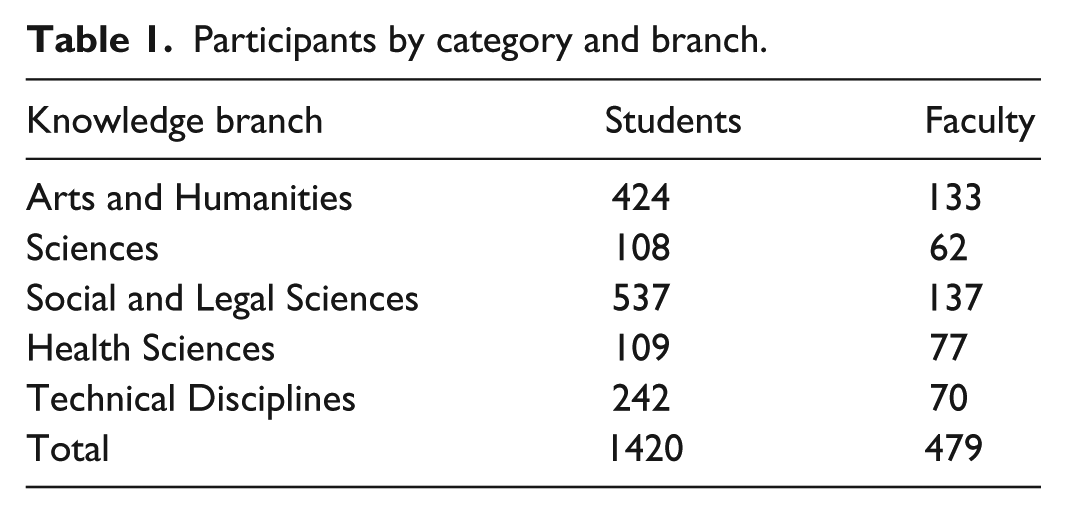
Restricted to UGR University, a broad sample of faculty and students in a number of disciplines was used as a basis for this study. Groups are distinguished by their academic category (faculty and students) and their disciplinary field, according to the classical five branches of knowledge (Arts and Humanities, Sciences, Social and Legal Sciences, Health Sciences, and Technical Disciplines). This means that there are 10 groups to be studied (Table 1).
Participants by category and branch.
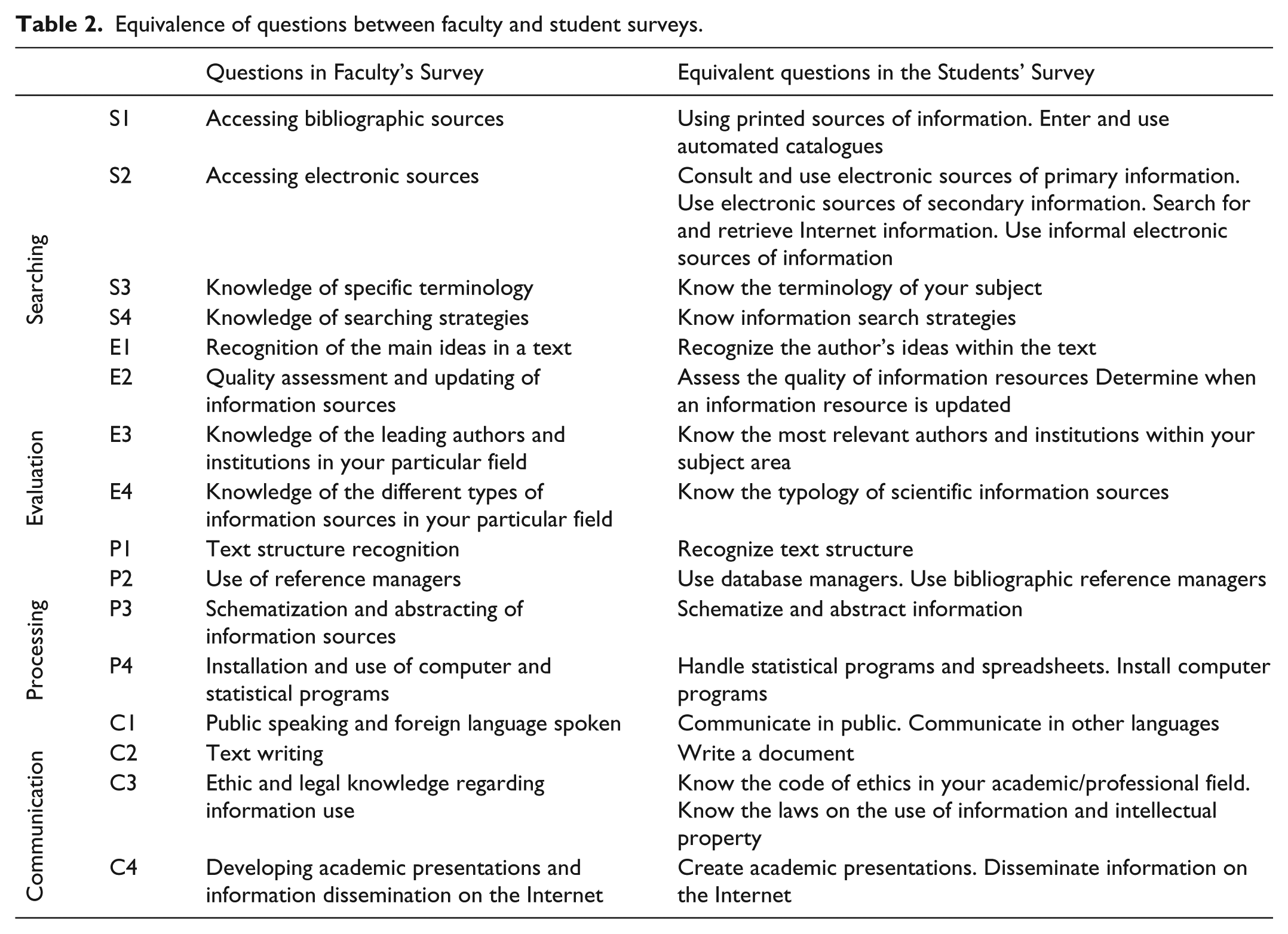
For data collection, domestic surveys of similar content yet slightly different in deployment were used. Data were gathered during 2010–2011 (students) and 2012–2013 (faculty) academic years. Students/faculty questionnaires are based on IL-HUMASS, being actually abridged versions. Based on ILCSHE, and originated in the field of Translation and Interpreting with the name of INFOLITRANS (Pinto and Sales, 2008), IL-HUMASS questionnaire has consolidated its reliability and validity through a series of practical cases on various disciplines (Pinto, 2010, 2011, 2012). Lately, it has been used with a greater analytical depth (Pinto and Fernández-Pascual, 2014, 2016). The full version of IL-HUMASS raises three dimensions for each of the questions, concerning to belief-in-importance (BIM), self-efficacy (SE) and preferred learning source (LS) of IL competencies. Yet this research has been limited exclusively to the BIM dimension, which is related to the levels of awareness about the importance of IL competencies on the part of the respondents. Moreover, while students answered the 26 questions of IL-HUMASS survey, the questionnaire provided to faculty was simplified to only 16, as this reduction was better adapted to faculty profile. In order to unify the number of questions, attention has been centred on these 16 generic competencies, and a table of equivalences with the goal of reducing to 16 the 26 students’ requests was applied (Table 2). In both cases, competencies are grouped into four categories: searching, evaluation, information processing and communication.
Equivalence of questions between faculty and student surveys.
Analysis
Considering that a large number of variables, which are also interrelated, complicate analytical processes, we assume that a smaller number of underlying dimensions – or factors – could explain and represent the complexity of the data derived from the 16 competencies in play. With this premise, the aim is to identify otherwise not-directly-observable factors on the basis of the set of IL-HUMASS observable variables. Factor analysis is a statistical procedure used to identify a small number of factors that can be used to represent relationships among sets of interrelated variables. It refers to examining how underlying constructs influence the responses on a number of measured variables. All these factors, or constructs, as underlying theoretical objects, would be representative of the whole set of variables observed through IL-HUMASS survey. But factor analysis does not provide a structure for the constructs, or common factors.
Actually, ‘understanding the relationships between psychological variables assumes accurate and valid measurement of the underlying theoretical constructs’ (Fletcher et al., 2012: 126). The application of exploratory factor analysis (EFA) to the 16 basic competencies taken into consideration was intended to uncover the possible constructs, or underlying factors. To this end the IBM SPSS Statistic 20 program was used. ‘An aim of factor analysis is to ‘explain’ correlations among observed variables in terms of a relatively small number of factors’ (Taylor, 2001). The type of analysis applied was devoted to principal axis factoring. The resulting reliability estimates (Cronbach alpha) are acceptable. Later, in order to better interpret the factors, an oblique rotation type (Promax with Kaiser normalization) was applied. Considering the results of the different factor analyses applied to groups of faculty and students from the five branches of knowledge, the configuration based on the retention of three factors was found to be the one that best fits the different population categories studied. Both the commonalities of different variables and the variance explained by the factors provide acceptable results. Kaiser-Meyer-Olkin (KMO) measure of sampling adequacy (greater than 0.5) and Bartlett’s test of sphericity (0.000) also fit the conditions for a factor analysis to be accepted. Having determined the number of factors and variables assigned to each, the greatest difficulty lies in defining the functional and conceptual profile for these constructs. As for the two IL motivational factors that explain the greatest variance, we opted to call them analysis-evaluation (six competencies) and synthesis-communication (seven competencies) of information; these terms bring together the content of the various competencies involved. The third and least explaining factor is clearly designated, as its three basic competencies evoke seeking information. But this purely exploratory stage does not allow any assumptions about the structure of the factors. Actually, factor analysis is not designed to discover relations of ‘causality’ among the various factors.
Since factor analysis does not provide a structure for the uncovered factors, the next step consists of the search for the most appropriate structure, that is, the one that best fits the data. So we have to resort to a more sophisticated analysis, of Structural Equation Modeling (SEM), which provides precise structural relationships between constructs. It is a statistical technique that combines aspects of factor, regression or path analyses in the pursuit of ‘a clear hypothesis about the factor structure’ (Hox and Bechger, 1998: 354). A detailed introduction to SEM may be found in Blunch (2008). An important feature of SEM methods is that they provide error-free measures of the latent variables (constructs, factors, subscales) by eliminating the random error of measurement for the observed variables (e.g. questionnaire items) associated with the latent variable (Dimitrov, 2006: 429). In this analytical stage, IBM SPSS Amos 22.0 software was used. This powerful device facilitates different SEM (Structural Equation Modeling) models to be analysed in order to test different hypotheses and confirm relationships among observed and latent variables (measurement dimension of the model), as well as between the latent variables only (structural dimension of the model).
At this point, ‘goodness-of-fit indices are used to determine the degree to which the theoretical model as a whole is consistent with the empirical data’ (Milfont and Fischer, 2010: 117). After a period of goodness-of-fit indices evaluation within a wide range of possible models, the more convincing model to be hypothesized was checked using SEM techniques. The proposed model is conceived on the basis of three subscales or factors (measurement side) and two paths (structural side). These two sides are the essence of SEM models, being present in all of them. In any case there is no perfect, accurate or definitive model, only approximations that can only be provisionally accepted: ‘equivalent models that fit equally as well as their own provisionally accepted model’ (Division of Statistic and Scientific Computation, 2012). The first condition for any SEM model to be accepted consists of the acceptance of these goodness-of-fit indicators. The most commonly used test is a statistical chi-square one (CMIN), but many others have to be taken into account, including CFI (comparative fit index), GFI (goodness of fit index) and RMSEA (root mean square error of approximation).
Once the SEM model is applied to each of the 10 groups of population taken into account, and their goodness of fit is verified, the model can be extended. Two useful extensions are multi-group analysis and the inclusion of means, and they are especially powerful when applied simultaneously (Hox and Bechger, 1998: 367). The goal is ‘testing for equivalence of measures to check if members of different groups ascribe the same meanings to scale items’ (Milfont and Fischer, 2010: 112). ‘The aim of multi-group invariance testing is to determine if the factor structure of a measure is equivalent across different groups’ (Fletcher et al., 2012: 123). At least three perspectives of this equivalence of measures, or invariance, should be taken into account: configural, measurement and structural. There is configural invariance when the number of factors and pattern of their structure are similar across the groups. Otherwise, ‘in testing for measurement and structural invariance, interest focuses more specifically on the extent to which parameters in the measurement and structural components of the model are equivalent across the groups’ (Byrne, 2010: 213).
Results
The proposed model meets the conditions necessary for it to be provisionally accepted. In the measurement dimension of the model, values for the importance given to a set of information competencies are categorized. In the structural side of the model, a chain of relationships among these categories is proposed. The importance given to each of the 16 competencies of the questionnaire was reduced to three factors or categories: seeking, analysis-evaluation and synthesis-communication. The factor of BIM of seeking, the only of an exogenous nature, is predicted by three observed competencies: accessing bibliographic sources (S1), accessing electronic sources of information (S2), and knowledge of search strategies (S4). The construct of BIM of analysis-evaluation is related to six predicting competencies: recognizing main ideas (E1), quality assessment and update (E2), knowledge of authors and institutions (E3), knowledge of the typology of information (E4), text structure recognition (P1), and schematization and abstract of information sources (P3). The factor of BIM of synthesis-communication is related to and measured by seven observed competencies: knowledge of the terminology (S3), use of reference managers (P2), installation and use of computers (P4), public speaking and foreign languages spoken (C1), text writing (C2), ethic and legal information (C3), and academic presentations and information dissemination on the Internet (C4).
The structural side of this SAS (Seeking-Analysis-Synthesis) model defines the relationship between these three categories. It arises from the basic factor of BIM of information seeking, having to do with the core factor of BIM of analysis-evaluation, and deployed in the peripheral factor of BIM of synthesis-communication of information (Figure 1). Therefore, a causal relationship between factors is established: the basic factor influences the core factor, and this influences the peripheral one.

Structure (base, core and periphery) of the SAS model of motivation on IL competencies.
A first and unavoidable step was checking the acceptability of the SAS model. It is generally acknowledged that most models are useful approximations that do not fit perfectly in the population. Yet the model should be extended to the groups of faculty and students of the various knowledge branches, from at least three perspectives, to ensure their invariance, or equivalence of measures: scalar, matric, and structural. The main model fit measures would be CIM/DF (minimum value of the discrepancy between the model and the data, divided by its degree of freedom), CIF (comparative fit index) and RMSEA (root mean squared error of approximation). As for CMIN/DF, Wheaton et al. (1977) suggest a ratio of approximately five or less as ‘beginning to be reasonable’. These are the results for the various sub-model fits: 4.398 (scalar), 3.688 (matric), and 4.691 (structural). Concerning CFI, the values obtained were: 0.895 (scalar), 0.918 (matric), and 0.896 (structural). Practical experience indicates that a value of the RMSEA of about .05 or less indicates a close fit of the model in relation to the degrees of freedom (Table 3). By confirming the acceptability of the extended model, ‘one can have more confidence that any differences noted between groups are related more to substantive issues rather than for measurement reasons’ (Fletcher et al., 2012: 126).
Root Mean Squared Error of Approximation (RMSEA) of the various perspectives.

First of all the overall results of the SAS model concerning groups of students and faculty were examined. Then, outcomes related to each of the five areas of knowledge taken into account were also explored.
Overall
A first graphical approach to an acceptable motivational model on IL competencies on the part of groups of students and faculty provides us with a better understanding of the differences among them (Figures 2 and 3). The first to highlight is the meaningful difference between the results provided by the model in both measurement and structural dimensions when comparing students and faculty. Thus, in the group of students the measurement dimension of the model offers some noteworthy and balanced scores, with factor loadings on competencies ranging from moderate to high. However, scores on the path model are lower (Figure 2). By contrast, the group of faculty members provides modest results in the measurement dimension of the model: factor loads on competencies, ranging from low to acceptable; significantly higher results in its structural dimension (Figure 3). We should remember that the measurement and structural dimensions of the model respectively represent their superficial and deep sides. Accordingly, while students give more importance to the measurement or superficial dimension of the model, faculty members value better its structural or deep dimension.
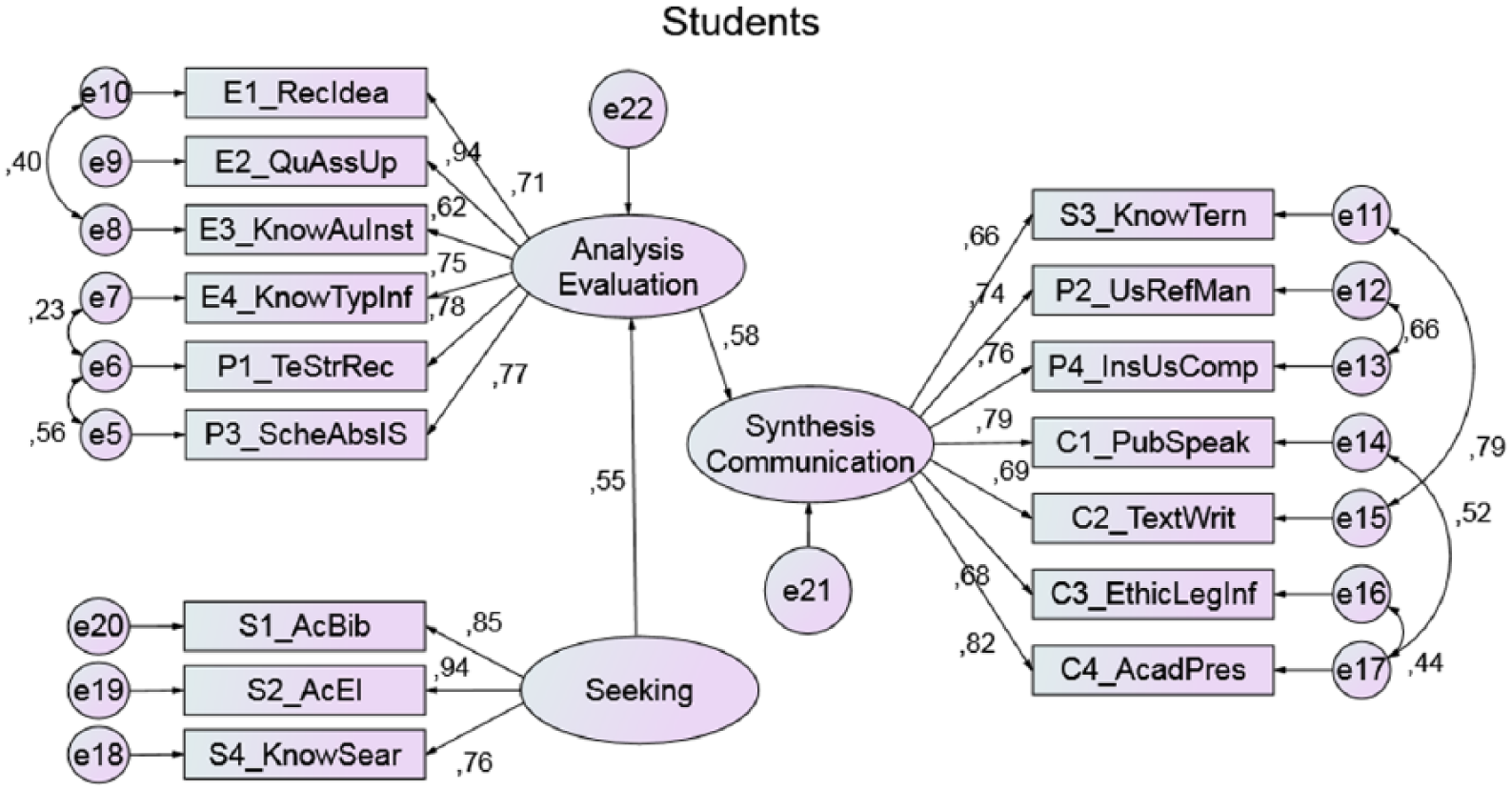
Path diagram of SAS model based on UGR students’ IL motivational factors (measurement) and their correlations (structure).
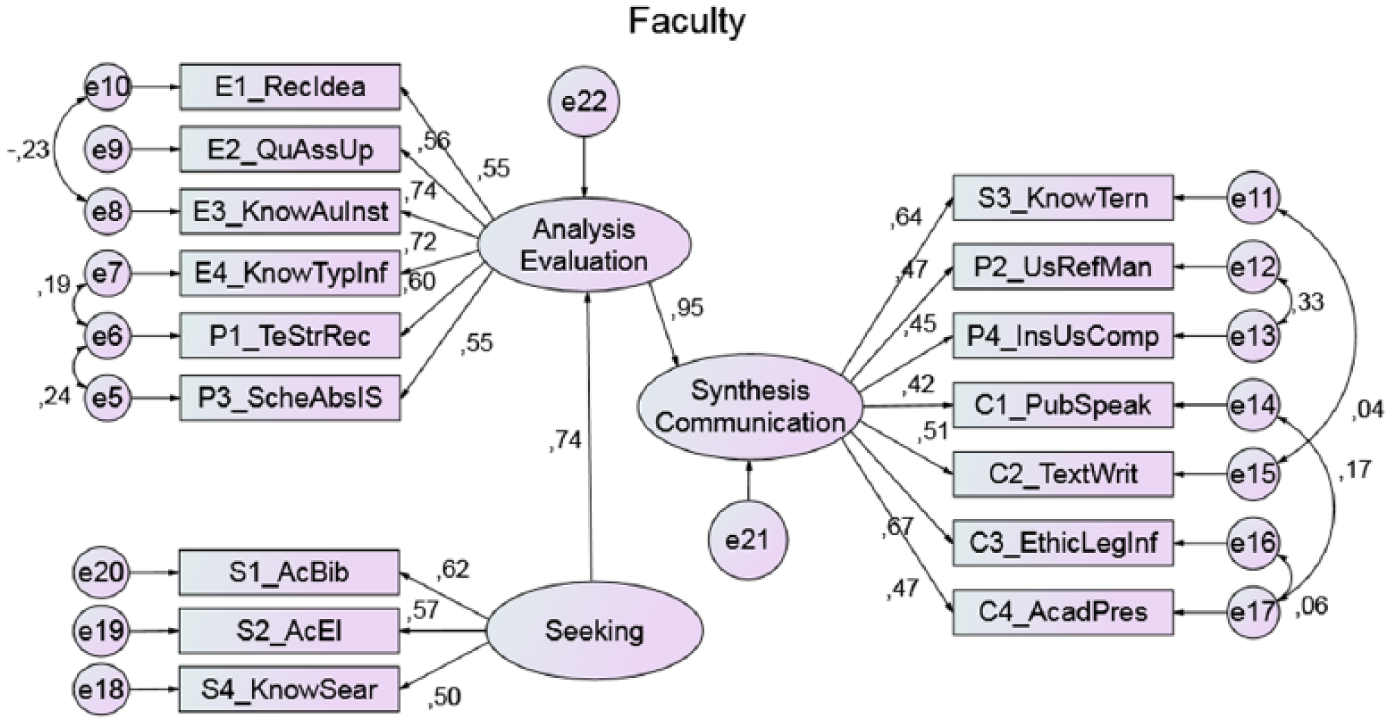
Path diagram of SAS model based on UGR faculty’s IL motivational factors (measurement) and their correlations (structure).
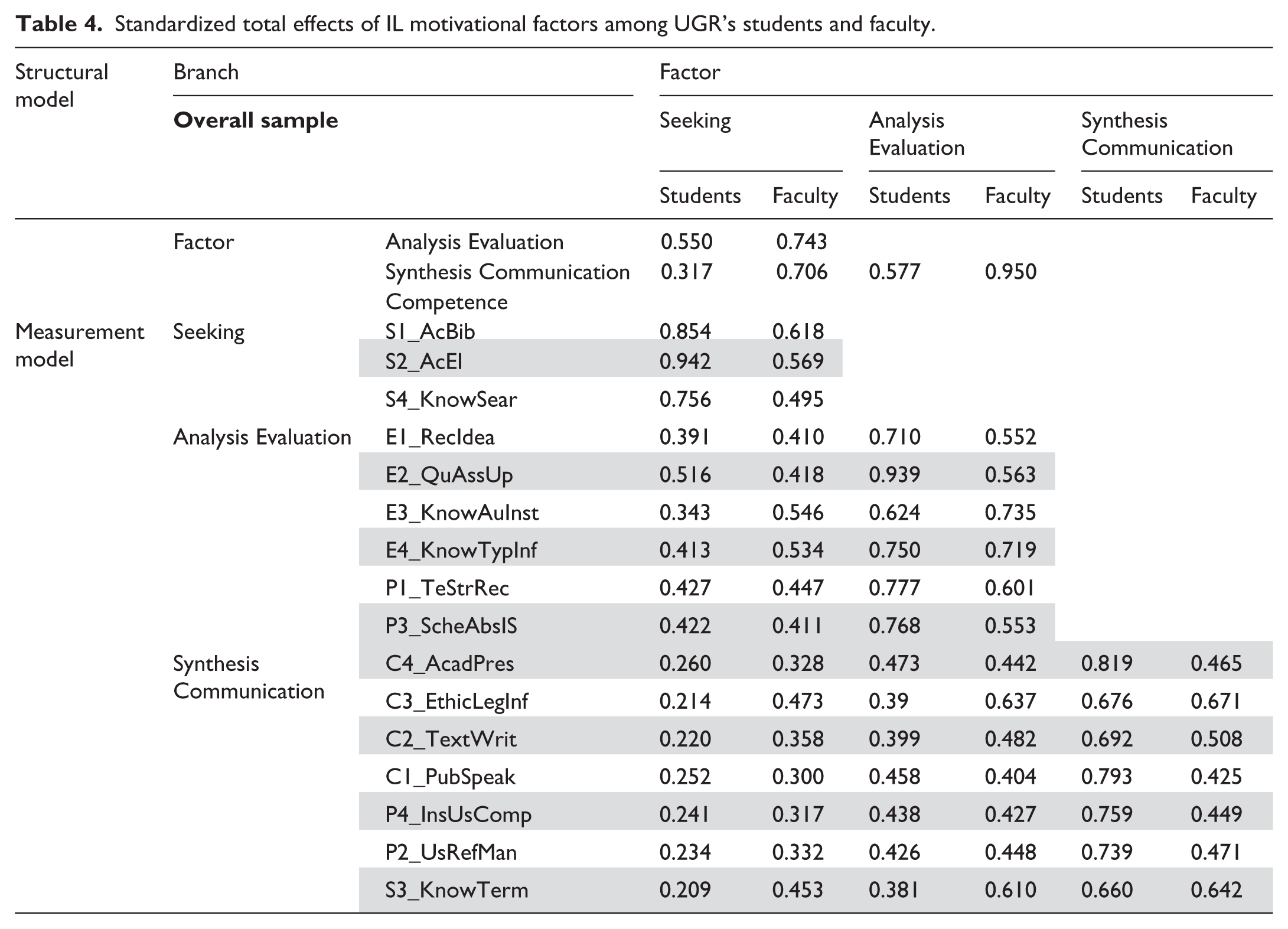
Thus the effects, direct and indirect, of the three factors in the 16 competencies are uncovered (Table 4). The numbers in each cell indicate the incidence or effect of the factor – column – on the competency – row. An example on the measurement side of the model: the standardized total (direct and indirect) effect of the importance granted to the latent trait of synthesis-communication on the part of students and faculty regarding C4 (importance granted to academic presentations and information dissemination on the Internet) is 0.819 (students) and 0.465 (faculty). In the structural side of the model, the standardized total (direct and indirect) effect of analysis-evaluation on synthesis-communication is 0.577 (students) and 0.950 (faculty).
Standardized total effects of IL motivational factors among UGR’s students and faculty.
Arts and Humanities
As for the BIM of IL competencies on the part of faculty and students of the Arts and Humanities area, results provided by the SAS model show similar results to those obtained at the overall level. There is a noticeable difference between the two groups concerning the weight of the different competencies in the factors, which is higher for the group of students in almost all competencies, with the exception of three: schematization and abstracting of information sources (P3), knowledge of the leading authors and institutions within your particular field (E3), and knowledge of specific terminology (S3) (Figure 4).
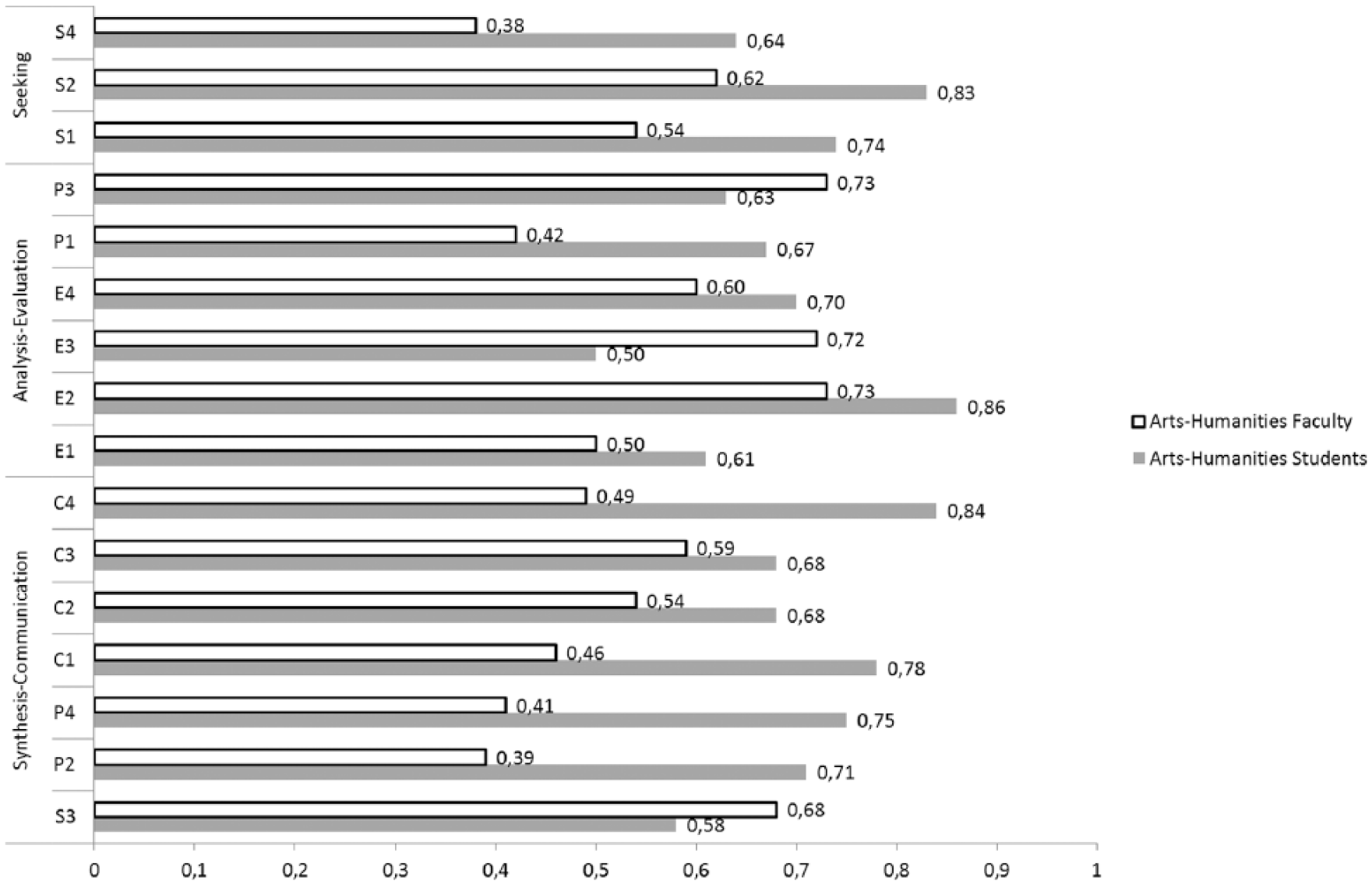
Standardized effects BIM of IL factors among Arts and Humanities students and faculty.
Within the structural side of the model, the standardized total (direct and indirect) effects of seeking on analysis-evaluation are moderate for students and high for faculty members, just as it occurs with the effects of analysis-evaluation on synthesis-communication (Figure 9). As can be seen, causal relationships among motivational factors in the area of Arts and Humanities are significantly different for students and faculty, being higher for the latter.
Sciences
The weight of IL motivational factors on the part of faculty and students of the area of Sciences is slightly lower than its equivalent in Arts and Humanities. Weights of factors provided by students are higher than those of faculty, except for the competency on ethical and legal knowledge regarding information use (C3) (Figure 5).
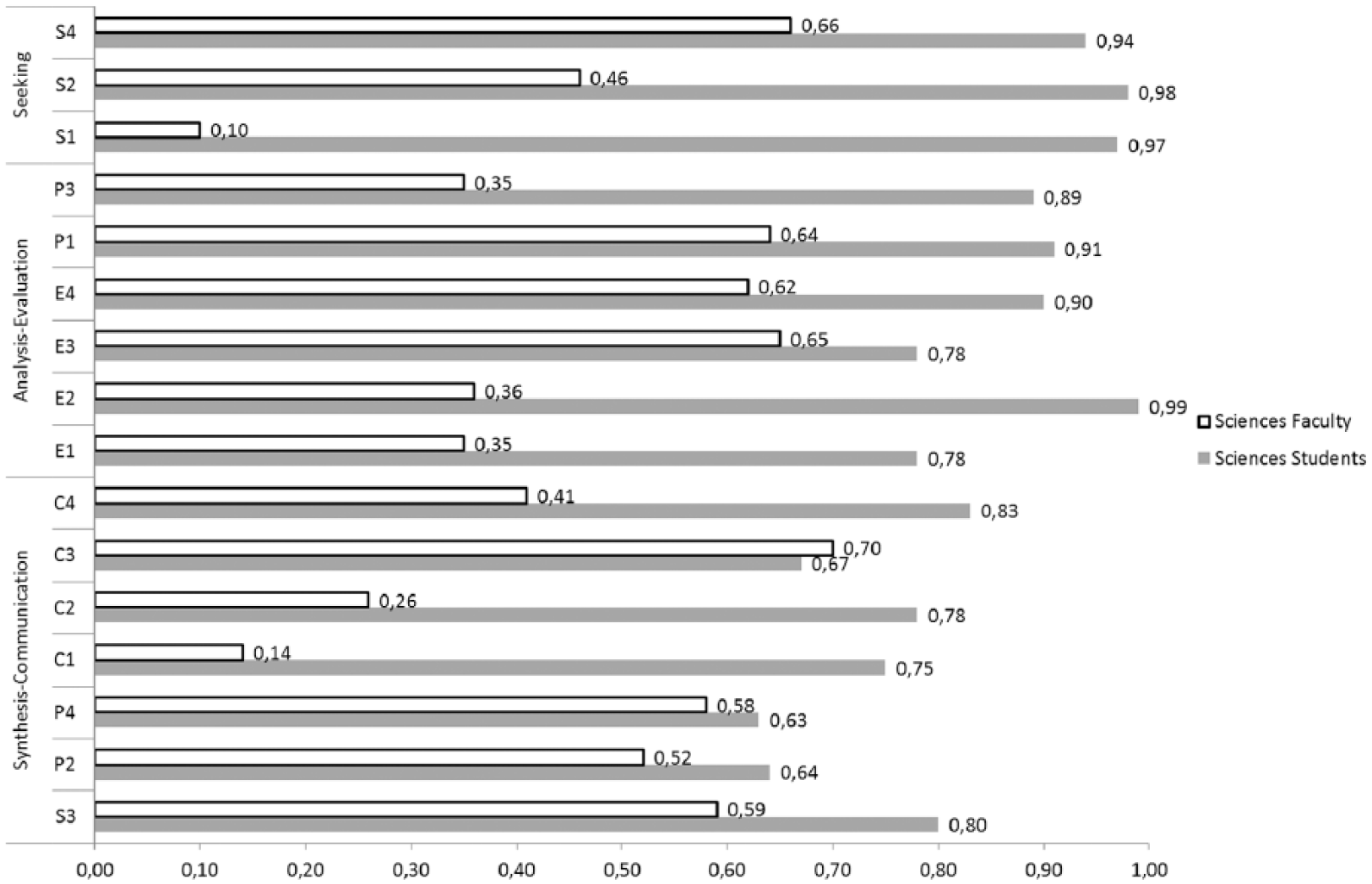
Standardized direct effects of BIM of IL factors among Sciences students and faculty.
In the structural part of the model, a disparity exists between the groups of students and faculty concerning factor relationships: while the impact of seeking on analysis-evaluation is higher for students (0.70) than for faculty (0.59), the effect of analysis-evaluation on synthesis-communication is lower among students (0.74) as opposed to faculty (0.85).
Social and Legal Sciences
Within the measurement side of the model, the effects of BIM of IL factors among faculty and students are similar, just slightly higher for students, except in four competencies: text structure recognition (P1), knowledge of the different types of information sources in your particular field (E4), knowledge of the leading authors and institutions in your particular field (E3), and knowledge of specific terminology (S3) (Figure 6).
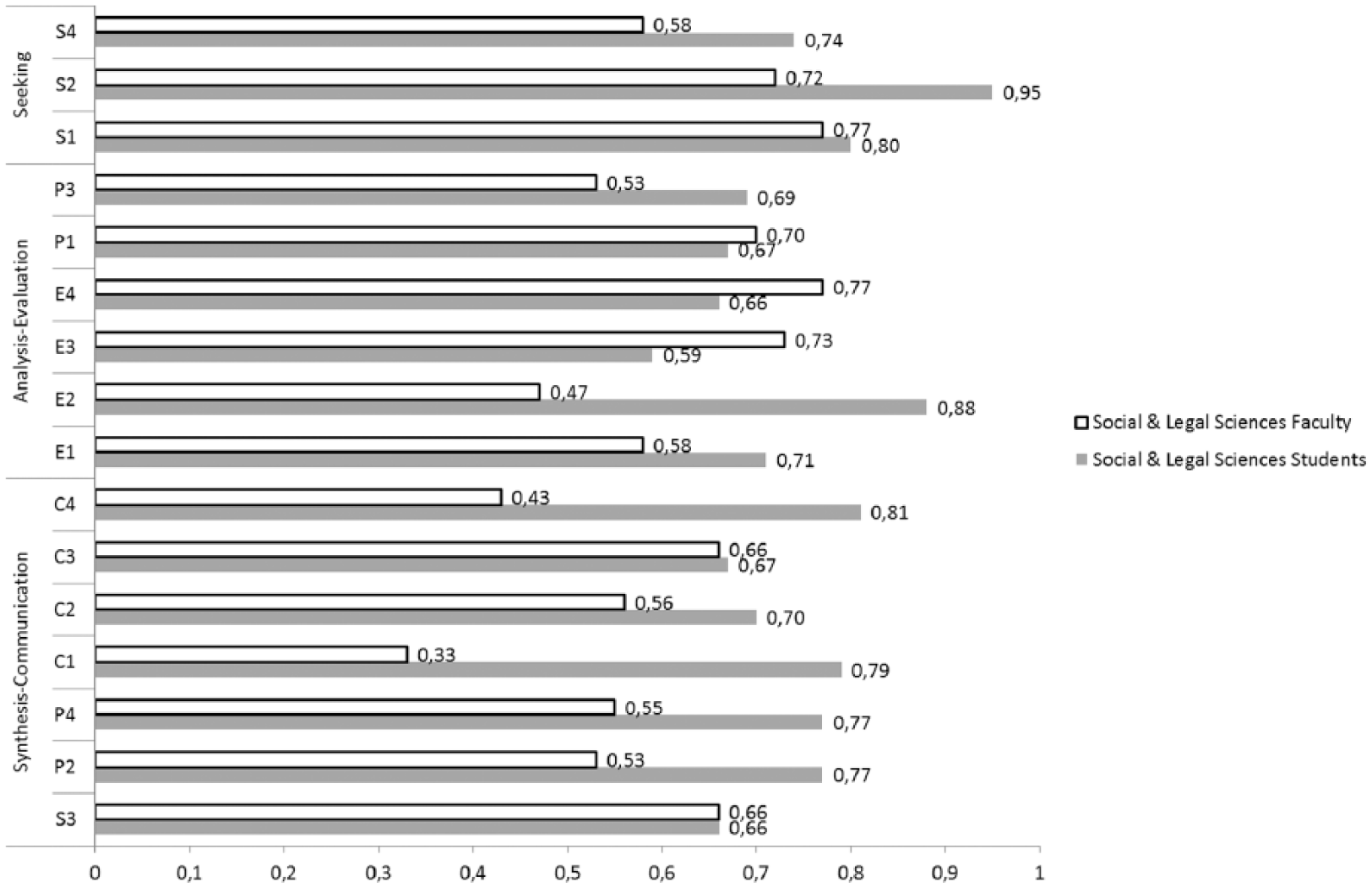
Standardized direct effects of BIM of IL factors among Social and Legal Sciences students and faculty.
Within the structural side of the model, causal links between factors are higher for faculty members (Figure 9).
Health Sciences
Concerning students and faculty members in the area of Health Sciences, a comparison of their levels of IL motivational factors provides mixed results in the measurement side of the proposed model. Although the general trend of higher values for students’ factor loading is maintained, there are five competencies with higher faculty’s scores: knowledge of the leading authors and institutions in your particular field (E3), recognition of the main ideas in a text (E1), ethical and legal knowledge regarding information use (C3), text writing (C2), and knowledge of specific terminology (S3) (Figure 7).
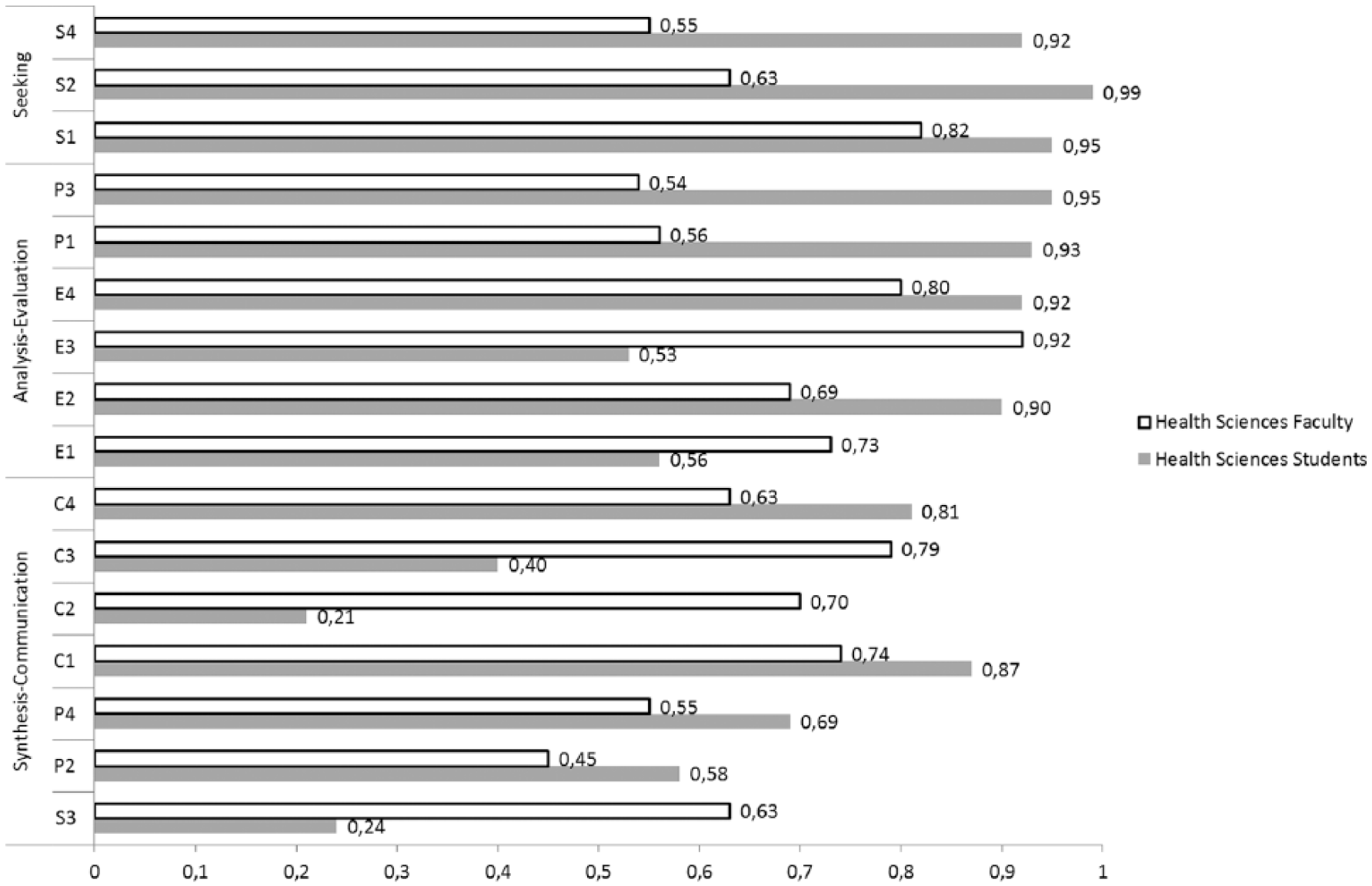
Standardized direct effects of BIM of IL factors among Health Sciences students and faculty.
The structural side of the SAS model among Health Sciences students offers the following results: the relationships between the factors are the lowest of all knowledge branches. However, among faculty members these same relationships are much higher.
Technical Disciplines
In the measurement side of the SAS model, a comparison between faculty and students in the area of Technical Disciplines regarding the effects of the three factors in the different competencies reveals that most hold little relevance for faculty members; within the group of students, the effect of the factors is much higher in all cases (Figure 8).
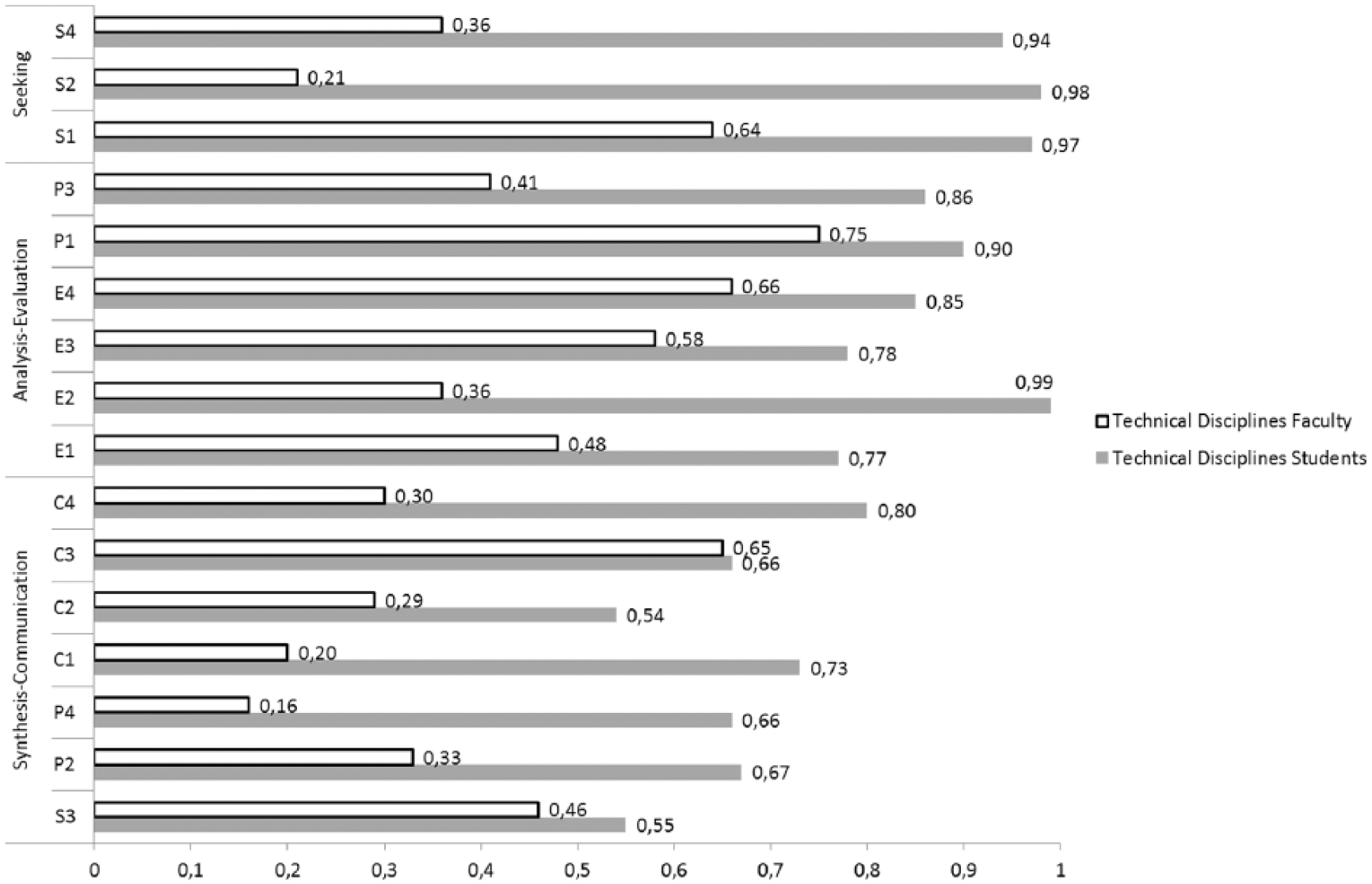
Standardized direct effects of BIM of IL factors among Technical Disciplines students and faculty.
These noticeable differences in the values of BIM of IL factors within the area of Technical Disciplines are inverted as far as correlations between factors is concerned. They are lower in the group of students and higher for faculty members.
As a summary of results for the structural section of the model, we offer a graphical view of the values of the correlations among factors (structural relationships) deployed in the 10 population groups, that is, the two groups of students and teachers, and the five areas of knowledge (Figure 9). As stated previously, the model only shows two correlations among factors: seeking on analysis-evaluation and analysis-evaluation on synthesis-communication. The values obtained for the impact of the analysis-evaluation factor on the synthesis-communication factor are higher than those for the impact of seeking on analysis-evaluation, except in two situations related to students of Sciences and Technical Disciplines, which contradict the dominant trend.
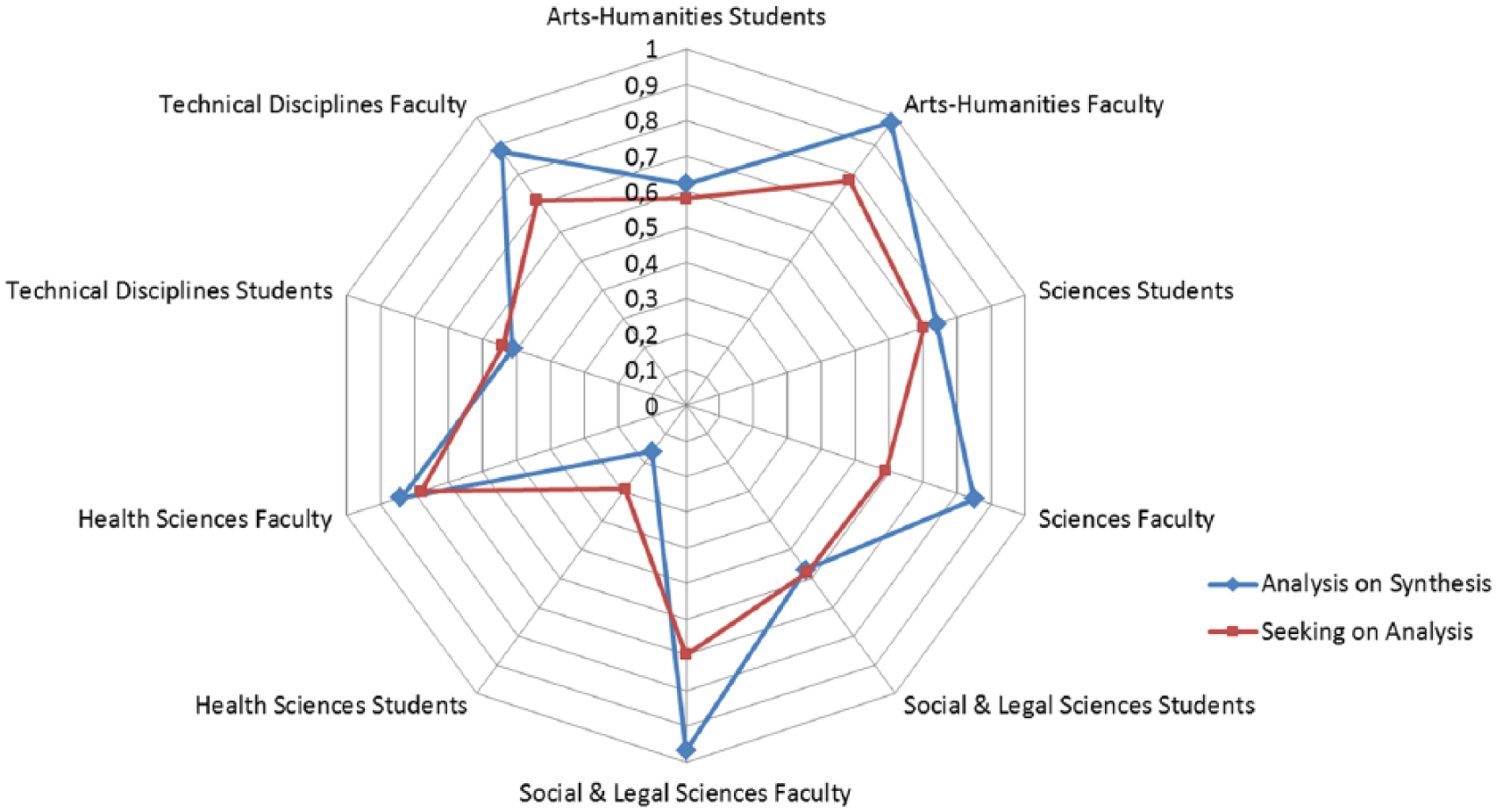
Correlations among BIM of IL factors. A students/faculty comparison of five knowledge branches.
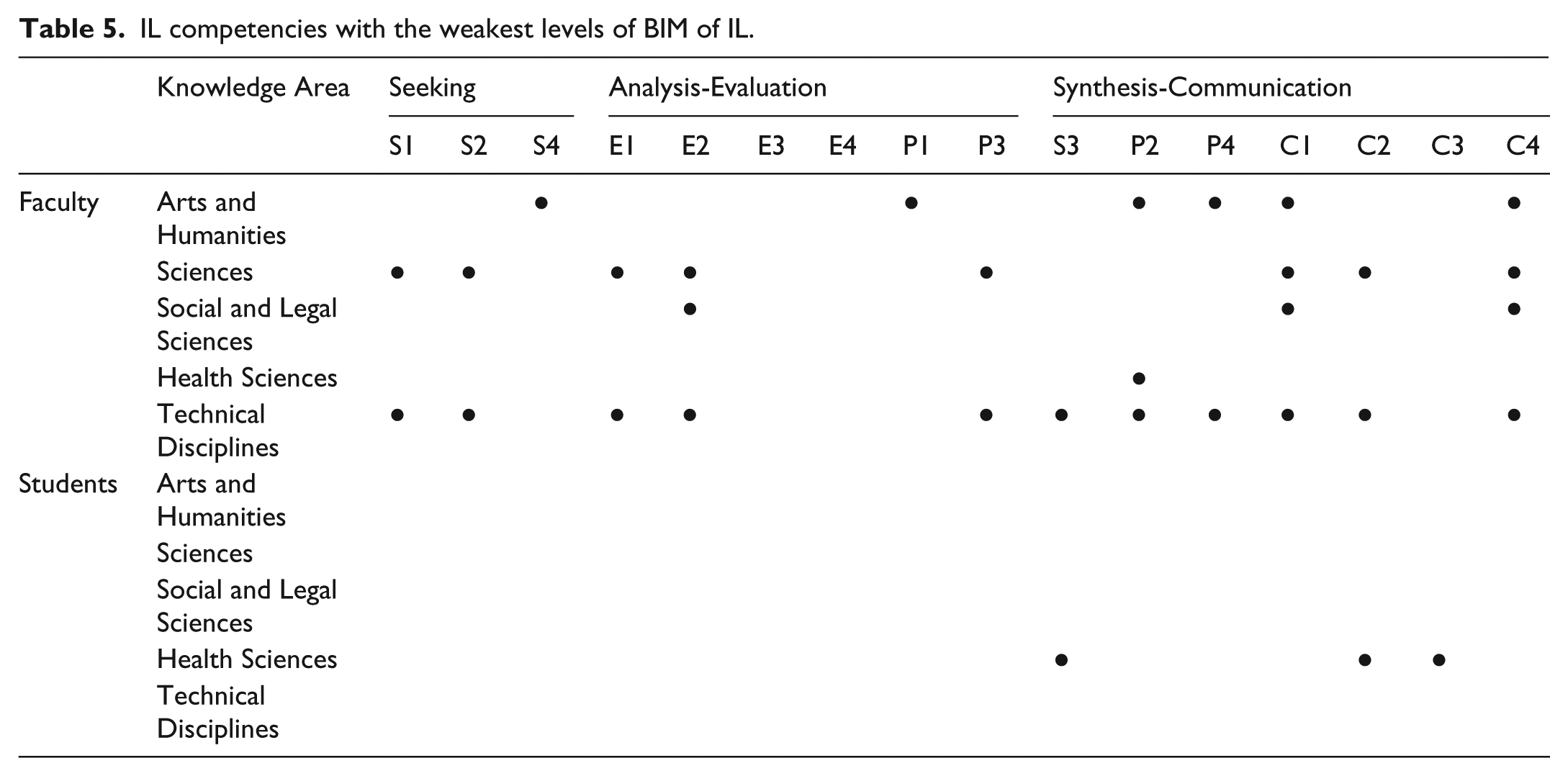
In the measurement dimension of the SAS model, devoted to factor loading of competencies, some shortcomings are found, especially on the part of faculty members. These are especially pronounced in the areas of Sciences and Technical Disciplines. Also among faculty, the weakest factors loadings are found in relation to the importance of the competencies in public speaking and foreign languages spoken (C1) and developing academic presentation and information dissemination on the Internet (C4). To a lesser extent, the attitudes toward the competencies in quality assessment and updating of information sources (E2) and use of reference managers (P2) give low scores on factor loadings. The dotted cells signal values below 0.5 with regard to factor loadings (Table 5).
IL competencies with the weakest levels of BIM of IL.
Discussion
From the results obtained, the acceptability of the proposed SAS model emerges. Its goodness-of-fit parameters meet the minimum required values and the model can be provisionally accepted. It consists of three categories, or factors, regarding the BIM of competencies on seeking, analysis-evaluation and information synthesis-communication. The importance of synthesis-communication scores highest and is more dependent on the others.
In a broad view that is applicable to all population groups considered within the SAS model, a framework is established in terms of awareness of the importance given to information competencies. This framework contains a root, a body and a branch, corresponding respectively to the factors related to seeking, analysis-evaluation and information synthesis-communication. The category associated with seeking has the smallest number of variables, and is the only one of an exogenous nature, at the root of the model. The category related to analysis-evaluation is the only of an intermediate nature; it depends on the category of seeking and in turn causes that of synthesis-communication. Most of higher-order thinking skills are in this intermediate category. Synthesis-communication is the sole dependent category of the model, as it is situated at the end of the path. According to the model, any evolution in the factor of BIM of seeking would have an impact on the other two factors in BIM of analysis-evaluation and synthesis-communication, and therefore in their respective competencies.
A comparison between the attitudes of faculty and students through the SAS model reveals a general trend: while faculty members value the structural dimension of the model, devoted to correlations among factors, the students value its measurement dimension, directly linked to factor loadings on competencies. In tune with the contextual nature of IL, significant differences not only between groups of faculty and students but also among the different branches of knowledge are observed. As for faculty members, at one extreme we find those in Sciences and Technical Disciplines, whose contributions to the factors – in the measurement side of the model – are minimal. Conversely, those from Health Sciences offer more balanced scores if we consider the two dimensions of the model (Figures 7–9).
The students show high scores within the measurement model, except in some specific competencies and branches. As for the structural part of the model, the greatest weakness is found in students of Health Sciences, reflected by their scarce correlations among factors (Figure 9). Science students fit the model best in its two dimensions (structural and measurement), offering very acceptable scores in both cases (Figures 5–9).
As Grafstein (2002: 202) states, the concept of IL ‘is one that contextualizes it within the structures and models of thought of particular disciplines’. Yet ‘information literacy as a discrete phenomenon is still perceived as being a relative newcomer to many disciplines’…. Despite acknowledgement of a ‘growing awareness of the importance of information literacy’ (Boon et al., 2007: 224).
We agree with Saunders (2012: 228–231) in recognizing that:
faculty members overwhelmingly believe that information literacy is important for their students …. Information literacy consists of both a baseline set of competencies that are transferable or cross-disciplinary, as well as some knowledge and skills that are specific to each field … One of the biggest differences is the type of sources on which each discipline relies, as well as how those sources are located and evaluated.
Both higher- and lower-order thinking skills are more necessary than ever for conducting quality research and solving information problems. Evaluation, interpretation and synthesis are key information competencies of the 21st century (Head and Eisenberg, 2010: 38).
The branch of Health Sciences is most in need of improvement in students’ attitudes towards IL. When it comes to students’ IL, there are plenty of attitudinal differences between disciplines, indicating that specific training IL actions should be fostered. This would most likely contribute to reducing the attitudinal differences between students when we compare diverse academic disciplines (Pinto and Sales, 2015: 213).
A similar methodology, but focused on the issue of assessment, has been employed with parallel results regarding attitudes of faculty and students: ‘concerning implications for assessment policy and practices, differences in beliefs, meanings, and understandings about assessment held by faculty and students raise important issues for higher education’ (Fletcher et al., 2012: 130).
Consistent with the influence of the various disciplines in the attitudes towards IL competencies, the concept of epistemic communities appears: ‘epistemic communities – such as scientific specialties – are information-literate communities that through ongoing and situated interaction provide their members with the background and approaches for seeking, analyzing, using, and evaluating knowledge’ (Tuominen et al., 2005: 339). Definitely, more research in this direction is needed.
Conclusions
The acceptability of a SAS model that structures the importance given to a set of IL competencies by a multidisciplinary group of students and faculty members is demonstrated in this study. In its structural dimension, the model is organized around three factors, categories or latent structures, sorted decreasingly by their degree of causality. The first of them, concerned with seeking information, is the only one of an exogenous or independent nature. The other two are endogenous and interrelated: the factor of BIM of the analysis-evaluation of information depends on BIM of seeking but also impact BIM of synthesis-communication of information. Once the model is accepted, the starting or basic nature of the BIM of seeking is recognized.
According to the SAS model, it is essential to raise the levels of awareness of faculty and students about the importance of seeking information, which lies at the origin of the model. With regard to IL competencies, the BIM of competencies related to analysis-evaluation of information has an intermediary nature, as it influences the BIM of competencies of information synthesis-communication, the character of which is predominantly peripheral. When undertaking action to heighten students and faculty BIM of information competencies, the starting point of the accepted model lies in the basic competencies related to information seeking. But the most pivotal initiative could be to promote greater appreciation of the core competencies within the analysis-evaluation factor, all of them pertaining to the status of higher-order thinking skills. In general, the influence of analysis-evaluation on synthesis-communication is greater than the impact of seeking on analysis-evaluation. There appears to be no need to encourage awareness on the importance of peripheral competencies (synthesis-communication), located at the end of the chain.
Faculty members appreciate more the structural dimension of the model, its deepest structure of factor correlations being based on the importance given to a set of information competencies. By contrast, students value its measuring dimension, the surface part of the model. These are two ways of looking at the same reality: while the students’ position is more superficial, the faculty’s perspective is deeper.
The proposed SAS model provides unquestionable diagnostic possibilities, as it enables uncovering the strengths and weaknesses of students and faculty as far as their attitudes toward a structured set of IL factors and competencies. Attitudinal deficiencies with regard to IL among students of Technical Disciplines could be identified, especially in the measurement side of the model. On the other hand, the good informational willingness of the Health Sciences faculty is made manifest, in contrast with the low esteem of the structural dimension of the model by their students. These results may guide decision-making regarding the improvement of attitudinal conditions of faculty and students of different branches with regard to IL. In any case, motivational interventions using awareness sessions on IL are recommended, for students and faculty of the various disciplines.
The accepted SAS model was conceived with some room for improvement. Its provisional acceptance sheds light on certain questions concerning the attitudes of faculty and students in the emerging environment of IL. The application, and consequent validation, of the present model on a different population sample would allow its definite acceptance. Still, the body of research on the relevance of the attitudes toward IL among faculty and students is limited, despite the recognized importance of its potential impact on learning.
Footnotes
Declaration of Conflicting Interests
The author(s) declared no potential conflicts of interest with respect to the research, authorship, and/or publication of this article.
Funding
The author(s) received no financial support for the research, authorship, and/or publication of this article.