



Abstract
Time is a social and subjective construct that establishes qualitative differences in the flow of events, that is associated with an individual’s sociodemographic and cultural background, and that affects their attitudes and behavior. The relevance of the past, present, or future as well as the particular meaning of these temporal frames varies depending on each individual’s life experiences and social status. These qualitative and differentiated meanings of time have been studied in many countries through the concept of “time perspectives.” This paper presents the findings of the first application of Zimbardo’s Time Perspective Inventory in Chile and establishes correlations between its factors and sociodemographic and cultural variables. This paper aims to present comparable data for the study of time perspectives, provide theoretical and empirical evidence to progress in the study of the multidimensional nature of time in Chile, and discuss the possibilities and challenges posed by Zimbardo’s Time Perspective Inventory as an instrument for the empirical study of time.
The study of time in Latin America and Chile
Few systematic studies on social and individual temporality have been conducted in the field of social sciences in the past. However, this has markedly changed throughout the last three decades, mainly due to the challenges posed by globalization, the differentiation of social systems, and the increased speed of social processes as a result of the management of complexity, new technologies, individualization, and the recent crisis in the legitimacy of development models in the countries of the North. This context has placed the issue of the future, of the biographical consistency of individuals and the worldwide synchronization of differentiated systems at the forefront, and has restored the importance of the time variable (Dally, 1996; Esposito, 2011; Hassan and Purser, 2007; Honneth, 2004; Kwinter, 2003; Nowotny, 2005; Rosa, 2011; Valderrama, 2011; Vatter and Ruiz, 2011).
The social sciences in Latin America have given too little importance to the systematic study of social time (Aguirre et al., 2005). Empirical studies carried out so far have focused on the objective measurement of the social distribution and individual use of time. From this perspective, time has been conceived as a natural, preexisting and objective resource which individuals represent in clocks and calendars, and whose sense is reduced to its quantity. Studies conducted in Chile share the same features (Catalán, 1998; CIMMA Group, 2004; Dirección del Trabajo, 2007; INE, 2008; Jiménez, 2005; Riquelme, 1999; Rojas, 1998; UNDP, 2002, 2010; Valenzuela and Herrera, 2006). Many of these studies, especially those that refer to gender relations, also include analyses on the subjective consequences of the unequal distribution of the resource time, without redefining the notion of time as a resource (Arriagada, 2005; DOMOS et al., 2007; UNDP, 2000, 2009, 2010). There are also some studies that have attempted to demonstrate the qualitative differences in individual perceptions of time (UNDP, 2002) or the role of temporal imaginaries in the organization of cultural differences throughout various historical periods (Subercaseaux, 2011). However, these approaches are either rather weak empirically or continue to be simple theoretical assumptions.
This limited conception of the time variable has restricted the capacity of Chilean social sciences to recognize and interpret some of the challenges posed by the temporal organization of advanced capitalist society. This paper aims to take an initial step toward a more complex consideration of Chilean social time by presenting the findings of the first application of Zimbardo’s Time Perspective Inventory (ZTPI) in Chile and establishing correlations between its factors and sociodemographic and cultural variables. This paper intends to provide evidence that, even though time is profoundly constrained by social structure, time production is also individual, subjective, and based on qualitative parameters that differ among social groups, and that affects behavior. By validating these hypotheses empirically, a more solid explanation of time can be provided and the current changes in Chilean society better understood.
A review on time perspectives (TPs)
As noted earlier, there are many approaches to study the origin, meaning, and social role of time, all of which have specific assumptions and limitations, and draw attention to particular aspects of this phenomenon. In order to show that time is socially constrained, but also heterogeneous and differentiated among individuals and social groups, we chose to begin our study by exploring how individuals provide meaning to the past, present, and future and their orientations toward these time frames. We have chosen to study “time perspectives” for several reasons: it is a field that helps establish links between its specific object and other dimensions of social temporality; there are internationally comparable and validated instruments provided by empirical research on the subject; and it is readily available for exploratory research.
Individuals neither experience nor relate to the flow of time as if it were a homogeneous and consistent event, but rather something that is full of meaning and is organized based on qualitative distinctions. This fact was determined early by sociology (Adam, 1990; Durkheim, 1982; Sorokin and Merton, 1937), anthropology (Evans-Pritchard, 1939; Gell, 1996), and psychology (James, 1963; McGrath and Tschan, 2004). This assertion has been conceptualized and researched in various fields of study under the notion of “time perspectives.” One common denominator of its definitions refers to the subjective operation, usually unconscious, that individuals carry out to provide order and meaning to their personal and social experiences with regard to the difference in the qualitative value given to the past, present, and future. This order provides a relatively stable subjective structure that influences attitudes and behavior in several spheres (Back and Gergen, 1963; Boniwell et al., 2010; Keough et al., 1999; Kluckhohn and Strodtbeck, 1961; Lewin, 1951; Zimbardo and Boyd, 1999).
Nevertheless, several differences and controversies become apparent within the framework of TPs, providing this field its heterogeneous and dynamic characteristics. The first significant difference is the degree of subjective autonomy or social dependency attributed to TPs. All these definitions point toward the influence of sociocultural context and socialization; however, interpretations rooted in psychology tend to emphasize the role of experience and on how individuals process TPs (Fraisse, 1963; Lewin, 1951). Sociologists, on the contrary, often place emphasis on structural determination (Nowotny, 2005; Sorokin and Merton, 1937; Zerubavel, 1981), and anthropologists on cultural rather than individual differences (Ferrandi et al., 2000; Kluckhohn and Strodtbeck, 1961).
A second difference concerns the degree of stability of TPs. Some have pointed out that, after the process of early socialization and the development of personality, TPs become a stable element (Zimbardo and Boyd, 1999). Others, however, underscore the situational and adaptive nature of an individual’s temporal orientations and arrangements (Kruger et al., 2008).
A third difference can be found in the relative importance given to each temporal frame (past–present–future) as a subject of research. Most empirical studies have focused on the role of the different perspectives toward the future, to the point of creating a specific object: Future TPs (McInnerney, 2004; Phan, 2009). This emphasis lies on the role future perspectives play in setting long-term goals and displacing rewards, such as academic achievement, the development of a professional career, or building a family. Meanwhile, others have placed greater importance on the meaning of past experiences for biographical construction and the creation of future expectations (Chernus, 2011; Ely and Mercurio, 2011; Roberts, 2004).
Several recent studies have taken on a completely opposite direction regarding these differences and have concurred in their integration. This is particularly evident in the progression of studies conducted by one of the most important researchers on TPs: Zimbardo. In recent articles, he has probed further into sociocultural determinants, as well as on the dynamic nature of TPs and the interdependency that exists between the past, the present, and the future (Zimbardo and Hohlman, 2009).
Zimbardo’s TPs
There are many ways to empirically operationalize the study of TPs (Boniwell et al., 2010). Because of its extensive development and empirical validation, the ZTPI created by Zimbardo has become the standard for the academic community. Based on studies by W. James and K. Lewin, Zimbardo and Boyd defined TP as: “The often nonconscious process whereby the continual flows of personal and social experiences are assigned to temporal categories, or time frames, that help to give order, coherence and meaning to those events” (1999: 1271). This concept has been operationalized and corrected on the basis of empirical studies carried out since 1985. The ZTPI factorial model currently in use was defined in 1999 based on 56 items clustered into five factors: Past-Negative (10 items), Present-Hedonistic (15 items), Future (13 items), Past-Positive (nine items), and Present-Fatalistic (nine items) (Zimbardo and Boyd, 1999). A TP is interpreted as the concentration of an individual’s attitudes and perceptions in one or another of the following factors:
Several studies have not only shown the consistent and differentiating existence of these five factors but have also proven their correlation with an individual’s behaviors and attitudes. By way of example, TPs may have a correlation with: subjective welfare (Boniwell et al., 2010), attitudes toward the conservation of the environment and natural resources (Corral et al., 2006), the development of psychological pathologies (Van Beek et al., 2011), the organization of a family’s time and the development of social networks (Zimbardo and Hohlman, 2009), the risk of contracting HIV (Rothspan and Read, 1996), drug use (Keough et al., 1999), risk-taking behavior in general (Kruger et al., 2008), academic achievement (Mello and Worrell, 2006), consumption-oriented behavior (Ferrandi et al., 2000; Ko and Gentry, 1991), and emotional intelligence (Stolarski et al., 2011). In sum, studies on TPs based on the ZTPI have demonstrated, contrary to perspectives of time as a natural, preexisting and objective resource represented in clocks and calendars to which individuals adapt and manage, that although time is socially constrained, it is also a subjective construct that establishes qualitative differences in the flow of events and that has an impact on behavior.
The ZTPI in the 2011 United Nations Development Program (UNDP)-Chile Survey
Zimbardo Time Perspective Inventory Items in the 2011 UNDP-Chile HDR Survey.

Constructing the model: Factor analysis and formed components
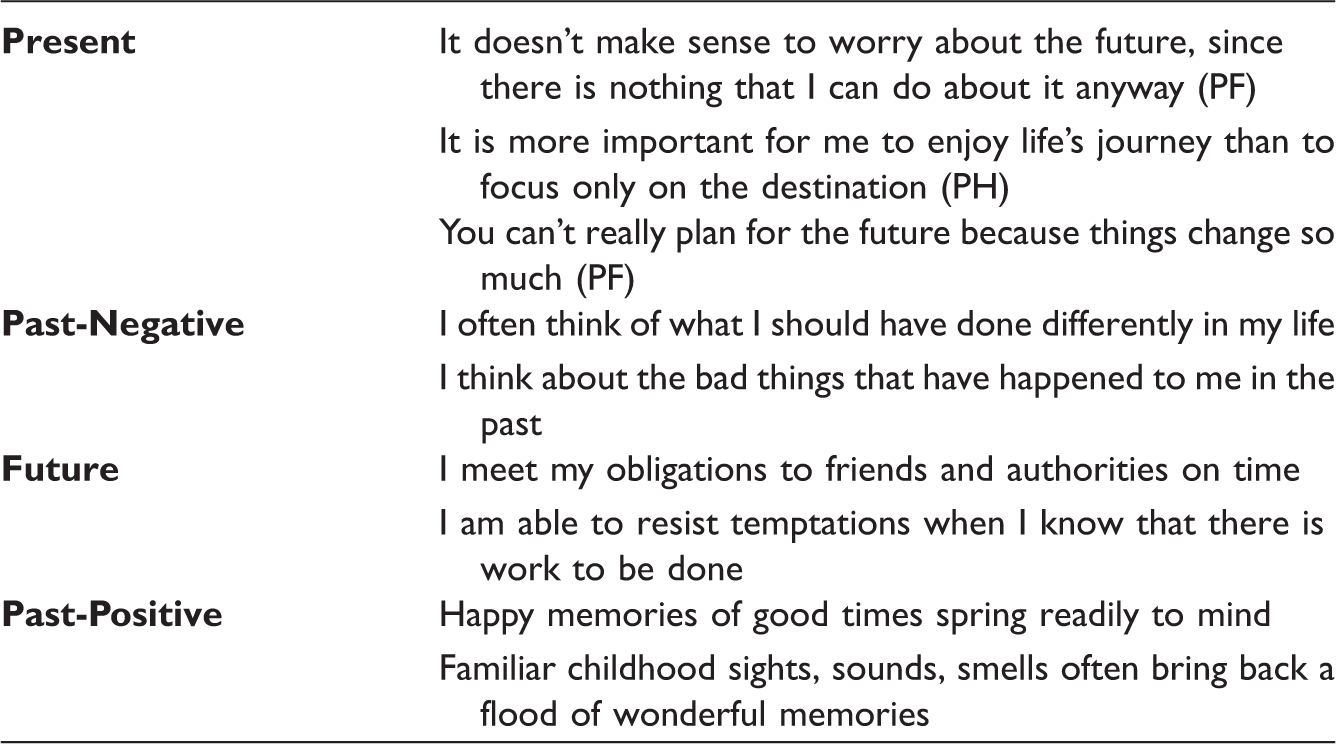
Factor analysis of the Zimbardo Time Perspective Inventory Chile.
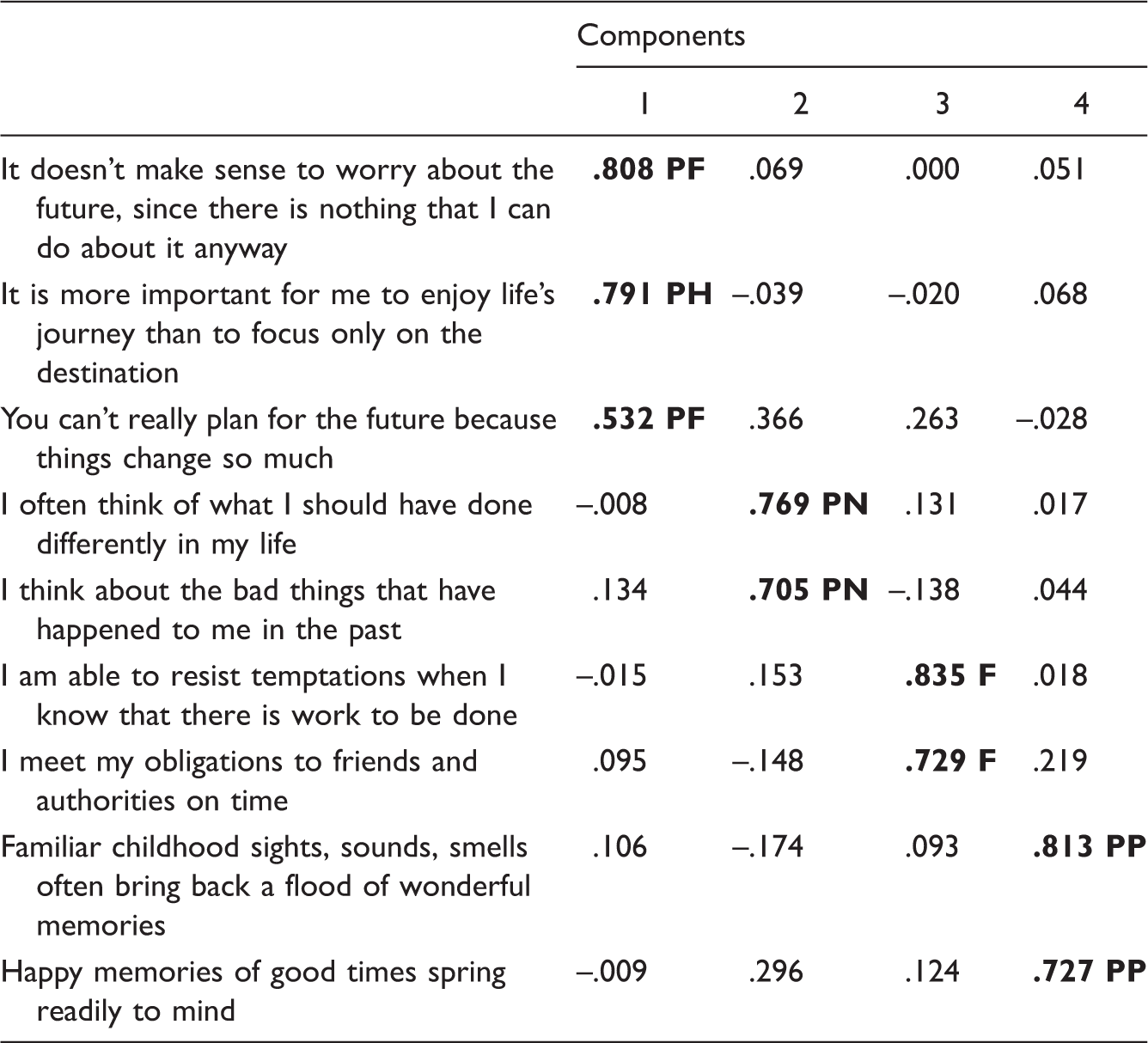
Time perspectives in Chile factors and items.
A sociodemographic interpretation of TPs in Chile
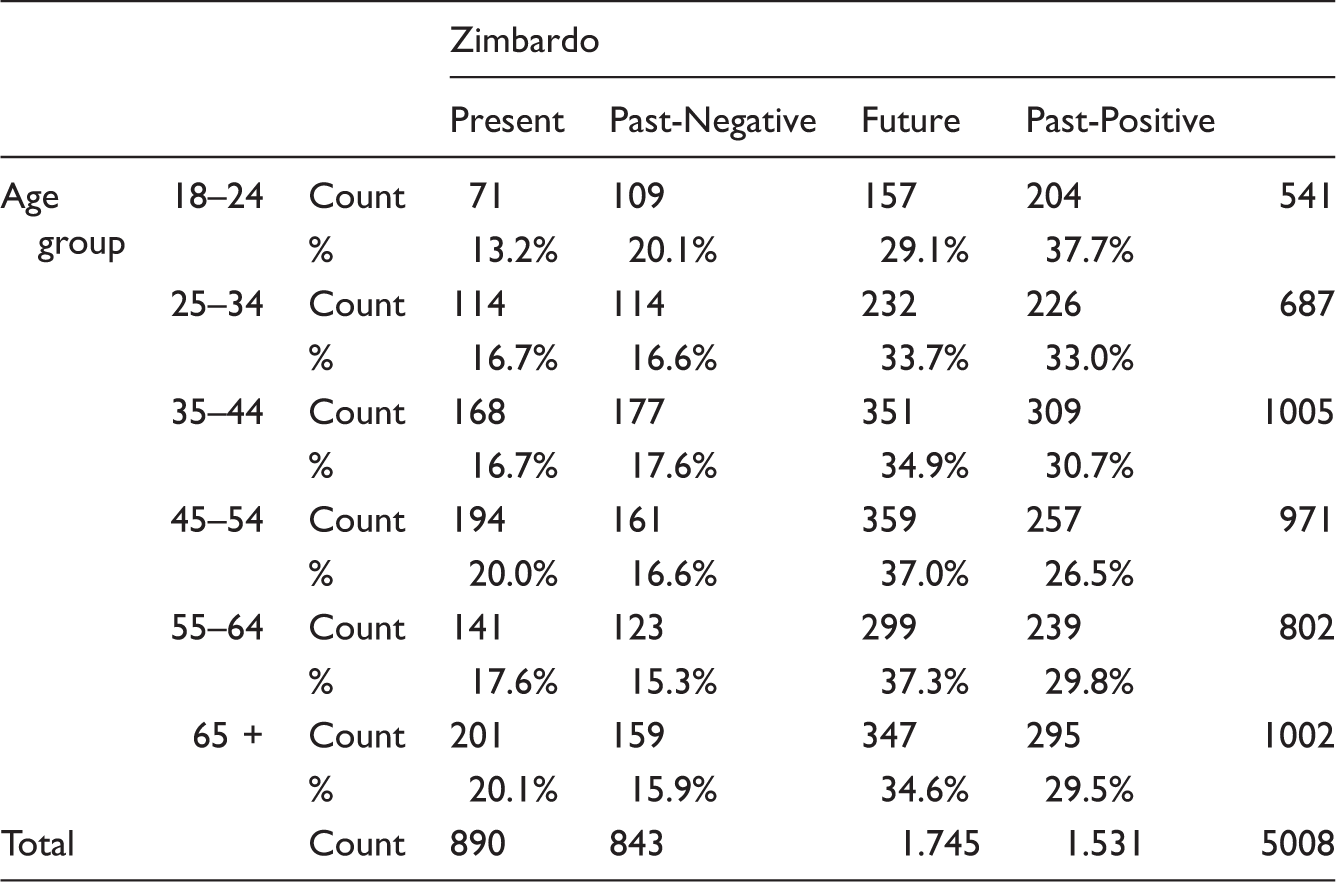
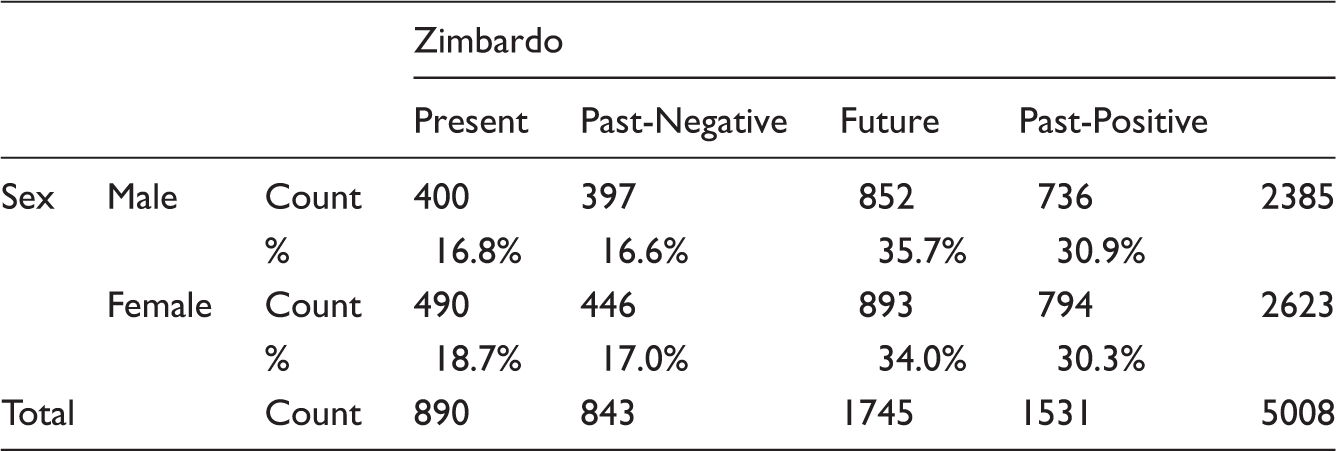
In order to explore the sociodemographic distribution of TPs in Chile, ZTPI subset groups for Chile were compared with age, gender, and socioeconomic variables defined in the 2011 Human Development Report survey.
Time perspectives according to age group.
Time perspectives according to gender.
Time perspectives according to socioeconomic status.
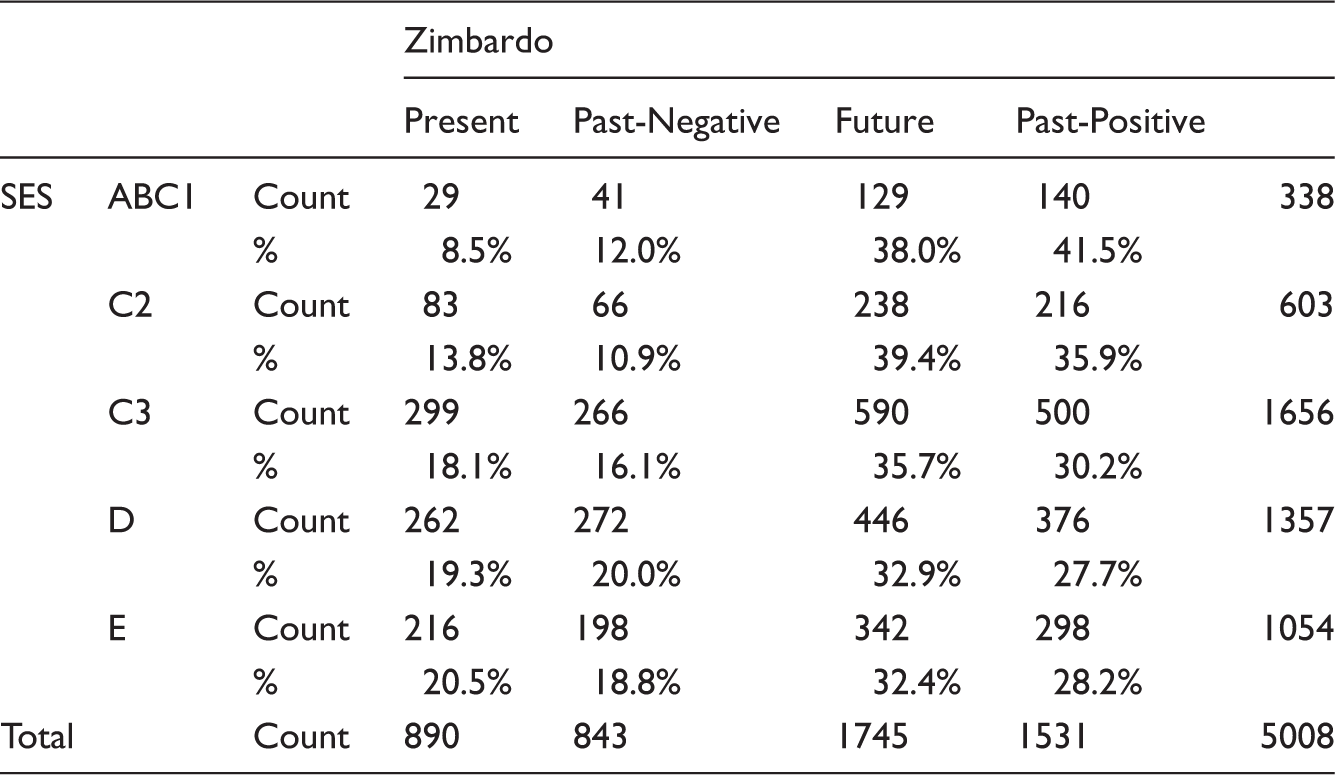
These sociodemographic analyses suggest further exploration. Firstly, the correlation that exists between age ranges and TPs should be supplemented with rigorous empirical analyses in order to distinguish the effect of the life cycle and generational change. On the one hand, certain life stages and social expectations associated with them could be functionally supported by specific TPs. This can be seen, for example, in the fact that, regardless of the other variables, the mid-life stages associated with employment and financial commitments tend to correlate with an individual’s emphasis on the future. On the other hand, a generational analysis can also be carried out. The younger respondents are a generation born after the Pinochet dictatorship (1973–1990) and their memories of the past are not marked by the violence and hardships of that period. This would explain the differences between the older and newer generations, which scored higher in the Past-Positive factor.
Secondly, the weak correlation between gender and TPs can be interpreted in light of other Chilean data. These indicate that there are less noticeable differences between men and women in relation to the subjective and cultural variables that are normally measured through surveys (Güell et al., 2005, 2012).
Thirdly, Chile is a country with widespread socioeconomic inequalities (Gini 2011 = 52, 0). This produces a strong impact on an individual’s perceptions and subjective orientations (Güell, 2012). The data presented here reveal the tendency of poorer individuals to focus on the Past-Negative and Present. This suggests that further studies on time should consider carefully the consequences of social inequality for the subjective experience of time. The impact of inequality on the images and experience of time, particularly of the future, is no longer limited to underdeveloped countries but has recently begun to have an effect on developed countries as well (Rosanvallon, 2012).
The ZTPI Chile in Comparison with Other Countries
Zimbardo time perspective inventory comparisons.
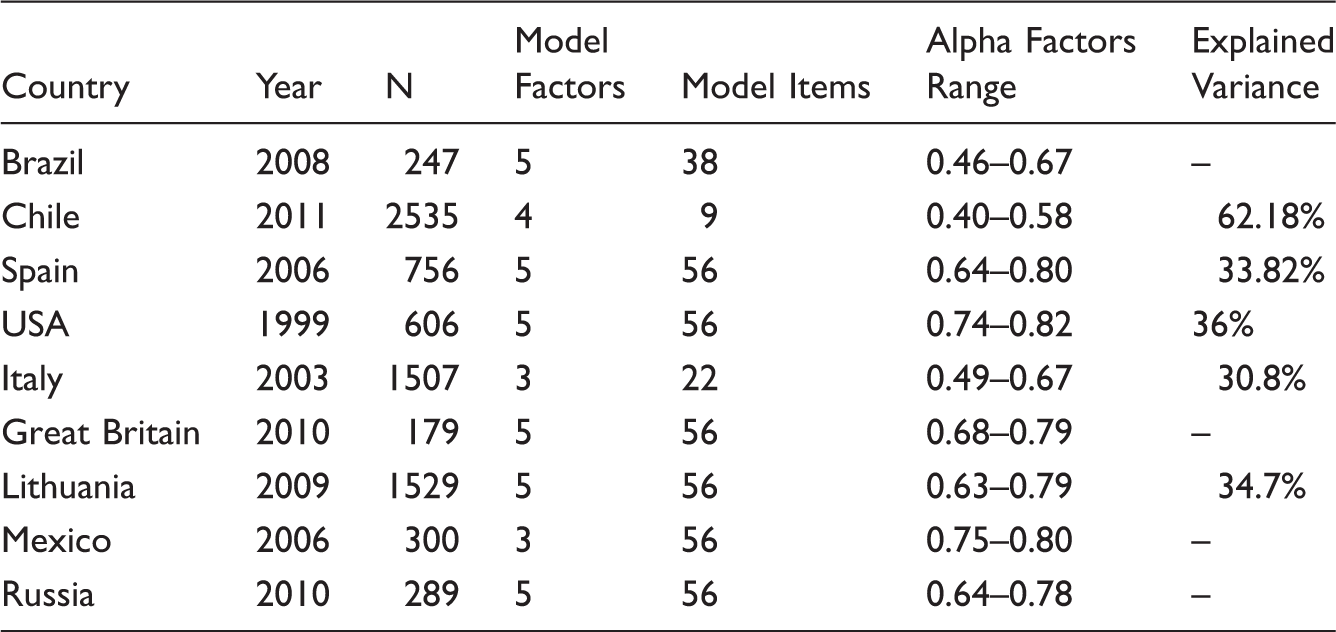
In these studies the original five-factor model consisting of 56 items have been replicated, albeit with a few differences in the number of items per component (Boniwell et al., 2010; Díaz Morales, 2006; Liniauskaite and Kairys, 2009). However, there have also been cases where the model was constructed with fewer items (Milfont et al., 2008), fewer factors (Corral et al., 2006), or fewer factors and items (D’Alessio et al., 2003), as in Chile.
The findings in Chile tend to be quite similar to those throughout the world. There is an analogous tendency of groups composed of older respondents toward the Future (Corral et al., 2006; D’Alessio et al., 2003; Díaz Morales, 2006) as is the case in the higher socioeconomic classes (Milfont et al., 2008). However, there are also studies where youth are found to be more future oriented (Liniauskaite and Kairys, 2009) or where there are no significant differences in TPs among individuals related to age or gender (Boniwell et al., 2010). In spite of the consistency of certain tendencies worldwide, any possibility of comparing ZTPI models is restricted to the similarities between the resulting models.
A cultural approach to TPs in Chile
Time perspectives and cultural variables: significance levels and significant values.

The data clearly illustrate the interdependence that TPs establish with other variables that define the subjective identity of individuals. There is a correlation with class self-positioning, the degree of individuation, subjective well-being, financial expectations, political ideologies, sociability practices, free time use and perception, associativity, interpersonal trust and trust in institutions, and the assessment of one’s own trajectory and that of the country.
This interdependence can be clearly observed in the individuation index. 10 This embodies a phenomenon that, on the one hand, is an expression of a complex series of subjective variables and, on the other, has become a very important variable that could explain cultural differences among groups and individuals in modern societies. Different levels of individuation are closely associated with various TPs. Low individuation is prominently associated with the Past-Negative. This means that a negative memory of past experiences, the difficulty in overcoming them, and the lack of confidence in being able to revert them in the future is associated with a low sense of biographical agency and low normative autonomy. High individuation, meanwhile, is associated with the future and task planning and the importance given to them, as well as pleasant memories of the past. The fixation with the present is ambivalent from the perspective of individuation. It can be associated with a mid-level degree of individuation insofar as it is associated with a sense of indifference toward the future or with a high degree of individuation insofar as it rests on one’s self-confidence in being able to handle the contingencies of the present.
With regard to other more specific variables, Present-oriented individuals in Chile tend to perceive that their everyday lives are marked by financial problems associated with the lack of resources to cover household needs and the anxiety associated with the payment of debts. Furthermore, their future plans are not clearly defined and they see their future as a clear cause for concern. As for the view of the country, they consider that things are worse than 10 years ago and will continue to get worse, and yearn for a country that provides greater social assistance and protection, with greater opportunities.
The Past-Negative is associated in Chile with individuals who report low and medium-low degrees of individuation and considerable dissatisfaction with their lives, although this TP might not be productive of such dissatisfaction. They show similar traits to Present-oriented individuals in terms of financial difficulties associated with income and the payment of debts, uncertainty regarding lifestyle choices, and a pessimistic approach and little confidence in the future and in Chile’s development. At a personal level, Past-Negative-oriented individuals tend to see themselves as losers vis-à-vis Chile’s economic development, develop low levels of trust in social organizations and toward people, have few friends and tend to feel they have little free time on weekends. They generally perceive themselves as belonging to the lower socio-economic classes. The “elective affinity” between the Present and Past-Negative can be explained by the common subjective base and social experience of those who tend to ascribe to these TPs.
In contrast to the previous groups, Future-oriented individuals generally present medium-high and high levels of individuation. They enjoy a high level of subjective well-being. In financial terms, they generally perceive that their household income is enough to fulfill their needs. They tend to present high levels of definition of their future plans and a confident outlook on the future. The latter is associated with, for example, their tendency to participate in electoral processes.
Past-Positive-oriented individuals tend to present various similarities with Future-oriented individuals; for example, high levels of individuation and an overall perception of satisfaction with their lives and financial well-being. They generally feel confident about the future, which is reflected in the high levels of definition of their personal future goals and their optimistic view of Chile’s development. With regard to the public realm, they generally prefer democracy to other forms of government, tend to meet conflicts head-on, and develop high levels of trust in social and citizens’ organizations. As for their self-perception, they don’t feel anxiety regarding their commitments and demands of everyday life, they consider themselves winners vis-à-vis the country’s economic development, and belong to the higher socioeconomic classes. As opposed to the “elective affinity” that exists between the Past-Negative and the Present, a certain parallel can also be established between the Past-Positive and the Future.
Conclusion
The exploratory application in Chile of the ZTPI has proven to be useful in many ways. Firstly, it has established that an individual’s relationship with time is not necessarily and solely in line with the adaptation to an objective dimension that means the same to all individuals. There are significant qualitative differences in subjective time experiences (Zerubavel, 2003). Secondly, function and meaning are not solely psychologically constructed. Research has demonstrated that sociocultural forces play a key role in shaping them. Time is also a consequence of an experience within society and is a reflection of the social structure of that experience. The aforementioned correlations are consistent with other empirical studies on the social forms of segmentation of TPs, which demonstrates that in a country with high levels of inequality as Chile, the significance of time is also distributed according to social differences. Thirdly, the social segmentation of experiences is not only associated with objective sociodemographic variables such as age or status, but also with an individual’s subjective orientations. Cultural orientations are associated with the many ways individuals observe the social world and create their own self-image. Thus, the results indicate the importance of researching not only one’s sense of time and how to manage it, as studies on the use of time have done, but also demonstrate in what particular socially constructed time one lives in, what are the social structures produced and reproduced as a result of these time structures, and what their effects are at the level of the formation of an individual’s subjective identities. In spite of the methodological limitations of this exploratory application, adding the TP variable has proven to be a valid course for reconstructing the social function of time, understood as structures of socially constructed meaning.
In addition to its overall validity, the application of the ZTPI in Chile prompts new questions for debate that could help delve deeper into the field of time studies. Firstly, it would seem necessary to explicitly take into consideration the interdependence or bidirectionality of individual temporal perspectives and social factors. Following an examination of the numerous studies that apply the ZTPI, for example on the relationship between TPs and drug use, it is possible to observe that TPs are positioned almost exclusively as an independent variable. There are very few studies that analyze the correlation between the position in the sociodemographic structure and TPs. And there is an almost total absence of studies that take into consideration the independent function of cultural variables over TPs, such as political ideology or interpersonal trust.
Secondly, it would seem necessary to observe at the level of individuals not only their bias toward one or another TP, but the form and types of combinations among them. Empirically, even if they show a bias toward a specific TP, individuals have elements of all of them. Pure expressions of one perspective in particular are unusual. A complex theory of TPs should demonstrate the combinations between its various moments and appraisals. Several authors, among them Zimbardo, have attempted to address this by developing the Balanced Temporal Perspective (BTP) (Boniwell, 2005; Boniwell and Zimbardo, 2004; Boniwell et al., 2010; Drake et al., 2008; Zimbardo and Boyd, 1999). However, the BTP has a strong normative bias. The BTP has been associated with a normative ideal of an individual’s physical and mental health, and with an optimal condition for societal functioning. Together with this measurement, it is also necessary to conduct studies on the combinations that don’t point to its assessment in terms of ideals but in the explanation of the causes and social and mental function of each combination.
Thirdly, a hypothesis can be made that not only individuals have TPs, but that institutions also require and develop TPs. A company that sells life insurance needs to place emphasis on the future whereas the entertainment industry focuses on the present. Thus, interdependency is expected between “the times of society” and “the times of individuals” (Wright Mills, 1959). Studying their synchronicity or asynchronicity would seem fundamental to observe the dimension of time in modern life (Esposito, 2011; Flaherty, 1999; Nassehi, 2008).
Finally, the plausibility of the hypothesis regarding an “elective affinity” in Chile between the Past-Negative and the Present, as well as the unanticipated low association between the Present and pleasure, suggests that the Present, or the survey questions that resulted in the incidence of this factor, do not have the same meaning in every country. Not only are there differences in the distribution of TPs between one country and another but also in the meaning the different social and cultural groups assign to the time tenses. This not only provides interesting perspectives for research but also requires that a great deal of attention be paid to the intercultural validity of the indicators used to conduct research on time.
Footnotes
Declaration of Conflicting Interests
The author(s) declared no potential conflicts of interest with respect to the research, authorship, and/or publication of this article.
Funding
The author(s) disclosed receipt of the following financial support for the research, authorship, and/or publication of this article: This work was supported by Fondo Nacional de Desarrollo Científico y Tecnológico (grant number 1110402).