




Abstract
Pietro Pacifico Gamondi was a tropical physician, who was one of the main protagonists of medical research during the 20th century. His training as a doctor first saw him in Rome following doctor Aldo Castellani. Gamondi then left for Lisbon, London, and the extra-European countries that have characterized his path as a doctor and as a man. In fact, he traveled to Indonesia and Africa, where took care of the population, combining European and local medicine. In this contribution, we wanted to remember the figure of a man who dedicates his life to tropical medicine and to the care of others.
Introduction
Epidemics and pandemics caused by viruses and bacteria, some well-known, others less so, have characterised human history. In the study of the history on infectious diseases, we meet people who, with research and passion, have discovered the aetiology, the clinic and the therapy for many of them, thus making it possible to prevent or cure previously obscure and deadly diseases. Medicine, especially in recent decades, has often been confronted with epidemics. Today, it is dealing with the severe acute respiratory syndrome coronavirus 2 (SARS-CoV-2) pandemic, but despite the scientific and technological advances made in the 20th century, it finds itself with inadequate pharmaceuticals and knowledge in the face of this new health emergency. This feeling of powerlessness in facing new challenges was probably the same as Gamondi felt in his medical profession in the 20th century when he encountered tropical infections for the first time. His biographical and scientific profile is known to few, but it is important to remember him as one of the advocates of medical research. He left his native Italy to work in distant countries, contributing to his human and professional life to outline a chapter in the History of Medicine. He has never written a travel diary. His writings are scarce; he left only some letters and some clinical reports written in Italian and English that he made in Sumatra. He spoke and wrote in Italian and English and he probably also knew Portuguese. Local translators accompanied Gamondi in the countries with other languages.
The years of the vocational education
Pietro Pacifico Gamondi, 1 known as Piero, son of Paolo and Anna Maria Luigia Bonin, was born in Ghirla, which then belonged to the province of Como, on 24 July 1914. He was the eldest of two brothers. His mother was born in Italy in Val d’Aosta (Verres, 27 September 1890) and died in Luino in 1987; his father was born in the then municipality of San Pier d’Arena (Genoa, 10 December 1880) and died in Milan in 1960 (1 November 1960). His father had spent his entire military career in the Guardia di Finanza, from cadet to General, moving with his family to the various Italian cities where he was posted, including Genoa, Turin, Varese, Milan, Naples and Rome. From an early age, his son Pietro forged his character through a strict upbringing. He thus learned to adapt to various situations and to know different people and customs. When he was only eight years old in Rome, on his father's shoulders, he recalled the arrival of the fascist march in the city on 28 October 1922. In 1923, he returned to Varese, where he remained until 1929 and moved to Milan, where he completed his high-school studies at the Leone XIII classical lyceum. The Jesuit school further helped to strengthen his personality, which was rigid and constant in his learning. He enrolled in the Faculty of Medicine and Surgery at the University of Rome, where he graduated on 26 June 1940. During the Second World War, he attended the Scuola di Sanità Militare in Florence to serve as a medical second lieutenant. He qualified as a doctor in 1942, joined the Fascist Medical Union in Rome on 18 May 1942 and specialised in Tropical and Subtropical Medicine on 30 June of the same year in Rome, as a student of Aldo Castellani (1874-1971), one of the leading tropicalists of the time. Gamondi joined the Pasubio infantry regiment. There, his experience in infectious diseases became of practical use. This regiment disbanded in Campania following the armistice after suffering heavy losses starting from Russia in 1942.
After 8 September, Gamondi sided with the liberation forces moving up the peninsula. He went underground in 1944 and continued his medical work in organising medical posts. At the end of the war, he returned to Varese, where he took up the medical profession, but immediately after the popular vote that led to the Republic, he followed his teacher Castellani to Lisbon. Some authors suggested that Castellani lost his position in Rome due to alleged fascist ties and followed the royal family into actual exile in Lisbon to serve as medical adviser. 2 However, Gamondi probably simply followed his teacher for some time. 1
He also spent some time with him in London, where the tropical doctors carried out their research in the institutes and opened their surgeries in Harley Street, where they practised their profession. Here Gamondi went more in depth with his studies and had the opportunity to meet people known for their literary, historical, philosophical and scientific culture, often travelling between Lisbon and London. His encounter with Anglo-Saxon culture would influence his entire life; his inclination to search for inner perfection led him to consider values such as freedom, equality, brotherhood and mutual respect, stimulating new interest in the Masonic Institution that would accompany him throughout his life.
In September 1947, a cholera epidemic broke out in Egypt and was spreading rapidly throughout the country. Gamondi in the meantime had moved to Rome. This epidemic was the reason that led him and other colleagues on new adventures abroad. The Egyptian government was unprepared and lacked effective means to combat this health emergency; the epidemic resulted in 32,978 cases of disease and 20,472 deaths, including the exiled king Victor Emmanuel III (1869-1947), who had moved to Alexandria. The work of European health workers and local doctors succeeded in limiting the contagion; prophylaxis with sulphonamides and basic fuchsin had satisfactory results, as did the use of dichlorodimethyltricloroethane (DDT) sprayed from the air over urban centres and villages. 3
At the end of the mission Gamondi, with the money he had received as a reward from King Faruk (1920-1965), did not return immediately to Italian territory but remained in Africa to get to know the country, the people, the customs and the different cultures; he was also attracted by its ancient esoteric mysteries.
He returned to Italy in 1950 and settled in Varese, where he registered as a doctor on 17 July 1952. Here he began to lead a life as a locum doctor in various localities in the Varese area; his friendship with Rocco Armocida also led him to Ispra, where he replaced Dr Carlo Locatelli for a few months. 4 However, this life did not satisfy him. He could not adapt to the strict rules of Western society. He was a free thinker, had travelled, had lived through years of war and had known different customs and traditions. His desire to learn, especially after his experience in Egypt, led him to take the examinations in London to join the World Health Organization (the newly born WHO).
Unfortunately, we do not know which examinations he took in England, but he certainly had the opportunity to study with the best tropicalists of the time. He told those interested in his life experiences that these selections were difficult to pass; every doctor faced a table with a foreign patient, usually a soldier, and communicating with him was difficult as making a diagnosis. Thanks to his experience, he passed the examination and joined the WHO as a doctor.
The years in Indonesia and in Sumatra
His first mission was in the East; he left in 1955 to sail for a few days from Indonesia to Sumatra (Figure 1). In Indonesia, in those times, ‘modern’ cities were next to small tribal villages; nature presented swampy terrain, mountains and tropical forests with ferocious animals. The indigenous population consisted mainly of two tribes: the ‘Kubu’ tribe of the mountainous areas, made up of nomads and hunters and divided into small family clans, and the more civilised ‘Menangkabau’ tribe occupying the lowlands of the island, whose members were of the Islamic religion and devoted to agriculture. Gamondi was a doctor who, while making use of the advances of Western medicine to protect the health of the people described by Gamondi as ‘primitives’, was always respectful of local traditions. Gamondi had studied in Indonesia, in Sawah Lunto, one of the largest cities on the island (Figure 2). Here the medicine was a mixture of European medicine and indigenous medicine. The locals rarely went to the doctor before consulting the healer's advice, which consisted of herbal remedies, dances, songs or litanies.
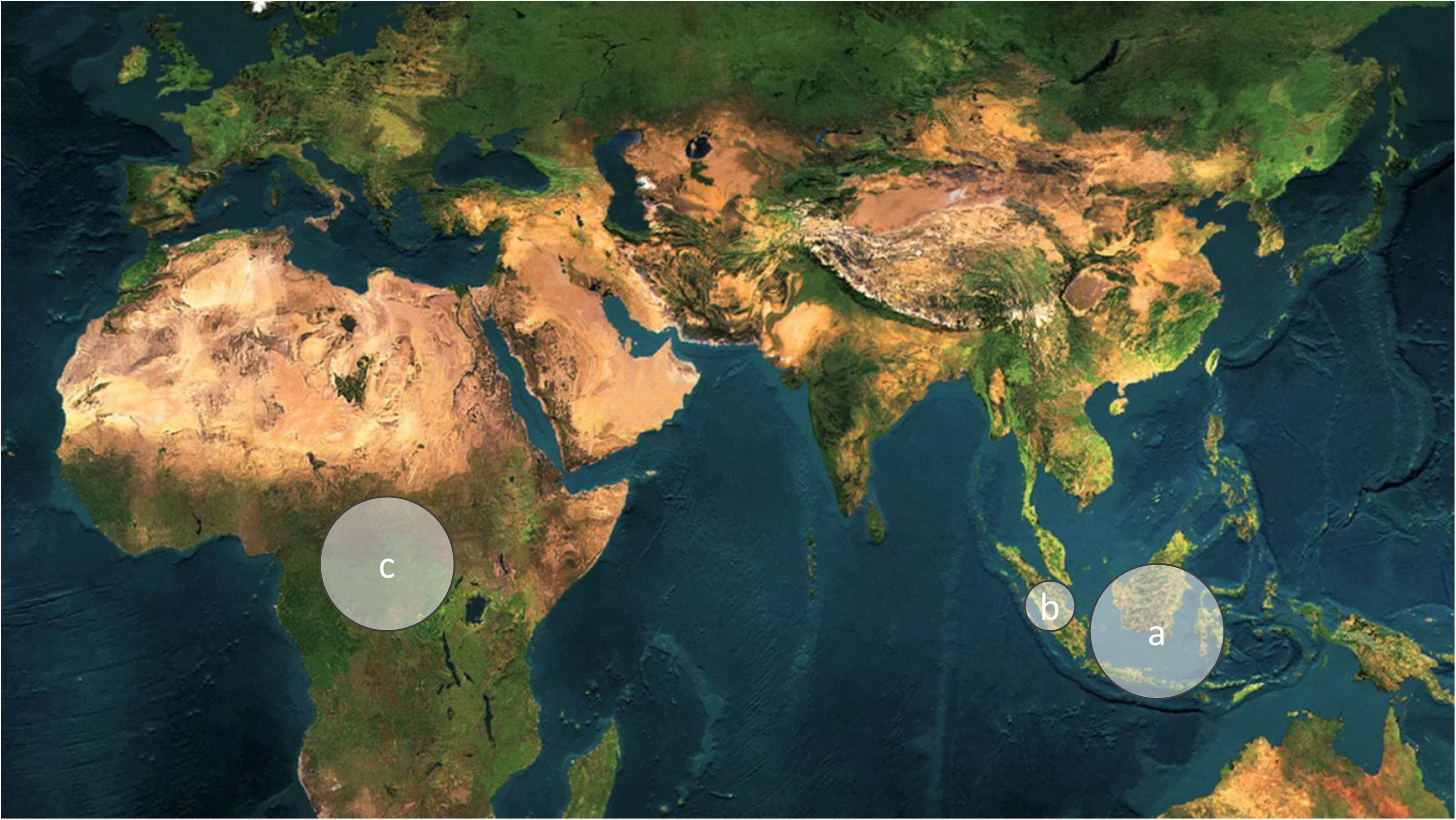
Map that includes Europe, Asia, Africa and Oceania. The white circles indicate the most important stages of Gamondi's travels: 1. Indonesia; 2. Sumatra; 3. Congo.

Dr. P. P. Gamondi's clinic in Sawah Lunto, Indonesia, October 1957. Gamondi Archive, Ghirla (Varese, Italy).
Gamondi recalls in his travel stories of mental diseases solved by magic. In one of his rare publications, we can read a scientific account of a neurosis that was common in those territories:
A Menankabau girl, suffering from this neurosis, was brought to me one evening in the hospital, tightly bound. The relatives entrusted her to me, asking me to cure their daughter with suitable therapy. […] The patient presented a state of deep anguish, accompanied by psychomotor excitement; her psychic state was such that, although she showed signs of wanting to be helped and protected, she tried in every way to escape. I thought of calming her down by talking to her at length […]. The states of anguish and psychomotor excitement alternated for a few days without any sign of improvement. […] I decided to try psychic therapy by a Kubu witch doctor, being aware of the great authority a Kubu witch doctor would have on the patient. I sent for a sorcerer friend of mine. […] He had me place the patient on a mat, in a room alone, and, given our friendship and the esteem in which he held me, he allowed me to attend the treatment. With an interrogation, he discovered the names of the alleged enemies of the family […]. He made the patient lie down on her back […] and began a monotonous dirge, chanting in half voice. 5
The sorcerer then danced around the room, threateningly brandishing a machete as if he were fighting enemies. After about ten minutes, he was as exhausted as the patient whose enemies had been defeated. Gamondi saw the girl again after a year, and her symptoms had not recurred: psychic illnesses linked to popular beliefs could only benefit from a magical treatment based on the same principles. This fusion of different medicines, both aimed at the patient's well-being, was mandatory for Gamondi's methods. His interest in ethnomedicine led him to collaborate in the 1960s with the paediatrician and ethnologist Antonio Scarpa (1903-2000), who founded the Istituto Italiano di Etnoiatria (Italian Institute of Ethnoiatrics) in Varese, at the Ospedale di Circolo, with the participation of Italian academics of anthropology and various medical sciences. 6
A healer, local guides, porters and assistants accompanied Gamondi to the villages of Sumatra (Figure 3). These people selected the patients and gave them the first basic care. Visiting the indigenous population, the Italian doctor catalogued the different pathologies found, kept records of the various haematochemical examinations carried out, photographed the sick to be able to demonstrate diseases,7,8 selected and separated ill people from healthy ones, carried out screening, administrative and organisational evaluations (Figure 4). In one of his writings, for example, we can read how, after assessing the territory, the population and the endemic diseases present in an area, he indicated to WHO the opportunity to urgently build a clinic in the Pasar of Kinalih, Indonesia, with the permanent presence of a ‘mantri’ (local witch doctor) and a ‘bidan’ (midwife). 9 All his research findings had been forwarded to the WHO and subsequently disseminated to the European Institutes of Tropical Medicine.
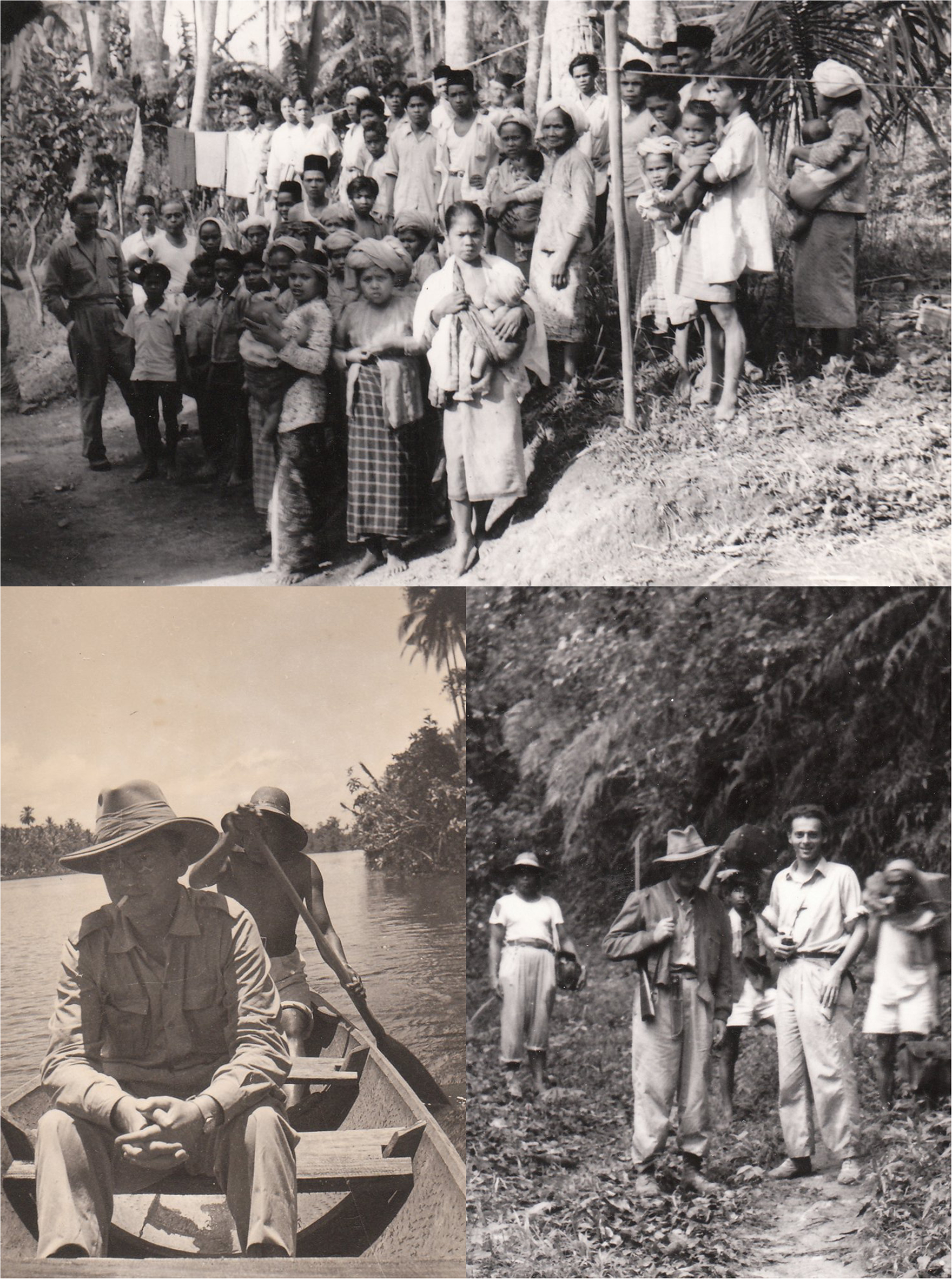
Gamondi visiting the various villages along the rivers or in the forest. With him always there were assistants, porters and a sorcerer. Gamondi Archive, Ghirla (Varese, Italy).
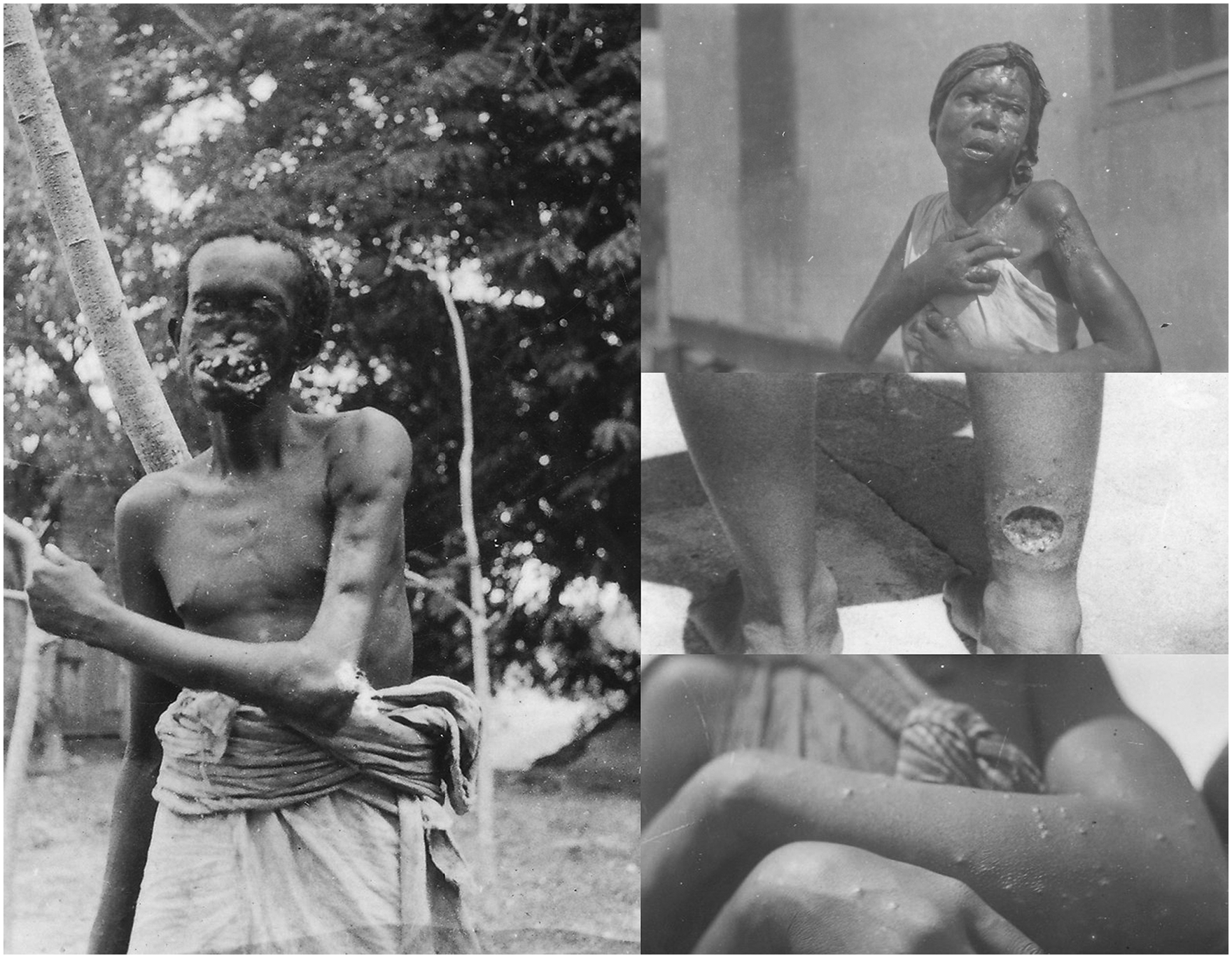
Photographs taken by Dr. Gamondi of diseases spread among the population of Sumatra. On the left, a man with a maxillofacial deformity; on the right on the top a women with leprosy; on the right in the middle a tropical ulcera; on the right in the bottom a case of yaws. Gamondi Archive, Ghirla (Varese, Italy).
Gamondi had founded the Lubuk Sikapyng Hospital in Indonesia in 1956 and organised the operation of several village clinics. In 1957, with the collaboration of a Roman doctor, Dr Pietro Caffarelli (1924-2016), with whom he shared field experience and a lifelong friendship, he set up the Sawah Lunto hospital with over two hundred beds (Figure 5). The humanitarian work that the two doctors were doing in that distant land had made them well liked by the local population, but on several occasions, they had found themselves in mortal danger. Gamondi often recounted how he had been attacked in the forest by a tiger that had severely wounded his arm; the scars on his body were the result of having to suture his own wounds. In a long typescript we read a reference to several of his contacts with head-hunting tribes who had introduced him to the ‘ritual of human sacrifice’ and ‘acts of cannibalism’. 10 He also often recounted how he had tried to free two foreign soldiers who had been kidnapped nearby.
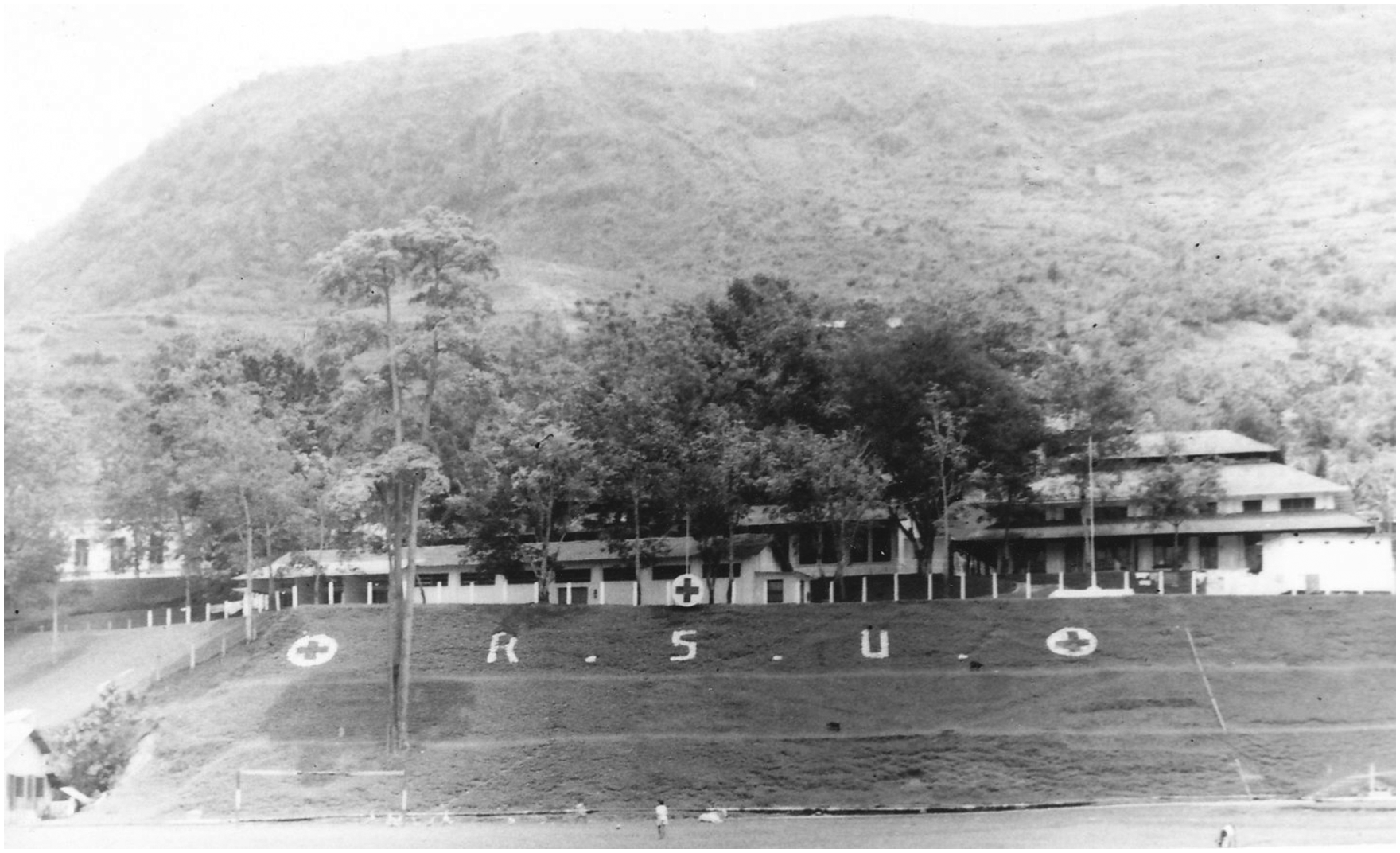
The hospital of Sawah Lunto (eastern Sumatra province), founded by Gamondi and Caffarelli in 1957. Gamondi Archive, Ghirla (Varese, Italy).
The white medicine man was greeted with ceremonies filled with food and drink, singing and dancing. At the end of the ceremony, Gamondi asked the tribal chief to hand over the two prisoners, but only one was released. The other was sacrificed for the ceremony, according to the ritual custom of headhunters and cannibals. He was involved in a dramatic event in September 1958 in the jungle of Sawantù, while travelling at night with his colleague Caffarelli. On that day, the two doctors were driving with an indigenous driver and had almost reached their destination when they suddenly found themselves the target of some rebels’ firearms. Only Gamondi was hit in the shoulder and leg, causing serious injuries.
The attackers realized they had shot two European doctors. They released the driver who called for help. The physicians went to the local hospital, but Gamondi needed urgent care, which the small facility could not provide. After a long journey in the jungle, he was transferred to the better equipped hospital at Padang. The most famous Italian newspapers reported extensively on the ambush and the wounding of the two doctors in Indonesia.
Two Italian doctors, Gamondi from Intra and Pietro Caffarelli from Rome, called upon three years ago, together with other doctors, to run hospitals in Indonesia escaped a tragic attack by rebels in the jungle of Sawantù, a town of 30,000 people in central Sumatra, where our two compatriots run a 200-bed hospital. On the evening of September 18, after finishing their work in the hospital, the two doctors drove a long way into the nearby jungle to reach the bungalow they lived in.
The two doctors were driving safely with their headlights on when machine gunshots rang out from the dense foliage. The driver sped off, but more shots followed, wounding both Gamondi and Gasparella. The rebels surrounded the car, taking the driver prisoner. The two Italian doctors managed to jump to the ground, but Gamondi, who had been wounded in the right arm and left leg, was in no condition to get up. In better condition was Dr Caffarelli, who was wounded in the face and left arm. He went to Sawantu to ask for help and was joined by the driver whom the rebels had released. The rebels, having learned that these were Italian doctors who had treated everyone and who are well-liked by the population, expressed their deep regret for what had happened and released the driver so that he could help the two wounded. Gamondi and Caffarelli were transported to the hospital in a car from Sawantù. There they received the care of local staff. Gamondi's condition was serious, due to a violent haemorrhage. A blood transfusion was necessary, and a caravan was organised and reached Padang after a seven-hour walk through the jungle. The city has a well-equipped hospital run by another Italian doctor, Professor Venditelli, who, together with other assistants, gave the two wounded men the most assiduous and energetic care. 11
The adventure in Indonesia was ending. Unfortunately, the conditions of Gamondi's leg wound were not improving. For this, the two doctors were flown to Jakarta. They stayed there for more than two months until the Italian Consulate decided to repatriate them; the motor ship Australia was waiting for them for a long journey to Italy. They arrived in Naples on 18 December 1955. From the newspapers we read:
Gamondi walks with crutches as his left leg is in plaster to consolidate the comminuted fracture caused by two large machine-gun bullets, while Caffarelli is in an advanced state of recovery. The meeting between the two brave doctors and their relatives from Milan and Rome was very moving. Gamondi continued with Australia to Genoa, where he will arrive tomorrow morning. From here, he will travel by car to Varese, while Dr Caffarelli has landed in Naples and left for Rome, where he will re-embrace his old mother.
During the trip, the two Italian doctors were accompanied by a nurse from the hospital in Jakarta, 16-year-old Nur Tanari (“First ray”), who escorted Gamondi to Varese, as he needed extensive treatment.12,13
The years in Congo
Caffarelli was discharged. However, Gamondi's conditions were worrying. Surgery was needed because the injured leg had developed osteomyelitis. This was planned at the Gaetano Pini hospital in Milan. The leg was saved, but a limp accompanied the doctor for the rest of his life.
On his return to Italy, Gamondi was 43 years old. The necessary treatment for the wound suffered in Sumatra did not allow him to go on further adventures, but the desire to continue research in infectious diseases was alive. In the meantime, on 1 August 1960, he married Giovanna Valente (1933-2003), whom he had met in 1952 while providing care for her father, Marshal Claudio Valente of the Guardia di Finanza. “Vanna” was almost twenty years younger than him, born on 23 May 1933 in Riva del Garda (died on 16 December 2003 in Lugano, Switzerland) and had studied at the Universities of Pavia and Milan, graduating in mathematics and physics. She shared with her husband the pleasure of travelling, getting to know places, discovering different customs, the desire for freedom and the commitment to responsible volunteering. Shortly after their wedding, they left together for a mission in Africa on behalf of the Italian Ministry of Foreign Affairs. Gamondi was to go to Congo (Figure 1), where his experience as a tropicalist would be useful in a hospital in the equatorial forest, between mountains and volcanoes, savannah and steppe and in 1960 the country was proclaimed the Independent Republic of Congo. Its population was ethnically diverse and had been through a long civil war. From June 1960 to November 1965, when the Italian doctor was there, a political crisis developed with rebellions throughout the country. Gamondi was in charge of the hospital in Yagambi, located in the Upper Congo, and was responsible for organising a medical clinic in the forest.
In addition to health care, they were also involved in schooling the local population, helping the villagers to prevent endemic diseases and teaching basic hygiene. Attending the indigenous people of the forest offered the Italian doctor, once again, the opportunity to explore the magical thinking of the locals, comparing it with the experience of his years in Indonesia. The country was in the midst of a crisis; Gamondi observed that some military and political commanders also used magical thinking to act on the population's psyche. 10
As the situation worsened, the risks to personal safety increased and Western governments suggested their citizens leave the country. Pietro and Giovanna Gamondi were in a militarily occupied area. Unable to operate effectively, they decided to leave Congo in 1964. They fled in a hurry along the river to reach a quieter, not better specified, country and then returned to Italy.
A letter from Castellani to Gamondi after a visit by the latter in 1970 to the British Hospital in Lisbon may seem curious today:
Dearest Gamondi,
I cannot tell you what a pleasure your visit with your kind Lady has given me. Within two weeks, you will receive from London culture of Hartmanella (you did a splendid job there); Streptococcus (Micrococcus) metamyceticus (subculture them every 15 days on Loffler's serum); “Bacillus” columbensis; “Bacillus” asiaticus; Corynebacterium mycetoides (M. mycetoides). The most important is Strept. metamyceticus. I will be very grateful if you keep these germs alive.
If you find a volunteer, you could inoculate him on the leg with Corynebacterium mycetoides. A similar experiment was done 8-10 years ago in Cascais, and the tropicaloid ulcer was reproduced. There is no danger to the volunteer as it is easily healed by simple boric acid compresses and dermatola ointment. It will not be so easy, however, to find a volunteer. 14
The last years
Once back home, Mr and Mrs Gamondi settled in Varese, where the doctor resumed practising his profession, while his wife devoted herself to teaching mathematics at the Istituto Magistrale Manzoni. After a few years, the family moved to the old house in Ghirla (Varese, Italy), next to the parish church, and in 1971 their daughter Claudia was born. In 1972, Gamondi became consultant head of the analysis laboratory at the ‘Luini Confalonieri’ hospital in Luino. He was appreciated by doctors and laboratory technicians as a parasitologist, a specialist in infectious diseases and expert in haematological microscopy. Colleagues remember that he used his old monocular microscope in the laboratory, that his reports were always precise and detailed, and that sometimes, before making a diagnosis, he was seen in the wards to meet the patients personally, often accompanied by his daughter Claudia who, as an adult, could only follow in her father's footsteps by becoming a doctor. The technicians who worked alongside him in those years remember that ‘he was a good person, very human and above all paternal towards them’. His adventurous life had made him capable of dealing with even difficult clinical cases. Colleagues tell of the time when he managed to diagnose leptospirosis in two fishermen's brothers who were hospitalised in Luino; no one had realised that they were suffering from the disease, which the doctor from Varese had diagnosed and treated many times in the tropics. His assistants often stopped to chat with him after work, and in those moments they collected Gamondi's life experiences; ‘it seemed like opening and reading an adventure book’, they said, but what they were listening to had happened. ‘Gamondi had wanted to make his life an adventure and he had fully succeeded’.
This unconventional life had left its mark on the doctor's body. When he took up his post at the hospital in Luino, he was not yet sixty years old, but he bore the signs of his fatigue and injuries, showing much more than his biological age. In 1978 he left his position at the hospital without giving up some consultancies in other institutions until 1982 when he decided to devote himself solely to his studies. He lived surrounded by the objects he brought back from his travels, spending many hours reading and listening to ‘Indonesian gamelan’ (music produced by an orchestra of instruments such as metallophones, xylophones, drums, gongs and bamboo flutes), baroque music and jazz. He often travelled to Portugal to meet his teacher and friend Castellani, with whom he collaborated on research in infectious diseases.
Pietro Gamondi died on 19 August 1993 in Luino from lung cancer, an illness he had endured with courage for a long time. There were many expressions of esteem for him that can be read in the obituaries published in the local newspapers. Gian Vincenzo Omodei Zorini, a young doctor with whom he had worked in the laboratory of Luino hospital, wrote in his memory:
Dr Piero Gamondi, who died a few days ago, was undoubtedly an uncommon person, rich in culture, international experience and humanity. All those who knew him intimately or even just met him on some occasion have a memory of him that is not easily forgotten because of his great pleasure in high-level conversation, which he loved to cultivate by communicating something of his vast knowledge to everyone. […] The call of distant lands had taken him, as a WHO doctor, first to Indonesia and then to the Congo. From his stays, he had gained an enormous wealth of experience and knowledge of Eastern and African civilisations and cultures, accompanied by memories of events (even bloody ones) that had involved him.
Listening to him recall those moments were like, in a certain sense, immersing oneself in reading Salgari, only that what he recounted was true and not the fruit of imagination.
[…] With aristocratic sentiments and remarkable culture, also in the field of esoteric doctrines, he preferred oral communication to writing, which is why he did not want to leave anything written to pass on his great knowledge to others. This is one of the great regrets of those who knew him, but there remains the comfort of a constant memory of his lesson as a man of great moral dignity, even in death, faced with virile courage, consistent with his entire existence. 15
Civil funerals were held, his body was cremated and his ashes were placed in an urn he designed himself.
Conclusion
The biography of a doctor, such as the one collected here, is in some respects constrictive when it is strictly linked to the narration of life, but at the same time, it allows us to observe the different components in action in the historical moment that a man's existence goes through. However, individual events can help to understand the great historical, cultural and anthropological phenomena.
Today, Gamondi's name can be counted among the best representatives of tropical medicine. He is a figure fully representative of the values of a profession that, in addition to medical skills, requires a spirit of adventure. He can find a place in the history of medicine of the past century for his scientific and humanitarian commitment, which he has always generously made available to the poorest populations. Gamondi loved learning about Eastern and African civilizations, history, philosophy, music, art and the mysteries of the esoteric world. He was a free thinker, who unfortunately did not like to write, so he published only a few scientific works as evidence of his scientific research. He was not even used to attending the academic world except when he followed his teacher Castellani; he did not leave us complete diaries or memories of his long professional commitment abroad and this, unfortunately, does not allow us to get to know many professional or personal moments he experienced. Moreover, reflecting on his life and professionalism leads to a rediscovery of the motivations of being a doctor today, even at the risk of one's own life.
Footnotes
Declaration of conflicting interests
The author(s) declared no potential conflicts of interest with respect to the research, authorship, and/or publication of this article.
Funding
The author(s) received no financial support for the research, authorship and/or publication of this article.
