




Abstract
The history of medicine as a component of the medical school curriculum has been a long-standing subject of debate and controversy. Ultimately, local factors may determine this experience and be aligned with or outside of the curriculum. The opportunity at Tulane University School of Medicine is long-standing and successful. It came to fruition through the efforts of Benjamin Bernard Weinstein, MD. A native New Orleanian, he received his undergraduate (1933) and medical (1937) degrees from Tulane as well as his training in obstetrics and gynaecology. He then joined the faculty and remained there until 1953 when he entered private practice with an interest in reproductive medicine. Weinstein was internationally known in the field, travelling the globe as a prominent educator and intersecting with world leaders. But his passion was the Tulane History of Medicine Society, founded by Weinstein in 1933 as a medical student. He became its guiding force and benefactor and built the foundation that remains highly relevant and successful 91 years later with a lengthy list of distinguished Weinstein Lecturers annually. Following his death in 1974, his family has continued to engage and support the Society. Weinstein's legacy of an enriched life through the study and knowledge of the history of medicine continues through the Society.
Keywords
The history of medicine (HOM) as a component of medical school curricula has been an issue of contention for over a century and remains so today.1,2 It manifests itself in a variety of forms and ranges from robust to non-existent. 3
Ultimately, exposure to HOM and the quality of the experience at a given medical school may simply be the result of local factors. The opportunity that exists at Tulane University School of Medicine in New Orleans is enduring with long-standing traditions and is worthy of discussion. This came to fruition through the efforts of Dr. Ben Weinstein.
Benjamin Bernard Weinstein was born in New Orleans on 25 August 1913 and would remain there throughout his life. His father, Jacob Weinstein (1882–1962), was a merchant dealing in “Dry Goods, Notions, and Gents’ Furnishings.” Weinstein graduated from Warren Easton High School in 1930. He earned undergraduate and medical degrees from Tulane University in 1933 and 1937, respectively. Upon medical school graduation, he completed an internship at Touro Infirmary and then joined the medical school faculty at Tulane as Associate Professor of Gross Anatomy. In addition to teaching anatomy, he earned a master's degree in gynaecology. In 1938, he became Assistant Professor of Anatomy and held the position until 1946. Also in 1938, Weinstein became an Associate Professor of Clinical Gynecology and Senior Visiting Surgeon at Charity Hospital of New Orleans (CHNO). He held these positions until 1953. 4
In 1942, he married Clarice Roslyn Groner (1914–2005), a nursing student at Touro. 5 They had four children—Miriam Lynn Weinstein, MD of Knoxville, Tennessee; Jon Leonard Weinstein of Dallas, Texas; Frederick Gordon Weinstein, MD of Boston, Massachusetts; and Ruth Weinstein Lebovitz of Franklin, Tennessee. During the 1940s, Weinstein served as Senior Assistant Surgeon in the Reserve Corps of the Public Health Service. 6
Weinstein departed Tulane in 1953 and entered private practice in obstetrics and gynecology (ob/gyn) with his office at 1421 Delachaise Street. His special interest was fertility and sterility, now known as reproductive endocrinology and infertility. He held positions of Senior Visiting Staff at Touro, Visiting Gynecologist at Sara Mayo Hospital, and Consultant at Flint-Goodrich Hospital and the U.S. Marine Hospital. 4 His departure from the academic institution into private practice was likely to improve his financial position as well as for lifestyle freedom and independence. Fortunately, he maintained a relationship with Tulane through what he termed “para-medical” activities. 4
Weinstein's perspective on contraception and abortion was mainstream for the time. He derived great joy from the practise of obstetrics and his special interest in fertility and sterility, helping people have families. He viewed contraception as a normal part of his practice and participated in some of the early oral contraceptive trials with the Mexican pharmaceutical company Syntex. During his years of practice, abortion was illegal in Louisiana, with provisions for the medical profession in exceptional circumstances such as threatening the mother's life. As a gynaecologist concerned with women's health, his patients would receive medically necessary and appropriate care under such circumstances.7,8
As an educator, Weinstein was a mentor before mentorship became the ubiquitous term it is today throughout medical education and training. He was known for the exact expectations of his students in anatomy and for friendship and generosity with his time when students needed additional assistance and instruction. Many former students expressed their gratitude for his assistance in advising and helping direct their professional pathways in warmly written letters to him years after the completion of their education and training.4,6 Interestingly, when he first joined the Tulane faculty, he arranged with the desk sergeants at the French Quarter police station to not book any Tulane medical students who were picked up on Bourbon Street. Rather, they would call Weinstein who would go and retrieve them, usually in the middle of the night. The arrangement was though short-lived as his wife Clarice did not view it as a part of his job. 6
Weinstein was a founding member of the American Society for the Study of Sterility (President, 1953–1954; now the American Society of Reproductive Medicine) in 1944 and of the International Fertility Society (President, 1951–1953; now the International Federation of Fertility Societies) in 1951. 6 He had a passion for sharing and disseminating information, experiences, and new techniques with colleagues world-wide. As such, he traveled the world (Argentina, Brazil, Columbia, Cuba, England, Germany, Guatemala, Israel, Italy, Mexico, the Netherlands, Panama, Peru, Portugal, Salvador, Spain, Sweden, and Venezuela) as a distinguished lecturer, honorary professor, or honorary member of multiple international specialty societies. He developed long-lasting friendships with well-respected and prominent obstetricians and gynaecologists who had the same subspecialty interests. Not infrequently, Weinstein met with heads of state and prominent figures in governments. These included Brazilian President Getulio Vargas (1882–1954) in 1951, Cuban President Fulgencio Batista (1901–1973) in 1955, and Pope Pius XII (1876–1958) in 1956. 4
As a result of these encounters, Weinstein interfaced with world history during the 1950s. In this capacity, it is not unlikely that the introduction of prominent political figures to the well-respected American obstetrician and gynaecologist led to requests for consultative care on behalf of women within their close spheres of influence. Weinstein's activities suggest that he believed medicine transcended geographical boundaries, language barriers, cultures, and politics. He could be considered an “international medical ambassador” of good will and was undoubtedly an intrepid traveller. His correspondence reveals that he was fluent in Spanish, both in speaking and writing, which greatly facilitated his travel experiences 6 (Figure 1).

Alton Ochsner, MD (left) and Ben Weinstein, MD (right), 1957. Mexico City, Mexico. Benjamin Bernard Weinstein Papers (BBWP), Tulane University Special Collections (TUSC).
Weinstein was well-known, well-respected, and well-connected within his specialty throughout Latin America. He counted among his close friends leading obstetric and gynaecology fertility specialists in Mexico, Brazil, Venezuela, and Cuba. As such, he may have had access to and an up close and personal view of the political unrest and intrigue in the 1950s. A good friend and colleague, Dr. Pedro Gutiérrez Alfaro (1899–1960), was a pioneering obstetrician and gynaecologist in Venezuela and a close ally of Venezuelan President Marcos Pérez Jiménez (1914–2001) who appointed him the Ninth Minister of Health and Social Assistance (1950–1958). When Pérez was ousted in a coup d’état and fled the country in 1958, Gutiérrez Alfaro was exiled to Spain. 9 Later that year, when Gutiérrez Alfaro accompanied Weinstein to the Third Mexican Congress of Gynecology and Obstetrics, the exiled Venezuelan attended a session, and a terrible furor ensued. Weinstein was disappointed that a colleague was turned away from a medical meeting. 6 However, medicine and politics rarely, if ever, mix well. But there is another interesting aspect which may or may not be related to this experience. In May, and again in November 1958, Weinstein wrote to Allen W. Dulles (1893–1969), Director of the Central Intelligence Agency (CIA). He received a reply to his letters in November, thanking him for the information which ‘has been reviewed and it has been determined that it duplicates that already on hand’. His efforts were ‘greatly appreciated’. 6 What the information was is unknown, but insight into political unrest in Latin America during the Cold War may not be far-fetched.
Weinstein's domestic professional memberships were numerous. His professional publications numbered nearly 200 and included case reports, topic reviews, anatomical reviews, technique papers, and book reviews as well as “para-medical” publications such as biographical sketches, historical vignettes, and poetry. 4
His collecting habits were robust and detailed. With a keen bibliophilic eye, he developed an impressive personal library. Along with medical publications and rare books, his library was filled with books on the history of medicine as well as the cultural traditions of medicine including poems, plays, and novels by and about physicians. When he travelled he took time to visit bookstores, and in addition to lecturing, he spent time with colleagues in their clinics. Weinstein maintained his interest in stamp collecting from his college days and transitioned it to almost exclusively medical philately.7,8 He collected medical medals and medallions and medical bookplates. He designed his own personal bookplate, and medical artist Clara May Ogden (1910–1988), wife of his medical school classmate and friend, fellow poetry aficionado, and otolaryngologist Fred Ogden (1911–1988), did the artwork8,10–12 (Figure 2).

Weinstein's bookplate. BBWP, TUSC.
Libraries at the medical schools of Tulane, University of Alabama, University of Mississippi, University of North Carolina, Wake Forest University (Bowman Gray), Louisiana State University Shreveport, and the University of Miami benefitted from his generous donations of books. Weinstein was influenced and likely assisted in this endeavour by the distinguished and long-time Tulane medical school librarian Mary Louise Marshall (1893–1986) as well as by medical school assistant librarian Mary Ament (1915–1987). Ament worked at Tulane from 1940 to 1944, Bowman Gray from 1944 to 1945, and also at the Medical College of Alabama in 1945 before becoming a librarian at Baylor College of Medicine in Houston in 1947.6,13 Marshall entered the field of library science pre-World War I and arrived in New Orleans in 1919. She later became the librarian of the Orleans Parish Medical Society in 1920 and the Tulane Medical School Library when the two merged in 1928. She held the latter position until 1959 and was promoted to Professor of Medical Bibliography in 1949. Marshall was prominent nationally as president of the Medical Library Association (1941–1946) and served on the National Library of Medicine's Board of Regents (1956–1960), among many other contributions to librarianship.10,12,14–17 Marshall was a favourite colleague of Weinstein, and they enjoyed a warm friendship. Upon retirement in 1959, Marshall visited Columbia for library consulting work.10,17 It is reasonable to assume Weinstein assisted her experience with his contacts and network of friends.
Weinstein held memberships in several organizations aligned with his interests and also served on the boards and councils of many. These included the American Association for the History of Medicine, B’nai B’rith, Jewish Library Association, Medical Library Association, Rare Book Collection Club of New Orleans, and the Roundtable Club of New Orleans. 4 His other interests included Civil War history, camellias, music, and cooking. 7 He was described by good friends and colleagues: ‘the quiet inflection of his voice, the serenity of his expression, and his fine educated manners’; ‘although not a wealthy man, offered his generous support whenever there was a need’; ‘travelled widely, has cultivated friends of similar refined interests, throughout the world, and his home and family reflect this’ ‘believed in the good life … a bibliophile’. 4
Sir William Osler (1849–1919) had been a favourite since medical school. He admired Osler, had all of Osler's articles bound, and owned all of Osler's books. He gave both of his sons copies of Aequanimitas when they were teenagers and kept a bust of Osler in his office. 8
Weinstein's life in medicine was not limited to the clinical arena, and he was passionate about the history of medicine. While in college, his interest in literature and poetry led to a charter membership in a faculty-student literary society, The Spectators, where original work was presented to a critical, yet friendly, audience. This audience included such literary figures as William Faulkner (1897–1962), Martin Ten Hoor (1890–1967), Hermann Deutsch (1889–1970), Harnett Kane (1910–1984), and Charles L. “Pie” DuFour (1903–1996). Additionally, as an undergraduate, he organized and was president of the Tulane Philatelic Society. These interests continued into medical school and afterwards. Weinstein served as the medical editor for the Tulane student-run newspaper, The Hullabaloo. He joined Phi Lambda Kappa medical fraternity, served as Chapter president, Alumni Chapter president, and ultimately as president of the national organization (1941–1944).
4
In 1934, while in medical school, he wrote in his diary It is my earnest desire to be in a profession which boasts of cultural people, men who enjoy and partake of literature and the arts … evn tho (sic) I cannot qualify myself to the height of my standards, I yet feel that they should be cultivated, and that the men in the field should be stimulated to such an endeaver (sic).
4
Weinstein enjoyed literature, poetry, the arts, and collecting. A natural extension of his interests would be the study of the history of his chosen profession.
Upon entering medical school, he found no organized group that shared his keen interest in the history of medicine. Weinstein and two classmates, Gus Dawson (birth unknown, died 1937) and R. Gordon Holcomb (1913–death unknown), formed the Tulane University History of Medicine Society (HOMS) during the academic year 1933–1934. The first paper was “The History of Purpura” presented by Weinstein. He organized the programmes from 1933 to 1937.18,19 Additionally, Weinstein was influenced by and interacted with the pioneers in the history of medicine discipline in the United States: Fielding H. Garrison, (1870–1935) and Henry E. Sigerist (1891–1957).
Fielding Garrison graduated from medical school in 1893 and became associated with the Army Medical Library (later, the National Library of Medicine) after entering the military. He remained there for several years, was co-editor and editor of the Index Medicus, and helped create the Index-Catalogue of the Surgeon General's library. In 1913, he published a landmark textbook, An Introduction to the History of Medicine. Upon retiring from the Army in 1930, Garrison became a librarian at the Welch Medical Library at Johns Hopkins where he continued to publish prolifically. 20
Henry E. Sigerist graduated from medical school at the University of Zurich in 1917. After postgraduate work at the University of Leipzig's Institute of the History of Medicine, he succeeded William H. Welch (1850−1934) as the director of Johns Hopkins’ Institute of the History of Medicine in 1932. At Hopkins, Sigerist began the Bulletin of the Institute of the History of Medicine (later, Bulletin of the History of Medicine) and through his work, elevated the Institute to a national centre in the field. Sigerist was a prolific writer and eloquent speaker. He admired the Soviet Union's healthcare system and was an advocate for universal healthcare. He was featured on the cover of Time magazine in 1939 but in the 1940s, he was criticized by the American Medical Association and the Hopkins medical alumni for his advocacy for socialized medicine. In 1947, amidst the strain and attack, Sigerist retired to Switzerland where he died in 1957. 21
Initially, the Tulane University History of Medicine Society met weekly where papers prepared by members were read and discussed. The presentations were arranged in chronological order and used Garrison's textbook as a guide. Early on, meetings were attended by members only, and the membership contributed to the papers that comprised the programme. Later, guest speakers were invited and the lectures were open to the entire Tulane Medical School. Many faculty members engaged with the group and supported them with their time. Noteworthy in this regard were Rudolph Matas, MD (1860–1957), Isaac Ivan Lemann, MD (1877–1937), Harold Cummins, PhD (1893–1976), Chairman of the Department of Anatomy, 1933–1960, and Hymen S. Mayerson, PhD (1900–1985), Chairman of the Department of Physiology, 1945–1965. In the 1939–1940 academic year, Tulane began regular courses in the history of medicine. The Society then no longer believed they served a teaching function for the student body and reverted back to ‘an organization restricted in its activities to the scholarly contemplation of the history of medicine by its membership’.18,19,22 Unfortunately, it is unknown when the history of medicine was removed from the medical school curriculum, but by the mid-1970s, it was no longer present. 23
Weinstein clearly was aiming to develop and grow a high-quality organization. As a medical student, he visited Sigerist at Johns Hopkins to confer about the new medical history organization. 4 By 1935, he had initiated correspondence with Sigerist requesting any Garrison reprints. He updated Sigerist on the new society and its activities. Sigerist was enthusiastic and wrote that he would be ‘delighted to publish a note on it’ in the upcoming Bulletin. Sigerist requested to be kept informed of the group's activities and promised to send ‘all our Institute reprints regularly in the future’. 4 During these early years, updates on the society were submitted by Weinstein and published in the Bulletin.19,22,24 By 1940, Sigerist had been a guest speaker in New Orleans at the annual HOMS banquet, and the two had developed a friendship. In a 17 September 1940 letter, Weinstein inquired about Sigerist's recent travels, commented on mutual acquaintances and friends, told Sigerist about his own travels over the summer, and sent warm regards to Mrs. Sigerist and their daughters. Importantly, Weinstein began a conversation about starting a department of medical history at Tulane, a subject he had been interested in ‘for a good many years’. Weinstein mentioned the prospect of funding from ‘various foundations’ and asked if Sigerist would be a ‘special pleader’. He further discussed raising funds locally, hiring a department head locally, and bringing in an ‘active director from away who is well trained in historical research’. Finally, Weinstein talked about the abundance of history in New Orleans and the South and that it may be a fit for ‘one of the men trained by you’. 4 Weinstein was ‘thinking out loud’ to his friend Sigerist about their mutual interest. However, the plans never materialized and a few years later, Sigerist left the United States.
By the 1940–1941 academic year, HOMS membership consisted of 50 students and 17 faculty members. Meetings alternated between invited faculty speakers which were open to the entire university and papers prepared by student members and open only to the membership. There were 16 regular meetings and a final banquet meeting. Weinstein was the Faculty Advisor, a position he would maintain for several years. 23 He organized the HOMS and was its guiding force throughout his life. A hallmark of the society has always been the annual banquet, typically in the spring. The event was (and is) a social as well as an educational event. Guest lists, formal invitations, semi-formal attire, prominent New Orleans restaurants, cocktail hour before dinner, as well as Weinstein and his trademark Churchill Coronas were the norm (Weinstein would order 500 of the cigars at a time from Perfecto Garcia & Bros. of Tampa, Florida). 6 The formula is basically unchanged, except for the Churchill Coronas! In 1953, the HOMS established the B. Bernard Weinstein Lectureship, given annually by a distinguished invited speaker at the banquet. The lecturer is awarded a gold key with the HOMS seal on one side and the lecturer's name engraved on the other. Weinstein designed the key as well as the HOMS seal, and Clara May Ogden did the artwork.8,10 Both are still used today. The impressive list of Weinstein Lecturers over the years includes Alton Ochsner (1896–1981) in 1955, Richard Shryock (1893–1972) in 1965, Chauncey Leake (1896–1978) in 1969, William Ober (1920–1993) in 1971, Owsei Temkin (1902–2002) in 1972, Chester Burns (1937–2006) in 1976, Willard Marmelzat (1919–2012) in 1977, Michael DeBakey (1908–2008) in 1978, Sherwin Nuland (1930–2014) in 1989, Arthur Guyton (1919–2003) in 1990, Samuel Shem in 1991, and Claude Organ (1928–2005) in 1997, to name just a few. 4
The HOMS has been mentored primarily by three faculty advisors from its inception to the present—Weinstein, Wallace K. Tomlinson, MD (1936–2011), and Elma I. LeDoux, MD. Following Weinstein's death in 1974, Tomlinson, a psychiatrist, stepped into the position. He was a professor in the Department of Psychiatry and also Associate Dean of Medical Students. Additionally, Tomlinson was a clinician-historian and was described as ‘the consummate student advocate’.25,26 After Tomlinson's death in 2011 aged 74 years, LeDoux became the HOMS faculty advisor and remains in that role today. She is a cardiologist as well as Associate Dean for Admissions and Student Affairs. As such, she continues the tradition of HOMS faculty advisors in being a strong advocate for medical students. LeDoux, as a Tulane medical student, was a member of the HOMS under Tomlinson. Over the years, she has witnessed the stability and consistency of the Society which are perpetuated by the self-selected students who have a passion for the history of medicine and are anxious to share it. 27 As noted on the Society's website, ‘the group has continued to promote and foster interests in the historical background of contemporary medicine and the tradition of the humanities in medicine’. 18
Today, the HOMS remains a student-run organization. There is a six-member board which comprises the officers: president, vice-president, treasurer, secretary, elective coordinator, and webmaster/historian. Annually, a notice is released to the medical school student body for applications for the six board positions. The incumbent board selects their successors, and the new board decides on the officer positions among themselves. Activities throughout the year include the HOM elective, the annual essay contest, and the annual B. Bernard Weinstein Memorial Banquet and Lectureship, as well as a number of smaller events. All events are open to the entire school, and attendance and participation is typically good. According to LeDoux, the students are very knowledgeable about organizing and administrating the HOMS, and as such, are able to bypass institutional bureaucratic hurdles, which is beneficial administratively.18,27,28
The HOM elective is a formal eight-week course offered in the spring semester to first- and second-year medical students for which credit is earned. It is organized and coordinated by a board member. Attendance is open to all medical students, but credit is available only in the first and second years. The faculty advisor serves as the attending faculty for the elective. Lecturers are a combination of Tulane faculty and volunteers from outside the school and are not funded. Another course offered during the first two years with a historic imprint is “Foundations of Medicine.” This course embeds insight into the history of medicine in New Orleans with such topics as the impact of yellow fever and aspects of Charity Hospital's storied history.18,27,28
Five named awards are given in the annual student essay contest in the history of medicine. These are the Rudolph Matas Award for the most outstanding paper on the history of medicine; the B. Bernard Weinstein Award for outstanding original research in the history of medicine; Isaac Ivan Lemann Award for the most outstanding paper on the moral and ethical aspects of medicine; Willard L. Marmelzat Foundation Award for quality of research and writing of a paper on the history of medicine; and the Sydney Jacobs Memorial Award for a paper of outstanding quality on the history of medicine. The HOMS faculty advisor and the Rudolph Matas Library of the Health Sciences librarian review and judge the essays and award the prizes, which include a certificate and a monetary award. They are published on the HOMS website and can be submitted to any journal for publication.4,18,27,28 The outgoing president also receives an engraved gold key. 28
Financial support of the HOMS is multifactorial, and there is no entity such as a registered charitable foundation with tax implications. The board submits a budget annually to the appropriate component of the university where it is reviewed for approval. Funds are then released to the Medical Student Government (MSG) who allocate it to the various clubs and societies which include HOMS. These appear to be generic student activity funds for general operating expenses and not specific funding for Society. It is known as the HOMS general fund. Directed endowments support the annual banquet and essay awards. Each award has its own endowed fund provided by the family and friends of the namesake and can only be used for that award. These endowments are large and have kept pace with inflation. The award amounts range from $500 to $2000, with the Matas Award having the highest amount followed by the Weinstein Award. The support of Weinstein and his family has been vitally important over the years. Initially, Weinstein and his wife Clarice as well as former students and friends funded the banquet and lecturers. The B. Bernard Weinstein Award for the History of Medicine Society was established in 1948 and funds the Weinstein Award for the paper competition. The B. Bernard Weinstein Lectureship in the History of Medicine was established in 1953 and helped fund the banquet and lectureship. In 2009, the Clarice G. and B. Bernard Weinstein, MD Endowed Fund was established. It, along with the B. Bernard Weinstein Lectureship in the History of Medicine, partially defrays the costs of the banquet, lectureship, and gold keys. Presently, banquet speakers do not receive an honorarium other than the gold key. The student cost of the banquet is $60–$70.4,8,10,23,27,28
The HOMS has been successful for 91 years. Weinstein provided structure and built a strong base from the outset. It has survived decades of cultural, societal, and educational evolution and change. After nine decades of success, it continues to be durable. The explanation for this is multi-factorial. According to LeDoux, technology has changed which enables students to instantly communicate. Also, many students come to medical school with an appreciation of history. Up to half of the entering class are non-science majors, and medical humanities today are more appreciated than in the past. 27
HOMS members tend not to become involved in the larger HOM community outside of the medical school, despite the opportunities available for presentation, publication, and funding. This appears to be simply due to time constraints and priorities as they progress through medical education. LeDoux observes that the completion of medical school and obtaining residency positions tend to displace other interests. Theoretically, the interest in medical history may re-surface at a more convenient time. This was evidenced at the 2024 American Osler Society annual meeting where two HOMS past presidents presented. 29 The broader issue of whether those students engaged with the Society and the award winners continue with the subject following graduation and training or the experience simply being a high point of medical school has not been critically examined. LeDoux has identified this as an intriguing project for the Society as contact information is available through the Society records and the Tulane Medical Alumni Association. 23
Weinstein was diabetic with diabetic nephropathy. When he sustained a hip fracture in a fall at home, he was admitted to the hospital at Touro where he had practised for many years. He developed hyperkalemia and altered mental status and was found to be in renal failure requiring dialysis. Unfortunately, haemodialysis machines were limited, and Weinstein was denied by a “dialysis utilization committee” of his colleagues. He was placed on peritoneal dialysis which improved the situation temporarily for a very short time. At the family's request, he was transferred to the Ochsner Foundation Hospital where he was gladly received. By then and despite the best efforts of his Ochsner colleagues, the situation was irretrievable.8,10 Weinstein died at the far too young age of 61 on 10 May 1974. The HOMS founding is noted on his headstone as he considered it one of his crowning achievements, second only to his family. 7 His wife, Clarice, continued the support and traditions of HOMS until it was transitioned to the children – Miriam, Jon, Fred, and Ruth – who continue the family tradition of engagement and support. When Clarice died in 2005, in lieu of flowers, donations could be made to the HOMS. 5 The Benjamin Bernard Weinstein Papers are located in the Tulane University Special Collections. The bookplate collection is also located there. The Weinstein Medallions Collection is located in the Rudolph Matas Library of the Health Sciences at Tulane. The Eva Evelyn Weinstein Book Collection (established by Weinstein in 1945 in memory of his sister who died as a young adult) is also located there. 8 A portrait of Weinstein by Italian artist Roberto Fantuzzi (1899–1976) hangs in the Matas Library. The stamp collection remains with the family. 7
Weinstein was a true patron of the history of medicine in the best possible sense, and his was a life in medicine well-lived. His legacy of an enriched life through the study and knowledge of the history of medicine continues through the Tulane HOMS. He was an unsung hero in the genre of medical history whose influence still impacts students who share his interest. The longevity and durability of HOMS offer insight and inspiration for adaptability, as opposed to elimination, for medical history in medical education.
Ben Weinstein's life and legacy of the Tulane HOMS honours the profession that he loved (Figure 3).
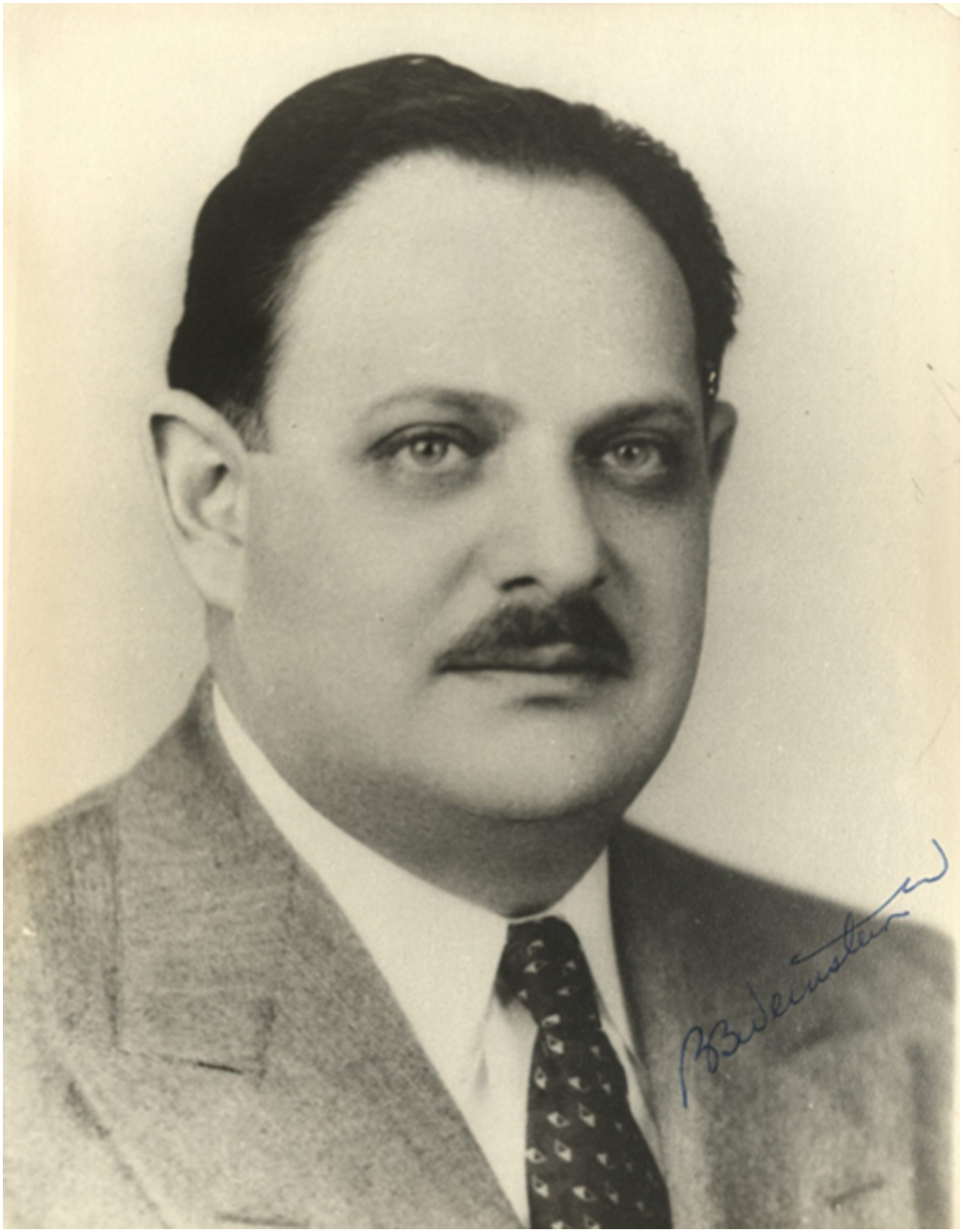
Benjamin Bernard Weinstein, MD. BBWP, TUSC.
Footnotes
Declaration of conflicting interests
The author declared no potential conflicts of interest with respect to the research, authorship, and/or publication of this article.
Funding
The author received no financial support for the research, authorship, and/or publication of this article.
